Key Takeaways
- Stress-related hair loss, known as telogen effluvium, is a temporary shedding that typically begins two to three months after a stressful event or a major change in the body.
- It causes thinning across the scalp rather than bald patches, and in most cases the hair grows back once the trigger has passed or been addressed.
- In Traditional Chinese Medicine, hair is the surplus of the Blood and reflects the strength of the Kidney essence. Long periods of stress drain the Blood, disturb sleep, and constrain the Liver Qi.
- Nine acupressure points on the head, neck, back, wrists, legs, and feet improve scalp circulation, nourish the Blood, reduce stress, and support restful sleep while the hair recovers.
- Acupressure for hair loss works best when stress is the trigger; it does not treat pattern baldness or hair loss caused by a medical condition. Sudden, patchy, or persistent hair loss should be evaluated by a doctor or dermatologist.
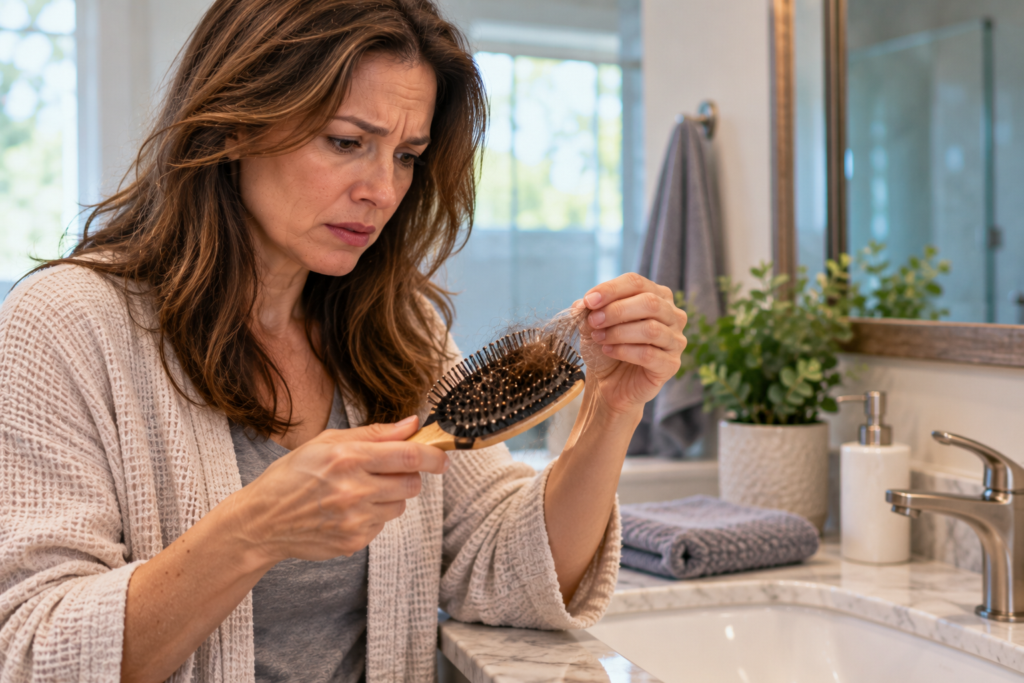
Hair loss often first appears in the shower drain, then on your pillow, in your brush, and across the bathroom floor. A ponytail that once felt thick may begin to feel thin. For many people, this shedding starts months after a stressful period has passed.
This delay is significant. According to the Cleveland Clinic, telogen effluvium, a common cause of rapid hair loss, usually starts two to three months after a stressful event or bodily change. While healthy individuals lose up to 100 hairs daily, this condition can increase shedding to around 300 hairs per day. Common triggers include psychological stress, high fever or severe infection, major surgery, childbirth, thyroid issues, stopping birth control pills, and crash dieting.
Fortunately, this type of shedding is temporary, typically lasting three to six months. Hair regrows once the underlying trigger is resolved. This condition differs from pattern baldness, which develops gradually due to genetics and hormones, and from alopecia areata, which causes smooth, round bald patches. Identifying the type of hair loss is important, as each requires a different approach.
In Traditional Chinese Medicine, the hair is described as the surplus of the Blood, and its health reflects the strength of the Kidney essence. When stress drains the Blood, disrupts sleep, and leaves the Liver Qi constrained, the scalp is one of the first places to go without nourishment. Worry and irregular meals weaken the Spleen, which turns food into Blood, while a nervous system stuck on high alert keeps the Heart and Kidney from working together to restore the body at night.
The nine points below bring circulation to the scalp, nourish the Blood, calm the stress behind the shedding, and support the deep sleep the body needs to recover.
What Acupressure Points to Press and Why
1. Press on GV20 on the top of the head to bring Qi and Blood up to the scalp. GV20 sits on the midline of the head, at the midpoint of an imaginary line drawn from the top of one ear, over the head, to the top of the other ear. Press gently with your fingertip, or make small circles, for one to two minutes. GV20 is called “Baihui,” the “Hundred Meetings.”
GV20 is the body’s highest point, where many channels converge at the crown. In Traditional Chinese Medicine, it is traditionally used to raise Qi and Blood to the head, calm the mind, and relieve headaches and a foggy, heavy feeling in the head. Because it lies where stress-related thinning often first appears, pressing it also provides a gentle scalp massage and promotes circulation at the crown.
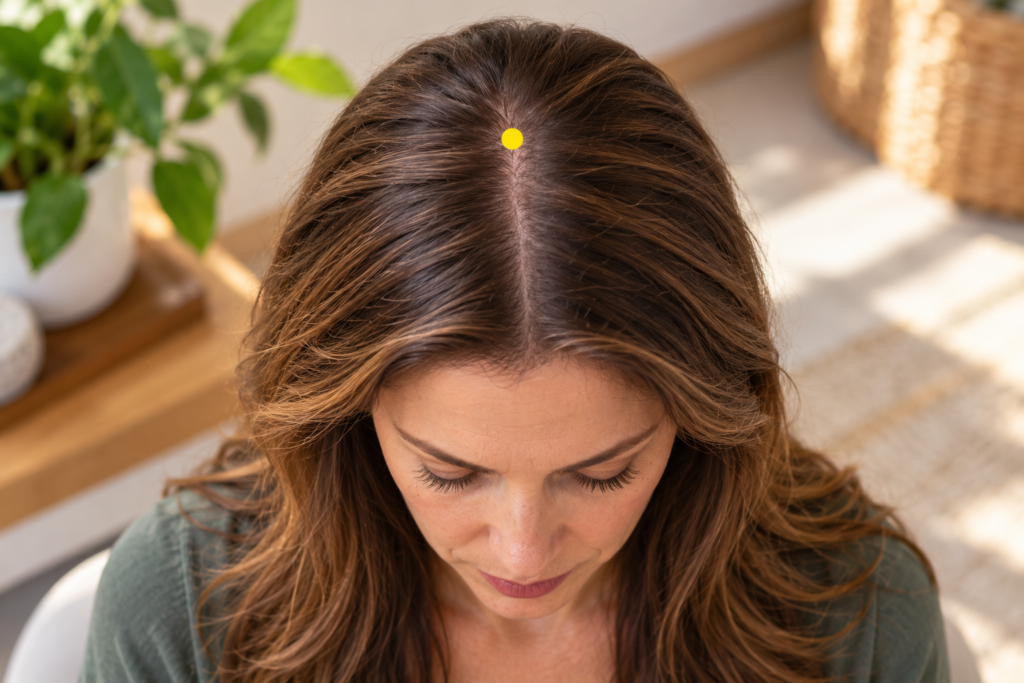
2. Press on Sishencong around the crown to cover the top of the scalp. Sishencong is a group of four points surrounding GV20, each about one thumb-width in front of, behind, and to either side of it. Press each point gently with your fingertips, or make small circles, for one to two minutes, working around all four. Sishencong is called the “Four Alert Spirit.”
Sishencong is a group of extra points used to calm the mind, ease headaches, and support sleep. Along with GV20, these four points cover the crown and both sides of the part, where thinning often appears. Pressing them may help relieve the tight, heavy feeling stress can leave on top of the head.
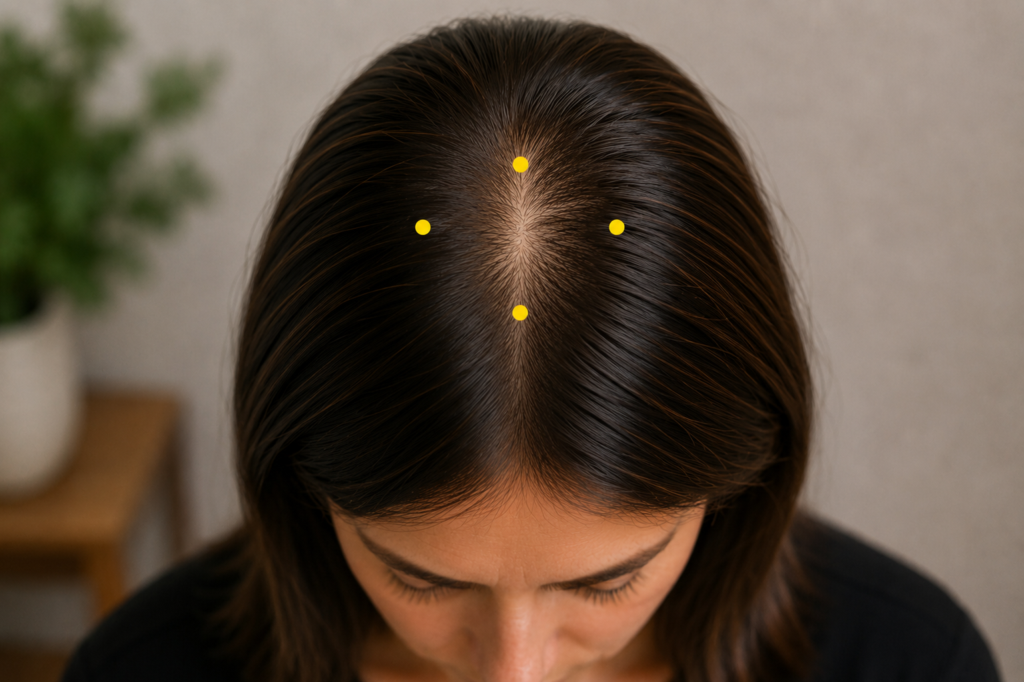
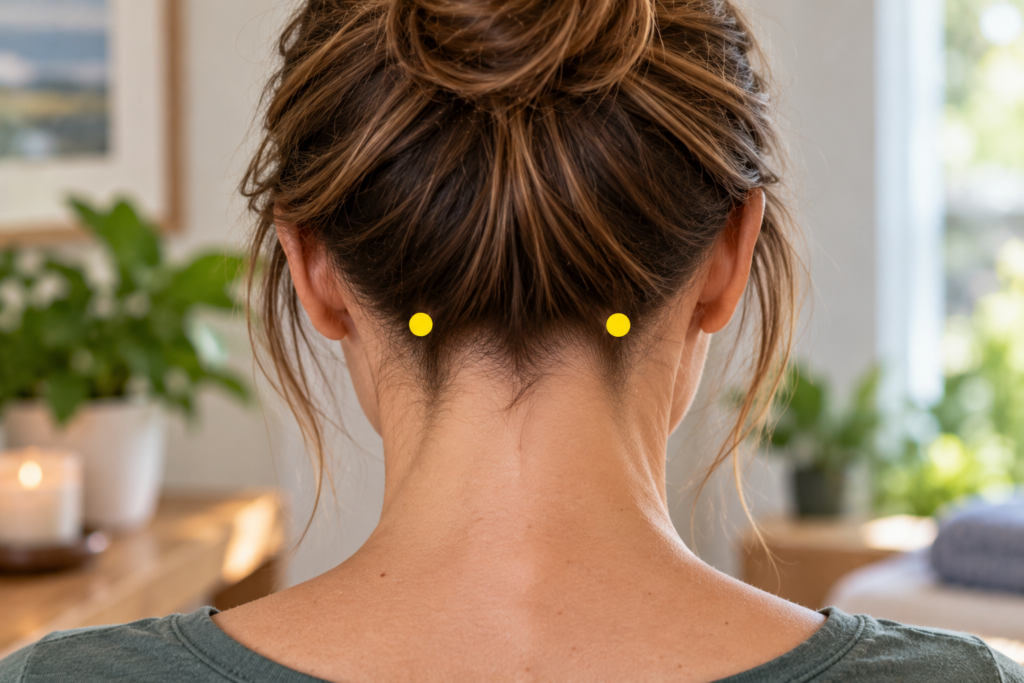
3. Press on GB20 at the base of the skull to release tension in the neck and head. GB20 sits at the base of the skull, in the hollows on either side of the neck, between the two large vertical neck muscles. Place your thumbs in both hollows and press upward and slightly inward toward the center of the head for one to two minutes. GB20 is called “Fengchi,” the “Wind Pool.”
Stress often accumulates in the neck and shoulders. In Traditional Chinese Medicine, tension in this area can obstruct the flow of Qi and Blood to the head. GB20 is commonly used to relieve this tension, ease headaches, and calm the mind. It lies on the Gallbladder channel, which is paired with the Liver, and can also help settle Liver Qi, which stress may obstruct.
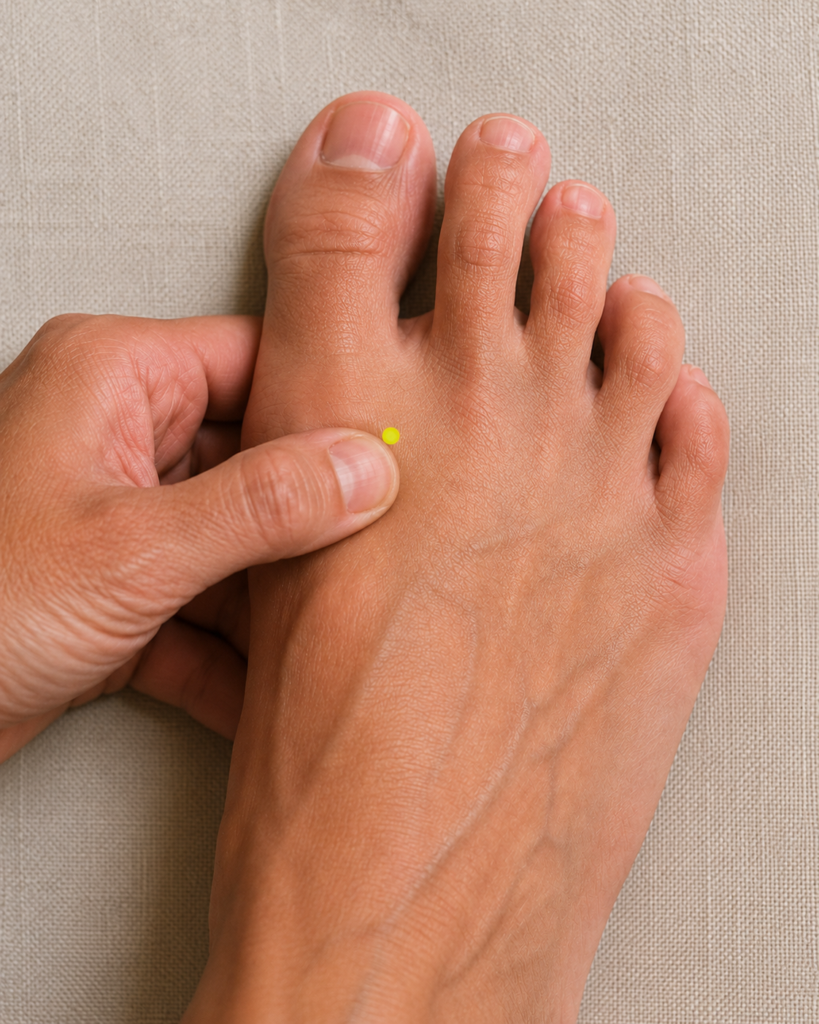
4. Press on LR3 on the top of the foot to ease stress and smooth the flow of Qi. LR3 sits on the top of the foot, in the hollow where the bones of the big toe and second toe meet, about two finger-widths above the web between the toes. Press firmly with your thumb for one to two minutes on each foot. LR3 is called “Taichong,” the “Great Surge.”
LR3 is the source points of the Liver, supporting the Liver’s role in storing Blood and keeping Qi flowing smoothly. Prolonged stress, frustration, or pressure can block Liver Qi, disrupt sleep, and prevent Blood from reaching the scalp. In Traditional Chinese Medicine, LR3 is one of the most important points for releasing this blockage and easing irritability and tension.
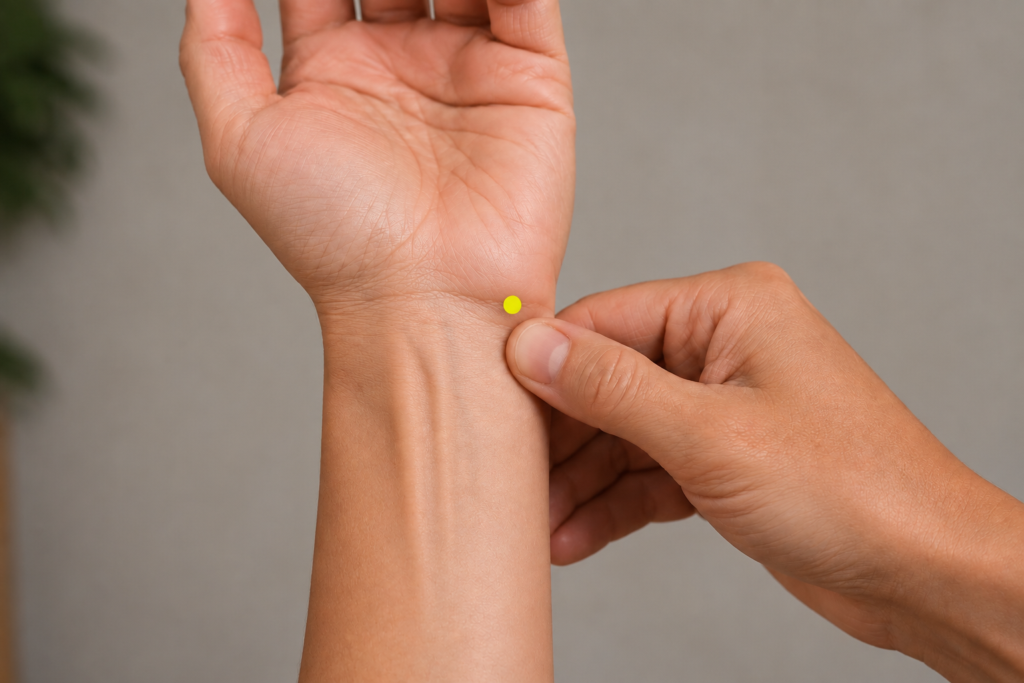
5. Press on HT7 on the wrist crease to calm the mind and support sleep. HT7 sits on the inner wrist crease, on the pinky side, in the small hollow just to the thumb side of the tendon that runs along the edge of the wrist. Press gently with the thumb of your other hand for one to two minutes on each wrist. HT7 is called “Shenmen,” the “Spirit Gate.”
HT7 is the source point for the Heart, which, in Traditional Chinese Medicine, controls the Blood and houses the mind. When stress keeps your mind busy, sleep can become light, and the Blood may not be restored at night. HT7 helps calm the mind, ease anxiety and racing thoughts, and support the deep sleep your body needs to rebuild the Blood that nourishes your hair.
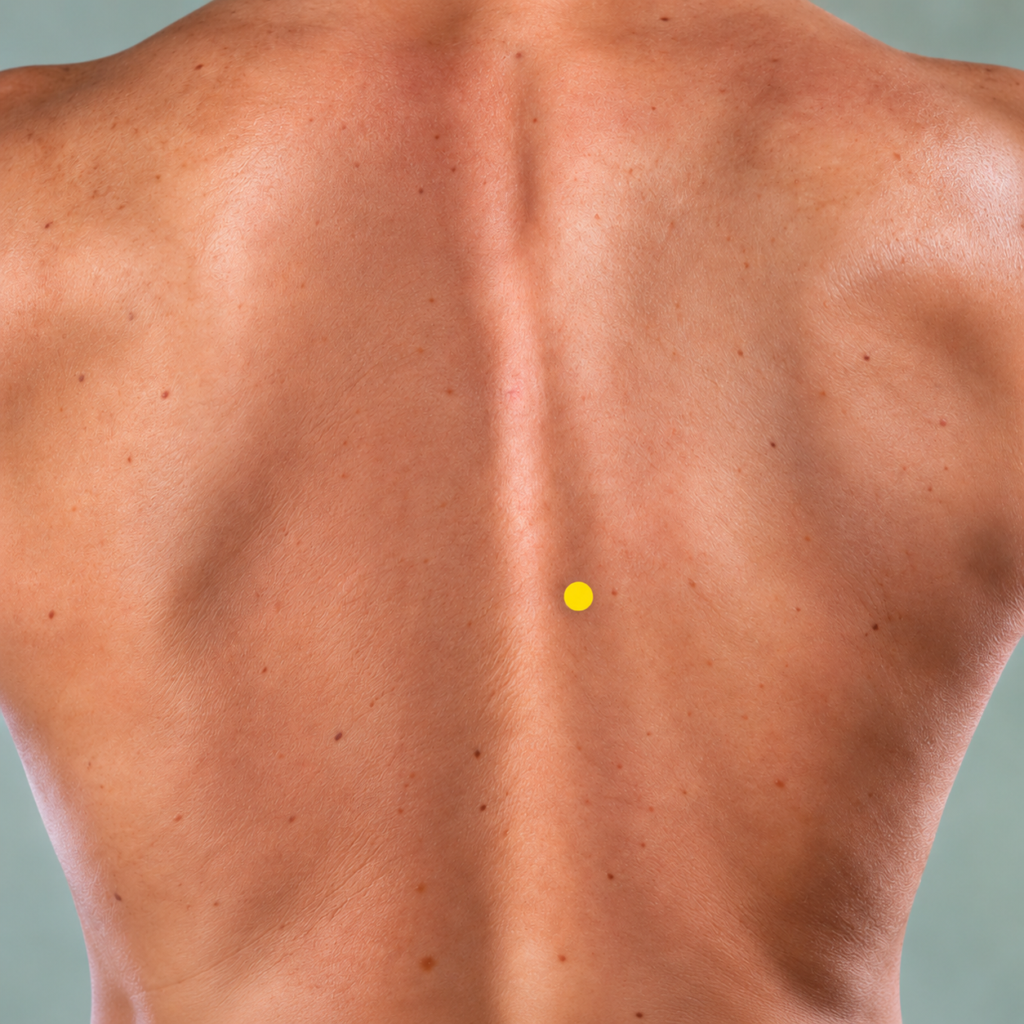
6. Press on BL17 on the middle back to nourish and move the Blood. BL17 sits on the middle back, about two finger-widths to each side of the spine, roughly level with the bottom tips of the shoulder blades. Place a tennis ball between your back and a wall, lean into it gently, and hold for one to two minutes on each side. BL17 is called “Geshu,” the “Diaphragm Transport Point.”
BL17 is the influential point of the Blood, meaning it has a special effect on the Blood throughout the body. In Traditional Chinese Medicine, hair is considered the surplus of the Blood, making BL17 a key point for hair that has thinned after a difficult time. It helps nourish the Blood and keep it moving so it can reach the scalp.
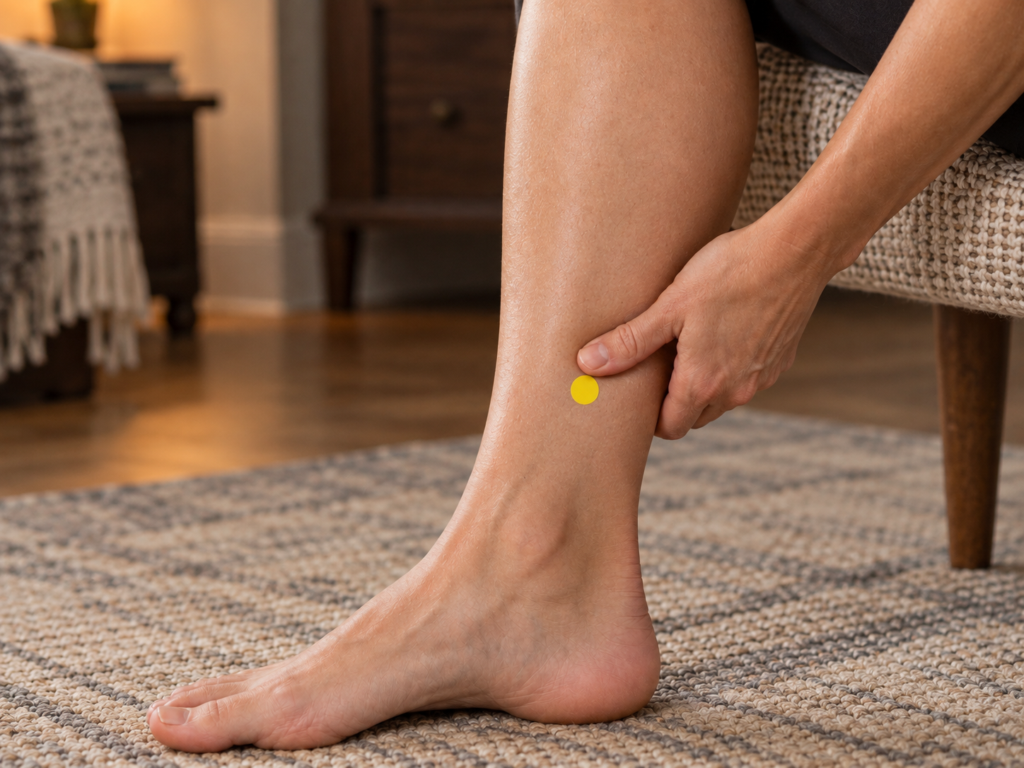
7. Press on SP6 above the inner ankle to nourish the Blood and Yin. SP6 sits on the inner lower leg, four finger-widths above the tip of the inner ankle bone, just behind the edge of the shinbone. Press firmly with your thumb for one to two minutes on each leg. SP6 is called “Sanyinjiao,” the “Three Yin Intersection.” SP6 is avoided during pregnancy.
SP6 is where the Spleen, Liver, and Kidney channels converge. In Traditional Chinese Medicine, these three organs are closely connected to Blood and hair. SP6 nourishes the Blood and Yin, calms the mind, and supports restful sleep. It is a key point when shedding follows prolonged stress, poor sleep, or a significant change in your body.
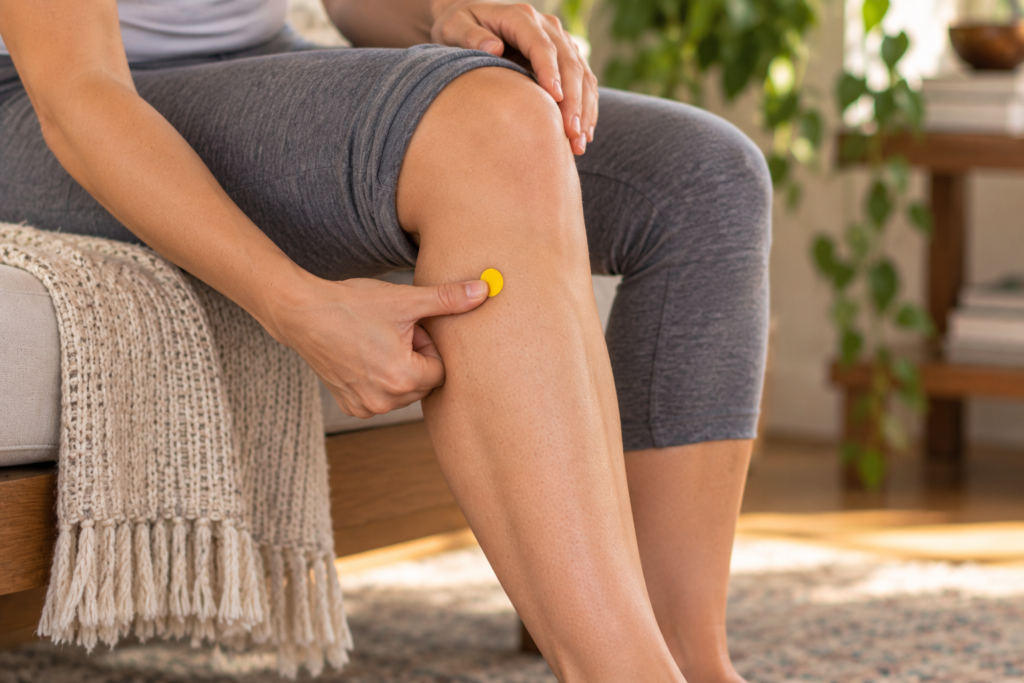
8. Press on ST36 below the knee to build Qi and Blood. ST36 sits four finger-widths below the bottom of the kneecap, about one finger-width to the outside of the shinbone. Press firmly with your thumb for one to two minutes on each leg. ST36 is called “Zusanli,” the “Leg Three Miles.”
ST36 is regarded as one of the most important Traditional Chinese Medicine points for supporting the Spleen and Stomach, which are understood to transform food into Qi and Blood. Worry, skipped meals, and crash diets may impair digestion, making it more difficult for the body to produce sufficient Blood to nourish the scalp. ST36 is traditionally used to support digestion, restore energy, and help replenish the Blood needed for healthy hair.
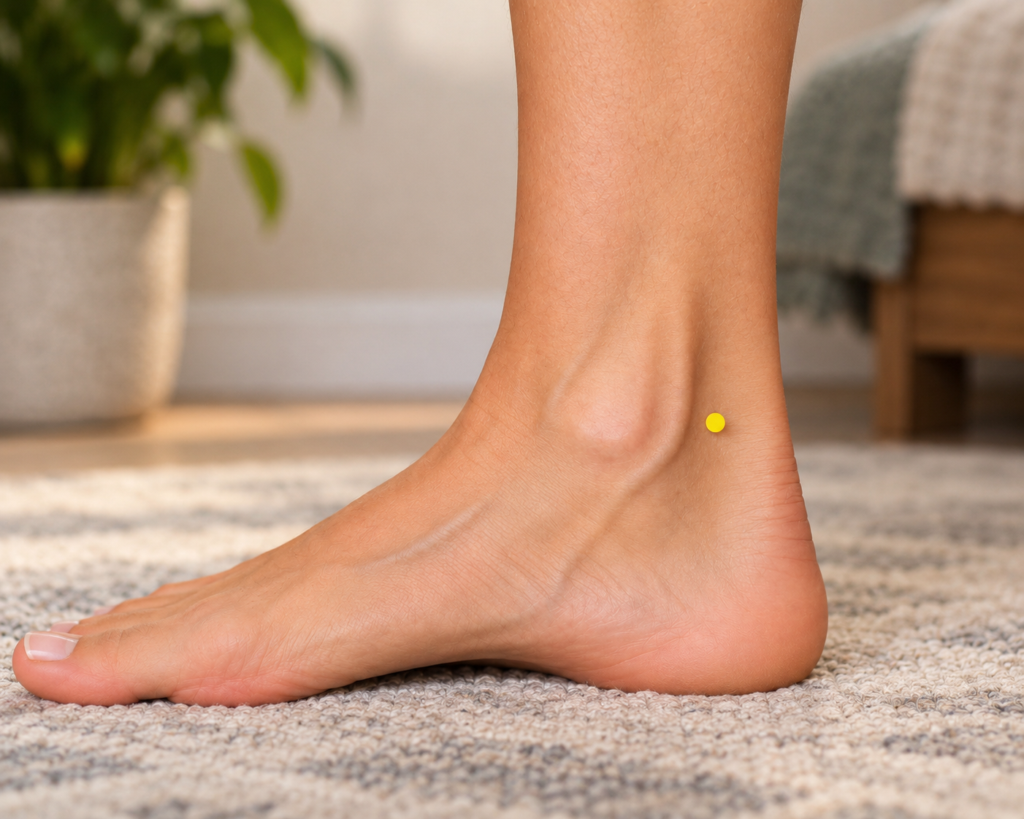
9. Press on KI3 beside the inner ankle to support the Kidney essence. KI3 sits in the hollow between the tip of the inner ankle bone and the Achilles tendon. Press gently with your thumb for one to two minutes on each foot. KI3 is called “Taixi,” the “Great Stream.”
KI3 is the source point of the Kidney. In Traditional Chinese Medicine, healthy hair is thought to reflect strong Kidney essence, which prolonged stress, overwork, and poor sleep can gradually deplete. KI3 nourishes Kidney Yin and essence, helping support the deep reserves needed for healthy hair.
Why These Acupressure Points Work
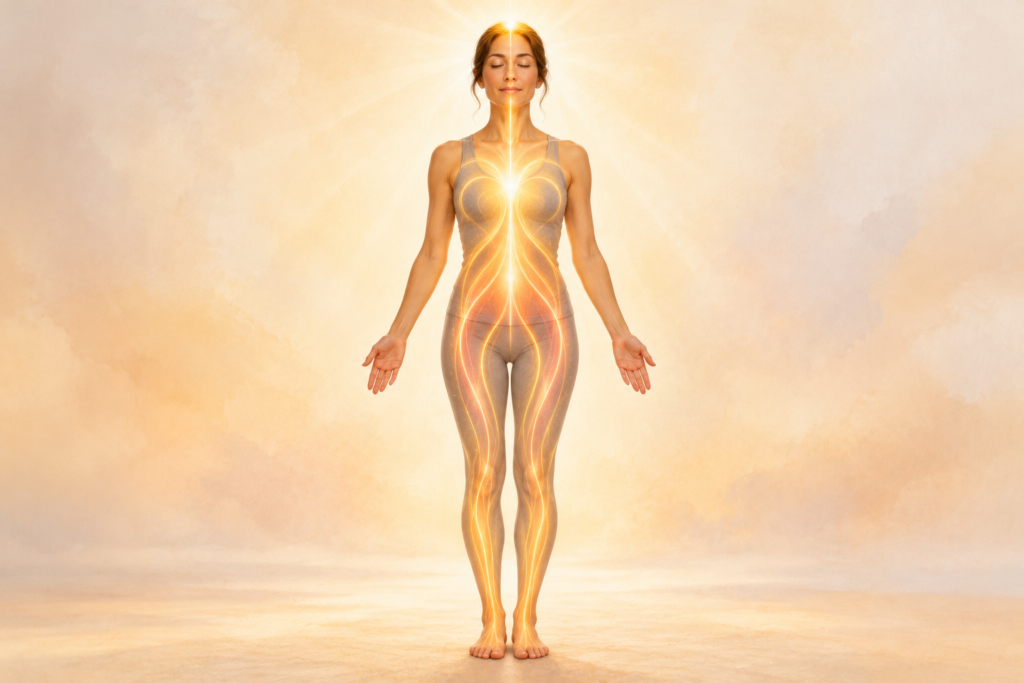
In Traditional Chinese Medicine, healthy hair needs enough Blood to reach the scalp, strong Kidney essence, and a calm mind for good sleep to restore the body each night. Stress can disrupt all three, which is why shedding often follows a tough period in life.
The nine points work together to support the hair during its recovery.
- The head points (GV20, Sishencong, GB20) bring circulation to the scalp, release tension in the neck, and calm the mind.
- The calming points (LR3, HT7) ease stress, smooth the flow of Liver Qi, and support deeper sleep.
- The Blood points (BL17, SP6, ST36) build and nourish the Blood and support the digestion that produces it.
- The Kidney point (KI3) supports the deep reserves the hair relies on.
How to Properly Use These Acupressure Points

Acupressure for hair loss caused by stress works best as a consistent daily practice, as hair grows slowly and visible new growth takes time.
- Perform the complete routine once daily, holding each point for one to two minutes. Incorporate GV20, Sishencong, GB20, and HT7 into a brief evening wind-down routine.
- When you feel stressed, press LR3 on both feet or HT7 on both wrists and take five slow breaths.
- Apply gentle, steady pressure to the scalp without pulling or rubbing the hair roughly, and firmer pressure to the neck, back, legs, and feet.
- Practice consistently for at least three months, because new growth usually takes that long to become visible.
Daily habits can support your hair’s recovery. Eat regular, protein-rich meals and include iron-rich foods such as leafy greens, beans, lentils, and eggs; crash diets and skipped meals can cause shedding. Traditional Chinese Medicine recommends black sesame, goji berries, and dates to nourish the Blood. Keep a consistent sleep schedule and aim to be asleep before 11 p.m. While your hair is shedding, handle it gently: avoid tight hairstyles, harsh chemicals, and high heat, and use a wide-tooth comb. Try to manage stress and make time to relax each day.
Learn more about 5 ways to get rid of stress naturally.
When to Get Professional Help
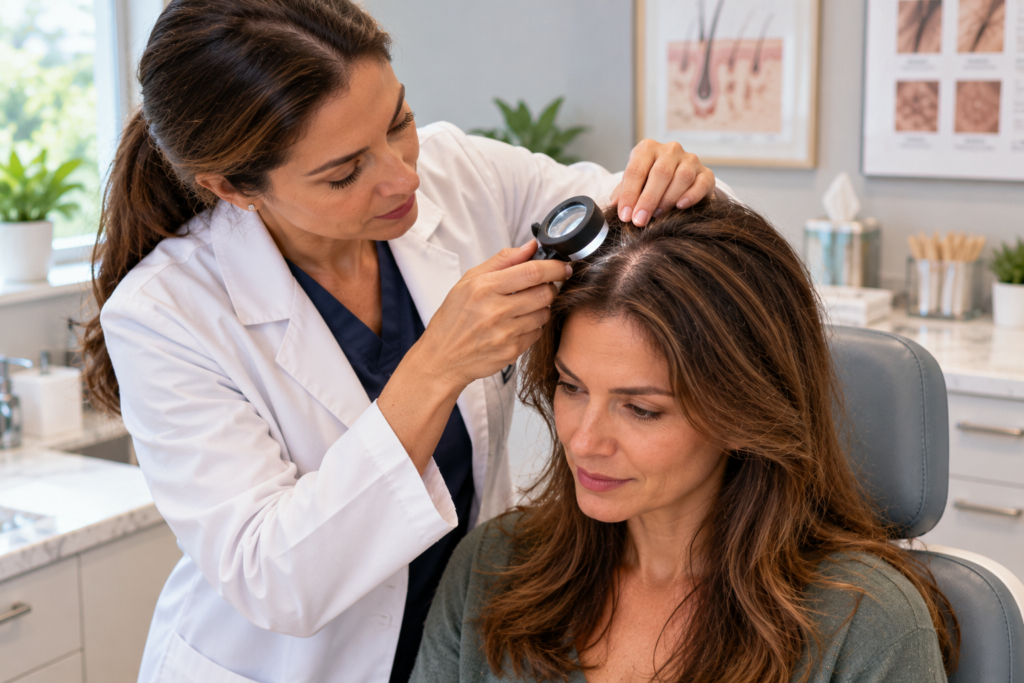
See a doctor or dermatologist if your hair loss is sudden or heavy, comes out in round or patchy spots, follows a receding or widening pattern, or is accompanied by an itchy, scaly, red, or painful scalp. You should also get checked if shedding lasts more than six months, starts after a new medication, or comes with fatigue, weight changes, feeling cold, heavy periods, or other signs of thyroid or iron problems. A simple blood test can often identify the cause. Don’t stop any prescribed medication without talking to your provider. Many women notice heavy shedding a few months after giving birth, which usually settles on its own, but mention it to your provider if it continues. If the stress behind your hair loss feels overwhelming, a mental health professional can help.
Acupressure is a gentle, supportive practice for stress-related hair loss, but it should be used alongside diagnosis and medical care, not instead of them.
For related health concerns, acupressure for stress, acupressure for trouble staying asleep, and acupressure for fatigue are companion pieces. If worrying about shedding has become its own source of stress, learn about acupressure for anxiety.
Above and Beyond Acupuncture offers acupuncture, cupping, and lifestyle coaching at the North Frank Lloyd Wright Boulevard location in Scottsdale.
Schedule an appointment online to start your healing journey.
The points above are only as effective as the technique used to apply them. Where to press, how firmly, and for how long all affect the result. For a full breakdown of how to perform acupressure properly at home, read Performing Acupressure in 3 Easy Steps.

About the Publisher
Paul Kerzner, L.Ac., is a licensed acupuncturist and board-certified herbalist, as well as the founder of Above and Beyond Acupuncture in Scottsdale. His own journey from chronic patient to practicing acupuncturist shapes his commitment to providing honest, clinically grounded information about acupuncture and Traditional Chinese Medicine. Learn more about Paul and his clinical approach on the About Us page.