
Key Takeaways
- Trigeminal neuralgia leads to sharp facial pain that is triggered by different activities, usually impacting particular areas of the face.
- Acupressure for trigeminal neuralgia involves applying pressure to specific points on the hands, feet, and other remote areas of the body to help reduce symptoms.
- Nine acupressure points, such as LI4 and LR3, help soothe nerves, eliminate blockages, and ease pain without involving sensitive regions.
- To achieve effective relief, it’s important to avoid pressing on painful areas and instead concentrate on distal points.
- Integrating acupressure with medical care can enhance symptom control and boost overall health.

Do you ever feel a sudden, sharp jolt of pain in your face when you chew, talk, brush your teeth, or even when a breeze touches it?
Trigeminal neuralgia affects the trigeminal nerve, which transmits sensation from your face to your brain. It can cause some of the most intense pain known in medicine. These episodes are often unexpected, sharp, or shock-like, lasting from a moment to a few minutes and typically affecting one side of the face, most commonly the cheek, jaw, teeth, gums, or lips, and less frequently the eye and forehead. They may occur multiple times daily, often triggered by the lightest touch, leading many to avoid eating, talking, or exposure to wind. The most common cause is a blood vessel pressing on the nerve near the brainstem, and medical treatment is usually the primary approach. Additionally, acupressure may help by calming the nervous system and facial channels without touching the sensitive areas.
The main rule is simple: don’t press on or near painful facial spots. If you’re dealing with trigeminal neuralgia, the goal is to gently soothe the nerve from a safe distance, so avoid direct contact with the painful area. That’s why this routine mainly focuses on points on your hands, feet, legs, and the back of your head. The only facial points are lightly pressed on the opposite, pain-free side; this is a common acupuncture technique for this condition.
In Traditional Chinese Medicine, the sudden, sharp pain of trigeminal neuralgia is described as ‘wind’ in the facial channels, indicating rapid, moving sensations. Wind can combine with other patterns. Wind-cold triggers attacks in response to cold air, producing a tight, contracting sensation. Heat or fire rising in the Stomach channel, passing through the cheek and jaw, causes burning pain that worsens with hot foods, stress, or poor sleep. Liver fire, often due to stress or frustration, can intensify attacks during periods of emotional tension. Long-term cases may involve blood stagnation, causing fixed, stabbing pain, while low Yin allows heat and yang to ascend to the head. The three nerve branches align with the face channels: the forehead with the Gallbladder and Bladder channels, the cheek with the Stomach and Small Intestine channels, and the jaw with the Stomach and Large Intestine channels.
These nine acupressure points can help calm Wind, clear Heat, move Blood, nourish Yin, and soothe the nerves.
What Acupressure Points to Press and Why
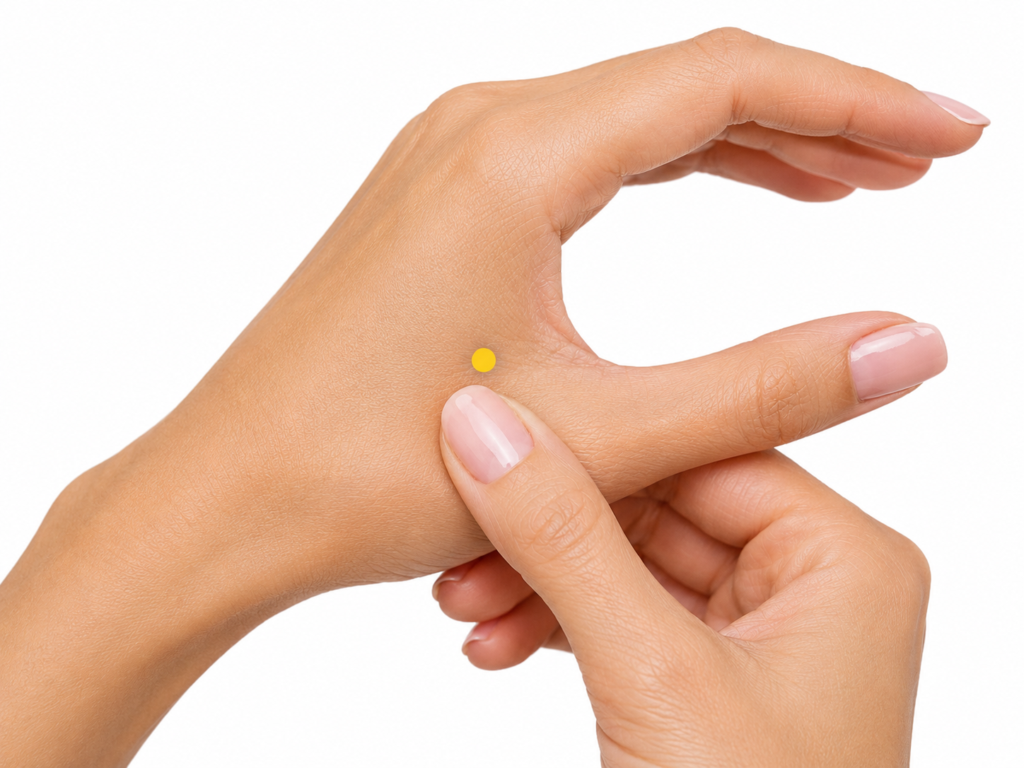
1. Press on LI4 in the hand, the command point for the face. LI4 sits in the webbing between the thumb and index finger, at the highest point of the muscle when you bring the thumb and finger together. Press firmly with the thumb of your other hand for one to two minutes on each hand. LI4 is called “Hegu,” the command point for the face and mouth. LI4 is contraindicated during pregnancy.
LI4 is an important point in trigeminal neuralgia treatment because it alleviates facial pain remotely. As a key point for controlling pain in the face and mouth, and one of the body’s most effective pain-relief points, it reduces facial discomfort without applying pressure near sensitive areas. Press it daily at first and whenever an attack is imminent. You can also press it discreetly anywhere as needed.
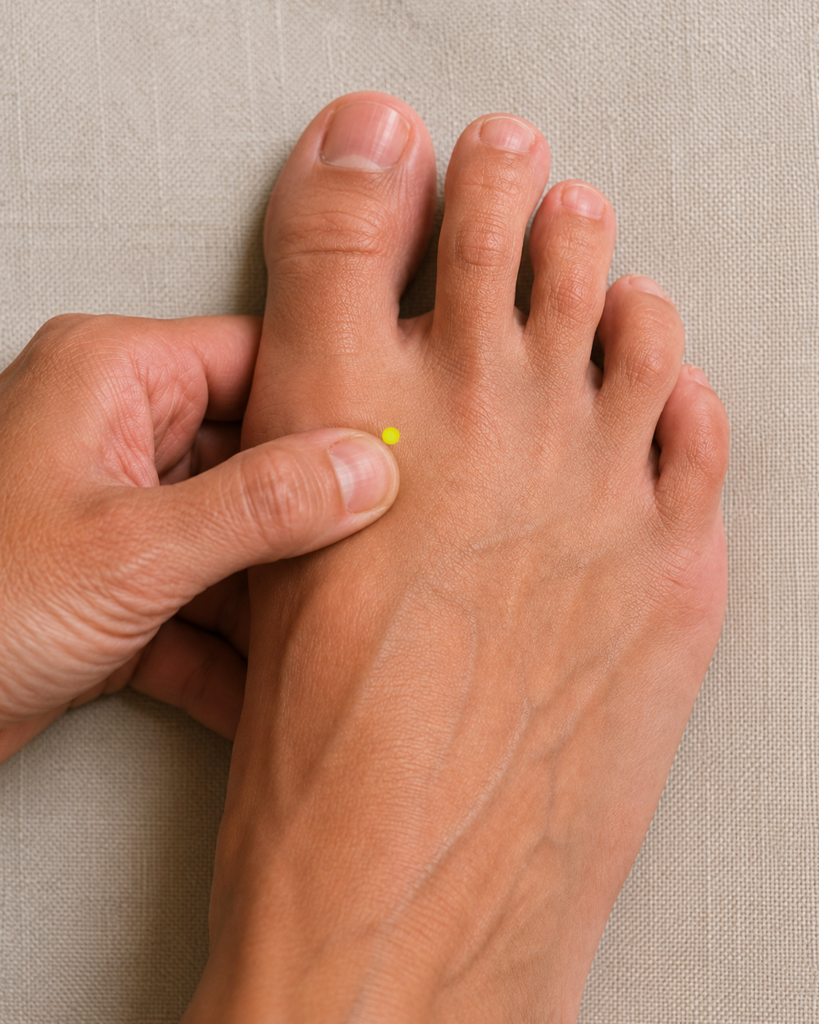
2. Press on LR3 on the top of the foot to calm wind and rising fire. LR3 sits on the top of the foot, in the webbing between the big toe and second toe, about two finger-widths back where the bones meet in a small hollow. Press firmly with your thumb for one to two minutes on each foot. LR3 is called “Taichong.”
LR3 is essential for calming internal wind, reducing Liver fire, and lowering the upward surge of Yang, as these patterns often result from stress, frustration, and poor sleep. When combined with LI4, it forms the Four Gates, a traditional duo that enhances qi flow, alleviates pain, and soothes the nervous system, especially valuable when expecting the next attack.
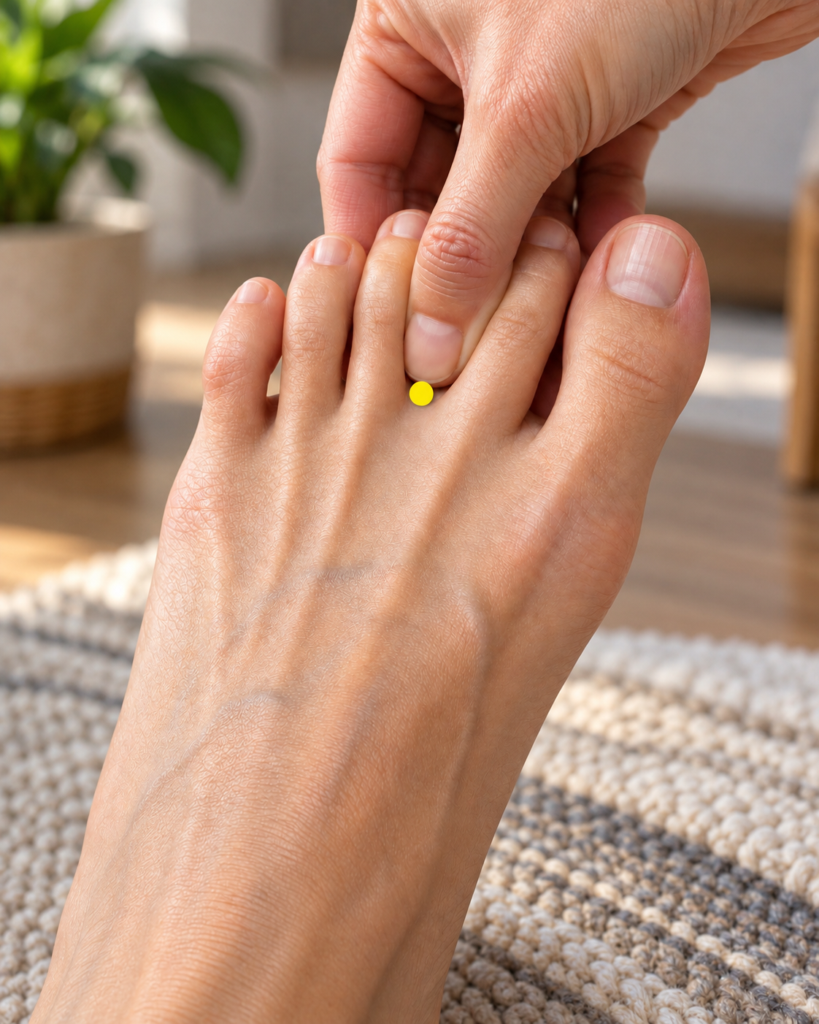
3. Press on ST44 between the toes to clear heat from the cheek and jaw. ST44 sits on the top of the foot, in the webbing between the second and third toes, just where they meet. Press firmly with your thumb for one to two minutes on each foot. ST44 is called “Neiting.”
The Stomach channel runs through the cheek, upper and lower jaw, and gums, which are the typical sites of trigeminal neuralgia. ST44, situated at the channel’s distal end on the foot, helps clear heat and fire from this area. It is especially effective for severe cheek, jaw, and tooth pain, as well as attacks worsened by hot or spicy foods.
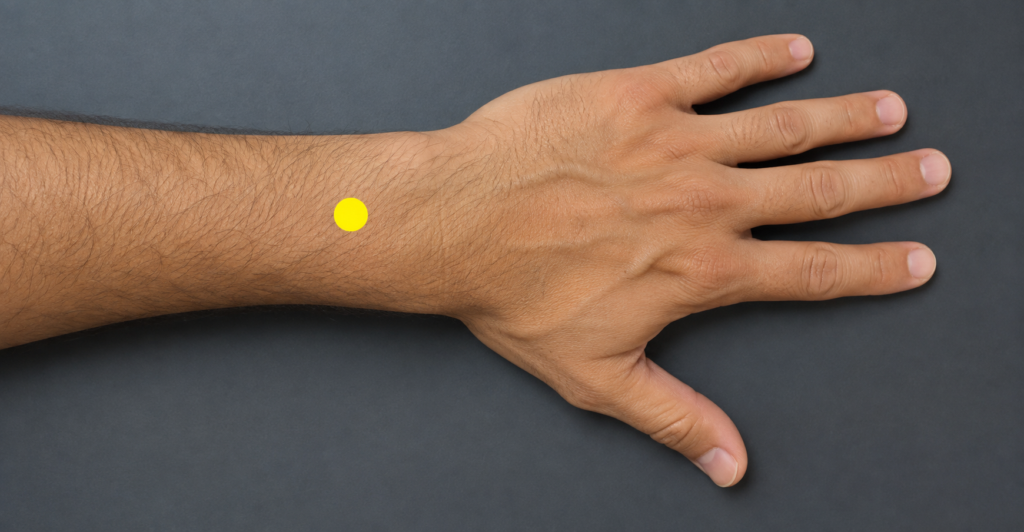
4. Press on SJ5 on the back of the forearm for the side of the face. SJ5 sits on the back of the forearm, about three finger-widths above the wrist crease, in the hollow between the two forearm bones. Press firmly with your thumb for one to two minutes on each arm. SJ5 is called “Waiguan,” the “Outer Pass.”
The SJ5 point is located on the Triple Burner meridian, which runs along the side of the neck, circles around the ear, and extends to the face and temple. It helps expel wind and clear heat from that side of the head, supports the face from a distance, and complements LI4 on the neighboring meridian.
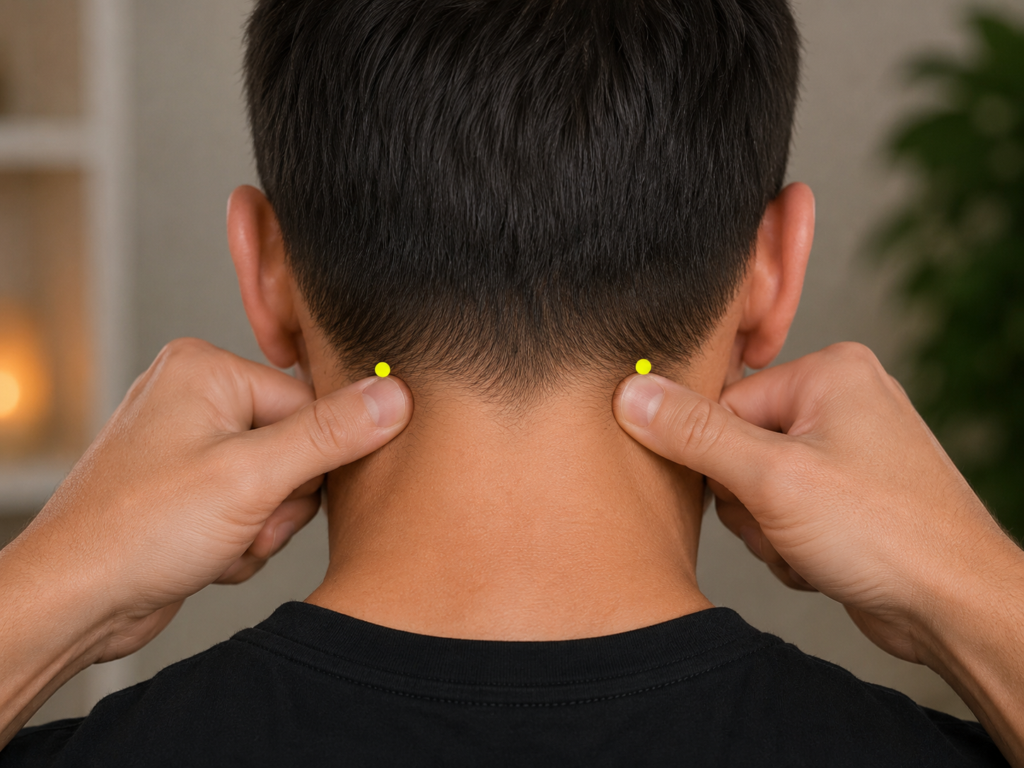
5. Press on GB20 at the base of the skull to extinguish wind. GB20 sits in the two hollows at the base of the skull, between the two large vertical neck muscles and the outer edge, roughly level with the tops of the ears. Tip your head back slightly and press up and inward with your thumbs for one to two minutes. GB20 is called “Fengchi,” the “Wind Pool.”
As the name suggests, GB20 is a key acupoint for relieving wind in the head, which Chinese medicine attributes to sudden, sharp trigeminal neuralgia attacks. Located at the back of the head, away from the face, it also eases neck tension that often builds up when people tense up from facial pain. If pressing this point causes facial symptoms, stop and instead target the more distant points.
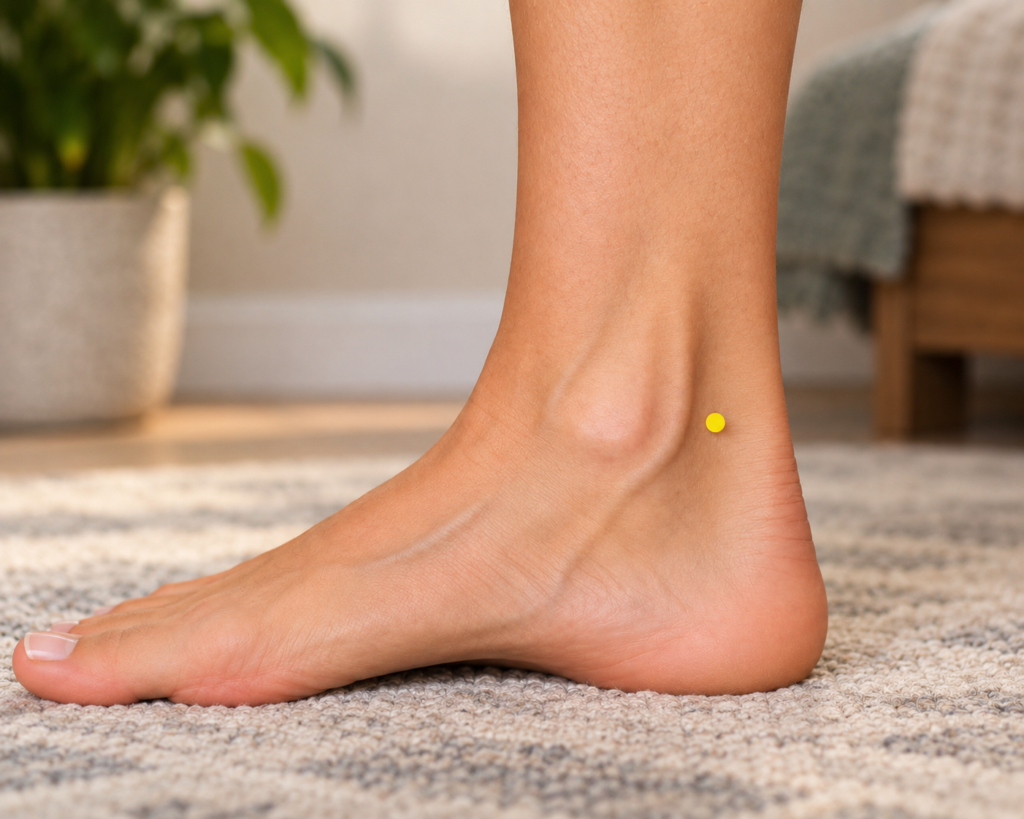
6. Press on KI3 above the inner ankle to nourish the Yin. KI3 sits in the hollow between the inner ankle bone and the Achilles tendon, level with the tip of the ankle bone. Press firmly with your thumb for one to two minutes on each ankle. KI3 is called “Taixi,” the Kidney’s source point.
Trigeminal neuralgia usually begins after age fifty. In Chinese medicine, chronic and age-related cases often stem from Yin deficiency, which fails to keep Yang in check. This imbalance causes heat and wind to rise to the head. KI3 nourishes this deep Yin and helps prevent the ascent of heat and wind, addressing the root cause of persistent and recurrent attacks.
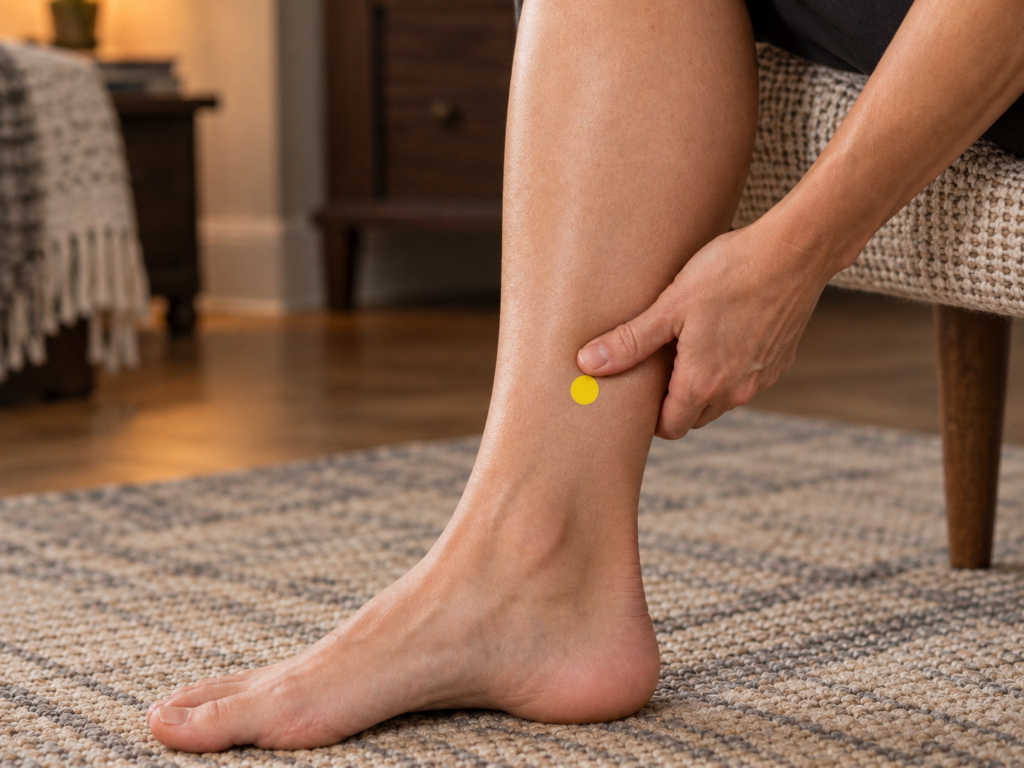
7. Press on SP6 above the inner ankle to nourish and move the Blood. SP6 sits four finger-widths up from the tip of the inner ankle bone, just behind the back edge of the shinbone. Press firmly for one to two minutes on each leg. SP6 is called “Sanyinjiao,” the “Three Yin Intersection.” SP6 is avoided during pregnancy.
The SP6 formula nourishes Yin and Blood while promoting blood circulation. This addresses both the deficiency behind chronic trigeminal neuralgia and the blood stagnation causing its fixed, stabbing pain. Additionally, it supports sleep, as fear of attacks and related stress often disrupt rest.
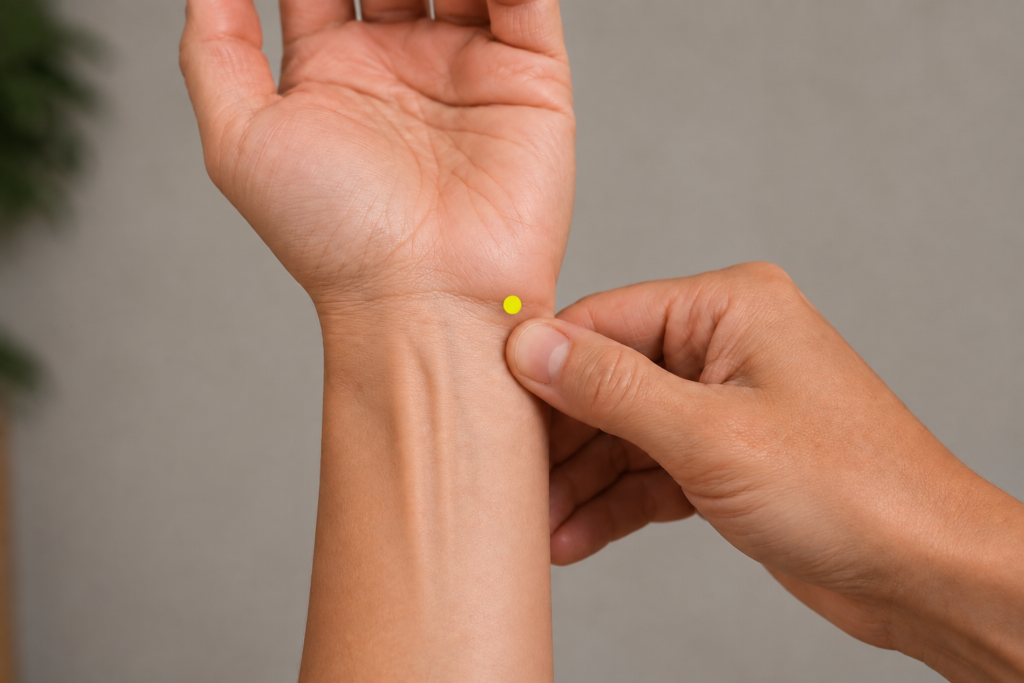
8. Press on HT7 at the wrist to calm the fear and tension of attacks. HT7 sits on the inner wrist crease, on the pinky side, in the small hollow just inside the tendon. Press firmly with your thumb for one to two minutes on each wrist. HT7 is called “Shenmen,” the “Spirit Gate.”
Living with trigeminal neuralgia means constantly anticipating pain, which sustains fear and tension, keeping the nervous system on high alert. HT7 helps by calming the Heart and stabilizing the Shen, thereby lowering anxiety, restlessness, and sleep issues. It is especially beneficial at night and during attacks, as it promotes calmness throughout the system.
9. Press the face points gently on the opposite, pain-free side. Choose the point that matches your pain area, but press only on the side of your face that doesn’t hurt, and only between attacks. For forehead pain, use GB14, a thumb-width above the middle of the eyebrow. For cheek pain, use SI18, in the hollow directly below the outer corner of the eye, under the cheekbone. For jaw pain, use ST7, in the hollow in front of the ear below the cheekbone. Press with light, steady fingertip pressure for thirty seconds to a minute.
Using the painless side of the face in acupuncture for trigeminal neuralgia is a common technique because meridians connect the whole body. Stimulating the opposite side can affect the painful area without causing pain. This approach allows for local facial treatment without directly targeting trigger points. However, if applying gentle pressure to the pain-free side triggers symptoms, this step should be avoided, and alternative distal points should be used.

Why These Acupressure Points Work
In Traditional Chinese Medicine, trigeminal neuralgia is believed to result from wind impacting the facial channels, often combined with symptoms like heat, cold, stagnation, or Yin deficiency. The nine points aim to address these factors but do not target the specific trigger areas.
- The distal face points (LI4, ST44, SJ5) treat the face along its channels from the hands and feet.
- The wind and fire points (LR3, GB20) extinguish wind and bring down rising heat, with LI4 and LR3 forming the Four Gates.
- The nourishing points (KI3, SP6) replenish the Yin and Blood behind long-standing cases.
- The calming point (HT7) settles the fear and tension that keep the nervous system on alert.
- The opposite-side face points treat the painful area locally without touching it.
Small clinical studies indicate that acupuncture might reduce the frequency and severity of trigeminal neuralgia attacks. Still, the evidence is accumulating, and acupuncture is advised as a complementary option alongside medical treatment, not as a replacement.
How to Properly Use These Acupressure Points
- Do not press on or near your trigger zones, and do not press on the painful side of the face.
- Work the distal points daily: LI4 and LR3, then ST44, SJ5, KI3, SP6, and HT7, then GB20 at the back of the head.
- Add the opposite-side face points only between attacks, only with light pressure, and only if they do not provoke symptoms.
- When you feel an attack building, press LI4 and LR3 firmly and breathe slowly.
- Hold each point for one to two minutes, and give it several weeks of daily practice.
- Keep taking your prescribed medication. Acupressure works alongside it, not in place of it.
Protecting your face from triggers can greatly reduce attacks. Wind and cold often trigger symptoms, so wear a scarf or face covering outdoors. Stay away from fans and air-conditioning vents, and choose lukewarm foods and drinks instead of hot or cold ones. During an attack, chew on the painless side, consume soft foods, and rinse your mouth with lukewarm water using a soft toothbrush. Poor sleep and high stress increase the risk of attacks, so get enough rest and try relaxation methods like slow breathing. Keeping a simple log of your attacks and triggers helps you and your doctor recognize patterns.
When to Get Professional Help
Accurate diagnosis and proper treatment are essential for trigeminal neuralgia, usually starting with medication. Some people achieve long-term relief with procedures that reduce pressure on the nerve. If you experience new facial pain, especially if you’re under forty, notice it on both sides, or have symptoms like numbness, weakness, drooping, hearing loss, vision problems, or difficulty swallowing, seek medical attention promptly. These could signal other conditions such as multiple sclerosis or a tumor pressing on the nerve. Consult a dentist if your pain involves dental issues like swelling, sensitivity, or fever, since infections can mimic nerve pain. Seek emergency care if you suddenly lose facial sensation or strength coupled with speech difficulties or confusion, which may indicate a stroke. Inform your doctor immediately if attacks interfere with eating or drinking.
If you experience pain that brings up thoughts of self-harm, immediately reach out to the 988 Suicide and Crisis Lifeline.
Although acupressure may be a gentle, supportive part of managing trigeminal neuralgia, use it alongside your medical treatment.
Above and Beyond Acupuncture offers acupuncture, cupping, and lifestyle coaching at the North Frank Lloyd Wright Boulevard location in Scottsdale.
Schedule an appointment online to start your healing journey.
The points above are only as effective as the technique used to apply them. Where to press, how firmly, and for how long all affect the result. For a full breakdown of how to perform acupressure properly at home, read Performing Acupressure in 3 Easy Steps.
For nerve pain at the back of the head, acupressure for occipital neuralgia is the companion article; if your facial pain is a dull, muscular ache in the jaw rather than electric jolts, acupressure for jaw pain may fit better. For nerve compression throughout the body, understanding nerve impingement explains how Western diagnosis and Traditional Chinese Medicine work together.

About the Publisher
Paul Kerzner, L.Ac., is a licensed acupuncturist and board-certified herbalist, as well as the founder of Above and Beyond Acupuncture in Scottsdale. His own journey from chronic patient to practicing acupuncturist shapes his commitment to providing honest, clinically grounded information about acupuncture and Traditional Chinese Medicine. Learn more about Paul and his clinical approach on the About Us page.