
Key Takeaways
- Acupressure offers an effective, natural method to quickly increase alertness and reduce drowsiness.
- Research shows that stimulating acupressure points such as GV20 and LI4 boosts energy and improves clarity.
- This article highlights nine essential acupressure points to stimulate for alertness, detailing their locations and techniques.
- Complementing acupressure with proper sleep, hydration, and light meals boosts overall effectiveness.
- Seek medical advice if you continue to experience daytime drowsiness despite getting enough sleep or if you notice any worrying symptoms.

Do you find yourself getting sleepy during meetings, long drives, lectures, or in the afternoon at your desk?
Staying alert when your body feels like resting is different from just waking up. That sleepy sensation often happens after lunch, during prolonged sitting, in warm settings, while doing repetitive tasks, or after a poor night’s sleep. It can impair focus, affect mood, and even pose safety risks. Coffee helps many people, but it isn’t always effective, especially later in the day when it can disrupt sleep. Acupressure provides a quick, subtle way to boost alertness by stimulating points that energize rather than calm, and this approach has been tested. Here are some points that may assist.
What the Research Shows
Researchers at the University of Michigan tested this idea with students in a real classroom. The students were randomly assigned to try both a stimulating acupressure routine and a relaxing one on different days. The results were clear: using stimulating acupressure points helped students feel less tired and more alert in class compared to the relaxing routine. The researchers found that different acupressure points can either boost or lower alertness, and they suggested more research is needed. The takeaway is simple: if you want to stay awake, use stimulating points and techniques, and save the calming ones for bedtime.
In Traditional Chinese Medicine, drowsiness happens when Yang energy doesn’t reach the head, leading to a dull, heavy mind. After eating, your body’s Qi shifts to digestion, and if your Spleen is weak or you eat a heavy meal, dampness can build up, clouding your mind and causing that familiar post-lunch slump. Sitting too long can stagnate Qi, and lack of sleep drains your energy, making it harder to stay alert.
Here are nine acupressure points to boost Yang energy, enhance Qi flow, reduce heaviness, and keep you awake.
What Acupressure Points to Press and Why
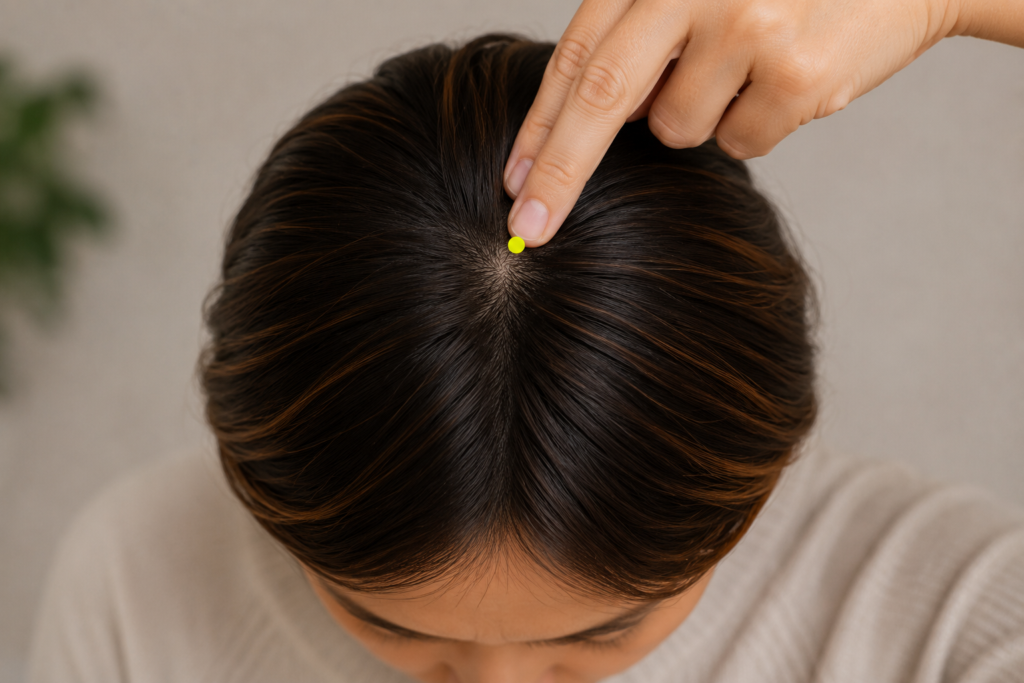
1. Tap GV20 at the top of the head to lift the Yang. GV20 sits at the very top of the head, on the midline, on a line drawn up from the tops of both ears. Tap it briskly with your fingertips for about thirty seconds, then press straight down for a few seconds. GV20 is called “Baihui,” the “Hundred Meetings.”
The GV20 point is located at the top of the head where the Yang channels converge and serves as the primary point for elevating energy to the head. Brisk tapping on this point provides a stimulating effect instead of a calming one, aiding in eliminating feelings of heaviness and dullness associated with drowsiness, and helps to clear the mind. Therefore, it is the first point to activate when you start to nod off.
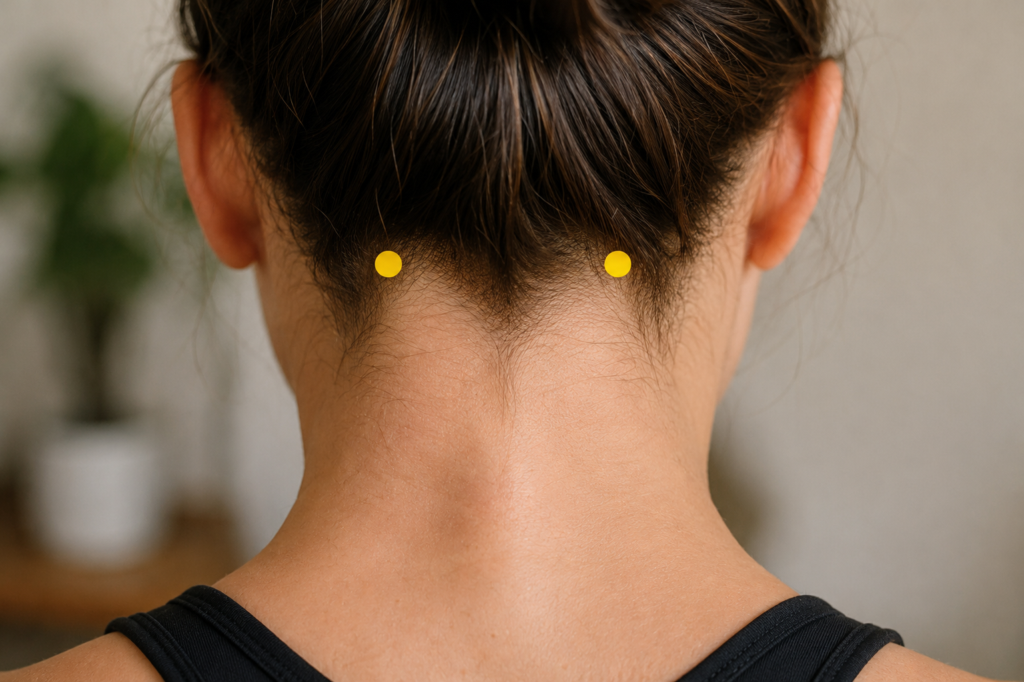
2. Press on GB20 at the base of the skull to clear a heavy head. GB20 sits in the two hollows at the base of the skull, between the two large vertical neck muscles and the outer edge, roughly level with the tops of the ears. Press firmly up and inward with your thumbs for thirty seconds to a minute, adding brisk small circles. GB20 is called “Fengchi,” the “Wind Pool.”
GB20 helps clear the mind and ease the stiff neck caused by long hours at a desk or while driving. This tension reduces blood flow to the head and can cause drowsiness. Stimulating GB20 quickly helps to lift the fog. It works well when combined with GV20, which is located above it.
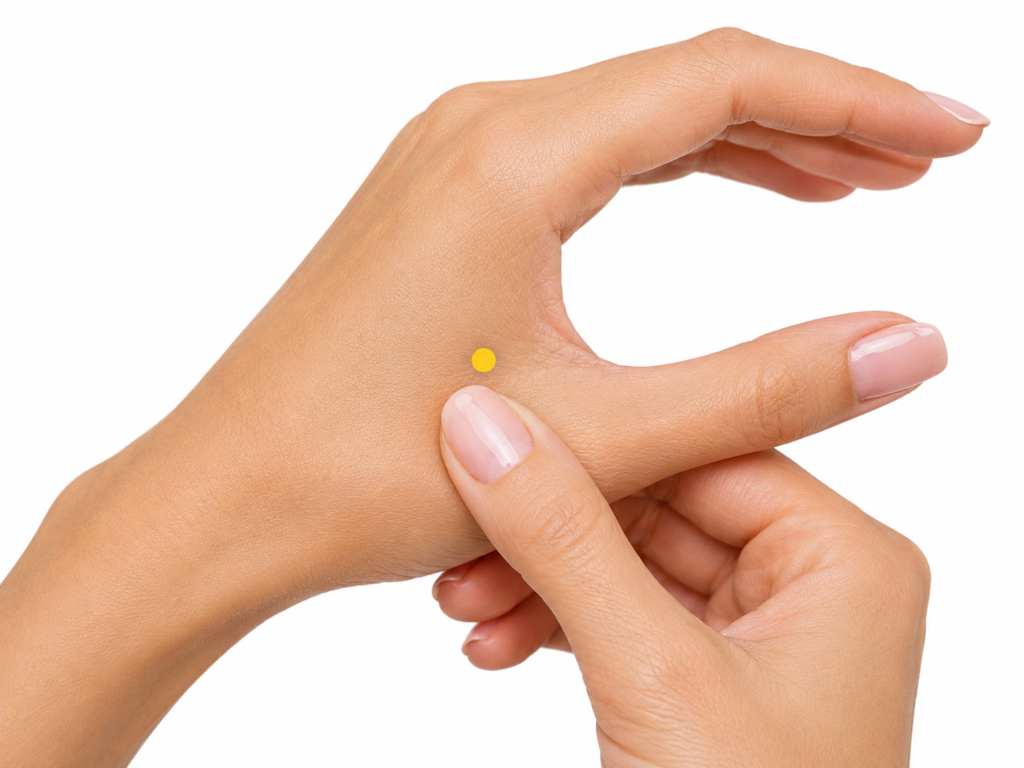
3. Press on LI4 in the hand for a quick jolt of alertness. LI4 sits in the webbing between the thumb and index finger, at the highest point of the muscle when you bring the thumb and finger together. Press firmly, in quick pulses, for thirty seconds to a minute on each hand. LI4 is called “Hegu.” LI4 is contraindicated during pregnancy.
LI4 is recognized as one of the body’s most invigorating acupressure points, as it channels Qi with considerable potency through the head and face. Applying firm, pulsating pressure to this point yields a perceptible increase in alertness. Situated on the hand, it allows for discreet activation under a table during meetings or lectures.
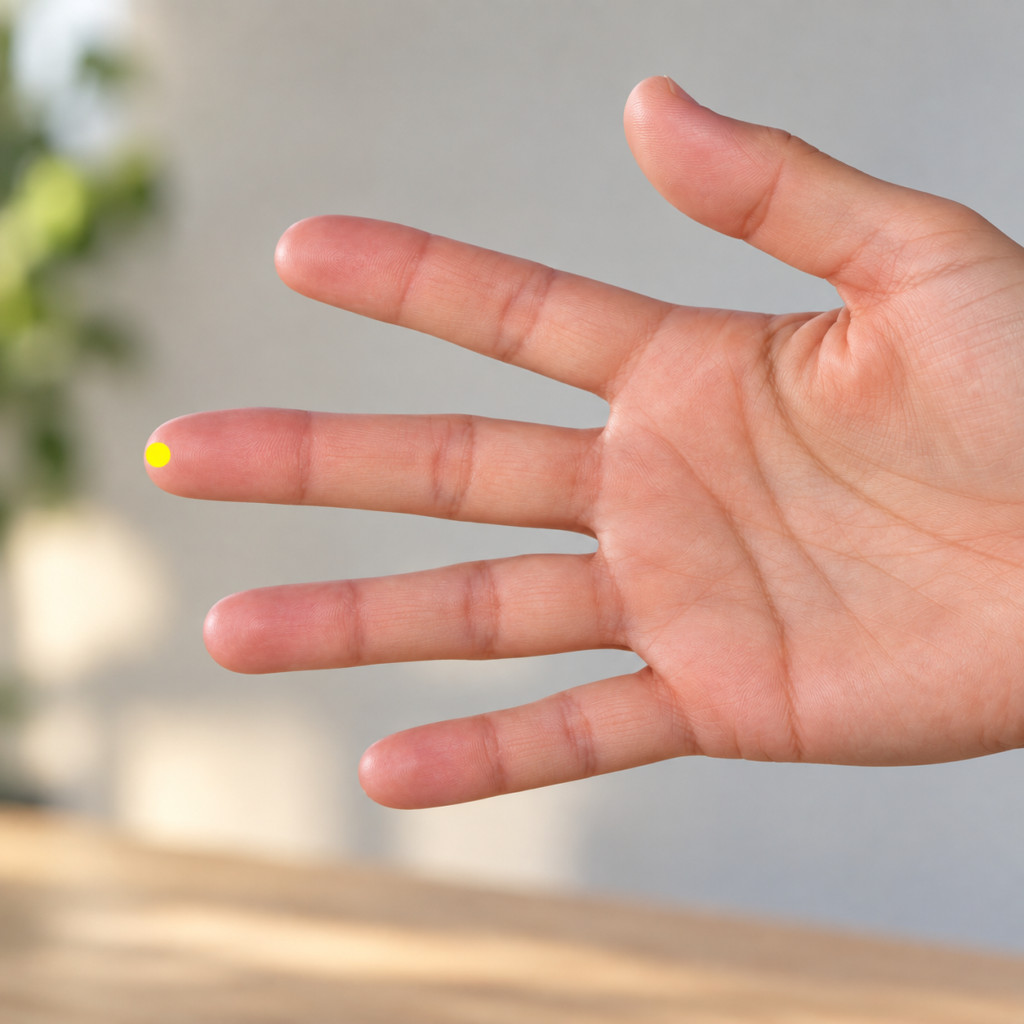
4. Squeeze PC9 at the tip of the middle finger to revive the mind. PC9 sits at the very tip of the middle finger, in the center of the fingertip. Squeeze the tip of each middle finger firmly between the thumb and index finger of the other hand, or press it with a fingernail, for ten to twenty seconds. PC9 is called “Zhongchong,” the “Middle Rushing.”
The fingertip points are generally used for restoring consciousness and clearing the mind, with PC9 being one of the most important. Squeezing firmly on the tip of the middle finger produces a sharp, invigorating sensation that combats drowsiness, and it is the most discreet of the points in this procedure.
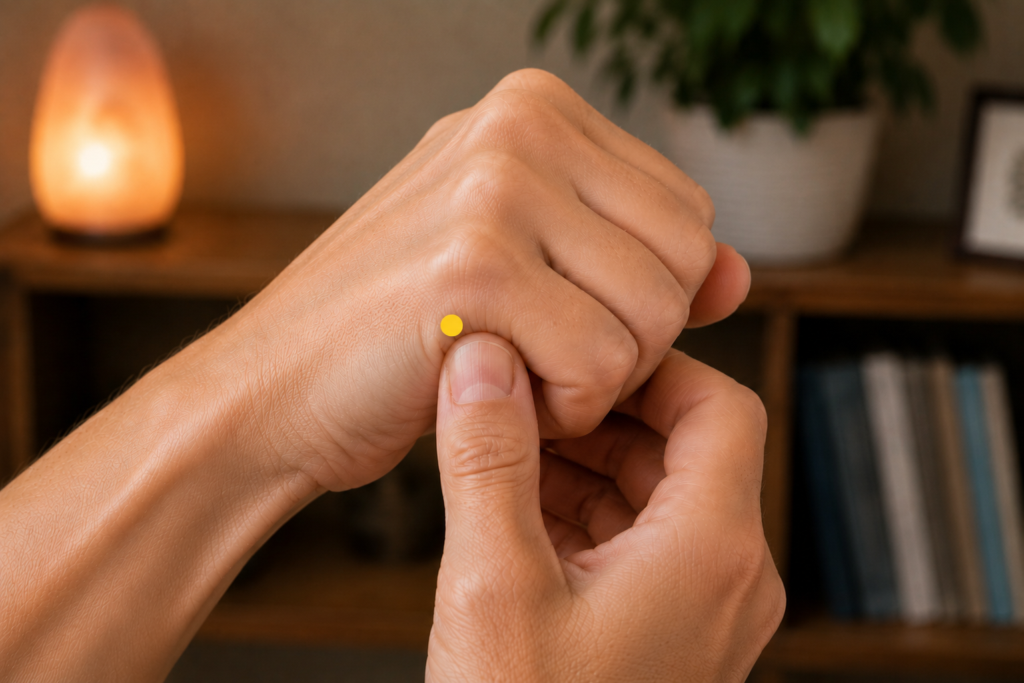
5. Press on SI3 on the side of the hand to clear the head. SI3 sits on the outer edge of the hand, on the little finger side, in the crease that forms just below the knuckle of the little finger when you make a loose fist. Press firmly with your thumb for thirty seconds to a minute on each hand, or roll the edge of your hand against the edge of a desk. SI3 is called “Houxi,” the “Back Stream.”
SI3 opens the Governing Vessel, a channel that runs up the spine to the brain and carries the body’s Yang energy to the head. Pressing this point helps improve posture, relax the neck, and clarify the mind, making it especially beneficial for those who have been hunched over a screen.
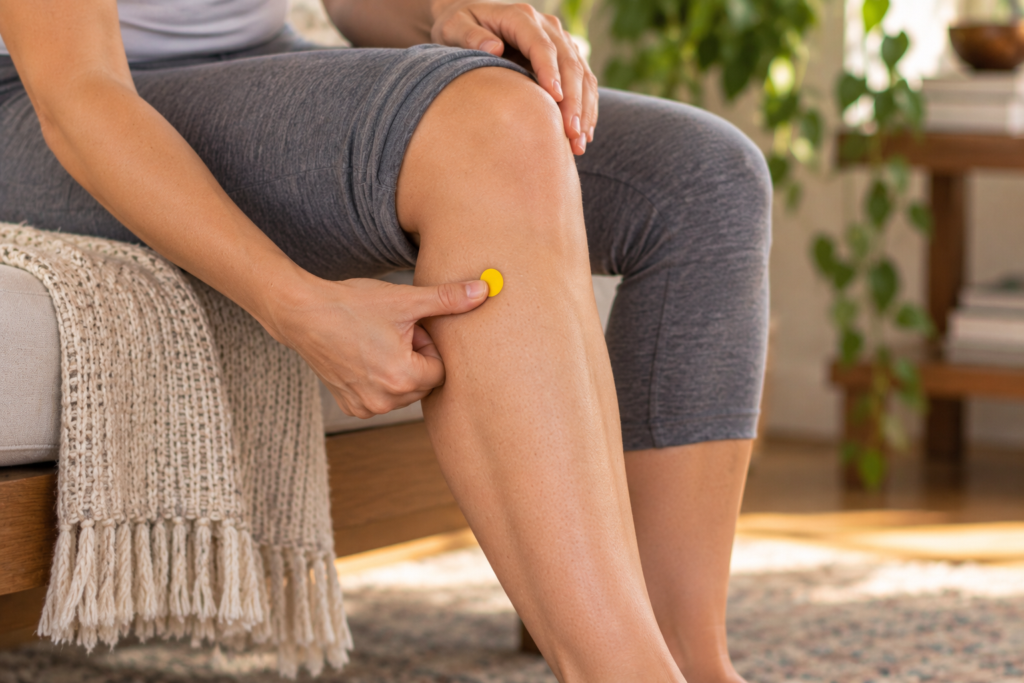
6. Press on ST36 below the knee to draw on your energy reserves. ST36 sits four finger-widths below the lower edge of the kneecap and one finger-width to the outside of the shinbone, on the muscle that rises when you flex your foot. Press firmly or tap it briskly with a loose fist for thirty seconds to a minute on each leg. ST36 is called “Zusanli,” the “Leg Three Miles.”
ST36 is recognized as a primary point for enhancing energy. Its designation originates from the traditional belief that applying pressure to this point assisted fatigued travelers in replenishing their strength to walk an additional three miles. This point is known to facilitate improved digestion after the post-lunch slump and to leverage the body’s energy reserves during periods of fatigue.
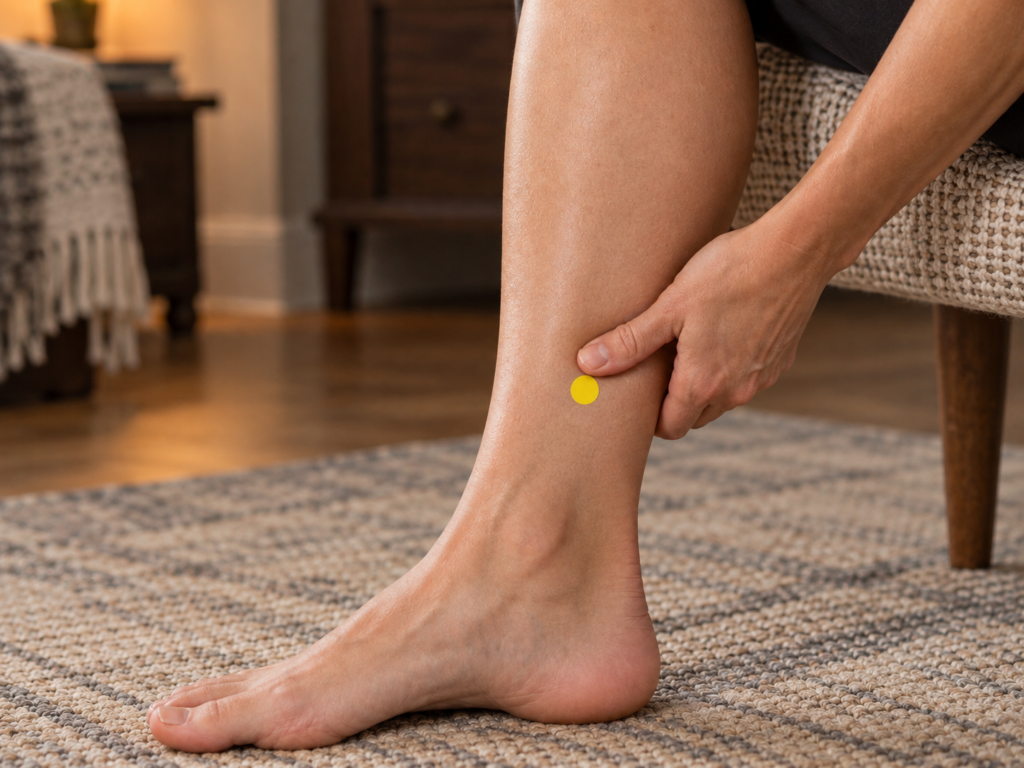
7. Press on SP6 above the inner ankle to lift the heavy, damp slump. SP6 sits four finger-widths up from the tip of the inner ankle bone, just behind the back edge of the shinbone. Press firmly with brisk circles for thirty seconds to a minute on each leg. SP6 is called “Sanyinjiao,” the “Three Yin Intersection.” SP6 is avoided during pregnancy.
In Traditional Chinese Medicine, feeling drowsy and sluggish after eating is seen as dampness weighing down the head. To address this, SP6 is recommended to strengthen the Spleen and eliminate dampness. During activity, this can help clear the fog that often follows a heavy lunch.
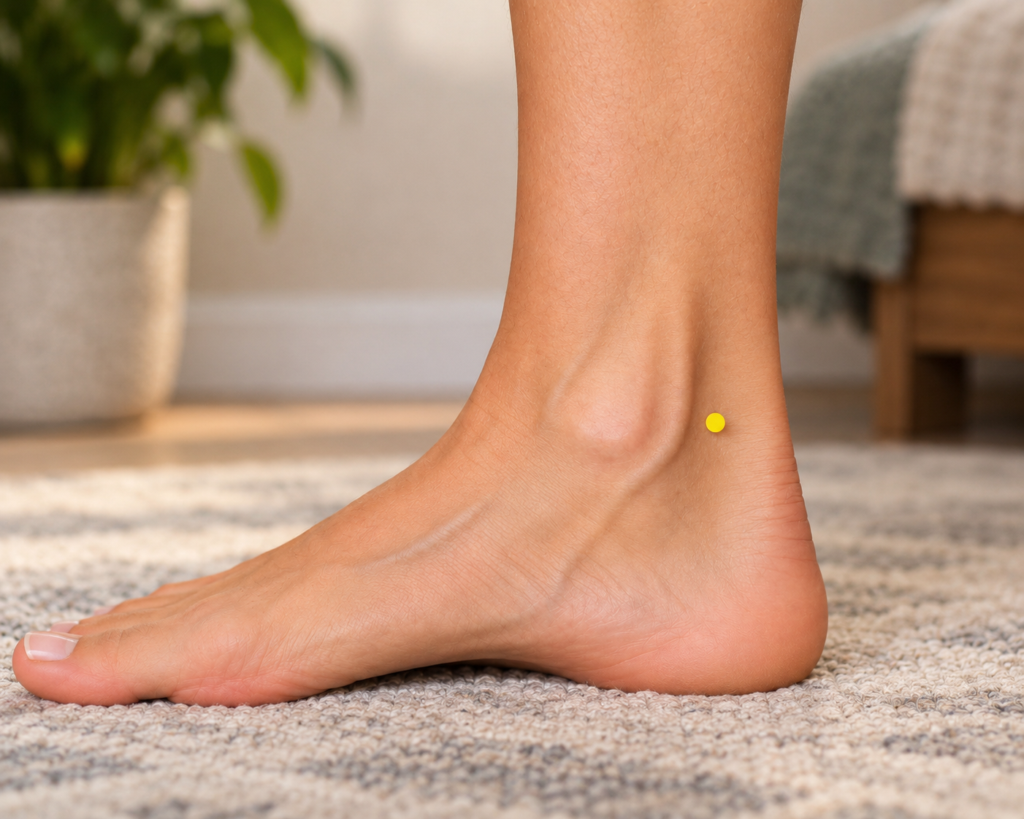
8. Press on KI3 above the inner ankle when you are running on empty. KI3 sits in the hollow between the inner ankle bone and the Achilles tendon, level with the tip of the ankle bone. Press firmly for thirty seconds to a minute on each ankle. KI3 is called “Taixi,” the Kidney’s source point.
When drowsiness results from a short night’s sleep or a long week, it indicates that the Kidney, the body’s primary reserve, is being tapped into. KI3 helps support this reserve and helps you stay alert when your energy is depleted. It naturally works with SP6, which sits just above it.
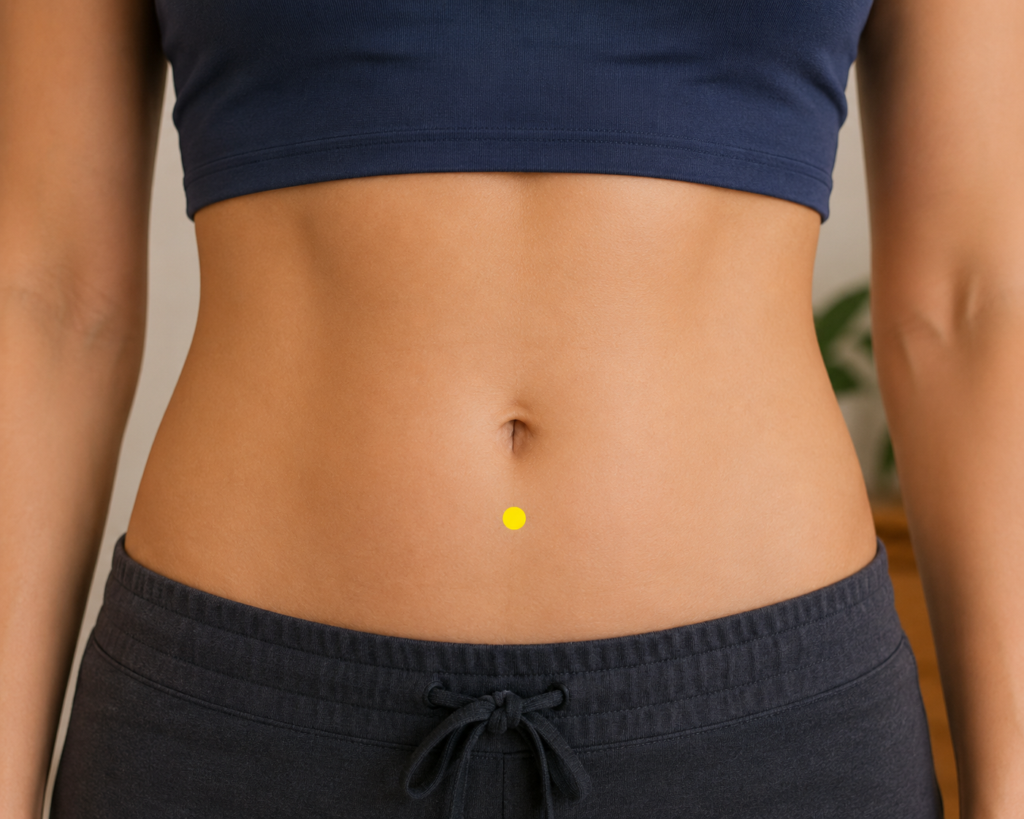
9. Press on CV6 below the navel while breathing deeply. CV6 sits on the midline of the lower abdomen, about two finger-widths below the navel. Press gently with your fingertips while sitting up straight and taking five slow, deep breaths into the belly. CV6 is called “Qihai,” the “Sea of Qi.”
The CV6 point acts as the body’s Qi reservoir. Applying pressure to it while breathing deeply helps draw energy from the body’s core. Sitting upright and taking full breaths also combats the slumped posture and shallow breathing that lead to drowsiness. That’s why this point makes an ideal conclusion to the routine.
Why These Acupressure Points Work
In Traditional Chinese Medicine, drowsiness is seen as the failure of clear Yang to ascend to the head. This often results from stagnant Qi caused by sitting, dampness after eating, or depleted reserves due to poor sleep. The nine points address this condition.
- The head points (GV20, GB20) lift the Yang and clear the heavy head.
- The hand points (LI4, PC9, SI3) give a quick, discreet jolt of alertness and open the channel to the brain.
- The energy points (ST36, SP6, KI3, CV6) draw on the body’s reserves and clear the post-meal slump.
The main finding from the research is that stimulating points and techniques increase alertness, whereas relaxing points reduce it. Therefore, if you need to stay awake, avoid calming points like Yintang, Anmian, and HT7, and reserve them for bedtime.
How to Properly Use These Acupressure Points
- Utilize brisk, stimulating techniques such as tapping, rapid pulses of firm pressure, and brisk circular motions, rather than slow, sustained holds.
- For a swift and discreet energy boost at your desk or during a meeting, press PC9 with your fingertips, pulse LI4, and apply pressure to SI3.
- When you have a moment, add GV20 and GB20 to help clear your mind, then include ST36, SP6, KI3, and CV6 to tap into your reserves.
- Hold or work each point for thirty seconds to one minute. The complete routine requires approximately five minutes.
- Pair the points with movement: stand up, stretch, and take a brief walk if you can.
Certain habits can enhance the effectiveness of acupressure points. It is best to stand and move every thirty to sixty minutes, as physical activity quickly boosts alertness. Get natural light by stepping outside or sitting near a window, and improve ventilation by opening a window or moving into cooler air since warm, stuffy environments can induce sleepiness. Stay properly hydrated by drinking water, since dehydration leads to fatigue. Choose a light lunch with protein and vegetables instead of a heavy, carb-laden meal. If you drink caffeine, do so earlier in the day to prevent interference with nighttime sleep. A brief nap of ten to twenty minutes can also effectively restore alertness without causing grogginess.
When to Get Professional Help
If you feel drowsy while driving, don’t rely on acupressure or any other remedy to get you through it. Instead, pull over to a safe place and take a rest, as drowsy driving is a leading cause of serious accidents. You should see a doctor if you are sleepy during the day even though you are getting adequate sleep, particularly if you snore loudly, wake up gasping or choking, or have morning headaches, since these symptoms can be signs of sleep apnea. Also, see a doctor if you suddenly fall asleep during an activity or if your muscles feel weak when you experience strong emotions, as these may be signs of narcolepsy. It is important to consult a doctor if drowsiness starts after beginning a new medication or if it is accompanied by a low mood, weight changes, feeling cold, or unusual tiredness. Depression, thyroid problems, and anemia are all possible causes of chronic drowsiness.
Acupressure offers a quick, natural way to boost alertness and can complement good sleep habits and medical treatments when needed.
Above and Beyond Acupuncture offers acupuncture, cupping, and lifestyle coaching at the North Frank Lloyd Wright Boulevard location in Scottsdale.
Schedule an appointment online to start your healing journey.
The points above are only as effective as the technique used to apply them. Where to press, how firmly, and for how long all affect the result. For a full breakdown of how to perform acupressure properly at home, read Performing Acupressure in 3 Easy Steps.
For the struggle to get going in the morning, acupressure to wake up in the morning is the companion post; if tiredness is constant rather than occasional, acupressure for fatigue is more applicable.

About the Publisher
Paul Kerzner, L.Ac., is a licensed acupuncturist and board-certified herbalist, as well as the founder of Above and Beyond Acupuncture in Scottsdale. His own journey from chronic patient to practicing acupuncturist shapes his commitment to providing honest, clinically grounded information about acupuncture and Traditional Chinese Medicine. Learn more about Paul and his clinical approach on the About Us page.