
Key Takeaways
- Home remedies for insomnia often provide improvement without the side effects of medications.
- Important remedies include turning off screens, trying a hot foot soak, and drinking tart cherry juice.
- Practicing meditation and maintaining consistent sleep/wake times also help regulate sleep patterns.
- Other effective strategies include cooling your bedroom, taking warm baths, and considering magnesium supplements.
- If home remedies for insomnia are insufficient, seek professional treatment for chronic or severe insomnia.
Insomnia affects roughly one in three American adults, and most people prefer to try home remedies before turning to sleep medications. This makes sense. Prescription sleep medications produce side effects including daytime grogginess, tolerance, and dependence over time. Home remedies target the underlying patterns that drive sleep disruption and often produce meaningful improvement without those trade-offs.
The remedies below are the ones that come up most often in practice as genuinely useful for patients dealing with insomnia. Not every remedy works for every person. Some target the physical settling required for sleep. Some target the racing mind. Some support the biological rhythms that regulate the sleep cycle. Trying several and finding the combination that works for you produces better results than sticking with a single approach.
For patients whose insomnia is persistent or severe, professional treatment is worth pursuing. The companion article Can Acupuncture Treat Insomnia? covers the full clinical framework and how acupuncture addresses the underlying patterns causing chronic insomnia.
Here are ten home remedies worth trying:
1) Turn Off Screens Before Bed
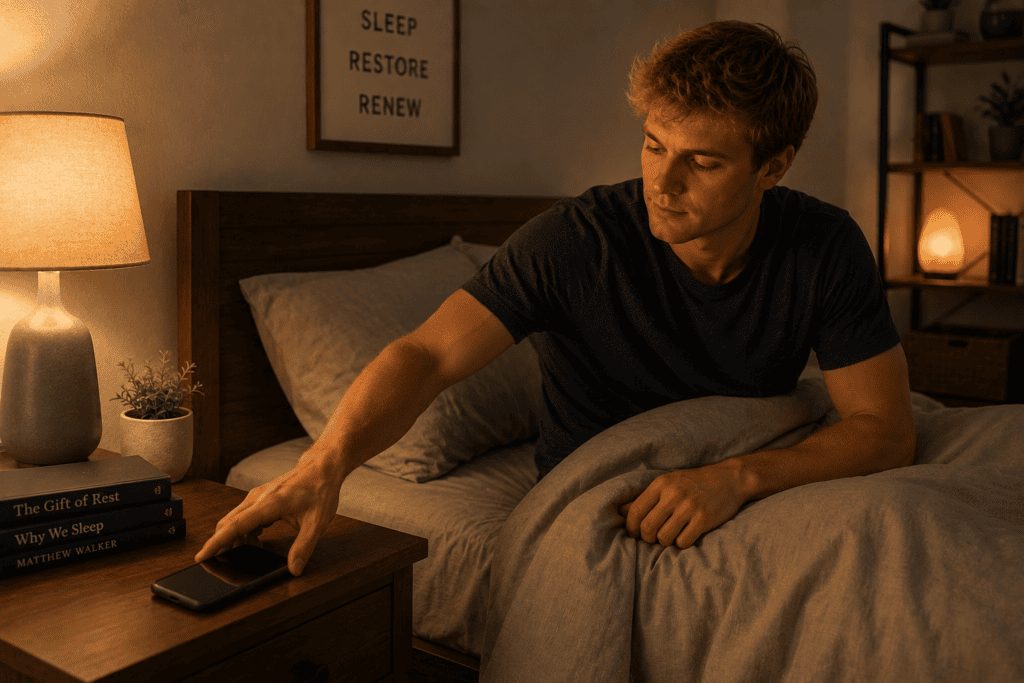
This is the single most important remedy for many patients. The blue light from phones, tablets, laptops, and televisions suppresses the release of melatonin, which is the hormone that signals your body it is time to sleep. Beyond the light itself, the mental stimulation from scrolling, checking messages, or watching content keeps the mind active when it should be settling.
Aim for one hour without screens before your desired sleep time. Two hours is even better. Many patients find this the hardest habit to change and also the one that produces the most noticeable improvement in sleep quality. Give it at least a week before evaluating whether it is working.
2) Try a Hot Foot Soak

This is a traditional Chinese remedy that works particularly well for patients with racing thoughts at bedtime. Fill a large pot or basin with water hot enough to be comfortable but not scalding, deep enough to cover your feet up to the ankles. Soak your feet for 20 to 30 minutes about an hour before bed. If the water cools too much, add more hot water.
The remedy works by drawing energy downward from the head, which quiets the mental activity that keeps many people awake. For patients whose insomnia involves an active mind at bedtime, this simple practice often produces surprising results. Consistent use over two to three weeks produces the strongest effects.
3) Drink Tart Cherry Juice

Tart cherry juice contains natural melatonin and has research support for improving sleep. A 2018 study from Louisiana State University found that adults who drank tart cherry juice twice daily for two weeks slept an average of 84 minutes longer per night compared to placebo.
The typical dose is 8 ounces in the morning and 8 ounces in the evening. Look for unsweetened Montmorency tart cherry juice, which is the variety studied. Regular sweet cherry juice does not produce the same effect.
The Sleep Foundation summary on tart cherry juice covers the research base and appropriate use.
4) Practice Guided & Seated Meditation
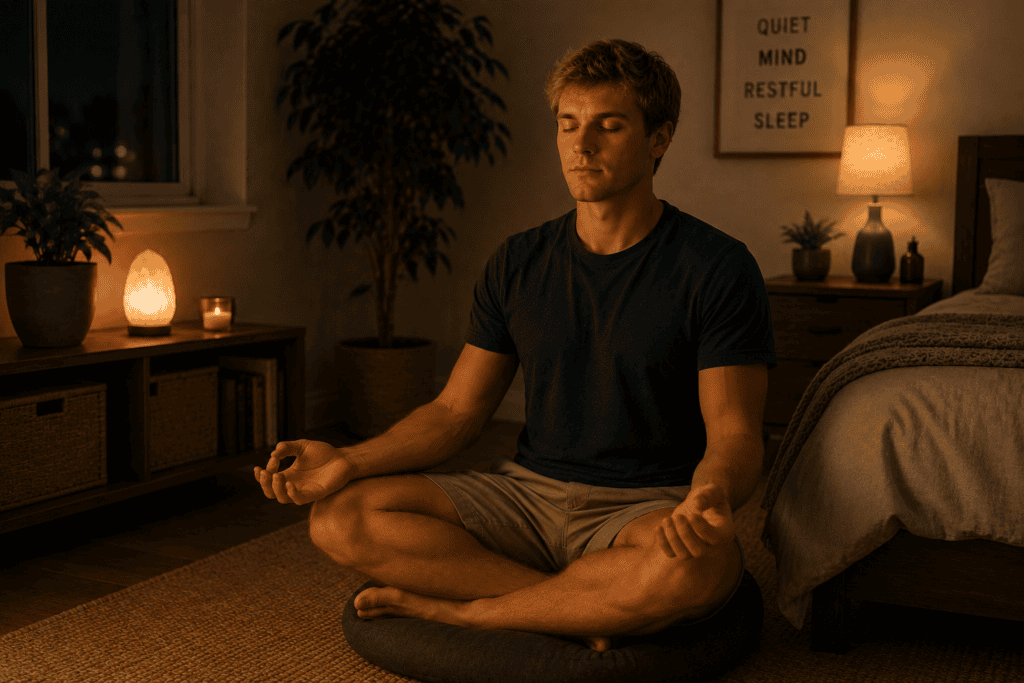
Meditation is one of the most researched non-medication approaches to insomnia. The practice reduces the mental activity and physical tension that drive many sleep problems. Guided sleep meditations are widely available for free on YouTube and through apps like Insight Timer, Calm, and Headspace.
Start with 10 to 15 minute sessions in the evening. Progressive relaxation meditations that guide you through releasing tension from head to toe work particularly well for sleep. Body scan meditations that direct attention through each part of the body also produce settling effects.
The Many Benefits of Meditation covers the practice in more detail.
5) Keep Consistent Sleep and Wake Times

Your body has an internal clock that regulates when you feel sleepy and when you feel alert. Irregular sleep schedules disrupt this clock and produce insomnia even when total sleep hours appear adequate.
Go to bed at approximately the same time every night and wake up at approximately the same time every morning, including on weekends. The consistency reinforces the biological signals that trigger sleep at the right time. Even shifting your wake time by an hour on weekends can disrupt the pattern enough to affect the following week.
6) Cool Down Your Bedroom
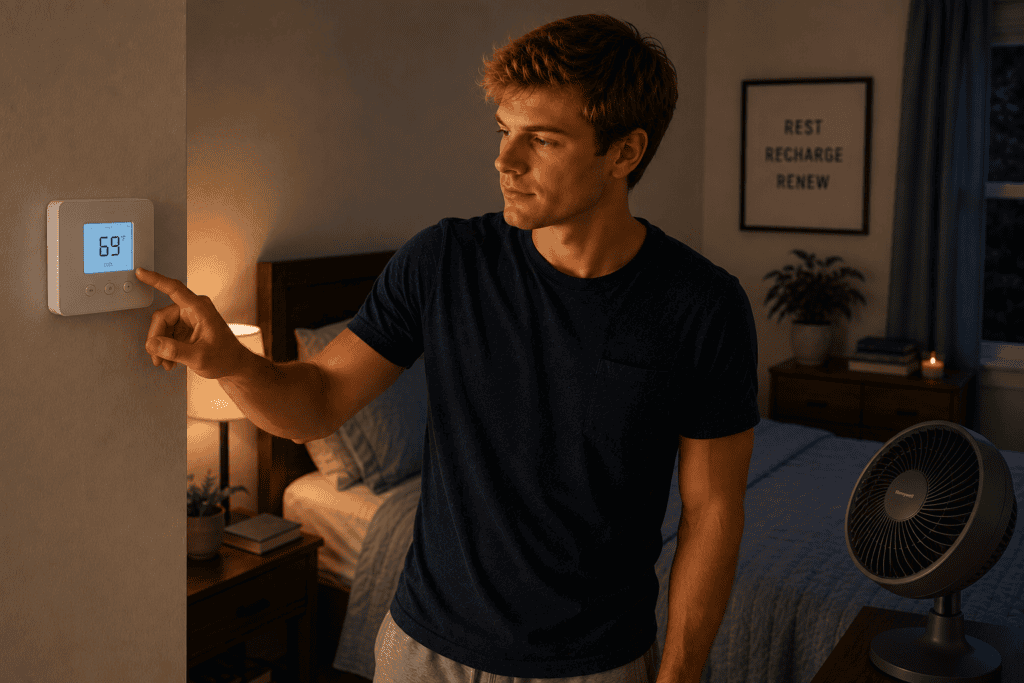
Your body temperature drops naturally as you fall asleep. A cool bedroom supports this process. A warm bedroom fights it.
The ideal bedroom temperature for most people is between 65 and 69 degrees Fahrenheit. This feels cool when you first get into bed but supports the temperature drop that facilitates sleep. In Arizona summers, running the air conditioning slightly cooler at night is worth the electricity cost for the sleep benefit.
7) Take a Warm Bath Before Bed
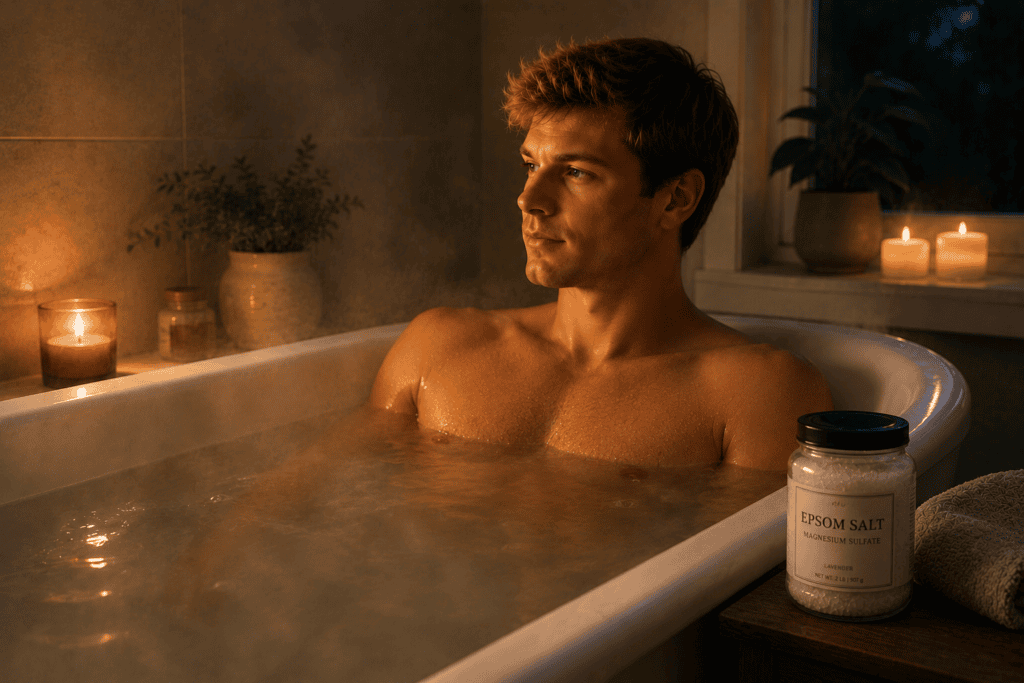
This works through a paradoxical effect. A warm bath about 90 minutes before bed raises your body temperature temporarily. When you get out and your temperature drops back down, the rapid cooling signals your body to prepare for sleep.
Aim for a bath of about 15 to 20 minutes in comfortably hot water. The effect is strongest when the bath is about 90 minutes before your target sleep time, giving your body temperature time to rise and then fall. Adding Epsom salts (which contain magnesium) may amplify the effect for some patients.
8) Consider Taking Magnesium
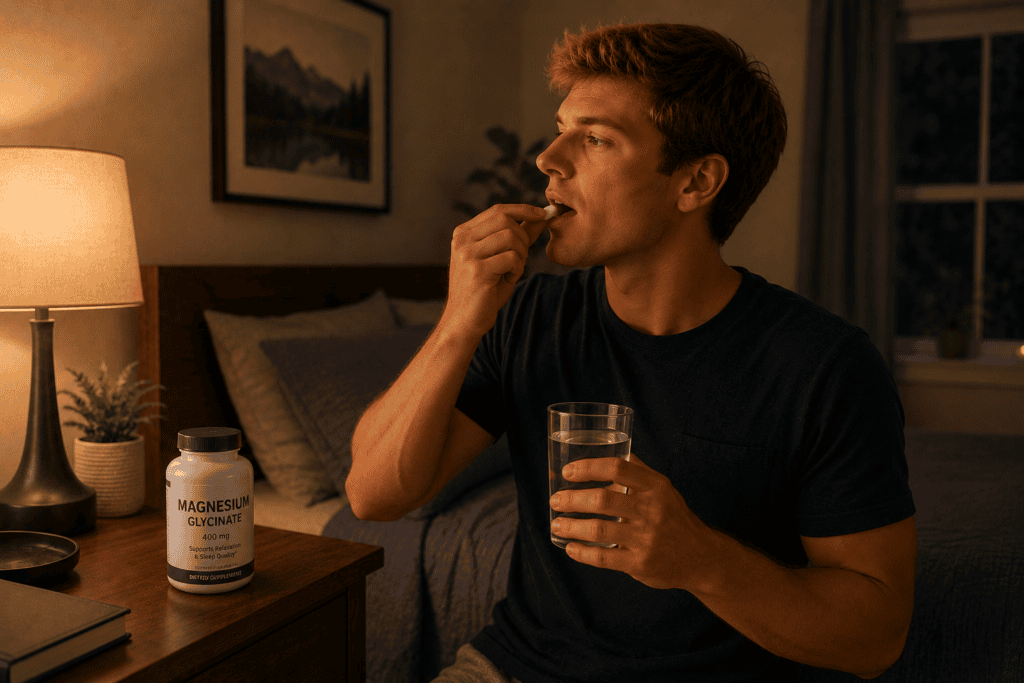
Magnesium plays a role in the biological processes that regulate sleep, and many Americans are deficient in this mineral. Supplementation supports sleep for patients whose insomnia has a magnesium deficiency component.
Magnesium glycinate is the form most commonly recommended for sleep because it is well absorbed and has calming effects. Typical doses range from 200 to 400 mg taken 30 to 60 minutes before bed. Consult your physician before starting any supplement, particularly if you take medications or have kidney problems.
9) Try the 4-7-8 Breathing Method

This breath technique settles the nervous system and prepares the body for sleep. The practice is simple. Breathe in through your nose for a count of four. Hold your breath for a count of seven. Breathe out through your mouth for a count of eight. Repeat this cycle four times.
The pattern activates the parasympathetic nervous system, which is the branch responsible for rest and digestion. Practicing this technique in bed when you cannot fall asleep or when you wake at night often produces noticeable settling within a few cycles.
10) Journal to Purge Your Thoughts

Racing thoughts at bedtime often reflect the mind trying to keep track of everything you need to remember or address. Writing these thoughts down before bed offloads them from your mind onto the page, which reduces the mental activity that keeps you awake.
Keep a simple notebook next to your bed. Ten minutes before you plan to sleep, write down anything on your mind. Tomorrow’s tasks. Worries. Ideas. Reminders. The act of writing them signals your mind that they will not be forgotten, which allows your mind to release them.
When Home Remedies Are Not Enough
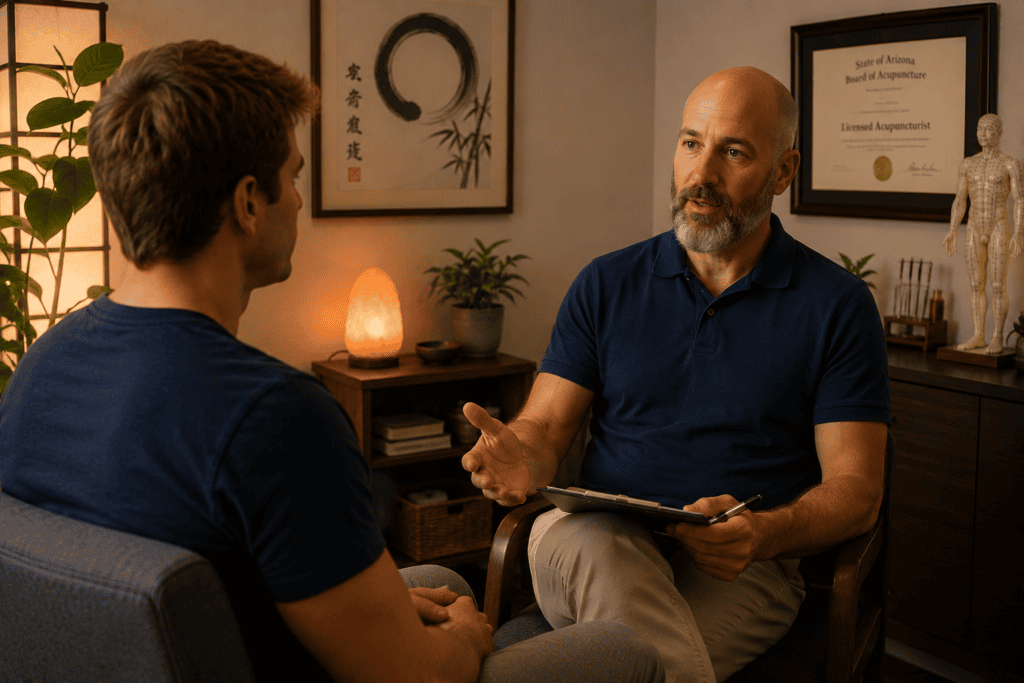
The remedies above work for many patients dealing with situational or mild insomnia. For patients whose insomnia is chronic, severe, or accompanied by other symptoms, professional treatment is worth pursuing.
The Mayo Clinic overview of insomnia and the Cleveland Clinic summary provide the medical framework for understanding when to seek professional care.
Sleep problems accompanied by loud snoring, pauses in breathing, morning headaches, or excessive daytime sleepiness warrant evaluation for sleep apnea. Insomnia accompanied by significant depression, thoughts of self-harm, or substance use warrants mental health evaluation. Persistent insomnia lasting more than a few months typically benefits from professional treatment.
For patients with chronic insomnia, Can Acupuncture Treat Insomnia? covers the professional treatment approach. For the specific pattern of waking at 3am unable to return to sleep, How to Fall Back Asleep When You Wake Up at 3am covers targeted approaches. For patients whose sleep has been disrupted for years, Do I Have “Sleep PTSD”? covers the entrenched sleep disruption pattern.
Anxiety, Stress, and Depression covers the nervous system components that may contribute to many sleep problems.
Acupuncture, Cupping & Lifestyle Coaching covers what services this practice offers.
Reach out to Above and Beyond Acupuncture on North Frank Lloyd Wright Boulevard in Scottsdale to schedule a consultation.
Schedule an appointment online or call us today to start your healing journey.
About the Publisher
Paul Kerzner, L.Ac., is a licensed acupuncturist and board-certified herbalist, as well as the founder of Above and Beyond Acupuncture in Scottsdale. His own journey from chronic patient to practicing acupuncturist shapes his commitment to providing honest, clinically grounded information about acupuncture and Traditional Chinese Medicine. Learn more about Paul and his clinical approach on the About Us page.