Key Takeaways
- Tennis elbow affects many people outside of tennis; it often arises from repetitive hand movements and can lead to considerable pain.
- Traditional treatments focus on inflammation but often fail to address the underlying degeneration of the tendon.
- Acupuncture treats tennis elbow by improving circulation, reducing inflammation, and stimulating natural pain relief mechanisms.
- Most patients require multiple acupuncture sessions for effective treatment and long-term improvement in pain and function.
- A multi-modality approach, including rest and ergonomic assessment, enhances the effectiveness of acupuncture for tennis elbow recovery.

Tennis elbow is one of the most common repetitive strain conditions in modern life, and it is often misunderstood. The name suggests a sports injury, but the majority of tennis elbow cases occur in people who do not play tennis. Anyone whose work or daily life involves repetitive gripping, wrist extension, or fine hand movements can develop the condition. Office workers, tradespeople, musicians, chefs, gardeners, and hobbyists all present with tennis elbow at rates that dwarf the actual tennis-playing population.
The pain is characteristic. A specific tenderness at the bony bump on the outside of the elbow (the lateral epicondyle) that flares with gripping, lifting, or extending the wrist. The pain often radiates down the forearm. Simple tasks like turning a doorknob, lifting a coffee cup, or shaking hands become genuinely difficult. The pattern often persists for months or years despite rest, medication, and other interventions.
The conventional approach involves anti-inflammatory medications, wrist splints, physical therapy, corticosteroid injections, and in some cases surgery. These help some patients but leave many still dealing with substantial pain and functional limitation. This is where acupuncture and Traditional Chinese Medicine offer a substantially different approach that addresses the underlying tendon dysfunction rather than only masking the resulting pain.
What is Tennis Elbow?

Tennis elbow, technically called lateral epicondylitis, has been understood differently in the past decade than it was previously. The old model treated the condition as an inflammatory process (tendonitis). The current model recognizes that chronic tennis elbow is primarily a degenerative process (tendinosis) rather than an inflammatory one. The distinction matters because it changes what interventions actually work.
The Cleveland Clinic overview of tennis elbow describes the condition as involving small tears and degenerative changes in the tendons that attach the forearm muscles to the lateral epicondyle. These changes accumulate from repetitive stress that exceeds the tendon’s capacity for repair. The result is disorganized tendon tissue that is weaker, less elastic, and more pain-generating than healthy tendon.
Anti-inflammatory medications and corticosteroid injections address the inflammatory component of the condition but do not repair the underlying tendon degeneration. This is one reason patients often experience temporary relief with these interventions followed by a return of symptoms. The tendon itself has not healed.
The Mayo Clinic summary of tennis elbow covers the causes, risk factors, and treatment options in more detail. What matters clinically is that tennis elbow is not a simple problem with a simple fix. It is a tendon healing problem that requires interventions that support the tendon’s regenerative capacity.
Why Standard Care Often Falls Short
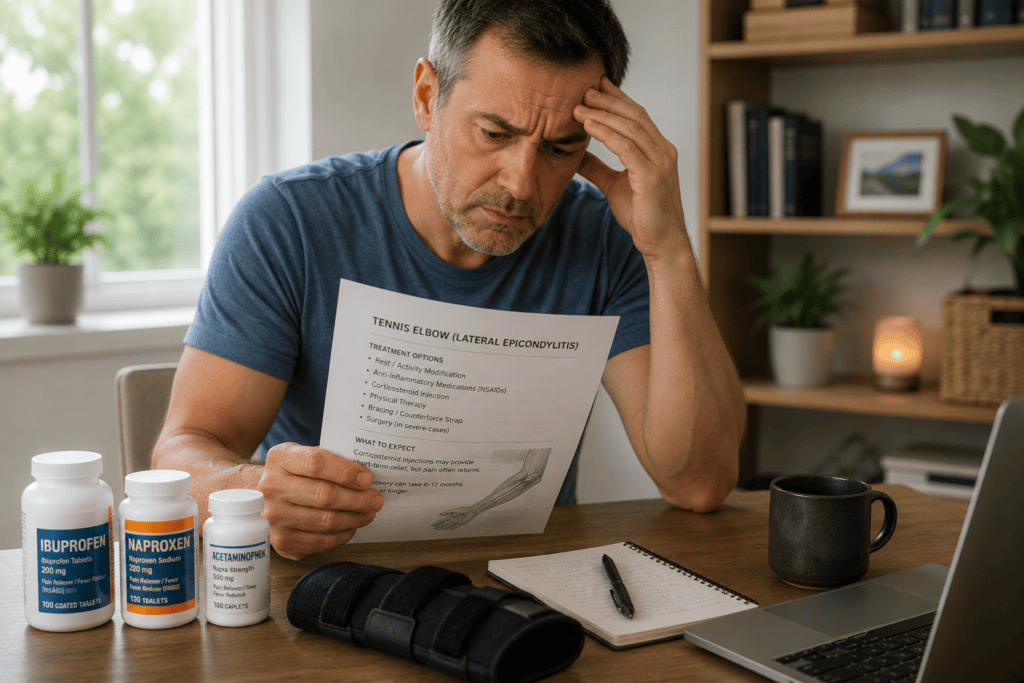
The limitations of standard care for tennis elbow have become increasingly recognized in recent years. Multiple studies have shown that corticosteroid injections produce short-term pain relief but are associated with higher rates of long-term recurrence compared to conservative treatment. NSAIDs (ibuprofen, naproxen) reduce pain but do not accelerate tendon healing. Physical therapy that focuses on eccentric strengthening produces better long-term outcomes but requires months of consistent work.
Many patients arrive at acupuncture treatment after having tried these interventions with partial or limited success. Some have had imaging that showed nothing structurally alarming, yet the pain persists. This pattern is common enough across chronic musculoskeletal conditions that we have covered it directly in Your MRI Is Normal… So Why Are You Still in Pain?.
How Does Acupuncture Treat Tennis Elbow?
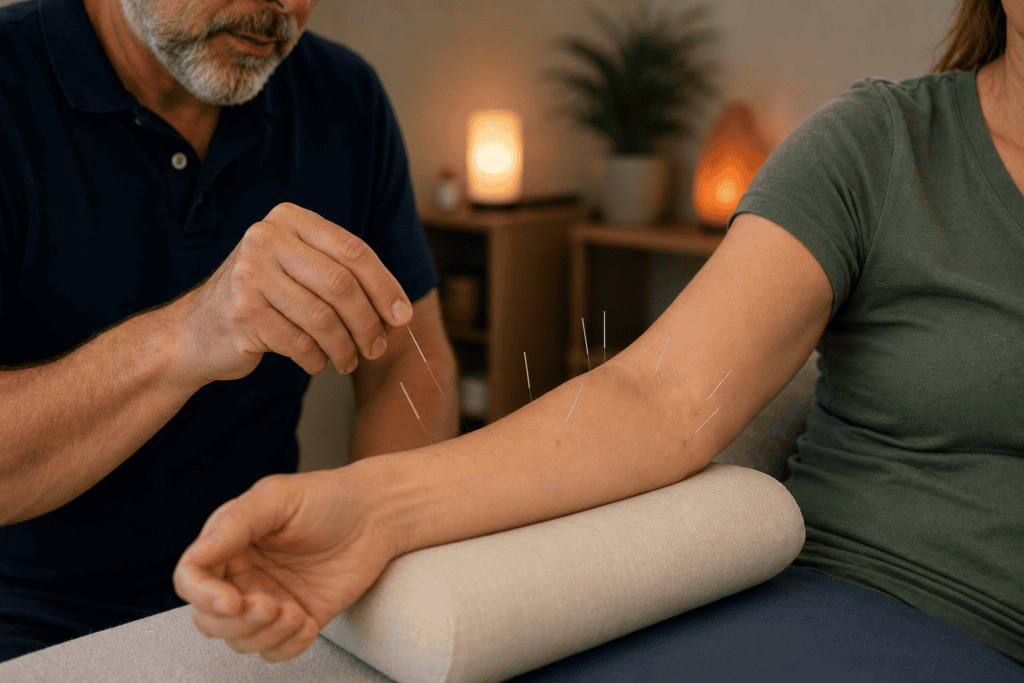
Acupuncture addresses the multiple mechanisms that produce and sustain tennis elbow simultaneously.
- Local circulatory support. Tendons have relatively poor blood supply compared to muscle tissue, which is one reason they heal slowly. Acupuncture improves local circulation at and around the treatment sites, delivering more oxygen and nutrients to the healing tendon and clearing metabolic waste that impairs recovery.
- Anti-inflammatory effects. While chronic tennis elbow is primarily degenerative rather than inflammatory, there is often a low-grade inflammatory component that acupuncture reduces through documented mechanisms.
- Endogenous pain relief. Acupuncture stimulates the release of endorphins, enkephalins, and other natural pain-relieving chemicals produced by the body itself. This reduces the pain signal at its source without the side effects of external medication.
- Muscular release. The forearm muscles that attach at the lateral epicondyle become chronically tight in tennis elbow patients. Acupuncture releases this muscular tension directly, which reduces the traction load on the healing tendon.
- Nervous system regulation. Chronic pain patterns often develop when the nervous system sensitizes to the pain signal over time. Acupuncture calms this sensitization, which reduces both the pain intensity and the pain persistence. The fuller picture is in Am I Stuck in a Pain Cycle?.
- Channel-based effects. Traditional Chinese Medicine treats tennis elbow through several channels including the Large Intestine, Small Intestine, and Triple Burner channels that traverse the elbow region. Local points at the elbow combined with distal points on the hand, forearm, and shoulder produce effects that pure local treatment cannot achieve.
- Pattern differentiation. A licensed acupuncturist identifies the specific patterns producing the tennis elbow in each patient. Some patients have primarily muscular patterns. Others have blood stagnation patterns. Others have underlying constitutional patterns that made the tendon more vulnerable to injury in the first place. The specific patterns identified shape the specific treatment plan.
The chronic stress dimension often plays a role in tennis elbow because chronic stress increases sympathetic activation and muscular tension throughout the body, which contributes to the sustained forearm muscle tightness that maintains the condition. The fuller picture of chronic stress is in What Is Cortisol and Why Do I Have So Much of It?.
The NCCIH summary on acupuncture describes the broader safety profile and evidence base for the treatment.
What Should I Expect From Treatment?
Tennis elbow treatment with acupuncture is not a quick fix. The tendon healing process takes months regardless of the treatment approach because tendons have relatively slow regenerative capacity by nature. Most patients need a course of treatment of eight to twelve sessions over two to three months to see meaningful sustained improvement.
The improvements often emerge in stages. The initial sessions typically produce noticeable pain relief during and immediately after the treatment. As the course of treatment progresses, the pain reduction lasts longer between sessions and the functional capacity starts to shift upward. Grip strength improves. Simple tasks that were painful become tolerable. The baseline pain level starts to drop.
For patients with acute tennis elbow (a recent flare), fewer sessions are often sufficient. Four to six treatments over four to six weeks can produce substantial resolution for acute patterns.
For patients with chronic tennis elbow that has persisted for months or years, treatment usually involves the initial course to shift the pattern followed by continued work over several months to fully consolidate the healing. Modifying the activities that contributed to the condition in the first place is essential during this period.
The Multi-Modality Approach

Acupuncture works best when integrated with the broader approach to tennis elbow.
- Rest and activity modification. Continuing the activities that caused the tennis elbow while trying to treat it undermines any intervention. Identifying the specific movements that aggravate the condition and modifying them during recovery is essential.
- Ergonomic assessment. For patients whose tennis elbow developed from work-related activities, ergonomic assessment of the workstation, tools, and movement patterns can reduce the load on the affected tendons.
- Eccentric exercise. The research base for eccentric strengthening exercises (specifically slow lowering movements that load the tendon) is substantial. A physical therapist familiar with tendinosis rehabilitation can prescribe the appropriate progression.
- Ice for acute flares only. For acute exacerbations, ice can reduce pain. For chronic tennis elbow, ice is not particularly useful because the condition is degenerative rather than inflammatory.
- Braces and straps can reduce pain during activity but do not address the underlying condition. Use them as short-term tools rather than long-term solutions.
When Should I See a Medical Professional?
Most tennis elbow responds to the approaches described above. Tennis elbow with sudden severe pain, numbness or tingling in the fingers, loss of grip strength that continues to worsen, or elbow pain following a traumatic injury warrants medical evaluation to rule out other conditions.
For patients dealing with persistent or recurring tennis elbow that is not responding to standard care, acupuncture treatment offers a substantial intervention that addresses the underlying tendon dysfunction rather than only masking the pain. The full picture of what the practice offers is in Acupuncture, Cupping & Lifestyle Coaching.
The broader stress and nervous system patterns that maintain many chronic pain conditions are covered in Anxiety, Stress, and Depression.
Reach out to Above and Beyond Acupuncture on North Frank Lloyd Wright Boulevard in Scottsdale to schedule a consultation.
Schedule an appointment online or call us today to start your journey to relief.