Key Takeaways
- Acupuncture is a diverse practice within Traditional Chinese Medicine, utilizing various techniques tailored to patient needs.
- Conventional needle acupuncture is the most recognized form, using fine needles at specific points based on a diagnosis.
- Electroacupuncture adds electrical stimulation to enhance pain relief and works well for chronic conditions.
- Other techniques include auricular acupuncture for holistic treatment and moxibustion for warming effects on cold patterns.
- The holistic integrated practice combines multiple techniques for comprehensive patient care, addressing both physical and emotional concerns.
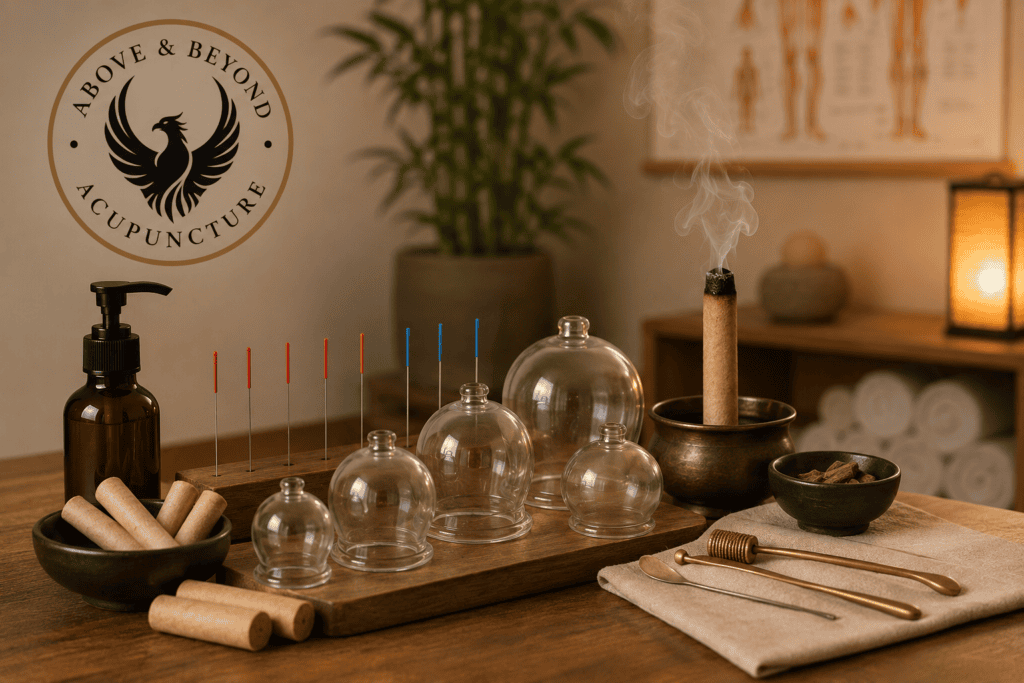
Acupuncture is a part of Traditional Chinese Medicine that includes several distinct ancient methods that practitioners use depending on the condition being treated, the patient’s presentation, and the specific goals of the session. Some methods involve needles. Others do not. Some produce warming effects. Others focus on tissue release. Understanding the range of techniques helps patients know what to expect and what options exist within a full acupuncture practice.
Part 1 of this series covered what acupuncture actually is, where it comes from, and how it works from both the Chinese medicine and modern research perspectives. This piece covers the specific techniques and modalities that make up a comprehensive acupuncture practice.
Here are the primary techniques and modalities used in Traditional Chinese Medicine.
Conventional Needle Acupuncture
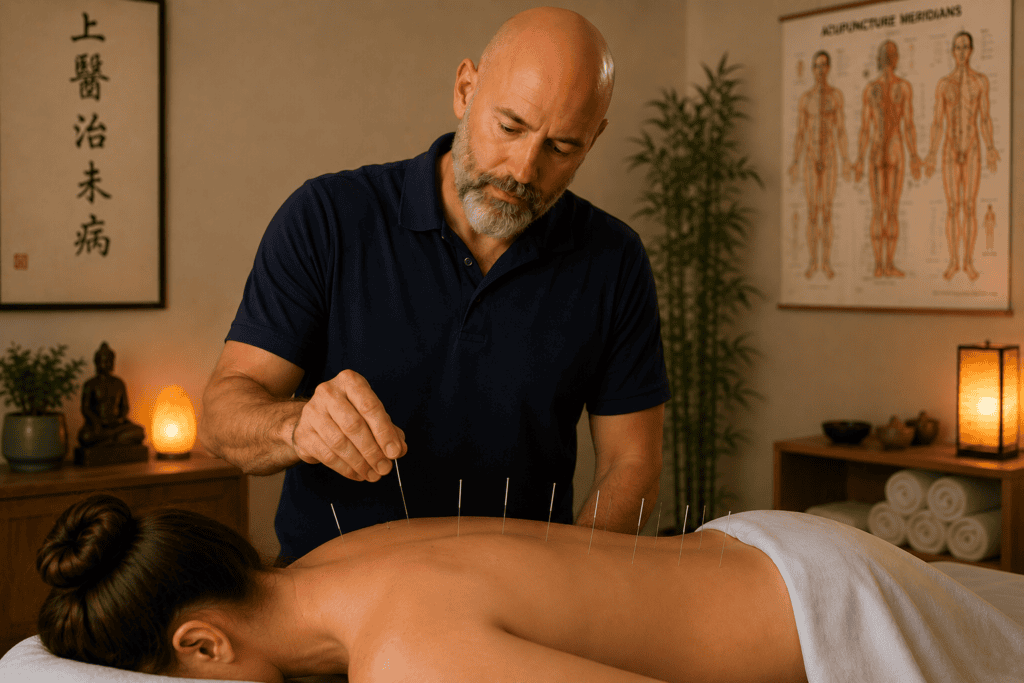
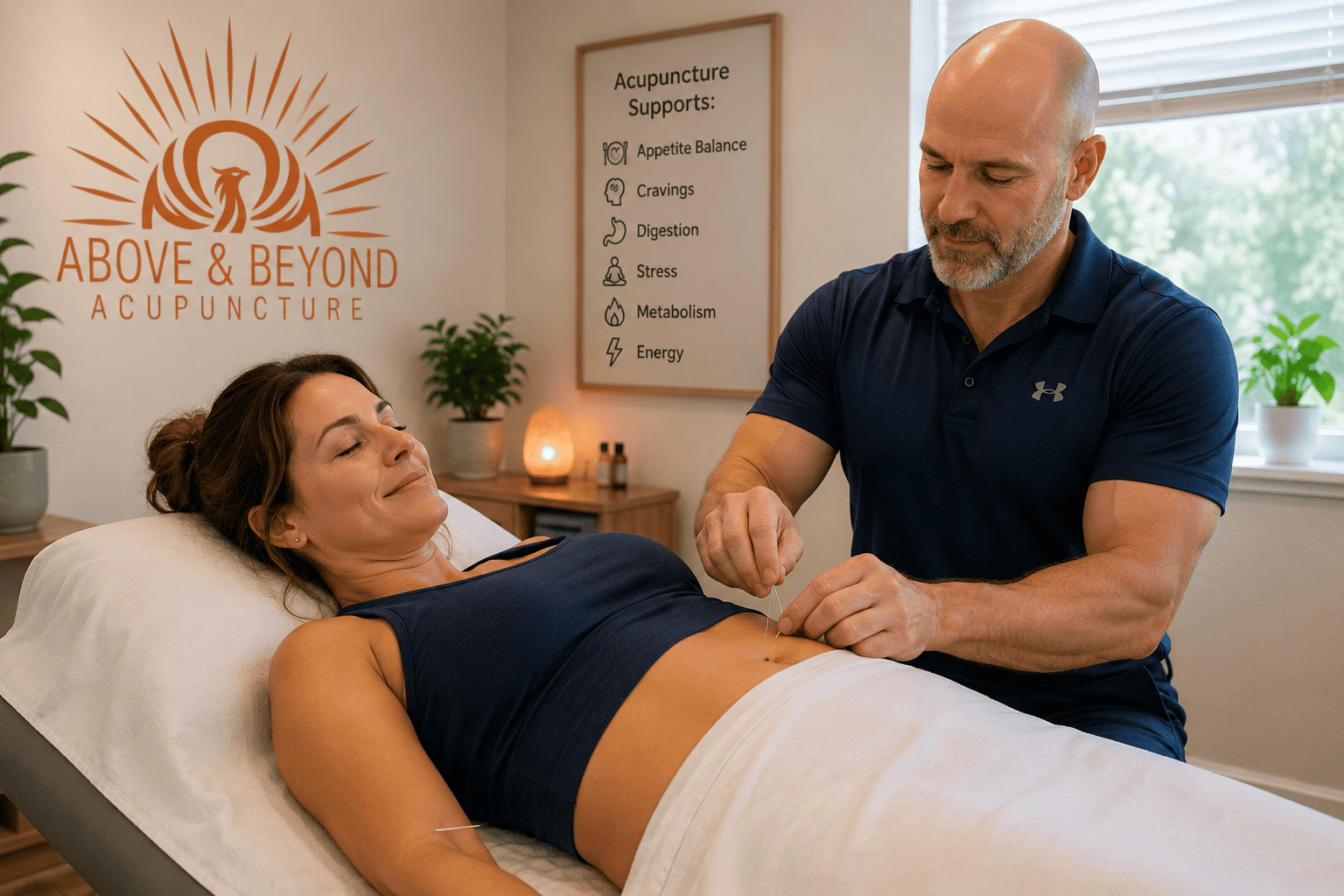
Conventional needle acupuncture is the technique most people picture when they think of acupuncture. Fine sterile disposable needles are inserted at specific points on the body based on the patient’s presentation and Chinese medicine diagnosis.
The needles used in conventional acupuncture are extremely thin, typically smaller than the diameter of a human hair. Most patients feel little more than a slight sensation on insertion. Some points produce a dull ache, warmth, or tingling as the needle activates the underlying tissue. This sensation is called “de qi” in Chinese medicine and indicates the point is being properly stimulated.
The needles remain in place for 20 to 45 minutes while the patient rests comfortably on the treatment table. During this retention time, the practitioner may manipulate specific needles to enhance the effect or adjust the placement based on how the patient is responding.
Point selection follows Chinese medicine diagnosis. The practitioner identifies which patterns are present in the patient and selects points that address those specific patterns. Two patients with the same Western diagnosis may receive completely different point selections based on their individual Chinese medicine patterns.
Electroacupuncture
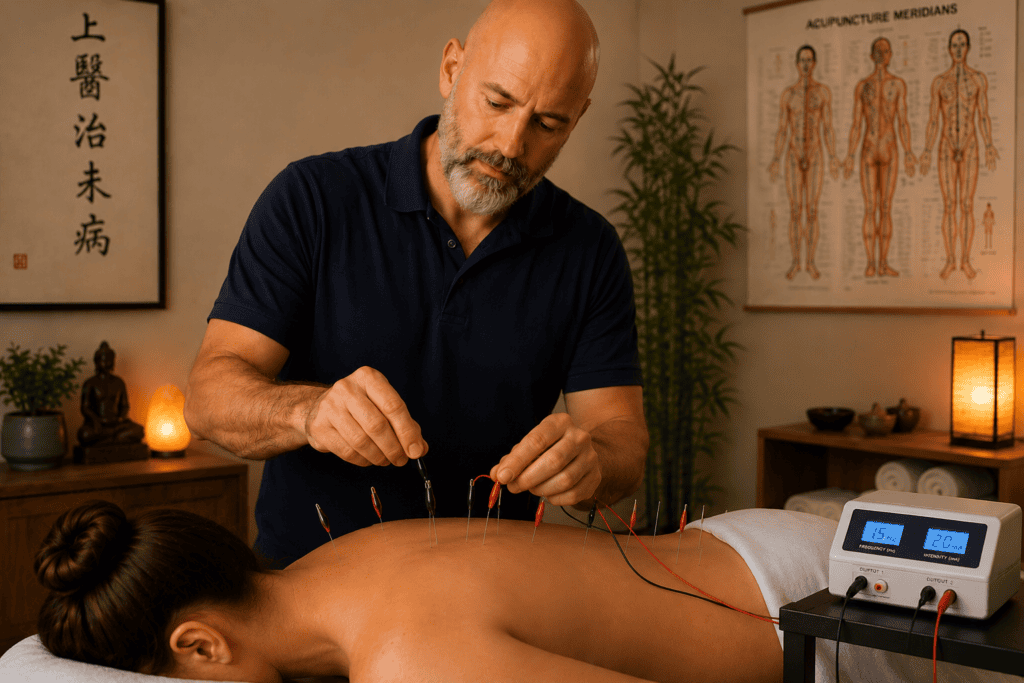
Electroacupuncture involves the addition of gentle electrical stimulation to conventional acupuncture needles. Small clips attach to the needles and deliver a mild pulsing current at frequencies chosen for the specific therapeutic effect.
The electrical stimulation enhances the effect of the needling for specific applications. Different frequencies produce different effects. Low frequency stimulation (2 Hz to 4 Hz) supports endorphin release and produces sustained pain relief. Higher frequency stimulation (100 Hz) produces more immediate analgesia. Alternating frequencies combine both effects.
Electroacupuncture works particularly well for chronic pain conditions, muscle tension patterns, and neurological conditions including neuropathy and Bell’s palsy. The electroacupuncture and chronic pain piece covers the specific applications in more depth.
Auricular (Ear) Acupuncture
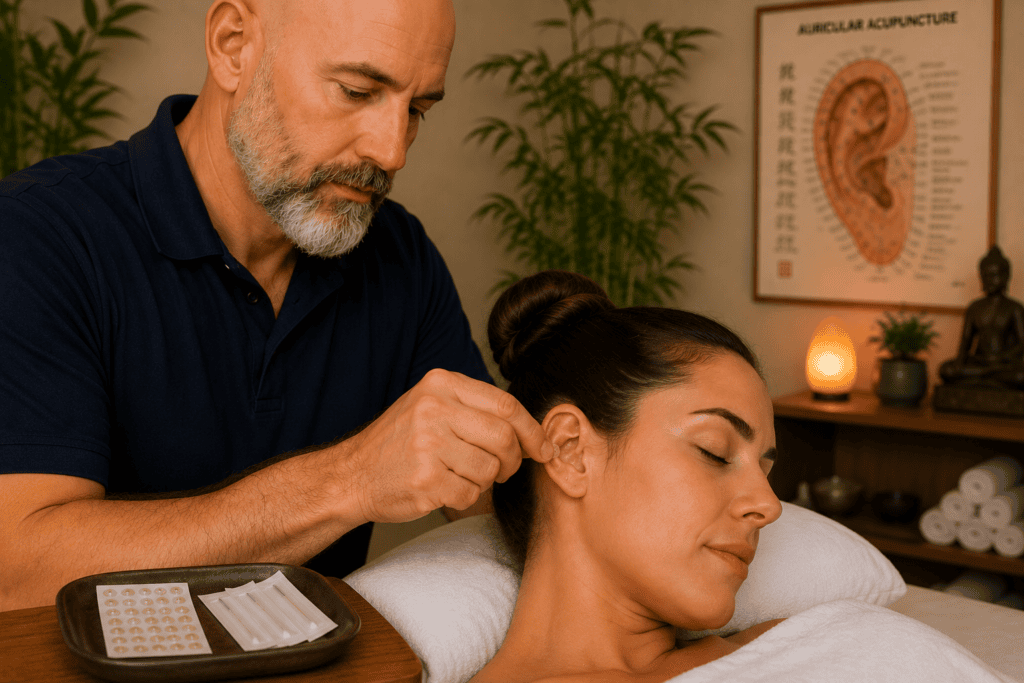
Auricular acupuncture uses specific points on the ear to treat conditions throughout the body. The ear contains a complete map of the body according to Chinese medicine, with points corresponding to organs, systems, and specific patterns.
Auricular treatment can be performed with fine needles inserted into the ear points, or with ear seeds and beads that provide continuous pressure without needles. The seeds are small pieces of specific herbs held in place with a small adhesive. Patients can press the seeds throughout the day to activate the points as needed.
Auricular acupuncture works particularly well for addiction recovery, smoking cessation, anxiety, stress patterns, and appetite regulation. The NADA (National Acupuncture Detoxification Association) protocol uses five specific ear points to support recovery from substance dependence.
Novak Djokovic notably appeared at Wimbledon 2026 with ear seeds visible, which brought auricular acupuncture into mainstream awareness as a technique used by elite athletes for focus, pain management, and nervous system regulation.
Scalp Acupuncture
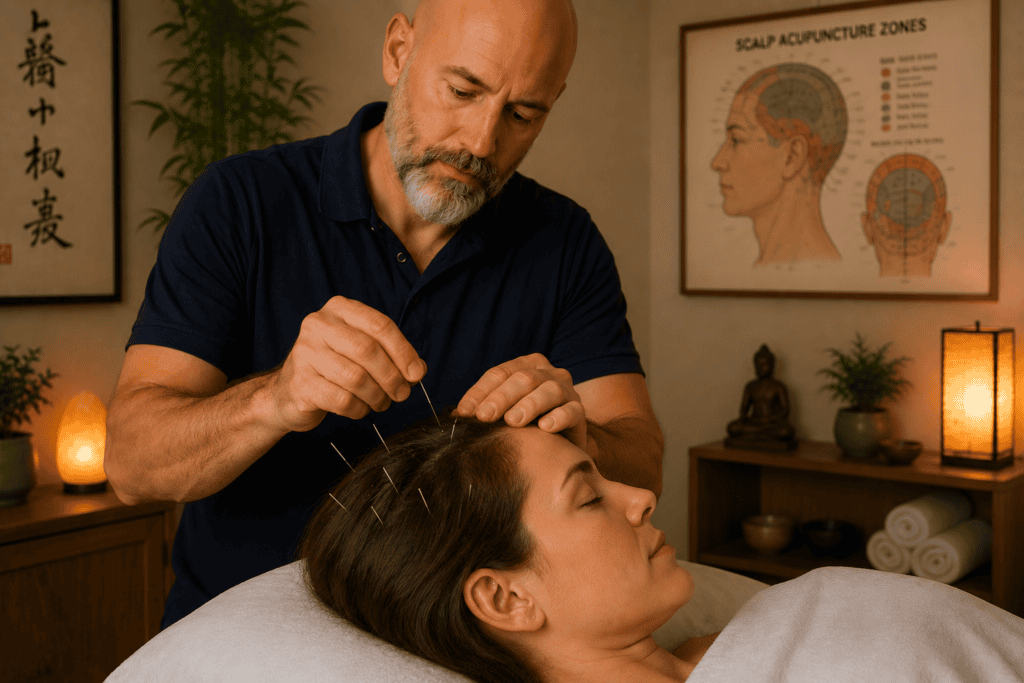
Scalp acupuncture uses specific zones on the scalp to treat neurological conditions and certain patterns. The zones correspond to areas of the brain and specific body regions.
Scalp acupuncture has particular effectiveness for post-stroke recovery, Parkinson’s support, and certain movement disorders. The technique is often combined with conventional body point acupuncture for comprehensive treatment.
Moxibustion
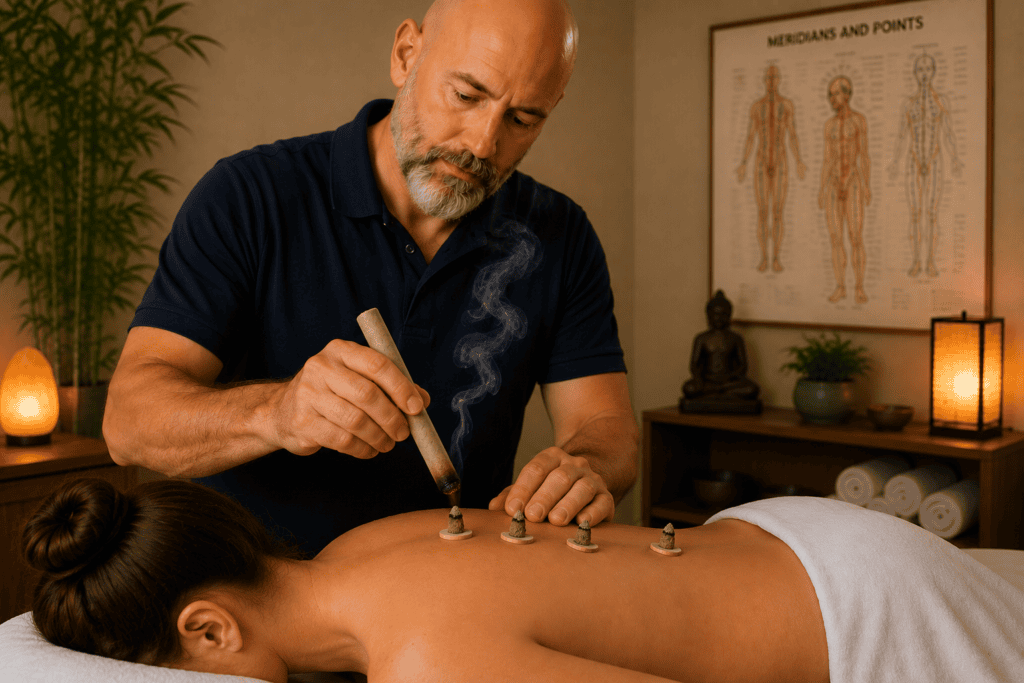
Moxibustion is the application of warming heat to acupuncture points using dried mugwort (Artemisia). The mugwort is either burned directly on the point in small cones, held near the point in stick form, or attached to the top of an inserted needle to provide sustained warmth.
The warmth produced by moxibustion adds a dimension that needle stimulation alone does not provide. Cold pain patterns, chronic depletion, weak circulation, and certain deep constitutional issues respond particularly well to the warming effect.
Moxibustion is often combined with conventional acupuncture in the same session. For patients whose patterns include Cold or deficiency, moxibustion is essential to producing the full therapeutic effect.
The technique has been used continuously for thousands of years and remains one of the most effective methods for addressing patterns that respond to warmth. Novak Djokovic has posted images of himself receiving moxibustion treatments, describing them as not always pleasant but effective.
Cupping
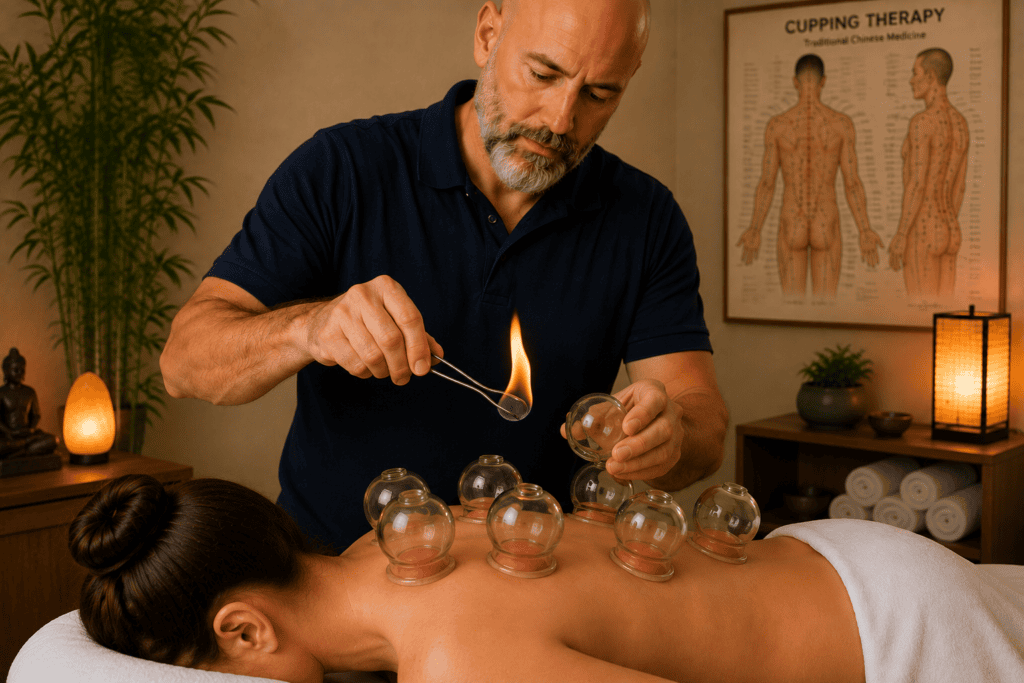
Cupping uses glass, silicone, or bamboo cups to create suction on the skin that draws tissue upward. The technique has been part of Chinese medicine for thousands of years and has grown substantially in Western awareness in recent decades.
Traditional fire cupping uses glass cups with a brief flame to create the vacuum. This is the classical method and produces the strongest suction. What Is Fire Cupping? covers the traditional method in depth.
Modern silicone and plastic cups use squeeze mechanisms or pump systems to create suction. Both work, but produce different quality of effect than traditional fire cupping.
The specific techniques within cupping include stationary cupping (cups placed at specific points and left in place) and running cupping (cups moved across the skin with oil to release fascia). The running cupping and fascia release piece covers the fascia work in more depth.
For patients wanting the general clinical picture of cupping, What Is Cupping and How Will It Help Me? covers the tradition and applications.
Gua Sha (Scraping)
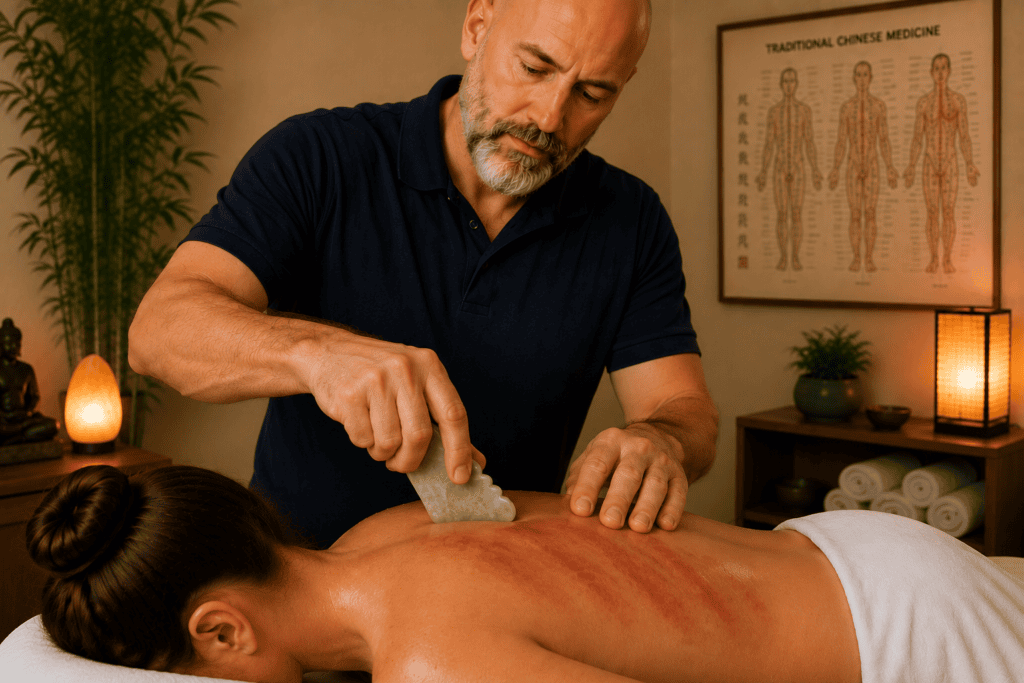
Gua sha uses a smooth-edged tool to scrape across oiled skin, producing red marks (sha) that indicate the release of stagnation from the tissue. The technique addresses muscular tension, chronic pain, and certain acute conditions like colds and flu.
Gua sha produces immediate release of muscular tension and often produces dramatic reduction in pain patterns. The characteristic red marks resolve within a few days depending on the level of stagnation released.
The technique has become popular in Western wellness contexts often applied to the face for cosmetic purposes. Traditional gua sha at a Chinese medicine practice focuses on the body applications for pain, tension, and constitutional patterns.
Laser Acupuncture
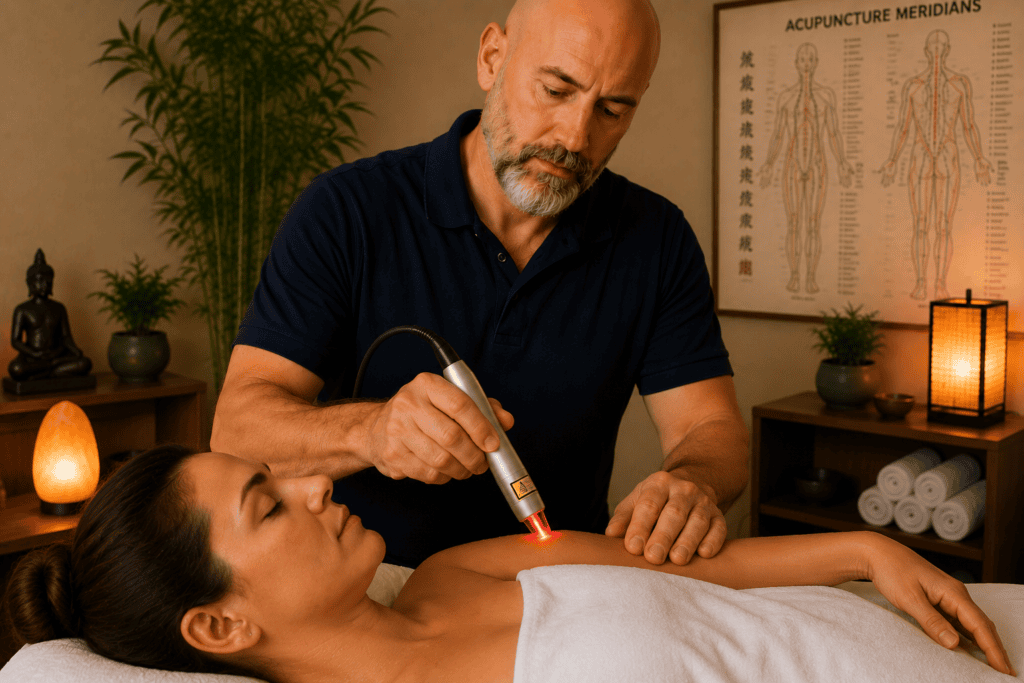
Laser acupuncture uses low-level laser stimulation of acupuncture points as an alternative to needles. The technique is useful for patients who cannot tolerate needles, for children, and for treating certain sensitive areas.
Laser acupuncture works but is generally considered less potent than needle acupuncture for most conditions. The technique is a legitimate alternative for specific situations rather than a replacement for conventional needling.
Important Distinctions From Dry Needling
Dry needling is a technique developed and used primarily by physical therapists and other non-acupuncturist practitioners. The technique inserts needles into trigger points and muscle bands but does not follow the Traditional Chinese Medicine framework of meridians, points, and pattern differentiation.
The dry needling versus acupuncture piece covers the specific distinctions in more depth. The key differences include the training required (licensed acupuncturists complete extensive graduate education while dry needling training is much shorter), the theoretical foundation (Chinese medicine versus Western musculoskeletal), and the point selection (traditional acupuncture points versus trigger points).
Both techniques use similar needles. The difference lies in how the practitioner selects where to insert them and what patterns they are addressing.
The Holistic Integrated Practice
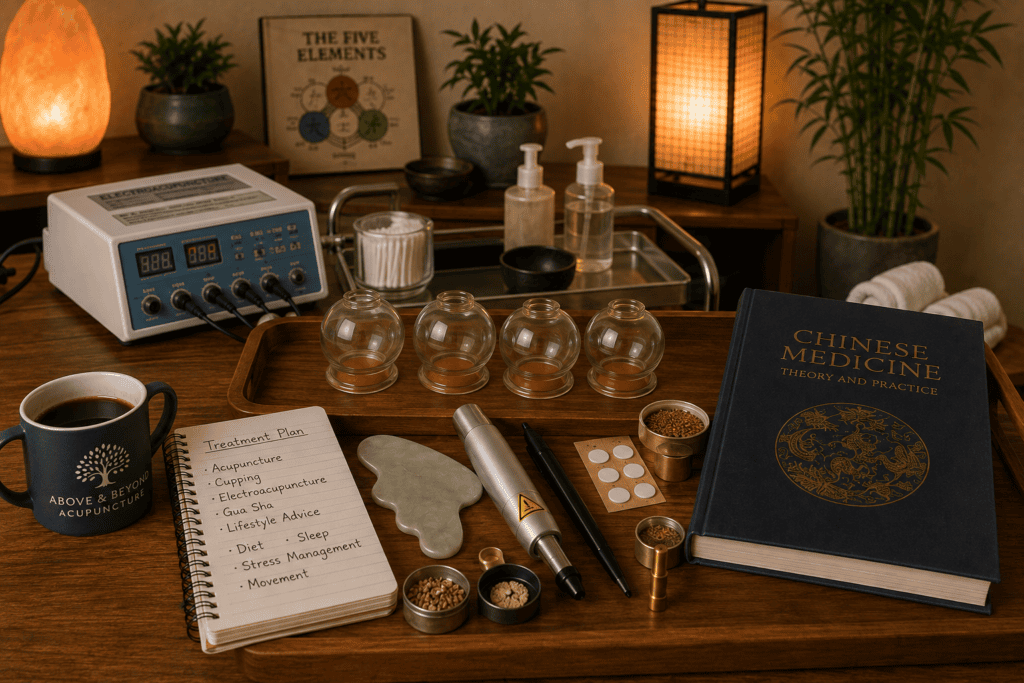
A comprehensive acupuncture practice uses multiple techniques within a single treatment session. Conventional needle acupuncture forms the foundation. Cupping, moxibustion, auricular work, and gua sha are added based on what the specific patient needs.
At Above and Beyond Acupuncture, most sessions integrate acupuncture with cupping and lifestyle coaching. Patients receive the full range of Chinese medicine tools rather than isolated needle work alone. This integrated approach reflects how Traditional Chinese Medicine has been practiced for thousands of years.
For patients wanting to explore the practice further, What Is Acupressure? covers the home practice version of acupuncture that uses pressure rather than needles.
Many patients experience anxiety, stress, and depression alongside the physical patterns they come in for. The integrated approach addresses these overlapping patterns.
Above and Beyond Acupuncture offers acupuncture, cupping, and lifestyle coaching at the North Frank Lloyd Wright Boulevard location in Scottsdale.
Schedule an appointment online or call us today to start your healing journey.
About the Publisher
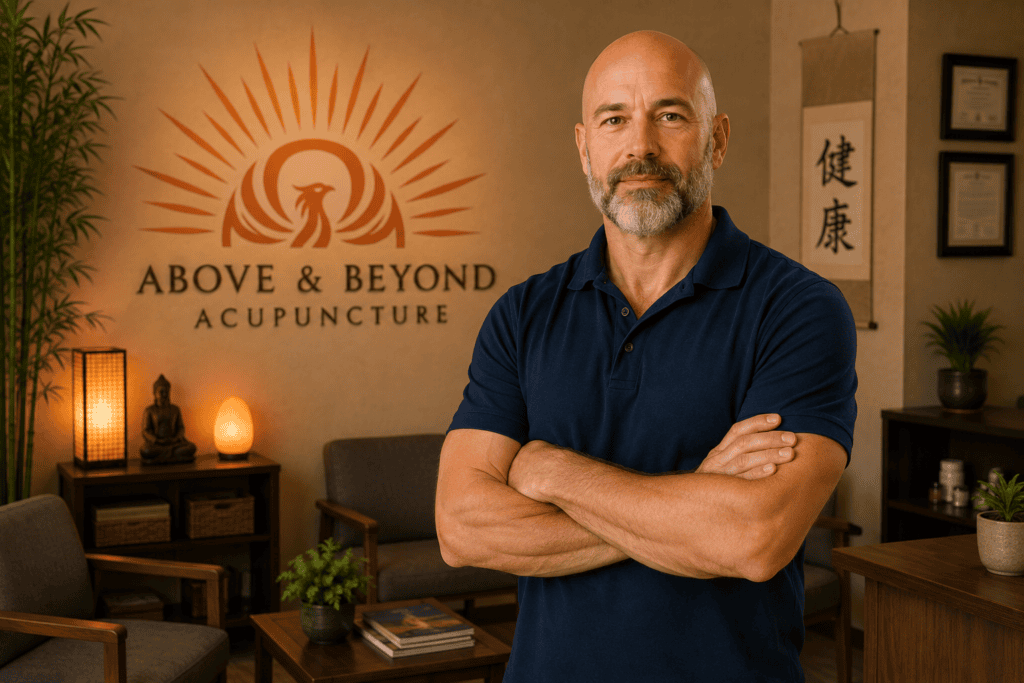
Paul Kerzner, L.Ac., is a licensed acupuncturist and board-certified herbalist, as well as the founder of Above and Beyond Acupuncture in Scottsdale. His own journey from chronic patient to practicing acupuncturist shapes his commitment to providing honest, clinically grounded information about acupuncture and Traditional Chinese Medicine. Learn more about Paul and his clinical approach on the About Us page.