
Key Takeaways
- Irritability commonly stems from stress, fatigue, and lack of sleep, impacting both you and others nearby.
- Acupressure can help alleviate irritability by targeting key points associated with the Liver, calming nerves, and restoring balance.
- Key acupressure points for irritability include LR3, GB34, HT7, and Yintang for calming; SP6, KI3, and ST36 for nourishment; and Taiyang for tension relief.
- Use these acupressure points consistently to develop patience and manage irritability effectively.
- Consult a doctor if irritability persists or impacts your relationships, as it may indicate underlying issues, like depression or anxiety.

Some days, everything seems to get under your skin.
Small irritations that usually wouldn’t bother you might suddenly seem overwhelming, leading to a quick temper and snapping at loved ones. This prickly tension can follow you everywhere. While irritability is normal, ongoing irritability can drain you and affect those around you. It often indicates tiredness, stress, poor sleep, or being overstretched, leaving your nerves worn out. Acupressure can help reduce this tension, calm your nerves, and lessen your irritability. The following points may be beneficial.
In Traditional Chinese Medicine, irritability is often linked to the Liver’s role in maintaining smooth energy flow throughout the body. When this flow is blocked, it can lead to tension, irritability, and a quick temper. Stress and pressure can impair the Liver, heightening sensitivity and reactivity. Additionally, low levels of Blood and Yin, due to factors such as poor sleep, overwork, hormonal shifts, skipped meals, or exhaustion, can weaken the Liver’s stability, fraying the nerves. As a result, fatigue, hunger, or exhaustion often increase irritability.
Here are nine acupressure points to help soothe the Liver, calm nerves, and restore deficiencies for internal harmony.
What Acupressure Points to Press and Why
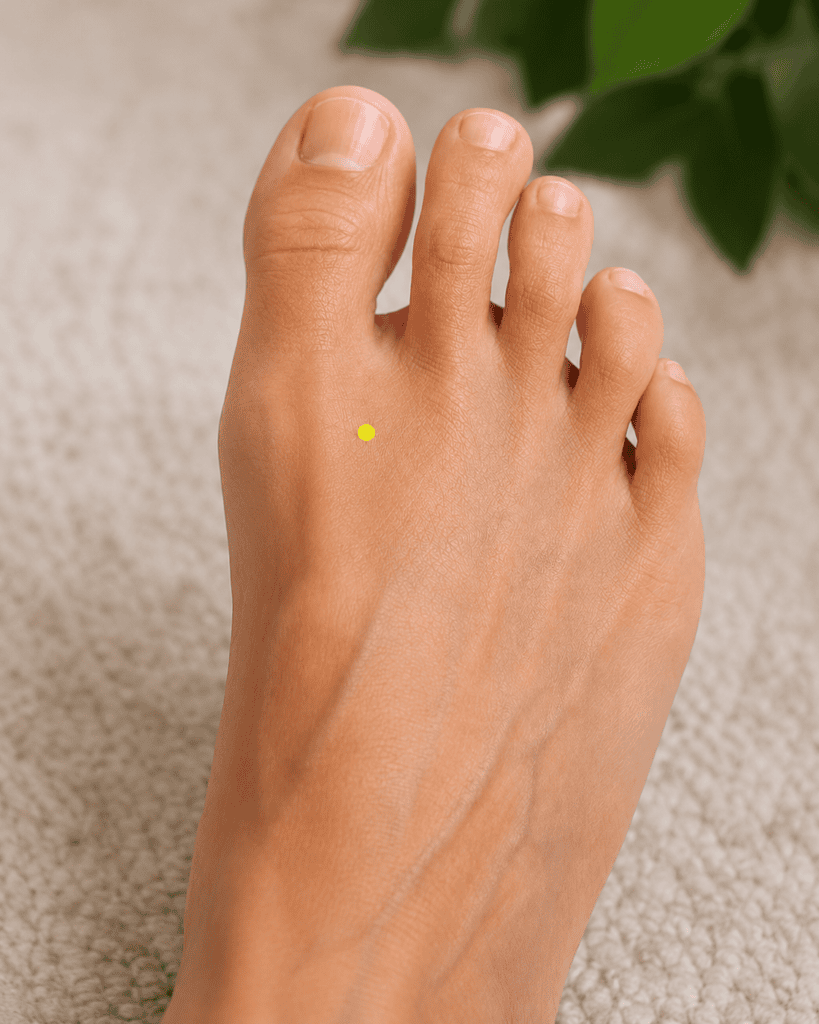
1. Press on LR3 on the top of the foot to soothe the Liver. LR3 sits on the top of the foot, in the webbing between the big toe and second toe, about two finger-widths back where the bones meet in a small hollow. Press firmly with the thumb for one to two minutes on each foot. LR3 is called “Taichong,” the primary point for the Liver.
Since irritability is mainly linked to the Liver, LR3 is the most important point to use. It helps release the stuck energy that causes tension and a short temper, smoothing out the flow that stress can block. LR3 also helps ground you by drawing energy down to your feet, which can calm a busy mind. If you’re feeling tense and snappish, start with this point—it’s the foundation of the routine.
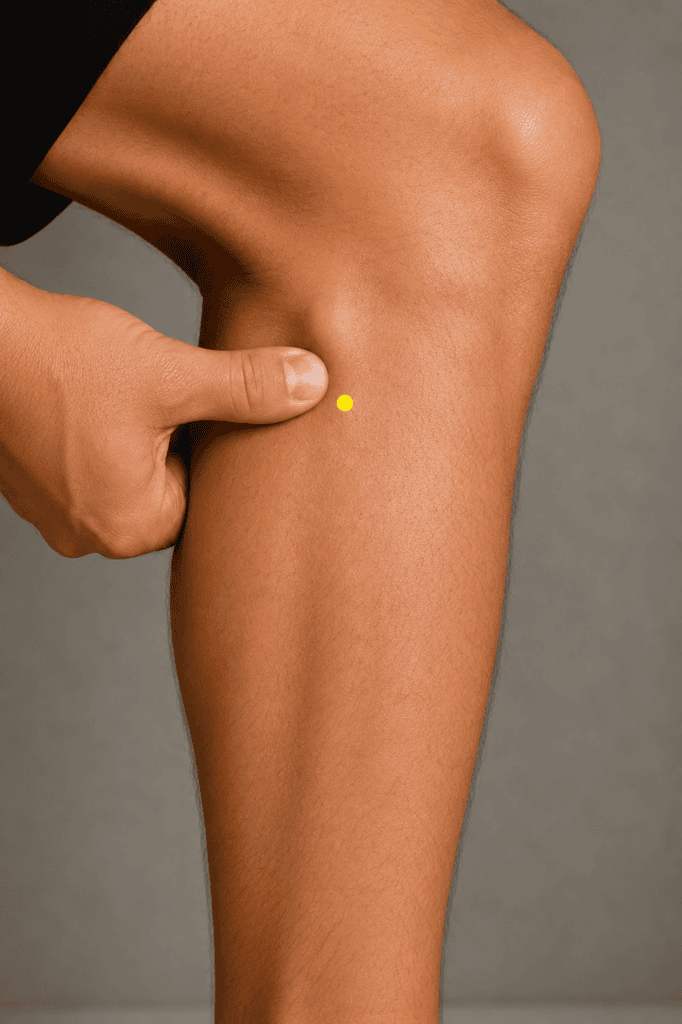
2. Press on GB34 below the outer knee to ease the short temper. GB34 sits on the outer lower leg, in the hollow just below and in front of the head of the fibula, the bony knob below the outer side of the knee. Press firmly with your thumb for one to two minutes on each leg. GB34 is called “Yanglingquan,” a main point for relaxing the Liver and Gallbladder.
GB34 helps relax both the Liver and Gallbladder, easing the tension and short temper that come with irritability. It’s known for releasing tension throughout the body, and it works well with LR3 to help you feel less wound up and reactive. If your irritability comes with a tight, knotted feeling, this point can help you loosen up and settle down. Together with LR3, it soothes the whole system behind a short fuse.
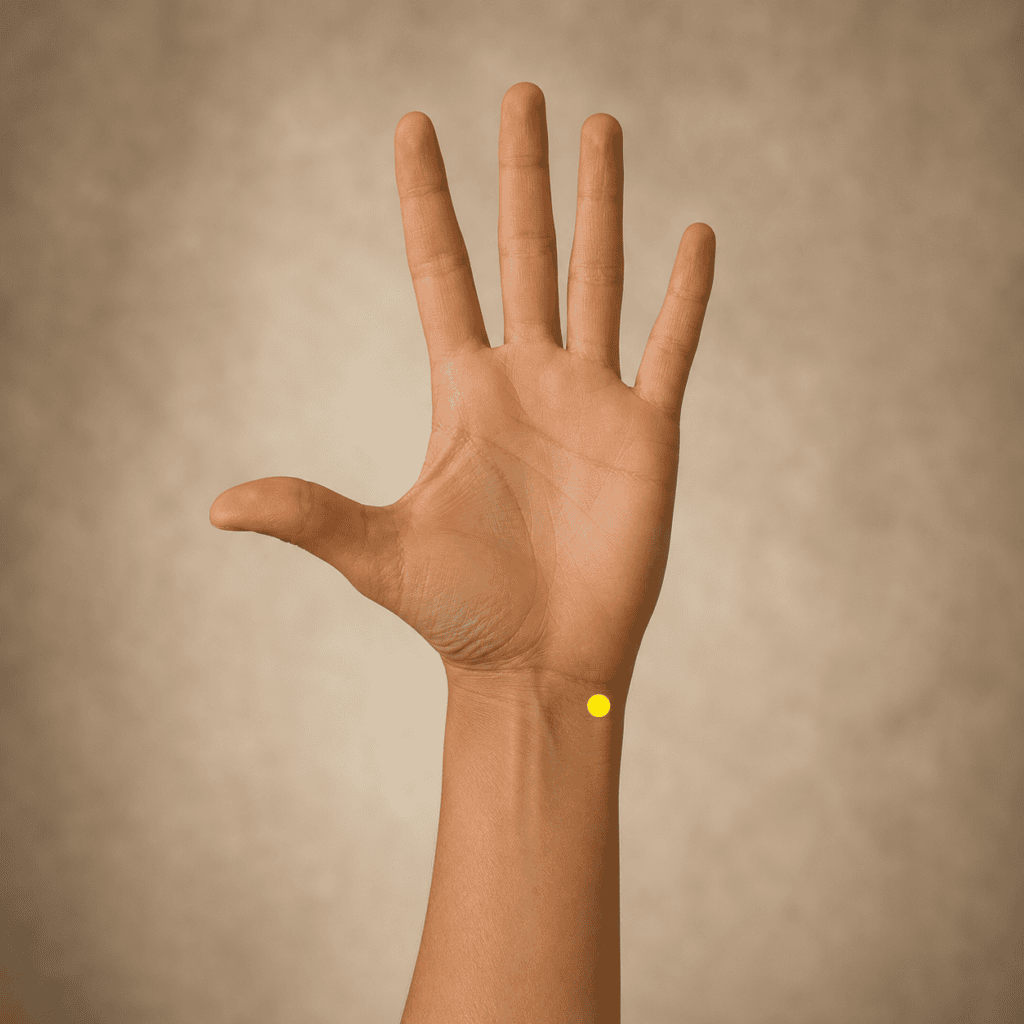
3. Press on HT7 at the wrist to calm the frayed nerves. HT7 sits on the inner wrist crease, on the pinky side, in the small hollow just inside the tendon. Press firmly with your thumb for one to two minutes on each wrist. HT7 is called “Shenmen,” the “Spirit Gate,” and it is the source point of the Heart and the most important point for calming the Shen.
HT7 calms the Heart and helps settle your mind, easing that frayed, on-edge feeling that makes you react to small things. Called the Spirit Gate, it’s the best point for a restless mind, especially when irritability comes with poor sleep. If your nerves feel raw, this point can help soothe you at the root, and it’s easy to use quietly whenever you notice your patience running out.
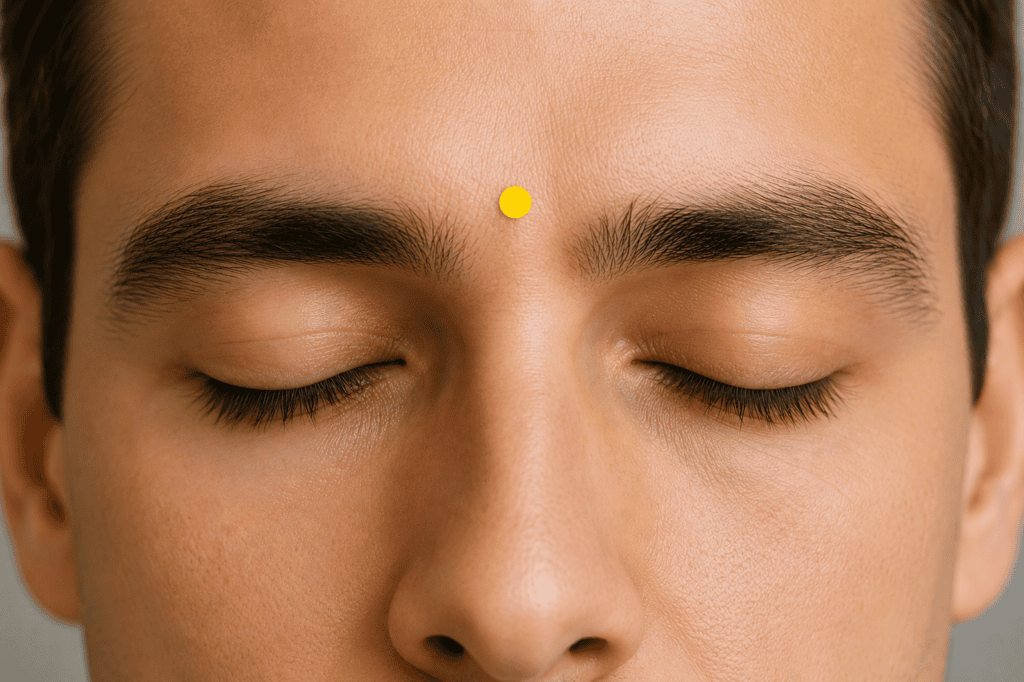
4. Press on Yintang between the eyebrows to settle a frazzled mind. Yintang sits in the small hollow directly between the two eyebrows. Press steadily and hold, or make small, slow circles with your fingertip for one to two minutes. Yintang is an extra point and one of the most calming points in the body.
Yintang helps calm your mind and eases the mental tension and agitation that come with irritability. It relaxes your whole nervous system and releases the tension between your eyebrows when you’re feeling wound up. If you feel stretched thin and reactive, pressing this point slowly while taking deep breaths can help your patience return.
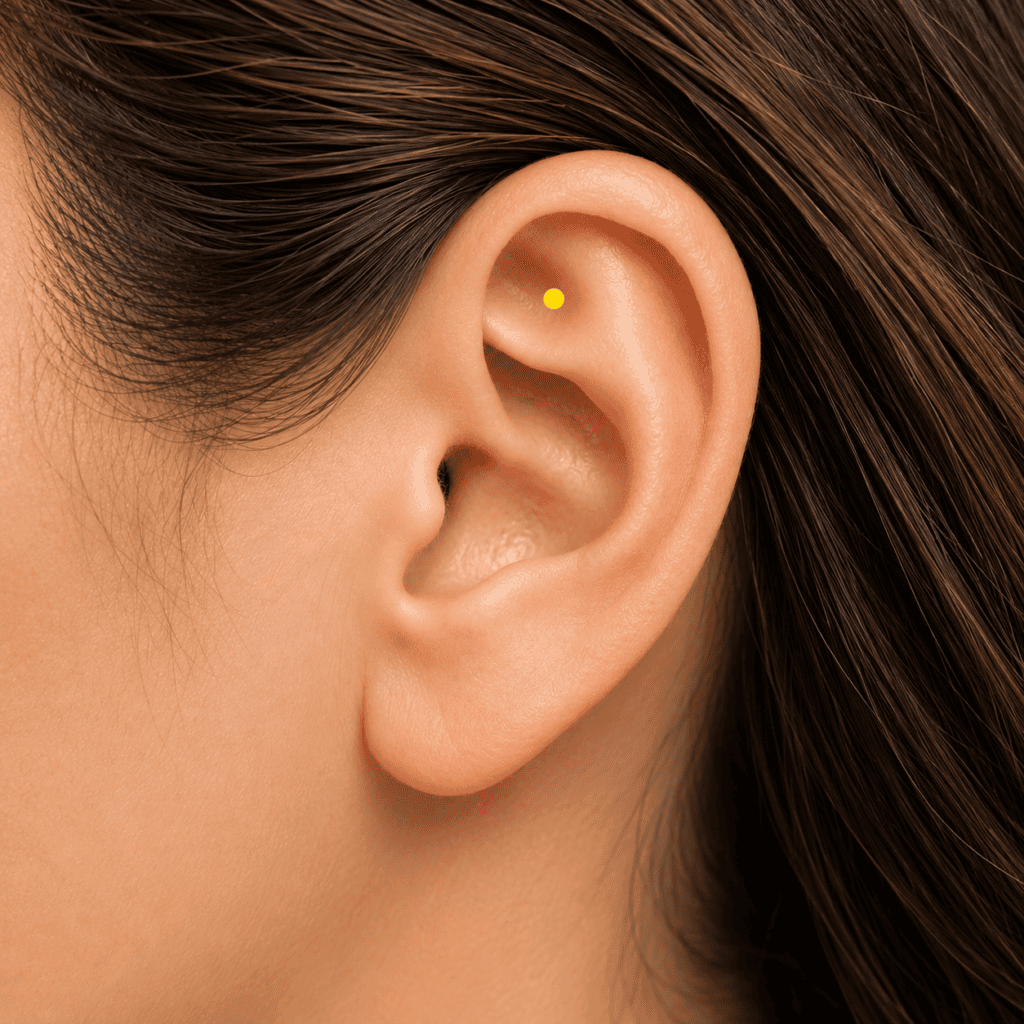
5. Press on Ear Shenmen to take the edge off in the moment. Ear Shenmen sits in the upper part of the ear, in the triangular hollow near the top, at its apex. Press gently with your fingertip or squeeze between your finger and thumb for about a minute on each ear. Ear Shenmen is one of the most calming points on the ear and shares its name, “Spirit Gate,” with the Heart point HT7.
Ear Shenmen is one of the most calming points on the body and works quickly, making it ideal for moments when your irritability rises. It helps settle your nerves fast and is very discreet, since touching your ear doesn’t draw attention. If you feel a surge of irritation in a meeting, in traffic, or with family, this point can help you pause and respond calmly instead of snapping.
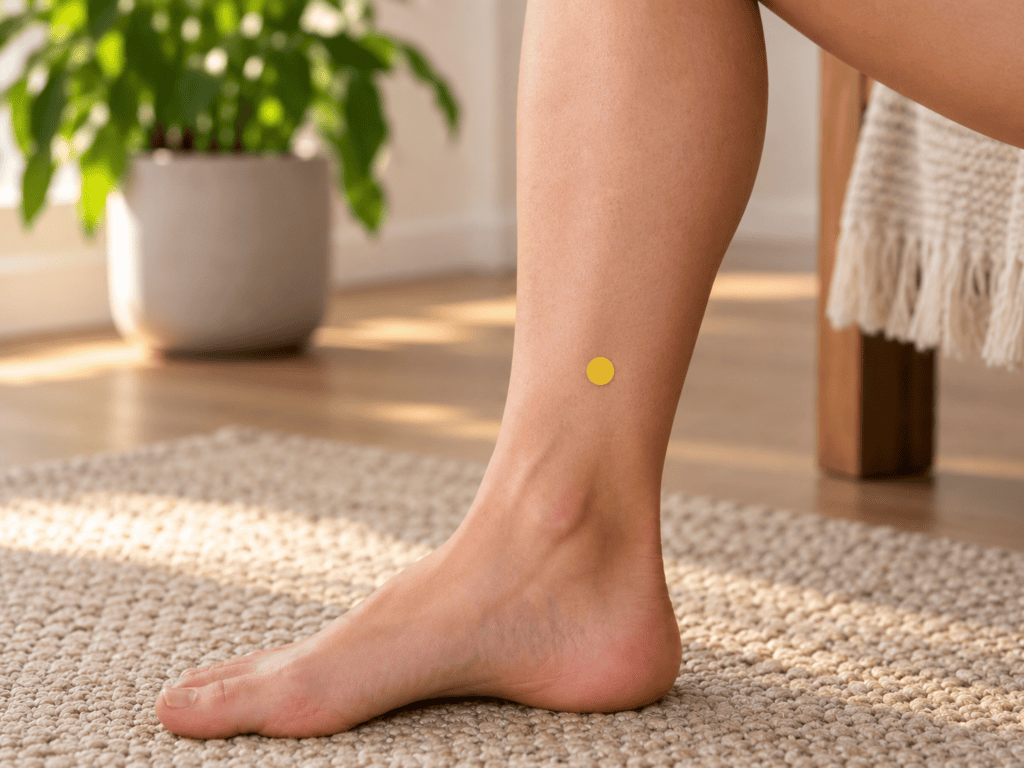
6. Press on SP6 above the inner ankle to nourish what is depleted. SP6 sits four finger-widths up from the tip of the inner ankle bone, just behind the back edge of the shinbone. Press firmly for one to two minutes on each leg. SP6 is called “Sanyinjiao,” the “Three Yin Intersection,” where the Spleen, Liver, and Kidney channels meet. SP6 is avoided during pregnancy.
Since irritability often comes from being run down, SP6 is key to nourishing your body. It helps restore the Blood and Yin that keep your nerves steady and your Liver balanced. SP6 connects the Spleen, Liver, and Kidney channels, helping rebuild what’s been depleted. It’s especially helpful for irritability linked to hormonal changes, like PMS or perimenopause. If you’re feeling irritable because you’re worn out, using this point regularly can help rebuild your foundation.
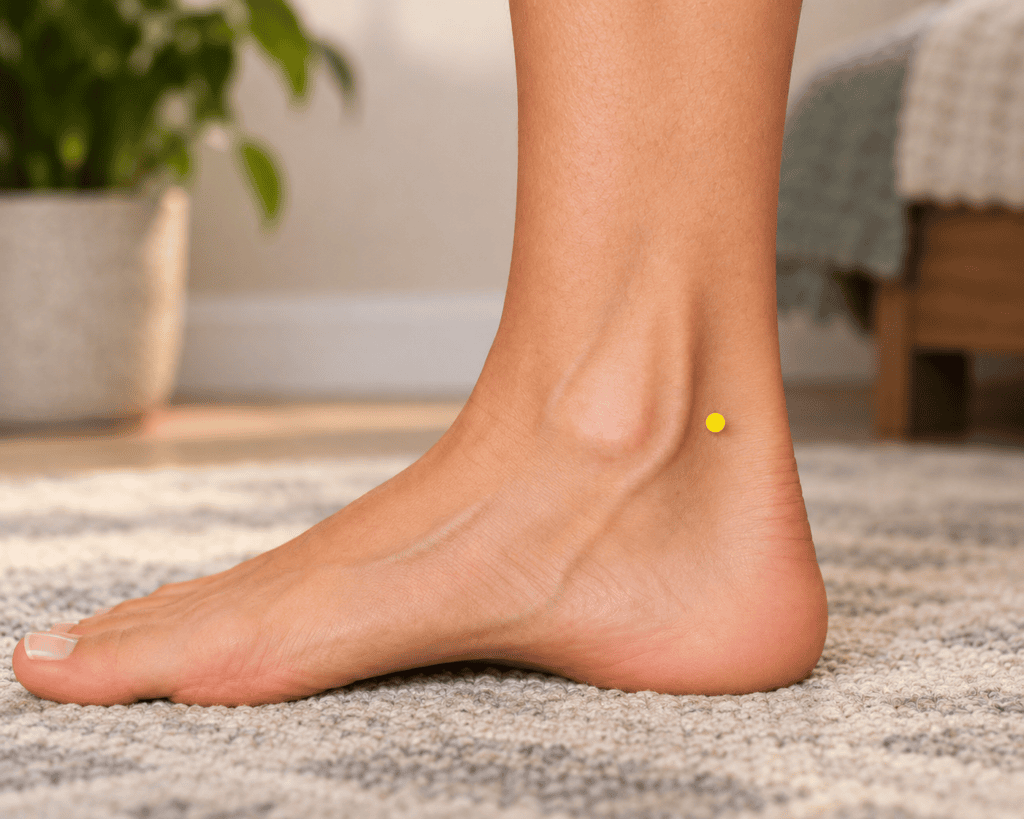
7. Press on KI3 above the inner ankle to cool a run-down, overheated edge. KI3 sits in the hollow between the inner ankle bone and the Achilles tendon, level with the tip of the ankle bone. Press firmly with your thumb for one to two minutes on each ankle. KI3 is called “Taixi,” the source point of the Kidney.
If your irritability is accompanied by fatigue, feeling overheated, or sleep issues such as night sweats or midlife changes, Traditional Chinese Medicine attributes this to low Kidney Yin, which can shorten your temper. KI3, the main point for the Kidney, assists in rebuilding and cooling your system. It nourishes your deep reserves and alleviates the overheated, frazzled sensation caused by depletion. If you’re feeling burned out and irritable, using this point can help restore balance, especially when combined with SP6.
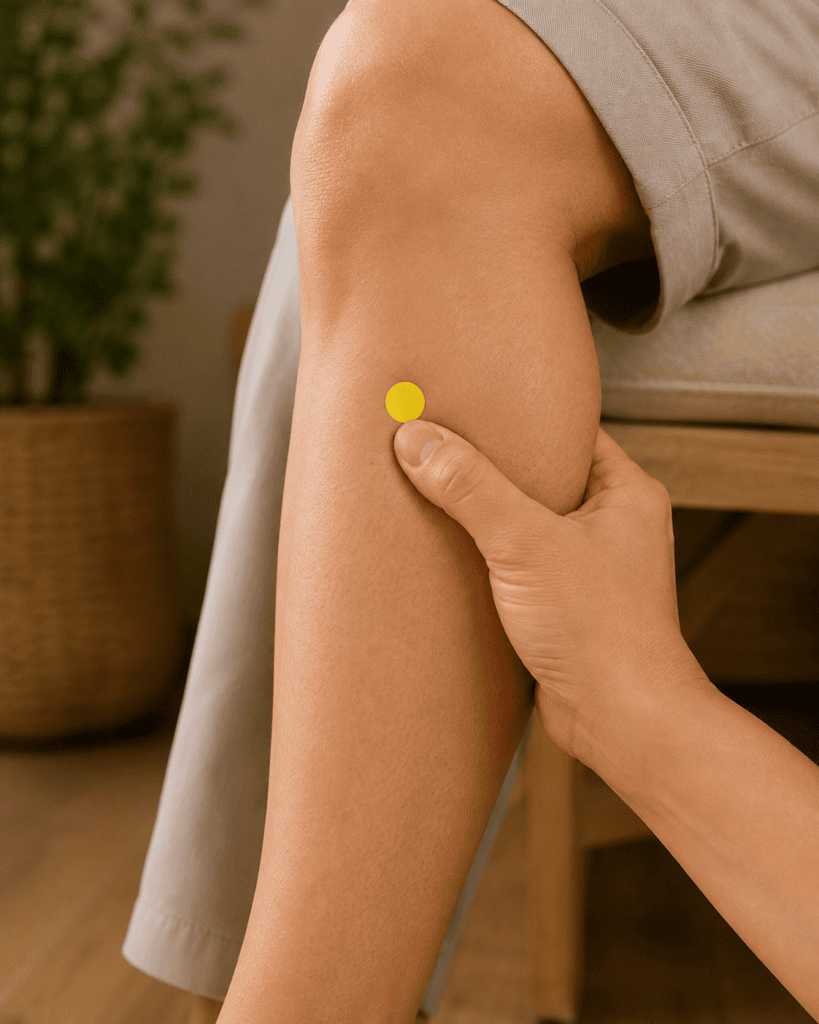
8. Press on ST36 below the knee to rebuild the energy behind your patience. ST36 sits four finger-widths below the lower edge of the kneecap and one finger-width to the outside of the shinbone, on the muscle that rises when you flex your foot. Press firmly with your thumb for one to two minutes on each leg. ST36 is called “Zusanli,” the “Leg Three Miles,” and it is the master point for energy in the body.
Patience relies on energy, and when you’re exhausted and depleted, your fuse becomes shorter. Adequate energy is essential for patience, and exhaustion reduces your tolerance. ST36 is an excellent acupoint for restoring your body’s energy reserves. It enhances the function of the Spleen and Stomach, which are crucial for generating energy, and is especially beneficial when you feel drained or overwhelmed. If irritability stems from fatigue or overexertion, regularly stimulating this point can help replenish your energy and stabilize your mood.
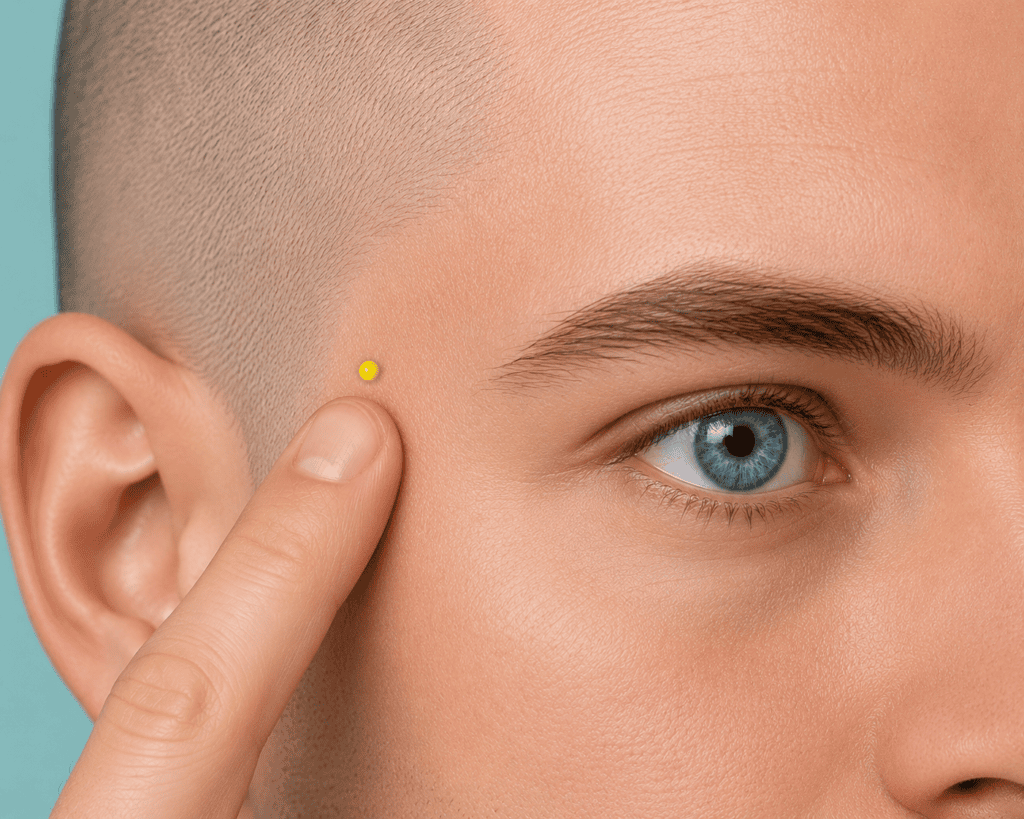
9. Press on Taiyang at the temple to release the tension in your head. Taiyang sits in the soft hollow of the temple, about a finger-width back from the midpoint between the outer end of the eyebrow and the outer corner of the eye. Press firmly and make small, slow circles with your fingertips for one to two minutes on both sides. Taiyang is an extra point, widely used for tension and head pressure.
Irritability often accompanies a tight, tense head, with pressure at the temples and a headache that worsens a frayed mood. Taiyang helps release this tension by easing pressure in the temples, which both causes and exacerbates irritability, as a tight, aching head makes someone more irritable. For those whose irritability is linked with this tense, pressured head, stimulating this point relieves physical tension and, in turn, alleviates their mood. It’s a particularly satisfying point to target when feeling emotionally and physically wound up from the neck up.
Why These Acupressure Points Work
In Traditional Chinese Medicine, irritability is associated with stress causing the Liver to become congested, hindering its smooth flow and resulting in tension and a quick temper. This is common when blood and Yin are low, leaving your nerves tense. The nine points are designed to target both of these problems.
- The Liver points (LR3, GB34) soothe the bound-up Liver and ease the tense, prickly short temper.
- The calming points (HT7, Yintang, Ear Shenmen) settle the frayed nerves and take the edge off in the moment.
- The nourishing points (SP6, KI3, ST36) rebuild the Blood, Yin, and energy whose depletion shortens the fuse, cooling a run-down, overheated edge and restoring the reserves that patience draws on.
- The tension point (Taiyang) releases the tight, pressured head that both feeds and comes from irritability.
The main concept is that a calm, well-nourished system is more stable. This explains why anxiety, stress, and depression, often linked to chronic irritability, can also be alleviated by calming and restorative methodologies.
How to Properly Use These Acupressure Points
You can use these points whenever you feel irritable; practicing consistently can help you develop greater patience over time.
- When you start to feel irritated, try the fast-calming points: LR3 to soothe your Liver, HT7 and Ear Shenmen to calm your nerves, and Yintang to steady your mind. Press these points while breathing slowly to give yourself a pause before reacting.
- If your short temper is due to feeling run down, use SP6, KI3, and ST36 regularly. Rebuilding your reserves with these points can help you become more patient at the core.
- Use GB34 to help release physical tension, and Taiyang if you have a tight or pressured feeling in your head.
- Hold each point for one to two minutes, using steady pressure and slow breathing.
While acupressure can be beneficial, everyday habits are equally important. Ensure you get enough sleep, as fatigue can heighten irritability. Don’t skip meals, since low blood sugar can cause crankiness. Manage stress, stay active regularly, and limit caffeine and alcohol, which can increase feelings of being overwhelmed. If you notice yourself becoming snappy, it’s often your body’s way of indicating that you need rest, nourishment, or a break. Consider irritability as valuable feedback rather than just a simple emotion.
When to Get Professional Help
Feeling irritable at times is normal, and these tips address everyday irritability.
If you experience persistent irritability, if it feels unusual, or if it’s impacting your relationships or work, or if it accompanies ongoing low mood, anxiety, or hopelessness, consulting a doctor or therapist is advisable. Chronic irritability can indicate depression, particularly in men, or other conditions such as anxiety, chronic stress, or hormonal and thyroid issues, all of which are treatable. Seek medical attention promptly if you notice sudden or severe mood changes.
Acupressure may help with everyday irritability, but it is not a substitute for professional treatment addressing the root causes.
Above and Beyond Acupuncture offers acupuncture, cupping, and lifestyle coaching at the North Frank Lloyd Wright Boulevard location in Scottsdale.
Schedule an appointment online to start your healing journey.
The points above are only as effective as the technique used to apply them. Where to press, how firmly, and for how long all affect the result. For a full breakdown of how to perform acupressure properly at home, read Performing Acupressure in 3 Easy Steps.

About the Publisher
Paul Kerzner, L.Ac., is a licensed acupuncturist and board-certified herbalist, as well as the founder of Above and Beyond Acupuncture in Scottsdale. His own journey from chronic patient to practicing acupuncturist shapes his commitment to providing honest, clinically grounded information about acupuncture and Traditional Chinese Medicine. Learn more about Paul and his clinical approach on the About Us page.