
Key Takeaways
- Excess flatulence can result from diet, swallowing air, or incomplete digestion, causing discomfort and embarrassment.
- Acupressure for flatulence targets nine essential points to release trapped gas, improve digestion, and reduce stress-related problems.
- Points such as ST25 and CV6 target the intestines, whereas ST36 and SP4 enhance digestion to help lower gas production.
- Focusing on points like LR3 and ST44 can relieve stress-related symptoms and reduce foul-smelling gas.
- Practicing mindful eating and monitoring food triggers can help reduce gas discomfort further.

Are you passing gas more often than you would like, or at the worst possible times?
Farting is a normal part of digestion. Most people pass gas about a dozen to twenty times daily, often without noticing. However, when gas occurs frequently, loudly, smells bad, or is accompanied by cramping, rumbling, and a bloated stomach, it can be uncomfortable and embarrassing. Excess flatulence usually results from diet, swallowed air, or incomplete digestion. Acupressure provides a simple method to soothe the gut, release trapped gas, and improve digestion, reducing gas production.
Gas in the lower intestines mainly comes from two sources. Some results from swallowed air that moves down instead of being burped out. Most, however, is produced in the large intestine, where bacteria ferment undigested food, particularly certain carbohydrates. This is why foods like beans, onions, cabbage, broccoli, specific fruits, dairy (for those with lactose intolerance), sugar-free sweeteners, and sudden fiber intake often cause gas.
Traditional Chinese Medicine describes excess gas in relation to the Spleen, Stomach, and Large Intestine, as well as the Liver’s influence on these organs. A weak Spleen hampers food transformation, causing undigested matter to ferment and produce gas, which often leads to bloating, loose stools, and post-meal tiredness. Overeating or eating too quickly can cause food stagnation, resulting in foul-smelling gas and a heavy, full feeling in the abdomen. When dampness and heat build up in the intestines, commonly from rich, greasy, spicy, or alcoholic foods, the gas has a strong odor and may be linked to loose or urgent stools. Stress can cause Liver Qi stagnation, disrupting digestion and producing gas alongside cramping, rumbling, and alternating bowel movements between diarrhea and constipation.
Here are nine acupressure points that strengthen the Spleen, promote Qi and gas movement, clear dampness and heat, and soothe the Liver.
What Acupressure Points to Press and Why
1. Press on ST25 beside the navel to regulate the intestines. ST25 sits about three finger-widths out to each side of the navel, at the same level. Press gently but firmly with your fingertips for one to two minutes on both sides, or make slow clockwise circles. ST25 is called “Tianshu,” the “Heavenly Pivot,” and it is the front-mu point of the Large Intestine.
ST25 is the acupuncture point at the front of the body where the Large Intestine’s energy converges. It’s the easiest location to address symptoms such as gas, gurgling, and lower bowel discomfort. This point regulates intestinal motility, facilitates the release of trapped gas, and relieves cramps associated with gas. It should be the first point to activate when dealing with a gassy stomach.

2. Press on CV6 below the navel to move the Qi of the lower belly. CV6 sits on the midline of the lower abdomen, about two finger-widths below the navel. Press gently with your fingertips, or rest a warm hand there, for one to two minutes. CV6 is called “Qihai,” the “Sea of Qi.”
The CV6 point controls the Qi in the lower abdomen. When this Qi stagnates, gas builds up, causing fullness, discomfort, and cramps in the lower belly. Stimulating this point promotes the flow of Qi, helping gas to pass and supporting digestion. It also has a soothing effect when warmed with a hand or heat pad.

3. Press on ST37 on the lower leg, the distal point for the Large Intestine. ST37 sits on the outer lower leg, about four finger-widths below ST36, which is itself four finger-widths below the kneecap, one finger-width outside the shinbone. Press firmly with your thumb for one to two minutes on each leg. ST37 is called “Shangjuxu,” the lower meeting point of the Large Intestine.
ST37 is an acupressure point on the leg associated with the Large Intestine. Traditionally, it is used to relieve gas, abdominal rumbling, pain, and irregular bowel movements. You can press it firmly and discreetly, even if your abdomen feels tender or swollen.
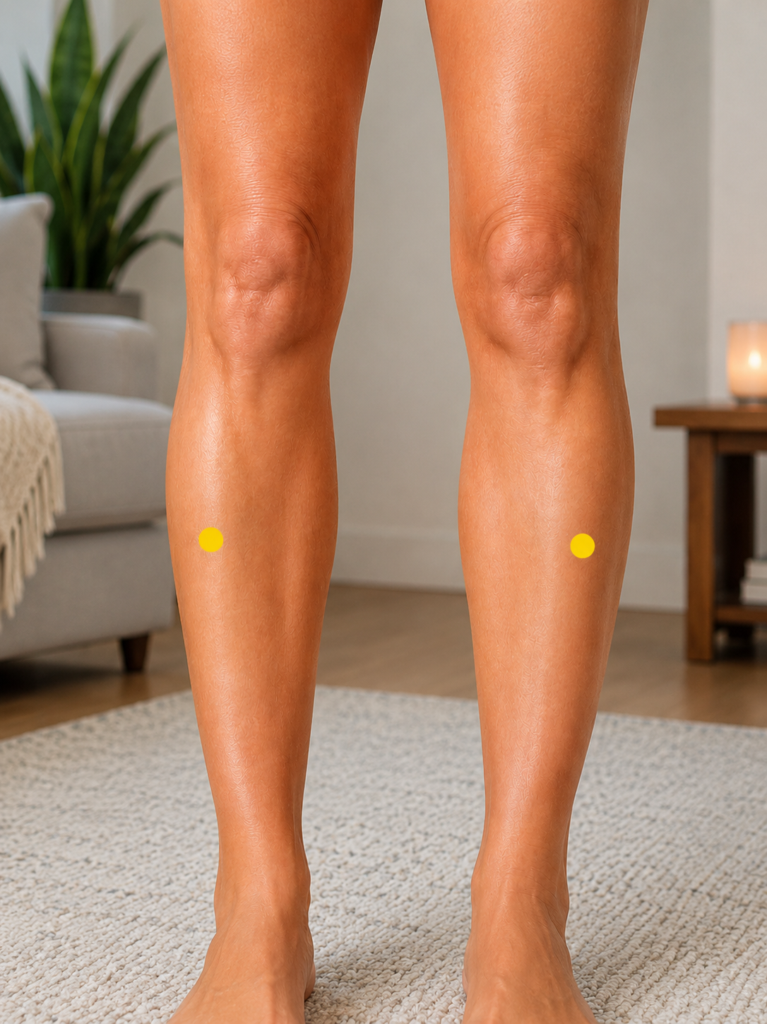
4. Press on ST36 below the knee to strengthen digestion. ST36 sits four finger-widths below the lower edge of the kneecap and one finger-width to the outside of the shinbone, on the muscle that rises when you flex your foot. Press firmly with your thumb for one to two minutes on each leg. ST36 is called “Zusanli,” the “Leg Three Miles.”
When digestion is weak, food isn’t fully broken down, leading to fermentation and gas. Stimulating ST36 can boost the Stomach and Spleen, aiding more complete digestion and decreasing gas formation. For persistent gas issues, daily focus on this point is advised.
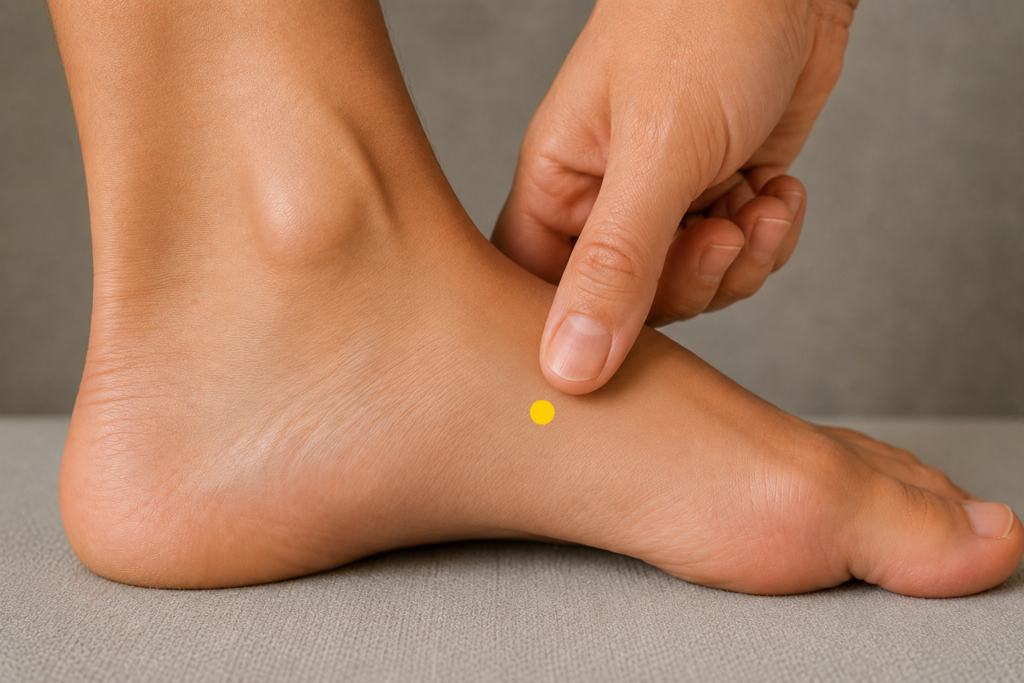
5. Press on SP4 on the arch of the foot to settle the gut. SP4 sits on the inner arch of the foot, in the depression just below and ahead of the bony bump behind the big-toe joint. Press firmly with your thumb for one to two minutes on each foot. SP4 is called “Gongsun.”
SP4 enhances Spleen function and soothes the entire digestive system, reducing rumbling, cramping, fullness, and gas. It is especially helpful when gas occurs with loose stools and a churning stomach following meals.
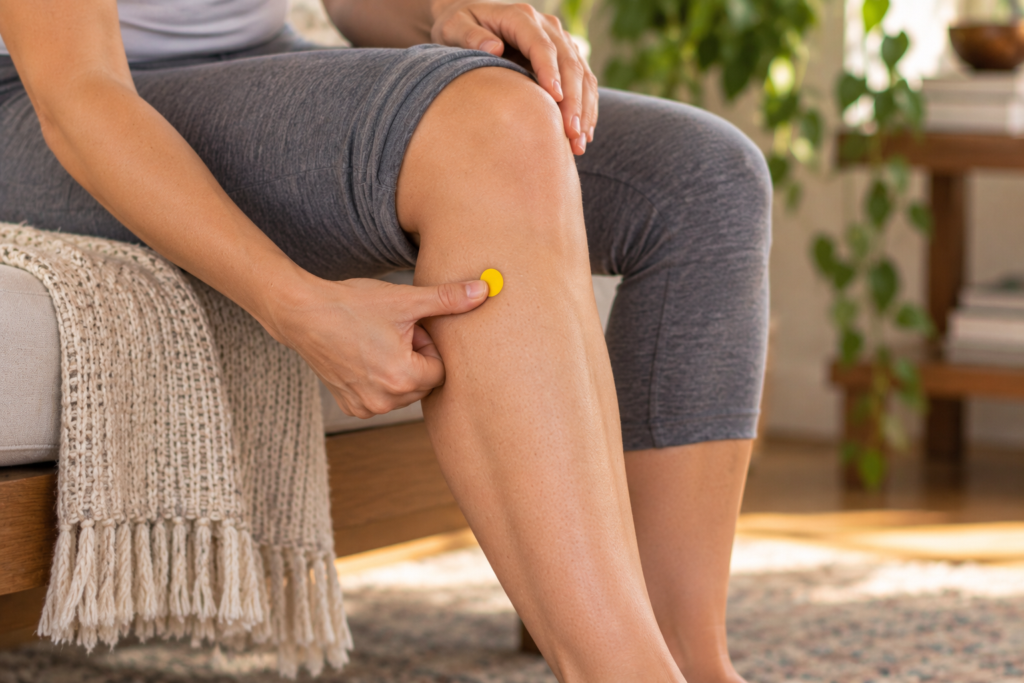
6. Press on SP9 below the inner knee to clear dampness. SP9 sits on the inner lower leg, in the hollow just below the bulge at the top of the shinbone, under the inner side of the knee. Press firmly with your thumb for one to two minutes on each leg. SP9 is called “Yinlingquan.”
If the gas is accompanied by a heavy, slow sensation, loose or sticky stools, and bloating, Chinese medicine sees this as dampness in the digestive system. SP9 is the primary point for eliminating dampness, helping the body process fluids and easing feelings of fullness and gas.
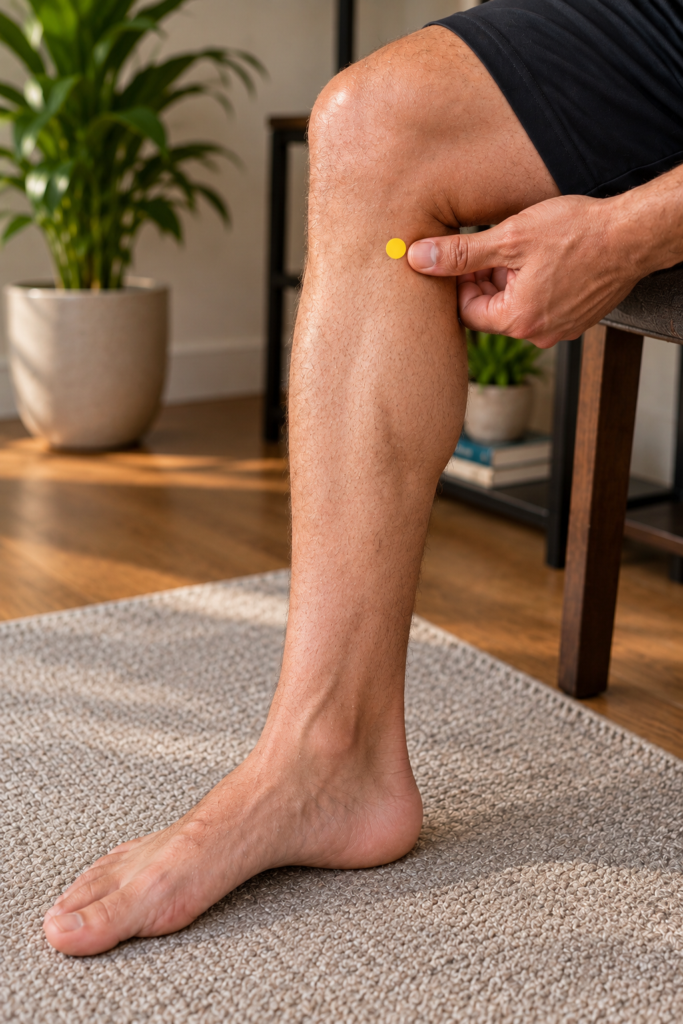
7. Press on LR3 on the top of the foot for stress-driven gas. LR3 sits on the top of the foot, in the webbing between the big toe and second toe, about two finger-widths back where the bones meet in a small hollow. Press firmly with your thumb for one to two minutes on each foot. LR3 is called “Taichong.”
The gut and nervous system are tightly linked, and many people experience increased gas, cramps, and rumbling when they feel stressed or anxious. In Traditional Chinese Medicine, this is viewed as the Liver influencing digestion, with LR3 helping by releasing stagnant Liver Qi and easing tension to help the intestines relax.
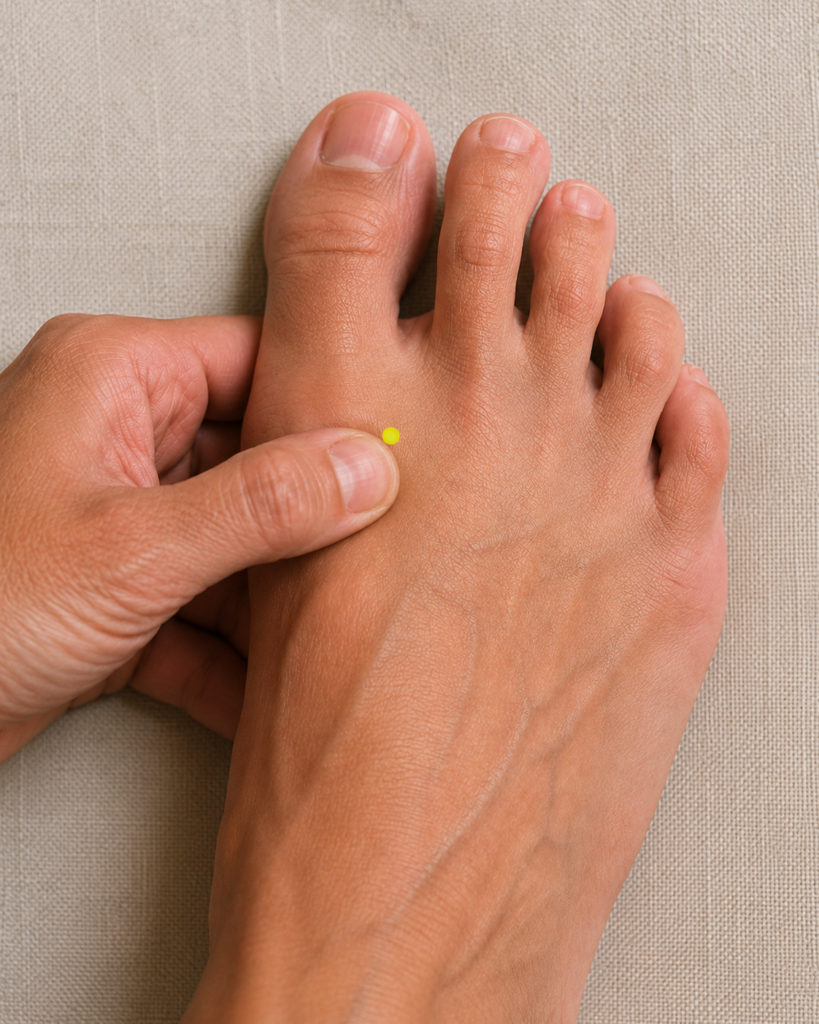
8. Press on ST44 between the toes for foul-smelling gas. ST44 sits on the top of the foot, in the webbing between the second and third toes, just where they meet. Press firmly with your thumb for one to two minutes on each foot. ST44 is called “Neiting.”
If the gas has a strong, unpleasant smell, occurs after rich, spicy, or fatty meals, or is accompanied by a sour taste, bad breath, or a burning sensation, Traditional Chinese Medicine attributes it to heat and stagnant food in the Stomach and intestines. The formula ST44 helps clear heat and supports digestion by helping stagnant food pass.

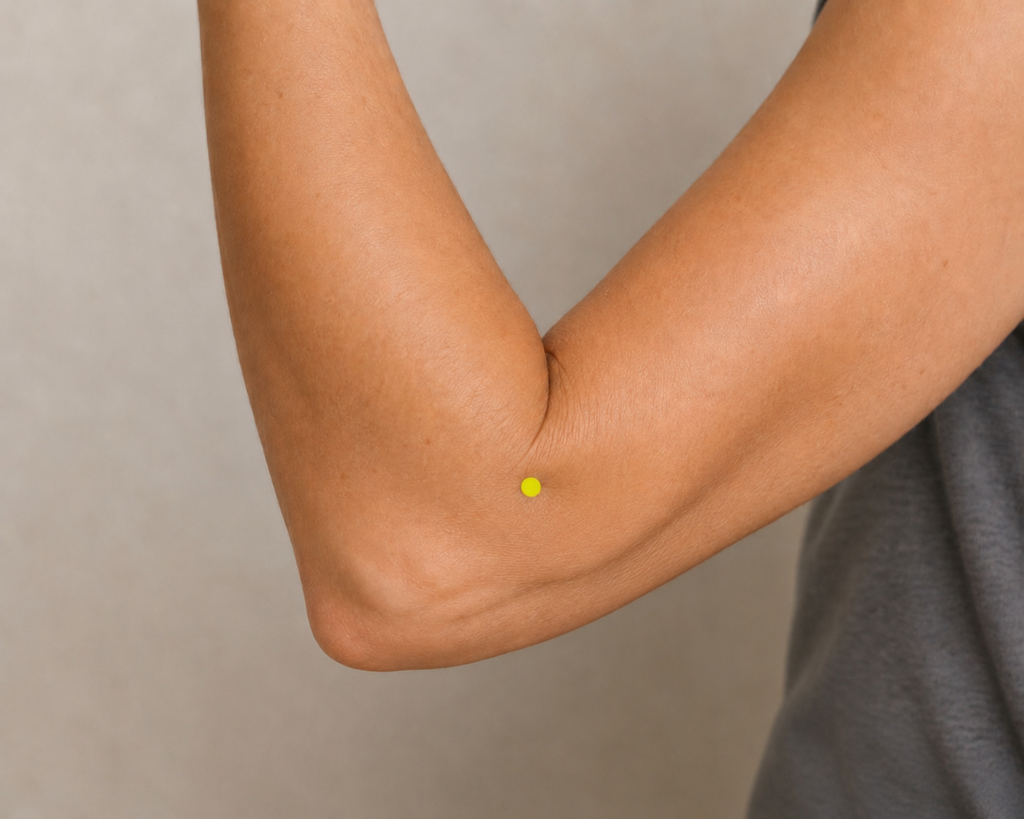
9. Press on LI11 at the elbow to clear heat from the intestines. LI11 sits at the outer end of the elbow crease, in the hollow that forms when you bend your elbow. Press firmly with your thumb for one to two minutes on each arm. LI11 is called “Quchi,” and it is on the Large Intestine channel.
LI11 efficiently expels damp heat from the Large Intestine, making it helpful for symptoms like foul-smelling gas and loose or urgent stools. Located on the arm, it can be easily pressed at any point, even at the first sign of gas, which is especially convenient when you’re outside or in public.
Why These Acupressure Points Work
In Traditional Chinese Medicine, excess gas occurs when digestion doesn’t fully process food. This can result from stagnant Qi in the intestines caused by dampness and heat or from stress affecting the gut. All nine points are relevant to these factors.
- The intestine points (ST25, CV6, ST37) move trapped gas and regulate the lower bowel, from the belly and from the leg.
- The digestive points (ST36, SP4) strengthen digestion so less gas forms in the first place.
- The clearing points (SP9, ST44, LI11) clear the dampness and heat behind heavy, foul-smelling gas.
- The calming point (LR3) settles the stress that drives gas, cramping, and rumbling.
How to Properly Use These Acupressure Points
Use these points after eating whenever gas accumulates, or daily if it happens regularly.
- If your stomach feels gassy, lie back with knees bent. Press gently on points ST25 and CV6 in slow circles. Then, rub your abdomen clockwise along the colon from right to left for several minutes.
- To keep the intestines moving, add ST37 and SP4; if stress is involved, also add LR3.
- When foul-smelling gas occurs after eating a rich or heavy meal, administer ST44 and LI11.
- To strengthen digestion over time, work on the ST36 and SP9 points daily.
- After eating a large meal, wait about an hour, then gently press your abdomen.
- End by assuming the knees-to-chest position: lie on your back, bring knees to your chest, and breathe slowly for a minute or two to help pass trapped gas.
To reduce discomfort, start with simple habits like eating slowly, chewing thoroughly, and avoiding talking, gulping, gum, or straws, which can add air to the mouth. Limit fizzy drinks and pay attention to foods such as beans, lentils, onions, garlic, cabbage, broccoli, cauliflower, apples, pears, or sugar-free products with sorbitol or xylitol, as they often cause symptoms. If dairy causes issues, consider removing it. Increase fiber gradually over several weeks and keep a food and symptoms diary to find personal triggers. A short walk after eating might help pass gas, and in Traditional Chinese Medicine, warm, plain, cooked foods are generally better tolerated than cold, raw, or greasy options.
When to Get Professional Help
Occasional gas, even in large amounts, is generally harmless. Consult a doctor if persistent excessive gas is paired with ongoing abdominal pain, bloating, diarrhea, or constipation, as these symptoms may indicate conditions like irritable bowel syndrome, lactose intolerance, celiac disease, or small intestine bacterial overgrowth, all of which are treatable. Seek immediate medical care if gas is accompanied by unexplained weight loss, blood or black stools, ongoing diarrhea, vomiting, fever, severe or worsening abdominal pain, or persistent changes in bowel habits, particularly after age fifty. Emergency treatment is vital for severe abdominal pain with a swollen, hard abdomen and inability to pass gas or stool.
Acupressure offers a straightforward, low-risk way to alleviate a gassy stomach and can complement medical treatments when symptoms persist.
Above and Beyond Acupuncture offers acupuncture, cupping, and lifestyle coaching at the North Frank Lloyd Wright Boulevard location in Scottsdale.
Schedule an appointment online to start your healing journey.
The points above are only as effective as the technique used to apply them. Where to press, how firmly, and for how long all affect the result. For a full breakdown of how to perform acupressure properly at home, read Performing Acupressure in 3 Easy Steps.
If a swollen, tight, distended belly is your main problem, acupressure for bloating and gas is the companion article; if the gas is coming up rather than down, acupressure for burping and belching covers that condition.

About the Publisher
Paul Kerzner, L.Ac., is a licensed acupuncturist and board-certified herbalist, as well as the founder of Above and Beyond Acupuncture in Scottsdale. His own journey from chronic patient to practicing acupuncturist shapes his commitment to providing honest, clinically grounded information about acupuncture and Traditional Chinese Medicine. Learn more about Paul and his clinical approach on the About Us page.