Key Takeaways
- Asthma is a chronic condition characterized by symptoms such as wheezing and chest tightness, influenced by various triggers, particularly in Arizona.
- Acupressure provides a complementary method for managing asthma symptoms, targeting nine specific points that help reduce tightness, clear phlegm, and promote lung health.
- To relieve asthma symptoms with acupressure, apply pressure to key points such as Dingchuan, BL13, and LU5, paying attention to your breathing as you do so.
- Keep track of air quality and asthma triggers, and adhere to your asthma action plan; remember that acupressure should not replace your medication.
- Consult a healthcare professional if your asthma symptoms intensify or if you often need to use your rescue inhaler.
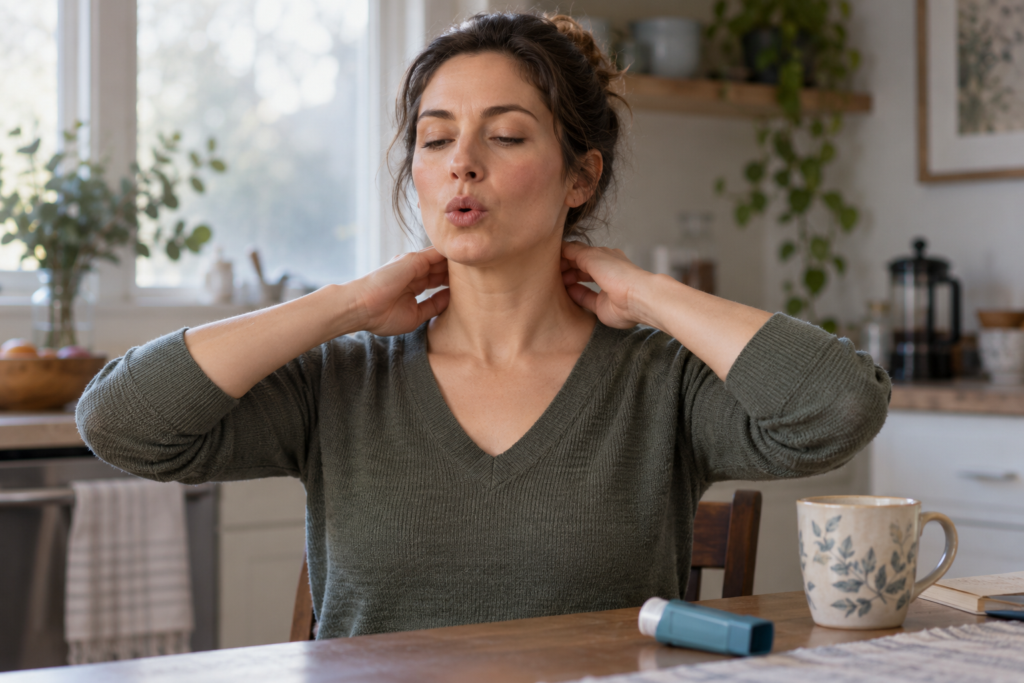
Asthma is a chronic condition characterized by inflamed and hypersensitive airways that react to triggers like allergens, cold air, exercise, smoke, infections, and stress by constricting and filling with mucus. This can cause symptoms such as wheezing, coughing, chest tightness, and shortness of breath, ranging from mild to severe. While modern asthma medications are highly effective and form the primary treatment, acupressure offers a gentle, daily routine to support lung health between episodes. It can help relieve chest tightness, ease anxiety that worsens symptoms, and enhance your sense of control over your breathing. The following points may be beneficial.
In Arizona, certain conditions can trigger asthma symptoms, making it important to stay informed. Dust storms during the monsoon season, extended pollen seasons from trees, grasses, and weeds, wildfire smoke, high ozone levels on hot summer afternoons, and the sudden shift from intense outdoor heat to cool indoor air can all provoke symptoms. For Valley residents with asthma, a sensible step is to monitor air quality reports and plan accordingly.
Traditional Chinese Medicine has long associated asthma with symptoms like wheezing and breathing difficulty, linking them to the Lung, Spleen, and Kidney. The Lung controls respiration and defensive energy; external factors like wind attacking a weakened Lung can cause airway constriction and wheezing. A weak Spleen may produce phlegm that builds up in the Lung, leading to mucus, coughing, and chest congestion during attacks. The Kidney’s function is to retain and draw down the breath; chronic asthma often indicates Kidney weakness, especially when inhalation is harder than exhalation and physical activity worsens breathlessness. Heat causes thick, yellow phlegm and a hot, tight chest, while cold results in clear phlegm and cold-triggered episodes.
Below are nine acupressure points designed to soothe the airways, eliminate phlegm, strengthen Lung defenses, and enhance Kidney breath-holding capabilities.
What Acupressure Points to Press and Why
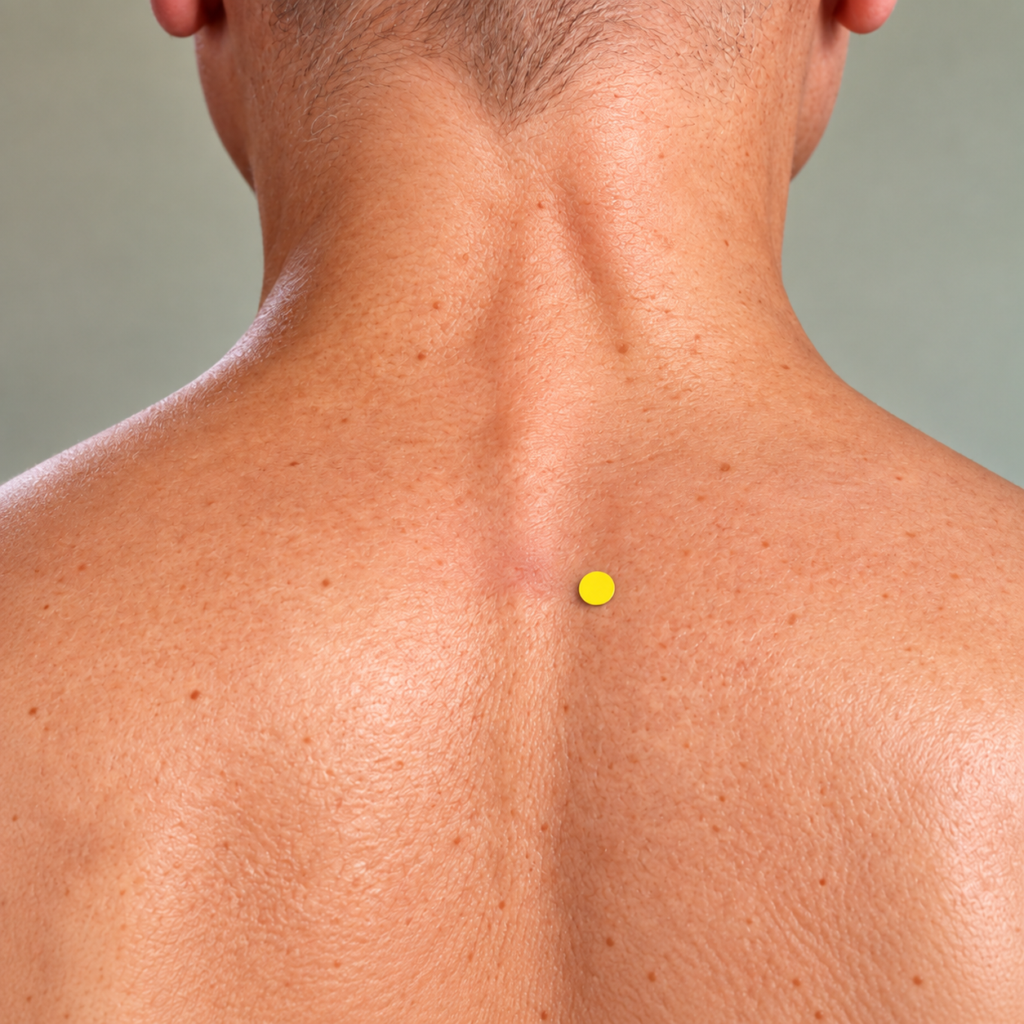
1. Press on Dingchuan at the base of the neck to calm wheezing. Dingchuan sits on the upper back, about half a thumb-width out to each side of the prominent bone at the base of the neck, the one that sticks out most when you bow your head. Reach back with your fingertips and press both sides at once for one to two minutes while breathing slowly. Dingchuan is an extra point whose name means “Calm the Wheezing.”
Dingchuan is a key point for asthma relief, particularly effective at calming wheezing and easing breathing. It relaxes the airways and helps restore normal respiration, which is why it is commonly used in acupuncture and acupressure for asthma management. If you experience chest tightness even on days when your asthma is usually controlled, Dingchuan should be your first point to consider.
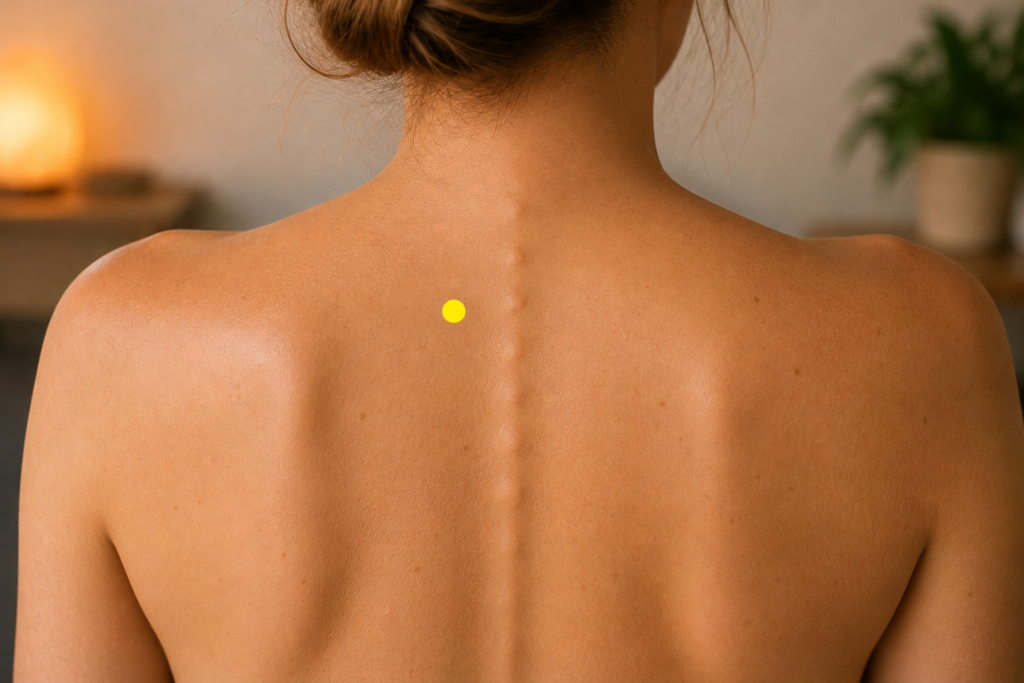
2. Press on BL13 on the upper back to strengthen the Lung. BL13 sits on the upper back, about two finger-widths out to each side of the spine, roughly level with the top of the shoulder blades. Lie on your back with a tennis ball under each point, or have someone press both sides with their thumbs, for one to two minutes. BL13 is called “Feishu,” the back point of the Lung.
The BL13 point is located at the back of the Lung and is a key acupressure point for strengthening lung function, easing chest tightness, and decreasing sensitivity that can trigger flare-ups. You can also relieve upper back tension from difficulty breathing with this point using tennis balls.
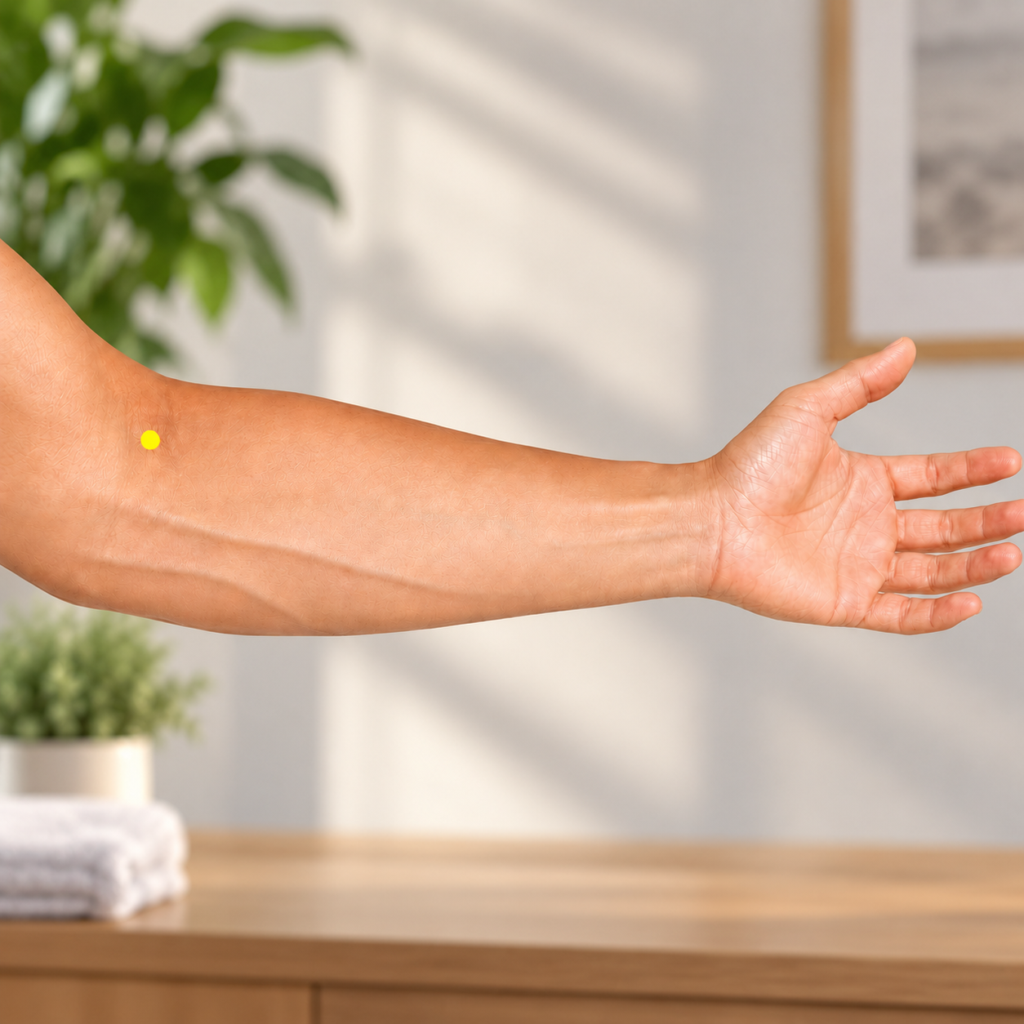
3. Press on LU6 on the forearm for wheezing and chest tightness. LU6 sits on the thumb side of the inner forearm, about halfway between the elbow crease and the wrist crease, slightly above the midpoint, along the edge of the forearm muscle. Press firmly with your thumb for one to two minutes on each arm. LU6 is called “Kongzui,” the cleft point of the Lung.
In Traditional Chinese Medicine, cleft points are typically used for acute and severe symptoms. LU6, the lung’s cleft point, has been traditionally used to treat wheezing, coughing, and chest tightness. It helps the Lung descend and open and is especially helpful on days when symptoms worsen, alongside prescribed medications.
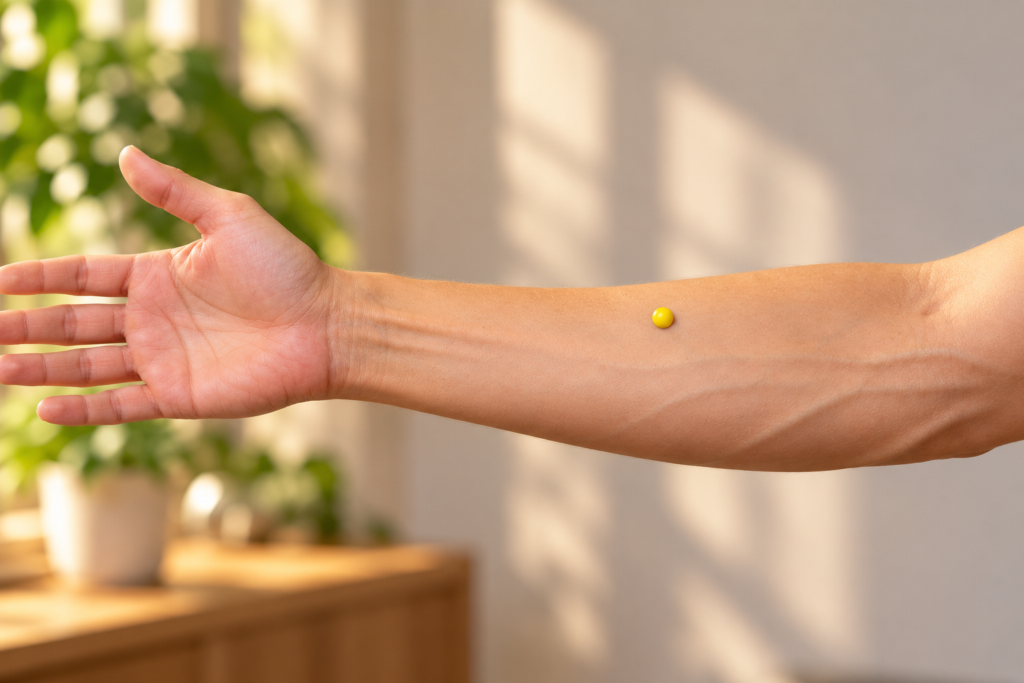
4. Press on LU5 at the elbow to clear phlegm and heat from the Lung. LU5 sits in the elbow crease, on the thumb side of the large tendon that runs down the middle of the inner elbow. Press firmly with your thumb for one to two minutes on each arm. LU5 is called “Chize,” the “Cubit Marsh.”
LU5 effectively clears heat and phlegm from the Lung, making it especially useful for asthma cases with thick, sticky, or yellow mucus. It alleviates hot, tight sensations in the chest and helps expel phlegm through coughing, reducing congestion and easing breathing.
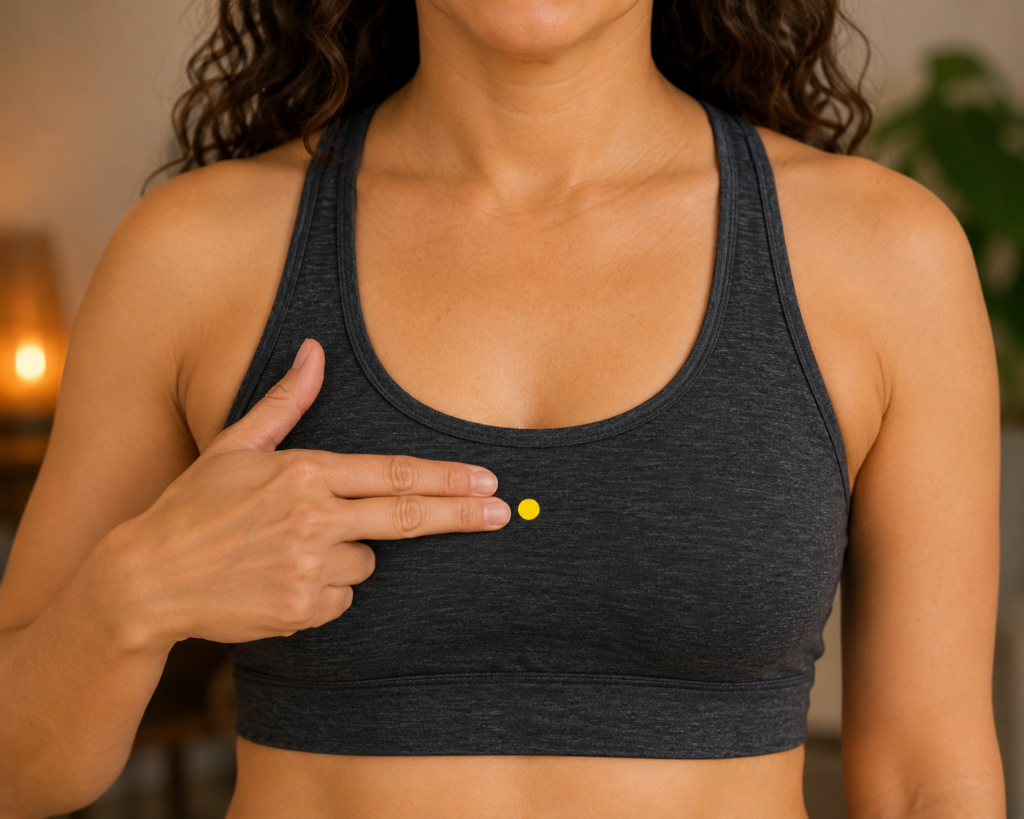
5. Press on CV17 at the center of the chest to open the chest. CV17 sits on the midline of the breastbone, level with the space between the nipples. Press gently and steadily with your fingertip for one to two minutes while breathing out slowly. CV17 is called “Shanzhong,” the gathering point of Qi in the chest.
CV17 alleviates chest tightness and facilitates easier breathing. Because asthma symptoms can induce anxiety that worsens chest constriction, CV17 helps break this cycle. Placing your hand on this area and breathing slowly can help you feel calmer.
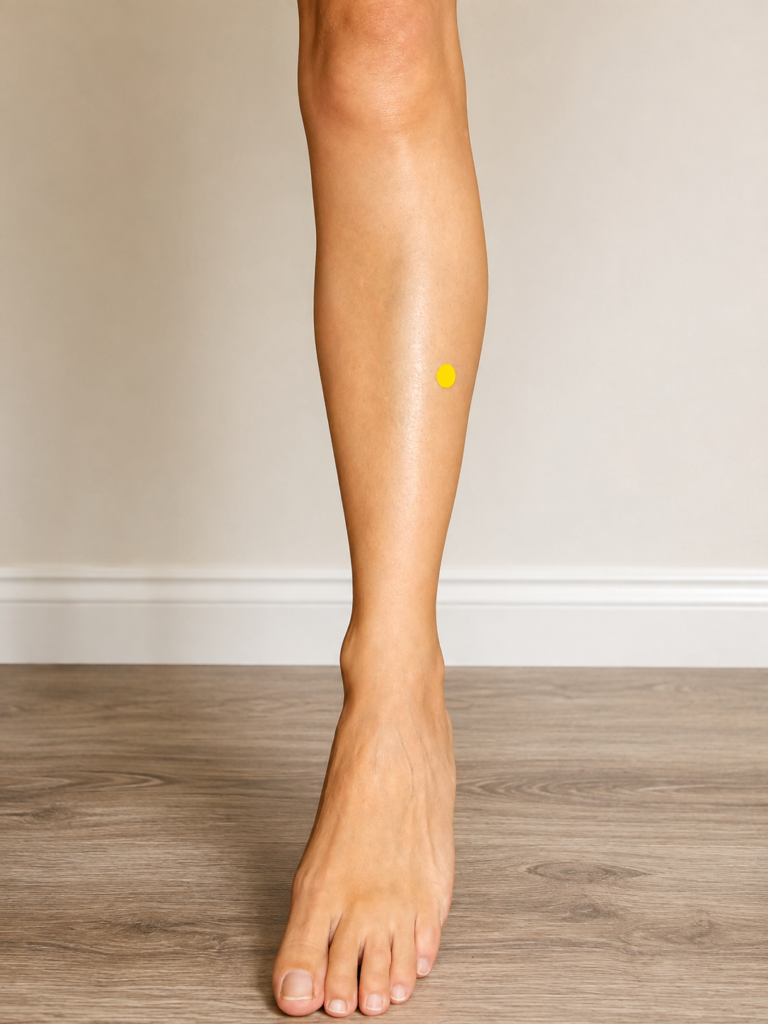
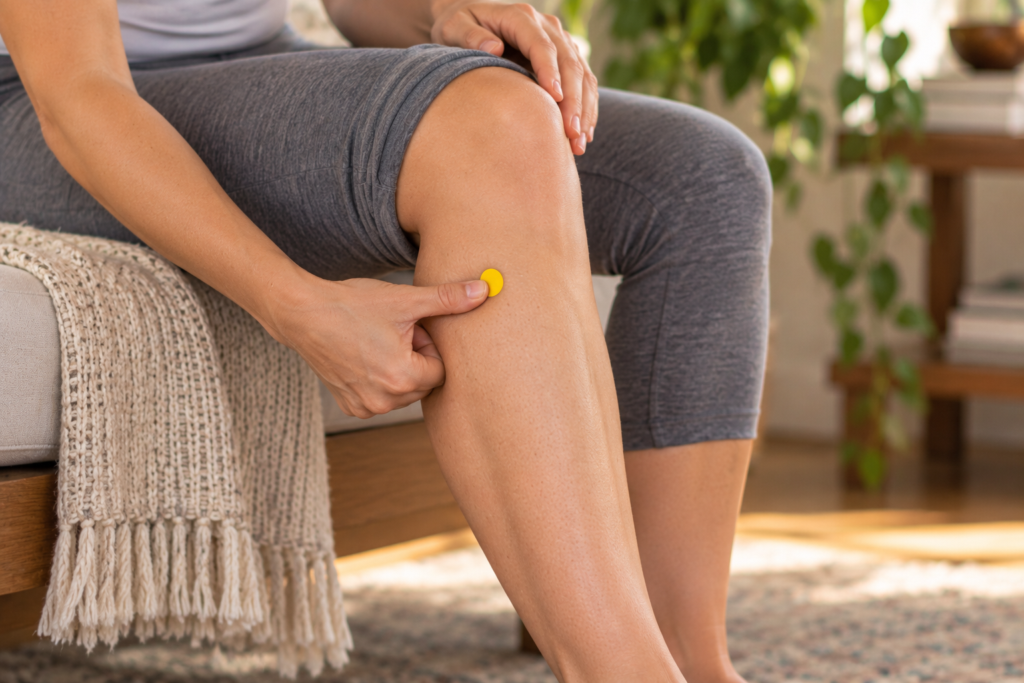
6. Press on ST40 on the lower leg to resolve phlegm. ST40 sits on the outer lower leg, midway between the knee and the outer ankle bone, about two finger-widths to the outside of the shinbone. Press firmly with your thumb for one to two minutes on each leg. ST40 is called “Fenglong.”
ST40 is a crucial point for eliminating phlegm and helps thin and clear mucus at its source, especially when mucus blocks the airways during an asthma attack. Regular stimulation of this point is essential during times when your asthma tends to cause congestion.
7. Press on ST36 below the knee to strengthen the defenses. ST36 sits four finger-widths below the lower edge of the kneecap and one finger-width to the outside of the shinbone, on the muscle that rises when you flex your foot. Press firmly with your thumb for one to two minutes on each leg. ST36 is called “Zusanli,” the “Leg Three Miles.”
Stimulating ST36 strengthens the Spleen, reducing phlegm production and enhancing the Lung’s defensive Qi. For asthma that worsens with colds or seasonal changes, daily ST36 treatment helps build resilience over time.
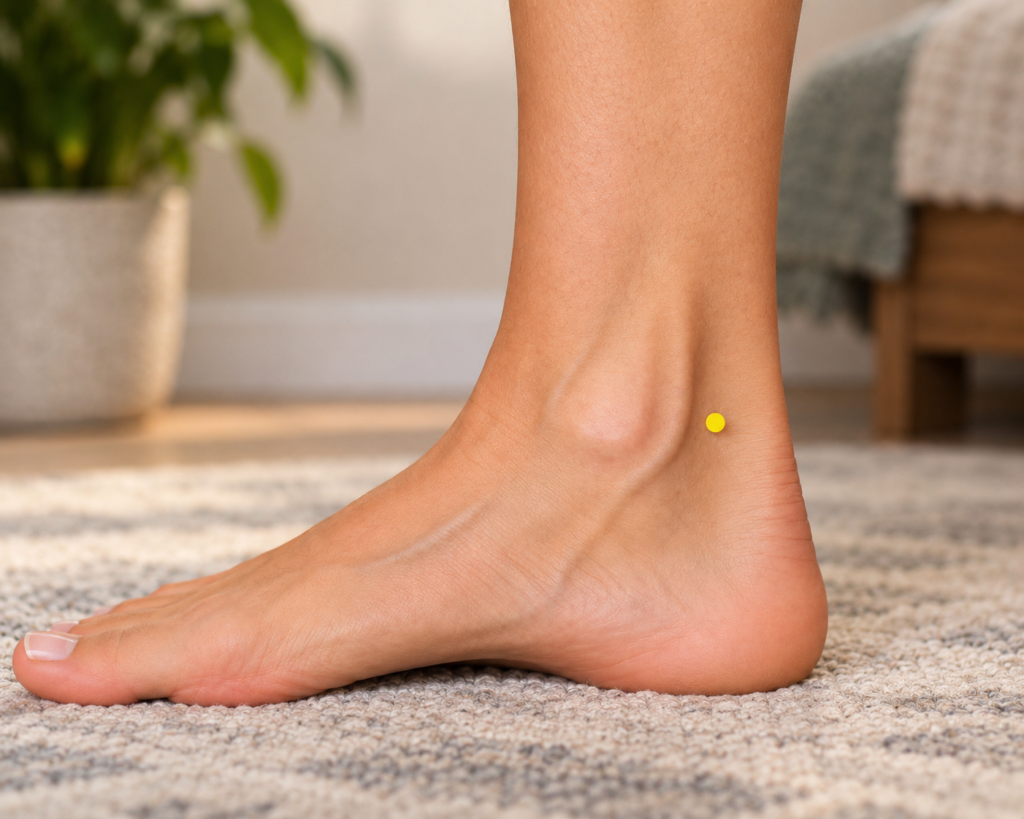
8. Press on KI3 above the inner ankle to help the breath go deep. KI3 sits in the hollow between the inner ankle bone and the Achilles tendon, level with the tip of the ankle bone. Press firmly with your thumb for one to two minutes on each ankle. KI3 is called “Taixi,” the Kidney’s source point.
When asthma is persistent, especially if inhaling is more difficult than exhaling or if physical activity leaves you breathless, Traditional Chinese Medicine attributes this to the Kidneys not being able to hold the breath properly. KI3 helps enhance this function and the associated deep reserves. Since its effects develop gradually, consistent daily practice is essential for it to be effective.
9. Press BL23 on the lower back to warm and strengthen the Kidney. BL23 sits on the lower back, at about waist level, roughly two finger-widths out to each side of the spine. Rub the area briskly with your palms or knuckles until it feels warm, or press firmly for one to two minutes. BL23 is called “Shenshu,” the back point of the Kidney.
BL23 is rubbed to generate heat and directly reinforce the Kidney, which draws the breath downward. This traditional method treats chronic breath weakness, especially when caused by cold air, and it is compatible with KI3.

Why These Acupressure Points Work
In Traditional Chinese Medicine, asthma is attributed to a fragile Lung that is easily affected by triggers, phlegm resulting from a weak Spleen, and, in chronic cases, a Kidney that can no longer hold the breath. The nine points are related to this condition.
- The airway points (Dingchuan, BL13, LU6, LU5, CV17) calm wheezing, open the chest, and clear heat and phlegm from the Lung.
- The phlegm and defense points (ST40, ST36) resolve mucus and strengthen the body’s resilience to triggers.
- The Kidney points (KI3, BL23) help deepen the breath and support long-standing asthma.
Research on acupuncture and acupressure combined with typical asthma treatment shows that some individuals experience better quality of life and symptom relief. Acupressure should not be seen as a substitute for asthma medication.
How to Properly Use These Acupressure Points
- If you experience an asthma attack, first use your rescue inhaler and follow your asthma action plan. Remember, acupressure is not a replacement for rescue medication.
- Continue taking your medications exactly as prescribed, even if you feel well.
- Perform the full routine once daily, spending 1-2 minutes on each point. During flare-ups, continue medication and add Dingchuan, LU6, and CV17 while sitting upright.
- Pair the points with slow breathing: sit upright or lean slightly forward, rest your forearms on your thighs, breathe in gently through the nose, and exhale slowly through pursed lips.
- Work ST36, ST40, KI3, and BL23 daily during your high-risk seasons to build resilience over time.
An essential aspect of managing asthma is recognizing and steering clear of triggers. Regularly review air quality and pollen forecasts, and schedule outdoor activities during times of better conditions, typically early morning. During dust storms or smoky conditions, stay indoors, keep windows shut, and use a HEPA air purifier. Always warm up prior to exercise, and refrain from intense activity during hot summer afternoons when ozone levels rise. When transitioning from hot outdoor air to cold indoor environments or stepping outside into cold winter air, protect your nose and mouth with a scarf. Avoid all types of smoke, wash bedding weekly in hot water, and keep your doctor’s asthma action plan easily accessible.
When to Get Professional Help
If you’re having trouble breathing, can’t speak in full sentences, or notice blue or grey lips or fingernails, or if the skin between your ribs or at your neck sinks in as you breathe, get confused, become very drowsy, or if your rescue inhaler doesn’t help or needs to be used again shortly after, contact emergency services immediately. Visit your doctor if you use your rescue inhaler more than twice a week, wake up at night due to asthma, find your symptoms interfere with daily activities, have previously needed emergency treatment or oral steroids for an asthma attack, or lack a written asthma action plan. These signs suggest your treatment plan may need adjustment.
Acupressure can be used as a complementary treatment for asthma symptoms, in addition to standard medical care and medications.
Above and Beyond Acupuncture offers acupuncture, cupping, and lifestyle coaching at the North Frank Lloyd Wright Boulevard location in Scottsdale.
Schedule an appointment online to start your healing journey.
The points above are only as effective as the technique used to apply them. Where to press, how firmly, and for how long all affect the result. For a full breakdown of how to perform acupressure properly at home, read Performing Acupressure in 3 Easy Steps.
For breathlessness from other causes, acupressure for shortness of breath is the companion post, and if a cough is your main symptom, acupressure for a cough covers that condition. If allergies trigger your asthma, alleviating allergies with acupuncture explains how Traditional Chinese Medicine addresses the allergic side.

About the Publisher
Paul Kerzner, L.Ac., is a licensed acupuncturist and board-certified herbalist, as well as the founder of Above and Beyond Acupuncture in Scottsdale. His own journey from chronic patient to practicing acupuncturist shapes his commitment to providing honest, clinically grounded information about acupuncture and Traditional Chinese Medicine. Learn more about Paul and his clinical approach on the About Us page.