Key Takeaways
- Burning mouth syndrome results in a burning or tingling feeling in the tongue, lips, gums, or palate, despite the mouth appearing normal.
- It may be secondary to treatable causes like nutritional deficiencies, dry mouth, or medication, or primary when the issue originates in the nerves.
- Daily routines, like consistent acupressure and dietary changes, help manage the condition effectively.
- Acupuncture can further reduce symptoms by targeting the root imbalances recognized in Traditional Chinese Medicine.
- Consult a healthcare professional if symptoms persist or are linked to concerning signs such as numbness or unexplained weight loss.

Does your tongue feel scalded, as if you drank a cup of coffee that was far too hot, even though the discomfort never goes away?
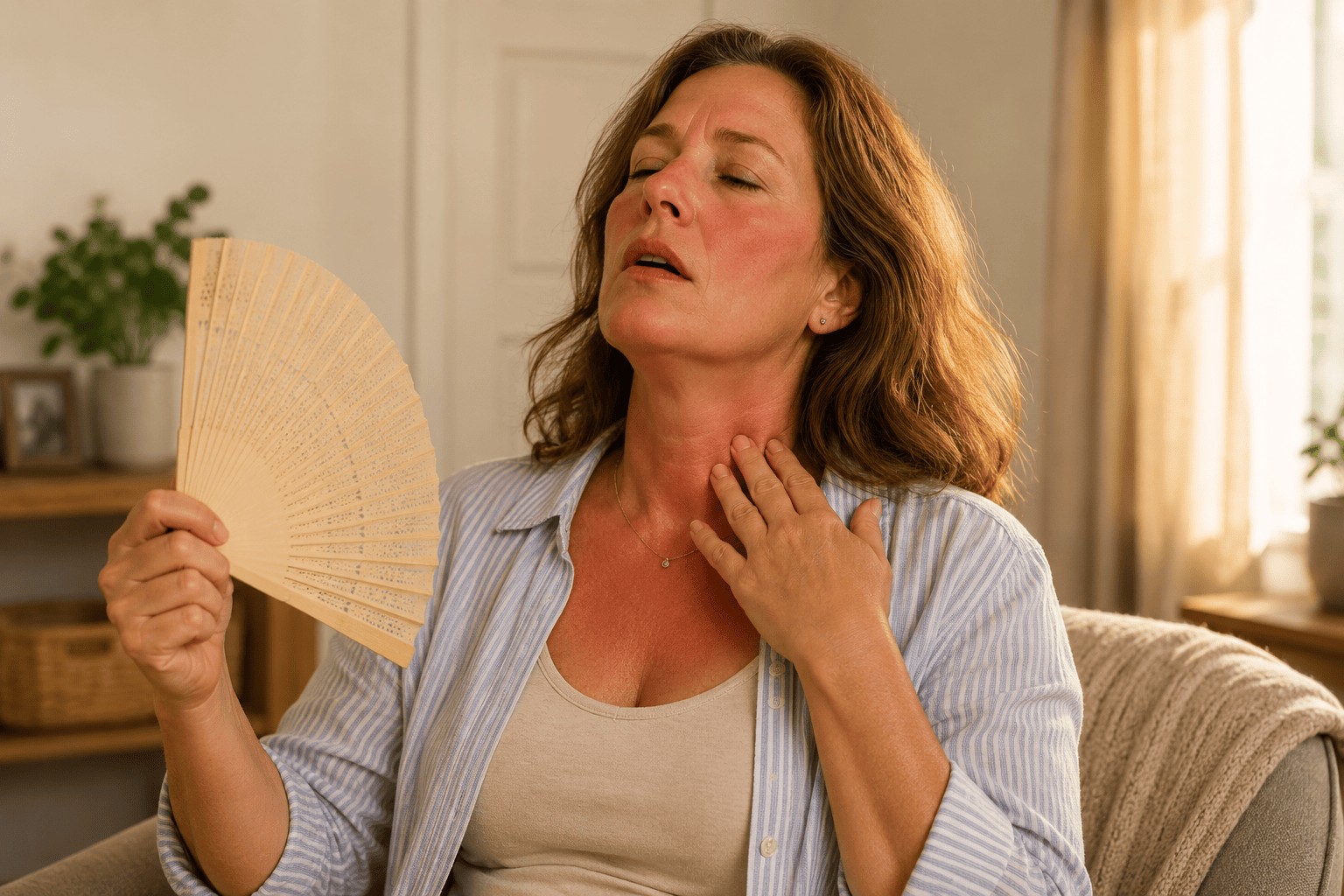
Burning mouth syndrome causes a burning, tingling, or numb sensation in the tongue, lips, gums, or roof of the mouth, often accompanied by dry mouth and sometimes a bitter or metallic taste. The symptoms are usually mild in the morning but worsen throughout the day. It most commonly affects women near menopause or afterward. Since the mouth appears normal, many find the condition frustrating and isolating. Many consult multiple doctors before they identify the cause. Acupressure offers a gentle way to soothe the burning, calm the nervous system, and target the patterns Traditional Chinese Medicine links to it.
This article explains what burning mouth syndrome is, how Traditional Chinese Medicine views it, which points help, and how to create a daily routine around them.
What Is Burning Mouth Syndrome?
Burning mouth syndrome is a chronic condition marked by a burning or scalding sensation in the mouth, despite no visible sores, redness, or injuries. The tip and sides of the tongue are most often affected, but the lips, gums, roof of the mouth, and throat can also be involved. This sensation can last for months or years and typically follows a daily cycle, being milder upon waking and intensifying in the afternoon and evening.
Common symptoms include:
- Burning, scalding, tingling, or numbness in the tongue, lips, gums, or palate
- Dry mouth, or a feeling of dryness even when saliva tests normal
- A bitter, metallic, or altered sense of taste
- Symptoms that build through the day and ease with eating or drinking
- Sleep disruption, anxiety, and low mood that often travel with it
Burning mouth syndrome can be secondary, caused by identifiable factors like nutrient deficiencies, dry mouth, yeast infections, acid reflux, dentures, or medication. Alternatively, it may be primary, with no identifiable cause, and is believed to originate from nerve issues. In primary cases, studies suggest alterations in small nerve fibers in the tongue and in how the brain processes taste and pain signals, explaining why the sensation feels so intense and persistent despite the absence of visible issues.
Who Gets Burning Mouth Syndrome
Burning mouth syndrome occurs much more frequently in women than men, typically around or after menopause. This period involves hormonal changes that affect nerves, saliva, and the mouth’s mucous lining. Common causes also include chronic stress, anxiety, poor sleep, and deficiencies in vitamin B12, iron, folate, or zinc. Other factors include diabetes, thyroid issues, dry mouth from medications or ill-fitting dentures, reactions to dental materials, acid reflux, and habits like jaw clenching or rubbing the tongue against the teeth.
In Arizona, the dry desert air can worsen the dryness often linked to this condition.
How Traditional Chinese Medicine Views Burning Mouth Syndrome
Traditional Chinese Medicine approaches a burning mouth by identifying the underlying pattern responsible, considering factors such as the location and timing of the burning, taste, and other accompanying symptoms. Most individuals exhibit more than one underlying pattern.
- Depleted Yin with empty heat. This is the most common pattern, especially in midlife women. Yin is the body’s cooling, moistening reserve, and when it runs low, an empty heat rises to the mouth, bringing burning, dryness, and symptoms that worsen in the afternoon and evening. It often comes with night sweats, hot flashes, a dry throat at night, and restless sleep. KI6, KI3, and SP6 are the main points for this pattern.
- Heat in the Heart. The tongue is considered the outward sprout of the Heart, so burning at the tip of the tongue, especially with anxiety, restlessness, or poor sleep, points to heat in the Heart. PC8 and HT7 address this pattern.
- Heat in the Stomach. Burning on the gums or palate, with bad breath, thirst, or a strong appetite, points to heat in the Stomach, whose channel runs through the mouth. ST44 and LI4 address this pattern.
- Stuck Liver Qi turning to heat. Stress can bind the Liver Qi until it flares into heat. Burning flares with frustration or pressure, often with a bitter taste, irritability, and tension in the jaw. LR2 addresses this pattern.
What the Research Shows
Some small studies suggest that acupuncture might help alleviate burning mouth symptoms and enhance quality of life, as many patients reported less burning and better sleep after treatment. Nonetheless, research is limited due to small sample sizes, and larger trials are needed. Because burning mouth syndrome is hard to treat, many individuals look for daily methods to supplement medical care. Acupressure offers a way to press relevant points regularly at home, between appointments, or as a standalone therapy.
Here are nine acupressure points to help cool the Heart and Stomach, nourish Yin, moisten the mouth, and soothe stress and the nervous system.
What Acupressure Points to Press and Why
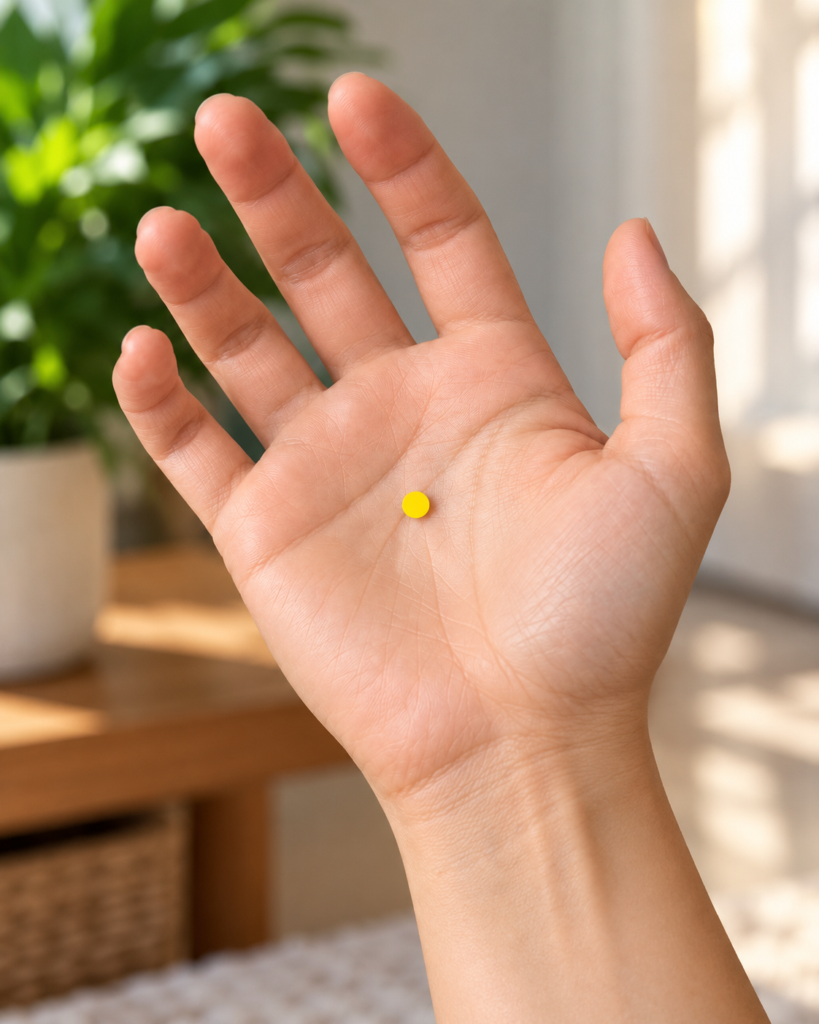
1. Press on PC8 in the center of the palm to cool the Heart. PC8 sits in the center of the palm, where the tip of the middle finger lands when you make a loose fist. Press firmly with the thumb of your other hand for one to two minutes on each hand. PC8 is called “Laogong,” the “Palace of Labor.”
PC8 is a well-known acupuncture point used to clear heat from the Heart. It has traditionally been applied to treat burning sensations, sores, and heat in the mouth and tongue. Since the tongue reflects the state of the Heart, cooling the Heart helps soothe the tongue. This point is simple and accessible to press whenever the burning sensation arises, whether at a desk, in a car, or during a meeting. This practicality explains why many people use it multiple times a day.
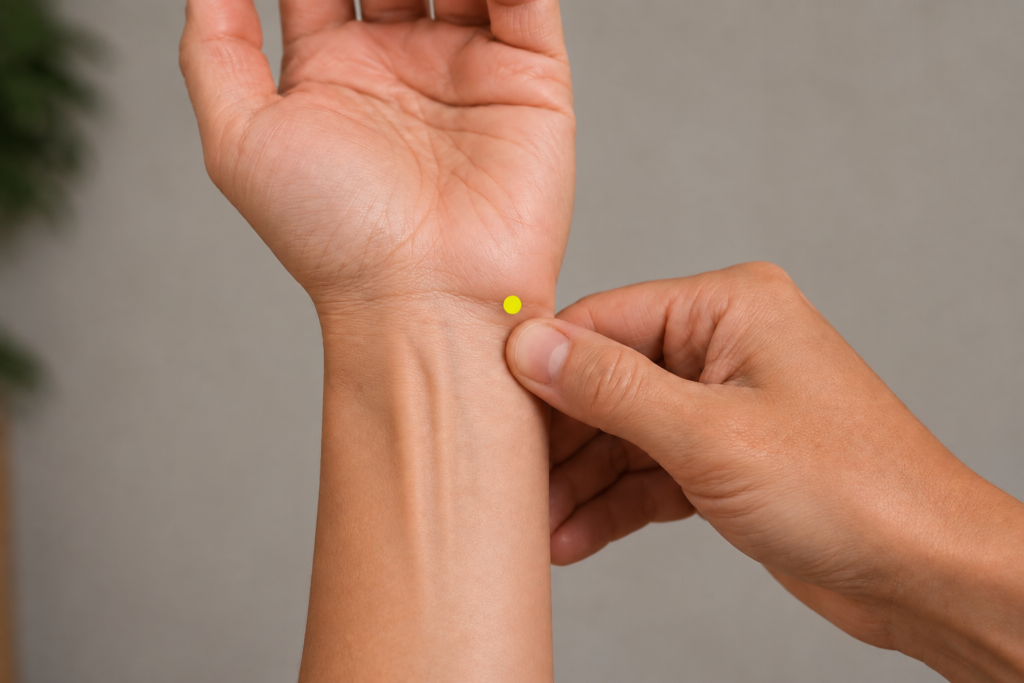
2. Press on HT7 at the wrist to calm the Heart and the nerves. HT7 sits on the inner wrist crease, on the pinky side, in the small hollow just inside the tendon. Press firmly with your thumb for one to two minutes on each wrist. HT7 is called “Shenmen,” the “Spirit Gate.”
Anxiety, poor sleep, and a burning mouth often worsen each other. Because HT7 calms the Heart and stabilizes the Shen, it eases restlessness and worry, which can intensify nerve sensations, and helps soothe the nervous system. This point is especially useful in the evening when symptoms tend to peak and at bedtime when mouth discomfort may keep the mind alert.
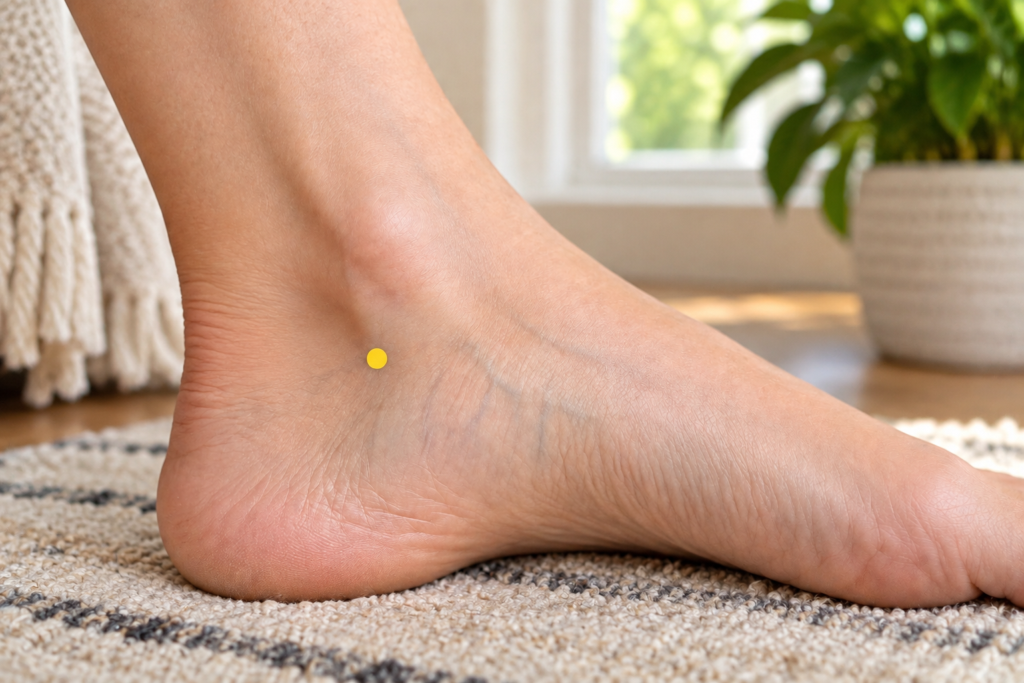
3. Press on KI6 below the inner ankle to moisten the mouth and throat. KI6 sits in the hollow just below the tip of the inner ankle bone. Press firmly with your thumb for one to two minutes on each ankle. KI6 is called “Zhaohai,” the “Shining Sea.”
KI6 is a key acupressure point linked to dry mouth and throat, as well as empty heat from Yin deficiency, a common cause of a burning sensation in the mouth. It helps restore the body’s cooling and moisturizing fluids and reduces the upward movement of heat. This point is crucial in treatment, especially when the burning intensifies later in the day and leads to a dry throat that may disturb sleep.
4. Press on KI3 behind the inner ankle to nourish the deep Yin. KI3 sits in the hollow between the inner ankle bone and the Achilles tendon, level with the tip of the ankle bone. Press firmly with your thumb for one to two minutes on each ankle. KI3 is called “Taixi,” the source point of the Kidney.
KI3 helps to restore the body’s deep Yin reserves in the Kidney, which tend to decrease with age and around menopause. Paired with KI6, located just below it, it addresses the root causes of excessive heat that can cause symptoms like a burning mouth. It also alleviates dryness, night sweats, and hot flashes often associated with this condition. Because this is a gradual and fundamental treatment, consistent daily use of KI3 provides more benefits than occasional application.
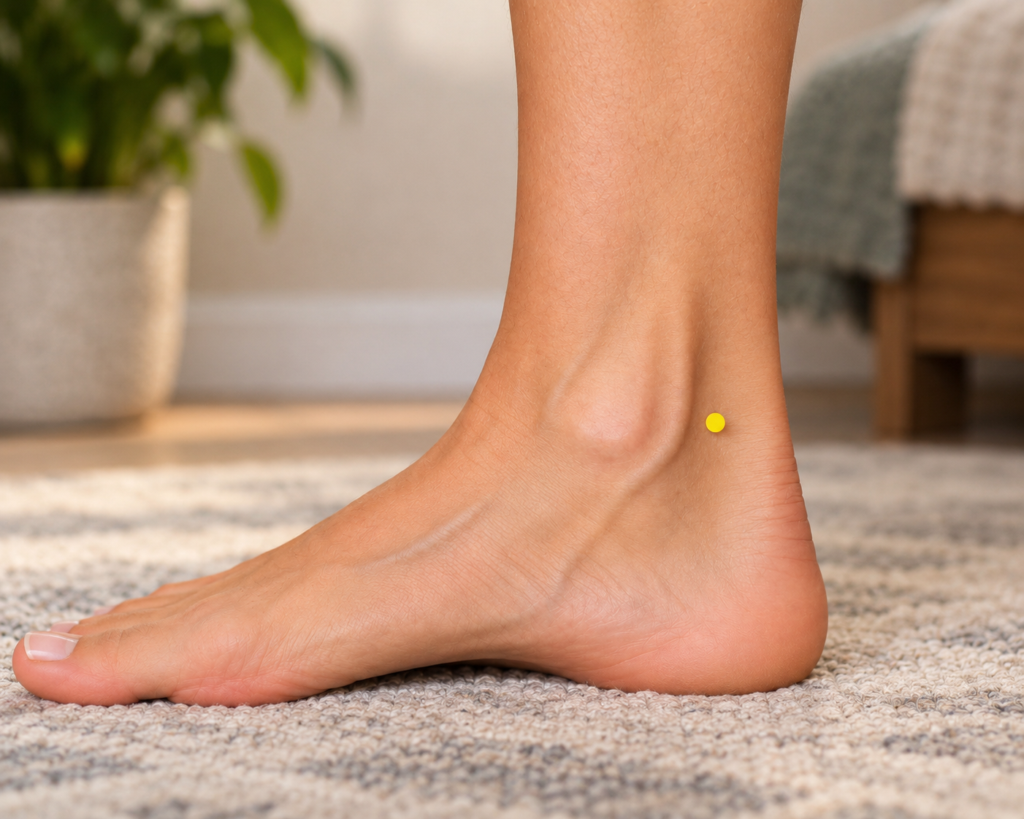
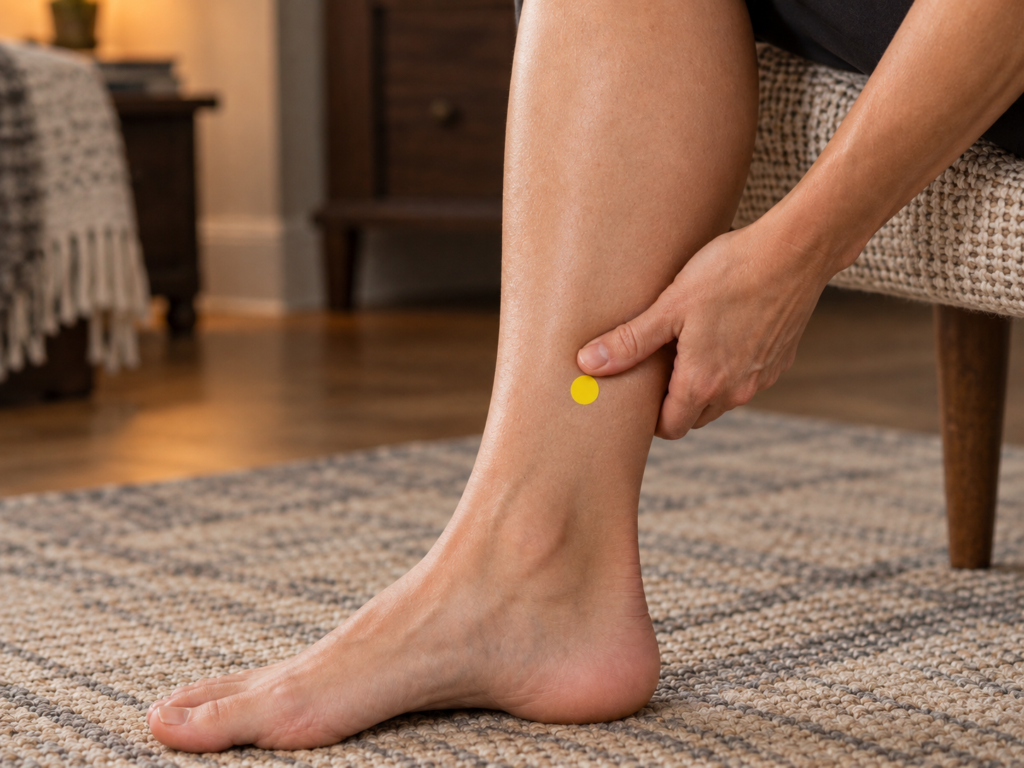
5. Press on SP6 above the inner ankle to nourish the Yin and Blood. SP6 sits four finger-widths up from the tip of the inner ankle bone, just behind the back edge of the shinbone. Press firmly for one to two minutes on each leg. SP6 is called “Sanyinjiao,” the “Three Yin Intersection.” SP6 is contraindicated during pregnancy.
SP6 nourishes the Yin and Blood of the Spleen, Liver, and Kidney, supporting moistening fluids that maintain mouth comfort. It also calms the mind, promotes sleep, and is especially beneficial for women experiencing a burning mouth near menopause. Together with KI6 and KI3, it forms the nourishing foundation of this routine.
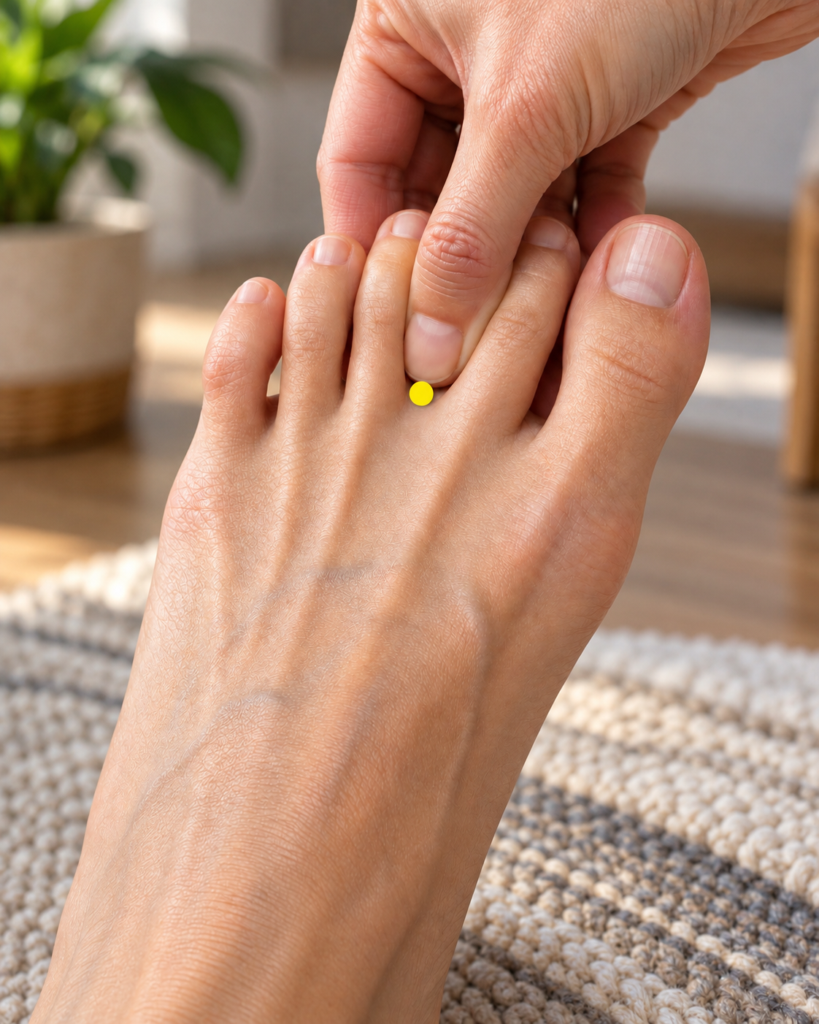
6. Press on ST44 between the toes to clear heat from the mouth. ST44 sits on the top of the foot, in the webbing between the second and third toes, just where they meet. Press firmly with your thumb for one to two minutes on each foot. ST44 is called “Neiting.”
The Stomach meridian flows through the gums and surrounds the mouth, with ST44 playing a role in clearing heat. It is especially useful for conditions where burning sensations affect the gums and palate or are associated with bad breath, a strong appetite, or a sour taste. In Traditional Chinese Medicine, stimulating a foot point to cool the mouth relies on the principle of directing heat away from areas of accumulation.
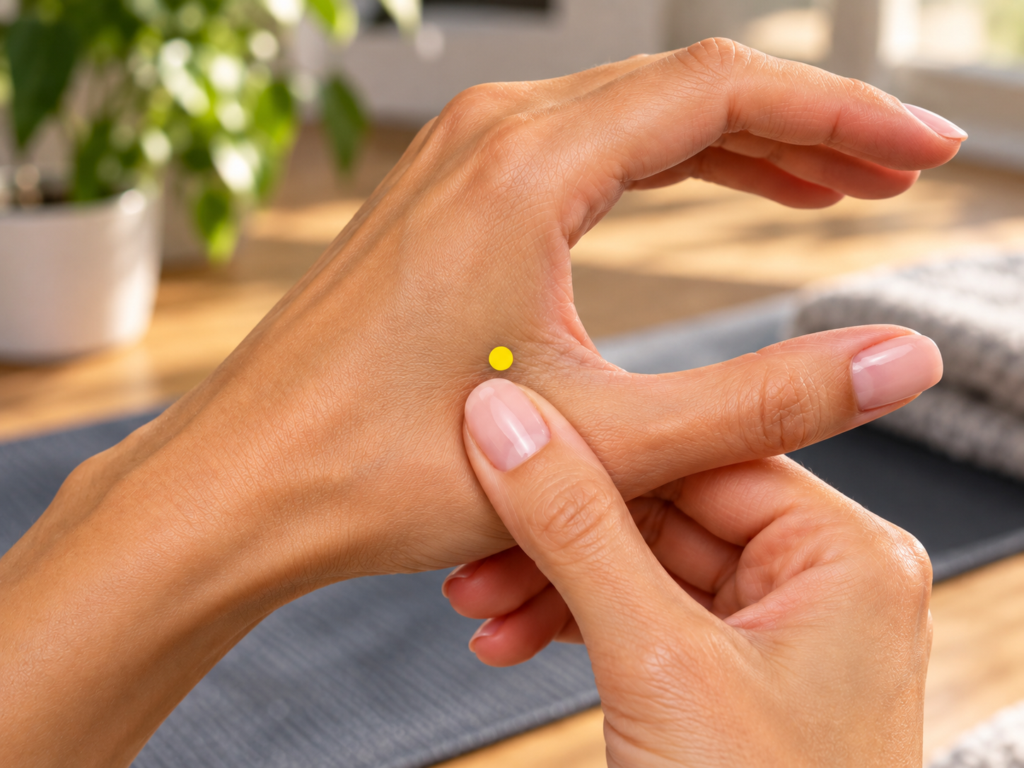
7. Press on LI4 in the hand, the command point for the face and mouth. LI4 sits in the webbing between the thumb and index finger, at the highest point of the muscle when you bring the thumb and index finger together. Press firmly with the thumb of your other hand for one to two minutes on each hand. LI4 is called “Hegu.” LI4 is contraindicated during pregnancy.
LI4 is an acupuncture point on the face and mouth that alleviates pain and discomfort in that area remotely. It helps soothe burning and irritated nerves without direct contact with the mouth. This is because the large intestine meridian, which LI4 follows, also encircles the lips, making it a common choice for treating discomfort in this region.
8. Press on CV23 under the chin to soothe the tongue. CV23 sits under the chin, on the midline, in the small hollow where the underside of the chin meets the throat, just above the top of the throat. Press gently upward with your fingertip for about a minute. CV23 is called “Lianquan,” the “Angle Spring.”
CV23 is a key point on the tongue, traditionally used to ease discomfort, dryness, and stimulate saliva production. Applying gentle pressure to this point from below relaxes the tongue and helps moisten the mouth. Usually, saliva starts to collect within about a minute. Since the area above the throat is soft, pressure should be applied delicately.

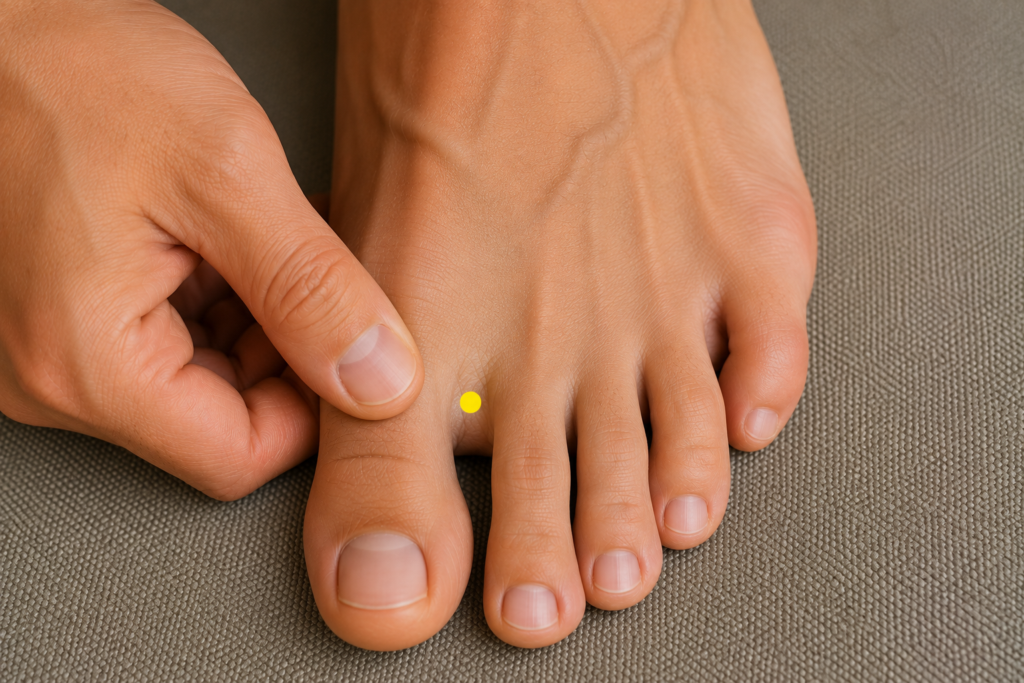
9. Press on LR2 on the top of the foot to cool stress-driven heat. LR2 sits on the top of the foot, at the edge of the webbing between the big toe and second toe, just in front of LR3. Press firmly with your thumb for one to two minutes on each foot. LR2 is called “Xingjian,” the “Moving Between.”
If you have a burning mouth due to stress, frustration, or irritability, Traditional Chinese Medicine sees this as Liver Qi stagnation transforming into heat. The main point to address this heat is LR2, which helps cool and calm and targets the emotional component of a burning mouth. On days when you notice a bitter taste or a clenched jaw, especially, focus on LR2.
Why These Acupressure Points Work
In Traditional Chinese Medicine, a burning feeling in the mouth is considered to be heat ascending to the tongue and mouth, often stemming from the Heart or the Stomach, and can be triggered by stress or commonly caused by Yin deficiency. The nine points are relevant to this condition.
- The cooling points (PC8, ST44, LR2) clear heat from the Heart, Stomach, and Liver.
- The nourishing points (KI6, KI3, SP6) replenish the Yin and fluids that keep the mouth moist and cool.
- The calming and local points (HT7, LI4, CV23) settle the nerves and soothe the mouth and tongue.
How to Properly Use These Acupressure Points
- Perform the entire routine once or twice daily, pausing at each point for one to two minutes.
- Since heat tends to accumulate throughout the day, having a session in the afternoon or early evening can be particularly beneficial.
- Apply firm pressure to the hands and feet, and gently press under the chin. Avoid pressing inside the mouth.
- When the burning flares up, press PC8 and HT7 and sip cool water slowly.
- Use the routine regularly over a few weeks to evaluate its effectiveness.
Sample routines
- Morning (three minutes): KI6, KI3, and SP6 to nourish the Yin before the day’s heat starts to accumulate.
- Afternoon or early evening (ten to fifteen minutes): The full nine-point routine, when burning usually starts to increase.
- During a flare: PC8 and HT7 on both hands, then CV23 gently, while sipping cool water.
- Bedtime: HT7, KI6, and SP6 to calm the mind, moisten the throat, and support sleep.
Daily Care for a Burning Mouth
A few simple changes can significantly help. Avoid common irritants like spicy and acidic foods, very hot drinks, alcohol, tobacco, and mouthwashes containing alcohol. Toothpastes with strong flavors such as cinnamon or mint, or harsh foaming agents, might worsen the burning sensation. Opt for a mild, flavorless toothpaste instead. Throughout the day, sip cool water, chew sugar-free gum to promote saliva flow, and use a humidifier at night, especially in dry environments like Arizona. If you wear dentures, have their fit checked regularly and be mindful of habits like jaw clenching or rubbing your tongue against your teeth, as these can keep the nerves irritated.
Because stress and poor sleep can worsen a burning mouth sensation, prioritize good sleep and calming activities like walking, slow breathing, or evening routines. Tracking when the burning occurs, along with your food intake and sleep quality, can help identify triggers you might not have noticed.
Based on Traditional Chinese Medicine principles, eat cooling, moistening foods such as cucumbers, pears, watermelon, soups, and congee. On the other hand, fried, spicy foods, coffee, and alcohol should be avoided, as they produce heat and cause dehydration. Additionally, eating dinner earlier and in smaller portions can help, since Traditional Chinese Medicine views the evening as a time to replenish Yin rather than be active.
How Acupuncture Can Help
For a burning mouth that persists despite home remedies, acupuncture in the clinic can be more effective. Treatment is tailored to the underlying pattern, such as Yin deficiency, heat in the Heart or Stomach, or stress. Many patients then experience improvements in sleep, anxiety, and the burning sensation itself. Classical Chinese herbal formulas that nourish Yin and eliminate deficient heat are typically used, customized to your unique pattern and considering any medications you are on.
When to Get Professional Help
If you feel a burning sensation in your mouth, see both your dentist and doctor. This symptom could be caused by treatable conditions like vitamin B12, iron, folate, or zinc deficiencies; oral yeast infections; dry mouth; acid reflux; diabetes; thyroid problems; reactions to dental materials; or specific medications. Blood tests and oral exams can usually identify or rule out these causes. Once a cause is determined, treatment can often resolve the burning sensation. Seek medical help promptly if a sore, ulcer, lump, or white or red patches in your mouth do not heal within two weeks, if the burning is confined to one side, if you experience numbness, swallowing difficulties, unexplained weight loss, or if symptoms began after starting new medication. Burning mouth syndrome can also affect emotional well-being, so inform your doctor if you encounter anxiety, low mood, or sleep problems.
Acupressure is a gentle, supportive practice that can complement medical evaluation and treatment.
Because dry mouth is often connected with a burning mouth, acupressure for dry mouth is a close companion, and since burning mouth syndrome is common during menopause, acupressure for menopause covers that aspect.
Above and Beyond Acupuncture offers acupuncture, cupping, and lifestyle coaching at the North Frank Lloyd Wright Boulevard location in Scottsdale.
Schedule an appointment online to start your healing journey.
The points above are only as effective as the technique used to apply them. Where to press, how firmly, and for how long all affect the result. For a full breakdown of how to perform acupressure properly at home, read Performing Acupressure in 3 Easy Steps.

About the Publisher
Paul Kerzner, L.Ac., is a licensed acupuncturist and board-certified herbalist, as well as the founder of Above and Beyond Acupuncture in Scottsdale. His own journey from chronic patient to practicing acupuncturist shapes his commitment to providing honest, clinically grounded information about acupuncture and Traditional Chinese Medicine. Learn more about Paul and his clinical approach on the About Us page.