Key Takeaways
- Burnout leads to persistent fatigue, mental fog, and physical symptoms despite rest, affecting work and personal life.
- Acupressure for burnout involves nine specific points that help restore energy, calm the mind, and promote recovery from exhaustion.
- These acupressure points include Sishencong for mental clarity, Taiyang for tension relief, and GV4 for deep replenishment.
- Consistency is vital in practicing acupressure; a daily routine helps rebuild reserves and support recovery from burnout.
- Seek professional help if exhaustion persists despite self-care, or if you experience symptoms like anxiety or hopelessness.

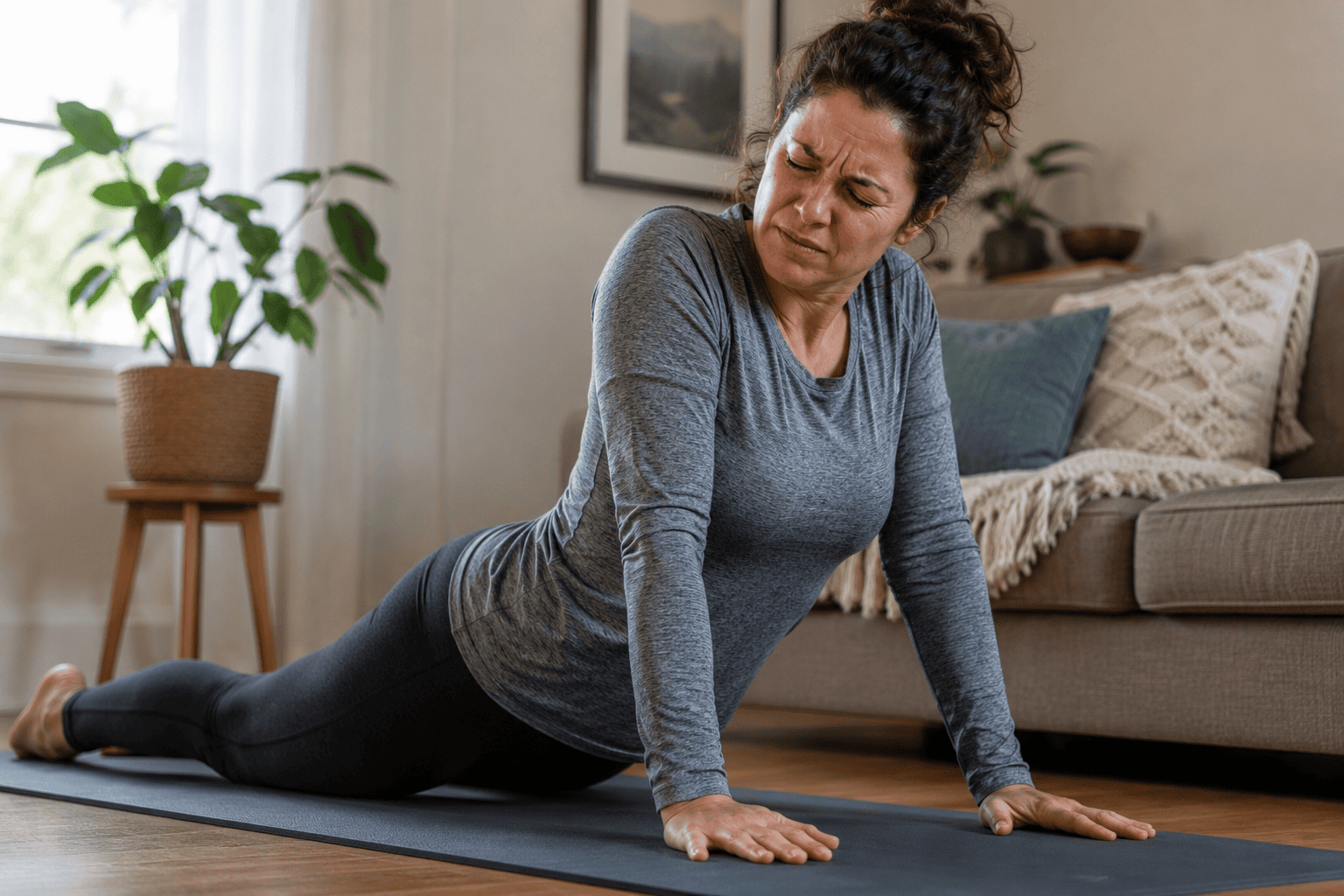
Rest is meant to relieve exhaustion. A good night’s sleep, a weekend off, or a week away usually restores your energy. With burnout, it doesn’t: the fatigue persists after time off, Sunday evenings bring dread about the week ahead, and even a full night’s sleep leaves you feeling drained.
It builds gradually: long hours and pushing through come first, followed by a shorter temper, trouble switching off at night, and relying on more caffeine to get through the day. Then motivation fades. Simple tasks take more effort than they should, and work or activities that once felt meaningful begin to feel pointless. Physical symptoms often follow, including headaches, tight shoulders, digestive problems, frequent colds, and unrefreshing sleep.
The World Health Organization describes this pattern as the result of chronic workplace stress that has not been successfully managed. It identifies three hallmarks: exhaustion, growing mental distance or cynicism toward work, and reduced effectiveness on the job. Although the official definition is tied to work, the same exhaustion is common in caregivers, parents, students, and anyone who carries heavy demands for a long stretch without enough recovery.
In Traditional Chinese Medicine, this kind of exhaustion means the body has been drawing on its reserves. The Spleen makes fresh Qi from food each day, the Liver stores the Blood that nourishes the muscles, eyes, and mood, and the Kidney holds the body’s deepest energy along with the Zhi, the willpower to keep going. When demands outpace recovery for too long, the Spleen falls behind, the Liver Blood runs low, and the body starts spending its Kidney reserves. The Heart, which houses the Shen, or spirit, loses its anchor. That is why burnout so often feels wired and exhausted at the same time.
The nine points below clear the fog, settle the spirit, restore daily energy, and help replenish the reserves that burnout drains.
What Acupressure Points to Press and Why
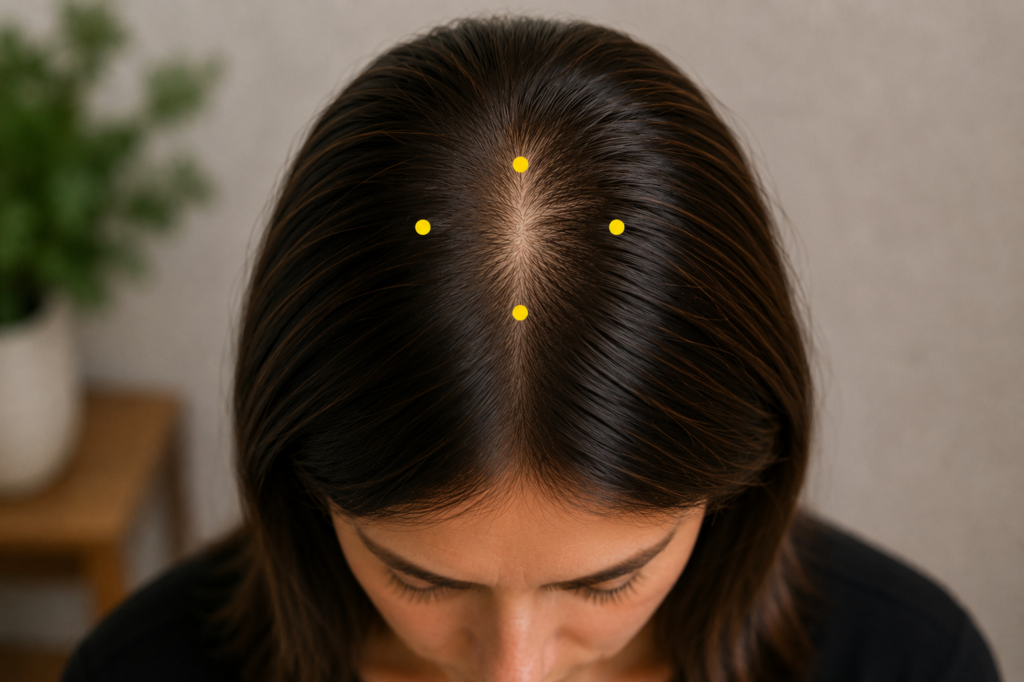
1. Press on Sishencong on the top of the head to clear mental fog. Sishencong is a group of four points on the top of the head. First, find GV20 at the midpoint of an imaginary line drawn from the top of one ear to the top of the other. Sishencong sits about one thumb-width in front of, behind, and to either side of GV20. Press each point gently with your fingertips, or tap lightly around the area, for one to two minutes. Sishencong is called the “Four Alert Spirit.”
Sishencong is an extra point traditionally used to clear the head, improve concentration, and calm the mind. It may help with the foggy, slowed-down thinking associated with burnout, as well as headaches and restless sleep. Pressing these points often leaves the head feeling lighter and clearer.
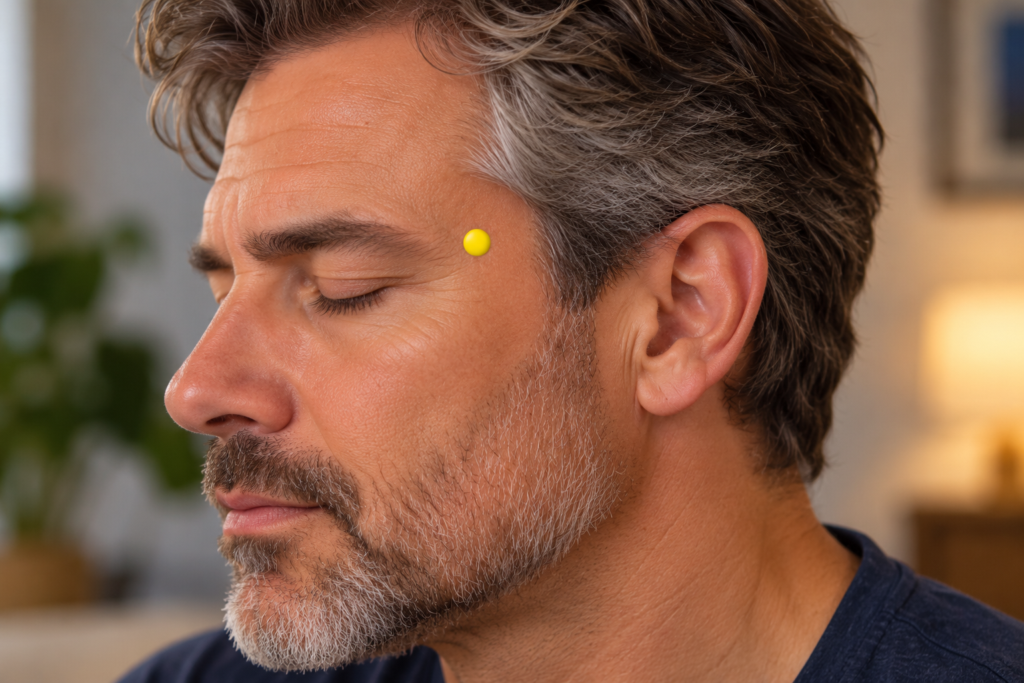
2. Press on Taiyang at the temples to ease screen strain and tension. Taiyang sits in the soft hollow at the temple, about one finger-width behind the midpoint between the outer end of the eyebrow and the outer corner of the eye. Press both temples at once with your fingertips, or make slow circles, for one to two minutes. Taiyang is called the “Supreme Yang.”
Taiyang is an extra point traditionally used for headaches, eye strain, and tension around the sides of the head. Long hours in front of a screen, tight deadlines, and clenched jaws can all build tension here. Pressing Taiyang helps relax the temples and eyes, making it one of the simplest ways to reset during the workday.
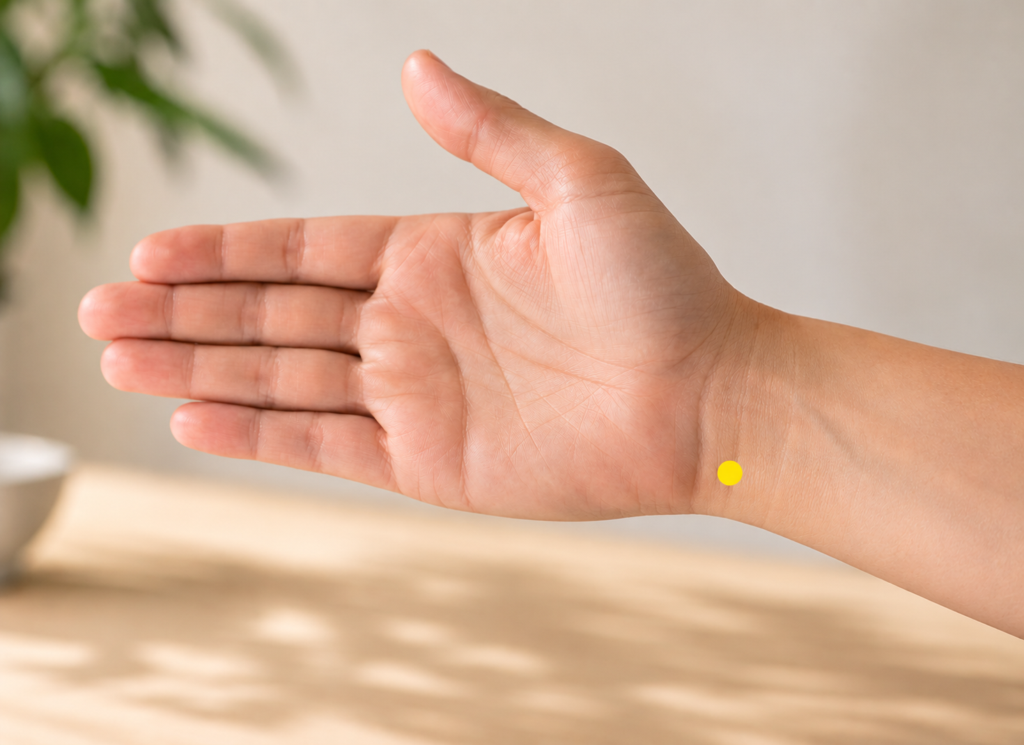
3. Press on HT6 on the inner wrist to calm a wired, exhausted mind. HT6 sits on the inner wrist, on the pinky side, just inside the tendon, about half a thumb-width above the wrist crease. Press gently with the thumb of your other hand for one to two minutes on each wrist. HT6 is called “Yinxi,” the “Yin Cleft.”
HT6 is the cleft point of the Heart and a classic point for nourishing Heart Yin. When prolonged stress depletes the body’s cooling, calming Yin, a person may feel anxious, restless, and unable to unwind, often experiencing night sweats or a racing heart at night. HT6 settles the Shen and helps the body move out of the wired state that sustains burnout.
4. Press on LI10 on the forearm to restore energy. LI10 sits on the top of the forearm, on the thumb side, about three finger-widths below the outer end of the elbow crease. Bend the elbow to find the crease, then press firmly with the thumb of your other hand for one to two minutes on each arm. LI10 is called “Shousanli,” the “Arm Three Miles.”
LI10 shares part of its name with ST36, the famous energy point on the leg. Traditionally, it’s used to strengthen Qi and relieve fatigue, and it can also ease tight, aching forearms from long hours of typing, phone use, and desk work. Easy to reach during the day, LI10 pairs well with Taiyang for a quick reset at work.
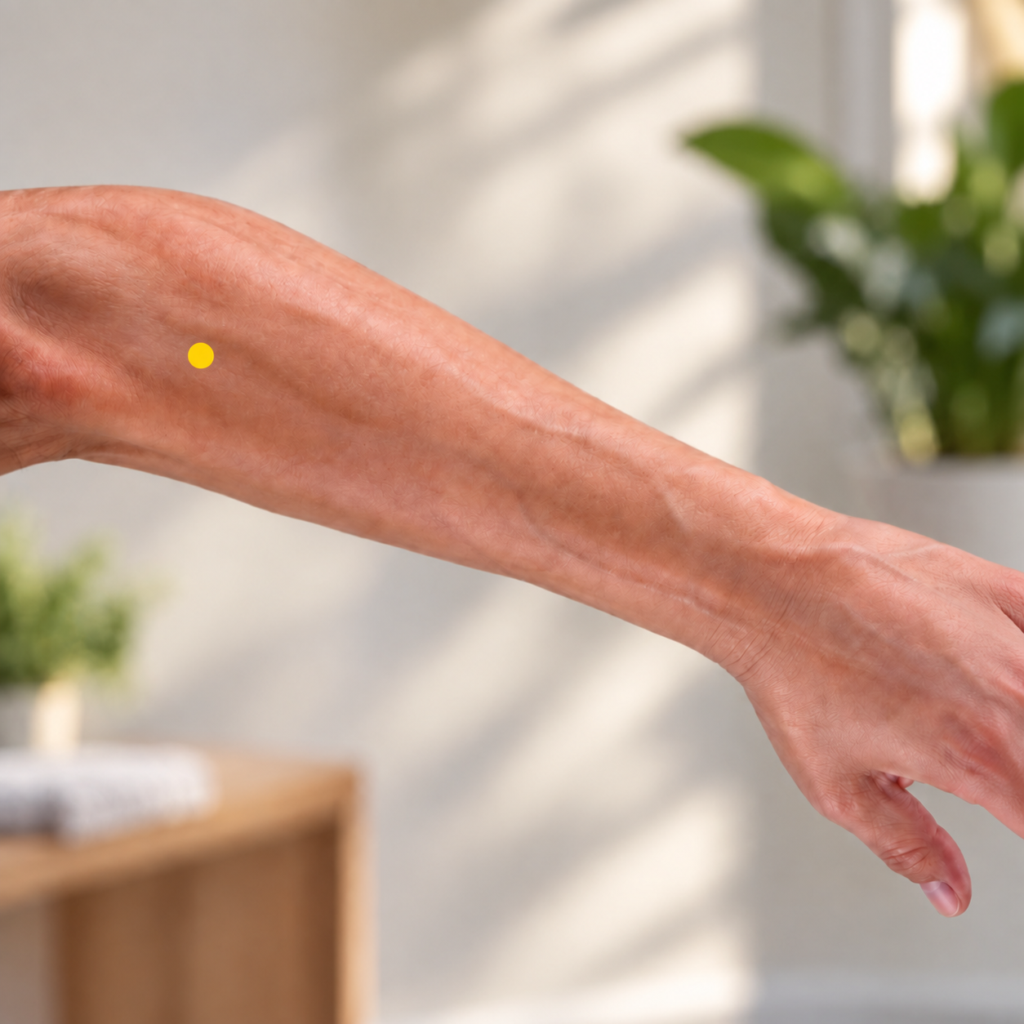
5. Press on SP21 on the side of the rib cage to relieve all-over exhaustion. SP21 sits on the side of the rib cage, directly below the center of the armpit, in the sixth space between the ribs, about two rib spaces below the level of the nipple. Cross your arms in a gentle self-hug and press with your fingertips, or make slow circles, for one to two minutes on both sides. SP21 is called “Dabao,” the “Great Embrace.”
SP21 is the Great Connecting point of the Spleen, linking the Spleen’s channels throughout the body. In Traditional Chinese Medicine, it is used for widespread aching and a heavy, drained feeling in the limbs, two common signs of burnout. It also opens the sides of the chest and helps the breath move more freely.
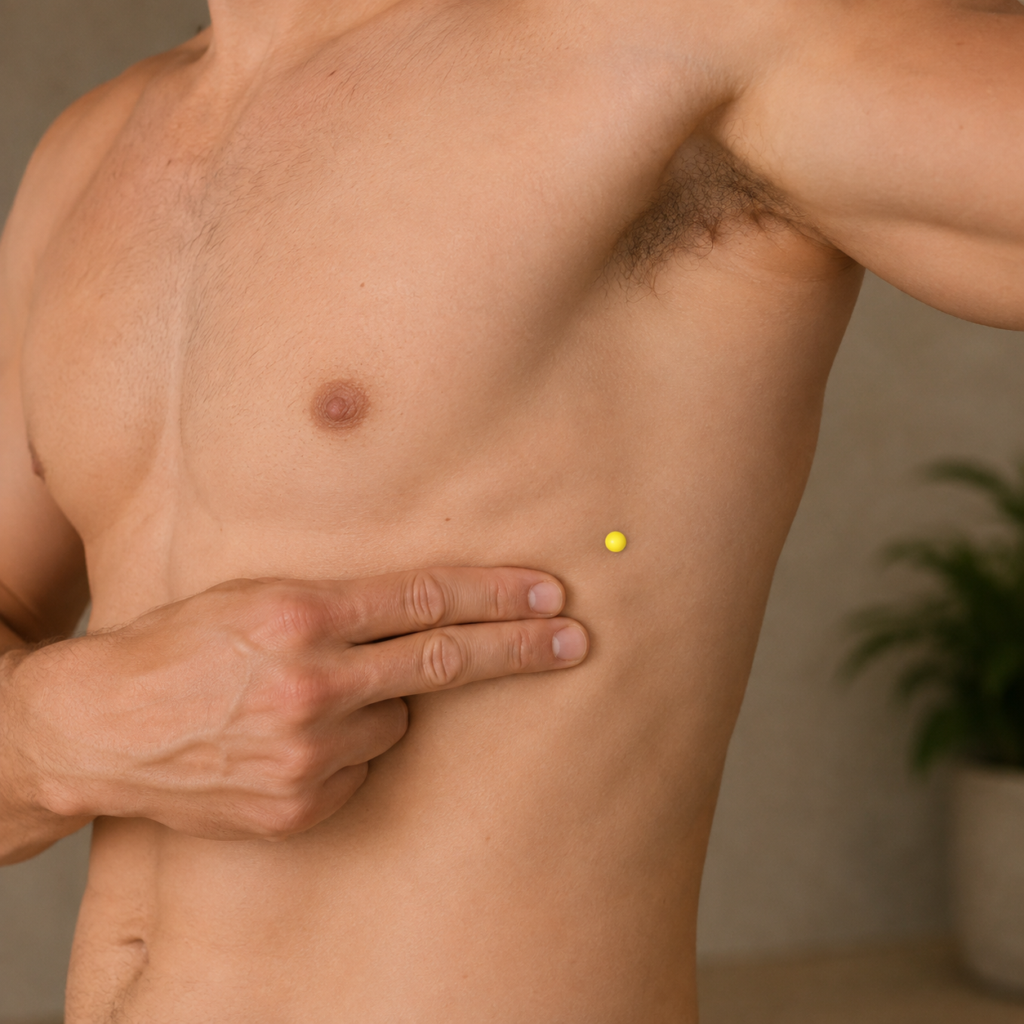
6. Press on LR13 on the side of the abdomen to support digestion and mood. LR13 sits on the side of the abdomen, just below the free tip of the eleventh rib. To find it, let your arms hang at your sides with your elbows bent; the point sits roughly where the elbow tip touches the side of your body. Press gently with your fingertips for one to two minutes on each side. LR13 is called “Zhangmen,” the “Completion Gate.”
LR13 is the Spleen’s front collecting point and helps harmonize the Liver and Spleen. With long-term stress, a tense Liver can weigh on the Spleen, causing irritability, bloating, poor appetite, and energy crashes after meals. LR13 helps ease this tension, support digestion, and produce the fresh Qi the body needs to recover.

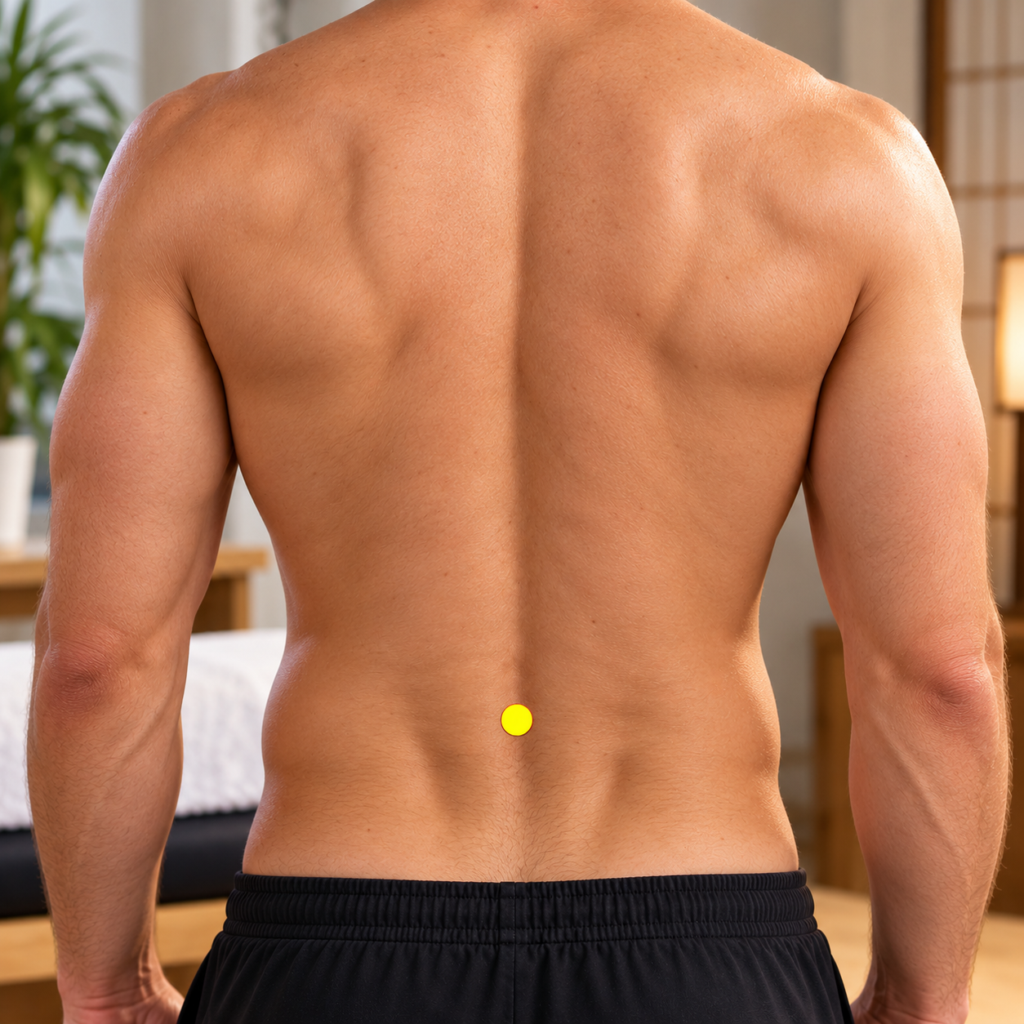
7. Press on GV4 on the lower back to replenish deep reserves. GV4 sits on the midline of the lower back, in the hollow just below the second lumbar vertebra, roughly level with the navel. Press firmly with your knuckles, or rub your palms together until they are warm and rest them over the area for one to two minutes. GV4 is called “Mingmen,” the “Gate of Life.”
GV4 is one of the most important points in Traditional Chinese Medicine for the Kidney reserves and the warming fire that fuels the whole body. Traditionally, it treats deep exhaustion, low back weakness, coldness, and loss of drive. Warmth over GV4, from the hands or a heating pad, is especially soothing when burnout leaves the body feeling depleted to the core.
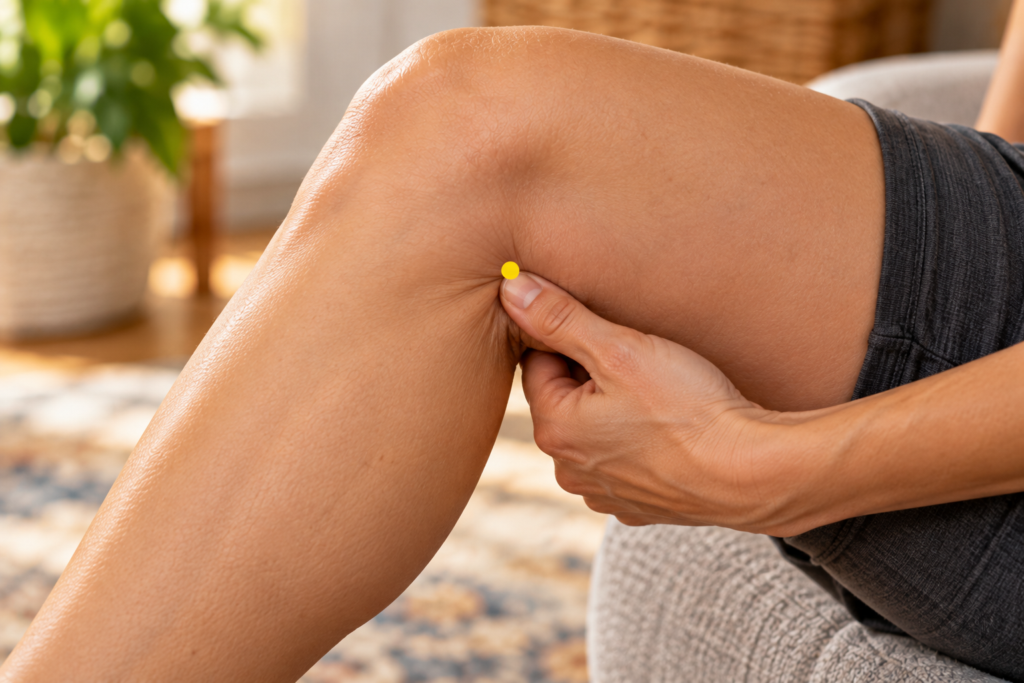
8. Press on LR8 at the inner knee to nourish the Liver Blood. Bend the knee and find the inner end of the knee crease, then press into the hollow just in front of the tendons there. Press firmly with your thumb for one to two minutes on each leg. LR8 is called “Ququan,” the “Spring at the Bend.”
The Liver stores the Blood, which nourishes the muscles and eyes and supports a steady mood. Months of overwork and too little sleep can deplete Liver Blood, leaving the eyes tired, the muscles tight, and the mood irritable and short-tempered. LR8 nourishes Liver Blood and helps restore the patience and resilience that burnout wears thin.
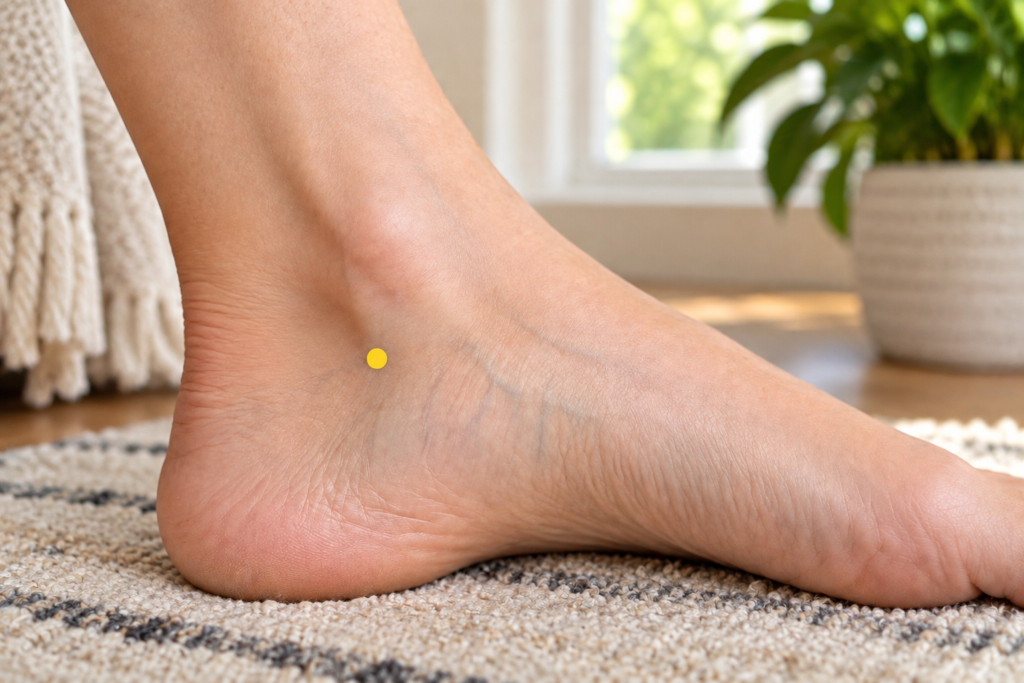
9. Press on KI6 below the inner ankle to restore deep, restful sleep. KI6 sits in the small hollow about one thumb-width below the tip of the inner ankle bone. Press gently with your thumb for one to two minutes on each foot. KI6 is called “Zhaohai,” the “Shining Sea.”
KI6 nourishes Kidney Yin, the body’s deepest source of cooling and rest, and is a classic point for insomnia. When burnout leaves someone exhausted but unable to sleep, KI6 helps calm the mind, ease night sweats and dryness, and support overnight recovery. It’s especially helpful as the final point in an evening routine.
Why These Acupressure Points Work
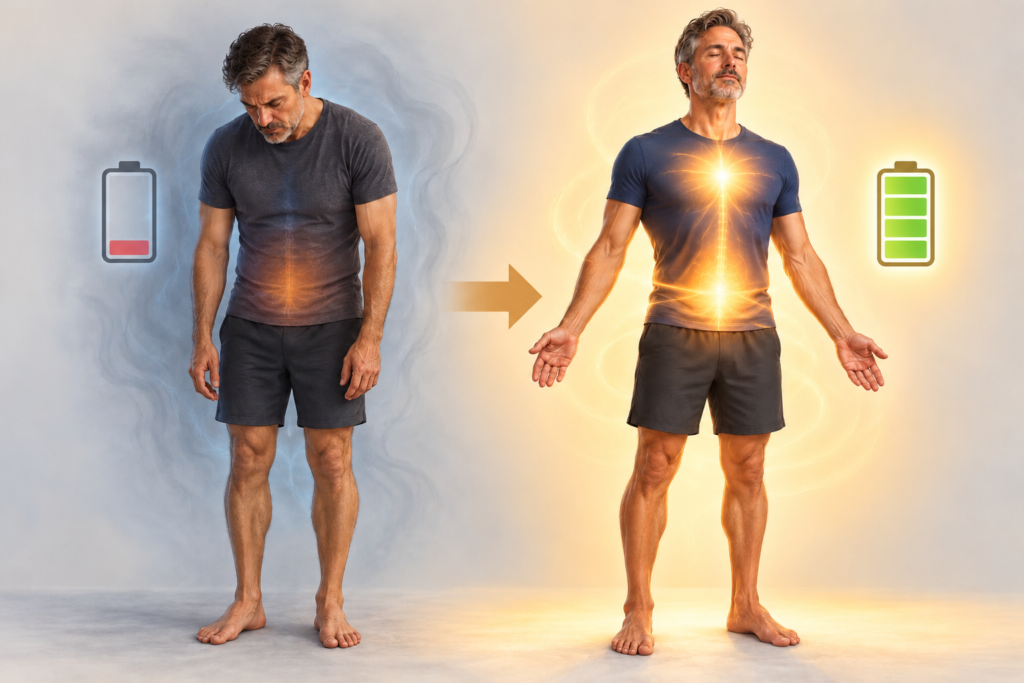
In Traditional Chinese Medicine, lasting energy depends on a Spleen that makes fresh Qi each day, a Liver that stores enough Blood, a Kidney with reserves in the bank, and a Shen that can rest at night. Burnout drains all four, which is why rest alone often isn’t enough. Recovery means calming the mind while rebuilding what has been spent.
The nine points work together to restore balance:
- The head points (Sishencong, Taiyang) clear mental fog and release the tension of long hours and screens.
- The calming points (HT6, KI6) settle the Shen, cool the wired feeling, and support deep sleep.
- The energy points (LI10, SP21, LR13) strengthen the Qi, ease all-over aching, and help digestion make fresh energy.
- The replenishing points (GV4, LR8) rebuild the deep Kidney reserves and nourish the Liver Blood.
How to Properly Use These Acupressure Points

Acupressure is most effective for burnout when practiced consistently, rather than treated as another task to endure.
- Complete the full routine once daily, preferably in the evening. Hold each point for one to two minutes, and finish with KI6 before going to bed.
- During the workday, take a brief break to apply pressure to Taiyang and LI10 while taking several slow breaths away from the screen.
- Apply gentle pressure to the head, wrists, and sides of the body, and firmer pressure to the forearms, lower back, and legs.
- Practice consistently for at least four to six weeks, as reserves that took months or years to deplete require time to replenish.
Daily habits are key to recovering from burnout. Set clear boundaries around work hours and screen time, and make sure you have at least one block of obligation-free time each week. Try to go to bed at the same time each night and cut back on afternoon caffeine, since it can use up energy your body doesn’t have. Choose gentle activities like walking, yoga, or swimming, as intense exercise can leave you feeling even more drained. Eat regular, warm meals instead of skipping meals or eating at your desk. Spend time outdoors and with people who lift your mood. Remember, saying no, delegating tasks, and slowing down are not signs of weakness. They are part of getting better.
Learn more about learning to slow down.
When to Get Professional Help

See your doctor if you still feel exhausted for weeks even after resting, or if you notice unexplained weight changes, shortness of breath, dizziness, heavy periods, loud snoring, or frequent illness. These symptoms could be caused by thyroid problems, anemia, sleep apnea, or other conditions that need to be checked. Burnout and depression can overlap, so talk to a mental health professional if you feel hopeless, lose interest in life outside of work, struggle to get through the day, or use alcohol, sleep aids, or other substances to cope.
If you have thoughts of harming yourself, call or text 988 to reach the Suicide and Crisis Lifeline right away.
Acupressure can provide support during burnout; however, it should not replace professional medical care.
For related concerns, acupressure for fatigue, acupressure for stress, and acupressure when feeling overwhelmed are companion pieces. If exhaustion hits as soon as a stressful stretch ends, read why do I crash after stress?
Above and Beyond Acupuncture offers acupuncture, cupping, and lifestyle coaching at the North Frank Lloyd Wright Boulevard location in Scottsdale.
Schedule an appointment online to start your healing journey.
The points above are only as effective as the technique used to apply them. Where to press, how firmly, and for how long all affect the result. For a full breakdown of how to perform acupressure properly at home, read Performing Acupressure in 3 Easy Steps.

About the Publisher
Paul Kerzner, L.Ac., is a licensed acupuncturist and board-certified herbalist, as well as the founder of Above and Beyond Acupuncture in Scottsdale. His own journey from chronic patient to practicing acupuncturist shapes his commitment to providing honest, clinically grounded information about acupuncture and Traditional Chinese Medicine. Learn more about Paul and his clinical approach on the About Us page.