
Key Takeaways
- The flu usually comes on suddenly with fever or chills, body aches, headache, fatigue, cough, and sore throat. It tends to hit harder than a cold.
- Most people recover within a few days to less than two weeks, but older adults, young children, pregnant women, and people with chronic conditions face a higher risk of complications.
- In Traditional Chinese Medicine, the flu is an invasion of external Wind, combined with Cold or Heat, that overwhelms the body’s protective Qi. The goal is to release it from the surface, clear fever, and support recovery.
- Nine acupressure points on the neck, upper back, arms, hands, and legs help ease aches and headaches, reduce fever, soothe a sore throat and cough, and support recovery.
- Acupressure for the flu works best alongside rest, fluids, and medical care. Trouble breathing, chest pain, confusion, or a fever that returns after improving needs care right away.

A cold usually develops gradually over a day or two, while the flu often strikes suddenly. You might have a scratchy throat and chills in the afternoon, then by evening your whole body aches, your head hurts, your fever climbs, and even walking to the kitchen feels exhausting.
The Centers for Disease Control and Prevention says flu symptoms usually start suddenly and can include fever or chills, cough, sore throat, runny or stuffy nose, muscle or body aches, headaches, and fatigue. Not everyone with the flu gets a fever, and vomiting and diarrhea are more common in children than adults. Compared to a cold, the flu is more likely to cause fever, strong aches, and headaches. Most people get better in a few days to less than two weeks.
The flu can lead to complications such as pneumonia, so it’s important to take it seriously. Adults over 65, children under five, pregnant women, and people with chronic conditions such as asthma, diabetes, or heart disease are at higher risk. If you’re in one of these groups, contact a health care provider early, since antiviral medicines work best when started soon after symptoms begin.
For centuries, Traditional Chinese Medicine has described seasonal illnesses spreading through communities. In this view, the flu is understood as external Wind combined with Cold or Heat, breaking through Wei Qi, the body’s protective layer. Strong chills, body aches, and a stiff neck point to Wind-Cold, while a high fever, sore throat, and thirst point to Wind-Heat. The aim is to help the body release the illness early, reduce the fever, and preserve energy for a full recovery.
The nine points below help alleviate aches and headaches, reduce fever, soothe a sore throat and cough, and support the body during recovery.
What Acupressure Points to Press and Why
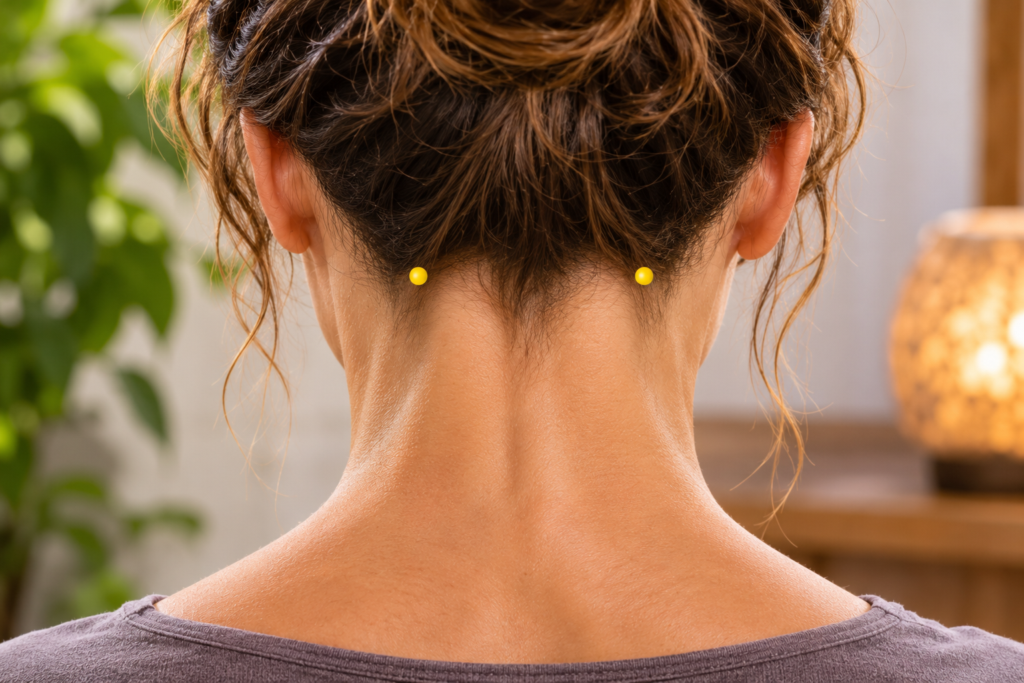
1. Press on GB20 at the base of the skull to ease headache and a stiff neck. GB20 sits at the base of the skull, in the hollows on either side of the neck, between the two large vertical neck muscles. Place your thumbs in both hollows and press upward and slightly inward toward the center of the head for one to two minutes. GB20 is called “Fengchi,” the “Wind Pool.”
GB20 is one of Traditional Chinese Medicine’s key points for expelling Wind. Traditionally used for headaches, a stiff neck, chills, and fever at the onset of illness, it’s one of the first points you’d turn to at the very beginning of the flu.
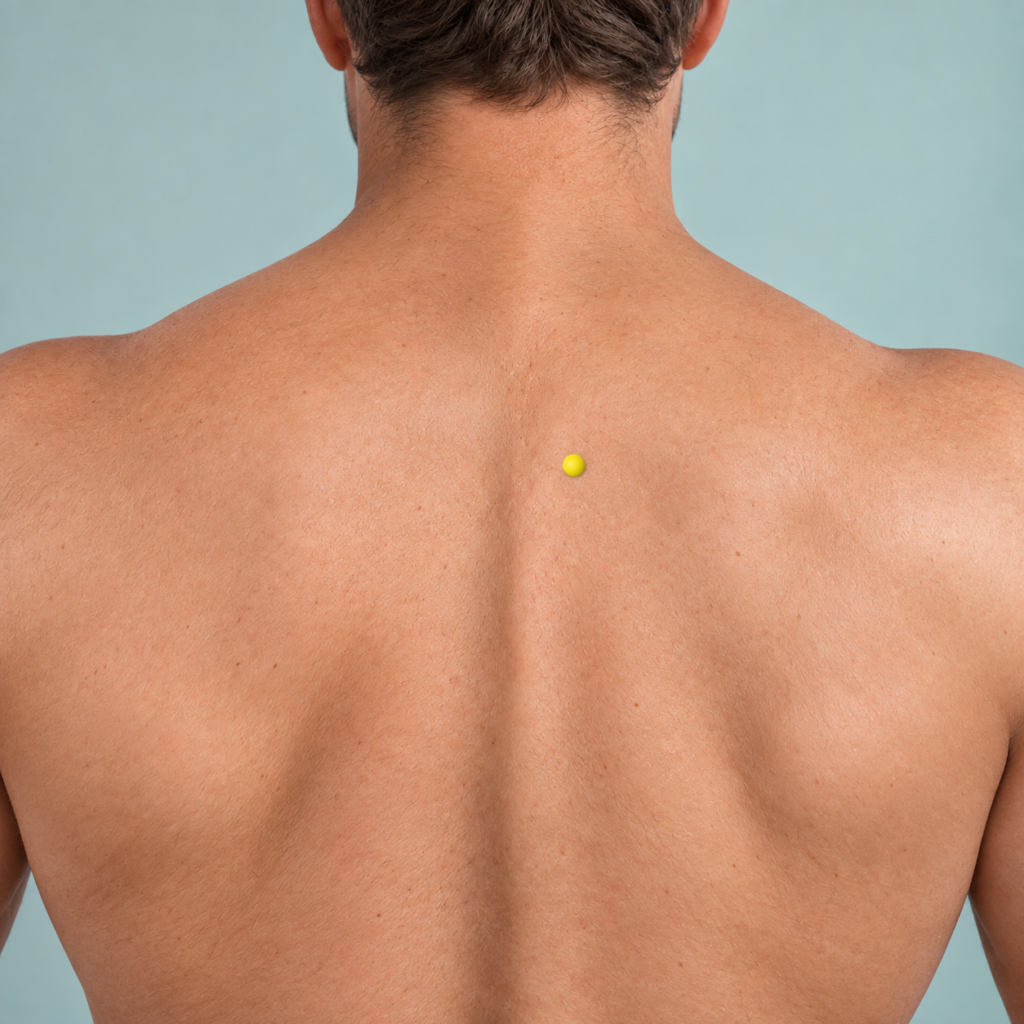
2. Press on BL12 on the upper back to release the illness from the surface. BL12 sits on the upper back, about two finger-widths to each side of the spine, two vertebrae below the large bump at the base of the neck. Ask someone to press both points with their thumbs for one to two minutes, or lean gently into a tennis ball against a wall. BL12 is called “Fengmen,” the “Wind Gate.”
BL12 is considered the point where Wind enters the body and is traditionally used at the very earliest stage of the flu, when you have chills, aches across the upper back, and a stiff neck. Keeping this area warm is a classic Traditional Chinese Medicine approach.
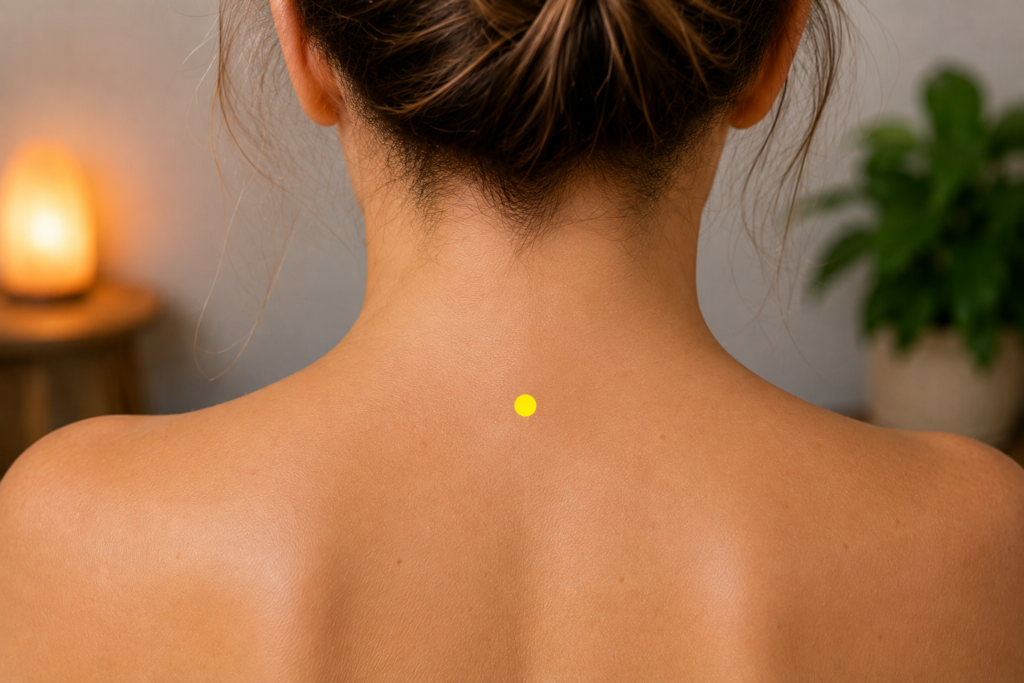
3. Press on GV14 below the base of the neck to clear fever. GV14 sits on the midline of the upper back, in the hollow just below the large bony bump at the base of the neck. Press gently with your fingertip, or make slow circles, for one to two minutes. GV14 is called “Dazhui,” the “Great Vertebra.”
GV14 is where all the body’s Yang channels converge and is a key Traditional Chinese Medicine point for clearing fever and releasing the exterior. It’s especially useful when fever and chills alternate and the body feels generally hot and achy.
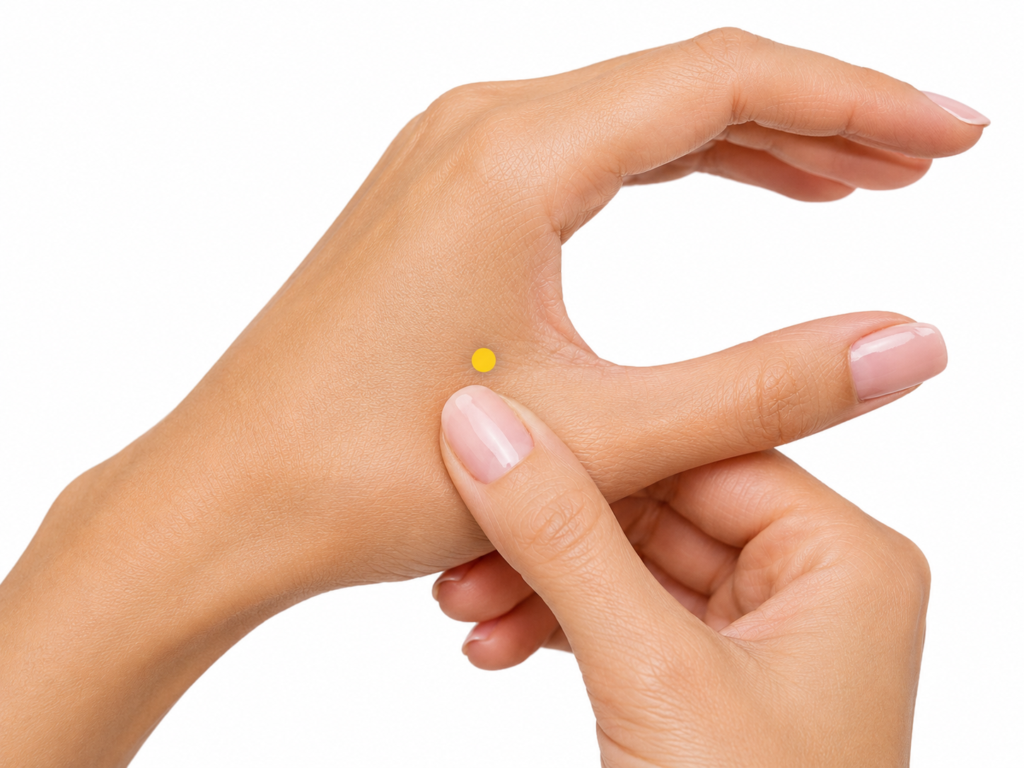
4. Press on LI4 on the back of the hand to ease aches and headache. LI4 sits in the webbing between the thumb and index finger, at the highest point of the muscle when the two are pressed together. Press firmly with the thumb of your other hand for one to two minutes on each hand. LI4 is called “Hegu,” the “Joining Valley.” LI4 is avoided during pregnancy.
LI4 is one of the most important points for releasing the body’s surface and relieving pain. Traditionally, it’s used for headaches, body aches, fever, and sore throats, and in combination with LU7 to help the body push the illness out.
5. Press on LI11 at the elbow to clear fever. LI11 sits on the outer end of the elbow crease when the elbow is bent. Press firmly with the thumb of your other hand for one to two minutes on each arm. LI11 is called “Quchi,” the “Pool at the Crook.”
LI11 is one of the key points for clearing heat from the body. It’s used to treat fever, sore throat, and a hot, flushed feeling, and is used with GV14 when the fever is very high.
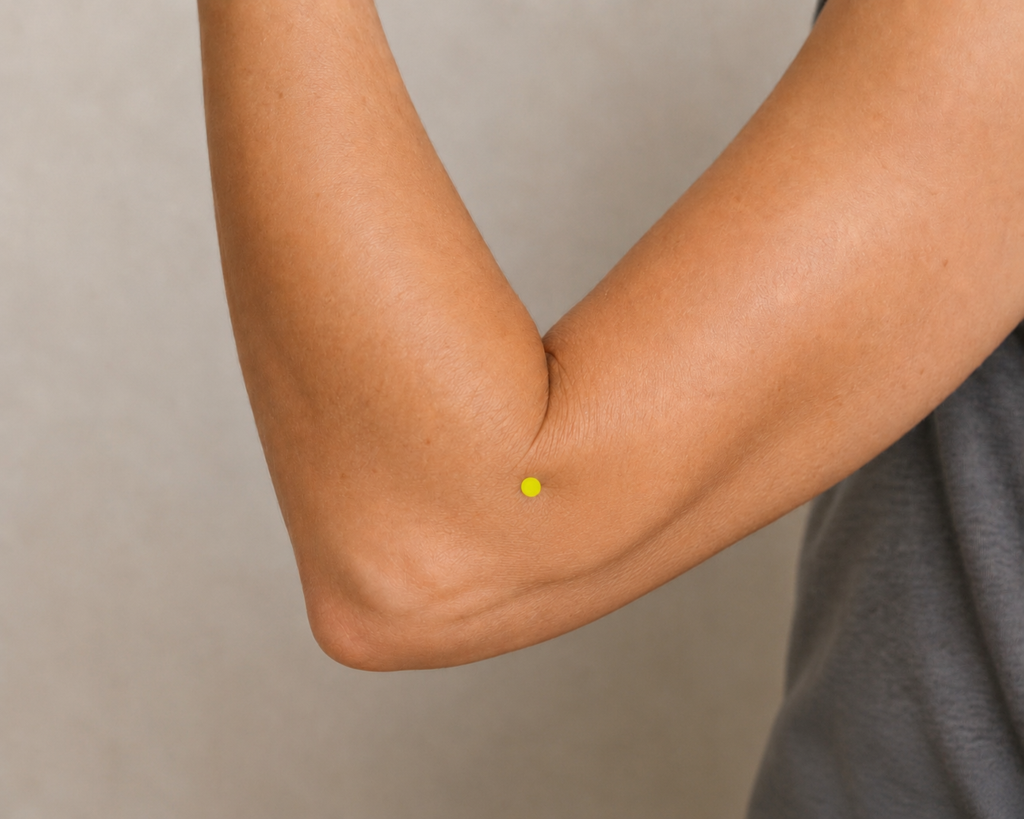
6. Press on TE5 on the back of the forearm to ease fever and chills. TE5 sits on the back of the forearm, about three finger-widths above the wrist crease, in the groove between the two forearm bones. Press firmly with the thumb of your other hand for one to two minutes on each arm. TE5 is called “Waiguan,” the “Outer Pass.”
TE5 is the connecting point of the Triple Energizer channel and is a classic point for releasing the exterior. It is traditionally indicated for fever, chills, headache, and body aches at the onset of illness, particularly when Wind-Heat causes a high fever and sore throat.
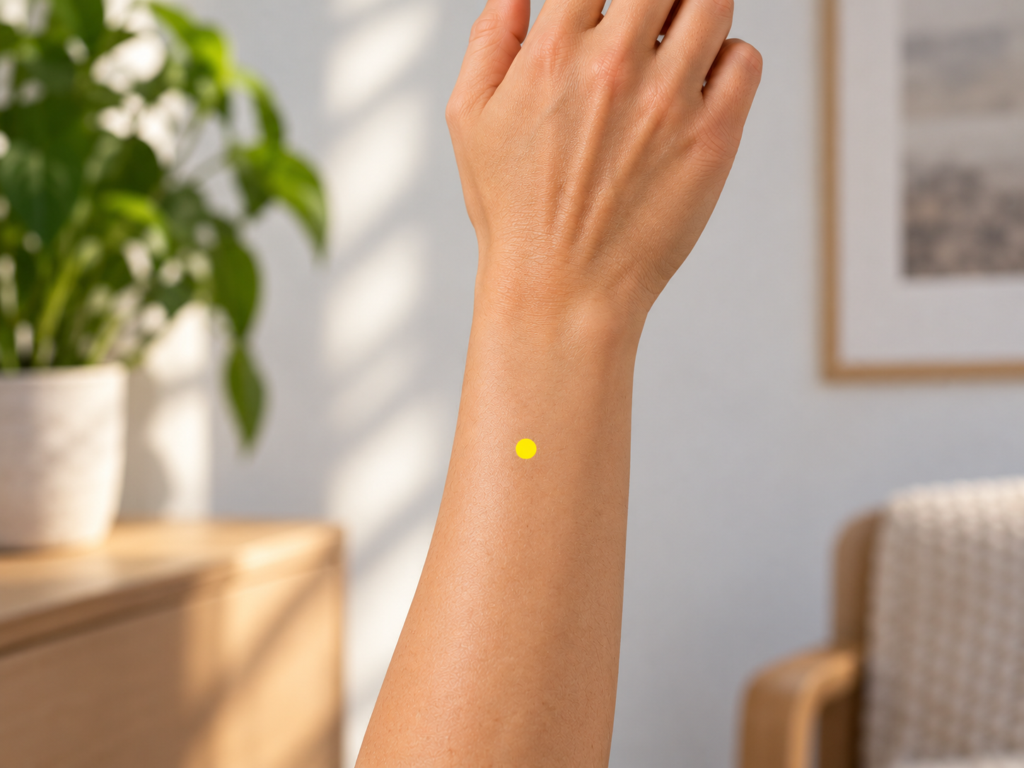
7. Press on LU7 above the wrist to ease cough and headache. LU7 sits on the thumb side of the forearm, about two finger-widths above the wrist crease. To find it, interlace the thumbs and index fingers of both hands, and the tip of the top index finger will rest in a small groove on the edge of the forearm, just above the bony bump of the wrist. Press gently with your fingertip for one to two minutes on each arm. LU7 is called “Lieque,” the “Broken Sequence.”
LU7 is the connecting point of the Lung channel and is traditionally used for cough, headache, a stiff neck, and a stuffy nose at the start of an illness. It strengthens the Lung, which governs the body’s protective Qi at the surface.
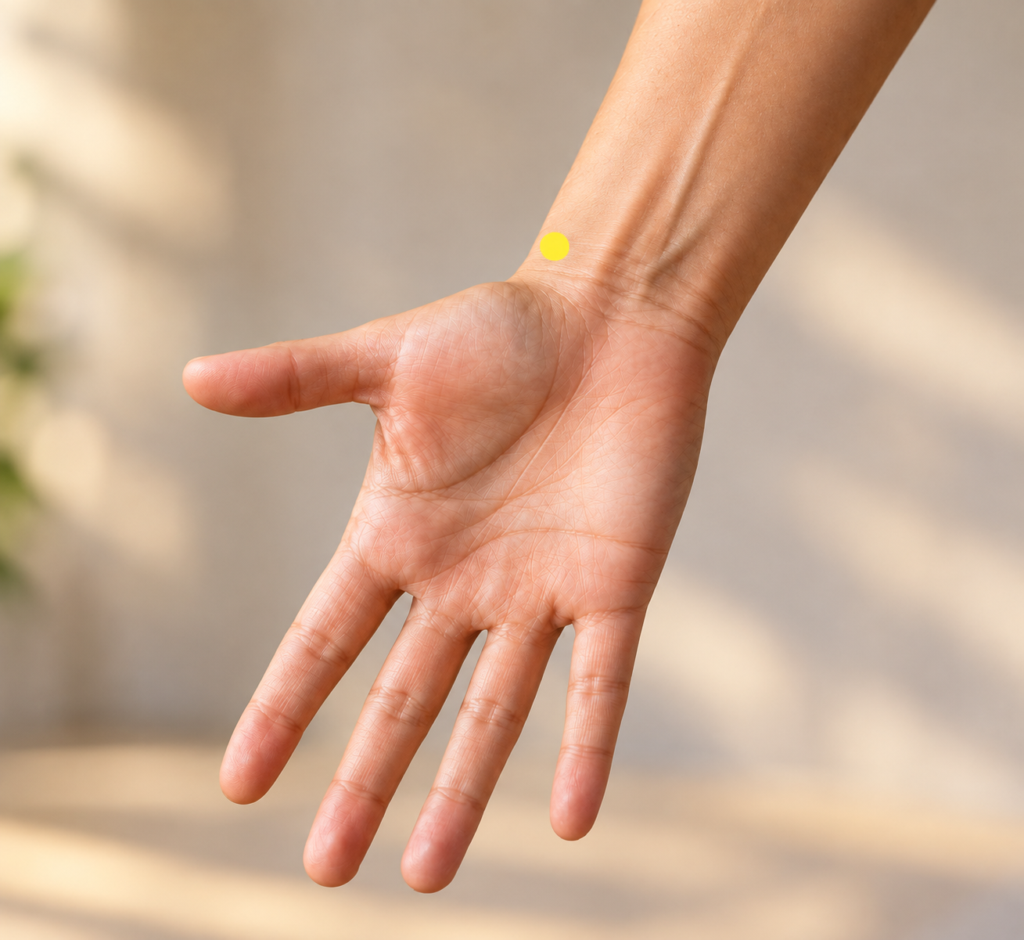
8. Press on LU10 on the thumb mound to soothe a sore throat. LU10 sits on the palm side of the hand, at the midpoint of the bone that runs from the wrist to the base of the thumb, where the pale skin of the palm meets the darker skin of the back of the hand. Press firmly with the thumb of your other hand for one to two minutes on each hand. LU10 is called “Yuji,” the “Fish Border.”
LU10 is a classic point for clearing heat from the Lung, traditionally used for a sore, swollen throat, dry cough, and fever. It can be especially useful when the flu has settled in the throat and chest.
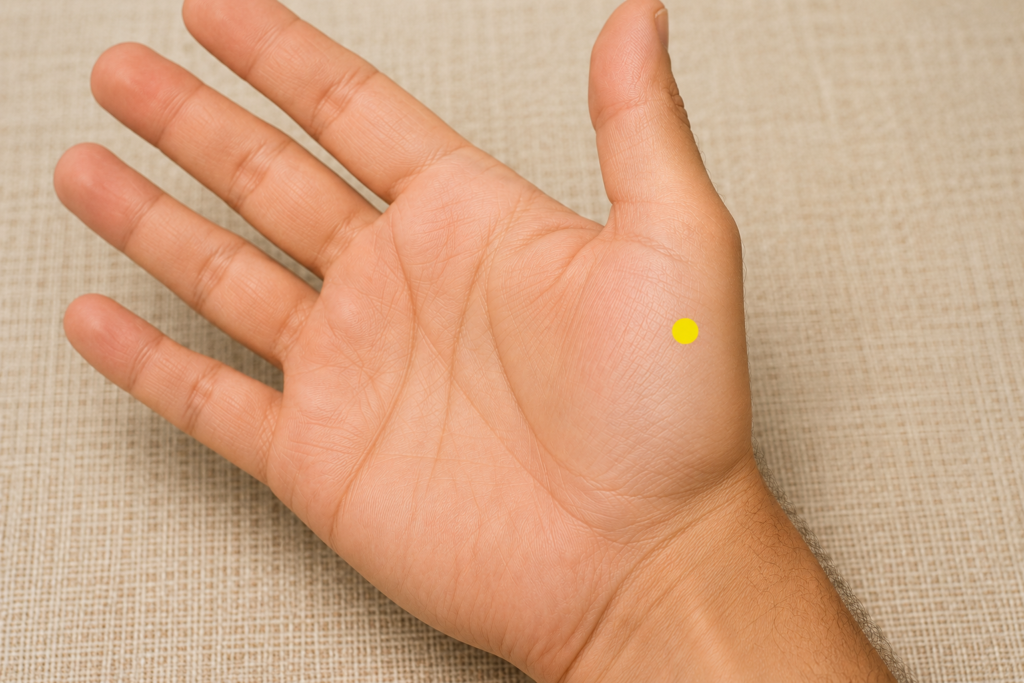
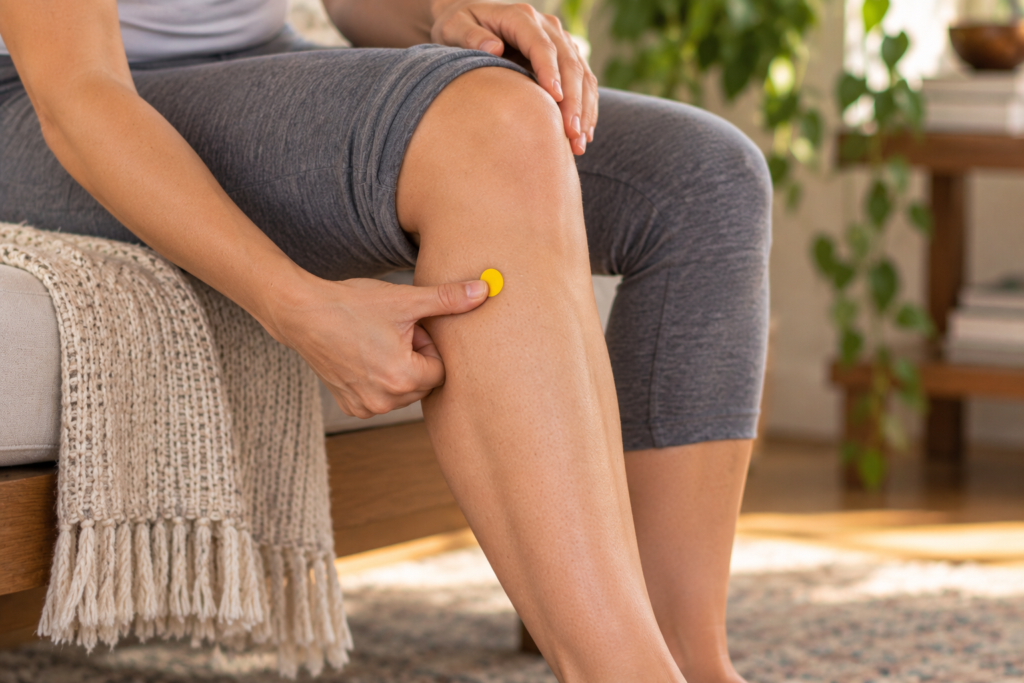
9. Press on ST36 below the knee to support recovery. ST36 sits four finger-widths below the bottom of the kneecap, about one finger-width to the outside of the shinbone. Press firmly with your thumb for one to two minutes on each leg. ST36 is called “Zusanli,” the “Leg Three Miles.”
ST36 is one of the most important points for tonifying the Spleen and Stomach and restoring energy after an illness. Once the fever breaks, ST36 helps rebuild the Qi depleted by the flu and eases the fatigue that can linger for weeks.
Why These Acupressure Points Work

In Traditional Chinese Medicine, the flu is viewed as a battle at the body’s surface between invading Wind, Cold, or Heat and the defensive Qi. Fever, chills, and aches are all signs of this battle. The goal is to drive the illness off the surface as quickly as possible, clear the fever and heat, protect the Lung, and then rebuild the body’s reserves after the acute phase has passed.
The nine points work together to ease the flu symptoms and support a full recovery:
- The Wind points (GB20, BL12, TE5) release the illness from the surface and ease headache, chills, and a stiff neck.
- The heat-clearing points (GV14, LI11, LI4) bring down fever and relieve body aches.
- The Lung points (LU7, LU10) ease cough, a stuffy nose, and a sore throat.
- The recovery point (ST36) restores energy once the fever breaks.
How to Properly Use These Acupressure Points

Acupressure for influenza is most effective when initiated at the first sign of illness and continued throughout recovery.
- At the first sign of a chill or ache, apply pressure to GB20, BL12, LI4, TE5, and LU7 two or three times daily, holding each point for one to two minutes.
- When experiencing a high fever, focus on GV14, LI11, and LI4; include LU10 if a sore throat is present.
- Apply gentle pressure when the body aches, and firmer pressure to the hands and arms where it feels comfortable.
- After the fever subsides, apply pressure to ST36 once daily for one to two weeks to help restore energy.
Daily habits can help your body fight the flu and recover. Rest as much as possible, and stay home until you’ve been fever-free for at least 24 hours without taking fever-reducing medication. Drink plenty of warm fluids and eat simple, warm foods (broth, soup, congee, etc.). Wash your hands often, and cover your coughs and sneezes to help prevent the flu from spreading. Traditional Chinese Medicine recommends fresh ginger and scallion tea at the first sign of chills to encourage a light sweat, peppermint tea when you have a fever and sore throat, and avoiding heavy, greasy, sugary, and dairy-rich foods until your appetite returns.
You can find out more about home remedies for colds and flu.
When to Get Professional Help

Contact a health care provider early if you are 65 or older, pregnant, or living with a chronic condition such as asthma, diabetes, or heart disease. Also contact a provider early if a young child has the flu, since antiviral medications work best when started soon after symptoms begin. Seek medical care right away for trouble breathing; chest or abdominal pain or pressure that does not go away; ongoing dizziness or confusion; seizures; not urinating; severe muscle pain or weakness; or a fever or cough that improves and then returns or gets worse. In children, also seek care right away for fast or labored breathing, bluish lips or face, signs of dehydration, not being alert when awake, or a fever above 104°F that medicine does not control. Call a provider for any fever in a baby younger than 12 weeks. Acupressure is a gentle, supportive practice for the flu. It complements, but does not replace, diagnosis and medical care.
For related health concerns, acupressure for the common cold, acupressure for a cough, and acupressure for a sore throat are companion articles. If illness seems to come back again and again, learn about acupressure to boost the immune system.
Above and Beyond Acupuncture offers acupuncture, cupping, and lifestyle coaching at the North Frank Lloyd Wright Boulevard location in Scottsdale.
Schedule an appointment online to start your healing journey.
The points above are only as effective as the technique used to apply them. Where to press, how firmly, and for how long all affect the result. For a full breakdown of how to perform acupressure properly at home, read Performing Acupressure in 3 Easy Steps.

About the Publisher
Paul Kerzner, L.Ac., is a licensed acupuncturist and board-certified herbalist, as well as the founder of Above and Beyond Acupuncture in Scottsdale. His own journey from chronic patient to practicing acupuncturist shapes his commitment to providing honest, clinically grounded information about acupuncture and Traditional Chinese Medicine. Learn more about Paul and his clinical approach on the About Us page.