
Key Takeaways
- The sacroiliac joints connect the lower spine to the pelvis, and pain from them is usually felt in the buttock and lower back, sometimes radiating into the groin or down the leg.
- Standing or sitting for a long time, climbing stairs, running, and sleeping on the painful side can all worsen sacroiliac joint pain.
- In Traditional Chinese Medicine, sacroiliac joint pain arises when Qi and Blood become obstructed where the Bladder and Gallbladder channels cross the back of the pelvis, often against a background of weak Kidney energy or loose sinews.
- Nine acupressure points on the sacrum, buttocks, legs, ankles, and hands help release the joint, ease pain in the buttock and hip, and support the sinews that stabilize the pelvis.
- Acupressure may help sacroiliac joint pain alongside gentle movement and medical care. Seek prompt care for pain with fever, leg weakness, or loss of bladder or bowel control.
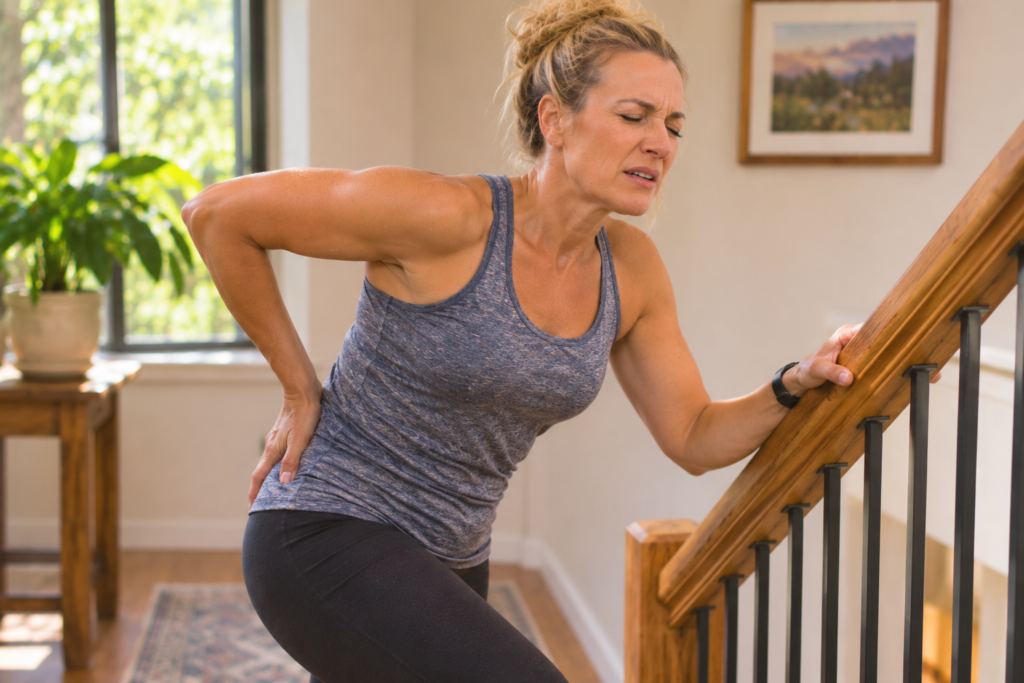
If you ask someone with sacroiliac joint pain where it hurts, they’ll almost always point to one of the two small dimples just above the buttocks. The pain is low and usually on one side, deep in the buttock, and sometimes radiates into the hip or groin. It’s often triggered by simple movements such as rolling over in bed, getting out of a car, climbing stairs, or standing on one leg to put on pants. Many people assume it’s ordinary lower back pain, but the usual stretches and remedies often don’t help.
According to Mayo Clinic, the sacroiliac joints connect the pelvis to the lower spine, where the sacrum meets the top of the pelvis. Inflammation in these joints, known as sacroiliitis, most often causes pain in the buttocks and lower back. The pain may also spread to the legs, groin, and feet. It can worsen after prolonged standing or sitting, climbing stairs, running, or sleeping on the affected side. Causes include a sudden injury, such as a fall or car accident; osteoarthritis or inflammatory arthritis, such as ankylosing spondylitis; and pregnancy, when the joints loosen and stretch to prepare for childbirth. Rarely, the joint may become infected.
The sacroiliac joints move very little, yet they support your upper body’s weight with every step. Problems can arise from too much movement, such as during pregnancy, with loose ligaments, or with an uneven stride. Too little movement, caused by arthritis or stiffness after an injury, can also lead to trouble. The buttock and hip muscles often tighten to protect the joint, which can increase pain.
In Traditional Chinese Medicine, sacroiliac joint pain is thought to occur when Qi and Blood become stuck where the Bladder and Gallbladder channels cross the back of the pelvis. The Kidney is believed to govern the lower back and bones, so lingering, aching pain that worsens with fatigue often points to weak Kidney energy. The Liver nourishes the sinews; when they aren’t well nourished, the ligaments that stabilize the pelvis can loosen, making the joint unstable. Cold and Damp in the area can cause stiffness and heaviness, with symptoms worsening in cold or rainy weather.
These nine points release the joint, relieve pain in the buttock and hip, warm and move stagnant Qi, and support the sinews that stabilize the pelvis.
What Acupressure Points to Press and Why
1. Press on BL28 beside the sacrum to release the sacroiliac joint. To find BL28, locate the two small dimples at the top of the buttocks, then move about one finger-width down and slightly in toward the spine, into the hollow just inside the lower edge of the dimple. Lie on your back with a tennis ball under the point, or press with your thumbs with your hands on your hips, for one to two minutes on each side. BL28 is called “Pangguangshu,” the “Bladder Transport.” BL28 is avoided during pregnancy.
BL28 lies directly over the sacroiliac joint, making it one of the most important local points for pain in that area. It directly helps release the ligaments and muscles that tend to tighten around the joint, helping restore the flow of Qi through the back of the pelvis.
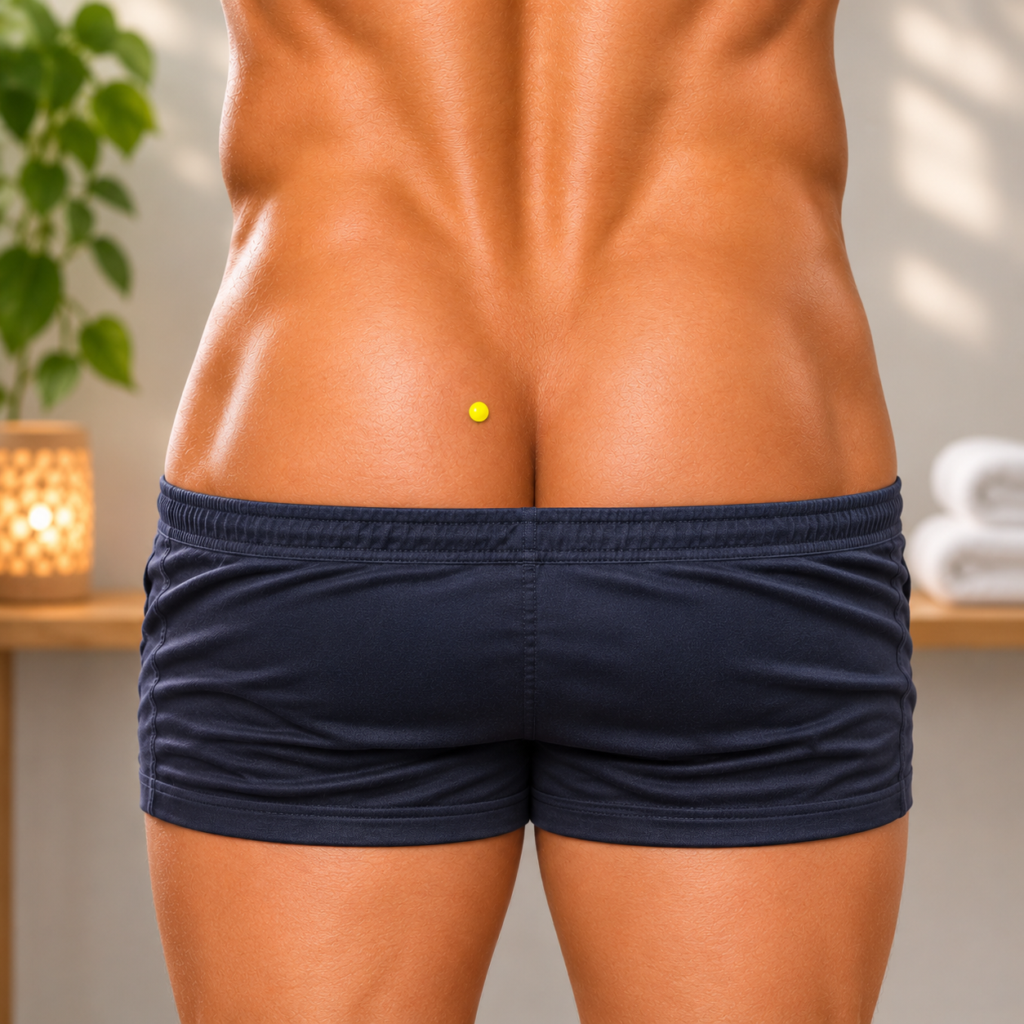
2. Press on BL27 beside the top of the sacrum to ease low, one-sided pain. BL27 sits about two finger-widths to the side of the midline of the sacrum, level with the top of the dimples above the buttocks, just above BL28. Press with your thumbs, or lie on a tennis ball, for one to two minutes on each side. BL27 is called “Xiaochangshu,” the “Small Intestine Transport.” BL27 is avoided during pregnancy.
BL27 is located at the upper end of the sacroiliac joint. Together with BL28, it spans the joint’s full length. The two points are often pressed in sequence to relieve the deep, one-sided ache characteristic of sacroiliac joint pain.

3. Press on BL32 in the sacrum to relieve deep sacral pain. BL32 sits in a small hollow on the sacrum, about halfway between the dimple at the top of the buttock and the midline of the spine, at the same level as BL28. Press firmly with your thumb or middle finger for one to two minutes on each side. BL32 is called “Ciliao,” the “Second Crevice.” BL32 is avoided during pregnancy.
BL32 is located in the sacrum’s second opening and is one of the most commonly used Traditional Chinese Medicine points for sacral and lower back pain. It targets that deep, central ache just inside the joint.
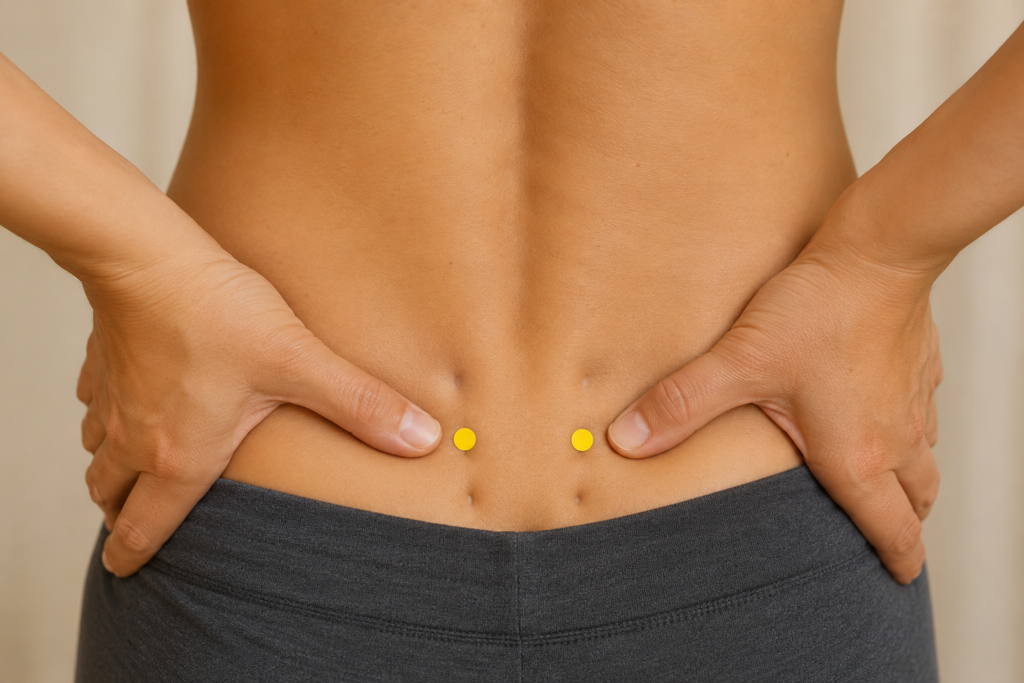
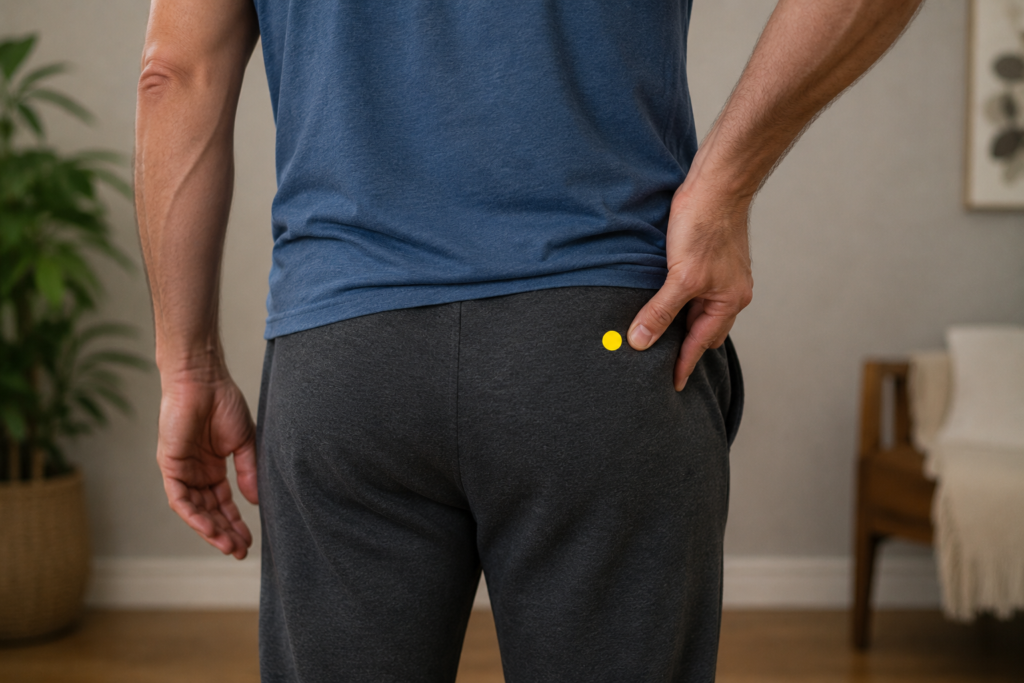
4. Press on BL54 on the buttock to ease pain that spreads into the buttock. BL54 sits on the buttock, about four finger-widths to the side of the lower end of the sacrum, level with the top of the crease between the buttocks. Lie on a tennis ball, or press firmly with your thumb, for one to two minutes on each side. BL54 is called “Zhibian,” the “Order’s Edge.” BL54 is avoided during pregnancy.
BL54 is a key point for pain in the buttock, sacrum, and lower back. It helps release the deep buttock muscles, which may remain tightly contracted to protect the sacroiliac joint, and can be useful when pain radiates from the joint into the buttock.
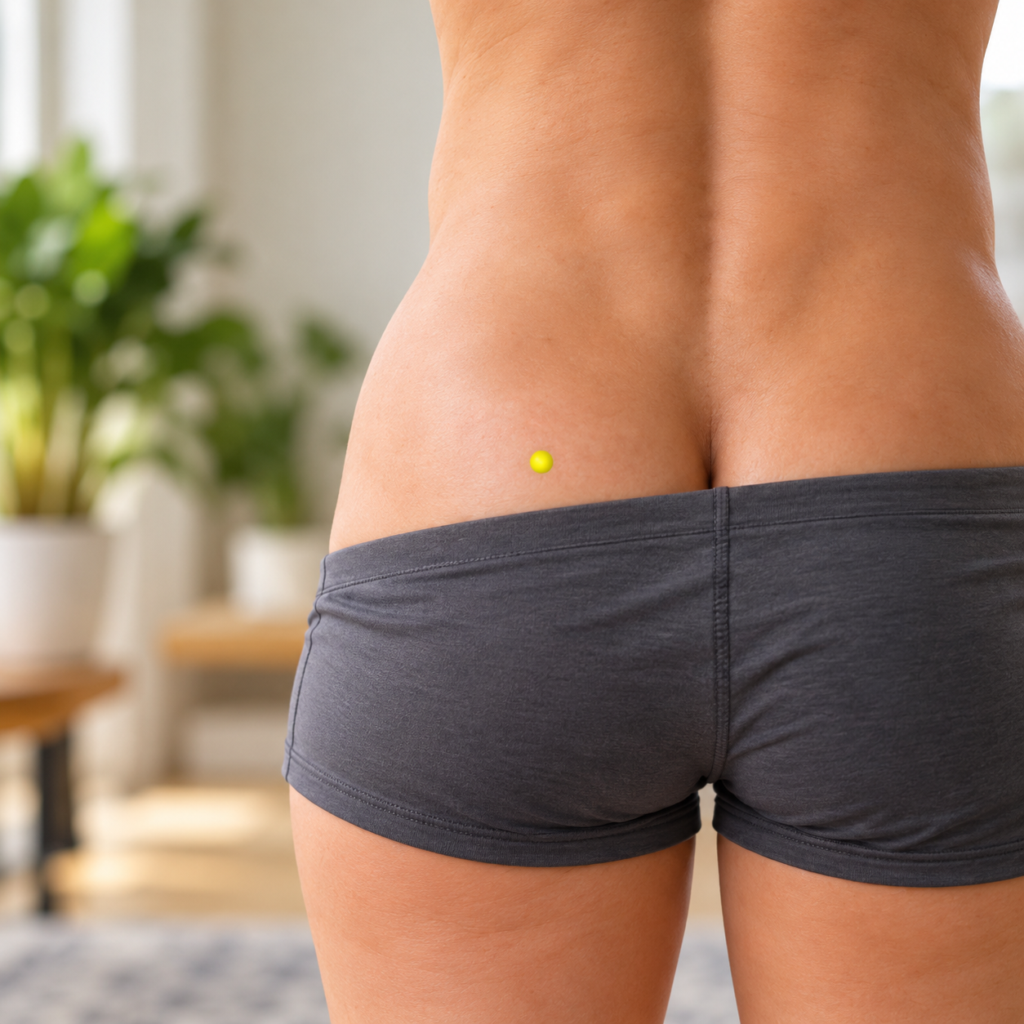
5. Press on GB30 on the side of the buttock to relieve hip and buttock pain. To find GB30, locate the large bony bump on the outside of the hip, then move about one-third of the way from that bump toward the base of the tailbone. Lie on your side and press firmly with your thumb or knuckle, or lean against a tennis ball on a wall, for one to two minutes on each side. GB30 is called “Huantiao,” the “Jumping Circle.”
GB30 is one of the most important Traditional Chinese Medicine points for pain in the hip, buttock, and leg. Sacroiliac joint pain often “wraps” around the hip and outer buttock, and GB30 can help release it down the Gallbladder channel.
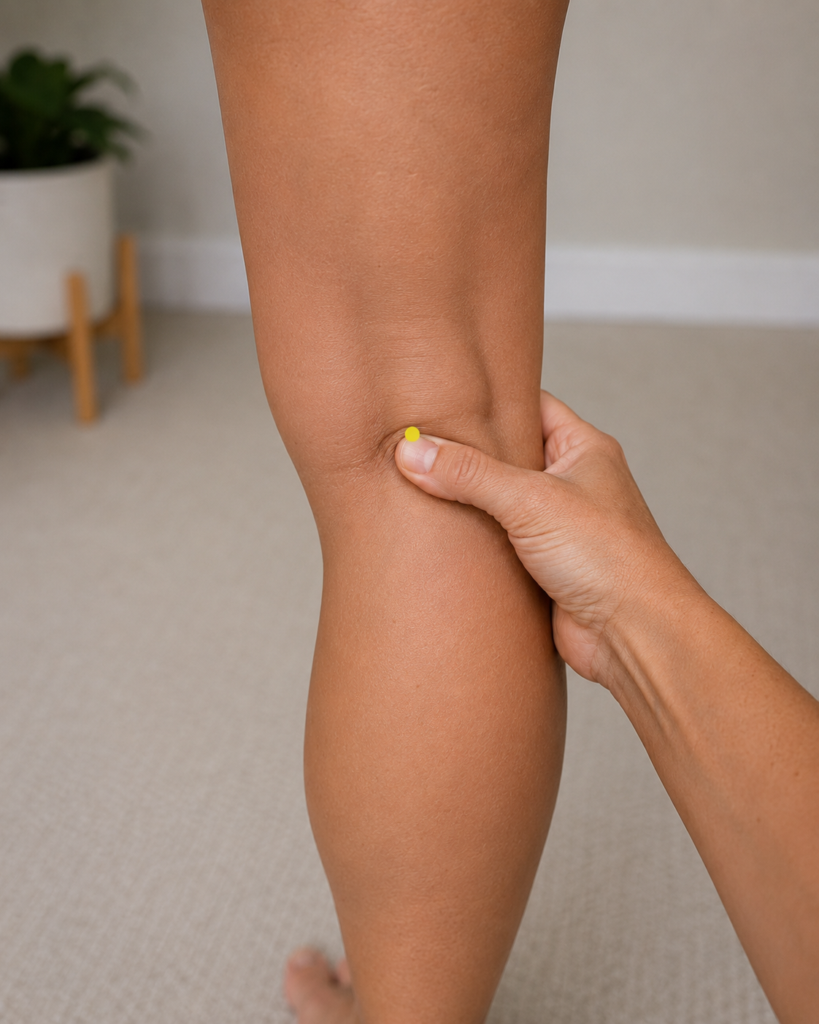
6. Press on BL40 behind the knee to release the back of the pelvis. BL40 sits in the center of the crease behind the knee, midway between the two tendons on either side. Press gently with your fingertips for one to two minutes on each leg, using lighter pressure here than on the back and buttock points. BL40 is called “Weizhong,” the “Middle of the Crook.”
In Traditional Chinese Medicine, BL40 is the command point for the back. The Bladder channel runs from the base of the back and sacrum down to BL40, making it one of the most important distal points for pain anywhere in the low back or sacrum.
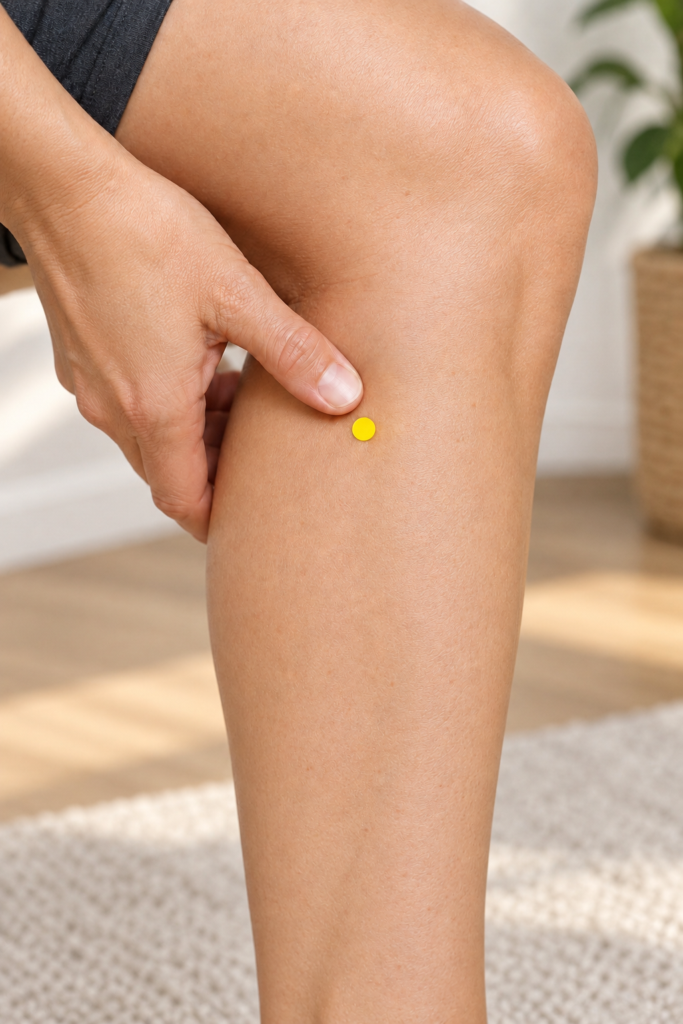
7. Press on GB34 below the knee to support the sinews. GB34 sits on the outside of the lower leg, in the hollow just in front of and below the small, round bony bump below the knee. Press firmly with your thumb for one to two minutes on each leg. GB34 is called “Yanglingquan,” the “Yang Mound Spring.”
GB34 is the influential point of the sinews. It supports the ligaments and tendons that help hold the pelvis in place, making it appropriate for sacroiliac joint pain accompanied by a feeling of looseness or instability. It can also ease pain that travels down the outside of the leg.
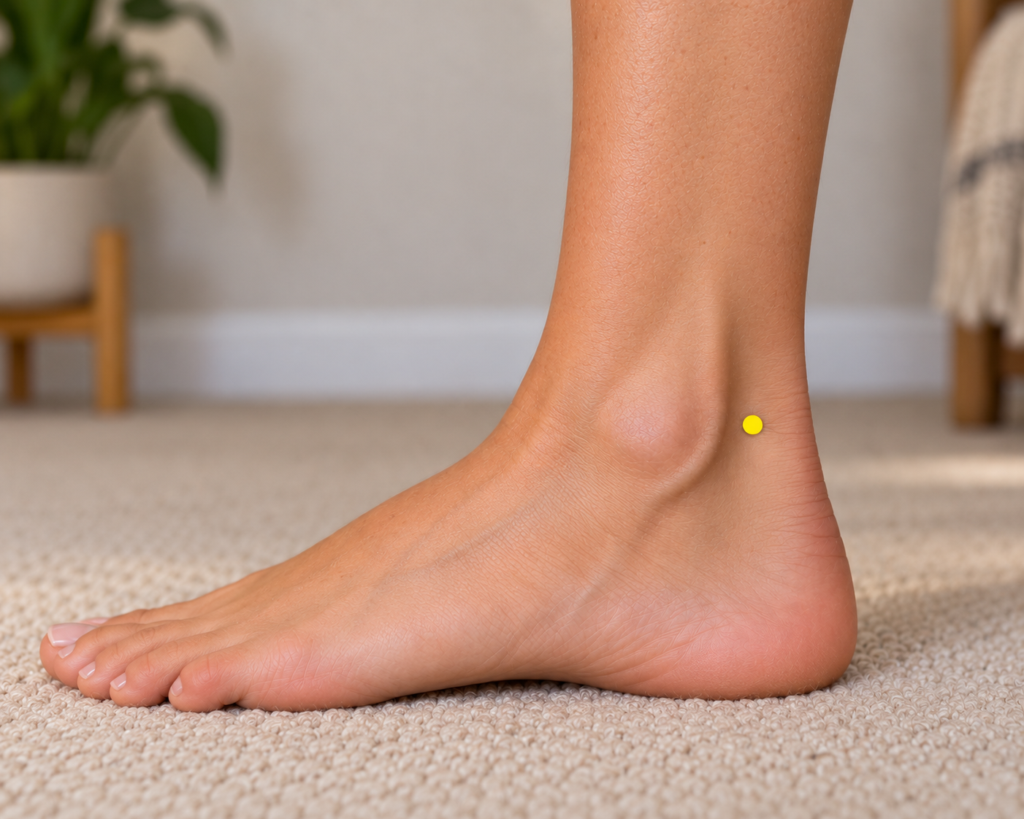
8. Press on BL60 behind the outer ankle to move Qi along the Bladder channel. BL60 sits on the outside of the ankle, in the hollow between the outer ankle bone and the Achilles tendon. Press firmly with your thumb for one to two minutes on each ankle. BL60 is called “Kunlun,” the “Kunlun Mountains.” BL60 is avoided during pregnancy.
BL60 is a distal point on the Bladder channel, traditionally used for pain anywhere along the back of the body, from the head to the heel. It helps move ‘stuck’ Qi through the sacrum and buttock from a distance, which is useful when the area is too sore to press directly.
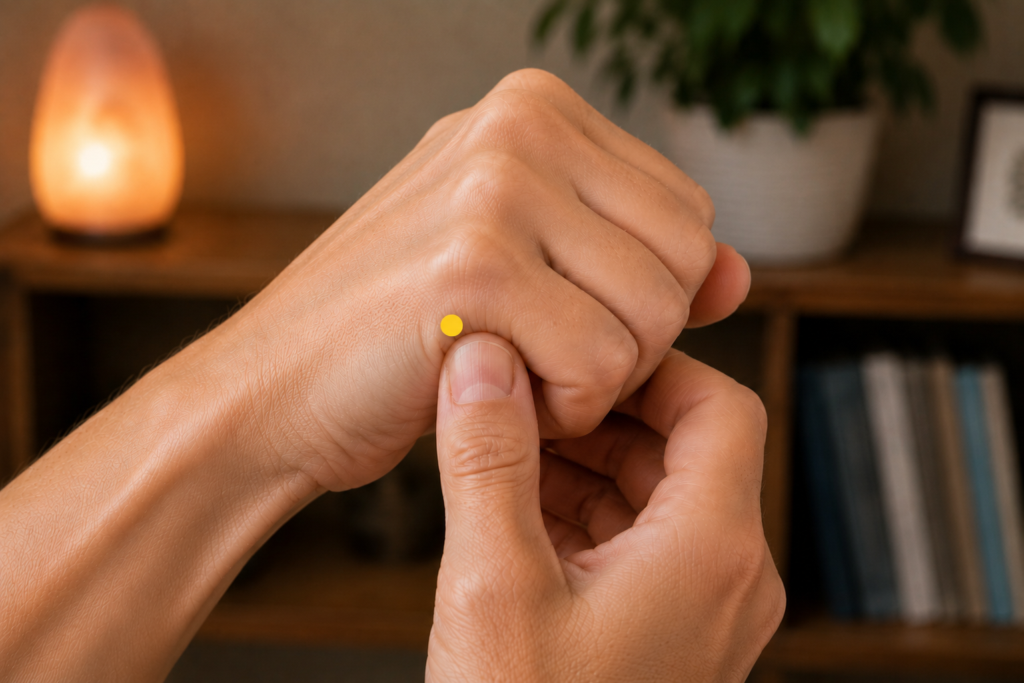
9. Press on SI3 on the edge of the hand to ease stiffness through the spine and pelvis. SI3 sits on the pinky side of the hand. Make a loose fist; SI3 is at the end of the crease just behind the knuckle of the little finger. Press firmly with the thumb of your other hand for one to two minutes on each hand while gently shifting your weight from side to side. SI3 is called “Houxi,” the “Back Stream.”
SI3 opens the Governing Vessel, which runs up the center of the spine from the tailbone. In Traditional Chinese Medicine, it’s one of the most important distal points for stiffness and pain along the spine and sacrum. Press it while moving gently to help loosen the area.
Why These Acupressure Points Work
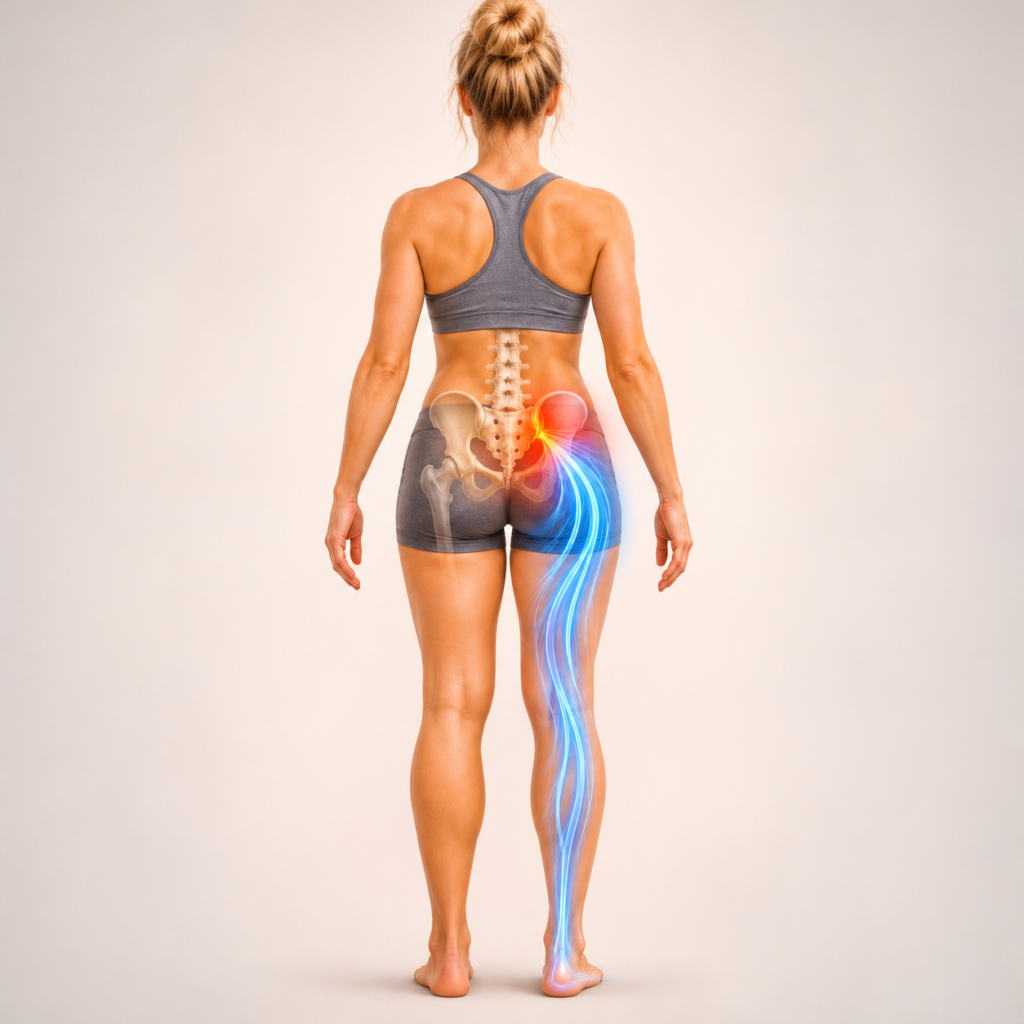
In Traditional Chinese Medicine, sacroiliac joint pain is caused by Qi and Blood becoming stuck where the Bladder and Gallbladder channels cross the back of the pelvis. This is usually accompanied by weak Kidney energy, poorly nourished sinews, and/or Cold and Damp in the area. Treatment aims to release the joint, unwind the guarding muscles of the buttock and hip, move Qi from a distance, and support the sinews that hold the pelvis together.
The nine points work together to release the joint and stabilize the pelvis:
- The sacral points (BL28, BL27, BL32) release the joint and the deep sacral ache directly.
- The buttock and hip points (BL54, GB30) ease the guarding muscles and pain that spreads outward.
- The sinew point (GB34) supports the ligaments that hold the pelvis steady.
- The distal points (BL40, BL60, SI3) move stuck Qi along the back and ease stiffness from a distance.
How to Properly Use These Acupressure Points
For sacroiliac joint pain, acupressure works best as a daily routine. Use a tennis ball to target sacral and buttock points that are difficult to reach by hand.
- Lie on your back with your knees bent. Place a tennis ball beneath BL28, BL27, and BL32 on the painful side, applying pressure to each point for one to two minutes.
- Use a tennis ball or knuckle to press BL54 and GB30, then move on to BL40, GB34, BL60, and SI3.
- Apply firm, steady pressure to the sacrum, buttocks, legs, and hands, and gentle pressure behind the knee.
- Perform the routine once or twice daily for at least two to four weeks. If the area feels stiff or cold, apply a warm compress to the sacrum beforehand.
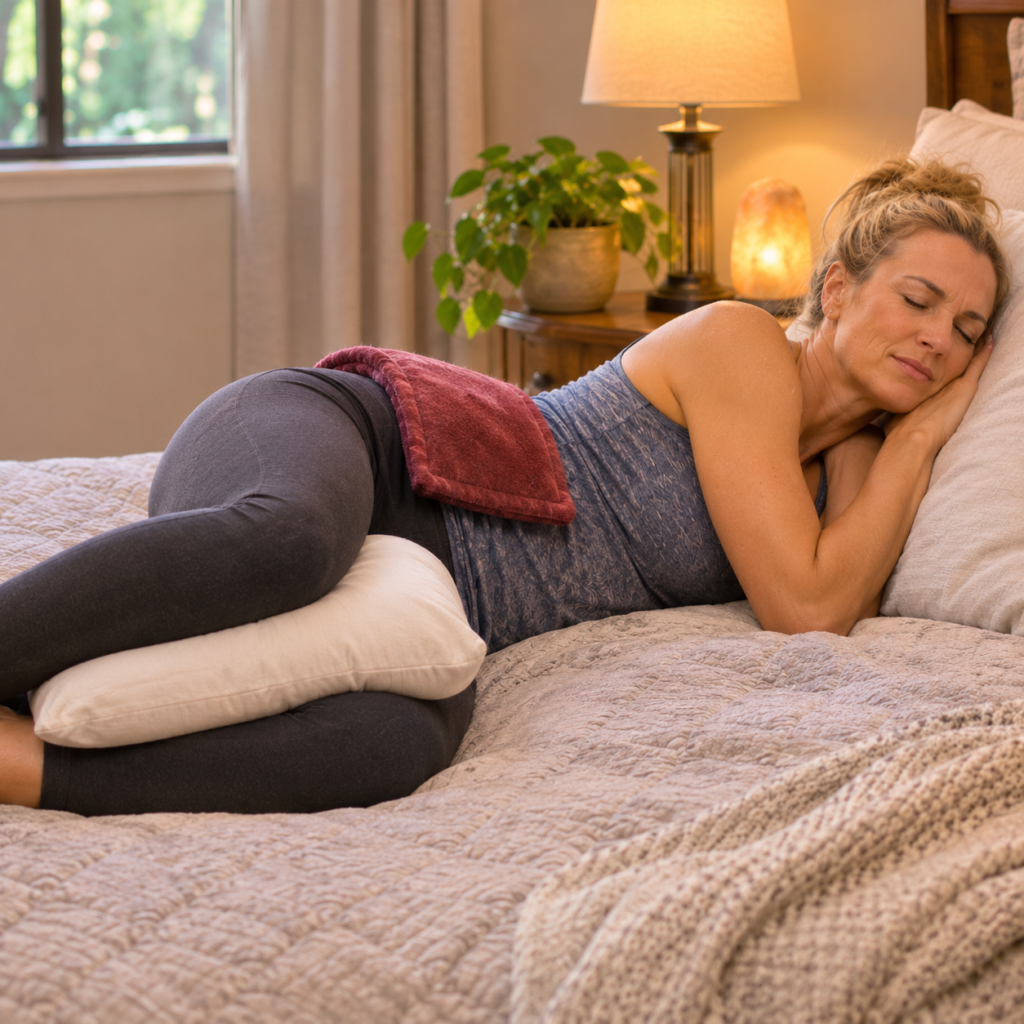
Simple daily habits may help protect your sacroiliac joint during the healing process. Avoid standing or sitting for extended periods, and change positions frequently. When standing, distribute your weight evenly between both feet rather than leaning to one side. When sitting, keep both feet flat on the floor instead of crossing your legs. Take shorter steps on stairs. When getting out of a car, turn your entire body while keeping your knees together. For sleep, lie on the unaffected side with a pillow between your knees, or lie on your back with a pillow beneath your knees. Gentle activities, such as walking or swimming, or following a physical therapy program, may help strengthen your core and hip muscles. Avoid deep stretches that place strain on your pelvis. Keep your lower back warm, as Traditional Chinese Medicine holds that exposure to cold may worsen symptoms.
You can also learn more about how stretching might make back pain worse.
When to Get Professional Help
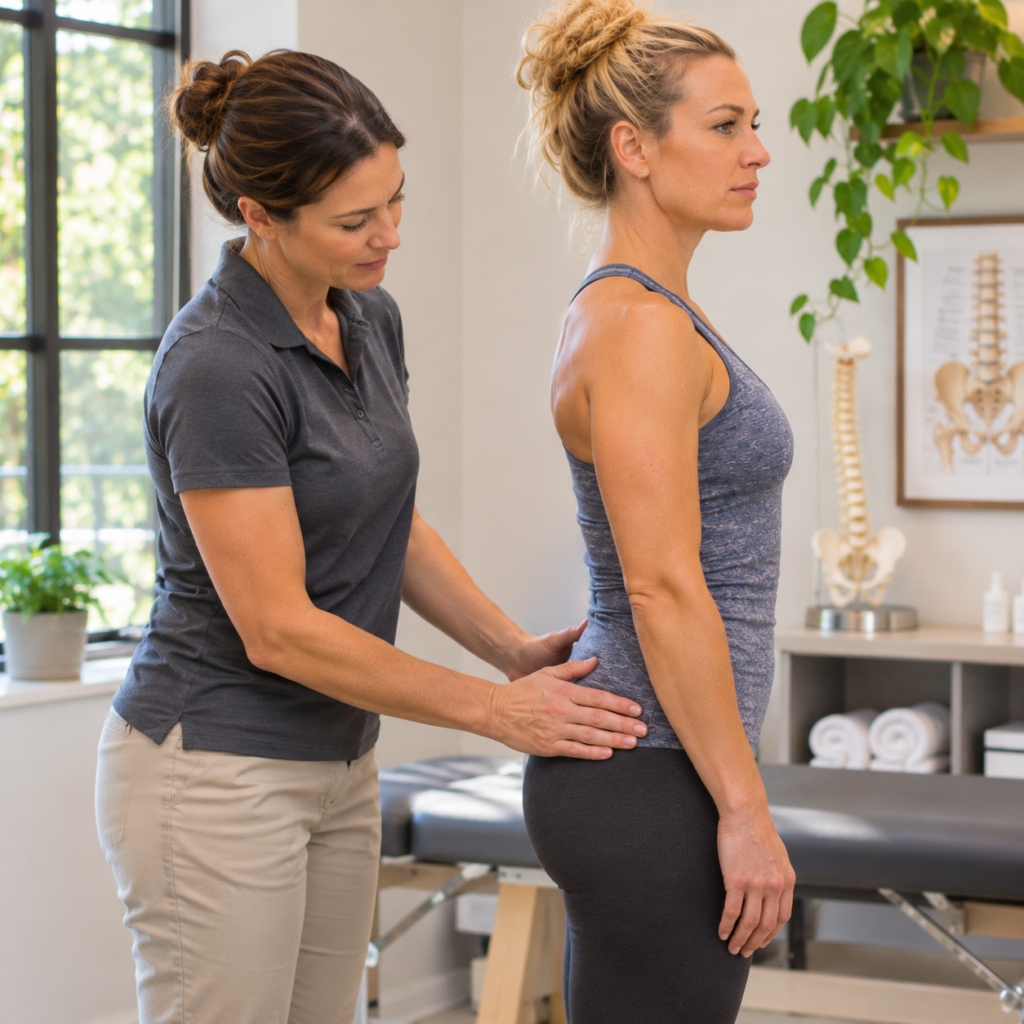
Consult a physician or physical therapist if your sacroiliac joint pain persists for more than a few weeks, recurs, or is accompanied by morning stiffness lasting longer than 30 minutes that improves with movement, as these symptoms may indicate inflammatory arthritis. Seek immediate medical attention if the pain follows a fall or motor vehicle accident, occurs with a fever or chills, wakes you at night and does not improve with rest, or is accompanied by numbness, tingling, or weakness in your legs. Go to the emergency department if you lose control of your bladder or bowels or experience numbness in your groin or inner thighs. If you are pregnant, avoid the sacral points, BL54, and BL60, and consult your healthcare provider about any pelvic pain.
Acupressure can be a gentle and supportive way to help with sacroiliac joint pain, but it should be used along with, not instead of, proper diagnosis and medical care.
For related health concerns, acupressure for lower back pain, acupressure for piriformis syndrome, and acupressure for sciatica are companion articles. If the pain is located lower, right at the base of the spine, learn about acupressure for tailbone pain.
Above and Beyond Acupuncture offers acupuncture, cupping, and lifestyle coaching at the North Frank Lloyd Wright Boulevard location in Scottsdale.
Schedule an appointment online to start your healing journey.
The points above are only as effective as the technique used to apply them. Where to press, how firmly, and for how long all affect the result. For a full breakdown of how to perform acupressure properly at home, read Performing Acupressure in 3 Easy Steps.

About the Publisher
Paul Kerzner, L.Ac., is a licensed acupuncturist and board-certified herbalist, as well as the founder of Above and Beyond Acupuncture in Scottsdale. His own journey from chronic patient to practicing acupuncturist shapes his commitment to providing honest, clinically grounded information about acupuncture and Traditional Chinese Medicine. Learn more about Paul and his clinical approach on the About Us page.