Key Takeaways
- Tailbone pain, also called coccydynia, is pain at the bottom of the spine that is usually worst when sitting, leaning back, or standing up from a chair.
- Common causes include falls onto the buttocks, childbirth, prolonged sitting on hard surfaces, and repeated pressure from activities such as cycling.
- In Traditional Chinese Medicine, tailbone pain is seen as blocked Qi and Blood at the base of the Governing Vessel and Bladder channel, often accompanied by Kidney weakness in long-standing cases.
- Nine acupressure points ease pain at the base of the spine from a distance, release the surrounding muscles, and support healing without pressing on the sore tailbone.
- Consult a doctor if the pain persists, worsens, or shows signs of infection or other serious conditions.

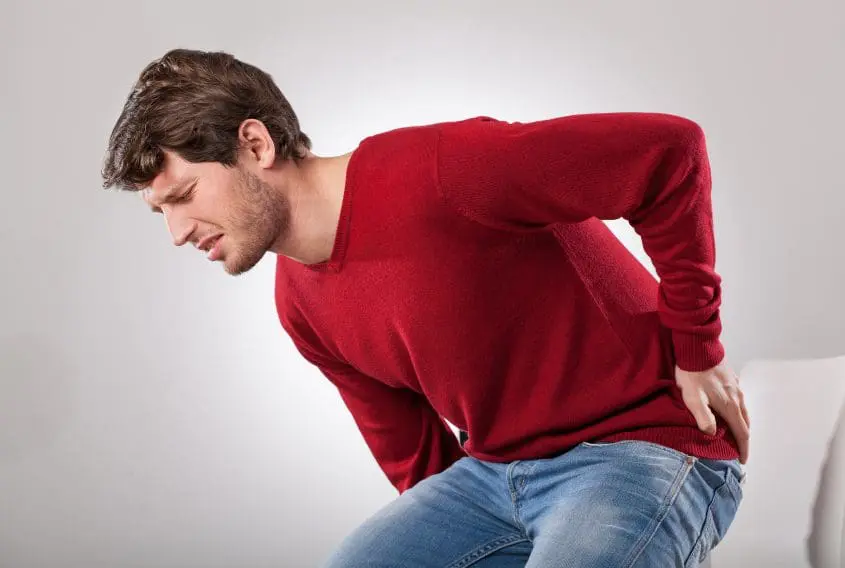
Does pain start as soon as you sit down, especially on a hard chair? You might shift to one side, perch on the edge of your seat, or brace yourself before standing. Pain at the very bottom of the spine is known as tailbone pain, or coccydynia, and can make simple activities like sitting through a meal or going for a drive difficult.
The tailbone, or coccyx, is a small, triangular bone made up of three to five tiny segments at the base of the spine. When you sit and lean back, it bears some of your weight. Many muscles, tendons, and ligaments attach to it, including those in the pelvic floor and buttocks. If the tailbone or nearby tissue is bruised, strained, or irritated, pressure on the area can cause pain.
Tailbone pain often follows a fall onto your buttocks, such as slipping on ice or missing a step. It may also develop after childbirth, long periods of sitting on hard or poorly padded chairs, or repeated pressure from activities like cycling or rowing. Sudden weight loss can reduce your natural padding, while joints that move too much or too little may also contribute. Tailbone pain is more common in women, partly because of pelvic shape and the effects of childbirth. Sometimes, no clear cause can be found.
In Traditional Chinese Medicine, the tailbone lies at the base of the Governing Vessel, a channel that runs up the center of the spine to the top of the head. The Bladder channel runs along the sacrum, just above the tailbone. A fall or prolonged pressure can obstruct the flow of Qi and Blood in this area, causing fixed, aching, or sharp pain. Because the Kidney is believed to govern the bones, persistent tailbone pain, especially after childbirth or with age, is often considered a sign of Kidney weakness.
The good news is that most tailbone pain improves within a few weeks to a few months with basic care. The nine tips below can help relieve pain at the base of your spine, relax the muscles around your pelvis, and support your body’s healing.
What Acupressure Points to Press and Why
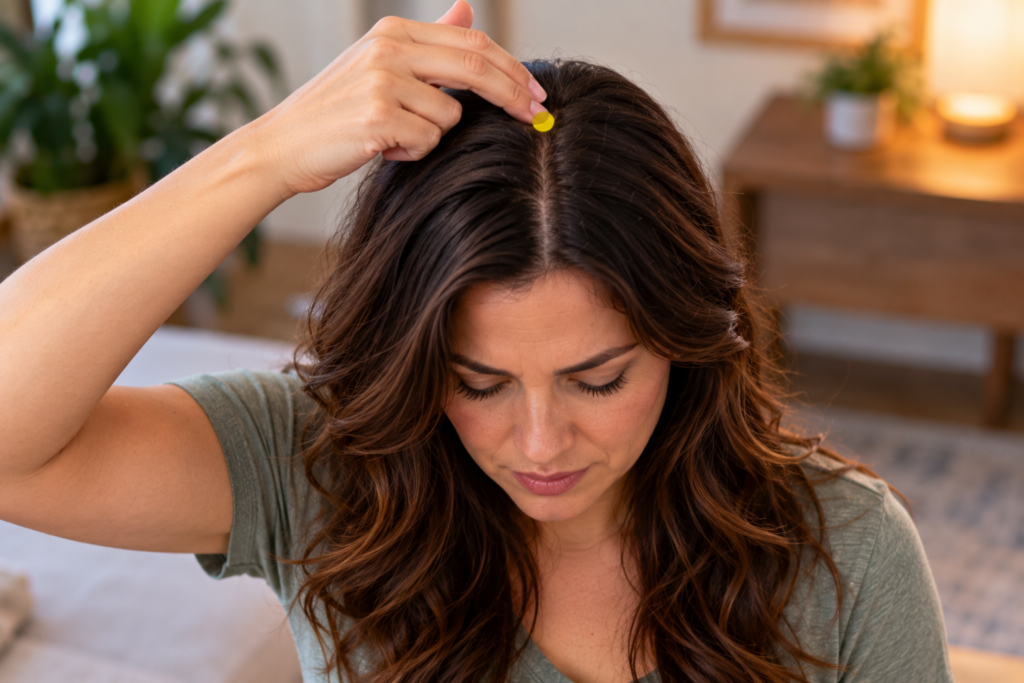
1. Press on GV20 at the top of the head to ease pain at the base of the spine. GV20 sits on the top of the head, at the midpoint of an imaginary line drawn from the top of one ear to the top of the other. Press gently but steadily with your fingertips for one to two minutes. GV20 is called “Baihui,” the “Hundred Meetings.”
The GV20 point is located at the upper end of the Governing Vessel, the same area that begins at the tailbone. In Traditional Chinese Medicine, it is common to treat disorders at one end of a meridian by addressing the opposite end, which is why GV20 is a classic choice for relieving tailbone pain. Moreover, it raises the Qi and calms the mind, thus alleviating the tension that develops as a result of continuous pain.
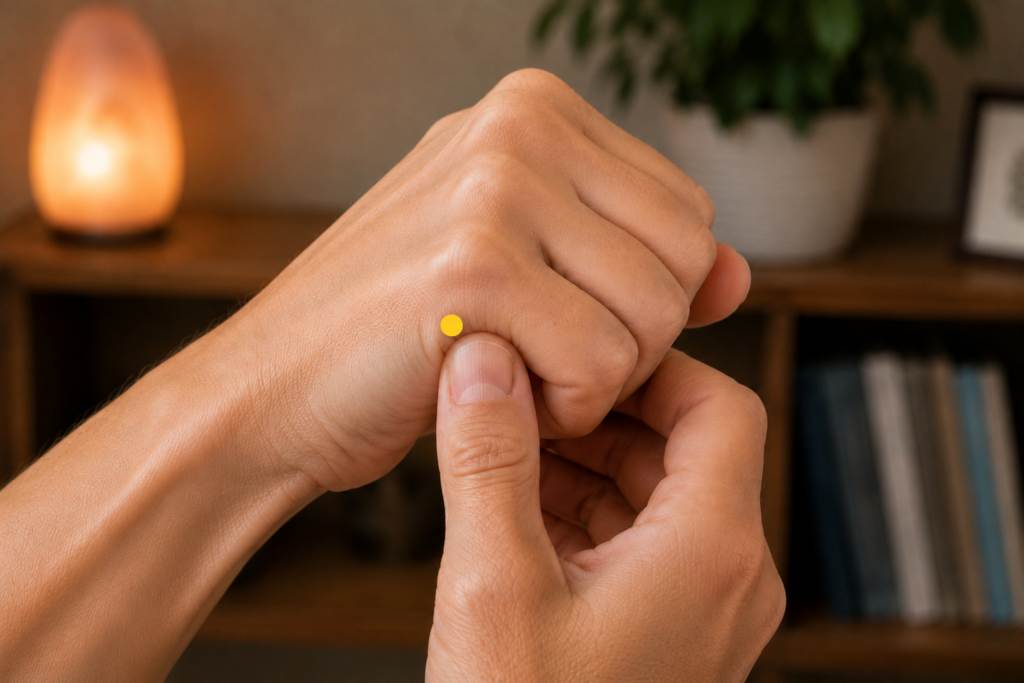
2. Press on SI3 on the side of the hand to open the spine. SI3 sits on the outer edge of the hand, just below the knuckle of the pinky finger, at the end of the crease that forms when you make a loose fist. Press firmly with the thumb of your other hand for one to two minutes on each hand. SI3 is called “Houxi,” the “Back Stream.”
The SI3 point helps open the Governing Vessel, a meridian that runs along the spine from the tailbone to the head. It is well known for relieving pain anywhere along the spine and may ease stiffness at its base when pressed while gently rocking the pelvis.
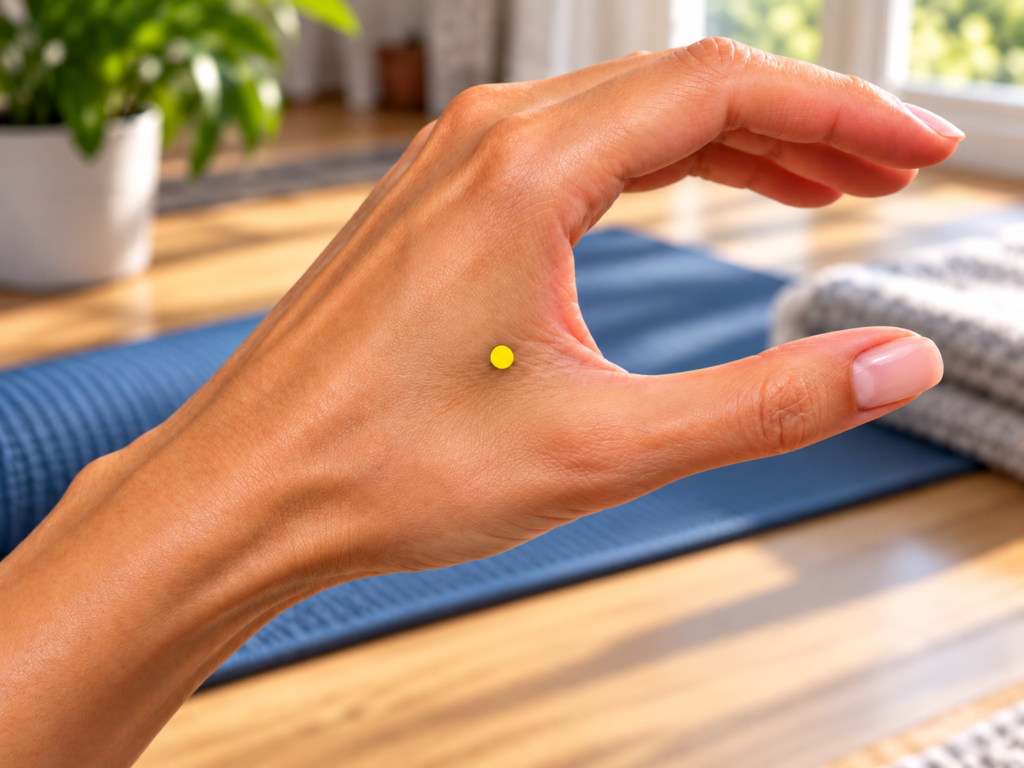
3. Press on LI4 in the hand to relieve pain. LI4 sits in the webbing between the thumb and index finger, at the highest point of the muscle when you bring the thumb and index finger together. Press firmly with the thumb of your other hand for one to two minutes on each hand. LI4 is called “Hegu,” the “Joining Valley.” LI4 is avoided during pregnancy.
LI4 is one of the most important acupressure points in the body for pain. It helps move Qi and Blood blocked by an injury, and you can press it whenever sitting becomes uncomfortable.
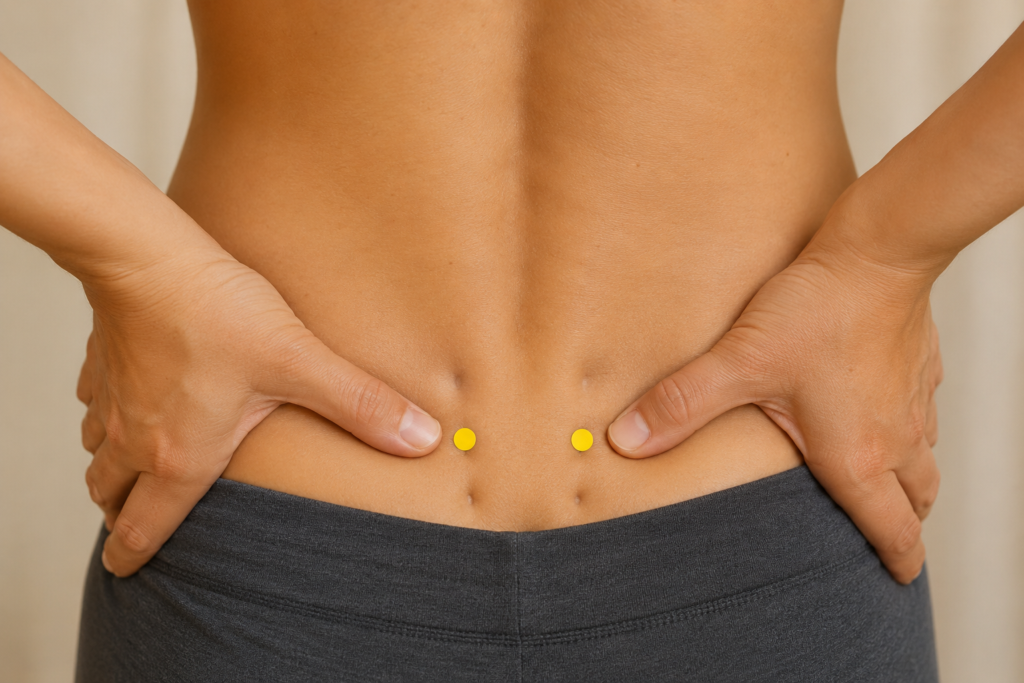
4. Press on BL32 on the sacrum to release the base of the spine. BL32 sits on the sacrum, the flat, triangular bone just above the tailbone, in the second of the small hollows that run down each side of the center. Press with your knuckles or fingertips for one to two minutes, or rub the area briskly with your palms until warm. BL32 is called “Ciliao,” the “Second Crevice.” BL32 is avoided during pregnancy.
BL32 is located just above the tailbone, close enough to improve circulation in the area without putting pressure directly on the painful bone. It helps relieve pain and stiffness in the sacrum, especially when tailbone pain extends into the lower back.
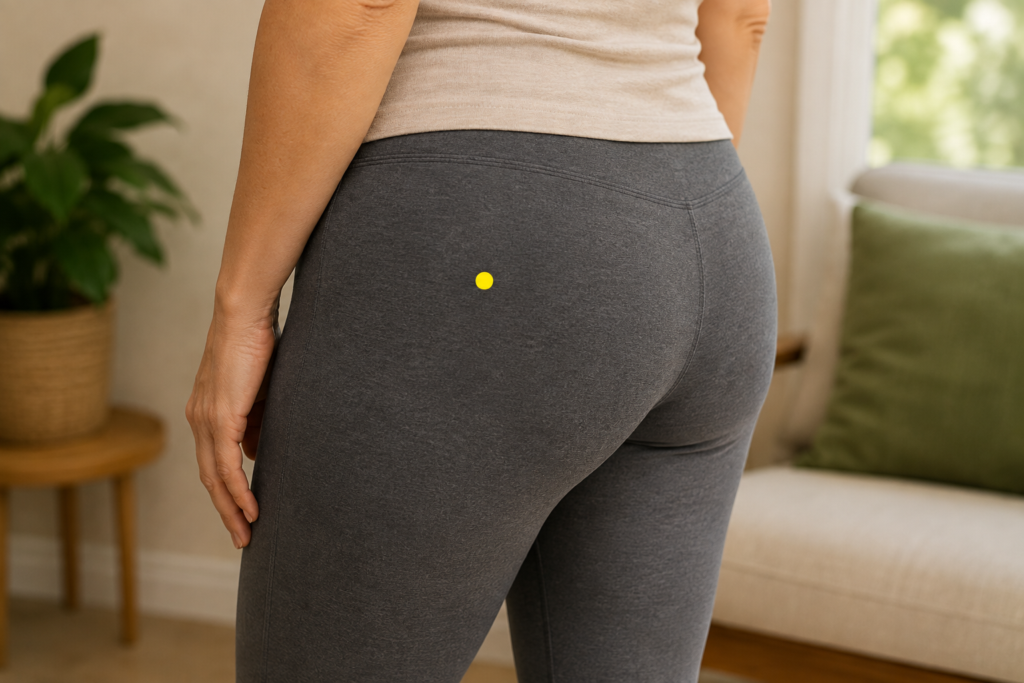
5. Press on GB30 in the buttock to release the surrounding muscles. GB30 sits in the buttock, about one-third of the way along a line from the bony bump at the top of the outer thigh to the base of the spine. Lie on your side and press firmly with your knuckle, or lean against a wall with a tennis ball under the point, for one to two minutes on each side. GB30 is called “Huantiao,” the “Jumping Circle.”
The large muscles in the buttocks attach near the tailbone. When they contract to protect a painful spot, they increase tension in the area. GB30 relaxes these muscles and eases pain that spreads into the hips and buttocks.
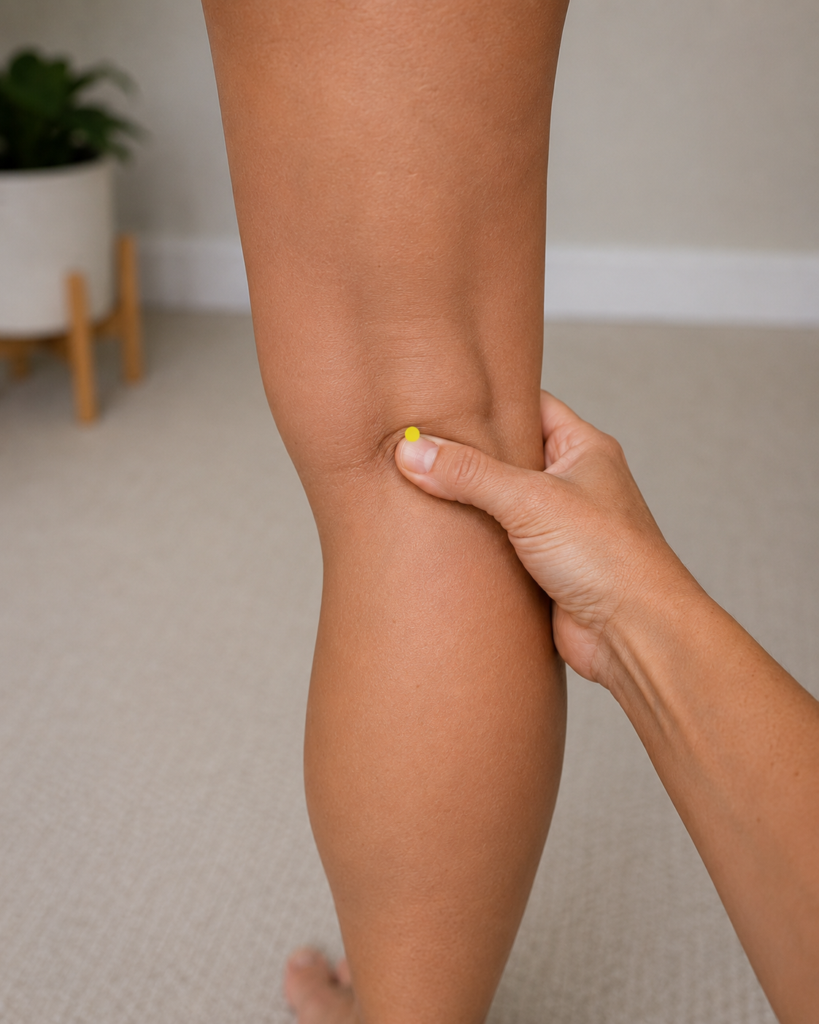
6. Press on BL40 behind the knee to relieve the lower back and sacrum. BL40 sits at the midpoint of the crease behind the knee, between the two tendons. Press gently with your thumb or fingertips for one to two minutes on each leg. BL40 is called “Weizhong,” the “Middle of the Crook.”
BL40 is the command point of the back in Traditional Chinese Medicine and one of the most traditional points for pain in the lower back and sacrum. It helps to move the Qi and Blood along the Bladder channel. Apply only gentle pressure and omit this point if you have varicose veins or swelling behind the knee.
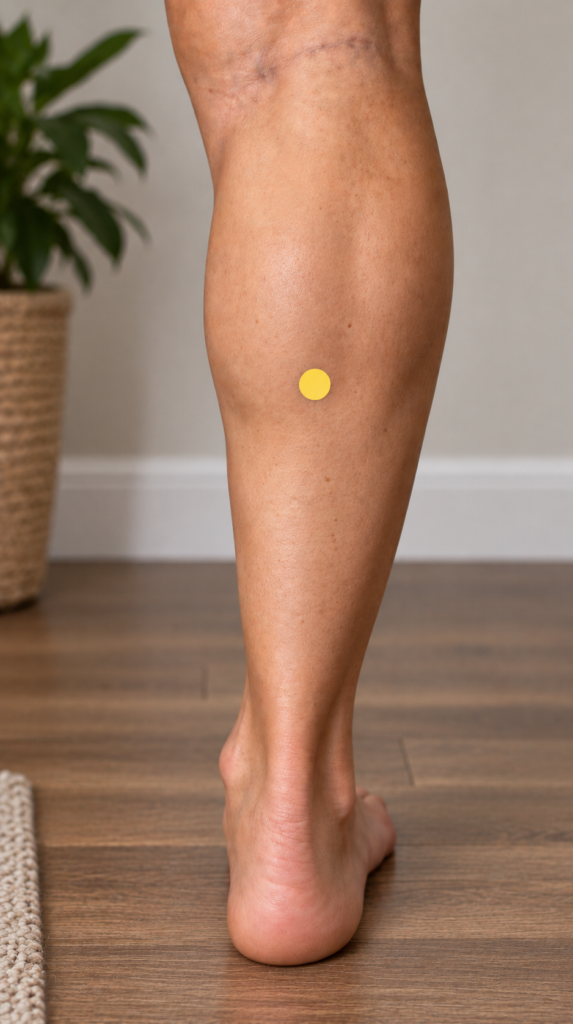
7. Press on BL57 on the back of the calf to ease pain at the base of the spine. BL57 sits on the back of the lower leg, about midway between the crease behind the knee and the heel, in the hollow that forms just below the calf muscle when you rise up on your toes. Press firmly with your thumb for one to two minutes on each leg. BL57 is called “Chengshan,” the “Supporting Mountain.”
In Traditional Chinese Medicine, the bladder meridian runs from the calf to the area around the tailbone and anus, and BL57 is traditionally used to relieve pain and congestion there. It also relaxes the calves, which can become tight when sitting or standing is uncomfortable.
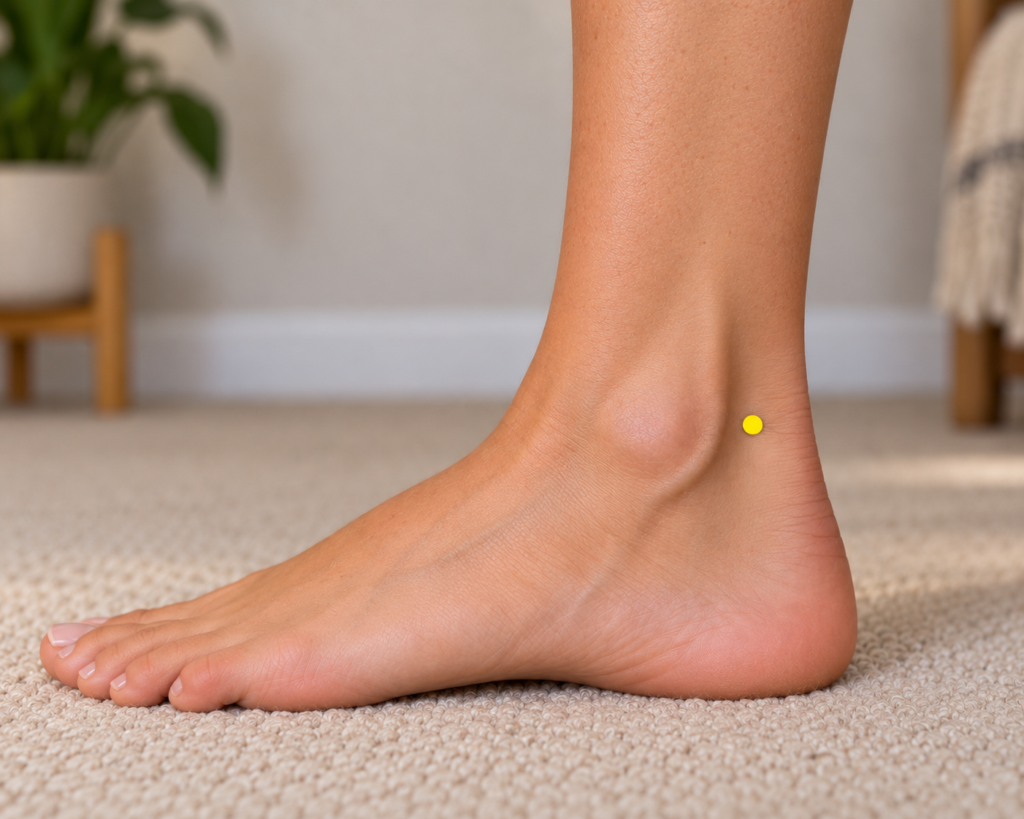
8. Press on BL60 behind the outer ankle to release the back from below. BL60 sits in the hollow between the outer ankle bone and the Achilles tendon, level with the tip of the ankle bone. Press firmly with your thumb for one to two minutes on each ankle. BL60 is called “Kunlun,” the “Kunlun Mountains.” BL60 is contraindicated during pregnancy.
BL60 is a classic distal point for pain in the lower back and sacrum. It works along the entire Bladder meridian, from the ankle to the spine, easing stiffness at the base of the spine without directly reaching the painful area.
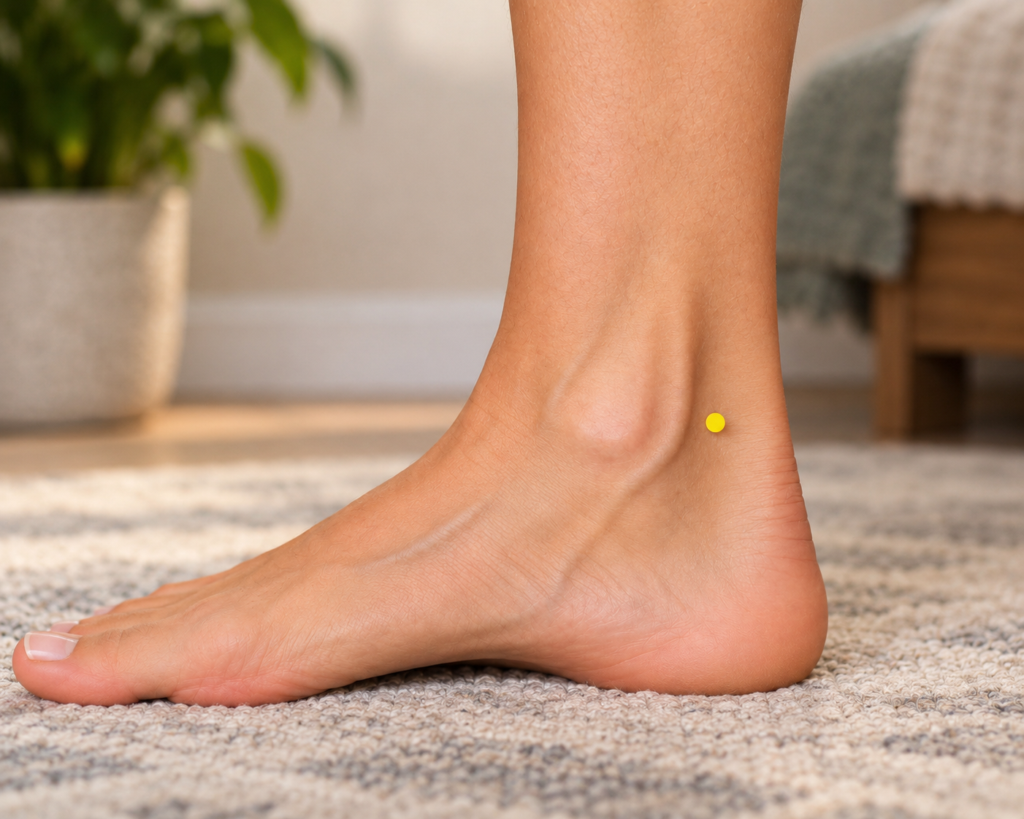
9. Press on KI3 behind the inner ankle to strengthen the bones. KI3 sits in the hollow between the inner ankle bone and the Achilles tendon, level with the tip of the ankle bone. Press firmly with your thumb for one to two minutes on each ankle. KI3 is called “Taixi,” the “Great Stream,” and is the source point of the Kidney.
In Traditional Chinese Medicine, the Kidney is said to govern the bones, and KI3 is used to strengthen it. This treatment is especially effective for tailbone pain that lasts for months, begins after childbirth, or occurs alongside lower-back weakness or fatigue.
Why These Acupressure Points Work
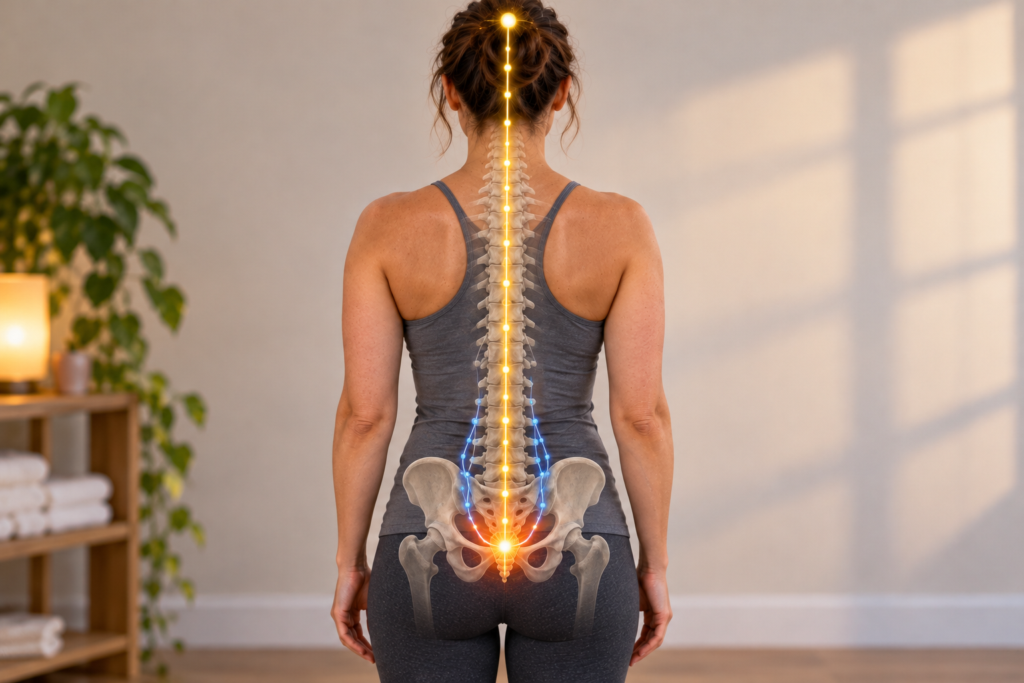
In Traditional Chinese Medicine, proper spinal support comes from the smooth flow of Qi and Blood along the Governing Vessel and Bladder channel, relaxed muscles around the pelvis, and strong Kidney energy to support the bones. An injury or prolonged pressure, however, can disrupt this flow and make the area tender.
These nine points relieve pain without putting pressure directly on the tailbone:
- The spine points (GV20, SI3) work the Governing Vessel from the top of the head and the hand.
- The pain point (LI4) moves the Qi and Blood and calms pain throughout the body.
- The pelvis and leg points (BL32, GB30, BL40, BL57) release the sacrum, buttocks, and Bladder channel.
- The ankle points (BL60, KI3) support the lower back and strengthen the bones from below.
How to Properly Use These Acupressure Points
For tailbone pain, acupressure works best when practiced each day consistently as the area heals.
- Complete the full routine once daily, holding each point for one to two minutes while breathing slowly.
- Never apply direct pressure to the tailbone. Work on points above and around it, as well as points farther away.
- Apply firm pressure to the hands, legs, and buttocks, and gentle pressure to GV20 and BL40.
- Practice for several weeks, as a bruised or strained tailbone heals slowly.
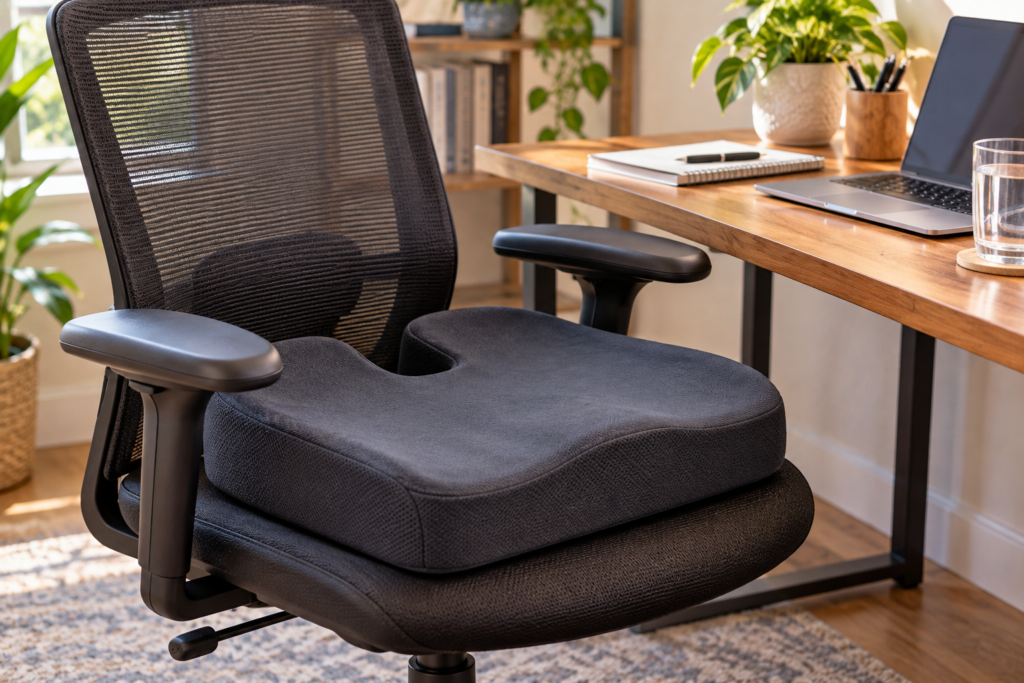
How you sit matters as much as the points. Use a wedge or a cushion with a cutout at the back to keep weight off your tailbone, and lean slightly forward to shift pressure onto your thighs. Avoid sitting on hard surfaces for long periods. Stand up and move every 30 to 45 minutes, and rise slowly from a chair. Apply cold to the area during the first few days after a fall, then use warmth. Drink plenty of water and eat enough fiber to avoid straining during bowel movements, which can aggravate tailbone pain.
If pain spreads deep into the buttock, learn more about acupressure for piriformis syndrome.
When to Get Professional Help
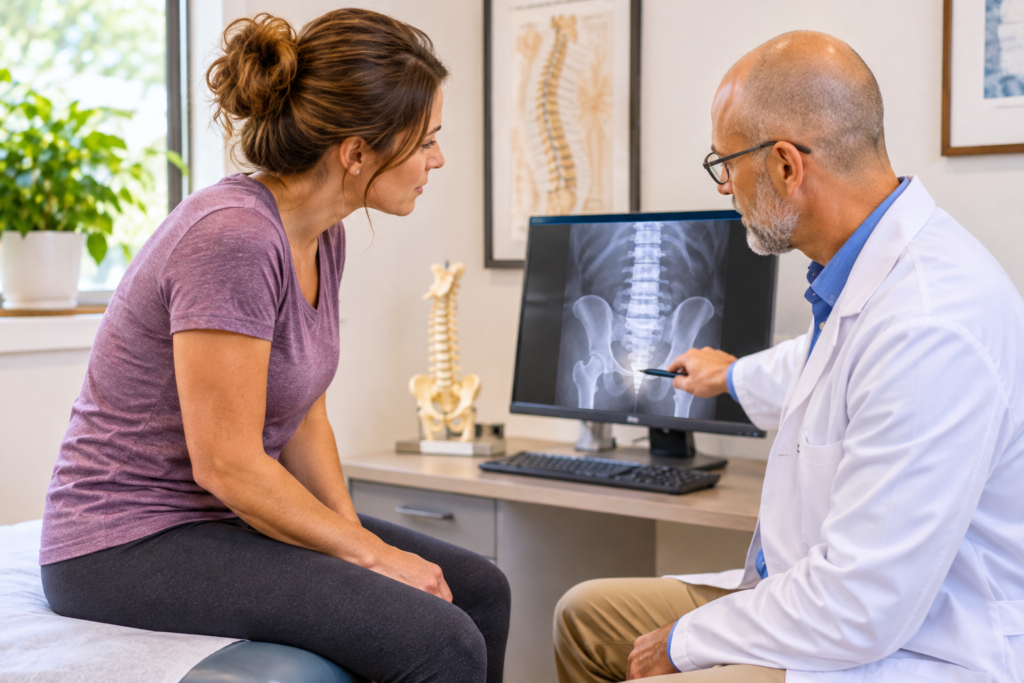
Consult your doctor if tailbone pain occurs after a significant fall, does not improve after several weeks of home care, or interferes with sitting, working, or sleeping. An evaluation can determine whether a fracture or dislocation is present and help guide treatment. Seek prompt medical attention if you notice swelling, redness, warmth, or drainage near the top of the buttock crease; tailbone pain accompanied by a fever; pain that is severe at night or while at rest; unexplained weight loss; or a history of cancer. These signs may indicate an infection, cyst, or another condition requiring treatment. Seek emergency care for new loss of bladder or bowel control, numbness in the groin or inner thighs, or leg weakness, as these symptoms may signal a problem with the nerves at the base of the spine.
Acupressure is a natural, supportive practice for tailbone pain. It may complement, but does not replace, diagnosis and medical care.
For related health concerns, acupressure for low back and hip pain, acupressure for sciatica, and acupressure for spinal stenosis are the companion posts.
Above and Beyond Acupuncture offers acupuncture, cupping, and lifestyle coaching at the North Frank Lloyd Wright Boulevard location in Scottsdale.
Schedule an appointment online to start your healing journey.
The points above are only as effective as the technique used to apply them. Where to press, how firmly, and for how long all affect the result. For a full breakdown of how to perform acupressure properly at home, read Performing Acupressure in 3 Easy Steps.

About the Publisher
Paul Kerzner, L.Ac., is a licensed acupuncturist and board-certified herbalist, as well as the founder of Above and Beyond Acupuncture in Scottsdale. His own journey from chronic patient to practicing acupuncturist shapes his commitment to providing honest, clinically grounded information about acupuncture and Traditional Chinese Medicine. Learn more about Paul and his clinical approach on the About Us page.