Key Takeaways
- Hangxiety is the worry, guilt, and dread that can follow a night of drinking, and it affects an estimated 12 percent of people who drink.
- As alcohol wears off, the brain shifts from excess calming GABA to excess stimulating glutamate. Dehydration, elevated cortisol, and disrupted sleep can further intensify the anxious rebound.
- In Traditional Chinese Medicine, alcohol creates heat and dampness in the Stomach and Liver. This rising heat then unsettles the Heart, which houses the mind.
- Nine acupressure points on the head, chest, belly, hands, legs, and feet help settle a recovering stomach and quiet a mind replaying the night before.
- Frequent episodes of hangxiety warrant a discussion with a physician. Shaking, confusion, or seizures after stopping alcohol require emergency medical care.
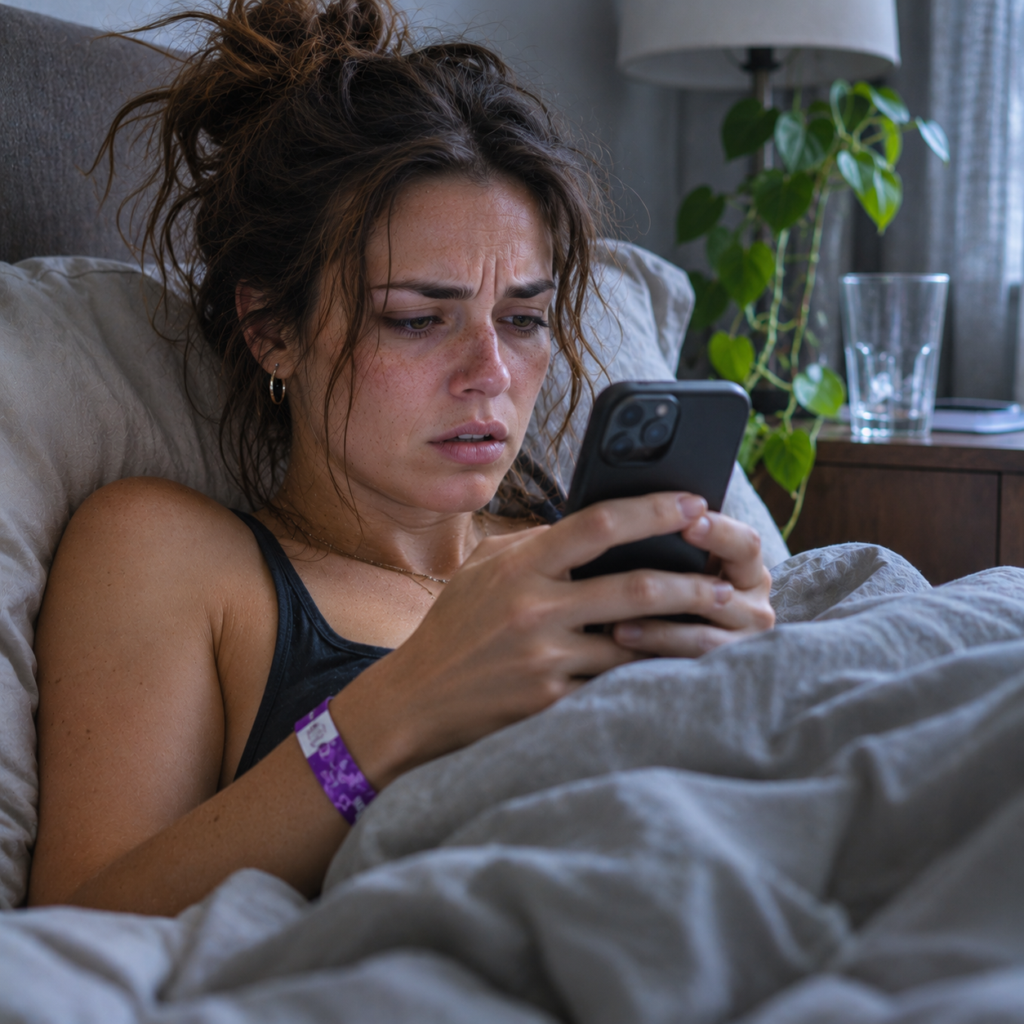
About one in eight people who drink wake up with more than a headache. Along with a dry mouth and upset stomach, they may feel a sense of dread. They might replay conversations from the night before, check their phones for late-night messages, or notice their hearts racing for no obvious reason. This feeling is called hangxiety, and it’s especially common during the holiday season, when parties and late nights are frequent.
According to Live Science, hangxiety is the worry, guilt, and shame that can follow drinking, affecting an estimated 12 percent of people who drink. Professor David Nutt explains that alcohol initially boosts GABA, the brain’s main calming chemical, while blocking glutamate, which excites the brain. As the alcohol leaves the body, the brain overcorrects, producing less GABA and more glutamate and leaving it wound up and on edge. Raised cortisol, inflammation, dehydration, and poor sleep add to the effects, while a hangover’s faster heart rate can feel like anxiety on its own. Research cited in the article found that people who are very shy or especially prone to hangovers report the most anxiety the next day.
Understanding the chemistry helps. The dread is a predictable rebound that fades as the brain rebalances. In the meantime, the body needs fluids, food, and rest, plus something to calm a nervous system that is running hot.
Traditional Chinese Medicine considers alcohol hot and damp. A heavy night leaves heat and dampness in the Stomach and Liver, leading to nausea, a heavy head, and a short temper. That rising heat also reaches the Heart, which houses the mind, bringing a restless, uneasy feeling that makes the morning after so hard to sit through.
The following nine points may help soothe a stomach that is still recovering and ease a mind that continues to dwell and ruminate.
What Acupressure Points to Press and Why
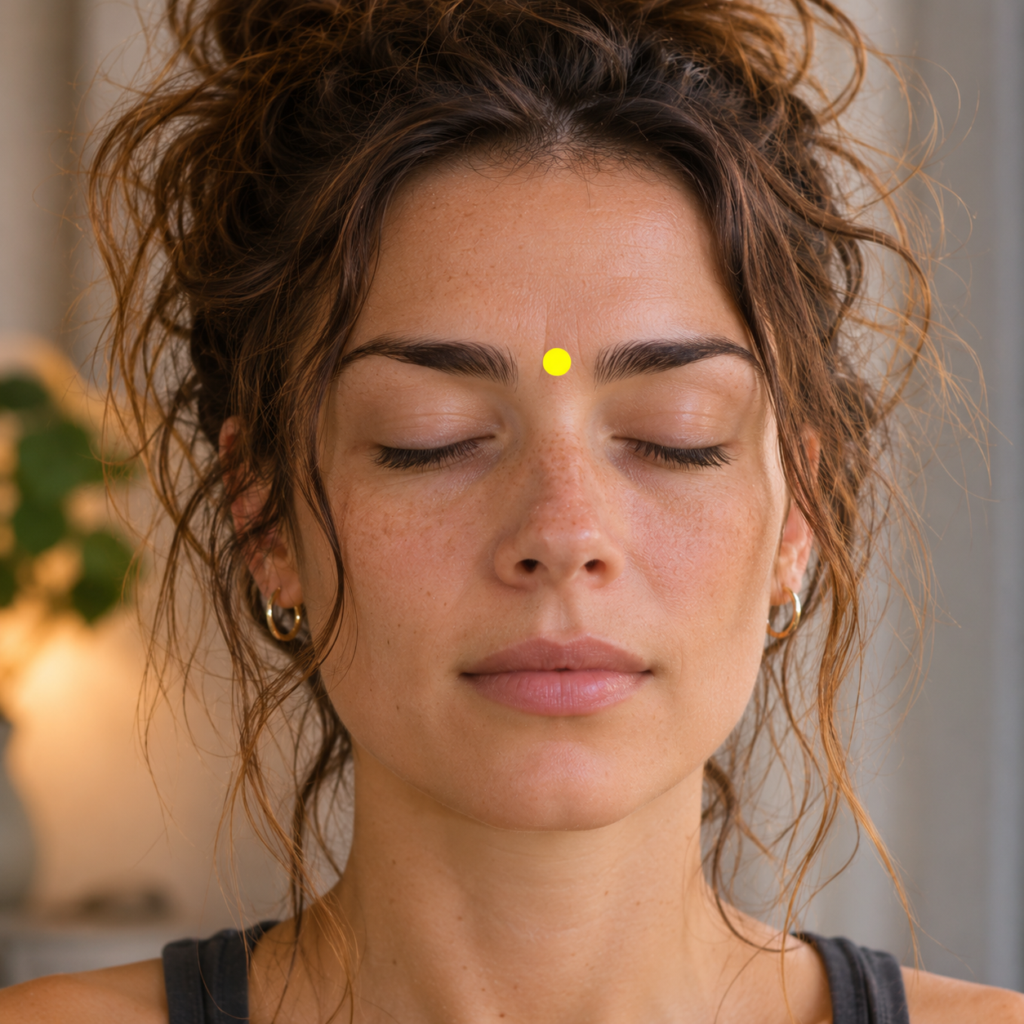
1. Press on Yintang between the eyebrows to stop the replay. Yintang sits on the midline of the forehead, directly between the inner ends of the eyebrows. Press gently with your fingertip, or make slow, small circles, for one to two minutes with the eyes closed. Yintang is called the “Hall of Impression.”
Yintang is an extra point used to calm the mind and ease anxiety. Press it with your eyes closed and your phone out of reach for a minute, giving your mind a moment to stop scanning the night before for things to regret.
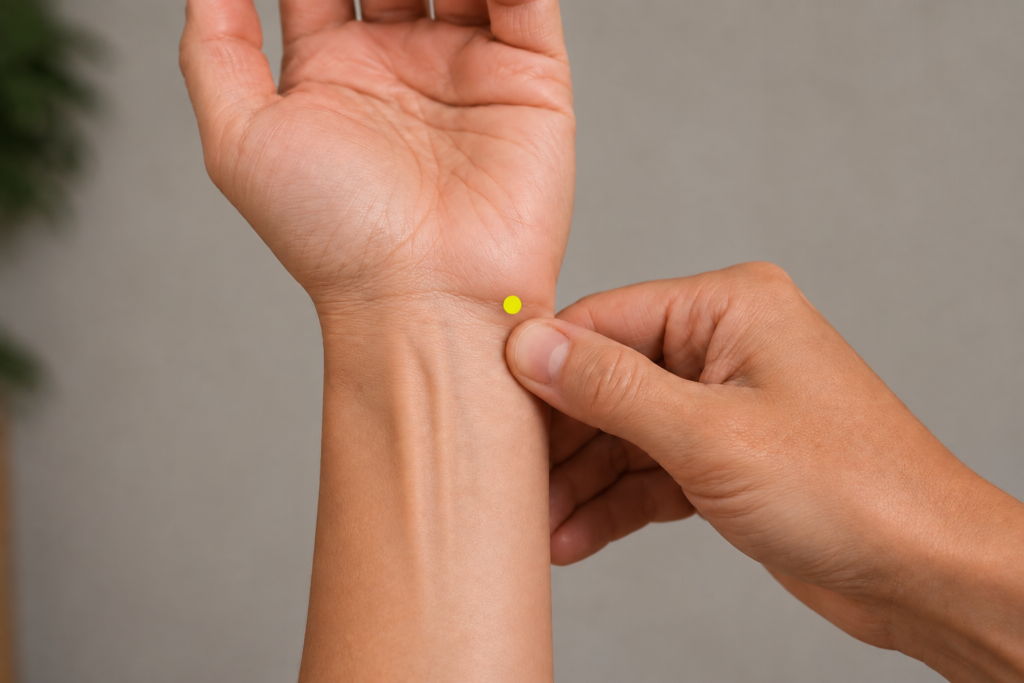
2. Press on HT7 on the wrist crease to slow a racing heart. HT7 sits on the inner wrist crease, on the pinky side, in the small hollow just to the thumb side of the tendon that runs along the edge of the wrist. Press gently with the thumb of your other hand for one to two minutes on each wrist. HT7 is called “Shenmen,” the “Spirit Gate.”
HT7 is the source point of the Heart, which houses the mind in Traditional Chinese Medicine. It is used for anxiety, a pounding heart, and restless sleep, three complaints that tend to peak the morning after drinking.
3. Press on PC6 on the inner forearm to settle both nausea and nerves. PC6 sits on the inner forearm, three finger-widths above the wrist crease, between the two tendons. Press firmly with the thumb of your other hand for one to two minutes on each arm while breathing out slowly. PC6 is called “Neiguan,” the “Inner Pass.”
PC6 is the Pericardium’s connecting point, and the Pericardium protects the Heart. It is the best-known point for nausea in Traditional Chinese Medicine. For hangxiety, it can address both a queasy stomach and a tight, anxious chest.
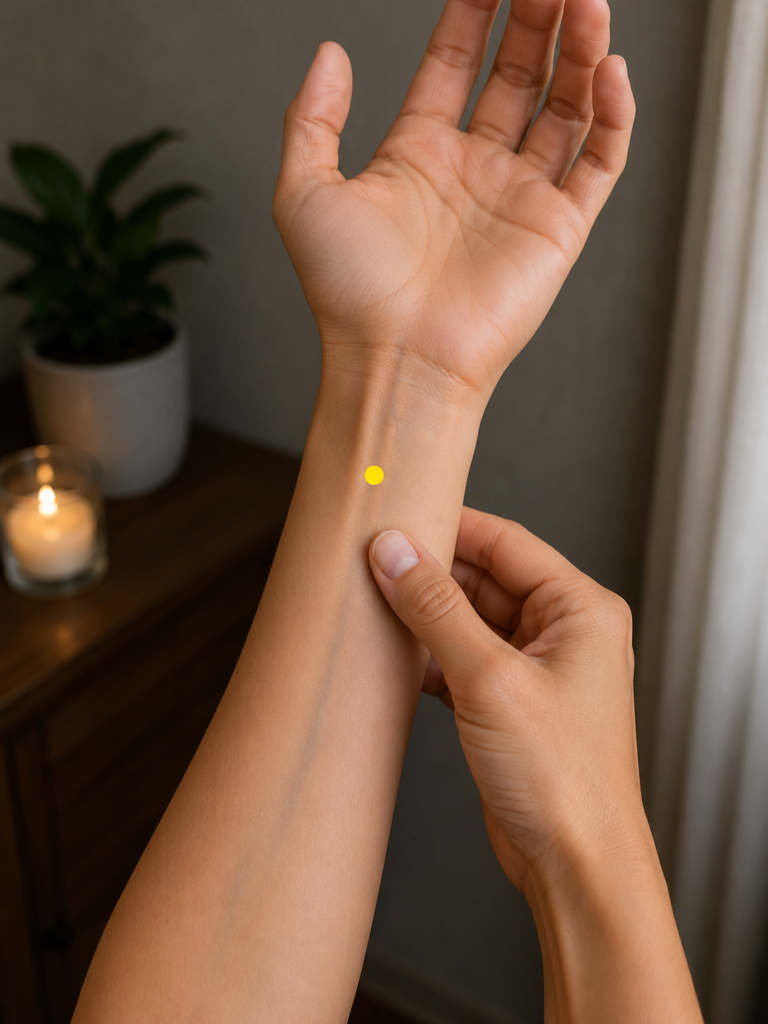
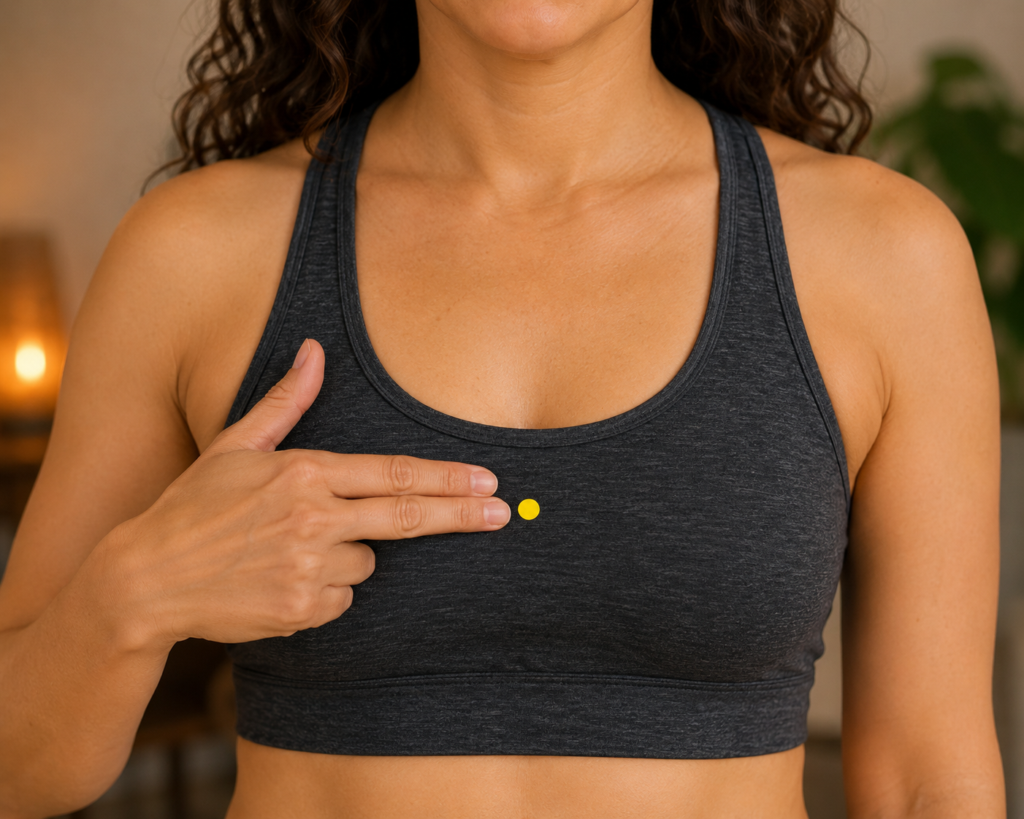
4. Press on CV17 on the center of the chest to loosen a tight chest. CV17 sits on the breastbone, on the midline of the chest, about midway between the nipples. Press gently with your fingertips, or rest the palm flat over the area, for one to two minutes while breathing slowly into the belly. CV17 is called “Danzhong,” the “Chest Center.”
CV17 is where the Qi of the chest gathers. Anxiety the morning after can settle here as tightness or a flutter. Slow breathing with a hand over CV17 can help ease it.
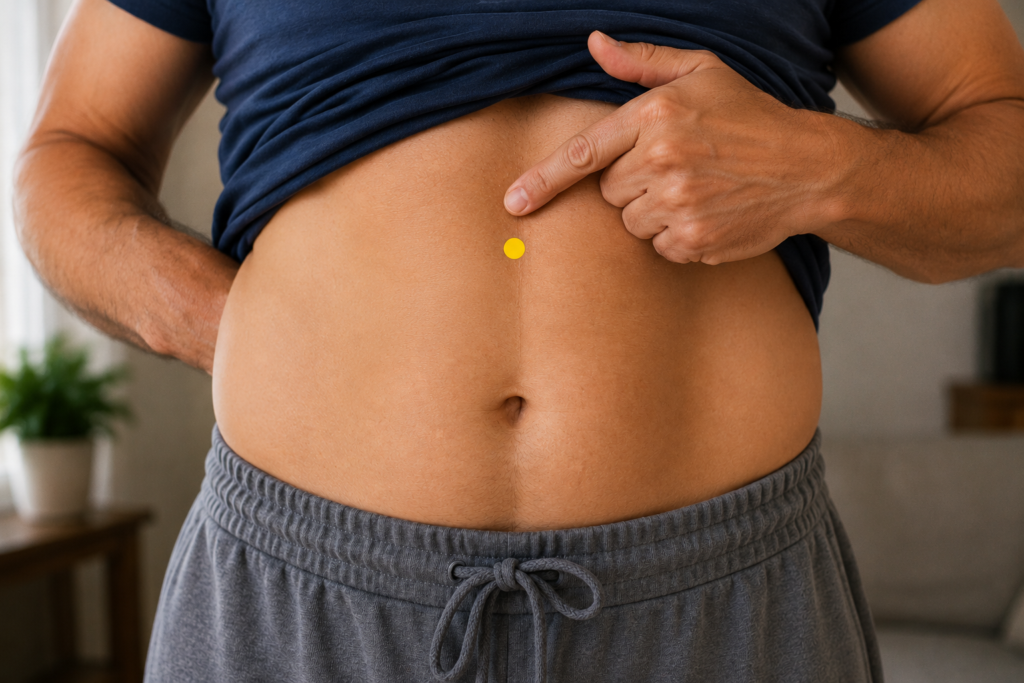
5. Press on CV12 on the upper belly to calm the stomach. CV12 sits on the midline of the upper belly, halfway between the bottom of the breastbone and the navel. Press gently with two or three fingertips, or rest a warm palm over the area, for one to two minutes while breathing slowly. CV12 is called “Zhongwan,” the “Middle Cavity.”
CV12 is the Stomach’s alarm point. It eases nausea, bloating, and the sour, unsettled feeling alcohol leaves behind. When the stomach calms, the rest of the body is easier to calm, too.
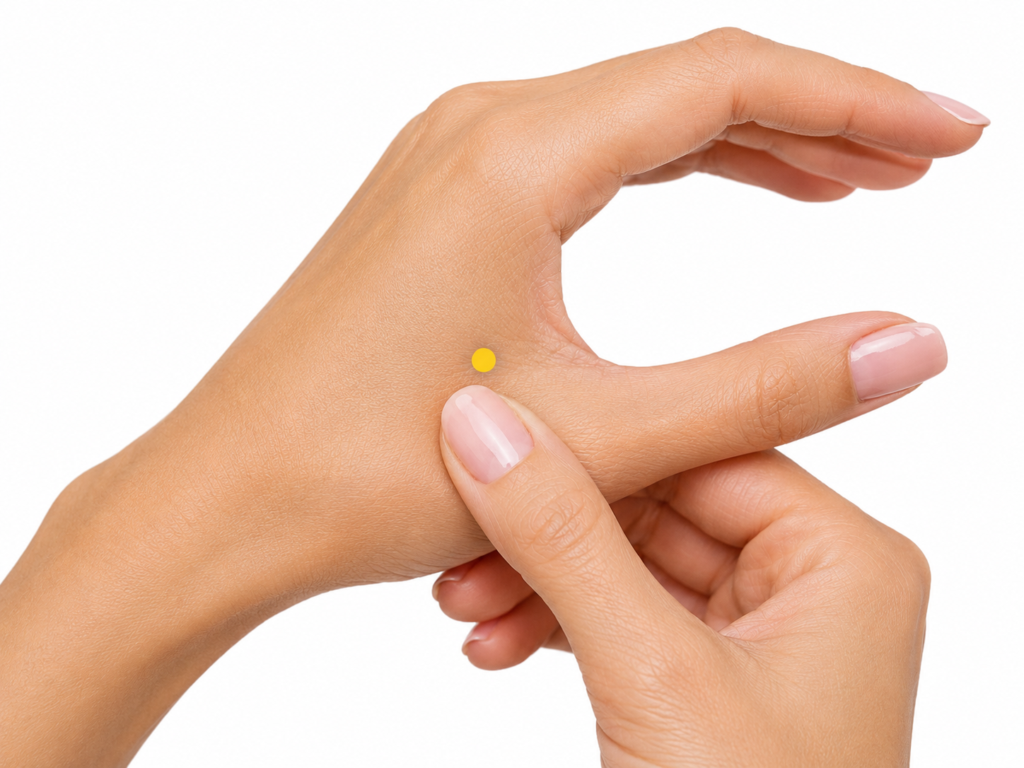
6. Press on LI4 on the back of the hand to ease a hangover headache. LI4 sits in the webbing between the thumb and index finger, at the highest point of the muscle when the two are pressed together. Press firmly with the thumb of your other hand for one to two minutes on each hand. LI4 is called “Hegu,” the “Joining Valley.” LI4 is avoided during pregnancy.
LI4 is a go-to point for headaches and tension in the face and jaw. Paired with LR3, it forms the Four Gates, a classic formula for moving stuck Qi and calming the whole body.
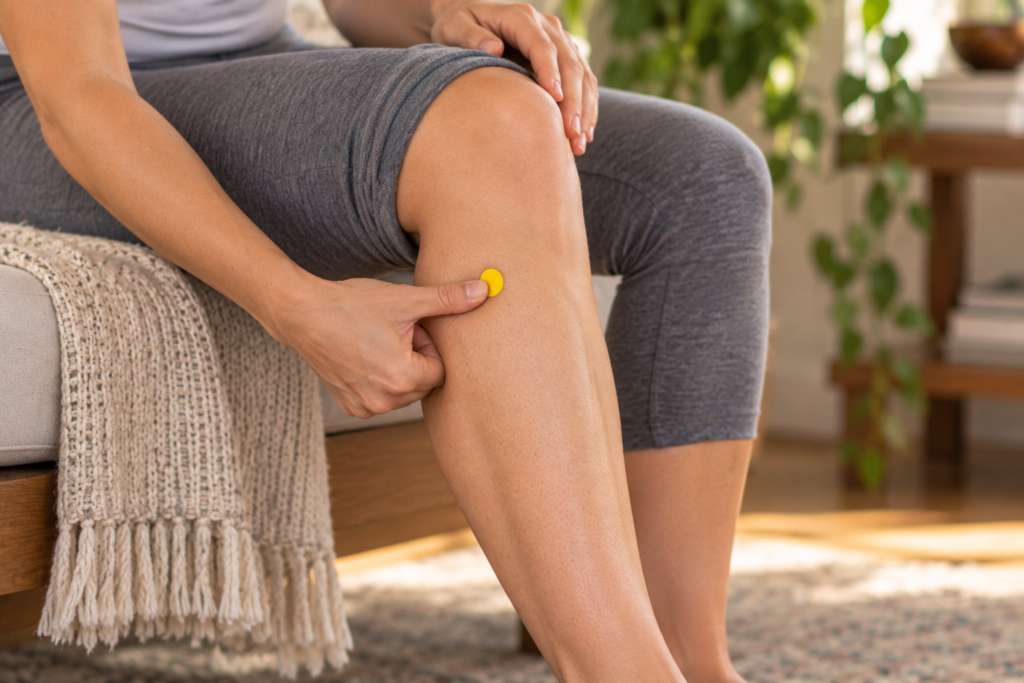
7. Press on ST36 below the knee to restore energy. ST36 sits four finger-widths below the bottom of the kneecap, about one finger-width to the outside of the shinbone. Press firmly with your thumb for one to two minutes on each leg. ST36 is called “Zusanli,” the “Leg Three Miles.”
ST36 strengthens the Spleen and Stomach, the two organs most affected by a night of drinking in Traditional Chinese Medicine. It settles the stomach and restores energy when you feel drained and shaky the morning after.
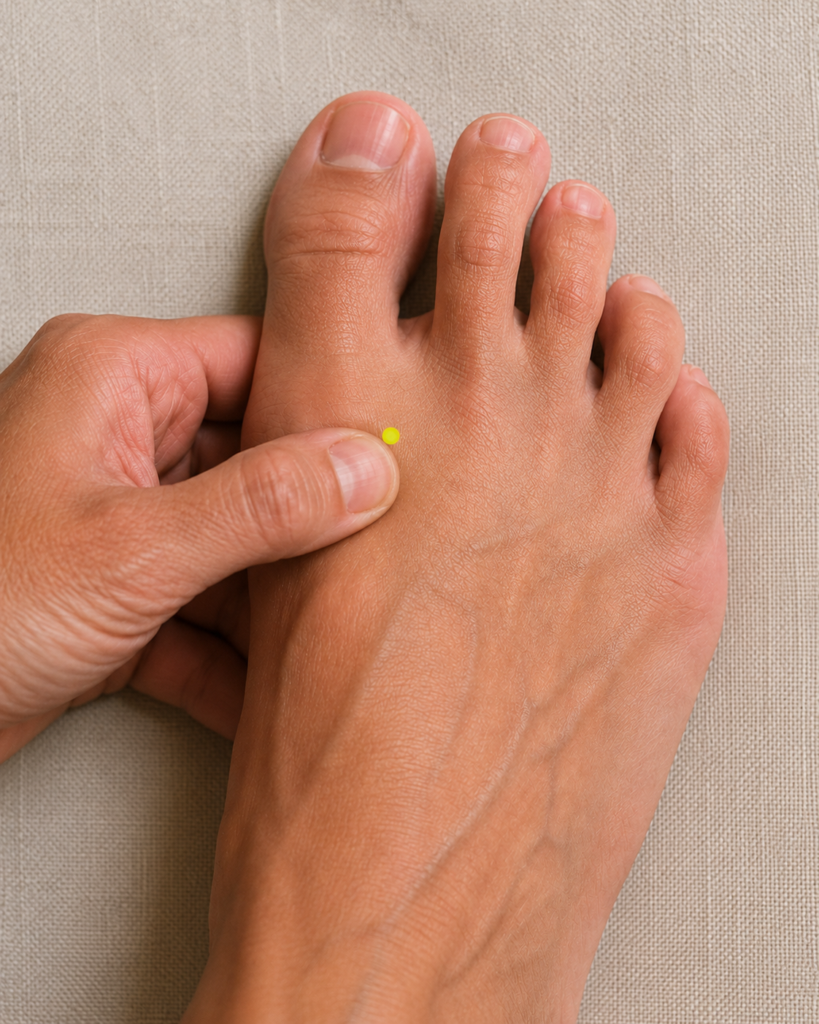
8. Press on LR3 on the top of the foot to clear what the Liver is processing. LR3 sits on the top of the foot, in the hollow where the bones of the big toe and second toe meet, about two finger-widths above the web between the toes. Press firmly with your thumb for one to two minutes on each foot. LR3 is called “Taichong,” the “Great Surge.”
LR3 is the Liver’s source point, the organ that, in both Western and Traditional Chinese Medicine, bears the burden of alcohol. It helps clear the heat and irritability that linger after drinking and is often tender the next day.
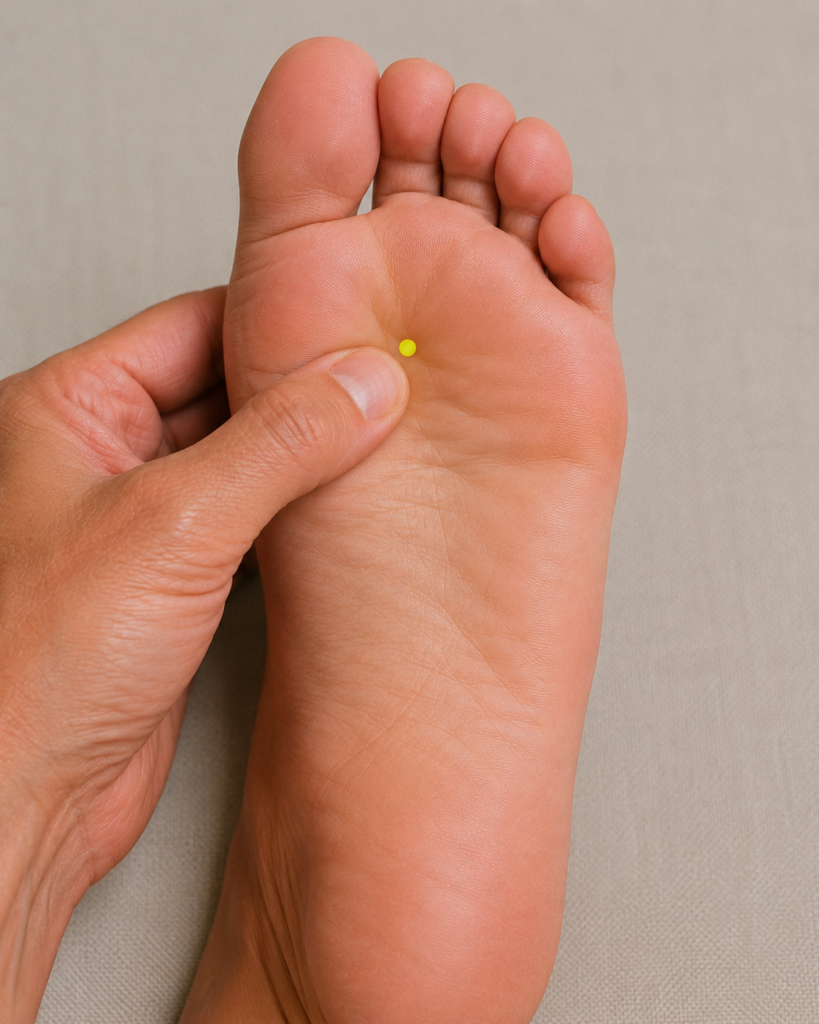
9. Press on KI1 on the sole of the foot to ground the body. KI1 sits on the sole of the foot, in the depression about one-third of the way from the base of the second toe to the back of the heel, where a small hollow forms when the toes curl. Press firmly with your thumb for one to two minutes on each foot, or press the soles firmly into the floor while seated. KI1 is called “Yongquan,” the “Bubbling Spring.”
KI1 is the body’s lowest point and the first point on the Kidney channel. It draws energy down from the head and chest, making it especially useful when you feel a little jittery and top-heavy the morning after.
Why These Acupressure Points Work
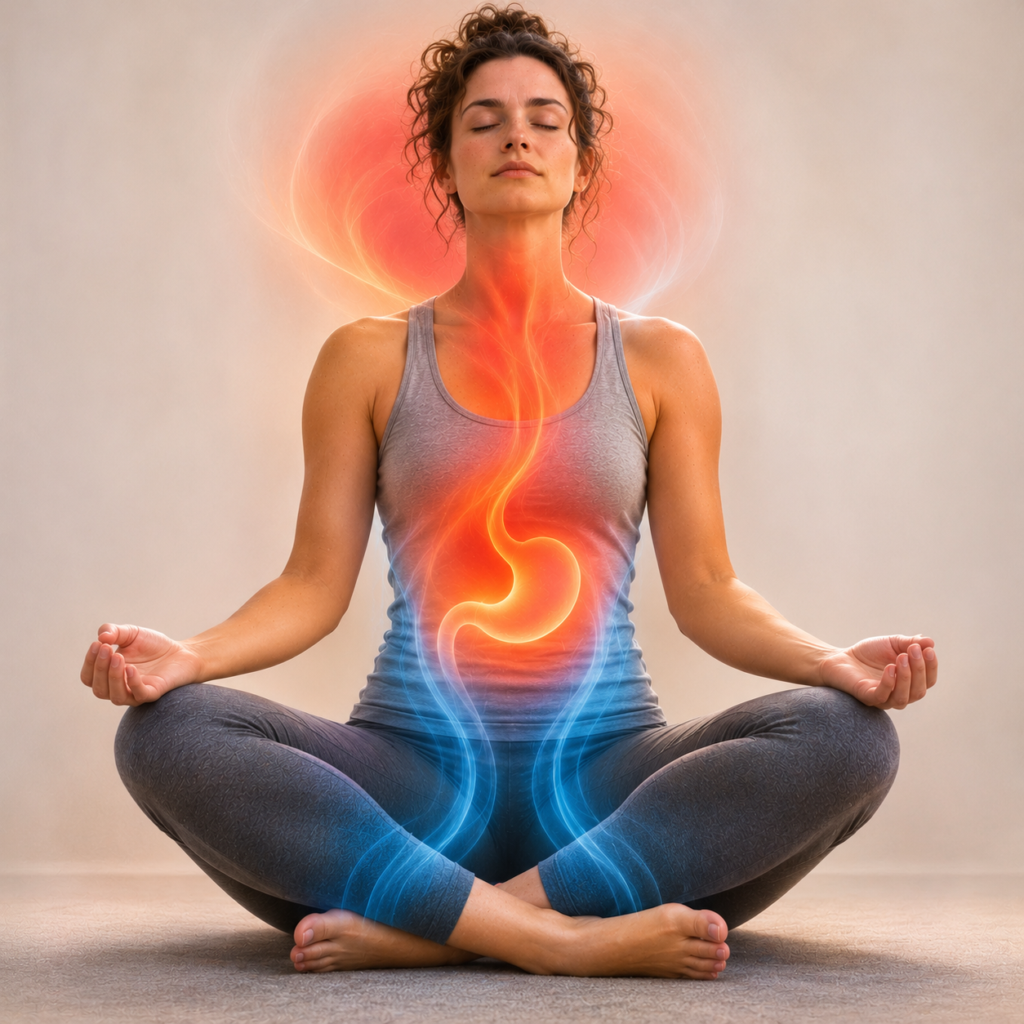
From a Traditional Chinese Medicine perspective, hangxiety is heat with nowhere to go. Alcohol leaves heat and dampness in the Stomach and Liver, making the Stomach sour and heavy. That heat then rises, agitating the Heart and mind. You treat it at the body’s center: once the Stomach settles and the Liver clears, the mind can let go more easily.
The nine points work together to calm the body, beginning with the stomach and extending upward:
- CV12 and ST36 calm the stomach and rebuild energy.
- PC6, HT7, and CV17 ease nausea, a racing heart, and chest tightness.
- LI4 and LR3, the Four Gates, relieve headache and clear lingering heat.
- Yintang and KI1 quiet the mind and draw energy back down.
How to Properly Use These Acupressure Points
Acupressure for hangxiety works best as a brief morning routine, after a glass of water and before scrolling back through the night’s messages.
- Begin with PC6 on each arm, inhaling for four counts and exhaling for six. Then place a palm over CV12 for one minute.
- Proceed to HT7 and CV17 if the heart is racing or the chest feels tight, and finish with Yintang while keeping the eyes closed.
- Once the stomach has settled, apply pressure to LI4, ST36, LR3, and KI1, holding each point for one to two minutes.
- Apply gentle pressure to the forehead, chest, abdomen, and wrist crease, and firmer pressure to the forearms, hands, legs, and feet. Repeat this brief routine every few hours until the feeling of dread subsides.
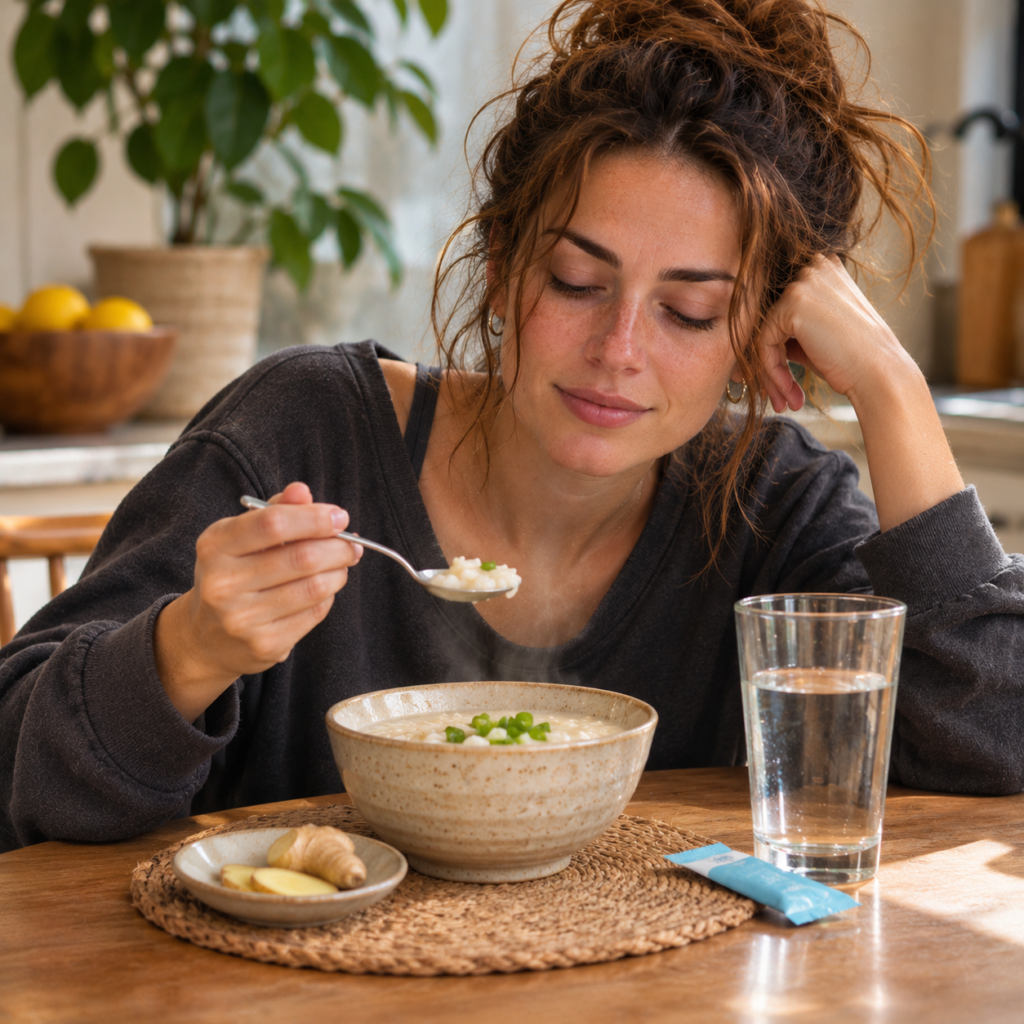
The best defense against hangxiety starts the night before. Eat a proper meal before drinking, alternate each alcoholic drink with a glass of water, and decide in advance how many drinks you’ll have. The next morning, drink a glass of water with electrolytes, eat something simple, such as toast, eggs, or rice, and, if you can, take a slow walk outside. Avoid the “hair of the dog,” which only postpones the inevitable. Keep the next day as light as possible, and rest your phone until the hangxiety passes. In Traditional Chinese Medicine, warm, easy-to-digest foods such as congee or broth with a slice of ginger are recommended to settle the stomach after a night of drinking.
Find out more about how much water you should be drinking each day.
When to Get Professional Help

Talk to a doctor if hangxiety follows most nights of drinking, if you’ve started drinking to quiet anxiety, or if the anxiety lasts for days rather than hours. Both anxiety disorders and unhealthy drinking patterns respond well to treatment. Get medical care if vomiting won’t stop or you can’t keep fluids down. Call 911 for chest pain, trouble breathing, confusion, seizures, or hallucinations. Shaking, sweating, and severe anxiety after cutting back on heavy daily drinking may signal alcohol withdrawal, which can be dangerous without medical supervision.
For free, confidential help with alcohol use at any time, call the SAMHSA National Helpline at 1-800-662-4357.
If dread brings thoughts of self-harm, call or text 988 to reach the Suicide and Crisis Lifeline right away.
Acupressure is a gentle, supportive practice for hangxiety. It complements, and does not replace, diagnosis and medical care.
For related health concerns, acupressure for a hangover, acupressure for alcohol cravings, and acupressure for anxiety are companion posts. If the dread turns into a pounding heart and shortness of breath, learn about acupressure for panic attacks.
Above and Beyond Acupuncture offers acupuncture, cupping, and lifestyle coaching at the North Frank Lloyd Wright Boulevard location in Scottsdale.
Schedule an appointment online to start your healing journey.
The points above are only as effective as the technique used to apply them. Where to press, how firmly, and for how long all affect the result. For a full breakdown of how to perform acupressure properly at home, read Performing Acupressure in 3 Easy Steps.

About the Publisher
Paul Kerzner, L.Ac., is a licensed acupuncturist and board-certified herbalist, as well as the founder of Above and Beyond Acupuncture in Scottsdale. His own journey from chronic patient to practicing acupuncturist shapes his commitment to providing honest, clinically grounded information about acupuncture and Traditional Chinese Medicine. Learn more about Paul and his clinical approach on the About Us page.