Key Takeaways
- Leg pain is usually caused by overworked or strained muscles, though joint, nerve, or circulation problems can also be responsible.
- In Traditional Chinese Medicine, leg pain is associated with blocked Qi and Blood, Cold and Dampness settling in the muscles and joints, or depleted Blood and Kidney energy that leaves the legs tired and weak.
- Nine acupressure points along the leg, from hip to ankle, help loosen tight muscles, promote the flow of Qi and Blood, and strengthen the legs.
- Staying active throughout the day, wearing supportive shoes, and taking breaks from sitting or standing for long periods help the points work.
- A swollen, warm, and tender leg, or a leg that becomes cold and pale, requires urgent medical care.
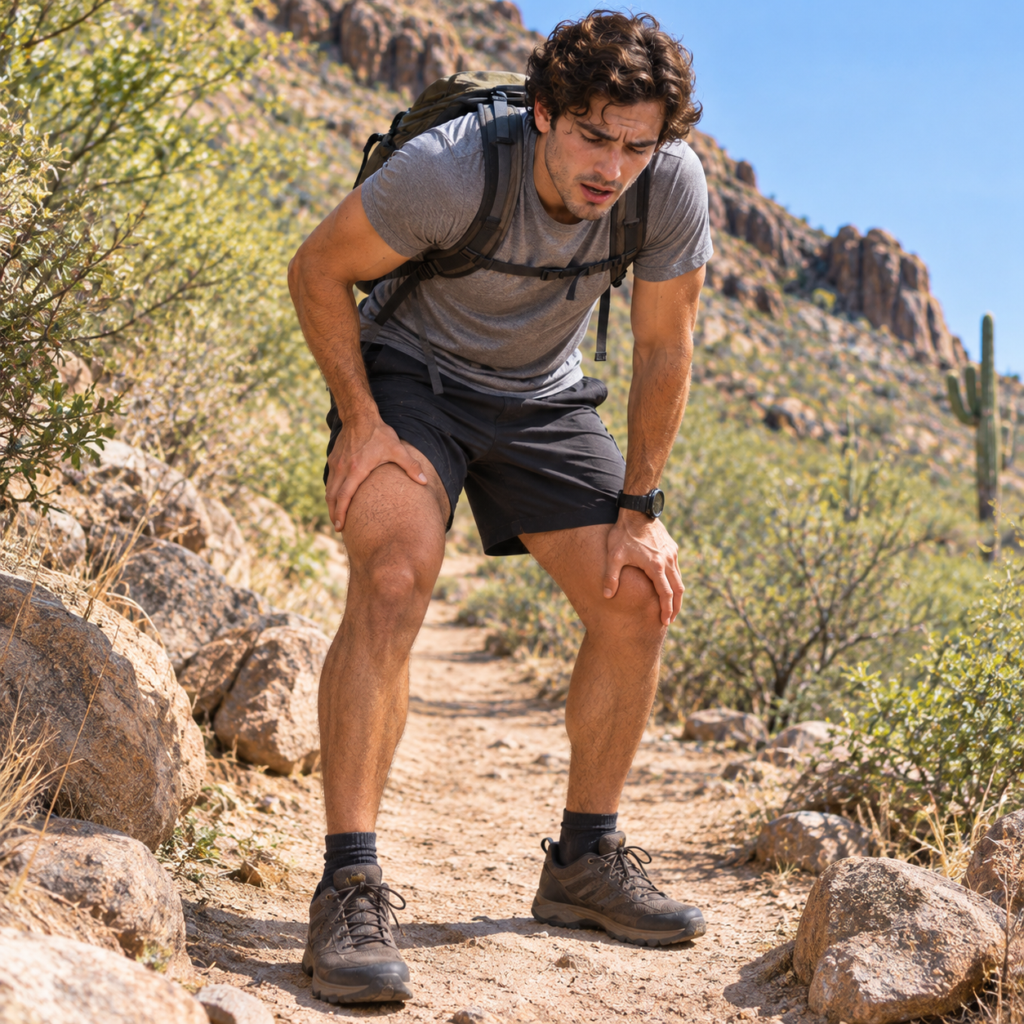
Leg pain commonly occurs after a long day. Working a ten-hour shift on a hard floor, moving furniture over the weekend, taking the first long hike of the season, or sitting on a cramped flight can leave the thighs feeling heavy and the calves throbbing. Some people experience leg fatigue and soreness most evenings, even when they have not been particularly active. Climbing stairs may require more effort than usual, and lying down may provide only limited relief.
According to MedlinePlus, part of the U.S. National Library of Medicine, leg pain is often caused by muscle cramps, overuse, or injuries, including strains, tendinitis, shin splints, and stress fractures. Arthritis and gout can cause joint inflammation. Nerve damage from diabetes or heavy alcohol use may lead to burning or aching, while a slipped disk in the lower back can send pain down the leg. Circulation problems are another possible cause: peripheral artery disease causes pain while walking that eases with rest, and a deep-vein blood clot can make one leg swell and hurt. Most everyday leg pain results from tired, overworked muscles and responds well to rest and home care.
In Traditional Chinese Medicine, most leg pain is understood as painful obstruction, meaning that something is blocking the flow of Qi and Blood through the leg channels. After an injury or overuse, Qi and Blood accumulate in the strained area, causing sharp, localized pain. When Cold and Dampness enter the muscles and joints, the legs may ache and feel stiff and heavy, with symptoms worsening in cold, damp weather. The Liver nourishes the tendons with Blood, so a deficiency can cause the legs to tire easily, ache at night, and cramp. The Kidney supports the lower back, knees, and bones, so when Kidney energy weakens with age or exhaustion, the legs may feel sore and weak, especially after standing.
The nine points below begin at the hip, travel down the thigh to the knee, and end at the ankle.
What Acupressure Points to Press and Why
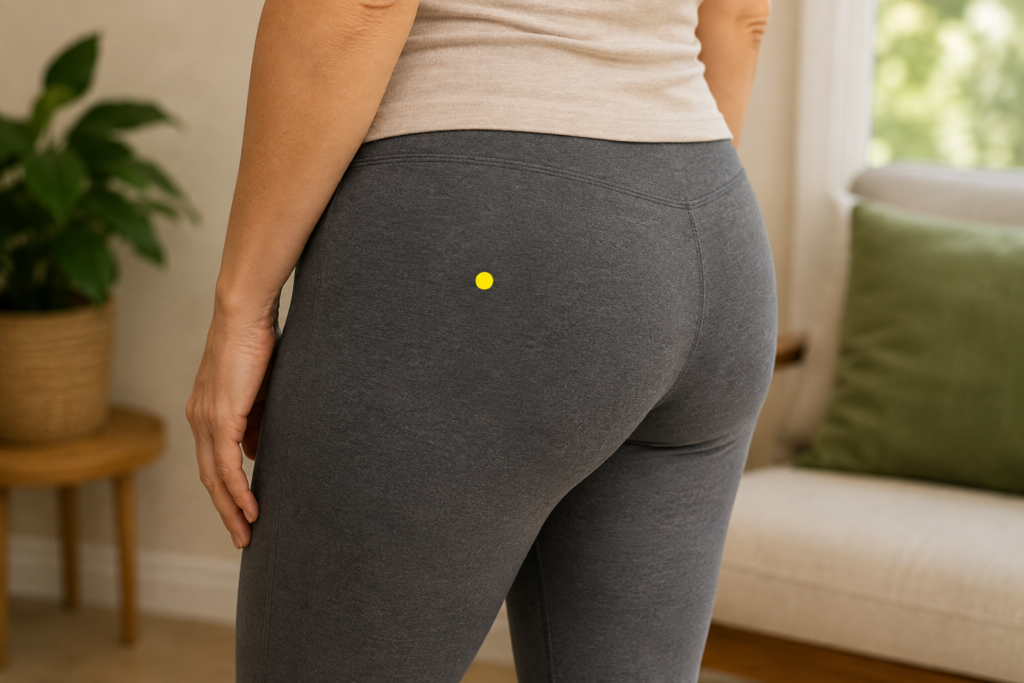
1. Press on GB30 on the buttock to release hip and leg pain. GB30 sits on the side of the buttock, about one third of the way from the large bony bump at the top of the thigh bone to the base of the spine, in the hollow that forms when the buttock muscle is relaxed. Lie on your back with a tennis ball under the point, or lean against a wall with the ball in place, and press into it for one to two minutes on each side. GB30 is called “Huantiao,” the “Jumping Circle.”
GB30 is where the Gallbladder and Bladder channels meet; these channels run along the outside and back of the leg. In Traditional Chinese Medicine, it is one of the most important points for pain that begins in the hip or buttock and travels down the leg.
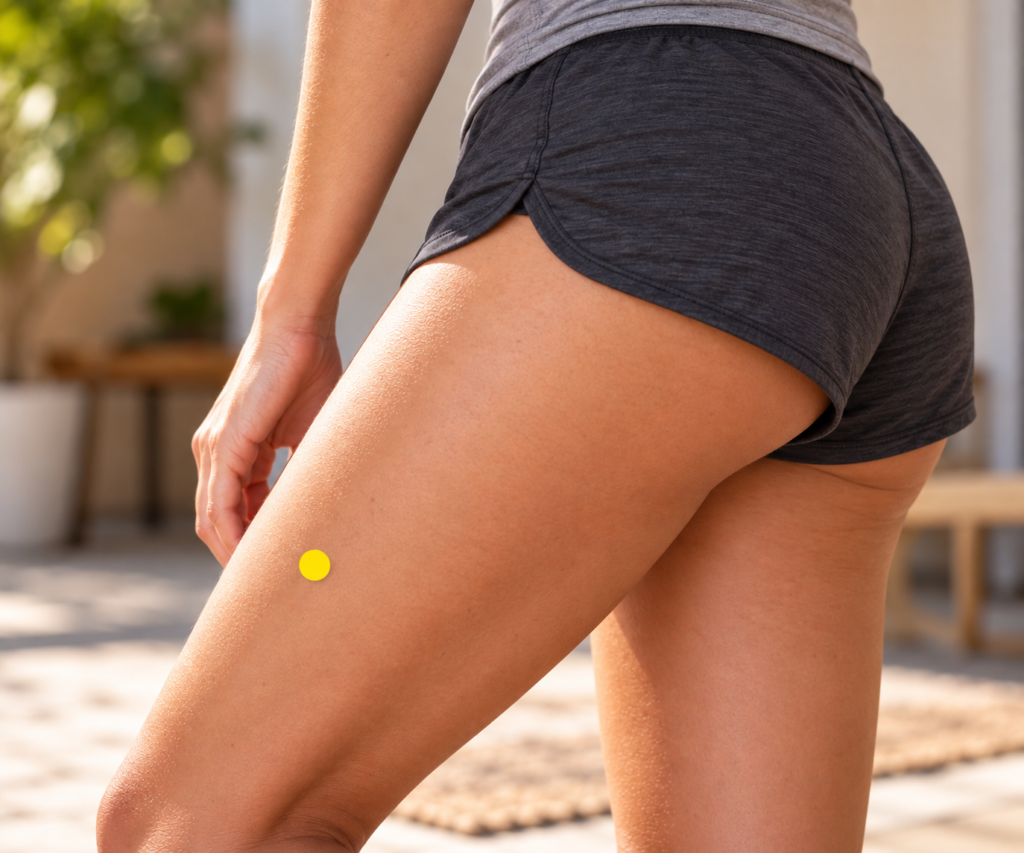
2. Press on GB31 on the outer thigh to ease aching and heaviness. GB31 sits on the outside of the thigh, where the tip of the middle finger touches when standing upright with the arms relaxed at the sides. Press firmly with your thumb or knuckles for one to two minutes on each leg. GB31 is called “Fengshi,” the “Wind Market.”
GB31 expels Wind and Dampness from the legs. It is used to relieve aching, stiffness, and numbness along the outer thigh, as well as weakness and heaviness in the legs.
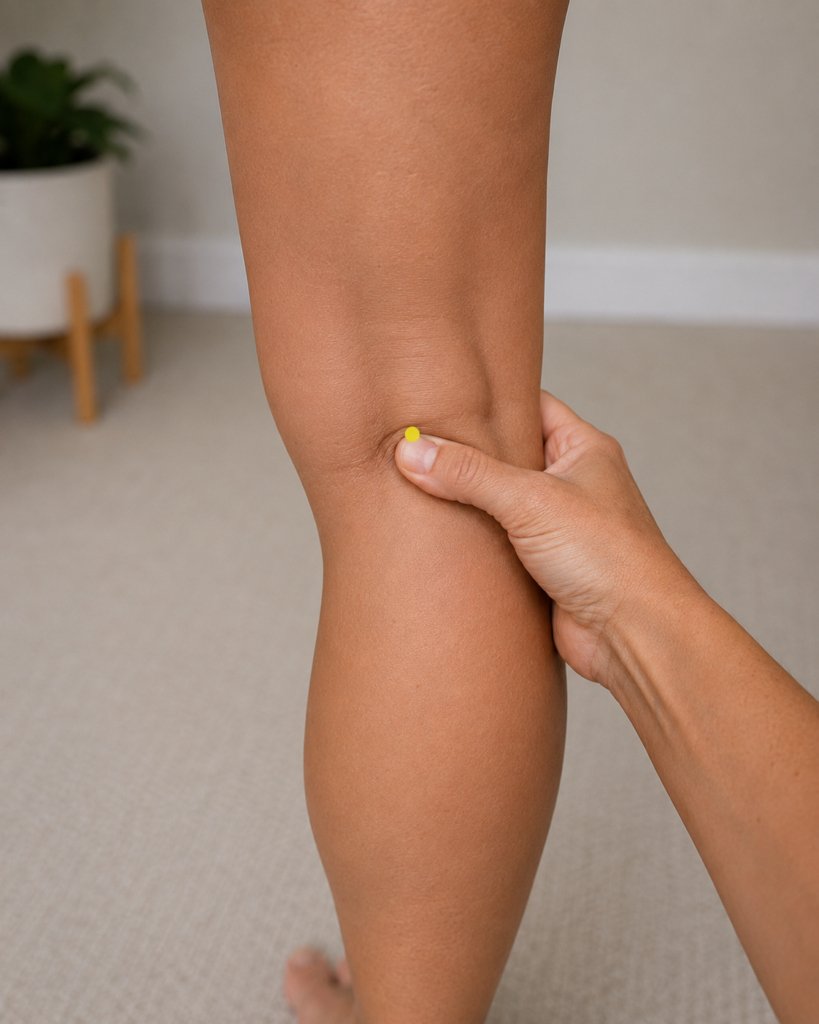
3. Press on BL40 behind the knee to relieve pain along the back of the leg. BL40 sits at the midpoint of the crease on the back of the knee. Sit with the knee slightly bent and press gently with your fingertips for one to two minutes on each leg. BL40 is called “Weizhong,” the “Bend Middle.”
BL40 is the Bladder’s sea point and the back’s command point. It can relieve pain and tightness along the back of the thigh and calf, and is often paired with GB30 when pain travels from the lower back into the leg. Avoid BL40 if there are varicose veins or swelling behind the knee.
4. Press on GB34 below the outer knee to relax the tendons. GB34 sits on the outer side of the lower leg, in the hollow just in front of and below the small bony bump below the outside of the knee. Press firmly with your thumb for one to two minutes on each leg. GB34 is called “Yanglingquan,” the “Yang Mound Spring.”
GB34 is the influential point for the tendons. It helps ease tight, cramping muscles and stiff knees, and is used for nearly any leg pain involving muscle or tendon tension.
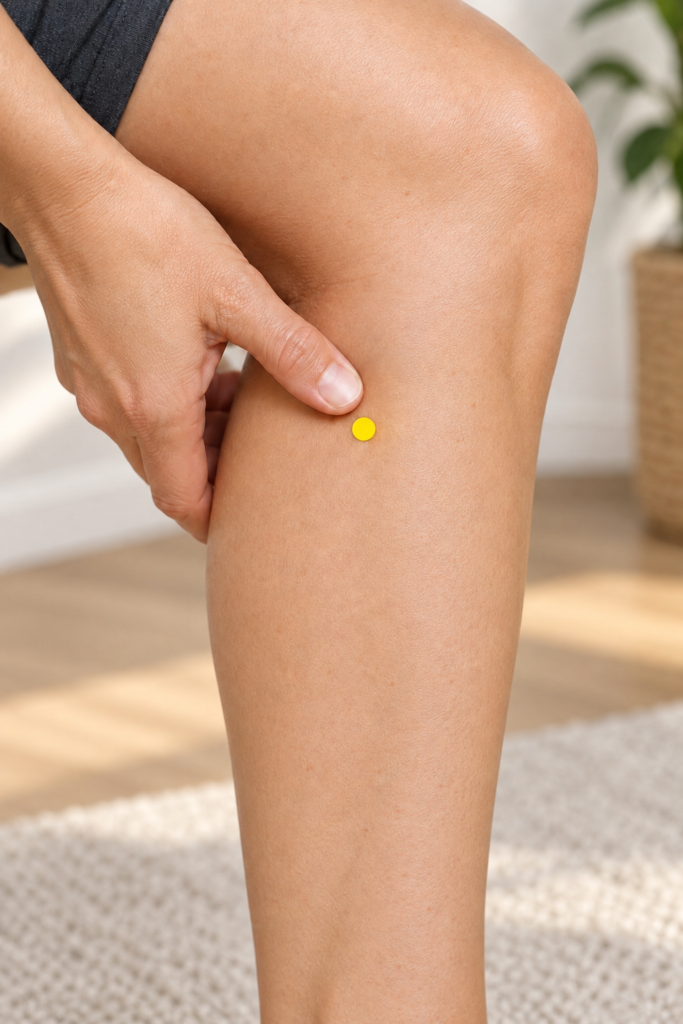
5. Press on ST36 below the knee to strengthen tired legs. ST36 sits on the front of the lower leg, four finger-widths below the bottom of the kneecap and one finger-width toward the outside of the shinbone. Press firmly with your thumb for one to two minutes on each leg. ST36 is called “Zusanli,” the “Leg Three Miles.”
ST36 is the Stomach’s sea point. Its name comes from an old belief that pressing it gave a tired traveler enough strength to walk three more miles. It builds Qi and Blood and is used for legs that feel weak, heavy, or worn out.
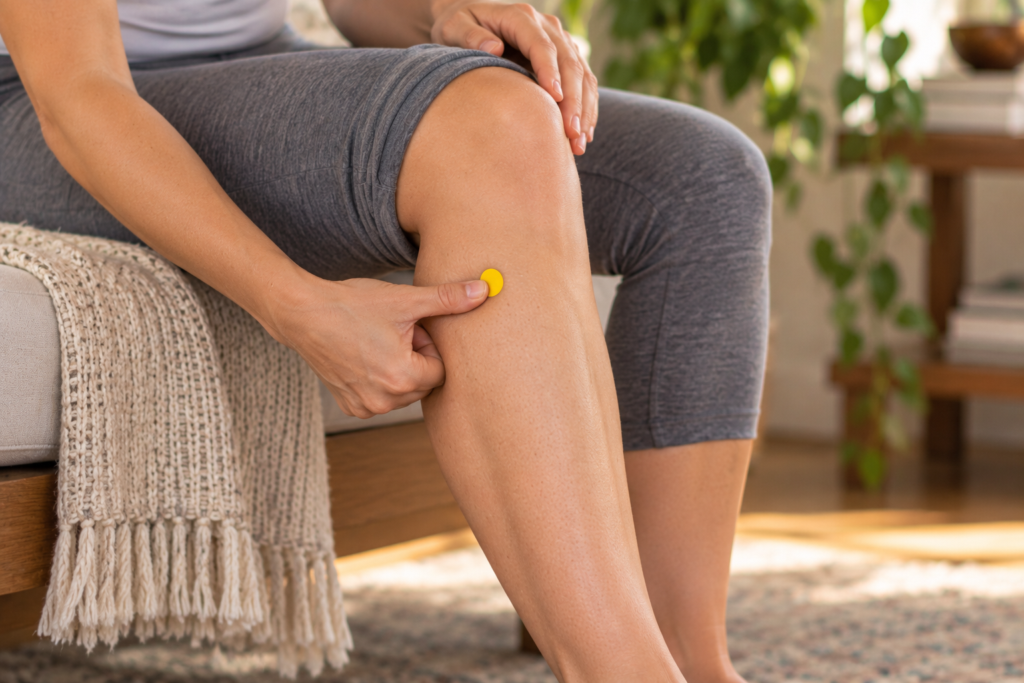
6. Press on BL57 on the calf to release a tight, sore calf. BL57 sits on the back of the lower leg, about halfway between the knee crease and the heel, in the hollow just below where the two bulges of the calf muscle meet. Press firmly with your thumb for one to two minutes on each leg. BL57 is called “Chengshan,” the “Support the Mountain.”
BL57 is a classic point for calf pain, cramps, and the deep ache that follows a long day on your feet. It also helps relax the tendons extending down to the heel.
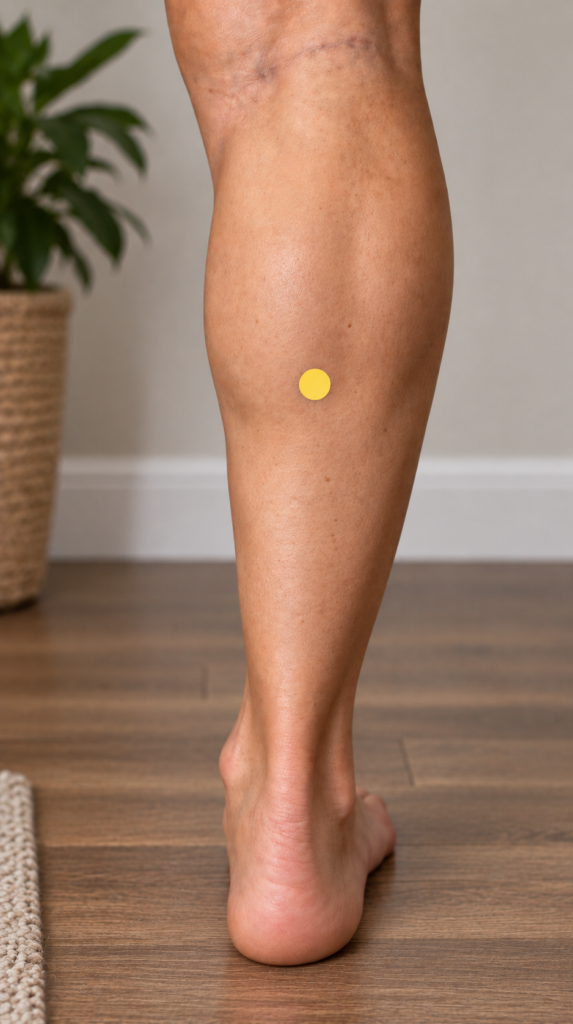
7. Press on SP6 above the inner ankle to nourish the Blood. SP6 sits on the inside of the lower leg, four finger-widths above the tip of the inner ankle bone, just behind the edge of the shinbone. Press firmly with your thumb for one to two minutes on each leg. SP6 is called “Sanyinjiao,” the “Three Yin Intersection.” SP6 is avoided during pregnancy.
SP6 is where the Spleen, Liver, and Kidney channels intersect. It nourishes the Blood that feeds the muscles and tendons, drains Dampness, and helps with legs that ache at night or feel heavy and swollen.
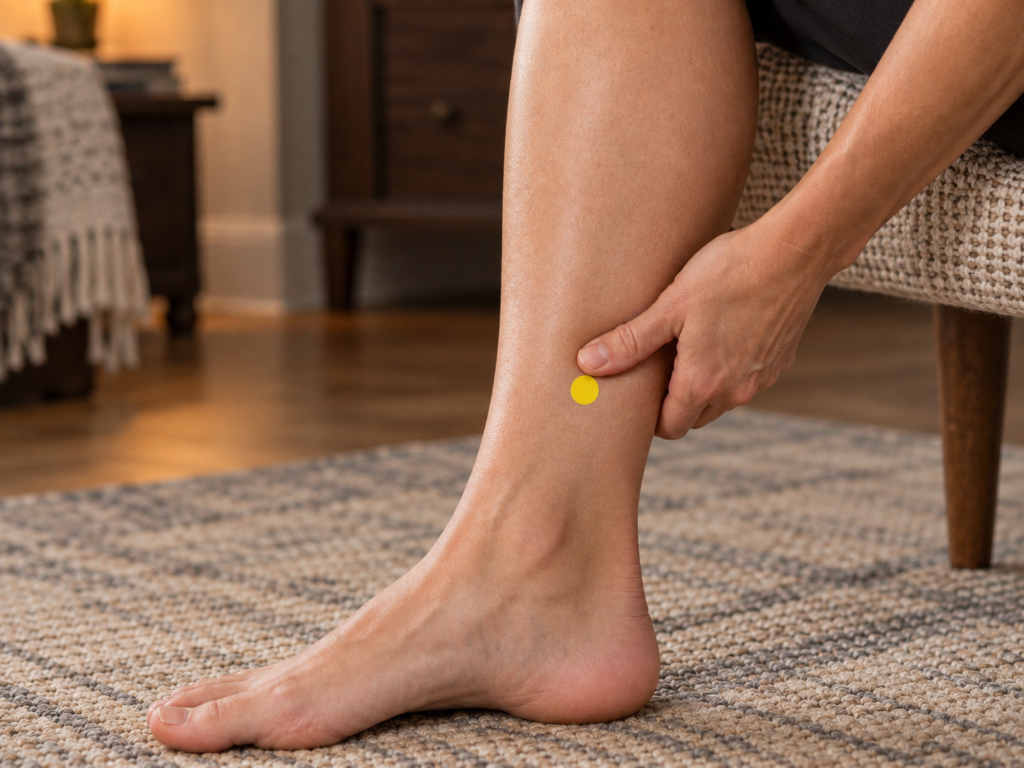
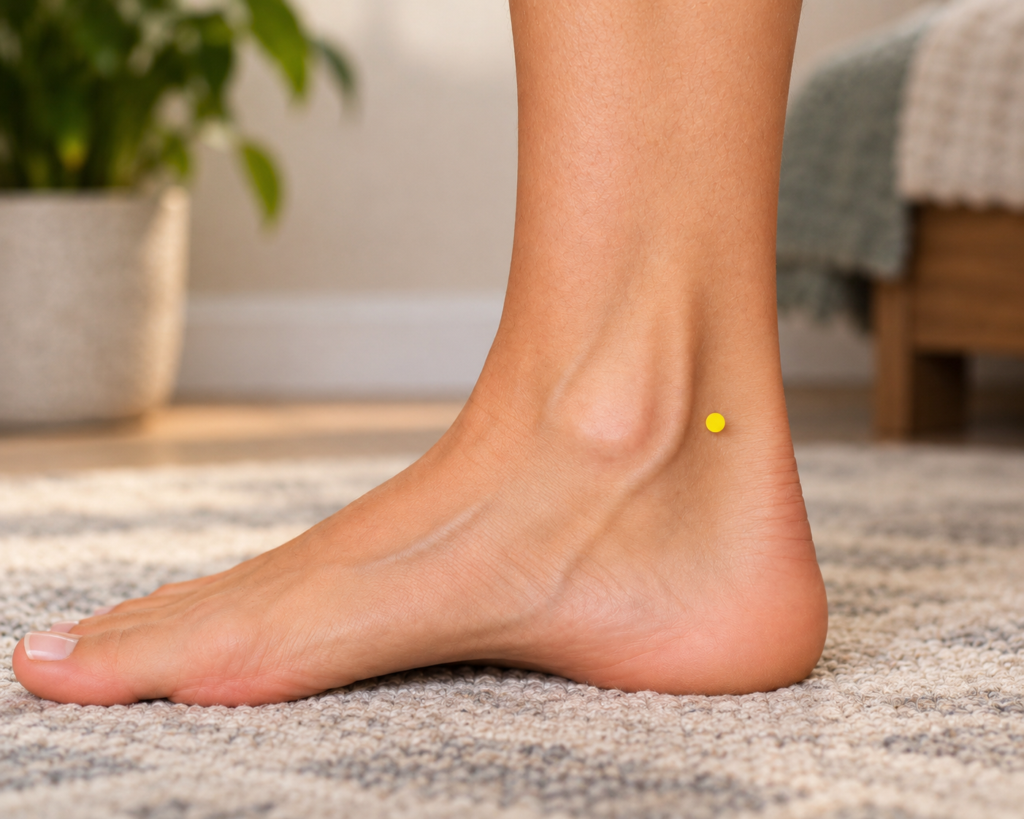
8. Press on BL60 behind the outer ankle to ease pain down the leg. BL60 sits in the hollow between the tip of the outer ankle bone and the Achilles tendon. Press with moderate pressure for one to two minutes on each ankle. BL60 is called “Kunlun,” the “Kunlun Mountains.” BL60 is avoided during pregnancy.
BL60 moves Qi and Blood along the entire Bladder channel, from the head down the back to the foot. It is used for pain along the back of the leg, stiff ankles, and aches after a long walk or run.
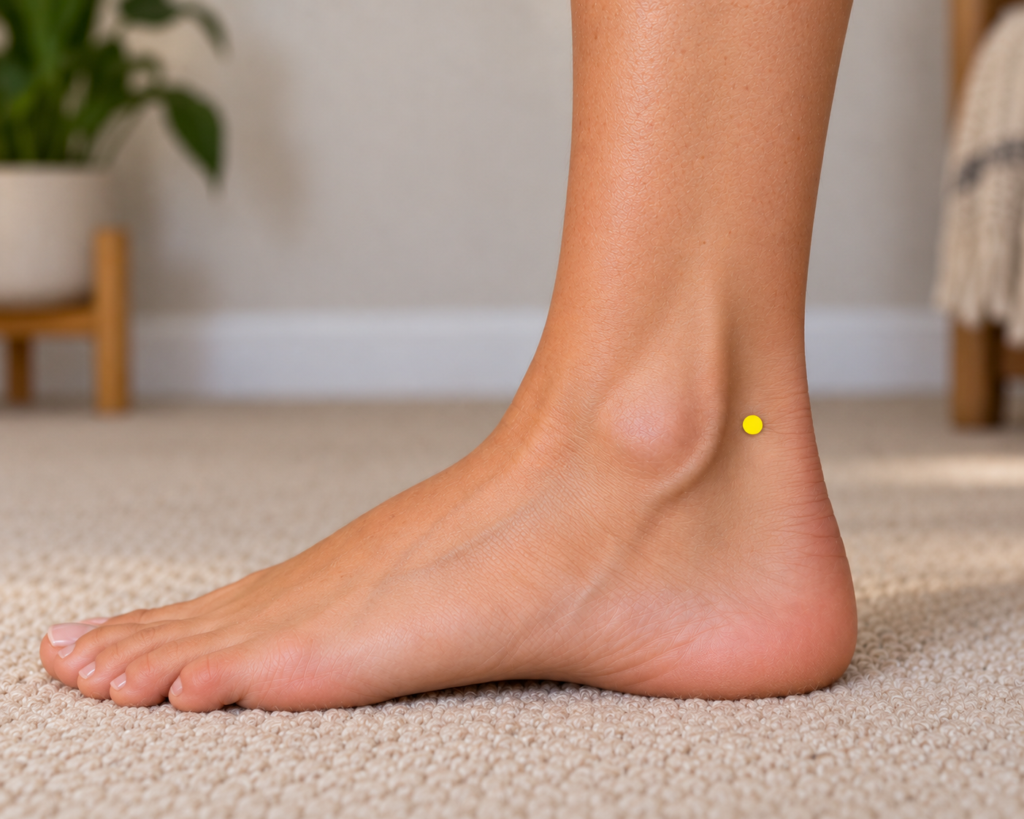
9. Press on KI3 behind the inner ankle to strengthen the legs. KI3 sits in the hollow between the tip of the inner ankle bone and the Achilles tendon, directly across from BL60. Press with moderate pressure for one to two minutes on each ankle. KI3 is called “Taixi,” the “Great Stream.”
KI3 is the Kidney’s source point. It supports Kidney energy, which helps keep the knees, legs, and bones strong, and may help with leg pain accompanied by weakness, fatigue, or a sore lower back.
Why These Acupressure Points Work
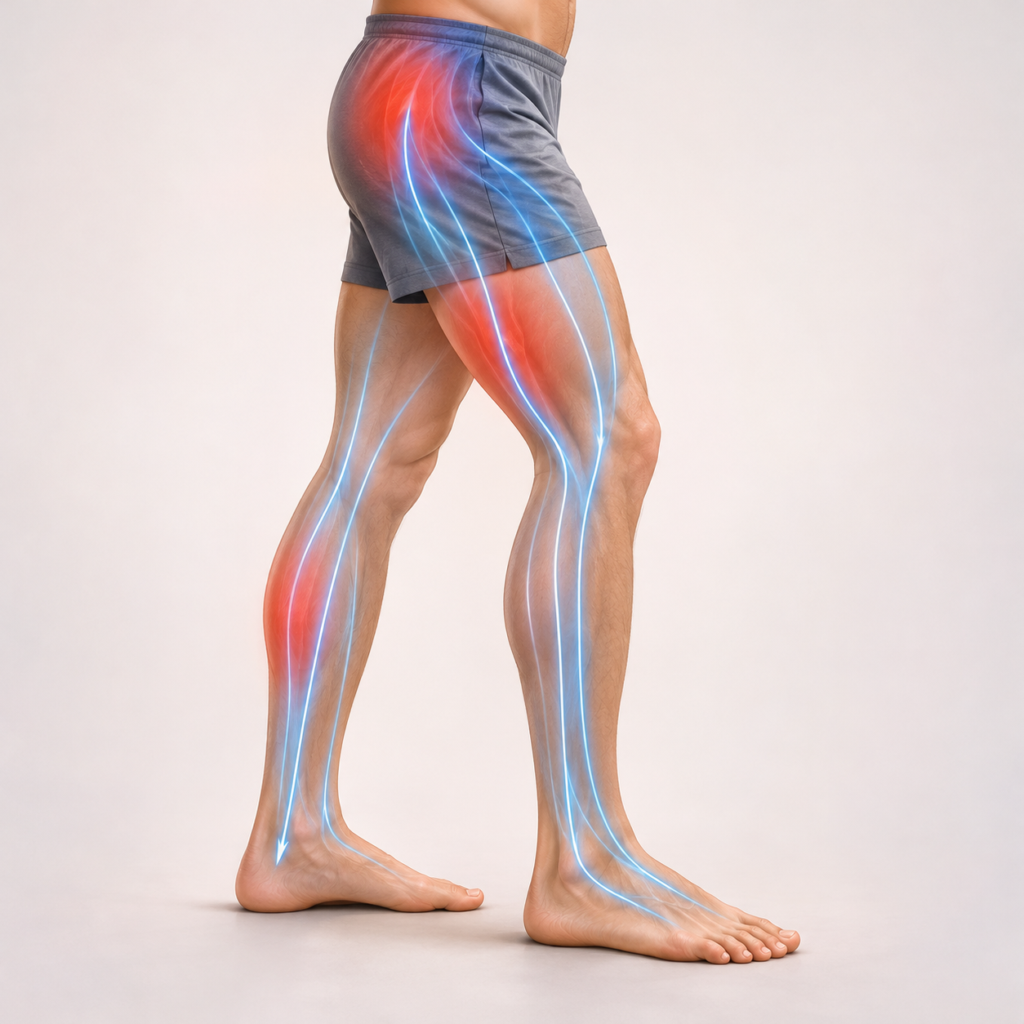
From a Traditional Chinese Medicine perspective, leg pain occurs when Qi and Blood cannot flow freely through the legs, or when there is insufficient Blood and Kidney energy to nourish the muscles and tendons. Strain, cold, and dampness can obstruct the channels, while long periods of sitting or standing further slow the flow. The Gallbladder channel runs along the outside of the leg, the Bladder channel along the back, and the Stomach channel along the front; points on these channels help move what is stuck. Points on the Spleen and Kidney channels help restore what the legs need to recover.
The nine points work together to relieve pain and support recovery:
- GB30, GB31, and GB34 release the hip, outer thigh, and tendons.
- BL40, BL57, and BL60 relieve pain and tightness along the back of the leg.
- ST36 and SP6 build Qi and Blood and drain Dampness.
- KI3 strengthens tired, weak legs.
How to Properly Use These Acupressure Points
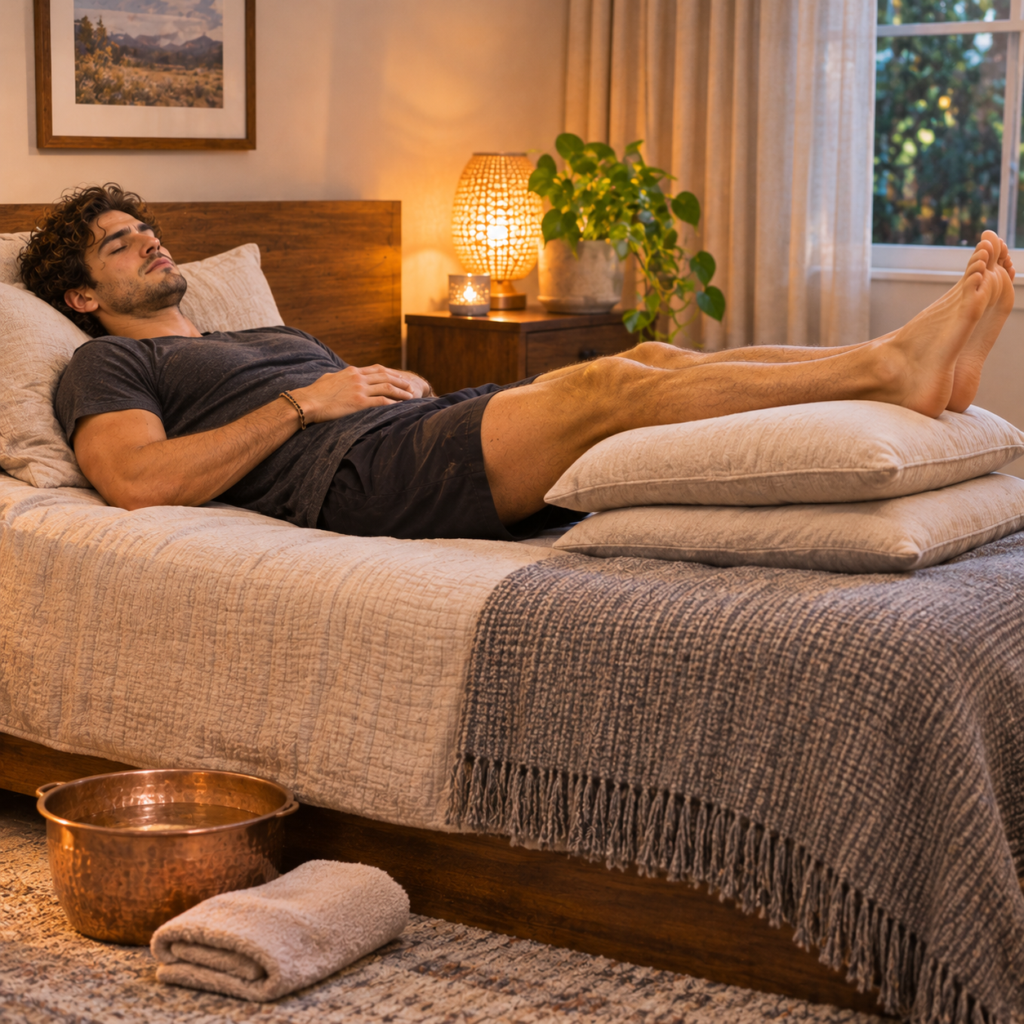
Acupressure can help relieve leg pain at the end of the day, when your legs are most tired, or as a brief routine after extended activity.
- Apply pressure to all nine points once daily, holding each point for one to two minutes on both legs. Sitting on the floor or a bed with your legs extended can make the leg points easier to reach.
- If the pain originates in the hip or buttock, begin with GB30 and BL40, then work down to GB34 and BL60.
- For tired, heavy legs at night, focus on ST36, SP6, and KI3. Then rest for ten minutes with your legs raised on a pillow.
- Apply firm pressure to the thigh and calf, and less pressure behind the knee and around the ankles. During pregnancy, avoid SP6 and BL60. Do not apply pressure over varicose veins or any area that is swollen, red, or warm.
Daily habits can make a big difference in leg pain. During long periods of sitting, get up and walk for a few minutes every hour. During long periods of standing, shift your weight or march in place. Wear supportive, cushioned shoes and replace athletic shoes when they’re worn out. Gradually build up new exercise rather than doing too much at once, and stretch your calves, hamstrings, and hips afterward. Drink enough water throughout the day. Traditional Chinese Medicine also recommends keeping your legs warm and dry, as Cold and Dampness can settle into the joints. Before bed, a warm foot soak or compress on sore muscles can ease stiffness and help you sleep.
Learn more about acupressure for muscle spasms.
When to Get Professional Help
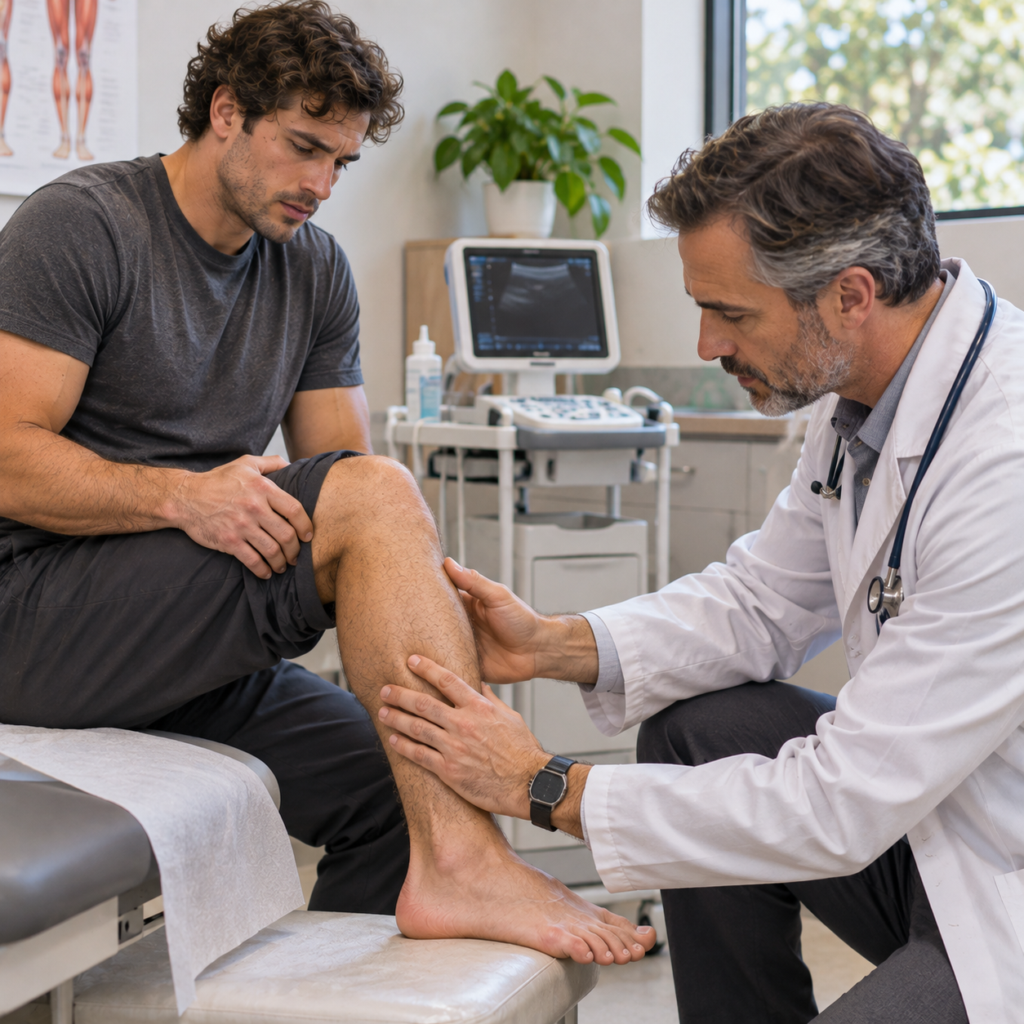
Call 911 if leg pain or swelling occurs with shortness of breath or chest pain, as this may mean a blood clot has reached the lungs. Seek urgent care for a leg that is swollen, warm, red, or tender, which may indicate a deep vein blood clot, or if a leg turns cold, pale, or blue. See a doctor for leg pain that starts when walking and eases with rest; pain after an injury that makes it difficult to bear weight; a red, warm area with fever; or pain accompanied by numbness, tingling, or weakness. Leg pain with loss of bladder or bowel control is an emergency. Anyone with diabetes, a history of blood clots, or heart disease should have new leg pain checked promptly. A doctor should also review leg pain that begins after starting a new medication; don’t stop taking the medicine first.
Acupressure is a gentle, supportive practice for leg pain. It complements, and does not replace, diagnosis and medical care.
For related health concerns, acupressure for leg cramps, acupressure for calf pain, and acupressure for restless legs are companion posts.
Above and Beyond Acupuncture offers acupuncture, cupping, and lifestyle coaching at the North Frank Lloyd Wright Boulevard location in Scottsdale.
Schedule an appointment online to start your healing journey.
The points above are only as effective as the technique used to apply them. Where to press, how firmly, and for how long all affect the result. For a full breakdown of how to perform acupressure properly at home, read Performing Acupressure in 3 Easy Steps.
About the Publisher
Paul Kerzner, L.Ac., is a licensed acupuncturist and board-certified herbalist, as well as the founder of Above and Beyond Acupuncture in Scottsdale. His own journey from chronic patient to practicing acupuncturist shapes his commitment to providing honest, clinically grounded information about acupuncture and Traditional Chinese Medicine. Learn more about Paul and his clinical approach on the About Us page.