Key Takeaways
- Pain in the middle back is felt between the bottom of the shoulder blades and the lower edge of the rib cage. It most often results from muscle strain, poor posture, or sitting for long periods.
- In Traditional Chinese Medicine, the middle back contains the back transport points of the Liver, Spleen, and diaphragm, so stress, digestive issues, and stagnant Qi and Blood can all manifest there as tightness and pain.
- Nine acupressure points along the mid-back, forearm, hand, legs, and foot help relax tight muscles, move stagnant Qi and Blood, and ease pain that radiates toward the ribs.
- Staying active throughout the day, sitting upright, and taking breaks from long periods at a desk or behind the wheel help the points work.
- Middle back pain with chest pressure, shortness of breath, sweating, or nausea is an emergency. Call 911.

The middle back is the part of the spine between the bottom of the shoulder blades and the last ribs. Because the ribs hold it in place, it moves less than the neck or lower back, so it’s easy to forget about until it starts hurting. Pain can build after a long day at the computer, a long drive, or time spent bent over in the garden. It may feel like a dull band across your back, a hot spot beside the spine, or a sharp pain that wraps toward the ribs when you take a deep breath or twist.
According to MyHealth.Alberta.ca, a Government of Alberta health information site, upper and middle back pain is commonly caused by strain, overuse, or injury to the muscles, ligaments, and discs that support the spine. Poor posture is another frequent cause. Less commonly, pain results from pressure on a spinal nerve, a herniated disc, spinal stenosis, a fractured vertebra, spinal curvature such as scoliosis or kyphosis, arthritis in the spine’s small joints, or myofascial pain affecting the muscles and connective tissue. Rarely, it may be caused by gallbladder disease, infection, or cancer. The site recommends staying active rather than resting in bed for more than a couple of days, using heat or cold, and improving posture and lifting habits.
Most pain in the middle back comes from how the body is used day to day. The muscles that hold your shoulders back and keep your spine straight can become tired and tight when you lean your head toward a screen or round your shoulders while driving. Stress can make this worse: shallow breathing can stiffen the muscles between your ribs when your chest doesn’t move much.
Traditional Chinese Medicine places considerable emphasis on the middle back. The Bladder channel runs along both sides of the spine, with back transport points along its path where each organ’s energy reaches the surface. The points for the diaphragm, Liver, Gallbladder, Spleen, and Stomach are all located across the middle back. Long-term stress can cause Liver Qi to stagnate, often creating tension in the muscles beside the spine and along the ribs. A strain or sudden twist can trap Qi and Blood in one area, causing sharp, localized pain. When the Spleen is weakened by irregular meals or overwork, the muscles receive less nourishment, and the back may feel tired and sore after sitting. Cold and drafts can also settle in the back, causing stiffness, especially in the morning.
The nine points below begin at the middle of the back, move to the arm and hand, and end at the legs and foot.
What Acupressure Points to Press and Why
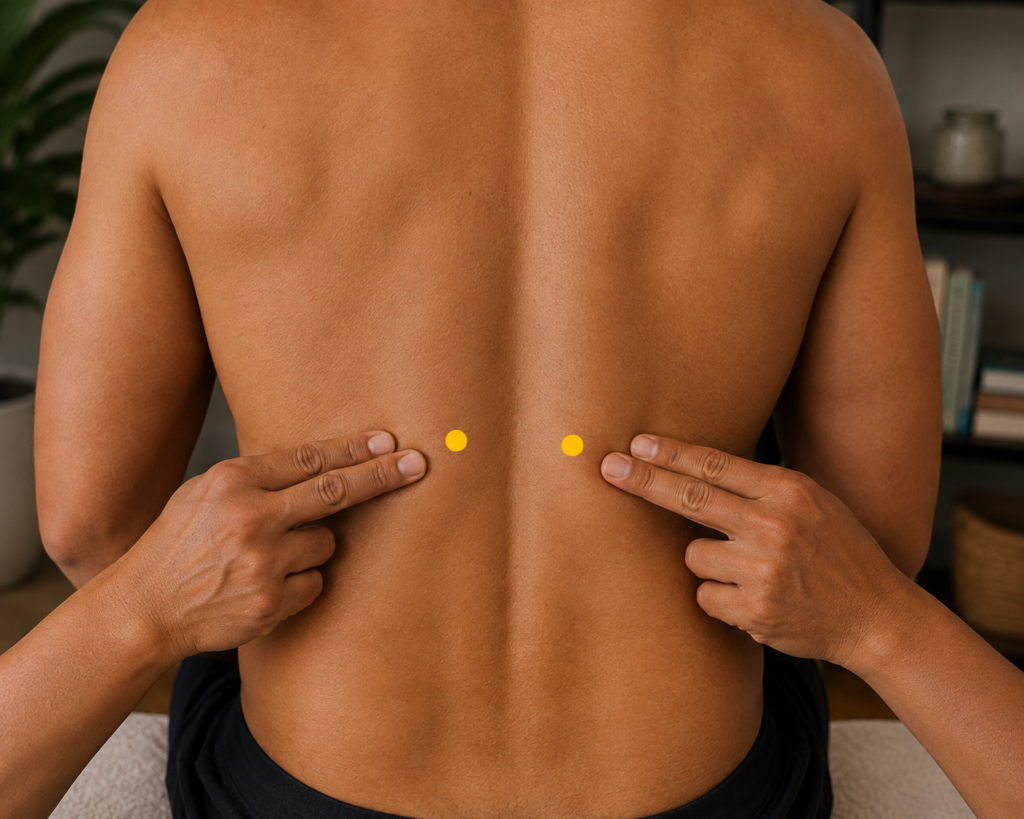
1. Press on BL17 level with the bottom of the shoulder blades to move stuck Blood. BL17 sits on the back, two finger-widths out from the spine on each side, level with the bottom tips of the shoulder blades. Since it is hard to reach by hand, lie on your back with a tennis ball under the point, or lean against a wall with the ball in place, and press into it for one to two minutes on each side. BL17 is called “Geshu,” the “Diaphragm Shu.”
BL17 is the influential point of Blood and the diaphragm’s back transport point. It moves Blood that has pooled after strain or long hours of sitting, and eases sharp, fixed pain in the mid-back, as well as the tight band that can wrap toward the ribs.
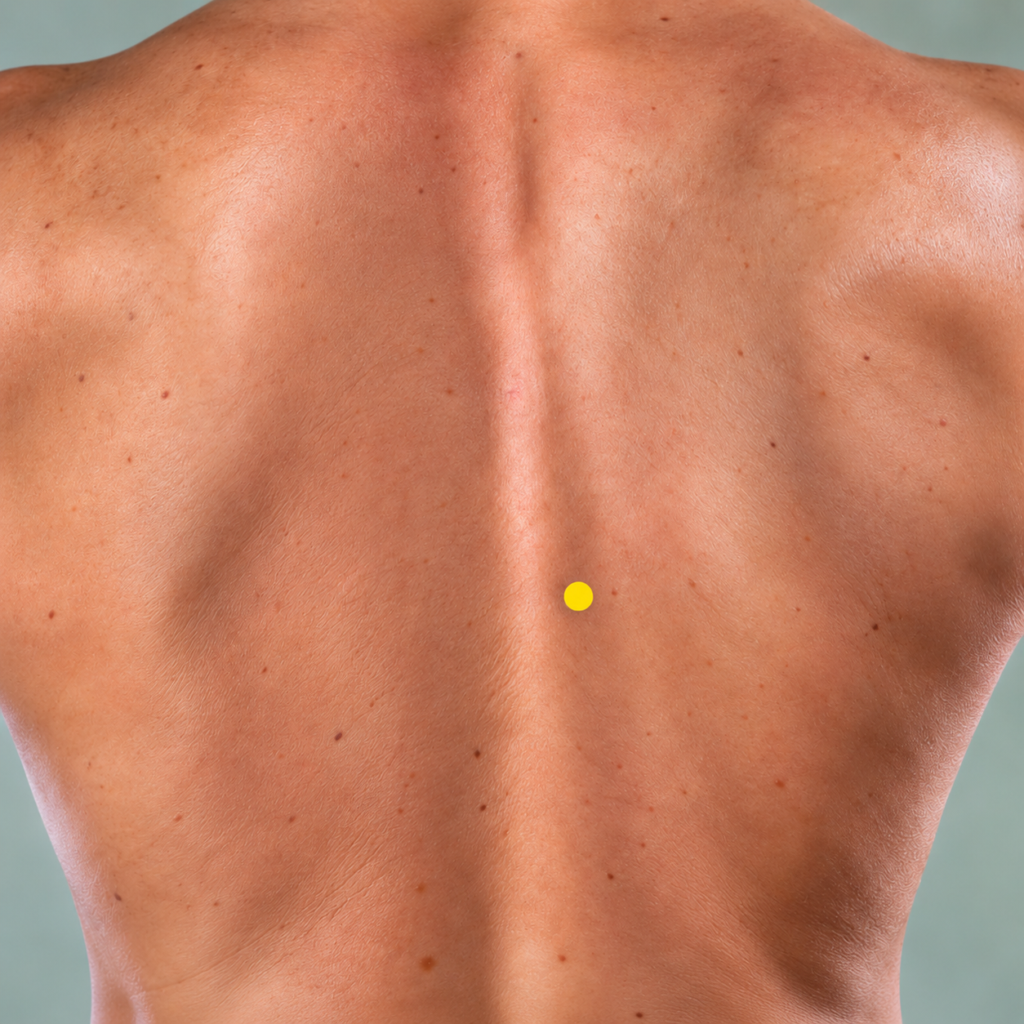
2. Press on BL18 below the shoulder blades to release tension from stress. BL18 sits two finger-widths out from the spine on each side, two vertebrae below BL17. Use a tennis ball against the floor or a wall and press into the point for one to two minutes on each side. BL18 is called “Ganshu,” the “Liver Shu.”
BL18 is the Liver’s back transport point. It eases the muscle tension stress leaves along the spine and may help when middle back pain worsens during difficult, busy weeks or comes with irritability and shallow breathing.
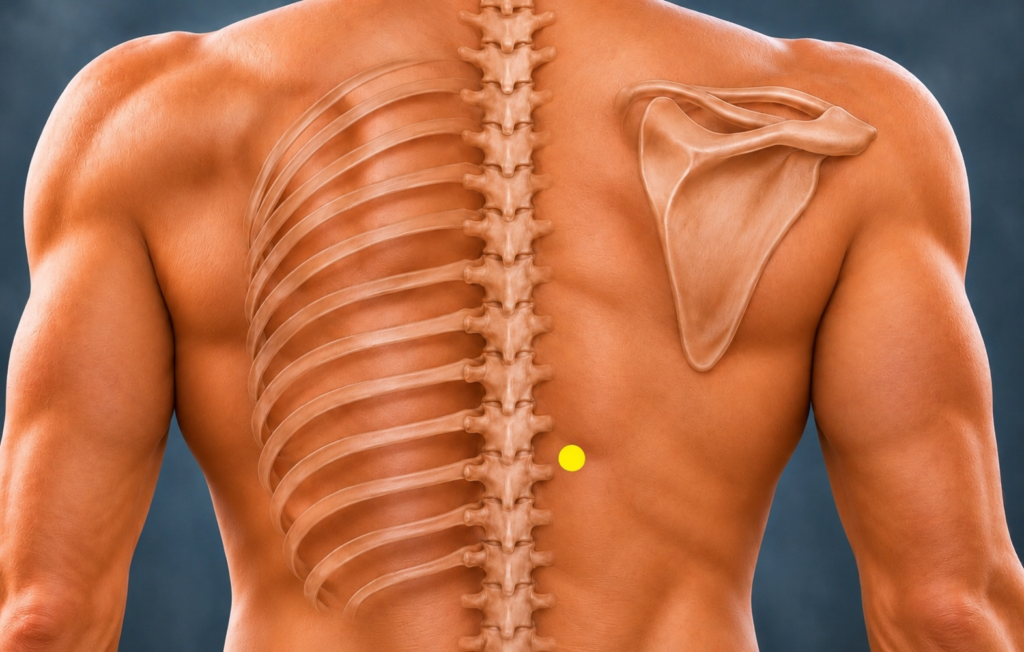
3. Press on BL20 near the bottom of the rib cage to strengthen tired back muscles. BL20 sits two finger-widths out from the spine on each side, two vertebrae below BL18, just above the bottom of the rib cage. Use a tennis ball against the floor or a wall and press into the point for one to two minutes on each side. BL20 is called “Pishu,” the “Spleen Shu.”
In Traditional Chinese Medicine, BL20 is the Spleen’s back transport point, associated with nourishing the muscles. It may help ease middle-back fatigue and aching after sitting, especially when accompanied by fatigue, bloating, or a heavy feeling.
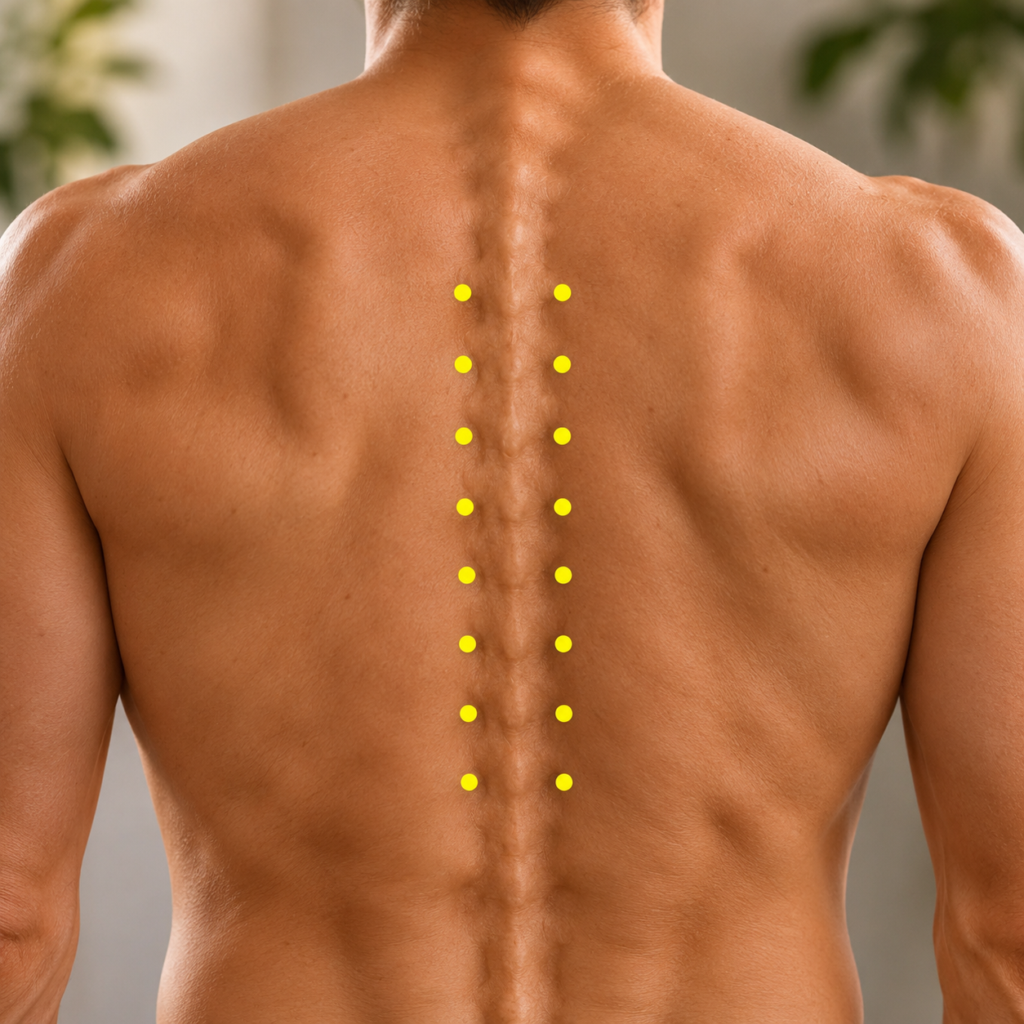
4. Press on Huatuojiaji beside the spine to release the deep muscles of the middle back. Huatuojiaji is a row of points that runs down both sides of the spine, about half a finger-width out from the center of each vertebra. For middle back pain, focus on the points between the bottom of the shoulder blades and the bottom of the rib cage. Lie on two tennis balls placed in a sock, one on each side of the spine, and slowly roll up and down this section for one to two minutes, pausing on any tender spots. Huatuojiaji is named after Hua Tuo, a famous physician of ancient China.
Huatuojiaji is a group of extra points traditionally used to relieve pain and stiffness along the spine. Pressing them releases the small, deep muscles that stabilize each vertebra, which can remain tight long after the larger back muscles relax.
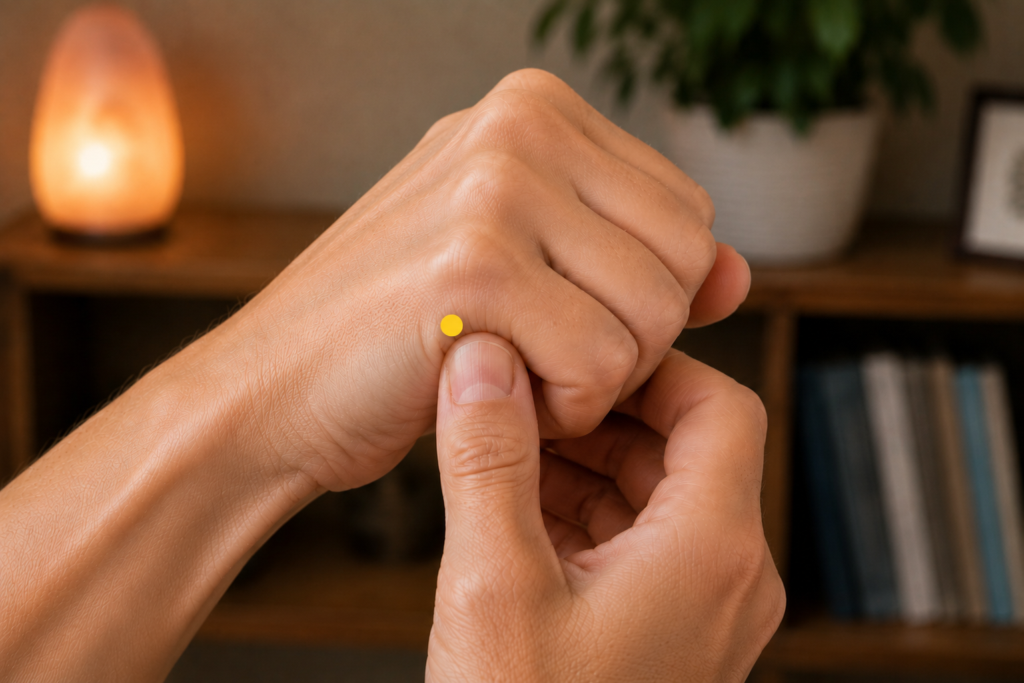
5. Press on SI3 on the outer edge of the hand to relax the spine. SI3 sits on the outer edge of the hand, just below the knuckle of the little finger, at the end of the crease that forms when the hand makes a loose fist. Press firmly with the thumb of your other hand for one to two minutes on each hand. SI3 is called “Houxi,” the “Back Stream.”
SI3 opens the Governing Vessel, which runs up the center of the spine. In Traditional Chinese Medicine, it is considered one of the most important points for stiffness and pain along the spine, and it is easy to press during a break at a desk.
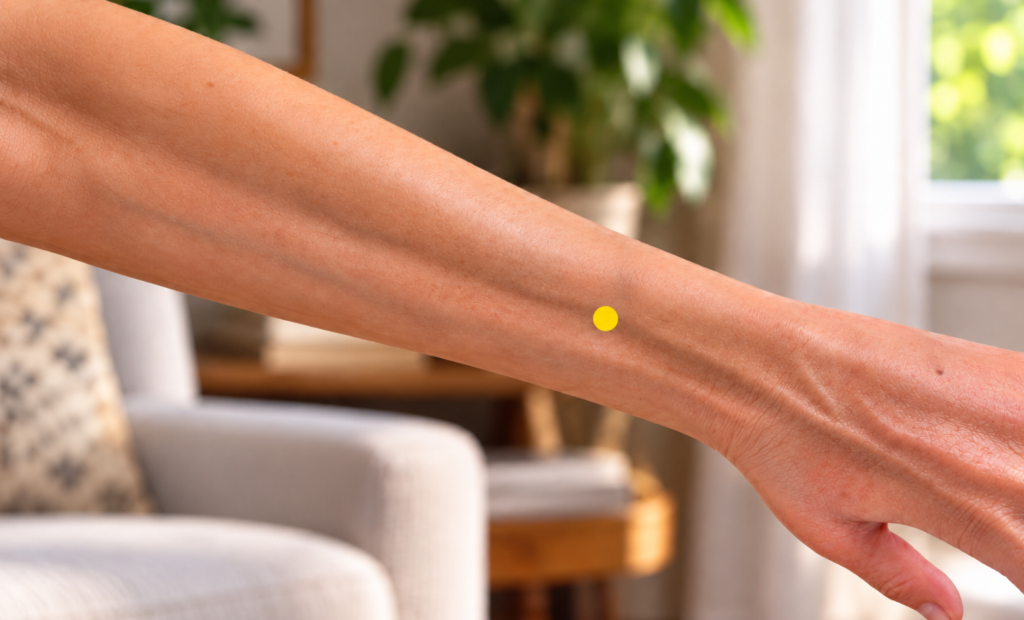
6. Press on TE6 on the back of the forearm to ease pain along the ribs. TE6 sits on the back of the forearm, four finger-widths above the wrist crease, between the two forearm bones. Press firmly with the thumb of your other hand for one to two minutes on each arm. TE6 is called “Zhigou,” the “Branch Ditch.”
TE6 is a classic point for pain along the sides of the ribs. It can help when middle back pain wraps around to the front of the body or catches with a deep breath, cough, or twist.
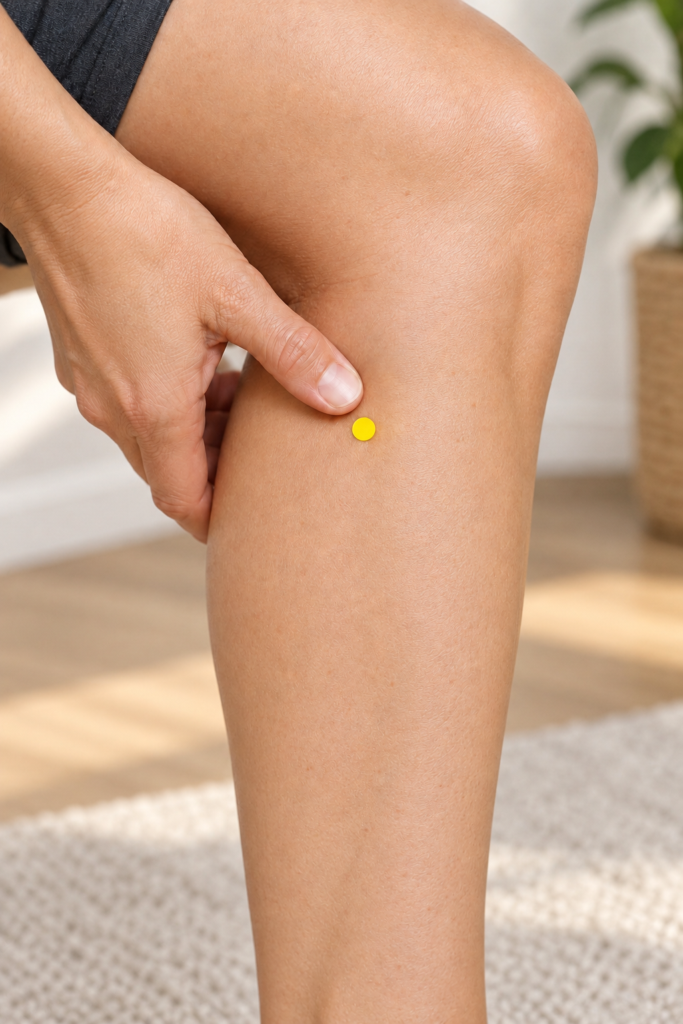
7. Press on GB34 below the outer knee to relax the tendons and ribs. GB34 sits on the outer side of the lower leg, in the hollow just in front of and below the small bony bump below the outside of the knee. Press firmly with your thumb for one to two minutes on each leg. GB34 is called “Yanglingquan,” the “Yang Mound Spring.”
GB34 is the influential point of the tendons. Its channel runs along the sides of the body, helping ease tight muscles, back stiffness, and pain along the ribs. It pairs well with TE6.
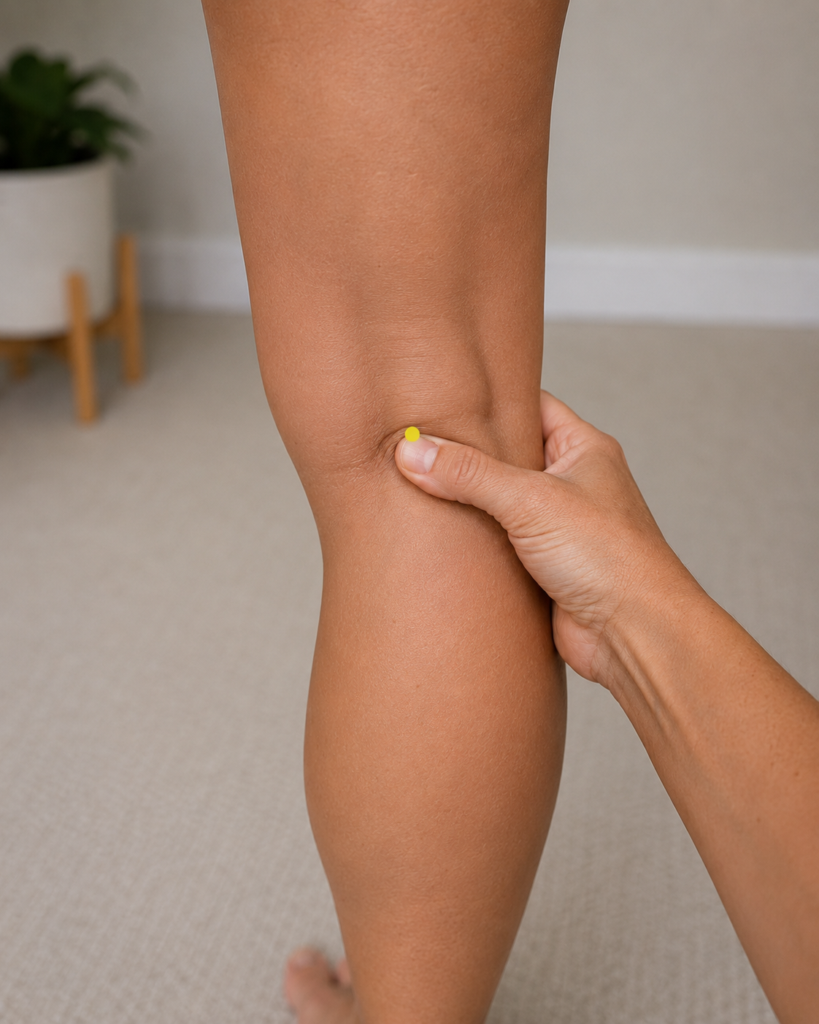
8. Press on BL40 behind the knee to relieve back pain. BL40 sits at the midpoint of the crease on the back of the knee. Sit with the knee slightly bent and press gently with your fingertips for one to two minutes on each leg. BL40 is called “Weizhong,” the “Bend Middle.”
BL40 is the Bladder’s sea point and the back’s command point. Because the Bladder channel runs along both sides of the spine, BL40 helps release the entire back, including the middle. Avoid BL40 if there are varicose veins or swelling behind the knee.
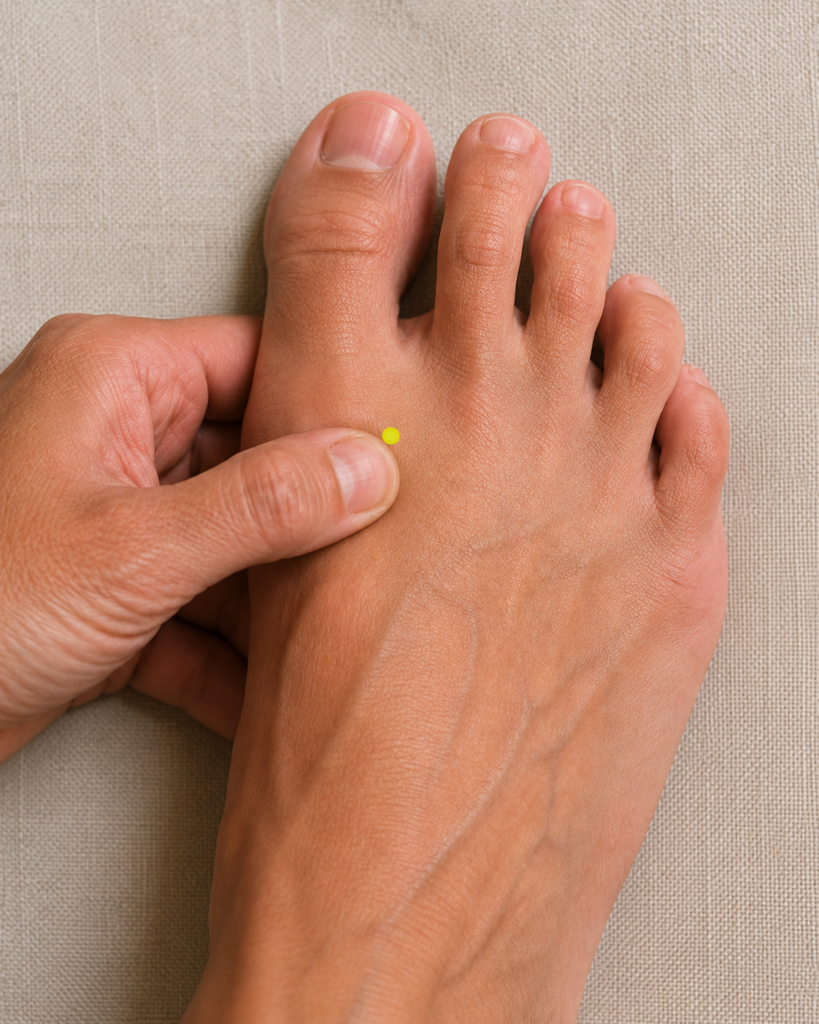
9. Press on LV3 on the top of the foot to let go of stress. LV3 sits on the top of the foot, in the hollow where the bones of the big toe and second toe meet, about two finger-widths back from the web between the toes. Press firmly with your thumb for one to two minutes on each foot. LV3 is called “Taichong,” the “Great Rushing.”
LV3 is the Liver’s source point. It moves stagnant Liver Qi, eases tension and irritability, and works with BL18 to release stress that tightens the middle back.
Why These Acupressure Points Work
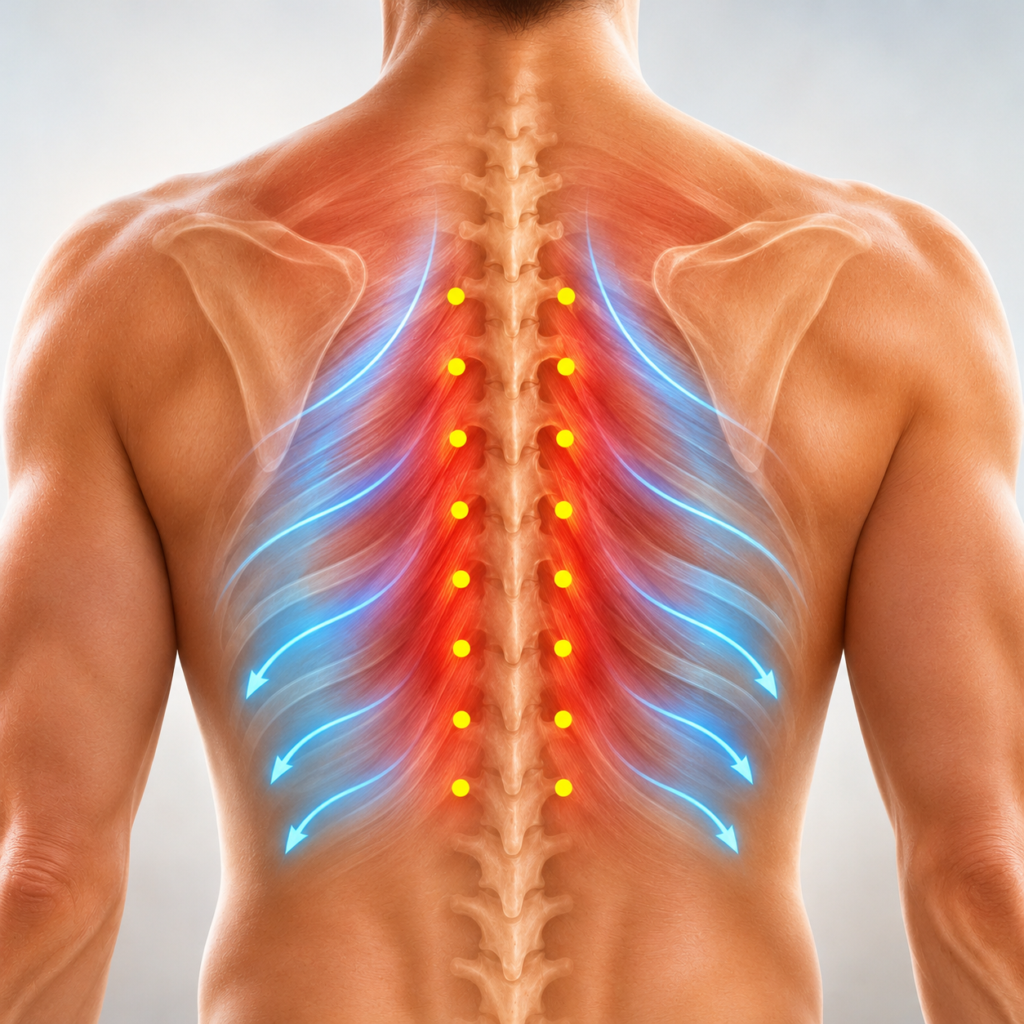
From a Traditional Chinese Medicine perspective, the middle back reflects the state of the organs whose back transport points are located there. Stress binds Liver Qi, a weak Spleen leaves the muscles tired, and strain traps Qi and Blood alongside the spine. Back points work directly on the muscles and those organs, while points on the arms and legs move Qi through channels that run along the spine and the sides of the ribs. Pressing both sets of points helps release the back from the inside and outside.
The nine points work together to alleviate middle back pain:
- BL17, BL18, and BL20 release the muscles beside the spine and support the diaphragm, Liver, and Spleen.
- Huatuojiaji loosens the deep muscles around each vertebra.
- SI3 and BL40 relax the spine and the length of the back.
- TE6, GB34, and LV3 ease rib pain and relieve stress.
How to Properly Use These Acupressure Points
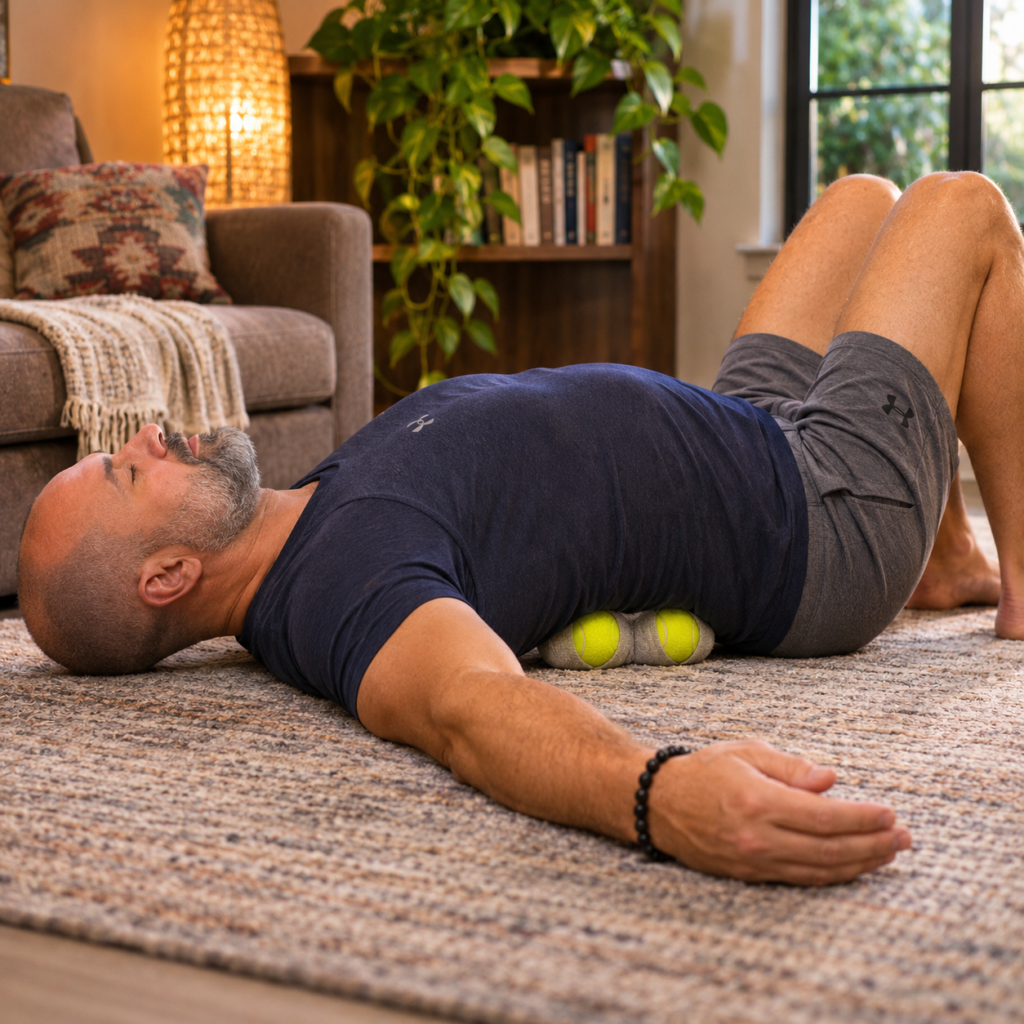
Acupressure can help relieve middle back pain after the workday, while hand and forearm points can be pressed during short desk breaks.
- Lie on your back on a carpeted floor or a firm bed, with tennis balls positioned beneath BL17, BL18, BL20, and Huatuojiaji. Breathe slowly into your ribs for one to two minutes at each level.
- During extended periods of sitting, apply pressure to SI3 and TE6 on both arms. Then sit upright and roll your shoulders back several times.
- If stress is a concern, finish the protocol by activating LV3 on both feet.
- Apply steady, moderate pressure to the back, firm pressure to the arms and legs, and gentle pressure behind the knee. Do not roll directly over the bony center of the spine, and discontinue if the pressure causes sharp or shooting pain.
Small adjustments to your daily posture can help ease strain on your middle back. Set your computer screen so its top is at eye level, and use a laptop stand with a separate keyboard. Sit with your hips all the way back in the chair, with a small cushion behind your middle back. Every 30 to 45 minutes, get up to walk, stretch, and take a few deep breaths to expand your ribs. When carrying bags, use both shoulders or switch sides often. Always lift with your knees bent and your back straight. Gentle activities such as walking, swimming, or yoga can help keep your spine flexible, while staying in bed for more than a day or two can actually worsen back pain. Traditional Chinese Medicine suggests keeping your back covered in cold or drafty places and applying a warm compress to stiff muscles.
You can learn more about preventing back pain by practicing healthy posture.
When to Get Professional Help
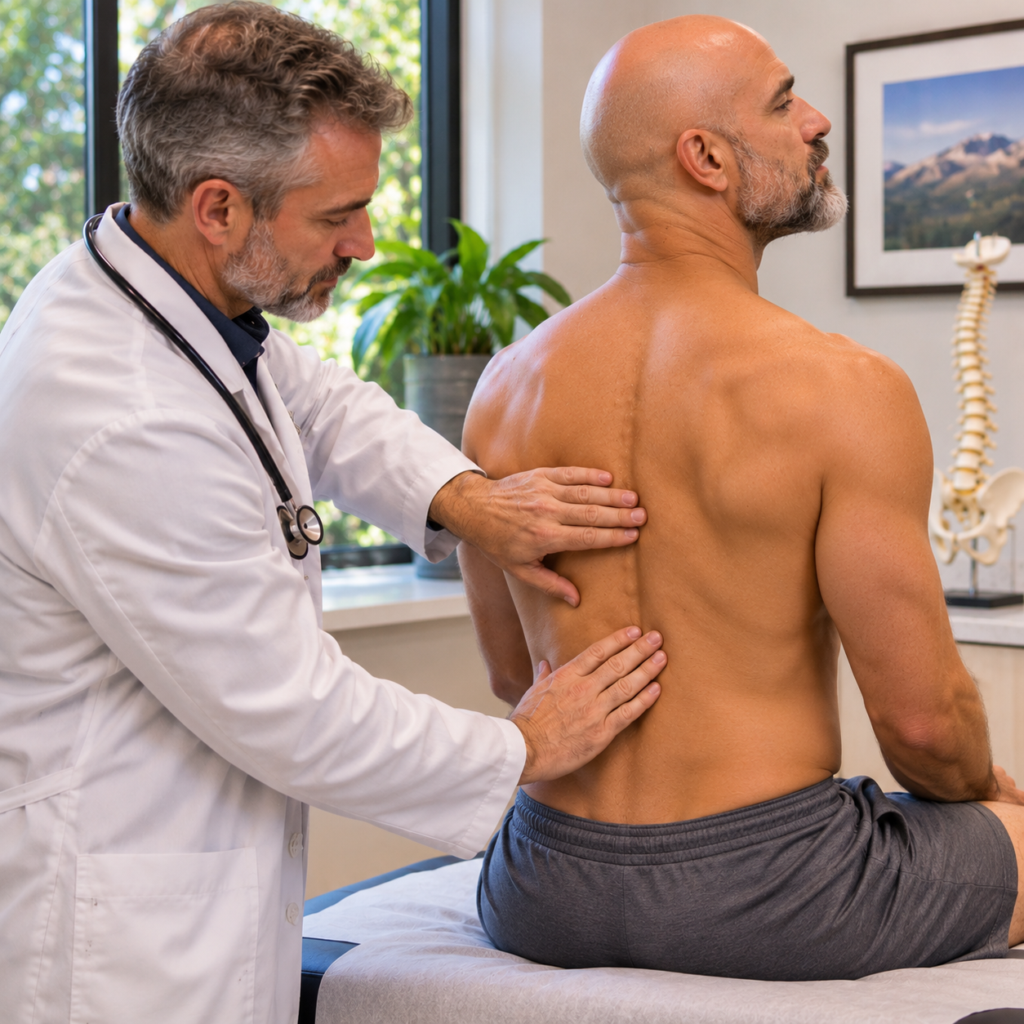
Call 911 if middle back pain occurs with chest pressure, shortness of breath, sweating, nausea, or pain spreading to the arm or jaw, as these may be signs of a heart attack. Call 911 as well after a fall, accident, or blow to the back that causes severe pain, weakness, numbness, or difficulty moving. Contact a doctor right away for new loss of bladder or bowel control, new or worsening numbness or weakness in the legs, or back pain accompanied by a fever, painful urination, or other signs of a urinary tract infection. See a doctor if the pain doesn’t improve within one to two weeks, wakes you at night, occurs with unexplained weight loss, develops under your right shoulder blade after eating fatty meals, or starts suddenly in someone with osteoporosis or a history of cancer.
Acupressure is a gentle, supportive practice for middle back pain. It complements, and does not replace, diagnosis and medical care.
For related concerns, acupressure for upper back pain, acupressure for lower back pain, and acupressure for a stiff neck are companion pieces.
Above and Beyond Acupuncture offers acupuncture, cupping, and lifestyle coaching at the North Frank Lloyd Wright Boulevard location in Scottsdale.
Schedule an appointment online to start your healing journey.
The points above are only as effective as the technique used to apply them. Where to press, how firmly, and for how long all affect the result. For a full breakdown of how to perform acupressure properly at home, read Performing Acupressure in 3 Easy Steps.
About the Publisher
Paul Kerzner, L.Ac., is a licensed acupuncturist and board-certified herbalist, as well as the founder of Above and Beyond Acupuncture in Scottsdale. His own journey from chronic patient to practicing acupuncturist shapes his commitment to providing honest, clinically grounded information about acupuncture and Traditional Chinese Medicine. Learn more about Paul and his clinical approach on the About Us page.