Key Takeaways
- A stye is a red, tender bump along the edge of the eyelid. It forms when an oil gland near the lashes becomes blocked and usually starts to improve within a few days.
- At home, use warm compresses and gently clean the eyelid. Keep hands, makeup, and contact lenses away from the eye, and never squeeze the bump.
- In Traditional Chinese Medicine, a stye is understood as Wind-Heat or Heat rising from the Spleen and Stomach to the eyelid; classical texts call it a “needle eye.”
- Nine acupressure points on the head, ears, arms, legs, and feet help clear Heat, reduce swelling and soreness, and support healing without touching the stye.
- Seek medical care for eye pain, changes in vision, or redness and swelling that spreads across the eyelid or face.

A stye often begins as a small sore spot along the lash line, much like having an eyelash stuck in your eye. By the next day, your eyelid may be red and puffy along the edge, blinking may sting, and a yellow head may form in the center of the bump. Wearing makeup, using contact lenses, or spending long hours in front of a screen can also become more difficult until the stye clears up.
According to Nemours KidsHealth, a stye is a red, sometimes painful bump that forms on the eyelid when an oil gland near the eyelashes becomes clogged with old oil, dead skin cells, and bacteria. Common symptoms include swelling, redness, tenderness, and tearing. Warm compresses and eyelid cleaning should help it start improving within a few days. Nemours recommends wearing glasses until the stye heals, removing all eye makeup before bed, and calling a doctor if it does not improve, worsens, or is accompanied by eye pain, vision changes, or spreading swelling and redness.
A stye on the outer edge of the eyelid usually develops a head, drains on its own, and heals. A stye deeper in the lid may take longer to clear up. Squeezing or popping it can push bacteria deeper and spread the infection, so gentle heat is safer than pressure.
Traditional Chinese Medicine has recognized styes for centuries, calling them a “needle eye” because of the small, sharp head that forms on the eyelid. In this view, the eyelids are connected to the Spleen and Stomach. Eating many spicy, fried, or sweet foods, staying up late, or feeling stressed can create Heat in these organs, which may rise to the eyelids and cause a red, swollen bump. When a stye appears during a cold or after exposure to dry, windy weather, it is considered Wind-Heat from outside. Styes that recur are often thought to indicate a Spleen weakened by overwork and poor sleep.
The points begin on the head and ears, move to the arms, and end on the legs and feet. None are located on the eyelid itself.
What Acupressure Points to Press and Why
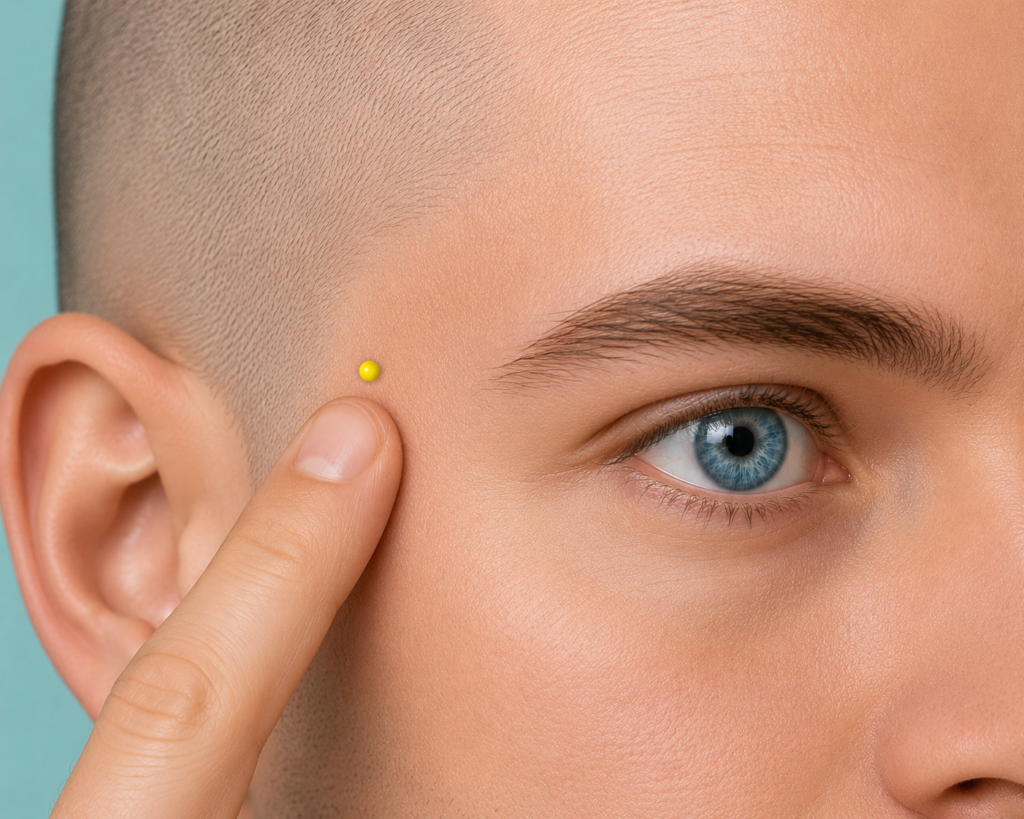
1. Press on Taiyang at the temple to ease pressure around the eye. Taiyang sits in the soft hollow at the temple, about one thumb-width behind the point midway between the outer end of the eyebrow and the outer corner of the eye. Press gently in small circles with your middle fingertips for one to two minutes on both sides. Taiyang means the “Supreme Yang.”
Taiyang is an extra point traditionally used for red, sore, swollen eyes. It clears Heat around the eye and eases the throbbing, tight feeling that may come with a stye.
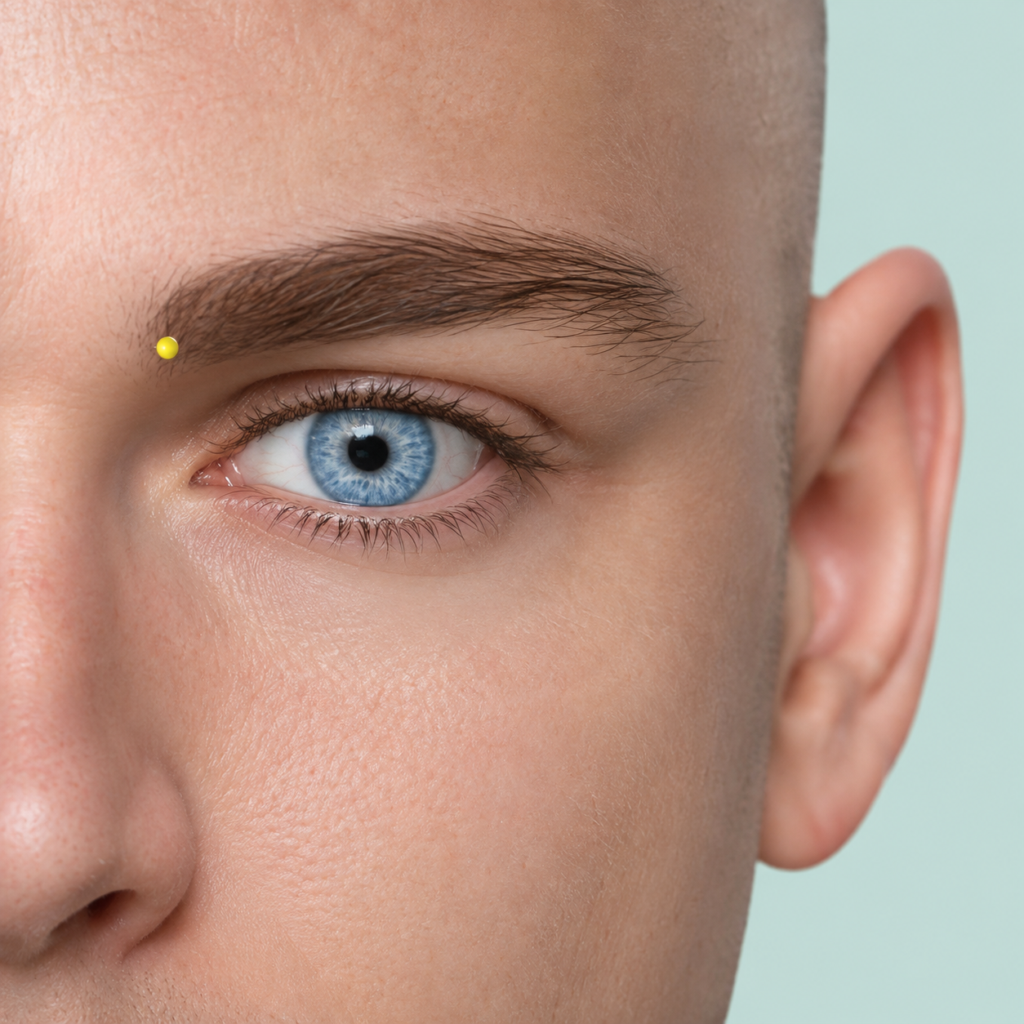
2. Press on BL2 at the inner end of the eyebrow to clear the eye. BL2 sits in the small notch at the inner end of the eyebrow, directly above the inner corner of the eye. Press gently with your index fingertips for one minute on both sides, and skip the side with the stye if the area feels tender. BL2 is called “Zanzhu,” the “Gathered Bamboo.”
BL2 is a classic acupressure point for eye problems such as redness, tearing, and swollen lids. Apply pressure to the brow bone, not the eyelid.
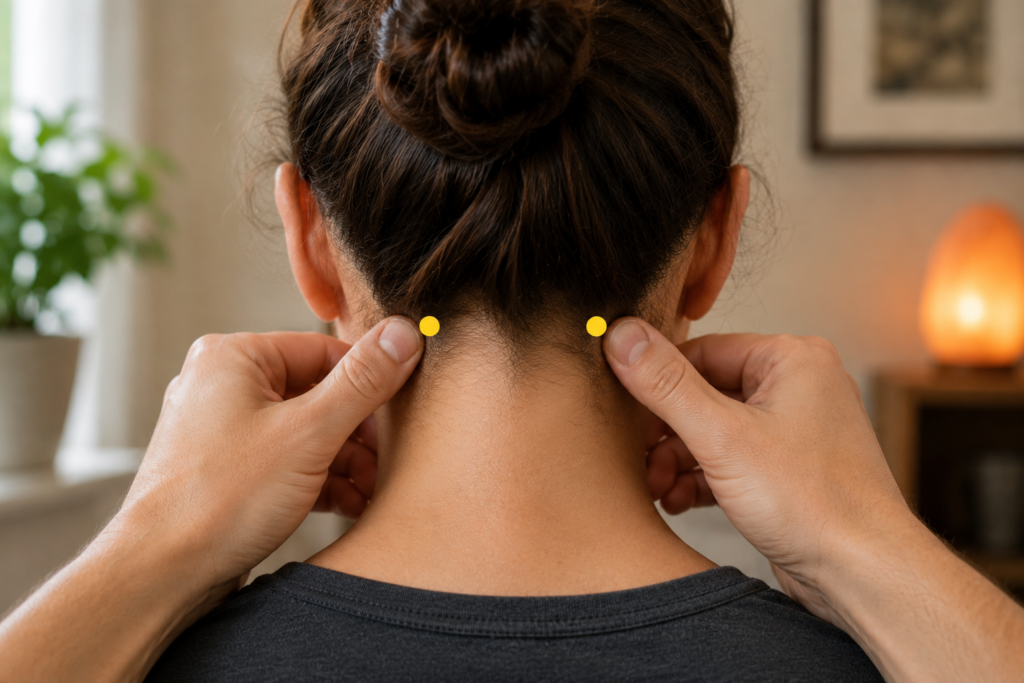
3. Press on GB20 at the base of the skull to clear Wind and Heat. GB20 sits at the base of the skull, in the hollow between the two large muscles at the back of the neck on each side. Press firmly upward with your thumbs for one to two minutes while letting your head rest back into your hands. GB20 is called “Fengchi,” the “Wind Pool.”
GB20 is a classic point for clearing Wind and Heat from the head and addressing eye problems. It’s most helpful when a stye occurs alongside a cold, stiff neck, or eye strain.
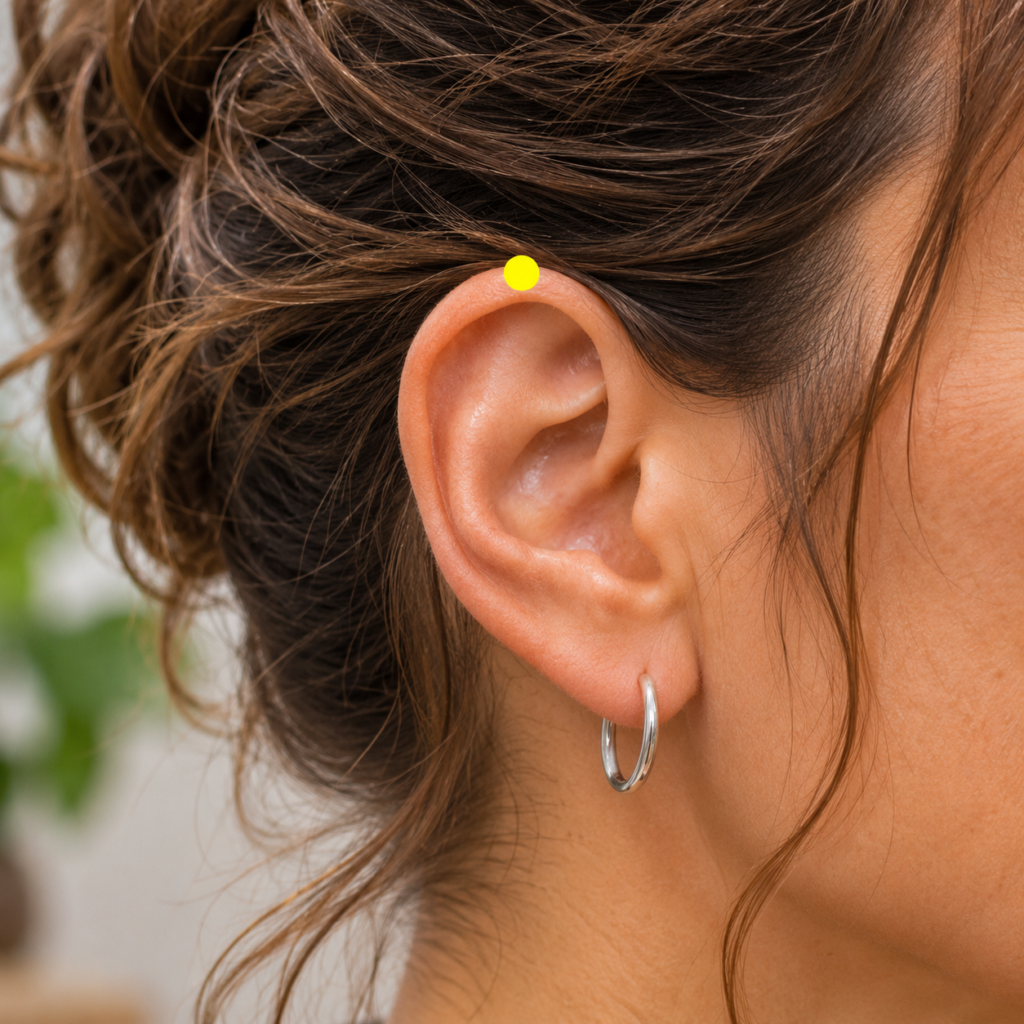
4. Massage the Ear Apex at the top of the ear to draw out Heat. The Ear Apex sits at the very top of the ear, at the highest point of the ear’s outer rim when the ear is gently folded forward. Squeeze and rub the tip of the ear between your thumb and index finger for one minute on each side until it feels warm. This point is called “Erjian,” the “Ear Tip.”
The Ear Apex is an extra point that Traditional Chinese Medicine has long used to address red, swollen, inflamed eyes, including styes. Massaging it helps draw Heat away from the eyes.
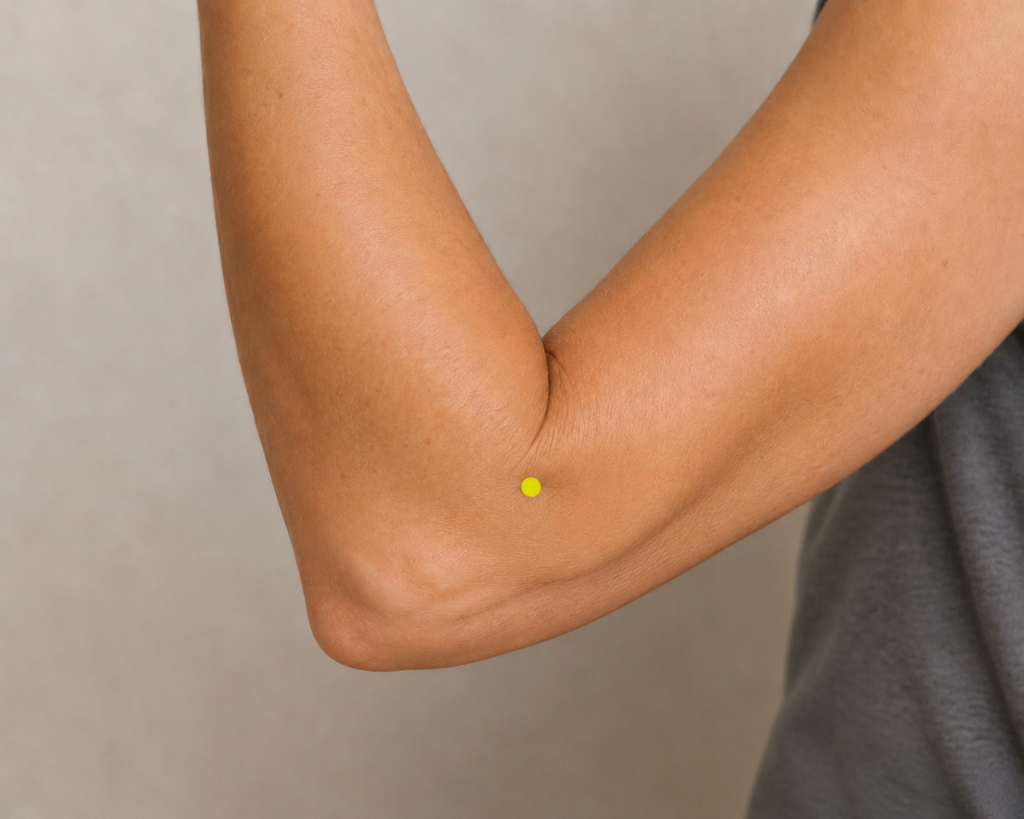
5. Press on LI11 at the outer elbow to clear Heat. LI11 sits at the outer end of the elbow crease when the elbow is bent, in the hollow between the end of the crease and the bony point of the elbow. Press firmly with the thumb of your other hand for one to two minutes on each arm. LI11 is called “Quchi,” the “Pool at the Crook.”
LI11 is the Large Intestine’s sea point and a classic point for clearing Heat throughout the body. It helps reduce the redness and swelling of a stye.
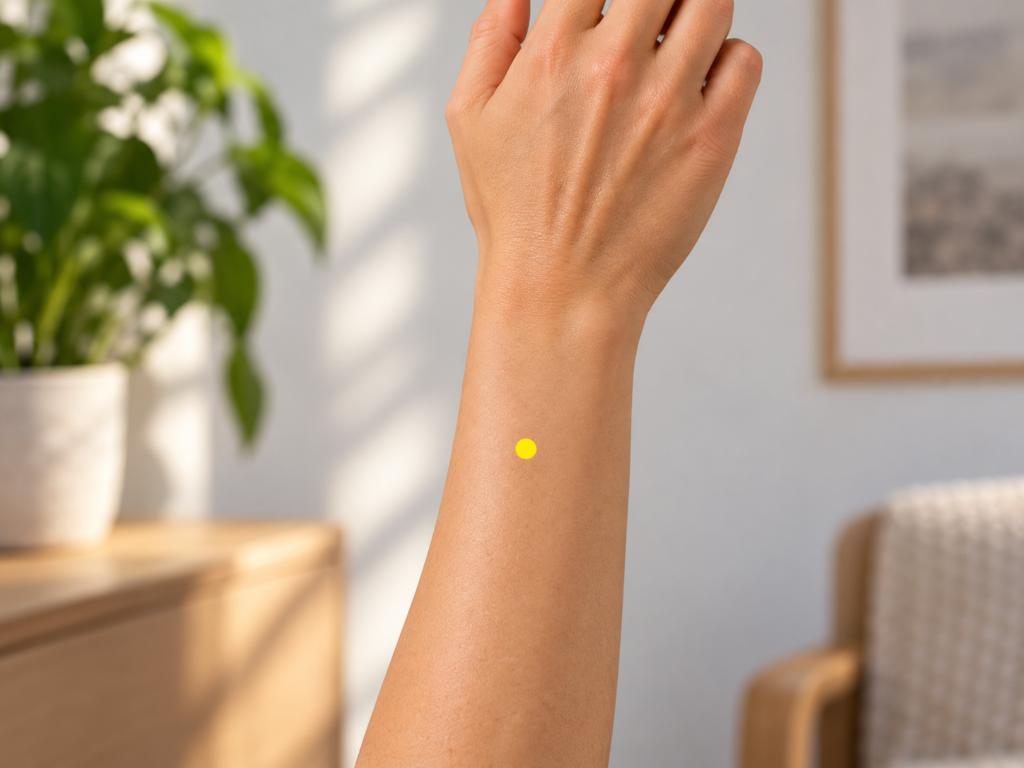
6. Press on TE5 on the back of the forearm to release Wind-Heat. TE5 sits on the back of the forearm, three finger-widths above the wrist crease, between the two forearm bones. Press firmly with the thumb of your other hand for one to two minutes on each arm. TE5 is called “Waiguan,” the “Outer Pass.”
TE5 is the connecting point of the Triple Energizer. It helps release Wind-Heat from the body’s surface and is especially useful when a stye develops with a cold or after exposure to wind.
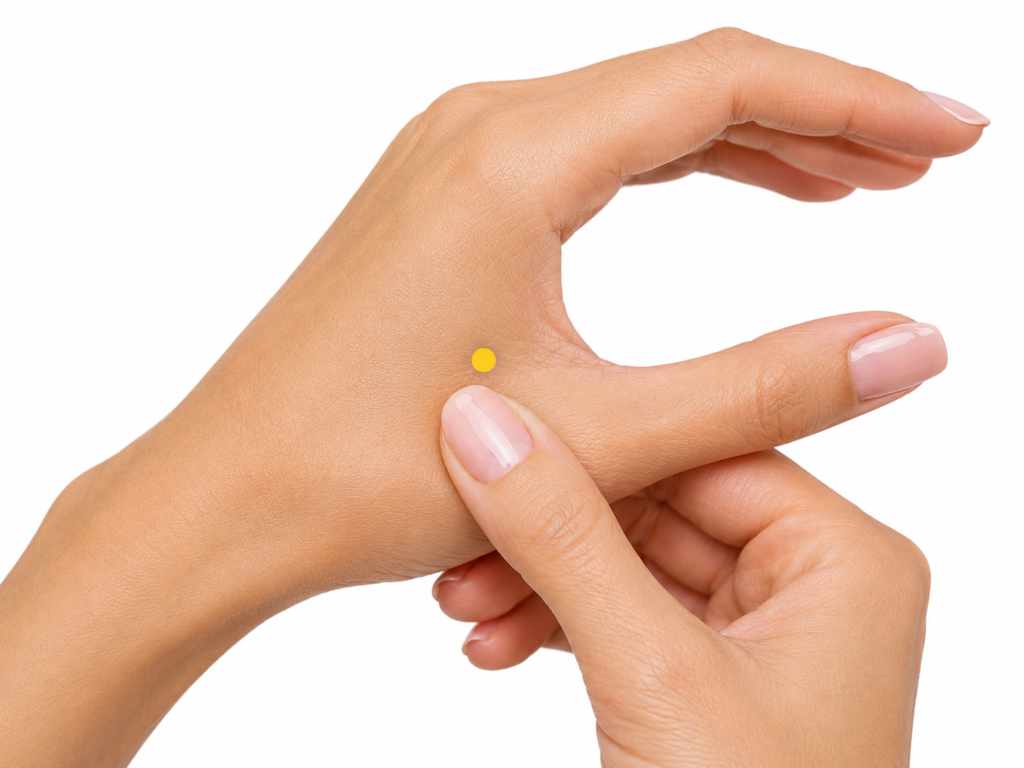
7. Press on LI4 on the back of the hand to clear the face and eyes. LI4 sits on the back of the hand, in the web between the thumb and index finger, at the highest point of the muscle when the thumb is pressed against the index finger. Press firmly with the thumb of your other hand for one to two minutes on each hand. LI4 is called “Hegu,” the “Joining Valley.”
LI4 is the Large Intestine’s source point and one of the most important points in Traditional Chinese Medicine for facial issues, including those affecting the eyes. It clears Heat and relieves pain and swelling around the eyelids. LI4 is avoided during pregnancy.
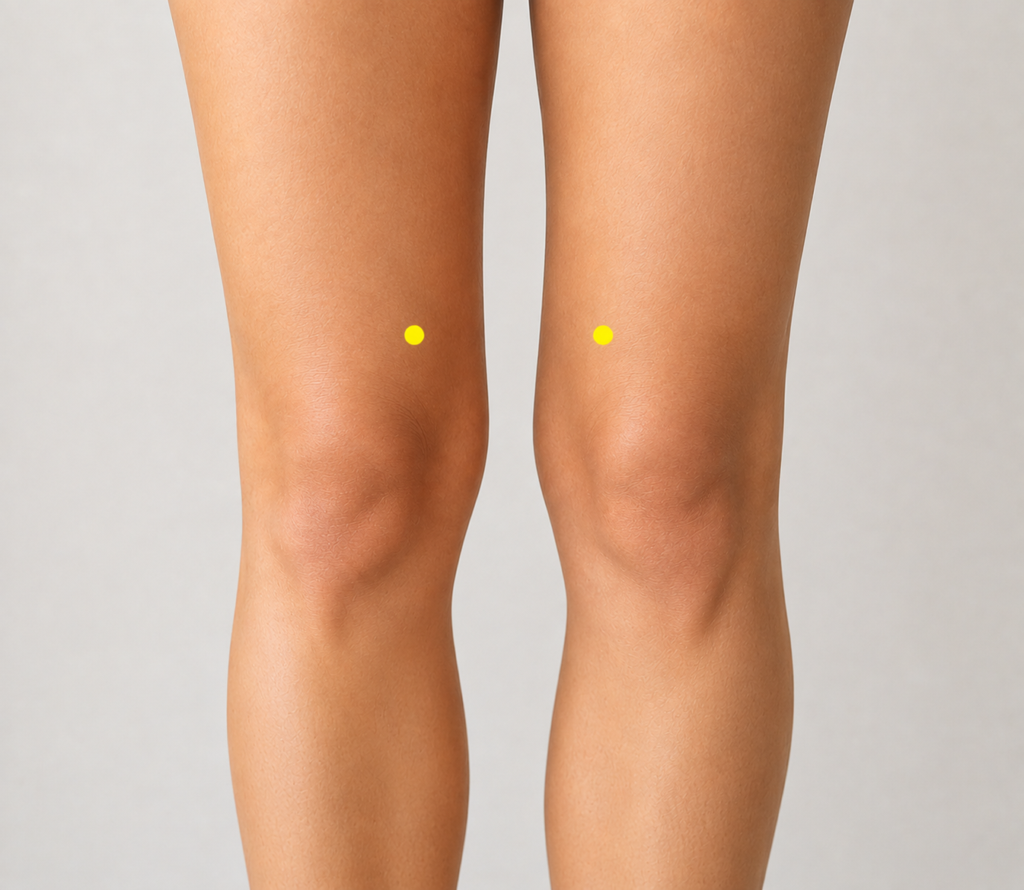
8. Press on SP10 above the inner knee to cool the Blood. SP10 sits on the inner thigh, about three finger-widths above the top inner corner of the kneecap, on the bulge of the thigh muscle. Press firmly with your thumb for one to two minutes on each leg. SP10 is called “Xuehai,” the “Sea of Blood.”
SP10 is traditionally used to clear Heat from the Blood. It can help with inflamed, red bumps and recurring styes.
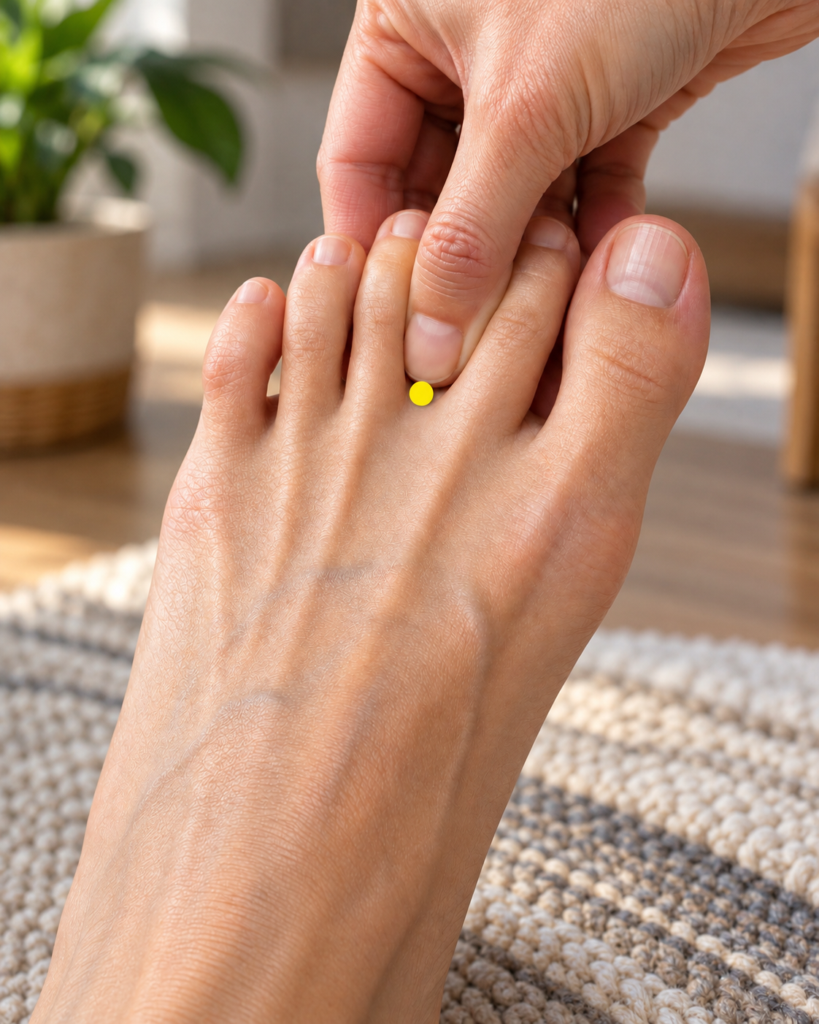
9. Press on ST44 between the second and third toes to clear Stomach Heat. ST44 sits on the top of the foot, just behind the web between the second and third toes. Press firmly with your thumb for one to two minutes on each foot. ST44 is called “Neiting,” the “Inner Courtyard.”
ST44 is the Stomach’s spring point. It clears Stomach Heat that rises to the eyelids, making it a good choice for a stye that develops after rich or spicy food.
Why These Acupressure Points Work
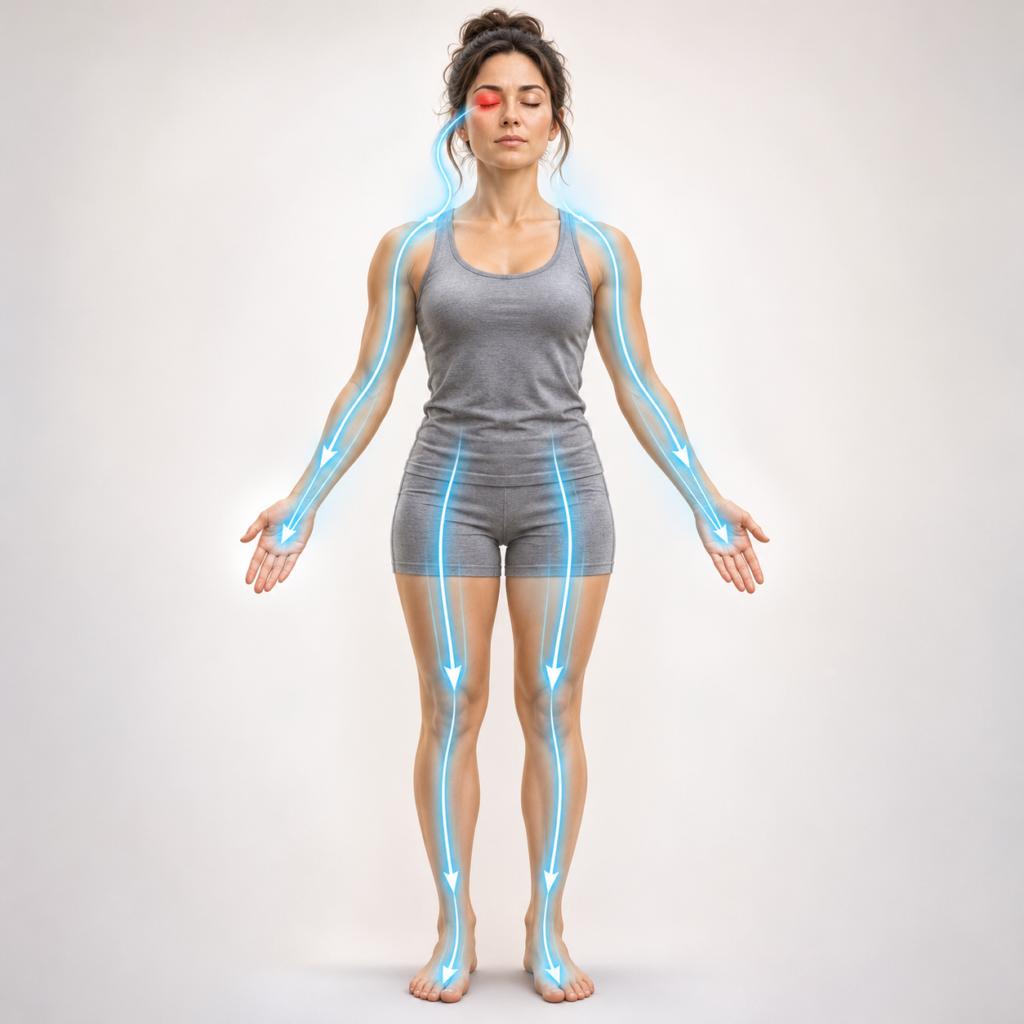
From a Traditional Chinese Medicine perspective, a stye is Heat that has accumulated in the eyelid, carried there by the Stomach and Spleen channels or introduced by external Wind. Points around the eye and head relieve local swelling without touching the lid; ear and arm points draw Heat away from the face; and leg and foot points cool the Blood and the Stomach, where the Heat originates.
These nine points work together to help alleviate a stye:
- Taiyang and BL2 ease soreness and swelling around the eye.
- GB20, TE5, and the Ear Apex release Wind and draw Heat away from the eyes.
- LI4 and LI11 clear Heat from the face and body.
- SP10 and ST44 cool the Blood and the Stomach.
How to Properly Use These Acupressure Points
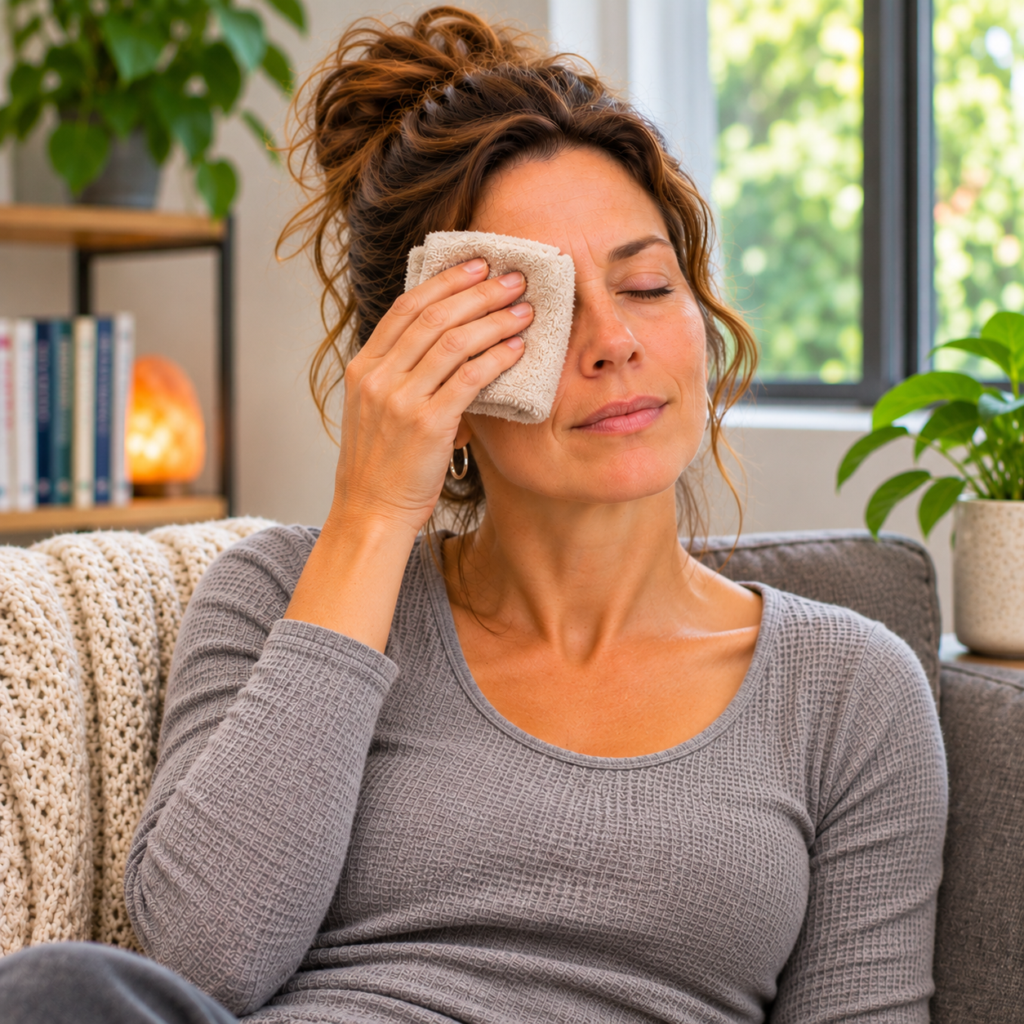
Acupressure may be most effective when used alongside warm compresses, applied two or three times daily while the stye is active.
- Begin with LI4, LI11, and TE5 on both arms. Then press SP10 and ST44 on both legs and feet.
- Massage the Ear Apex on both ears, then press GB20 at the base of the skull.
- Finish by applying gentle pressure to Taiyang and BL2, keeping your touch on the bone and well away from the stye.
- If styes keep coming back, press SP10, ST44, and LI11 once daily for a few weeks.
- Apply firm pressure to the arms, legs, and feet, and gentle pressure around the eyes and temples. Do not press, squeeze, or rub the stye itself. LI4 is avoided during pregnancy.
Home care does most of the work. Nemours recommends soaking a clean washcloth in warm, not hot, water, wringing it out, and holding it over the closed eye for a few minutes several times a day. Gently clean the eyelid with eye-scrub soap or diluted baby shampoo. Wear glasses instead of contacts until the stye heals, skip eye makeup, and replace mascara, liquid eyeliner, and eye shadow three months after first opening them. Wash your hands often, keep them away from your eyes, and do not share towels or washcloths. Traditional Chinese Medicine also recommends cutting back on spicy, fried, and sugary foods and alcohol while a stye is active, drinking enough water, and going to bed on time, since late nights add Heat.
For styes that keep coming back, read more about why some people keep getting sick.
When to Get Professional Help
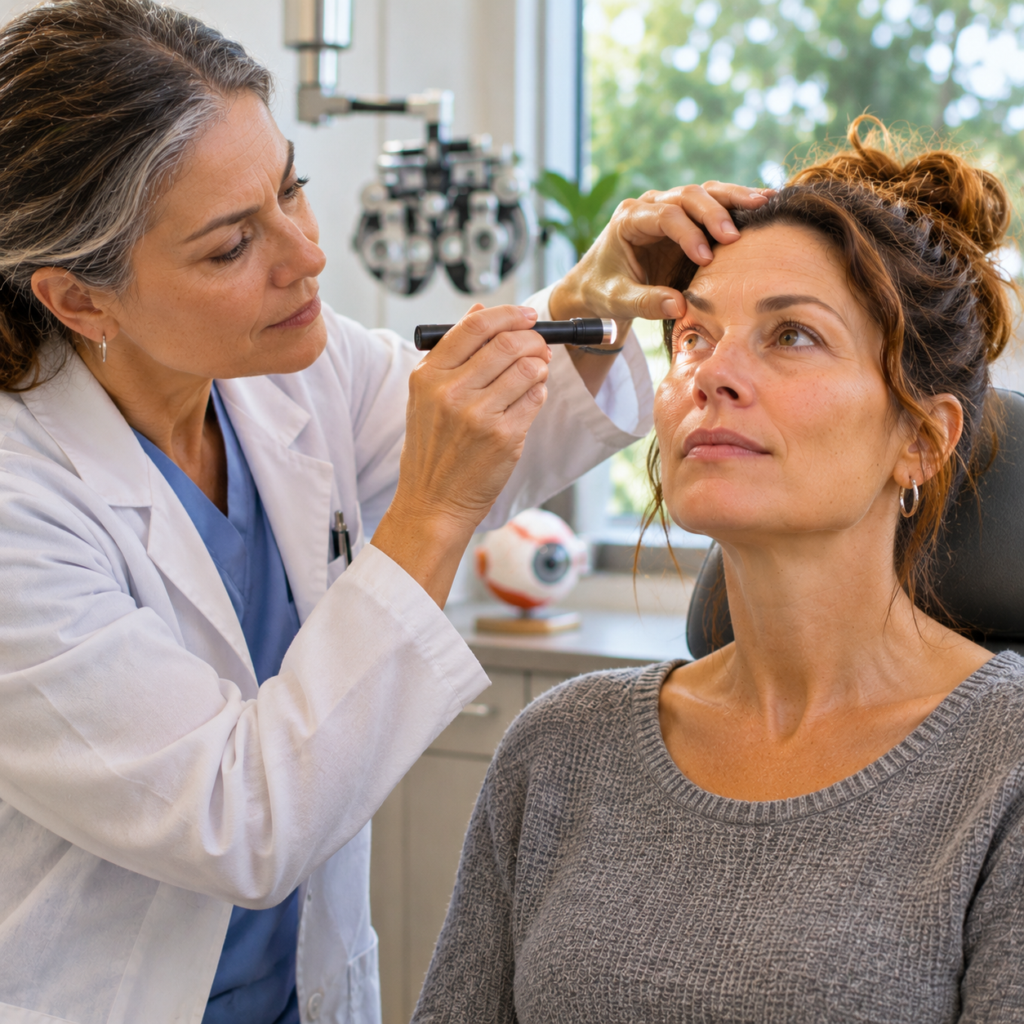
See a doctor if a stye does not improve after a week or two of home care, continues to grow or become more painful, keeps coming back, or blocks your vision. Contact a doctor right away if you have pain in your eyeball, any change in vision, sensitivity to light, or redness and swelling that spreads across your eyelid, to the white of your eye, or onto your cheek or face. These symptoms may mean the infection is spreading and needs antibiotics. Get same-day care if you have a swollen eyelid with fever, pain when moving your eye, or an eyelid that is swollen shut, especially in a child. If you have a firm, painless lump that lasts for weeks, it may be a chalazion and should be checked by an eye doctor.
Acupressure is a gentle, supportive practice for styes. It complements, and does not replace, diagnosis and medical care.
For related concerns, acupressure for dry eyes, acupressure for eye strain, and acupressure to boost the immune system are companion pieces.
Above and Beyond Acupuncture offers acupuncture, cupping, and lifestyle coaching at the North Frank Lloyd Wright Boulevard location in Scottsdale.
Schedule an appointment online to start your healing journey.
The points above are only as effective as the technique used to apply them. Where to press, how firmly, and for how long all affect the result. For a full breakdown of how to perform acupressure properly at home, read Performing Acupressure in 3 Easy Steps.

About the Publisher
Paul Kerzner, L.Ac., is a licensed acupuncturist and board-certified herbalist, as well as the founder of Above and Beyond Acupuncture in Scottsdale. His own journey from chronic patient to practicing acupuncturist shapes his commitment to providing honest, clinically grounded information about acupuncture and Traditional Chinese Medicine. Learn more about Paul and his clinical approach on the About Us page.