Key Takeaways
- Baby teeth typically appear between 6 and 24 months. Teething usually causes drooling, chewing, gum rubbing, and mild fussiness, which passes within a few days.
- Teething does not cause fever, diarrhea, diaper rash, a runny nose, or excessive crying. If any of these symptoms occur, they may indicate another cause and warrant contacting the pediatrician.
- In Traditional Chinese Medicine, the Stomach channel runs through the upper gums, while the Large Intestine channel runs through the lower gums. Teething discomfort is therefore often understood as Heat rising along these channels.
- Nine gentle acupressure points across the face, jaw, arms, hands, and feet may soothe sore gums and help calm a fussy teething baby.
- Gently massage the gums with a clean finger and offer chilled (not frozen) teethers alongside acupressure. Avoid benzocaine teething gels and teething necklaces.

A damp shirt is often the first sign. An infant who was content just a week ago may now drool through bibs, chew on their hands and toys, and rub their gums to ease discomfort. Bedtime may stretch longer and naps may get shorter, leaving parents looking for a gentle way to soothe their baby as a new tooth emerges.
According to Seattle Children’s, babies get their first teeth between 6 and 24 months. Teething can lead to more drooling, chewing, and gum rubbing, along with mild gum pain that usually makes a baby only slightly fussier. It does not cause fever, diarrhea, diaper rash, or a runny nose; heavy crying suggests another cause. Seattle Children’s recommends rubbing the sore gum with a clean finger for two minutes as often as needed and offering chilled (but not frozen) teethers, pacifiers, or washcloths. The hospital advises against benzocaine teething gels and teething necklaces, and notes that mild discomfort usually passes within two or three days.
As a tooth pushes through the gum, it stretches and presses on tender tissue, prompting babies to chew and rub persistently. Applying pressure to the gums feels soothing, so teething babies often reach for anything firm. Teething also tends to coincide with the age when babies begin catching more colds and ear infections, which can lead parents to attribute symptoms to teething when they have another cause.
Traditional Chinese Medicine traces the Stomach channel through the upper gums and the Large Intestine channel through the lower gums. When a tooth emerges, these channels are thought to carry extra Heat upward, leading to red, swollen gums, drooling, flushed cheeks, and irritability. Babies also have abundant Yang energy and are easily unsettled, so teething discomfort can lead to restless sleep and clinginess. Gentle points that clear Heat from the Stomach and Large Intestine channels, ease the jaw, and calm the mind can help a teething baby feel more comfortable.
The points below begin on the face and jaw, continue to the arms and hands, and end at the foot. For a baby, measure all distances using the baby’s own finger-widths, not an adult’s. Always press the face points on the outside of the cheek and jaw, never inside the mouth.
What Acupressure Points to Press and Why
1. Stroke Yintang between the eyebrows to calm a fussy baby. Yintang sits at the midpoint between the baby’s eyebrows. With the pad of your thumb, stroke gently upward from Yintang toward the hairline, alternating thumbs, for 30 seconds to one minute. Yintang means the “Hall of Impression.”
Yintang is an extra point traditionally used to calm the mind and ease restlessness. Before working on the jaw points, use slow upward strokes to help a teething baby settle.

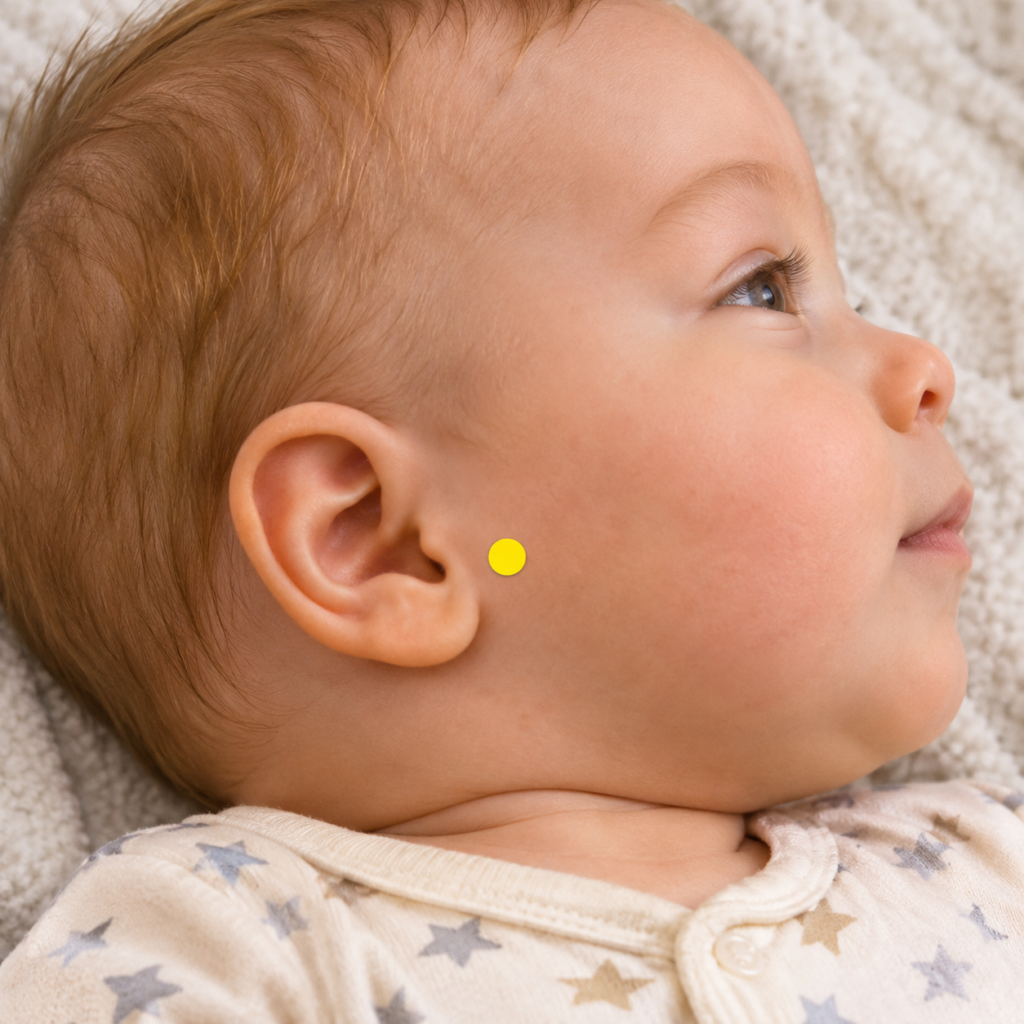
2. Circle ST7 in front of the ear to ease the upper gums. ST7 sits on the side of the face, just in front of the ear, in the small hollow below the cheekbone. Make slow, light circles with one fingertip for 30 seconds on each side. ST7 is called “Xiaguan,” the “Below the Joint.”
ST7 is the meeting point of the Stomach and Gallbladder channels. It helps relax the jaw and is traditionally used to relieve pain in the upper teeth and gums.
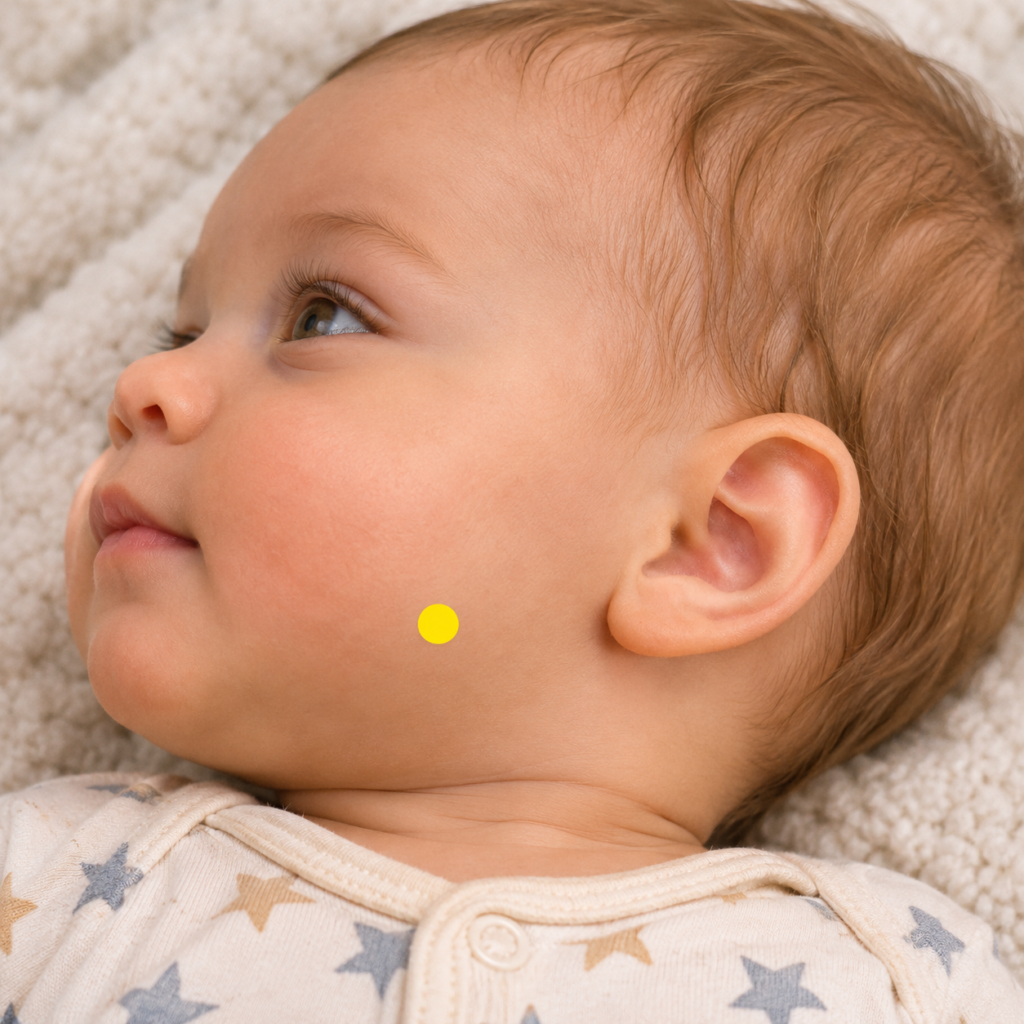
3. Circle ST6 at the angle of the jaw to ease the lower gums. ST6 sits on the lower jaw, about one of the baby’s finger-widths up and forward from the corner of the jaw, on the fleshy part of the cheek that bulges when the baby chews. Make slow, light circles with one fingertip for 30 seconds on each side. ST6 is called “Jiache,” the “Jaw Bone.”
ST6 is a local point on the Stomach channel traditionally used to relieve lower tooth and gum pain, jaw tension, and cheek swelling.
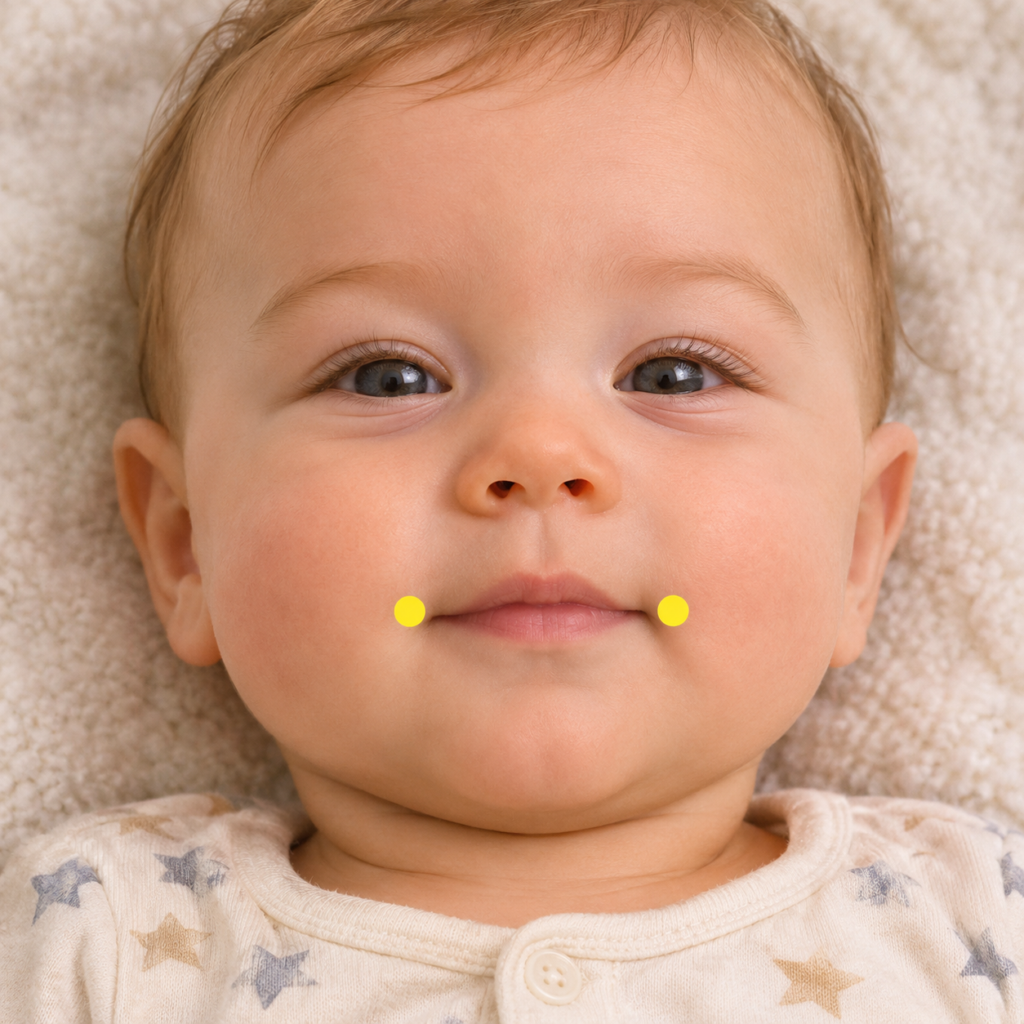
4. Press ST4 beside the corner of the mouth to settle drooling. ST4 sits just outside each corner of the mouth, in line with the center of the eye. Rest your fingertip on the point with very light pressure, or make tiny circles, for 30 seconds on each side. ST4 is called “Dicang,” the “Earth Granary.”
ST4 is the meeting point of the Stomach and Large Intestine channels. It is traditionally used to treat drooling and discomfort around the mouth.
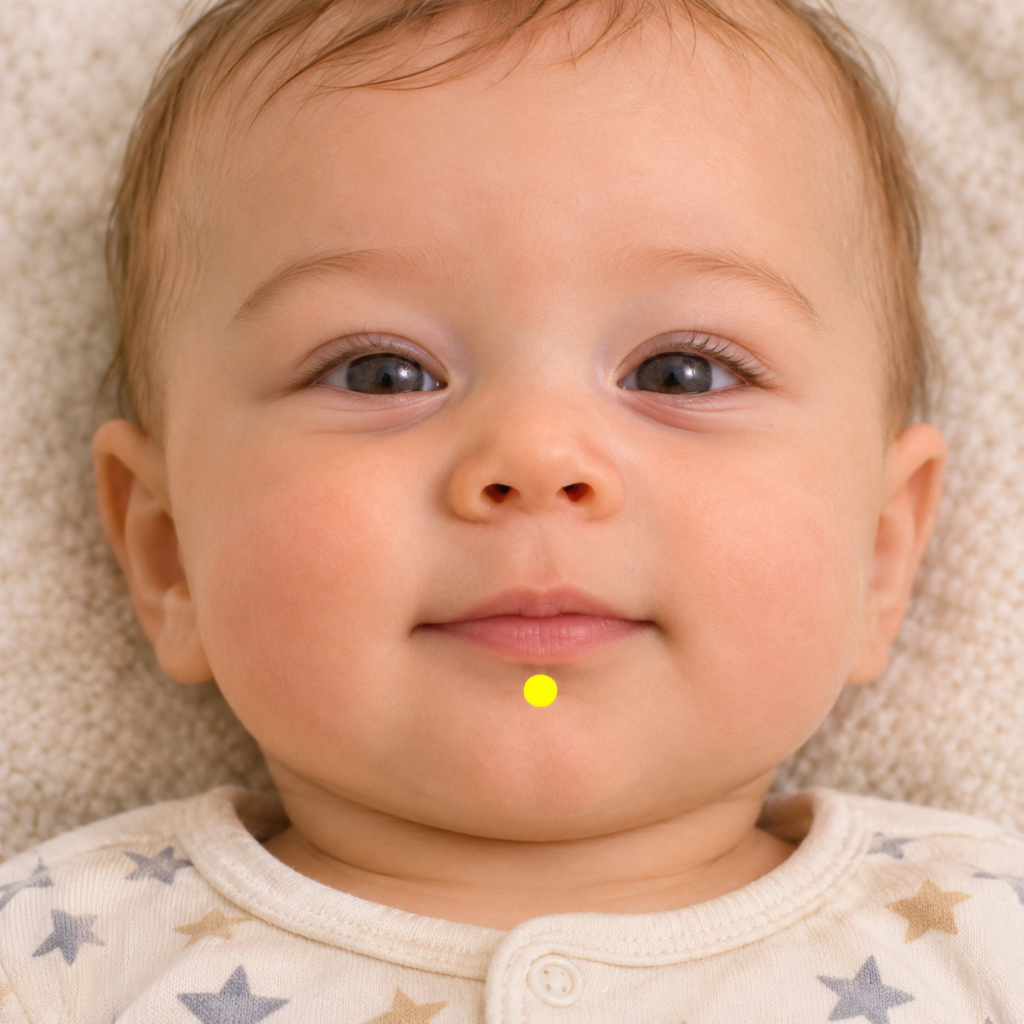
5. Press CV24 below the lower lip to soothe the front gums. CV24 sits on the midline of the chin, in the small hollow just below the lower lip. Rest your fingertip on the point with very light pressure for 30 seconds. CV24 is called “Chengjiang,” the “Container of Fluids.”
CV24 is the meeting point of the Conception Vessel and the Stomach channel. It is traditionally used to treat pain in the lower front teeth and gums, facial swelling, and drooling.
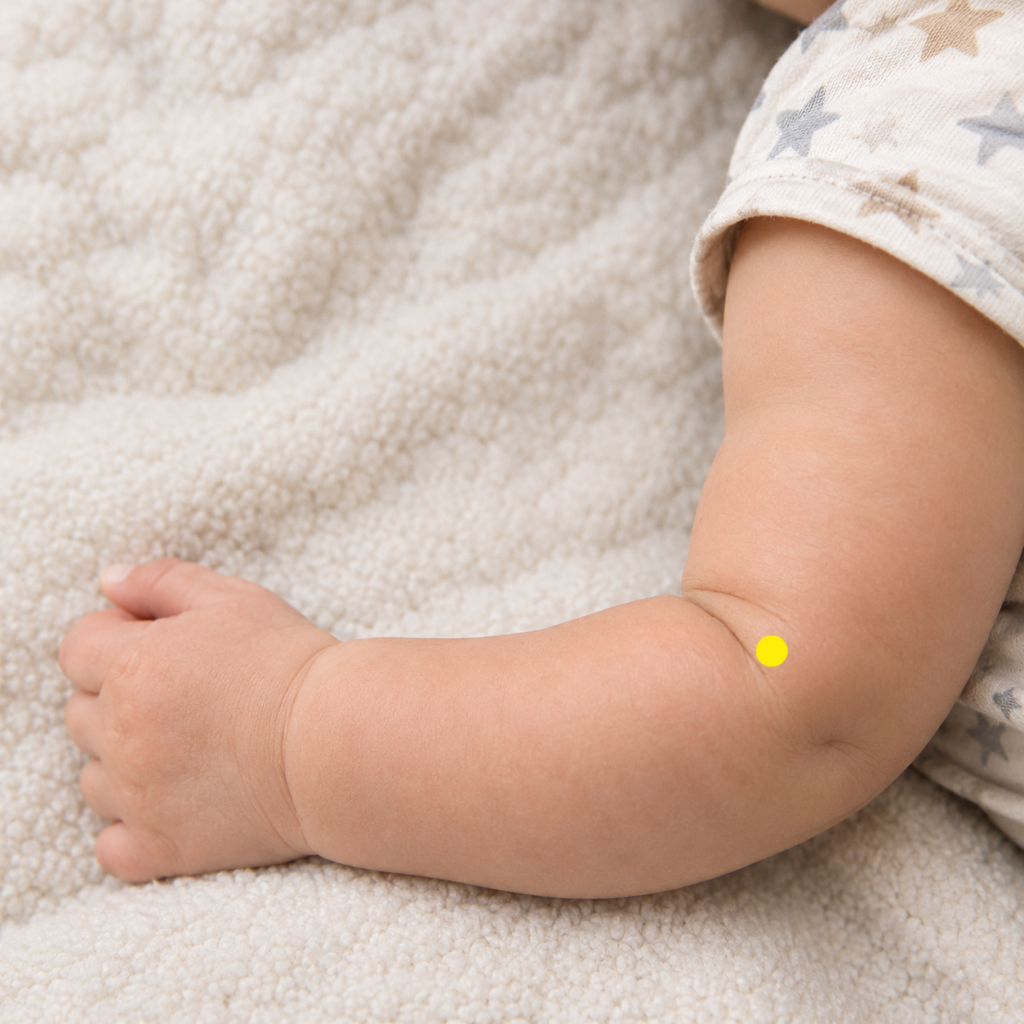
6. Press LI11 at the elbow crease to clear Heat. LI11 sits at the outer end of the elbow crease when the baby’s elbow is gently bent, on the thumb side of the arm. Make tiny, light circles with your fingertip for 30 seconds on each arm. LI11 is called “Quchi,” the “Pool at the Bend.”
LI11 is the sea point of the Large Intestine. It is traditionally used to clear Heat from the body and pairs well with LI4 for treating red, swollen gums.
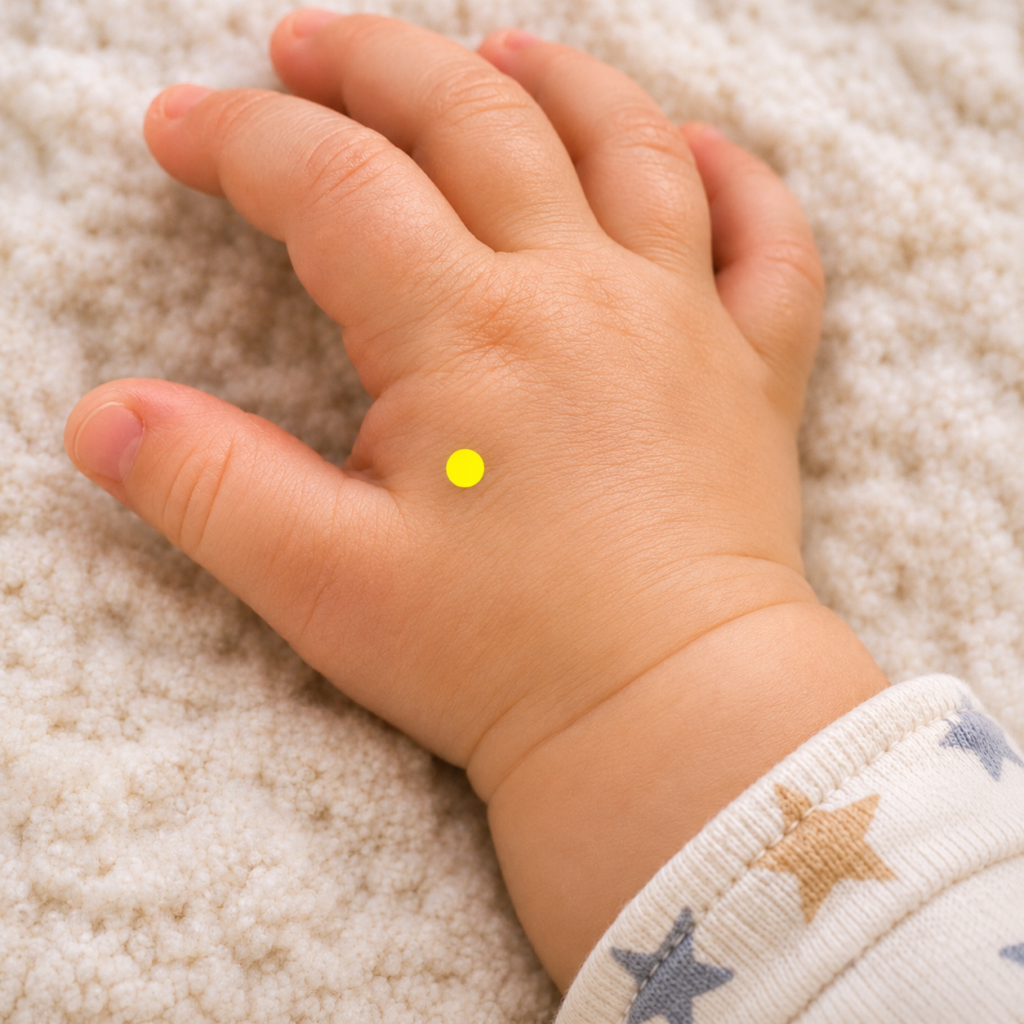
7. Press LI4 on the back of the hand to relieve gum pain. LI4 sits on the back of the hand, in the fleshy web between the thumb and index finger. Hold the baby’s hand and make tiny, light circles on the point for 30 seconds on each hand. LI4 is called “Hegu,” the “Joining Valley.”
LI4 is the source point of the Large Intestine and one of the most important points in Traditional Chinese Medicine for treating pain in the face, mouth, and teeth. It clears Heat from the Large Intestine channel as it rises through the lower gums.
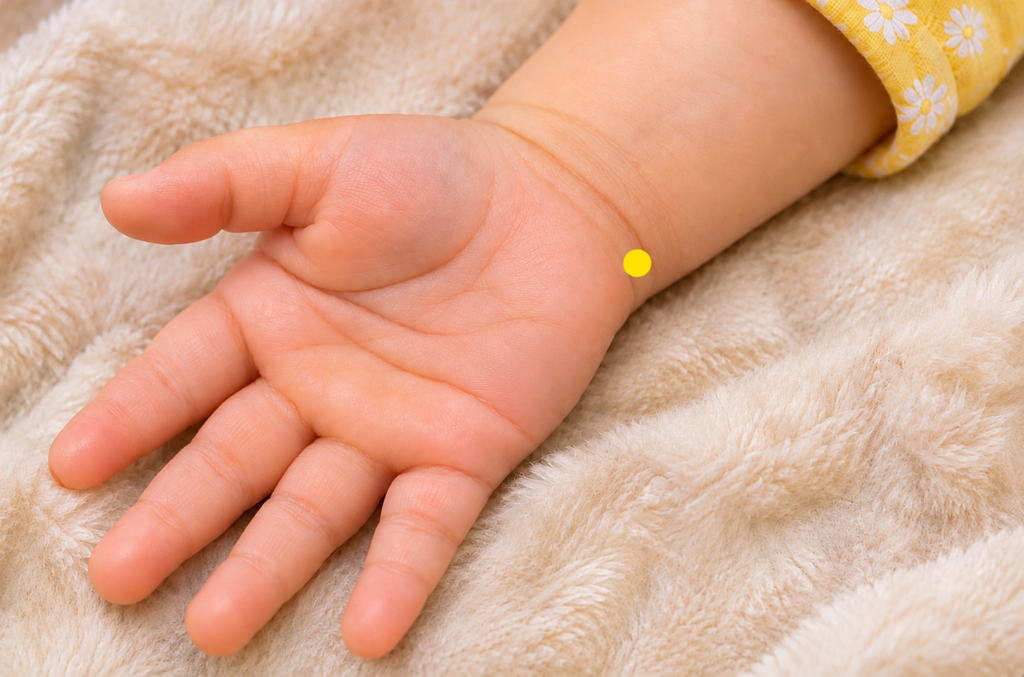
8. Press HT7 on the wrist crease to settle the Heart. HT7 sits on the inner wrist crease, on the little finger side, in the small hollow just inside the tendon. Hold the baby’s hand palm up and rest your fingertip on the point with very light pressure, or make tiny circles, for 30 seconds on each wrist. HT7 is called “Shenmen,” the “Spirit Gate.”
HT7 is the source point of the Heart. It calms the Shen and helps when teething discomfort leaves a baby clingy, restless, and slow to fall asleep.
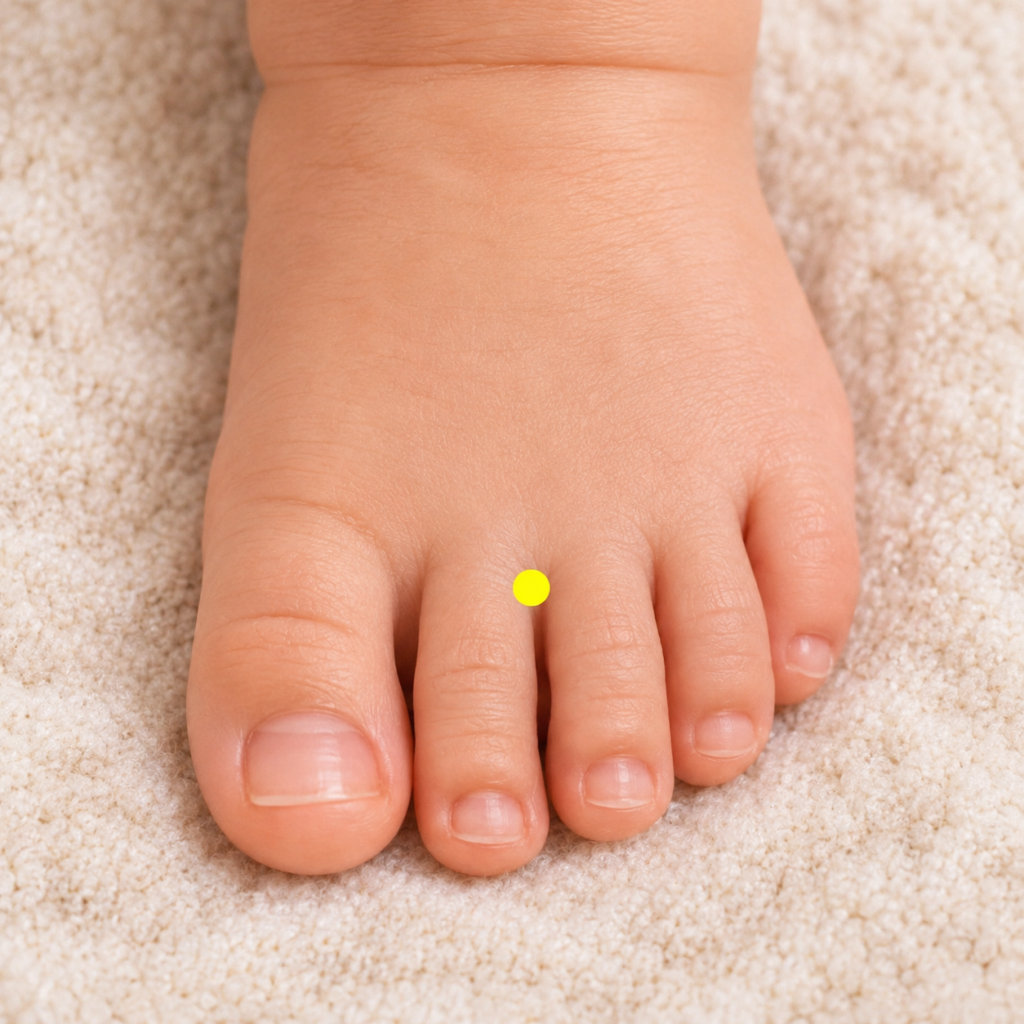
9. Press ST44 on the top of the foot to draw Heat down. ST44 sits on the top of the foot, at the edge of the web between the second and third toes. Make tiny, light circles with your fingertip for 30 seconds on each foot. ST44 is called “Neiting,” the “Inner Courtyard.”
ST44 is the spring point of the Stomach. It clears Heat from the Stomach channel and draws it downward, away from the gums, making it a classic distal point for tooth and gum pain.
Why These Acupressure Points Work
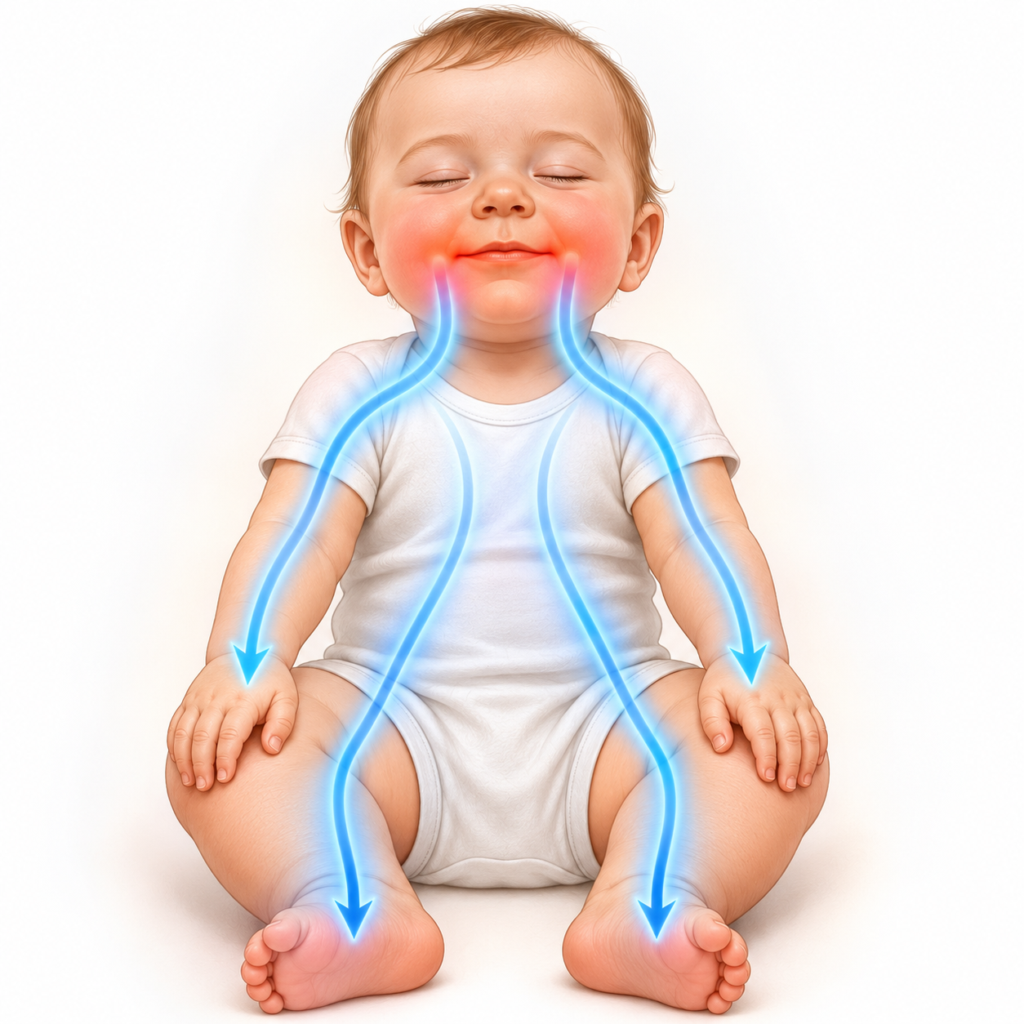
From a Traditional Chinese Medicine perspective, teething discomfort occurs when Heat rises along the Stomach and Large Intestine channels to the gums, while the mind is easily unsettled. Points on the face and jaw work directly on sore gums; points on the arm and hand clear Heat from the Large Intestine channel; the foot point draws Stomach Heat downward; and calming points help a fussy baby settle.
The nine points work together to help alleviate teething discomfort:
- ST7, ST6, ST4, and CV24 ease the jaw and gums directly.
- LI11 and LI4 clear Heat from the Large Intestine channel and the lower gums.
- ST44 draws Heat from the Stomach channel and the upper gums downward.
- Yintang and HT7 calm the mind and ease fussiness.
How to Properly Use These Acupressure Points

Acupressure for teething works best when the baby is calm enough to be held, such as after a feeding, during a quiet cuddle, or as part of the bedtime routine.
- Start with a few upward strokes on Yintang to help the baby settle.
- Move to the face, with light circles on ST7 and ST6 and gentle touch on ST4 and CV24 on both sides.
- Continue with light circles on LI11 and LI4, then gentle touch on HT7.
- Finish with tiny circles on ST44 on both feet.
- Use only light, slow fingertip pressure, much lighter than on an adult, and stop if the baby fusses, pulls away, or seems uncomfortable. Avoid the soft spots on the top of the head, and do not use these points on broken, irritated, or rashy skin, including skin that is chapped from drool.
Simple comfort measures support these points. Seattle Children’s recommends rubbing the sore gum with a clean finger for two minutes, as often as needed, and offering chilled (not frozen) teething rings, pacifiers, or wet washcloths. Frozen items and ice placed directly on the gums can injure the gums, and hard foods such as raw carrots pose a choking risk. Seattle Children’s advises against teething gels containing benzocaine and teething necklaces, which carry choking risks. Ask the pediatrician before giving any pain medicine. As general guidance, gently wiping drool from the chin and cheeks with a soft cloth helps prevent drool rash. Traditional Chinese Medicine recommends keeping the baby calm, warm, and well rested while the tooth comes through.
Learn more about whether acupressure is safe for kids.
When to Get Professional Help

Seek medical care immediately if an infant appears or behaves very ill, has difficulty breathing, or is limp or difficult to awaken. Medical care should also be sought for any infant under three months of age with a temperature of 100.4°F or higher. Teething does not cause fever, diarrhea, diaper rash, a runny nose, or intense crying. Contact your pediatrician if any of these symptoms occur, as teething can mask infections such as ear or urinary tract infections. Call the pediatrician if the infant’s crying cannot be soothed, the infant refuses to feed or has fewer wet diapers than usual, the gums are swollen with pus or bleeding, or discomfort persists for more than a few days.
Acupressure is a gentle, supportive practice for teething. It complements, and does not replace, diagnosis and medical care.
For related health concerns, acupressure to help a baby sleep, acupressure for toothache, and acupuncture for kids are companion posts.
Above and Beyond Acupuncture offers acupuncture, cupping, and lifestyle coaching at the North Frank Lloyd Wright Boulevard location in Scottsdale.
Schedule an appointment online to start your healing journey.
The points above are only as effective as the technique used to apply them. Where to press, how firmly, and for how long all affect the result. For a full breakdown of how to perform acupressure properly at home, read Performing Acupressure in 3 Easy Steps.

About the Publisher
Paul Kerzner, L.Ac., is a licensed acupuncturist and board-certified herbalist, as well as the founder of Above and Beyond Acupuncture in Scottsdale. His own journey from chronic patient to practicing acupuncturist shapes his commitment to providing honest, clinically grounded information about acupuncture and Traditional Chinese Medicine. Learn more about Paul and his clinical approach on the About Us page.