Key Takeaways
- Acupuncture uses over 360 points, but a few key points are essential for treatment.
- LI4, LR3, and ST36 are among the most important acupuncture points, addressing common modern health issues.
- SP6, PC6, GB20, and Yintang are also crucial; they target hormones, anxiety, headaches, and calming the mind.
- These points help practitioners treat overlapping patterns, such as stress and digestive issues, emphasizing holistic care.
- Understanding these most important acupuncture points can enhance your consultation and treatment experience.
Acupuncture uses hundreds of points across the body. The classical channel system alone includes over 360 points, and the extra points that sit outside the channels add several dozen more. A practicing acupuncturist knows all of them and uses many of them in clinical practice. But a smaller number of points come up in almost every treatment. These are the workhorse points that every acupuncturist knows by heart.
What makes a point important is not one thing. Some points earn their place through the breadth of conditions they treat. Others earn it through the depth of research support behind their clinical effects. A few earn it through the strength of the pattern they address, particularly patterns that show up in almost every modern patient. The most important points combine all three.
Here are seven points that every practicing acupuncturist knows by heart, three empirical points that have earned their place through clinical observation, and why each one continues to be used constantly in modern practice.
LI4 (Hegu, Joining Valley)
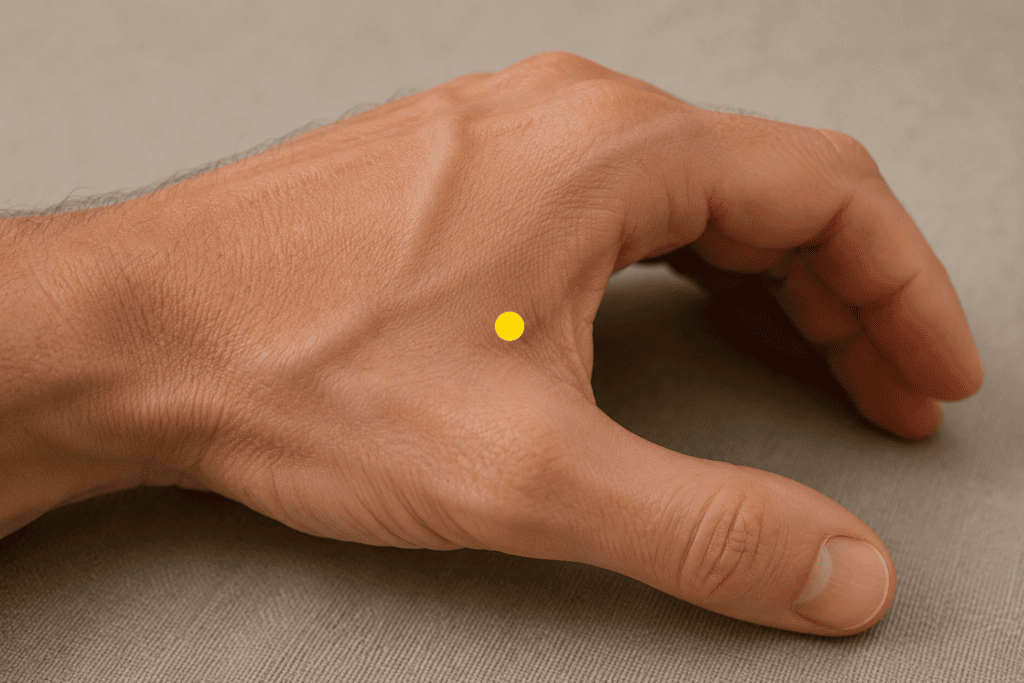
LI4 sits in the webbing between the thumb and index finger, in the muscle that bulges out when the thumb is pressed against the side of the index finger. This is the command point for the face and head, meaning it has strong effects on any condition affecting those regions. Headaches, sinus congestion, toothache, jaw tension, and eye strain all respond to LI4.
Beyond the face and head, LI4 is one of the strongest points in the entire acupuncture system for moving stagnation of any kind. Physical tension. Emotional constriction. Qi that has become stuck anywhere in the body. The point stimulates the release of endorphins and other natural pain-relieving chemicals, which contributes to its usefulness for a wide range of pain conditions.
LI4 is contraindicated during pregnancy because of its strong downward-moving effect, which historically was recognized as a labor induction point.
LR3 (Taichong, Great Rushing)
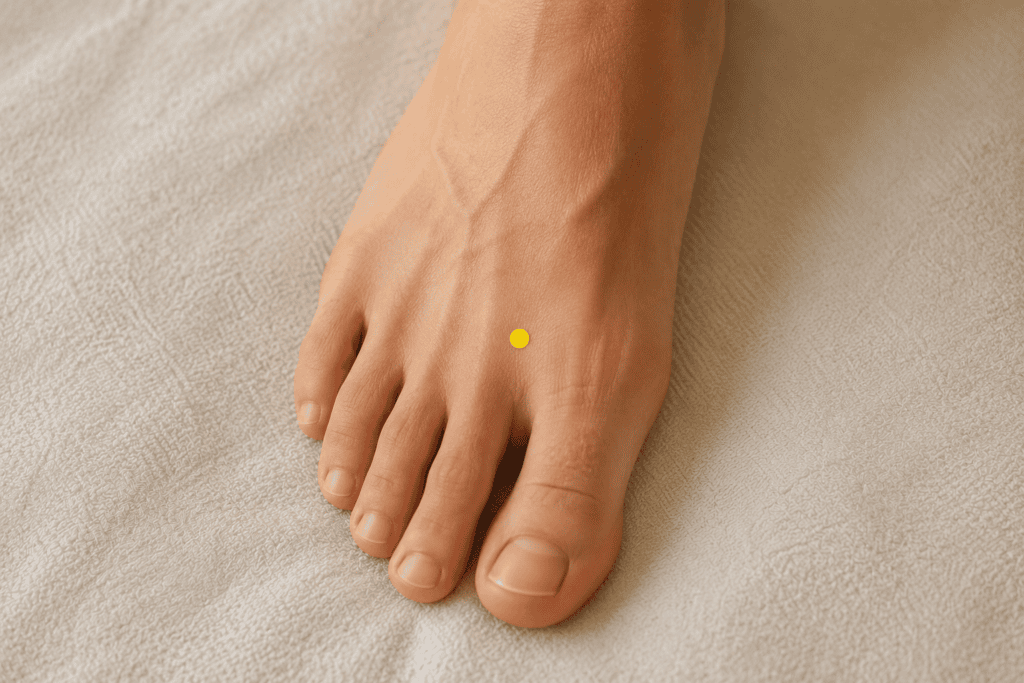
LR3 sits on the top of the foot in the depression between the first and second toes, about two finger-widths back from the webbing. This is the command point for the Liver, which in Chinese medicine governs the smooth flow of Qi throughout the body.
The Liver Qi stagnation pattern is one of the most common patterns in modern patients. It shows up as chronic stress, irritability, tension headaches, muscular tightness, menstrual irregularities, and the feeling of being wound tight. Almost every acupuncturist uses LR3 constantly because Liver Qi stagnation is a foundational modern pattern. The chronic stress dimension that drives this pattern is covered in detail in another article.
LR3 is often paired with LI4 in what classical Chinese medicine calls the “four gates,” a treatment combination that moves Qi throughout the entire body. This combination is one of the most widely used treatments in the entire acupuncture tradition.
ST36 (Zusanli, Leg Three Miles)
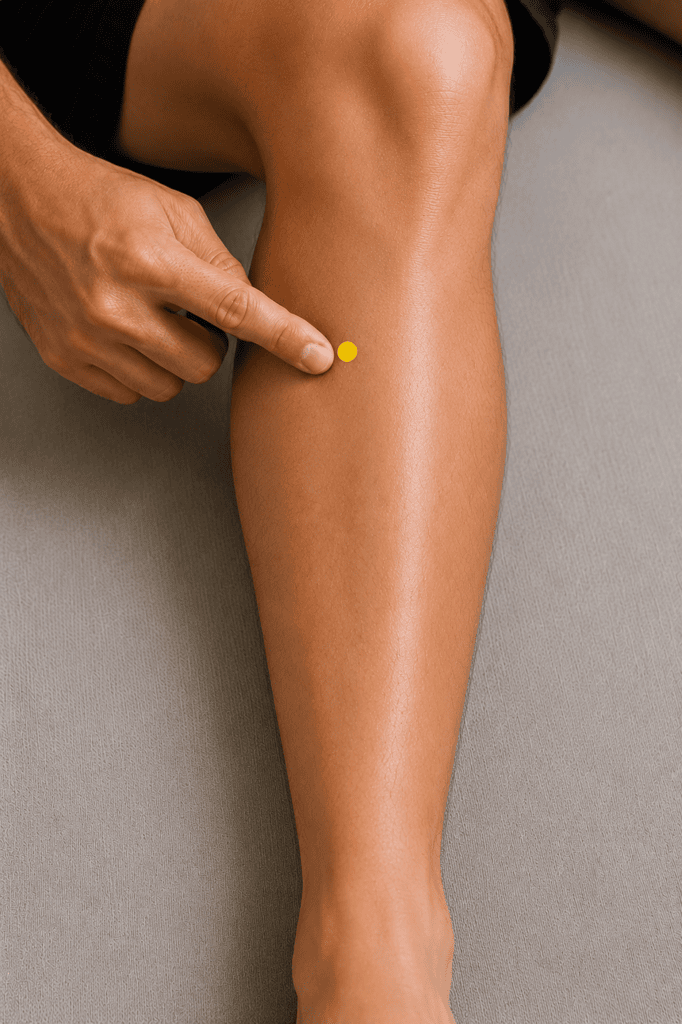
ST36 sits about four finger-widths below the kneecap, one finger-width to the outside of the shin bone. This is the workhorse point for digestive function and general energy. The name Zusanli, or Leg Three Miles, comes from the classical observation that this point could give a traveler enough energy to walk three more miles.
ST36 is one of the most studied points in acupuncture research. The evidence base includes documented effects on gastric motility, digestive function, immune modulation, and general vitality. Patients dealing with chronic fatigue, digestive issues, or general depletion all benefit from ST36. Daily use is reasonable for chronic patterns.
The point is used in almost every acupuncture treatment. Some practitioners say that if they could only use one point for the rest of their careers, it would be ST36.
SP6 (Sanyinjiao, Three Yin Intersection)
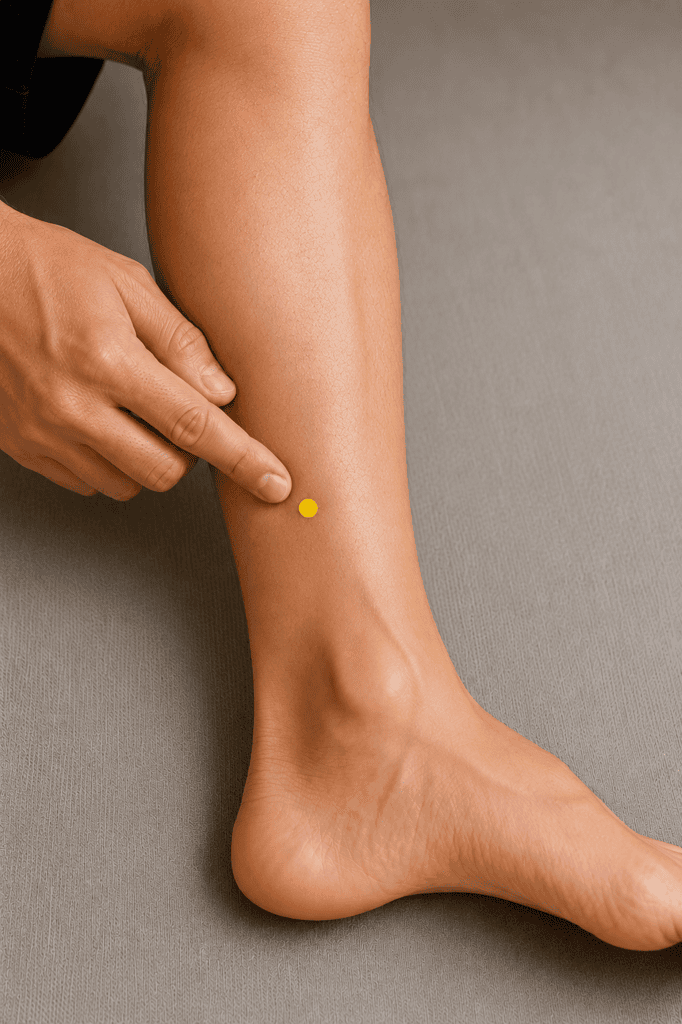
SP6 sits about four finger-widths above the inner ankle bone, just behind the shin bone. This is the meeting point of three Yin channels (the Spleen, the Liver, and the Kidney), which makes it exceptionally powerful for addressing patterns involving any of these three systems.
SP6 is one of the most important points for hormonal regulation, particularly in women dealing with menstrual irregularities, cyclical mood patterns, or perimenopausal symptoms. The point is also strong for digestive support and for the general nourishment of Yin and Blood, both of which get depleted by chronic stress and modern lifestyle patterns.
SP6 is contraindicated during pregnancy because of its strong effect on the reproductive system.
PC6 (Neiguan, Inner Gate)
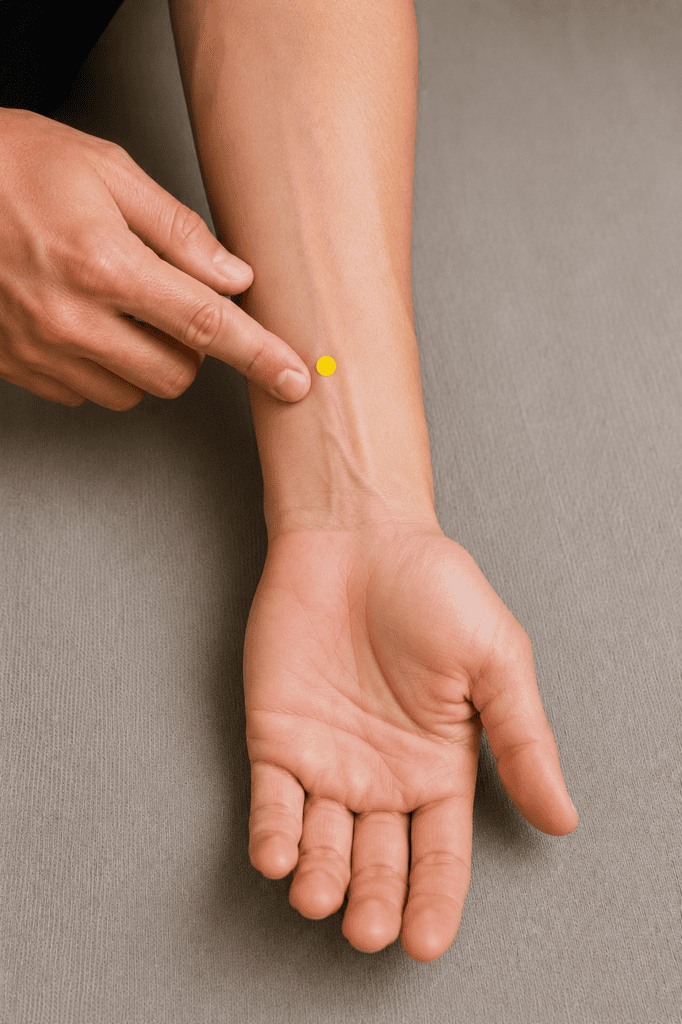
PC6, also called P6, sits about three finger-widths up from the wrist crease on the inside of the forearm, between the two tendons in the middle. This is the command point for the chest, meaning it has strong effects on the heart, the lungs, and the emotional patterns that live in this region.
PC6 is one of the most well-researched acupuncture points, with substantial evidence for its effects on nausea, motion sickness, chemotherapy-induced nausea, and pregnancy-related nausea. The acupressure wristbands sold in pharmacies for motion sickness work by stimulating this point. Beyond nausea, PC6 is one of the strongest points for anxiety, palpitations, chest discomfort, and the autonomic nervous system regulation that underlies many modern conditions.
GB20 (Fengchi, Wind Pool)
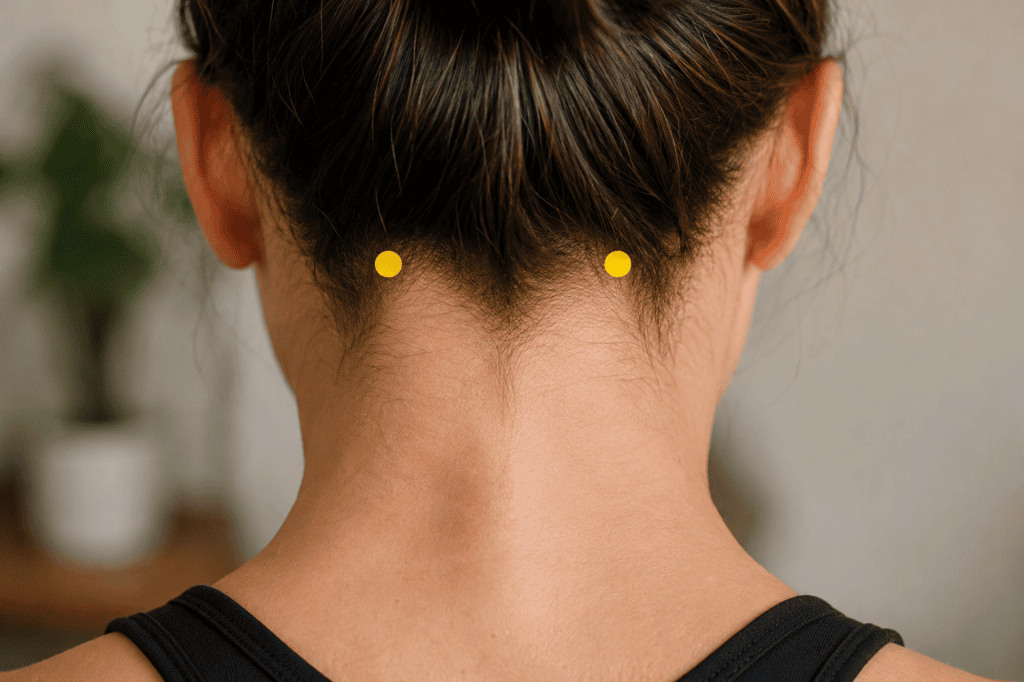
GB20 sits in the two hollows at the base of the skull, just below the bony ridge and to either side of the spine where the neck muscles meet the skull. This is one of the most important points for the head, the neck, and the eyes.
GB20 is used constantly for tension headaches, migraines, neck stiffness, eye strain, and the rising Yang pattern that produces high blood pressure with dizziness. The point calms the nervous system and releases the muscular tension that builds in the neck and shoulders. Almost every patient with modern lifestyle stress benefits from GB20.
Yintang (Hall of Impression)
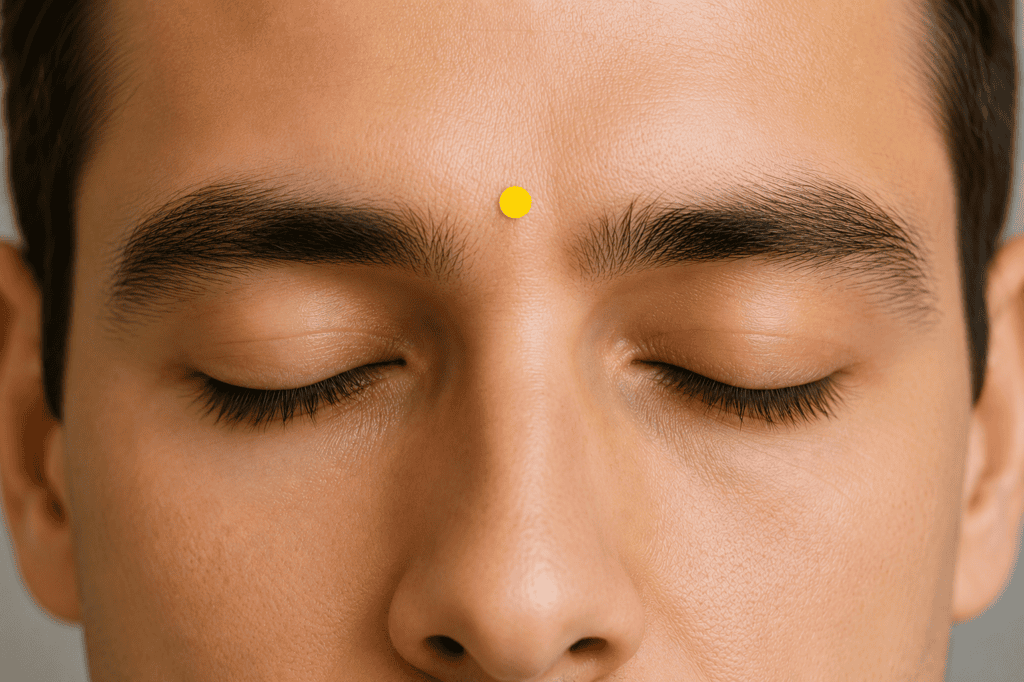
Yintang sits in the small hollow directly between the eyebrows, above the bridge of the nose. This is an extra point, meaning it does not belong to any of the standard channels but has earned its place in the tradition through clinical observation.
Yintang is one of the strongest points for calming the mind, settling the Shen, and quieting the racing thoughts that come with anxiety and stress. The point has a fast effect, often producing a sense of calm within a minute or two of pressure or needling. This is one of the reasons Yintang appears in almost every anxiety treatment, every insomnia treatment, and every treatment for patients dealing with chronic stress.
The Empirical Points
Beyond the standard channel system, acupuncture includes a category called extra points or empirical points. These are points that were discovered through clinical observation over centuries and earned their place in the tradition because they produce reliable effects for specific conditions. Yintang above is one of them. A few others are worth naming.
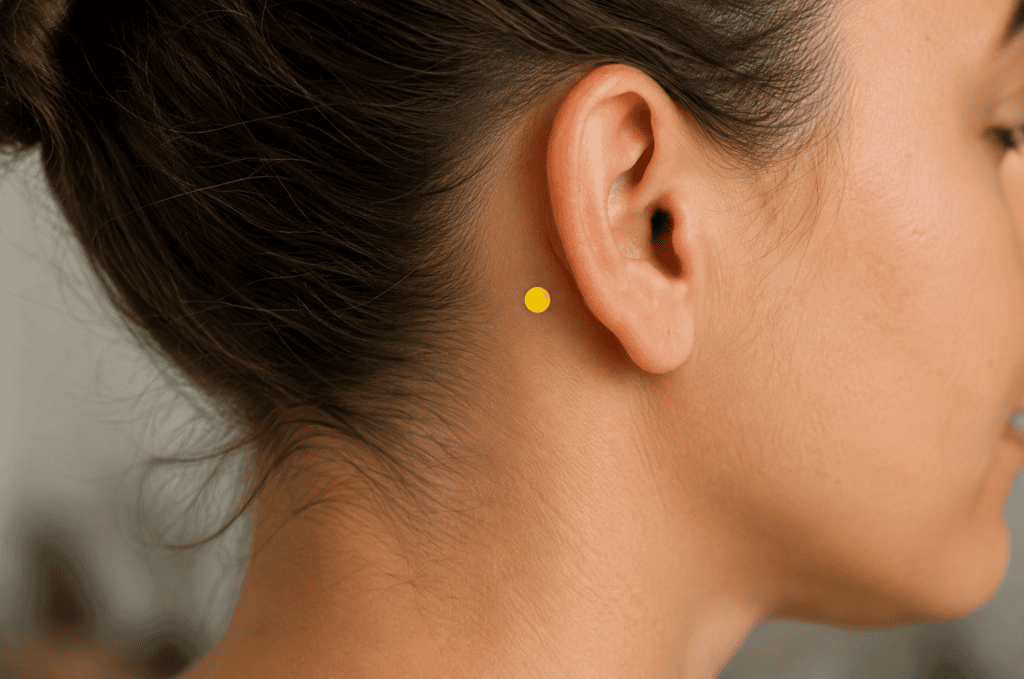
Anmian (Peaceful Sleep) sits behind the ear, in the depression behind the earlobe and slightly toward the back of the neck. The point is used specifically for insomnia and has been observed clinically to produce reliable improvements in sleep quality across a wide range of patients.
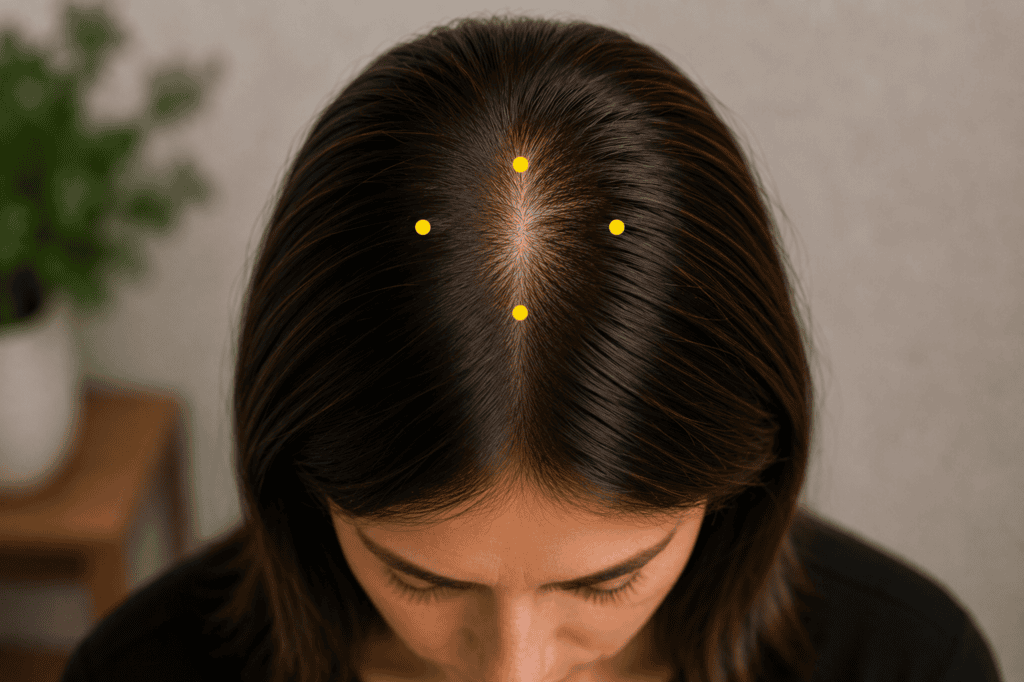
Sishencong (Four Alert Spirit) is a set of four points around the crown of the head, one finger-width in front, behind, and to either side of Baihui (the point at the very top of the head). These points are used for cognitive function, mental clarity, and the calming of the Shen.
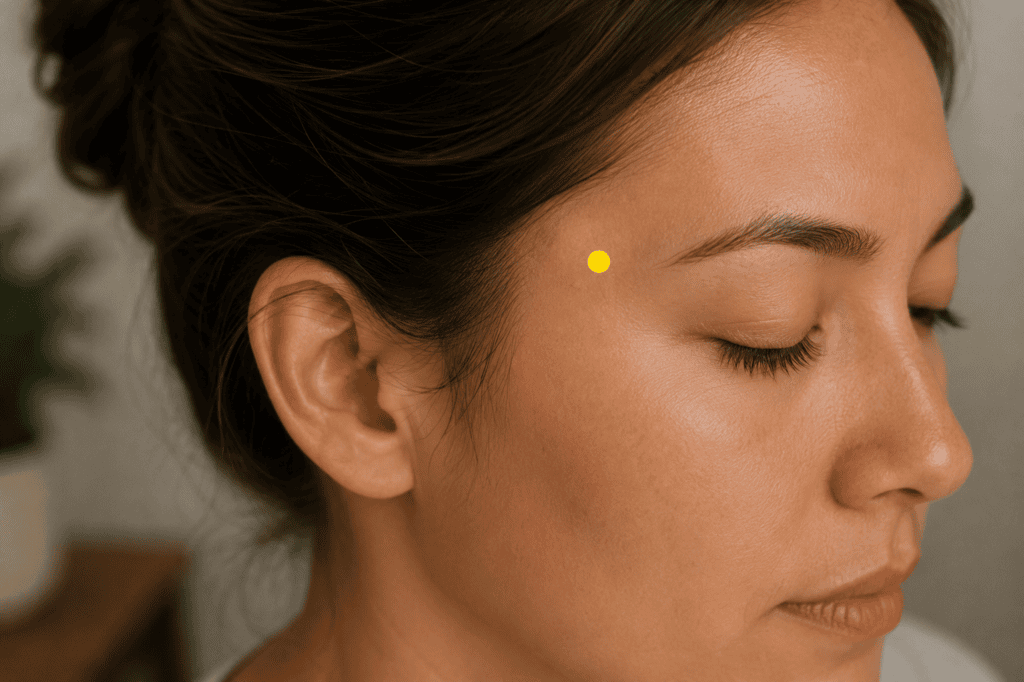
Taiyang (Great Yang) sits in the depression at the temples, about one finger-width behind the outer end of the eyebrow. This point is one of the most used empirical points for headaches, particularly one-sided headaches and migraines that concentrate in the temple region.
Why These Points Come Up So Often
The seven core points and the three empirical points above are not the only important points in acupuncture. But they are the points that appear in almost every acupuncture treatment because they address the patterns that show up in almost every modern patient.
Chronic stress and the Liver Qi stagnation that follows. Digestive dysfunction and the general depletion that accompanies it. Nervous system dysregulation and the sleep, mood, and cardiovascular consequences. Musculoskeletal tension and the headaches and pain that build on top of it. Hormonal irregularities and the broader Yin depletion of the modern lifestyle.
These patterns overlap. A patient rarely comes in with just one. The workhorse points work because they address the patterns rather than the individual conditions. The full picture of how acupuncture affects the body covers the mechanisms in detail.
A licensed acupuncturist trained in the classical framework does not apply these points mechanically. The four golden rules of acupuncture guide how the points are selected for each specific patient based on their particular pattern rather than their disease name. The most important points are the starting frame, not the whole treatment.
Where This Takes You
If you are curious about acupuncture treatment for a specific condition, understanding the workhorse points gives you a sense of what a licensed practitioner draws from in clinical practice. The initial consultation will identify which points are appropriate for your specific pattern. Some conditions will call for the core seven. Others will bring in the empirical points or points from further out in the channel system. Every treatment plan reflects the practitioner’s clinical judgment about what will produce the best outcome for you.
The NCCIH summary on acupuncture describes the research base for acupuncture’s clinical effects. The World Health Organization overview covers the conditions for which acupuncture has documented evidence.
The broader nervous system and stress patterns that many of the workhorse points address are covered in Anxiety, Stress, and Depression.
To learn more about the what this practice offers please check out: Acupuncture, Cupping & Lifestyle Coaching.
Reach out to Above and Beyond Acupuncture on North Frank Lloyd Wright Boulevard in Scottsdale to schedule a consultation.
Schedule an appointment online or call us today to start your healing journey.