Key Takeaways
- Knee pain affects many adults, especially the elderly, and has various causes, including osteoarthritis and ligament injuries.
- Standard treatments like medications and surgery may not resolve chronic knee pain, leaving patients seeking alternative solutions.
- Acupuncture offers significant support for knee pain, backed by research, and addresses underlying issues rather than just symptoms.
- Traditional Chinese Medicine views knee pain through unique patterns, linking it to organ health and systemic conditions.
- An integrated approach combining acupuncture with proper movement, strength training, and holistic care enhances recovery and improves outcomes.
Knee pain is one of the most common musculoskeletal complaints in modern medicine. Roughly 25 percent of American adults experience frequent knee pain, and that percentage rises substantially with age. The knee is a complex joint that carries the weight of the body through every step and every activity, which makes it vulnerable to injury, overuse, and degeneration in ways that few other joints are.
The conventional approach involves anti-inflammatory medications, physical therapy, injections including corticosteroids and hyaluronic acid, and in severe cases surgical intervention. These help many patients but often address only the immediate symptoms without resolving the underlying patterns that produce recurring knee pain. Patients who continue to have significant knee pain despite standard care often benefit from complementary approaches that address the joint dysfunction, tendon and ligament patterns, and constitutional dimensions.
Acupuncture and Traditional Chinese Medicine offer meaningful support for knee pain across a wide range of clinical presentations. The treatment is backed by substantial research including multiple Cochrane systematic reviews for knee osteoarthritis specifically. Here is what knee pain actually involves, why standard care sometimes falls short, and how acupuncture treats it.
What Causes Knee Pain?
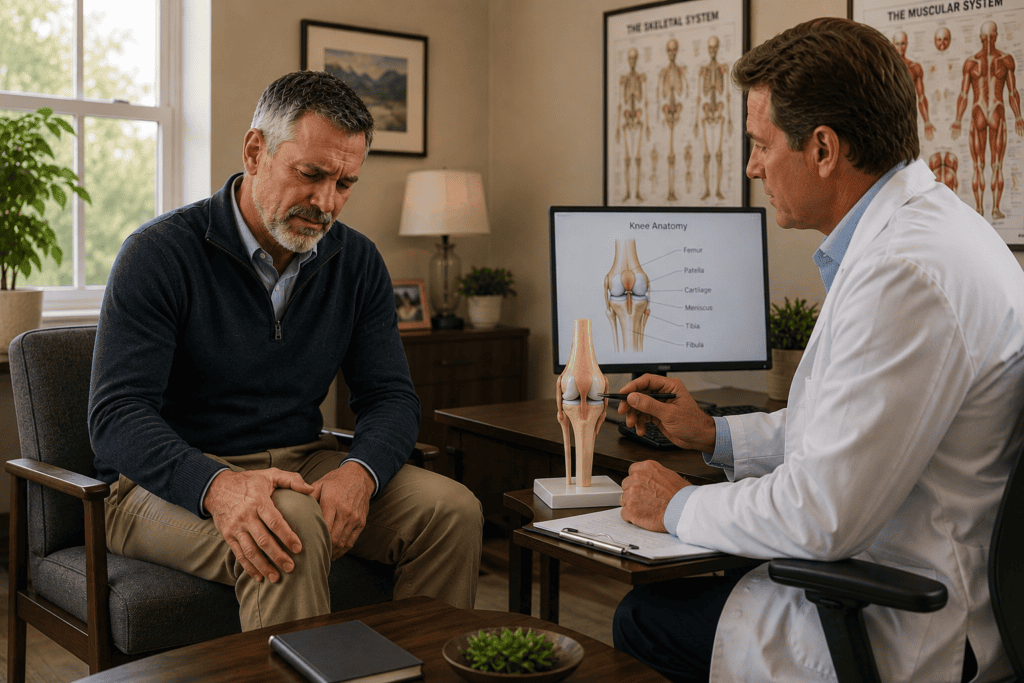
Knee pain has several distinct clinical presentations, and identifying the specific pattern shapes the treatment approach.
- Osteoarthritis is the most common cause of chronic knee pain, particularly in adults over 50. The condition involves cartilage breakdown, joint space narrowing, and eventually bone-on-bone friction. Symptoms include morning stiffness that improves with movement, pain that worsens with activity and improves with rest, and joint stiffness after prolonged sitting.
- Patellofemoral pain syndrome is common in younger adults, particularly women. Anterior knee pain worsens with stairs, squatting, prolonged sitting, and running. The pattern reflects the tracking of the kneecap over the femur and often involves weak or imbalanced quadriceps muscles.
- Meniscus tears occur from twisting injuries in younger patients and from degenerative changes in older patients. Symptoms include clicking, catching, and pain with rotation. Some meniscus tears require surgical repair while others respond to conservative treatment.
- Ligament injuries including ACL, MCL, LCL, and PCL sprains and tears typically occur from acute injuries during sports or falls. Symptoms include instability, swelling, and pain with specific movements. Severity ranges from minor sprains to complete tears requiring surgical repair.
- IT band syndrome produces lateral knee pain in runners, cyclists, and other athletes. The iliotibial band becomes tight and inflamed as it rubs over the outer knee.
- Bursitis involves inflammation of the small fluid sacs (bursae) that cushion the knee. Prepatellar bursitis (housemaid’s knee), pes anserine bursitis, and other patterns produce localized swelling and pain.
- Patellar tendinitis (jumper’s knee) is a common overuse injury involving inflammation and degeneration of the tendon connecting the kneecap to the shinbone. The condition is most common in athletes involved in jumping sports (basketball, volleyball, running) but can affect anyone with repetitive knee stress. Symptoms include pain at the tendon just below the kneecap, particularly with jumping, running, and stairs. Patellar tendinitis is one of the most stubborn knee conditions and often persists despite standard care.
- Referred pain sometimes appears in the knee but originates elsewhere. Hip dysfunction, low back issues, sacroiliac joint problems, and even foot mechanics can produce knee pain without a primary knee pathology.
The Mayo Clinic overview of knee pain and the Cleveland Clinic summary provide the medical framework for understanding the different presentations.
Why Standard Care Sometimes Falls Short
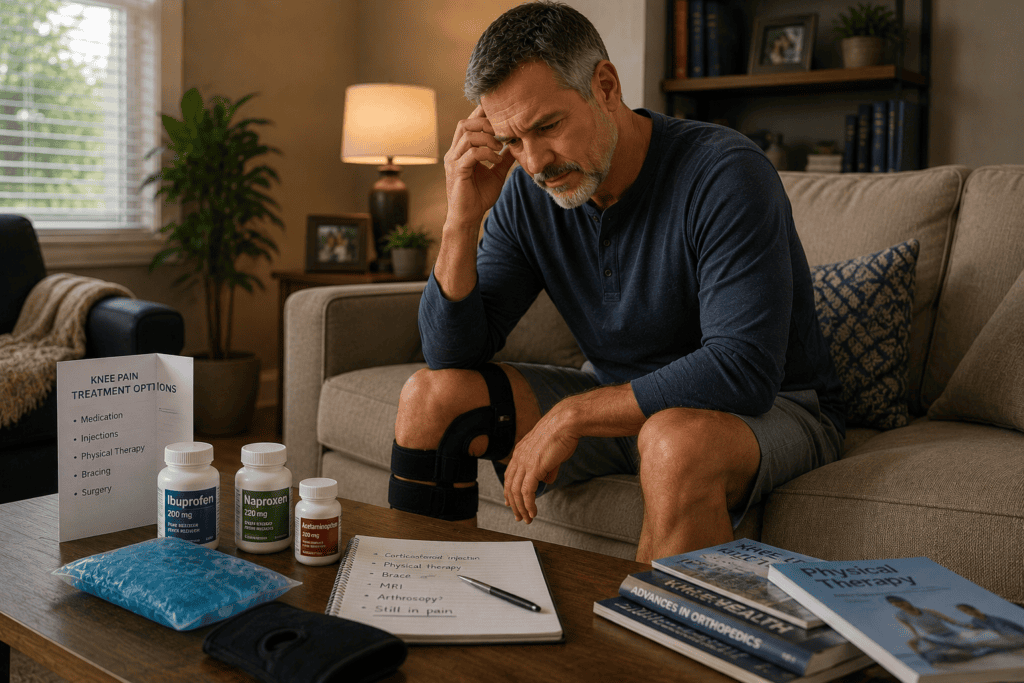
Standard care for knee pain works well for many patients but has limitations that leave others still struggling.
- Anti-inflammatory medications reduce pain and inflammation but do not address the underlying joint dysfunction or tendon degeneration. Long-term NSAID use produces side effects including gastrointestinal, kidney, and cardiovascular concerns.
- Corticosteroid injections provide temporary relief for many patients but repeated injections can actually accelerate cartilage breakdown over time. Hyaluronic acid injections work well for some patients but not others.
- Physical therapy is genuinely important for most knee conditions but requires patient commitment and may not fully address the underlying constitutional patterns.
- Surgery ranges from arthroscopic procedures to total knee replacement. These interventions have their place for specific indications but involve recovery time, potential complications, and in some cases limited long-term outcomes.
- Patients with patellar tendinitis often cycle through multiple interventions without sustained relief because the tendon degeneration involved does not respond well to standard treatments alone.
- Chronic knee pain patients often experience partial relief from standard care but continue to have significant symptoms that limit activity and quality of life. This is where acupuncture and integrated care add substantial value.
How Traditional Chinese Medicine Views Knee Pain
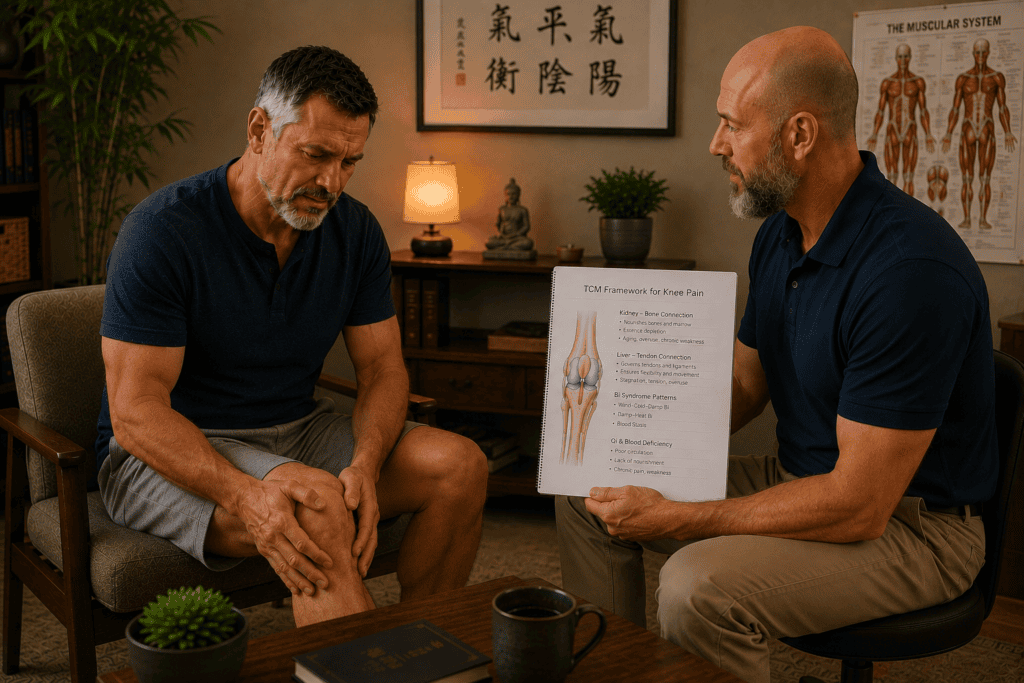
Traditional Chinese Medicine has a rich framework for understanding knee pain that offers a different perspective than Western clinical categories.
- The Kidney-Bone connection. In Chinese medicine, the Kidneys govern the bones and control the deep constitutional reserves. Chronic knee pain, particularly osteoarthritis, often reflects Kidney depletion. Aging, prolonged illness, chronic stress, and constitutional weakness all deplete Kidney essence, which contributes to the bone and joint degeneration underlying chronic knee pain.
- The Liver-Tendon connection. The Liver in Chinese medicine governs the tendons and ligaments. Tendon conditions including patellar tendinitis, IT band issues, and ligament dysfunction reflect Liver system patterns. Liver Blood deficiency in particular is often involved in chronic tendon conditions because the tendons require adequate Blood nourishment to remain healthy.
- Bi syndrome patterns. Bi syndrome refers to painful obstruction and includes several patterns that affect the knee.
- Wind-Cold-Damp Bi produces knee pain that is worse with cold and damp weather. The joint feels stiff and heavy. This pattern often accompanies osteoarthritis in older patients.
- Damp-Heat Bi produces knee pain with warmth, redness, and swelling. This pattern often accompanies acute inflammatory presentations including bursitis and acute arthritis flares.
- Blood Stasis Bi produces sharp fixed pain that is worse at night. This pattern often accompanies injuries and chronic pain that has not fully resolved.
- Qi and Blood deficiency. Chronic knee pain often involves depletion of Qi and Blood, which reduces the body’s ability to nourish and heal the joint tissues.
- A licensed acupuncturist identifies which patterns are dominant and treats accordingly.
How Acupuncture Treats Knee Pain
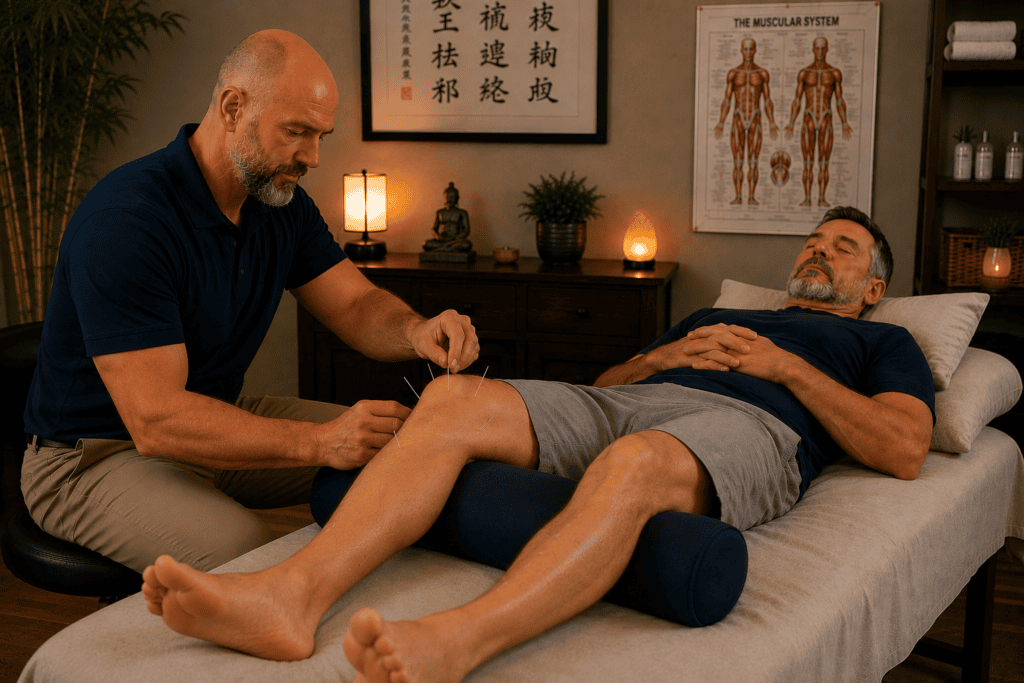
Acupuncture addresses knee pain through several mechanisms that map directly onto the underlying pathophysiology.
- Endogenous pain relief. Acupuncture stimulates the release of endorphins, enkephalins, and other natural pain-relieving chemicals. This produces both immediate pain relief and reduces the overall pain sensitivity that chronic pain patients develop.
- Anti-inflammatory effects. Knee pain involves inflammation of the joint, bursae, or tendons depending on the specific pattern. Acupuncture has documented anti-inflammatory effects through several mechanisms including vagal stimulation and modulation of inflammatory cytokines.
- Improved circulation. Local blood flow to the knee is essential for healing and pain reduction. Acupuncture improves circulation both locally at the joint and systemically.
- Muscular release. The quadriceps, hamstrings, calf, and hip muscles all contribute to knee function. Chronic tension in these muscles either strains the knee or fails to support it adequately. Acupuncture releases this muscular tension directly.
- Tendon and ligament support. For patellar tendinitis, IT band syndrome, and ligament injuries, acupuncture supports the tendon and ligament tissue through improved local circulation and Liver Blood nourishment. GB34 is the influential point for tendons and ligaments and is central to treating these conditions.
- Neurological effects. Acupuncture affects the descending pain modulation system in the brain and spinal cord, which reduces the central sensitization that develops in chronic pain conditions.
- Pattern differentiation. The individualized Chinese medicine approach treats the specific patterns present in each patient rather than applying a uniform protocol. Kidney tonification for depletion patterns. Liver Blood nourishment for tendon conditions. Wind-Cold-Damp expelling for weather-related patterns. Blood-moving techniques for stagnation patterns. This is what makes Traditional Chinese Medicine distinct from protocol-only approaches.
- Patellar tendinitis specifically responds well to acupuncture. The condition involves tendon degeneration rather than pure inflammation, and acupuncture supports the tissue healing that standard anti-inflammatory approaches do not always address. Local needling around the patellar tendon combined with GB34 and pattern-based treatment produces meaningful improvement in many patients who have not responded to physical therapy and injections alone.
The mechanisms of acupuncture and the effect it has on the body are explored in more depth in: What Does Acupuncture Actually Do to Your Body?.
The Research Base
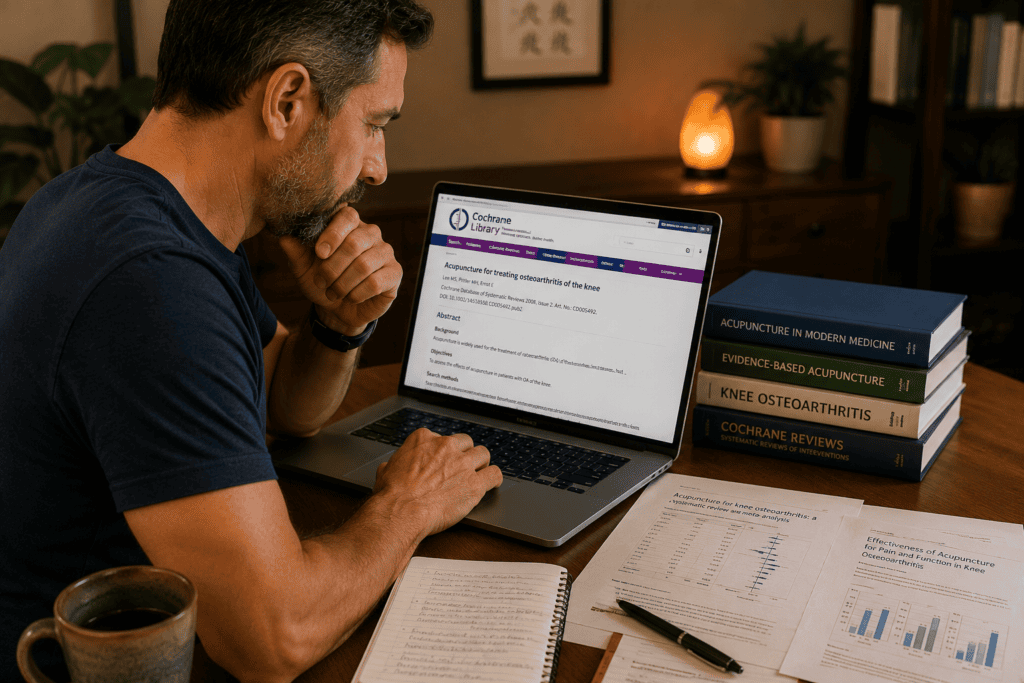
Knee osteoarthritis is one of the most researched applications of acupuncture. Multiple Cochrane systematic reviews have examined acupuncture for knee osteoarthritis and found that acupuncture provides meaningful improvement in pain and function compared to no treatment and compared to sham acupuncture in the short and medium term.
The NCCIH summary on acupuncture covers the broader research base for the treatment as it applies to pain conditions.
Research on patellar tendinitis, IT band syndrome, and other specific knee conditions is more limited but generally positive, and clinical experience supports acupuncture as a valuable component of care for these conditions.
The Integrated Approach
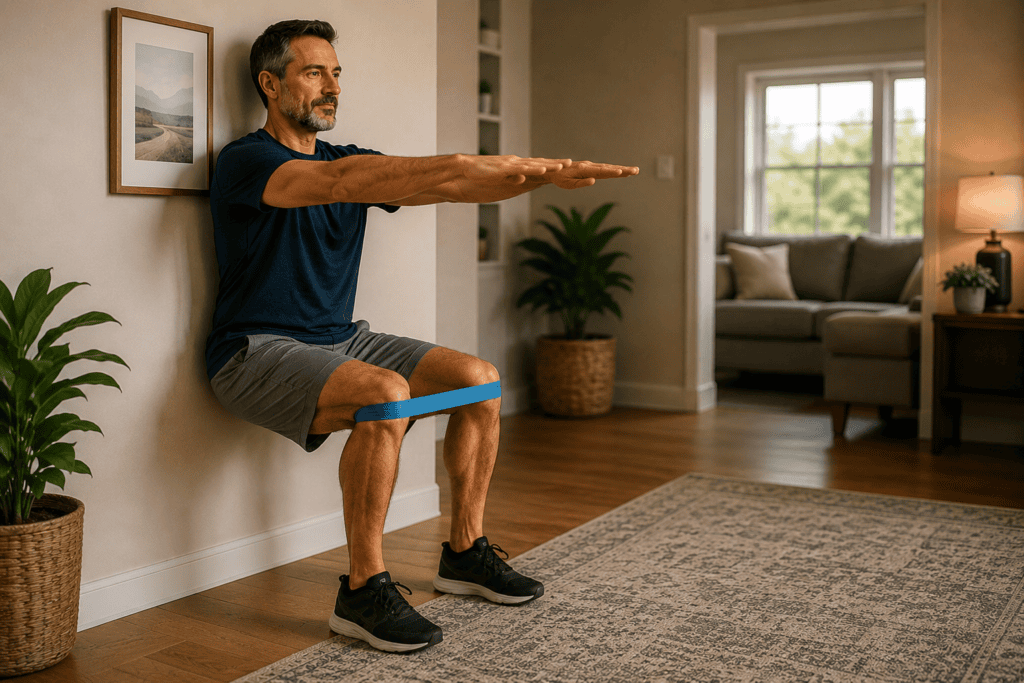
Knee pain responds best to a coordinated approach that addresses all the dimensions.
- Regular acupuncture treatment. Weekly or biweekly acupuncture during the initial course supports pain reduction and healing.
- Appropriate movement. Movement is essential for knee health. Complete rest often makes chronic knee pain worse. The specific type of movement depends on the condition. Walking, cycling, and swimming are often well-tolerated. High-impact activities may need modification.
- Strength work. Quadriceps and hip strength are essential for knee stability. Working with a physical therapist or qualified trainer to develop appropriate strengthening supports the joint and reduces recurring pain.
- Weight management when relevant. Every pound of body weight produces multiple pounds of pressure on the knee during movement. For patients with elevated weight and knee pain, weight reduction produces significant symptom improvement.
- Appropriate footwear. Shoes affect knee mechanics. Working with a shoe fitter or podiatrist when needed to identify appropriate footwear supports knee health.
- Anti-inflammatory nutrition. Chronic inflammation drives knee osteoarthritis and other chronic knee conditions. Anti-inflammatory dietary patterns reduce the overall inflammatory load. The nervous system component contributing to chronic pain patterns is addressed at What Is Inflammation and Why Is It Affecting Me?.
- Sleep and stress management. Chronic pain is worsened by poor sleep and elevated stress. Direct nervous system practices support the healing process.
- Home acupressure practice. Daily acupressure between professional acupuncture sessions supports the ongoing patterns. See How to Use Acupressure for Knee Pain for the specific home practice protocol to use acupressure to provide natural and holistic relief.
- Coordination with orthopedic care. For patients under orthopedic care for their knees, acupuncture works alongside orthopedic treatment rather than replacing it. Communication between providers supports the best outcomes.
When to See a Doctor
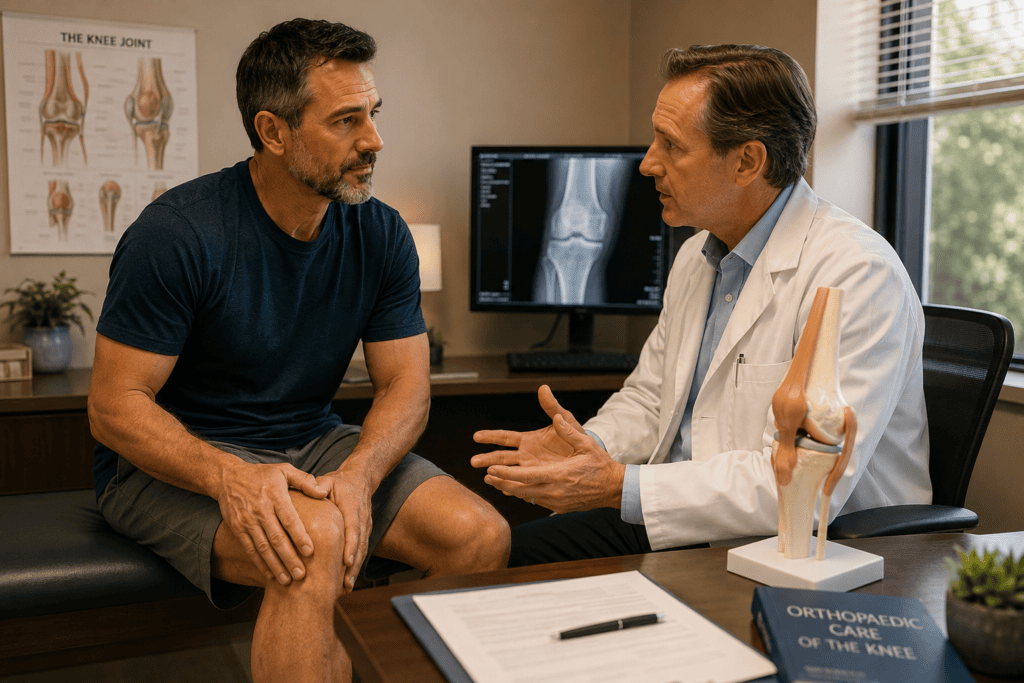
Certain symptoms warrant orthopedic or urgent medical evaluation rather than complementary care alone.
Sudden severe pain from injury. Inability to bear weight on the knee. Obvious deformity of the joint. Warmth and redness suggesting infection. Fever accompanying knee pain. Locking of the knee that prevents movement. Instability that gives way during walking. Rapid worsening of chronic pain without clear cause.
For patients with chronic knee pain that is not fully responding to standard care, acupuncture treatment offers a substantial intervention that addresses the underlying joint, tendon, and constitutional patterns.
For the range of services this practice offers, read: acupuncture, cupping, and lifestyle coaching.
Reach out to Above and Beyond Acupuncture on North Frank Lloyd Wright Boulevard in Scottsdale to schedule a consultation.
Schedule an appointment online or call us today to start your healing journey.
About the Publisher
Paul Kerzner, L.Ac., is a licensed acupuncturist and board-certified herbalist, as well as the founder of Above and Beyond Acupuncture in Scottsdale. His own journey from chronic patient to practicing acupuncturist shapes his commitment to providing honest, clinically grounded information about acupuncture and Traditional Chinese Medicine. Learn more about Paul and his clinical approach on the About Us page.