Key Takeaways
- Some acupressure points may stimulate the uterus and pose risks during pregnancy, so it’s important to know which ones to avoid.
- Key acupressure points to avoid include LI4, SP6, BL60, BL67, GB21, sacral points, and lower abdomen points.
- Safe acupressure points during pregnancy include PC6, HT7, and Yintang, which can alleviate common symptoms.
- Accidentally putting pressure on points you’re avoiding is unlikely to cause harm. If you’re concerned, please check with your provider for reassurance.
- For safe use, apply gentle pressure on permitted points and avoid asking practitioners to press on the abdomen.

Pregnancy can come with various challenges, such as nausea, headaches, back pain, difficulty sleeping, and feelings of worry or anxiety.
Acupressure is a gentle, drug-free way to relieve many of these issues. If you’ve searched for acupressure during pregnancy, you may also have seen warnings about certain points to avoid. These warnings are important to understand.
In Traditional Chinese Medicine, certain points have been avoided during pregnancy for centuries because they are believed to move Qi and Blood downward and may stimulate the uterus. Some are used near the end of pregnancy to help initiate labor, which is why they are avoided earlier.
The good news is that only a few acupressure points need to be avoided, and they’re easy to learn. Many others are safe and helpful during pregnancy. This article explains which points to avoid, where to find them, why they’re avoided, and which are generally considered safe.
Why Certain Acupressure Points Are Avoided During Pregnancy

In Traditional Chinese Medicine, pregnancy occurs when Qi and Blood gather in the uterus to nourish and support the baby. The Conception Vessel and Penetrating Vessel are especially important because they govern the uterus and the blood that sustains the pregnancy.
Some points have a strong downward or moving effect on Qi and Blood. In practice, this effect can help relieve menstrual cramps, address digestive stagnation, or alleviate pain. During pregnancy, however, Traditional Chinese Medicine holds that the same effect could work against the body’s efforts to maintain the pregnancy. Other points lie directly above the uterus or along the nerves that serve it.
It’s important to be clear about the evidence. Research has not shown that pressing these points causes miscarriage, and studies on using them to encourage labor at full term have had mixed results. Even so, acupuncturists routinely avoid these points during pregnancy as a cautious standard practice. Since there are plenty of safe alternatives, it makes sense to avoid taking any risks.
Acupressure Points to Avoid While Pregnant
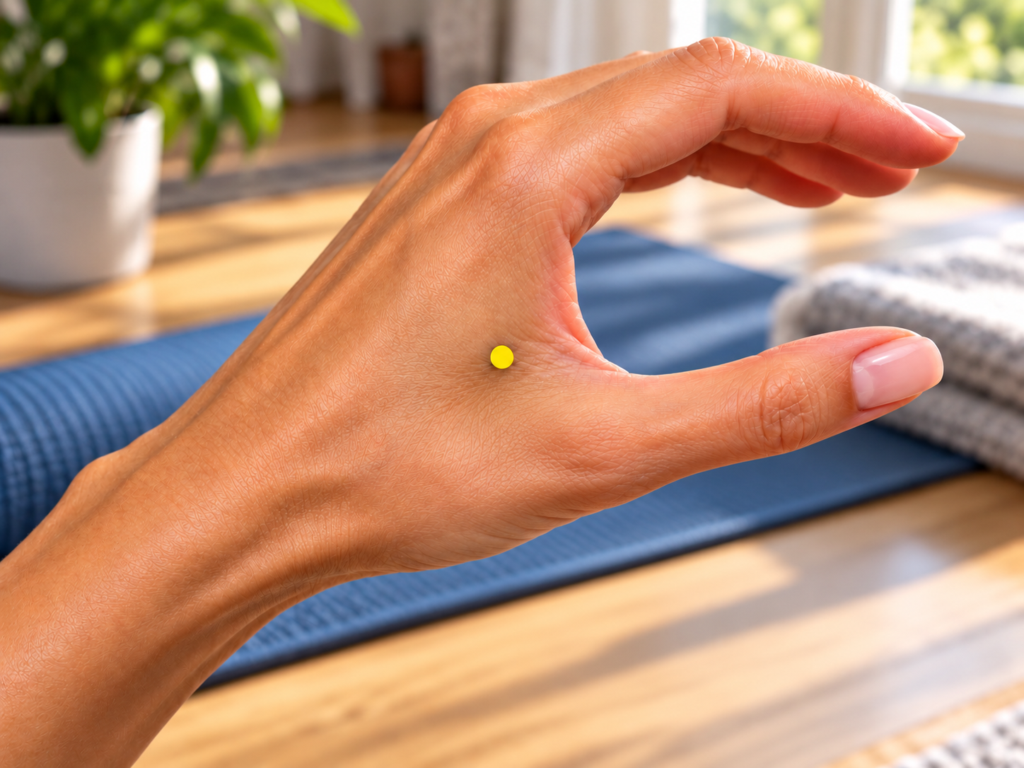
1. Avoid LI4 on the hand. LI4 sits in the webbing between the thumb and index finger, at the highest point of the muscle when you bring the thumb and index finger together. LI4 is called “Hegu,” the “Joining Valley.”
LI4 is one of the best-known acupressure points, so it appears in many self-care books on relieving headaches and pain. It has a strong effect on Qi and Blood and has traditionally been used with SP6 to stimulate labour. It is the point most often listed as off limits during pregnancy.
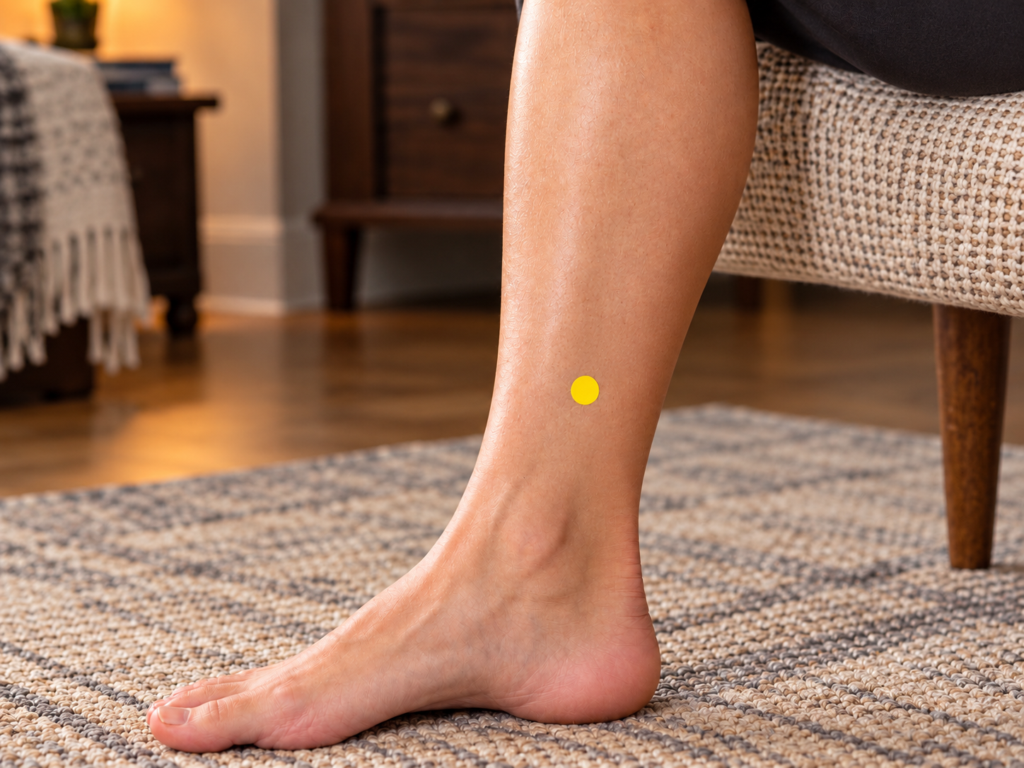
2. Avoid SP6 above the inner ankle. SP6 sits four finger-widths up from the tip of the inner ankle bone, just behind the back edge of the shinbone. SP6 is called “Sanyinjiao,” the “Three Yin Intersection.”
The SP6 point is where the Spleen, Liver, and Kidney channels converge, and all three pass through the uterus. It is one of the most important points for menstrual and gynecological health, which is why it is avoided during pregnancy until full term.
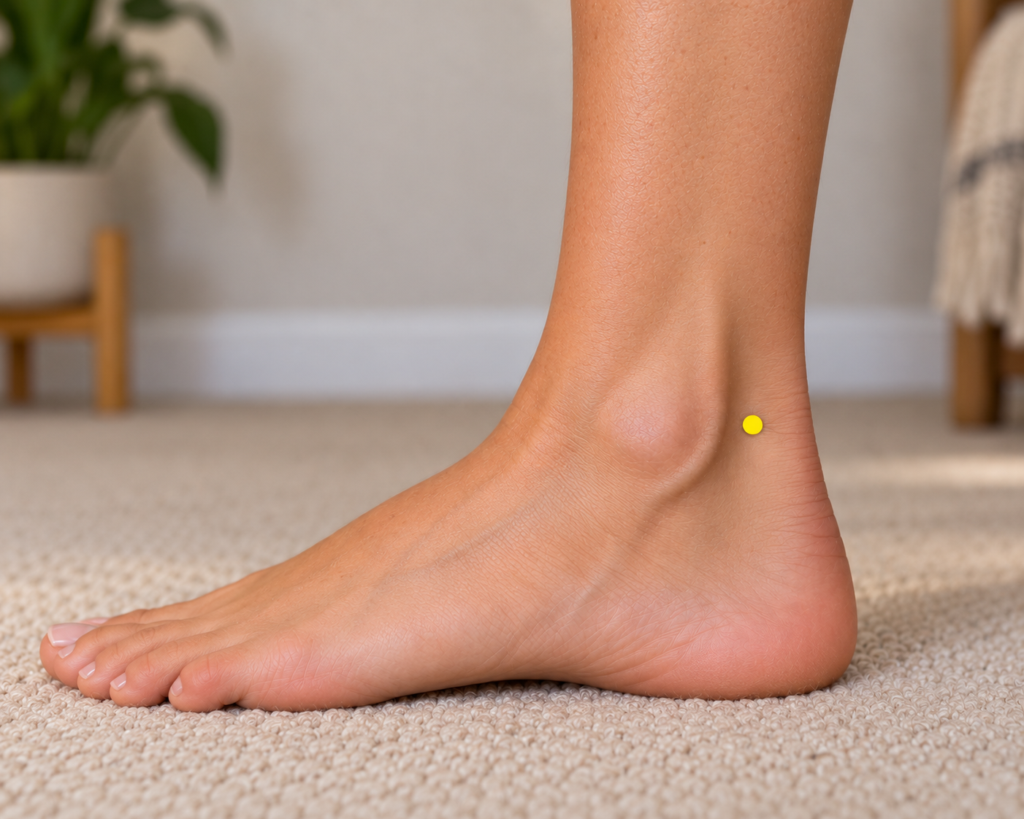
3. Avoid BL60 behind the outer ankle. BL60 sits in the hollow between the outer ankle bone and the Achilles tendon, level with the tip of the ankle bone. BL60 is called “Kunlun,” the “Kunlun Mountains.”
BL60 is often linked to back pain and headaches, but it also has a strong downward effect along the Bladder channel. For this reason, Traditional Chinese Medicine has long included it among the points to avoid during pregnancy.
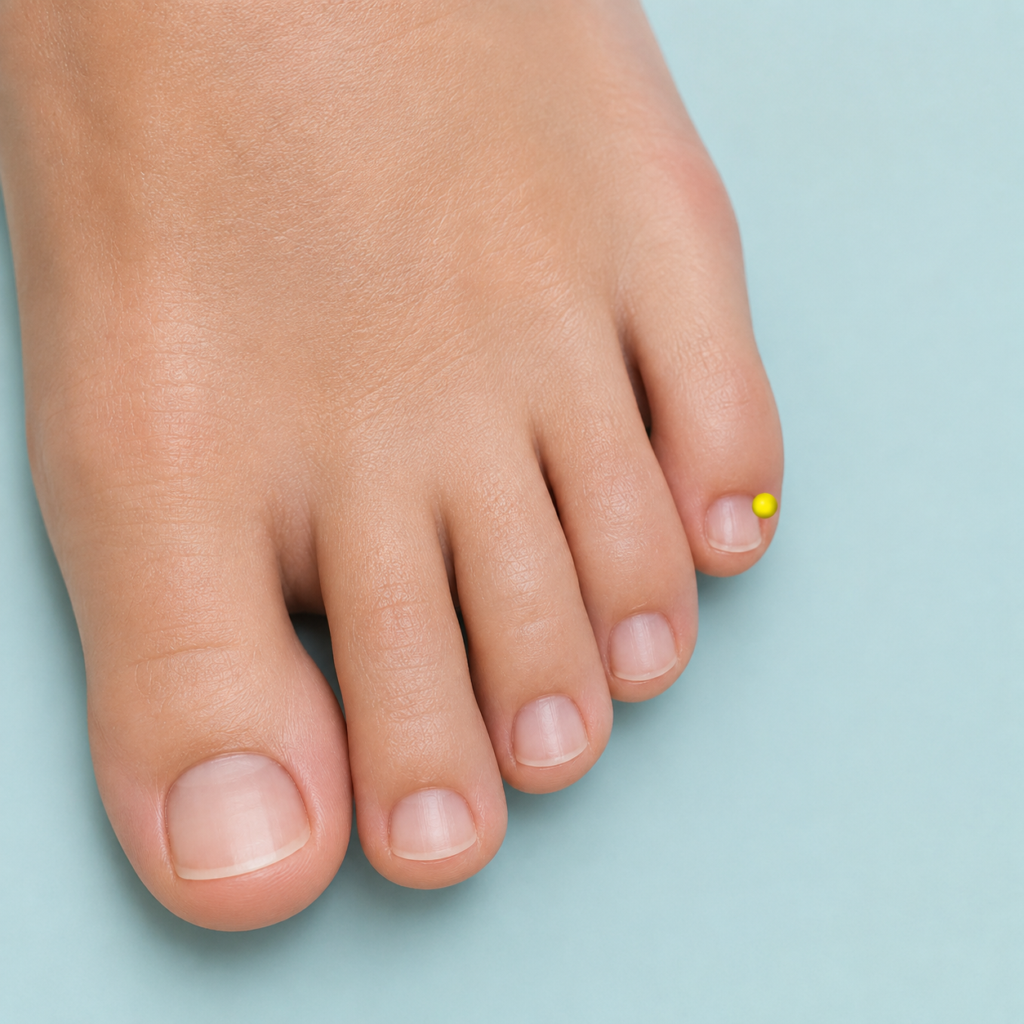
4. Avoid BL67 on the little toe. BL67 sits on the outer corner of the little toe, just behind the corner of the toenail. BL67 is called “Zhiyin,” the “Reaching Yin.”
BL67 is usually used with gentle warming to help a baby turn head-first. Because it strongly affects the uterus, it is not used during pregnancy unless it is being used for this specific purpose under the supervision of a qualified practitioner.
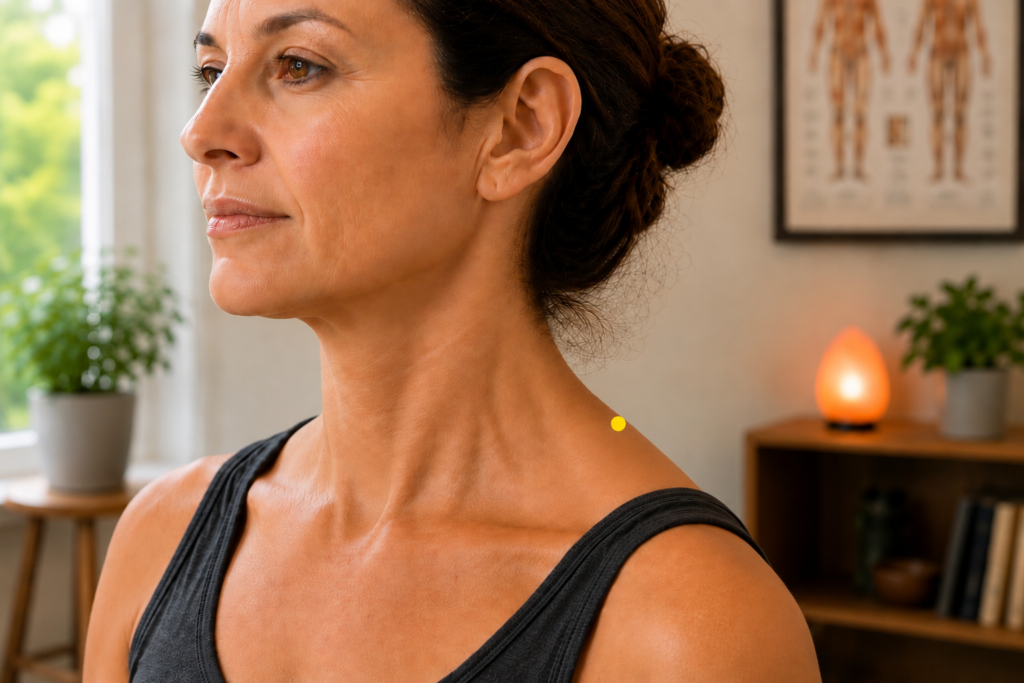
5. Avoid GB21 on the top of the shoulder. GB21 sits on the top of the shoulder, halfway between the base of the neck and the bony tip of the shoulder, at the highest point of the shoulder muscle. GB21 is called “Jianjing,” the “Shoulder Well.”
GB21 is commonly associated with shoulder tension, so it’s easy to apply pressure to this point unintentionally during a shoulder massage. Because it has a strong descending effect on Qi, firm pressure here is avoided during pregnancy. A gentle shoulder massage that avoids this point is therefore preferred.
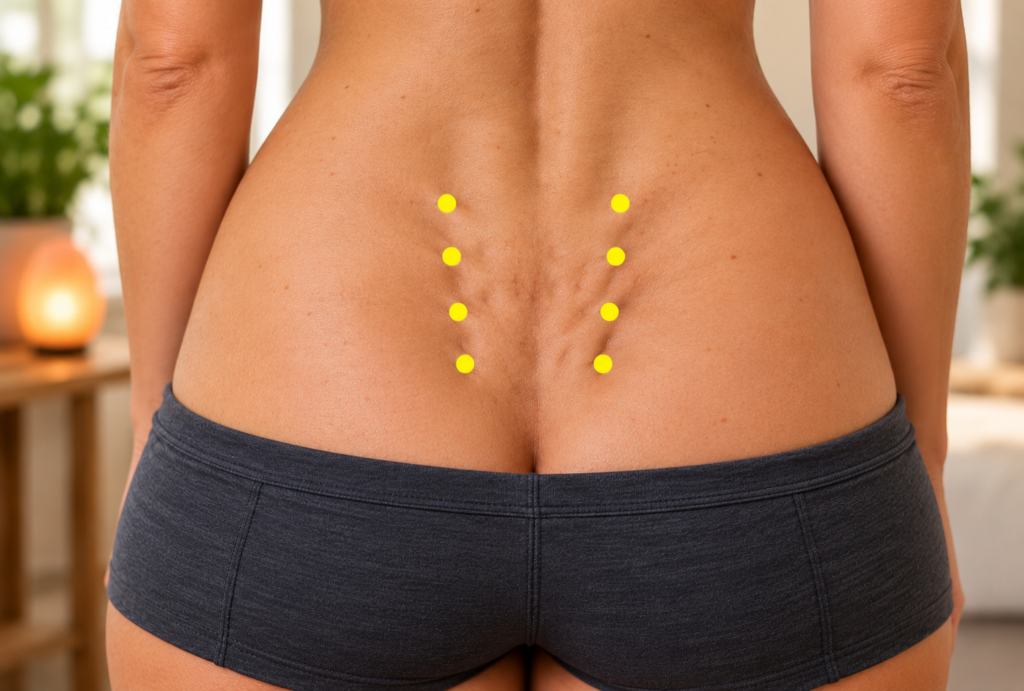
6. Avoid firm pressure on the sacral points of the lower back. The sacral points, BL31 through BL34, are four pairs of points that sit in the small hollows running down both sides of the sacrum, the flat, triangular bone at the base of the spine. Together, they are called “Baliao,” the “Eight Crevices.”
These points lie directly above the nerves that supply the uterus and pelvis and have traditionally been used to relieve labor pain. During pregnancy, avoid applying firm, continuous pressure to them. A light, general lower-back massage from a qualified prenatal massage therapist is different; deep pressure on these hollows should be avoided until after pregnancy.
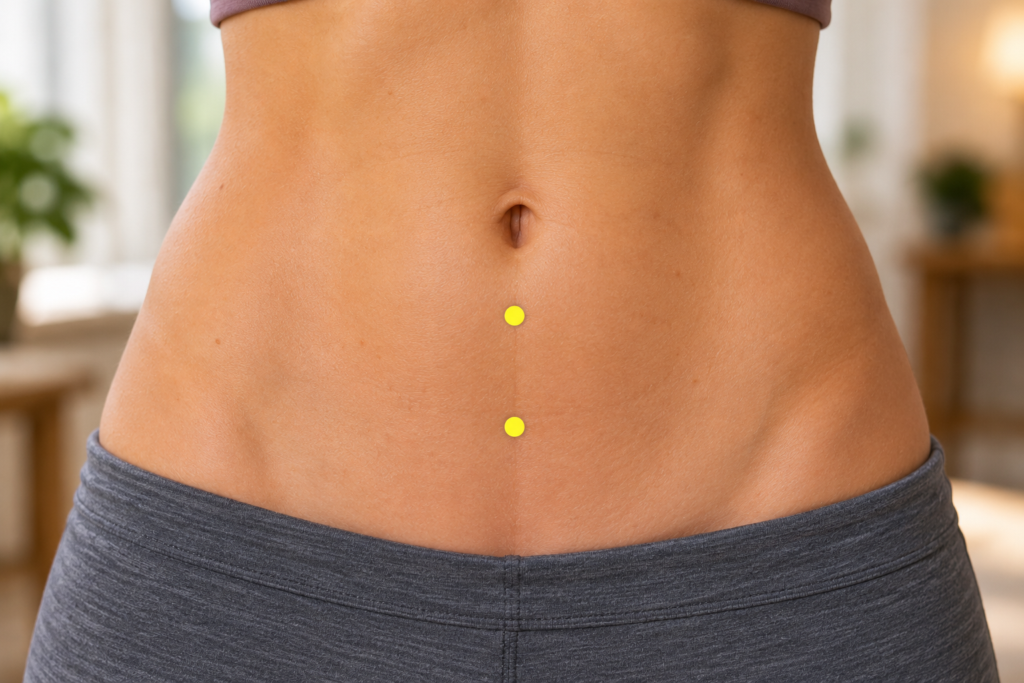
7. Avoid pressure on the points of the lower abdomen. The points along the midline of the lower abdomen, including CV4, four finger-widths below the navel, and CV6, two finger-widths below the navel, sit directly over the uterus. CV4 is called “Guanyuan,” the “Gate of Origin,” and CV6 is called “Qihai,” the “Sea of Qi.”
Some of these points are very useful in Traditional Chinese Medicine for matters relating to the menstrual and reproductive systems, but when a woman is pregnant, she should not have acupressure applied to her lower abdomen; it is all right instead to give a gentle touch or to rest one’s hand on the belly.
Which Acupressure Points Are Typically Safe During Pregnancy?
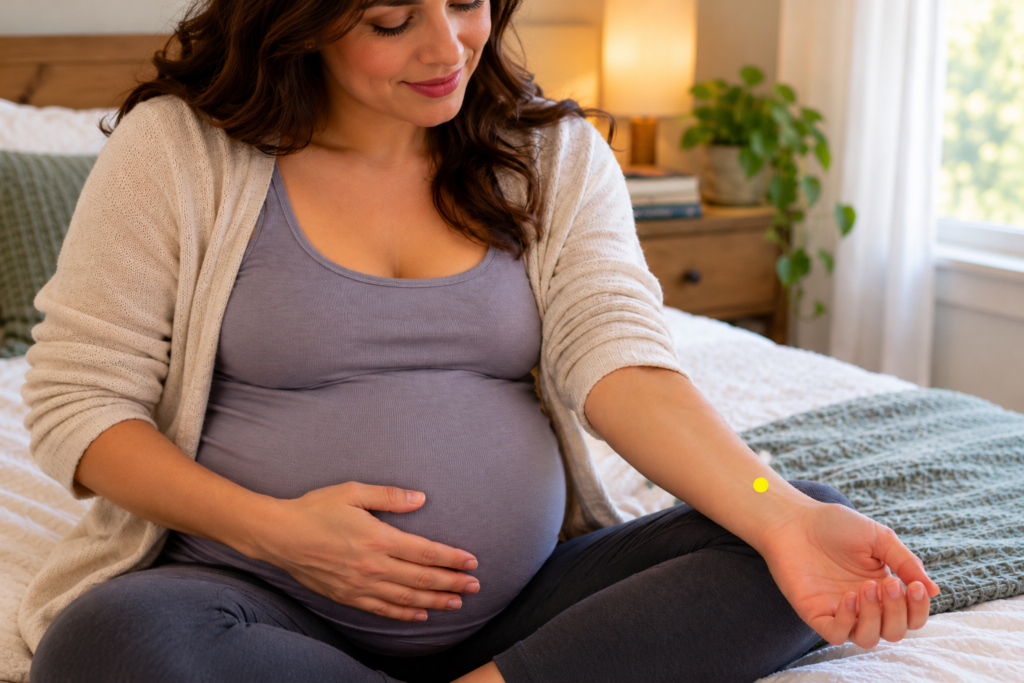
Avoiding a few points doesn’t mean you need to give up acupressure during pregnancy. These gentle points are generally considered safe and can help ease common pregnancy complaints.
- PC6 (Neiguan) sits on the inner forearm, three finger-widths above the wrist crease, between the two tendons. It is the most studied point for nausea and is the point used in pregnancy nausea wristbands. Learn more about acupressure for morning sickness.
- HT7 (Shenmen) sits on the inner wrist crease, on the pinky side, in the small hollow just inside the tendon. It calms the mind and helps with restless sleep and worry.
- Yintang sits in the small hollow directly between the eyebrows. Gentle pressure here eases tension, headaches, and anxiety.
Even when using safe points, apply gentle, steady pressure. Stop if you feel uncomfortable, and let your midwife or doctor know you’re using acupressure.
What If You Accidentally Pressed One of These Acupressure Points?

There’s no need to worry.
Simple actions like rubbing your hands, giving your shoulder a quick rub, or brushing your ankle aren’t the same as applying firm, intentional pressure. Traditional warnings refer to deliberate stimulation, usually held for a minute or longer. If you’re concerned or notice any unusual symptoms, contact your midwife or doctor. Brief, accidental contact with these points is very unlikely to cause harm.
When These Points Are Used on Purpose

Many of the points on this list, particularly LI4, SP6, BL60, BL67, and the sacral points, are also used late in pregnancy to prepare the body for labor and relieve labor pain. That is why they are avoided earlier in pregnancy. If you are considering using them at full term, consult your midwife or doctor first.
If you want to find out more, you can read about using acupressure to induce labor and about acupressure for labor pain.
How to Safely Use Acupressure During Pregnancy

- Avoid the points on this list until you reach full term and your provider approves their use.
- Use gentle, steady pressure on safe points, and never press hard enough to cause pain.
- Do not press on the abdomen.
- Tell any massage therapist, bodyworker, or practitioner that you are pregnant before treatment begins.
- Stop and contact your provider if you notice cramping, bleeding, or anything that feels unusual.
- Work with a licensed acupuncturist trained in prenatal care for anything beyond simple self-care. Learn more about the benefits of acupuncture while pregnant.
When to Seek Professional Help

Contact your midwife or doctor right away if you have vaginal bleeding; abdominal or lower-back cramping or pain; regular contractions or tightening before thirty-seven weeks; fluid leaking from your vagina; or a noticeable decrease in your baby’s movements. Seek prompt care for a severe headache, vision changes, sudden swelling of your face or hands, or pain beneath the ribs on your right side, as these may be signs of preeclampsia. Also seek care if vomiting is so frequent that you cannot keep food or fluids down, or if you feel dizzy or faint. Acupressure is a gentle, holistic, and supportive practice during pregnancy. It may complement prenatal care but should not replace it.
For related health concerns, acupressure for morning sickness and acupressure for postpartum anxiety are companion posts. If you are new to acupressure, please read what is acupressure.
Above and Beyond Acupuncture offers acupuncture, cupping, and lifestyle coaching at the North Frank Lloyd Wright Boulevard location in Scottsdale.
Schedule an appointment online to start your healing journey.
The points above are only as effective as the technique used to apply them. Where to press, how firmly, and for how long all affect the result. For a full breakdown of how to perform acupressure properly at home, read Performing Acupressure in 3 Easy Steps.

About the Publisher
Paul Kerzner, L.Ac., is a licensed acupuncturist and board-certified herbalist, as well as the founder of Above and Beyond Acupuncture in Scottsdale. His own journey from chronic patient to practicing acupuncturist shapes his commitment to providing honest, clinically grounded information about acupuncture and Traditional Chinese Medicine. Learn more about Paul and his clinical approach on the About Us page.