Key Takeaways
- Acupressure socks, slippers, pillows, and rings are designed to stimulate the feet, hands, and neck automatically, without requiring you to press specific points by hand.
- Very few of these products have been tested directly, so most evidence comes from related research on spiked insoles, reflexology, pillow design, and hands-on acupressure.
- In one small study, spiked sandal insoles improved standing balance in older adults, while magnetic insoles were no more effective than plain cushioned insoles for heel pain.
- Reflexology socks with printed foot maps apply no pressure; they simply guide you to press the feet by hand.
- These products are inexpensive and generally safe for healthy people, but anyone with diabetes, neuropathy, poor circulation, or swelling in the hands or feet should use caution.
In parks across China, older adults often stroll slowly along paths covered with rounded stones, usually barefoot or in thin cloth shoes. The practice stems from the belief that points on the soles of the feet connect to the rest of the body, and that pressing them each day helps keep everything working well. Similar ideas apply to the hands, where several channels begin and end at the fingertips, and to the base of the skull, where tension can build up from the neck and shoulders.
Modern acupressure products bring this idea into everyday life. Some slippers have rubber nubs inside, while socks may feature colorful maps of the organs. Pillows can be covered with small plastic spikes, and spiky metal rings are designed to roll up and down the fingers. These products are sold in pharmacies, wellness shops, and many online stores, often with promises of better sleep, pain relief, improved circulation, or even detoxification.
It’s easy to understand why these products are popular. Manual acupressure takes time, some knowledge of pressure-point locations, and the patience to hold each point. A slipper or pillow promises a similar benefit while you walk around the house or drift off to sleep.
Research on these products is limited and mixed. Some have never been studied directly, while related research on others offers clues about what they may actually do. Some common claims have also been tested and found to be untrue.
The following sections explain what each product is, what the evidence shows, how to use these tools safely, and how they compare with hands-on acupressure.
What Are Acupressure Socks, Slippers, Pillows, and Rings?
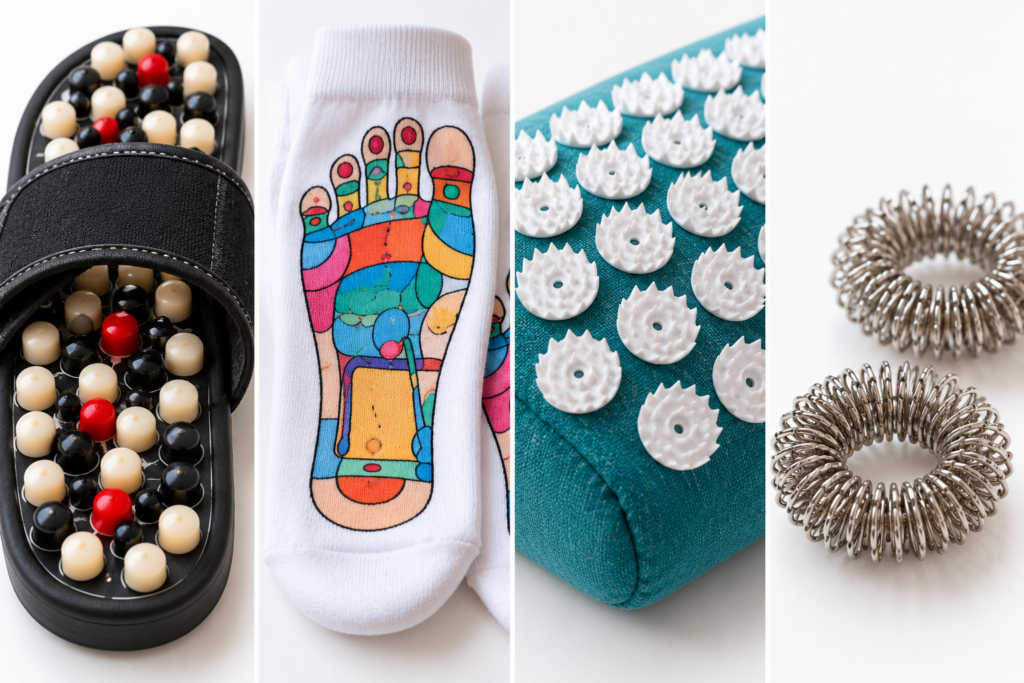
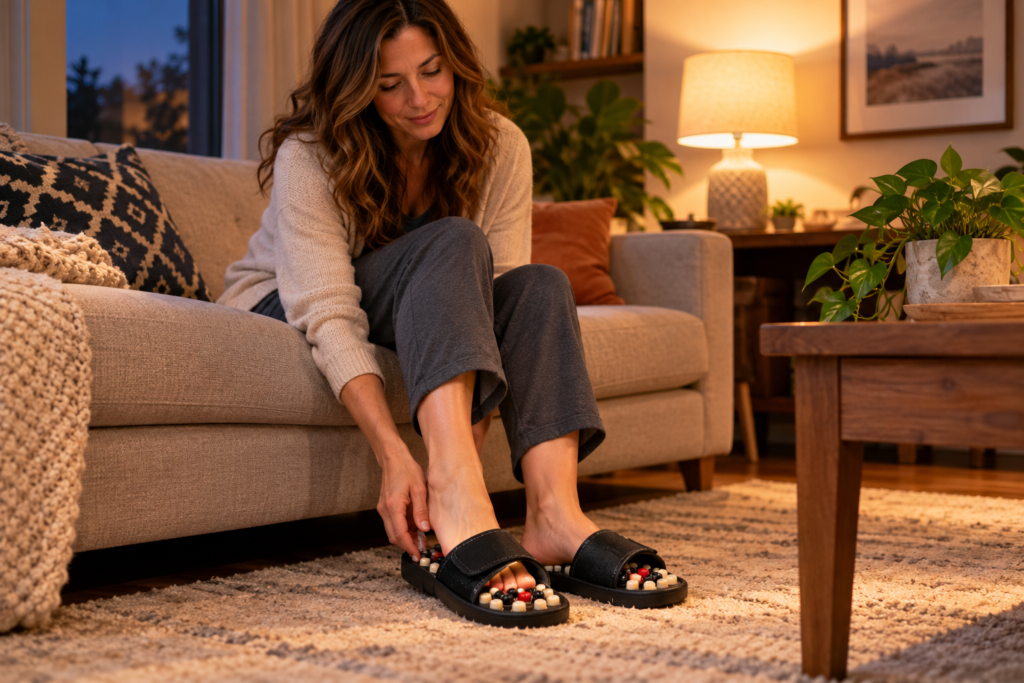
Acupressure slippers and sandals have rubber or plastic nubs on their soles that press into the feet with each step. Some designs also include small magnets, and similar products are available as removable insoles for regular shoes.
Acupressure socks come in two main forms. Reflexology socks have a printed map showing which parts of the sole are said to correspond to each organ, but they apply no pressure. The other type has raised silicone or rubber dots on the sole, which mainly provide grip and offer a very light massage as you walk.
Acupressure pillows are typically foam pillows fitted with the same plastic spikes found on acupressure mats, and they’re often sold as part of a mat set. They’re designed to sit under the neck, at the base of the skull.
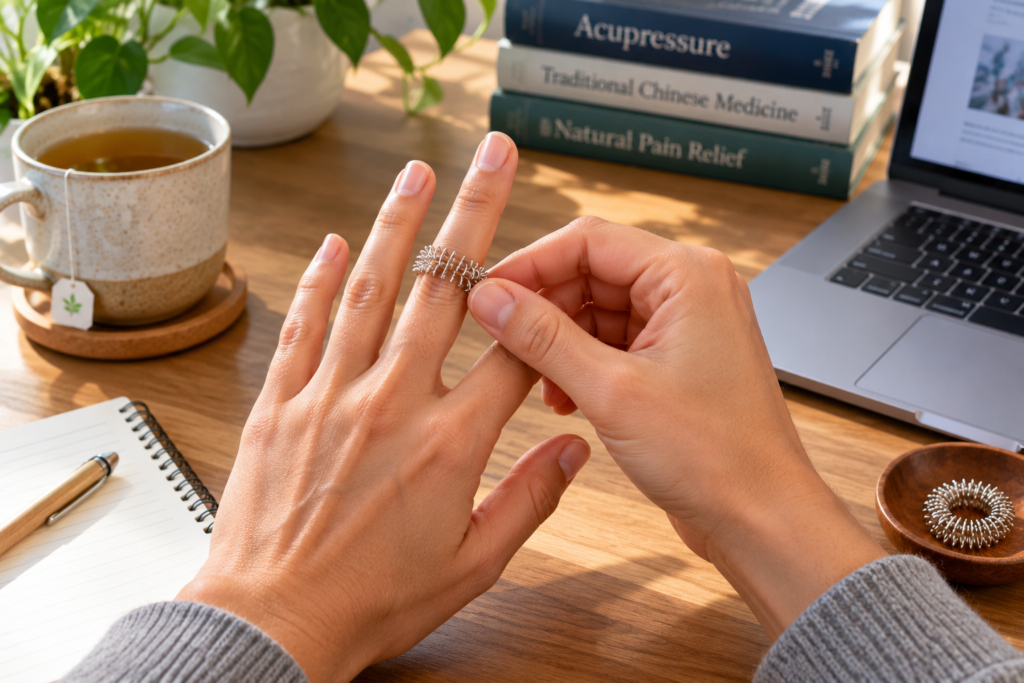
Acupressure rings, also called Su Jok rings or spiky finger rings, are small, coiled metal springs with blunt spikes. You slide one onto a finger and roll it up and down to stimulate the skin and joints. They come from Su Jok therapy, a Korean practice that treats the hands and feet as maps of the whole body.
How These Products Are Believed to Work
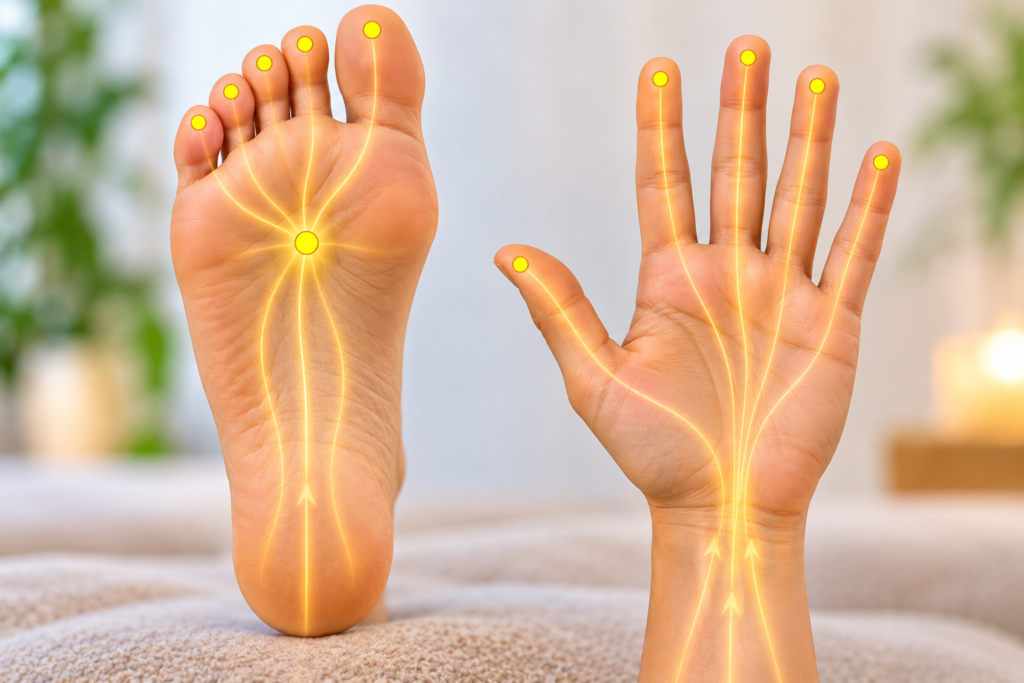
The soles of the feet and the palms of the hands are rich in nerve endings that respond to pressure, texture, and movement. Firm, uneven pressure in these areas sends a steady stream of signals to the spinal cord and brain. This input may help improve balance, as the feet constantly report on posture, and may also help suppress pain, much like rubbing a painful area can make it feel better.
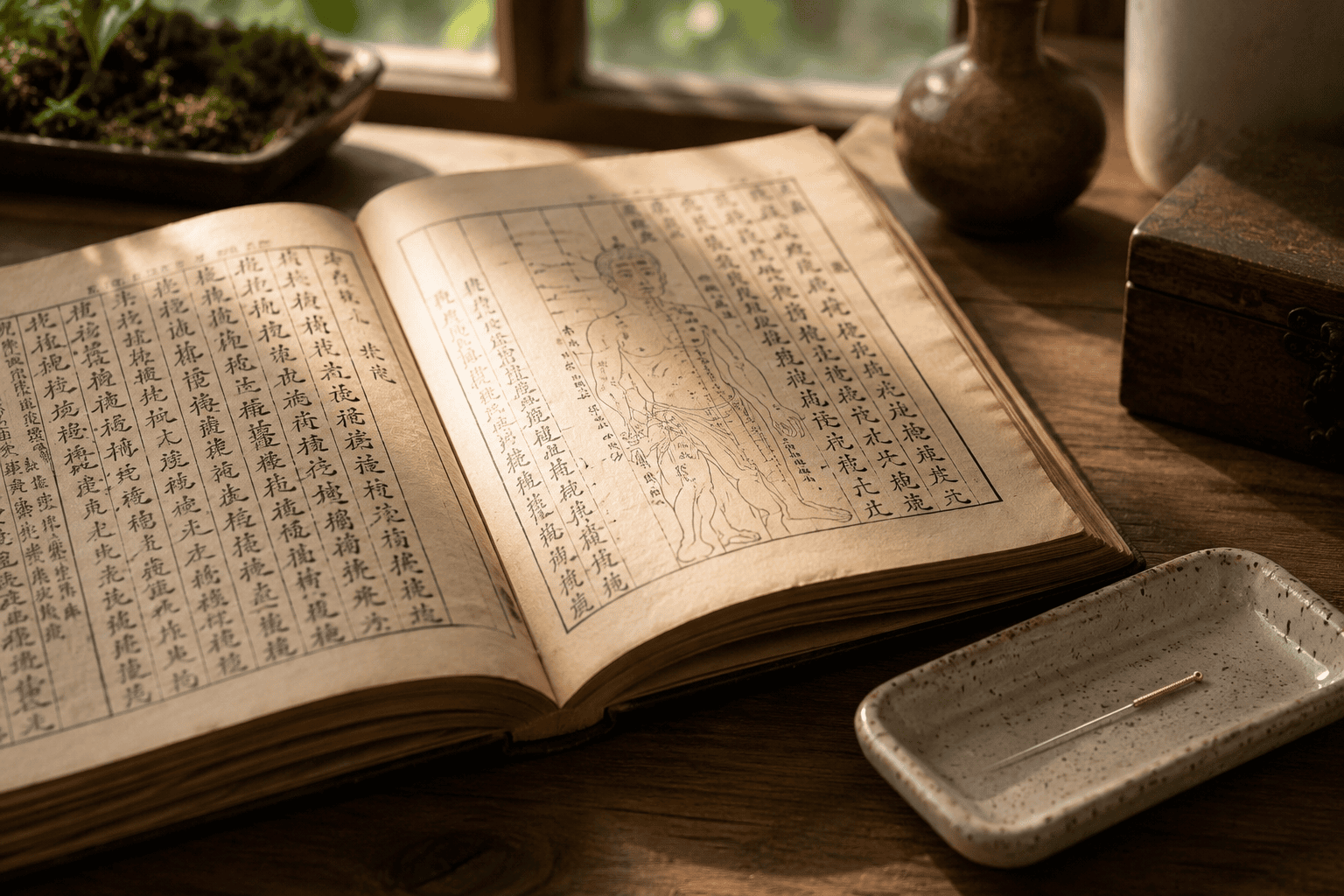
In Traditional Chinese Medicine, the feet and hands are considered highly important. KI1 (Yongquan, the ‘Gushing Spring’) lies on the sole of the foot and is traditionally used to calm the mind, anchor the body, and draw excess energy downward. The fingertips and toes contain the Jing-Well points, where various channels begin or end and where Qi is said to change direction. GB20 and GV16 are located at the base of the skull, where the neck meets the head, and are used for headaches, neck tension, and stiffness. Products that apply pressure to these areas stimulate several points at once rather than targeting any one point in particular.
What the Research Shows
Since these products differ so much, it’s helpful to consider each one separately.
Slippers and spiked insoles show the most promise in research. In one small study, 19 older adults and 19 young adults stood or walked for five minutes wearing sandals with spiked insoles. The sandals had no immediate effect, but after five minutes, the older adults showed a significant improvement in their balance while standing still, and the young adults also improved. The authors note that the effect may be temporary and say more research is needed on longer-term use.
Magnets, a common add-on, have not held up as well. In a randomized controlled trial at the Mayo Clinic, 101 adults with heel pain wore cushioned insoles every day for 8 weeks. Half had active magnets in their insoles, and half had inert (dummy) magnets. Both groups improved by a similar amount: morning foot pain fell from around 7 to around 4 on a 10-point scale. The cushioning appeared to help, but the magnets made no difference.
Socks themselves have not been studied, but foot reflexology has. A meta-analysis of 44 studies found that foot reflexology significantly affected fatigue and sleep, with a smaller effect on pain; the authors described it as a useful nursing intervention. In those studies, trained practitioners applied pressure by hand. The sock with the map is therefore useful only as a guide for applying pressure to the feet by hand, while socks with silicone dots provide only very light stimulation, not an actual foot massage.
Pillows have more evidence supporting their shape than their spikes. A systematic review and meta-analysis of 35 studies on pillow design found that both rubber and spring pillows effectively reduced neck pain, waking symptoms, and neck disability in people with chronic neck pain. The shape and height of the pillow also significantly affected neck alignment. There has been little to no direct research on spiked acupressure pillows. However, a separate meta-analysis of 32 randomized trials found that acupressure improved sleep quality compared with sham treatment, with the greatest effects on time to fall asleep and total sleep time. The trial protocols involved applying firm pressure to selected points, most commonly HT7 on the wrist, for one to five minutes several times per week. This differs substantially from resting your head on a spiked surface.
Rings have no published trials of their own. The closest research comes from Su Jok therapy, the method from which the rings originate. In a randomized trial of 48 patients with gastrointestinal cancer, Su Jok seed therapy (seeds placed on specific points on the hands) led to significant improvements in pain, fatigue, insomnia, and nausea and vomiting scores. Those results are for placing seeds on the points, not for rolling a ring up and down the fingers.
The research taken as a whole suggests that firm-textured stimulation of the feet may support balance, cushioning is more helpful for sore feet than magnets, and pillow shape matters more for neck pain than spikes. The clearest benefits in the related research came from applying pressure to specific points, either by a practitioner’s hands or with a tool placed on the point, rather than from general stimulation.
What These Products Can and Cannot Do
When used appropriately, these items can be very comfortable. Nubbed slippers can help revive tired feet and provide additional sensory stimulation while standing or walking. For those who enjoy the sensation, a spiked pillow can effectively relieve tension at the base of the skull. A finger ring offers a simple way to ease hand stiffness or serve as a fidget for extended periods at a desk. Reflexology socks can be a useful guide for those learning to work on their own feet.
These products can’t diagnose or treat disease, and claims that they detoxify, cure insomnia, balance hormones, or promote weight loss go well beyond the evidence. They can’t target specific points: they apply light, even pressure over large areas, rather than the firm, focused pressure Traditional Chinese Medicine uses for specific purposes (e.g., PC6 for nausea, HT7 for sleep).
How to Use Acupressure Products Safely
Most people find these products comfortable to use when they ease into them gradually.
- Wear acupressure slippers for 5 to 10 minutes at first, then gradually increase to 20 to 30 minutes, rather than wearing them all day.
- Stand and walk on a stable, flat surface, and hold onto a counter or railing until the sensation feels familiar.
- Rest the head on a spiked pillow for 5 to 10 minutes, and use a regular supportive pillow for sleeping through the night.
- Roll a finger ring slowly up and down each finger several times, using gentle pressure, and stop if the skin becomes red, sore, or scratched.
- Use reflexology socks as a guide, pressing each area of the sole firmly with the thumb for 30 seconds to a minute.
- Check the skin of the feet and hands after each use, especially when trying a new product.
Mild redness that fades within an hour is normal. Bruising, broken skin, or lingering pain means you should stop or use less pressure.
Who Should Be Careful With Acupressure Products
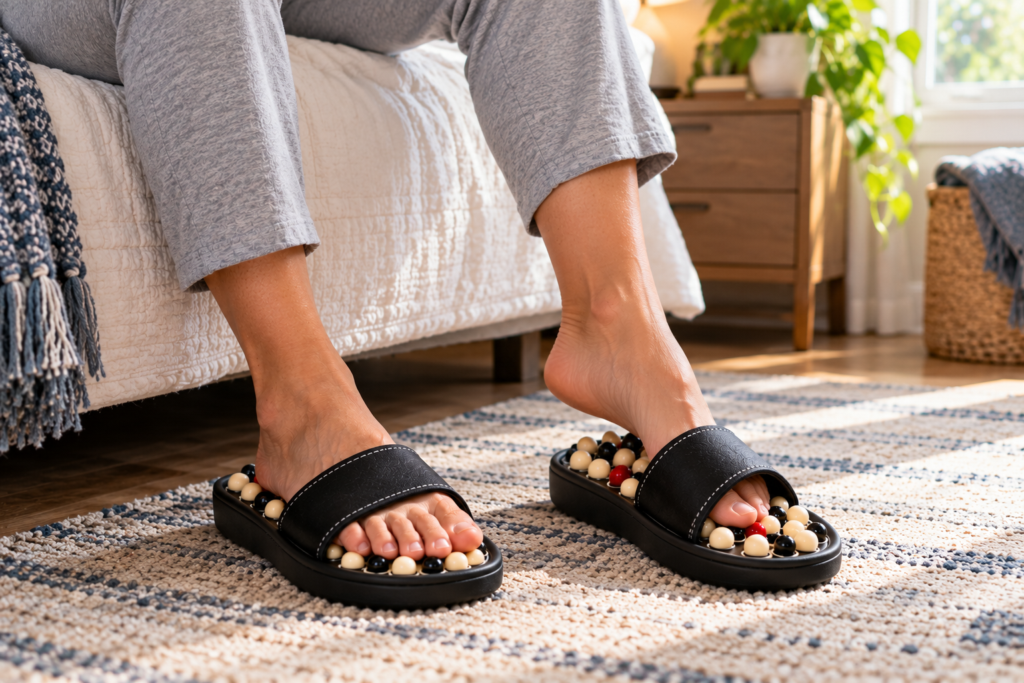
People with diabetes, peripheral neuropathy, or poor circulation in their feet should avoid nubbed slippers and insoles. If they do use them, they should first get their doctor’s approval, as reduced sensation can cause blisters and skin damage to go unnoticed until they become serious. Anyone with swollen fingers, a flare-up of arthritis, or rings that are difficult to remove should avoid finger rings, as a stuck ring can cut off circulation. Avoid using any product over broken skin, wounds, rashes, varicose veins, or after surgery. People who bruise easily, take blood thinners, or have a bleeding disorder should consult their doctor first. Pregnant women should check with their doctor before using firm-pressure products on their feet, as several pressure points traditionally avoided during pregnancy are around the ankle and foot. Spiked pillows and rings are not suitable for young children.
Product or Targeted Acupressure?
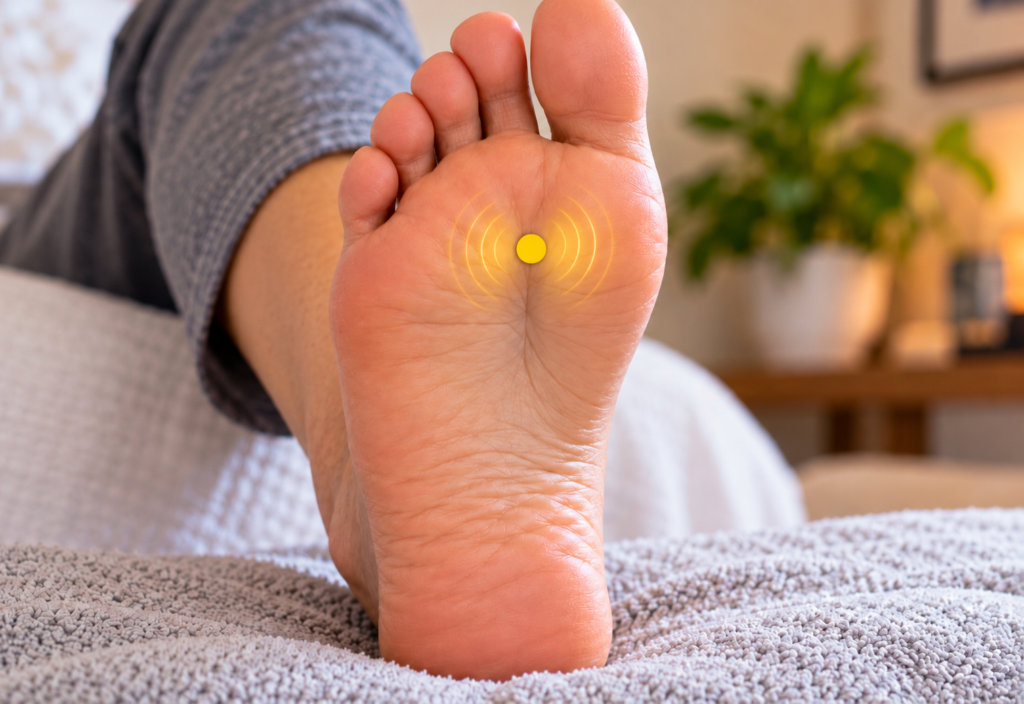
Acupressure products and hands-on acupressure are quite different. Products offer easy, general stimulation that you can use while walking, sitting, or working, making them a convenient way to care for tired feet, a tense neck, or stiff hands. Hands-on acupressure involves applying firm, steady pressure to points chosen for a specific problem, and it is the method with the strongest research behind it. Many people use both: wearing their slippers in the evening or a ring at their desk, then applying pressure by hand to different points when needed.
For more on two acupressure tools that have been studied in some detail, see do acupressure mats really work and do acupressure wristbands really work.
When to Get Professional Help
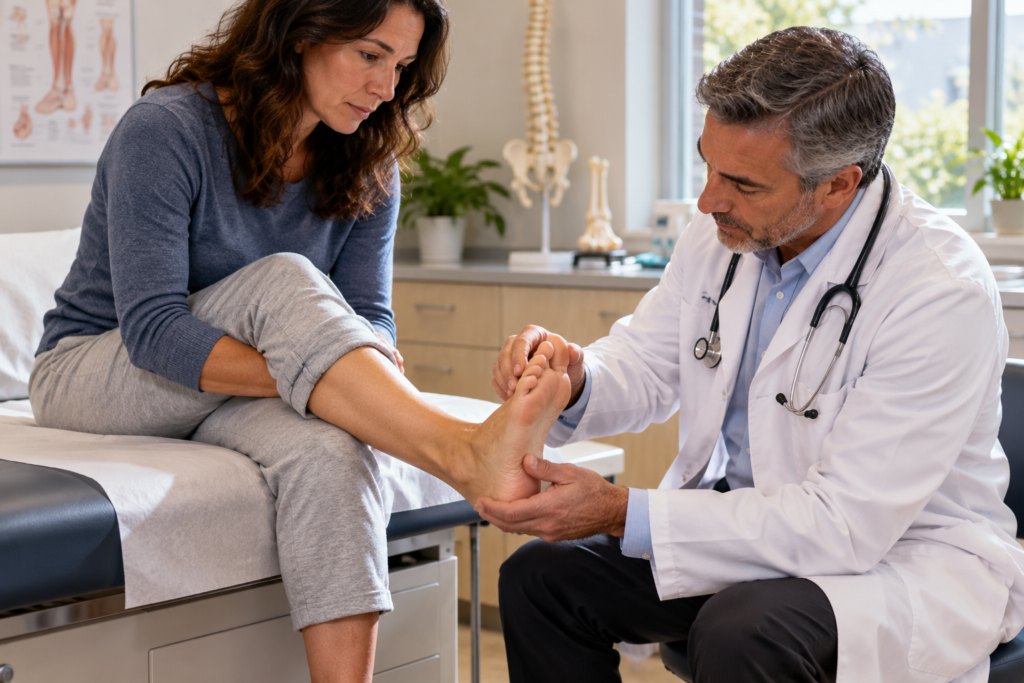
See a doctor if pain in your foot, hand, or neck lasts more than a few weeks, gets worse, or follows a fall or injury. Get prompt care if you experience numbness, tingling, burning, or weakness in your hands or feet, as these symptoms may indicate nerve damage or diabetes. Anyone with diabetes should see a doctor straight away if a foot blister, cut, or sore is not healing, is red or warm, or is draining. Seek emergency care if you experience sudden weakness or numbness on one side of your body, a very severe headache with a stiff neck and/or fever, or neck pain after a fall or accident. If the skin beneath a product breaks, swells, or appears infected, stop using it and have it checked.
Acupressure products are a gentle, supportive option for everyday aches and tension. They complement, and do not replace, diagnosis and medical care.
For related health concerns, acupressure for plantar fasciitis, acupressure for neck pain, and acupressure for trouble falling asleep are companion posts.
Above and Beyond Acupuncture offers acupuncture, cupping, and lifestyle coaching at the North Frank Lloyd Wright Boulevard location in Scottsdale.
Schedule an appointment online to start your healing journey.
About the Publisher
Paul Kerzner, L.Ac., is a licensed acupuncturist and board-certified herbalist, as well as the founder of Above and Beyond Acupuncture in Scottsdale. His own journey from chronic patient to practicing acupuncturist shapes his commitment to providing honest, clinically grounded information about acupuncture and Traditional Chinese Medicine. Learn more about Paul and his clinical approach on the About Us page.