Key Takeaways
- Chronic pelvic pain is pain in the lower abdomen and pelvis that lasts six months or longer, and it can affect people of any gender.
- It often has more than one source, including endometriosis, bladder pain syndrome, irritable bowel syndrome, tight pelvic floor muscles, chronic prostatitis, and irritated nerves.
- Traditional Chinese Medicine sees chronic pelvic pain as blocked Qi and Blood in the lower abdomen, often with stress, cold, damp heat, or long-term depletion behind it.
- Nine acupressure points ease pelvic pain, relax the muscles of the hips and pelvic floor, and calm a nervous system that has become sensitized by long-term pain.
- Acupressure works best alongside medical evaluation, pelvic floor physical therapy, warmth, and steady stress care.

Do you have a deep ache in your pelvis that lasts all day? Does it get worse when you sit for a while, after sex, or when you use the bathroom? You may have seen several doctors and had all sorts of tests that came back normal, only to be told there’s nothing obviously wrong. For many people with chronic pelvic pain, the long search for answers can be almost as hard as the pain itself.
Chronic pelvic pain is pain below the navel and between the hips that lasts for six months or more. It may be constant or intermittent and can feel like a dull ache, sharp or stabbing pain, pressure, heaviness, or burning. It often worsens with sitting, sex, bowel movements, urination, or during the menstrual cycle, and may radiate to the lower back, hips, and thighs.
Chronic pelvic pain is rarely caused by just one thing. In women, common causes include endometriosis, adenomyosis, and fibroids. Bladder pain syndrome (interstitial cystitis), irritable bowel syndrome, and scar tissue from previous surgery or infection can also contribute. In men, the most frequent cause is chronic prostatitis, now more commonly referred to as chronic pelvic pain syndrome. Tight, overactive pelvic floor muscles and irritated nerves, especially the pudendal nerve, are often contributing factors. Long-term pain can also sensitize the nervous system, making the pelvis hypersensitive to touch, stress, and everyday movement.
In Traditional Chinese Medicine, the pelvis lies in the lower burner, the region of the bladder, intestines, and genitalia. The Liver channel encircles the genitals and passes through the lower abdomen, while the Spleen and Kidney channels run up the inner legs to the pelvis. When stress tightens Liver Qi, cold or damp heat settles in the lower body, or prolonged illness depletes the Kidney, Qi and Blood in the pelvis stop moving freely, causing pain.
The nine points below can help relieve pelvic pain, relax the surrounding muscles, and calm a nervous system that has been on high alert for too long.
What Acupressure Points to Press and Why
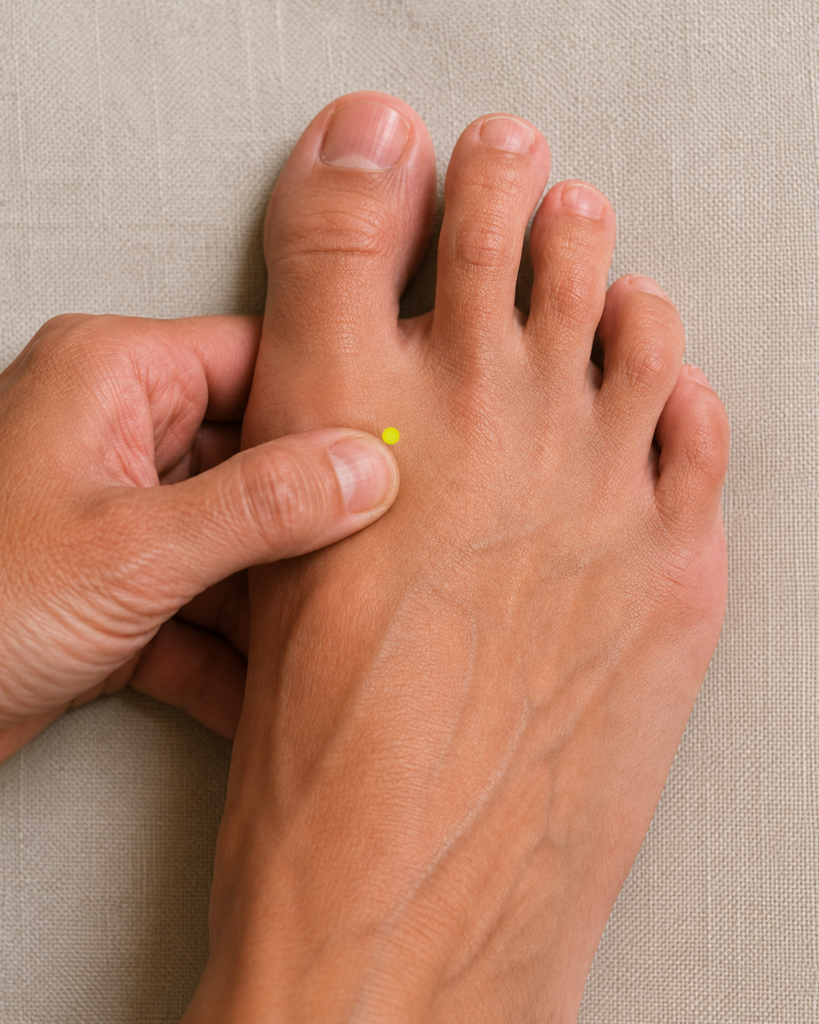
1. Press on LR3 on the top of the foot to release tension in the pelvis. LR3 sits on the top of the foot, in the webbing between the big toe and second toe, about two finger-widths back from the webbing, in the hollow just before the two bones meet. Press firmly with your thumb for one to two minutes on each foot. LR3 is called “Taichong,” the “Great Surge.”
The Liver channel courses around the genitals and through the lower abdomen, so LR3 directly accesses the pelvis. It is the principal point for releasing Liver Qi stagnation, the tension that builds with stress and keeps the pelvic muscles tight. It is particularly useful for pain exacerbated by stress or frustration.
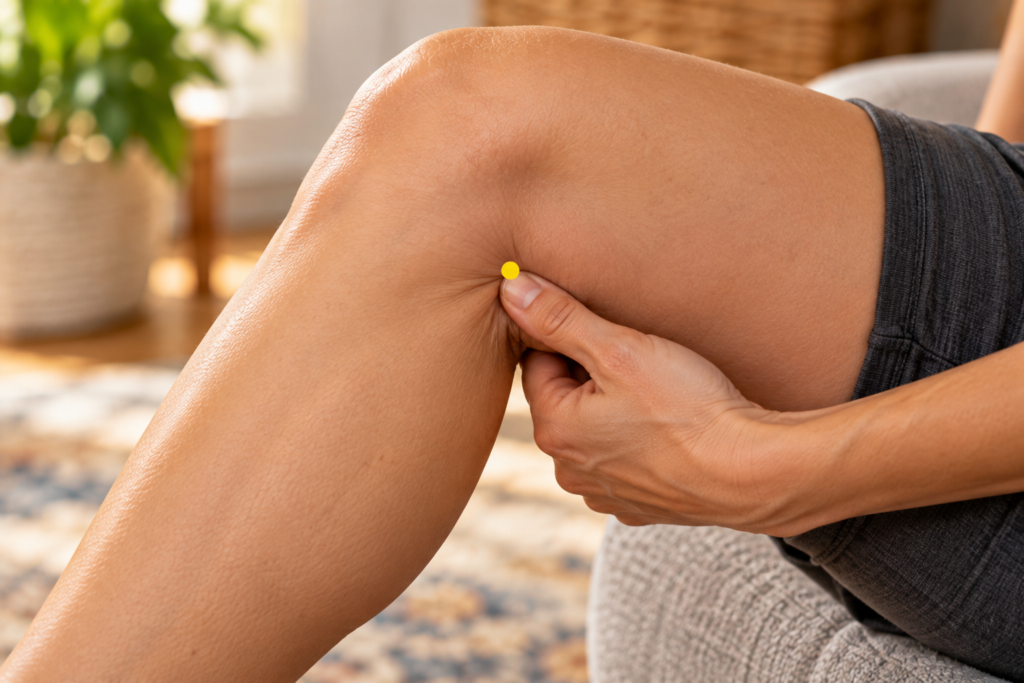
2. Press on LR8 at the inner knee to clear the lower burner. Bend the knee and find the inner end of the knee crease, then press into the hollow just in front of the tendons there. Press firmly with your thumb for one to two minutes on each leg. LR8 is called “Ququan,” the “Spring at the Crook.”
LR8 is a key point on the Liver channel for lower abdominal and genital pain or discomfort. It helps clear damp heat (in Traditional Chinese Medicine, this is associated with bladder and pelvic burning, urgency, and irritation) and nourishes Liver Blood. It’s especially useful for pelvic pain accompanied by urinary discomfort.
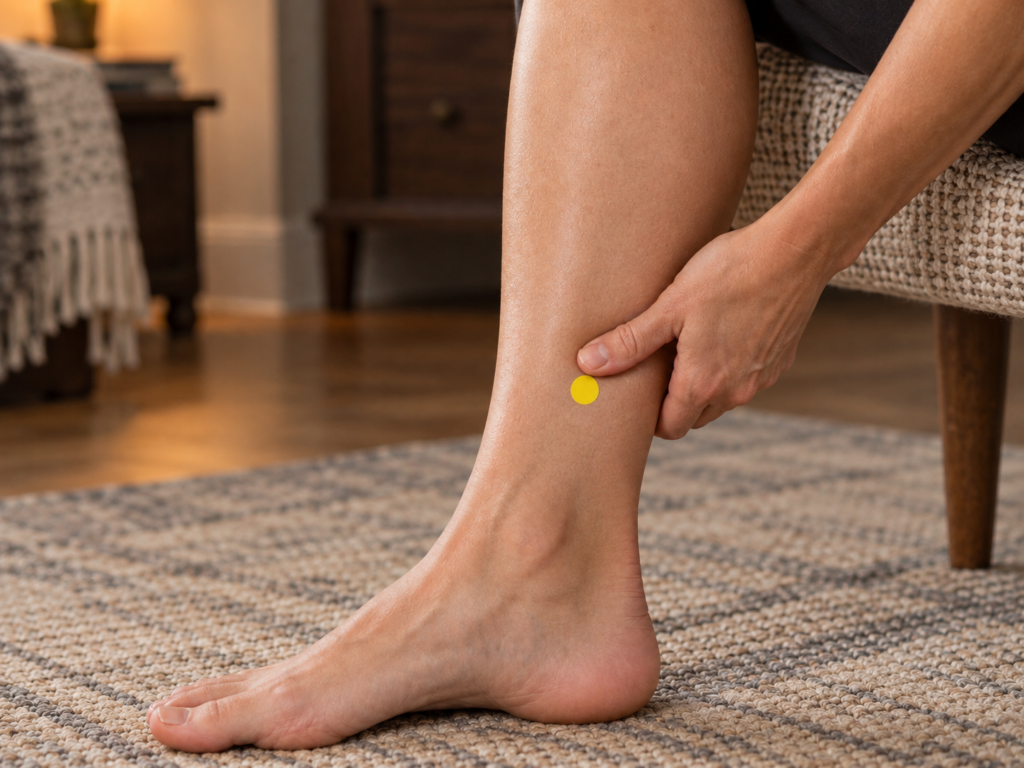
3. Press on SP6 above the inner ankle to move the Blood in the pelvis. SP6 sits four finger-widths up from the tip of the inner ankle bone, just behind the back edge of the shinbone. Press firmly with your thumb for one to two minutes on each leg. SP6 is called “Sanyinjiao,” the “Three Yin Intersection.” SP6 is contraindicated during pregnancy.
SP6 is where the Spleen, Liver, and Kidney channels meet, and all three run through the pelvis. It moves the Blood, eases cramping and aching in the lower abdomen, and helps regulate the bladder, bowel, and reproductive organs. It is one of the most important points for pelvic pain of almost any kind.
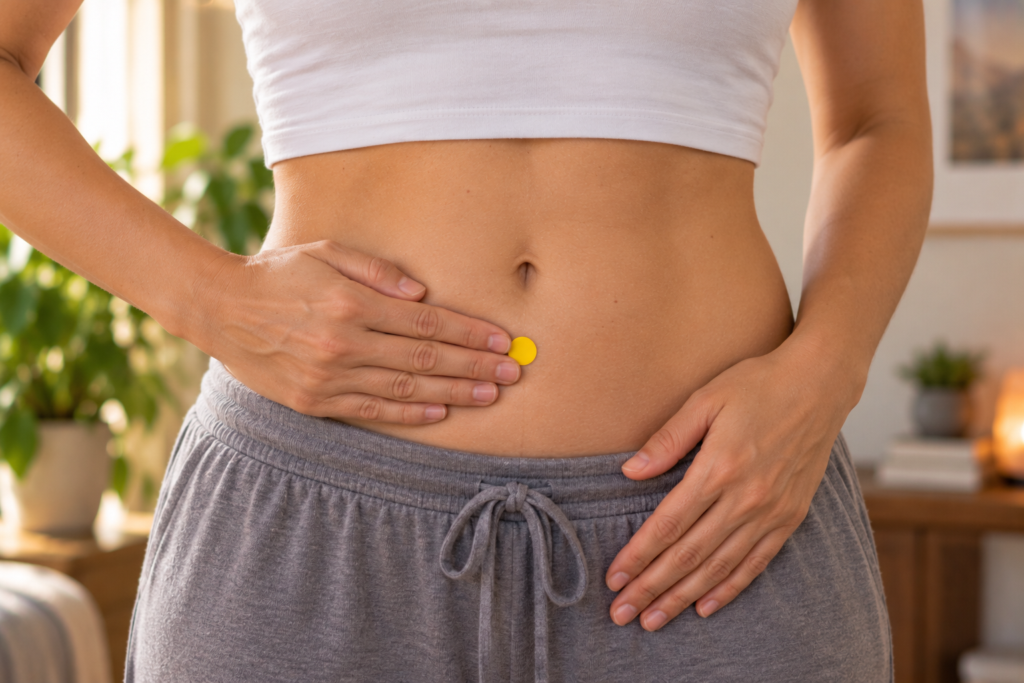
4. Press gently on CV6 below the navel to warm and strengthen the lower abdomen. CV6 sits on the midline of the lower abdomen, two finger-widths below the navel. Lie on your back and press gently with two or three fingertips for one to two minutes, or rest a warm palm over the area while breathing slowly into the lower belly. CV6 is called “Qihai,” the “Sea of Qi.”
CV6 strengthens the Qi of the lower abdomen and helps move stagnation in the pelvis. Breathing slowly into the belly while resting a hand here can also help relax the pelvic floor muscles. Keep the pressure very gentle. If the abdomen is tender during a flare, simply rest a warm hand over the area.
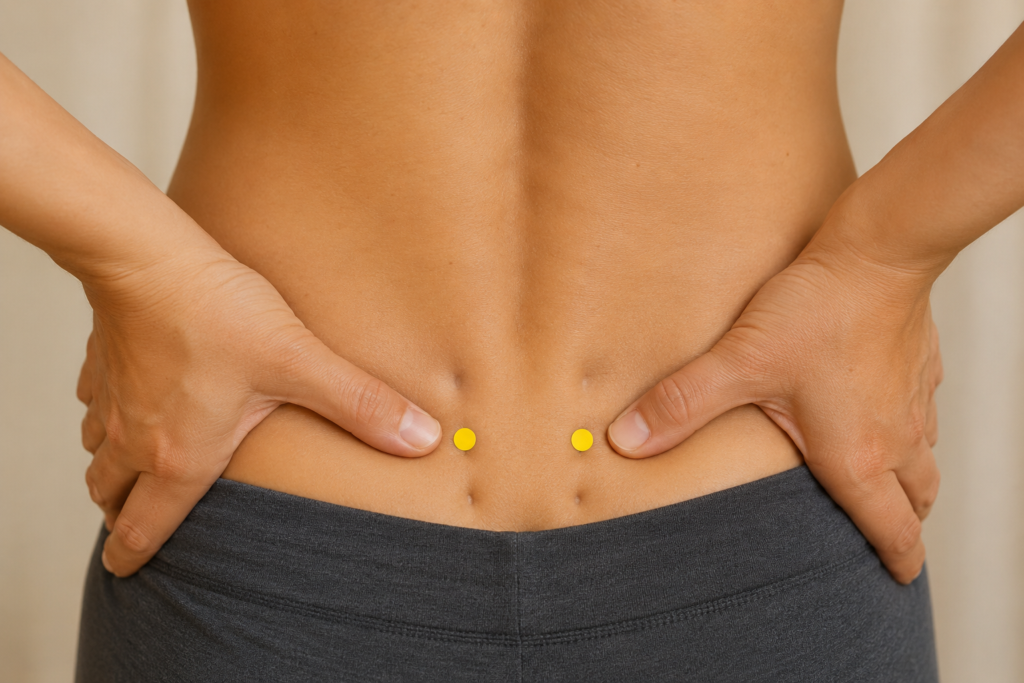
5. Press on BL32 on the sacrum to ease pelvic and lower back pain. BL32 sits on the sacrum, the flat, triangular bone at the base of the spine, in the second of the small hollows that run down each side of the center. Press with your knuckles or fingertips for one to two minutes, or rub the area briskly with your palms until warm. BL32 is called “Ciliao,” the “Second Crevice.” BL32 is avoided during pregnancy.
BL32 lies over the nerves serving the bladder, bowel, and reproductive organs. It’s a classic point for pelvic pain that radiates into the lower back. One of the simplest ways to ease aching and tension in the pelvis is to warm the sacrum with your palms or a heating pad.
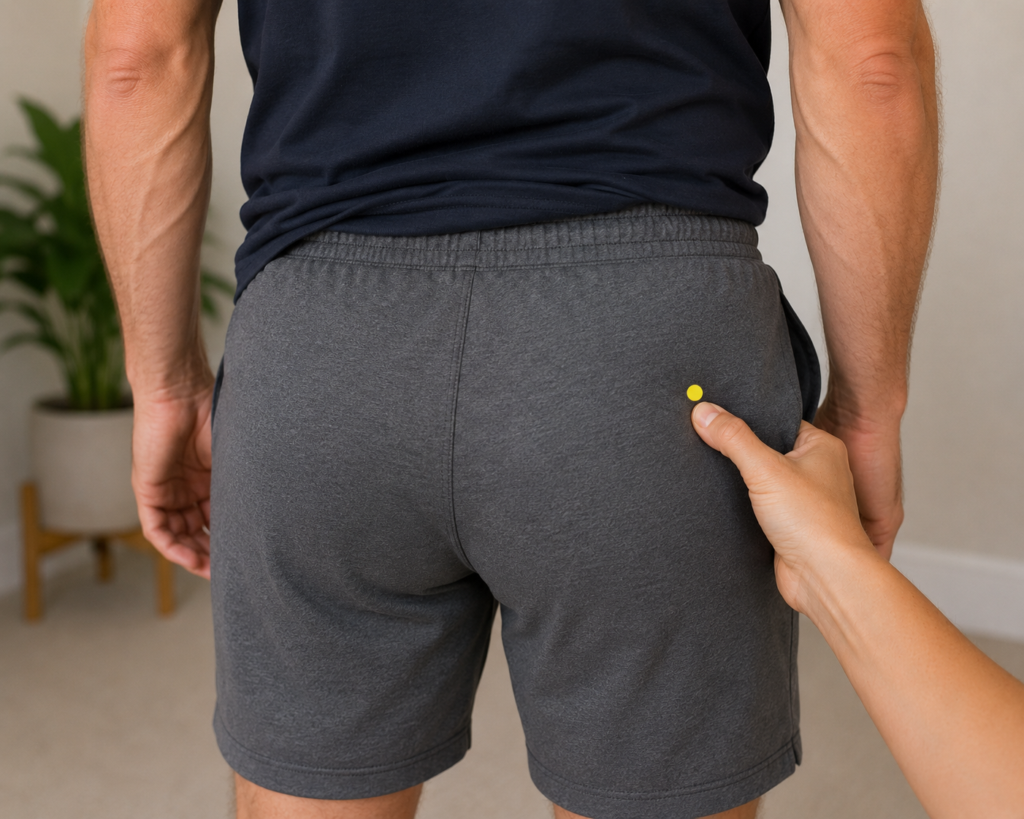
6. Press on GB30 in the buttock to release the hips and pelvic floor. GB30 sits in the buttock, about one-third of the way along a line from the bony bump at the top of the outer thigh to the base of the spine. Lie on your side and press firmly with your knuckle, or lean against a wall with a tennis ball under the point, for one to two minutes on each side. GB30 is called “Huantiao,” the “Jumping Circle.”
The deep hip and gluteal muscles are closely connected to the pelvic floor. When they tighten, they can contribute to pelvic pressure and pain. GB30 helps release these muscles and can be very effective for pain that radiates into the hips, glutes, and thighs. It’s especially useful when sitting makes the pain worse.
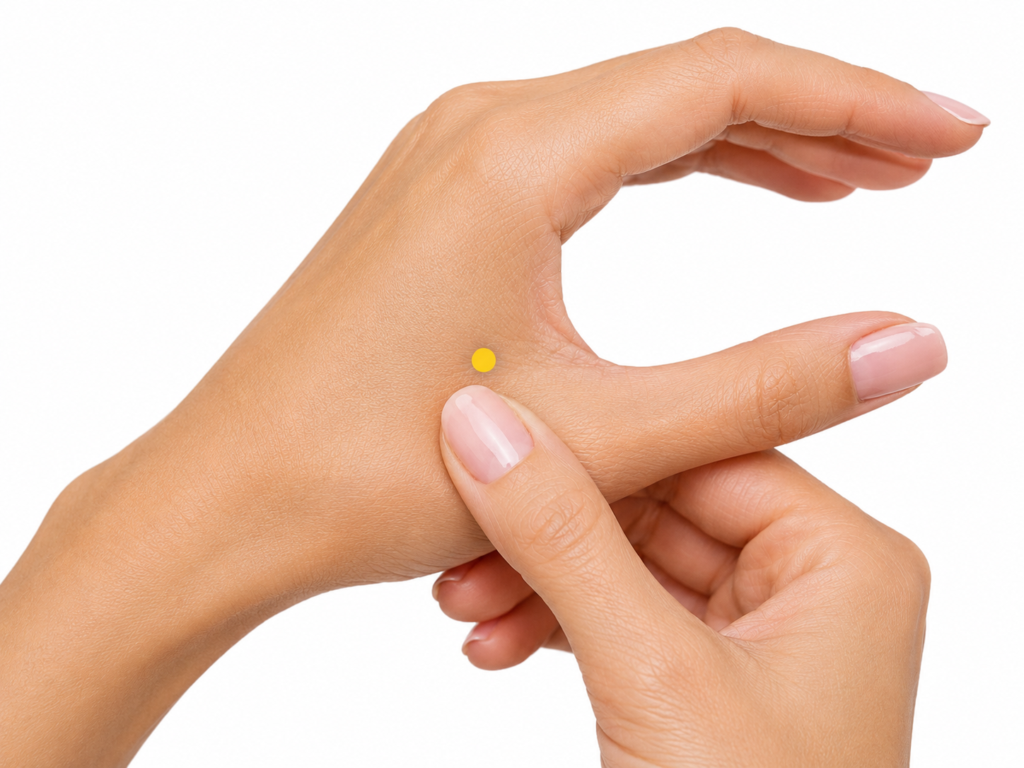
7. Press on LI4 in the hand to relieve pain. LI4 sits in the webbing between the thumb and index finger, at the highest point of the muscle when you bring the thumb and index finger together. Press firmly with the thumb of your other hand for one to two minutes on each hand. LI4 is called “Hegu,” the “Joining Valley.” LI4 is contraindicated during pregnancy.
LI4 is one of the most important points for pain. Combined with LR3, it forms the Four Gates, a classic formula for moving Qi and Blood throughout the body and calming pain that has become diffuse or widespread.
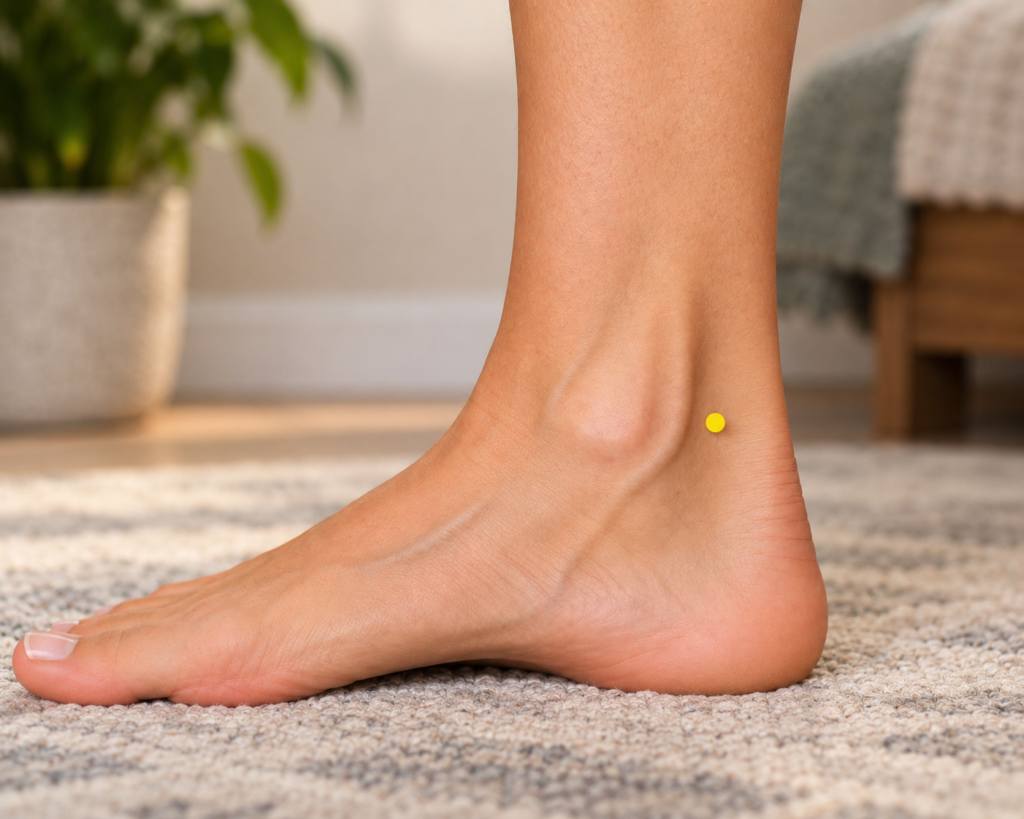
8. Press on KI3 behind the inner ankle to support the Kidney. KI3 sits in the hollow between the inner ankle bone and the Achilles tendon, level with the tip of the ankle bone. Press firmly with your thumb for one to two minutes on each ankle. KI3 is called “Taixi,” the “Great Stream,” and is the source point of the Kidney.
The Kidney governs the lower burner and bladder. KI3 strengthens the Kidney and supports the body through long-standing pain, especially when pelvic pain comes with fatigue, lower back aching, frequent urination, or a dragging or heavy feeling in the pelvis.
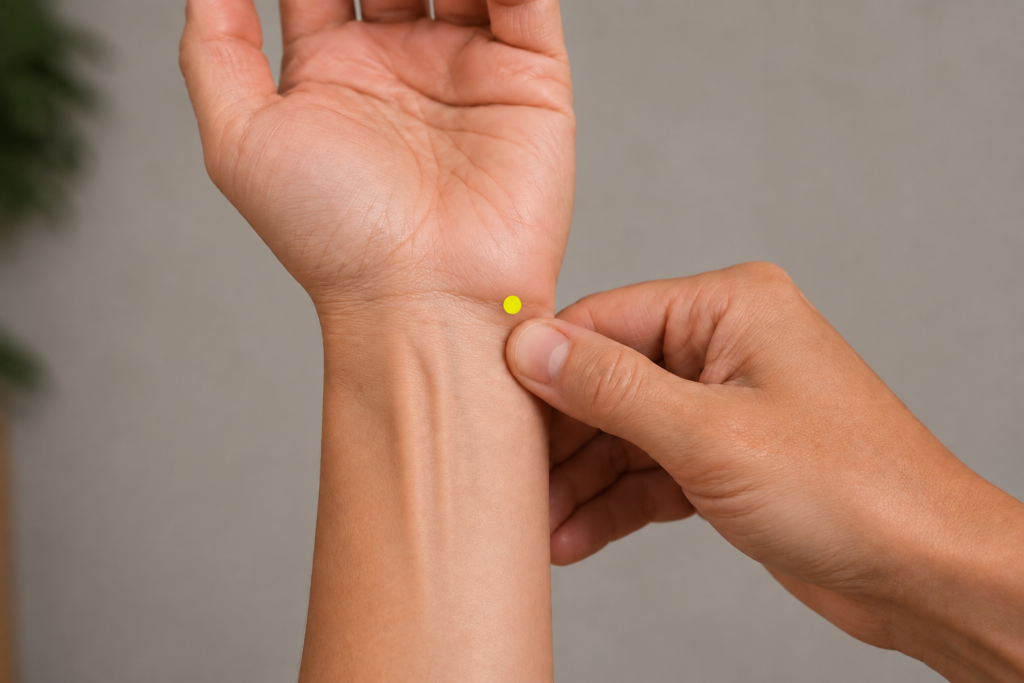
9. Press on HT7 at the wrist to calm the nervous system. HT7 sits on the inner wrist crease, on the pinky side, in the small hollow just inside the tendon. Press firmly with your thumb for one to two minutes on each wrist. HT7 is called “Shenmen,” the “Spirit Gate.”
Long-standing pain keeps the nervous system in a state of hyperarousal and anxiety, while poor sleep and pain feed into each other. HT7 calms the Heart and quiets the Shen, easing anxiety and promoting restful sleep. The key is to press HT7 while breathing slowly before bed, allowing the body to settle into the deep rest needed for healing.
Why These Acupressure Points Work
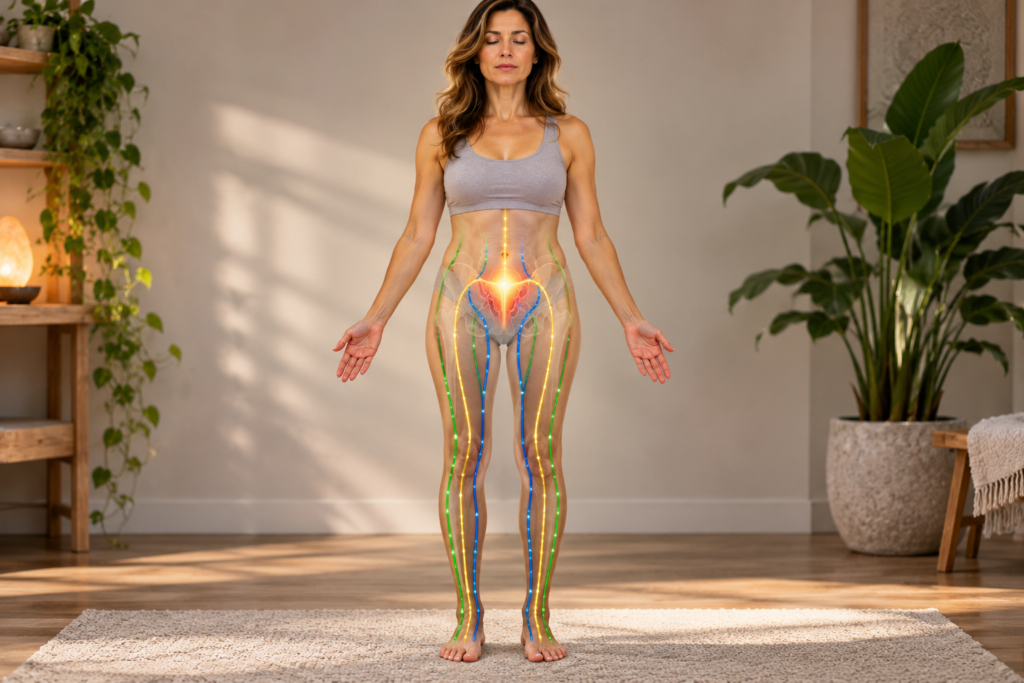
In Traditional Chinese Medicine, a comfortable pelvis is one where Qi and Blood flow freely through the lower burner, the muscles and sinews are relaxed, the mind is at rest, and Kidney energy is strong. Chronic pelvic pain is a sign that this flow has become blocked (due to stress, cold, damp heat, long-term depletion, etc.) and that the nervous system has been on high alert for a long time.
The nine points address the pain, the tension, and the sensitivity behind it:
- The Liver points (LR3, LR8) release stress held in the pelvis and clear damp heat from the lower burner.
- The pelvis points (SP6, CV6, BL32) move the Blood and warm and relax the lower abdomen and sacrum.
- The pain and muscle points (GB30, LI4) release the hips and pelvic floor and calm pain throughout the body.
- The supporting points (KI3, HT7) strengthen the Kidney and settle a sensitized nervous system.
How to Properly Use These Acupressure Points
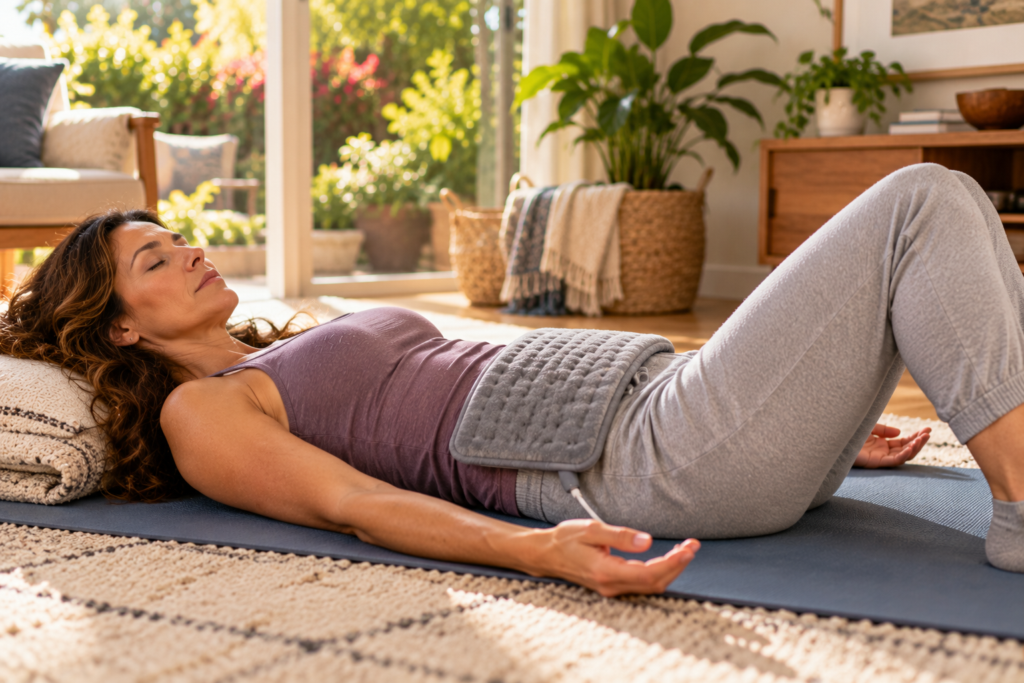
For chronic pelvic pain, acupressure works best when practiced each day consistently.
- Complete the full routine once daily, holding each point for one to two minutes while breathing slowly into the lower abdomen.
- Apply firm pressure to the hands, legs, feet, and buttocks, and gentle pressure to the abdomen. Skip the abdomen if it is tender.
- During a flare-up, focus on LR3, LI4, and SP6, and apply warmth over CV6 and BL32.
- If you are pregnant or may be pregnant, avoid SP6, LI4, and BL32, and do not apply pressure to the abdomen.
Relaxing the pelvic floor is just as important as the points. Slow belly breathing, with your abdomen rising gently as you inhale, can help the pelvic floor muscles release. A pelvic floor physical therapist can show you additional ways to release them. On painful days, a heating pad on your lower abdomen or back may help. Avoid sitting for long periods, and use a cushion if you need to sit. Notice whether certain foods or drinks, such as coffee, alcohol, citrus, or spicy foods, worsen your bladder or bowel symptoms. Protect your sleep, manage stress, and keep a symptom diary to help you and your doctor identify patterns.
If you have digestive symptoms, then find out more about acupressure for IBS.
When to Get Professional Help
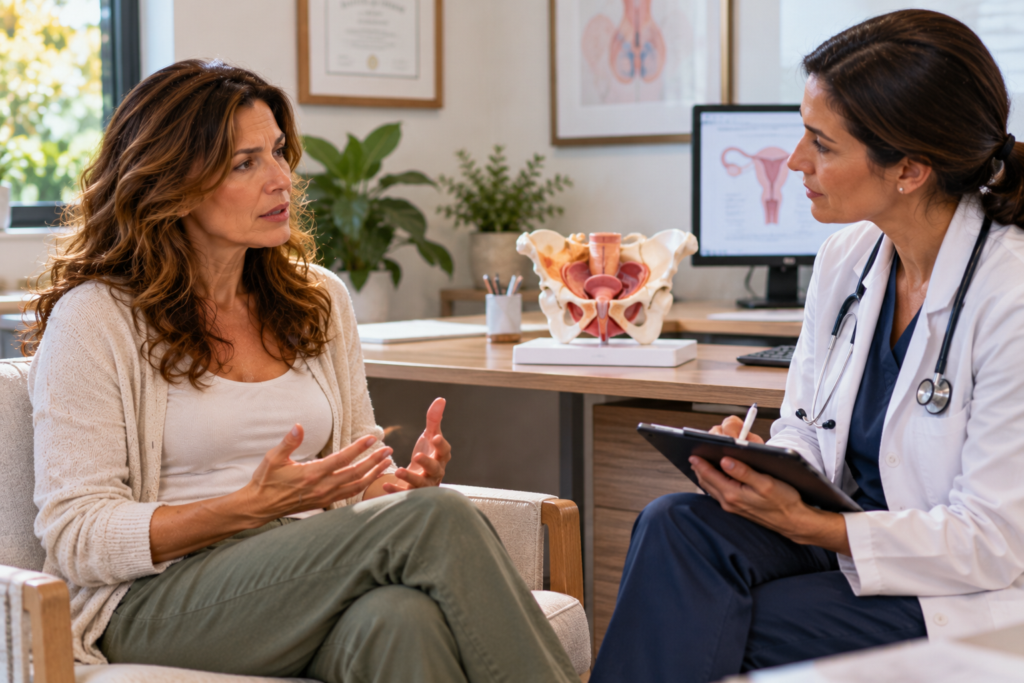
Consult your doctor about any new pelvic pain, pain that is worsening, or pain that has persisted for more than a few weeks. Chronic pelvic pain can have several different causes, and a thorough assessment can help determine the appropriate management. You should seek medical attention immediately if you experience pelvic pain accompanied by a fever, abnormal discharge, burning or pain during urination, blood in your urine or stool, heavy or irregular bleeding, pain during sex, a change in your bowel habits, or unexplained weight loss. Seek emergency care if you experience sudden, severe pelvic or abdominal pain; pelvic pain accompanied by a fever and vomiting; fainting or dizziness with pelvic pain; pain on one side of the pelvis after a missed period or with a positive pregnancy test; sudden, severe testicular pain; or an inability to urinate. These symptoms could indicate an ectopic pregnancy, a ruptured or twisted ovarian cyst, testicular torsion, an infection, or a blockage.
Acupressure may offer gentle support for chronic pelvic pain, but it is not a substitute for diagnosis or medical care.
For related health concerns, acupressure for endometriosis, acupressure for menstrual cramps, and acupressure for urinary incontinence are companion posts. If pain spreads deep into the buttock, acupressure for piriformis syndrome can help; for long-standing pain in general, read acupressure for chronic pain.
Above and Beyond Acupuncture offers acupuncture, cupping, and lifestyle coaching at the North Frank Lloyd Wright Boulevard location in Scottsdale.
Schedule an appointment online to start your healing journey.
The points above are only as effective as the technique used to apply them. Where to press, how firmly, and for how long all affect the result. For a full breakdown of how to perform acupressure properly at home, read Performing Acupressure in 3 Easy Steps.

About the Publisher
Paul Kerzner, L.Ac., is a licensed acupuncturist and board-certified herbalist, as well as the founder of Above and Beyond Acupuncture in Scottsdale. His own journey from chronic patient to practicing acupuncturist shapes his commitment to providing honest, clinically grounded information about acupuncture and Traditional Chinese Medicine. Learn more about Paul and his clinical approach on the About Us page.