Key Takeaways
- A bunion is a bump at the base of the big toe, where the joint enlarges and protrudes. It often becomes red, tender, and painful when wearing shoes, especially tight, narrow, or high-heeled ones.
- Acupressure may help alleviate pain, swelling, and stiffness around a bunion; however, it does not alter the shape of the joint or correct the bunion itself.
- In Traditional Chinese Medicine, the Spleen channel begins at the big toe and passes directly over the bunion. The resulting pain is attributed to Qi and Blood stagnation in that area, potentially caused by pressure, Dampness, or Heat.
- Nine acupressure points on the hands, legs, ankles, and feet help move Qi and Blood through the foot, reduce swelling, and relieve pain without applying pressure directly to the bunion.
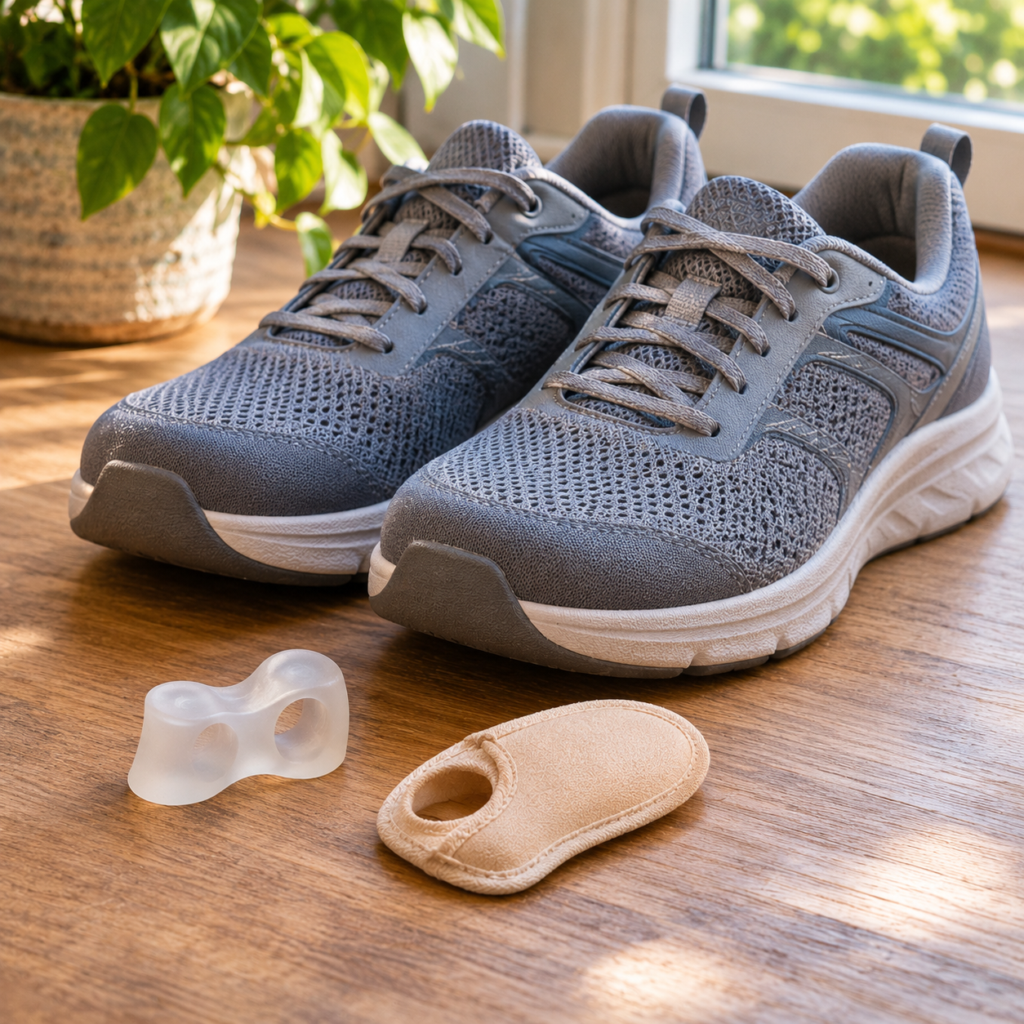
- Shoes with a roomy fit and a wide toe box, along with pads and toe spacers, can reduce pressure on the joint. Most bunions can be managed without surgery.

After a long day, your big toe may start throbbing along the side. Dress shoes press against the bump, leaving the skin pink and sore, so slipping into soft slippers at home can feel like a relief. Some people notice their big toe gradually leaning toward the second toe. For others, even walking, standing, or the weight of bedsheets can trigger pain.
According to FootCareMD, the patient site of the American Orthopaedic Foot & Ankle Society, a bunion forms when the joint at the base of the big toe enlarges and sticks out. Wearing tight shoes or shoes that are short, narrow, sharply pointed, or have heels over two and a quarter inches increases the risk. Common symptoms include red, tender skin over the joint; pain while wearing shoes; painful swelling of the small fluid sac over the bump; the big toe tilting toward or under the second toe; and thickened, painful skin on the sole. FootCareMD notes that most bunions can be treated without surgery using roomy shoes with wide toe boxes and soft soles, professional shoe stretching, protective pads, and a spacer between the first two toes.
The joint at the base of your big toe bends with every step. As the bump grows, pressure from shoes and walking can irritate the bone, joint capsule, and surrounding soft tissue. The small fluid sac over the bump may swell and become inflamed, and over time, the joint can stiffen and develop arthritis. Pain often worsens as the day goes on and improves with rest and more comfortable shoes.
Traditional Chinese Medicine teaches that the Spleen channel begins at the inner corner of the big toenail and runs along the foot’s inner edge, directly over the bunion. The Liver channel starts on the big toe beside it. Years of wearing tight shoes can obstruct Qi and Blood at the joint, causing fixed, aching pain. When Damp and Heat accumulate, the joint becomes swollen, red, and warm. With age, the Kidney and Liver, which support the bones and tendons, may weaken, leaving the joint stiffer and slower to heal.
The points below begin on the hand, move up the legs to the ankle, and finish around the foot, but never on the bunion.
What Acupressure Points to Press and Why
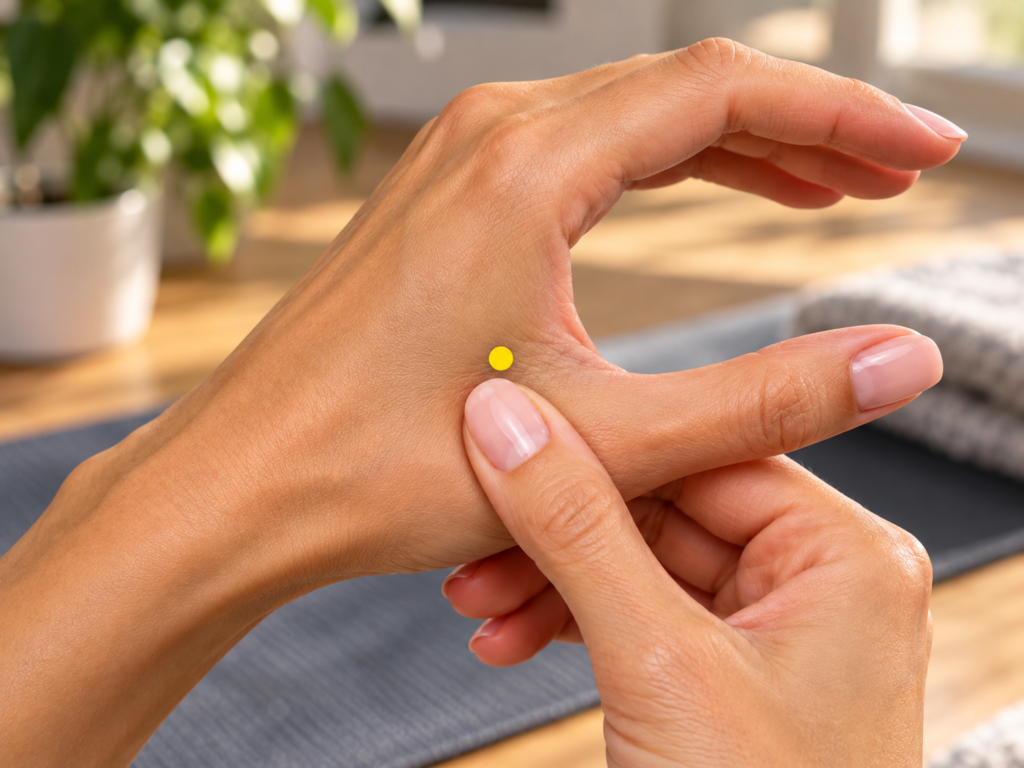
1. Press on LI4 on the back of the hand to ease pain. LI4 sits on the back of the hand, in the web between the thumb and index finger, at the highest point of the muscle when the thumb is pressed against the index finger. Press firmly with the thumb of your other hand for one to two minutes on each hand. LI4 is called “Hegu,” the “Joining Valley.”
LI4 is the source point of the Large Intestine and a classic point for pain throughout the body. It strongly moves Qi and can help ease the throbbing pain of a bunion from a distance. LI4 is avoided during pregnancy.
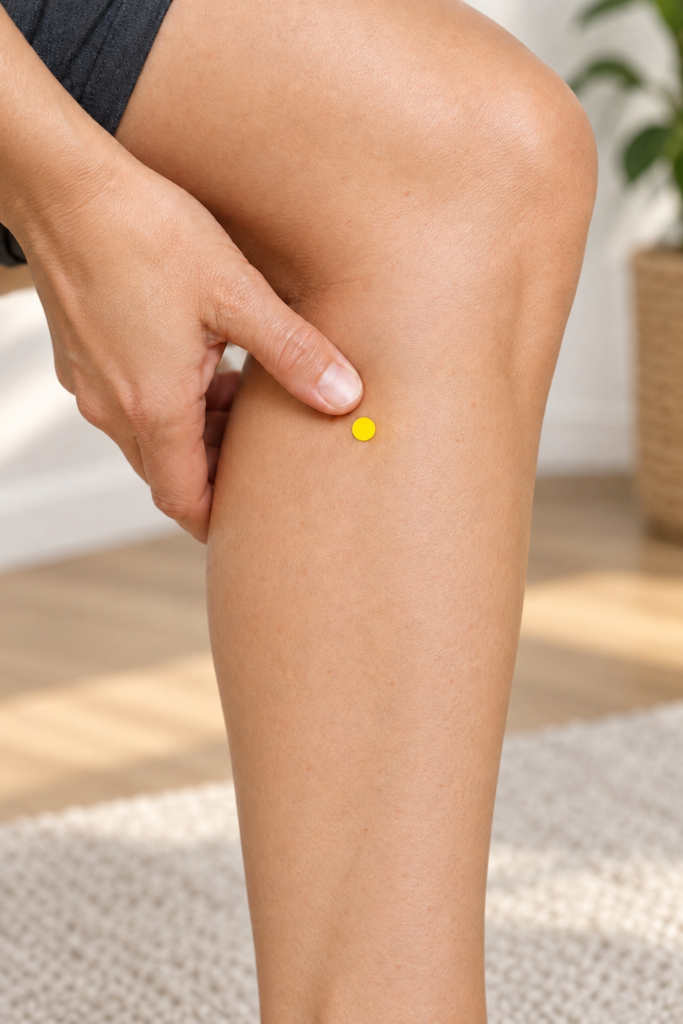
2. Press on GB34 below the outer knee to relax the tendons. GB34 sits on the outer side of the lower leg, in the hollow just in front of and below the small bony bump below the outside of the knee. Press firmly with your thumb for one to two minutes on each leg. GB34 is called “Yanglingquan,” the “Yang Mound Spring.”
GB34 is the influential point of the tendons. It helps relax the tendons that pull on the big toe, easing stiffness and tightness in the joint.
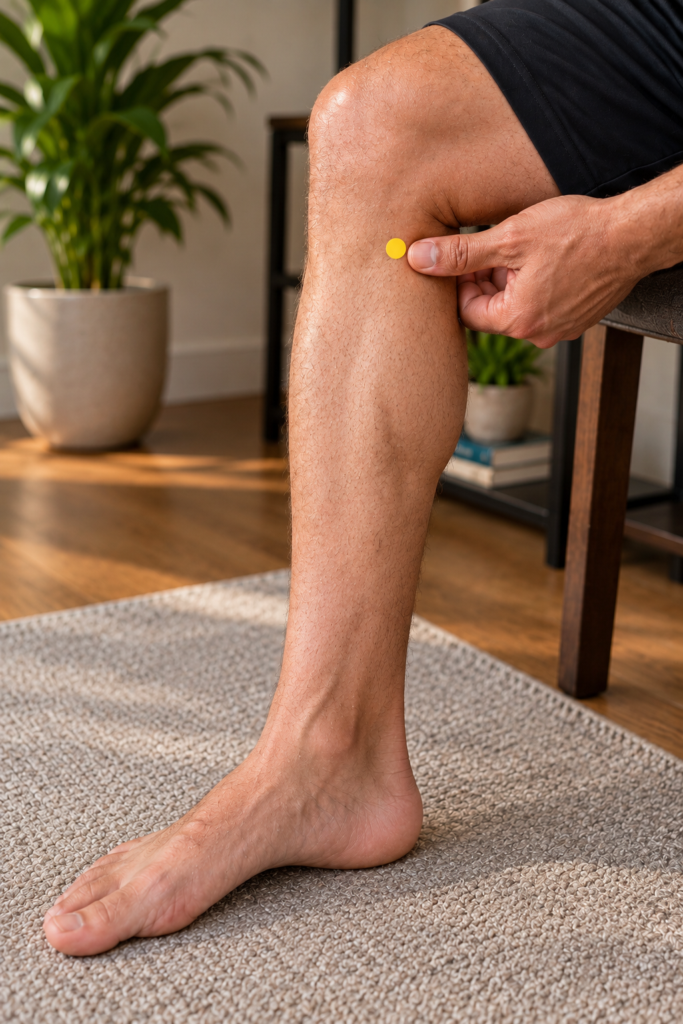
3. Press on SP9 below the inner knee to drain swelling. SP9 sits on the inner side of the lower leg, in the hollow just below the rounded bulge at the top of the shinbone. Press firmly with your thumb for one to two minutes on each leg. SP9 is called “Yinlingquan,” the “Yin Mound Spring.”
SP9 is the Spleen’s sea point. It drains Damp from the lower body and helps reduce puffiness and swelling around the bunion.
4. Press on SP6 above the inner ankle to move Blood. SP6 sits on the inner side of the lower leg, four finger-widths above the tip of the inner ankle bone, just behind the edge of the shinbone. Press firmly with your thumb for one to two minutes on each leg. SP6 is called “Sanyinjiao,” the “Three Yin Intersection.”
SP6 is where the Spleen, Liver, and Kidney channels of the leg meet; all three pass through the inner foot. It moves Blood and relieves aching along the foot’s inner edge. SP6 is avoided during pregnancy.
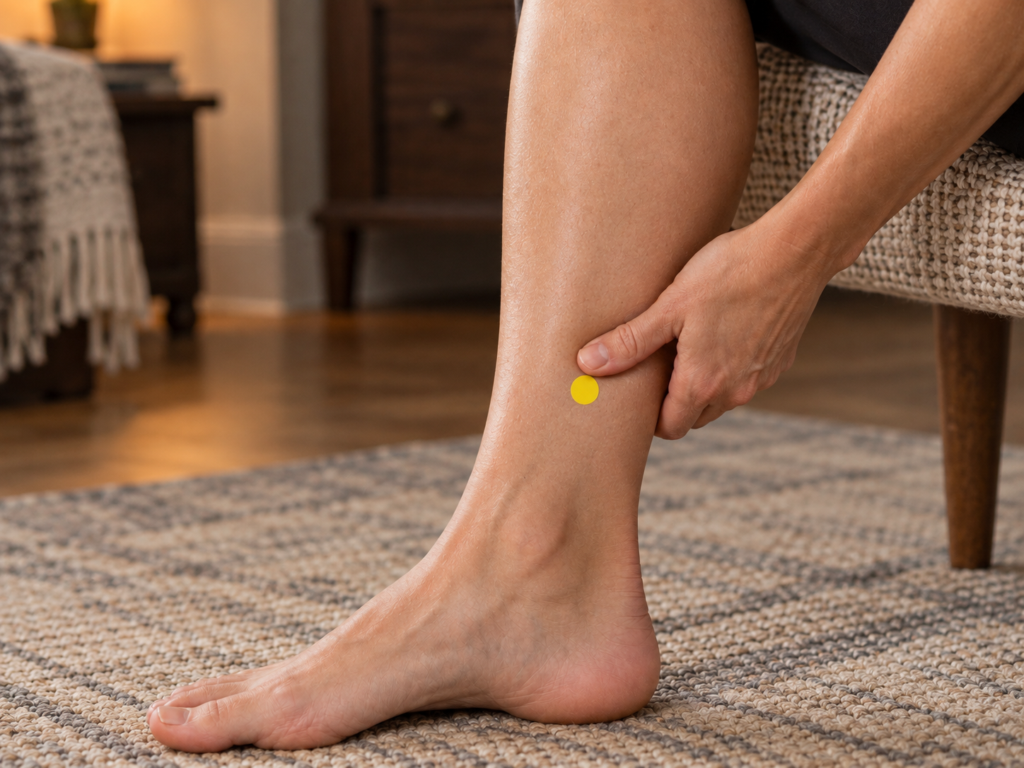
5. Press on KI3 behind the inner ankle to support the joints. KI3 sits in the hollow between the inner ankle bone and the Achilles tendon. Press with moderate pressure for one to two minutes on each foot. KI3 is called “Taixi,” the “Great Ravine.”
KI3 is the Kidney’s source point. It strengthens the Kidney, which supports the bones, and can help ease stiffness and aching associated with aging and long-standing joint strain.
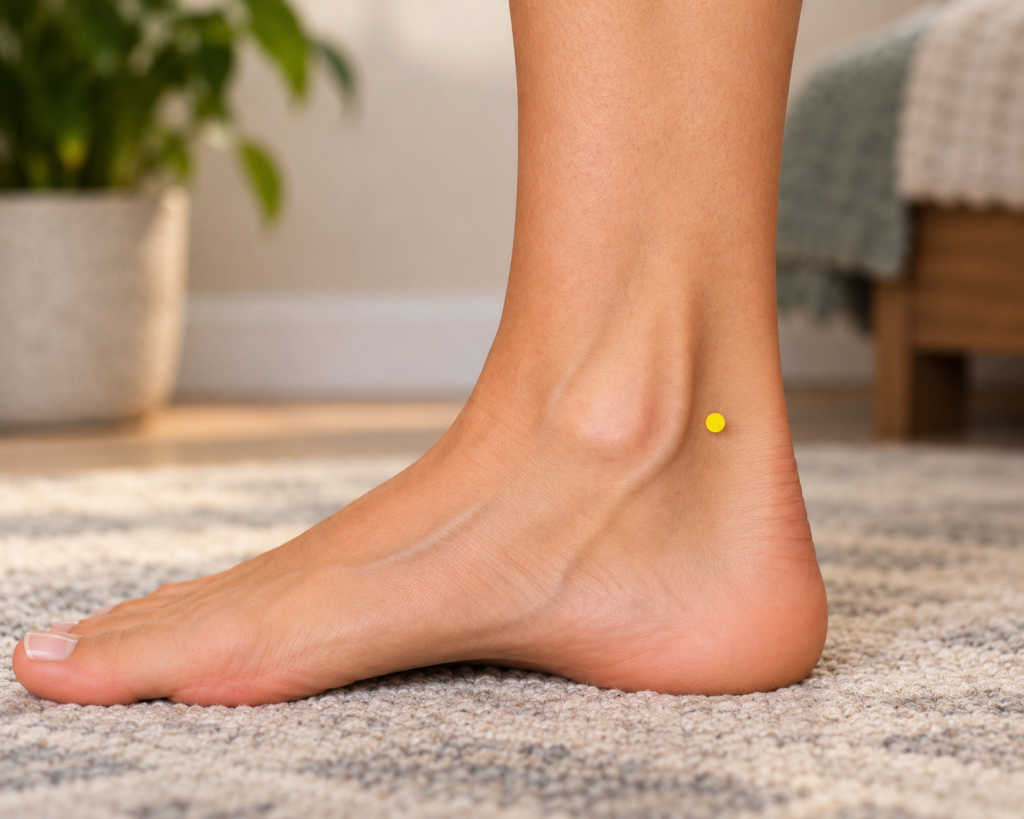
6. Press on SP4 on the inner arch to ease pain along the inner foot. SP4 sits on the inner edge of the foot, in the hollow just below the front of the long bone that runs to the big toe, about one thumb-width behind the bunion along the arch. Press with moderate pressure for one to two minutes on each foot. SP4 is called “Gongsun,” the “Grandfather Grandson.”
SP4 is the Spleen’s connecting point. It moves Qi along the inner edge of the foot and helps relieve aching and swelling that extend from the bunion into the arch.
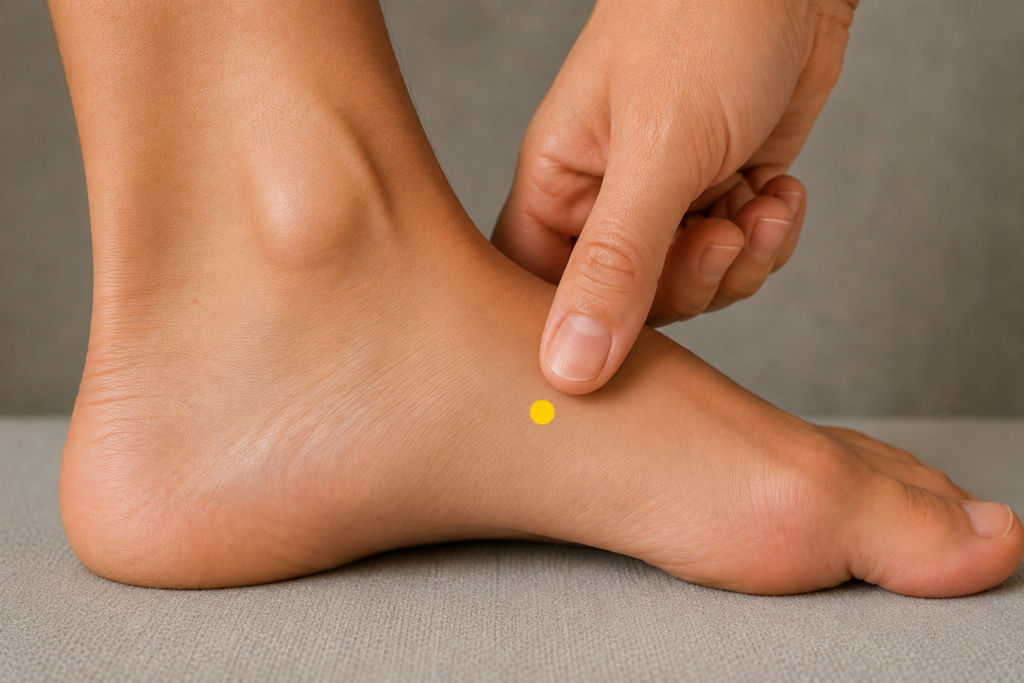
7. Press gently on SP3 just behind the bunion to calm the joint. SP3 sits on the inner edge of the foot, in the hollow just behind the large bump at the base of the big toe, where the skin of the top of the foot meets the skin of the sole. Press gently with your thumb for one minute on each foot, staying in the hollow behind the bump and never on the bump itself. SP3 is called “Taibai,” the “Supreme White.”
SP3 is the Spleen’s source point and one of the most important points in Traditional Chinese Medicine for bunion pain because it lies on the channel that passes directly over the joint. It helps drain Damp and reduce swelling and tenderness around the bunion.
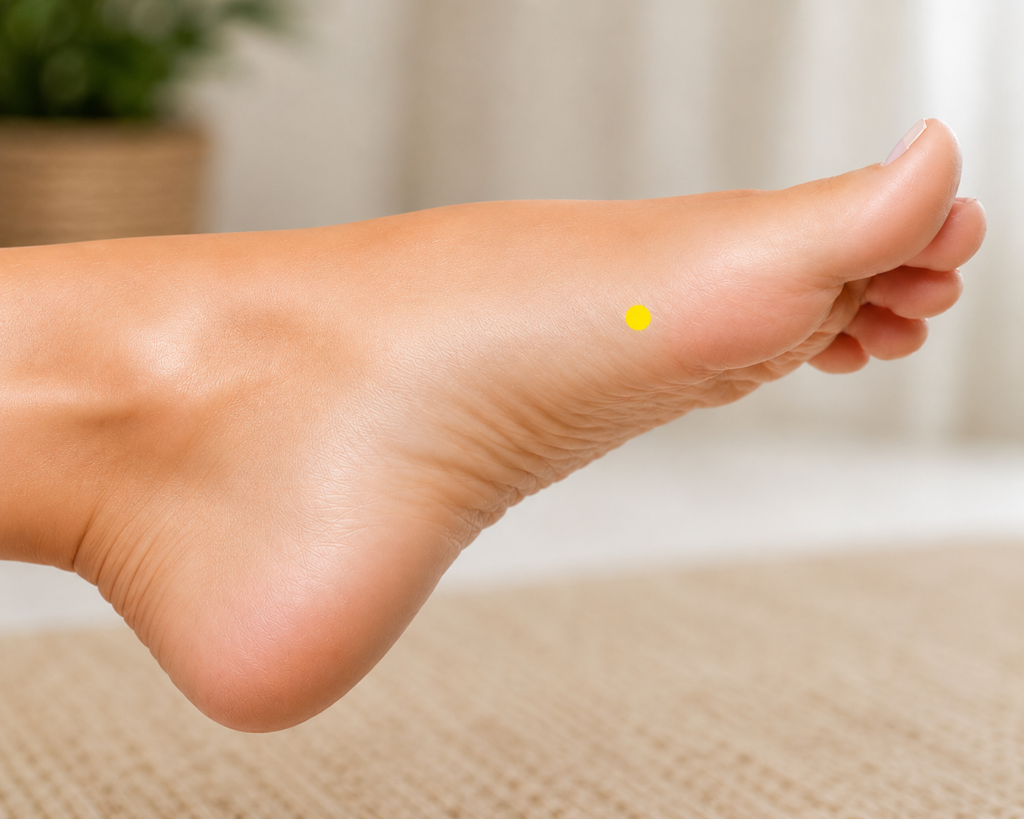
8. Press on LV3 on the top of the foot to move Qi through the big toe. LV3 sits on the top of the foot, in the hollow where the bones of the big toe and second toe meet, about two finger-widths back from the web between the toes. Press firmly with your thumb for one to two minutes on each foot. LV3 is called “Taichong,” the “Great Rushing.”
LV3 is the Liver’s source point. The Liver channel starts at the big toe, and LV3 moves Qi and Blood through the joint, relaxes the tendons, and relieves pain that builds up after a long day on your feet.
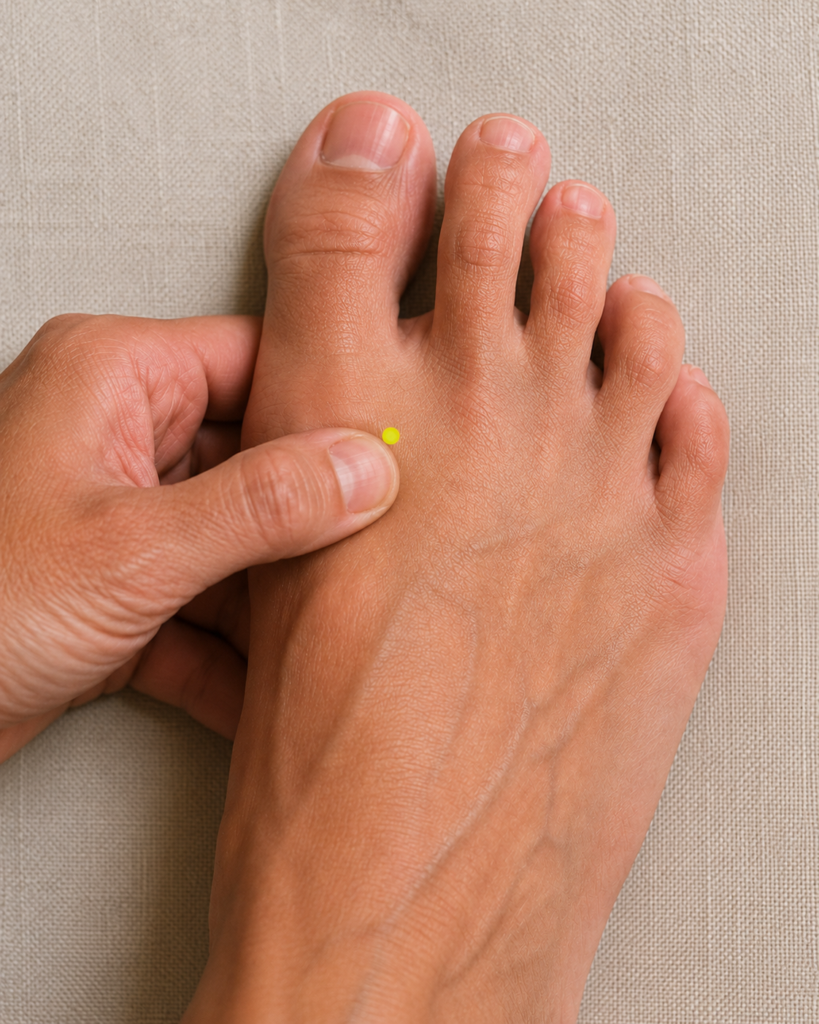
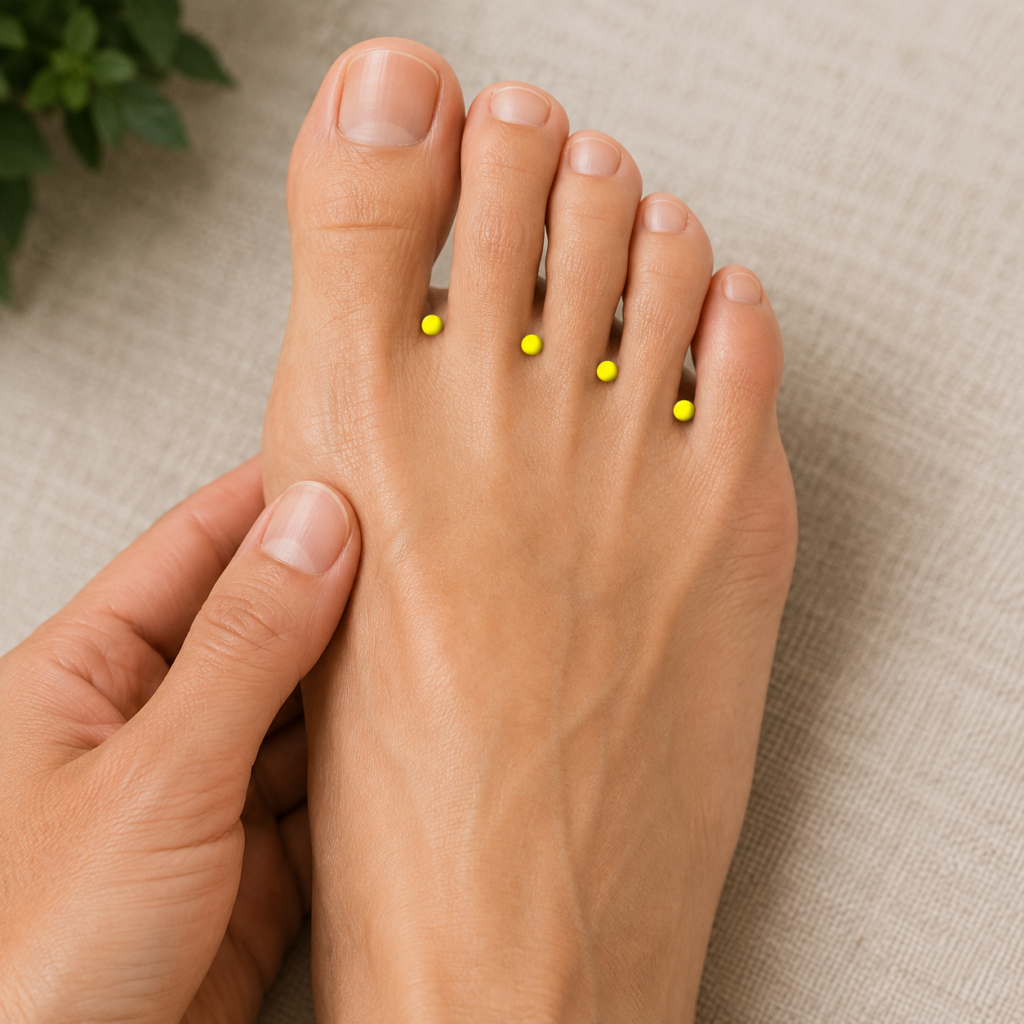
9. Press on Bafeng between the toes to ease swelling and pain. Bafeng is a group of four points on the top of each foot, at the edge of the web between each pair of toes. For bunion pain, focus on the point in the web between the big toe and second toe. Press with moderate pressure using your thumb or index finger for one minute on each foot, then work through the other web spaces. Bafeng means the “Eight Winds.”
Bafeng is a group of extra points traditionally used to ease swelling, pain, and stiffness in the toes and top of the foot. It helps relieve tightness in the front of the foot, where a bunion presses the toes together.
Why These Acupressure Points Work
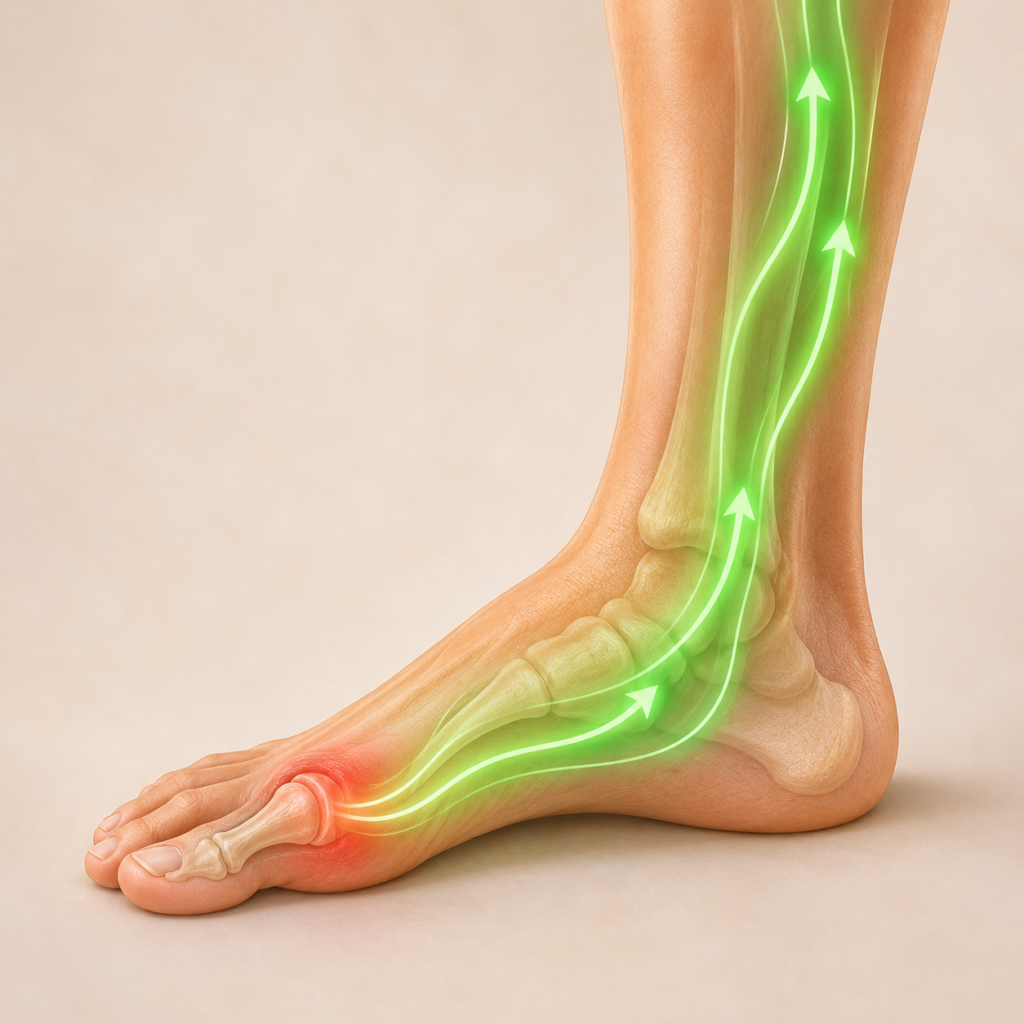
From a Traditional Chinese Medicine perspective, a painful bunion reflects a blockage in the joint along the Spleen channel, often with Damp and Heat contributing to swelling and redness. Points on the foot and ankle target the joint and the channels running through it, while points on the leg drain Damp and relax the tendons from a distance. LI4 helps ease pain throughout the body.
The nine points work together to alleviate bunion pain.
- SP3, SP4, and LV3 work on the channels that run through the big toe.
- Bafeng loosens the crowded toes and front of the foot.
- SP9 and SP6 drain swelling and move Blood.
- GB34 and KI3 relax the tendons and support the joint.
- LI4 eases pain from a distance.
How to Properly Use These Acupressure Points
Acupressure may help relieve bunion pain when performed at the end of the day, after removing one’s shoes and allowing the feet to rest.
- After a long day, press LI4 on both hands, followed by LV3 and Bafeng on both feet to ease a throbbing bunion.
- For swelling and puffiness around the joint, gently press SP9 and SP6 on both legs, followed by SP4 and SP3 on both feet.
- If your big toe feels stiff and achy in the morning, press GB34 and KI3 on both sides before getting up.
- Press the foot points once or twice daily during a bunion flare, then once daily to keep it calm.
- Apply firm pressure to the hands and legs, moderate pressure to the ankles and feet, and gentle pressure only around the bunion. Never press directly on the bump, especially if it is red or swollen. LI4 and SP6 are avoided during pregnancy.
Shoes make the biggest difference. FootCareMD recommends roomy shoes with a wide toe box and soft soles, having favorite shoes professionally stretched, using protective pads over the bump, and placing a spacer between the big toe and second toe. Keep heels low, and wear pointed or tight shoes only for short occasions. If the bunion becomes red and puffy after a long day, apply a cold pack wrapped in a thin towel for 10 to 15 minutes to calm it. Traditional Chinese Medicine recommends switching to a warm foot soak once the redness settles to keep Qi and Blood moving through the stiff joint. Gentle toe stretches, such as spreading the toes and rolling the foot over a small ball, help keep the front of the foot flexible.
Learn more about arnica as a natural alternative to NSAIDs.
When to Get Professional Help
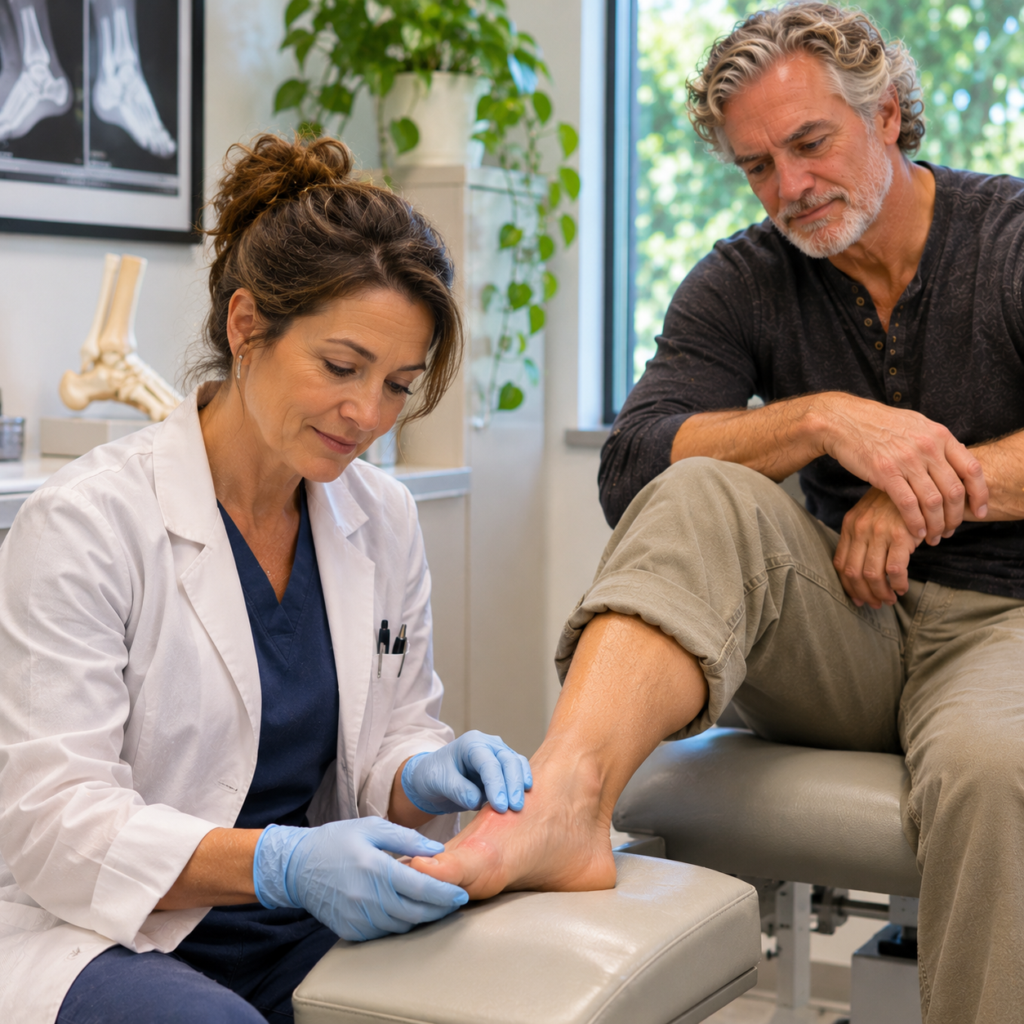
Seek medical care right away if the big toe joint suddenly becomes hot, red, swollen, and extremely painful, as this may signal gout, or if the area is red and warm and you have a fever, as this may signal an infection. Anyone with diabetes, poor circulation, or numbness in their feet should see a doctor or podiatrist for bunion pain or for a blister, sore, or open wound on or near the bump. See a foot specialist if bunion pain makes it difficult to walk comfortably, even in roomy shoes; if the big toe crowds or overlaps the second toe; or if pain and stiffness continue to worsen. Surgery may be an option when other measures do not control the pain. Acupressure may ease bunion pain, but it does not change the shape of the joint or correct the bunion.
Acupressure is a gentle, supportive practice for bunion pain. It complements, and does not replace, diagnosis and medical care.
For related health concerns, acupressure for foot pain, acupressure for gout, and acupressure for osteoarthritis are companion articles.
Above and Beyond Acupuncture offers acupuncture, cupping, and lifestyle coaching at the North Frank Lloyd Wright Boulevard location in Scottsdale.
Schedule an appointment online to start your healing journey.
The points above are only as effective as the technique used to apply them. Where to press, how firmly, and for how long all affect the result. For a full breakdown of how to perform acupressure properly at home, read Performing Acupressure in 3 Easy Steps.

About the Publisher
Paul Kerzner, L.Ac., is a licensed acupuncturist and board-certified herbalist, as well as the founder of Above and Beyond Acupuncture in Scottsdale. His own journey from chronic patient to practicing acupuncturist shapes his commitment to providing honest, clinically grounded information about acupuncture and Traditional Chinese Medicine. Learn more about Paul and his clinical approach on the About Us page.