Key Takeaways
- Cauda equina syndrome occurs when the bundle of nerve roots at the bottom of the spinal canal is compressed, most often by a large herniated disc, affecting the legs, bladder, bowels, and sexual function.
- It is a medical emergency. Numbness in the groin, buttocks, or inner thighs, new bladder or bowel problems, or weakness or sciatica in both legs require immediate care, and most acute cases need surgery within 24 to 48 hours.
- Recovery after surgery can take months to years, and many people live with lingering nerve pain, numbness, leg weakness, foot drop, or changes in bladder and bowel function.
- In Traditional Chinese Medicine, a spinal injury blocks the flow of Qi and Blood through the channels of the back and legs and weakens the Kidney, which governs the lower back, bladder, and bowels.
- Nine acupressure points, used during recovery and never as a substitute for emergency care, ease back and nerve pain, support bladder and bowel function, and help restore strength to the legs and feet.
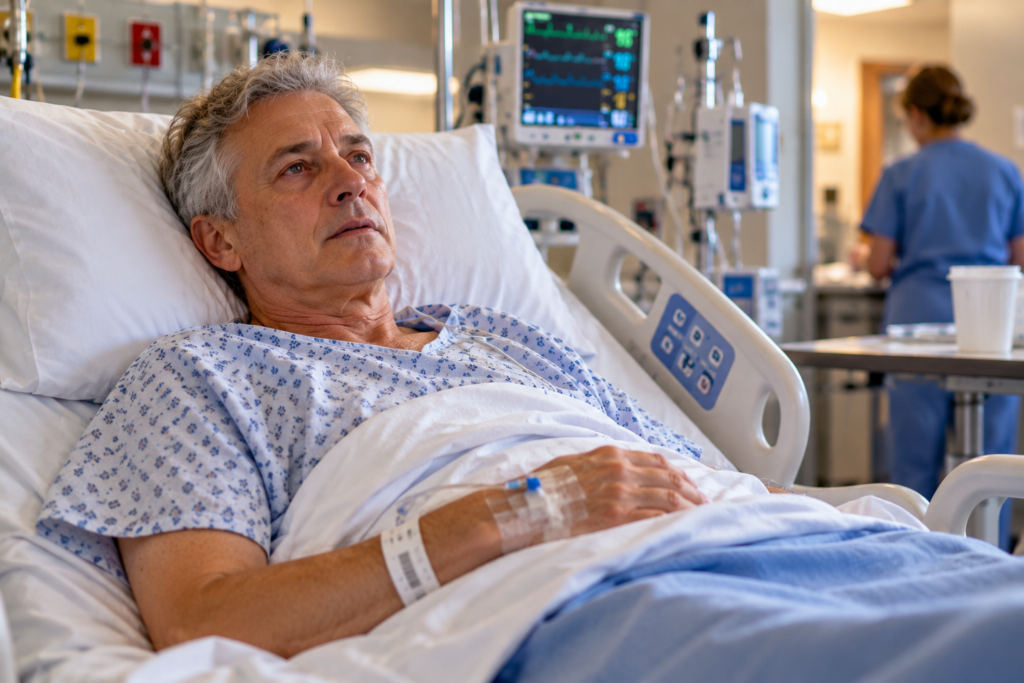
Cauda equina syndrome is a rare back condition that requires immediate medical attention. At the base of the spinal canal, the spinal cord ends and continues as a bundle of nerve roots. These nerves control sensation and strength in the legs, as well as bladder, bowel, and sexual function. When something, usually a large herniated disc, puts significant pressure on these nerves, they can begin to lose function. If the pressure is not relieved quickly, the damage may become permanent.
Warning signs include numbness in the groin, buttocks, and inner thighs, the area that would touch a saddle; new difficulty starting to urinate or sensing when the bladder is full; loss of bladder or bowel control; sciatica or weakness in both legs; and new sexual problems. Anyone experiencing these symptoms should seek emergency care immediately. The Cleveland Clinic says most acute cases require surgery within 24 to 48 hours of symptom onset.
Surgery relieves the pressure, but recovery often extends well beyond the hospital stay. Some sensation may return quickly, while bladder control may take weeks, months, or even years to improve. Some people continue to experience nerve pain, numbness, leg weakness, or changes in bladder, bowel, or sexual function. Physical therapy, pelvic floor therapy, and regular follow-ups with your surgical team are important parts of recovery.
In Traditional Chinese Medicine, the lower back is considered the home of the Kidney, which also governs the bladder and bowels. A sudden spinal injury can block the flow of Qi and Blood through the Governing Vessel and the channels in the back and legs. When these channels can’t carry Qi and Blood to the legs, numbness, tingling, and weakness may result. If the Kidney is weakened, the bladder and bowels may lose control.
The nine points below are intended for the recovery period, once emergency treatment is complete. They address ongoing back and nerve pain, support bladder and bowel function, and help restore strength and sensation in the legs.
What Acupressure Points to Press and Why
1. Press on Yaotongxue on the back of the hand to ease low back pain. Yaotongxue is a pair of extra points on the back of each hand: one between the second and third hand bones and one between the fourth and fifth hand bones, each about halfway between the wrist crease and the knuckles. Press each point firmly with the thumb of the other hand for about a minute on each hand. Yaotongxue means “Low Back Pain Points.”
After spine surgery, the lower back is often too sore or too close to the incision to press directly. Yaotongxue offers a way to relieve back pain from a distance. These extra points are used specifically for lower back pain and can be pressed while lying down, sitting, or even walking during recovery.
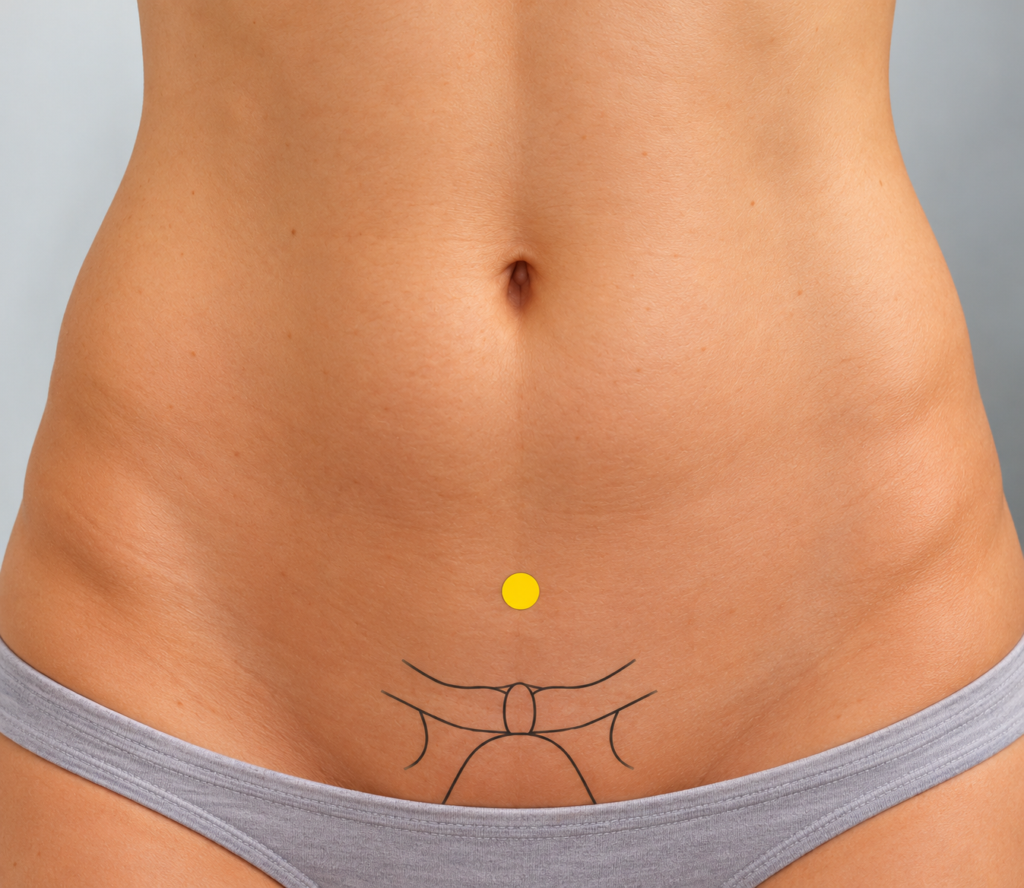
2. Press on CV3 on the lower abdomen to support the bladder. CV3 sits on the midline of the lower abdomen, about one thumb-width above the top of the pubic bone. Empty the bladder first if you can, then press gently with your fingertips, or rest a warm palm over the point, for one to two minutes. CV3 is called “Zhongji,” the “Middle Pole.” CV3 is avoided during pregnancy.
CV3 is the front gathering point of the Bladder, where Bladder Qi collects at the front of the body. In Traditional Chinese Medicine, it is used for difficulty urinating, urinary retention, frequency, and incontinence. Applying gentle pressure and warmth over CV3 can improve circulation to the lower abdomen and support the bladder as its nerve signals return.
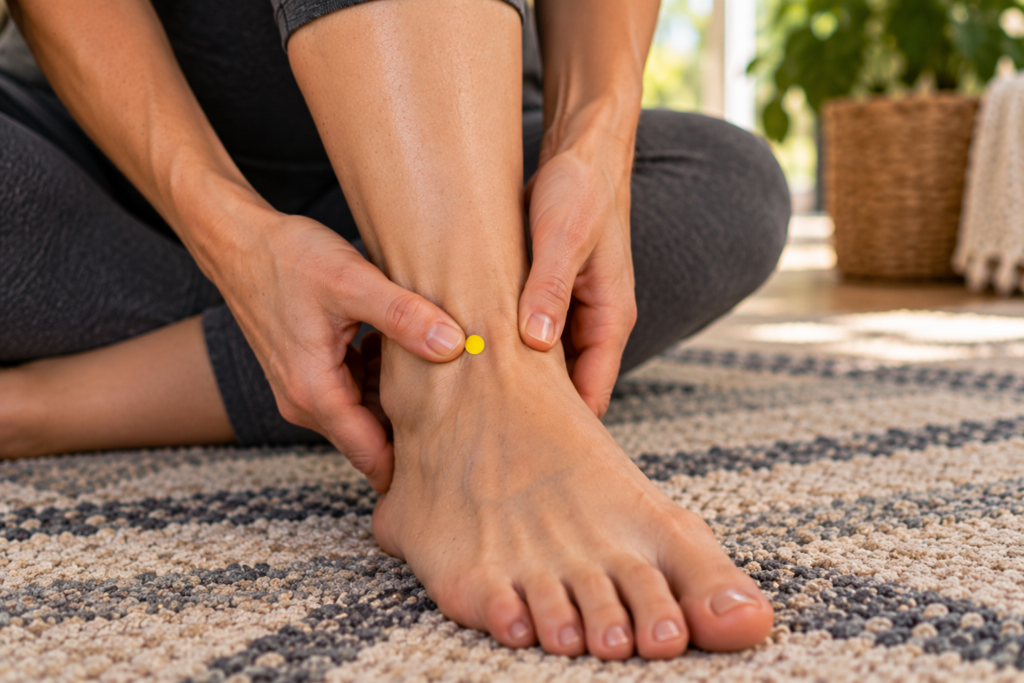
3. Press on KI3 behind the inner ankle to strengthen the Kidney. KI3 sits in the hollow behind the inner ankle bone, between the ankle bone and the Achilles tendon, level with the tip of the ankle bone. Press gently with your thumb for one to two minutes on each ankle. KI3 is called “Taixi,” the “Great Stream.”
KI3 is the source point of the Kidney, which in Traditional Chinese Medicine governs the lower back, bones, bladder, and bowels. It strengthens the body’s deep reserves, which support healing after surgery, and helps control the lower openings. KI3 is a fundamental point for long-term recovery.
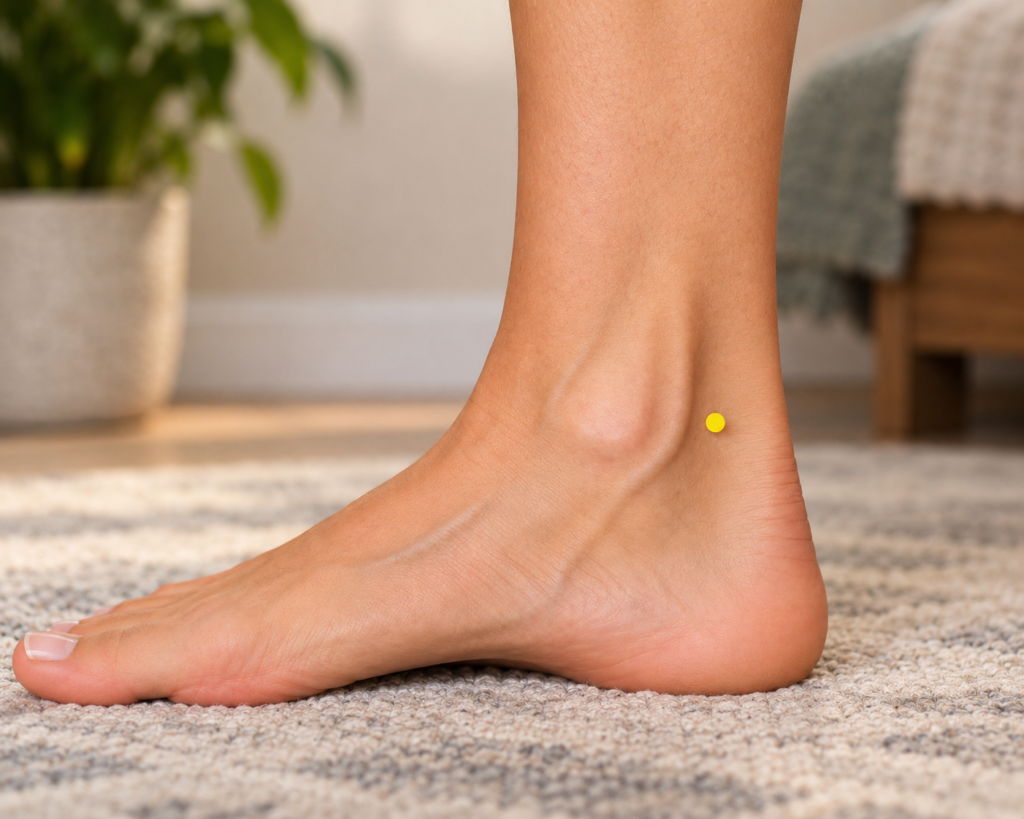
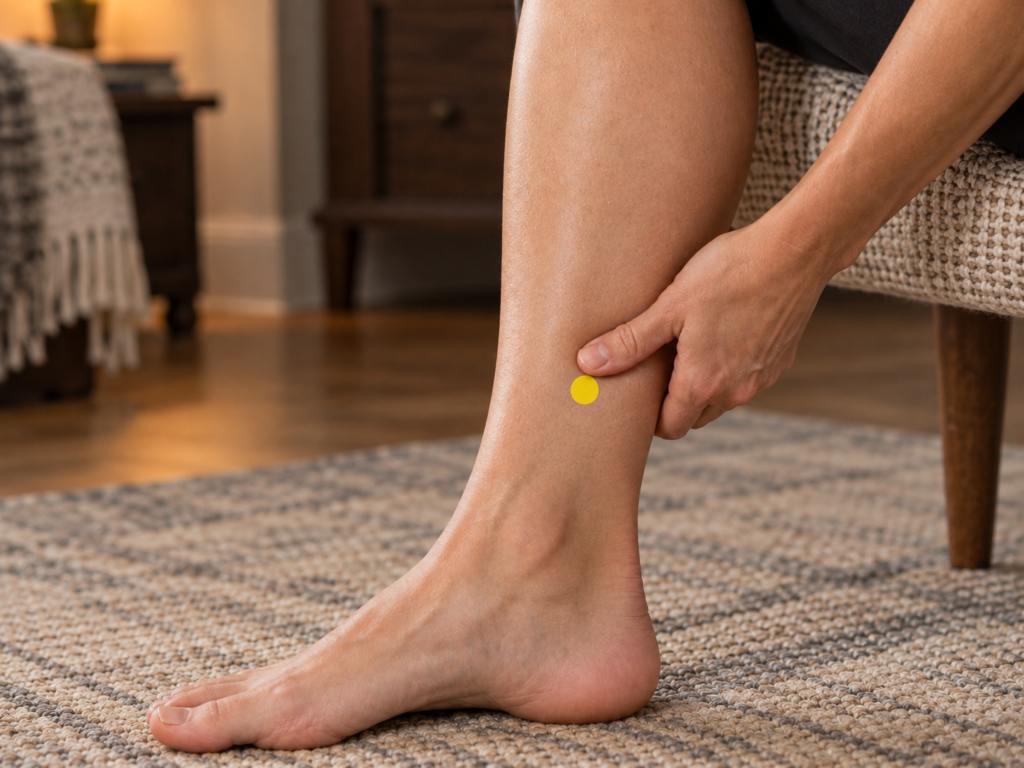
4. Press on SP6 above the inner ankle to support the pelvis. SP6 sits four finger-widths up from the tip of the inner ankle bone, just behind the back edge of the shinbone. Press firmly with your thumb for one to two minutes on each leg. SP6 is called “Sanyinjiao,” the “Three Yin Intersection.” SP6 is contraindicated during pregnancy.
SP6 is where the Spleen, Liver, and Kidney channels meet; all three run through the pelvis and lower abdomen. It’s one of the most important points for urinary, bowel, and sexual function, and can also help relieve numbness and tingling along the inside of the leg.
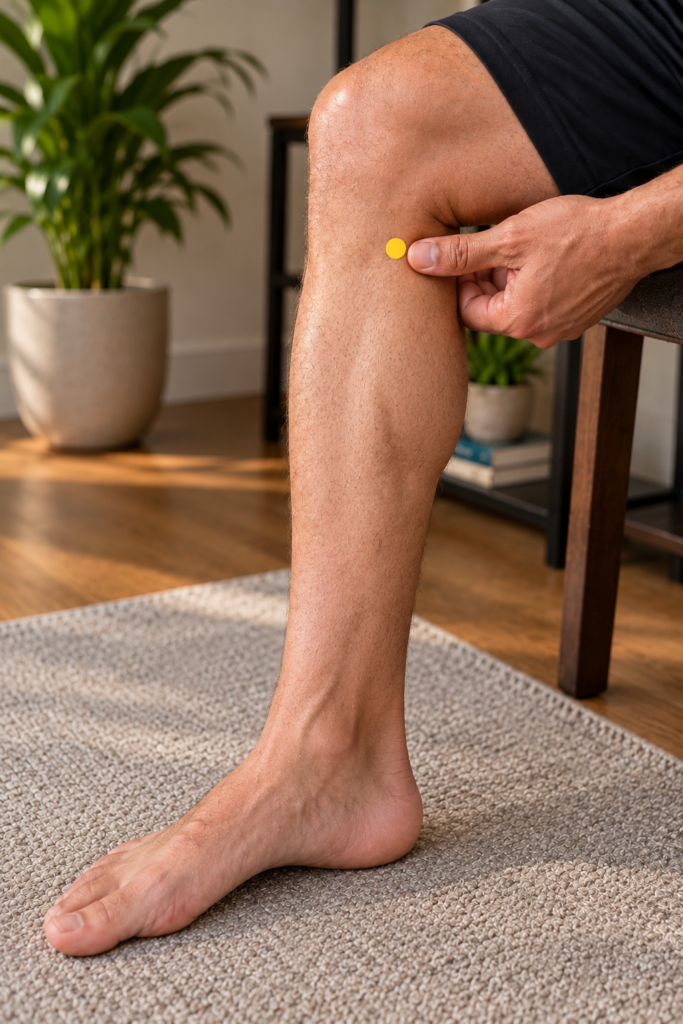
5. Press on SP9 below the inner knee to ease difficult urination. SP9 sits on the inner side of the lower leg, in the hollow just below the knee where the bottom edge of the large bony knob of the shinbone curves upward. Slide your thumb up the inner edge of the shinbone until it stops, then press firmly for one to two minutes on each leg. SP9 is called “Yinlingquan,” the “Yin Mound Spring.”
SP9 is a classic Traditional Chinese Medicine point for difficulty urinating. It opens the water passages, resolves Dampness, and is traditionally used for urinary retention, painful or difficult urination, and leg swelling.
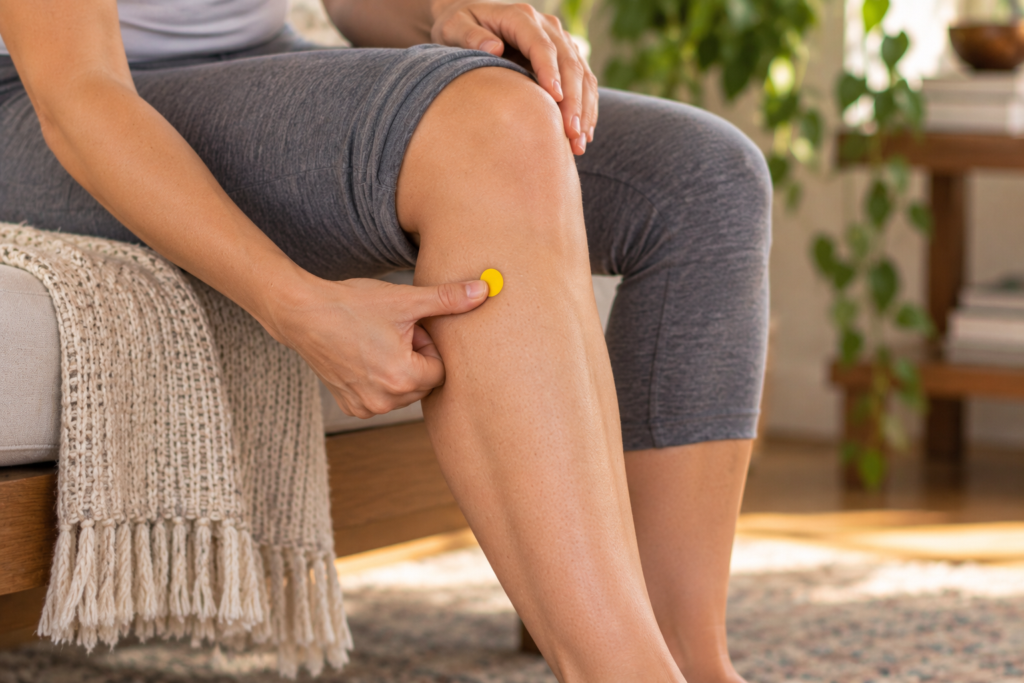
6. Press on ST36 below the knee to build strength. ST36 sits four finger-widths below the lower edge of the kneecap and one finger-width to the outside of the shinbone. Press firmly with your thumb for one to two minutes on each leg. ST36 is called “Zusanli,” the “Leg Three Miles.”
Traditional Chinese Medicine has a classic principle for weakness and wasting in the limbs: treat the Yangming channels, including the Stomach channel. ST36 is a key point on this channel, used to build Qi and Blood, strengthen the leg muscles, and restore energy depleted by surgery and long recoveries.
7. Press on ST37 on the lower leg to support the bowels. ST37 sits on the front of the lower leg, four finger-widths below ST36, one finger-width to the outside of the shinbone. Press firmly with your thumb for one to two minutes on each leg. ST37 is called “Shangjuxu,” the “Upper Great Void.”
ST37 is the lower sea point of the Large Intestine and directly affects the bowel. In Traditional Chinese Medicine, it is used for constipation, irregular bowel movements, and abdominal discomfort, all of which are common after spine surgery or when the bowel’s nerve supply is diminished. As a Yangming point, it also strengthens the front of the leg.
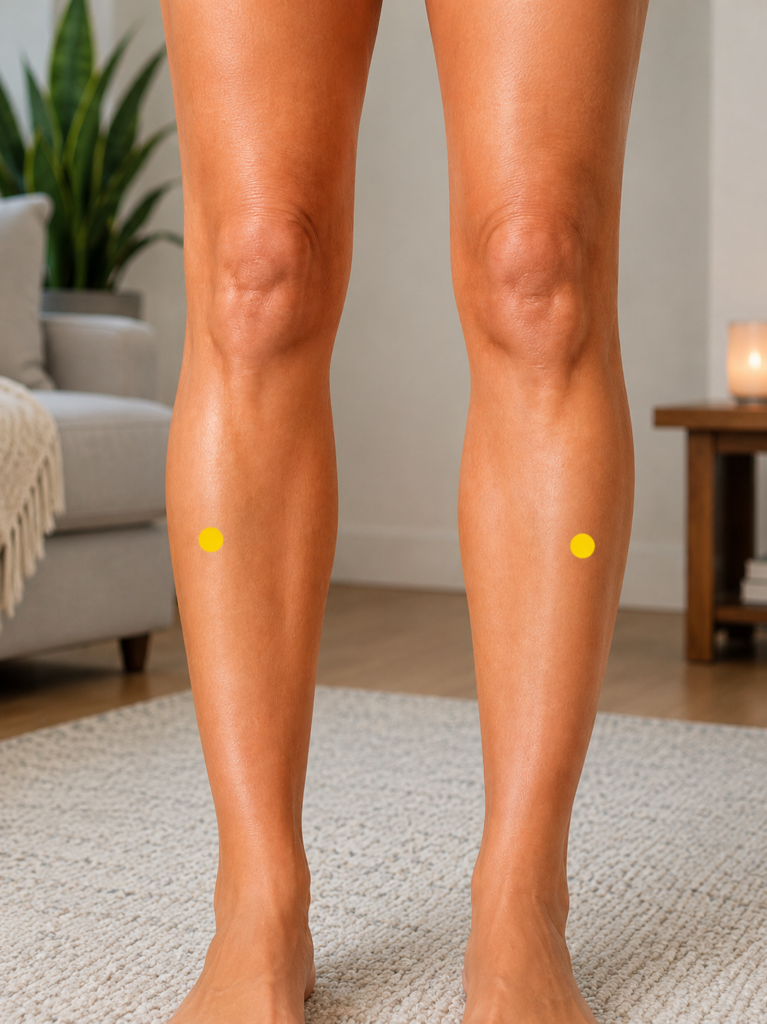
8. Press on GB34 below the outer knee to support the muscles and nerves. GB34 sits on the outer side of the lower leg, in the hollow just in front of and below the small bony knob below the outer knee. Press firmly with your thumb for one to two minutes on each leg. GB34 is called “Yanglingquan,” the “Yang Mound Spring.”
GB34 is the influential point of the sinews, meaning the body’s tendons and muscles. It is used for numbness, weakness, cramping, and pain along the side of the leg. In recovery from cauda equina syndrome, it is used to relax tight muscles and support the return of strength and coordination.
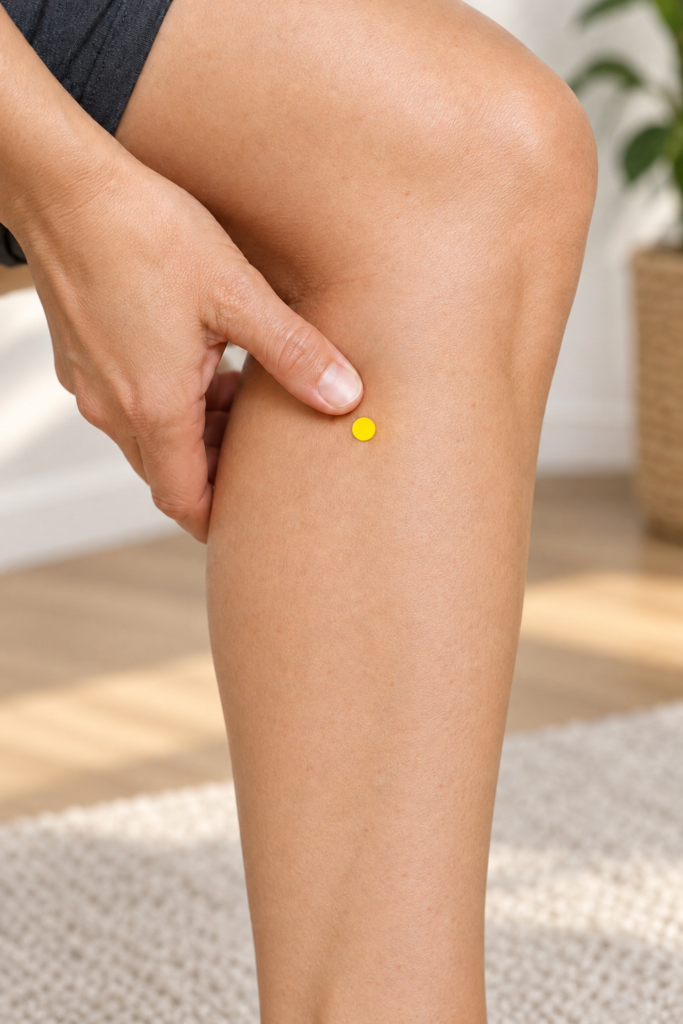
9. Press on ST41 at the front of the ankle to strengthen the foot. ST41 sits at the center of the front of the ankle crease, in the hollow between the two tendons that stand out when you lift your toes. Press firmly with your thumb for one to two minutes on each ankle. ST41 is called “Jiexi,” the “Ravine Divide.”
Weakness when lifting the foot (commonly called foot drop) is a frequent residual problem after nerve compression in the lower back. In Traditional Chinese Medicine, ST41 is the classic point for ankle and foot weakness. It brings Qi and Blood to the front of the ankle and supports the muscles that lift the foot during walking.
Why These Acupressure Points Work
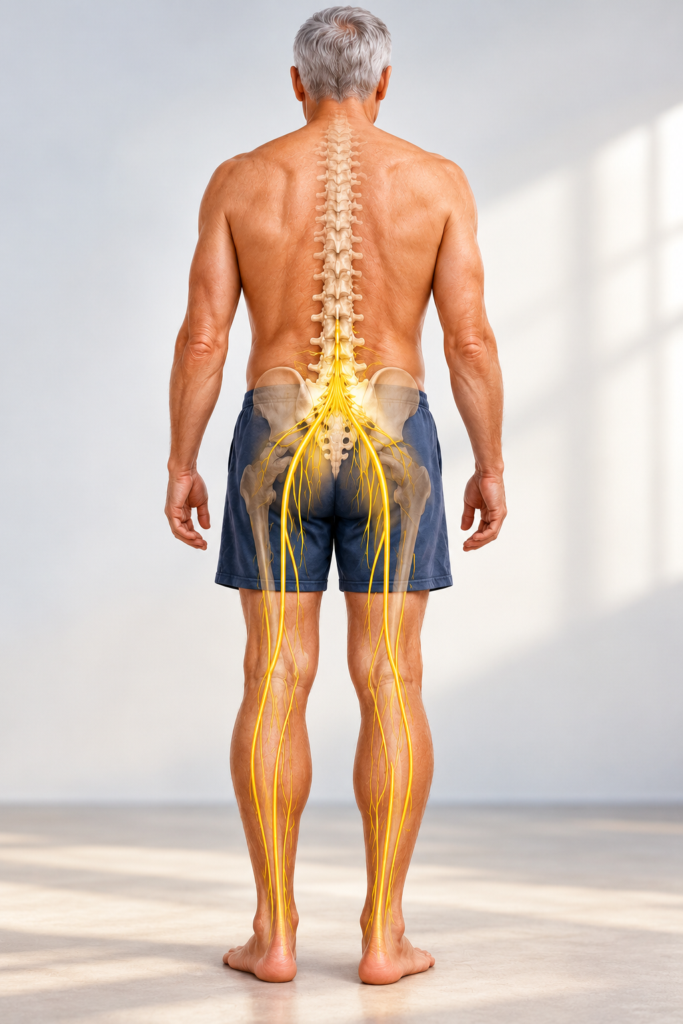
In Traditional Chinese Medicine, recovery from a major spinal injury involves clearing the blockage caused by the injury, strengthening the Kidney (which governs the lower back and lower openings), and ensuring enough Qi and Blood reach the legs to restore sensation and strength. Cauda equina syndrome affects all three, which is why recovery so often involves pain, bladder and bowel problems, and weakness at the same time.
The nine points support each part of recovery:
- The back point (Yaotongxue) eases low back pain without pressing near the surgical site.
- The bladder and pelvic points (CV3, SP6, SP9) support urination, circulation through the pelvis, and sexual function.
- The Kidney and bowel points (KI3, ST37) strengthen the deep reserves and support regular bowel function.
- The support points (ST36, GB34, ST41) help bring Qi and Blood to the legs, restoring strength and sensation and making it easier to lift the foot.
How to Properly Use These Acupressure Points
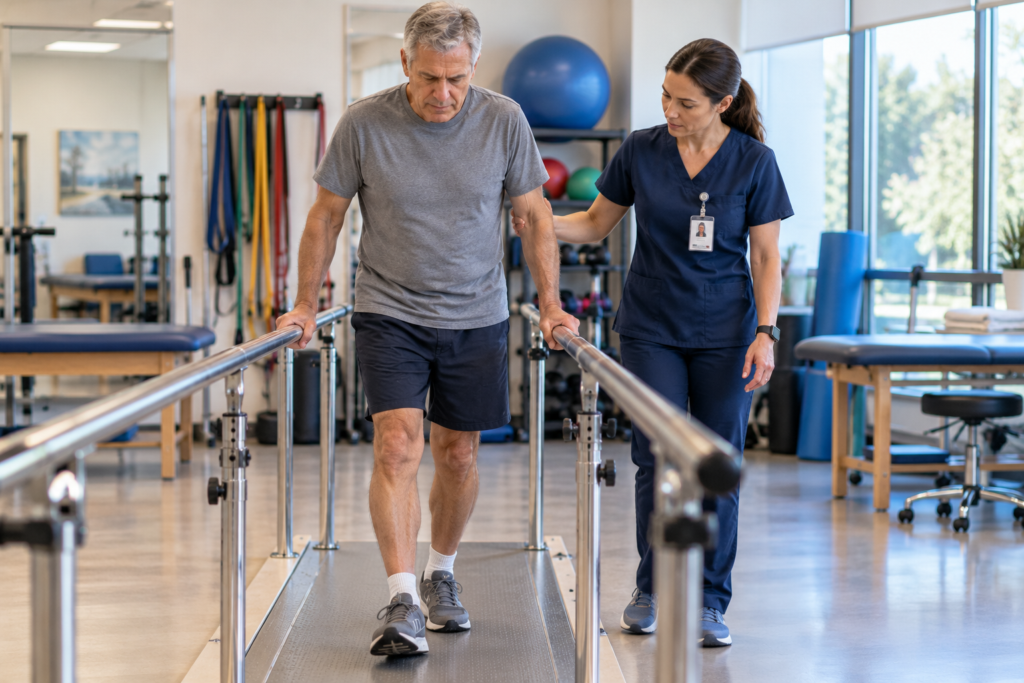
During recovery from cauda equina syndrome, acupressure can offer support alongside the care plan provided by your surgical and rehabilitation team.
- Begin only after receiving emergency treatment, and consult your surgeon about when it is safe to start, particularly with regard to the abdominal point.
- Avoid applying pressure on or near the surgical incision. Use gentle pressure on areas with reduced sensation, as numb skin cannot alert you when the pressure is too firm.
- Perform the complete routine once daily, holding each point for one to two minutes. If bladder retraining is part of your plan, apply pressure to CV3, SP6, and SP9 before scheduled bathroom visits.
- Practice consistently for several months, as nerves recover slowly, and progress is often measured over months and years.
Daily habits can have a significant impact on nerve recovery. Follow your physical therapy program and gradually increase your walking as your surgeon advises; movement helps blood flow reach the healing nerves. If pelvic floor therapy, a bladder program, or self-catheterization is part of your recovery, do it consistently. Eat warm, cooked meals with plenty of fiber and drink enough water to keep your bowels regular and avoid straining. Keep your lower back and feet warm, check numb skin every day for pressure sores or injuries, and use a cushion if your buttocks or saddle area remain numb. Emotional wellbeing is just as important during recovery. It can help to talk with others who have experienced cauda equina syndrome or speak to a counselor.
Find out more about how to use acupressure after surgery.
When to Get Professional Help
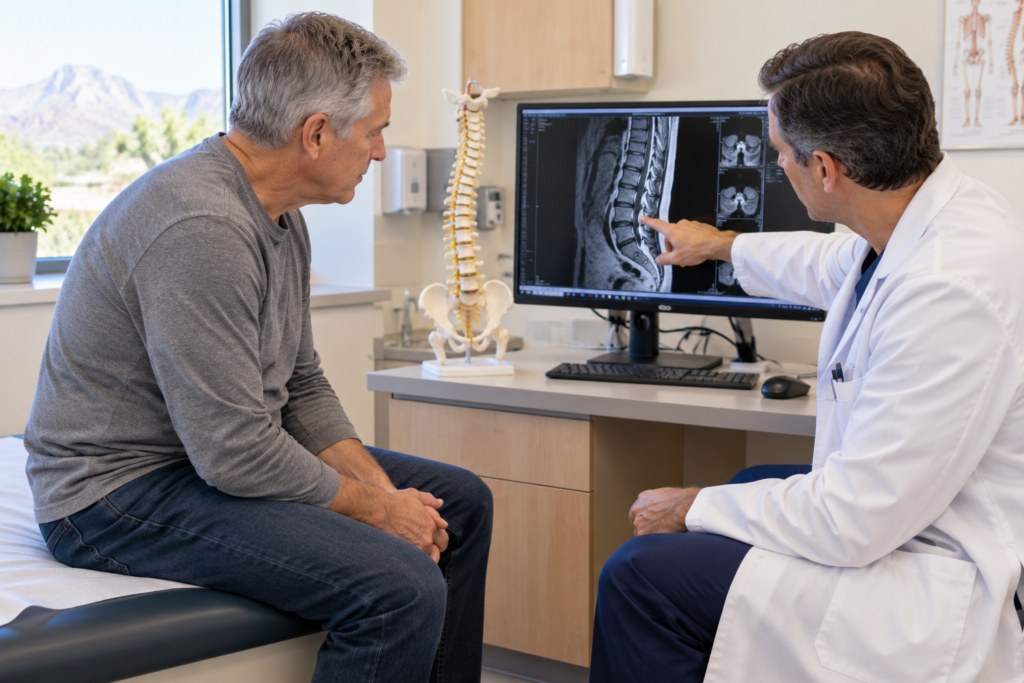
Go to the emergency room right away if you develop new or worsening numbness in your groin, buttocks, or inner thighs; new difficulty urinating or loss of bladder or bowel control; sudden weakness in one or both legs; or sciatica in both legs. This applies whether or not you have had surgery, since symptoms can return and early treatment helps protect the nerves. Contact your surgeon promptly if you have a fever, redness, swelling, or drainage at the incision; a severe headache when sitting or standing; or suddenly worsening back pain. See your doctor or rehabilitation team if bladder, bowel, or sexual function is not improving; nerve pain is disrupting your sleep; or foot drop makes walking unsafe. Medication, pelvic floor therapy, and bracing may help. Low mood and anxiety are common during a long recovery, and a mental health professional can help with both.
Acupressure is a gentle, supportive practice for recovery from cauda equina syndrome. It complements, and does not replace, diagnosis and medical care.
For related health concerns, acupressure for spinal stenosis, acupressure for neuropathic pain, and acupressure for urinary incontinence are companion articles. If a herniated disc caused the compression, learn how acupuncture can treat herniated discs.
Above and Beyond Acupuncture offers acupuncture, cupping, and lifestyle coaching at the North Frank Lloyd Wright Boulevard location in Scottsdale.
Schedule an appointment online to start your healing journey.
The points above are only as effective as the technique used to apply them. Where to press, how firmly, and for how long all affect the result. For a full breakdown of how to perform acupressure properly at home, read Performing Acupressure in 3 Easy Steps.
About the Publisher
Paul Kerzner, L.Ac., is a licensed acupuncturist and board-certified herbalist, as well as the founder of Above and Beyond Acupuncture in Scottsdale. His own journey from chronic patient to practicing acupuncturist shapes his commitment to providing honest, clinically grounded information about acupuncture and Traditional Chinese Medicine. Learn more about Paul and his clinical approach on the About Us page.