Key Takeaways
- Elbow pain that develops gradually usually indicates overuse or inflammation, while pain that begins suddenly after a fall or collision usually indicates an injury.
- Most mild elbow pain improves with rest, ice, and a break from the activity that caused it, though tendons can take longer to heal than expected.
- In Traditional Chinese Medicine, six channels run across the elbow. Pain there is thought to reflect Qi and Blood becoming stuck in those channels due to repetitive strain, Cold and Damp, or insufficient nourishment of the tendons.
- Nine acupressure points around the elbow, along the forearm and hand, and on the leg and foot help release the tendons, move Qi and Blood, and ease aching in and around the joint.
- A cracking sound at the time of injury, a deformed elbow, an inability to move the elbow, severe swelling, or signs of infection require prompt medical attention.

The elbow often receives little attention until it starts to hurt. At that point, it can interfere with many everyday activities, including turning a doorknob, lifting a coffee pot, shaking hands, carrying groceries, or extending the arm upon waking. The discomfort may be in the outer, inner, or posterior part of the joint and may extend into the forearm after prolonged gripping, typing, or yard work.
According to the Cleveland Clinic, elbow pain is any musculoskeletal pain in or around the elbow joint, involving the bones, muscles, tendons, ligaments, or other tissues. Repetitive strain injuries are the most common cause, including tennis elbow on the outer side, golfer’s elbow on the inner side, bursitis, and nerve compression. Arthritis, sprains, strains, fractures, and dislocations can also cause elbow pain, and pain can be referred from the neck or shoulder. For mild pain without a notable injury, the Cleveland Clinic recommends rest, ice, and over-the-counter pain medicine, and advises contacting a healthcare provider if the elbow still hurts after a week.
The elbow is a hinge joint where three bones meet, held together by ligaments and crossed by forearm muscle tendons. The muscles used for gripping and lifting attach to the bony bump on the outside of the elbow, while those that bend the wrist and fingers attach to the bump on the inside. Repeated gripping, twisting, and lifting can strain these tendon attachments, causing pain on one side of the joint that often worsens with use. A small fluid-filled sac at the tip of the elbow can also become irritated by leaning on it.
Traditional Chinese Medicine describes six channels that cross the elbow, three on the inner side and three on the outer side, and continue to the hand. Repetitive strain can obstruct Qi and Blood where these channels cross, causing fixed, aching pain that worsens with use. When Cold and Damp settle in the joint, the elbow may feel stiff and achy in cold weather or air conditioning. The Liver nourishes the tendons, so low Liver Blood from overwork or poor sleep can leave the tendons around the elbow tight and slow to heal.
The points listed below begin at the elbow, proceed down the forearm to the hand, and conclude at the leg and foot.
What Acupressure Points to Press and Why
1. Press on LI11 at the outer elbow to ease pain on the outside of the joint. LI11 sits at the outer end of the elbow crease when the elbow is bent, in the hollow between the end of the crease and the bony point of the elbow. Press firmly with the thumb of your other hand for one to two minutes on the sore arm, then the other arm. LI11 is called “Quchi,” the “Pool at the Crook.”
LI11 is the sea point of the Large Intestine and a key point in Traditional Chinese Medicine for elbow pain. It moves Qi through the outer elbow, clears Heat when the joint feels warm and inflamed, and eases pain radiating into the forearm.
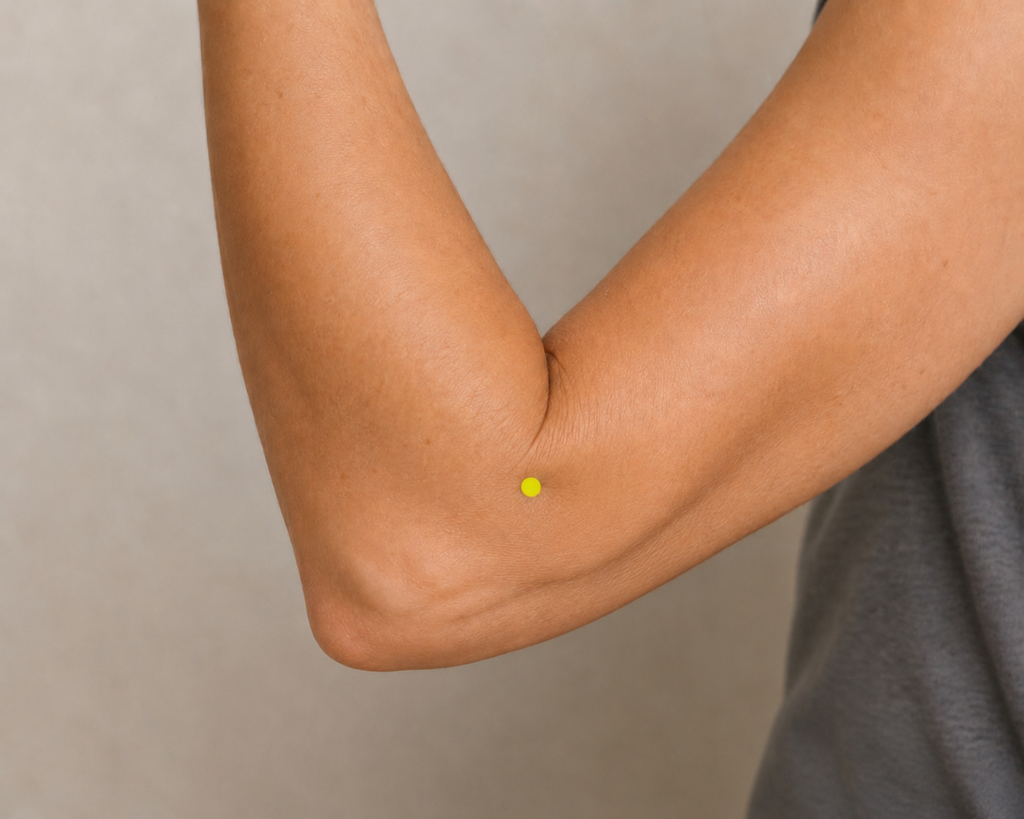
2. Press on LU5 at the elbow crease to release the front of the elbow. LU5 sits in the elbow crease, on the thumb side of the large tendon in the middle of the crease, with the elbow slightly bent. Press firmly with the thumb of your other hand for one to two minutes on each arm. LU5 is called “Chize,” the “Cubit Marsh.”
LU5 is the Lung’s sea point. It relaxes the tendons at the front of the elbow and can help relieve stiffness and pain when fully straightening the elbow.
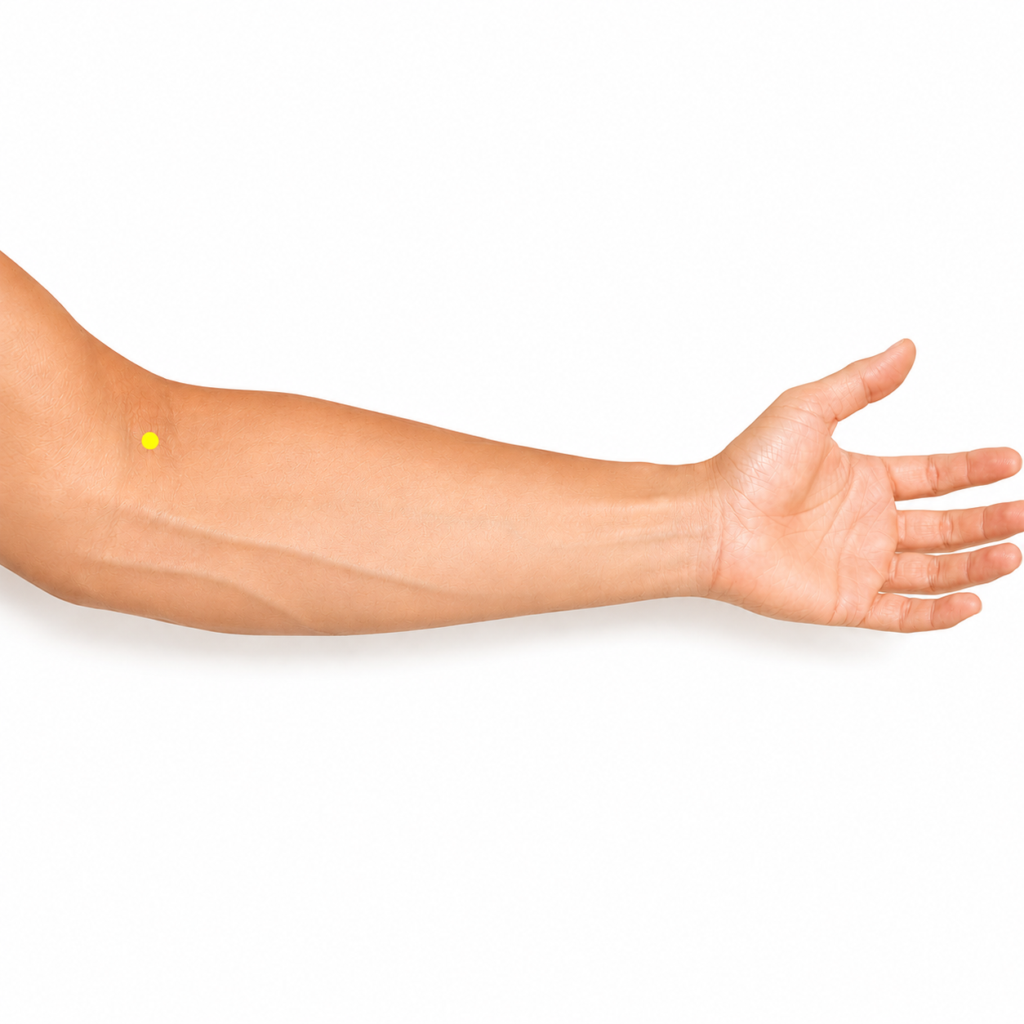
3. Press on HT3 at the inner end of the elbow crease to ease pain on the inside of the joint. HT3 sits at the inner end of the elbow crease, on the little finger side, between the end of the crease and the bony bump on the inside of the elbow when the elbow is bent. Press with moderate pressure using the thumb of your other hand for one to two minutes on each arm. HT3 is called “Shaohai,” the “Lesser Sea.”
HT3 is the Heart’s sea point. It helps relieve pain and stiffness on the inner elbow, where the tendons that flex the wrist and fingers attach.
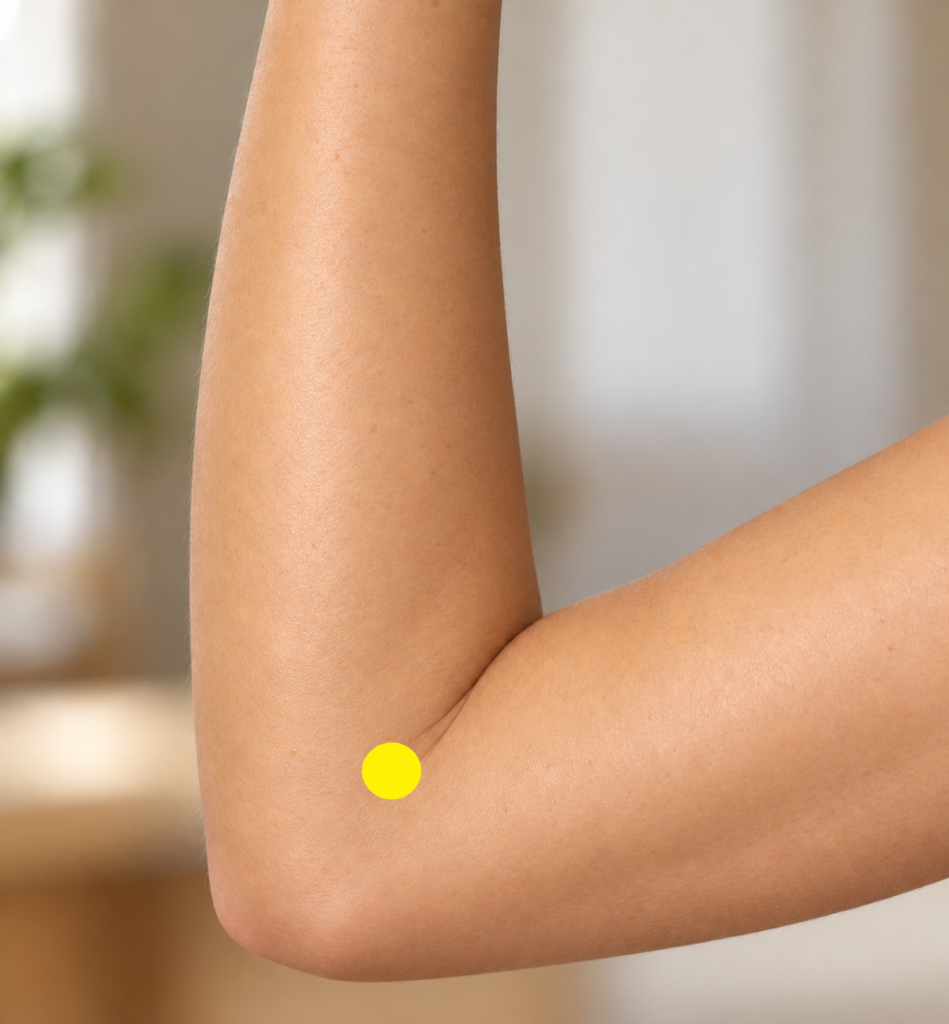
4. Press on TE10 above the tip of the elbow to release the back of the joint. TE10 sits on the back of the upper arm, in the hollow about one thumb-width above the bony tip of the elbow when the elbow is bent. Press firmly with the fingers of your other hand for one to two minutes on each arm. TE10 is called “Tianjing,” the “Heavenly Well.”
TE10 is the sea point of the Triple Energizer. It helps relieve pain at the back of the elbow, especially when the joint aches after leaning on the elbow or straightening the arm against resistance.
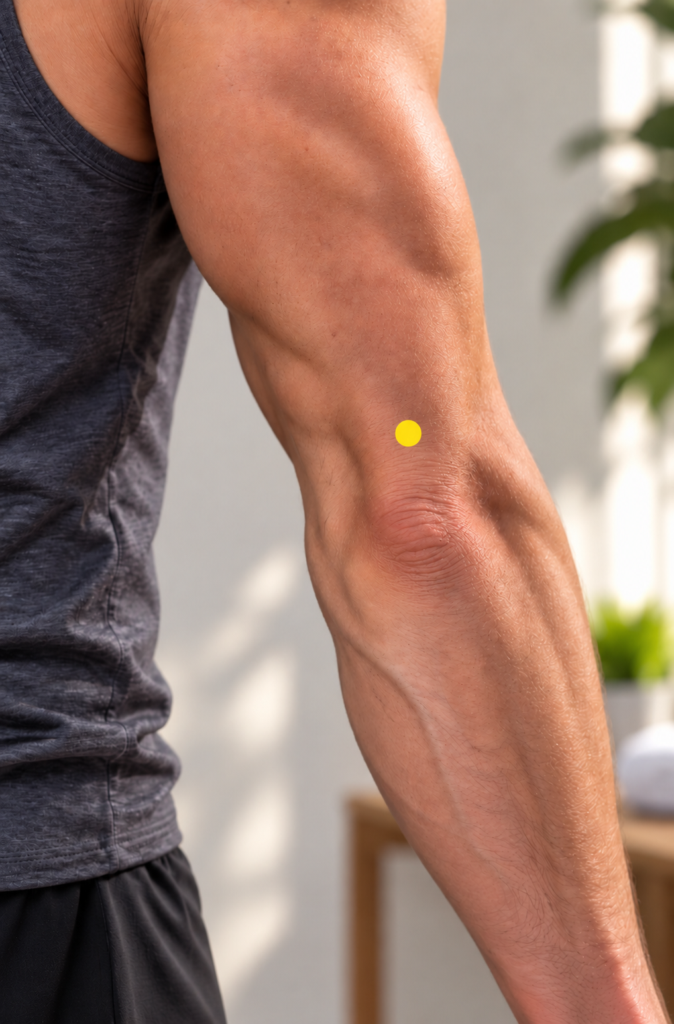
5. Press on LI10 on the forearm to relieve tight forearm muscles. LI10 sits on the thumb side of the forearm, three finger-widths below the outer end of the elbow crease when the elbow is bent. Press firmly with the thumb of your other hand for one to two minutes on each arm. LI10 is called “Shousanli,” the “Arm Three Miles.”
LI10 is located over the forearm muscles that pull on the outside of the elbow. Releasing these muscles reduces strain on the tendon attachment and eases pain when gripping or lifting.
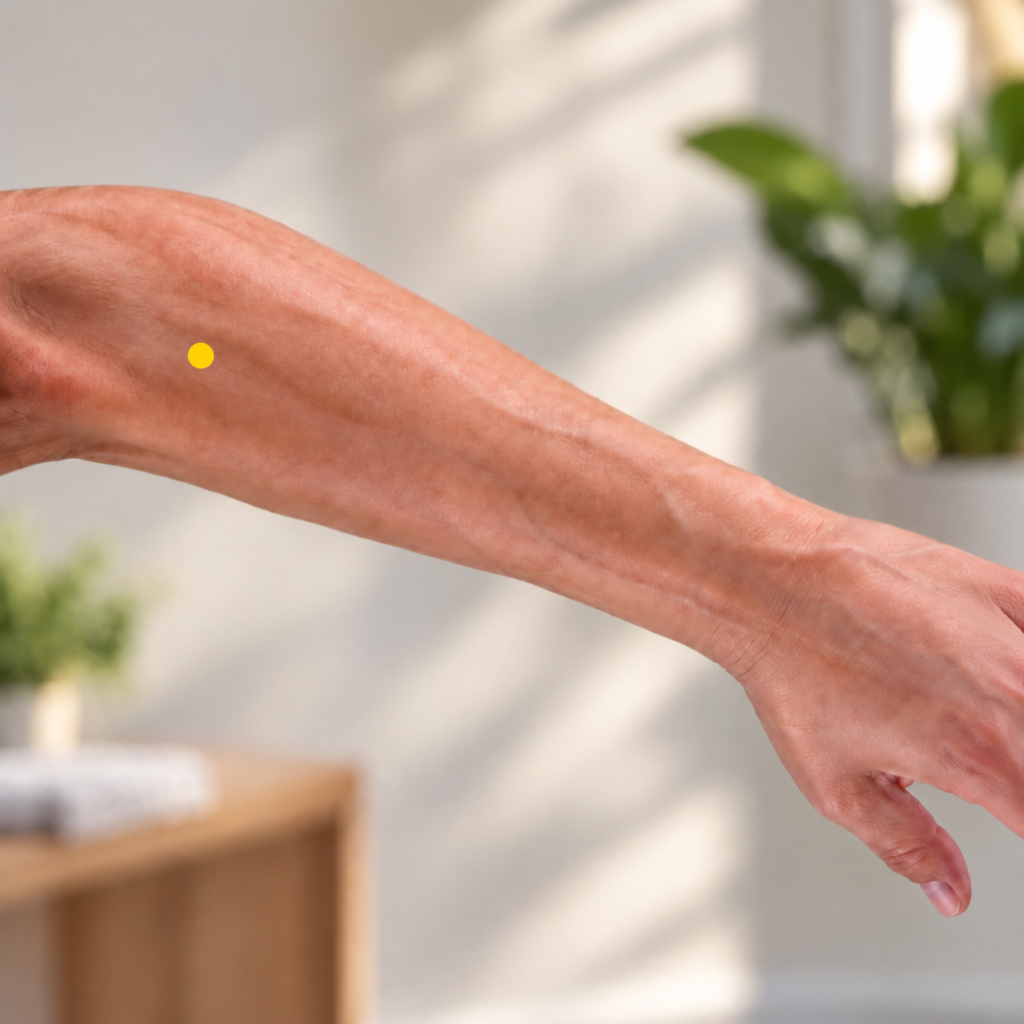
6. Press on TE5 on the back of the forearm to move Qi through the arm. TE5 sits on the back of the forearm, three finger-widths above the wrist crease, between the two forearm bones. Press firmly with the thumb of your other hand for one to two minutes on each arm. TE5 is called “Waiguan,” the “Outer Pass.”
TE5 is the Triple Energizer’s connecting point. It moves Qi along the back of the forearm toward the elbow and helps ease stiffness and aching in the joint caused by Wind and Cold.
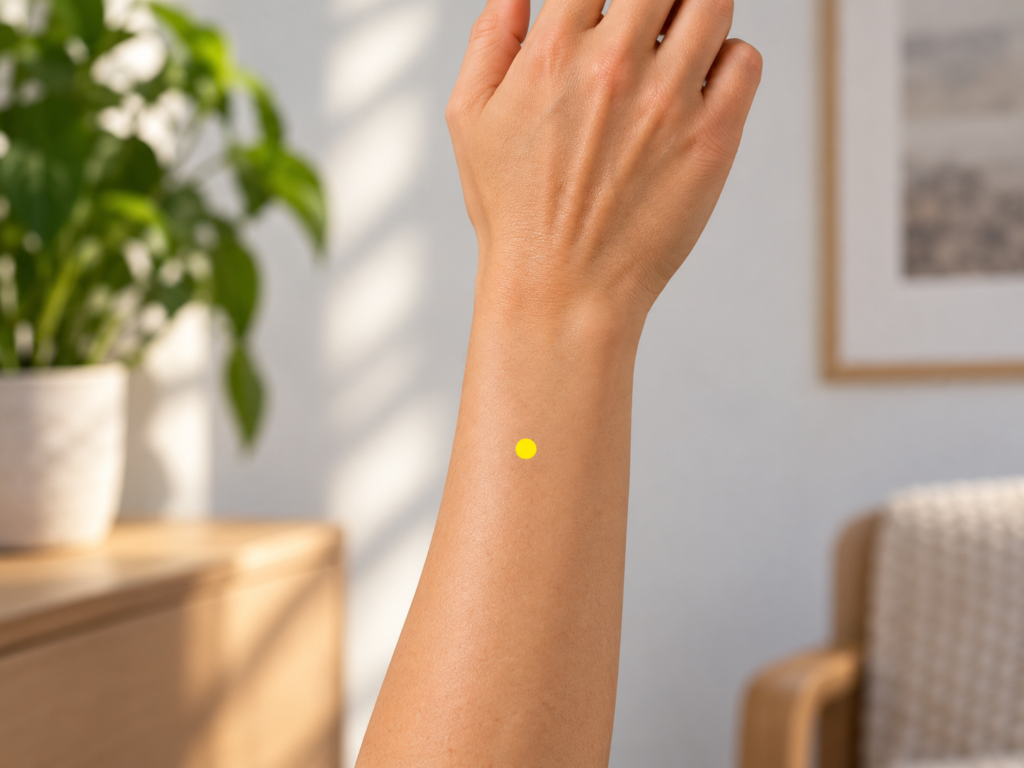
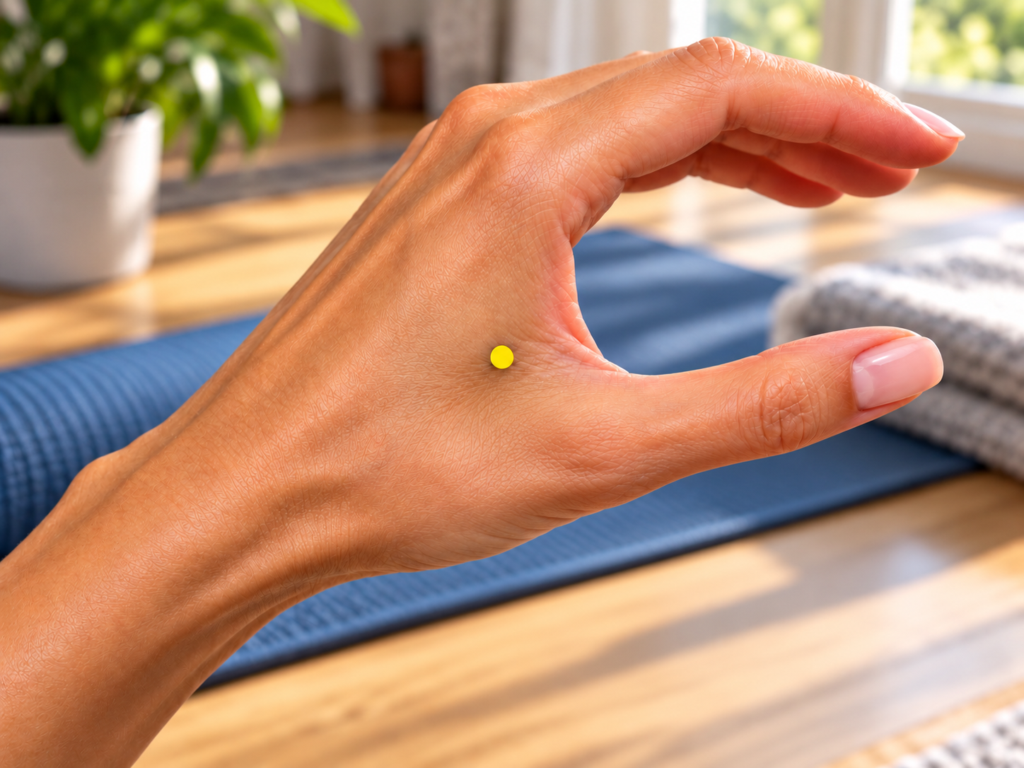
7. Press on LI4 on the back of the hand to ease pain. LI4 sits on the back of the hand, in the web between the thumb and index finger, at the highest point of the muscle when the thumb is pressed against the index finger. Press firmly with the thumb of your other hand for one to two minutes on each hand. LI4 is called “Hegu,” the “Joining Valley.”
LI4 is the source point of the Large Intestine and a classic point for pain anywhere in the body. It moves Qi along the Large Intestine channel from the hand through the elbow. LI4 is avoided during pregnancy.
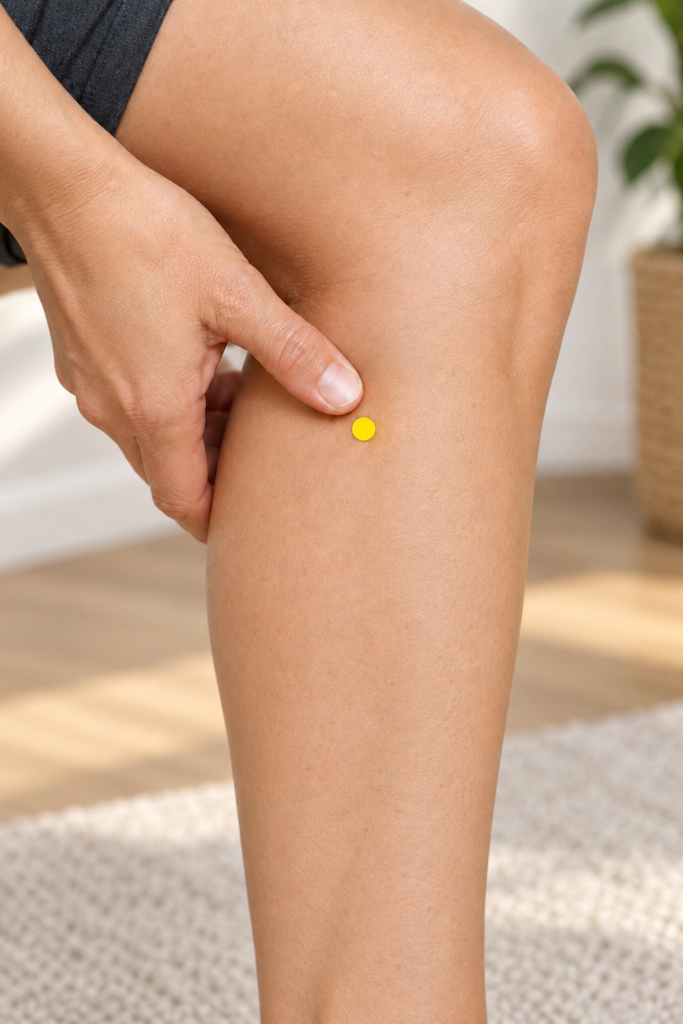
8. Press on GB34 below the outer knee to relax the tendons. GB34 sits on the outer side of the lower leg, in the hollow just in front of and below the small bony bump below the outside of the knee. Press firmly with your thumb for one to two minutes on each leg. GB34 is called “Yanglingquan,” the “Yang Mound Spring.”
GB34 is the influential point of the tendons. It helps relax tendons throughout the body, including those around the elbow, and can ease tightness and stiffness in the joint.
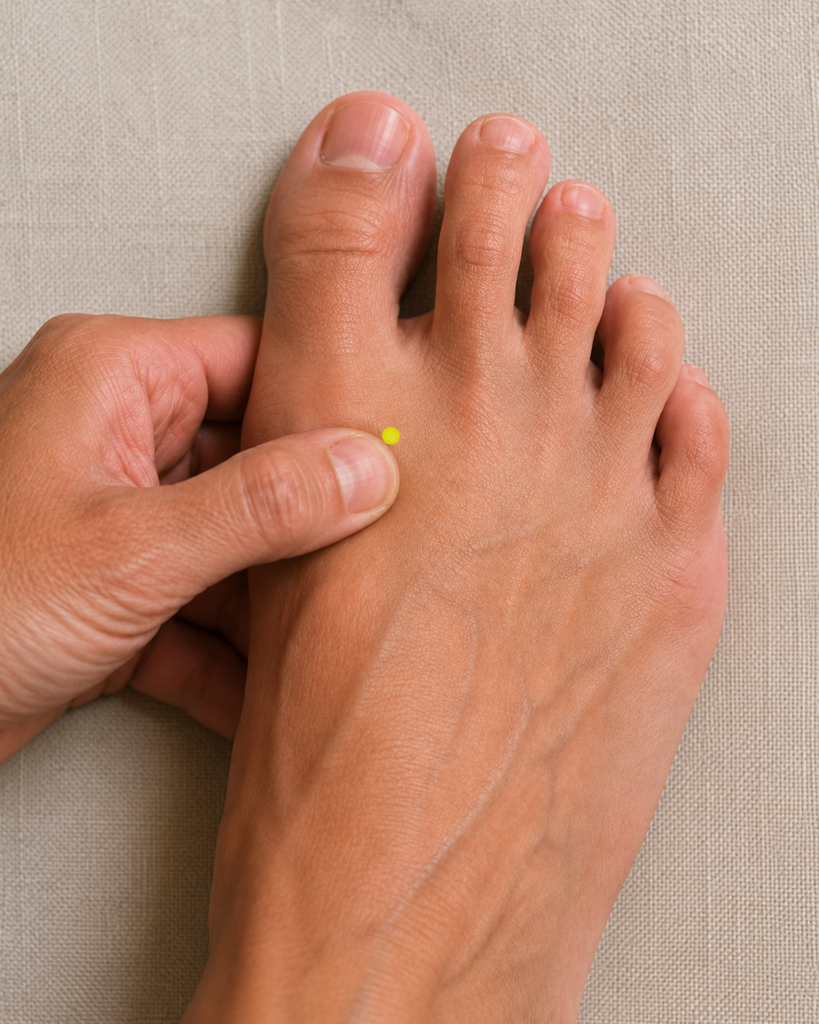
9. Press on LV3 on the top of the foot to nourish the tendons. LV3 sits on the top of the foot, in the hollow where the bones of the big toe and second toe meet, about two finger-widths back from the web between the toes. Press firmly with your thumb for one to two minutes on each foot. LV3 is called “Taichong,” the “Great Rushing.”
LV3 is the Liver’s source point. The Liver governs the tendons, and LV3 helps keep them supple and support their recovery, particularly when elbow pain persists.
Why These Acupressure Points Work
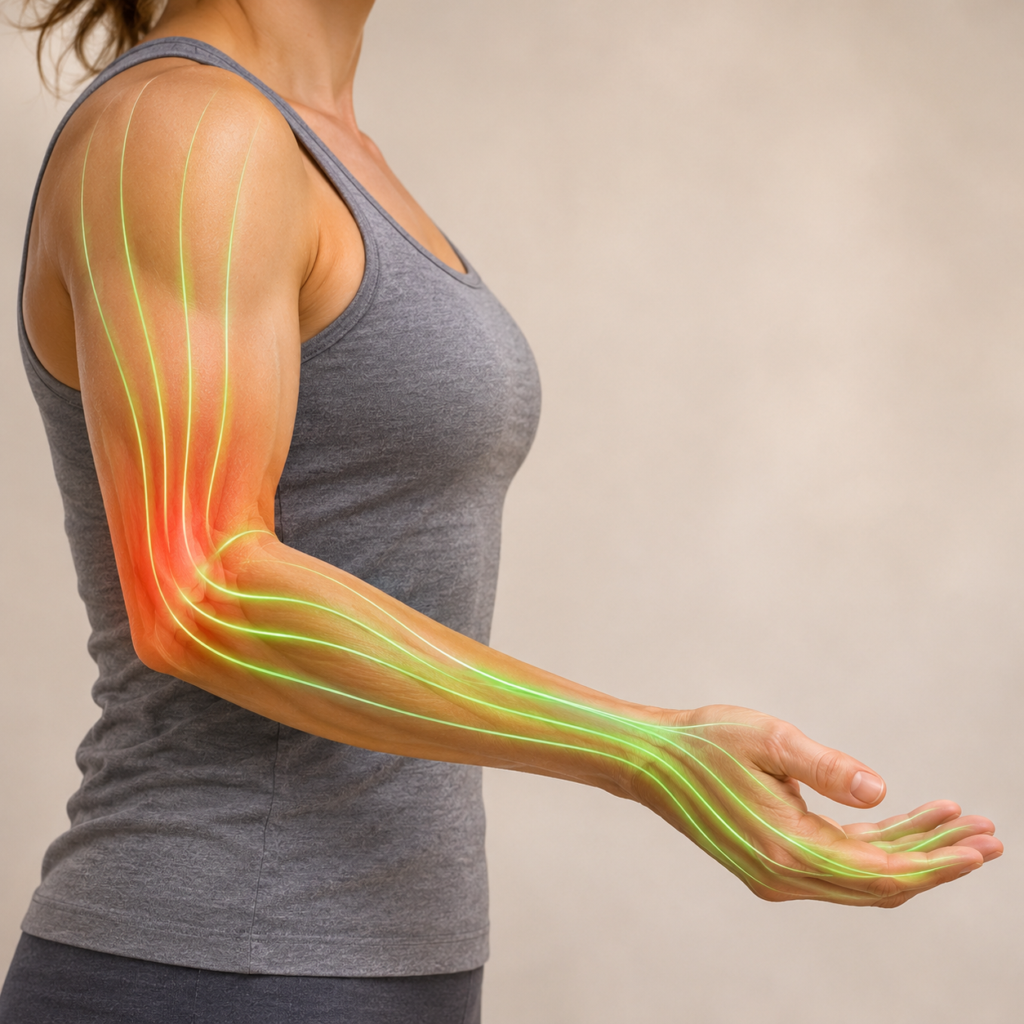
From a Traditional Chinese Medicine perspective, elbow pain indicates that Qi and Blood are stagnant where the arm channels cross the joint. The four elbow sea points, LI11, LU5, HT3, and TE10, address the outer, front, inner, and back of the joint. Points on the forearm and hand move Qi along the channels that pass through the elbow, while points on the leg and foot support the tendons from a distance.
The nine points work collectively to alleviate elbow pain:
- LI11, LU5, HT3, and TE10 release the elbow from every side.
- LI10 and TE5 relax the forearm and move Qi through the arm.
- LI4 eases pain along the full length of the arm.
- GB34 and LV3 relax and nourish the tendons.
How to Properly Use These Acupressure Points

Acupressure can help relieve elbow pain after activity and serve as a brief daily routine as the elbow heals.
- For pain on the outer elbow, press LI11, LI10, and LI4 on the affected arm, then press TE5.
- For pain on the inner side of the elbow, press HT3 and LU5 on the affected arm, followed by LI4.
- For pain at the back of the elbow, apply pressure to TE10 and TE5 on the affected arm.
- For persistent or recurrent elbow pain, apply pressure to GB34 and LV3 on both sides once daily.
- Apply firm pressure to the forearm, hand, leg, and foot, and moderate pressure around the elbow itself. Reduce pressure if any area feels bruised, and do not apply pressure to an elbow that is hot, red, or significantly swollen. LI4 is avoided during pregnancy.
Rest is the first step. The Cleveland Clinic recommends resting the elbow, icing it, and stopping activities that strain it. Traditional Chinese Medicine also recommends ice at first, then warmth once the swelling subsides to keep Qi and Blood moving. As general guidance, use a lighter grip on tools, rackets, and the computer mouse; lift with your palm facing up when possible; and avoid leaning on your elbows. Gradually return to activity as the pain eases, and ask a physical therapist about stretches and strengthening exercises if the pain keeps coming back. Traditional Chinese Medicine also recommends keeping your elbows covered in cold weather and air conditioning.
Learn more about why Traditional Chinese Medicine does not like ice.
When to Get Professional Help

Seek medical care right away after a fall or collision if you heard a crack when you were injured, your elbow looks deformed, has significant swelling or bruising, cannot move, or is severely painful even at rest. These can be signs of a fracture or dislocation. Contact a doctor promptly if your elbow becomes hot, red, and swollen, especially if you have a fever, as this may signal an infection in the joint or the fluid sac at the elbow’s tip. See a doctor if your elbow pain has not improved after a week of home care following an injury, if numbness or tingling spreads into your ring and little fingers, or if pain lasts more than a few weeks. Call 911 for arm or elbow pain accompanied by chest pressure, shortness of breath, sweating, or nausea, as these can be signs of a heart attack.
Acupressure is a gentle, supportive practice for elbow pain. It complements, and does not replace, diagnosis and medical care.
For related health concerns, acupressure for tennis elbow, acupressure for golfer’s elbow, and acupressure for arm pain are companion posts.
Above and Beyond Acupuncture offers acupuncture, cupping, and lifestyle coaching at the North Frank Lloyd Wright Boulevard location in Scottsdale.
Schedule an appointment online to start your healing journey.
The points above are only as effective as the technique used to apply them. Where to press, how firmly, and for how long all affect the result. For a full breakdown of how to perform acupressure properly at home, read Performing Acupressure in 3 Easy Steps.

About the Publisher
Paul Kerzner, L.Ac., is a licensed acupuncturist and board-certified herbalist, as well as the founder of Above and Beyond Acupuncture in Scottsdale. His own journey from chronic patient to practicing acupuncturist shapes his commitment to providing honest, clinically grounded information about acupuncture and Traditional Chinese Medicine. Learn more about Paul and his clinical approach on the About Us page.