Key Takeaways
- Hip pain can come from the joint, the surrounding muscles and tendons, or the lower back; the location of the pain can help identify its cause.
- Groin or front-of-hip pain often points to arthritis or a labral tear, while pain on the outside of the hip often indicates bursitis or a muscle problem.
- In Traditional Chinese Medicine, hip pain may reflect stagnant Qi and Blood in the Gallbladder channel, Cold and Dampness in the joint, or Kidney energy that no longer adequately supports the bones and joints.
- Nine acupressure points around the hip and along the leg help relieve stiffness, move stagnant Qi and Blood, and strengthen the joint.
- A fall followed by an inability to bear weight, or a hip that is suddenly hot, red, and swollen with fever, requires urgent medical care.
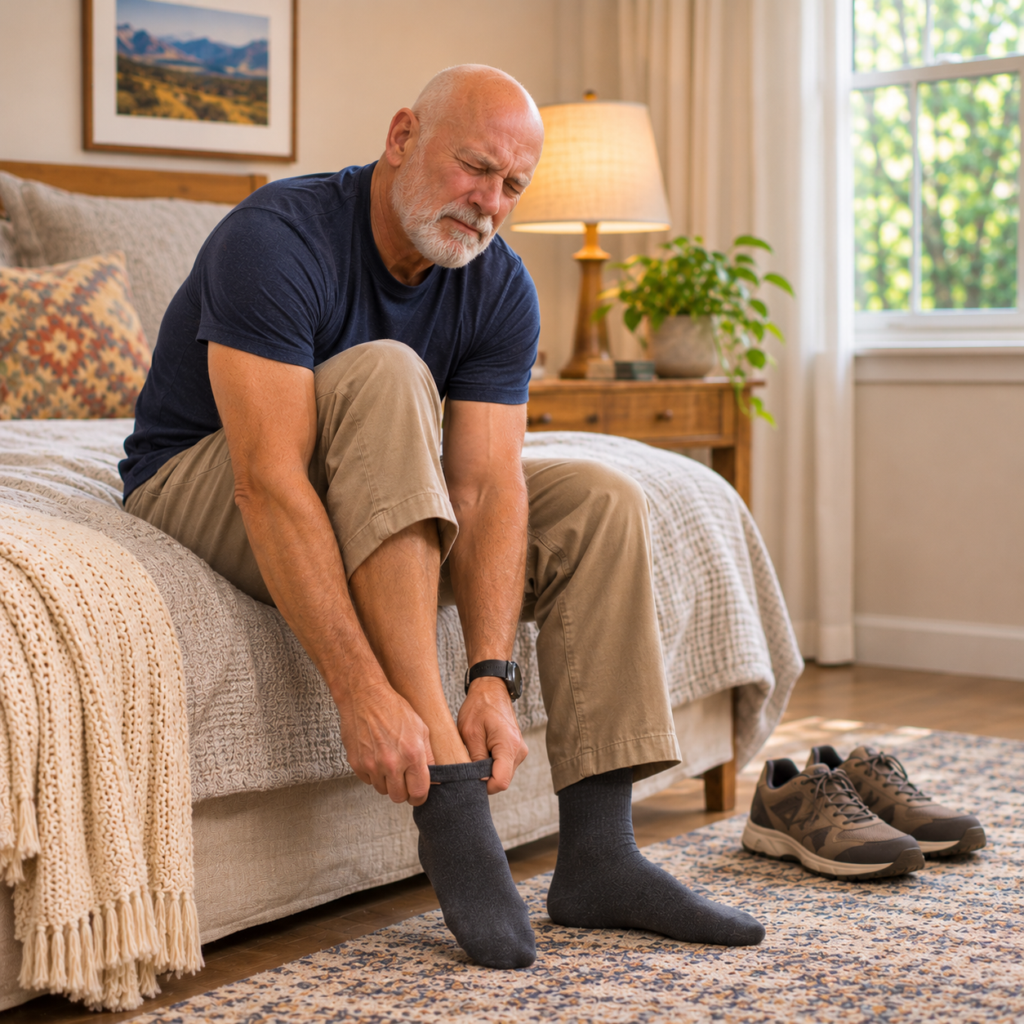
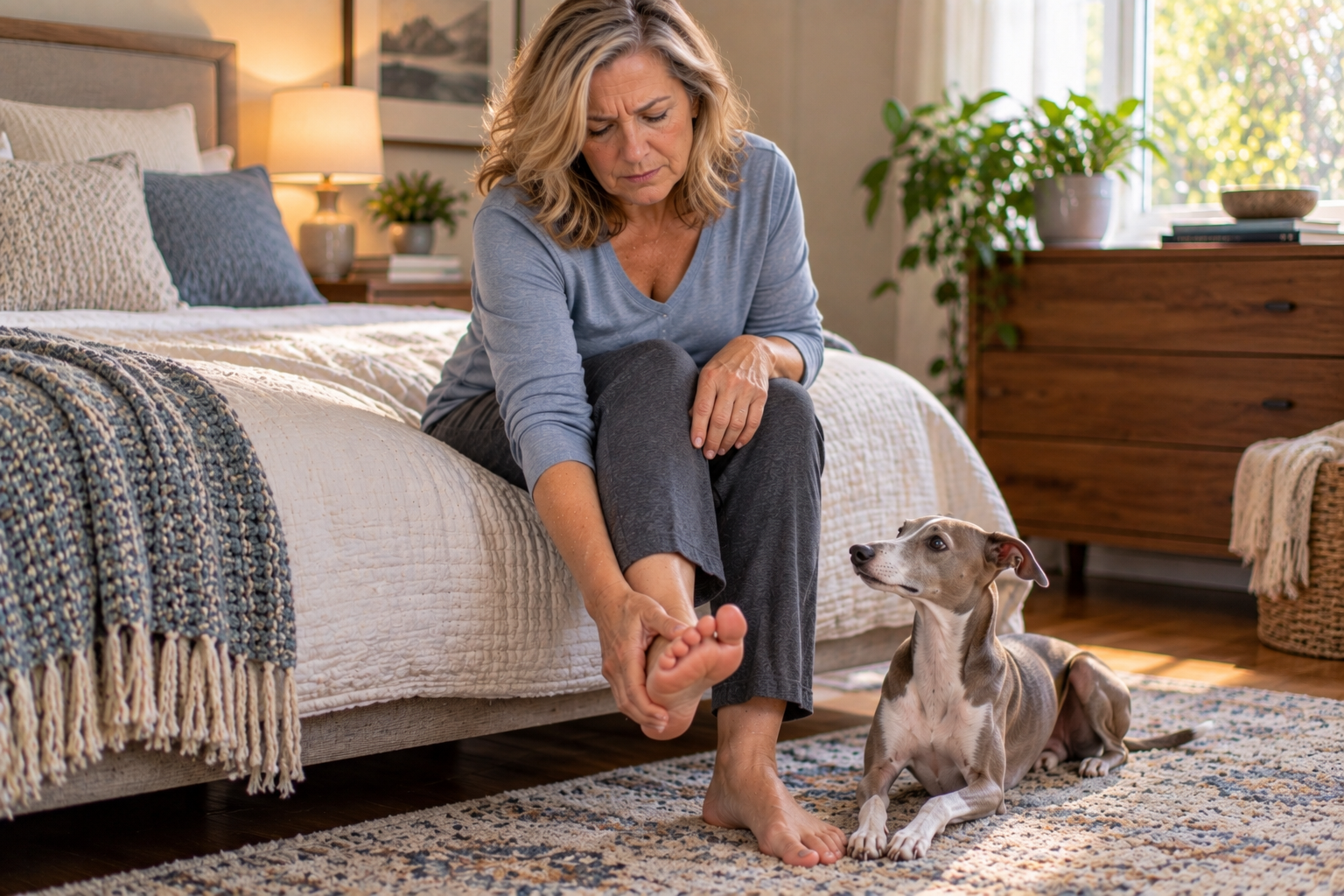
Hip pain can show up during everyday activities. It may take longer to swing your leg out of the car, and pulling on socks can feel difficult. After sitting through a movie, your first steps may be stiff and cautious. Some people feel a deep ache in the groin after a long walk, while others notice soreness on the side of the hip that makes lying on it uncomfortable. Climbing stairs, walking on uneven ground, or getting up from a low couch can also bring on pain.
According to the Hospital for Special Surgery, the location of hip pain can help identify its source. Pain in the front of the hip, groin, or thigh often suggests arthritis or a labral tear, which affects the ring of cartilage around the hip socket. Pain on the outside of the hip is often caused by bursitis or problems with the muscles that move the leg outward. Pain in the back of the hip or buttock often comes from the spine, as in sciatica. Osteoarthritis is the most common cause in people in their 50s and older. Other causes include stress fractures, soft tissue injuries, hip infections, and avascular necrosis, which is a loss of blood supply to the bone.
Daily habits play a major role. Sitting for long periods tightens the muscles at the front of the hip while weakening the gluteal muscles that stabilize it. Sudden increases in walking, running, stair climbing, and other activities, as well as extra body weight and sleeping on one side, can all strain the joint.
Traditional Chinese Medicine places the hip on the Gallbladder channel, which wraps around the side of the hip as it travels down the outside of the leg. When Qi and Blood stop flowing freely there because of an injury, overuse, or long hours of sitting, the pain is sharp, fixed, and worse with movement. Cold and Dampness settle into the joint, making it stiff and heavy and worsening symptoms in cold or damp weather and first thing in the morning. The Kidney governs the bones, and as Kidney energy declines with age, the hip loses support and aches deeply, especially after standing or walking. The Liver nourishes the tendons, so when Liver Blood runs low, the muscles around the hip tighten and cramp.
The nine points below start on the side and front of the hip, then move down the leg to the ankle and foot.
What Acupressure Points to Press and Why
1. Press on GB29 on the side of the hip to ease joint pain. GB29 sits on the side of the hip, in the hollow midway between the bony knob at the front of the pelvis and the large bony bump at the top of the thigh bone. Press firmly with your thumb or knuckles for one to two minutes on each side. GB29 is called “Juliao,” the “Stationary Bone Hole.”
GB29 is an important local point for the hip joint. It helps relieve stiffness and pain along the side of the hip, making it easier to lift the leg and rotate the hip.
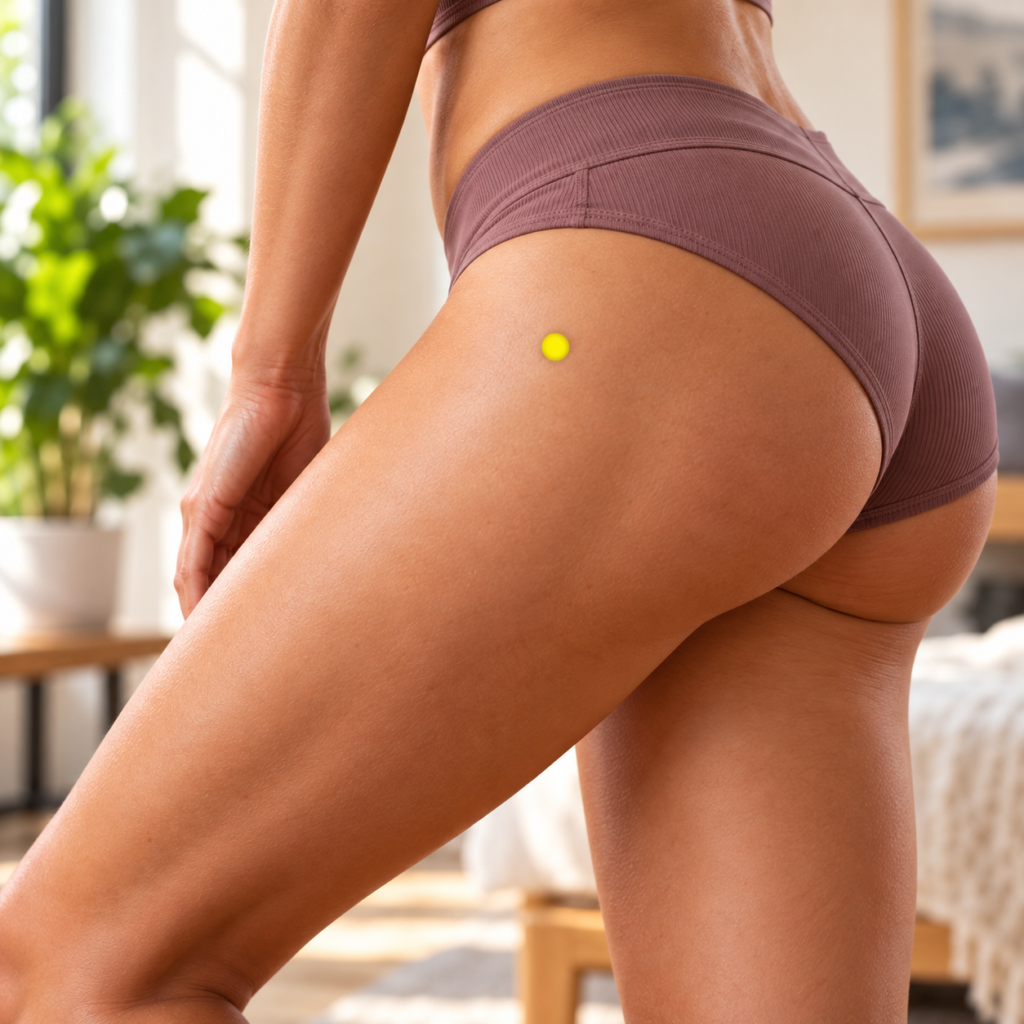
2. Press on GB30 on the buttock to release deep hip pain. GB30 sits on the side of the buttock, about one third of the way from the large bony bump at the top of the thigh bone to the base of the spine. Lie on your back with a tennis ball under the point, or lean against a wall with the ball in place, and press into it for one to two minutes on each side. GB30 is called “Huantiao,” the “Jumping Circle.”
GB30 is where the Gallbladder and Bladder channels meet. In Traditional Chinese Medicine, it is one of the most important points for hip pain. It also releases the deep muscles behind the joint, which tighten after long hours of sitting.
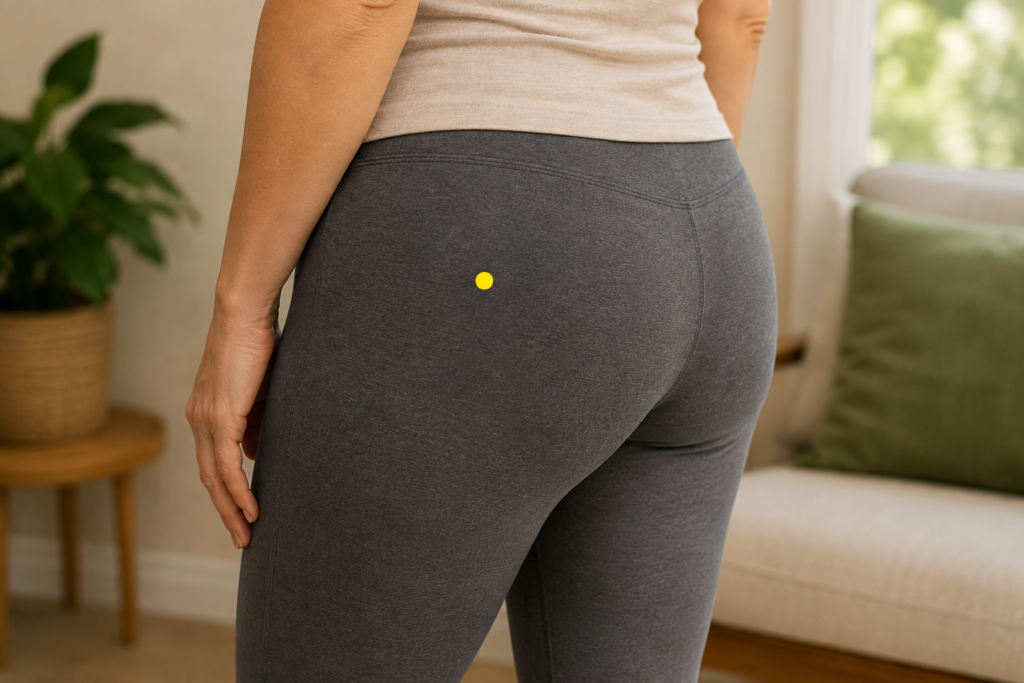
3. Press on ST31 at the front of the hip to relieve groin and thigh pain. ST31 sits on the front of the upper thigh, directly below the bony knob at the front of the hip, roughly level with the crease where the leg meets the body when the hip is bent. Press with moderate pressure for one to two minutes on each side. ST31 is called “Biguan,” the “Thigh Gate.”
ST31 is used for pain at the front of the hip and thigh, as well as stiffness when lifting the knee. It may help with the deep groin ache often associated with arthritis.
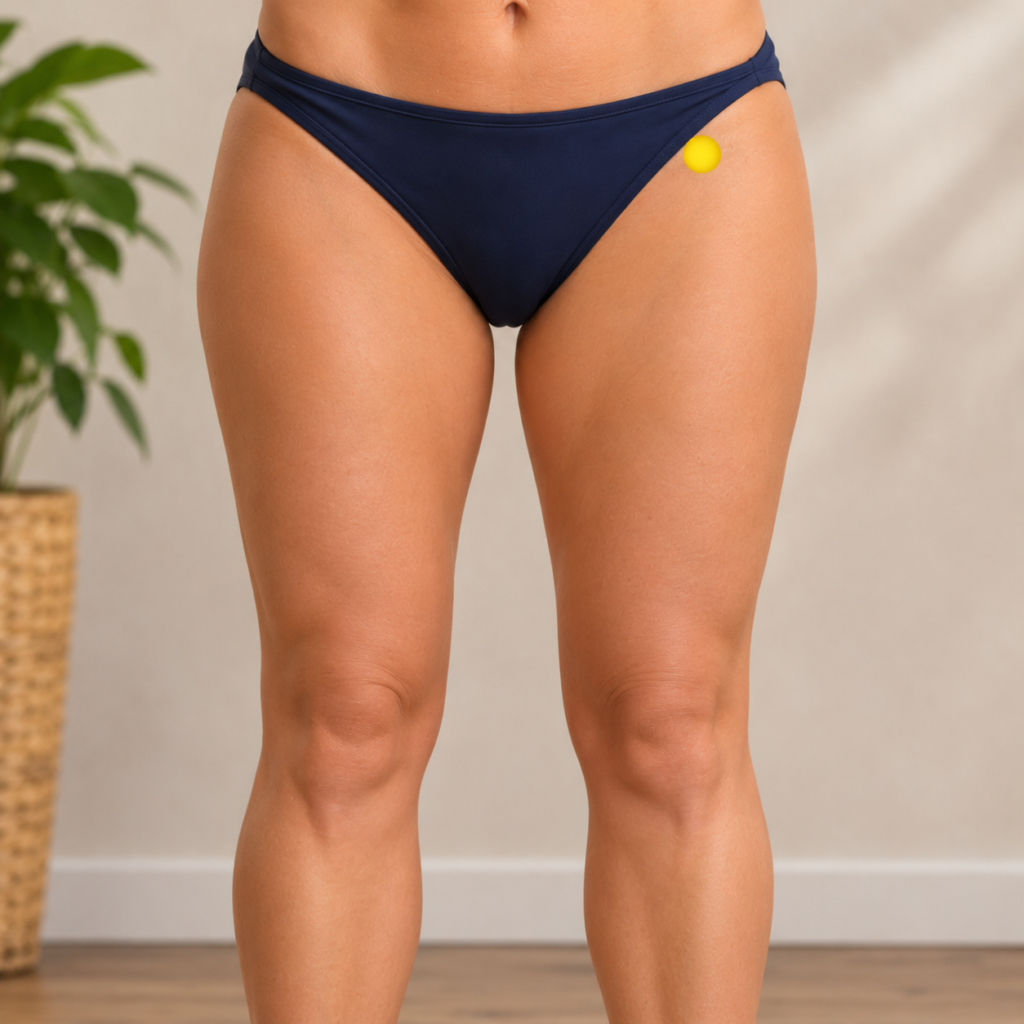
4. Press on GB31 on the outer thigh to ease aching and stiffness. GB31 sits on the outside of the thigh, where the tip of the middle finger touches when standing upright with the arms relaxed at the sides. Press firmly with your thumb or knuckles for one to two minutes on each leg. GB31 is called “Fengshi,” the “Wind Market.”
GB31 expels Wind and Dampness from the leg and eases aching along the outer hip and thigh, particularly when cold, damp weather worsens the pain.
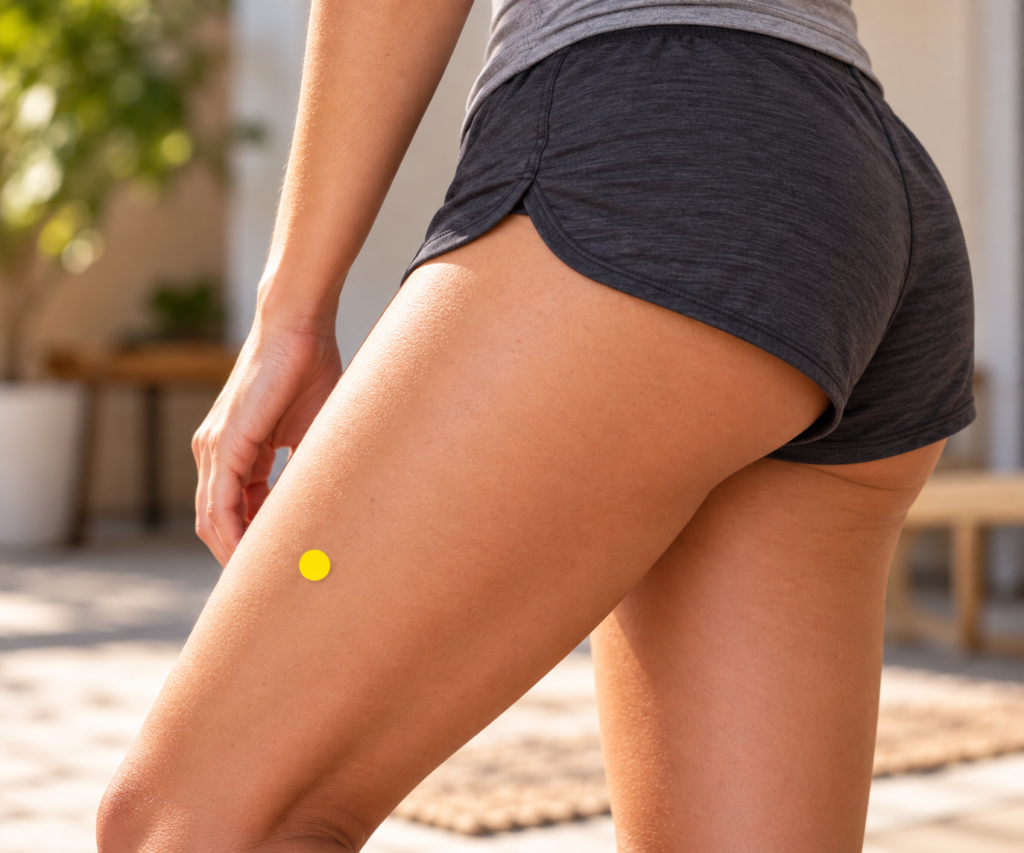
5. Press on GB34 below the outer knee to relax the tendons. GB34 sits on the outer side of the lower leg, in the hollow just in front of and below the small bony bump below the outside of the knee. Press firmly with your thumb for one to two minutes on each leg. GB34 is called “Yanglingquan,” the “Yang Mound Spring.”
GB34 is the influential point for the tendons. It relieves tight muscles and tendons around the hip and works with the other Gallbladder points to move Qi down the entire channel.
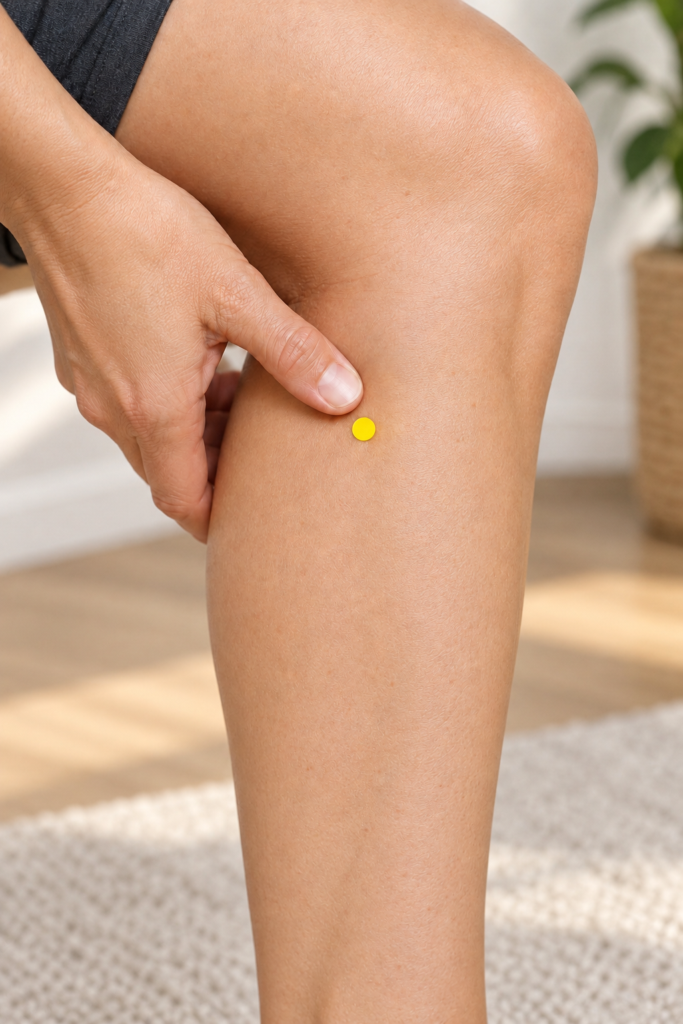
6. Press on GB39 above the outer ankle to support the bones and joints. GB39 sits on the outer side of the lower leg, four finger-widths above the tip of the outer ankle bone, just in front of the thin bone of the lower leg. Press firmly with your thumb for one to two minutes on each leg. GB39 is called “Xuanzhong,” the “Suspended Bell.”
In Traditional Chinese Medicine, GB39 is the influential point of Marrow, which nourishes the bones. It’s used to address hip and leg pain, especially when the joint feels weak or the pain is age-related.
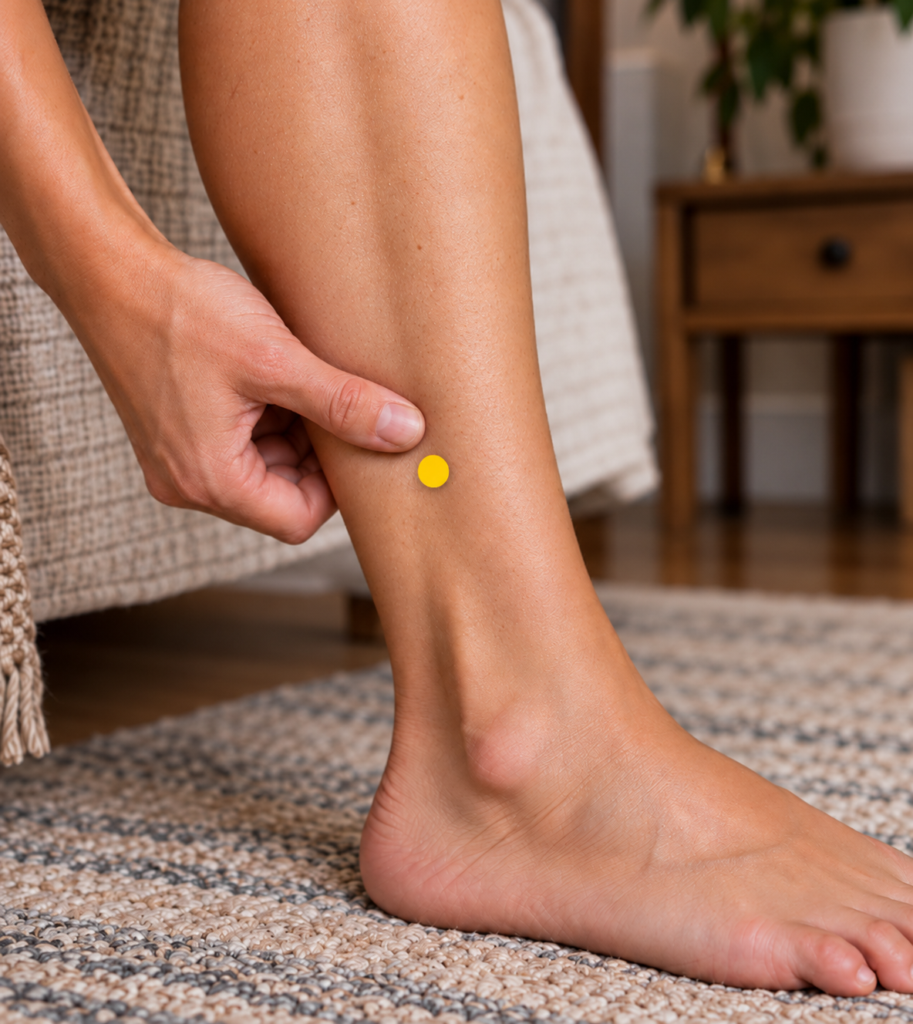
7. Press on SP6 above the inner ankle to nourish the Blood and drain Dampness. SP6 sits on the inside of the lower leg, four finger-widths above the tip of the inner ankle bone, just behind the edge of the shinbone. Press firmly with your thumb for one to two minutes on each leg. SP6 is called “Sanyinjiao,” the “Three Yin Intersection.” SP6 is avoided during pregnancy.
SP6 is where the Spleen, Liver, and Kidney channels meet. It nourishes the Blood that feeds the tendons, drains Dampness from the joints, and eases a heavy, stiff-feeling hip.
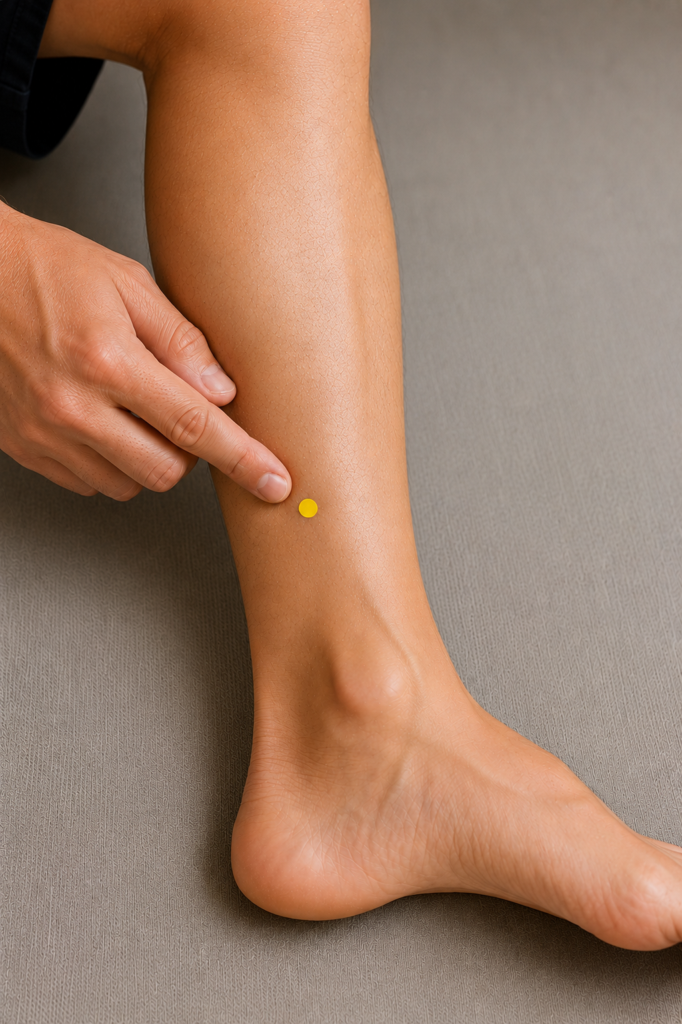
8. Press on KI3 behind the inner ankle to strengthen the joint. KI3 sits in the hollow between the tip of the inner ankle bone and the Achilles tendon. Press with moderate pressure for one to two minutes on each ankle. KI3 is called “Taixi,” the “Great Stream.”
KI3 is the Kidney’s source point. It strengthens Kidney energy, which supports the bones and joints, and may suit a hip that aches deeply, tires quickly, or becomes more painful with age.
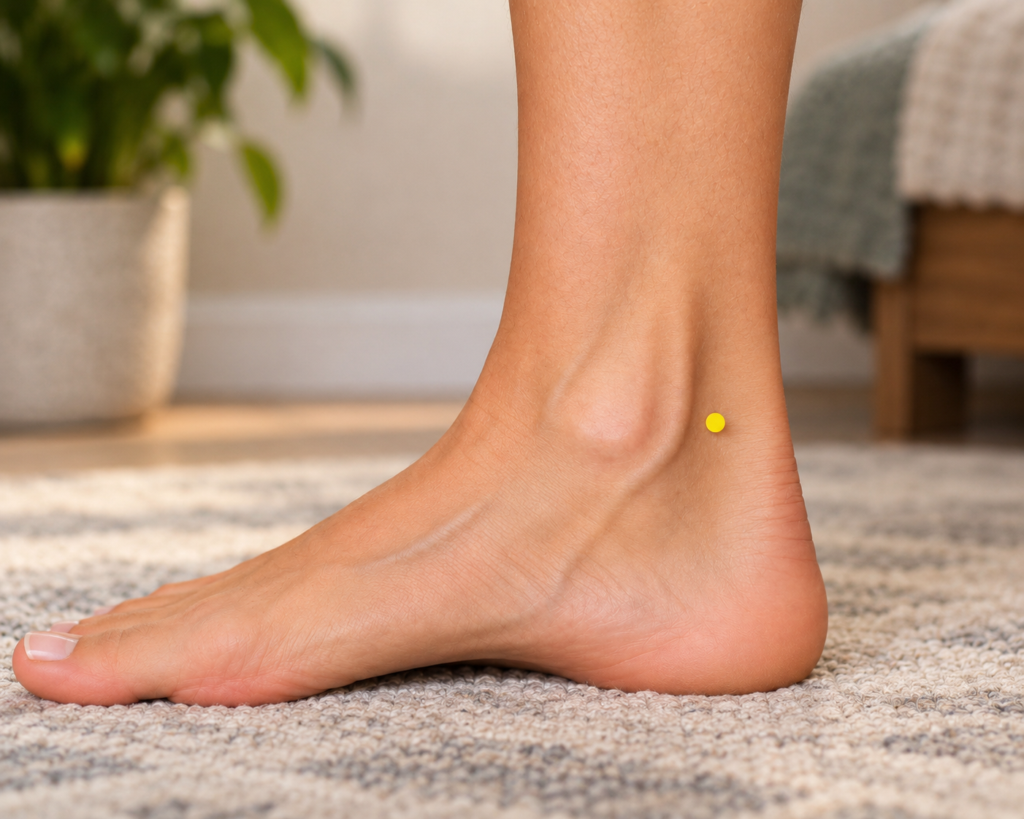
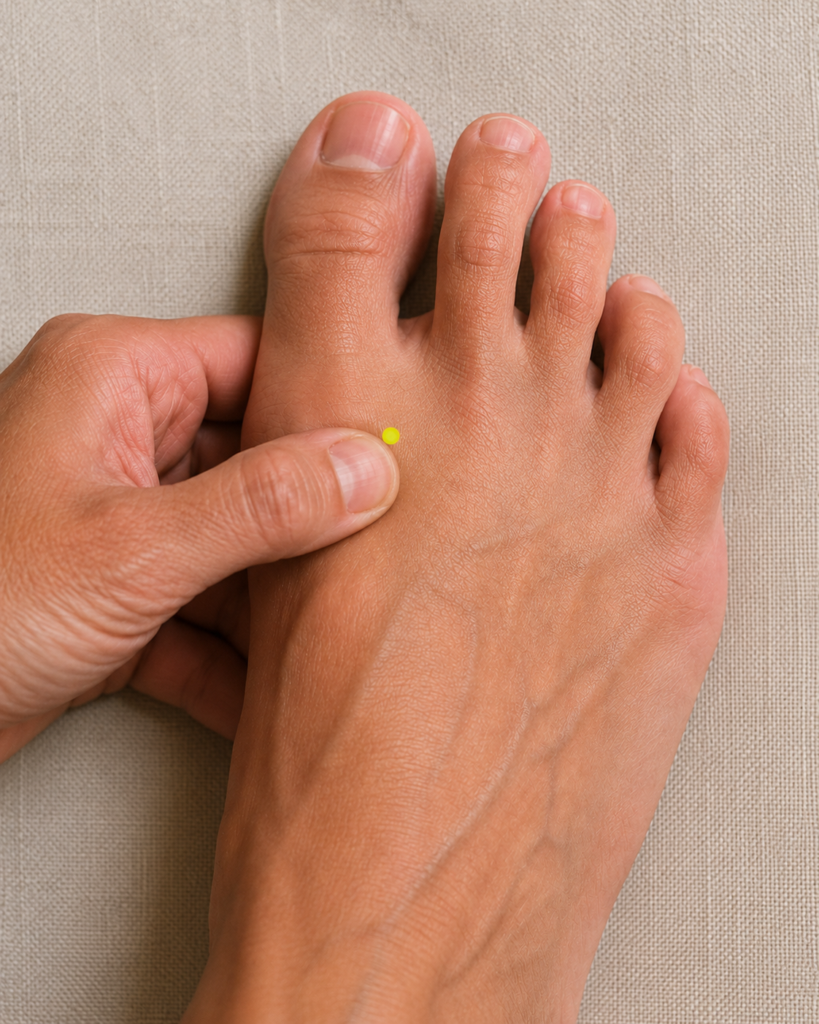
9. Press on LV3 on the top of the foot to release tight muscles. LV3 sits on the top of the foot, in the hollow where the bones of the big toe and second toe meet, about two finger-widths back from the web between the toes. Press firmly with your thumb for one to two minutes on each foot. LV3 is called “Taichong,” the “Great Rushing.”
LV3 is the Liver’s source point. It moves stagnant Qi, relaxes tight or cramping muscles around the hip, and can help when stress causes the body to brace and tense.
Why These Acupressure Points Work
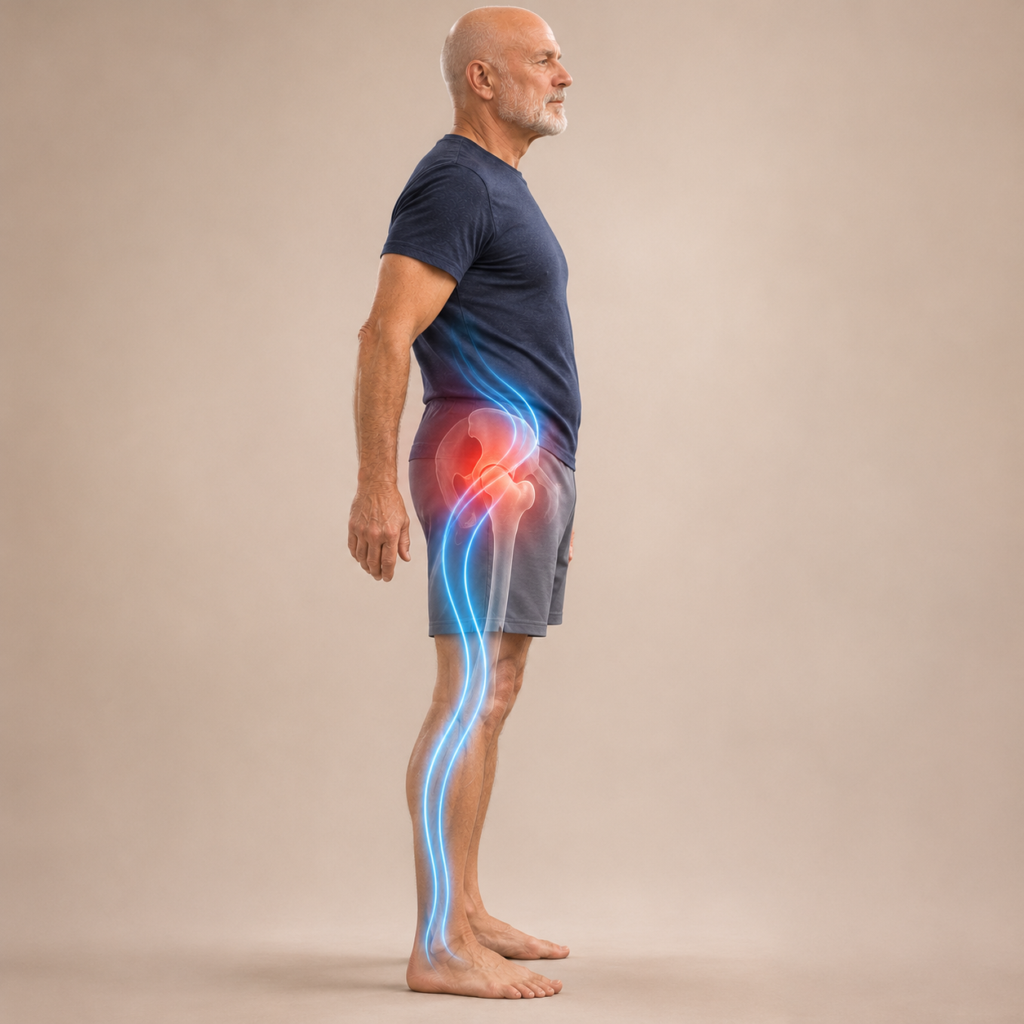
From a Traditional Chinese Medicine perspective, hip comfort depends on Qi and Blood flowing freely through the Gallbladder channel, with enough Kidney energy and Liver Blood to keep the bones and tendons strong. Strain and prolonged sitting slow this flow, while Cold and Dampness stiffen the joint and age weakens its underlying support. Points around the hip help release local stagnation; points down the leg keep Qi moving through the channel, while points at the ankle and foot help restore deeper support.
The nine points work together to alleviate hip pain:
- GB29, GB30, and ST31 release the side, back, and front of the hip.
- GB31 and GB34 ease aching along the outer thigh and relax the tendons.
- GB39 and KI3 support the bones and joints.
- SP6 and LV3 nourish the tendons, drain Dampness, and relax tight muscles.
How to Properly Use These Acupressure Points
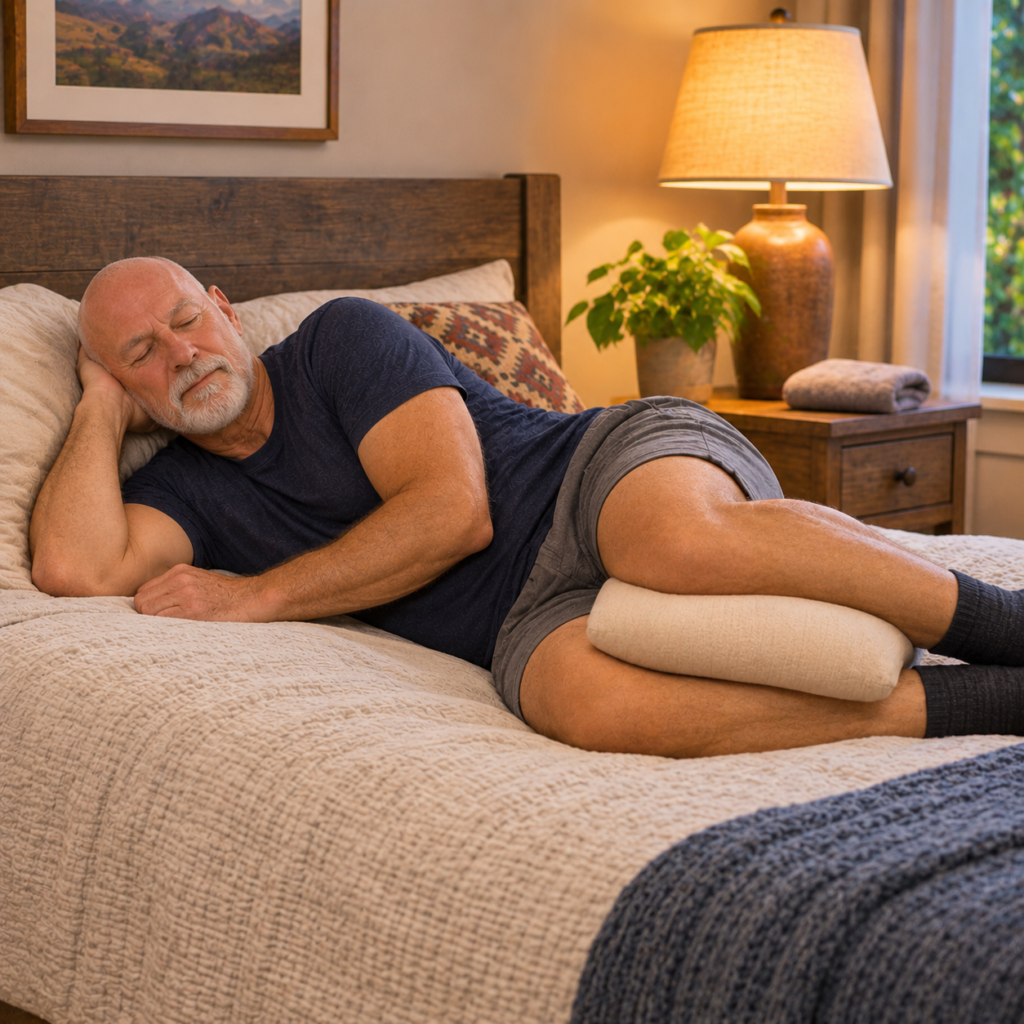
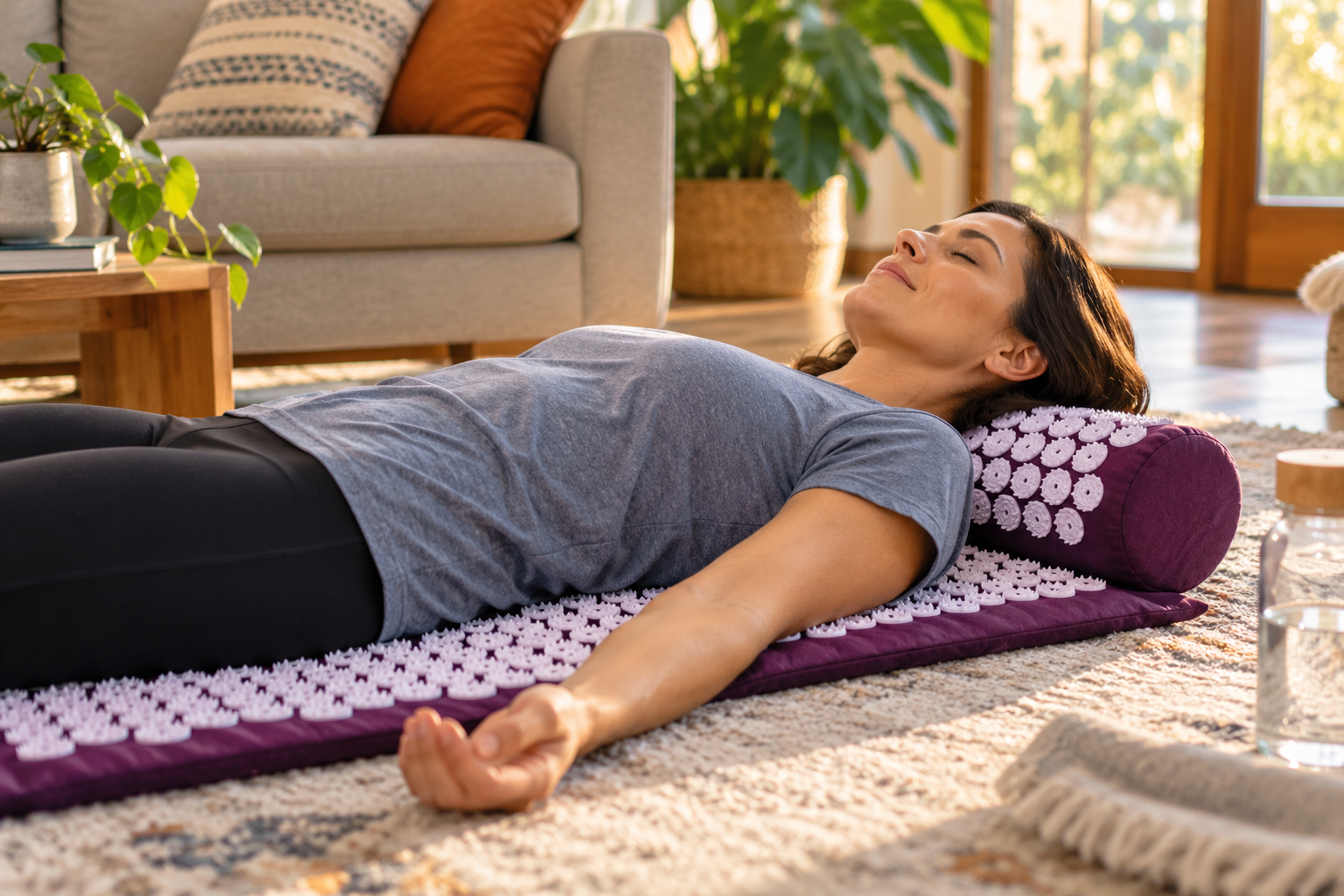
Acupressure can help relieve hip stiffness in the morning and ease discomfort in the evening after a long day on your feet.
- Lie on your side with the painful hip up, then press GB29. Then lie on your back with a tennis ball under GB30.
- Bend the knee to reach ST31, GB31, and GB34, then continue down to GB39, SP6, KI3, and LV3.
- If your hip feels stiff in the morning, press GB29, GB30, and GB34 before you get out of bed.
- Apply firm pressure to the buttock and outer thigh, and moderate pressure to the front of the hip and around the ankles. Avoid SP6 during pregnancy, and don’t press on any area that is red, hot, or swollen.
Small changes can ease strain on your hips. If you’ve been sitting for a while, get up and walk for a few minutes every 30 to 45 minutes, and avoid crossing your legs. Choose low-impact activities such as walking on flat ground, swimming, or cycling, and gradually increase your distance. Strengthen your buttock and core muscles to help stabilize your hips. Sleep on your back or on your less painful side, with a pillow between your knees. Wear supportive shoes and use a higher chair or a cushion to avoid sinking into low seats. Traditional Chinese Medicine also recommends keeping your hips and lower back warm, especially in winter, and applying a warm compress to a stiff hip in the morning.
Learn more about acupressure for osteoarthritis.
When to Get Professional Help
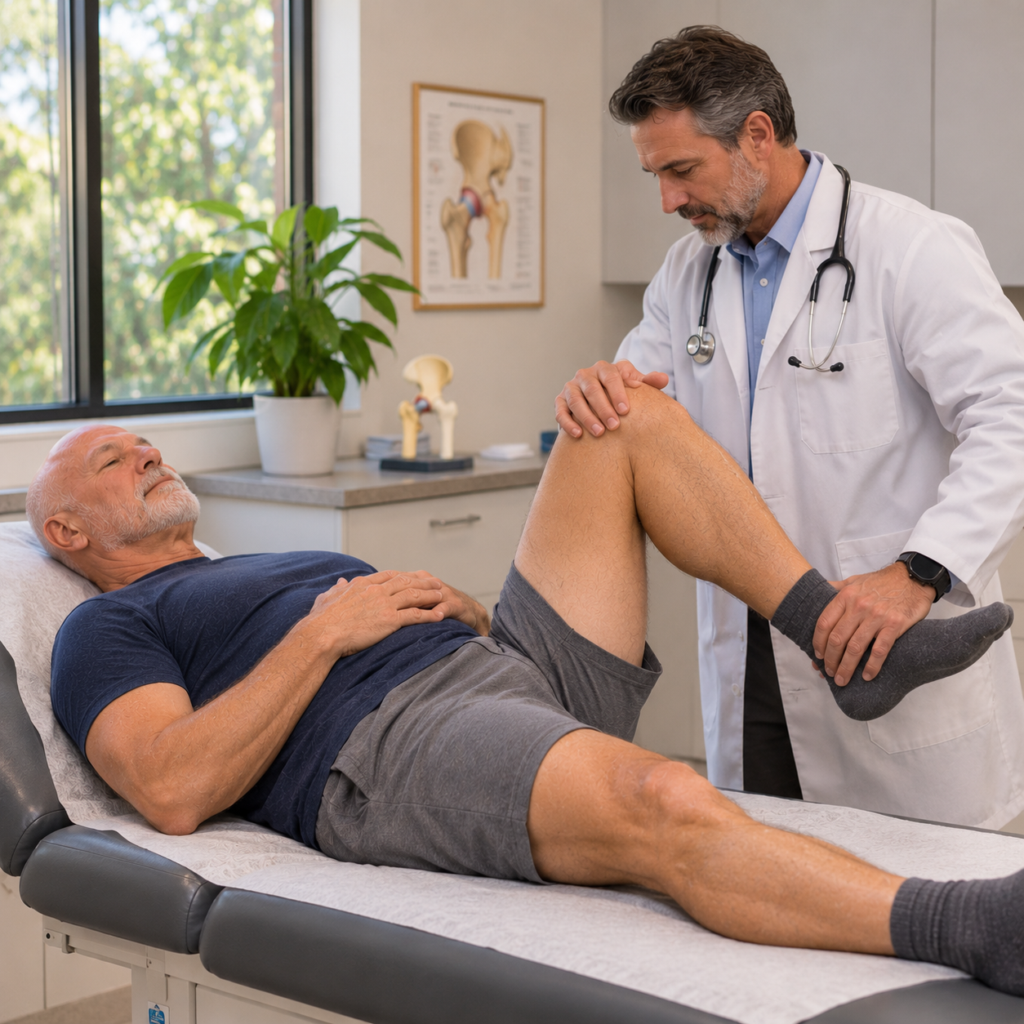
If you fall and can’t stand or put weight on your leg, or if your leg looks shorter or turns outward, get emergency care right away. These could be signs of a fracture. If your hip suddenly becomes hot, red, and swollen, especially if you have a fever, seek urgent care, as this could indicate a joint infection. See a doctor soon if your hip pain keeps getting worse, hurts when you walk or put weight on it, or wakes you at night. Make an appointment if your pain keeps coming back, starts with activity, limits your range of motion, causes clicking or locking, makes your hip feel unstable or weak, or comes with numbness or tingling down your leg. If you have osteoporosis, have used steroids for a long time, or drink heavily, get any new hip pain checked early.
Acupressure is a gentle, supportive practice for hip pain. It complements, and does not replace, diagnosis and medical care.
For related health concerns, acupressure for hip bursitis, acupressure for IT band syndrome, and acupressure for piriformis syndrome are companion posts. If the pain starts in the lower back, learn how to relieve low back and hip pain with acupressure.
Above and Beyond Acupuncture offers acupuncture, cupping, and lifestyle coaching at the North Frank Lloyd Wright Boulevard location in Scottsdale.
Schedule an appointment online to start your healing journey.
The points above are only as effective as the technique used to apply them. Where to press, how firmly, and for how long all affect the result. For a full breakdown of how to perform acupressure properly at home, read Performing Acupressure in 3 Easy Steps.
About the Publisher
Paul Kerzner, L.Ac., is a licensed acupuncturist and board-certified herbalist, as well as the founder of Above and Beyond Acupuncture in Scottsdale. His own journey from chronic patient to practicing acupuncturist shapes his commitment to providing honest, clinically grounded information about acupuncture and Traditional Chinese Medicine. Learn more about Paul and his clinical approach on the About Us page.