Key Takeaways
- Low libido is a reduced interest in sex that may last a few weeks or much longer and can affect both men and women.
- Common causes include stress, anxiety or depression, relationship strain, hormonal changes such as menopause, certain medications, alcohol, and long-term health conditions.
- In Traditional Chinese Medicine, sexual desire depends on Kidney energy, and it fades when that reserve is low or when stress and worry keep the body tense.
- Nine acupressure points on the lower belly, lower back, legs, feet, and wrist help restore energy and ease the stress that crowds out desire.
- If low desire causes distress, starts after a new medication, or occurs with other symptoms, see a medical professional to identify the cause.

Desire is rarely the first thing to go. Sleep less, work more, start new medications, have a baby, or go through menopause, and interest in sex is lost somewhere along the way. Many people notice only months later, when it is hard to pinpoint exactly when things changed. The shift can leave one partner feeling rejected and the other feeling guilty, even though neither has done anything wrong.
According to the NHS, common causes of a low sex drive include relationship problems, stress, anxiety or depression, and sexual difficulties such as erectile dysfunction or vaginal dryness. Pregnancy and caring for a baby can also reduce desire, as can age-related drops in hormone levels, particularly during menopause. Other possible causes include certain medicines, such as some treatments for high blood pressure and some antidepressants; hormonal contraception; drinking too much alcohol; and long-term conditions such as heart disease, diabetes and an underactive thyroid. The NHS notes that treating the underlying cause should help increase sex drive.
Several of these causes have something in common: a worn-down body and a mind that won’t switch off. A few minutes of daily acupressure may help with both, alongside any treatment needed for the underlying cause.
Traditional Chinese Medicine links sexual desire to the Kidneys, which are said to store Jing (the body’s deepest reserve of energy). Kidney Yang is the warming, activating aspect of Jing. When it’s depleted, desire diminishes too, typically alongside fatigue, a cold or aching lower back, and cold hands and feet. Long-term stress creates a different pattern: Liver Qi gets stuck, leaving the body tense and irritable and making it difficult to relax into intimacy. An anxious, overworked mind points to a Heart problem (the Heart houses the mind), and the mind must be still before desire can return. Exhaustion after an illness, childbirth, or years of overwork suggests that Qi and Blood have been used up faster than they’ve been replenished.
The nine points begin on the lower belly and back, where Kidney energy is stored, then move down to the legs and feet and finish at the wrist.
What Acupressure Points to Press and Why
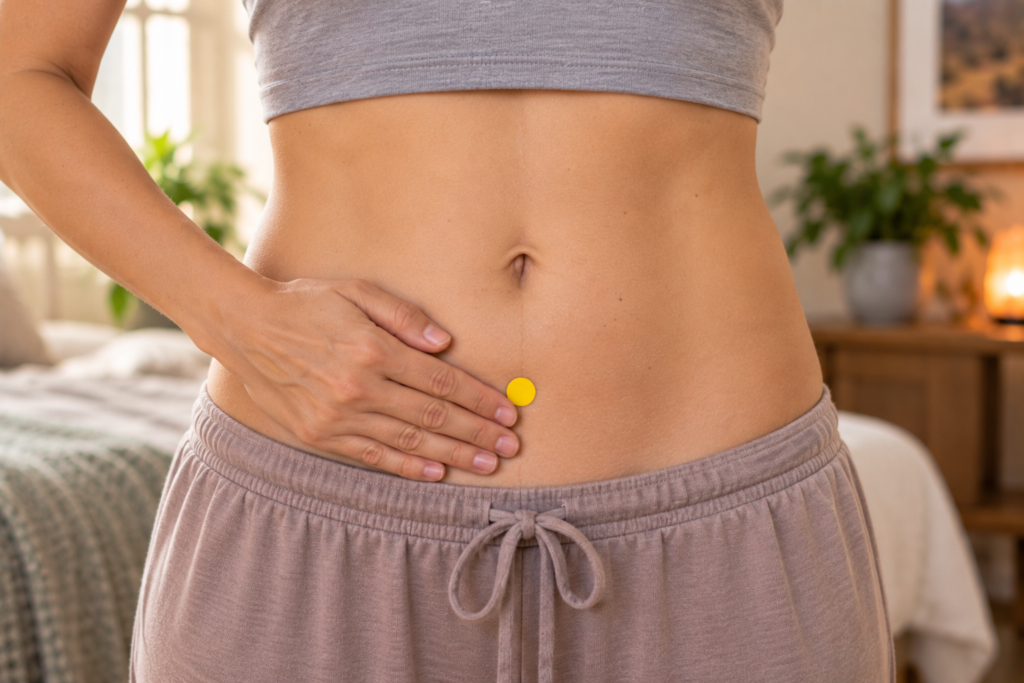
1. Press on CV4 on the lower belly to restore deep energy. CV4 sits on the midline of the lower belly, four finger-widths below the navel. Press gently with two or three fingertips, or rest a warm palm over the area, for one to two minutes while breathing slowly. CV4 is called “Guanyuan,” the “Origin Pass.” CV4 is avoided during pregnancy.
CV4 is where the Ren channel intersects the Spleen, Liver, and Kidney channels. It is a primary point for strengthening the body’s original Qi and Kidney energy. Classical texts also use it to address low desire and reproductive weakness in both men and women.
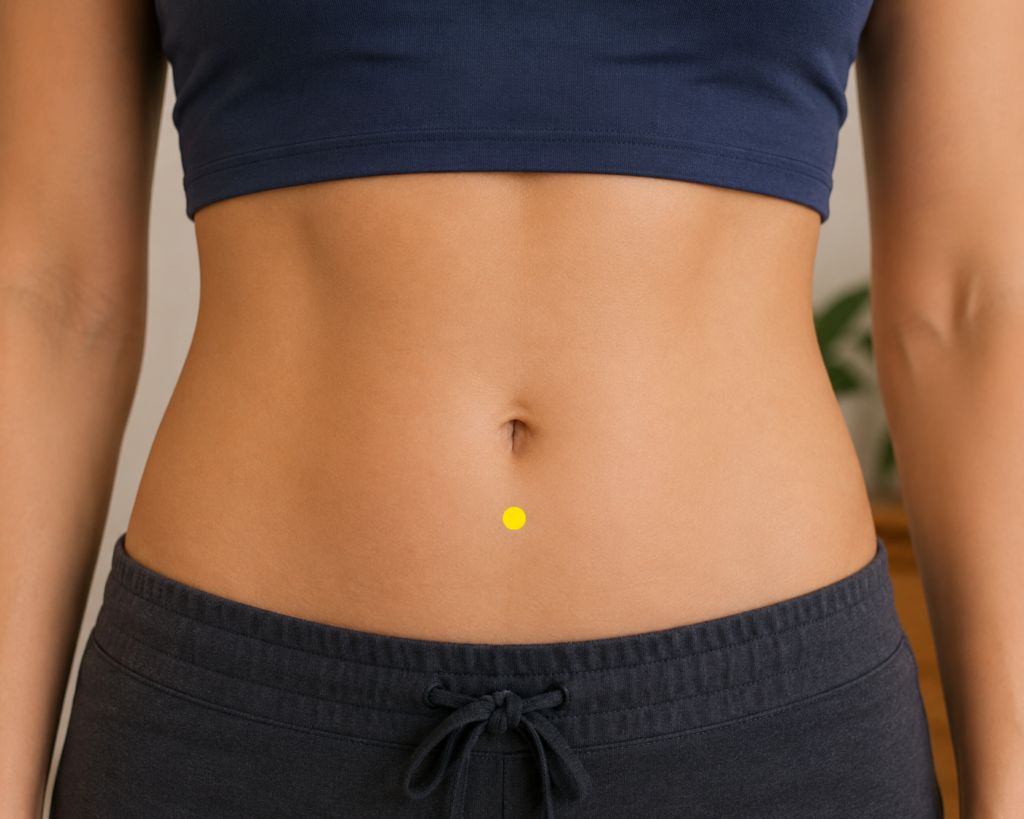
2. Press on CV6 below the navel to build Qi. CV6 sits on the midline of the lower belly, about two finger-widths below the navel. Press gently with two or three fingertips for one to two minutes while breathing slowly into the belly. CV6 is called “Qihai,” the “Sea of Qi.” CV6 is avoided during pregnancy.
CV6 is used when the body’s overall energy is low. It may suit someone who is too tired at the end of the day to think about intimacy, and is usually pressed together with CV4.
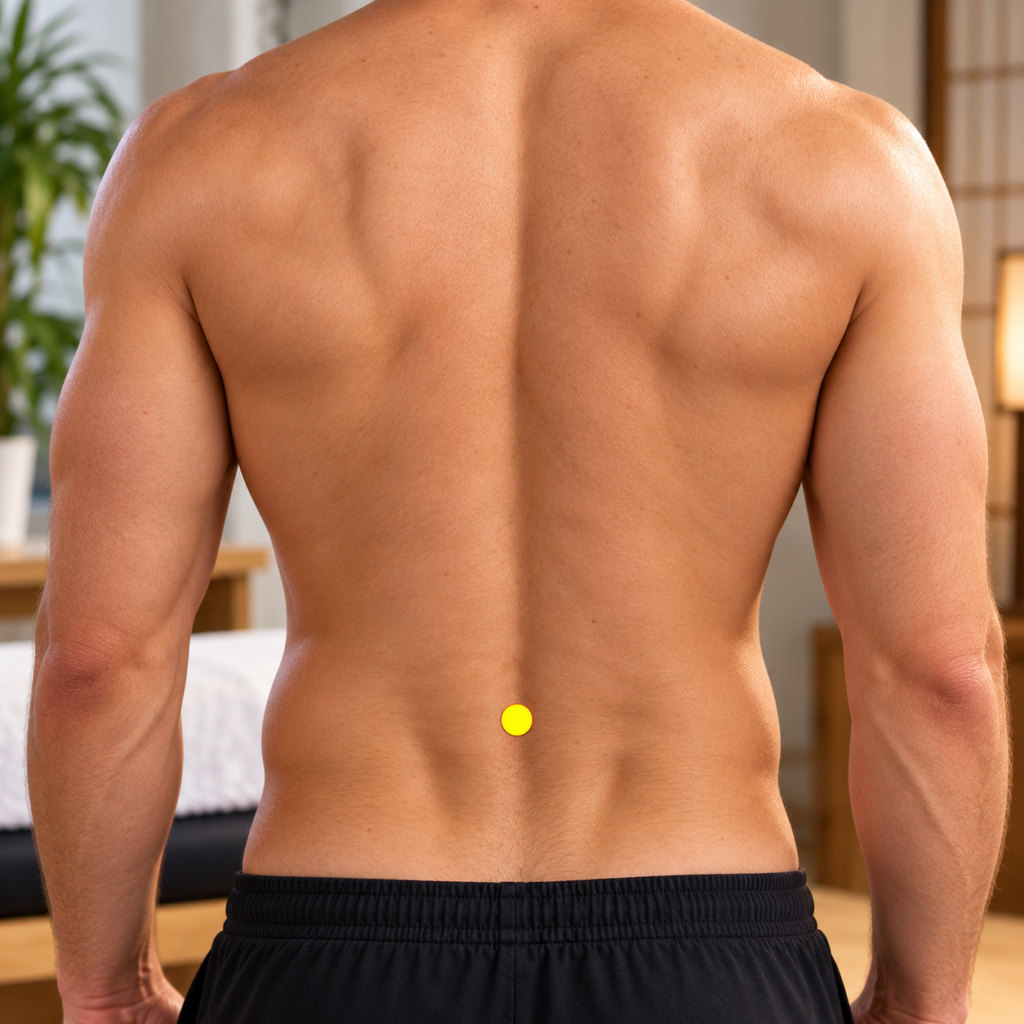
3. Rub GV4 on the lower back to warm the Kidneys. GV4 sits on the midline of the lower back, in the hollow between the bones of the spine at waist level, roughly opposite the navel. Rub the area briskly with the palm or the back of a loose fist for one to two minutes, until it feels warm. GV4 is called “Mingmen,” the “Gate of Life.”
GV4 is the main point for strengthening Kidney Yang, the warming energy associated with drive and vitality. It is traditionally used when low desire is accompanied by fatigue, a cold or weak lower back, and a general feeling of being run down.
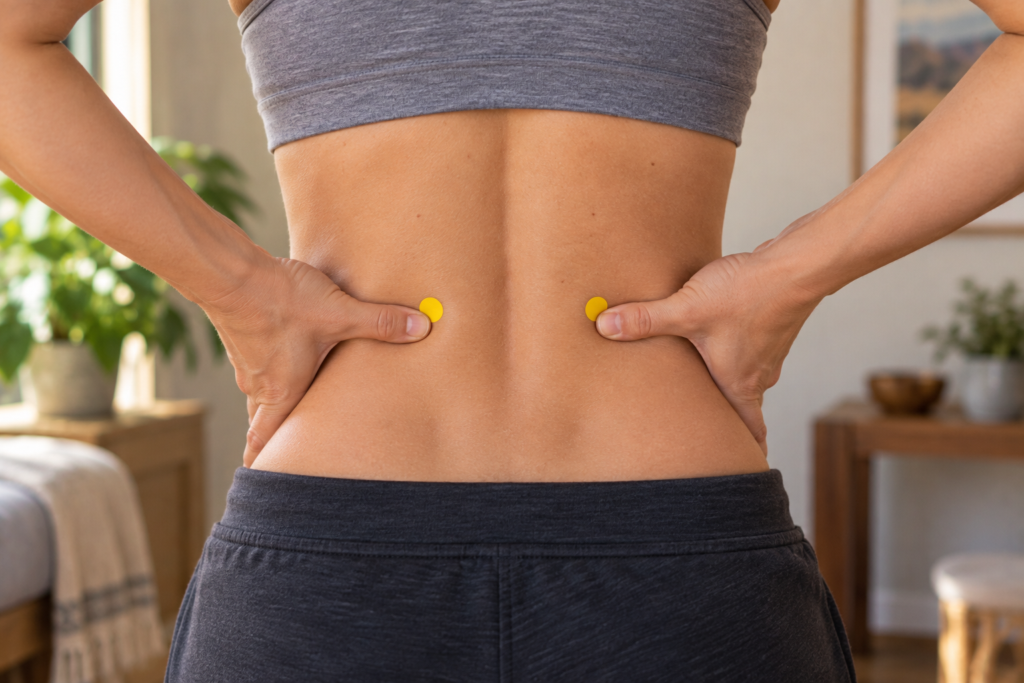
4. Press on BL23 beside the spine to strengthen the Kidneys. BL23 sits on the lower back, two finger-widths out from the spine on each side, at the same level as GV4. Place your hands on your hips with your thumbs pointing toward the spine and press firmly for one to two minutes. BL23 is called “Shenshu,” the “Kidney Shu.”
BL23 is the Kidney’s back transport point, where Kidney energy gathers along the back. Used with GV4, it supports the lower back and the deeper reserves that desire draws on.
5. Press on KI3 behind the inner ankle bone to replenish Kidney energy. KI3 sits in the hollow between the tip of the inner ankle bone and the Achilles tendon. Press with moderate pressure for one to two minutes on each ankle. KI3 is called “Taixi,” the “Great Stream.”
KI3 is the Kidney’s source point and strengthens both its warming and cooling, moistening functions. It may help when low desire occurs alongside night sweats, dryness, or poor sleep, a pattern common during menopause.
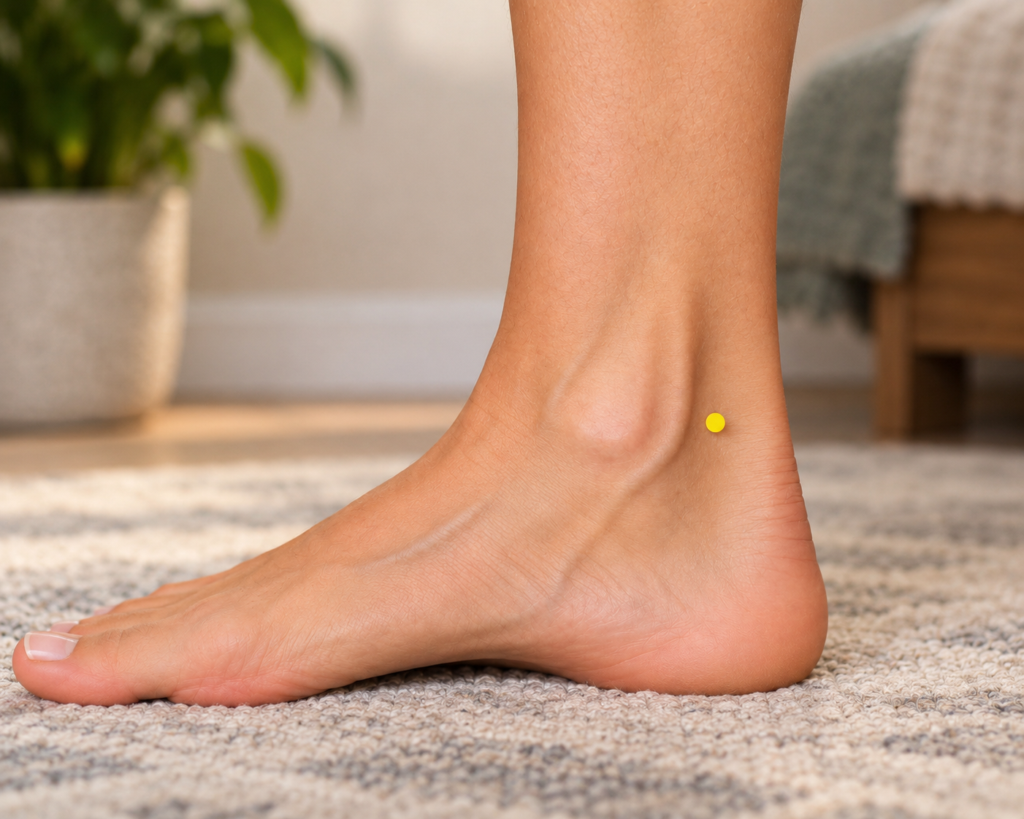
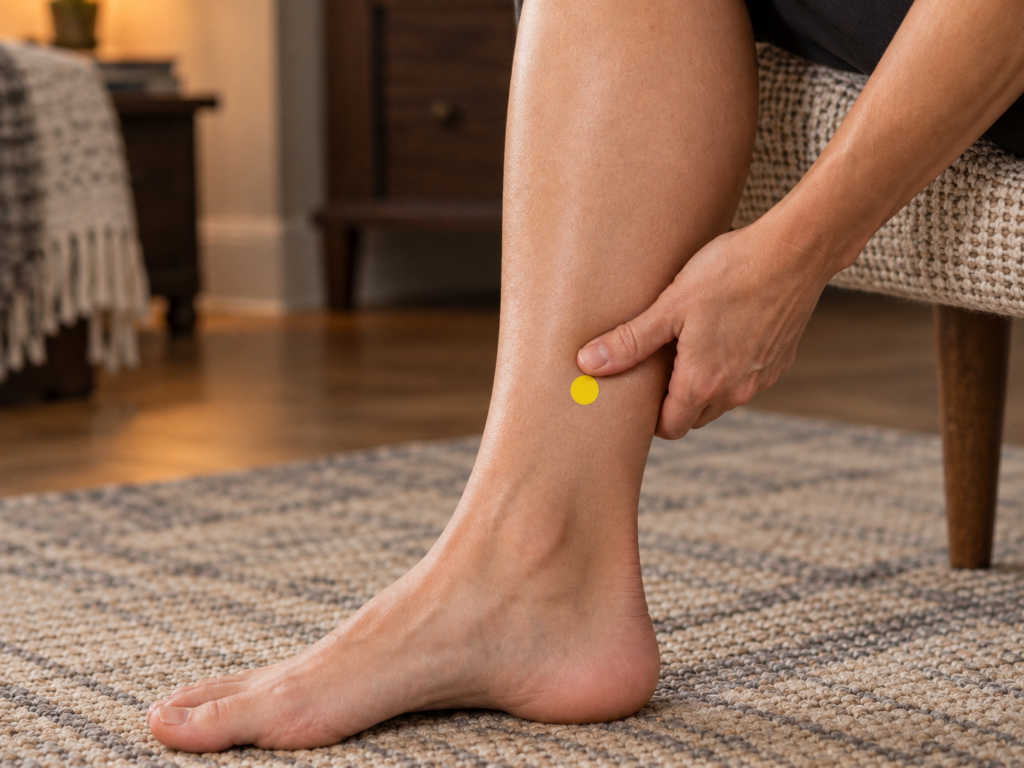
6. Press on SP6 above the inner ankle to nourish Blood and Yin. SP6 sits on the inside of the lower leg, four finger-widths above the tip of the inner ankle bone, just behind the edge of the shinbone. Press firmly with your thumb for one to two minutes on each leg. SP6 is called “Sanyinjiao,” the “Three Yin Intersection.” SP6 is avoided during pregnancy.
SP6 is where the Spleen, Liver, and Kidney channels meet; these are the three channels most closely associated with hormonal and reproductive health. It nourishes Blood and Yin and is widely used to address menstrual and menopausal concerns in women, as well as reproductive concerns in men.
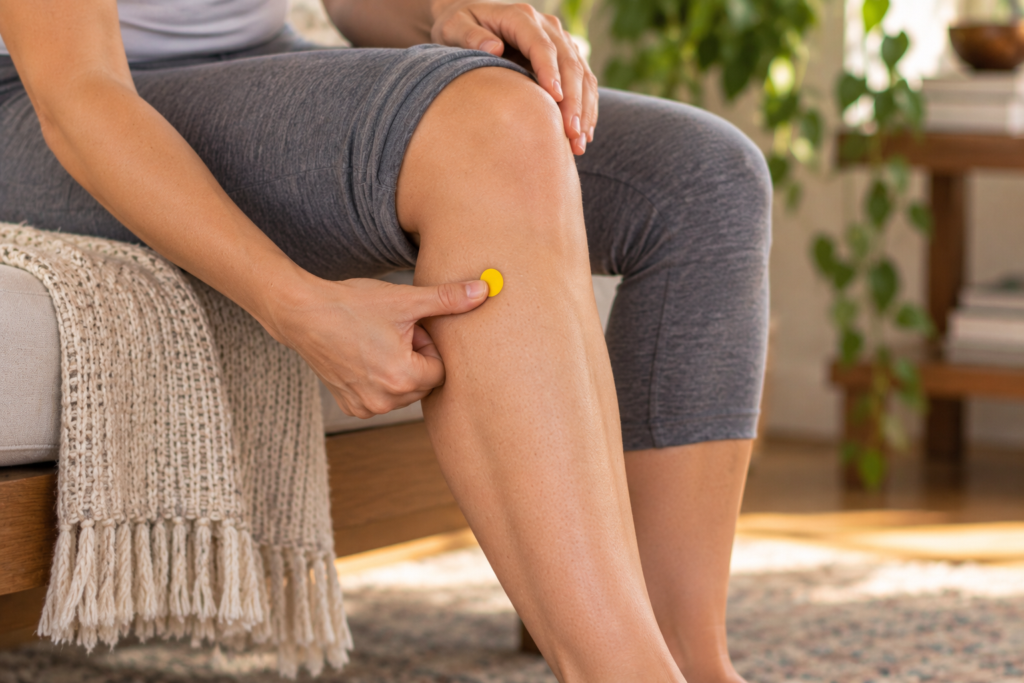
7. Press on ST36 below the knee to rebuild stamina. ST36 sits four finger-widths below the bottom of the kneecap, about one finger-width to the outside of the shinbone. Press firmly with your thumb for one to two minutes on each leg. ST36 is called “Zusanli,” the “Leg Three Miles.”
ST36 strengthens Qi and Blood through the digestive system, the body’s everyday source of energy. It supports recovery from the lasting exhaustion that can follow illness, childbirth, or years of overwork.
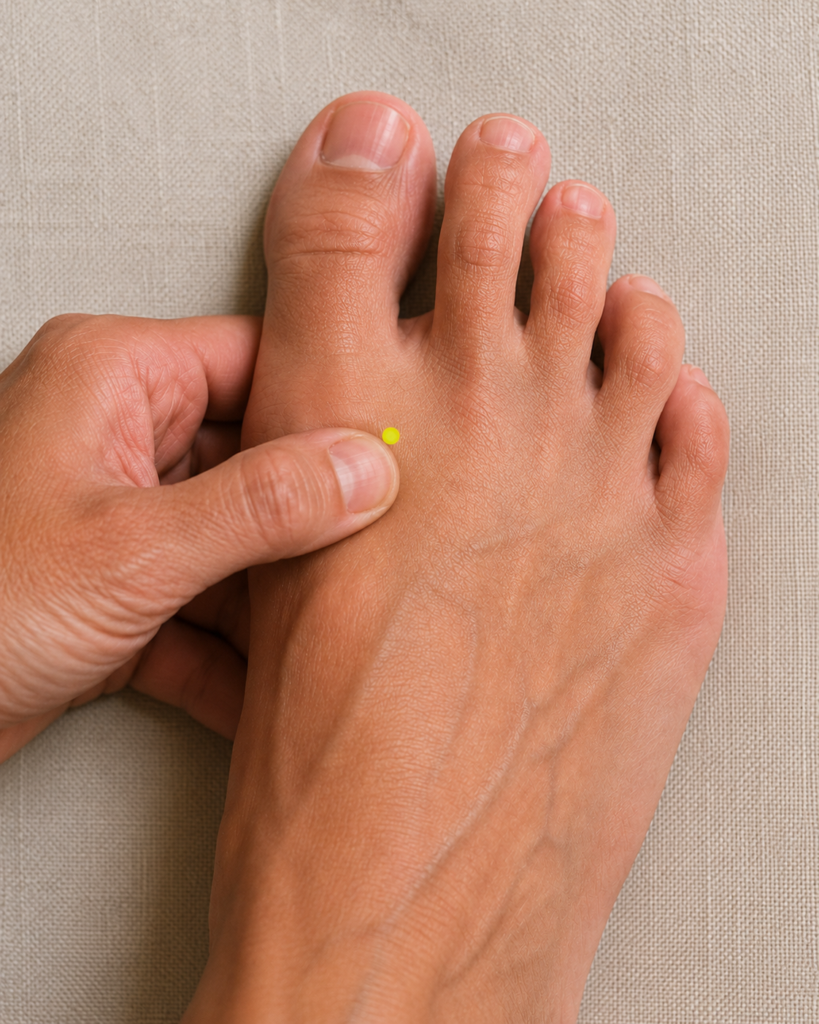
8. Press on LR3 on top of the foot to release stress. LR3 sits on the top of the foot, in the hollow between the bones of the big toe and second toe, about two finger-widths back from the web. Press firmly with your thumb for one to two minutes on each foot. LR3 is called “Taichong,” the “Great Surge.”
LR3 is the source point of the Liver and its primary point for addressing Liver Qi stagnation. Because the Liver channel also passes through the genital region, LR3 is used when stress, frustration, or resentment comes between a person and their desire.
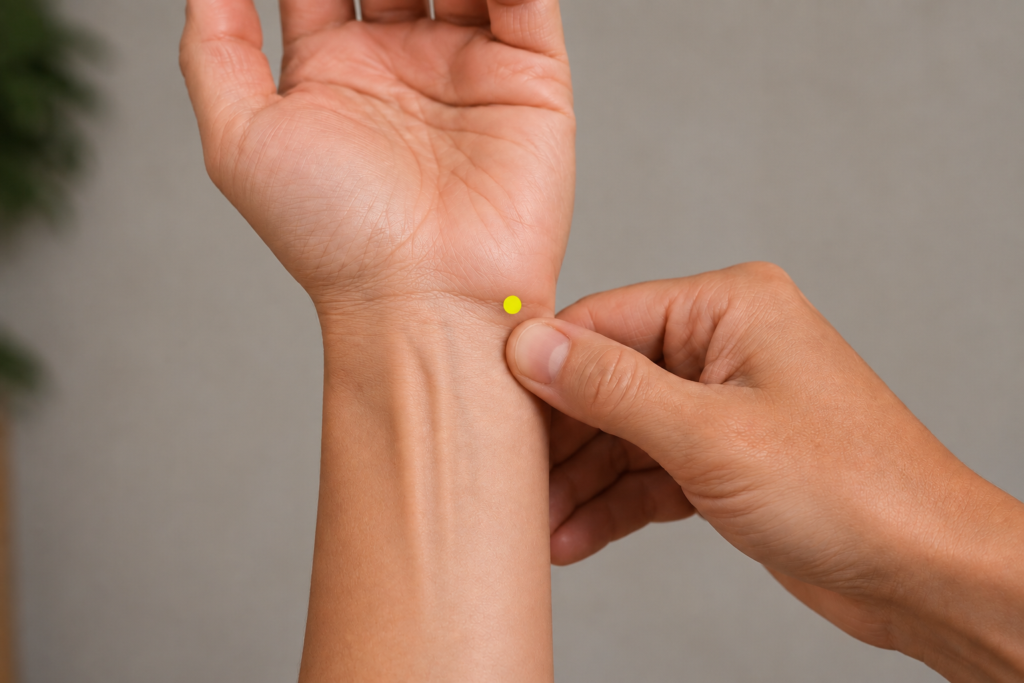
9. Press on HT7 at the wrist crease to calm the mind. HT7 sits on the inner wrist crease, on the little finger side, in the small hollow just inside the tendon. Press gently with the thumb of your other hand for one to two minutes on each wrist. HT7 is called “Shenmen,” the “Spirit Gate.”
HT7 is the source point of the Heart, which houses the mind. It eases anxiety, racing thoughts, and poor sleep, and it helps when worry about performance or about the relationship keeps the mind too busy for desire.
Why These Acupressure Points Work

From a Traditional Chinese Medicine perspective, desire depends on two things: enough stored energy to fuel it and a relaxed, settled state that allows it to emerge. When reserves are low, the body conserves its energy, leaving little to spare. Stress and worry create a different obstacle, keeping the body tense and the mind preoccupied. Treatment rebuilds Kidney energy, along with the Qi and Blood that support it, and eases the tension that keeps desire from emerging.
The nine points work together to restore energy and calm the mind:
- CV4 and CV6 strengthen the original Qi in the lower belly.
- GV4, BL23, and KI3 warm and support the Kidneys.
- SP6 and ST36 nourish Qi and Blood.
- LR3 and HT7 release stress and settle an anxious mind.
How to Properly Use These Acupressure Points

Acupressure for low libido works incrementally, so a short daily routine is more effective than an occasional session.
- In the evening, lie down and rest a warm palm over CV4 and CV6 for a few minutes. Breathe slowly into your belly, then gently press each point.
- Sit upright, rub GV4 until your lower back feels warm, then press BL23 with your thumbs.
- Press KI3, SP6, ST36, and LR3 on both legs, then press HT7 on both wrists to finish.
- Apply gentle pressure to the belly and wrist, and firmer pressure to the legs and feet. During pregnancy, avoid CV4, CV6, and SP6. Continue daily for at least six to eight weeks, as Kidney energy rebuilds slowly.
Prioritize sleep: getting seven to eight hours a night can do more for desire than almost anything else. Regular, moderate exercise, such as brisk walking or strength training, supports hormones and mood, but overtraining can have the opposite effect. Cut back on alcohol. Talk openly with your partner about what has changed, and make time for closeness without any expectation of sex. If the change began after you started a medication, ask the prescribing doctor about alternatives rather than stopping it. Traditional Chinese Medicine recommends keeping your lower back and feet warm and choosing warm, cooked meals. Walnuts, black sesame seeds, and bone broth are traditional foods for supporting the Kidneys.
Learn more about what cortisol is and why stress raises it.
When to Get Professional Help

See a doctor if low desire is causing distress or straining a relationship. It’s worth seeking medical advice if it has lasted more than a few months or began after starting a new medication or hormonal contraception. Don’t stop any prescribed medication without medical advice. Low desire alongside fatigue, weight changes, thinning hair, or feeling cold all the time could indicate a thyroid problem. In men, low desire combined with erectile problems, low energy, or loss of muscle mass could indicate low testosterone. Erectile dysfunction on its own can be an early warning sign of heart disease or diabetes, so it should be investigated. Women experiencing painful sex, vaginal dryness, hot flashes, or irregular periods should see a gynecologist. A sex drive that doesn’t return after pregnancy is also worth discussing with a doctor. If low mood persists for more than two weeks, it should be assessed for depression. A counselor or sex therapist may help if the problem is related to relationship stress or past experiences.
Acupressure is a gentle, supportive practice for low libido. It complements, and does not replace, diagnosis and medical care.
For related health concerns, acupressure for erectile dysfunction, acupressure for menopause, and acupressure for stress are companion articles.
Above and Beyond Acupuncture offers acupuncture, cupping, and lifestyle coaching at the North Frank Lloyd Wright Boulevard location in Scottsdale.
Schedule an appointment online to start your healing journey.
The points above are only as effective as the technique used to apply them. Where to press, how firmly, and for how long all affect the result. For a full breakdown of how to perform acupressure properly at home, read Performing Acupressure in 3 Easy Steps.

About the Publisher
Paul Kerzner, L.Ac., is a licensed acupuncturist and board-certified herbalist, as well as the founder of Above and Beyond Acupuncture in Scottsdale. His own journey from chronic patient to practicing acupuncturist shapes his commitment to providing honest, clinically grounded information about acupuncture and Traditional Chinese Medicine. Learn more about Paul and his clinical approach on the About Us page.