
Key Takeaways
- Whiplash can cause neck pain, stiffness, headaches, and other symptoms after an accident due to sudden head movement.
- Acupressure for whiplash uses specific points to ease pain and promote healing, focusing on neck, shoulder, hand, leg, and calming points.
- Gentle pressure on specific acupressure points can alleviate tension, enhance blood flow, and improve sleep quality after an injury.
- Seek professional help if symptoms continue or get worse, since serious injuries may not be immediately obvious.
- Acupressure should be used as a complement to, rather than a replacement for, medical care to support recovery from whiplash.

Did your neck feel fine after a car accident, only to become stiff and sore the next morning? Is it hard to turn your head to check your blind spot, or do you get a headache at the base of your skull by the end of the day? These are classic signs of whiplash, one of the most common injuries from a car accident.
Whiplash occurs when the head is suddenly forced backward and forward faster than the neck muscles can react. This rapid motion overstretches the neck’s muscles, ligaments, and small joints, causing strain, inflammation, and protective tightening. Rear-end collisions are the most common cause, but whiplash can also result from sports injuries, falls, amusement park rides, or any sudden jolt to the head.
Symptoms usually take a day or two to fully develop. In addition to neck pain and stiffness, some people have headaches at the base of the skull, shoulder and upper back pain, tingling in the arms, dizziness, fatigue, trouble sleeping, or difficulty concentrating. Neck muscles may tighten to protect the injured area, increasing stiffness and sometimes prolonging pain even after the initial strain starts to heal. The good news is that most people with whiplash recover well within a few weeks or months, especially when they remain gently active.
In Traditional Chinese Medicine, a sudden injury obstructs the flow of Qi and Blood through the channels that run along the neck and shoulders, and this blockage causes pain. The Gallbladder channel runs along the sides of the neck, the Bladder channel along the back of the neck, and the Small Intestine channel over the shoulder blades. The shock of an accident also disturbs the Heart and the Shen, or mind, helping explain the anxiety and restless sleep that often follow.
The nine points below can relieve neck pain and stiffness, ease shoulder tension and headaches, and help calm the nervous system after an accident.
What Acupressure Points to Press and Why
1. Press on GB20 at the base of the skull to ease neck pain and headaches. GB20 sits at the base of the skull, in the hollows on either side of the two thick muscles at the back of the neck, roughly level with the earlobes. Press gently upward into both points with your thumbs for one to two minutes while letting your head rest back into your hands. GB20 is called “Fengchi,” the “Wind Pool.”
GB20 is an especially important acupressure point for the neck and head. It relaxes the upper neck muscles that can tighten after whiplash and helps relieve headaches that start at the base of the skull. In the first few days after an injury, use only light, comfortable pressure.
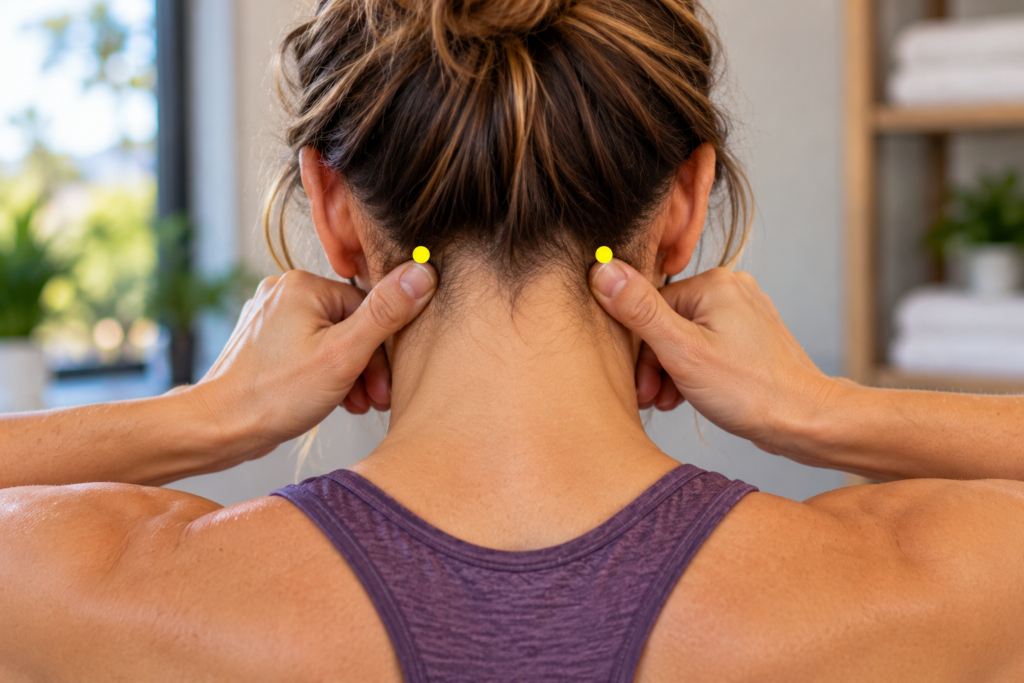
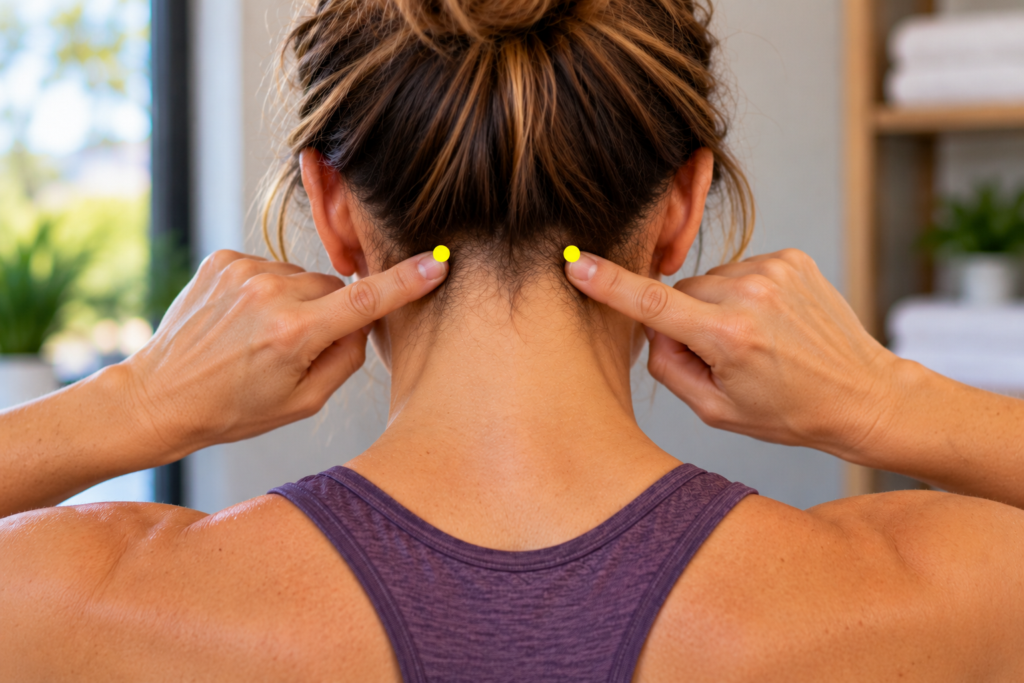
2. Press on BL10 at the back of the neck to release stiffness. BL10 sits at the back of the neck, at the hairline, on the outer edge of each of the two thick muscles that run on either side of the spine, a little lower and closer to the center than GB20. Press gently with your fingertips for one to two minutes. BL10 is called “Tianzhu,” the “Celestial Pillar.”
The BL10 point lies on the muscles that support the head’s weight. These muscles can become strained when the head is jolted back and forth. Applying gentle pressure may help ease stiffness at the back of the neck and the heavy, tired feeling associated with whiplash.
3. Press on GB21 on the top of the shoulder to release shoulder tension. GB21 sits on the top of the shoulder, halfway between the base of the neck and the bony tip of the shoulder, at the highest point of the shoulder muscle. Press down gently with your fingertips or squeeze the muscle between your thumb and fingers for one to two minutes on each side. GB21 is called “Jianjing,” the “Shoulder Well.” GB21 is avoided during pregnancy.
The GB21 muscle runs from the neck to the shoulder and often becomes tight and painful after whiplash. Relieving this tension can ease upper shoulder pain and reduce pressure on the neck.

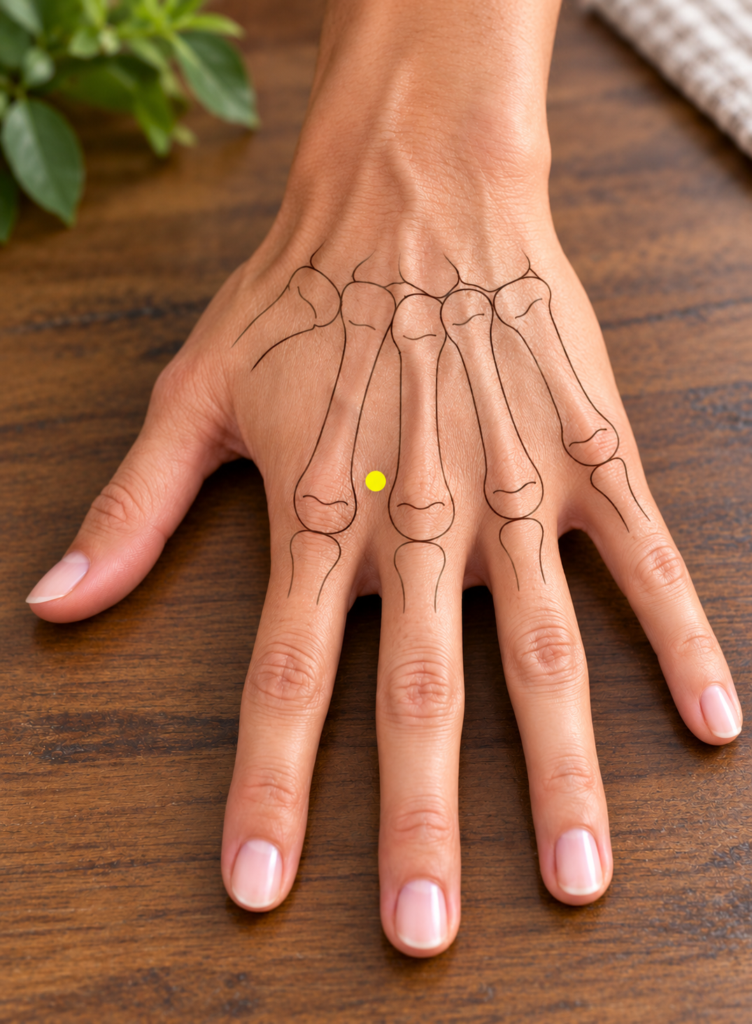
4. Press on Luozhen on the back of the hand to ease a stiff neck. Luozhen sits on the back of the hand, between the bones that lead to the index and middle fingers, about a half-finger-width back from the knuckles. Press firmly with the thumb of the other hand for one to two minutes on each hand while slowly turning your head from side to side. Luozhen means “Stiff Neck Point.”
Luozhen is an extra point used to treat a stiff, painful neck. Because it is located on the hand, you can apply firm pressure to it even when the neck is too sore to touch. Pressing this point while gently moving the neck within a comfortable range can help the muscles begin to relax.
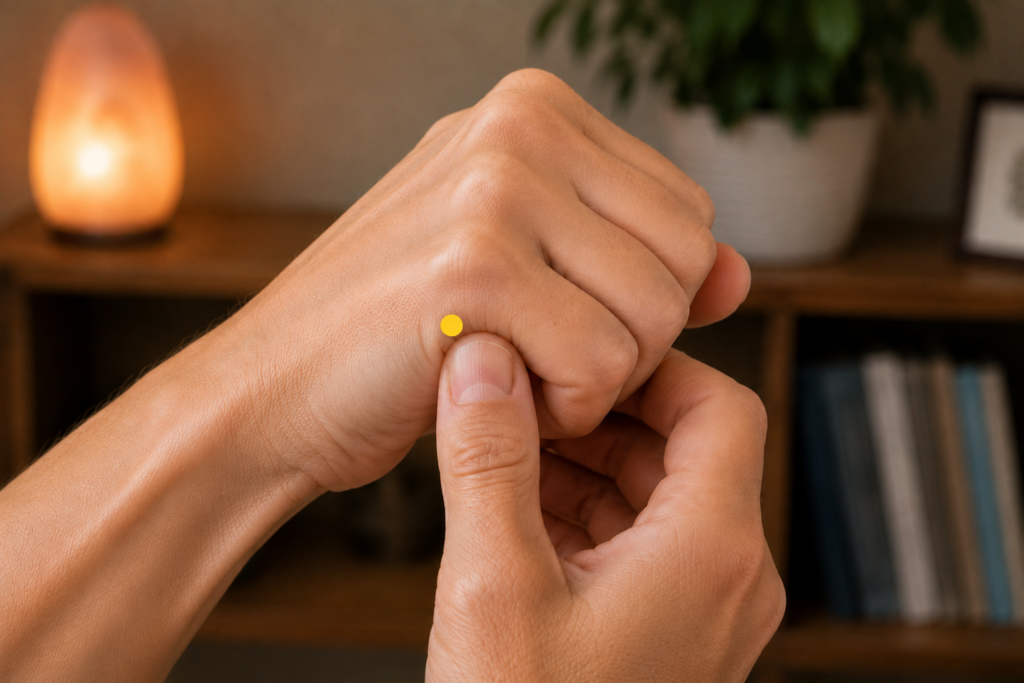
5. Press on SI3 on the side of the hand to release the neck and upper back. SI3 sits on the outer edge of the hand, just below the knuckle of the pinky finger, at the end of the crease that forms when you make a loose fist. Press firmly with the thumb of your other hand for one to two minutes on each hand. SI3 is called “Houxi,” the “Back Stream.”
SI3 is the point that opens the channel running down the spine and is traditionally used for neck and upper-back pain. It is especially effective when pain extends between the shoulder blades or the neck is so stiff that it cannot be turned.
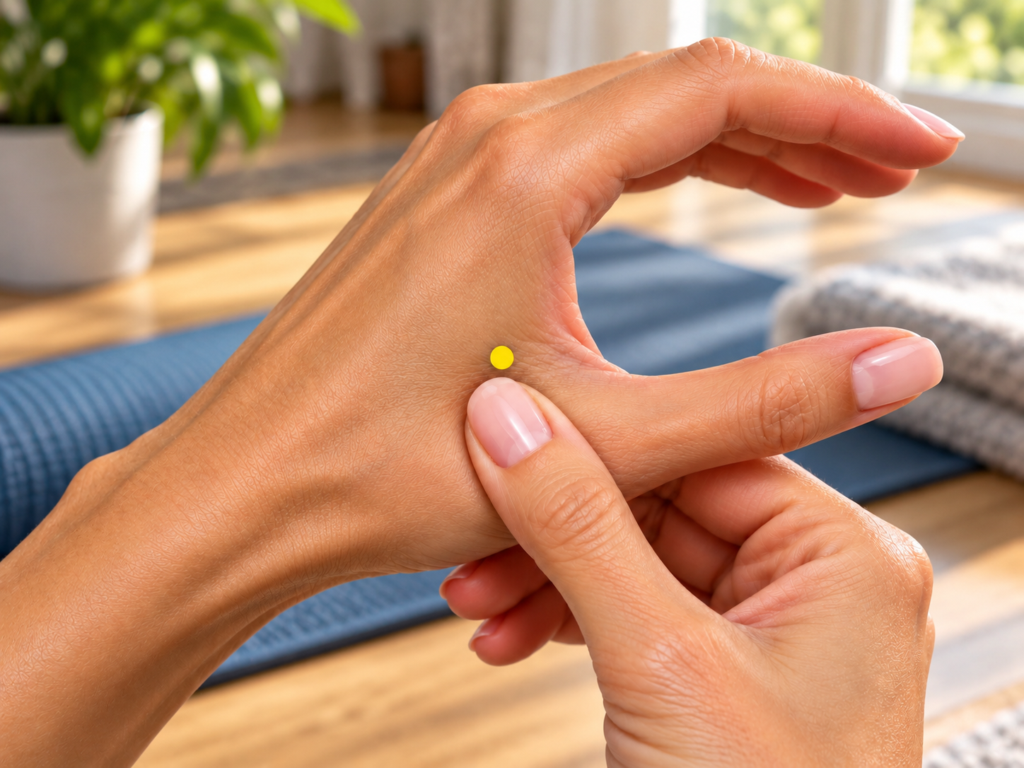
6. Press on LI4 in the hand to ease pain. LI4 sits in the webbing between the thumb and index finger, at the highest point of the muscle when you bring the thumb and index finger together. Press firmly with the thumb of your other hand for one to two minutes on each hand. LI4 is called “Hegu,” the “Joining Valley.” LI4 is avoided during pregnancy.
LI4 is one of the most important acupressure points for pain, especially in the head, face, and neck. It relieves neck pain and headaches and helps move Qi and Blood that may be blocked by injury.
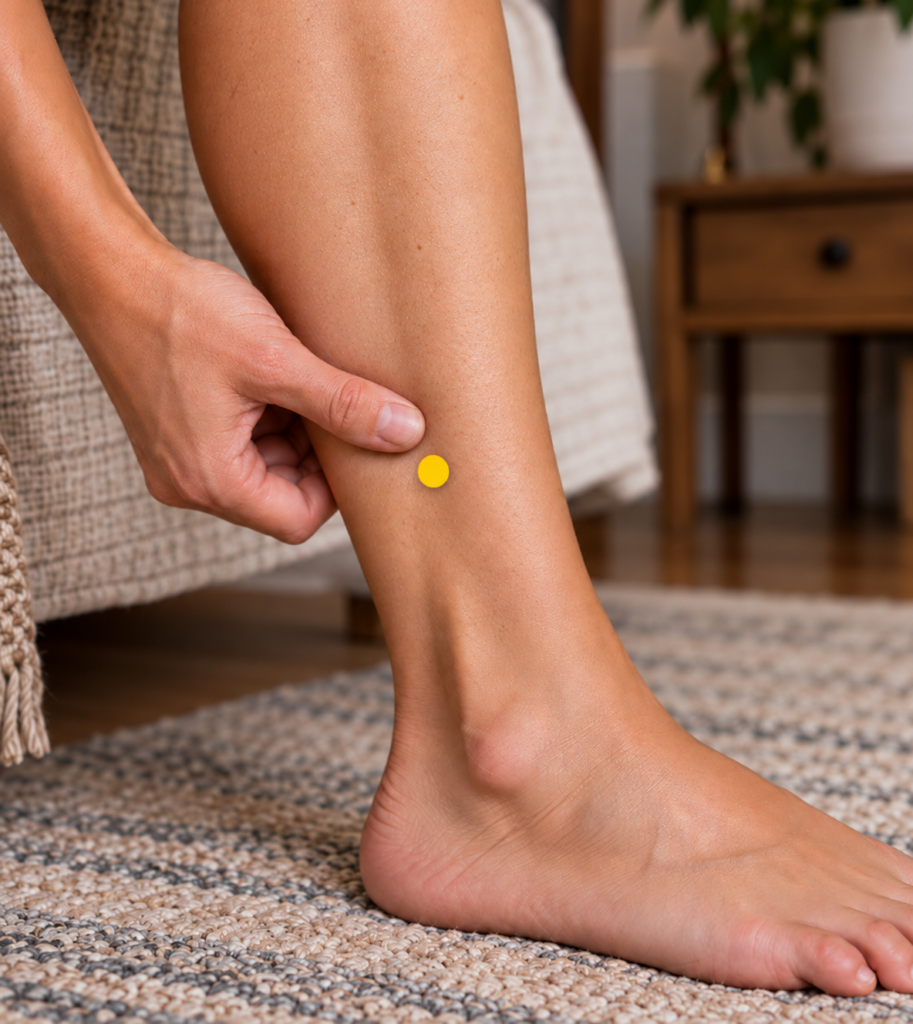
7. Press on GB39 above the outer ankle to free the neck from below. GB39 sits on the outer side of the lower leg, four finger-widths above the tip of the outer ankle bone, just in front of the outer leg bone. Press firmly with your thumb for one to two minutes on each leg. GB39 is called “Xuanzhong,” the “Suspended Bell.”
GB39 is a traditional point for stiff necks, located along the Gallbladder channel that runs from the leg to the sides of the neck. Pressing it while gently turning the head is a classic way to relieve stiffness without touching the injured area.
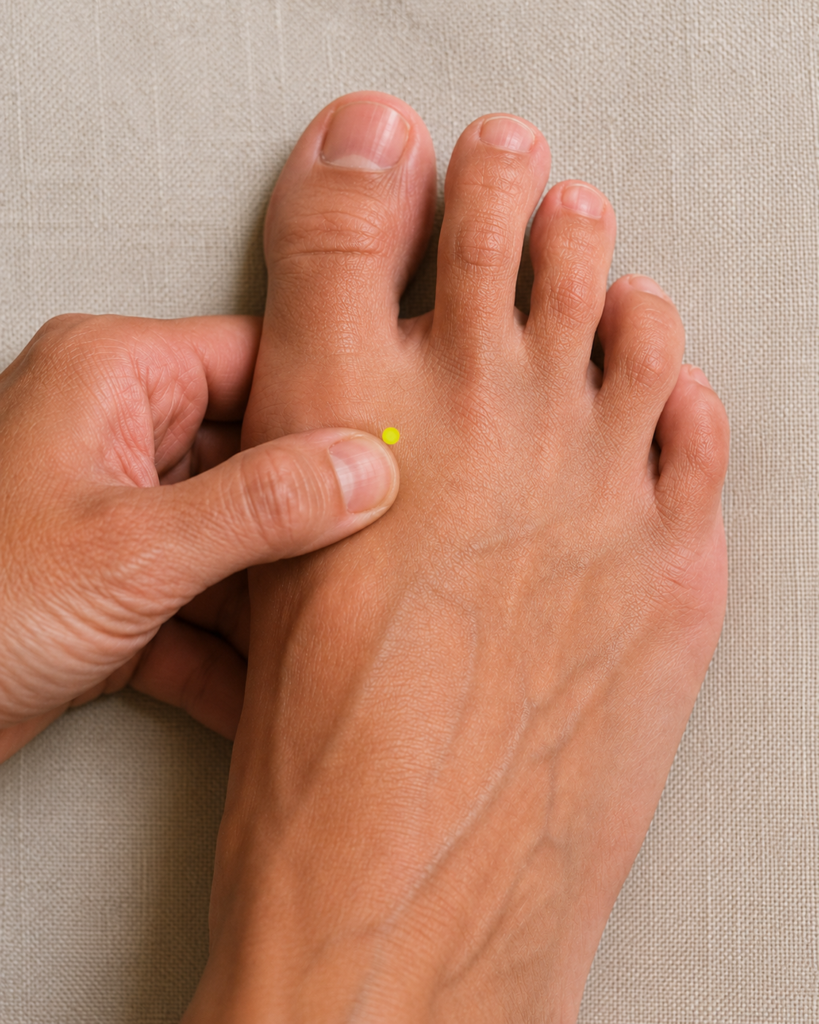
8. Press on LR3 on the top of the foot to relax the sinews. LR3 sits on the top of the foot, in the webbing between the big toe and second toe, about two finger-widths back from the webbing, in the hollow just before the two bones meet. Press firmly with your thumb for one to two minutes on each foot. LR3 is called “Taichong,” the “Great Surge.”
The Liver governs the sinews, and LR3 is the primary acupressure point for easing tight muscles and tendons. It helps relieve the rigidity that can make the neck stiff and calm the stress and irritability that often follow an accident.
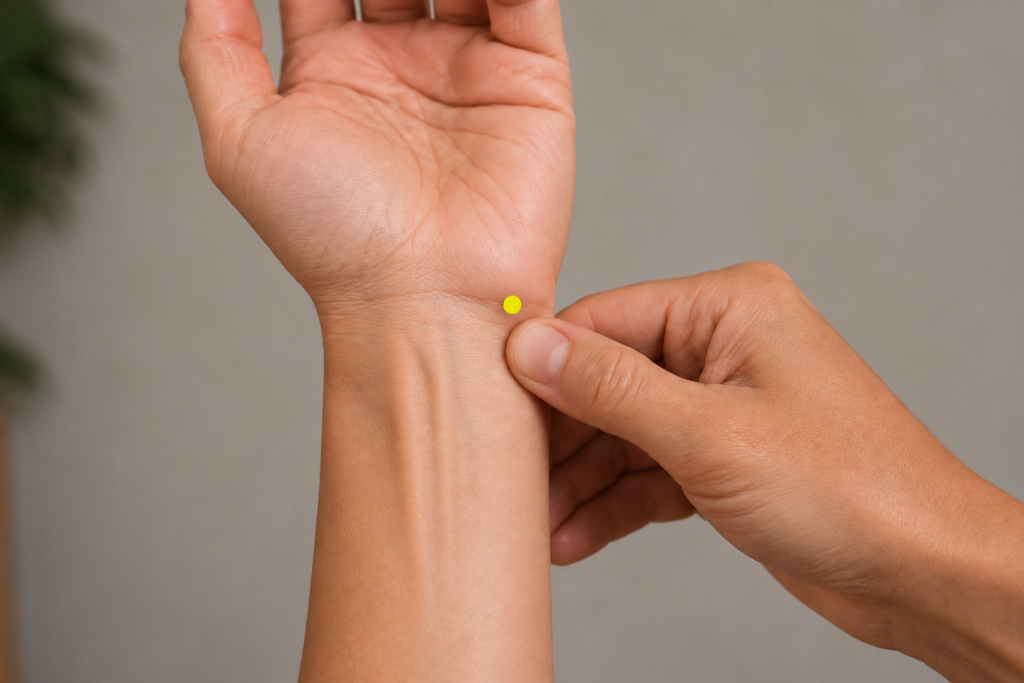
9. Press on HT7 at the wrist to calm the mind and improve sleep. HT7 sits on the inner wrist crease, on the pinky side, in the small hollow just inside the tendon. Press firmly with your thumb for one to two minutes on each wrist. HT7 is called “Shenmen,” the “Spirit Gate.”
After an accident, people often feel anxious and on edge, and may have difficulty sleeping. Poor sleep can delay healing. HT7 is thought to calm the Heart and stabilize the Shen. Pressing HT7 in bed before sleep is a simple way to help the body settle into the deep rest it needs to recover.
Why These Acupressure Points Work
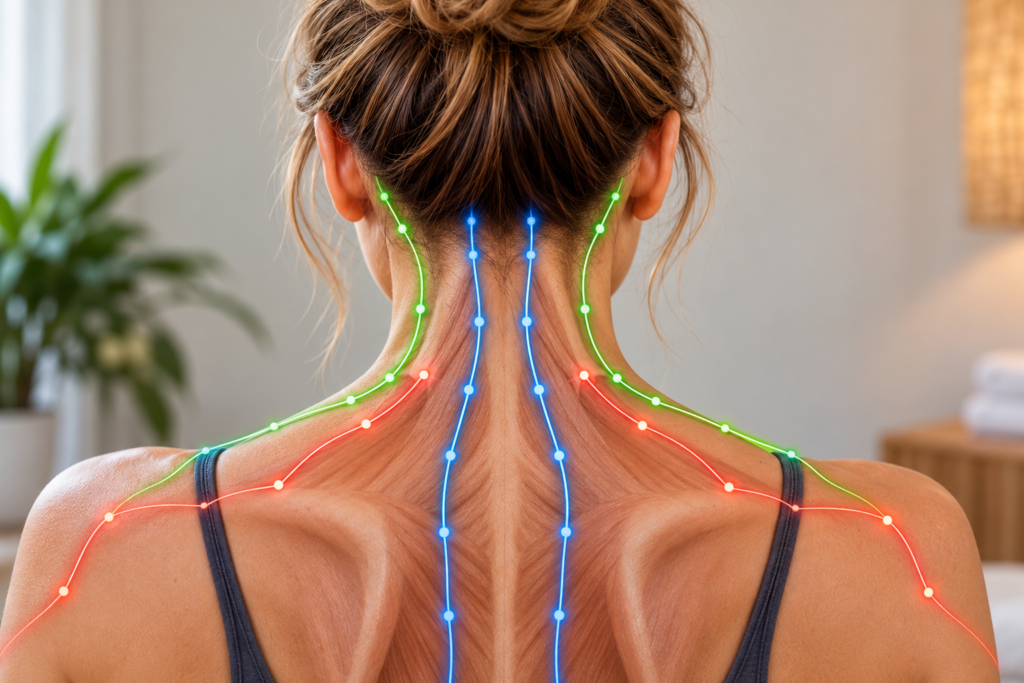
In Traditional Chinese Medicine, a healthy neck depends on the free flow of Qi and Blood through the neck and shoulder channels, relaxed sinews, and a calm mind. A sudden injury can obstruct this flow, causing the muscles to guard and tighten, while the shock of the event affects the Heart.
The nine acupressure points cover both the injury and what follows:
- The neck and shoulder points (GB20, BL10, GB21) gently release muscles that tighten after whiplash and ease headaches at the base of the skull.
- The hand points (Luozhen, SI3, LI4) can ease neck pain from a distance and be pressed firmly while the neck moves.
- The leg and foot points (GB39, LR3) open the Gallbladder channel and relax the sinews from below.
- The calming point (HT7) quiets the mind and promotes the restorative sleep needed for healing.
How to Properly Use These Acupressure Points

Acupressure is most effective for whiplash when the pressure is adjusted to the stage of healing.
- In the first few days after an injury, focus on the points on the hand, leg, and foot. Gently turn the head within a comfortable range, and apply only light pressure to the neck and shoulders.
- Once the acute pain subsides, apply steady, comfortable pressure to GB20, BL10, and GB21.
- Hold each point for one to two minutes. Breathe slowly, allowing your neck to soften with each exhale.
- Practice the routine once or twice daily for several weeks, as injured muscles and ligaments heal gradually.
Gentle movement matters just as much as the points. Unless your doctor advises otherwise, keep your neck moving with slow, comfortable range-of-motion exercises rather than holding it still, since long periods of rest can prolong stiffness. Cold packs can ease pain during the first couple of days, while warmth can help tight muscles relax afterward. Support your neck with a pillow that keeps it level as you sleep, keep screens at eye level, and take breaks from driving and sitting. If headaches at the base of your skull persist, acupressure for an occipital headache is the companion post.
When to Get Professional Help

If you’ve been in a car accident or hurt your neck, it’s important to see a doctor, even if your pain seems mild, because some injuries aren’t obvious right away. Get emergency care if you have severe neck pain, numbness, tingling, or weakness in your arms or legs, trouble walking or balancing, loss of bladder or bowel control, a severe or worsening headache, confusion, repeated vomiting, loss of consciousness, changes in vision, or trouble speaking or swallowing. These symptoms could indicate a fracture, spinal cord injury, concussion, or injury to the blood vessels in your neck. See your doctor promptly if your neck pain is getting worse, if pain or tingling spreads into your arms, if headaches, dizziness, or trouble concentrating continue, or if symptoms haven’t improved within a few weeks.
Acupressure may serve as a natural, holistic, supportive practice for whiplash, but it should be used in conjunction with medical care and not as a substitute for it.
For related health concerns, acupressure for neck pain, acupressure for upper back pain, and acupressure for muscle spasms are companion posts.
Above and Beyond Acupuncture offers acupuncture, cupping, and lifestyle coaching at the North Frank Lloyd Wright Boulevard location in Scottsdale.
Schedule an appointment online to start your healing journey.
The points above are only as effective as the technique used to apply them. Where to press, how firmly, and for how long all affect the result. For a full breakdown of how to perform acupressure properly at home, read Performing Acupressure in 3 Easy Steps.

About the Publisher
Paul Kerzner, L.Ac., is a licensed acupuncturist and board-certified herbalist, as well as the founder of Above and Beyond Acupuncture in Scottsdale. His own journey from chronic patient to practicing acupuncturist shapes his commitment to providing honest, clinically grounded information about acupuncture and Traditional Chinese Medicine. Learn more about Paul and his clinical approach on the About Us page.