Key Takeaways
- Hemorrhoids are common but often untreated due to embarrassment; many adults will experience them by age 50.
- Conventional treatments often manage symptoms but fail to address underlying causes like chronic constipation and straining.
- Acupuncture for hemorrhoids offers a holistic approach, improving digestion, reducing inflammation, and enhancing circulation.
- Traditional Chinese Medicine identifies specific patterns causing hemorrhoids, guiding tailored acupuncture treatments.
- Lifestyle changes, such as adequate fiber, hydration, and movement, are essential in managing hemorrhoid symptoms effectively.

Hemorrhoids are one of the most common conditions in adult medicine and one of the most under-discussed. Roughly one in twenty American adults has symptomatic hemorrhoids at any given time, and more than half of Americans will experience hemorrhoids at some point by age 50. Despite how common they are, the condition remains embarrassing enough that many patients avoid discussing it even with their healthcare providers.
The conventional approach involves over-the-counter creams, sitz baths, dietary fiber, and in more severe cases office procedures like rubber band ligation or sclerotherapy. Surgical hemorrhoidectomy is reserved for the most severe cases. These interventions help many patients but often address only the immediate symptoms without resolving the underlying patterns that produce recurring hemorrhoids.
Acupuncture and Traditional Chinese Medicine offer a substantially different approach that addresses the underlying constitutional patterns rather than only managing the acute symptoms. Here is what hemorrhoids actually are, what causes them, and how acupuncture treats the underlying patterns.
What are Hemorrhoids?
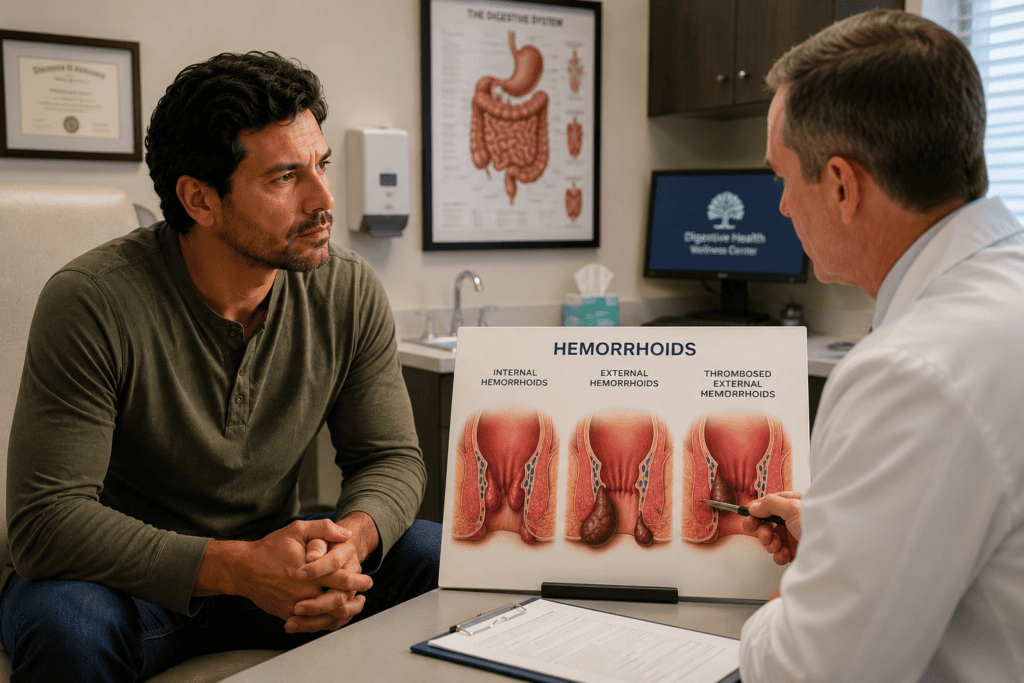
Hemorrhoids are enlarged vascular cushions in the lower rectum and anal canal. Everyone has hemorrhoidal tissue as part of normal anatomy. These vascular cushions contribute to fecal continence and normally cause no symptoms. Hemorrhoids become a clinical problem when the vascular cushions become swollen, inflamed, or displaced from their normal position.
The condition falls into several distinct clinical categories.
- Internal hemorrhoids develop inside the rectum above the dentate line and are usually not painful because that tissue does not have pain-sensing nerves. Internal hemorrhoids can produce bright red bleeding during bowel movements, mucus discharge, or a sensation of incomplete evacuation. They are graded I through IV based on severity. Grade I hemorrhoids do not prolapse. Grade II prolapse during straining but reduce on their own. Grade III require manual reduction. Grade IV are permanently prolapsed and cannot be reduced.
- External hemorrhoids develop outside the anal canal below the dentate line and can produce pain, itching, and irritation because the surrounding tissue has pain-sensing nerves. External hemorrhoids can become inflamed, thrombosed, or produce skin tags after acute episodes resolve.
- Thrombosed external hemorrhoids are a distinct acute presentation where a blood clot forms within an external hemorrhoid, producing sudden severe pain and a visible or palpable purple lump. Thrombosed hemorrhoids often require prompt medical evaluation and sometimes clot excision within the first 72 hours for optimal relief.
The Mayo Clinic overview of hemorrhoids and the NIDDK summary provide the medical framework for understanding the different presentations.
Why do I Have Hemorrhoids?
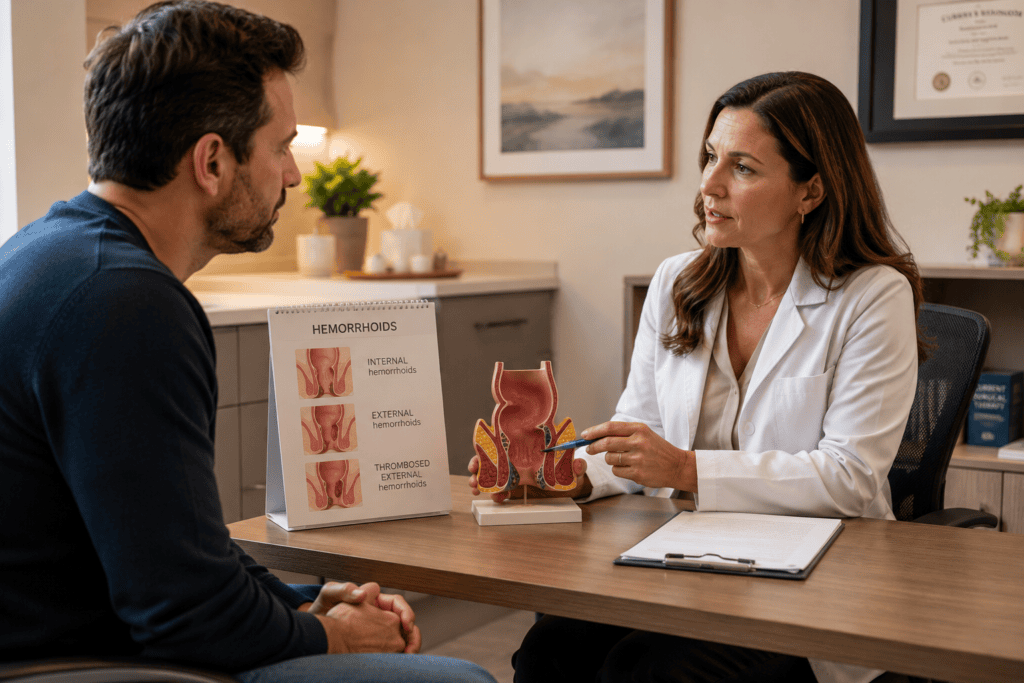
Hemorrhoids develop from sustained increased pressure on the vascular cushions in the anal canal. Several factors contribute to this pressure.
- Chronic constipation and straining are the most common drivers. Straining during bowel movements increases pressure on the vascular cushions and over time produces the swelling and displacement that characterize hemorrhoids.
- Low-fiber diet and inadequate hydration contribute to the constipation pattern. Modern diets often provide substantially less fiber than the digestive tract requires for smooth elimination.
- Prolonged sitting on the toilet, particularly while using phones or reading, increases venous pressure in the anal region.
- Pregnancy and childbirth produce hemorrhoids in a substantial percentage of women. The increased abdominal pressure during pregnancy combined with the pushing of childbirth is a common trigger.
- Sedentary lifestyle contributes to venous stasis and the general circulatory patterns that predispose to hemorrhoids.
- Aging weakens the connective tissue that supports the vascular cushions in position, making them more prone to displacement.
- Obesity increases abdominal pressure and contributes to the venous congestion that produces hemorrhoids.
- Chronic diarrhea produces its own irritation and inflammation of the anal region.
- Heavy lifting with improper technique increases intra-abdominal pressure acutely.
A note on bleeding. Rectal bleeding that is attributed to hemorrhoids should always be evaluated by a physician to rule out other conditions including colon cancer, inflammatory bowel disease, and other pathologies that can produce similar symptoms. Do not assume that rectal bleeding is from hemorrhoids without appropriate medical evaluation.
Why Standard Care Often Falls Short

Standard care for hemorrhoids typically involves symptomatic management. Over-the-counter creams and suppositories reduce inflammation and provide temporary relief. Sitz baths (sitting in warm water) provide comfort. Increased dietary fiber and hydration address the constipation pattern.
For more severe or persistent hemorrhoids, office procedures include rubber band ligation (placing rubber bands around internal hemorrhoids to cut off blood supply), sclerotherapy (injecting a solution to shrink the hemorrhoids), and infrared coagulation. Surgical hemorrhoidectomy is reserved for the most severe cases and involves a significant recovery period.
These interventions work for many patients. What they often do not address is the underlying constitutional pattern that produced the hemorrhoids in the first place. Many patients experience recurring hemorrhoids because the underlying patterns of digestive dysfunction, straining, and constitutional weakness have not been addressed. This is where the Traditional Chinese Medicine framework offers something the standard care model does not.
How Acupuncture Treats Hemorrhoids
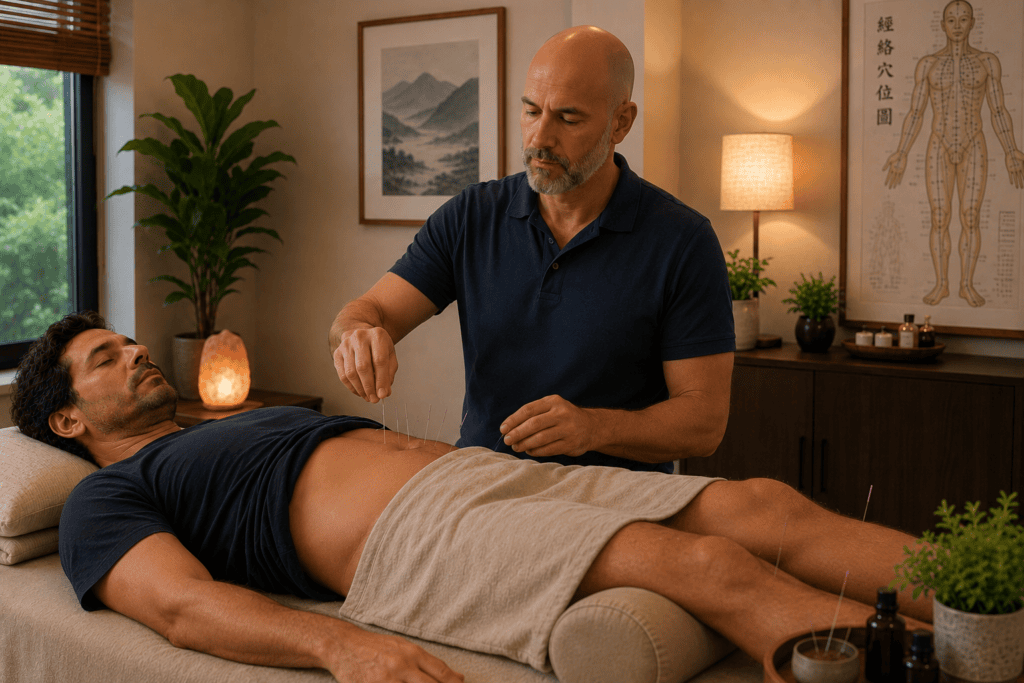
Acupuncture addresses hemorrhoids through several mechanisms that work alongside standard care rather than replacing it.
- Improved digestive function. Chronic constipation is the primary driver of hemorrhoid formation. Acupuncture has substantial research support for improving digestive function and bowel regularity. Better digestion means less straining, which reduces the pressure that produces hemorrhoids.
- Anti-inflammatory effects. Hemorrhoids involve local inflammation of the vascular cushions. Acupuncture reduces inflammatory markers through documented mechanisms.
- Improved circulation. Venous stasis in the anal region contributes to hemorrhoid formation. Acupuncture supports systemic and local circulation, which reduces the venous congestion pattern.
- Autonomic nervous system regulation. Chronic sympathetic activation contributes to digestive dysfunction and constipation patterns. Acupuncture shifts the autonomic balance toward parasympathetic activation, which supports normal digestive function. What Is Cortisol and Why Do I Have So Much of It? covers the chronic stress dimension.
- Pattern differentiation. Traditional Chinese Medicine identifies several specific patterns producing hemorrhoids that shape the treatment approach.
- Damp Heat in the Large Intestine produces the acute inflammatory presentation with pain, swelling, and often bleeding. This pattern responds to treatments that clear heat and drain dampness.
- Spleen Qi Deficiency with Sinking produces the chronic pattern with weakness, fatigue, and hemorrhoids that prolapse. The Spleen in Chinese medicine governs the holding function that keeps organs and tissues in place. When Spleen Qi is depleted, structures descend, which produces prolapsed hemorrhoids and related conditions.
- Blood Stasis produces the thrombosed pattern with dark purple hemorrhoids and sharp fixed pain.
- Intestinal Dryness produces the pattern with hard dry stools and hemorrhoids that develop from chronic straining against difficult bowel movements.
A licensed acupuncturist identifies which patterns are dominant and treats accordingly.
What Does Acupuncture Actually Do to Your Body? explains exactly what acupuncture does to, and for, the body in more detail.
The chronic inflammatory aspect that contributes to many recurring conditions is covered in What Is Inflammation and Why Is It Affecting Me?.
The Foundation of Hemorrhoid Management

Regardless of what other treatment approaches are used, addressing the underlying digestive pattern is essential. The following support the foundation of hemorrhoid management.
- Adequate fiber intake. The general recommendation is 25 to 30 grams of fiber daily for adults. Most American diets provide substantially less. Fruits, vegetables, legumes, and whole grains are the primary sources. Fiber supplements (psyllium, methylcellulose) can help patients whose dietary intake is inadequate.
- Adequate hydration. Fiber without adequate water can actually worsen constipation. Aim for pale yellow urine as a hydration marker.
- Avoiding prolonged toilet time. Sitting on the toilet for extended periods increases venous pressure on the anal region. If a bowel movement is not happening within a few minutes, get up and try again later.
- Not straining. Straining during bowel movements is one of the most direct producers of hemorrhoids. If straining is required regularly, address the underlying constipation rather than continuing to strain.
- Regular movement. Physical activity supports digestive function and reduces the venous stasis that contributes to hemorrhoids.
- Sitz baths for acute flares. Warm water sitz baths for 10 to 15 minutes provide comfort during acute episodes and support the healing process.
When to See a Medical Professional
Rectal bleeding always warrants medical evaluation. Even when hemorrhoids are the eventual diagnosis, ruling out more serious conditions is essential. Immediate medical evaluation is warranted for severe pain that appears suddenly (particularly with a visible purple lump suggesting a thrombosed hemorrhoid), heavy bleeding, bleeding accompanied by significant weight loss or changes in bowel habits, or symptoms in patients over 40 who have not had recent colon cancer screening.
For patients dealing with recurring or persistent hemorrhoids that are not fully responding to conservative measures, acupuncture treatment offers a substantial intervention that addresses the constitutional patterns driving the recurrence.
Please visit Acupuncture, Cupping & Lifestyle Coaching to learn more about what services this clinic offers.
Reach out to Above and Beyond Acupuncture on North Frank Lloyd Wright Boulevard in Scottsdale to schedule a consultation.