Key Takeaways
- Recognizing and steering clear of trigger foods such as beans, dairy, and FODMAPs can greatly lessen bloating and gas.
- Modifying eating habits, like taking smaller bites and eating more slowly, reduces swallowed air and discomfort.
- Physical activity, like walking and gentle yoga, promotes digestion and aids in the release of trapped gas.
- Carminative herbs such as peppermint, ginger, and fennel can provide soothing relief from bloating when consumed as teas.
- Staying hydrated, considering probiotics, and trying acupressure can enhance digestive health and alleviate symptoms of bloating and gas.
A bloated, gassy stomach is a common and uncomfortable condition.
It causes tight, distended pressure, trapped wind that won’t pass, and a stuffed, swollen feeling long after eating. While usually harmless, it can be very miserable. The good news is that simple home remedies can effectively alleviate these symptoms. The most effective solutions are not medications but dietary changes, supported by a few herbs, some physical activity, and other straightforward measures.
This article presents tried-and-true home remedies to provide lasting relief, rather than simply waiting for symptoms to pass.
Identify and Avoid Your Trigger Foods

The most effective step in managing bloating and gas is identifying your personal food triggers, which can be unexpected. Common culprits include beans, legumes, carbonated beverages, and sugar alcohols like sorbitol and xylitol found in sugar-free gum and sweeteners, all of which can cause gas. While healthy, cruciferous vegetables such as broccoli, cabbage, and cauliflower often lead to gas. Dairy is another frequent cause because many people cannot fully digest lactose, leading to fermentation, gas, and bloating. If dairy causes you issues, understanding this is important. Additionally, for some, fermentable carbohydrates known as FODMAPs, present in wheat, specific fruits, onions, and garlic, may be the hidden source of their symptoms.
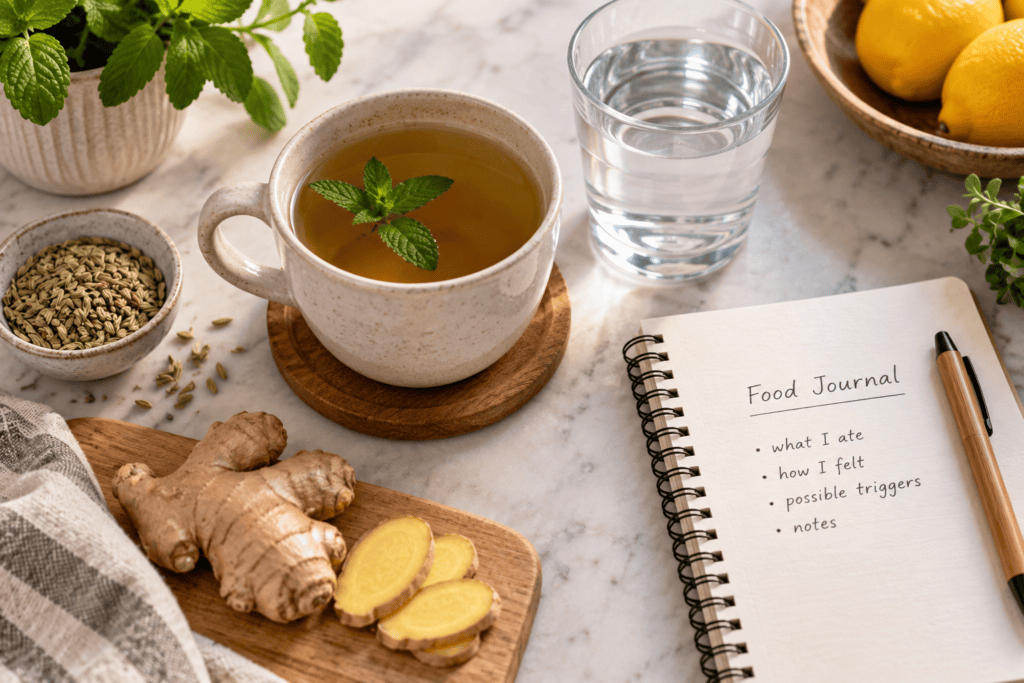
To identify your triggers, keep a straightforward food and symptom diary: document what you eat and when bloating occurs. Patterns usually emerge within a few weeks. Once you recognize your triggers, reducing their intake or preparing them differently, such as soaking beans thoroughly, is more effective than relying on remedies after symptoms appear.
Change How You Eat

Often, it’s not just what you eat but how you eat that causes bloating and gas, and fixing this is simple.
Most gas comes from swallowed air, so slowing down can help a lot. Eat slowly and chew thoroughly, since rushing through a meal can cause you to swallow air. Avoid talking much during meals, using straws, chewing gum, and drinking carbonated beverages, as these introduce extra air into your digestive system. Eating smaller, more frequent meals instead of large ones reduces the load on digestion, minimizing fermentation and post-meal pressure. These habits may seem minor, yet they often have a greater impact than other methodologies.
Move Your Body

Movement is a genuinely effective and underused remedy for trapped gas.
Physical activity promotes digestion by stimulating the digestive tract and aiding gas to pass through and exit. A gentle walk after eating can alleviate bloating, which sitting still often worsens. Even just a ten- or fifteen-minute walk can significantly improve comfort when feeling full and gassy. Consistently staying active helps maintain steady digestion and prevents bloating from forming. Additionally, certain gentle yoga poses that involve drawing the knees to the chest are traditionally used to release trapped wind, and many find them effective during uncomfortable spells.
Try Gas-Relieving Herbs and Teas
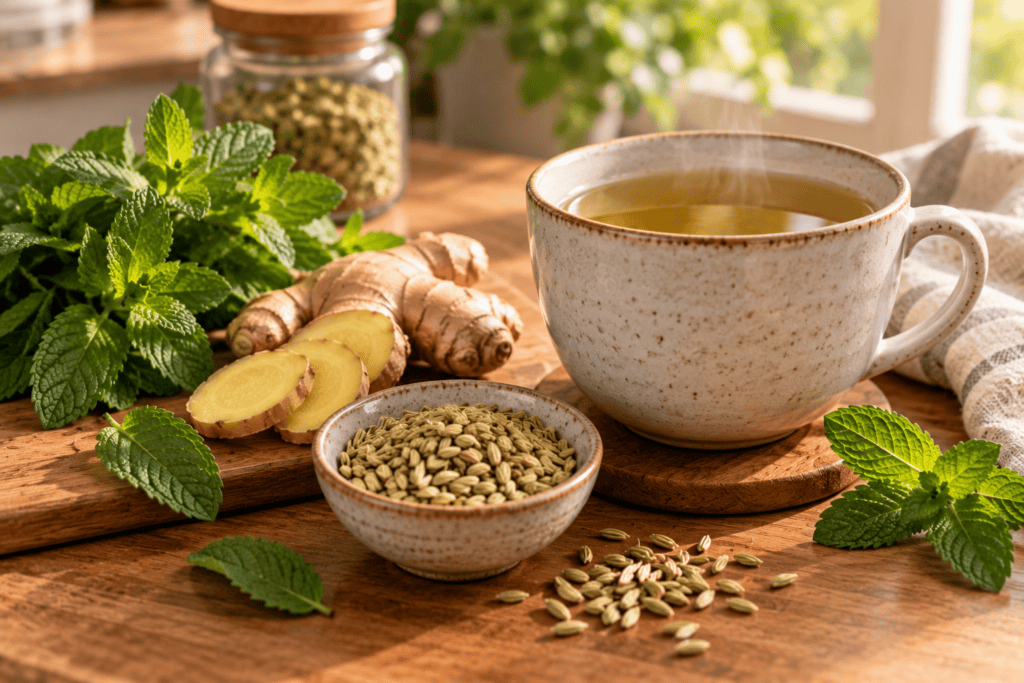
Certain herbs are well-known for reducing gas and bloating, often called carminatives because they soothe the gut and help pass trapped gas.
Peppermint is highly effective because it relaxes the muscles of the digestive tract, alleviating cramping and aiding gas passage; peppermint tea is a calming daily remedy. Ginger promotes digestion and calms the stomach, especially useful if nausea accompanies bloating. Fennel seeds are a traditional treatment for gas, either chewed after meals or steeped as tea, with a long-standing history of use. Chamomile tea offers gentle relief for a swollen, uncomfortable stomach. Drinking any of these warm beverages after a meal is a simple, low-risk approach, and the warmth itself helps relax a tense gut.
Stay Hydrated

It may sound counterintuitive when you feel bloated, but staying well hydrated can actually help reduce bloating.
Water facilitates the movement of food through the digestive system and helps prevent constipation, which often causes a bloated, backed-up belly. It also counteracts water retention, reducing puffiness caused by fluid buildup, especially when dehydrated or consuming excess salt. Staying well-hydrated and reducing salt intake can lessen bloating from fluids and gas. Warm water is especially soothing for a sluggish, bloated stomach.
Consider Probiotics

The composition of bacteria in your gut influences the amount of gas you produce. For some individuals, probiotics, beneficial bacteria in supplements and fermented foods, may help decrease bloating and gas over time. While evidence varies by strain, probiotics aren’t a guaranteed solution, but they’re low-risk and worth trying if bloating occurs regularly. Use a reputable product consistently for about a month before expecting results, and consider including fermented foods like yogurt (if dairy is tolerated), kefir, or sauerkraut. Fermented and high-fiber foods can initially increase gas for some people, so introduce them gradually.
Try Acupressure

Acupressure offers an effective home remedy for immediate relief by targeting points on the abdomen, legs, and hands to stimulate the intestines and help release trapped gas.
Activating acupressure points beside and below the navel in a clockwise motion along the colon can help mobilize a sluggish, bloated belly. You can do this self-care technique while lying down during an episode. The article “How to Use Acupressure for Bloating and Gas” explains which points to target and how to apply gentle pressure. It is most effective when combined with a warm compress or heat pack on the abdomen, which further relaxes a tense gut and promotes relief.
When to See a Doctor

Occasional bloating and gas are normal and typically respond well to the remedies above.
Some bloating requires medical attention, and recognizing when to seek help is crucial. If bloating is persistent, severe, or worsening, or if it doesn’t improve and is accompanied by significant abdominal pain, unexplained weight loss, changes in bowel habits, blood in the stool, vomiting, or lasting fullness after eating little, consult a doctor. Immediate medical care is needed for bloating with fever or sudden, intense abdominal pain. Additionally, new or ongoing bloating without a clear cause, especially in women, should be evaluated rather than ignored, as it may indicate a condition that needs medical attention.
These home remedies may help reduce everyday bloating and gas, but they should not replace professional medical care in serious situations.
Above and Beyond Acupuncture offers acupuncture, cupping, and lifestyle coaching at the North Frank Lloyd Wright Boulevard location in Scottsdale.
Schedule an appointment online to start your healing journey.

About the Publisher
Paul Kerzner, L.Ac., is a licensed acupuncturist and board-certified herbalist, as well as the founder of Above and Beyond Acupuncture in Scottsdale. His own journey from chronic patient to practicing acupuncturist shapes his commitment to providing honest, clinically grounded information about acupuncture and Traditional Chinese Medicine. Learn more about Paul and his clinical approach on the About Us page.