Key Takeaways
- Diabetic neuropathy affects many long-term diabetes patients, causing symptoms like burning, numbness, and sharp pain in feet and hands.
- Acupressure for diabetic neuropathy can help manage symptoms by targeting nine specific points that enhance circulation and nourish the Spleen and Yin.
- Key acupressure points include ST36 for Qi strength, SP6 for Yin nourishment, and Ba Feng for targeted foot relief.
- Patients should maintain safety while practicing acupressure and avoid pressing on any damaged skin to prevent complications.
- Regular blood sugar management and annual foot examinations remain crucial in treating diabetic neuropathy alongside acupressure.

Diabetic neuropathy is a common complication of diabetes, affecting up to half of people who have had the condition for many years. Over time, high blood sugar damages small blood vessels and nerves, especially the longest ones. This is why symptoms usually start in the toes and feet and can later affect the hands, often in what’s called a stocking-and-glove pattern. People often feel burning at night, pins and needles, numbness that makes the ground feel distant, sharp or electric jolts, and cold or very sensitive feet. Keeping your blood sugar under control is the most important part of care. Acupressure can be a helpful daily practice to support circulation, nerve health, and symptom management.
Traditional Chinese Medicine has recognized diabetes for centuries, calling it Xiao Ke, or the “wasting and thirsting” illness. It considers diabetic neuropathy as a later manifestation of this condition. Over time, the heat associated with diabetes depletes the body’s Yin—its cooling and nourishing moisture—and exhausts the Qi, notably in the Spleen, which is vital for processing food and sugar. When Qi becomes too weak to move Blood to the extremities, and Yin is insufficient to nourish them, blood flow slows and stagnates in the small vessels of the feet and hands. Symptoms such as numbness and weakness indicate deficiency, while burning, sharp pain suggests stagnation. Heaviness often signifies dampness resulting from a weak Spleen. The following points aim to address these issues by strengthening the Spleen, nourishing Yin, promoting Blood circulation, and enhancing circulation to the extremities.
Here are nine acupressure points that strengthen the Spleen, nourish Yin, move stagnant Blood, and improve circulation to the feet and hands.
What Acupressure Points to Press and Why
1. Press on ST36 below the knee to strengthen the Qi and drive it to the feet. ST36 sits four finger-widths below the lower edge of the kneecap and one finger-width to the outside of the shinbone, on the muscle that rises when you flex your foot. Press firmly with your thumb for one to two minutes on each leg. ST36 is called “Zusanli,” the “Leg Three Miles.”
ST36 is a vital point in managing diabetic neuropathy. It strengthens the Spleen and Stomach, often weakened in diabetes, boosts Qi to improve blood flow to the feet, and supports overall leg circulation. This point features frequently in clinical acupuncture studies for diabetic neuropathy. Located on the upper shin, where sensation is generally unaffected, it can be pressed firmly daily.
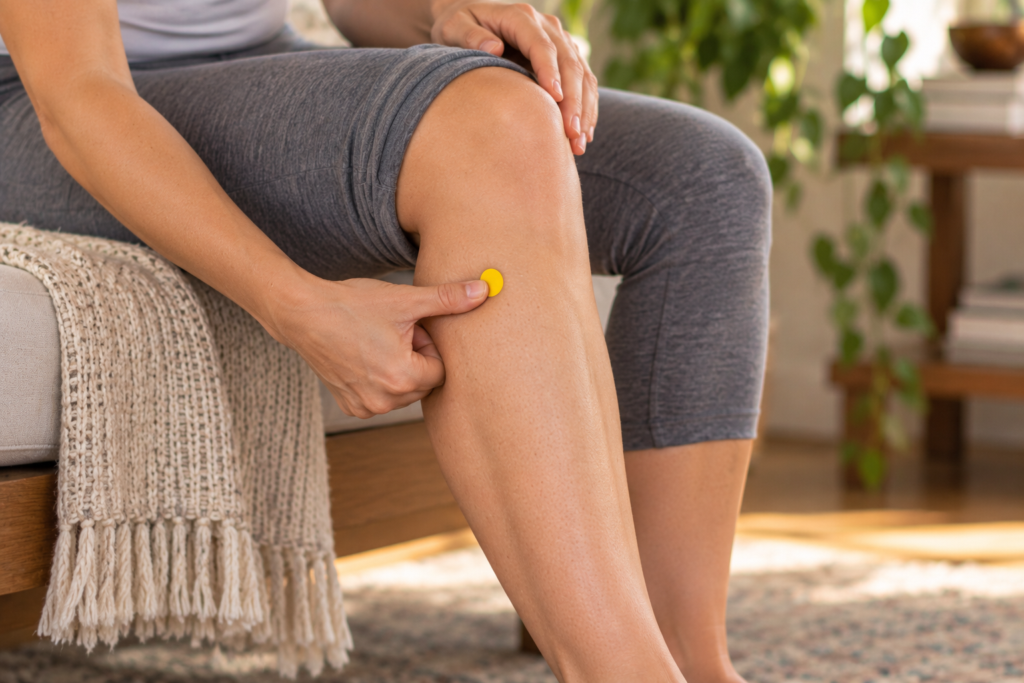
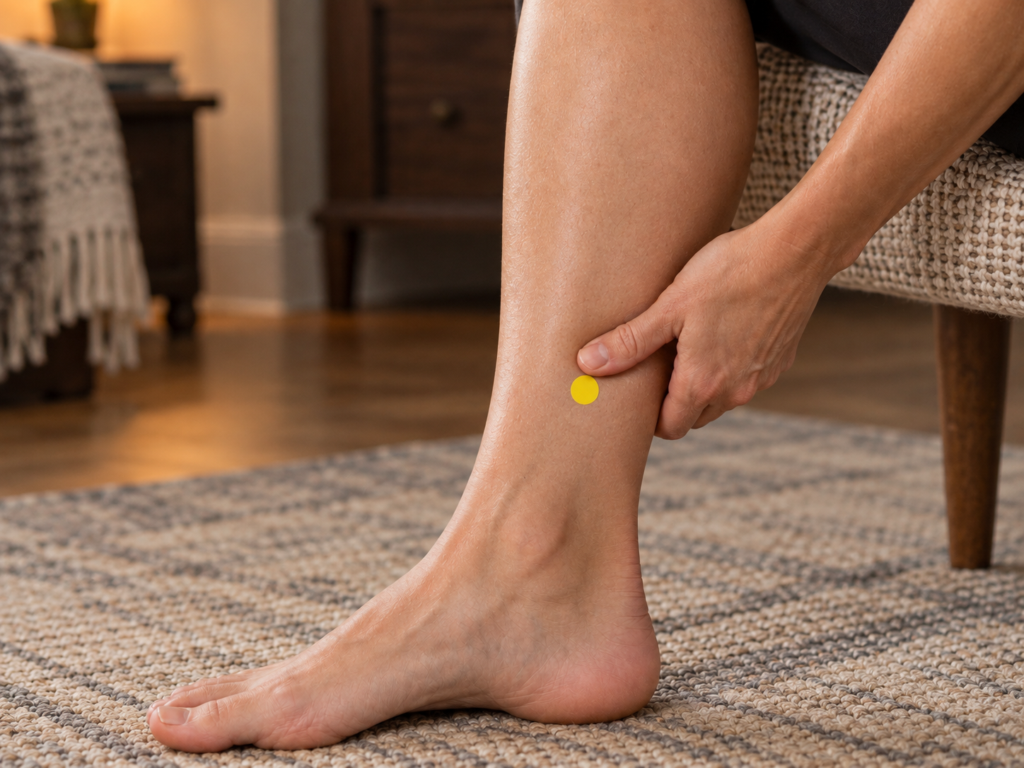
2. Press on SP6 above the inner ankle to nourish the Yin and move the Blood. SP6 sits four finger-widths up from the tip of the inner ankle bone, just behind the back edge of the shinbone. Press firmly for one to two minutes on each leg. SP6 is called “Sanyinjiao,” the “Three Yin Intersection.” SP6 is contraindicated during pregnancy.
SP6 connects the Spleen, Liver, and Kidney channels, the three Yin channels most impacted by diabetes. This point helps nourish Yin, boost the Spleen, and promote Blood circulation, targeting the root causes of diabetic neuropathy. When applying, check your skin first, especially on the lower legs, as they can be fragile, and apply moderate pressure.
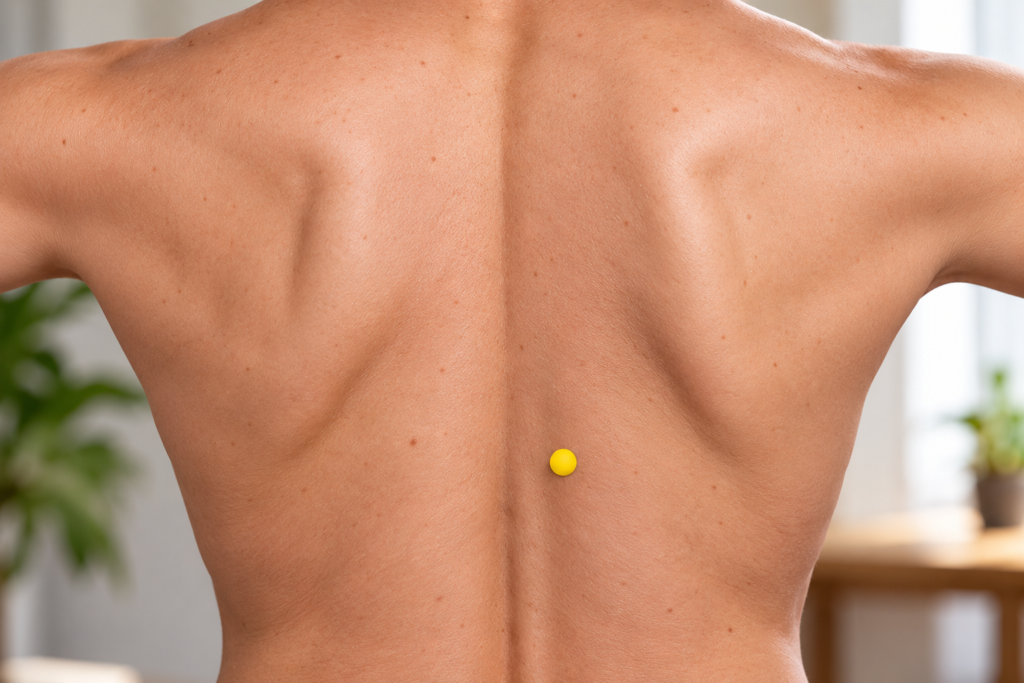
3. Press on Yishu on the mid-back, the traditional pancreas point. Yishu sits on the mid-back, about two finger-widths out to each side of the spine, roughly a hand’s width above the bottom tips of the shoulder blades’ level, just below them, level with the eighth thoracic vertebra. Lie on your back with a tennis ball under each side, or have someone press both sides with their thumbs, for one to two minutes. Yishu is an extra point whose name means “Pancreas Point.”
Yishu is one of the rare points in Chinese medicine specifically associated with diabetes. It aids the organ responsible for blood sugar regulation and addresses symptoms like thirst and depletion characteristic of Xiao Ke. Although it doesn’t replace medications or monitoring, it targets the underlying diabetic pattern directly, not just symptom relief at the feet, making it an important component of this approach.
4. Press on SP3 on the inner foot to strengthen the Spleen at its source. SP3 sits on the inner edge of the foot, in the hollow just behind and below the ball of the big toe, where the skin changes color along the side of the foot. Press gently to moderately with your thumb for one to two minutes on each foot, adjusting for reduced sensation. SP3 is called “Taibai,” and it is the source point of the Spleen.
In Traditional Chinese Medicine, the Spleen plays a key role in transforming food and sugar into energy, and a weakness here is linked to diabetes. SP3, the Spleen’s source point, directly tonifies it. Located on the foot, this point also improves circulation in the area most affected by neuropathy. Apply lighter pressure if your feet are numb.
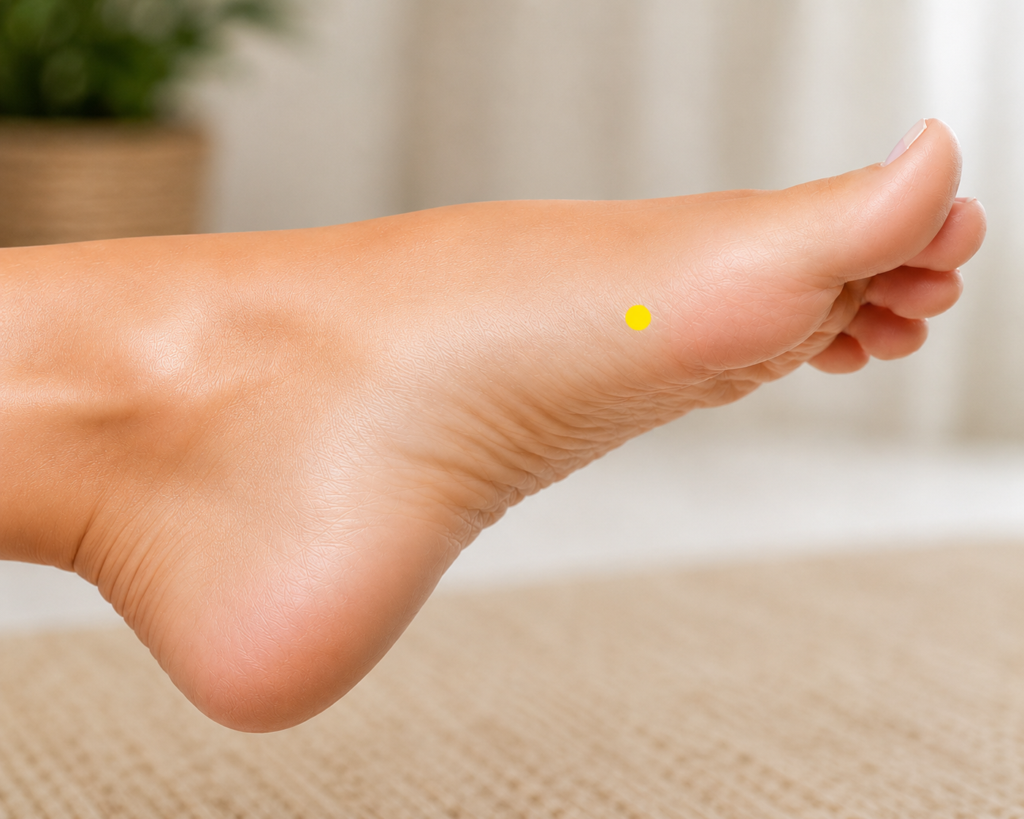
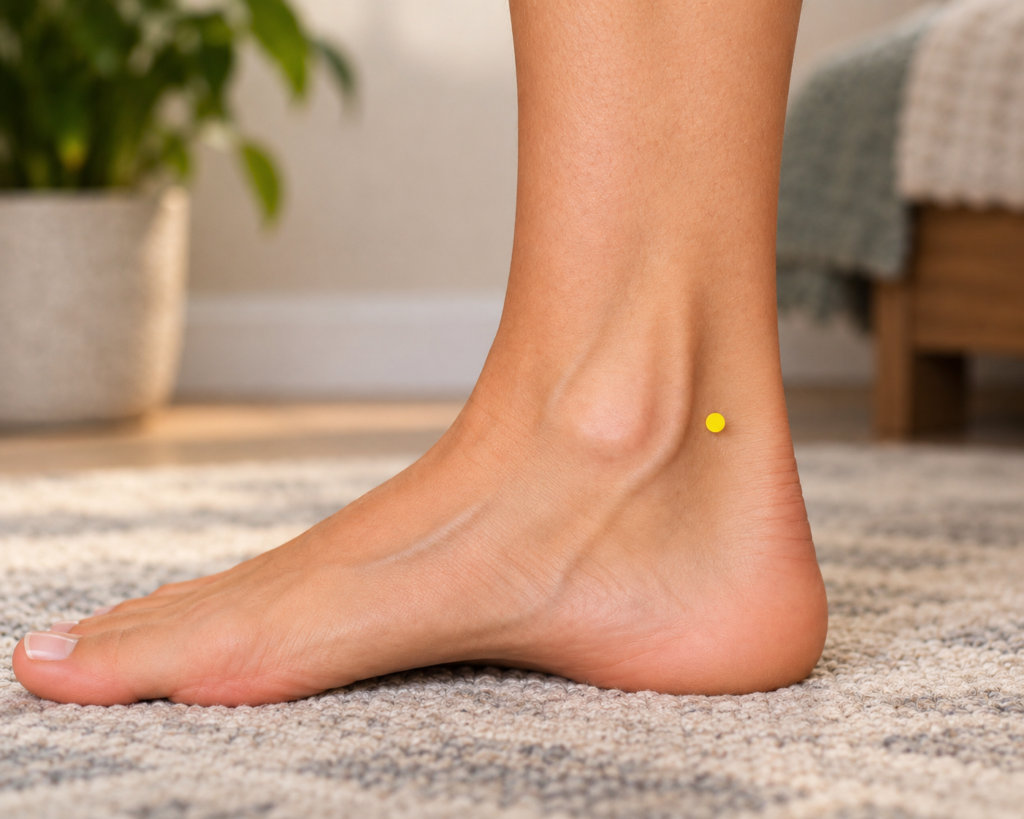
5. Press on KI3 above the inner ankle to replenish the deep Yin. KI3 sits in the hollow between the inner ankle bone and the Achilles tendon, level with the tip of the ankle bone. Press moderately with your thumb for one to two minutes on each ankle. KI3 is called “Taixi,” the Kidney’s source point.
The Kidney holds the body’s deepest Yin reserves, which can be depleted by long-term diabetes, leading to symptoms like thirst, dryness, and fatigue associated with advanced Xiao Ke. KI3 helps replenish these reserves and supports the lower legs and feet down to the ankles. This point is particularly beneficial for long-standing neuropathy.
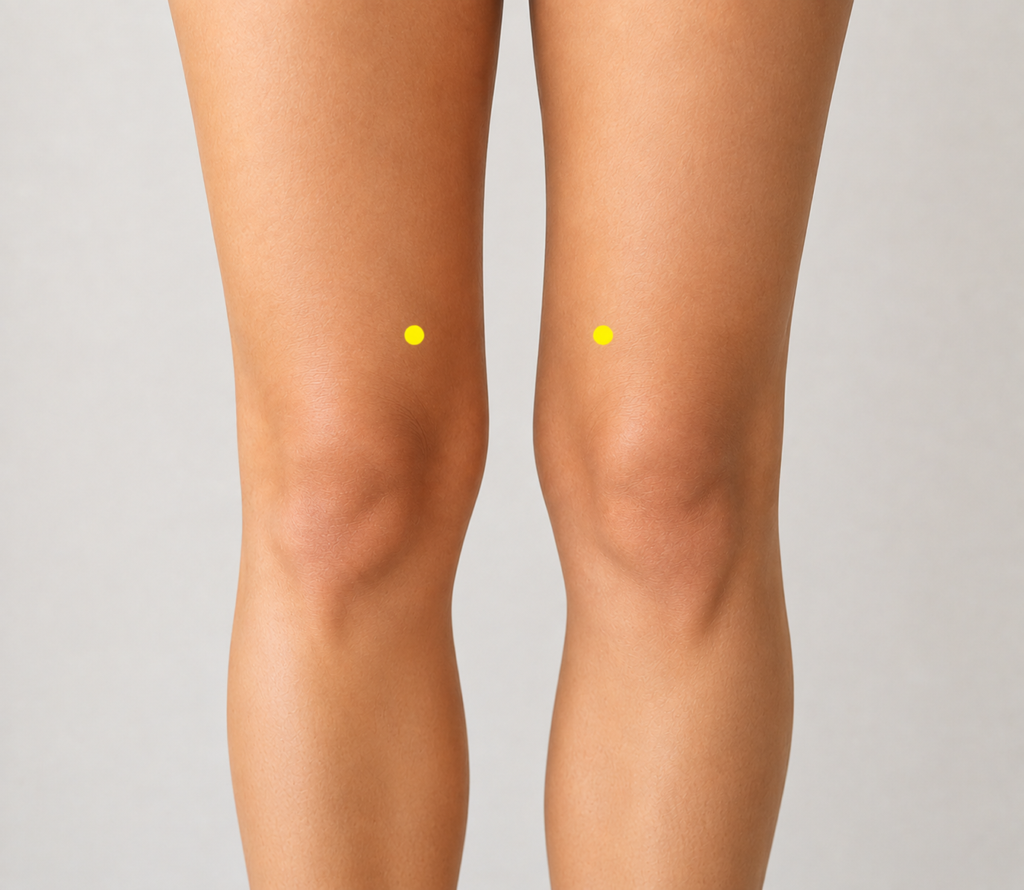
6. Press on SP10 above the knee to move stagnant Blood. SP10 sits on the inner thigh, about three finger-widths above the inner upper corner of the kneecap, on the muscle bulge there. Press firmly with your thumb for one to two minutes on each leg. SP10 is called “Xuehai,” the “Sea of Blood.”
The sharp, burning pain of diabetic neuropathy, often worse at night, indicates poor blood circulation in the small vessels of the feet. SP10 is a key point for improving blood flow, and combining it with SP6 supports nourishing and promoting blood movement in the legs. Because SP10 is located on the thigh, you can press it firmly.
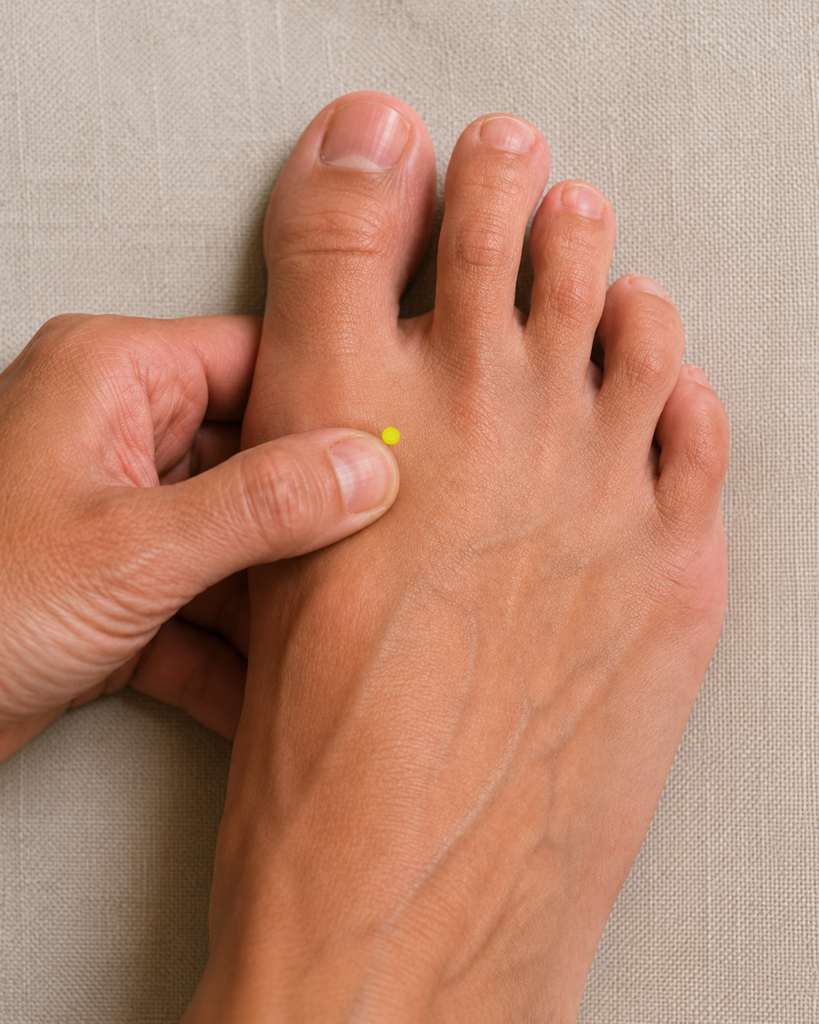
7. Press on LR3 on the top of the foot to move the Blood through the feet. LR3 sits on the top of the foot, in the webbing between the big toe and second toe, about two finger-widths back where the bones meet in a small hollow. Press gently to moderately with your thumb for one to two minutes on each foot. LR3 is called “Taichong.”
LR3 helps move Liver Qi and Blood in the foot, relieving burning and unusual sensations in that area. It also relieves stress, which can disrupt blood sugar regulation and worsen pain. Because this point may be numb, apply gentle pressure and inspect your skin afterward.
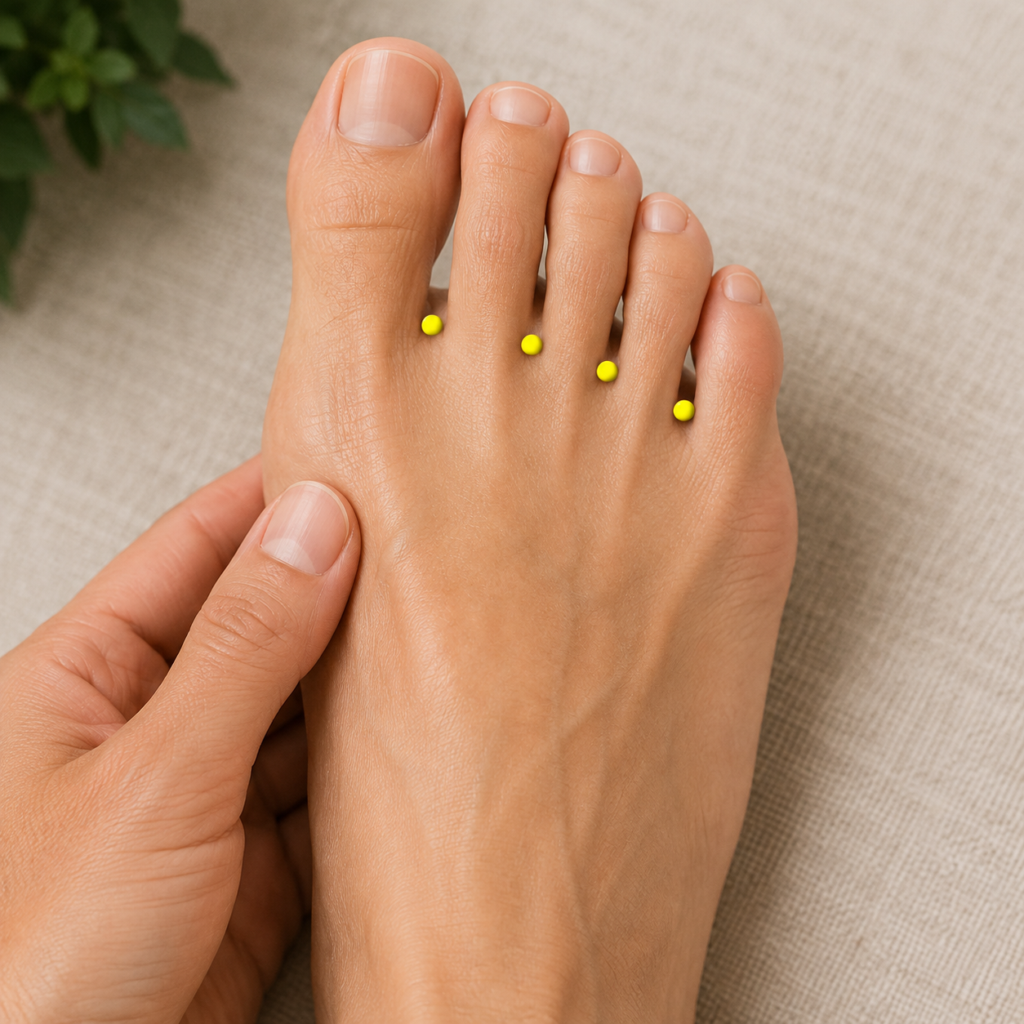
8. Press on Ba Feng between the toes, the classic points for foot neuropathy. Ba Feng are four points on the top of each foot, in the webbing between the toes, where each pair of toes meets the foot. Gently press each with your thumb for thirty seconds to a minute, working across the foot. Ba Feng means “Eight Winds.”
Ba Feng is a traditional set of points used to relieve numbness, tingling, burning, and pins and needles in the feet and toes. Because diabetic neuropathy often begins in the toes, these points are particularly important. Because they’re located where the symptoms occur, stimulate them with light pressure. Watch your technique, and avoid any areas with cuts, blisters, cracks, or fungal infections.
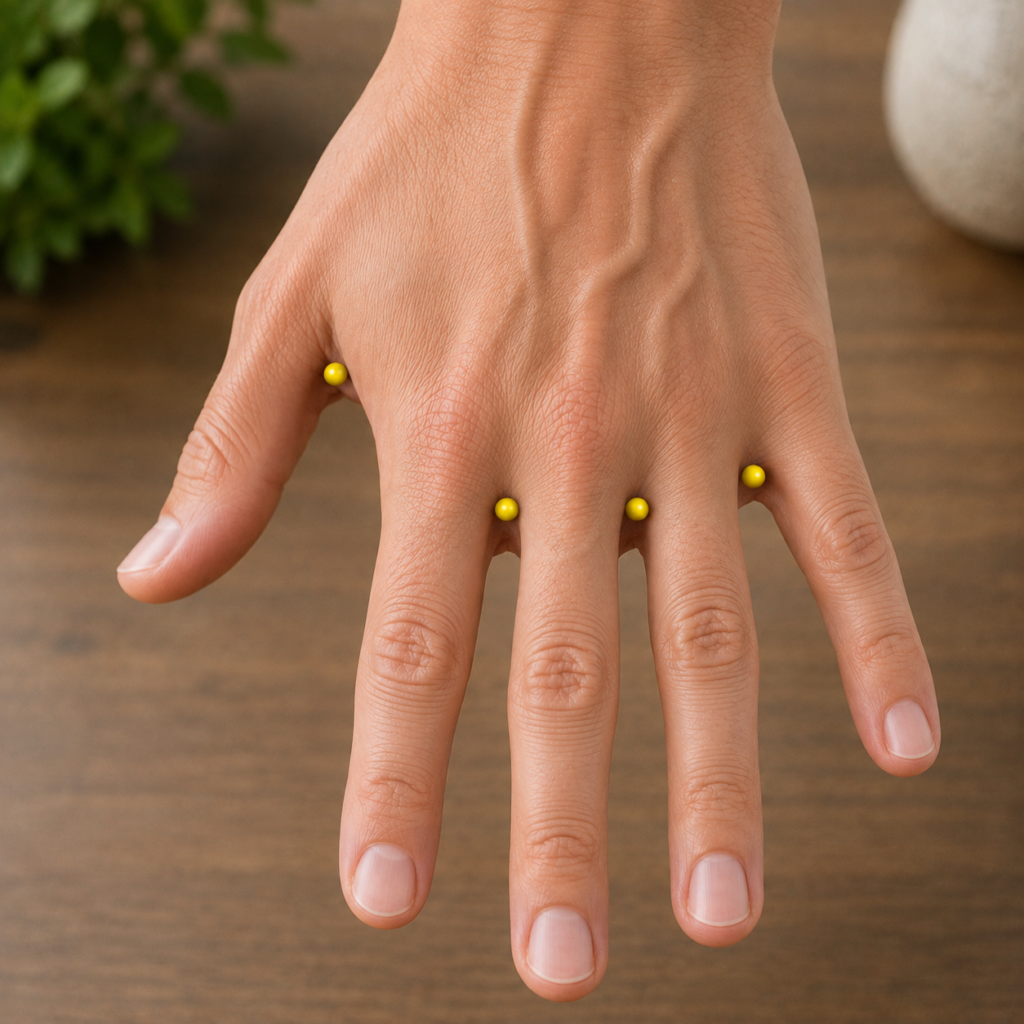
9. Press on Baxie between the knuckles when the hands are involved. Baxie are four points on the back of each hand, in the webbing between each pair of fingers, just behind where the fingers meet the hand. Press each with your thumb and index finger for thirty seconds to a minute. Baxie means “Eight Evils.”
When diabetic neuropathy affects the hands, causing tingling in the fingertips and a weaker grip, Baxie serves as the hand counterpart to Ba Feng. It promotes blood flow through the fingers and tackles the root causes of pins and needles. If your symptoms are confined to your feet, you can omit this point or use it preventively.
Why These Acupressure Points Work
In Traditional Chinese Medicine, diabetic neuropathy arises from the same pattern as diabetes: Qi and Yin are gradually depleted, the Spleen weakens, and Blood stagnates in the small vessels of the feet and hands. The nine points target these issues comprehensively.
- The foundation points (ST36, SP3, Yishu) strengthen the Spleen and address the diabetic pattern at its source.
- The nourishing points (SP6, KI3) replenish the Yin and the deep reserves the condition consumes.
- The Blood-moving points (SP10, LR3) clear the stagnation behind burning, stabbing pain.
- The extremity points (Ba Feng, Baxie) work directly on the toes and fingers where symptoms live.
Systematic reviews of clinical trials have found that acupuncture can improve symptoms and nerve function in diabetic peripheral neuropathy, although many studies are small. Acupressure lets you work on the same points at home.
How to Properly Use These Acupressure Points
For diabetic feet, safety should come first, followed by maintaining a consistent routine.
- Look at your feet before and after every session. Never press on or near a cut, blister, sore, callus, crack, or any open or discolored skin.
- Press points on your legs and back firmly but gently on feet and toes, as you might not gauge your pressure. Always monitor your actions instead of relying on sensation.
- Avoid heating pads, hot water bottles, or hot soaks on numb feet. Chinese medicine values warmth, but numb feet can’t feel a burn. Keep feet warm with socks and a comfortable room, and test water temp with your elbow or a thermometer.
- Do the full routine once a day, holding each point for one to two minutes. Give it several weeks to see if you notice any benefits.
- Acupressure does not replace blood sugar management. Do not change or skip any diabetes medication based on how you feel.
Maintaining stable blood sugar levels is crucial in managing diabetic neuropathy, as it helps slow nerve damage. Gentle daily activities like walking or swimming can improve circulation and help regulate blood sugar. Always wear well-fitting, clean shoes and dry socks. Avoid walking barefoot, and moisturize dry skin but not the areas between your toes. If you’re on metformin, ask your doctor to monitor your vitamin B12 levels, since long-term use may reduce B12 and worsen nerve symptoms. Refrain from smoking, as it constricts blood vessels that nourish your nerves. Also, have your doctor or a podiatrist examine your feet annually.
When to Get Professional Help
Seek prompt treatment for any foot sore, blister, cut, or ulcer that isn’t healing, especially if your foot is red, warm, swollen, or draining, as infections can spread rapidly when sensation is diminished. Get urgent care if your foot suddenly becomes hot and swollen without pain, if your skin turns black or blue, or if a foot wound is accompanied by a fever, as these may indicate serious issues. Consult your doctor for new, spreading, or worsening symptoms; weakness or unsteadiness while walking; and signs that neuropathy is affecting internal organs, such as dizziness upon standing, persistent nausea or early satiety, bladder problems, or sexual dysfunction.
Although acupressure can help manage daily neuropathy symptoms, use it alongside blood sugar control and regular foot and medical care for diabetes.
Above and Beyond Acupuncture offers acupuncture, cupping, and lifestyle coaching at the North Frank Lloyd Wright Boulevard location in Scottsdale.
Schedule an appointment online to start your healing journey.
The points above are only as effective as the technique used to apply them. Where to press, how firmly, and for how long all affect the result. For a full breakdown of how to perform acupressure properly at home, read Performing Acupressure in 3 Easy Steps.
For neuropathy from any cause, acupressure for neuropathy covers the general condition, the dedicated articles on neuropathy in the feet and neuropathy in the hands go deeper into each area, and can acupuncture treat neuropathy covers the clinical side.

About the Publisher
Paul Kerzner, L.Ac., is a licensed acupuncturist and board-certified herbalist, as well as the founder of Above and Beyond Acupuncture in Scottsdale. His own journey from chronic patient to practicing acupuncturist shapes his commitment to providing honest, clinically grounded information about acupuncture and Traditional Chinese Medicine. Learn more about Paul and his clinical approach on the About Us page.