
Key Takeaways
- For most people, acupuncture is not painful. Most feel a brief pinch or nothing at all when a needle goes in, followed by a dull, heavy, or tingling sensation and deep relaxation.
- Acupuncture needles are solid, extremely thin, and rounded at the tip, so they feel nothing like the hollow needles used for shots or blood draws.
- A dull ache, heaviness, warmth, or tingling around a point is normal and expected, while sharp, burning, or lingering pain is not and should be mentioned right away.
- Points on the hands, feet, and face tend to be more sensitive, and factors such as nerves, an empty stomach, and practitioner skill all affect how treatment feels.
- Simple steps, such as eating beforehand, breathing slowly, and speaking up, make acupuncture comfortable even for people who are nervous about needles.

Is acupuncture painful?
For most people, it isn’t. You might feel a quick pinch or nothing at all when the needle goes in. After that, there’s often a dull, heavy, or tingling feeling, and many people feel so relaxed that they fall asleep during treatment.
If you’re considering acupuncture but feel nervous about the needles, you’re not alone. Many people hesitate because they expect it to hurt like a vaccine or a blood draw. Acupuncture feels quite different. This article explains why it usually doesn’t hurt, what you might feel during treatment, which sensations are normal, and how to make your first visit as comfortable as possible.
Why Acupuncture Needles Do Not Hurt Like a Shot
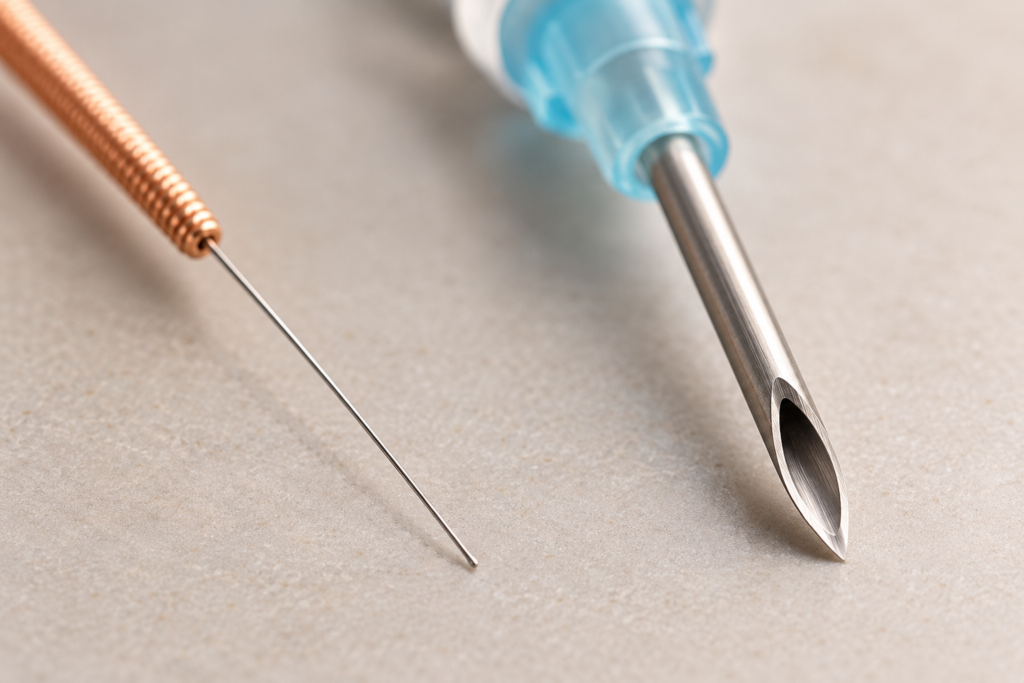
People often worry about acupuncture because they compare it with getting an injection. Needles used for shots and blood draws are hollow, have sharp, angled tips, and are designed to cut through the skin to deliver or remove fluid. They’re also fairly thick and inserted slowly, which is why they sting.
Acupuncture needles are designed for a very different purpose:
- They are solid, not hollow, and much thinner than injection needles, about as wide as a strand of hair.
- Their tips are rounded instead of angled, so they slide between tissue fibers instead of cutting through them.
- They are flexible and polished smooth, which helps them glide in easily.
- They are inserted with a quick, gentle tap, often using a small guide tube, so they pass through the most sensitive layer of skin in just a split second.
Because of these differences, many people don’t feel the needle go in at all. Others notice a quick prick, like a mosquito bite or a light flick, that fades right away. Acupuncture needles are always sterile and used only once before being thrown away.
What Acupuncture Feels Like, Step by Step
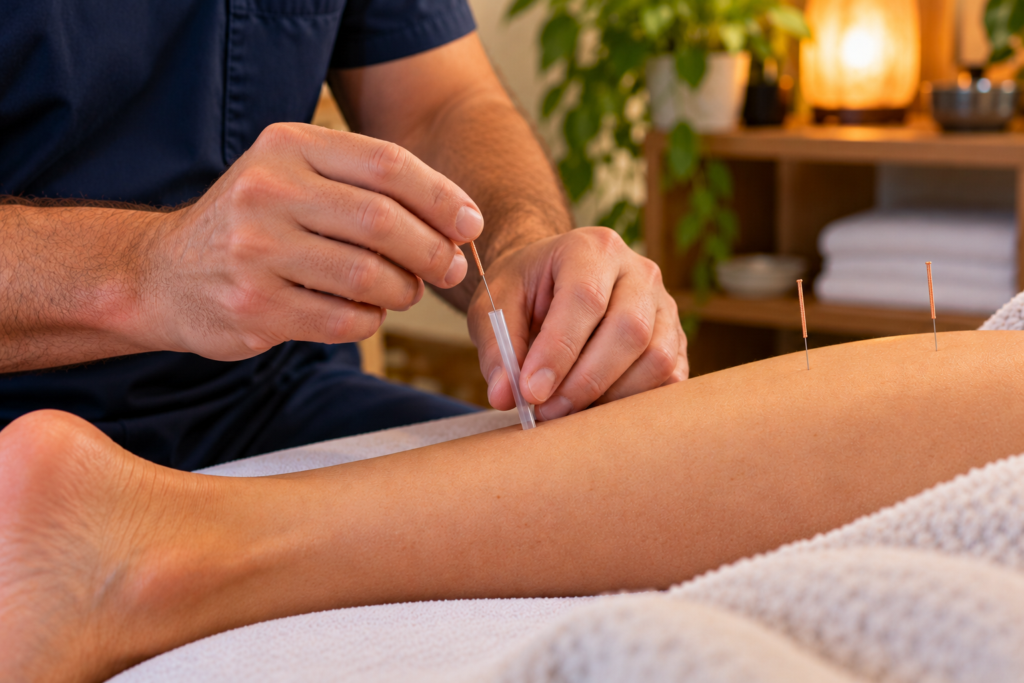
Knowing what to expect at each stage takes much of the worry out of a first treatment.
Before any needles are used, your first visit will begin with a conversation about your health and goals. The acupuncturist may examine your tongue and check your pulse, traditional methods for determining which points to use. Then you’ll lie comfortably on a padded table, often with a warm blanket.
When the needle goes in, your acupuncturist will clean your skin and insert the needle quickly. You might feel nothing, a quick pinch, or a light tingle. Most needles go in just a fraction of an inch to about an inch, depending on where they’re placed.
Once the needle is in place, many people notice a distinct sensation at the spot. In Traditional Chinese Medicine, this is called de qi, or the arrival of Qi, and is taken to mean the point is working. People often describe it as a dull ache, heaviness, warmth, pressure, or tingling; it may also spread slightly along the limb. These sensations are deep and muted rather than sharp, and usually fade within a few seconds.
While you rest, the needles typically remain in place for twenty to forty minutes as you lie still. Most people enjoy this part. Your body often relaxes deeply and your breathing slows; many people even drift into a light sleep. You may notice gentle warmth, a floating sensation, or heaviness in your arms or legs.
When it’s time to remove the needles, it’s quick and almost always painless. Your acupuncturist might press gently on the spot with a cotton ball for a moment afterward.
Normal Sensations vs. What to Tell Your Acupuncturist

Not every sensation during acupuncture means something is wrong. Many of the sensations people notice are a normal part of effective treatment.
Normal and expected sensations include:
- A brief pinch or prick as the needle goes in
- A dull ache, heaviness, or pressure at the point
- Tingling or a mild electric feeling that travels a short distance
- Warmth around the point or spreading through the body
- Twitching of a muscle when a tight spot is released
- Deep relaxation, drowsiness, or a floating feeling
Sensations to mention right away include:
- Sharp, stinging, or burning pain that does not fade within a few seconds
- Pain that grows stronger instead of settling
- Numbness or a strong electric shock that lingers
- Feeling faint, lightheaded, or nauseated
These sensations are uncommon and easy to resolve. Your acupuncturist can adjust the needle, remove it, or use a different point. It’s always okay to speak up; letting your acupuncturist know helps make your treatment more comfortable.
Why Some Points Feel More Sensitive Than Others

Not every acupuncture point feels the same. Spots with thin skin and many nerve endings, such as the hands, feet, fingers, toes, face, and ears, are usually more sensitive than areas like the back, legs, or abdomen. Points in tight or sore muscles can also cause a stronger dull ache as the muscle relaxes.
That’s why acupuncturists often begin with gentler points, then adjust based on how your body responds. If a spot feels too strong, they can usually apply a lighter touch or choose another point that works just as well.
What Affects How Acupuncture Feels
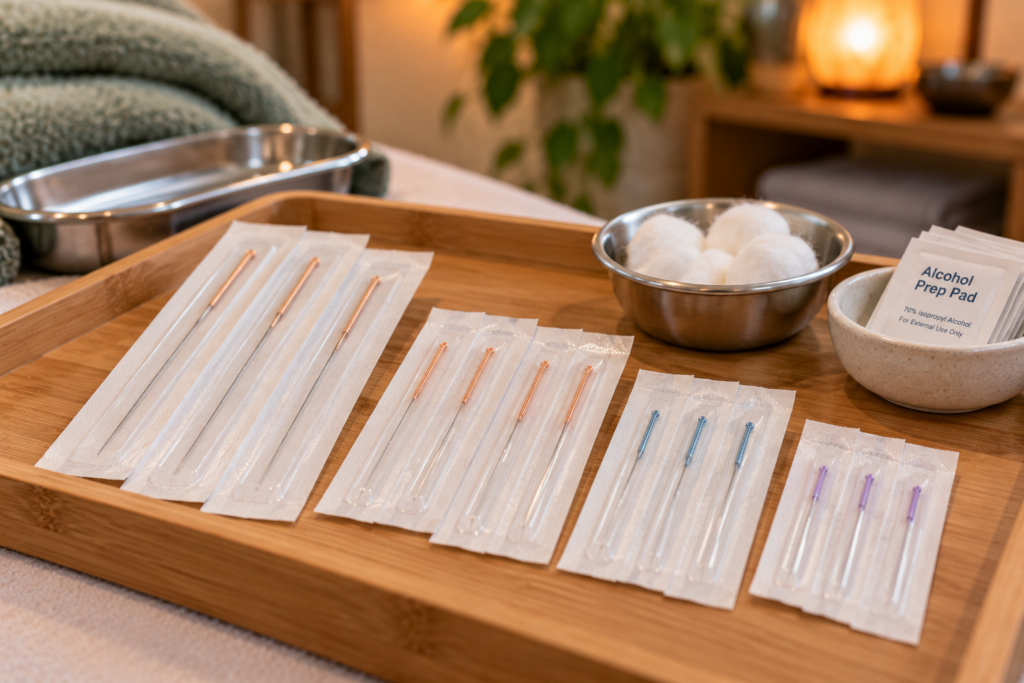
Several factors influence how much you notice the needles:
- Practitioner skill: an experienced, licensed acupuncturist inserts needles quickly and precisely, which makes a noticeable difference in comfort.
- Needle size: acupuncturists use needles of different thicknesses, and thinner needles are often used for sensitive patients and sensitive areas.
- Treatment style: some styles of acupuncture use shallow insertion and very gentle stimulation, while others aim for a stronger sensation at the point.
- Nervousness: anxiety tightens the muscles and heightens sensitivity, which is why the first needle often feels like more than the rest.
- An empty stomach or dehydration: arriving hungry or thirsty can make you more sensitive and more likely to feel lightheaded.
- Caffeine and fatigue: too much coffee or a sleepless night can leave the nervous system on edge.
- Your cycle and general health: some people feel more sensitive just before a period or when they are run down.
Does Acupuncture Hurt Afterward?

Most people feel relaxed, calm, and sometimes a little sleepy after acupuncture. Mild effects may occur but usually pass quickly. A spot may feel slightly sore or tender for a few hours, similar to how it feels after a deep massage. A small bruise may also appear, especially in areas with many tiny blood vessels. Some people feel tired as their body rests and repairs, while others feel more energized.
These effects usually fade within a day. Drinking water, eating a light meal, and taking it easy after treatment all help. Learn more about what to expect after your acupuncture treatment and whether acupuncture has any side effects.
How to Make Acupuncture More Comfortable

A few simple steps can really help, especially during your first visit.
- Eat a light meal or snack one to two hours before treatment, and drink water.
- Limit caffeine on the day of your appointment.
- Wear loose, comfortable clothing that rolls up easily above the knees and elbows.
- Let your acupuncturist know if you’re feeling nervous. They can start with fewer or thinner needles and explain each step as they go.
- Breathe out slowly as each needle goes in. Taking a long exhale helps relax your muscles and makes the sensation gentler.
- Speak up anytime if something feels too strong. Your treatment can always be adjusted.
- Give yourself time. Most people find that each session gets easier as they become more familiar with what to expect.
For a complete picture of what to expect during your first visit, read what to expect during your first acupuncture treatment.
Afraid of Needles?

It’s common to feel afraid of needles, but that doesn’t have to keep you from trying Traditional Chinese Medicine. Many people who are nervous at first are surprised by how little they feel and end up looking forward to treatment. A good acupuncturist will work at your pace, explain each step, and begin gently.
If needles are truly not an option for you right now, there are gentle alternatives that work on many of the same principles. Acupressure uses firm finger pressure on the same points and can be done at home. Learn more about what acupressure is. Cupping therapy uses gentle suction to release tight muscles and improve circulation, and herbal medicine and lifestyle guidance can support your health without any needles at all.
Frequently Asked Questions

Does acupuncture hurt the first time?
The first treatment can feel the most intense, often because it’s natural to feel nervous. Many people are pleasantly surprised that the needles feel much gentler than expected, and each session afterward tends to feel easier.
Where does acupuncture hurt the most?
Points on the hands, feet, fingers, toes, and face are usually the most sensitive because the skin there is thin and has lots of nerve endings. Points on the back, legs, and abdomen are usually barely noticeable.
How deep do acupuncture needles go?
Most needles go in just a fraction of an inch to about an inch, depending on the spot and the area of the body. In places with more muscle, they may go a little deeper.
Is it normal to feel a dull ache during acupuncture?
Yes. A dull ache, heaviness, or tingling at the point is normal and means the point is working. It should feel deep and muted, not sharp.
Does electroacupuncture hurt?
Electroacupuncture uses a gentle electrical current with some of the needles. Most people feel a light tapping or pulsing, and the strength can be adjusted to keep you comfortable. You can learn more about electroacupuncture for chronic pain.
When to Tell Your Acupuncturist or See a Doctor

Tell your acupuncturist right away during treatment if you experience sharp, burning, or worsening pain; a strong electric sensation that doesn’t go away; or faintness, dizziness, or nausea. The needles can be adjusted or removed immediately. Contact your acupuncturist if soreness at a needle site lasts more than a day or two, or if a bruise is unusually large or painful. See your doctor promptly if you notice redness, warmth, swelling, or pus at a needle site, or develop a fever after treatment. These could indicate infection, which is very rare with sterile, single-use needles. Get emergency care if you have chest pain or trouble breathing after treatment on your chest or upper back. This is extremely rare but requires immediate attention. Before treatment, tell your acupuncturist if you’re pregnant, take blood thinners, have a bleeding disorder, or have a pacemaker.
Acupuncture is very safe when performed by a licensed acupuncturist. You can learn more about acupuncture safety.
For more on what treatment is like, read what acupuncture feels like and how many acupuncture treatments you may need.
Above and Beyond Acupuncture offers acupuncture, cupping, and lifestyle coaching at the North Frank Lloyd Wright Boulevard location in Scottsdale.
Schedule an appointment online to start your healing journey.

About the Publisher
Paul Kerzner, L.Ac., is a licensed acupuncturist and board-certified herbalist, as well as the founder of Above and Beyond Acupuncture in Scottsdale. His own journey from chronic patient to practicing acupuncturist shapes his commitment to providing honest, clinically grounded information about acupuncture and Traditional Chinese Medicine. Learn more about Paul and his clinical approach on the About Us page.