Key Takeaways
- Uterine fibroids are common and can cause heavy periods and discomfort. Many women may experience symptoms like bloating and painful cramps.
- Acupressure for fibroids focuses on specific points to alleviate symptoms, improve blood flow, and support overall menstrual health.
- Acupressure does not dissolve fibroids, but it can ease the symptoms they cause and support a smoother, more comfortable cycle alongside medical care.
- Key acupressure points include Zigong, CV4, SP10, and ST36, each with a specific function in restoring balance and circulation.
- Practice acupressure consistently for the best results, and combine it with lifestyle changes to enhance effectiveness.
- Seek professional help if symptoms worsen, such as heavy bleeding or severe pain, as acupressure complements, but does not replace, medical care.
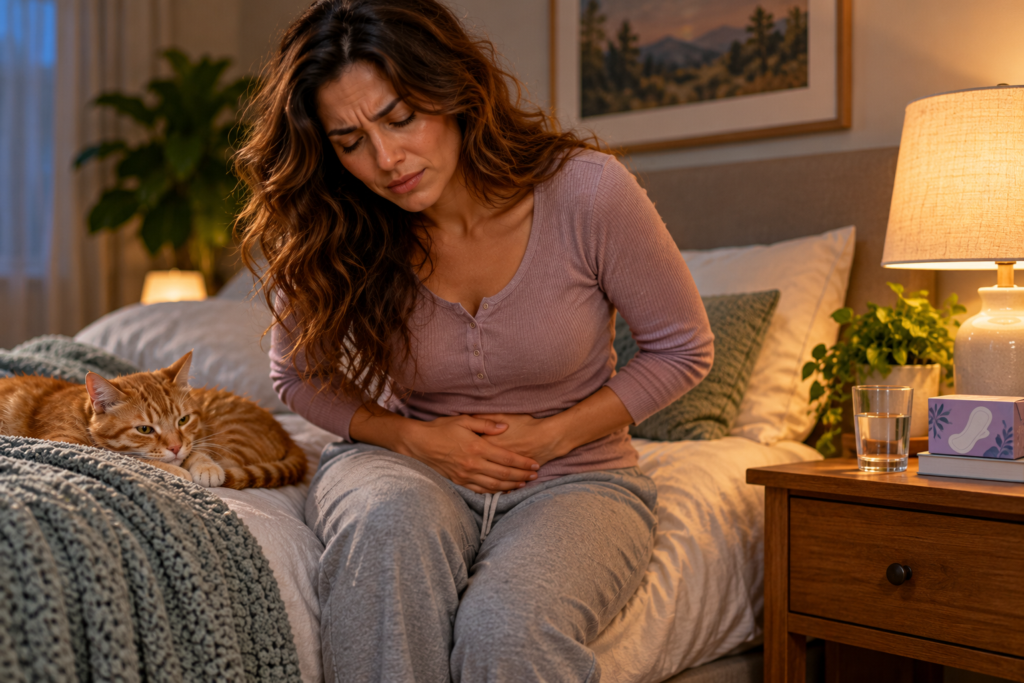
Are your periods so heavy that you have to plan your days around them? Perhaps your cramps last longer than they used to, you feel pressure or fullness in your lower belly, or your abdomen remains bloated. You may need to urinate more often, feel tired each month, or have been told by your doctor that you have fibroids. If any of this sounds familiar, you’re not alone.
Uterine fibroids, also called leiomyomas or myomas, are noncancerous growths of muscle and connective tissue that develop in or on the uterus. They are common, particularly among women in their thirties and forties, and can range in size from a seed to a grapefruit. Some grow within the uterine wall, others project into the uterine cavity, and some develop on the outside. Because estrogen and progesterone influence their growth, fibroids often enlarge during the reproductive years and typically shrink after menopause.
Many women with fibroids have no symptoms. Others may experience heavy or prolonged periods, blood clots, painful cramps, pelvic pressure or heaviness, lower back pain, bloating, frequent urination, constipation, or pain during sex. Heavy monthly bleeding can lead to iron deficiency anemia, which may make you feel tired, dizzy, or short of breath.
Traditional Chinese Medicine views fibroids as accumulations that form when Qi and Blood do not flow freely in the uterus. Stress can obstruct Liver Qi, slowing Blood flow and allowing it to gather into masses. Cold in the lower abdomen and Dampness caused by weak digestion can worsen the problem. Heavy bleeding often indicates that the Spleen is too weak to keep Blood within the vessels.
Fibroid symptoms often improve with gentle, steady care. The nine points below help move Qi and Blood in the lower belly, reduce cramps and pressure, manage heavy bleeding, and restore energy lost from heavy periods.
What Acupressure Points to Press and Why
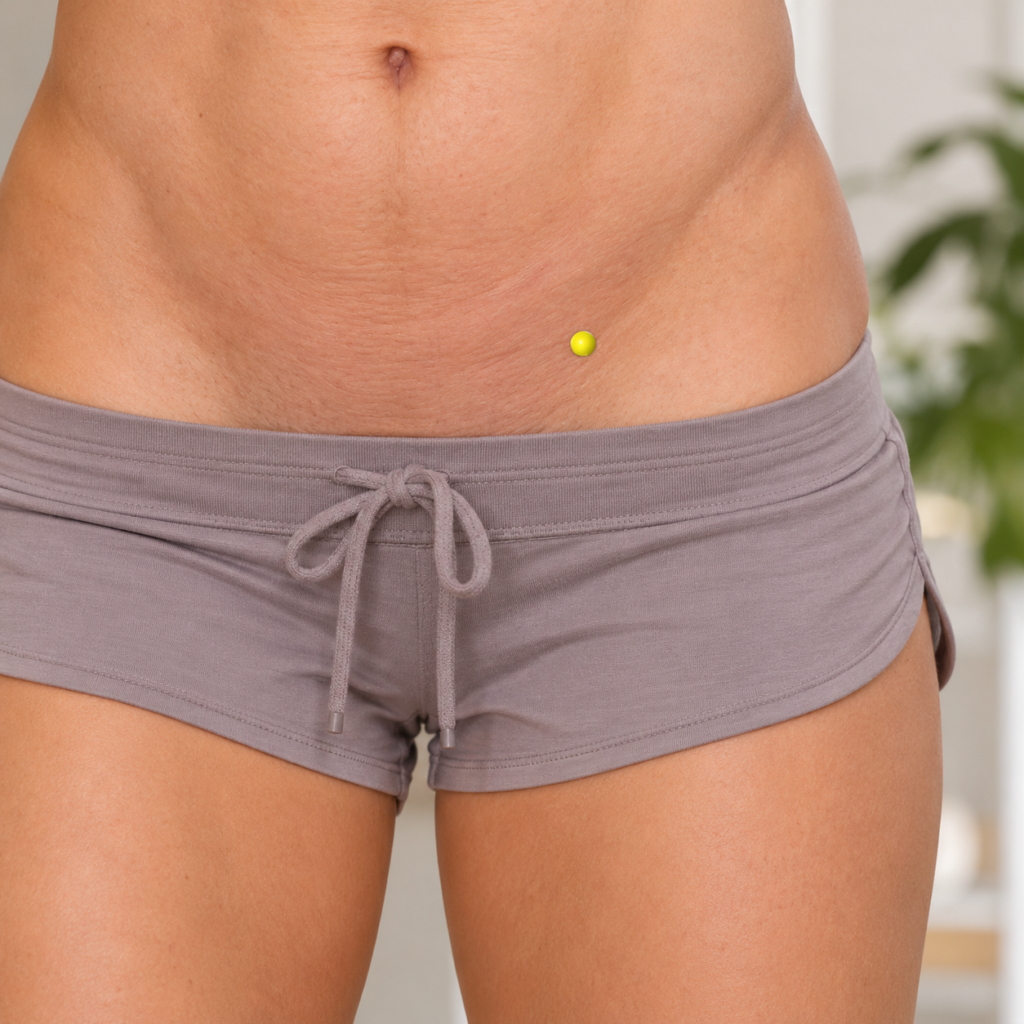
1. Press on Zigong on the lower abdomen to support the uterus. Zigong sits on the lower abdomen, about one finger-width above the top of the pubic bone and four finger-widths to each side of the midline. Rest your fingertips on both points and press gently, or make slow circles, for one to two minutes while breathing into the belly. Zigong means “Palace of the Child.” Zigong is avoided during pregnancy.
Zigong is an extra point located directly above the uterus and ovaries. It is one of the most traditional acupressure points used for concerns related to the female reproductive system, including irregular or painful periods and abdominal masses. Applying gentle pressure to this point may improve circulation in the area and ease the heavy, full sensation often mentioned by women with fibroids.
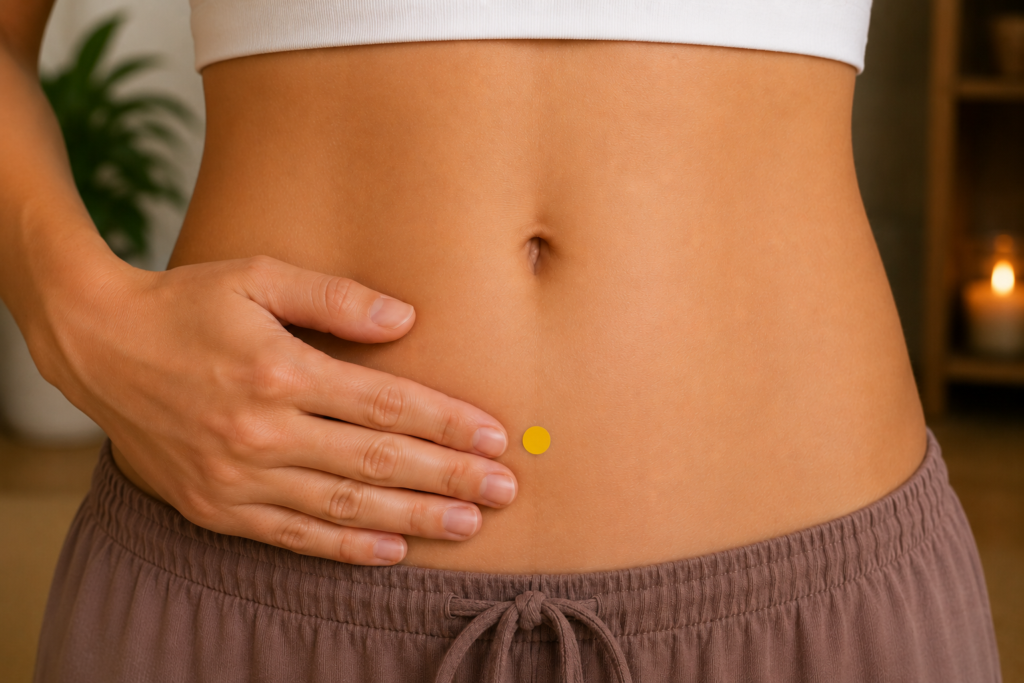
2. Press on CV4 below the navel to warm and strengthen the lower abdomen. CV4 sits on the midline of the lower abdomen, four finger-widths below the navel. Press gently with your fingertips, or rest a warm palm over the point, for one to two minutes. CV4 is called “Guanyuan,” the “Gate of Origin.” CV4 is avoided during pregnancy.
CV4 is one of the most important acupressure points in Traditional Chinese Medicine for the uterus and lower abdomen. It warms the area, replenishes the body’s deep reserves, and helps maintain a healthy cycle. When cramps and pelvic heaviness worsen with cold, placing a warm hand or heating pad over CV4 can be especially comforting.
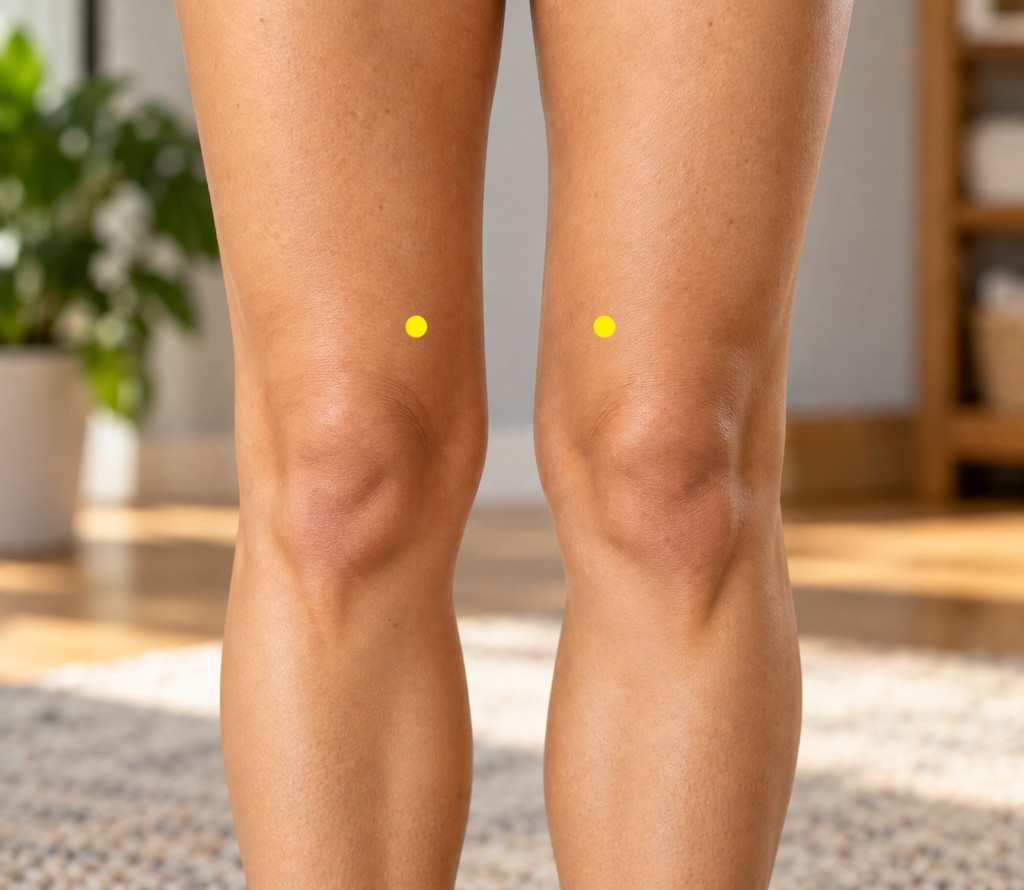
3. Press on SP10 above the knee to move stagnant Blood. Bend the knee slightly. SP10 sits on the inner thigh, about three finger-widths above the inner upper corner of the kneecap, on the bulge of the inner thigh muscle. Press firmly with your thumb for one to two minutes on each leg. SP10 is called “Xuehai,” the “Sea of Blood.” SP10 is contraindicated during pregnancy.
In Traditional Chinese Medicine, SP10 is the principal acupressure point for stagnant Blood. Because fibroids are understood as accumulated Blood that has stopped flowing, SP10 is a key point for this condition. It may also help ease period pain described as fixed and stabbing, with dark clots.
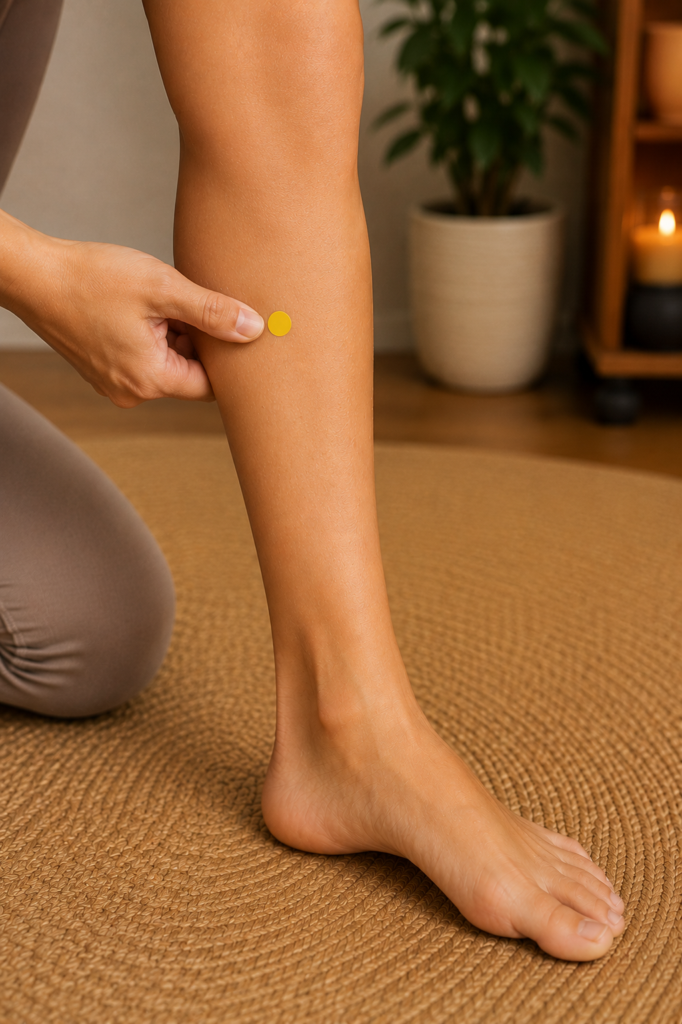
4. Press on SP8 on the lower leg to ease acute cramping. SP8 sits on the inner side of the lower leg, along the back edge of the shinbone, about four finger-widths below the bony bump just below the inner knee. Press firmly with your thumb for one to two minutes on each leg. SP8 is called “Diji,” the “Earth Pivot.”
SP8 is the Spleen’s cleft point, used for acute pain and bleeding. It is a classic point for severe menstrual cramps and can be especially helpful during the first days of a period, when fibroid-related pain is usually at its worst.
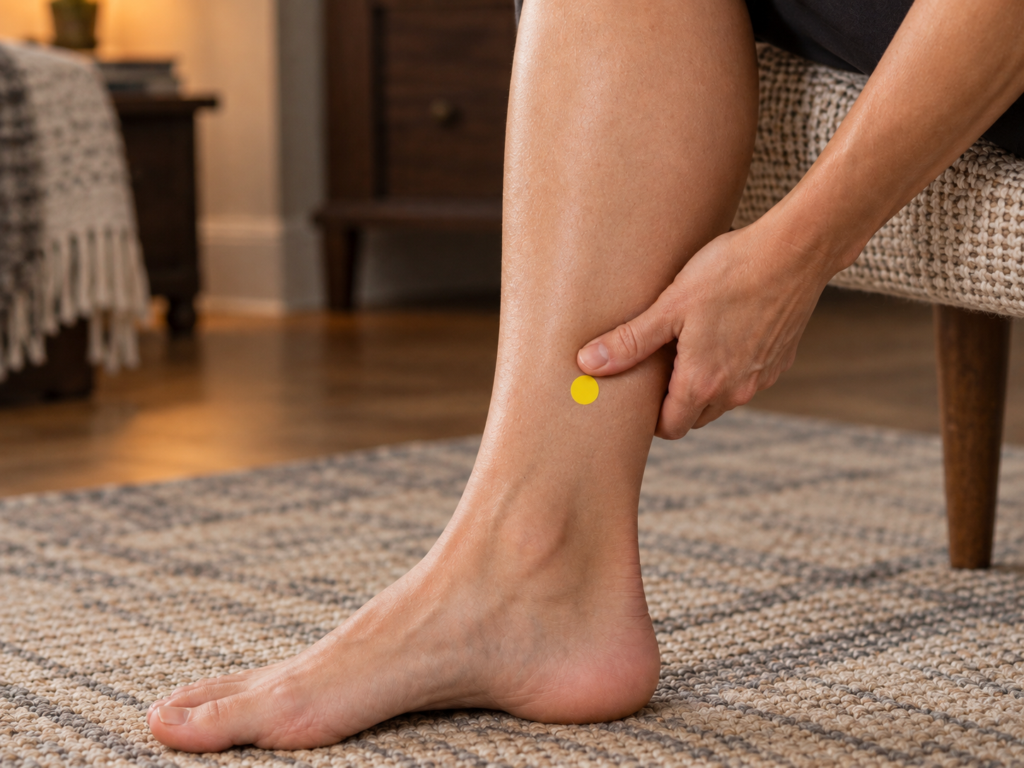
5. Press on SP6 above the inner ankle to regulate the cycle. SP6 sits four finger-widths up from the tip of the inner ankle bone, just behind the back edge of the shinbone. Press firmly with your thumb for one to two minutes on each leg. SP6 is called “Sanyinjiao,” the “Three Yin Intersection.” SP6 is avoided during pregnancy.
SP6 is where the Spleen, Liver, and Kidney channels converge. Because they pass through the lower abdomen and affect the uterus, SP6 is one of the most important acupressure points for menstrual health. It regulates the menstrual cycle, disperses stagnant blood, alleviates cramping, and resolves Dampness.
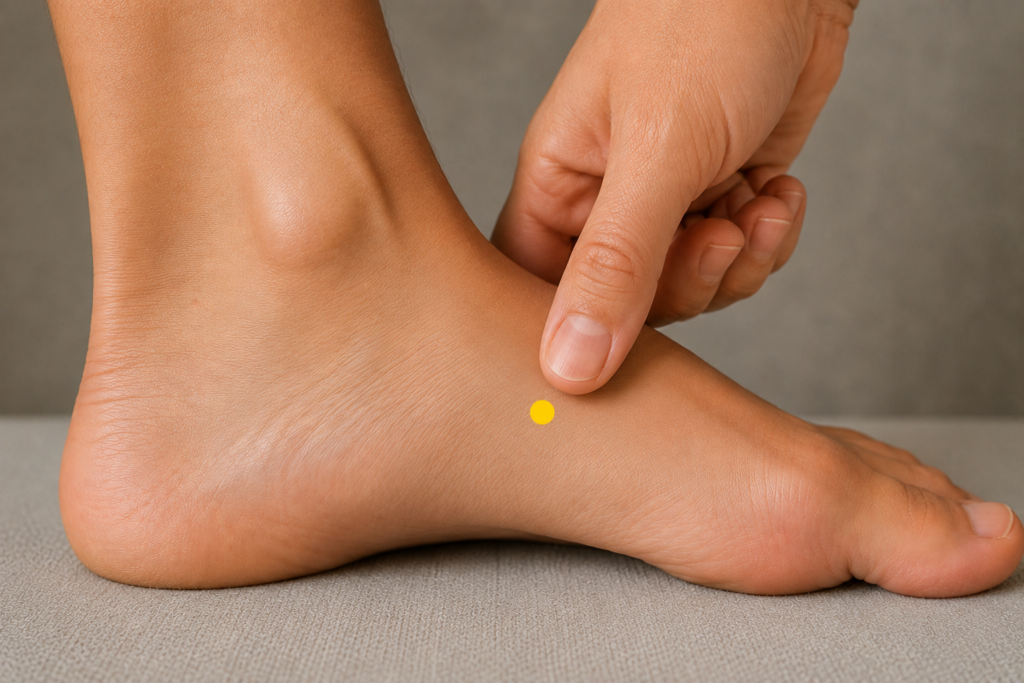
6. Press on SP4 on the inner edge of the foot to regulate the Blood. SP4 sits on the inner edge of the foot, in the hollow just in front of the base of the long bone that leads to the big toe, where the smooth skin of the sole meets the top of the foot. Press firmly with your thumb for one to two minutes on each foot. SP4 is called “Gongsun,” the “Grandfather Grandson.”
SP4 opens the Penetrating Vessel, known in Traditional Chinese Medicine as the Sea of Blood, which governs the uterus and menstrual cycle. It is traditionally used to address heavy or irregular periods, abdominal fullness, and bloating, and to strengthen the Spleen’s ability to keep Blood in place.
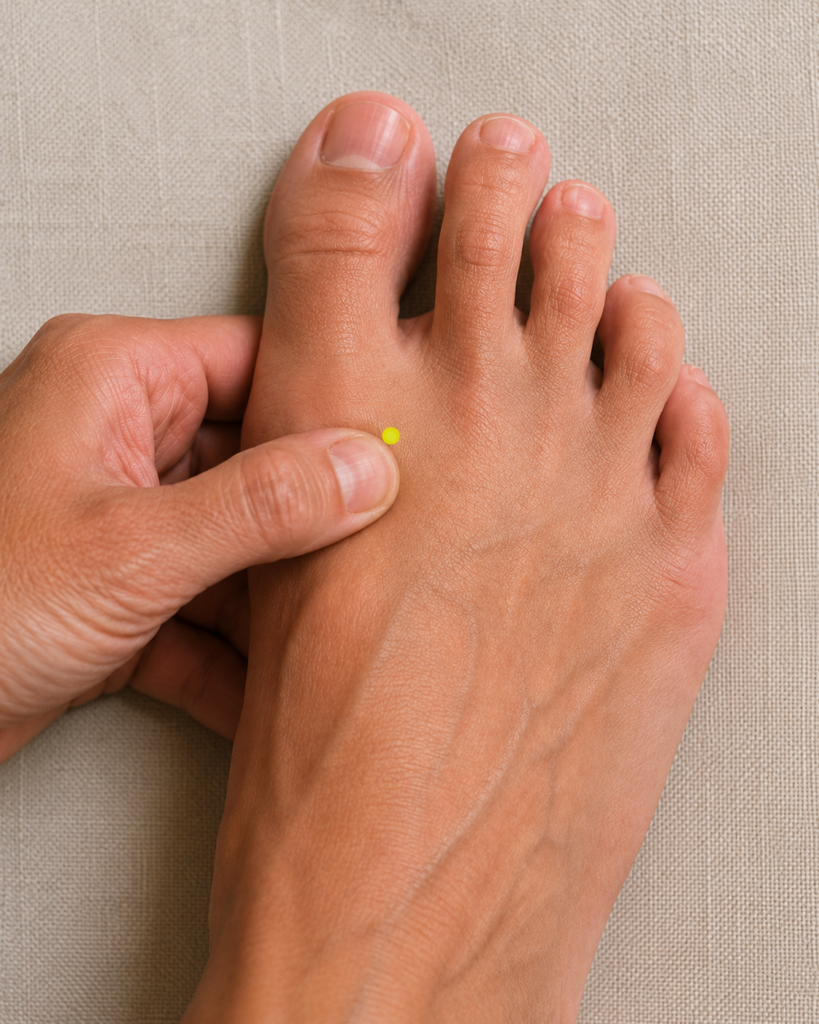
7. Press on LR3 on the top of the foot to release stagnant Qi. LR3 sits in the webbing between the big toe and second toe, about two finger-widths back from the webbing, in the hollow just before the two bones meet. Press firmly with your thumb for one to two minutes on each foot. LR3 is called “Taichong,” the “Great Surge.”
LR3 is the Liver’s source point. The Liver stores the Blood and keeps Qi flowing smoothly. When stress constrains Liver Qi, Blood flow is also affected, and stagnation can build in the uterus. LR3 releases tension, eases premenstrual irritability and breast tenderness, and helps Blood flow freely again.
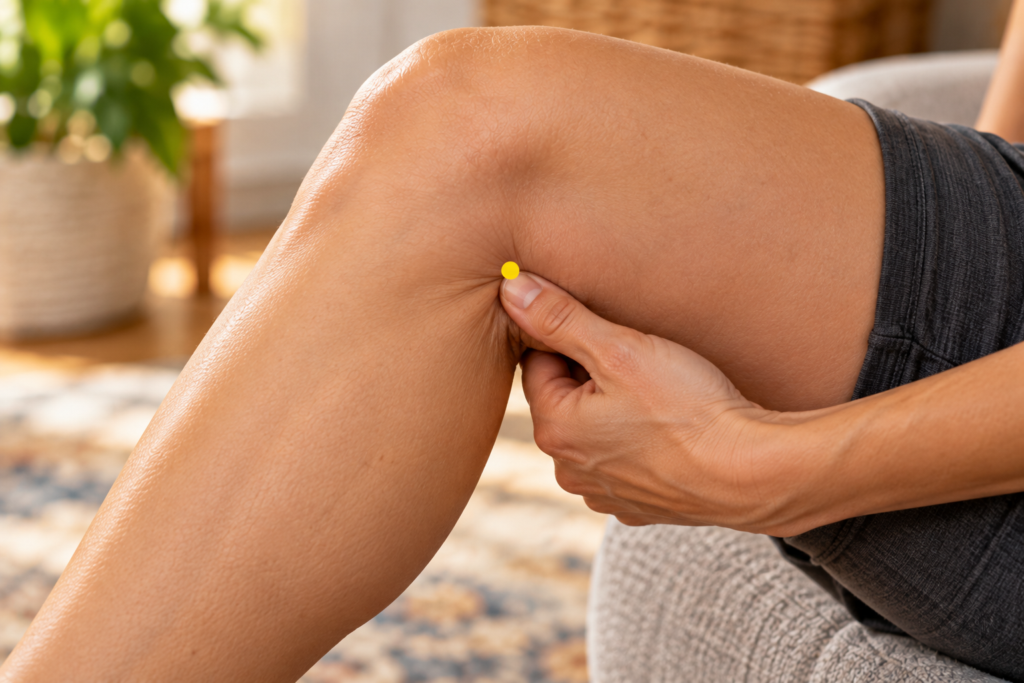
8. Press on LR8 at the inner knee to nourish the Liver Blood. Bend the knee and find the inner end of the knee crease, then press into the hollow just in front of the tendons there. Press firmly with your thumb for one to two minutes on each leg. LR8 is called “Ququan,” the “Spring at the Bend.”
LR8 nourishes Liver Blood and helps clear Dampness from the lower abdomen. It can be especially helpful after heavy periods have depleted the body, while supporting the Liver’s role in storing and releasing Blood in a healthy rhythm.
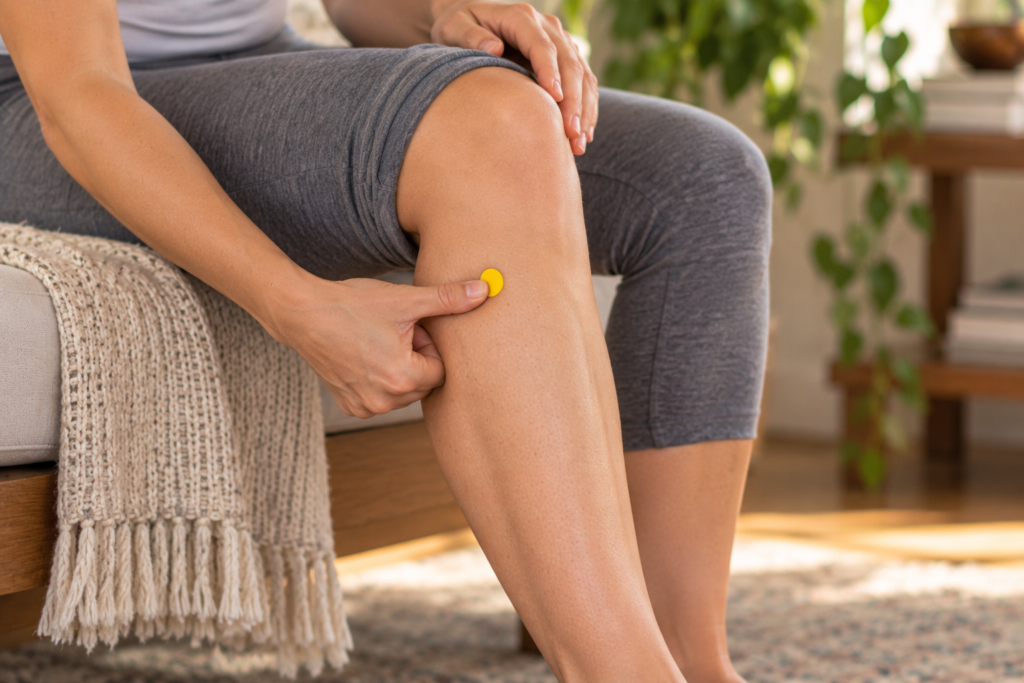
9. Press on ST36 below the knee to restore energy. ST36 sits four finger-widths below the lower edge of the kneecap and one finger-width to the outside of the shinbone. Press firmly with your thumb for one to two minutes on each leg. ST36 is called “Zusanli,” the “Leg Three Miles.”
Month after month, heavy bleeding can drain the body. In Traditional Chinese Medicine, ST36 is one of the most important points for strengthening digestion and building Qi and Blood. This can help restore energy, ease fatigue, and support recovery after heavy periods. ST36 also strengthens the Spleen, helping it hold Blood in the vessels.
Why These Acupressure Points Work
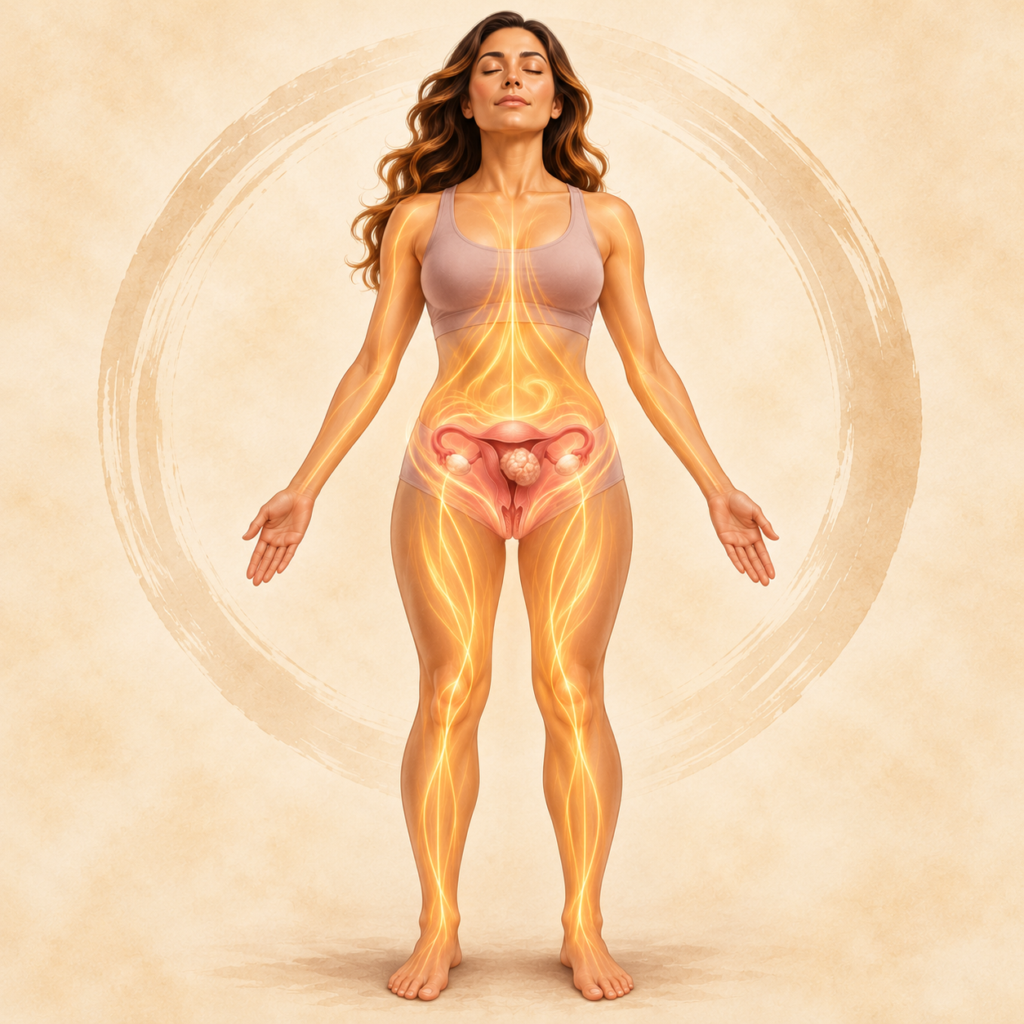
In Traditional Chinese Medicine, a healthy uterus relies on Qi and Blood flowing smoothly through the lower abdomen, a Liver that keeps Qi moving, a Spleen strong enough to retain Blood, and warmth in the lower abdomen. When stress, Cold, and Dampness disrupt this flow, Blood stagnates and gradually forms masses, causing pain, pressure, and heavy bleeding.
The nine points address both stagnation and depletion:
- The lower abdominal points (Zigong, CV4) bring warmth and circulation directly to the uterus.
- The Blood-moving points (SP10, SP8, SP6) move stagnant Blood and ease cramping.
- The regulating points (SP4, LR3) open the Sea of Blood and release constrained Liver Qi.
- The nourishing points (LR8, ST36) rebuild the Blood and energy that heavy periods drain.
How to Properly Use These Acupressure Points

For fibroids, acupressure is most effective when practiced consistently throughout the cycle.
- Complete the full routine once daily between periods, holding each point for one to two minutes.
- On the heaviest bleeding days, apply only gentle pressure to SP10 and SP6, and focus on SP4, SP8, and ST36.
- Apply gentle pressure to the lower abdomen and firm pressure to the legs and feet.
- Practice regularly for at least three cycles, as changes in your menstrual pattern may take time to become noticeable.
These points are supported by daily habits. Keep your lower abdomen warm with a heating pad or warm compress, especially when cramping and heaviness worsen in cold weather, and choose warm, cooked meals over iced drinks and raw foods. During heavy periods, eat moderate amounts of iron-rich foods such as leafy greens, beans, lentils, and red meat, along with vitamin C to help your body absorb the iron. Ask your doctor to check your iron levels. Reduce alcohol, eat plenty of fiber to support a healthy hormone balance, and stay active every day; gentle exercise helps keep Qi and Blood moving through the pelvis.
Find out why Traditional Chinese Medicine dislikes ice.
When to Get Professional Help
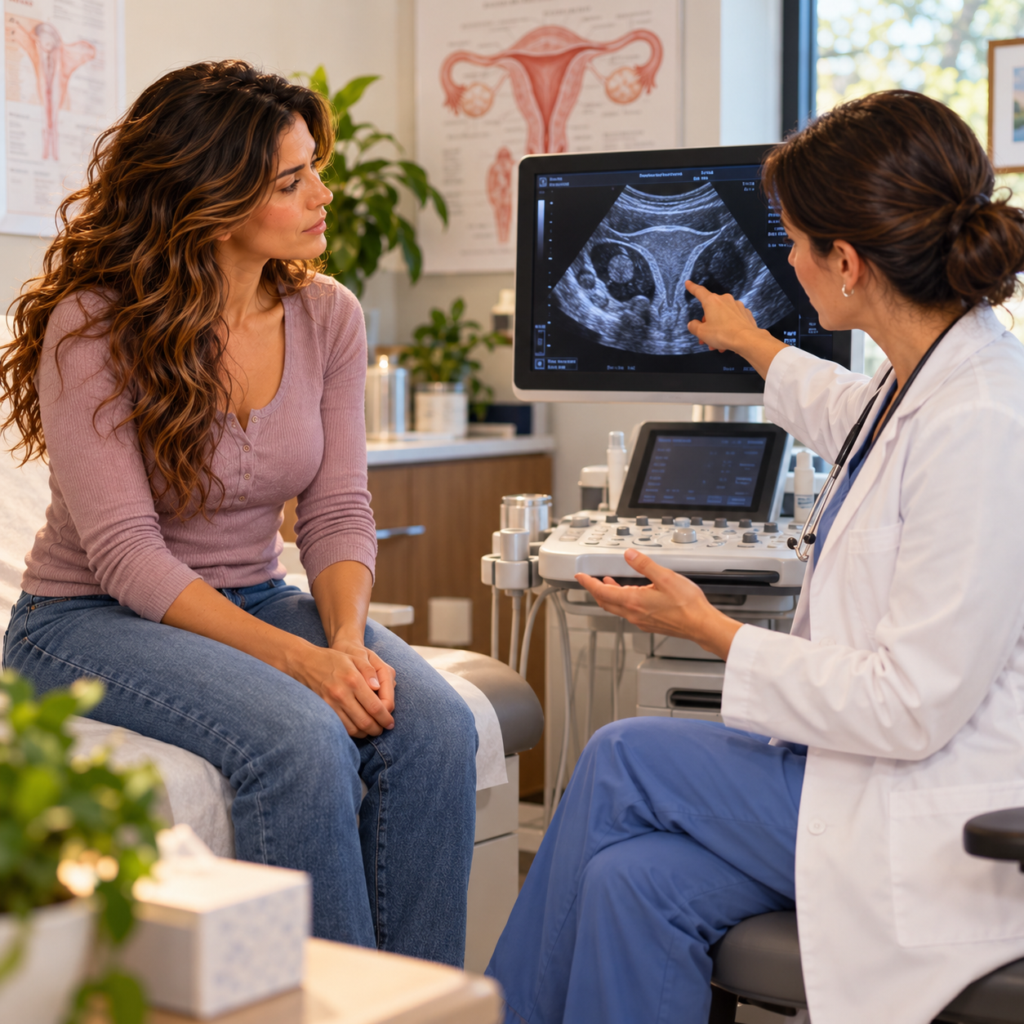
If your periods are heavy, last longer than seven days, or include large clots, or you experience pelvic pressure, frequent urination, constipation, or pain during intercourse, see your gynaecologist. If you have fibroids and are trying to become pregnant, consult your gynaecologist as well. They can perform an examination and ultrasound to confirm the diagnosis and guide treatment.
Seek medical attention as soon as possible if you have bleeding between periods or after menopause, signs of anemia such as fatigue, dizziness, a rapid heart rate, or shortness of breath, or a fibroid that appears to be growing quickly. Seek emergency care if bleeding soaks through a pad or tampon every hour for several hours, you experience sudden, severe pelvic pain, or heavy bleeding is accompanied by lightheadedness or fainting.
Acupressure is a gentle, supportive approach to managing fibroids. It can complement, but not replace, appropriate medical care.
For related health concerns, acupressure for endometriosis, acupressure for menstrual cramps, and acupressure for PCOS are companion posts. If heavy periods leave you exhausted and drained, learn about acupressure for fatigue.
Above and Beyond Acupuncture offers acupuncture, cupping, and lifestyle coaching at the North Frank Lloyd Wright Boulevard location in Scottsdale.
Schedule an appointment online to start your healing journey.
The points above are only as effective as the technique used to apply them. Where to press, how firmly, and for how long all affect the result. For a full breakdown of how to perform acupressure properly at home, read Performing Acupressure in 3 Easy Steps.

About the Publisher
Paul Kerzner, L.Ac., is a licensed acupuncturist and board-certified herbalist, as well as the founder of Above and Beyond Acupuncture in Scottsdale. His own journey from chronic patient to practicing acupuncturist shapes his commitment to providing honest, clinically grounded information about acupuncture and Traditional Chinese Medicine. Learn more about Paul and his clinical approach on the About Us page.