Key Takeaways
- Fibroids commonly cause discomfort for many women, but standard treatments often leave them without clear management plans.
- Acupuncture can help alleviate symptoms like heavy bleeding and cramping, addressing the underlying causes of fibroids.
- Research indicates that acupuncture shows promise for reducing fibroid size and improving symptoms, though more studies are needed.
- Traditional Chinese Medicine views fibroids as resulting from Qi and Blood stagnation, tailoring treatments to individual patterns.
- Patients can expect ongoing acupuncture sessions to manage symptoms and should discuss overall health with their practitioners.
Fibroids are among the most common reasons women see a gynecologist, yet the standard approach often leaves a gap. Doctors usually monitor small fibroids, while large or severe ones prompt medication, procedures, or surgery. Many women fall in the middle, living with heavy periods that disrupt work and sleep, cramps that pain relievers only partially ease, and a constant sense of heaviness in the pelvis, without a clear plan to manage any of it.
Acupuncture has been used in Traditional Chinese Medicine for menstrual and gynecological conditions for more than two millennia and remains a popular natural treatment for fibroid-related symptoms. Rather than targeting individual symptoms, it aims to regulate the menstrual cycle as a whole by relieving pain, stabilizing heavy bleeding, improving pelvic circulation, and addressing underlying patterns thought to contribute to fibroid development.
This article explores how effective acupuncture is for treating fibroids, how it works, what current research shows, and what to expect from the initial consultation through treatment.
What Are Fibroids?
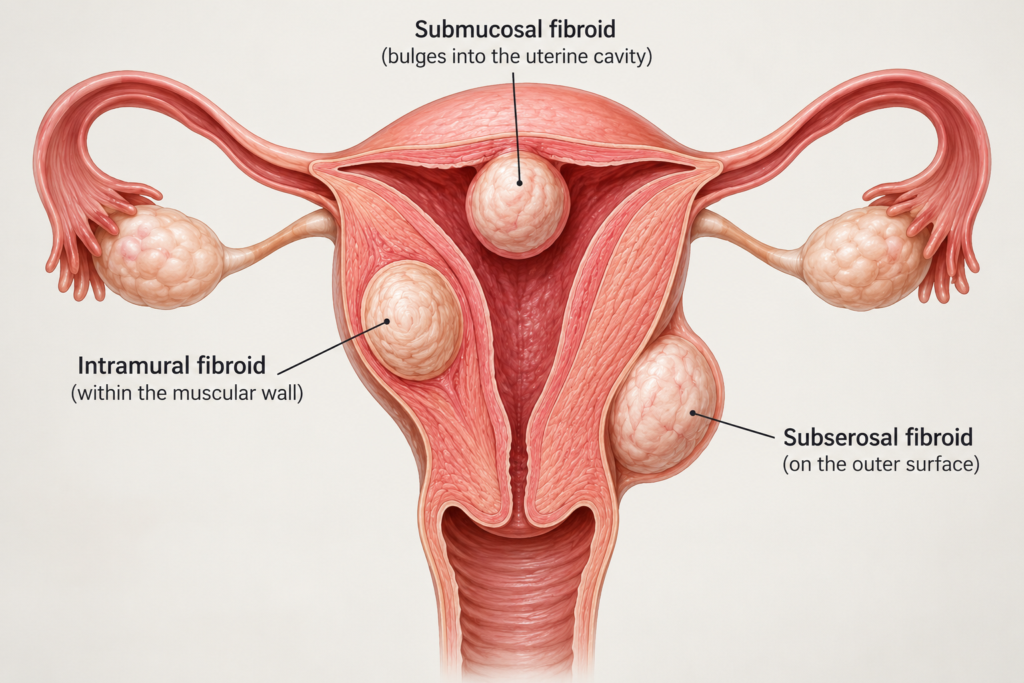
Uterine fibroids are benign growths of smooth muscle and fibrous tissue that develop in or on the uterine wall. They are very common during the reproductive years and vary widely in size, number, and location. Some lie within the uterine wall, others project into the uterine cavity, and some grow on the outside of the uterus.
Fibroids need both estrogen and progesterone to grow, which is why they tend to get larger during the reproductive years and shrink after menopause. Many cause no symptoms, but when symptoms do occur, the most common include heavy or prolonged periods, blood clots, painful cramping, pelvic pressure or fullness, lower back pain, bloating, frequent urination, constipation, and pain during sex. Heavy bleeding can lead to iron-deficiency anemia, causing fatigue, dizziness, and shortness of breath.
Can Acupuncture Treat Fibroids?
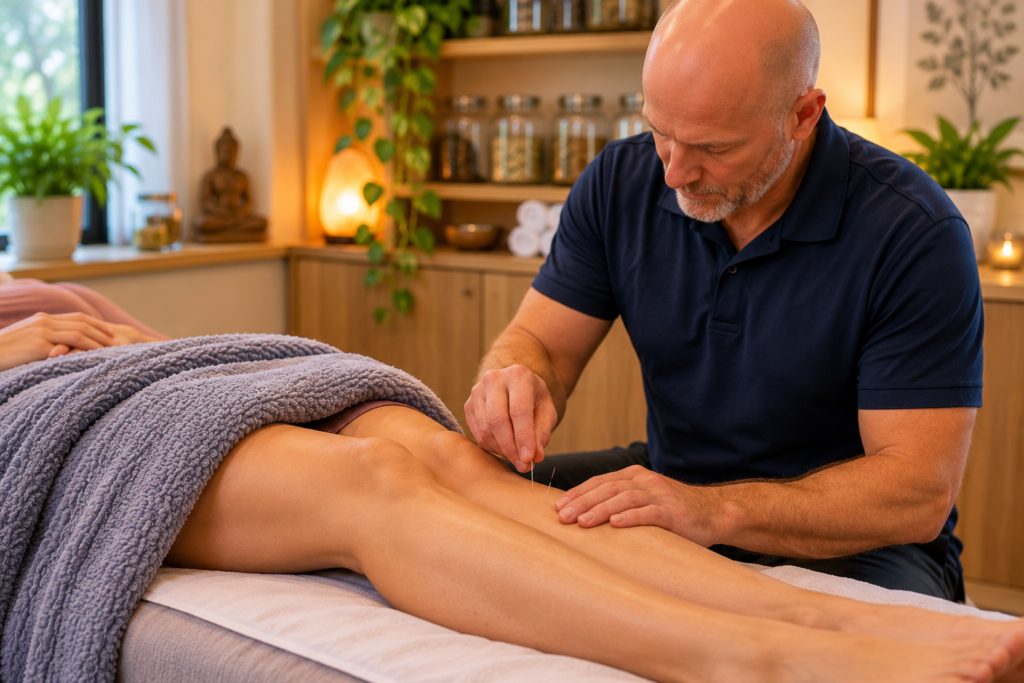
Yes. Acupuncture treats the symptoms that make fibroids so disruptive, including heavy bleeding, cramping, pelvic pressure, bloating, and fatigue. It also addresses the imbalanced patterns that Traditional Chinese Medicine views as underlying causes. In practice, clinicians use acupuncture to regulate menstrual cycles, relieve pain, improve blood circulation in the pelvis, support the body’s ability to control bleeding, and reduce stress, which can worsen symptoms.
Acupuncture works best as part of a continuous course of treatment. It is usually combined with Chinese herbal medicine, which has a long-standing tradition of use for masses in the lower abdomen, as well as dietary and lifestyle advice. It can also complement medical care. For those choosing to watch and wait, acupuncture offers an active way to manage symptoms. For those taking medication or preparing for a procedure, it can support comfort, energy, and recovery.
How Acupuncture Helps
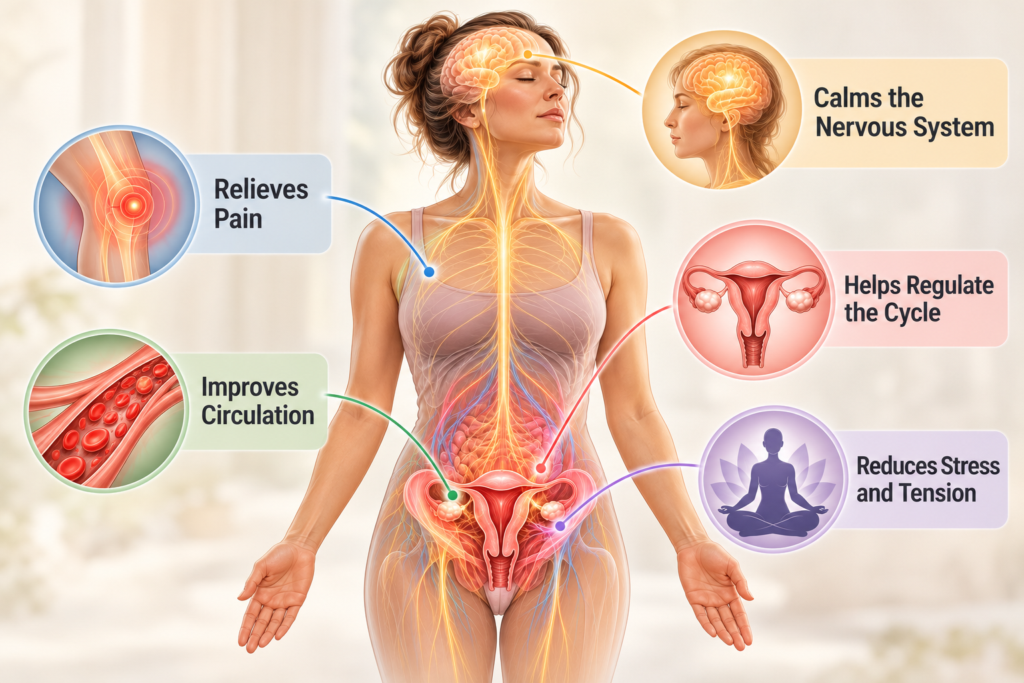
Acupuncture works on several levels at once, making it especially well-suited to conditions with multiple symptoms.
- Pain relief: Acupuncture stimulates the release of endorphins, the body’s natural pain relievers, and changes how the spinal cord and brain process pain signals, easing cramping and pelvic pain.
- Circulation: Points on the lower abdomen, legs, and lower back improve blood flow through the pelvis, easing the heavy, congested feeling that fibroids often bring.
- Cycle regulation: Acupuncture influences the communication between the brain, pituitary gland, and ovaries, which helps support a more regular, balanced cycle.
- Heavy bleeding: In Traditional Chinese Medicine, specific points strengthen the Spleen’s ability to hold the Blood in the vessels, which is central to treating heavy periods.
- Stress and sleep: Acupuncture calms the nervous system, lowers the stress response, and improves sleep, all of which affect hormones and how intensely symptoms are felt.
- Energy and recovery: Points that strengthen digestion and build Qi and Blood help the body recover after heavy periods and ease the fatigue that comes with anemia.
What the Research Shows
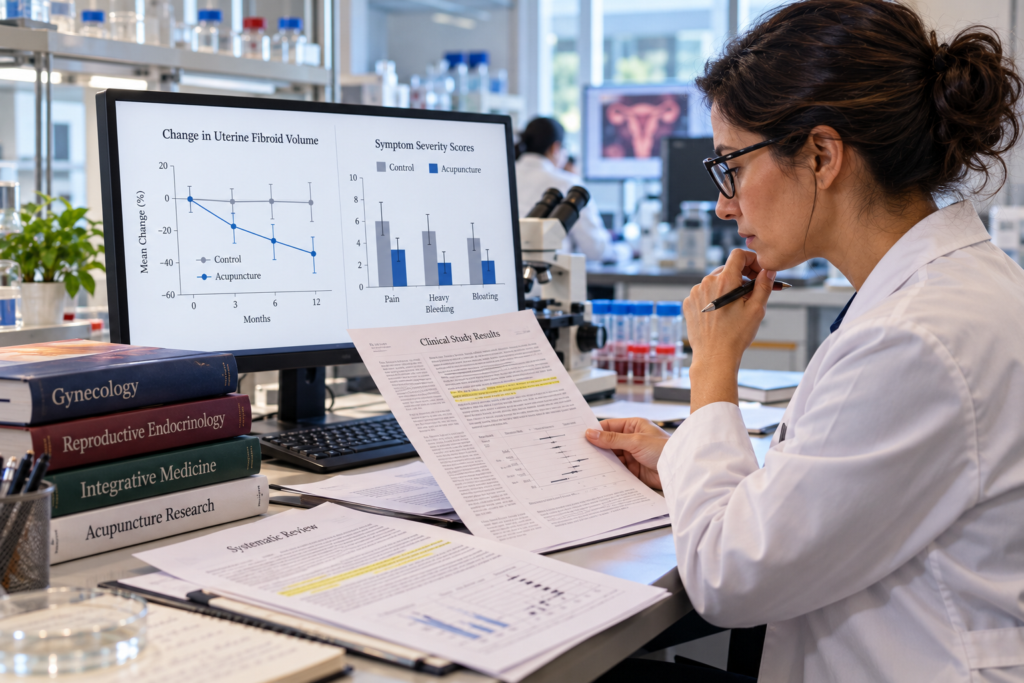
Research on acupuncture for fibroids is still developing, but the findings so far are encouraging. A systematic review published in Frontiers in Medicine in 2023 pooled eleven randomized controlled trials involving 735 patients. Compared with Chinese herbal medicine or medication alone, acupuncture was associated with significantly greater reductions in fibroid volume, uterine volume, and symptom scores. No serious adverse reactions were reported. The authors concluded that acupuncture shows great potential as a conservative, minimally invasive approach for fibroids and called for larger, longer trials to confirm the findings.
Research on menstrual pain adds to the picture. A Cochrane review of acupuncture and acupressure for period pain gathered forty-two randomized trials involving more than 4,600 women. In every study comparing acupuncture with anti-inflammatory pain relievers, women who received acupuncture reported lower pain scores, and side effects were less common with acupuncture. The trials in that review focused on menstrual pain without an underlying condition, and the reviewers rated the overall evidence quality as low, but the results support what acupuncturists see in practice when treating painful periods.
Acupuncture studies so far have generally been small and conducted in China, underscoring the need for more high-quality research. Still, they consistently indicate that acupuncture is safe, well tolerated, and linked to meaningful reductions in fibroid size and symptoms.
How Traditional Chinese Medicine Views Fibroids
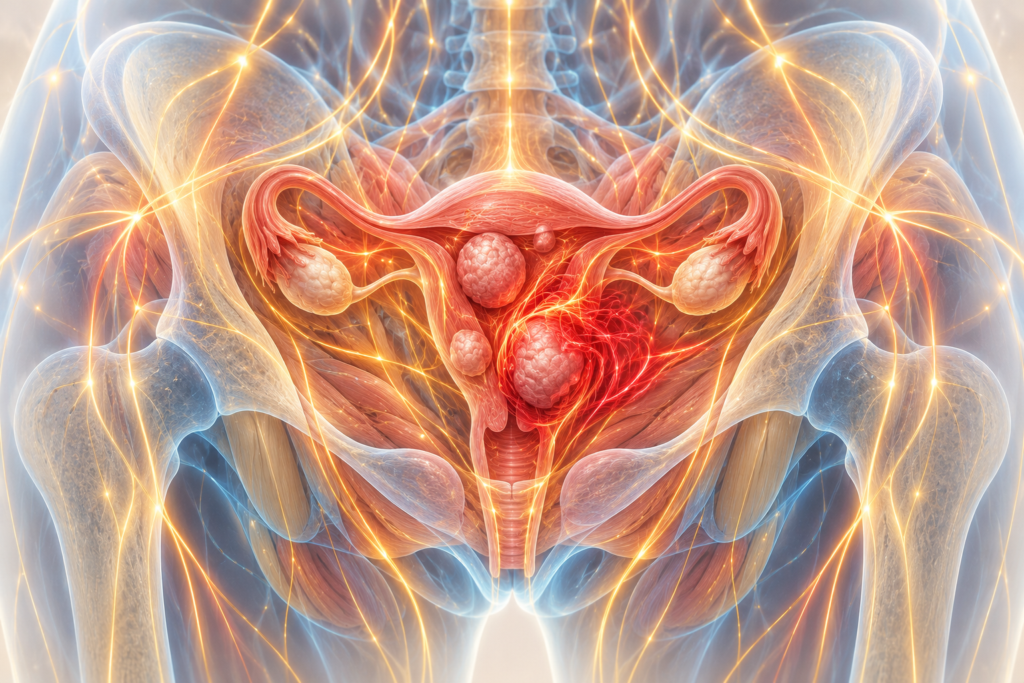
In Traditional Chinese Medicine, fibroids are classified among a group of disorders called “zheng jia”. These are masses that develop in the lower abdomen when Qi and Blood fail to flow smoothly and gradually accumulate. Treatment is never one-size-fits-all: the acupuncturist identifies the specific pattern underlying each individual’s fibroids and selects a corresponding treatment principle.
- Qi stagnation and Blood stasis: Stress constrains the Liver Qi, and the Blood stops moving, causing painful periods with dark clots and fixed, stabbing pain. Treatment moves the Qi, invigorates the Blood, and softens the mass.
- Phlegm and Dampness: Weak digestion allows Dampness to accumulate and congeal, adding bulk and heaviness. Treatment strengthens the Spleen and resolves Phlegm and Dampness.
- Cold in the uterus: Cold slows circulation and causes cramping that improves with heat. Treatment warms the uterus and the channels, often with moxibustion.
- Qi and Blood deficiency: Heavy bleeding drains the body and leaves the Spleen too weak to hold the Blood. Treatment strengthens the Spleen, builds the Blood, and helps control bleeding.
Most women show a combination of these patterns, and treatment priorities shift as symptoms change. During heavy bleeding, the focus is on holding the Blood and restoring energy. Between periods, it shifts to moving stagnation and addressing the mass itself.
Treatment Methods Used in the Clinic
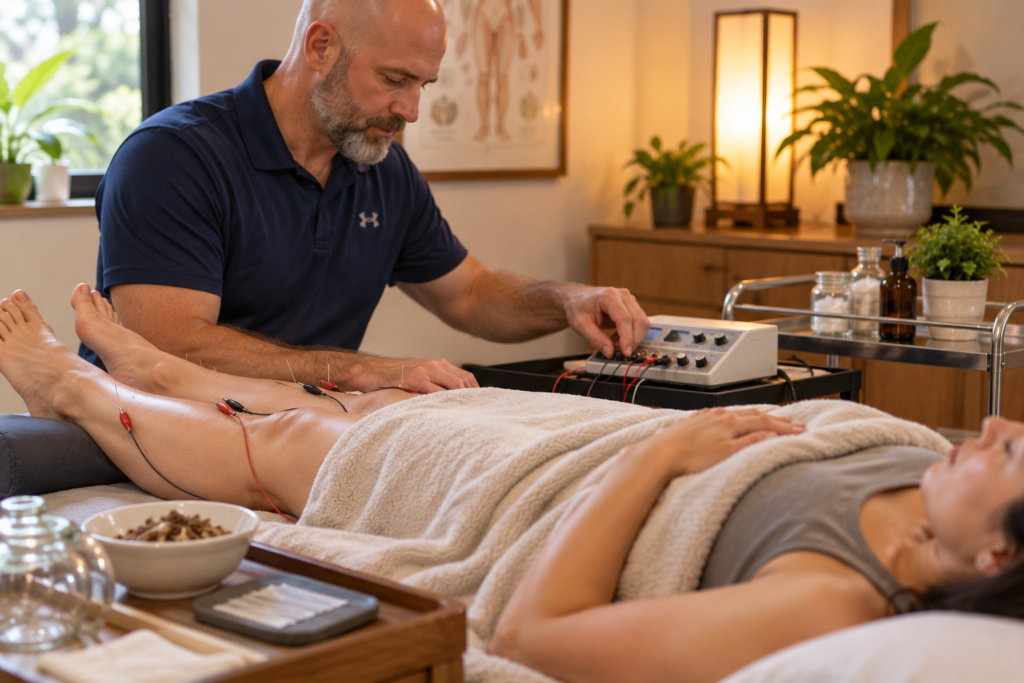
Traditional Chinese Medicine typically treats fibroids with a combination of therapies, selected according to the person’s pattern and menstrual-cycle phase.
- Acupuncture: Fine, sterile needles are placed at points on the lower abdomen, legs, feet, hands, and sometimes the lower back. Points such as SP6, SP10, LR3, CV4, and the extra point Zigong are among the most traditional choices, and they are adjusted from visit to visit as symptoms change.
- Electroacupuncture: A gentle electrical current can be added to selected needles to strengthen the effect on pain and circulation. Learn more about electroacupuncture for chronic pain.
- Moxibustion: Moxibustion warms points with burning mugwort held just above the skin. It is especially helpful for fibroids with a Cold pattern, when cramping improves with heat. It is generally avoided over the abdomen during heavy bleeding.
- Cupping: Cupping on the lower back and sacrum relieves the back pain and pelvic heaviness that often come with fibroids and improves circulation in the area.
- Herbal medicine: Chinese herbal formulas are one of the most important parts of fibroid care in Traditional Chinese Medicine. Formulas are tailored to the individual and adjusted throughout the cycle. Learn more about the herbal approach in how to holistically treat fibroids.
- Lifestyle coaching: Guidance on diet, warmth, movement, sleep, and stress supports the work done in the clinic and helps prevent symptoms from building between visits.
What to Expect From Treatment
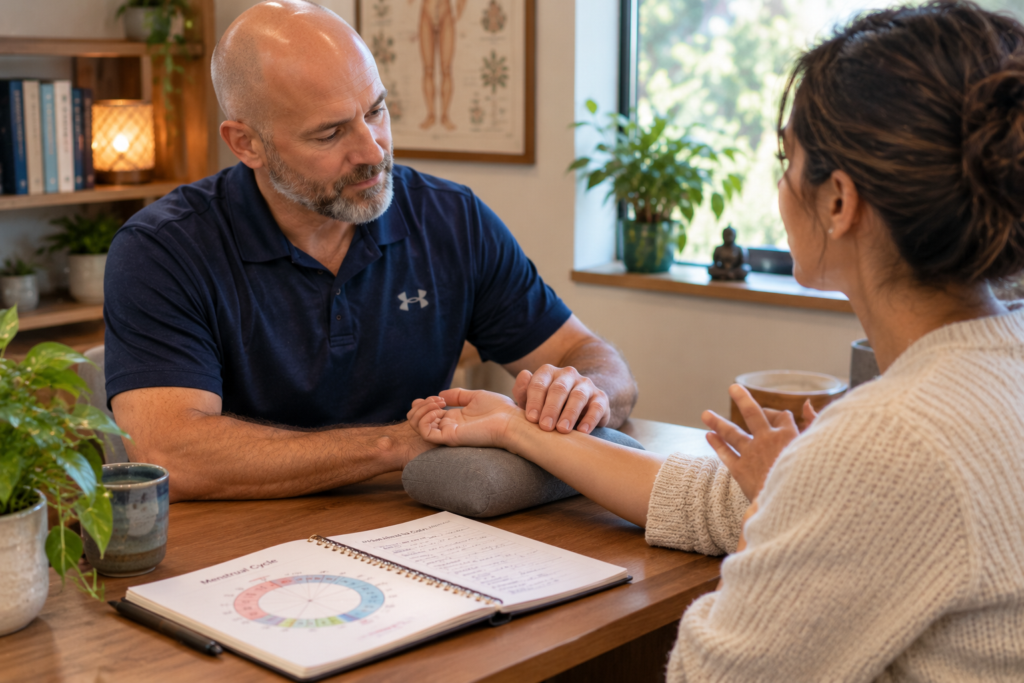
During your first treatment, you’ll have a thorough discussion of your cycle, symptoms, imaging results, and overall health, with particular attention to digestion, sleep, energy, and stress. Your acupuncturist will examine your tongue and take your pulse, two traditional methods for identifying your constitution.
Treatment usually begins once a week, or twice a week if bleeding or pain is severe, and is scheduled around the menstrual cycle. The acupuncture points used before, during, and after a period often differ. Most women notice changes in pain and energy within the first few cycles, while changes in bleeding and fibroid size take longer. At least three menstrual cycles provide a reasonable basis for assessing progress. To track how well treatment is working, keep a cycle journal and continue having your gynecologist monitor ultrasounds.
For more information about how many acupuncture treatments you may need, please learn more.
Acupuncture Alongside Medical Care
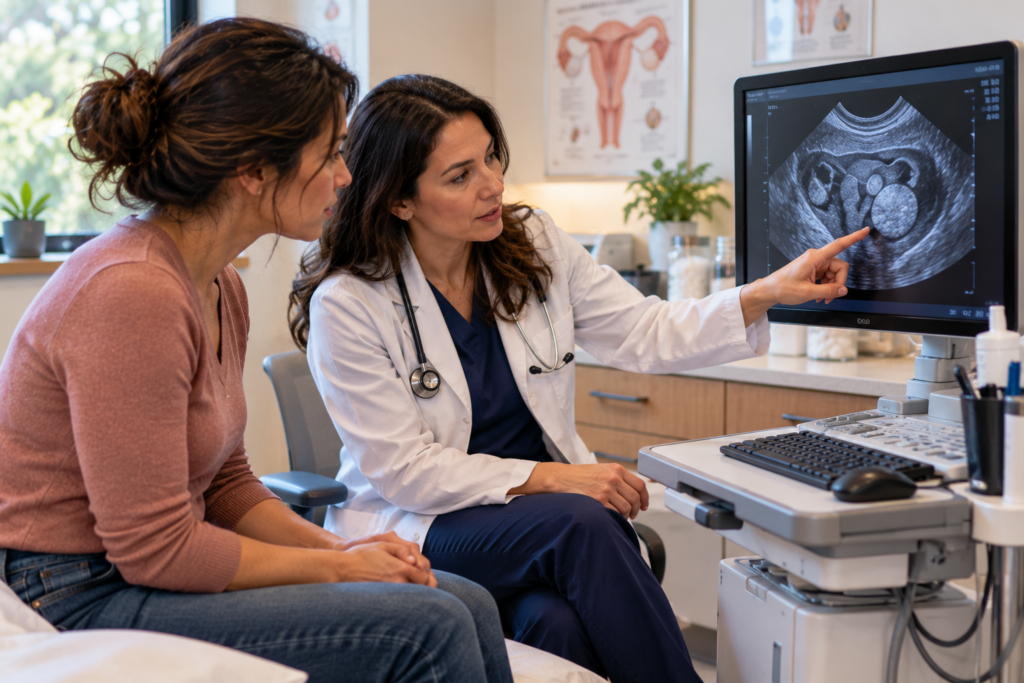
Acupuncture is most effective when used alongside care from your gynecologist. While your fibroids are being monitored, it offers an active way to manage symptoms between clinic visits. If you’re taking hormonal medication or using a hormonal intrauterine device, acupuncture may help with breakthrough pain, side effects, stress, and sleep. If you’re preparing for a myomectomy, uterine fibroid embolization, or hysterectomy, acupuncture may also support you before the procedure and help ease pain, nausea, fatigue, and stress during recovery.
Tell your acupuncturist about all the medications you take, especially blood thinners or hormone treatments. If you’re prescribed any herbs, make sure your gynecologist knows.
Home Care From a Traditional Chinese Medicine Perspective

What you do at home between visits can make a real difference. Keep your lower abdomen and back warm, choose warm, cooked meals over iced drinks and raw foods, eat iron-rich foods if your periods are heavy, stay active every day, and find simple ways to reduce stress. Many women find castor oil packs, warm foot soaks, and ginger tea soothing during their periods.
For more information on home remedies for fibroids, you can use acupressure for fibroids by pressing on the key points at home.
If You Are Trying to Conceive
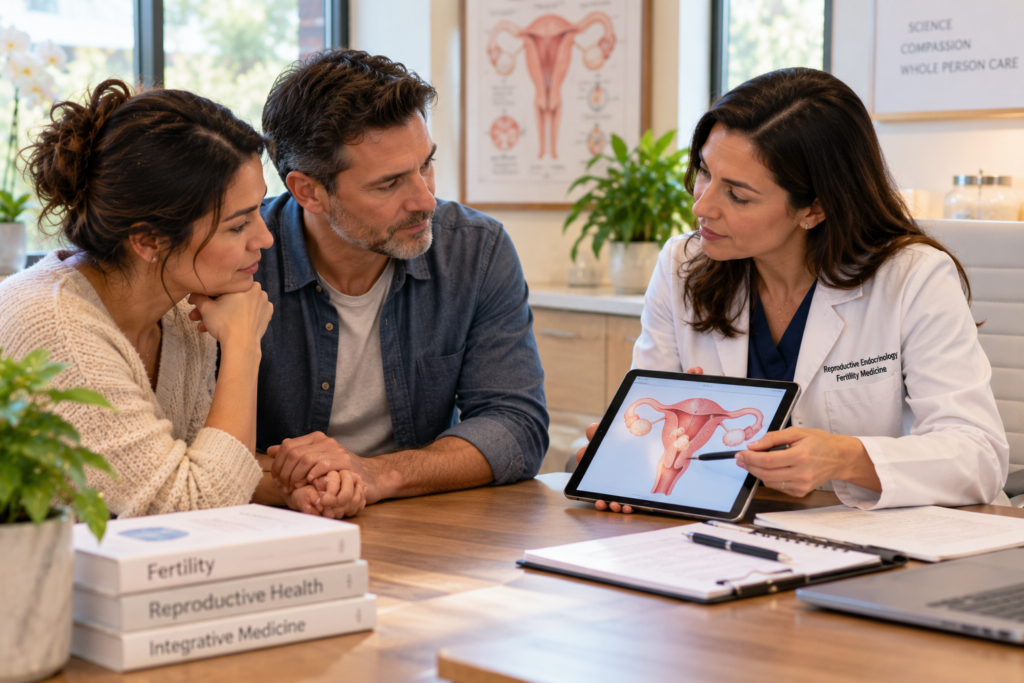
Fibroids do not always affect fertility, but those that bulge into the uterine cavity or distort its shape can make it harder to conceive or carry a pregnancy. If you have fibroids and are trying to conceive, work closely with your gynecologist or a fertility specialist. They can assess whether the fibroids are likely to interfere with conception. Acupuncture is widely used to support fertility by regulating the cycle, improving circulation to the uterus, and easing stress. Let your acupuncturist know you are trying to conceive, as some points and herbs used for fibroids should be avoided when pregnancy is possible.
Learn more about treating infertility with acupuncture and acupuncture and IVF.
When to See a Doctor
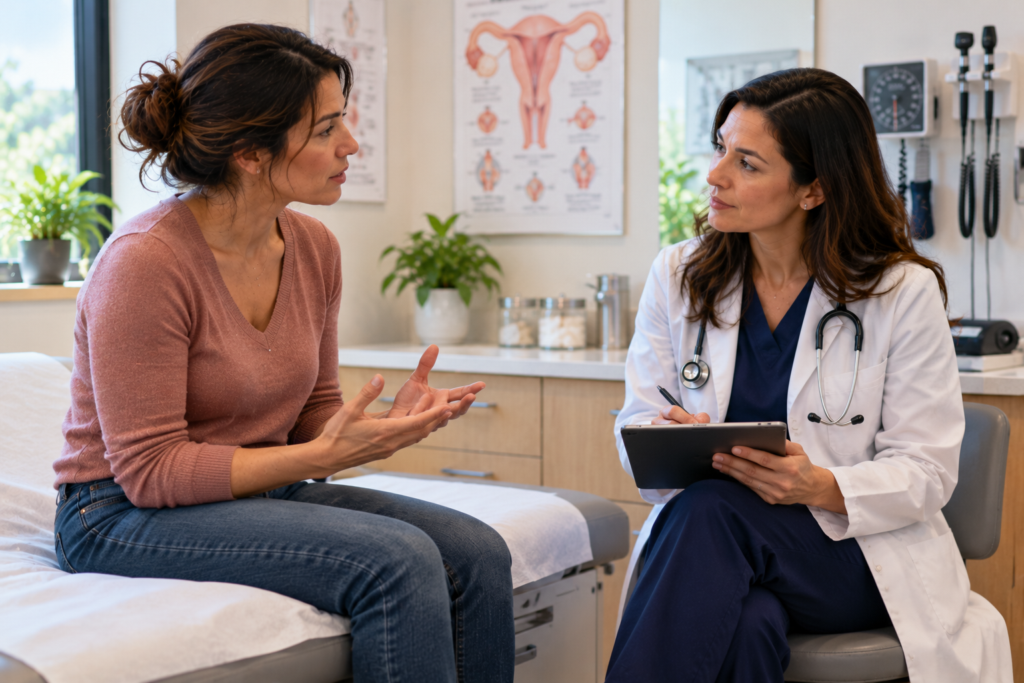
If your periods are heavy, last longer than seven days, or contain large clots, or if you experience pelvic pressure, frequent urination, constipation, or pain during intercourse, see your gynecologist. This is especially important if you have fibroids and are trying to become pregnant. Your doctor can perform an examination and an ultrasound to confirm the diagnosis and guide treatment.
Seek medical attention promptly if you have bleeding between periods or after menopause; signs of anemia, such as fatigue, dizziness, a rapid heartbeat, or shortness of breath; or a fibroid that seems to be growing quickly. Seek emergency care if bleeding soaks through a pad or tampon every hour for several hours, you develop sudden, severe pelvic pain, or heavy bleeding is accompanied by lightheadedness or fainting.
Acupuncture can complement fibroid treatment, but it cannot replace a diagnosis or proper medical care.
For related reading, learn how to use acupressure for endometriosis and acupressure for menstrual cramps.
Above and Beyond Acupuncture offers acupuncture, cupping, and lifestyle coaching at the North Frank Lloyd Wright Boulevard location in Scottsdale.
Schedule an appointment online to start your healing journey.

About the Publisher
Paul Kerzner, L.Ac., is a licensed acupuncturist and board-certified herbalist, as well as the founder of Above and Beyond Acupuncture in Scottsdale. His own journey from chronic patient to practicing acupuncturist shapes his commitment to providing honest, clinically grounded information about acupuncture and Traditional Chinese Medicine. Learn more about Paul and his clinical approach on the About Us page.