
Key Takeaways
- Low milk supply means producing less breast milk than a baby needs, which can show up as poor weight gain, too few wet and dirty diapers, or a baby who seems hungry after most feeds.
- Many concerns about supply are normal as production settles, but true low supply often stems from infrequent milk removal, latch problems, a difficult birth, heavy blood loss, thyroid issues, or exhaustion and stress.
- In Traditional Chinese Medicine, breast milk is made from Qi and Blood, so supply drops when childbirth leaves them depleted or when stress constrains the Liver Qi that supports milk flow.
- Nine acupressure points help build Qi and Blood, open the chest and breasts, and ease the stress that inhibits let-down.
- Acupressure works best when combined with frequent feeding or pumping, rest, nutritious meals, guidance from a lactation consultant, and close follow-up with the baby’s pediatrician.

The baby finished feeding just twenty minutes ago and is already showing signs of hunger again. After a long pumping session, you may get barely an ounce, and your breasts might feel soft rather than full. Every diaper count and weight check can begin to feel like a test. For many new mothers, worrying about whether they’re making enough milk is one of the most stressful parts of the early months.
It’s understandable to worry about this, and it can affect how long many women breastfeed. A study by researchers at the Centers for Disease Control and Prevention found that about 60 percent of mothers who stopped breastfeeding did so earlier than they had hoped. Lactation difficulties and concerns about their baby’s nutrition and weight were among the reasons linked to stopping early.
Not every concern means your milk supply is truly low. Softer breasts, shorter feeds, and fussy evenings are normal as milk production adjusts to your baby’s needs. A genuinely low supply may show up as poor weight gain, too few wet or dirty diapers, or a baby who seems hungry after almost every feed. Common causes include infrequent or ineffective milk removal, a shallow latch, a difficult or early birth, heavy blood loss, thyroid problems, certain medications, and exhaustion or stress that can slow the let-down reflex.
In Traditional Chinese Medicine, breast milk comes from the same Qi and Blood that nourish the mother, both produced by the Spleen and Stomach from food. After labor and blood loss at birth, many women have too little Qi and Blood to produce enough milk. Stress and frustration can cause a different problem: they constrain Liver Qi, which governs the free flow of milk. As a result, the breasts may feel full while the milk is slow to let down.
The nine points below help build the Qi and Blood needed to make milk, open the channels in the chest and breasts, and ease the stress that can hold back let-down.
What Acupressure Points to Press and Why
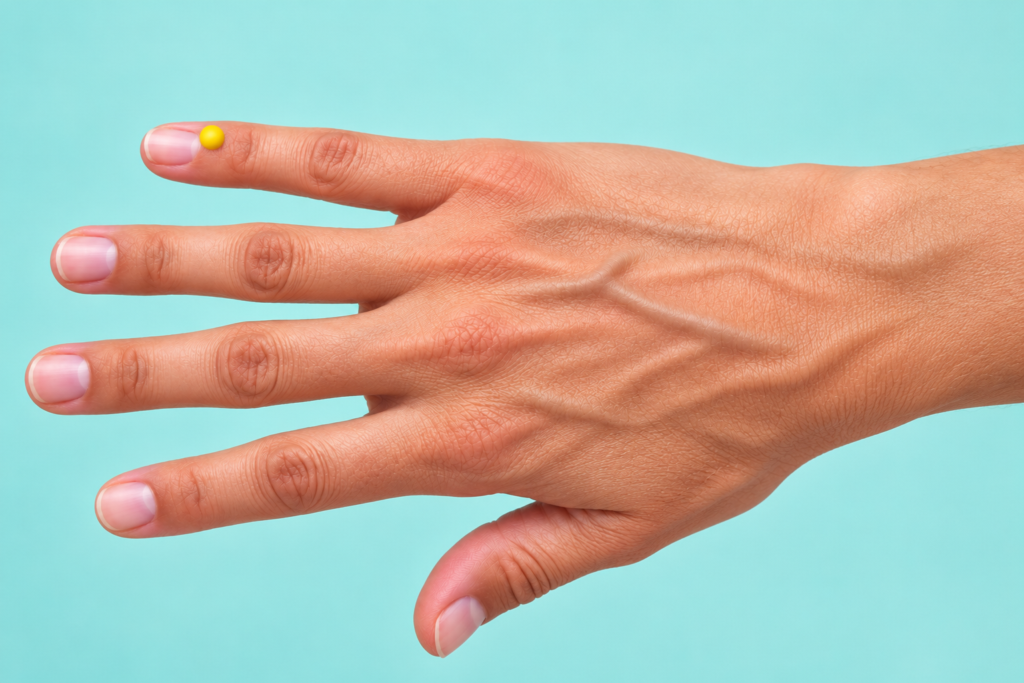
1. Press on SI1 on the little finger to encourage milk flow. SI1 sits on the little finger, just behind the outer corner of the nail, on the side away from the ring finger. Press firmly with the fingertip or the edge of the thumbnail of your other hand for thirty seconds to one minute on each hand. SI1 is called “Shaoze,” the “Lesser Marsh.”
SI1 is one of the most traditional points in Traditional Chinese Medicine for insufficient milk. It’s the first point on the Small Intestine channel, which runs up the arm toward the chest, and has long been used to promote milk flow. Because it’s on the hand, it’s easy to press during a feed or while pumping.
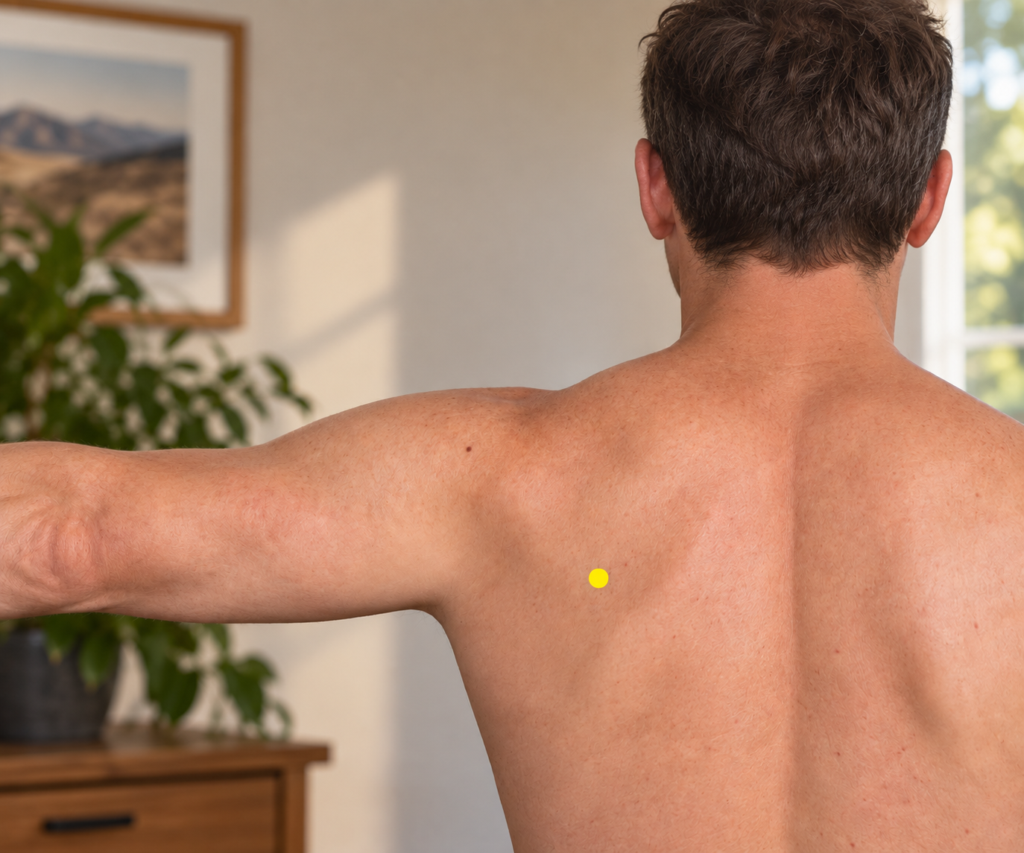
2. Press on GB21 on the top of the shoulder to help the milk let down. GB21 sits on the top of the shoulder, halfway between the base of the neck and the bony tip of the shoulder, at the highest point of the shoulder muscle. Press down gently with your fingertips or squeeze the muscle between your thumb and fingers for one to two minutes on each side. GB21 is called “Jianjing,” the “Shoulder Well.” GB21 is avoided during pregnancy.
In Traditional Chinese Medicine, GB21 is a classic point for breast concerns and is traditionally used for insufficient milk, breast pain, and swelling. It can also help release tight shoulders from hours of holding and feeding the baby, allowing the body to relax enough for the milk to let down.

3. Press on SI11 on the shoulder blade to release the upper back. SI11 sits in the center of the shoulder blade, about one-third of the way down from the bony ridge at the top of the shoulder blade toward its bottom tip. Place a tennis ball between your shoulder blade and a wall, lean into it gently, and hold for one to two minutes on each side. SI11 is called “Tianzong,” the “Heavenly Gathering.”
SI11 is traditionally used for breast pain, swelling, and insufficient milk. It’s located in the upper back muscles, which can become tight from hunching over during feeds. Working the area with a tennis ball can release that tension and help move Qi into the chest.
4. Press on CV17 in the center of the chest to open the flow of Qi. CV17 sits in the center of the breastbone, level with the nipples. Rest two or three fingertips on the point and press gently, or make slow circles, for one to two minutes while breathing slowly. CV17 is called “Danzhong,” the “Chest Center.”
CV17, located between the breasts, is the influential point of Qi. In Traditional Chinese Medicine, it is one of the most important points for insufficient milk, opening the chest, and helping Qi flow freely through the breasts.

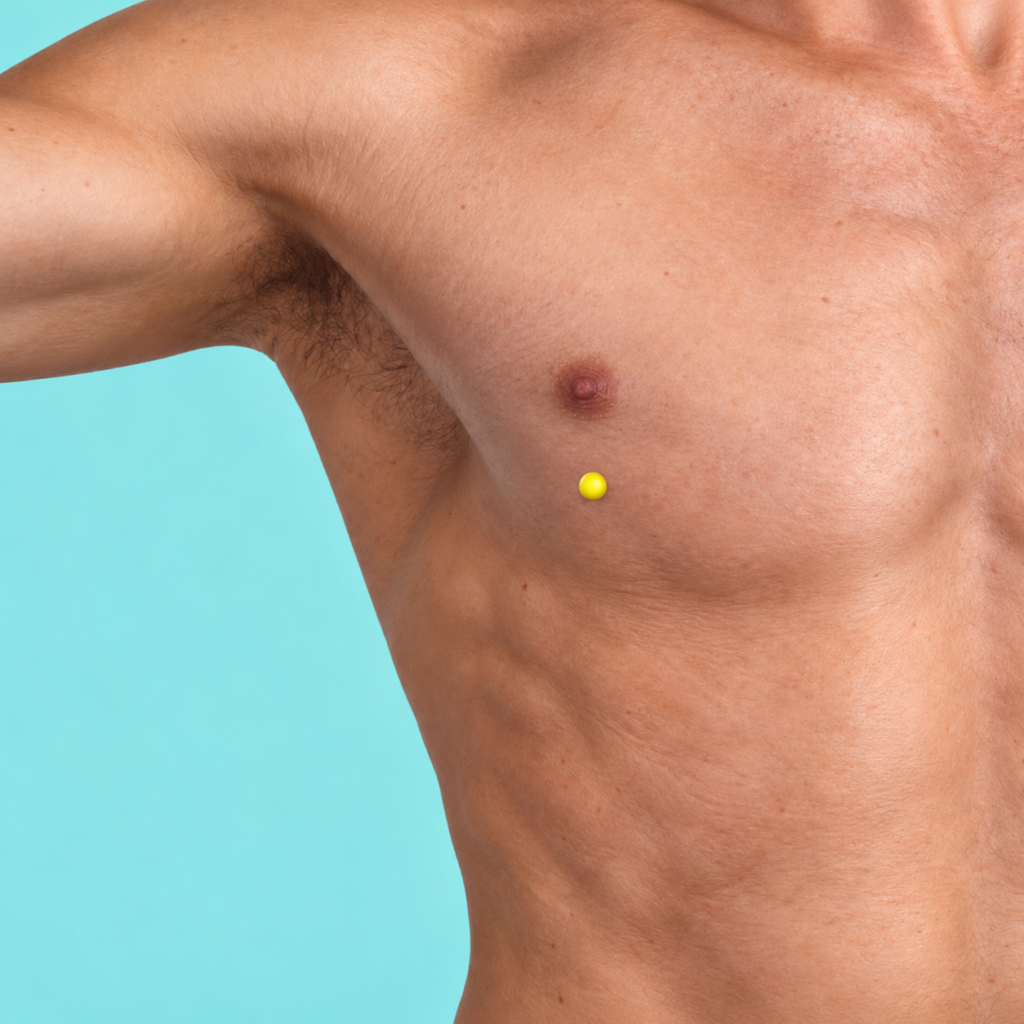
5. Press on ST18 below the breast to bring circulation to the breast. ST18 sits directly below the nipple, in the space between the ribs where the bottom of the breast meets the chest wall. Press gently with your fingertips, or make slow circles, for one to two minutes on each side. ST18 is called “Rugen,” the “Breast Root.”
ST18 lies on the Stomach channel, which runs straight through the breast. Its name, the Breast Root, reflects its long-standing use for insufficient milk and breast pain. Gentle pressure here can improve circulation to the base of the breast. Keep the pressure very light, and skip it altogether if the breast is red, hot, or very tender.
6. Press on BL20 on the lower back to strengthen the source of the milk. BL20 sits on the back, about two finger-widths to each side of the spine, roughly level with the lowest ribs. Place a tennis ball between your back and a wall, lean into it gently, and hold for one to two minutes on each side. BL20 is called “Pishu,” the “Spleen Transport Point.”
BL20 is the Spleen’s back transport point, helping transform food into the Qi and Blood needed to produce milk. It may be especially helpful when supply is low after a long labor, significant blood loss, or weeks of poor sleep and missed meals.

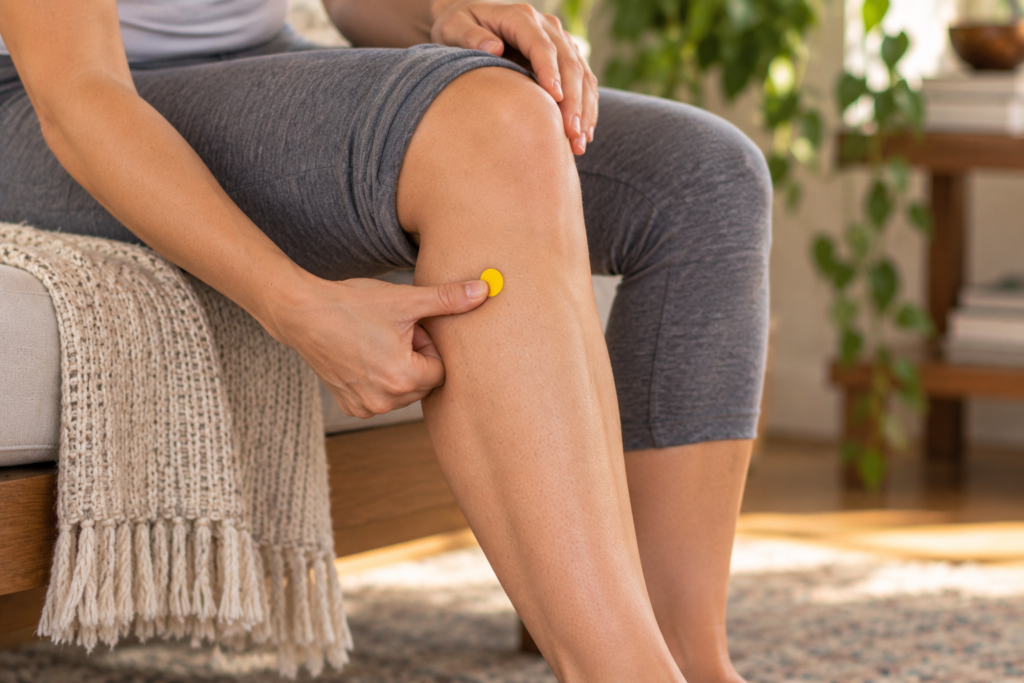
7. Press on ST36 below the knee to build Qi and Blood. ST36 sits four finger-widths below the lower edge of the kneecap and one finger-width to the outside of the shinbone, on the muscle that rises when you flex your foot. Press firmly with your thumb for one to two minutes on each leg. ST36 is called “Zusanli,” the “Leg Three Miles.”
ST36 is one of the most important points in Traditional Chinese Medicine for building Qi and Blood. Because the Stomach channel runs through the breast, it can help build the source of milk and support its flow, while also restoring energy during the exhausting months after birth.
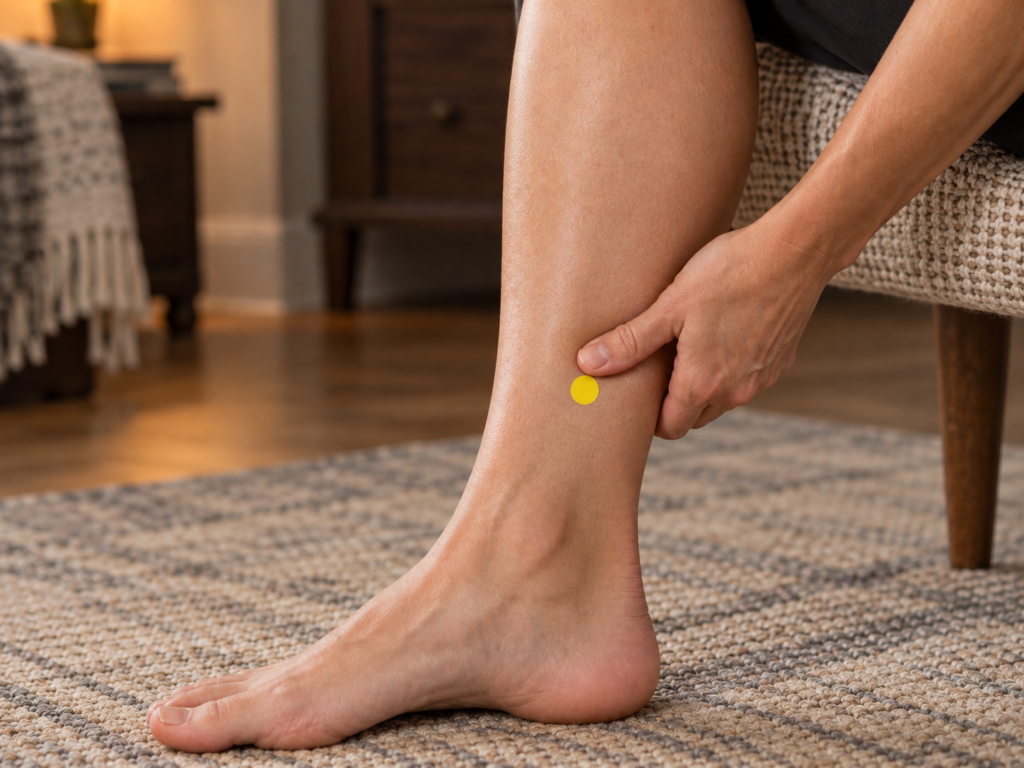
8. Press on SP6 above the inner ankle to replenish the Blood. SP6 sits four finger-widths up from the tip of the inner ankle bone, just behind the back edge of the shinbone. Press firmly with your thumb for one to two minutes on each leg. SP6 is called “Sanyinjiao,” the “Three Yin Intersection.” SP6 is avoided during pregnancy.
SP6 is the meeting point of the Spleen, Liver, and Kidney channels and a classic point for nourishing the Blood. It supports recovery after childbirth and helps replenish the Blood essential for milk production.
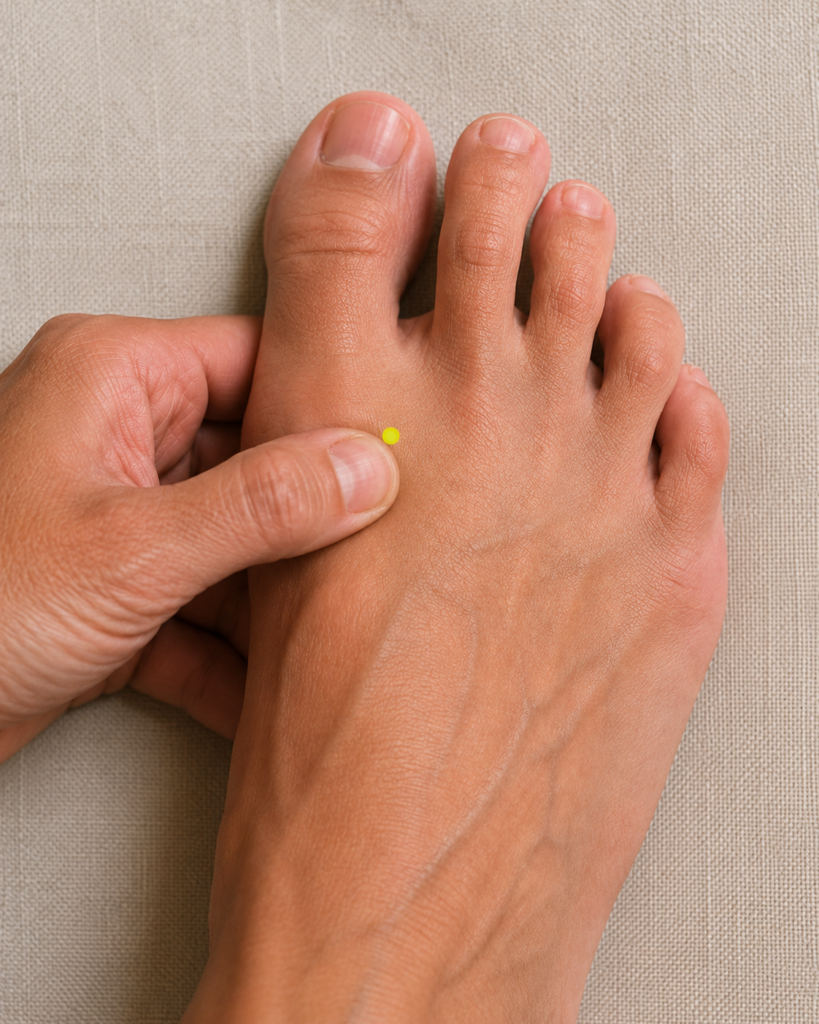
9. Press on LR3 on the top of the foot to ease the stress that holds milk back. LR3 sits on the top of the foot, in the hollow where the bones of the big toe and second toe meet, about two finger-widths above the web between the toes. Press firmly with your thumb for one to two minutes on each foot. LR3 is called “Taichong,” the “Great Surge.”
LR3 helps the Liver Qi flow smoothly, which Traditional Chinese Medicine links directly to milk let-down. Stress, frustration, and worries about milk supply can constrain the Liver Qi, leaving the breasts feeling full while milk does not flow. LR3 helps release that tension.
Why These Acupressure Points Work
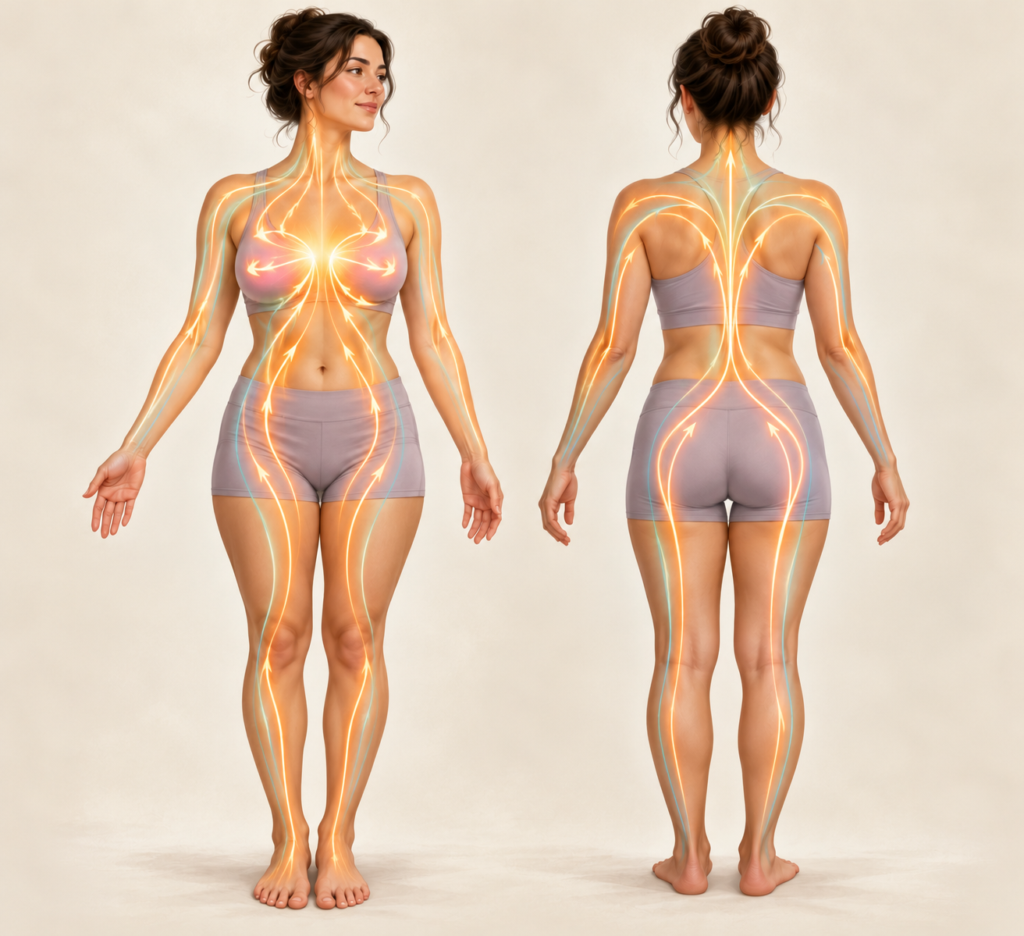
In Traditional Chinese Medicine, a plentiful milk supply depends on having enough Qi and Blood to produce milk and freely flowing Liver Qi to release it. Low supply usually reflects one or both of these issues: depletion after childbirth or stress that prevents the milk from letting down.
The nine points work together to support both the production and release of milk:
- The milk points (SI1, CV17, ST18) open the chest and breasts and promote the flow of milk.
- The let-down points (GB21, SI11, LR3) release tension in the shoulders and upper back and ease the stress that holds the milk back.
- The building points (BL20, ST36) strengthen the Spleen and Stomach, which make the Qi and Blood.
- The nourishing point (SP6) replenishes the Blood after childbirth.
How to Properly Use These Acupressure Points

Acupressure for low milk supply is most effective when combined with frequent, effective milk removal, as milk production responds to the frequency and effectiveness with which the breasts are emptied.
- Perform the complete routine once daily, holding each point for one to two minutes, or for 30 seconds to one minute for SI1.
- Press SI1, CV17, and GB21 for a few minutes before or during a feeding or pumping session to help the milk let down.
- Apply gentle pressure to the chest, breasts, and shoulders, and firmer pressure to the back, hands, legs, and feet. While building supply, avoid strong pressure on GB37 on the outer lower leg and GB41 on the top of the foot, as Traditional Chinese Medicine uses them to reduce milk.
- Practice consistently for one to two weeks while continuing to feed or pump often, and track wet diapers and weight checks to monitor changes.
Daily habits have the greatest impact on milk supply. Feed or pump eight to twelve times every 24 hours, including at least once overnight, and offer both breasts at each feeding. Hand-express for a few minutes or pump after feeds to signal the body to make more. Spend time skin to skin with your baby to support the hormones involved in let-down. Eat warm, nourishing meals and drink when thirsty. In Traditional Chinese Medicine, soups, bone broth, congee, oats, and dates are considered foods that rebuild Qi and Blood after birth. Rest whenever your baby sleeps, and accept help with meals, chores, and older children.
Learn more about how to fall back asleep when you wake up at 3 a.m. after a night feeding.
When to Get Professional Help

If your baby has fewer wet or soiled diapers than expected, hasn’t regained their birth weight by about two weeks, seems unusually sleepy or hard to wake for feeds, or shows signs of dehydration (dry mouth, dark urine, sunken fontanelle), contact your baby’s pediatrician right away. They can advise whether formula or donor milk supplementation is needed, with the priority of ensuring your baby is well fed. An International Board Certified Lactation Consultant (IBCLC) can assess the latch, evaluate for issues such as tongue-tie, and adjust your feeding or pumping plan as needed. See your doctor if you have breast redness, warmth, a hard lump, fever or flu-like symptoms (which may be signs of mastitis), or low supply along with fatigue, hair loss and/or feeling cold (which may indicate a thyroid problem or anemia). Always consult your doctor before taking herbs or supplements to increase supply.
If you’re persistently feeling low, anxious, or overwhelmed, please seek help; postpartum depression and anxiety are very common and very treatable. If you ever have thoughts of harming yourself or your baby, call or text 988 immediately.
Acupressure is a gentle and supportive practice for low supply and can be used in conjunction with, but not as a replacement for, diagnosis and medical care.
For related concerns, acupressure for postpartum anxiety, acupressure for postpartum depression, and acupressure for fatigue are companion pieces. If stress is making every feed harder, learn about acupressure for stress.
Above and Beyond Acupuncture offers acupuncture, cupping, and lifestyle coaching at the North Frank Lloyd Wright Boulevard location in Scottsdale.
Schedule an appointment online to start your healing journey.
The points above are only as effective as the technique used to apply them. Where to press, how firmly, and for how long all affect the result. For a full breakdown of how to perform acupressure properly at home, read Performing Acupressure in 3 Easy Steps.

About the Publisher
Paul Kerzner, L.Ac., is a licensed acupuncturist and board-certified herbalist, as well as the founder of Above and Beyond Acupuncture in Scottsdale. His own journey from chronic patient to practicing acupuncturist shapes his commitment to providing honest, clinically grounded information about acupuncture and Traditional Chinese Medicine. Learn more about Paul and his clinical approach on the About Us page.