Key Takeaways
- Overthinking means analyzing the same thoughts repeatedly without reaching a solution, and it often runs on “what-if” questions about the past or the future.
- A stressed, tired brain overthinks more, and thoughts repeated often enough start to feel true simply because they are familiar.
- In Traditional Chinese Medicine, excessive thinking knots the Spleen Qi and unsettles the Heart, so overthinking often accompanies poor sleep, a knotted stomach, and low energy.
- Nine acupressure points on the head, wrists, belly, legs, and feet help quiet the mental loop and restore the energy overthinking drains.
- Acupressure works best alongside sleep, movement, and practical thinking skills. Overthinking that disrupts sleep, appetite, or mood deserves help from a therapist.

The human brain is designed to scan for danger and plan accordingly. This instinct helped people survive for ages. But today, it can be triggered by an unanswered text, a comment in a meeting, or a difficult decision. Even when it isn’t helpful, the brain keeps working. You might rewrite a reply several times or replay a conversation from earlier in the week while showering. Sometimes, you’re still planning for problems that may never happen, even at 2 a.m.
In an article published by ScienceAlert, Massey University clinical psychologist Kirsty Ross describes overthinking as analyzing thoughts without finding solutions or resolving the problem. Many of these thoughts begin with “what if” and carry strong emotions. Because they focus on the past or future, there is nothing to fix in the moment, so the mind keeps circling. Repeated thoughts can start to feel true simply because they become familiar. Stress, poor sleep, and feeling run down can all make the loop harder to break. Ross advises naming and accepting the feelings underneath, planning for one or two of the most likely outcomes rather than every possibility, challenging unrealistic thoughts, and letting go of the need to know exactly how things will turn out.
Overthinking can show up physically, too. Your shoulders may tense while you’re at your computer, your stomach may feel tight, and your breathing may quicken. Focusing on something physical, even for a moment, can help redirect your attention.
In Traditional Chinese Medicine, the Spleen is associated with thinking and overthinking. When balanced, it supports clear thinking and focus. But excessive thinking can drain the Spleen’s energy, leading to poor appetite, bloating, and worsening fatigue. The Heart, which is said to house the mind, relies on the Spleen for support; when the Spleen is worn out, the Heart becomes restless and sleep becomes light.
The nine points below calm the mental loop from the top of the head downward and restore the energy that hours of overthinking drain.
What Acupressure Points to Press and Why
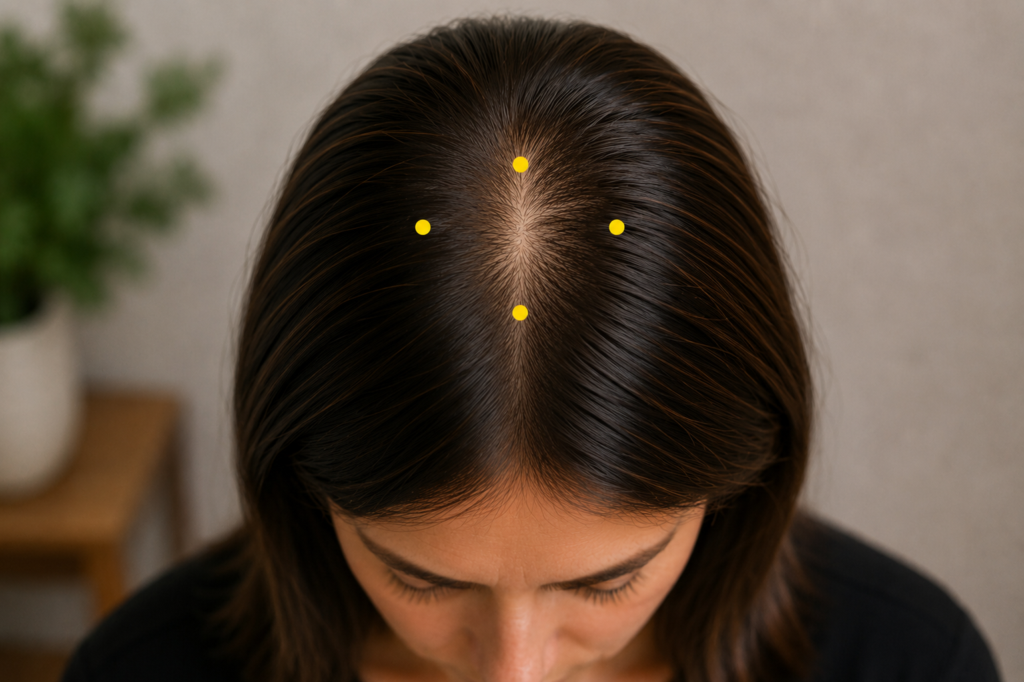
1. Press on Sishencong at the top of the head to quiet a busy mind. Sishencong is a group of four points around the very top of the head. First find the spot on the midline where a line drawn from the tip of one ear over the head to the tip of the other ear crosses it. The four points sit one thumb-width in front of, behind, and to either side of that spot. Press gently with the fingertips of both hands, or tap lightly, for one to two minutes. Sishencong is called the “Four Alert Spirit.”
Sishencong is an extra point traditionally used for insomnia, dizziness, and a restless mind. Working all four points together gives scattered thoughts one place to gather.
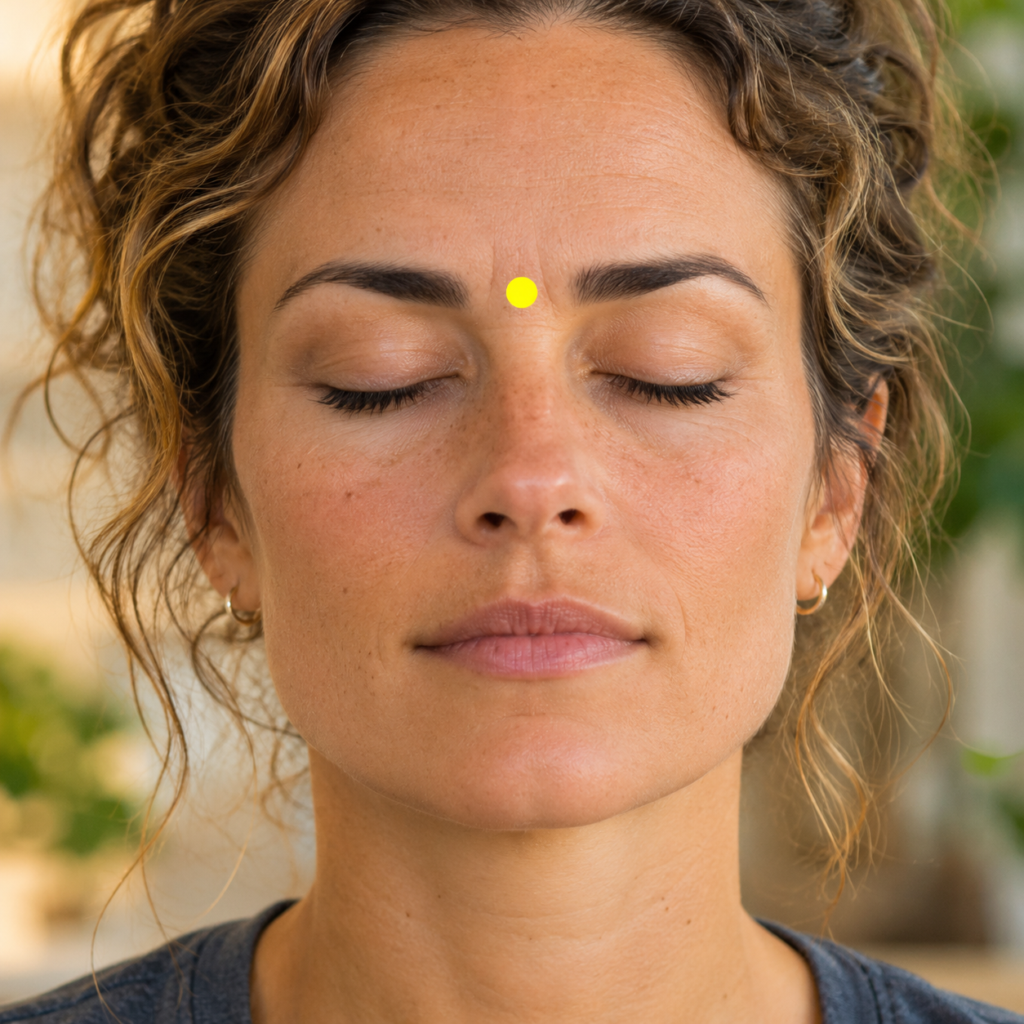
2. Press on Yintang between the eyebrows to pause the loop. Yintang sits on the midline of the forehead, directly between the inner ends of the eyebrows. Press gently with your fingertip, or make slow, small circles, for one to two minutes with the eyes closed. Yintang is called the “Hall of Impression.”
Yintang is an extra point used to calm the mind and ease anxiety. Close your eyes as you press it to create a brief, intentional break from the screen, the notes app, or the conversation replaying in your mind.
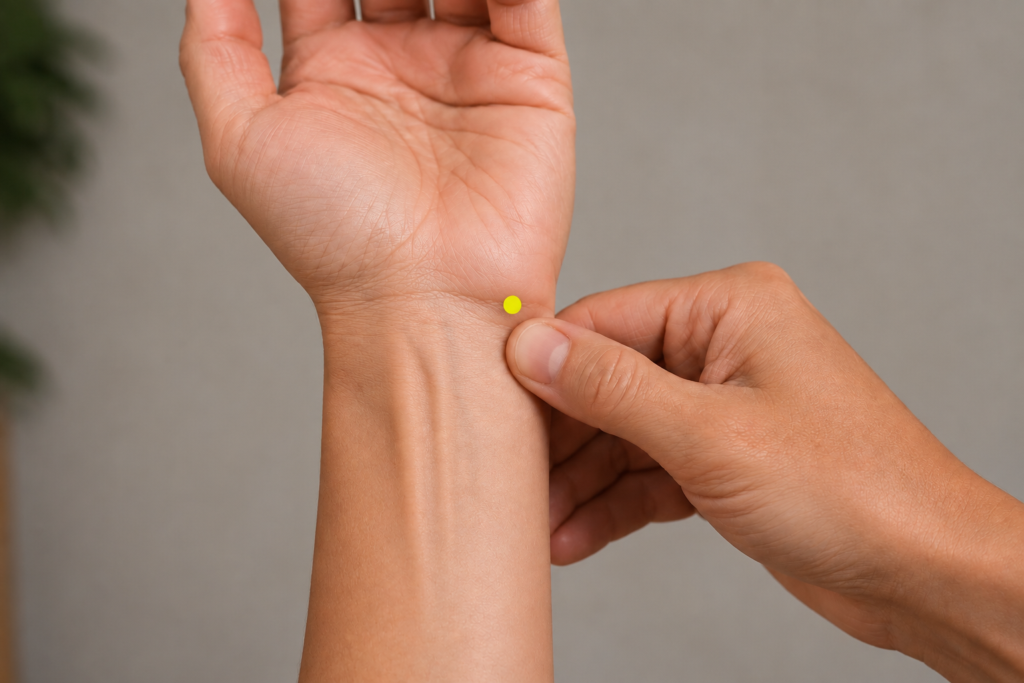
3. Press on HT7 on the wrist crease to settle the Heart. HT7 sits on the inner wrist crease, on the pinky side, in the small hollow just to the thumb side of the tendon that runs along the edge of the wrist. Press gently with the thumb of your other hand for one to two minutes on each wrist. HT7 is called “Shenmen,” the “Spirit Gate.”
In Traditional Chinese Medicine, HT7 is the Heart’s source point, and the Heart houses the mind. It is used for anxiety, restlessness, and sleep disrupted by persistent thoughts.
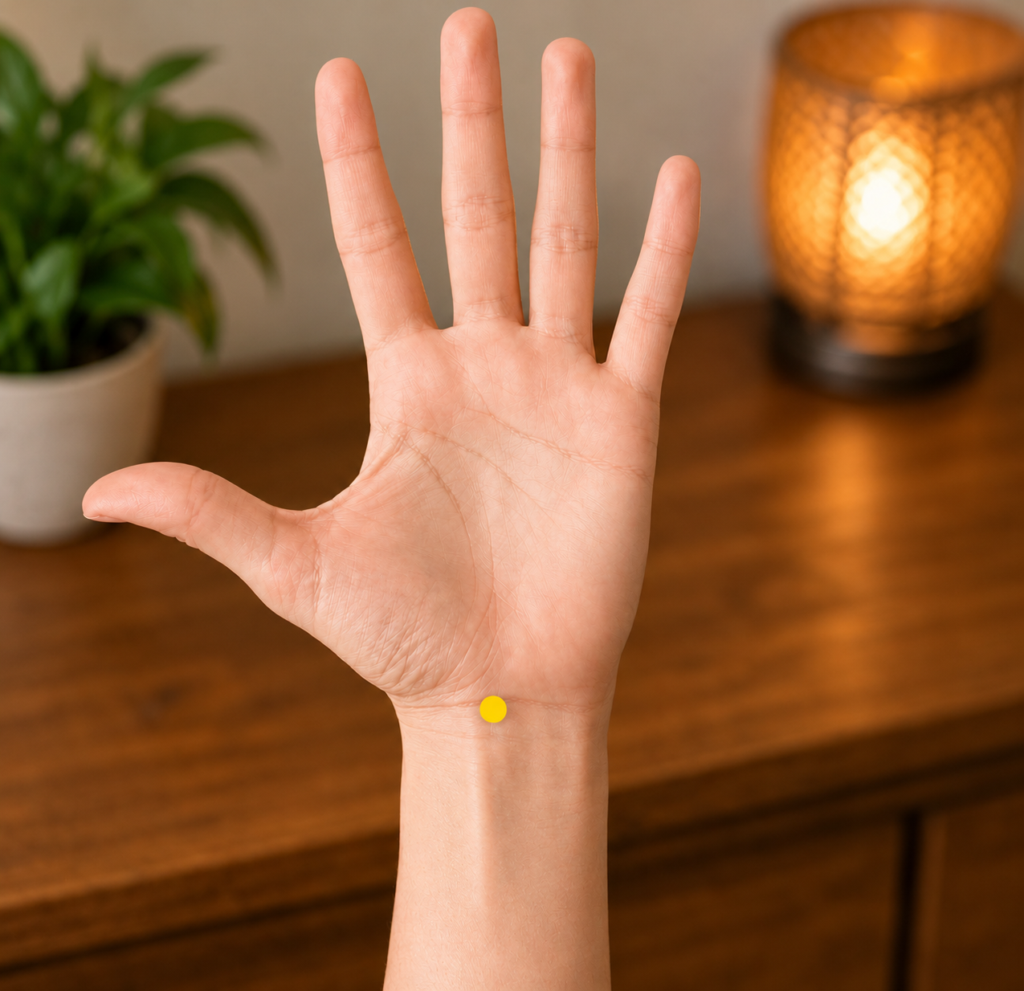
4. Press on PC7 at the center of the wrist crease to calm a racing mind. PC7 sits in the middle of the inner wrist crease, between the two tendons. Press gently with the thumb of your other hand for one to two minutes on each wrist. PC7 is called “Daling,” the “Great Mound.”
PC7 is the Pericardium’s source point, and the Pericardium protects the Heart. It is traditionally used to calm the mind when thoughts race or the chest feels tight. HT7 is only a short distance away on the same crease, making the two easy to press one after the other.
5. Press on CV12 on the upper belly to untie a knotted stomach. CV12 sits on the midline of the upper belly, halfway between the bottom of the breastbone and the navel. Press gently with two or three fingertips, or rest a warm palm over the area, for one to two minutes while breathing slowly. CV12 is called “Zhongwan,” the “Middle Cavity.”
CV12 is the Stomach’s alarm point. Overthinking often shows up here as a knot or loss of appetite. Slow breathing with a warm palm on the area can help it soften and digestion return to normal.

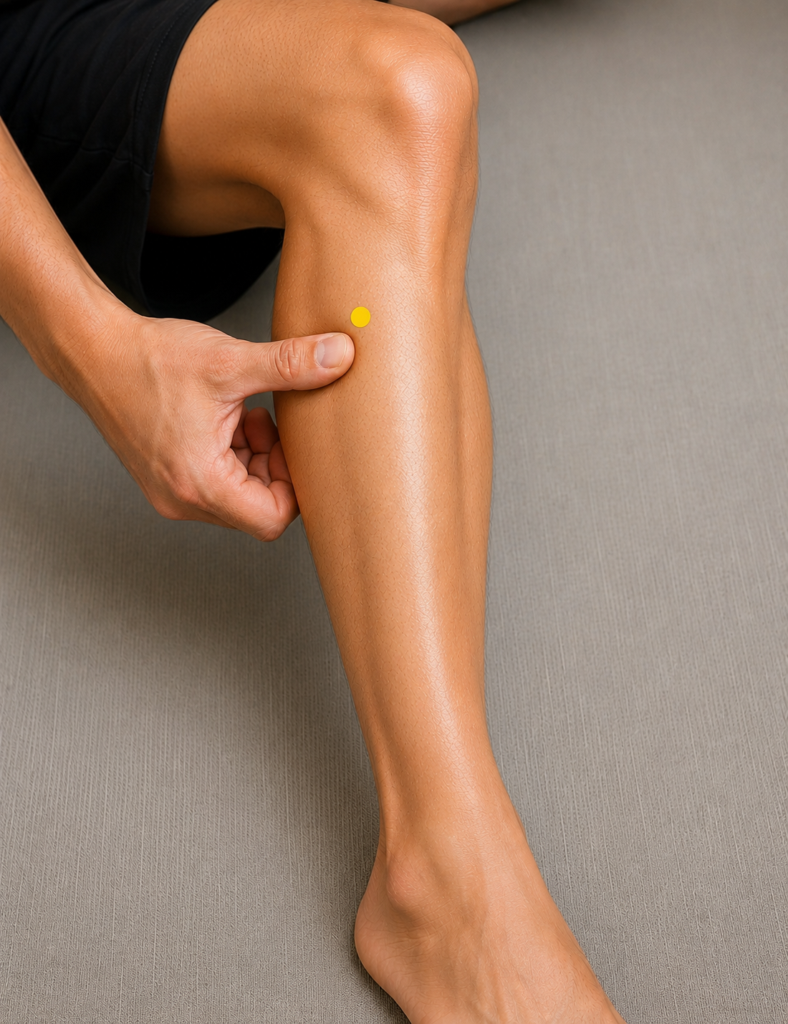
6. Press on ST36 below the knee to restore drained energy. ST36 sits four finger-widths below the bottom of the kneecap, about one finger-width to the outside of the shinbone. Press firmly with your thumb for one to two minutes on each leg. ST36 is called “Zusanli,” the “Leg Three Miles.”
ST36 strengthens the Spleen and Stomach and helps restore energy. It’s well suited to the bone-deep fatigue that can follow a day spent stuck in your head, even when your body has barely moved.
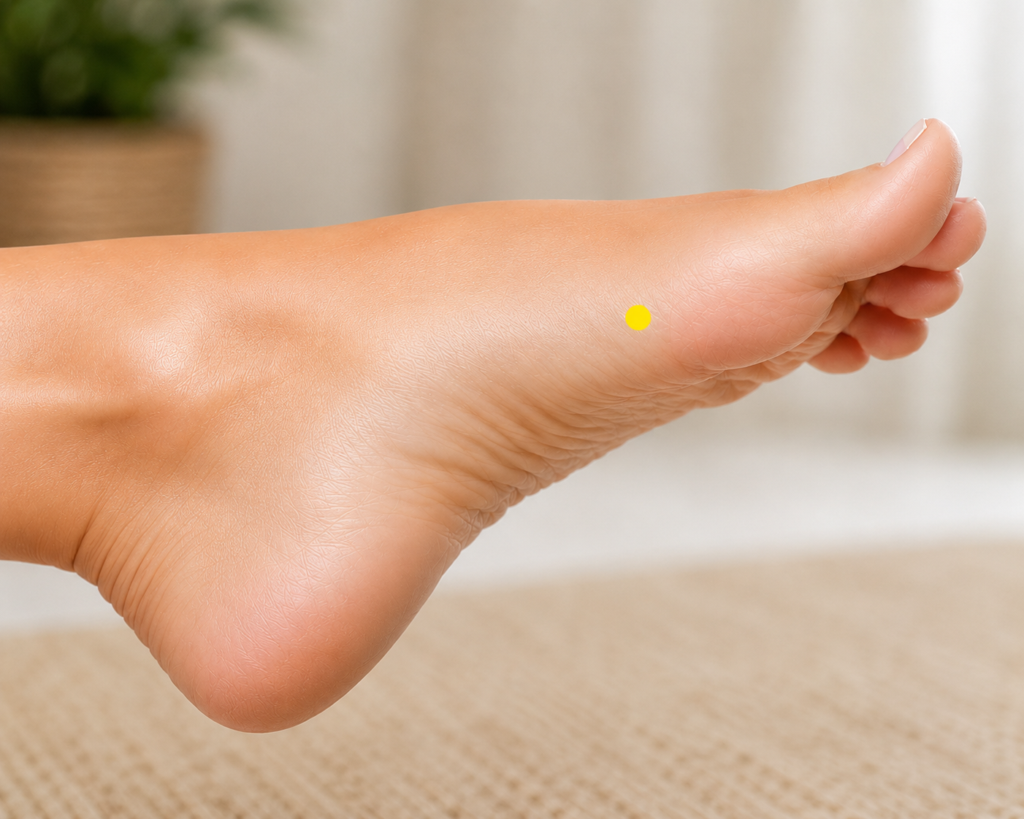
7. Press on SP3 on the inner foot to strengthen the Spleen. SP3 sits on the inner edge of the foot, just behind the bony bump at the base of the big toe, in the hollow where the skin of the top of the foot meets the skin of the sole. Press firmly with your thumb for one to two minutes on each foot. SP3 is called “Taibai,” the “Supreme White.”
SP3 is the Spleen’s source point. In Traditional Chinese Medicine, excessive thinking is thought to weaken the Spleen, so SP3 addresses overthinking at its root and supports clearer focus and a steadier appetite.
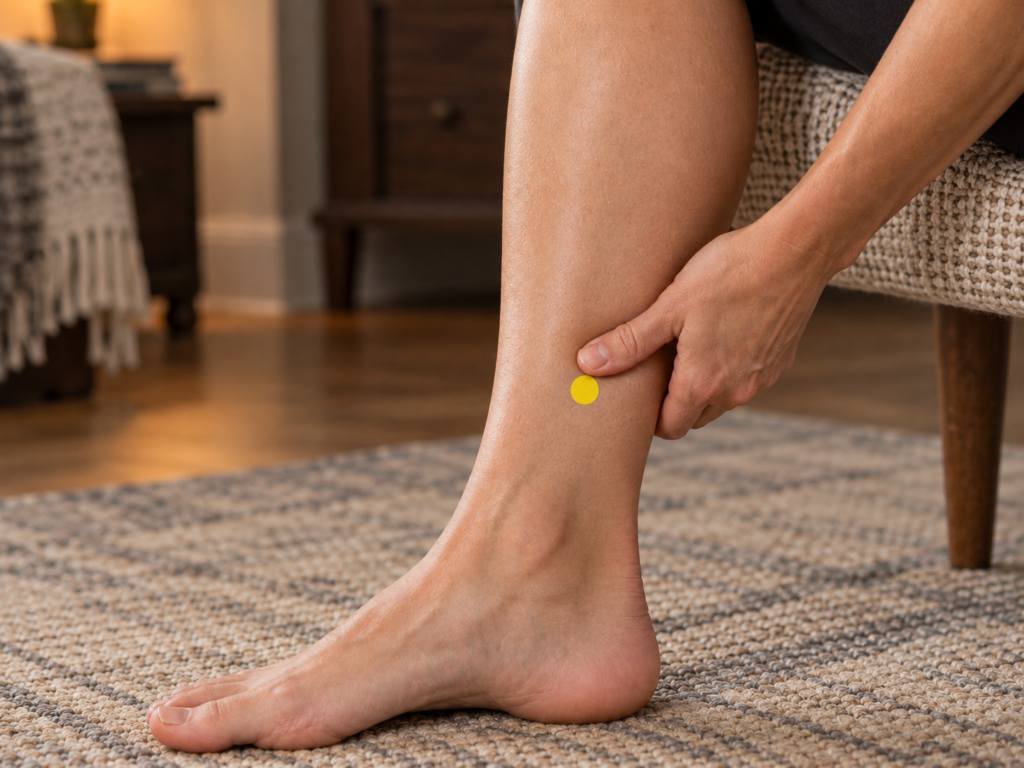
8. Press on SP6 on the inner lower leg to nourish the Heart and support sleep. SP6 sits on the inner lower leg, four finger-widths above the tip of the inner ankle bone, just behind the edge of the shinbone. Press firmly with your thumb for one to two minutes on each leg. SP6 is called “Sanyinjiao,” the “Three Yin Intersection.” SP6 is avoided during pregnancy.
SP6 is where the Spleen, Liver, and Kidney channels meet. It nourishes Blood, which anchors the mind in Traditional Chinese Medicine, and pairs well with HT7 when overthinking makes sleep light.
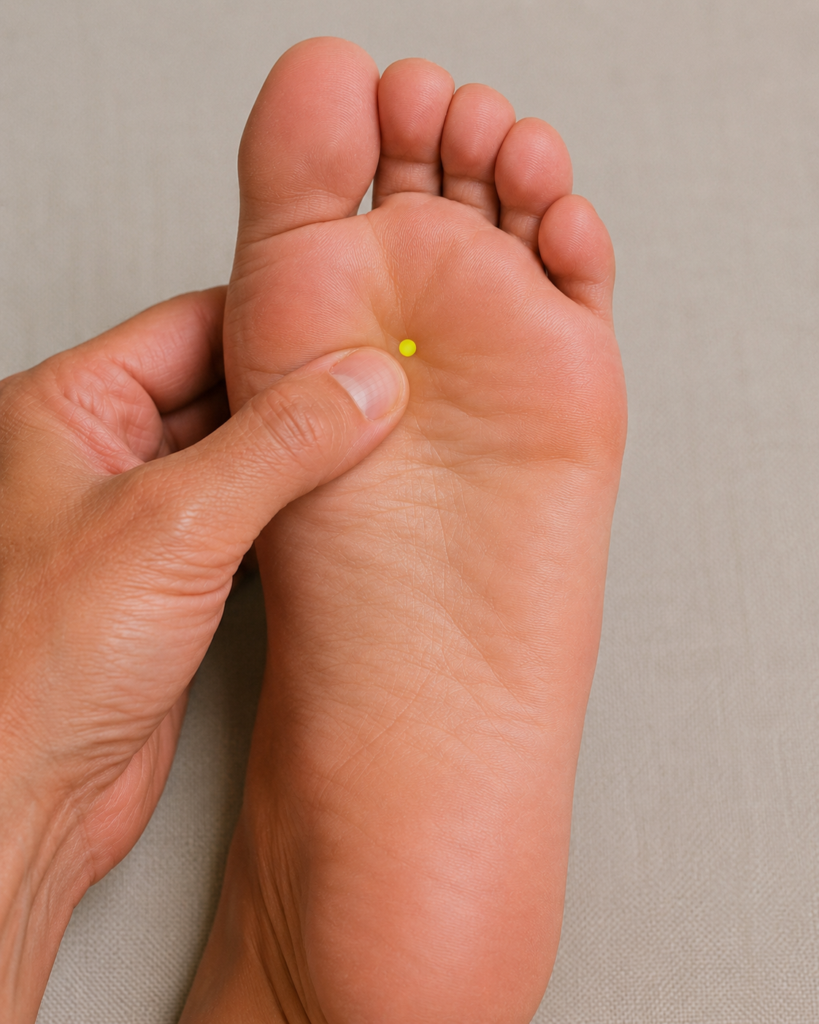
9. Press on KI1 on the sole of the foot to get out of your head. KI1 sits on the sole of the foot, in the depression about one-third of the way from the base of the second toe to the back of the heel, where a small hollow forms when the toes curl. Press firmly with your thumb for one to two minutes on each foot, or press the soles firmly into the floor while seated. KI1 is called “Yongquan,” the “Bubbling Spring.”
KI1 is the body’s lowest point and the first point on the Kidney channel. It draws energy down from the head, the very place where overthinkers tend to live.
Why These Acupressure Points Work
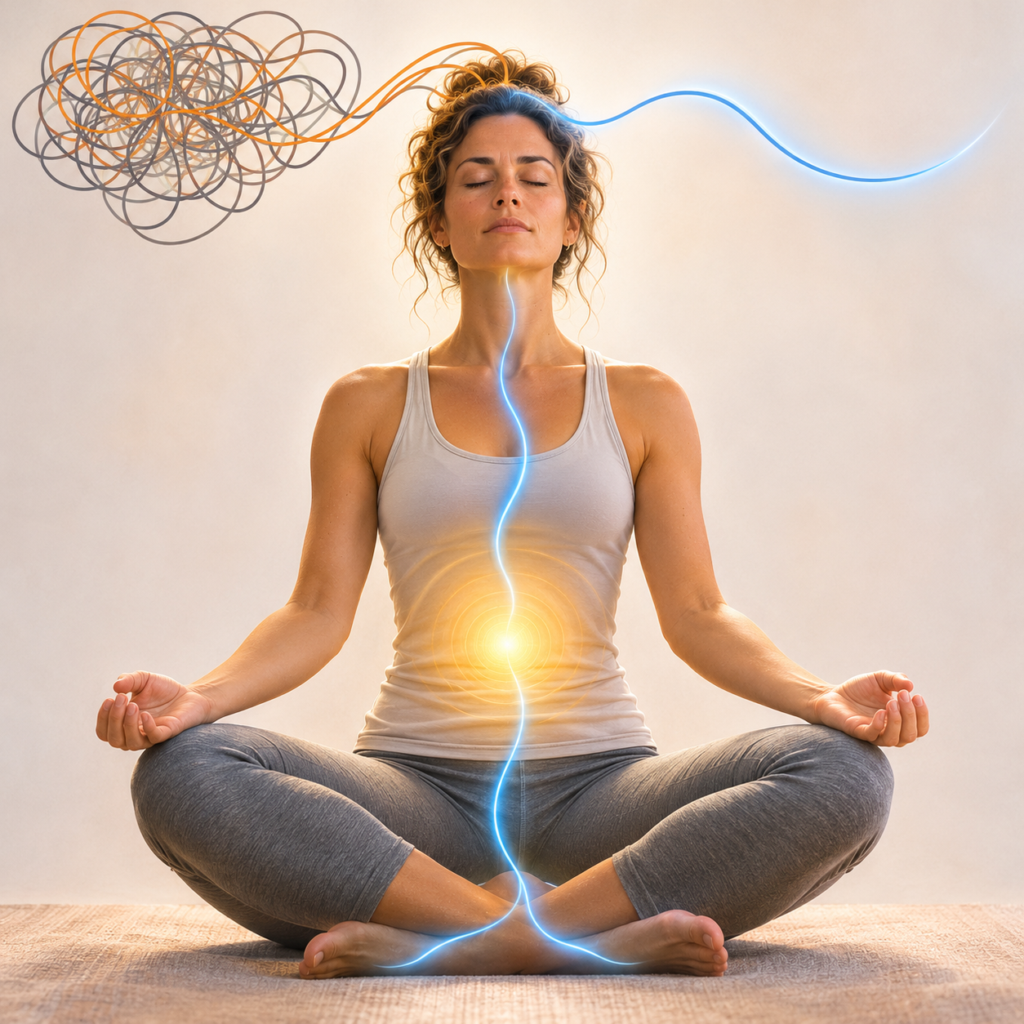
Traditional Chinese Medicine views overthinking as a problem of both excess and deficiency. The mind is overly active, while the Spleen, which supports it, has too little energy to spare. Each cycle of thinking further drains the Spleen, and a depleted Spleen makes clear thinking more difficult, reinforcing the cycle. Breaking it requires both calming the mind and strengthening the body’s center.
The nine points work collectively to calm mental loops and restore what they deplete:
- Sishencong and Yintang settle the head and create a pause.
- HT7, PC7, and SP6 calm the Heart and support sleep.
- CV12, ST36, and SP3 strengthen the Spleen and untie the knot in the stomach.
- KI1 draws energy down and out of the head.
How to Properly Use These Acupressure Points

Acupressure may be most effective for managing overthinking when used as an intervention as soon as the cycle begins, alongside a short routine to support the body’s resources.
- When the same thought returns for the third time, press PC7 and HT7 on one wrist as you breathe in for four counts and out for six. Then, with your eyes closed, press Yintang.
- Before bed, work on Sishencong, HT7, and SP6, then finish by pressing both feet into the floor or placing a thumb on KI1.
- Once a day, during a calm moment, practice all nine points for one to two minutes each. That way, the routine will feel familiar when your mind starts racing.
- Apply gentle pressure to the head, forehead, belly, and wrist crease, and firmer pressure to the legs and feet. Continue daily for at least four to six weeks.
A few habits can make the loop easier to break. Set aside a 15-minute “thinking window” each day with a notepad. When a worry comes up at another time, jot it down and save it for then. Rather than listing every possible outcome, write down the one or two most likely results of a decision, choose a next step, and take it. Move every day: a walk can do more for a spinning mind than another round of analysis. Keep phones out of the bedroom, and stop checking messages an hour before bed. Eat regular, warm meals, since skipping meals leaves the Spleen with even less to give. Traditional Chinese Medicine also favors easy-to-digest foods, such as cooked grains, root vegetables, and soups, during stressful stretches.
Learn more about analysis paralysis.
When to Get Professional Help

Talk to a therapist if overthinking is affecting sleep, appetite, mood, work, or the ability to enjoy daily life, since cognitive behavioral therapy and metacognitive therapy teach proven tools for stepping out of the loop. See a doctor if racing thoughts come with panic attacks, ongoing low mood, unwanted intrusive thoughts that feel impossible to ignore, or rituals done to relieve the anxiety, because these can point to an anxiety disorder, depression, or OCD that responds well to treatment. Never stop or change a prescribed medication without talking to your provider. If overthinking turns into hopelessness or thoughts of self-harm, call or text 988 to reach the Suicide and Crisis Lifeline right away.
Acupressure is a gentle, supportive practice for overthinking. It complements, and does not replace, diagnosis and medical care.
For related emotional concerns, acupressure for rumination, acupressure for worry, and acupressure for indecisiveness are companion pieces. If overthinking keeps you awake at night, learn about acupressure for trouble falling asleep.
Above and Beyond Acupuncture offers acupuncture, cupping, and lifestyle coaching at the North Frank Lloyd Wright Boulevard location in Scottsdale.
Schedule an appointment online to start your healing journey.
The points above are only as effective as the technique used to apply them. Where to press, how firmly, and for how long all affect the result. For a full breakdown of how to perform acupressure properly at home, read Performing Acupressure in 3 Easy Steps.

About the Publisher
Paul Kerzner, L.Ac., is a licensed acupuncturist and board-certified herbalist, as well as the founder of Above and Beyond Acupuncture in Scottsdale. His own journey from chronic patient to practicing acupuncturist shapes his commitment to providing honest, clinically grounded information about acupuncture and Traditional Chinese Medicine. Learn more about Paul and his clinical approach on the About Us page.