Key Takeaways
- Muscle pain is a symptom, not a disease. It most commonly occurs after strenuous exercise, overuse, a minor injury, or a viral illness such as a cold or the flu.
- Most muscle aches go away on their own within a few days. However, seek prompt medical care for a fever, a new rash, a severe headache with neck pain, confusion, or dark urine after intense exercise.
- In Traditional Chinese Medicine, the Spleen nourishes the muscles while the Liver keeps the sinews supple. Aching muscles are therefore linked to stagnant Qi and Blood, inadequate nourishment, or Wind and Cold lodged in the body.
- Nine acupressure points on the hands, arms, shoulders, sides, legs, and feet help relax tight muscles, promote the movement of Qi and Blood, and ease aches throughout the body.
- Gentle movement, warmth after the first day of an injury, adequate rest and sleep, and consistent hydration can help sore muscles recover.
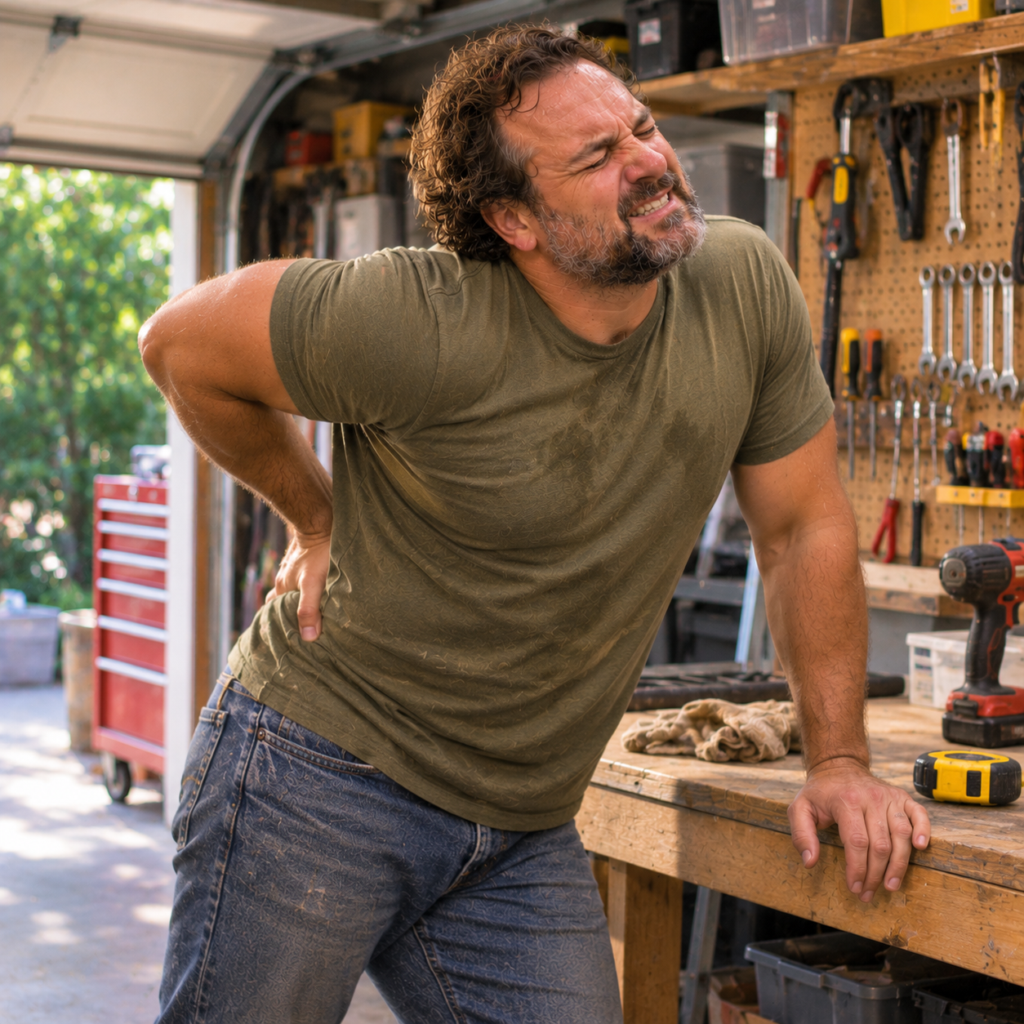
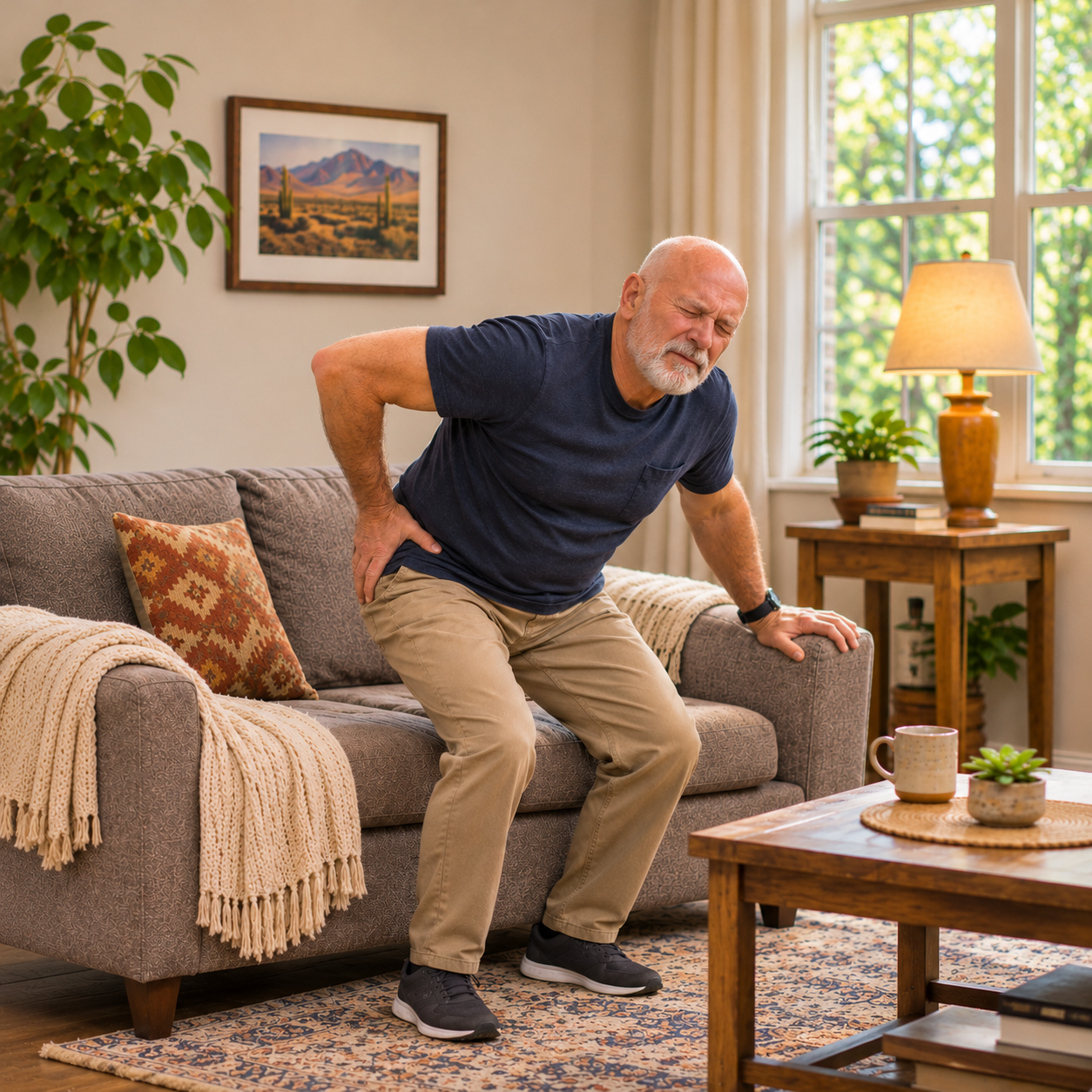
Some muscle pain has an obvious cause. An especially tough workout after months off, a day spent moving furniture, or a weekend of yard work can leave your legs, back, and shoulders feeling stiff and sore for days. Other aches may show up with a cold or the flu, set in during stressful times, or spread through your body after a poor night’s sleep, even when there’s no clear reason. In either case, your muscles may feel heavy and tender to the touch and take a while to warm up.
According to Methodist Health System, muscle aches and soreness, medically known as myalgias, are symptoms, not a disease. Common causes include infections such as colds and the flu, strenuous exercise, injuries from accidents or falls, and certain medications, including statins, some antidepressants, and cancer treatments. Long-term conditions such as lupus, rheumatoid arthritis, chronic fatigue, and hypothyroidism can also cause muscle pain. So can problems involving the bones, joints, tendons, ligaments, or circulation. Most aches resolve on their own. Methodist recommends rest, taking pain relievers as directed, and following up with a healthcare provider if the pain does not clear within a few days or keeps returning.
After a demanding or unfamiliar workout, tiny tears in your muscle fibers can leave you sore, with discomfort often peaking a day or two later. A virus can cause a different kind of ache: as your immune system responds, it releases chemicals that can make muscles throughout your body feel sore and weak. Stress can add another layer by keeping the muscles in your neck, shoulders, and back tense for hours, until they begin to burn and ache.
Traditional Chinese Medicine links the muscles to the Spleen, which transforms food into the Qi and Blood that nourish them, and the sinews and tendons to the Liver. When Qi and Blood stagnate after physical strain or spending long hours in one position, the pain is sharp and fixed. When overwork or poor eating weakens the Spleen, the muscles ache with a tired, heavy feeling. When Wind and Cold enter the body during a cold or flu, the whole body aches and feels stiff. Stress that tightens the Liver can make the sinews pull and cramp.
The points below begin on the hand and forearm, move to the shoulders and sides of the body, and finish on the legs and feet.
What Acupressure Points to Press and Why
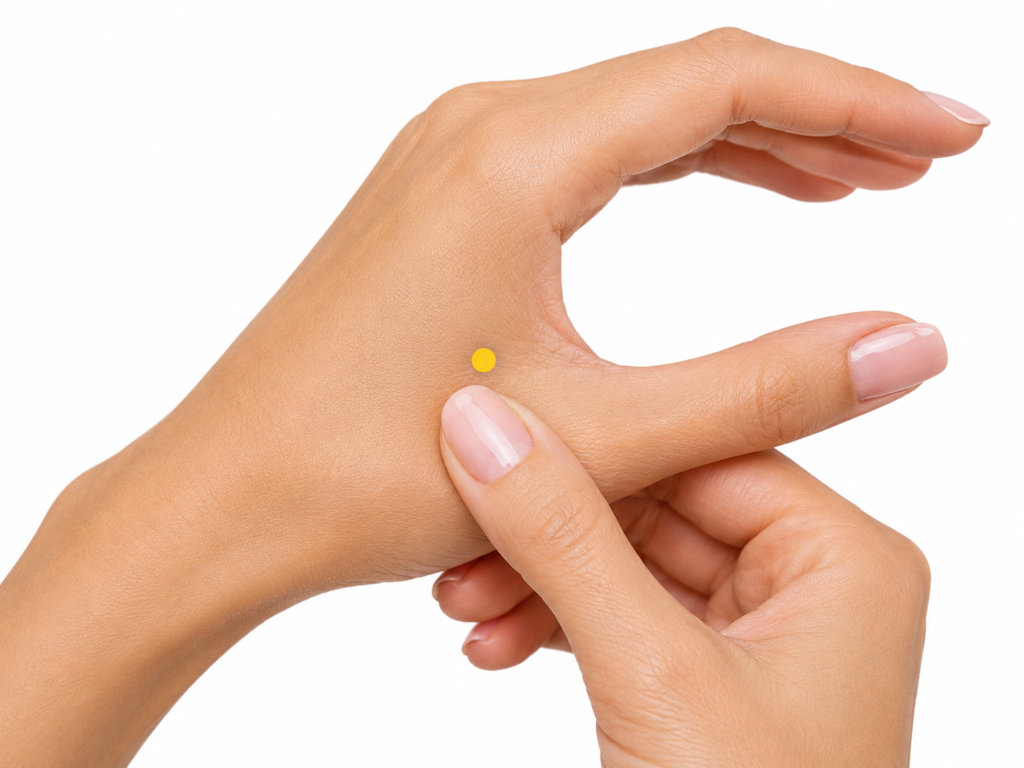
1. Press on LI4 on the back of the hand to ease pain. LI4 sits on the back of the hand, in the web between the thumb and index finger, at the highest point of the muscle when the thumb is pressed against the index finger. Press firmly with the thumb of your other hand for one to two minutes on each hand, angling the pressure toward the bone of the index finger. LI4 is called “Hegu,” the “Joining Valley.”
LI4 is the source point of the Large Intestine and a classic point for pain throughout the body. It strongly moves Qi and helps relieve the achy, feverish heaviness associated with a cold or the flu. LI4 is avoided during pregnancy.
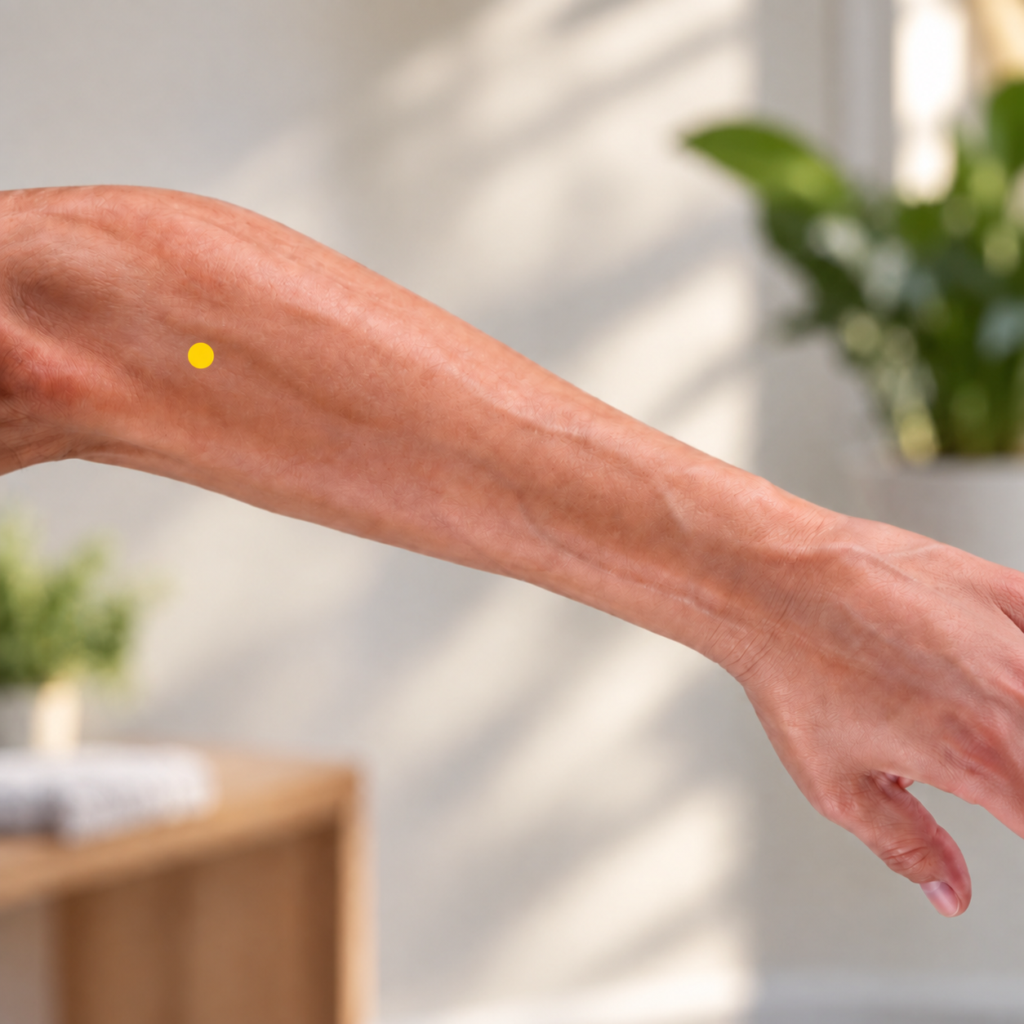
2. Press on LI10 on the forearm to relieve tired, aching arms. LI10 sits on the thumb side of the forearm, three finger-widths below the outer end of the elbow crease when the elbow is bent. Press firmly with the thumb of your other hand for one to two minutes on each arm. LI10 is called “Shousanli,” the “Arm Three Miles.”
LI10 is traditionally used for aching, weak, or overworked muscles in the arms and shoulders. It also builds Qi, making it useful when muscle pain is accompanied by fatigue.
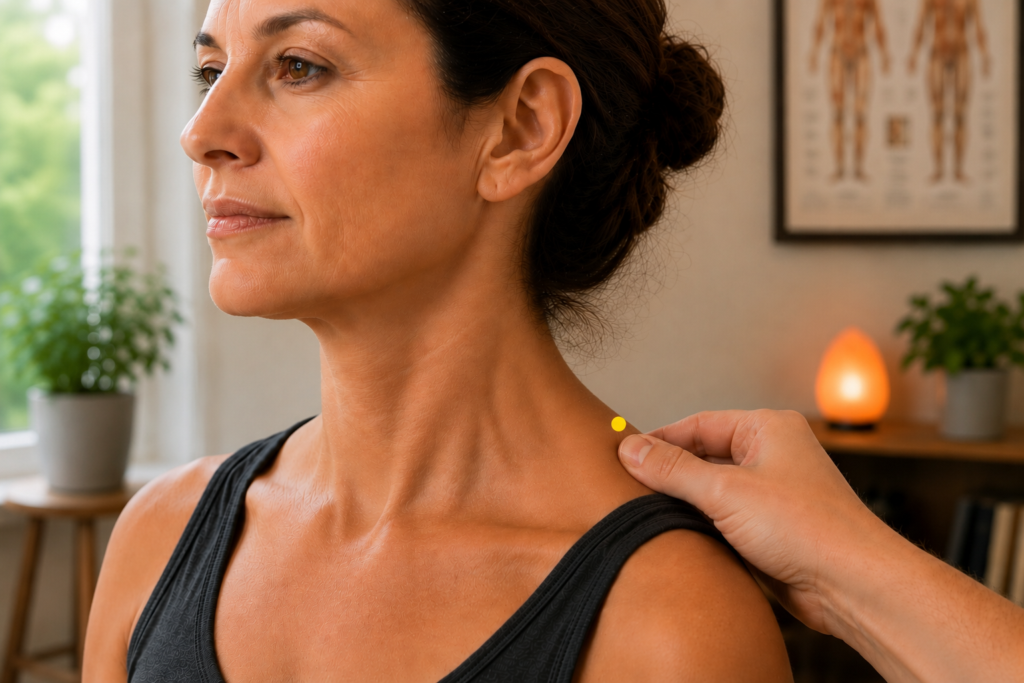
3. Press on GB21 on the top of the shoulder to release tension. GB21 sits on the top of the shoulder, halfway between the base of the neck and the outer tip of the shoulder, on the highest point of the muscle. Press with moderate pressure using the fingers of the opposite hand for one to two minutes on each side. GB21 is called “Jianjing,” the “Shoulder Well.”
GB21 releases tight, knotted muscles across the tops of the shoulders and at the base of the neck, where stress often settles first. GB21 is avoided during pregnancy.
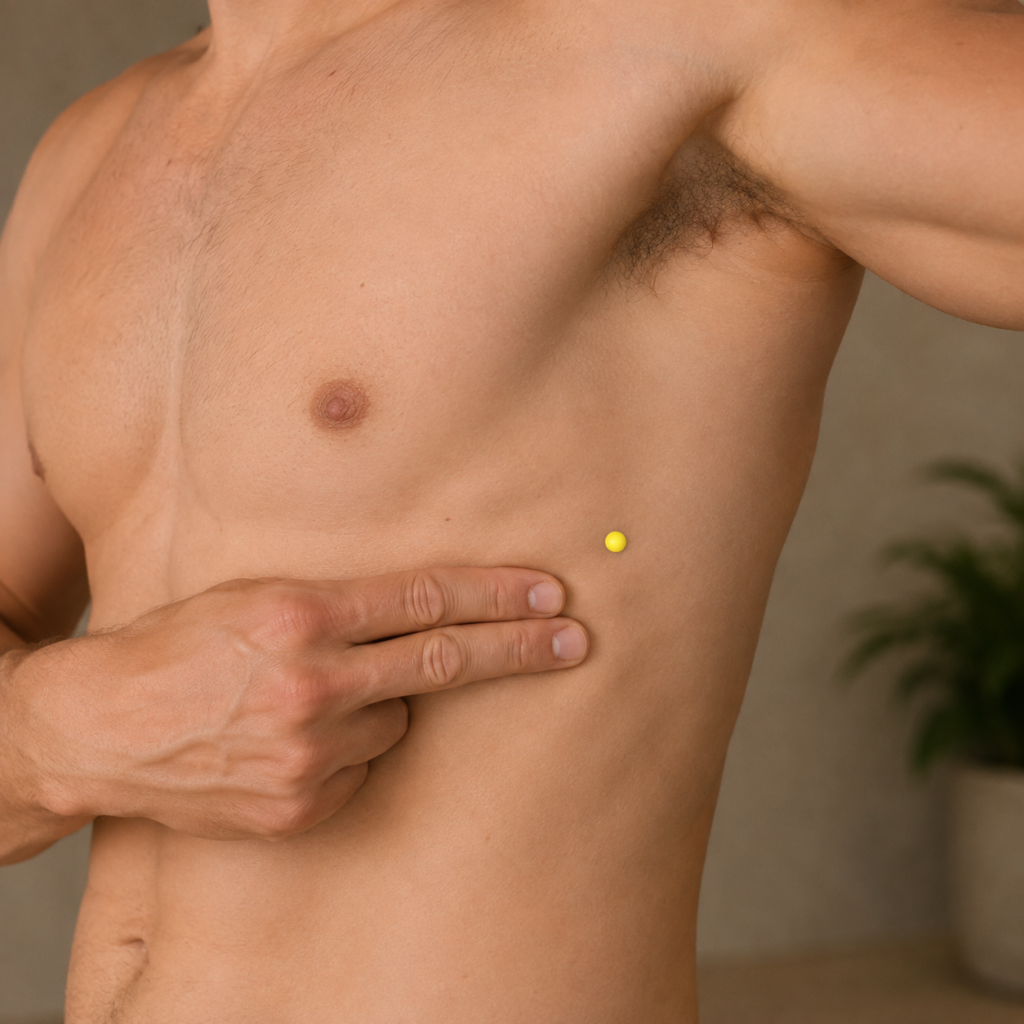
4. Press on SP21 on the side of the chest to ease aching all over. SP21 sits on the side of the rib cage, in line with the center of the armpit, about a hand-width below the armpit, in the space between two ribs. Press with moderate pressure using the fingers of the opposite hand for one to two minutes on each side. SP21 is called “Dabao,” the “Great Embrace.”
SP21 is the great connecting point of the Spleen and one of the most important points in Traditional Chinese Medicine for pain and aching throughout the body. It moves Blood through the small vessels that supply the muscles and relieves weakness and heaviness in the limbs.
5. Press on ST36 below the knee to strengthen tired muscles. ST36 sits on the front of the lower leg, four finger-widths below the bottom of the kneecap and one finger-width out from the edge of the shinbone. Press firmly with your thumb for one to two minutes on each leg. ST36 is called “Zusanli,” the “Leg Three Miles.”
ST36 is the Stomach’s sea point. It builds Qi and Blood to nourish the muscles and may help with lingering soreness when the body is run down.
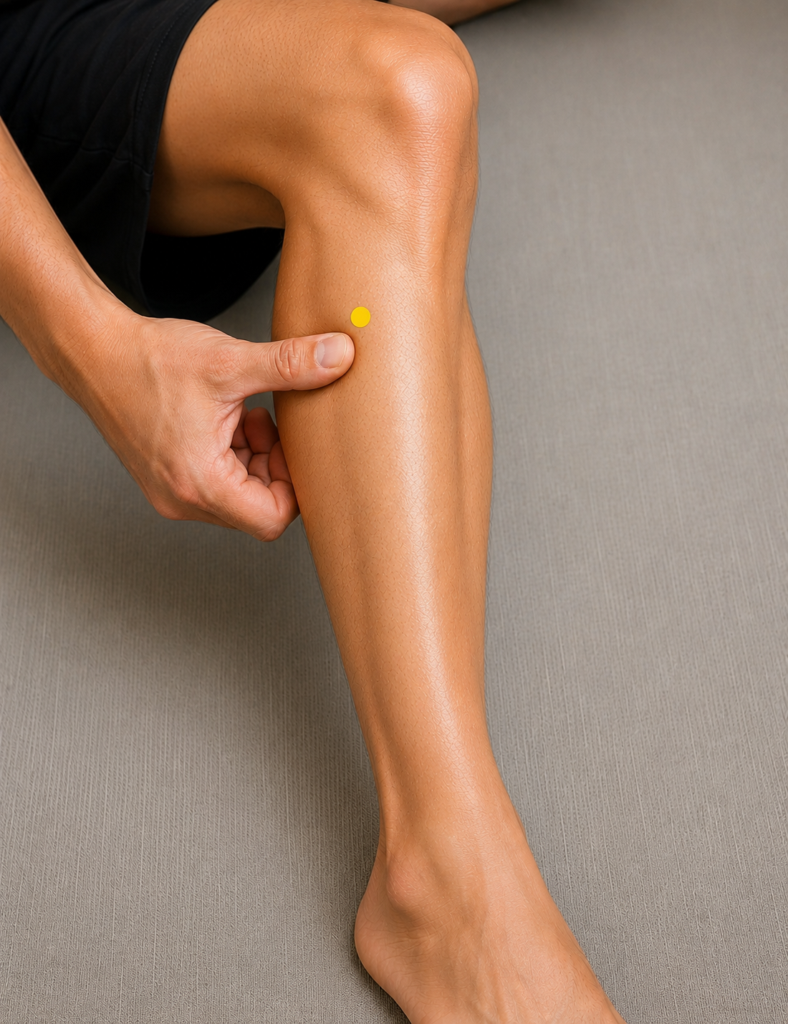
6. Press on GB34 below the outer knee to relax the tendons. GB34 sits on the outer side of the lower leg, in the hollow just in front of and below the small bony bump below the outside of the knee. Press firmly with your thumb for one to two minutes on each leg. GB34 is called “Yanglingquan,” the “Yang Mound Spring.”
GB34 is the influential point of the tendons. It relaxes tight sinews throughout the body and relieves stiffness and cramping in the muscles of the legs, hips, and back.
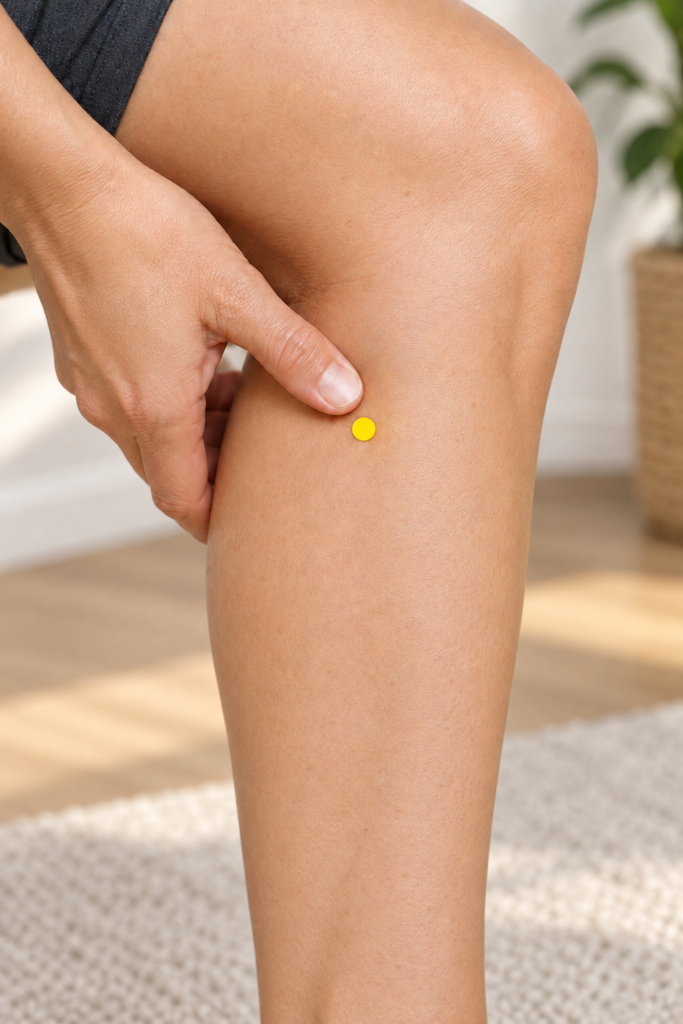
7. Press on BL57 on the back of the calf to release tight legs. BL57 sits on the back of the lower leg, halfway between the crease behind the knee and the heel, in the hollow where the two bellies of the calf muscle come together. Press firmly with your thumb for one to two minutes on each leg. BL57 is called “Chengshan,” the “Support the Mountain.”
BL57 is a classic point for sore, cramping, or tight calves. The Bladder channel it lies on runs up the backs of the legs and along the spine, so it can also help ease backaches.
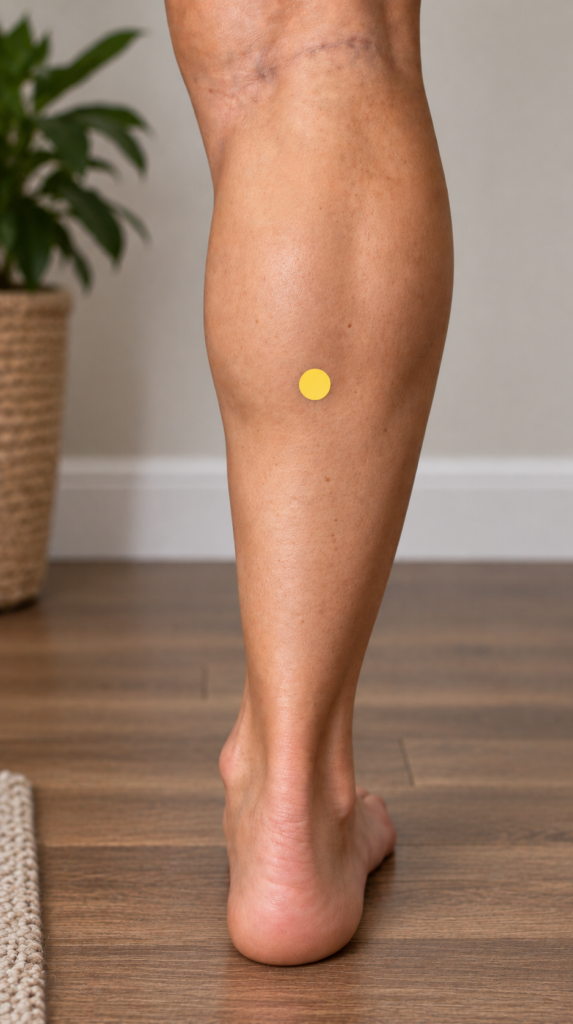
8. Press on SP6 above the inner ankle to nourish the muscles. SP6 sits on the inner side of the lower leg, four finger-widths above the tip of the inner ankle bone, just behind the edge of the shinbone. Press firmly with your thumb for one to two minutes on each leg. SP6 is called “Sanyinjiao,” the “Three Yin Intersection.”
SP6 is where the Spleen, Liver, and Kidney channels of the leg meet. It nourishes Blood, strengthens the Spleen, and helps relieve muscle aches accompanied by tiredness and heaviness. SP6 is avoided during pregnancy.
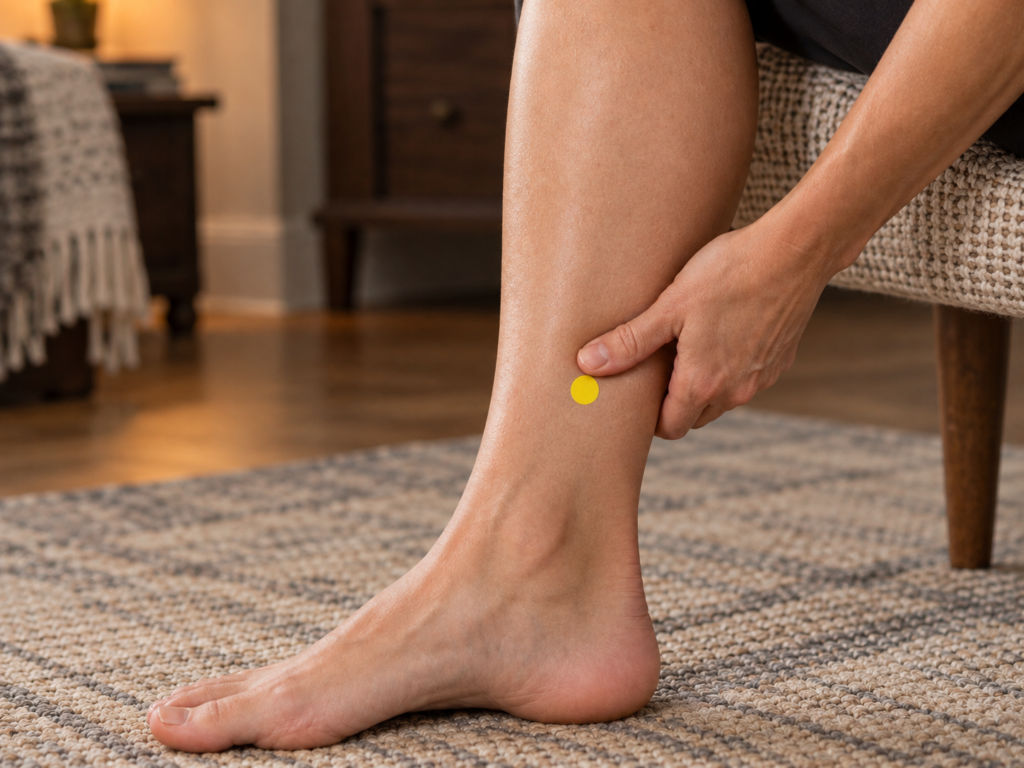
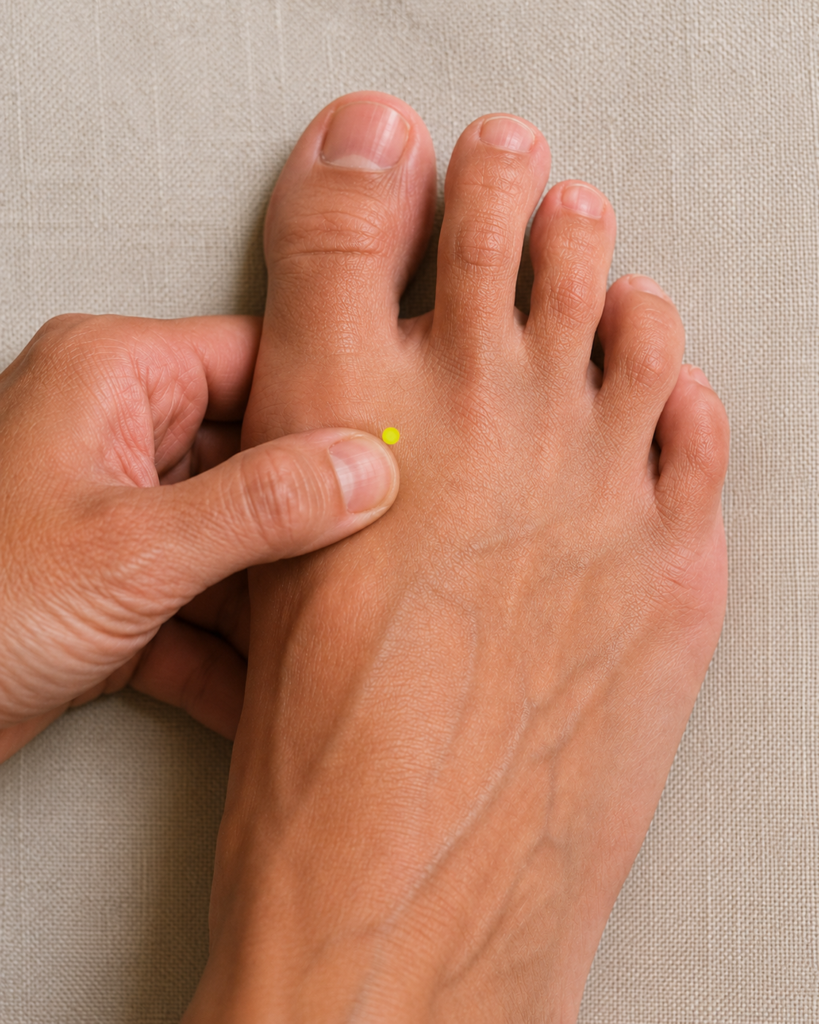
9. Press on LV3 on the top of the foot to let go of tension. LV3 sits on the top of the foot, in the hollow where the bones of the big toe and second toe meet, about two finger-widths back from the web between the toes. Press firmly with your thumb for one to two minutes on each foot. LV3 is called “Taichong,” the “Great Rushing.”
LV3 is the Liver’s source point. It moves stagnant Qi and relaxes the sinews. Paired with LI4, it helps ease tension and pain throughout the body, especially when stress is involved.
Why These Acupressure Points Work
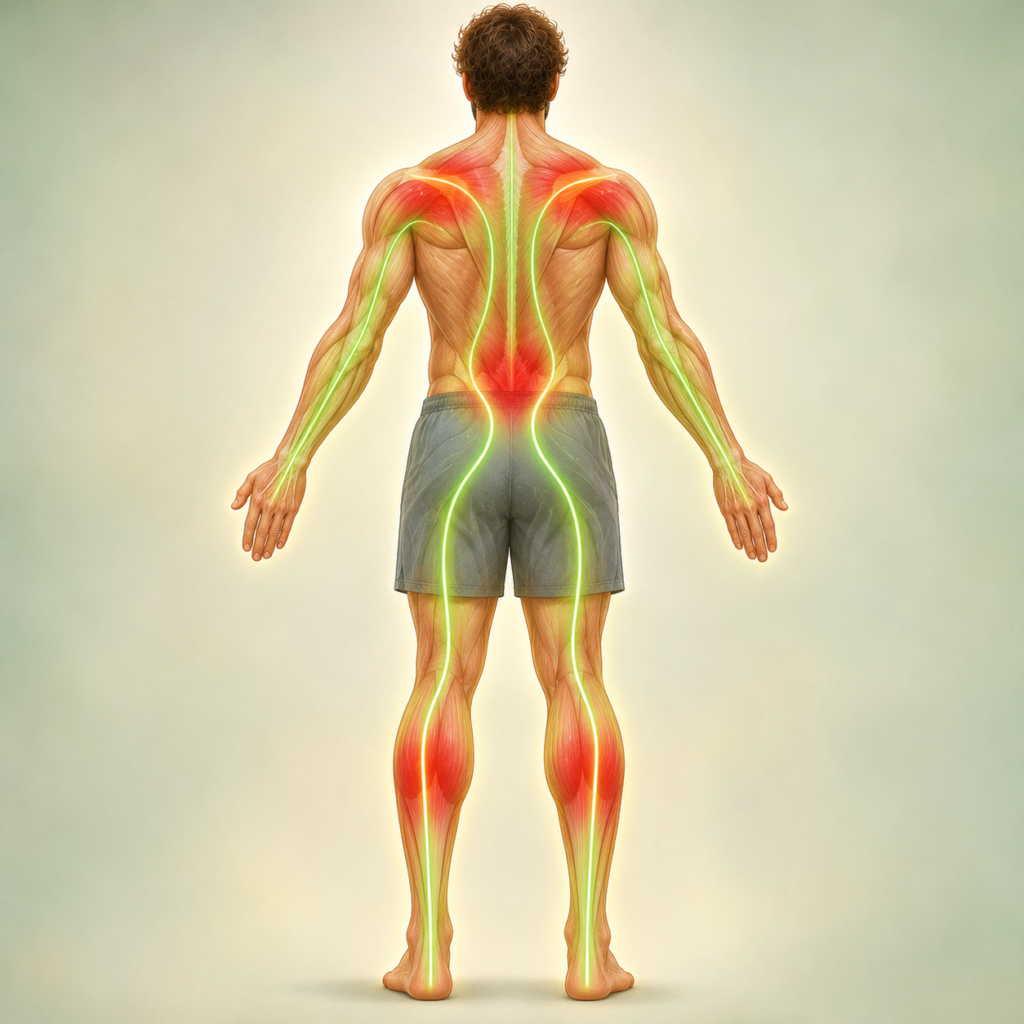
From a Traditional Chinese Medicine perspective, sore muscles are either blocked or undernourished. Strain, stress, and cold obstruct the flow of Qi and Blood, while overwork and poor eating leave the muscles lacking nourishment. Some of these points restore the flow, some replenish the Qi and Blood that nourish the muscles, and others relax the sinews where tension is held.
The nine points work together to relieve muscle pain:
- LI4 and LV3 move Qi through the whole body and calm tension.
- LI10 and GB21 release the arms, shoulders, and neck.
- SP21, ST36, and SP6 nourish the muscles and ease aching all over.
- GB34 and BL57 relax the tendons and tight muscles of the legs and back.
How to Properly Use These Acupressure Points
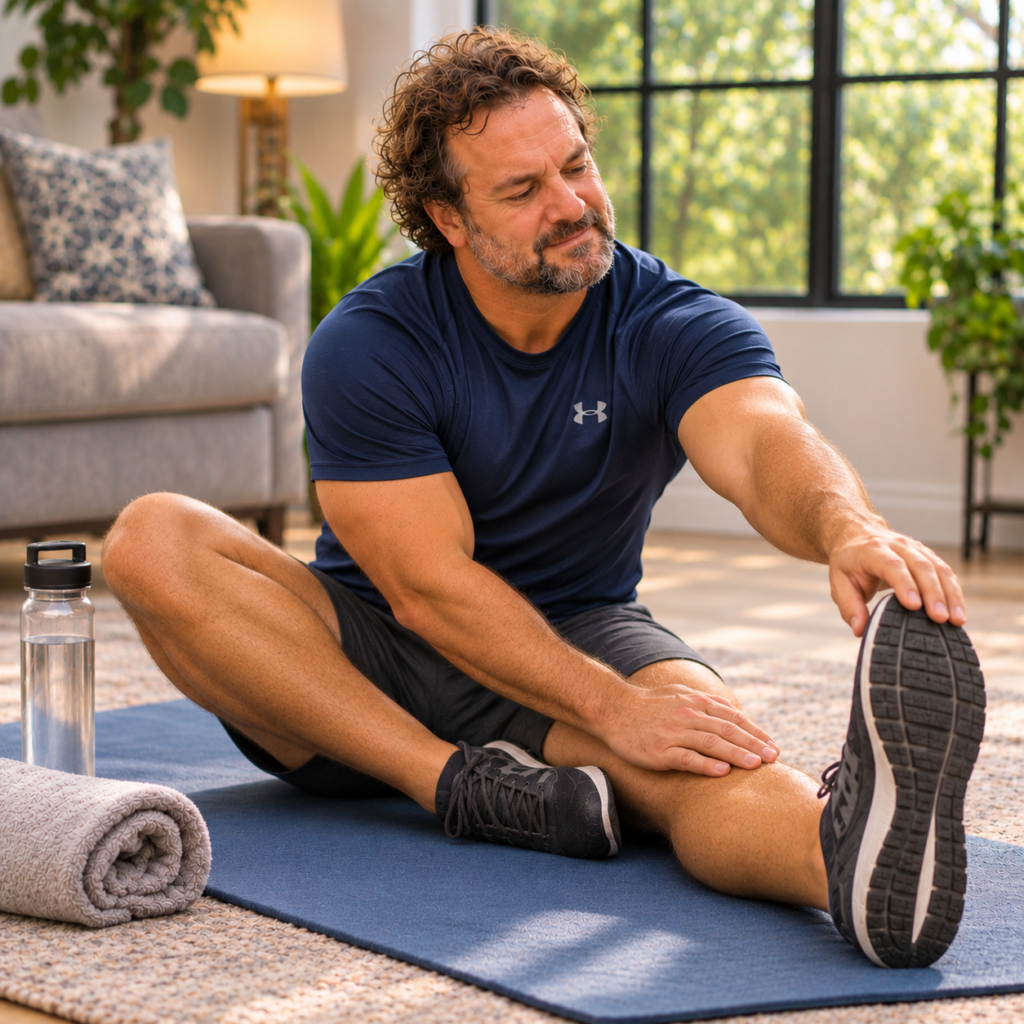
Acupressure can help relieve muscle pain after exercise, at the end of a long day, or while recovering from a cold or the flu.
- Following strenuous exercise or physical labor, apply pressure to GB34, BL57, and ST36 on both legs, followed by LI10 and GB21 on both sides.
- For generalized body aches associated with a cold or the flu, apply pressure to LI4 on both hands and SP21 on both sides, then rest.
- When stress causes tension in the neck and shoulders, apply pressure to GB21, LI4, and LV3 on both sides while breathing slowly.
- For muscles that remain fatigued and sore for several days, apply pressure to ST36 and SP6 once daily.
- Apply firm pressure to the hands, arms, legs, and feet, and moderate pressure to the shoulders and sides of the chest. Reduce pressure if any point feels bruised. LI4, GB21, and SP6 are avoided during pregnancy.
Muscles recover best with a balance of rest and gentle movement. Light walks, easy stretching, and a warm shower can loosen stiff muscles better than staying still for days. For a recent strain, use cold during the first day to calm swelling, then switch to warmth to keep Qi and Blood moving. Drink enough water, eat regular meals with sufficient protein, and protect your sleep, since muscles repair overnight. If you use over-the-counter pain relievers, follow the label. Check with a doctor first if you have kidney or liver problems, and avoid ibuprofen and similar drugs if you’ve had stomach ulcers or bleeding, or while taking blood thinners. If a new medicine, such as a statin, seems to be causing muscle aches, talk with the prescribing doctor before stopping it.
Learn more about why Traditional Chinese Medicine does not like ice.
When to Get Professional Help
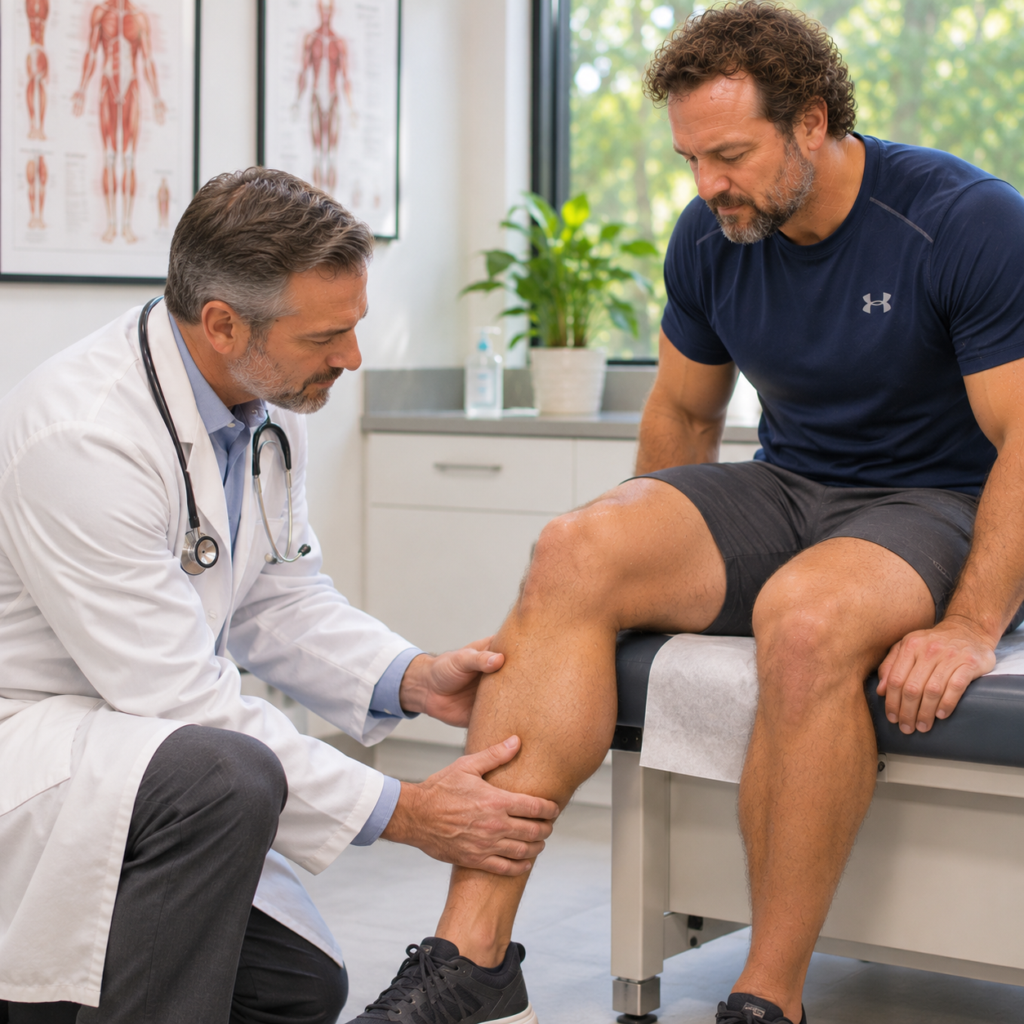
Contact a doctor right away if muscle pain occurs with a fever of 100.4°F or higher, worsens, or is accompanied by a new rash, new joint pain, or a severe headache with neck pain, drowsiness, or confusion. Go to the emergency room for severe muscle pain and weakness with dark, cola-colored urine after intense exercise, a fall, or heat exposure; this may signal muscle breakdown that can harm the kidneys. Seek urgent care for calf pain accompanied by swelling, warmth, or redness in one leg, as this may signal a blood clot. Call 911 for chest pain or shortness of breath. Have a doctor check muscle pain that begins after starting a new medicine, follows a tick bite, or does not improve within a few days. Women who develop new or severe muscle pain during pregnancy should contact their obstetric provider.
Acupressure is a gentle, supportive practice for muscle pain. It complements, and does not replace, diagnosis and medical care.
For related health concerns, acupressure to recover after a workout, acupressure for muscle spasms, and acupressure for fibromyalgia are companion posts.
Above and Beyond Acupuncture offers acupuncture, cupping, and lifestyle coaching at the North Frank Lloyd Wright Boulevard location in Scottsdale.
Schedule an appointment online to start your healing journey.
The points above are only as effective as the technique used to apply them. Where to press, how firmly, and for how long all affect the result. For a full breakdown of how to perform acupressure properly at home, read Performing Acupressure in 3 Easy Steps.
About the Publisher
Paul Kerzner, L.Ac., is a licensed acupuncturist and board-certified herbalist, as well as the founder of Above and Beyond Acupuncture in Scottsdale. His own journey from chronic patient to practicing acupuncturist shapes his commitment to providing honest, clinically grounded information about acupuncture and Traditional Chinese Medicine. Learn more about Paul and his clinical approach on the About Us page.