Key Takeaways
- Eye twitching, called myokymia, is a brief, involuntary flutter of the muscles around one eye that is usually harmless and often fades on its own within days.
- Stress, poor sleep, excessive caffeine or alcohol, eye strain, and dry eyes are the most common triggers.
- In Traditional Chinese Medicine, a twitching eyelid reflects internal Wind stirred up when Liver Blood is too thin to nourish the eyes and muscles, often accompanied by a tired Spleen and ongoing stress.
- Nine acupressure points on the face, neck, arms, legs, and feet help calm the twitch, relax the eyes, and nourish the Blood.
- Twitching that lasts more than a few weeks, closes the eye, spreads to the face, or is accompanied by pain, redness, a drooping lid, or vision changes should be evaluated by a doctor.

It often starts as a tiny twitch in your lower eyelid, so subtle that others can’t see it, though you definitely notice. It may last a few seconds, disappear, and return during a meeting or while you’re reading at night. Many people notice it during stressful weeks, after several nights of poor sleep, or after having a bit too much coffee.
According to Geisinger, eye twitching, medically known as myokymia, involves small, involuntary contractions of the muscles around the eye. It usually affects one eye at a time, lasts from a few seconds to several minutes, may recur over several days, and is typically harmless. Common triggers include stress, fatigue, too much caffeine or alcohol, eye strain, dry or irritated eyes, tobacco use, and certain medications. Geisinger recommends managing stress, getting at least seven hours of sleep, reducing caffeine, taking regular breaks from screens, using artificial tears, and applying a warm compress. It advises seeing a doctor if twitching lasts more than a few weeks or is accompanied by pain, redness, vision changes, or a drooping eyelid.
The muscle that closes your eyelid is tiny, but it’s always working, blinking thousands of times a day. Stress, too much coffee, poor sleep, or dry, itchy eyes can disrupt the nerve that controls it and cause a twitch. Usually, getting some rest and reducing stimulation is enough to make it go away.
In Traditional Chinese Medicine, the eyes are associated with the Liver and the eyelids with the Spleen. The Liver is said to store Blood and send it to nourish the eyes. Working long hours, sleeping poorly, or staring at screens all day can deplete Blood, leaving the eye muscles undernourished. This can stir up internal Wind, which can manifest as a twitch or tremor. If worry or irregular eating weakens the Spleen, the eyelid muscles may also weaken, and stress-related Liver Wind can make the twitching worse.
The points below begin around the eyes and the back of the neck, continue to the arms, and end with the legs and feet.
What Acupressure Points to Press and Why
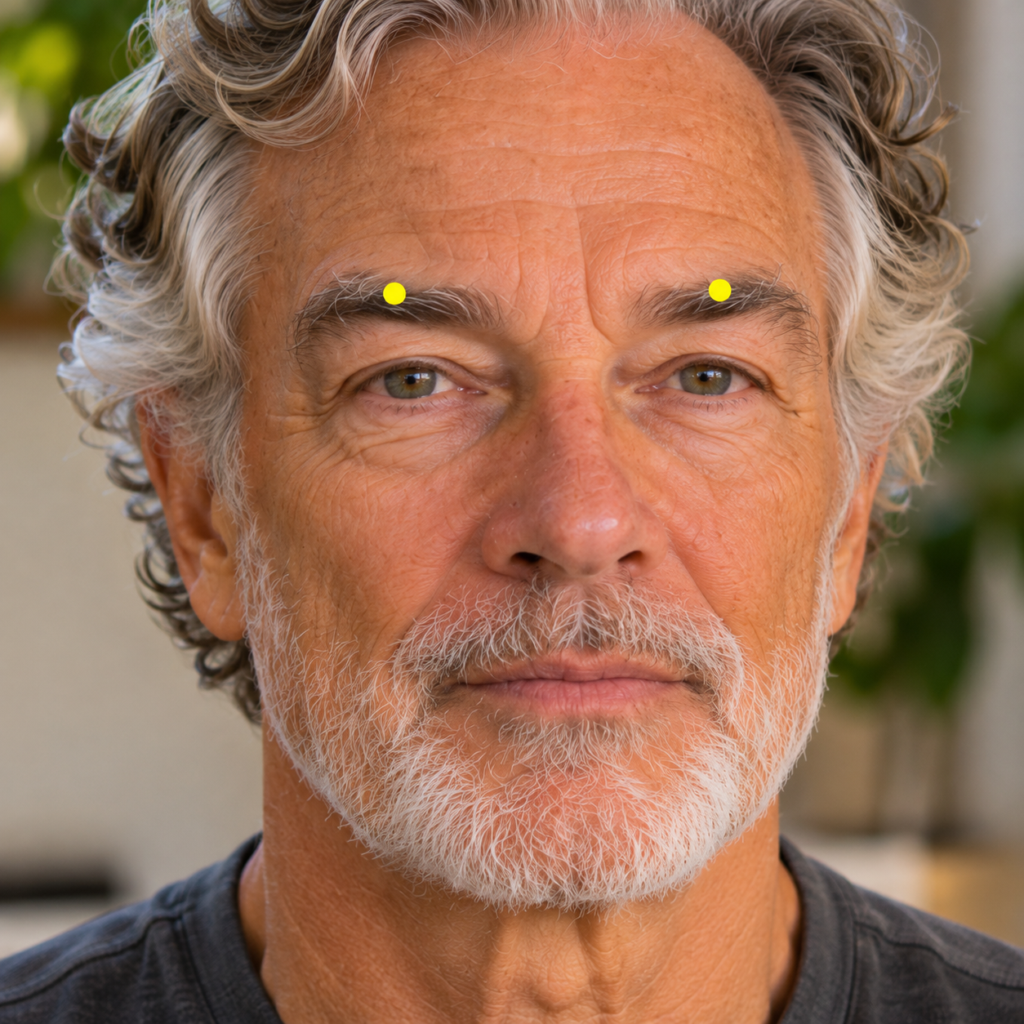
1. Press on Yuyao in the middle of the eyebrow to calm the eyelid. Yuyao sits in the middle of the eyebrow, directly above the pupil when looking straight ahead, in the small hollow in the brow. Press gently with your index fingertips for one minute on both sides, keeping the pressure on the brow bone and off the eyelid. Yuyao means the “Fish Waist.”
Yuyao is an extra point traditionally used for eyelid twitching, eye strain, and pain around the eye. It lies directly over the muscle that closes the upper eyelid and is used to relax it.
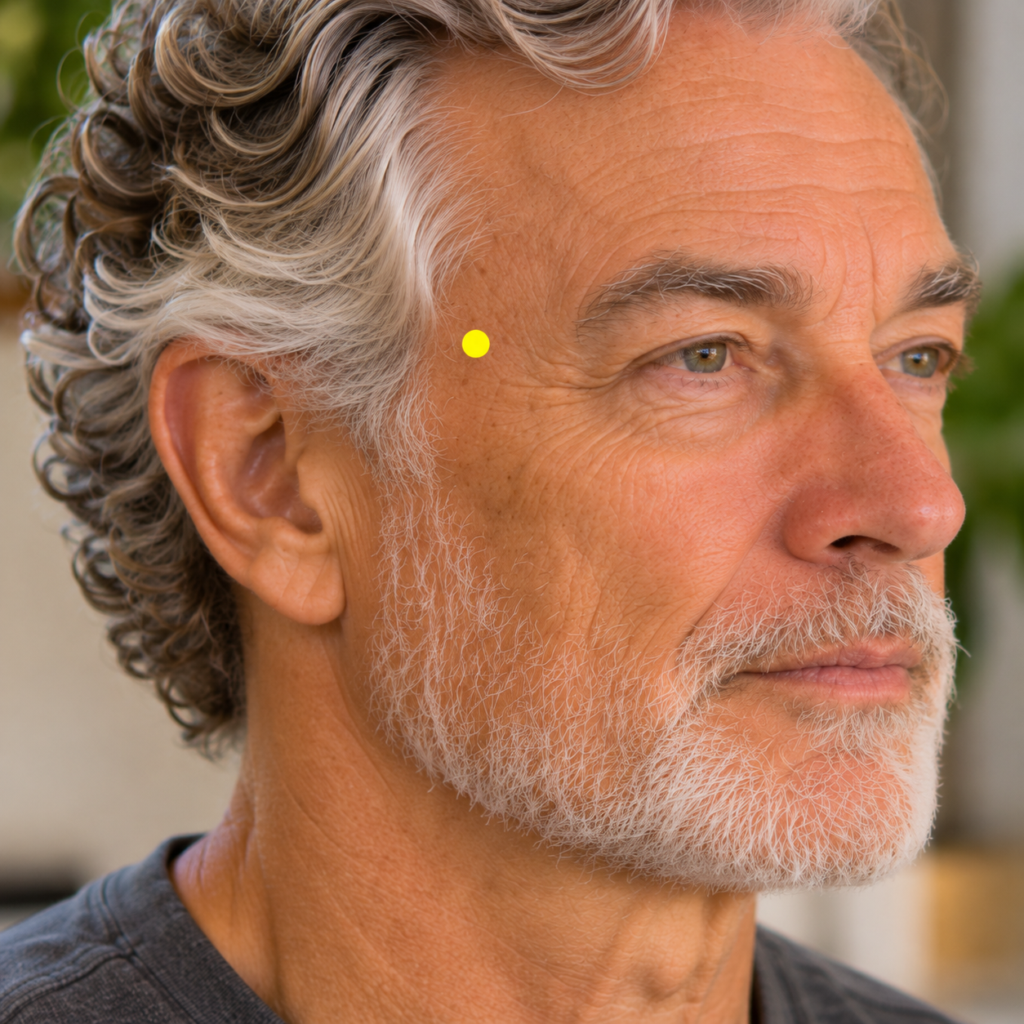
2. Press on Taiyang at the temple to relax the eyes. Taiyang sits in the soft hollow at the temple, about one thumb-width behind the point midway between the outer end of the eyebrow and the outer corner of the eye. Press gently in small circles with your middle fingertips for one to two minutes on both sides. Taiyang means the “Supreme Yang.”
Taiyang is an extra point that helps relieve tension around the eyes and temples. It can be useful for twitching associated with tired eyes, eye strain, or a tension headache.
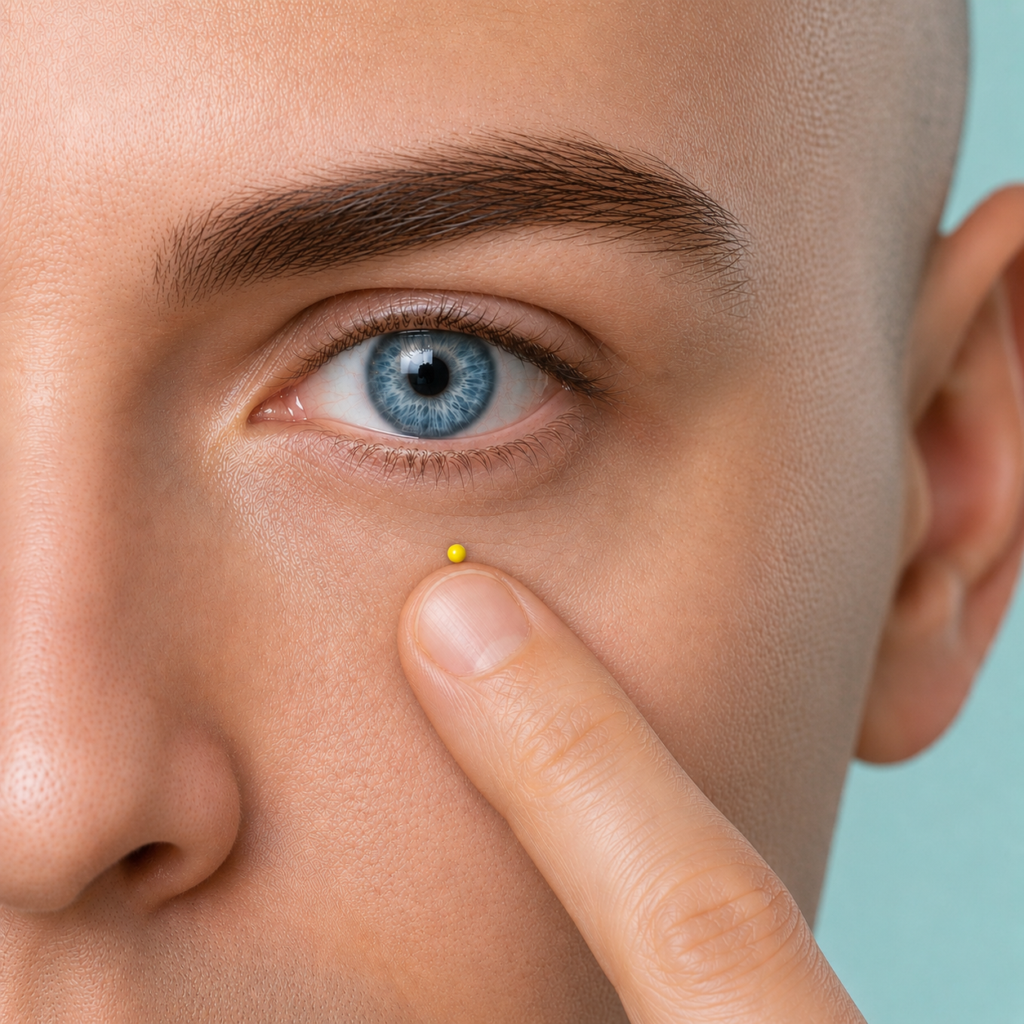
3. Press on ST2 below the eye to calm the lower lid. ST2 sits on the cheek, directly below the pupil when looking straight ahead, in the small dip in the cheekbone about one finger-width below the lower edge of the eye socket. Press gently with your index fingertips for one minute on both sides, staying on the bone and away from the eye itself. ST2 is called “Sibai,” the “Four Whites.”
ST2 is a classic local point for lower-eyelid twitching and facial spasms. It relaxes the muscles beneath the eye, where the flutter usually starts.
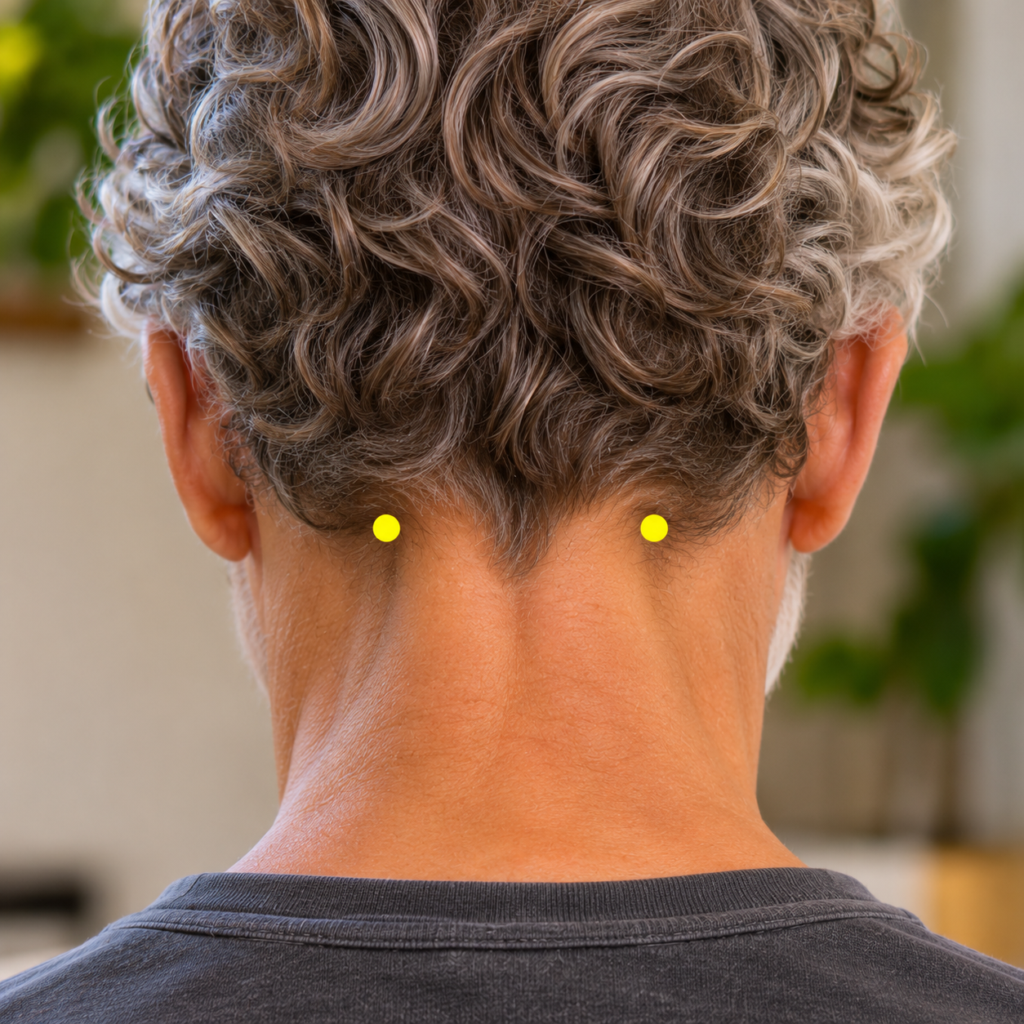
4. Press on GB20 at the base of the skull to settle Wind. GB20 sits at the base of the skull, in the hollow between the two large muscles at the back of the neck on each side. Press firmly upward with your thumbs for one to two minutes while letting your head rest back into your hands. GB20 is called “Fengchi,” the “Wind Pool.”
GB20 is a classic point for calming internal Wind and for problems of the eyes. It relieves neck tension that builds up after long periods at a screen and can help the eyes feel clearer.
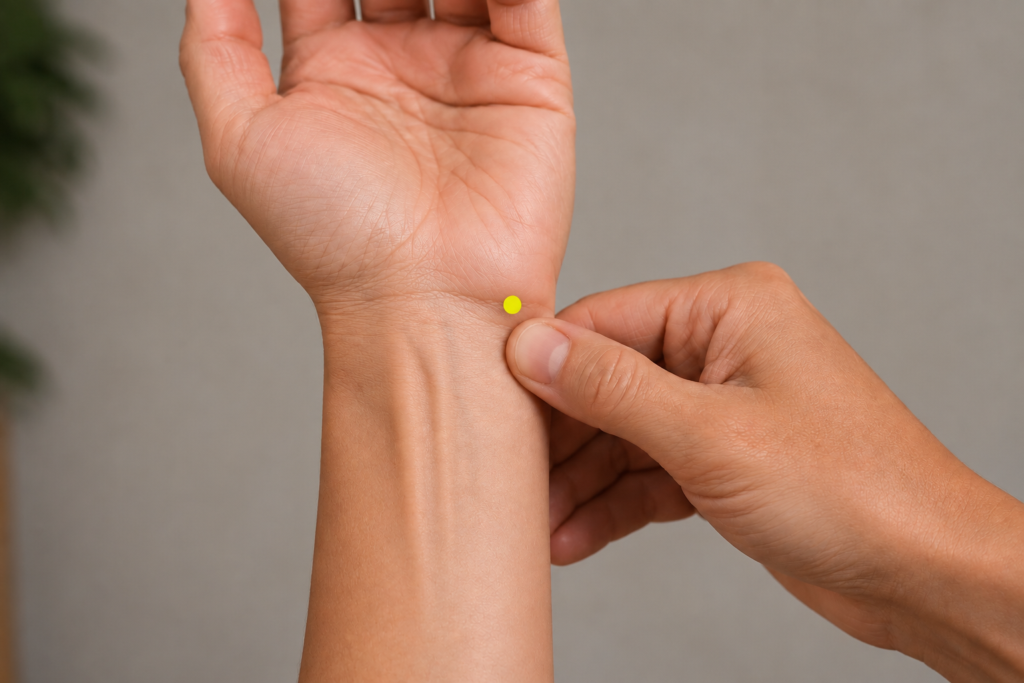
5. Press on HT7 at the wrist crease to calm the mind. HT7 sits on the inner wrist crease, on the little finger side, in the small hollow just inside the tendon. Press with moderate pressure using the thumb of your other hand for one to two minutes on each wrist. HT7 is called “Shenmen,” the “Spirit Gate.”
HT7 is the Heart’s source point. It calms the mind, eases anxiety, and may help with restless sleep when stress and short nights cause the twitching.
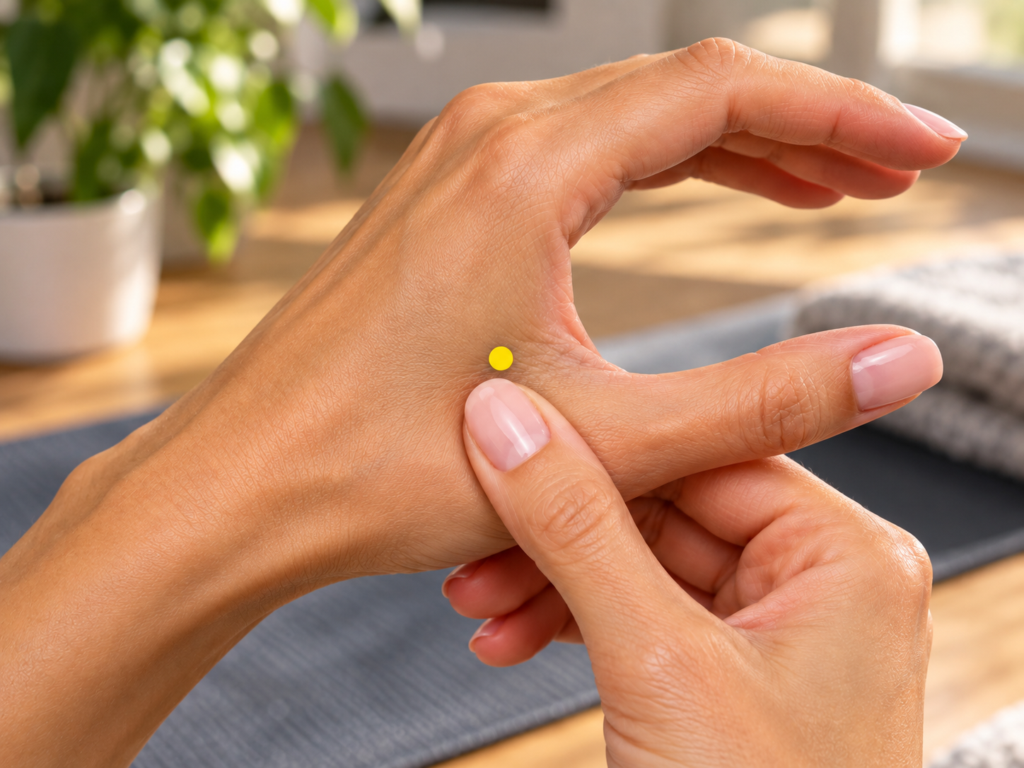
6. Press on LI4 on the back of the hand to relax the face. LI4 sits on the back of the hand, in the web between the thumb and index finger, at the highest point of the muscle when the thumb is pressed against the index finger. Press firmly with the thumb of your other hand for one to two minutes on each hand. LI4 is called “Hegu,” the “Joining Valley.”
LI4 is the Large Intestine’s source point and a classic point for facial concerns. It relaxes the facial and eye muscles and is used with LV3 to relieve tension. LI4 is avoided during pregnancy.
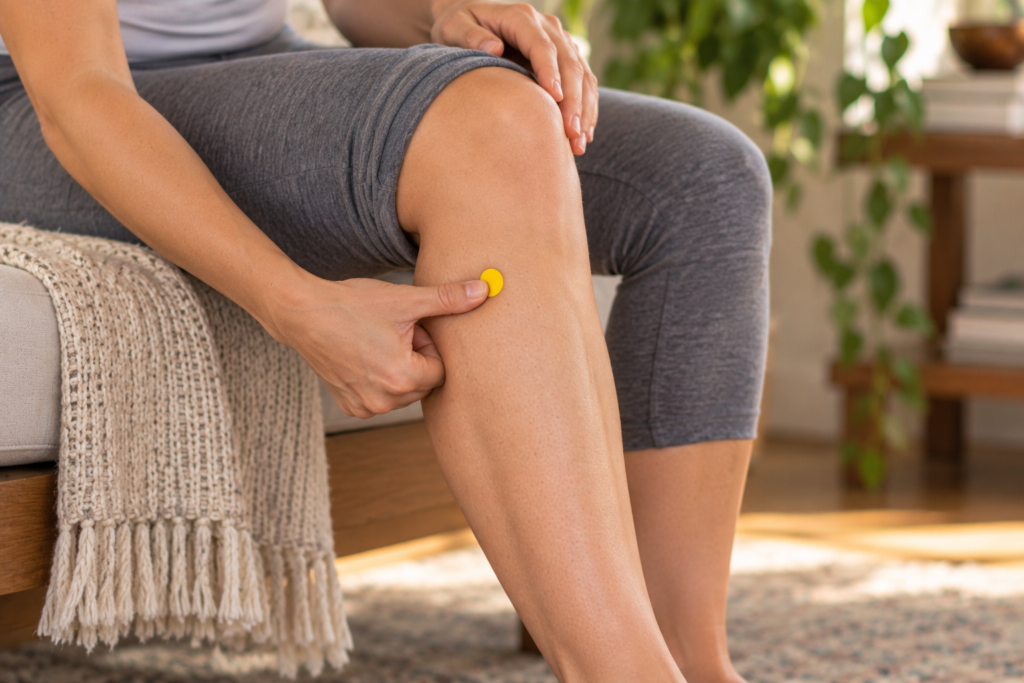
7. Press on ST36 below the knee to strengthen the eyelid muscles. ST36 sits on the front of the lower leg, four finger-widths below the bottom of the kneecap and one finger-width out from the edge of the shinbone. Press firmly with your thumb for one to two minutes on each leg. ST36 is called “Zusanli,” the “Leg Three Miles.”
ST36 is the sea point of the Stomach. It strengthens the Stomach and Spleen, which nourish the muscles, including the small muscles of the eyelids, and helps build energy when fatigue is part of the picture.
8. Press on SP6 above the inner ankle to nourish Blood. SP6 sits on the inner side of the lower leg, four finger-widths above the tip of the inner ankle bone, just behind the edge of the shinbone. Press firmly with your thumb for one to two minutes on each leg. SP6 is called “Sanyinjiao,” the “Three Yin Intersection.”
SP6 is where the Spleen, Liver, and Kidney channels of the leg meet. It nourishes the Blood that feeds the eyes and helps relieve twitching caused by poor sleep or prolonged overwork. SP6 is avoided during pregnancy.
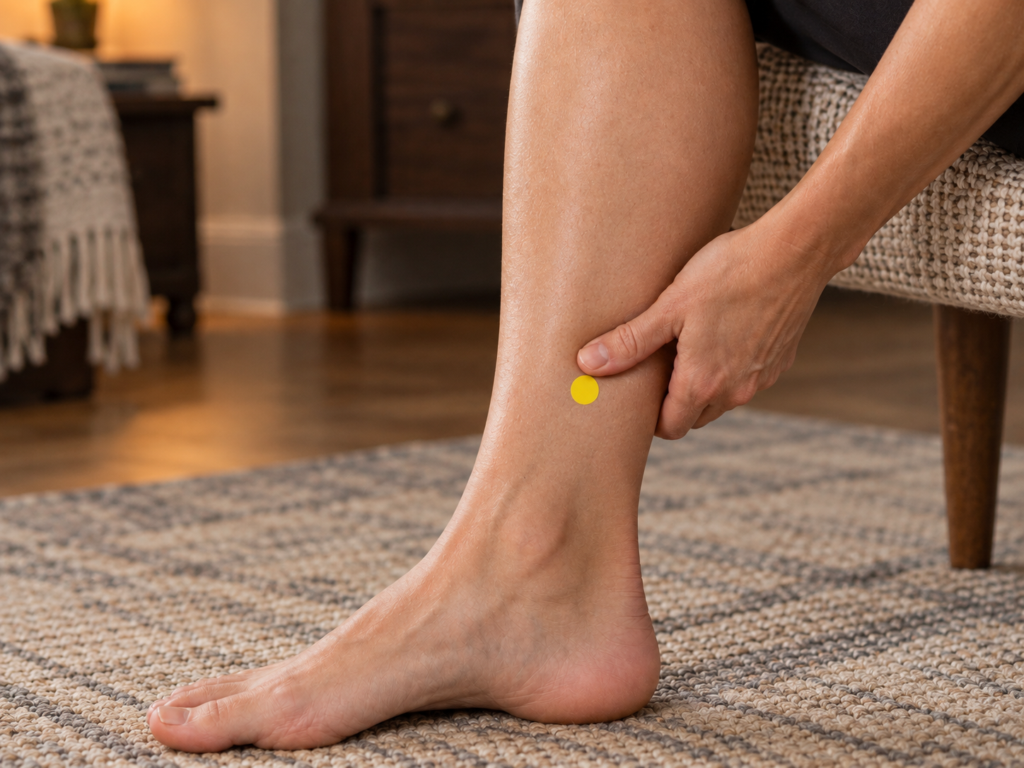
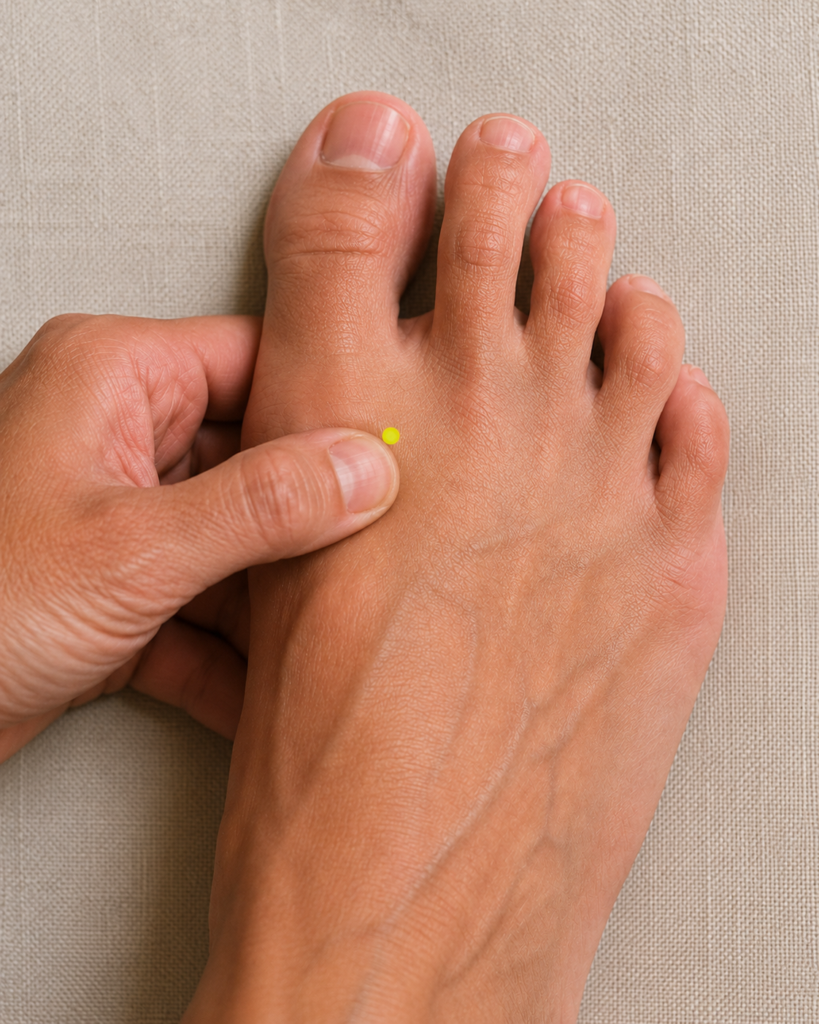
9. Press on LV3 on the top of the foot to calm Liver Wind. LV3 sits on the top of the foot, in the hollow where the bones of the big toe and second toe meet, about two finger-widths back from the web between the toes. Press firmly with your thumb for one to two minutes on each foot. LV3 is called “Taichong,” the “Great Rushing.”
LV3 is the Liver’s source point and one of the most important points in Traditional Chinese Medicine for calming internal Wind. Because the Liver channel rises to the eyes, LV3 helps ease the stress and tension that trigger twitching.
Why These Acupressure Points Work
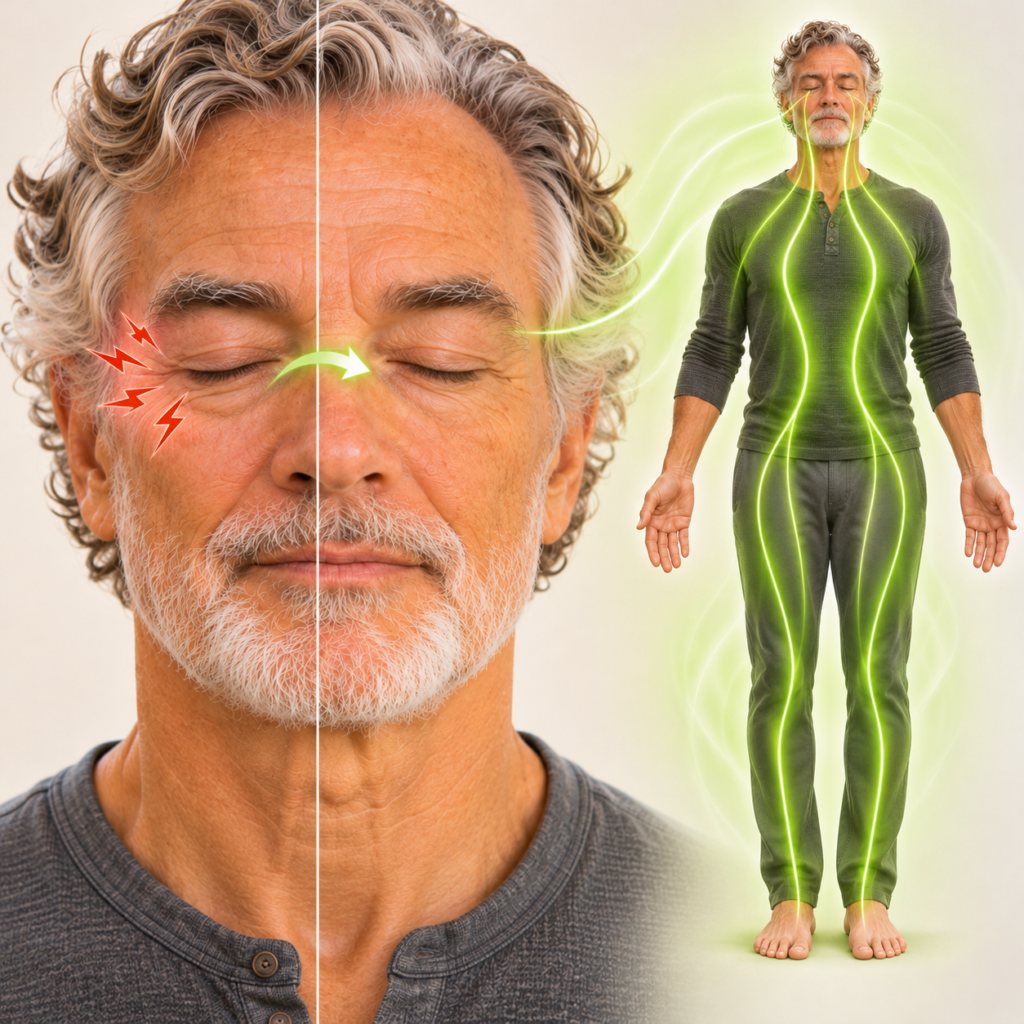
From a Traditional Chinese Medicine perspective, an eyelid twitch is a small sign of Wind stirring, as the eyes lack Blood and the nervous system is running hot. Points around the eyes relax the twitching muscles; GB20 and LV3 calm the Wind, HT7 settles the mind, and points on the legs rebuild the Blood and Qi that nourish the eyes and eyelids.
The nine points work together to alleviate eye twitching:
- Yuyao, Taiyang, and ST2 relax the muscles around the eyes.
- GB20, LI4, and LV3 calm Wind and release tension.
- HT7 settles the mind and supports sleep.
- ST36 and SP6 nourish the Blood and Qi that feed the eyes.
How to Properly Use These Acupressure Points
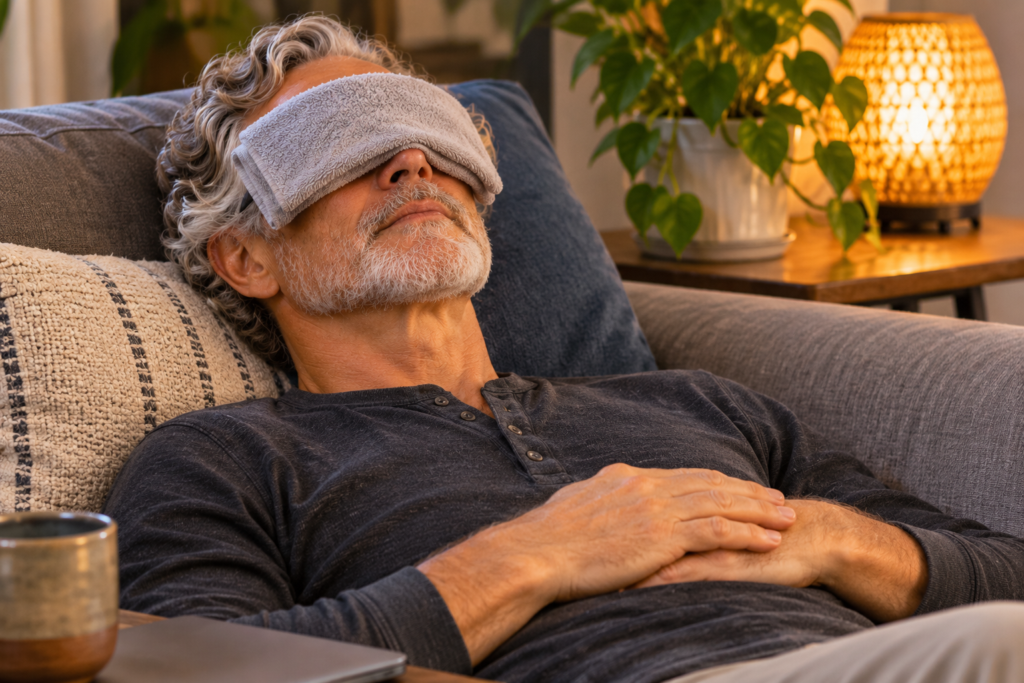
Acupressure can help ease eye twitching when it starts, and it can also serve as a brief routine after a long day in front of a screen.
- When the twitch begins, gently press Yuyao and ST2 on both sides, then press Taiyang while closing your eyes and breathing slowly.
- After a day in front of a screen, press GB20 at the base of your skull, followed by LI4 and LV3 on both sides.
- If stress or lack of sleep is causing the twitching, press HT7 on both wrists before bed.
- If twitching keeps coming back, activate ST36 and SP6 on both legs once daily.
- Use only light pressure around the eyes, keeping to the bone and never pressing on the eyeball. Apply firm pressure to the neck, hands, legs, and feet. LI4 and SP6 are avoided during pregnancy.
Most eye twitching subsides once its triggers are addressed. Geisinger recommends consistently aiming for at least seven hours of sleep each night, gradually reducing caffeine, and following the 20-20-20 rule when using screens: every 20 minutes, look at an object approximately 20 feet away for 20 seconds. For dry eyes, use artificial tears and apply a warm compress to the closed eye for five to ten minutes once or twice daily. Reduce alcohol and tobacco use, and incorporate a daily stress-management activity, such as walking, stretching, or slow breathing. Traditional Chinese Medicine also recommends resting the eyes before bed rather than scrolling and eating foods considered nourishing to Blood, such as dark leafy greens, eggs, beets, and dates.
Learn more about restoring your circadian rhythm.
When to Get Professional Help
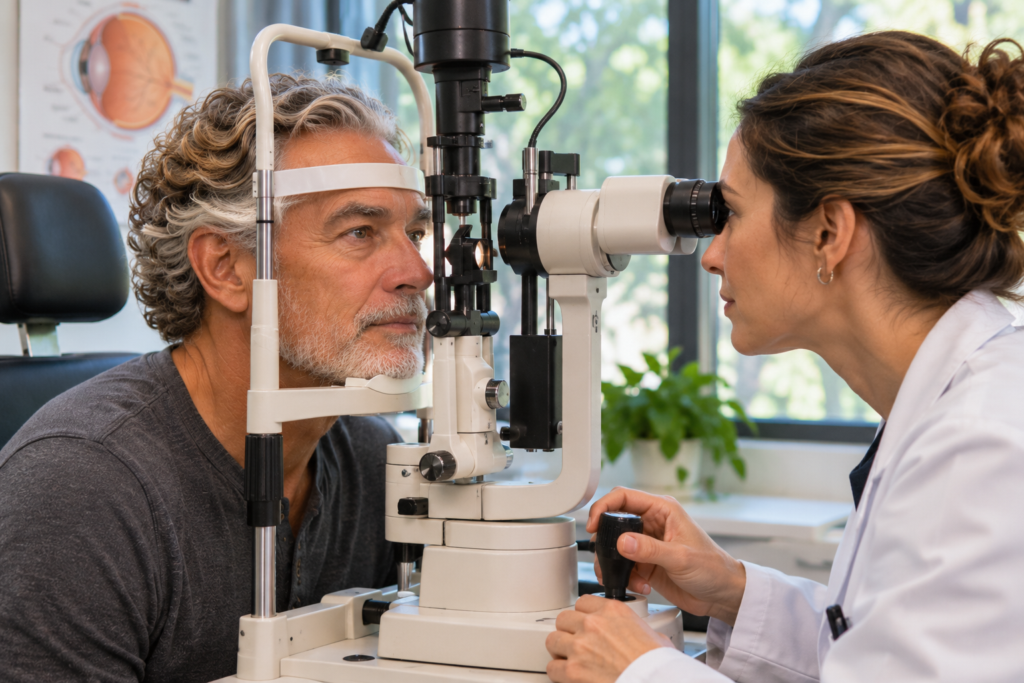
See a doctor or eye doctor if the twitching lasts more than a few weeks; is accompanied by eye pain, redness, discharge, or vision changes; or causes one eyelid to droop. Also seek medical advice if the eyelid closes completely with each spasm, both eyes blink or squeeze shut uncontrollably (which may be a sign of blepharospasm), or the twitching spreads to the cheek and/or mouth on the same side of the face (which may be a sign of hemifacial spasm). Call 911 for sudden drooping on one side of the face, sudden weakness or numbness in an arm or leg, difficulty speaking, or a sudden, very severe headache, as these may be signs of a stroke. If twitching begins after you start a new medication, discuss it with the prescribing doctor.
Acupressure is a gentle, supportive practice for eye twitching. It complements, and does not replace, diagnosis and medical care.
For related health concerns, acupressure for eye strain, acupressure for dry eyes, and acupressure for muscle spasms are companion articles.
Above and Beyond Acupuncture offers acupuncture, cupping, and lifestyle coaching at the North Frank Lloyd Wright Boulevard location in Scottsdale.
Schedule an appointment online to start your healing journey.
The points above are only as effective as the technique used to apply them. Where to press, how firmly, and for how long all affect the result. For a full breakdown of how to perform acupressure properly at home, read Performing Acupressure in 3 Easy Steps.

About the Publisher
Paul Kerzner, L.Ac., is a licensed acupuncturist and board-certified herbalist, as well as the founder of Above and Beyond Acupuncture in Scottsdale. His own journey from chronic patient to practicing acupuncturist shapes his commitment to providing honest, clinically grounded information about acupuncture and Traditional Chinese Medicine. Learn more about Paul and his clinical approach on the About Us page.