
Key Takeaways
- ADHD is a neurodevelopmental condition marked by difficulty paying attention, staying on task, and staying organized, along with restlessness and impulsive behavior. It often continues from childhood into adulthood.
- Standard ADHD care includes medication and behavioral approaches such as cognitive behavioral therapy, parent training, and school support. Sleep is also an important part of managing symptoms.
- In Traditional Chinese Medicine, focus depends on a settled Heart, a strong Spleen, and well-nourished Kidney Essence, whereas restlessness and impulsivity reflect a Liver whose energy rises too easily.
- Nine acupressure points on the head, forehead, wrists, hands, legs, and feet help calm the mind, ease restlessness and impulsivity, support focus, and improve sleep.
- Acupressure for ADHD is a supportive practice alongside medical care, and medication should never be stopped or changed without the prescribing provider’s approval.

ADHD is often portrayed as a young boy who can’t sit still, but it looks different for everyone. It might be a girl who daydreams in class and misplaces her homework, a teenager who blurts out answers and forgets assignments, or an adult who starts many projects but finishes none and is often late despite the best intentions. What these experiences have in common is a brain that struggles to focus when needed and to rein in impulsive actions.
The National Institute of Mental Health describes ADHD as a neurodevelopmental disorder involving inattention, such as difficulty focusing, staying on task, or staying organized, and hyperactivity and impulsivity, such as restlessness, excessive talking, interrupting, or difficulty waiting your turn. Symptoms typically begin in childhood and often continue through the teen years and into adulthood. Common treatments include medication and therapies such as cognitive behavioral therapy, parent training, and school support. Newer options include neurofeedback, cognitive training, and mindfulness. Research also highlights sleep as an important factor.
Living with ADHD often makes everyday tasks take more effort. Mornings can feel rushed, paperwork can pile up, conversations may drift, and it can be frustrating when good intentions don’t translate into finished work. Poor sleep, stress, and excessive screen time can make focusing even harder and increase restlessness.
In Traditional Chinese Medicine, attention and restlessness are linked to several organs. The Heart is said to house the mind, so when it is unsettled, attention scatters and sleep becomes light. The Spleen is connected to thinking and concentration, and if it is weak, the mind can feel foggy and drift into daydreams. The Kidney stores Essence that nourishes the brain, while the Liver helps energy flow smoothly. If Liver energy rises too easily, especially when Kidney Yin is weak, it can lead to restlessness, impatience, and impulsive behavior.
The nine points below calm the mind, ease restlessness and impulsivity, support focus, and improve sleep.
What Acupressure Points to Press and Why
1. Press on Sishencong on the top of the head to clear the mind and support focus. Sishencong is a group of four points on the top of the head, each about one thumb-width in front of, behind, and to either side of the very top of the head, where a line from the tops of the ears meets the midline. Press each point gently with your fingertips, or make slow, small circles, for one to two minutes in total. Sishencong is called the “Four Alert Spirit.”
Sishencong is an extra point traditionally used to clear the mind, sharpen focus and memory, and ease restlessness. It’s one of the most popular points for attention and concentration, and pressing it may help when your mind starts to wander.
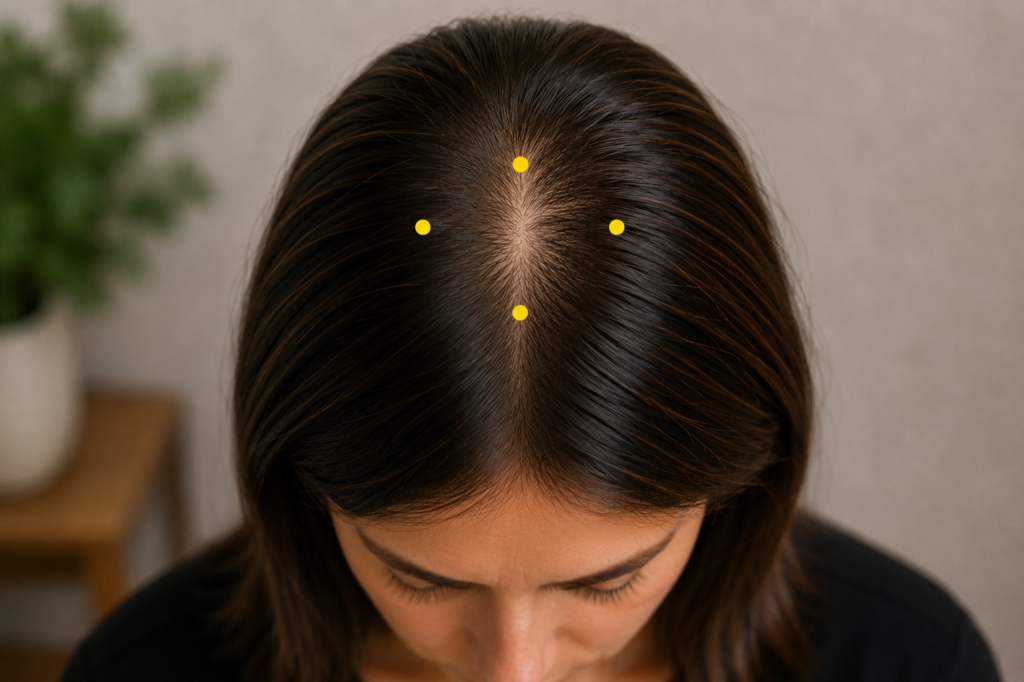
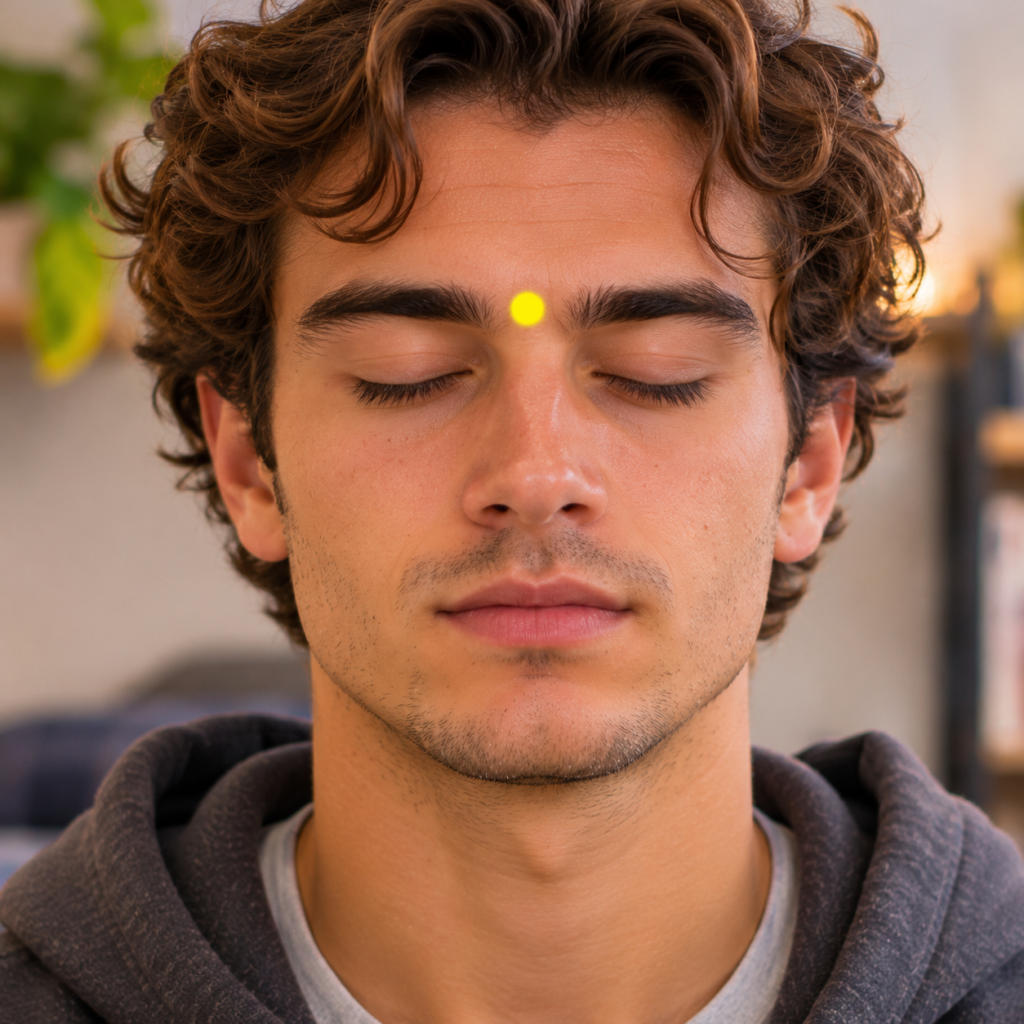
2. Press on Yintang between the eyebrows to calm the mind. Yintang sits on the midline of the forehead, directly between the inner ends of the eyebrows. Press gently with your fingertip, or make slow, small circles, for one to two minutes while breathing slowly. Yintang is called the “Hall of Impression.”
Yintang is an extra point traditionally used to calm the mind and ease anxiety and restlessness. Pressing it while taking a few slow breaths may help quiet a racing mind before beginning a task that requires focus.
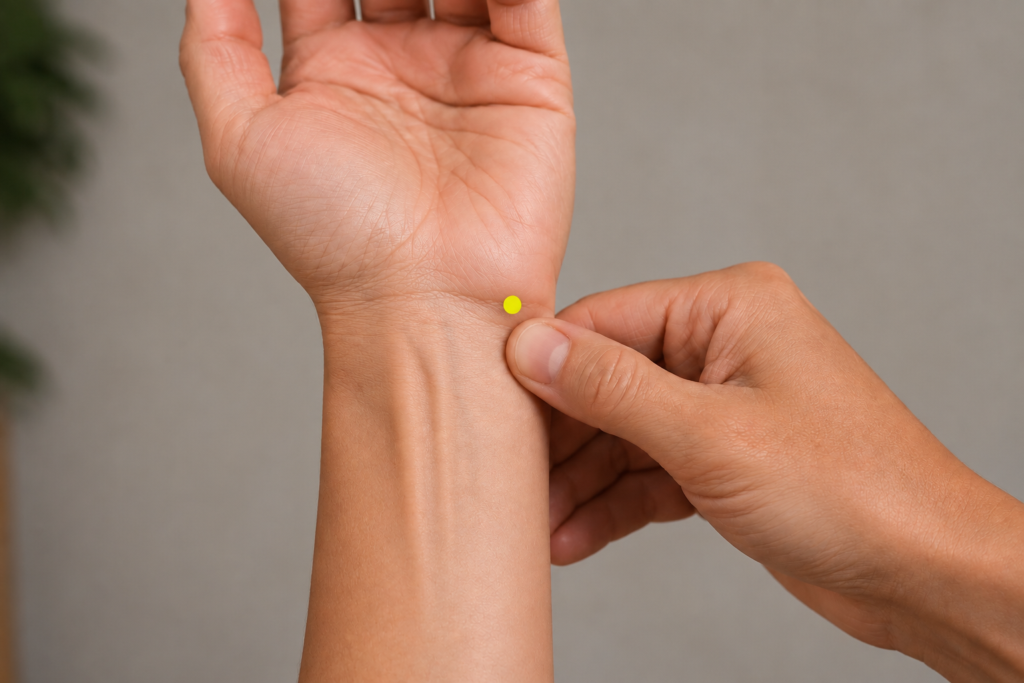
3. Press on HT7 on the wrist crease to settle the mind and support sleep. HT7 sits on the inner wrist crease, on the pinky side, in the small hollow just to the thumb side of the tendon that runs along the edge of the wrist. Press gently with the thumb of your other hand for one to two minutes on each wrist. HT7 is called “Shenmen,” the “Spirit Gate.”
HT7 is the Heart’s source point. In Traditional Chinese Medicine, the Heart is believed to house the mind. HT7 is a key point for calming restlessness, easing anxiety, and promoting deeper sleep, which may all help support attention during the day.
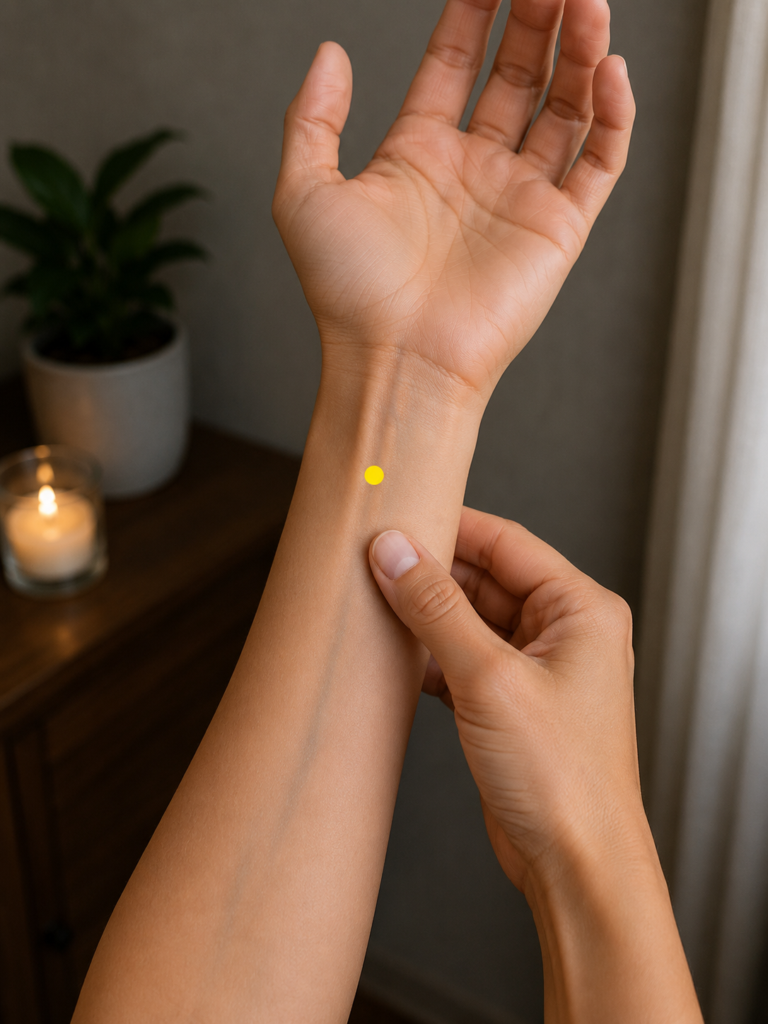
4. Press on PC6 on the inner forearm to calm agitation. PC6 sits on the inner forearm, three finger-widths above the wrist crease, between the two tendons. Press firmly with the thumb of your other hand for one to two minutes on each arm. PC6 is called “Neiguan,” the “Inner Pass.”
In Traditional Chinese Medicine, PC6 is one of the most commonly used points for calming the mind and opening the chest. It can ease agitation, frustration, and nervous energy that may build when it’s difficult to focus.
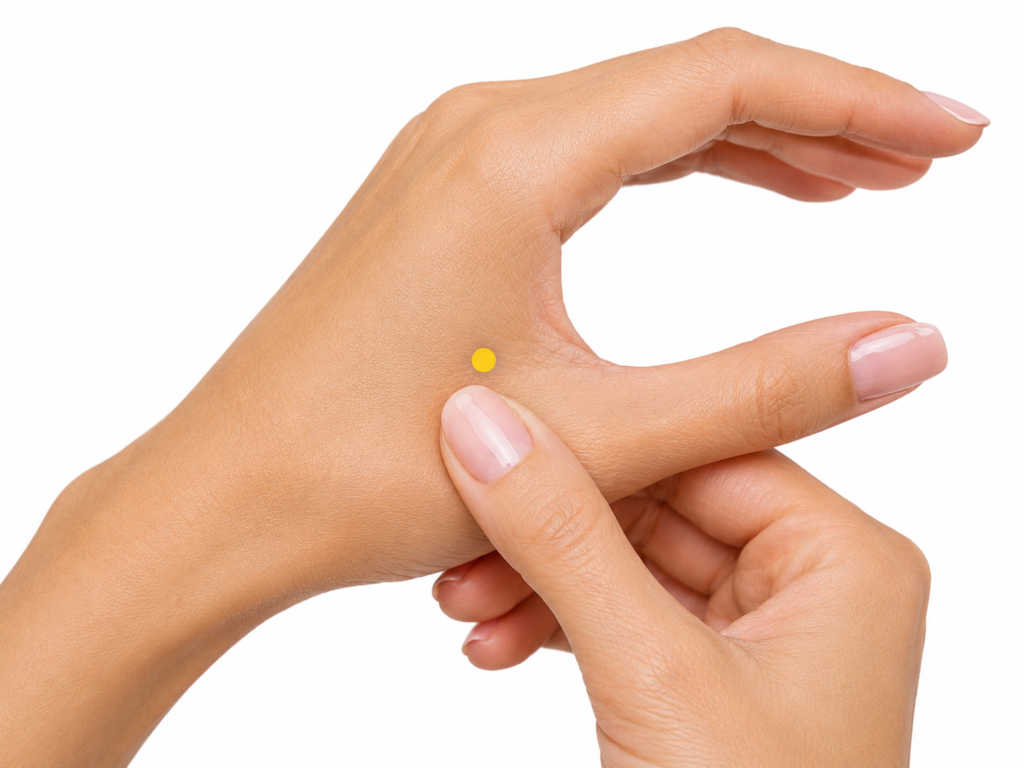
5. Press on LI4 on the back of the hand to ease restlessness and tension. LI4 sits in the webbing between the thumb and index finger, at the highest point of the muscle when the two are pressed together. Press firmly with the thumb of your other hand for one to two minutes on each hand. LI4 is called “Hegu,” the “Joining Valley.” LI4 is avoided during pregnancy.
In Traditional Chinese Medicine, LI4 is a key point for easing tension and calming the body. Paired with LR3, it forms the Four Gates, a classic combination used to settle restlessness and promote smoother energy flow.
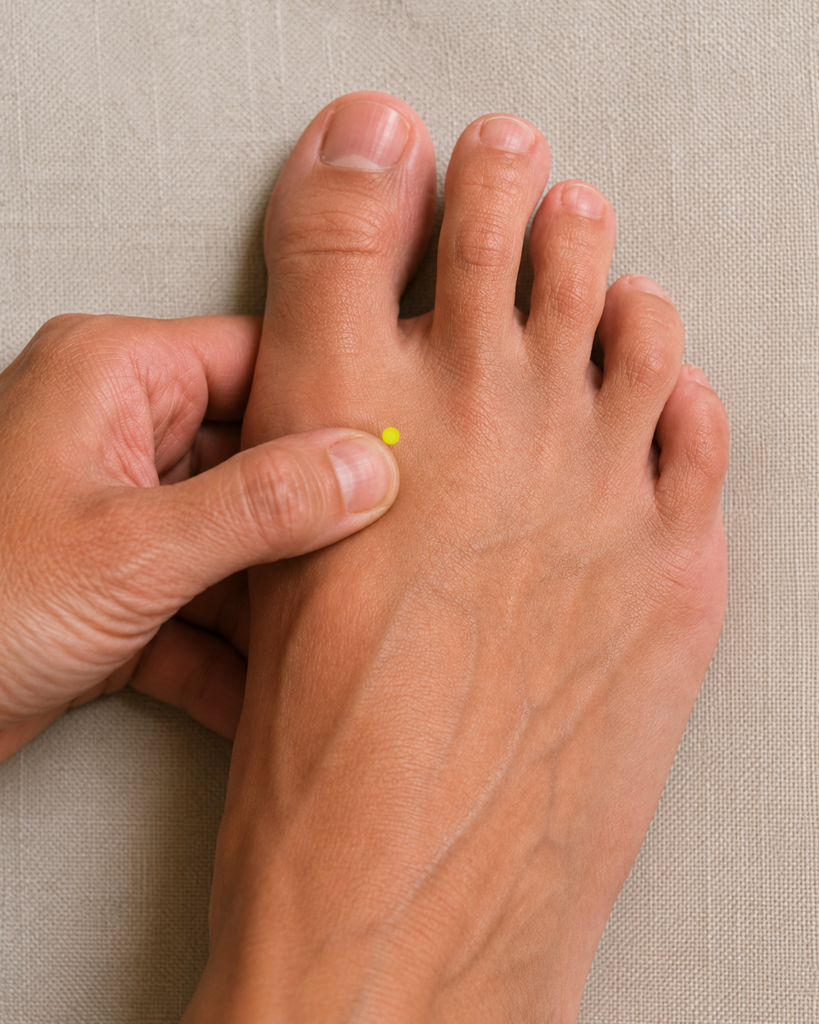
6. Press on LR3 on the top of the foot to calm impulsivity and irritability. LR3 sits on the top of the foot, in the hollow where the bones of the big toe and second toe meet, about two finger-widths above the web between the toes. Press firmly with your thumb for one to two minutes on each foot. LR3 is called “Taichong,” the “Great Surge.”
LR3 is the Liver’s source point. It helps calm rising Liver energy, which may ease impatience, irritability, a quick temper, and impulsive reactions. Used with LI4, LR3 also completes the Four Gates.
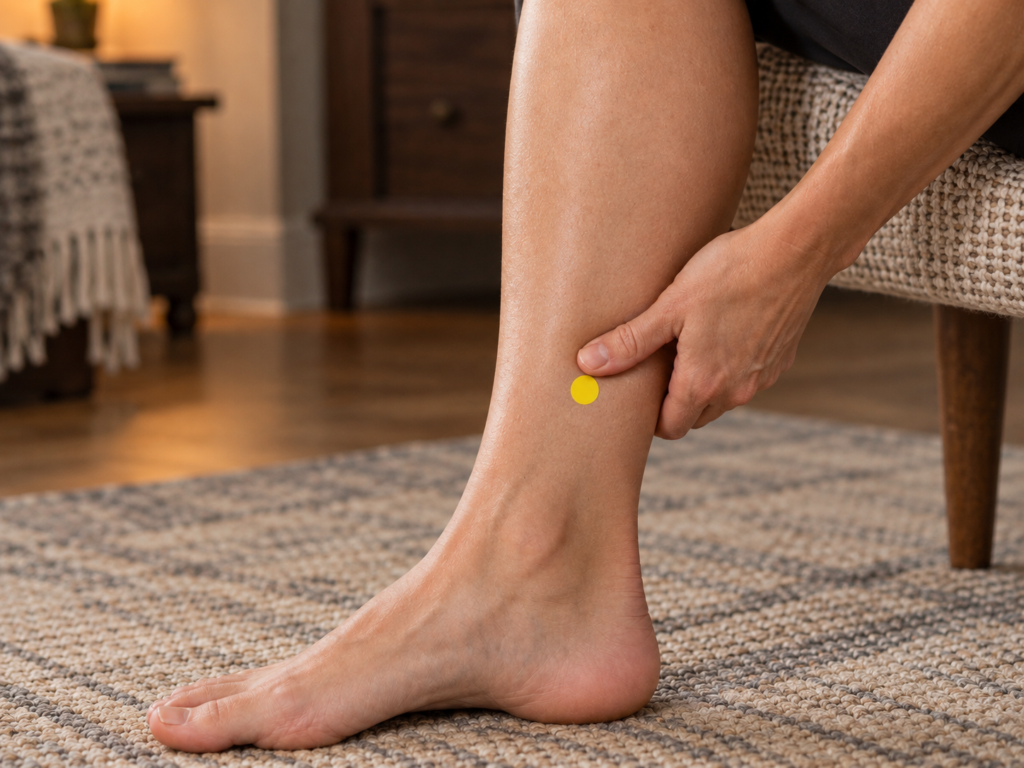
7. Press on SP6 on the inner lower leg to support focus and calm. SP6 sits on the inner lower leg, four finger-widths above the tip of the inner ankle bone, just behind the edge of the shinbone. Press firmly with your thumb for one to two minutes on each leg. SP6 is called “Sanyinjiao,” the “Three Yin Intersection.” SP6 is avoided during pregnancy.
SP6 is where the Spleen, Liver, and Kidney channels converge. It helps strengthen the Spleen, supporting concentration, and nourishes Yin, which may calm a racing mind and promote restful sleep.
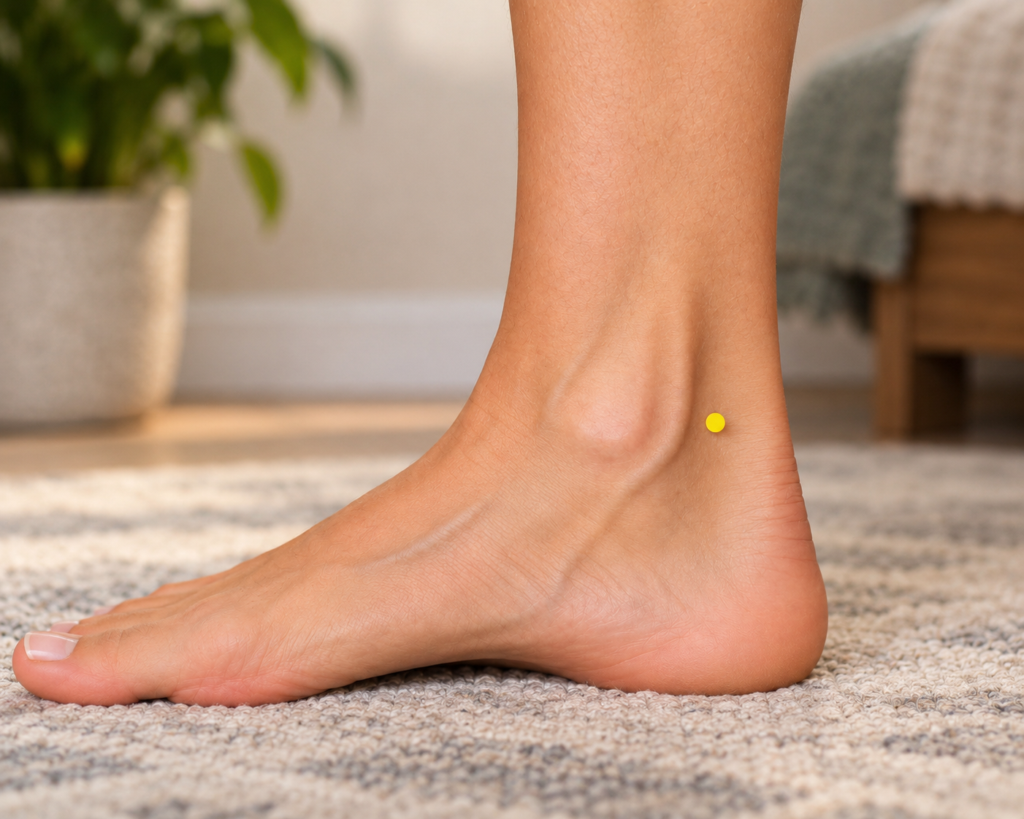
8. Press on KI3 beside the inner ankle to nourish the brain. KI3 sits on the inside of the ankle, in the hollow between the inner ankle bone and the Achilles tendon. Press gently with your thumb for one to two minutes on each ankle. KI3 is called “Taixi,” the “Great Stream.”
KI3 is the source point of the Kidney, which Traditional Chinese Medicine says stores the Essence that nourishes the brain. It supports Kidney Yin, which can help anchor rising Liver energy and steady a restless mind.
9. Press on ST36 below the knee to steady energy and concentration. ST36 sits four finger-widths below the bottom of the kneecap, about one finger-width to the outside of the shinbone. Press firmly with your thumb for one to two minutes on each leg. ST36 is called “Zusanli,” the “Leg Three Miles.”
In Traditional Chinese Medicine, ST36 is a key point for strengthening the Spleen and Stomach. A strong Spleen supports clear thinking and steady energy, helping reduce mental fog and afternoon crashes that can make it harder to focus.

Why These Acupressure Points Work

In Traditional Chinese Medicine, ADHD is understood as a mind that is not firmly anchored. The Heart and Spleen may struggle to sustain attention, while rising Liver energy can contribute to restlessness and impulsive actions. The goal is to calm the mind, guide energy downward, strengthen the organs that support concentration, and nourish the Essence that sustains the brain.
The nine points work together to calm the mind and support focus:
- The clearing points (Sishencong, Yintang) clear the mind and help attention settle.
- The calming points (HT7, PC6) ease restlessness and agitation and support sleep.
- The Four Gates (LI4, LR3) release tension and calm impulsivity and irritability.
- The nourishing points (SP6, KI3, ST36) strengthen concentration, steady energy, and nourish the brain.
How to Properly Use These Acupressure Points

Acupressure for ADHD works best as a daily routine plus a quick reset before tasks requiring focus.
- Work through all nine points once daily, holding each for one to two minutes. For best results, do this in the evening to wind down before sleep.
- Before homework, meetings, or focused work, press Sishencong and Yintang for one minute each, breathing slowly.
- Apply gentle pressure to the head, forehead, wrist crease, and ankles, and firmer pressure to the forearms, hands, legs, and feet.
- For children, apply gentle pressure, limit sessions to a few minutes, and make it a soothing part of the bedtime routine.
Daily habits can make a big difference for ADHD. Aim to keep regular sleep and wake times, and avoid screens for at least an hour before bed. Get daily exercise; physical activity can help burn off restlessness and support attention. Break larger tasks into smaller steps, and use a planner, timers, and reminders. Keep keys, phones, and bags in the same place each day. Eat regular meals that include protein, and limit sugary snacks and caffeine, which can cause energy and focus to fluctuate. Traditional Chinese Medicine recommends warm, cooked, easy-to-digest meals to support the Spleen.
If you are a parent, check if acupressure is safe for your child.
When to Get Professional Help

If attention difficulties, restlessness, or impulsivity are affecting your school, work, or relationships, consult a doctor or mental health professional for an evaluation. An accurate diagnosis can help determine the right care. Don’t stop, skip, or change your ADHD medication without speaking with your prescribing provider, and report side effects such as poor sleep, loss of appetite, or mood changes. Get help if anxiety, depression, or substance use appears alongside ADHD, and call or text 988 to reach the Suicide and Crisis Lifeline for thoughts of self-harm.
Acupressure is a gentle, supportive practice for ADHD. It complements, and does not replace, diagnosis and medical care.
For related health concerns, acupressure to improve concentration, acupressure for restlessness, and acupressure to stop procrastination are companion articles. If a racing mind makes bedtime a struggle, learn about acupressure for trouble falling asleep.
Above and Beyond Acupuncture offers acupuncture, cupping, and lifestyle coaching at the North Frank Lloyd Wright Boulevard location in Scottsdale.
Schedule an appointment online to start your healing journey.
The points above are only as effective as the technique used to apply them. Where to press, how firmly, and for how long all affect the result. For a full breakdown of how to perform acupressure properly at home, read Performing Acupressure in 3 Easy Steps.

About the Publisher
Paul Kerzner, L.Ac., is a licensed acupuncturist and board-certified herbalist, as well as the founder of Above and Beyond Acupuncture in Scottsdale. His own journey from chronic patient to practicing acupuncturist shapes his commitment to providing honest, clinically grounded information about acupuncture and Traditional Chinese Medicine. Learn more about Paul and his clinical approach on the About Us page.