Key Takeaways
- Joint pain is most commonly caused by age-related wear and tear, overuse, injury, or arthritis, and less frequently by infection or another medical condition.
- A hot, red, swollen joint, especially when accompanied by fever, or a joint that appears deformed or cannot move after an injury requires prompt medical care.
- In Traditional Chinese Medicine, joint pain is known as Bi syndrome. It describes Qi and Blood blockage caused by Wind, Cold, Damp, or Heat settling in the joints, often alongside age-related weakness in the Kidneys and Liver.
- Nine acupressure points across the hands, arms, upper back, legs, and feet help circulate Qi and Blood through the joints, relieve stiffness and swelling, and support the bones and tendons.
- Daily movement, keeping joints warm, maintaining a healthy weight, and resting during flare-ups can help manage joint pain.
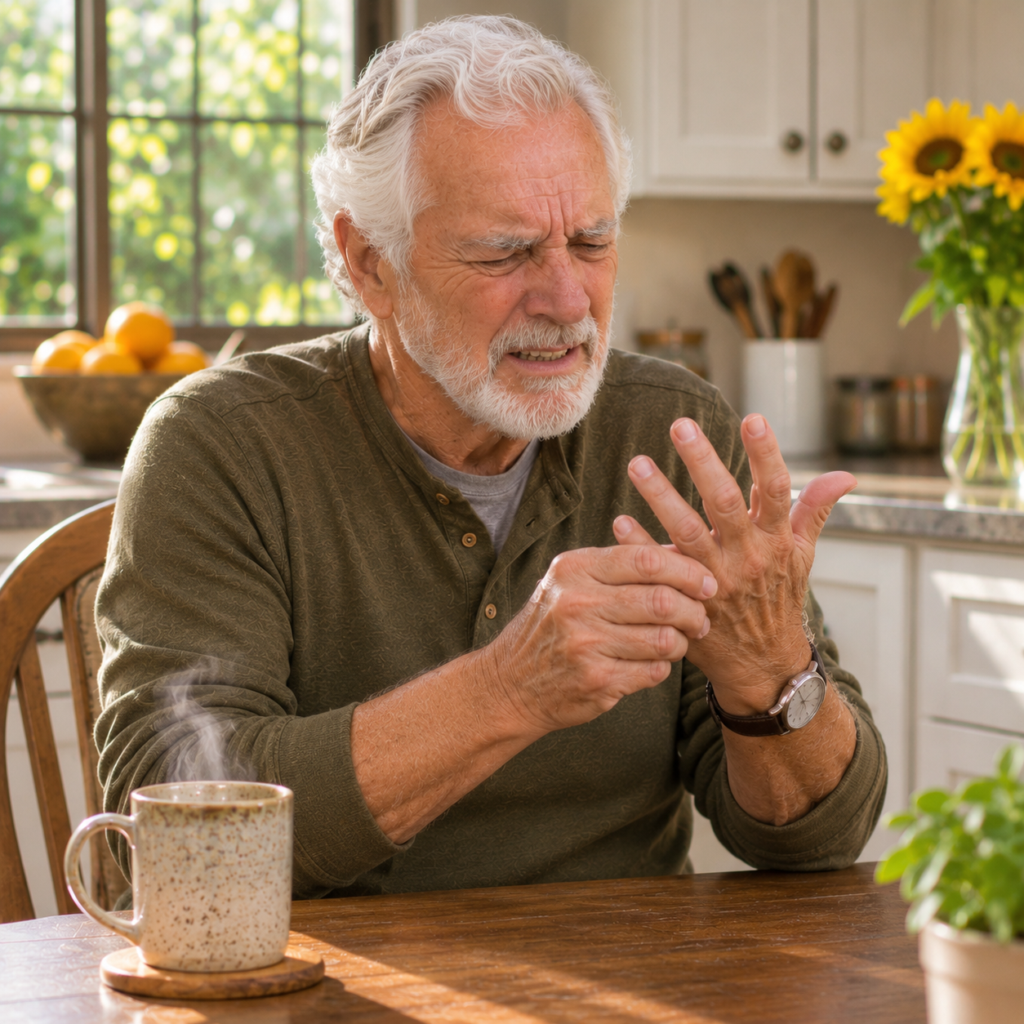
Joint pain often shows up first thing in the morning. Fingers feel thick and slow to curl around a coffee mug, knees creak on the first few stairs, and a hip or shoulder that felt fine yesterday may ache after a night spent in one position. For some people, the stiffness eases after half an hour of moving around. For others, the ache lasts all day and worsens in cold, damp weather or after a long stretch of activity.
According to orthopedic surgeon Casey Stuhlman, MD, writing for Baylor Scott & White Health, joint pain may result from age-related wear and tear, injuries such as fractures or sprains, overuse, arthritis, infections, or underlying medical conditions. Nearly one in four U.S. adults will experience arthritis-related joint pain. For minor aches, Baylor Scott & White recommends resting, applying ice for 15 to 20 minutes three times a day, taking anti-inflammatory medicine, and avoiding movements that worsen the pain. It advises seeing a provider if pain lasts several days without improvement, a joint becomes swollen, red, warm, or tender, or the pain begins to affect daily life, sleep, or mood.
A joint is where two bones meet, cushioned by cartilage and enclosed in a capsule containing fluid, ligaments, and tendons. Wear and tear thins the cartilage, allowing the bone surfaces to rub together and causing a deep, grinding ache that worsens with use. Inflammatory conditions such as rheumatoid arthritis and gout can make the joint lining swell, leaving the joint hot, puffy, and stiff, often worst in the morning. Overuse and minor injuries can irritate the tendons and ligaments around a joint, causing pain with certain movements.
Traditional Chinese Medicine classifies joint pain as Bi syndrome, meaning “painful obstruction.” Wind, Cold, Damp, and Heat can settle in the joints and obstruct the flow of Qi and Blood. Wind causes pain that shifts from one joint to another; Cold causes sharp, deep pain that improves with warmth; Damp causes heavy, swollen, stiff joints that worsen in rainy weather; and Heat causes red, hot, swollen joints. As people age, the Kidney, which governs the bones, and the Liver, which governs the tendons, weaken. This makes the joints more vulnerable to these influences and slower to recover.
The points below begin with the hand and arm, move up to the upper back, and end with the legs and feet.
What Acupressure Points to Press and Why
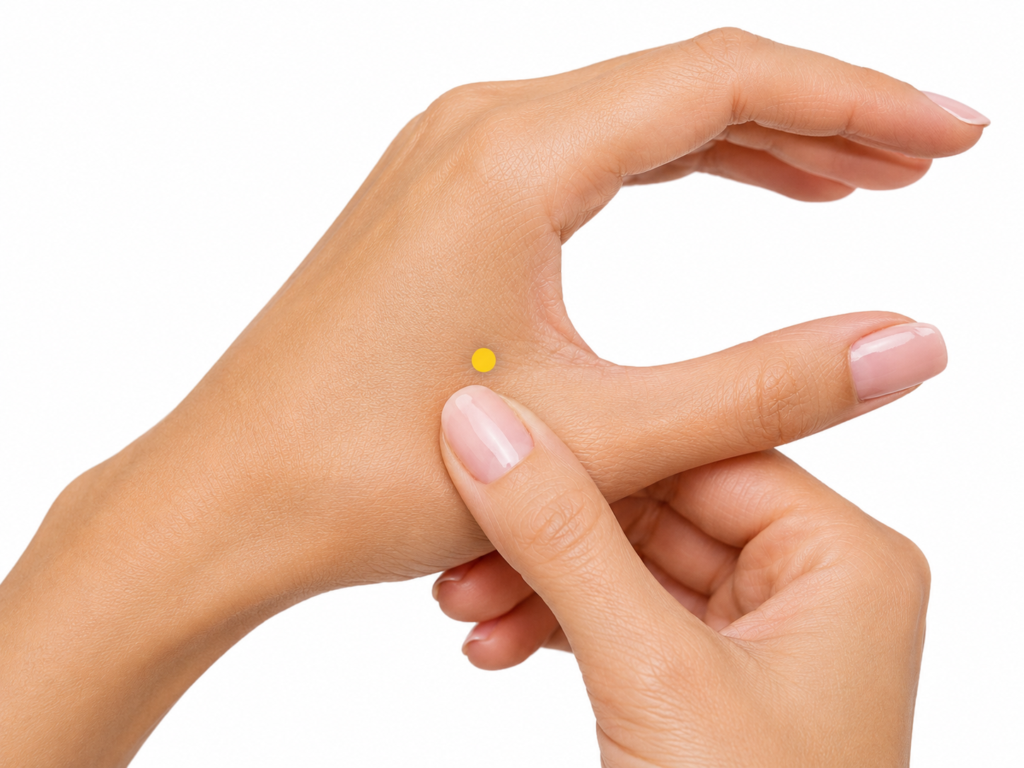
1. Press on LI4 on the back of the hand to ease pain. LI4 sits on the back of the hand, in the web between the thumb and index finger, at the highest point of the muscle when the thumb is pressed against the index finger. Press firmly with the thumb of your other hand for one to two minutes on each hand, angling the pressure toward the bone of the index finger. LI4 is called “Hegu,” the “Joining Valley.”
LI4 is the Large Intestine’s source point and a classic point for pain anywhere in the body. It strongly moves Qi and can help relieve aching in the fingers, wrists, and hands. LI4 is avoided during pregnancy.
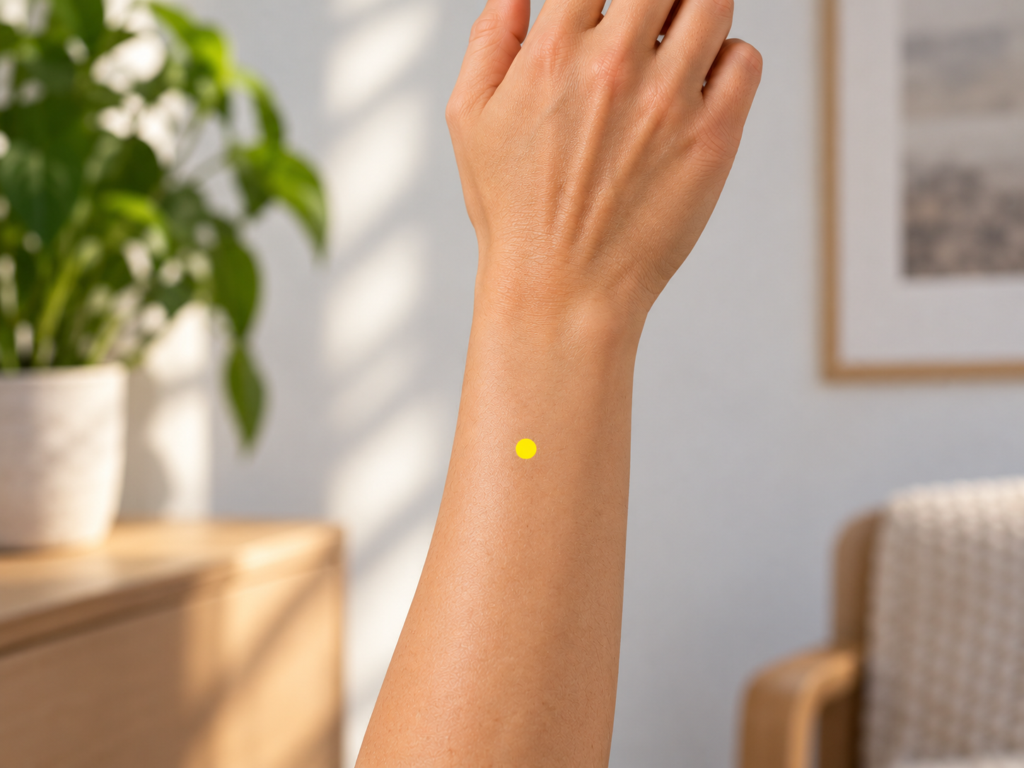
2. Press on TE5 on the back of the forearm to release the wrists and fingers. TE5 sits on the back of the forearm, three finger-widths above the wrist crease, between the two forearm bones. Press firmly with the thumb of your other hand for one to two minutes on each arm. TE5 is called “Waiguan,” the “Outer Pass.”
TE5 is the connecting point of the Triple Energizer. It expels Wind from the channels and is traditionally used to relieve pain and stiffness in the fingers, wrists, and elbows, particularly when the pain shifts from one joint to another.
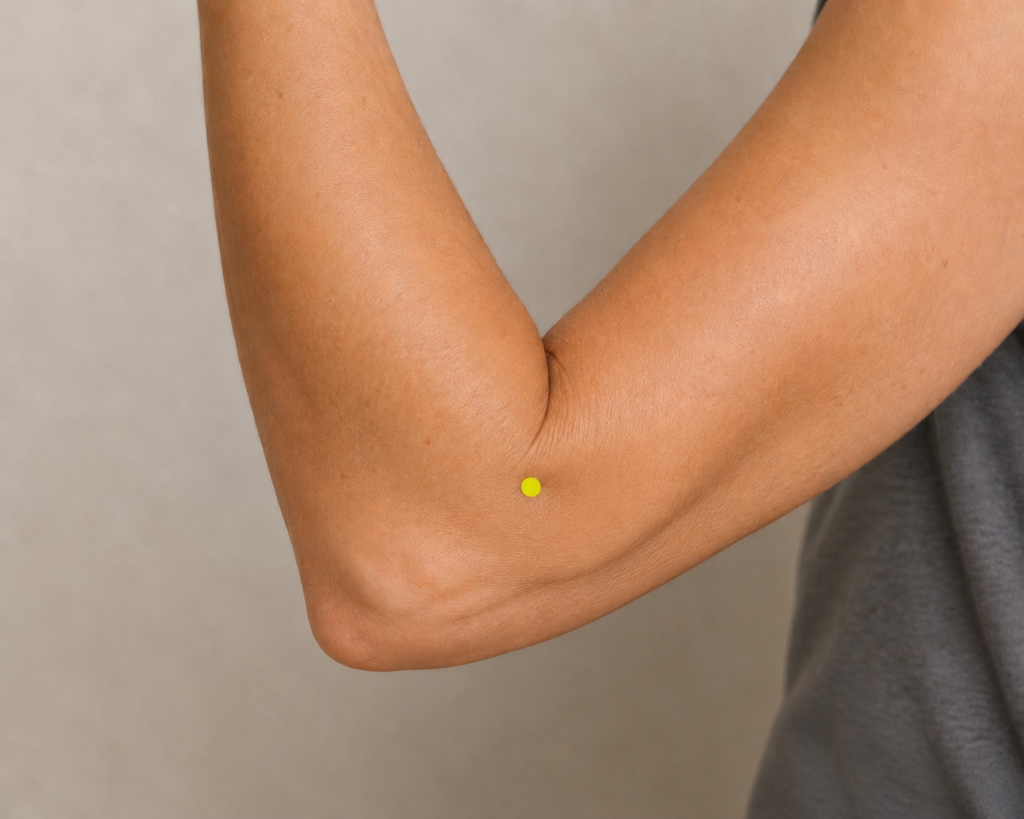
3. Press on LI11 at the outer elbow to cool hot, swollen joints. LI11 sits at the outer end of the elbow crease when the elbow is bent, in the hollow between the end of the crease and the bony point of the elbow. Press firmly with the thumb of your other hand for one to two minutes on each arm. LI11 is called “Quchi,” the “Pool at the Crook.”
LI11 is the sea point of the Large Intestine. It clears Heat and Damp from the body and may help with warm, puffy, inflamed joints and pain in the elbow itself.
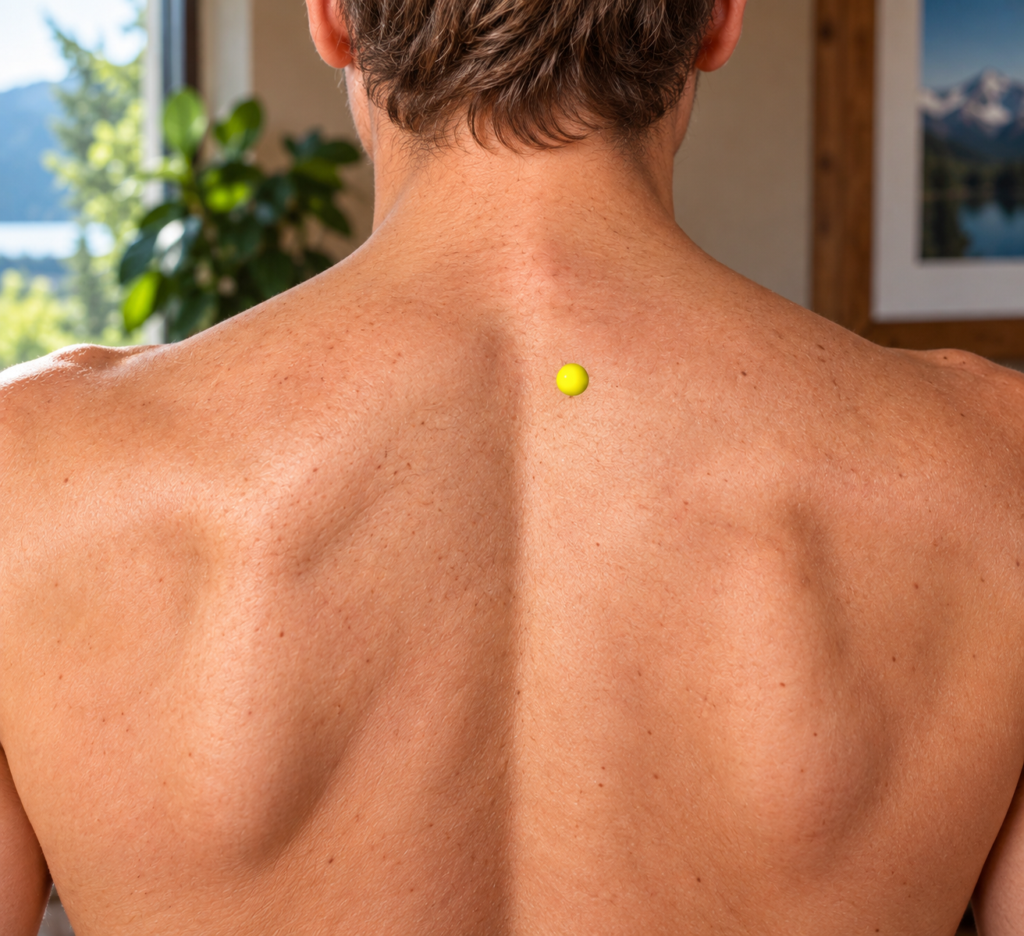
4. Press on BL11 on the upper back to strengthen the bones. BL11 sits on the upper back, two finger-widths out from the spine on each side, level with the space just below the prominent bone at the base of the neck. Lie on your back with a tennis ball under the point, or lean against a wall with the ball in place, and press into it for one to two minutes on each side. BL11 is called “Dazhu,” the “Great Shuttle.”
BL11 is the influential point of the bones. It supports the bones and joints throughout the body and is traditionally used to address long-standing joint pain and stiffness.
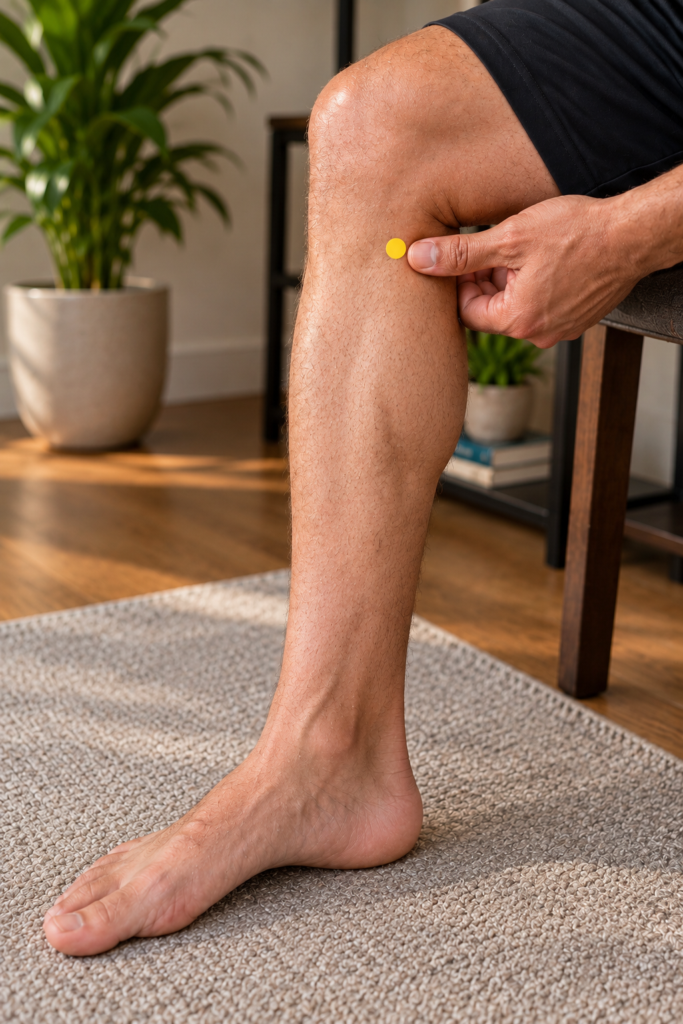
5. Press on SP9 below the inner knee to drain Dampness. SP9 sits on the inner side of the lower leg, in the hollow just below the rounded bulge at the top of the shinbone. Press firmly with your thumb for one to two minutes on each leg. SP9 is called “Yinlingquan,” the “Yin Mound Spring.”
SP9 is the Spleen’s sea point. It drains Dampness from the lower body and helps relieve heaviness, swelling, and stiffness in the joints, especially the knees.
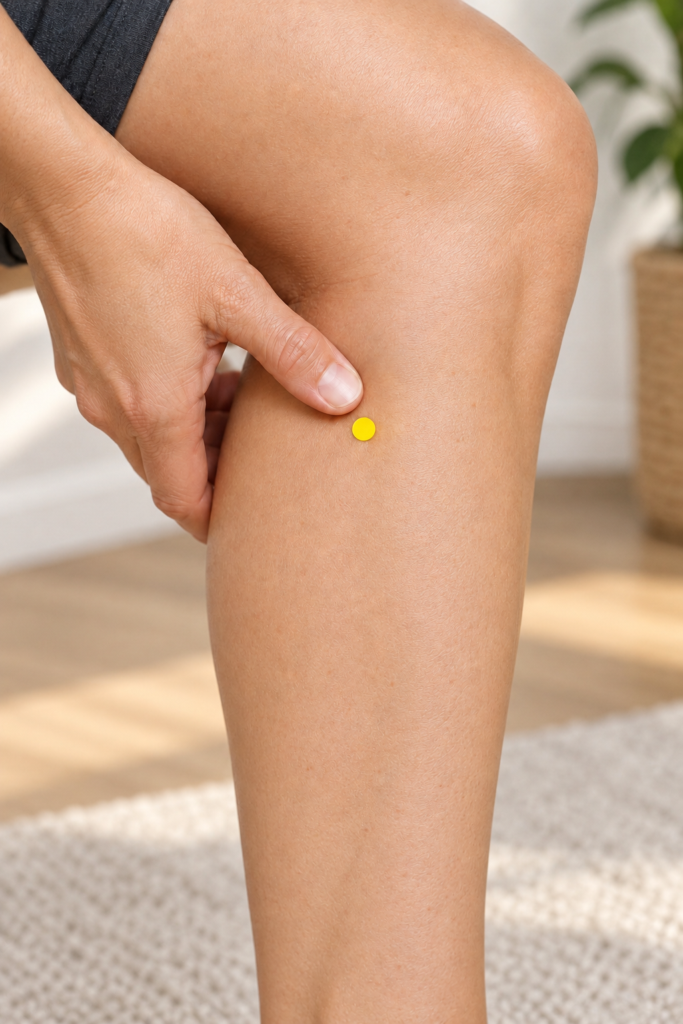
6. Press on GB34 below the outer knee to relax the tendons. GB34 sits on the outer side of the lower leg, in the hollow just in front of and below the small bony bump below the outside of the knee. Press firmly with your thumb for one to two minutes on each leg. GB34 is called “Yanglingquan,” the “Yang Mound Spring.”
GB34 is the influential point of the tendons and one of the most important points in Traditional Chinese Medicine for joint pain and stiffness. It relaxes the tendons and ligaments around the joints, helping ease pain in the knees, hips, and shoulders.
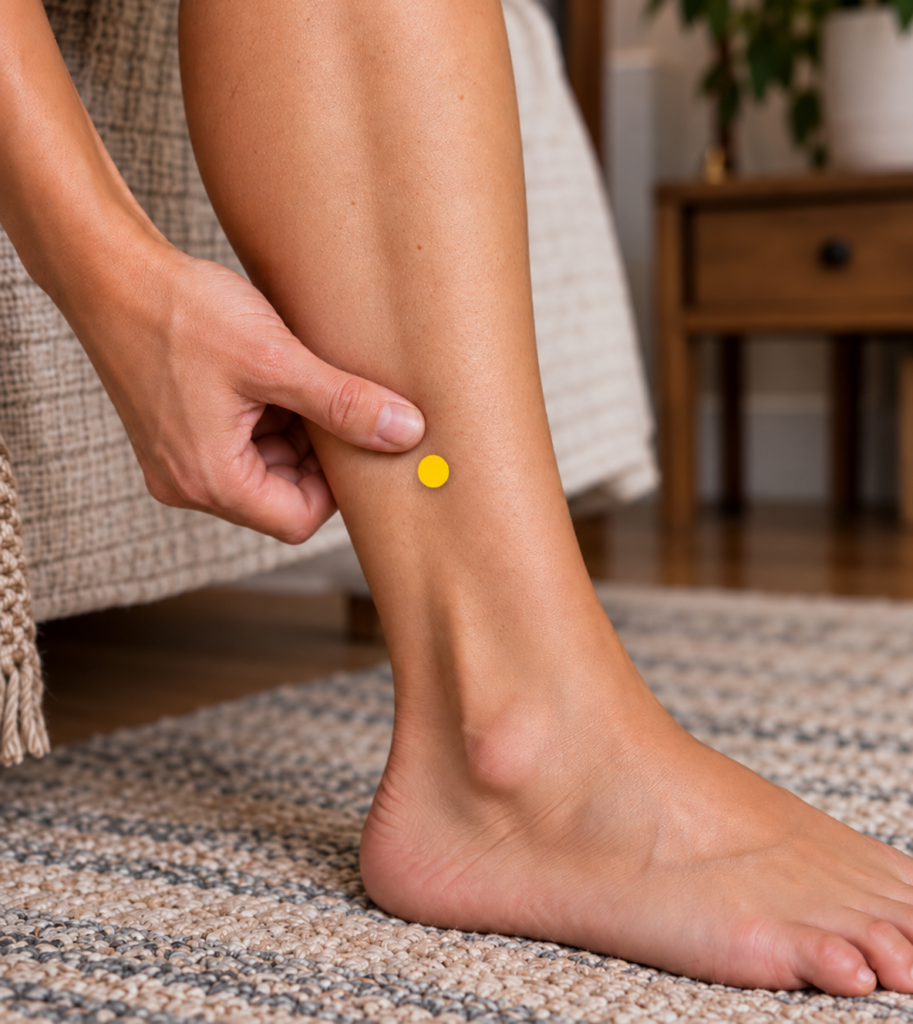
7. Press on GB39 above the outer ankle to support the bones. GB39 sits on the outer side of the lower leg, four finger-widths above the tip of the outer ankle bone, along the front edge of the thin outer leg bone. Press firmly with your thumb for one to two minutes on each leg. GB39 is called “Xuanzhong,” the “Suspended Bell.”
GB39 is the influential point of the Marrow. In Traditional Chinese Medicine, the Marrow is linked to bone strength, so this point may help ease age-related joint pain and weak, tired legs.
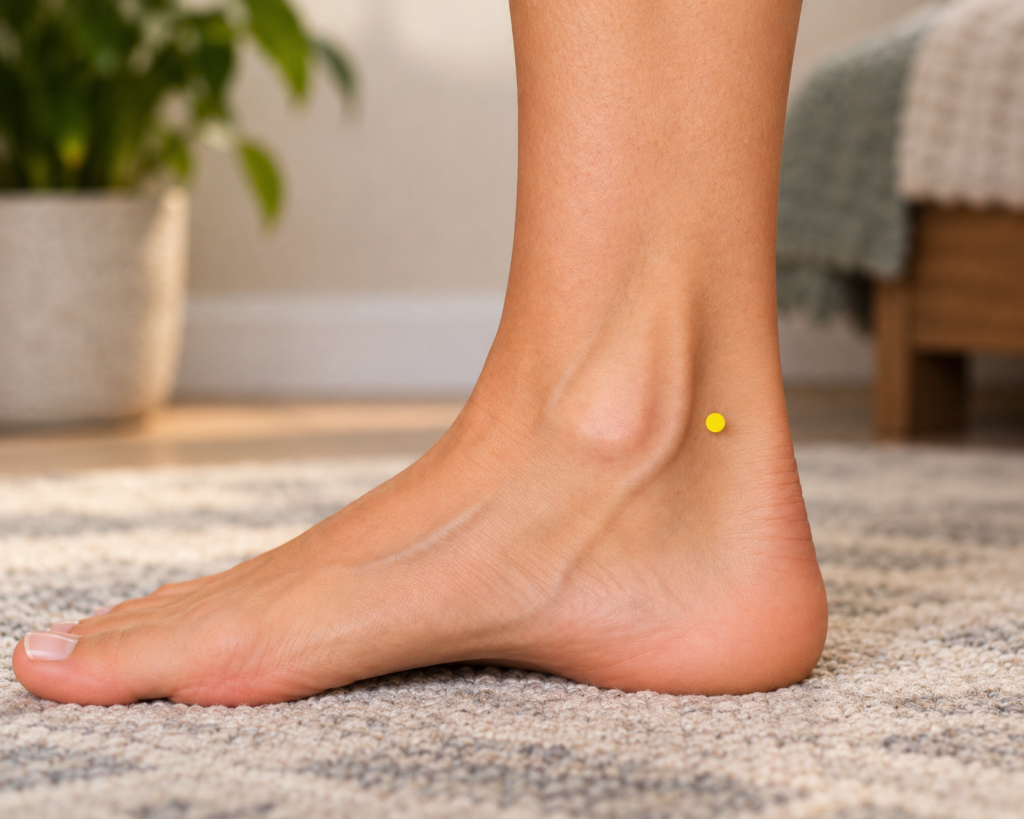
8. Press on KI3 behind the inner ankle to strengthen the Kidney. KI3 sits in the hollow between the inner ankle bone and the Achilles tendon. Press with moderate pressure for one to two minutes on each foot. KI3 is called “Taixi,” the “Great Ravine.”
KI3 is the Kidney’s source point. The Kidney governs the bones, and KI3 replenishes the deep reserves that help keep the joints and low back strong. This makes it useful for joint pain that worsens with fatigue or age.
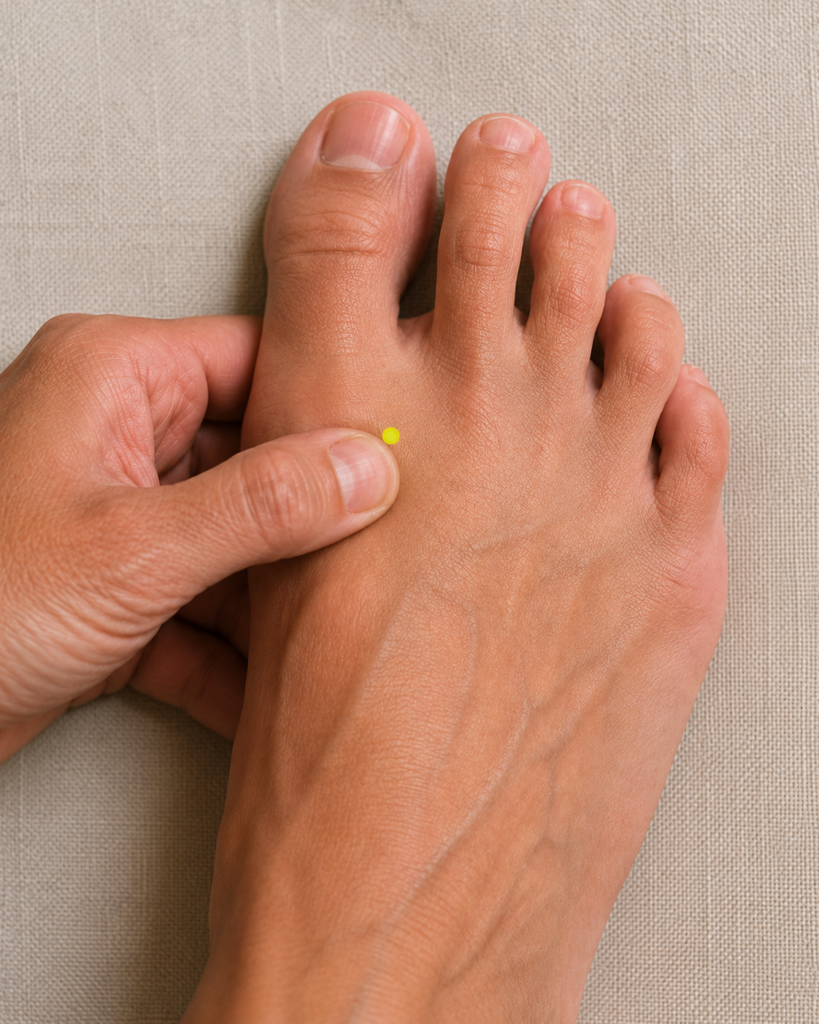
9. Press on LV3 on the top of the foot to move Qi through the joints. LV3 sits on the top of the foot, in the hollow where the bones of the big toe and second toe meet, about two finger-widths back from the web between the toes. Press firmly with your thumb for one to two minutes on each foot. LV3 is called “Taichong,” the “Great Rushing.”
LV3 is the Liver’s source point. The Liver governs the tendons, and when paired with LI4, LV3 forms the “Four Gates,” a classic combination that moves Qi and Blood throughout the body and relieves pain in multiple joints at once.
Why These Acupressure Points Work
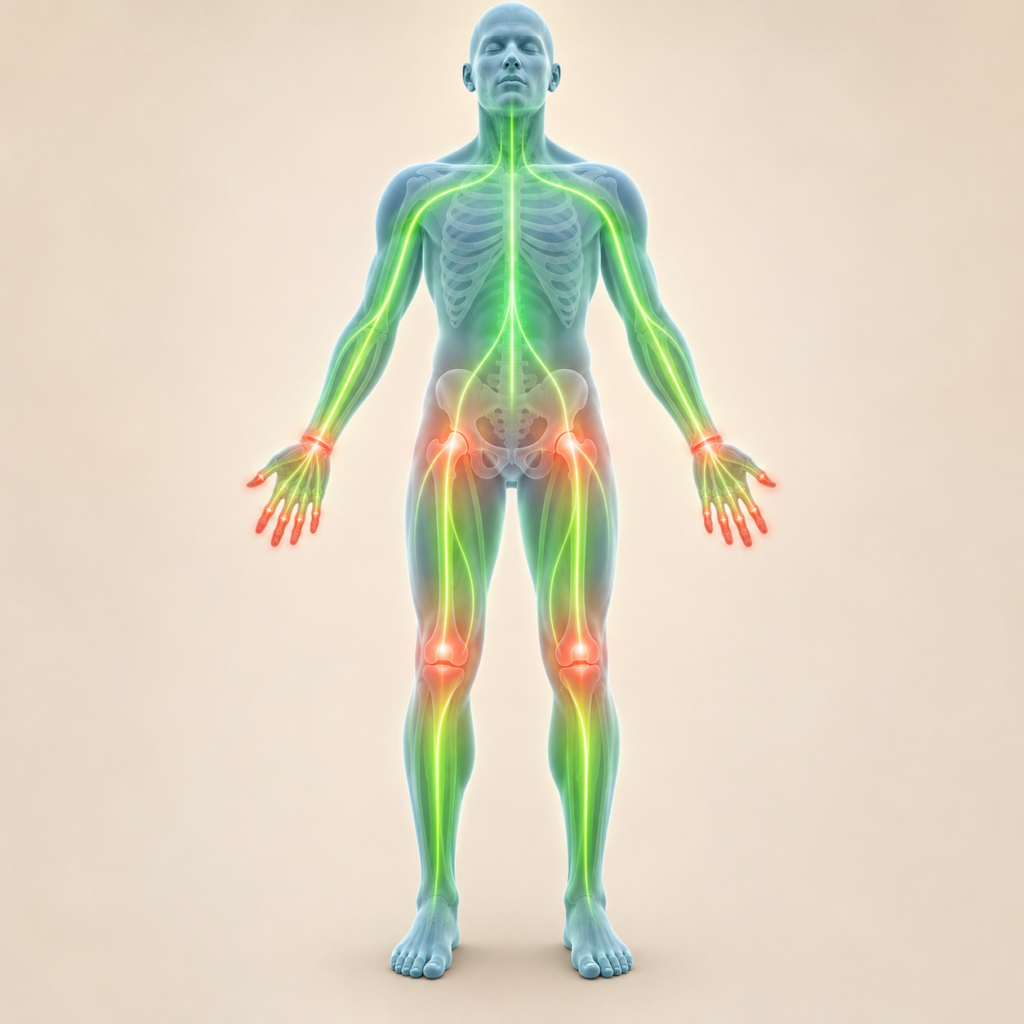
From a Traditional Chinese Medicine perspective, a painful joint is a joint where Qi and Blood are blocked. The Four Gates, located on the hands and feet, move Qi and Blood through all the channels at once. Points on the arms clear Wind, Heat, and Damp from the upper body, while leg points drain Damp and relax the tendons. Influential points for the bones, tendons, and Marrow help rebuild structures that wear down over time.
The nine points work together to alleviate joint pain:
- LI4 and LV3 open the Four Gates and move Qi and Blood through all the joints.
- TE5 and LI11 clear Wind, Heat, and Damp from the hands, wrists, and elbows.
- SP9 and GB34 drain Damp and relax the tendons around the knees and hips.
- BL11, GB39, and KI3 strengthen the bones and the Kidneys.
How to Properly Use These Acupressure Points
Acupressure for joint pain is most effective when practiced as part of a daily routine, with additional pressure points incorporated during flare-ups.
- Each morning, apply pressure to LI4 and LV3 on both sides to help relieve stiffness before beginning your day.
- For discomfort in the hands, wrists, or elbows, include TE5 and LI11 on both arms.
- For knee or hip pain, apply pressure to SP9, GB34, and GB39 on both legs.
- For persistent joint pain associated with aging or fatigue, apply pressure to BL11 using a tennis ball and press KI3 on both feet once daily.
- Apply firm pressure to the hands, arms, legs, and feet, and moderate pressure to the upper back. Avoid applying direct pressure to any joint that is hot, red, or severely swollen. LI4 is avoided during pregnancy.
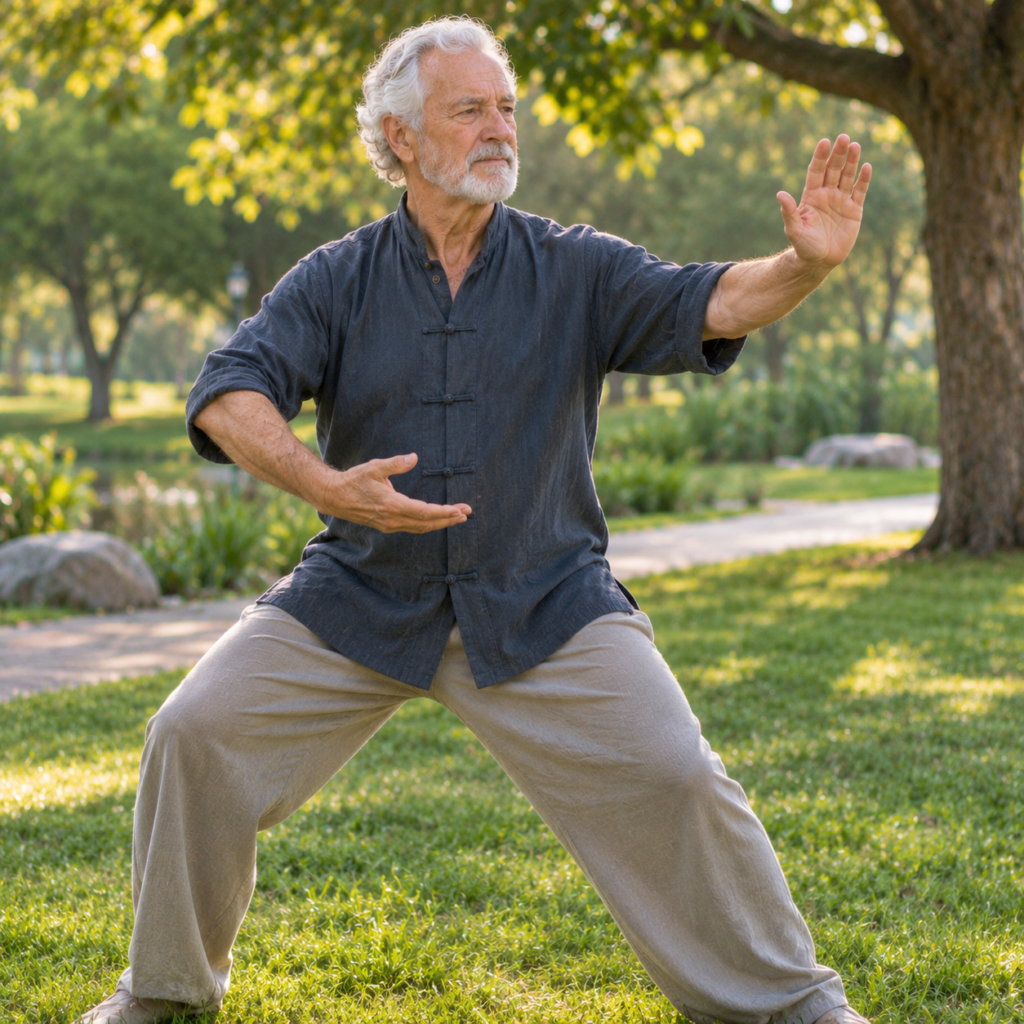
Daily habits can make a real difference for sore joints. Regular movement, such as walking, swimming, cycling, or tai chi, keeps joints flexible and strengthens the muscles around them, while long periods of sitting can leave joints stiff. Reaching or maintaining a healthy weight reduces pressure on the knees and hips. For a fresh injury, Baylor Scott & White recommends resting and applying ice for 15 to 20 minutes at a time. Traditional Chinese Medicine also recommends ice at first, then switching to warmth once the swelling settles to keep Qi and Blood moving. Keep joints warm and dry in cold or damp weather, and limit greasy, sugary foods and alcohol, which add Damp and Heat.
Learn more about arnica as a natural alternative to NSAIDs.
When to Get Professional Help
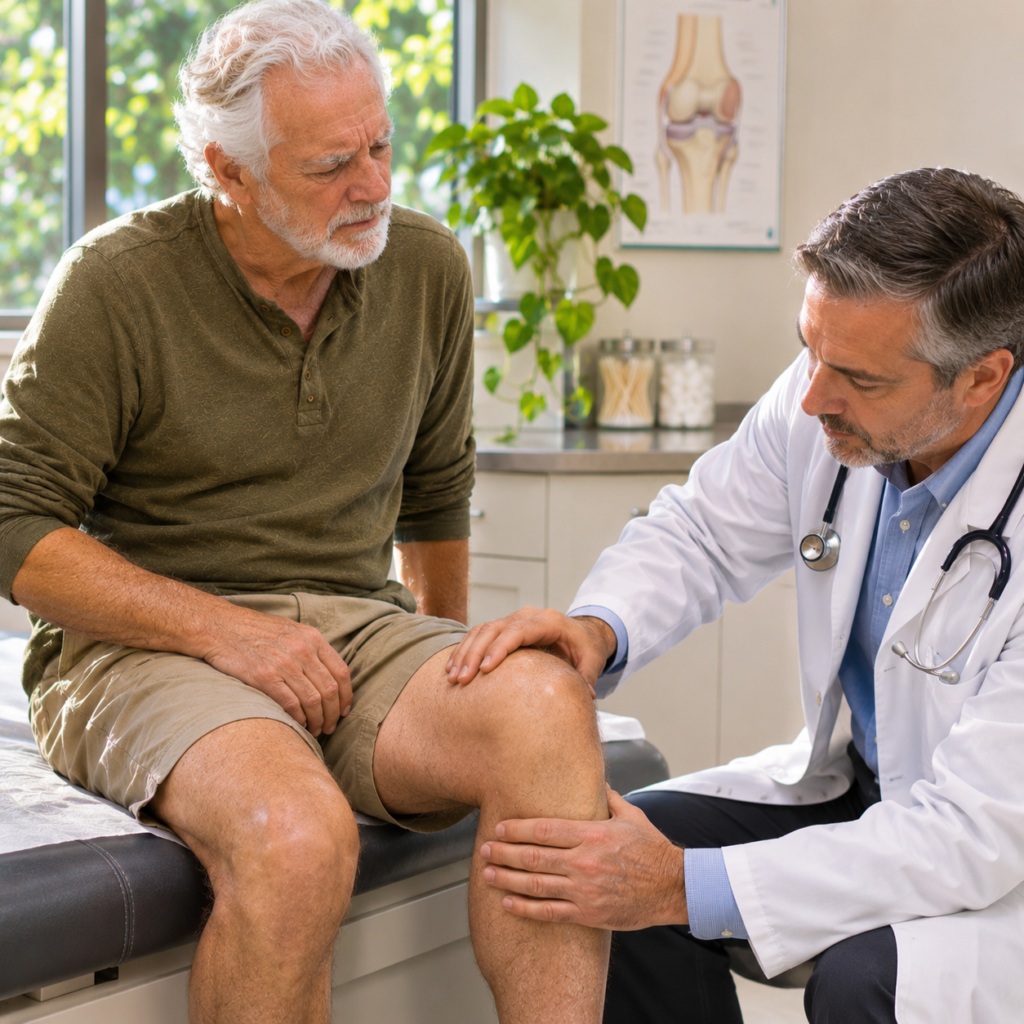
Seek medical care right away for joint pain after an injury if the joint looks deformed, suddenly swells, or you can’t move it or bear weight. These symptoms may signal a fracture, dislocation, or torn ligament. Go to urgent care or the emergency room if a joint becomes hot, red, and swollen, especially if you also have a fever or chills, as an infection can damage the joint quickly. See a doctor for sudden, severe pain in a single joint, such as the big toe; joint pain with a rash or after a tick bite; morning stiffness in several joints lasting more than an hour; or pain that doesn’t improve after a few days of home care or interferes with work, sleep, or mood. Women who develop new joint pain or swelling in their hands, wrists, or feet during pregnancy should tell their obstetric provider.
Acupressure is a gentle, supportive practice for joint pain. It complements, and does not replace, diagnosis and medical care.
For related health concerns, acupressure for arthritis, acupressure for osteoarthritis, and acupressure for rheumatoid arthritis are companion articles.
Above and Beyond Acupuncture offers acupuncture, cupping, and lifestyle coaching at the North Frank Lloyd Wright Boulevard location in Scottsdale.
Schedule an appointment online to start your healing journey.
The points above are only as effective as the technique used to apply them. Where to press, how firmly, and for how long all affect the result. For a full breakdown of how to perform acupressure properly at home, read Performing Acupressure in 3 Easy Steps.

About the Publisher
Paul Kerzner, L.Ac., is a licensed acupuncturist and board-certified herbalist, as well as the founder of Above and Beyond Acupuncture in Scottsdale. His own journey from chronic patient to practicing acupuncturist shapes his commitment to providing honest, clinically grounded information about acupuncture and Traditional Chinese Medicine. Learn more about Paul and his clinical approach on the About Us page.