Key Takeaways
- Ankle sprains are among the most common pickleball injuries, usually from the foot rolling inward during a quick lateral move, sudden stop, or pivot.
- Players over 50 account for most pickleball injuries treated in emergency departments, and poor conditioning or a rapid return to play after time off increases the risk.
- In Traditional Chinese Medicine, a sprain disrupts the normal flow of Qi and Blood at the outer ankle, where the Gallbladder and Bladder channels pass, causing swelling, bruising, and pain.
- Nine acupressure points around the ankle, lower leg, and opposite wrist help ease pain and swelling and support ligament healing.
- A sudden pop at the back of the ankle, inability to bear weight, or severe swelling and bruising requires a doctor before any home care.

Pickleball requires frequent, rapid movements. Players move laterally to reach a dink, stop abruptly at the kitchen line, and pivot back toward the center, often within a matter of seconds. In most cases, the ankle tolerates these movements without difficulty. However, a player may land on the outer edge of the foot, causing the ankle to give way; the player may then leave the court limping as swelling develops. In other cases, the ankle may not roll severely but may nevertheless remain painful and feel unstable after weeks of intermittent play.
According to UTHealth Houston, ankle sprains are among the most common foot and ankle injuries in pickleball, often occurring when the foot rolls inward during a lateral move. Foot and ankle surgeon John Z. Zhao, MD, notes that pickleball’s sudden, high-impact movements can cause lower-body injuries. Adults 50 and older account for most pickleball-related injuries treated in emergency departments, while poor conditioning and returning to play after a long break also increase the risk. The American Orthopaedic Foot and Ankle Society adds that pickleball’s cutting, planting, and pivoting put stress on the ankle. Foot and ankle surgeon Seth O’Donnell, MD, cautions that running shoes may not be suited to these side-to-side movements.
A sprain isn’t healed just because the swelling has gone down. Stretched ligaments need time to heal, and returning to play too soon can cause the ankle to roll again, sometimes more easily each time. Gentle, consistent care in the weeks after a sprain is especially important.
Traditional Chinese Medicine describes the ankle in terms of channels. The Gallbladder and Bladder channels run along the outer ankle, where most pickleball sprains occur. The Stomach channel runs along the front, while the Kidney, Spleen, and Liver channels lie on the inner side. A sprain disrupts the normal flow of Qi and Blood, causing them to accumulate in the joint as swelling, bruising, and sharp pain. If swelling persists for weeks, Traditional Chinese Medicine focuses on the Spleen, which manages fluids. An ankle that keeps rolling may indicate that the tendons and ligaments are not well nourished by Liver Blood and Kidney essence.
The nine points begin at the outer ankle, continue around the front and inner side, and end above the ankle and on the opposite wrist.
What Acupressure Points to Press and Why
1. Press on GB40 in front of the outer ankle bone to ease sprain pain. GB40 sits in the hollow just in front of and slightly below the outer ankle bone. Press gently with your thumb for one to two minutes on the sore ankle. GB40 is called “Qiuxu,” the “Mound of Ruins.”
GB40 is the Gallbladder’s source point and the main local point for a sprained outer ankle. It lies directly over the ligament most commonly stretched when the ankle rolls during a sideways shuffle.
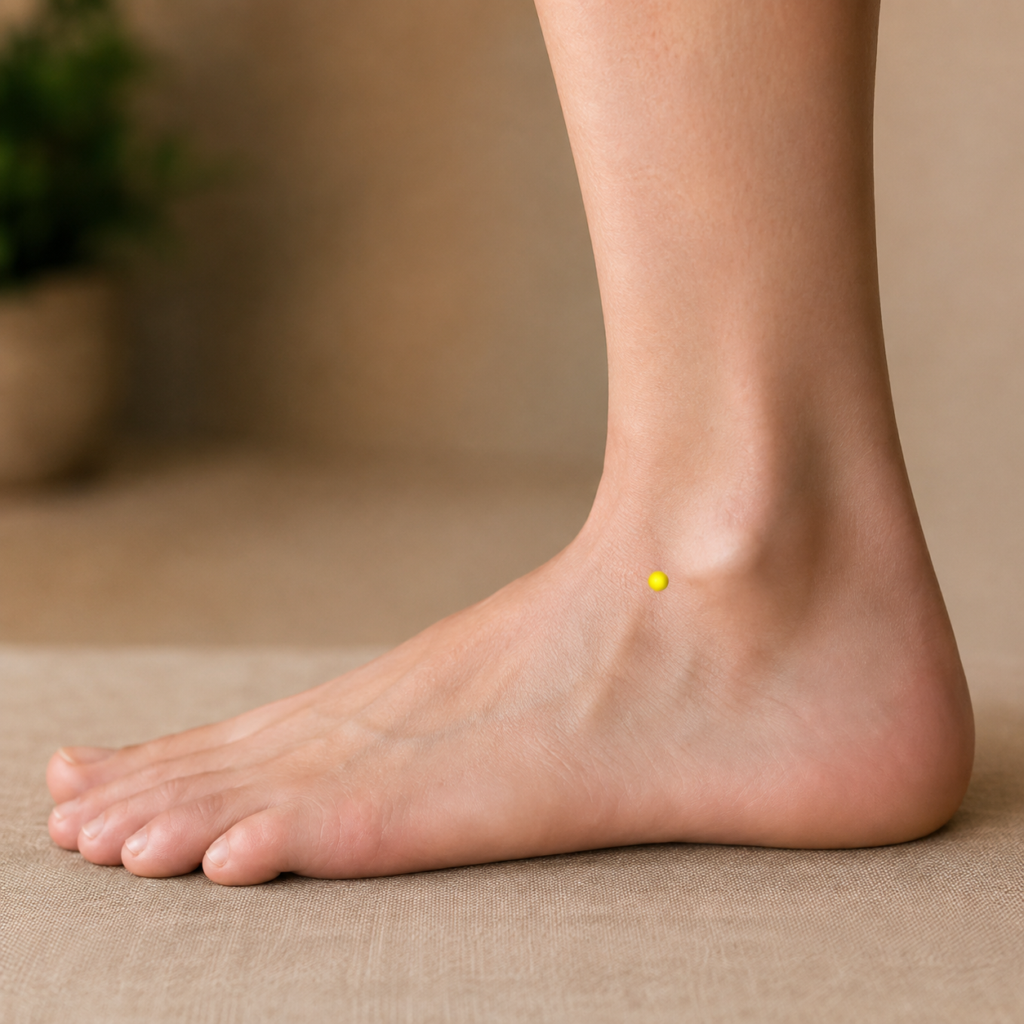
2. Press on BL62 below the outer ankle bone to steady the ankle. BL62 sits in the small hollow directly below the tip of the outer ankle bone. Press gently with your thumb for one to two minutes on the sore ankle. BL62 is called “Shenmai,” the “Extending Vessel.”
BL62 is the opening point of the Yang Heel vessel, an extraordinary channel that guides movement and balance along the outer leg and ankle. It helps ease pain and stiffness below the ankle bone and is traditionally used when the ankle feels weak or unstable.
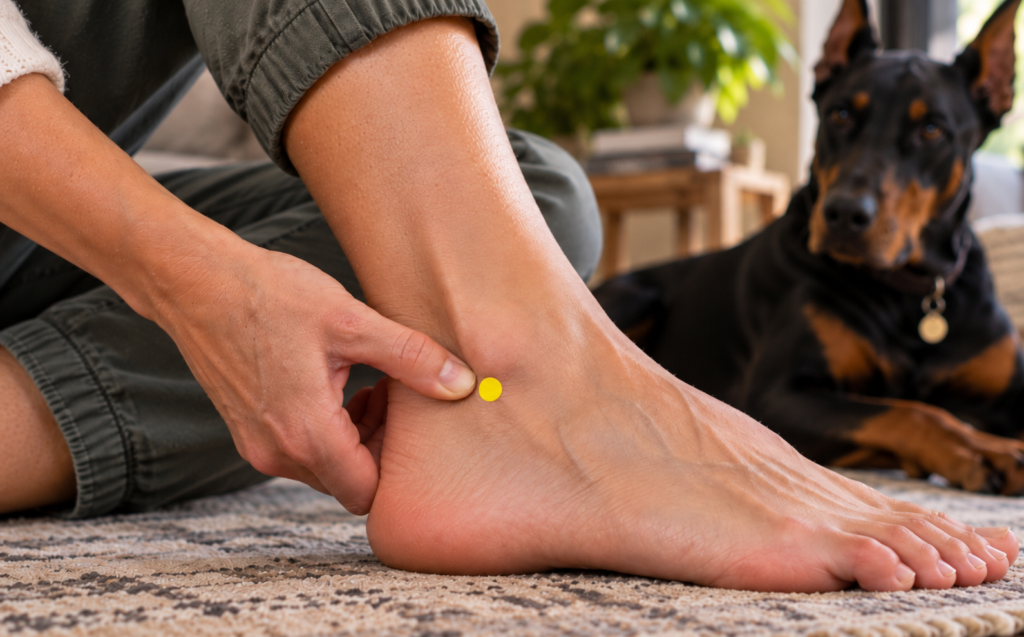
3. Press on BL60 behind the outer ankle to ease pain and stiffness. BL60 sits in the hollow between the tip of the outer ankle bone and the Achilles tendon. Press gently with your thumb for one to two minutes on the sore ankle. BL60 is called “Kunlun,” the “Kunlun Mountains.” BL60 is avoided during pregnancy.
BL60 is an important point for pain and stiffness along the back of the ankle joint and Achilles tendon. It helps move Qi and Blood that can become stagnant behind the ankle bone after a sprain.
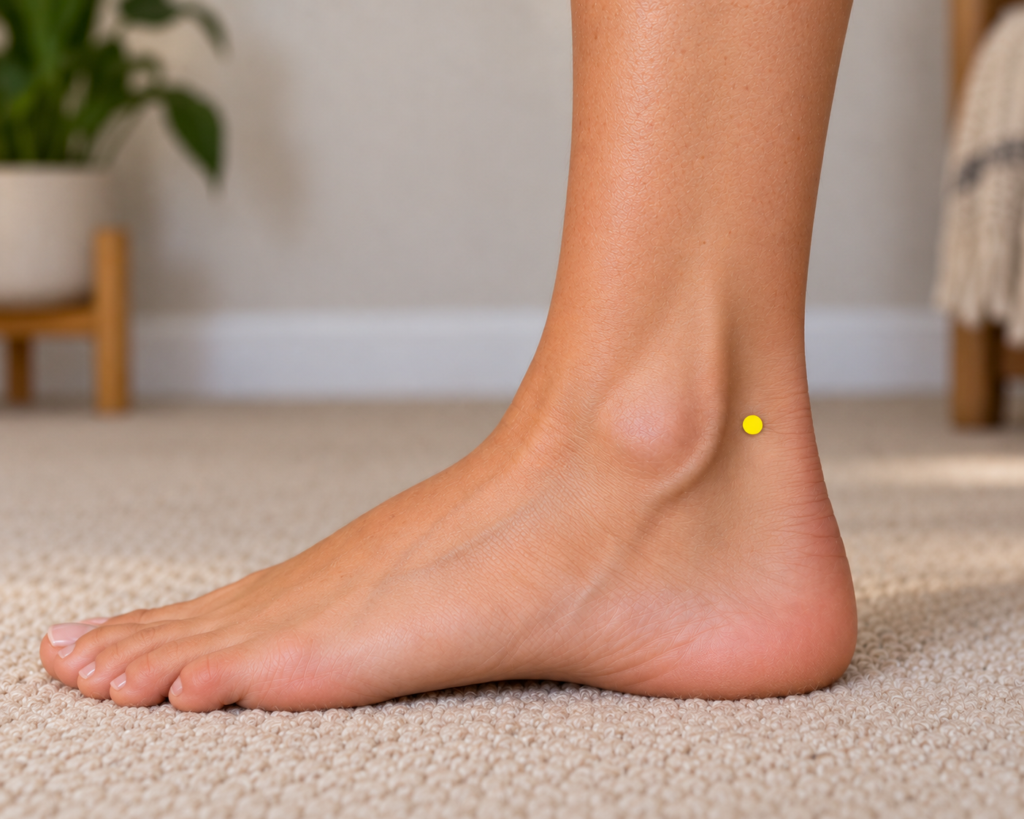
4. Press on ST41 at the front of the ankle to free the joint. ST41 sits at the front of the ankle, in the middle of the crease where the foot meets the leg, in the hollow between the two tendons that become visible when the toes are lifted. Press gently with your thumb for one to two minutes on the sore ankle. ST41 is called “Jiexi,” the “Stream Divide.”
ST41 is the primary point for pain and stiffness at the front of the ankle. It helps restore the foot’s up-and-down movement, which is often the first motion to become restricted after a sprain.
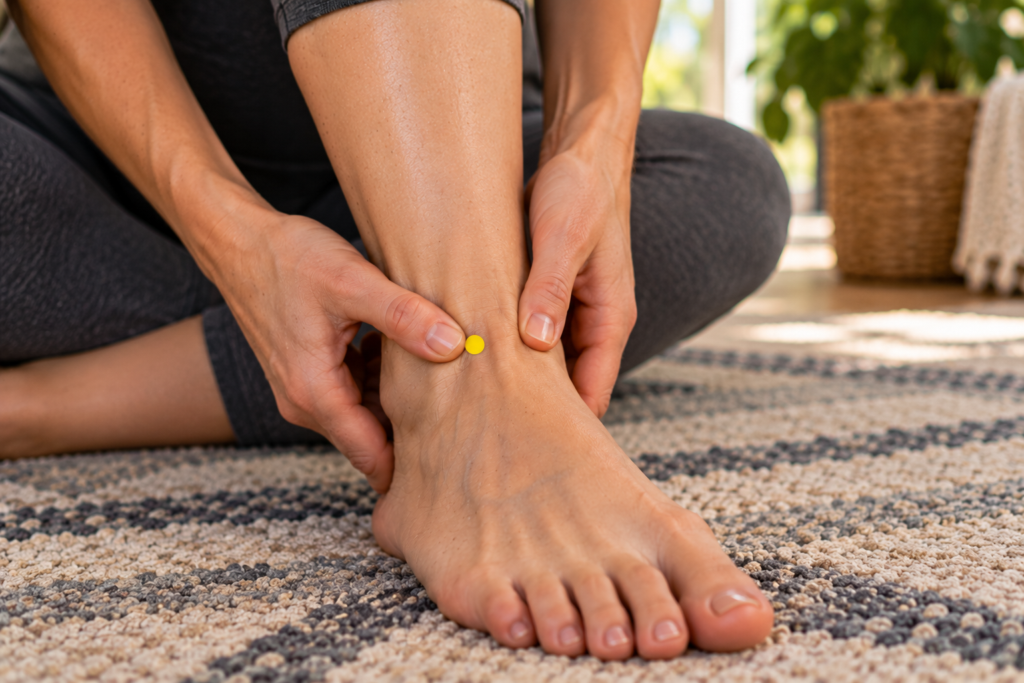
5. Press on KI3 behind the inner ankle bone to strengthen the joint. KI3 sits in the hollow between the tip of the inner ankle bone and the Achilles tendon. Press with moderate pressure for one to two minutes on the sore ankle. KI3 is called “Taixi,” the “Great Stream.”
KI3 is the Kidney’s source point, and in Traditional Chinese Medicine, the Kidney governs the bones. It supports the inner ankle and is used when an ankle has been sprained more than once and never feels quite as strong.
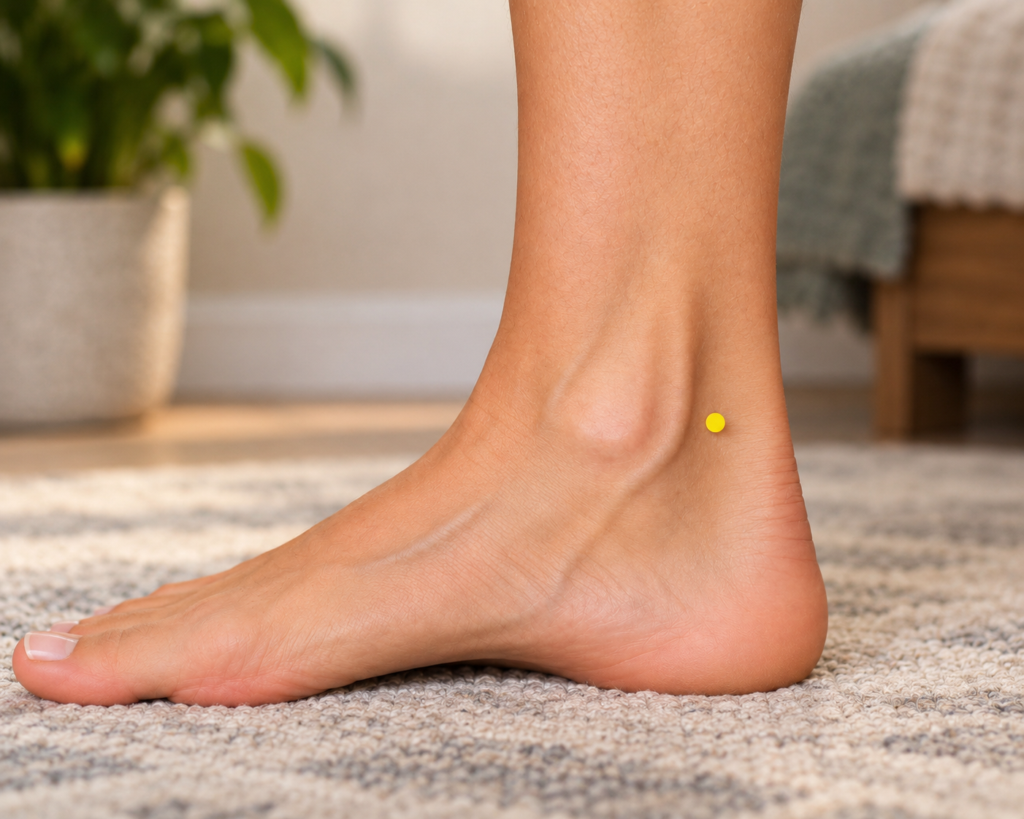
6. Press on GB39 above the outer ankle to support the lower leg. GB39 sits on the outer lower leg, four finger-widths above the tip of the outer ankle bone, just in front of the edge of the outer leg bone. Press with moderate pressure for one to two minutes on the sore leg. GB39 is called “Xuanzhong,” the “Suspended Bell.”
GB39 is the influential point of the marrow and has traditionally been used to treat pain and weakness in the ankle and lower leg. Located on the outer lower leg, just above the injury, it’s especially useful while the joint itself is still tender.
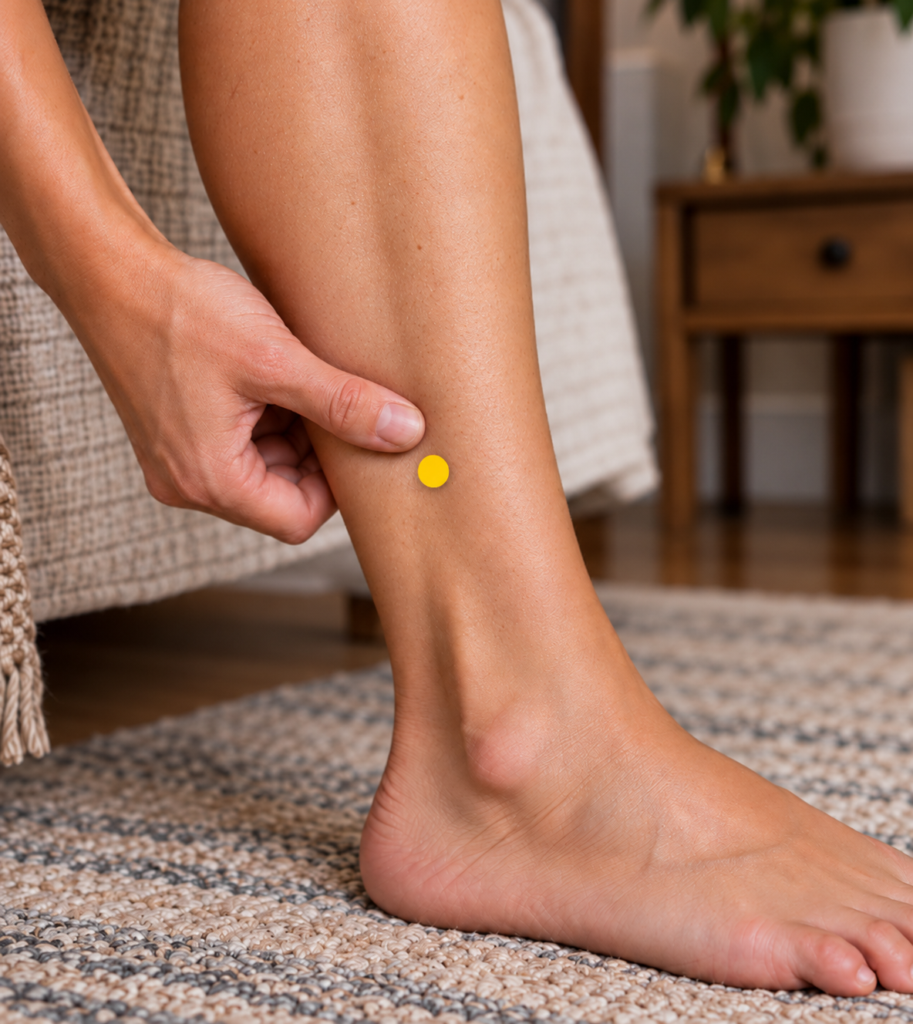
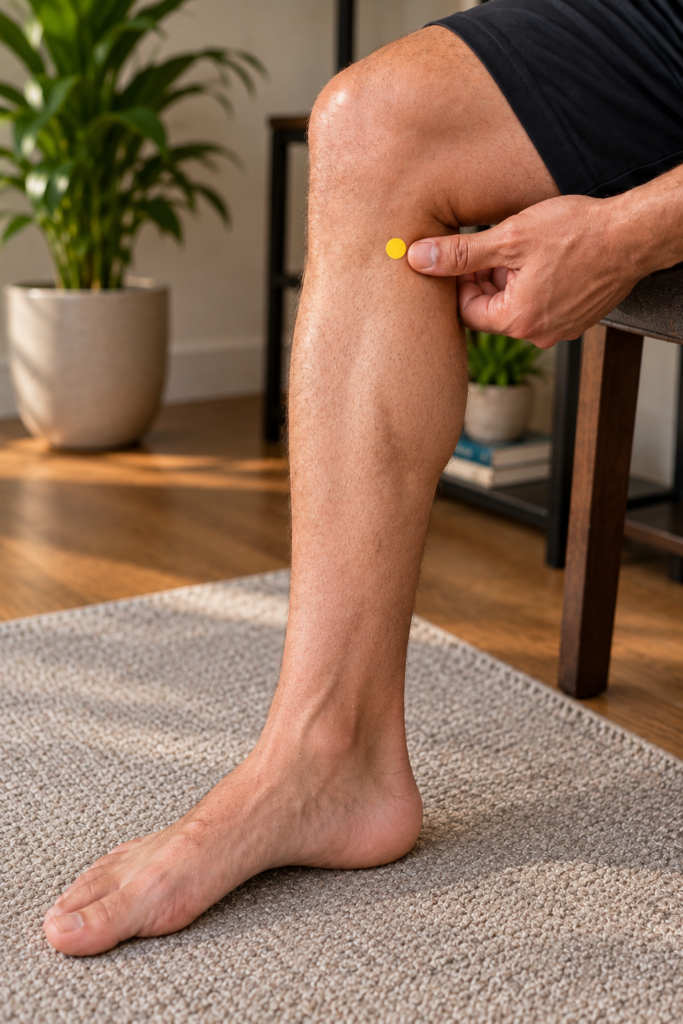
7. Press on GB34 below the outer knee to support the ligaments. GB34 sits on the outer lower leg, in the hollow just in front of and below the small bony knob below the outer knee. Press firmly with your thumb for one to two minutes on each leg. GB34 is called “Yanglingquan,” the “Yang Mound Spring.”
GB34 is the influential point for the tendons and lies higher along the same Gallbladder channel that passes the outer ankle. It supports tendon and ligament healing and can be pressed from the first day because it is well away from the injury.
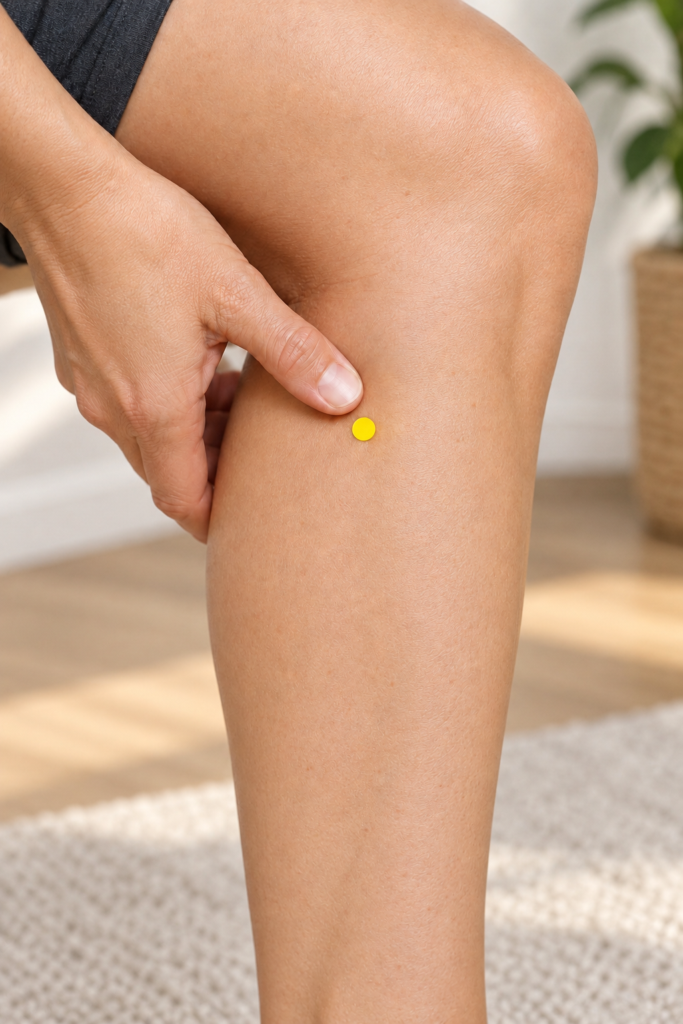
8. Press on SP9 below the inner knee to reduce swelling. SP9 sits on the inner lower leg, in the hollow just below the bony bulge under the inner side of the knee. Press firmly with your thumb for one to two minutes on each leg. SP9 is called “Yinlingquan,” the “Yin Mound Spring.”
In Traditional Chinese Medicine, SP9 is the primary point for draining dampness, the concept of fluid that collects and doesn’t move. It is used for swelling in the lower leg and ankle, especially when it persists beyond the first few days.
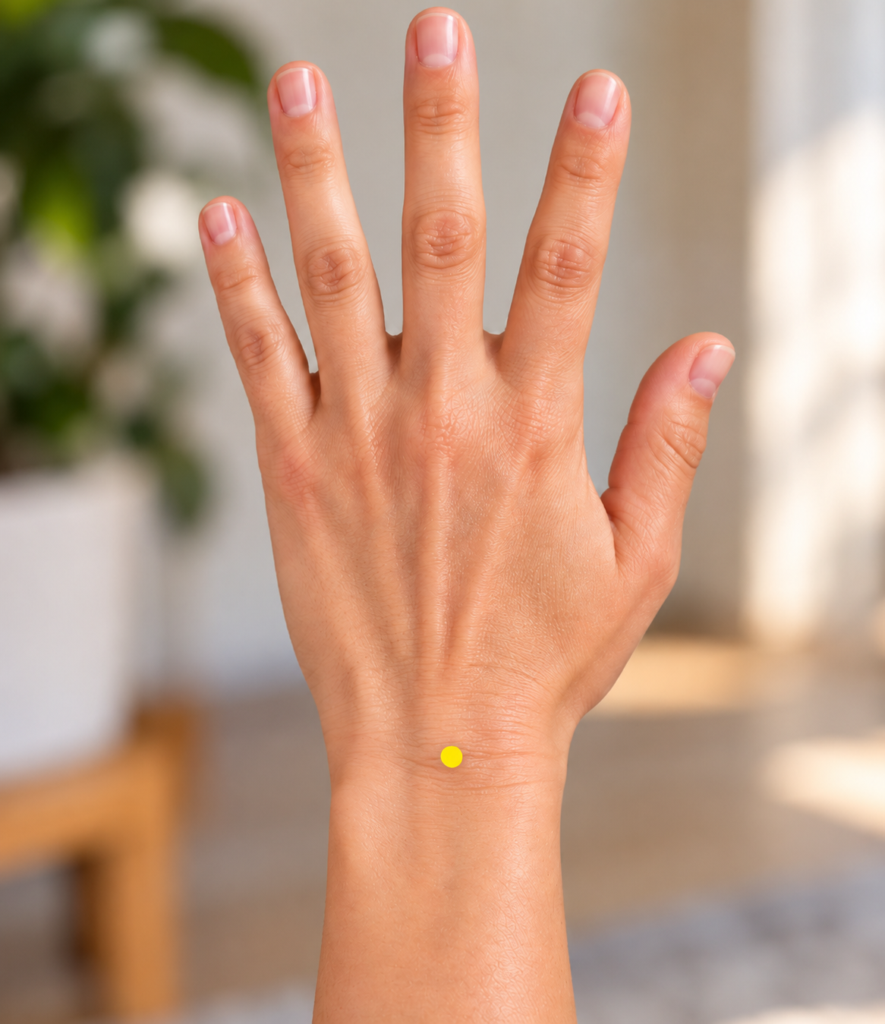
9. Press on TE4 on the opposite wrist to ease ankle pain from a distance. TE4 sits on the back of the wrist crease, in the small hollow between the tendons, roughly in line with the ring finger. Press firmly on the wrist opposite the sore ankle, so the left wrist for a right ankle, for one to two minutes while gently circling the ankle within a comfortable range. TE4 is called “Yangchi,” the “Yang Pool.”
In Traditional Chinese Medicine, the wrist corresponds to the ankle, and pressing the opposite wrist is a well-known way to treat an ankle sprain remotely. This can be especially useful during the first few days, when the ankle is too swollen and tender to touch.
Why These Acupressure Points Work
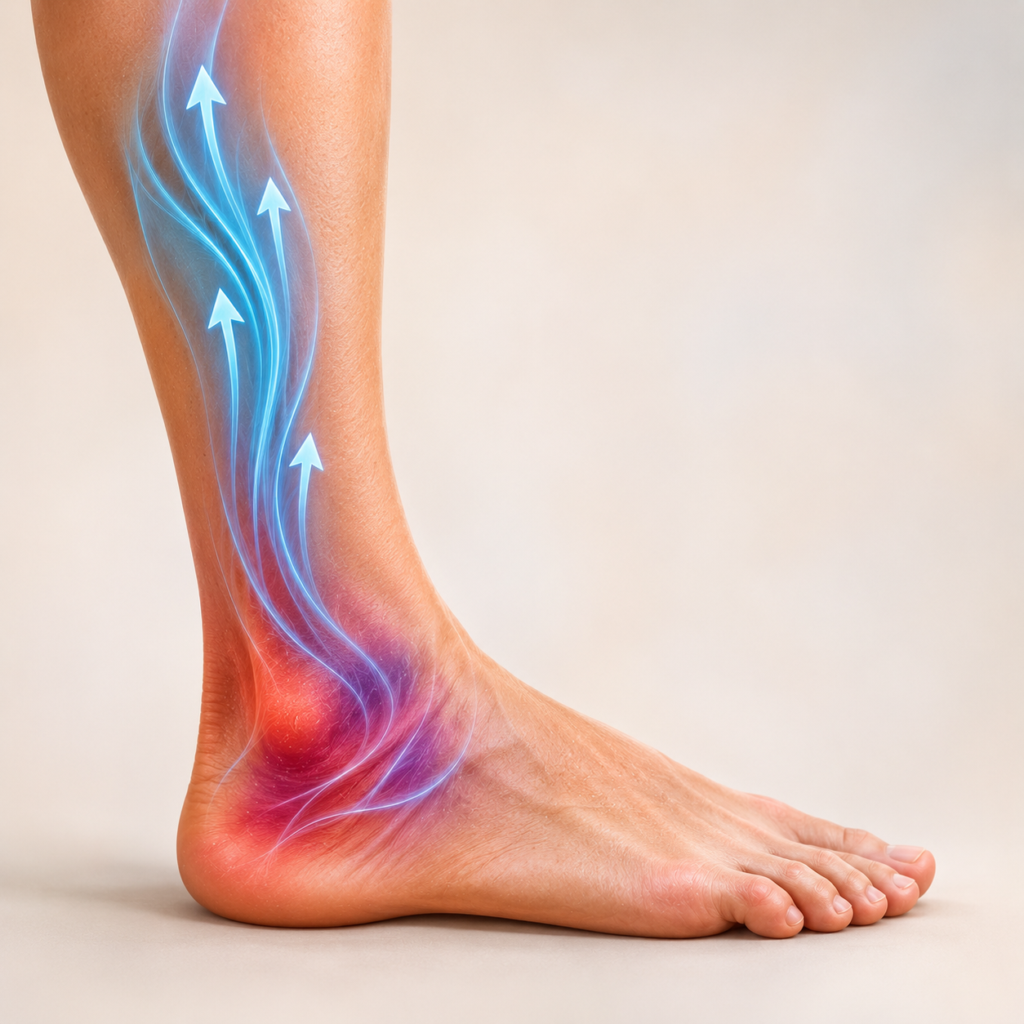
From a Traditional Chinese Medicine perspective, a pickleball ankle sprain is a sudden blockage. The ankle’s roll disrupts the flow of Qi and Blood, causing them to collect in the joint as swelling and bruising. If the swelling clears slowly, fluid lingers and the joint remains puffy and stiff. If the ligaments aren’t nourished properly as they heal, the ankle may stay loose and roll again. Treatment helps move what has pooled around the joint, clear lingering fluid, and support the ligaments so the ankle can stay steady on the next quick step.
The nine points work together to alleviate the injury and restore ankle stability:
- GB40, BL62, and BL60 surround the outer ankle, where most sprains happen.
- ST41 and KI3 free the front of the joint and strengthen the inner side.
- GB39, GB34, and SP9 ease swelling and support the ligaments from above the ankle.
- TE4 on the opposite wrist relieves ankle pain from a distance.
How to Properly Use These Acupressure Points

Acupressure for pickleball-related ankle pain is most effective when tailored to the stage of healing.
- For the first two to three days, avoid pressing on the swollen ankle. Work TE4 on the opposite wrist while gently circling the ankle, then press GB34 and SP9 on the injured leg.
- As the swelling begins to subside, add GB39, followed by the ankle points: GB40, BL62, BL60, ST41, and KI3.
- Apply gentle pressure around the ankle bones, and use firmer pressure on the leg and wrist. Ease off if you feel sharp pain at any point.
- Repeat once or twice daily for at least four to six weeks. If the ankle has rolled more than once, continue using GB40, BL62, KI3, and GB34 as part of a regular routine.
Rest your ankle and keep it elevated above your heart for the first day or two. Use ice during this time to reduce swelling, then switch to heat to help Qi and Blood move. When walking feels comfortable, the American Orthopaedic Foot and Ankle Society recommends tracing the alphabet with your foot to rebuild strength and coordination. Calf stretches and simple balance exercises, such as standing on one leg while brushing your teeth, can help prevent future injuries. Wear court shoes with good side-to-side support instead of running shoes, and replace them when the soles wear out. Return to play gradually rather than jumping back into a full session. If your ankle has rolled more than once, a brace can help, especially during the first few months back.
You can also learn more about acupressure for calf pain.
When to Get Professional Help
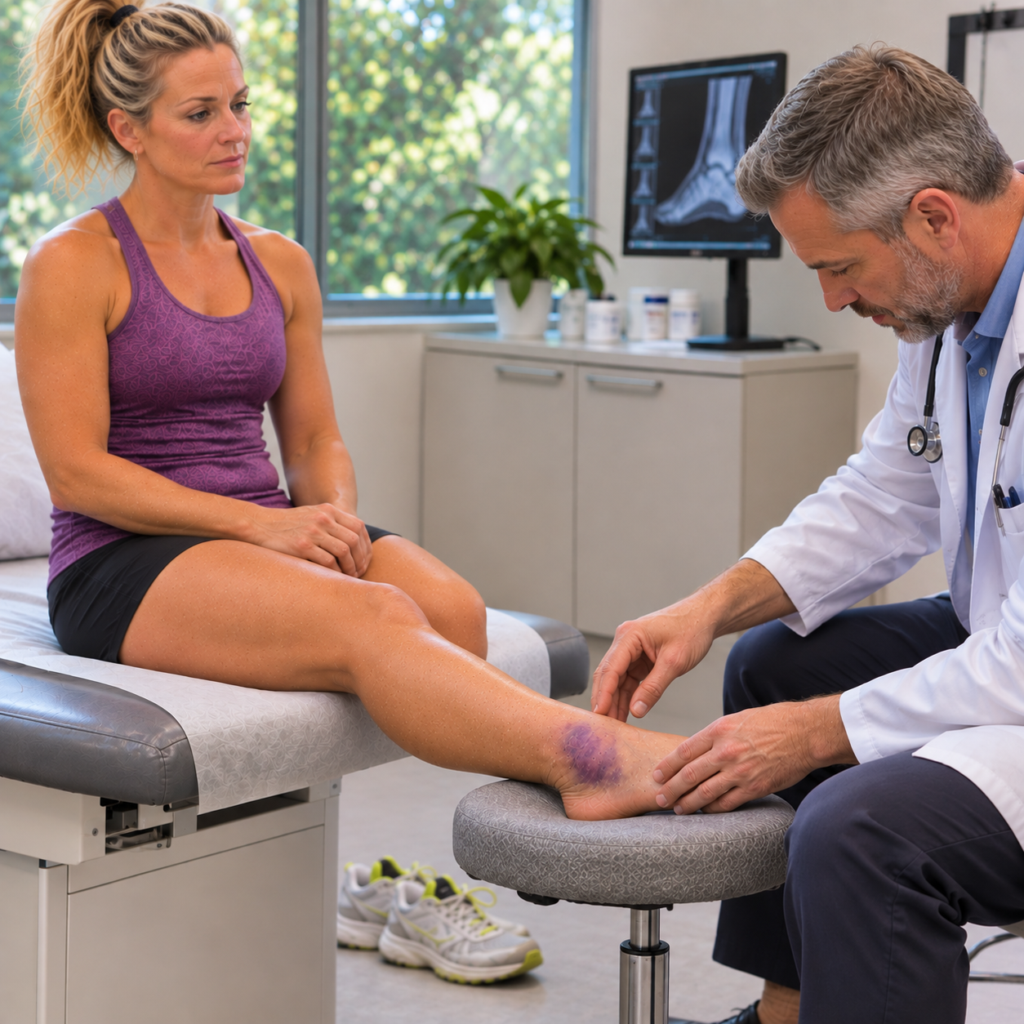
See a doctor right away if you can’t take four steps on your injured ankle, if the edges or tips of your ankle bones are tender, or if your ankle looks deformed, as these may be signs of a fracture. If you hear a sudden pop or feel as though you’ve been kicked in the back of your ankle, followed by trouble pushing off, this could indicate an Achilles tendon rupture. Stop playing and get checked within a few days. Seek prompt care for heavy swelling or bruising, numbness, or a foot that turns cold or pale. If a sprain isn’t clearly improving within a week, heel pain lasts more than a week, or your ankle keeps rolling or feels loose, see a doctor or foot and ankle specialist. Repeated sprains can cause lasting instability.
Acupressure is a gentle, supportive practice for pickleball ankle pain. It complements, and does not replace, diagnosis and medical care.
For related concerns, acupressure for ankle pain, acupressure for Achilles tendinitis, and acupressure for heel pain are companion pieces.
Other posts in the pickleball series include acupressure for pickleball knee pain, acupressure for pickleball shoulder pain, acupressure for pickleball elbow, acupressure for pickleball wrist pain, acupressure for pickleball back pain, and top acupressure points for pickleball players.
Above and Beyond Acupuncture offers acupuncture, cupping, and lifestyle coaching at the North Frank Lloyd Wright Boulevard location in Scottsdale.
Schedule an appointment online to start your healing journey.
The points above are only as effective as the technique used to apply them. Where to press, how firmly, and for how long all affect the result. For a full breakdown of how to perform acupressure properly at home, read Performing Acupressure in 3 Easy Steps.

About the Publisher
Paul Kerzner, L.Ac., is a licensed acupuncturist and board-certified herbalist, as well as the founder of Above and Beyond Acupuncture in Scottsdale. His own journey from chronic patient to practicing acupuncturist shapes his commitment to providing honest, clinically grounded information about acupuncture and Traditional Chinese Medicine. Learn more about Paul and his clinical approach on the About Us page.