Key Takeaways
- Water retention, also known as fluid retention or edema, occurs when fluid builds up and causes the ankles, feet, hands, or face to become swollen and puffy.
- Everyday causes include prolonged sitting or standing, hot weather, a salty diet, and hormonal shifts before a period. Heart, kidney, liver, and vein problems can also cause it.
- In Traditional Chinese Medicine, water retention occurs when the Lung, Spleen, and Kidney do not properly move and transform fluids, causing the body’s waterways to become congested.
- Nine acupressure points on the wrist, abdomen, lower back, and legs help open the waterways, drain Dampness, and support the organs responsible for regulating water.
- Seek medical care right away for swelling in just one leg, sudden swelling, or swelling accompanied by shortness of breath.
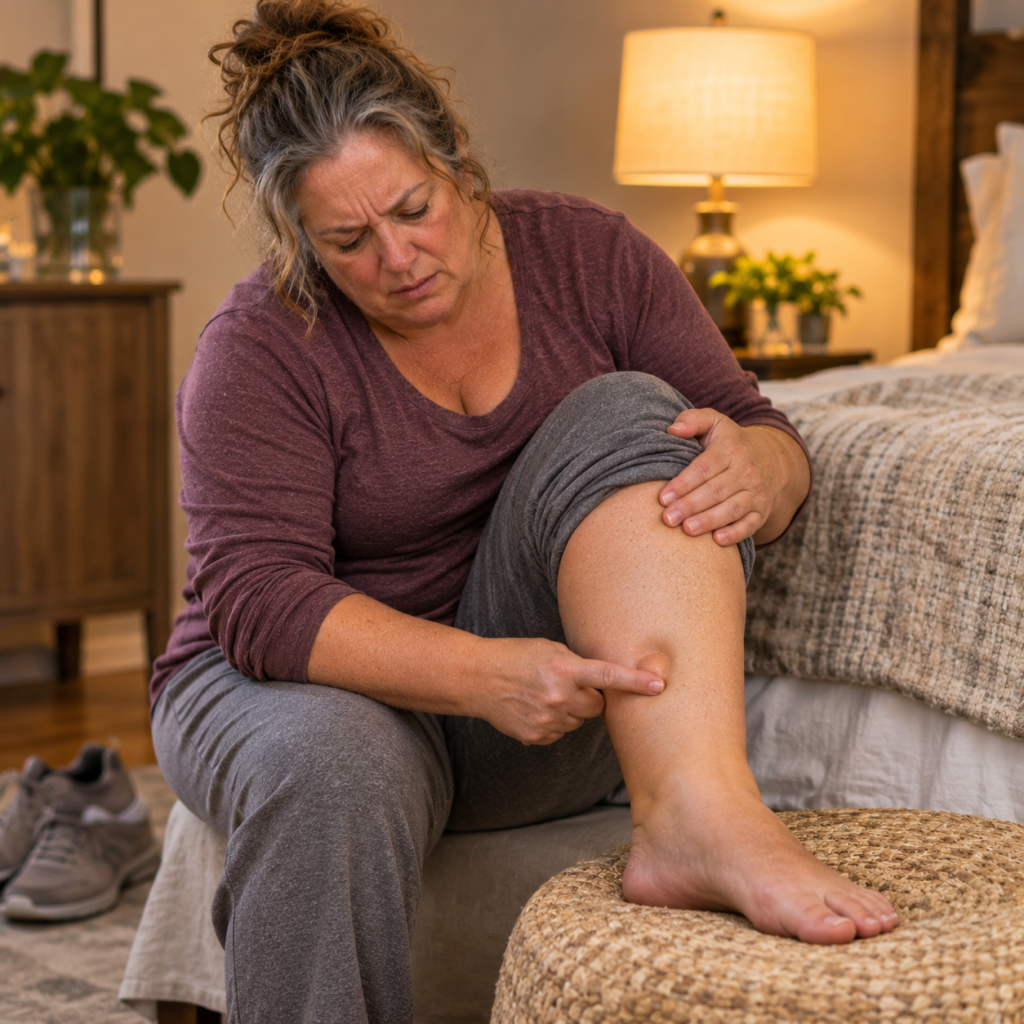
Rings that slip on easily in the morning may be hard to remove by afternoon. Shoes can feel tight after a long day, waistbands may dig in, and pressing a finger into your shin can leave a small dent that takes a moment to fade. People often notice this after eating salty restaurant food, taking a long flight, spending time in hot weather, or standing all day. Many women also see the scale rise by a few pounds before their period, then fall again once it starts.
According to Healthdirect Australia, the national government health information service, fluid retention is a buildup of trapped fluid that causes parts of the body to become swollen or puffy, most often the ankles and feet. Causes include pregnancy, premenstrual syndrome, sitting for long periods, and certain medicines, including some blood pressure and diabetes medicines, corticosteroids, anti-inflammatory drugs, and the combined pill. Fluid retention can also indicate heart failure, kidney or liver problems, thyroid problems, vein problems, or a blood clot. Healthdirect recommends reducing salt, raising the feet, and asking a doctor about compression stockings. It also advises against stopping any medicine without medical advice.
The swelling itself signals that fluid is leaving the blood vessels faster than the body can return it. During the day, gravity draws fluid into the lower legs, which is why ankles are usually puffiest by evening and less swollen after a night lying flat.
Traditional Chinese Medicine describes water as flowing through three organs. The Lung sends fluids down from the upper body, the Spleen transforms and transports them through the middle, and the Kidney regulates water in the lower body and passes it out through the Bladder. The Triple Energizer is the network of waterways connecting all three. When irregular meals, too much cold or sweet food, or overwork weaken the Spleen, fluids accumulate as Dampness, leaving the body feeling heavy and bloated. When Kidney Yang is weak, the body cannot warm or move water effectively, causing swollen ankles and cold feet; the swelling is often worse late in the day. The Liver also plays a role: stress or hormonal shifts before a period can slow the flow of Qi, which in turn slows the movement of fluids.
The nine points listed below start at the wrist and abdomen, continue to the lower back, and finish on the legs.
What Acupressure Points to Press and Why
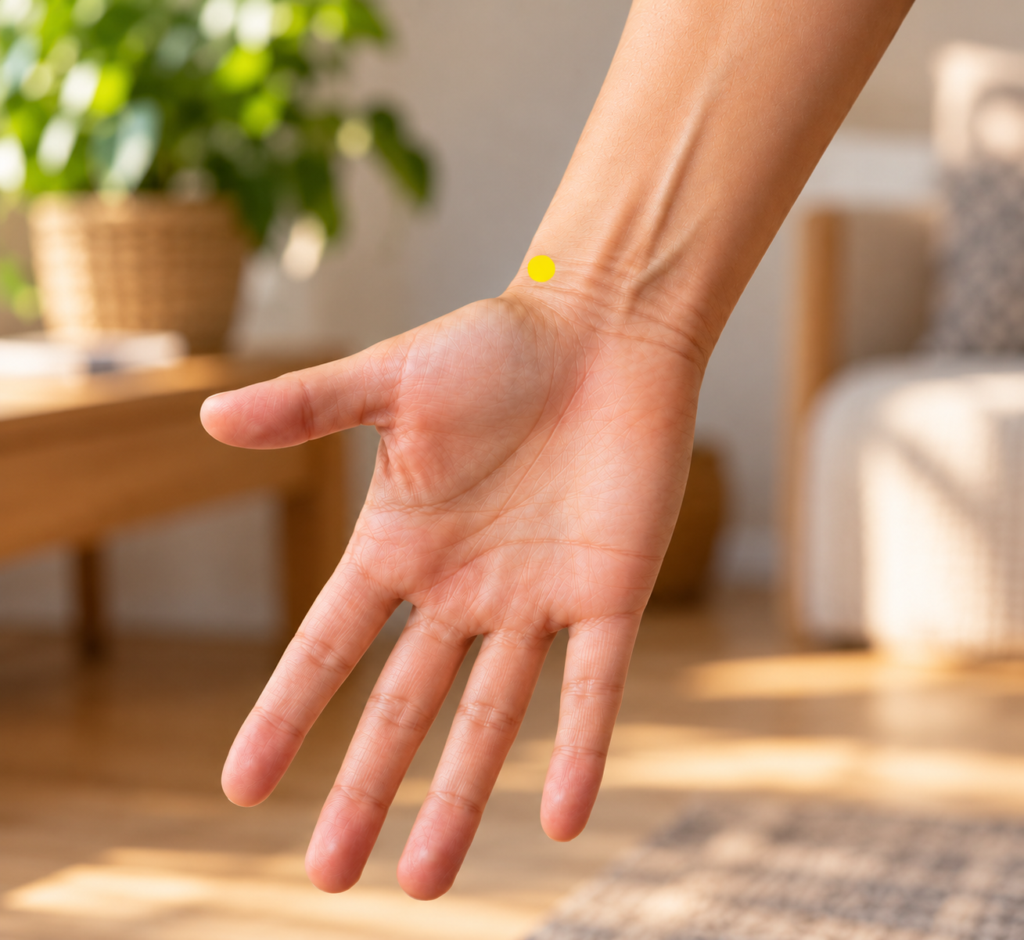
1. Press on LU7 above the wrist to open the upper waterways. LU7 sits on the thumb side of the forearm, about two finger-widths above the wrist crease, in the small groove just above the bony bump at the wrist. Press with the tip of your index finger for one to two minutes on each arm. LU7 is called “Lieque,” the “Broken Sequence.”
LU7 is the connecting point of the Lungs. In Traditional Chinese Medicine, the Lungs opens the water passages and directs fluids down to the Bladder, so LU7 may help reduce puffiness in the face, eyes, and hands.
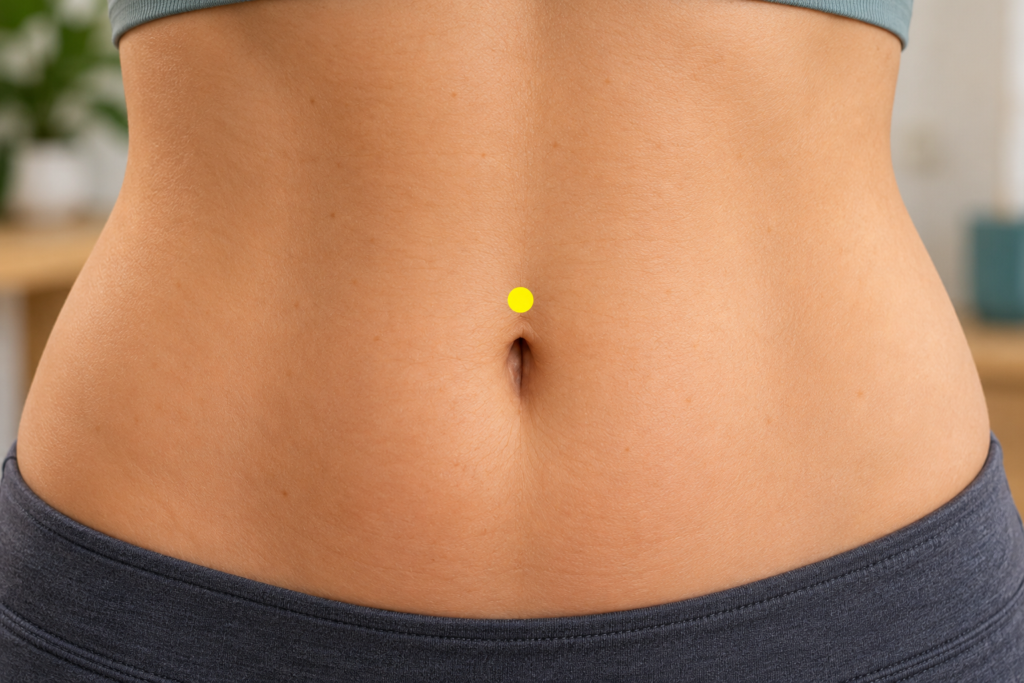
2. Press on CV9 above the navel to separate and move fluids. CV9 sits on the midline of the abdomen, one thumb-width above the navel. Rest two or three fingertips on the point and press gently, or make slow circles, for one to two minutes while breathing slowly into the belly. CV9 is called “Shuifen,” the “Water Separation.” CV9 is avoided during pregnancy.
In Traditional Chinese Medicine, CV9 is one of the key points for water retention. Its name reflects its role in separating clear fluids from turbid ones, and it is used to address swelling, puffiness, and a bloated, heavy belly.
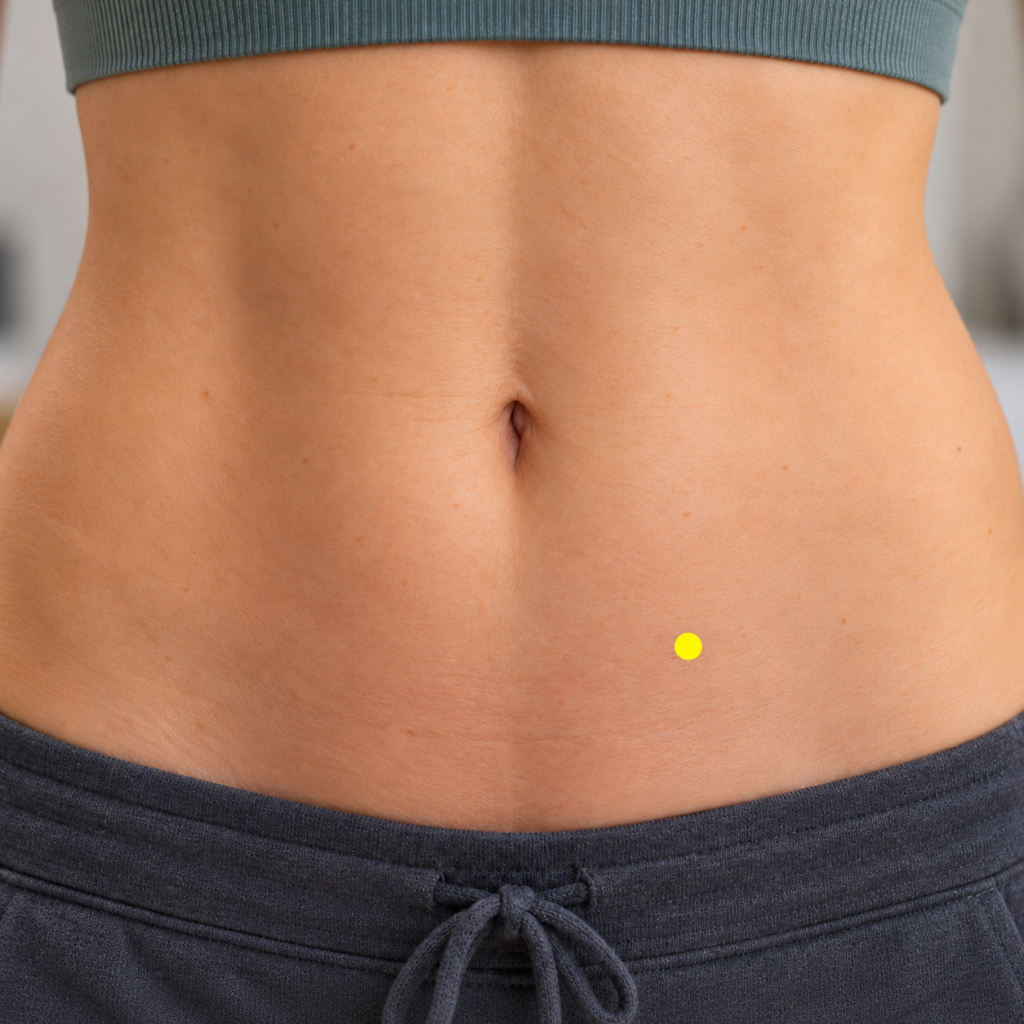
3. Press on ST28 on the lower abdomen to open the water passages. ST28 sits on the lower abdomen, about four finger-widths below the navel and three finger-widths out to either side of the midline. Press gently with two or three fingertips for one to two minutes on each side. ST28 is called “Shuidao,” the “Water Passage.” ST28 is avoided during pregnancy.
ST28 is traditionally used to clear the pathways that carry water through the lower abdomen to the Bladder. It may help relieve lower abdominal bloating and premenstrual swelling.
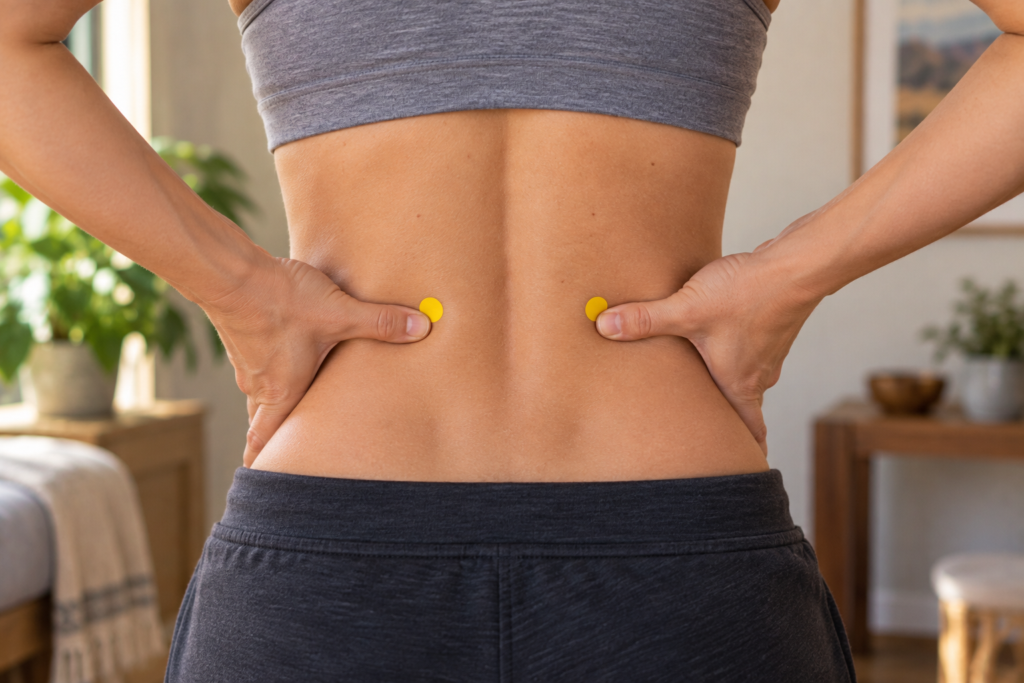
4. Press on BL23 on the lower back to strengthen the Kidney. BL23 sits on the lower back, two finger-widths out from the spine on each side, level with the waist. Lie on your back with a tennis ball under each point, or rub the area briskly with your palms or knuckles until it feels warm, for one to two minutes. BL23 is called “Shenshu,” the “Kidney Shu.”
BL23 is the Kidney’s back transport point. It supports the Kidney’s control of water and warms the lower body, making it suitable for swollen ankles accompanied by cold feet, a sore lower back, or fatigue.
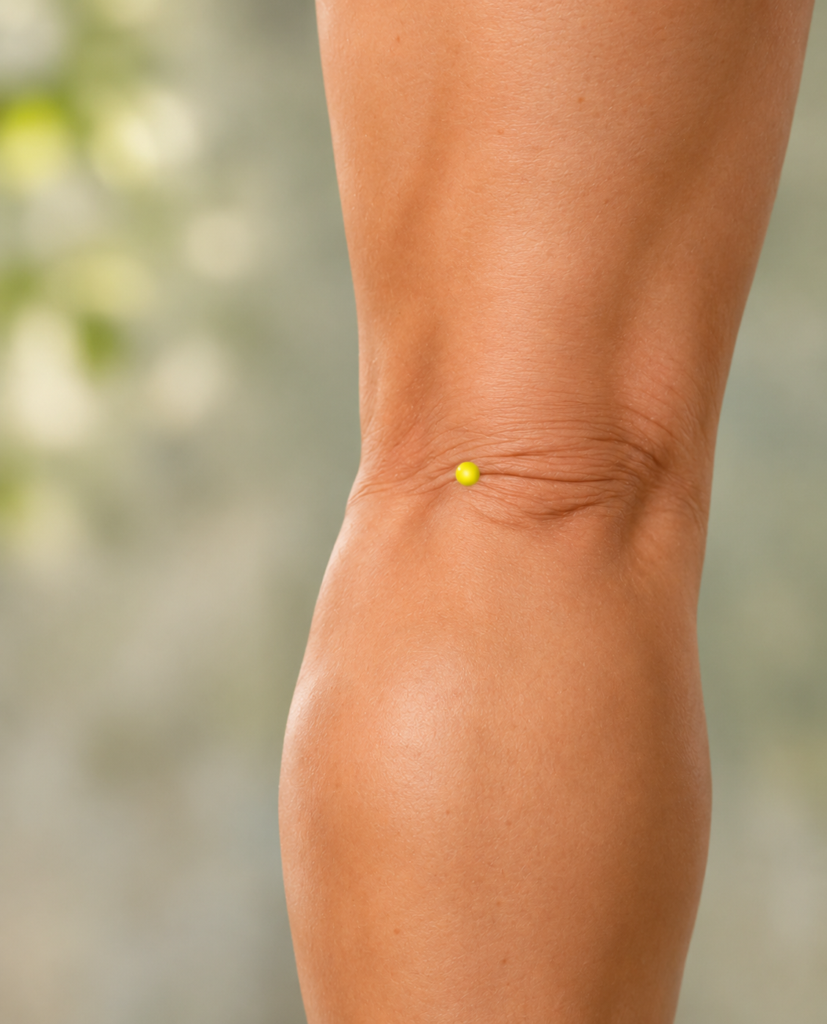
5. Press on BL39 at the outer end of the knee crease to regulate the waterways. BL39 sits at the outer end of the crease on the back of the knee, just inside the tendon that stands out there when the knee is slightly bent. Press with moderate pressure for one to two minutes on each leg. BL39 is called “Weiyang,” the “Bend Yang.”
BL39 is the lower sea point of the Triple Energizer, the system of waterways connecting the Lung, Spleen, and Kidney. It is a classic point for water that is not flowing freely, causing swelling in the lower body and reduced urination.
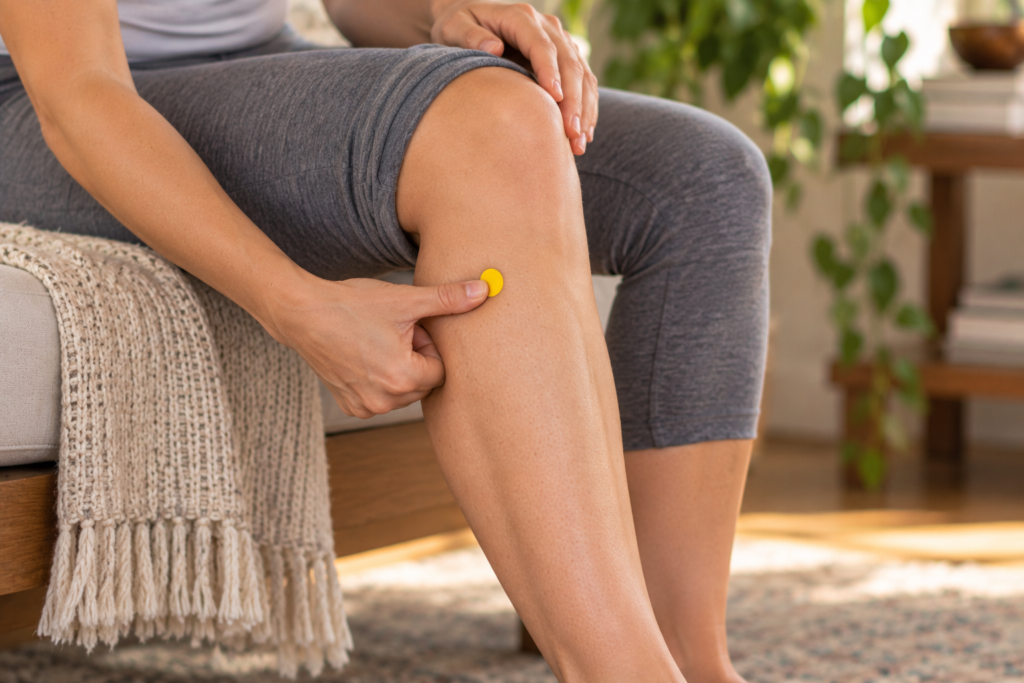
6. Press on SP9 below the inner knee to drain Dampness. SP9 sits on the inner side of the lower leg, in the hollow just below the knee where the shinbone curves upward. Press firmly with your thumb for one to two minutes on each leg. SP9 is called “Yinlingquan,” the “Yin Mound Spring.”
SP9 is the Spleen’s sea point and the primary point for draining Dampness. It is used to treat swelling in the legs and ankles, a heavy feeling in the body, and bloating.
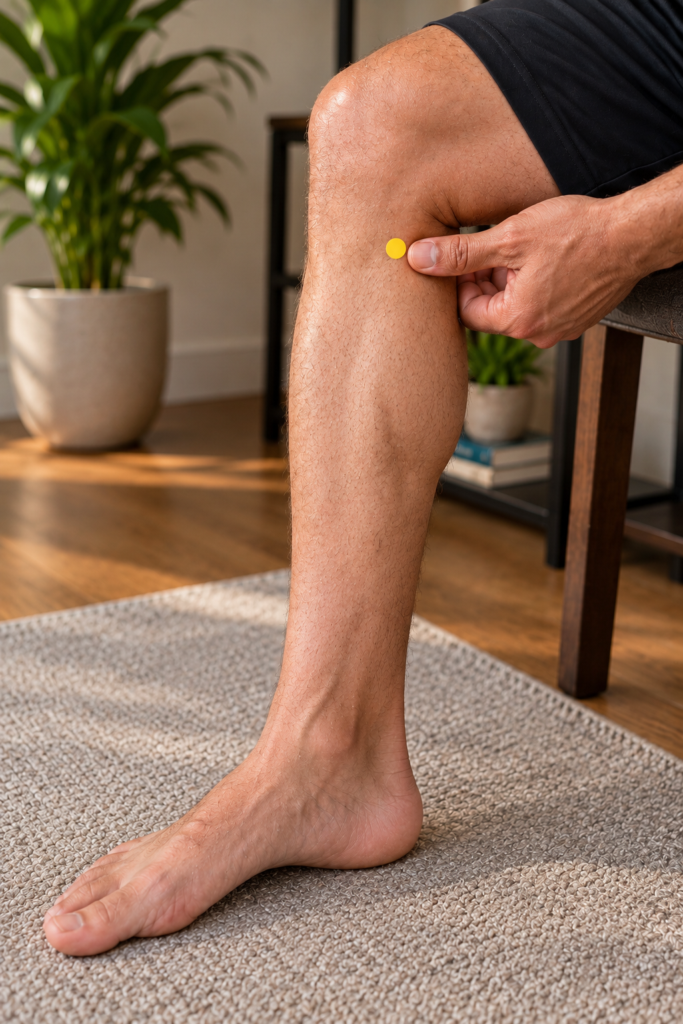
7. Press on ST36 below the knee to strengthen the Spleen. ST36 sits on the front of the lower leg, four finger-widths below the bottom of the kneecap and one finger-width toward the outside of the shinbone. Press firmly with your thumb for one to two minutes on each leg. ST36 is called “Zusanli,” the “Leg Three Miles.”
ST36 is the Stomach’s sea point. It strengthens the Spleen and Stomach, helping transform fluids rather than letting them accumulate, and eases the tired, sluggish feeling associated with water retention.
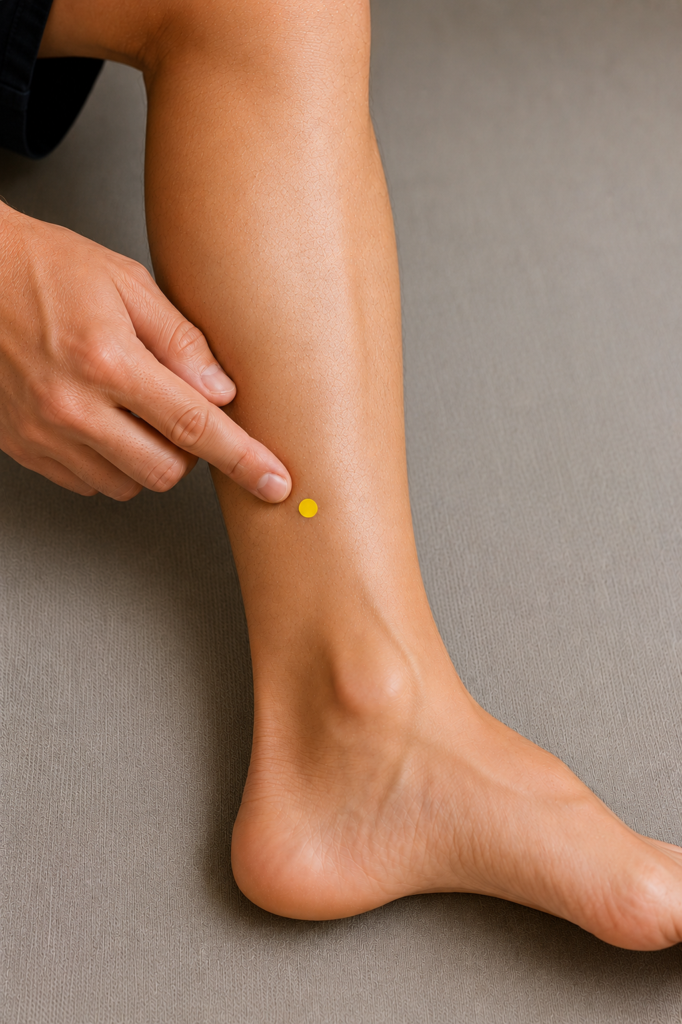
8. Press on SP6 above the inner ankle to ease swelling before a period. SP6 sits on the inside of the lower leg, four finger-widths above the tip of the inner ankle bone, just behind the edge of the shinbone. Press firmly with your thumb for one to two minutes on each leg. SP6 is called “Sanyinjiao,” the “Three Yin Intersection.” SP6 is avoided during pregnancy.
SP6 is where the Spleen, Liver, and Kidney channels meet. It helps drain Dampness and keep Qi moving, and is especially useful for women who experience bloating and puffy ankles in the days before their period.
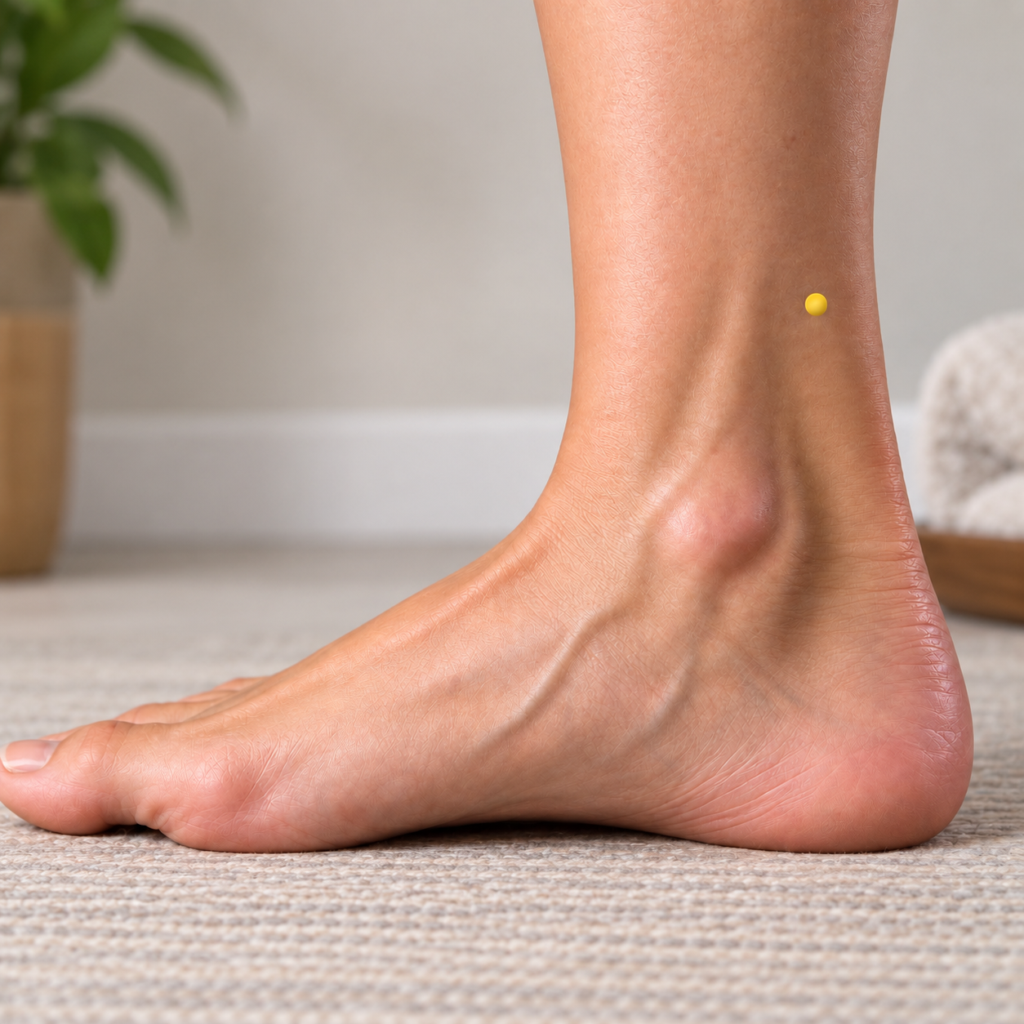
9. Press on KI7 above the inner ankle to regulate water. KI7 sits on the inside of the lower leg, two thumb-widths above the hollow between the inner ankle bone and the Achilles tendon, just in front of the tendon. Press with moderate pressure for one to two minutes on each leg. KI7 is called “Fuliu,” the “Returning Current.”
KI7 helps the Kidney regulate water and is traditionally used to address swelling in the lower legs and ankles, particularly when accompanied by cold feet and tired legs.
Why These Acupressure Points Work
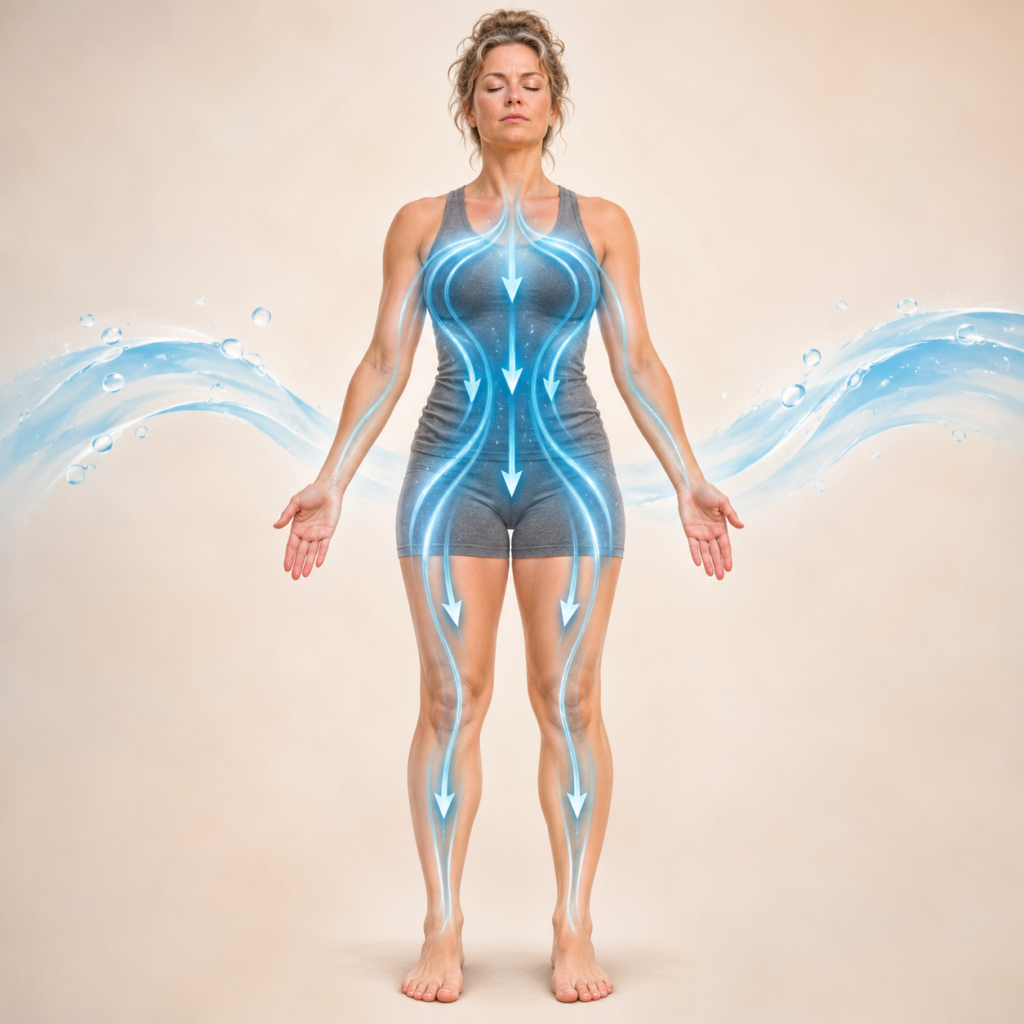
From a Traditional Chinese Medicine perspective, water retention occurs when fluids stop moving through one or more levels of the body. The Lung sends fluids downward, the Spleen moves them through the middle, the Kidney governs them below, and the Triple Energizer keeps the waterways open between all three. When any of these functions slows, fluid backs up and pools wherever gravity draws it. The abdominal points open passages through the body’s center, the back point warms the Kidney, and the arm and leg points restore flow at each level.
The nine points work together to facilitate the movement of water throughout the body:
- LU7 opens the upper waterways and sends fluids down.
- CV9 and ST28 separate fluids and open the passages to the Bladder.
- BL23, BL39, and KI7 strengthen the Kidney and regulate the waterways.
- SP9, ST36, and SP6 strengthen the Spleen and drain Dampness.
How to Properly Use These Acupressure Points
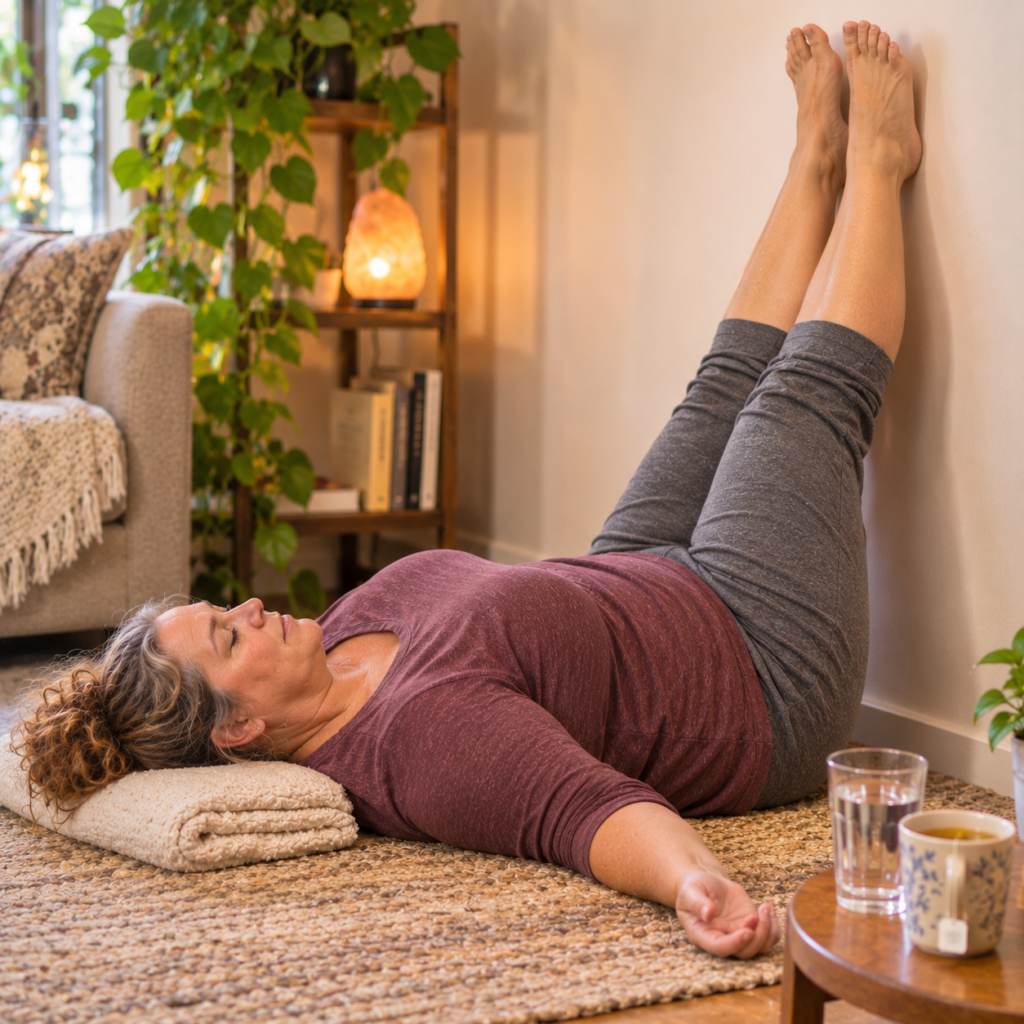
Acupressure can be incorporated into a brief daily routine to address water retention, with extra attention on days when swelling is more pronounced.
- Apply gentle pressure to LU7 on both arms, followed by CV9 and ST28, while breathing slowly into the abdomen.
- Rub BL23 until the lower back feels warm, then proceed down the legs, applying pressure to BL39, SP9, ST36, SP6, and KI7.
- If your ankles swell at the end of the day, press SP9, SP6, and KI7. Then lie down for 15 minutes with your legs propped on pillows above heart level.
- Apply gentle pressure to the abdomen and firmer pressure to the legs. During pregnancy, avoid CV9, ST28, and SP6. Do not apply pressure to skin that is red, hot, or broken.
Your daily habits can make a big difference in water retention. Try to cut back on salty, processed foods, such as deli meats, canned soups, chips, and restaurant meals, and drink water throughout the day. If you sit for long periods, get up and walk every hour; if you stand for a long time, shift your weight or walk around. On flights and long drives, flex and point your feet. In the evening, raise your feet, and ask your doctor about compression socks if you often experience swelling. Traditional Chinese Medicine also recommends eating more warm, cooked meals and fewer cold drinks, raw foods, and sweets, which can add Dampness. Adzuki beans, barley, and corn silk tea are traditionally used to help drain Dampness.
You can also learn more about acupressure for bloating and gas.
When to Get Professional Help
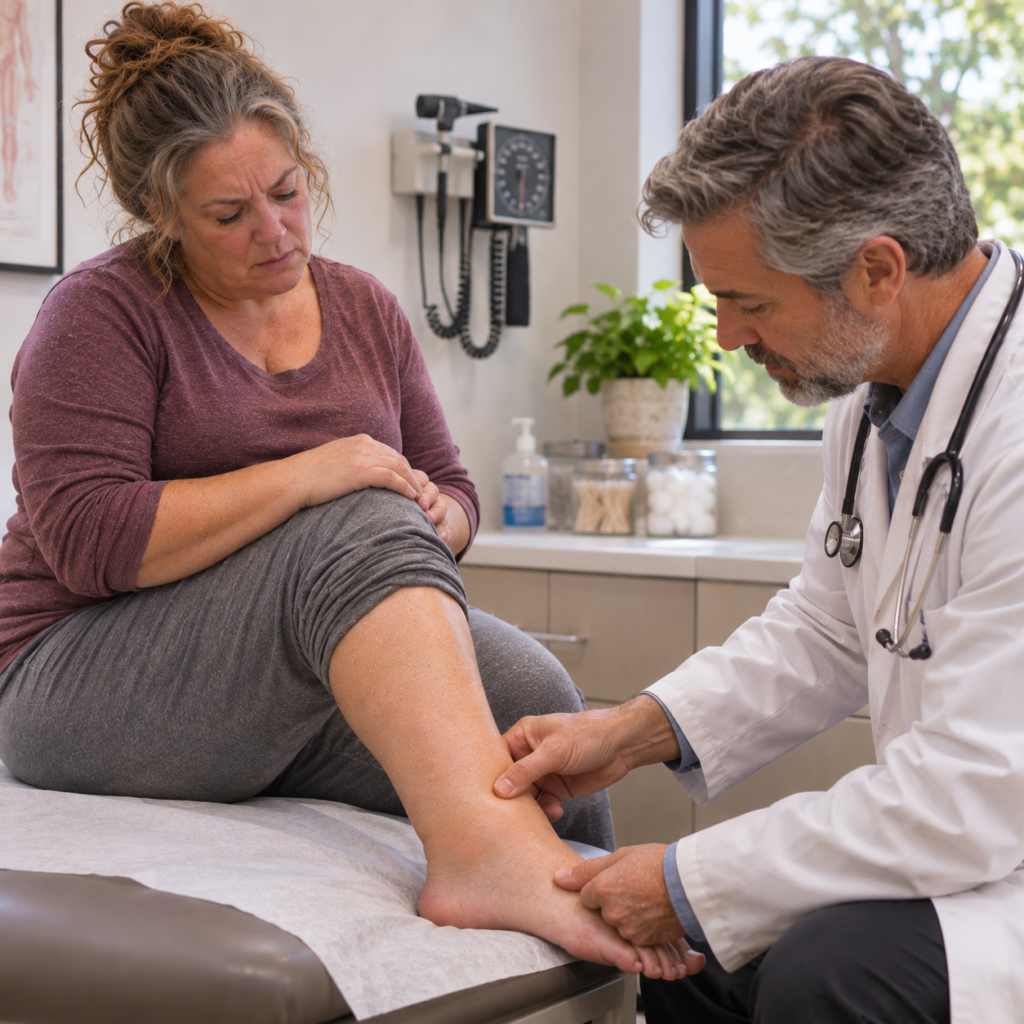
Call 911 if swelling is accompanied by shortness of breath, chest pain, or difficulty breathing when lying flat, as this may indicate fluid in the lungs. Seek urgent care for swelling in only one leg, especially if it is warm, red, or tender, or for any sudden swelling, as these may signal a blood clot or another serious problem. See a doctor if swelling does not go away overnight, keeps returning, or is accompanied by rapid weight gain, reduced urination, fatigue, or yellowing of the skin, as water retention can indicate a heart, kidney, liver, or thyroid problem. Women who notice sudden swelling of the face, hands, or feet during pregnancy should contact their obstetric provider right away. If swelling began after starting a new medication, talk with the prescribing doctor before stopping it.
Acupressure is a gentle, supportive practice for water retention. It complements, and does not replace, diagnosis and medical care.
For related concerns, acupressure for lymphedema, acupressure for PMS, and acupressure for leg pain are companion pieces.
Above and Beyond Acupuncture offers acupuncture, cupping, and lifestyle coaching at the North Frank Lloyd Wright Boulevard location in Scottsdale.
Schedule an appointment online to start your healing journey.
The points above are only as effective as the technique used to apply them. Where to press, how firmly, and for how long all affect the result. For a full breakdown of how to perform acupressure properly at home, read Performing Acupressure in 3 Easy Steps.
About the Publisher
Paul Kerzner, L.Ac., is a licensed acupuncturist and board-certified herbalist, as well as the founder of Above and Beyond Acupuncture in Scottsdale. His own journey from chronic patient to practicing acupuncturist shapes his commitment to providing honest, clinically grounded information about acupuncture and Traditional Chinese Medicine. Learn more about Paul and his clinical approach on the About Us page.