
Key Takeaways
- Postnasal drip can lead to coughing, sore throat, and the need to clear the throat, commonly caused by excess mucus from different conditions.
- Acupressure provides relief by stimulating specific points to open nasal passages, eliminate mucus, and enhance digestion.
- Key acupressure points include LI20, Bitong, LI4, LU7, CV22, ST40, SP9, ST36, and KI6, each serving distinct purposes.
- Applying acupressure correctly and keeping healthy habits can improve outcomes and help relieve symptoms.
- See a doctor if symptoms continue or get worse, since this could signal underlying health issues needing medical care.
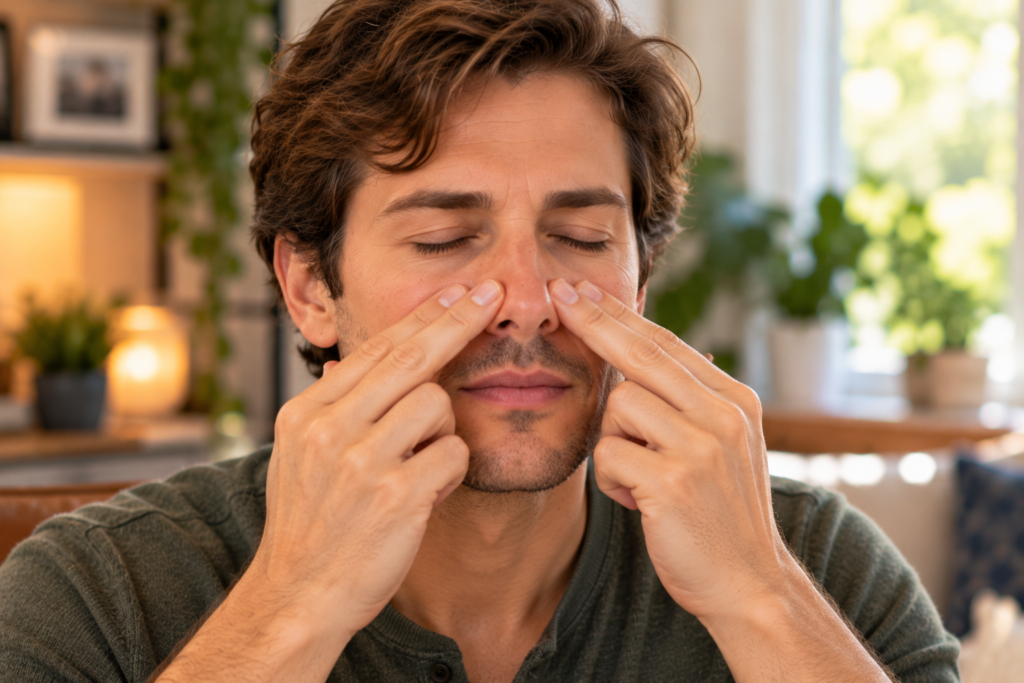
Do you find yourself clearing your throat throughout the day or waking up with a cough and a sore, itchy throat?
Postnasal drip occurs when mucus from your nose and sinuses drips down the back of your throat. Your body continuously produces mucus, which you usually swallow without noticing. However, excess or thick mucus can cause symptoms such as needing to clear your throat, a tickling sensation that triggers coughing, a sore or hoarse throat, bad breath, a lump-in-the-throat feeling, and a cough that worsens when you lie down at night. Common causes include allergies, colds, sinus inflammation, dry air, irritants, and acid reflux. Acupressure can help open nasal passages, thin and clear mucus, and address the underlying issues.
In Traditional Chinese Medicine, the Spleen generates phlegm, and the Lung stores it. Poor digestion or consuming greasy, sweet, rich, or cold foods weakens the Spleen’s ability to process fluids, causing phlegm to accumulate in the Lung, nose, and throat. The mucus’s appearance reflects its source: thin, clear, or white mucus with a stuffy nose and fatigue indicates phlegm and dampness due to a weak Spleen or wind-cold. Conversely, thick, yellow, or green mucus with a sore throat signifies phlegm-heat. Minor amounts of sticky mucus in a dry, tickly throat suggest dryness from low Yin, common in dry environments and with aging.
Here are nine acupressure points that can help open the nose, clear phlegm from the Lung and throat, strengthen the Spleen to reduce phlegm, and soothe a dry throat.
What Acupressure Points to Press and Why
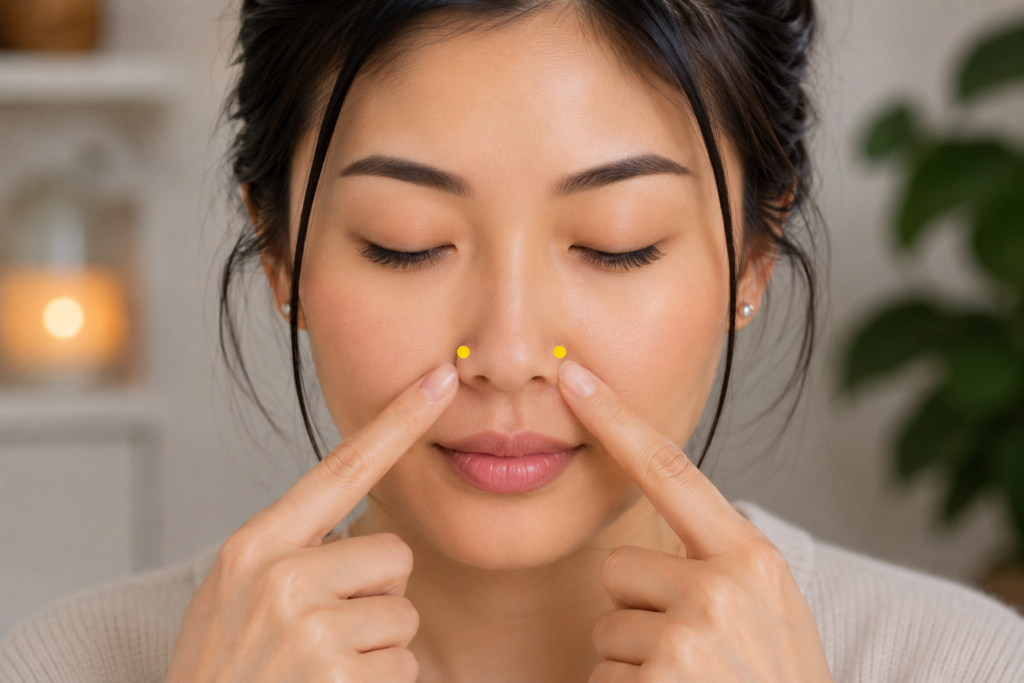
1. Press on LI20 beside the nostrils to open the nose. LI20 sits in the groove beside each nostril, at the outer edge where the nostril meets the cheek. Press firmly inward and slightly upward with your fingertips for one to two minutes on both sides. LI20 is called “Yingxiang,” the “Welcome Fragrance.”
LI20 is a key acupuncture point for the nose, helping to clear blocked nasal passages and promote mucus drainage forward, rather than down the throat. It is the first point to try when experiencing congestion or a runny nose. The name reflects its traditional role in restoring the sense of smell when the nose is blocked.
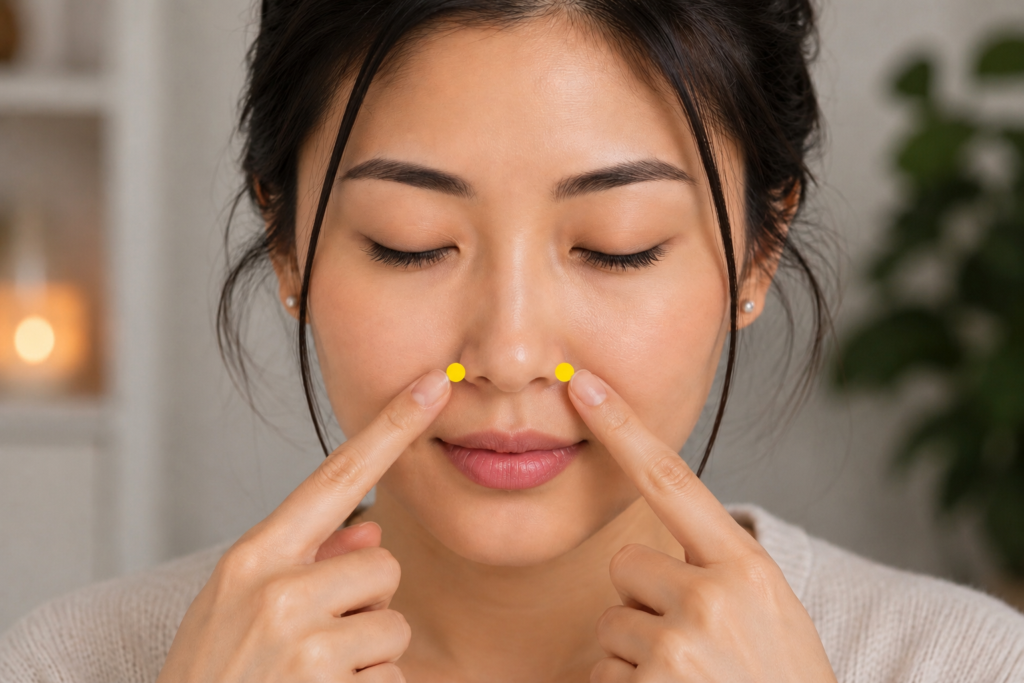
2. Press on Bitong at the top of the nasal groove to clear the upper nose. Bitong sits on either side of the nose, at the top of the groove where the bony bridge meets the softer cartilage, just above LI20. Press gently upward with your fingertips for one to two minutes on both sides, or slide your fingertips up and down between Bitong and LI20. Bitong is an extra point whose name means “Open the Nose.”
LI20 helps with the lower nose, while Bitong targets the upper area where congestion builds up deep inside the nasal passages. Lightly massaging the sides of your nose between these two points is a simple, calming way to ease a stuffy, runny nose.
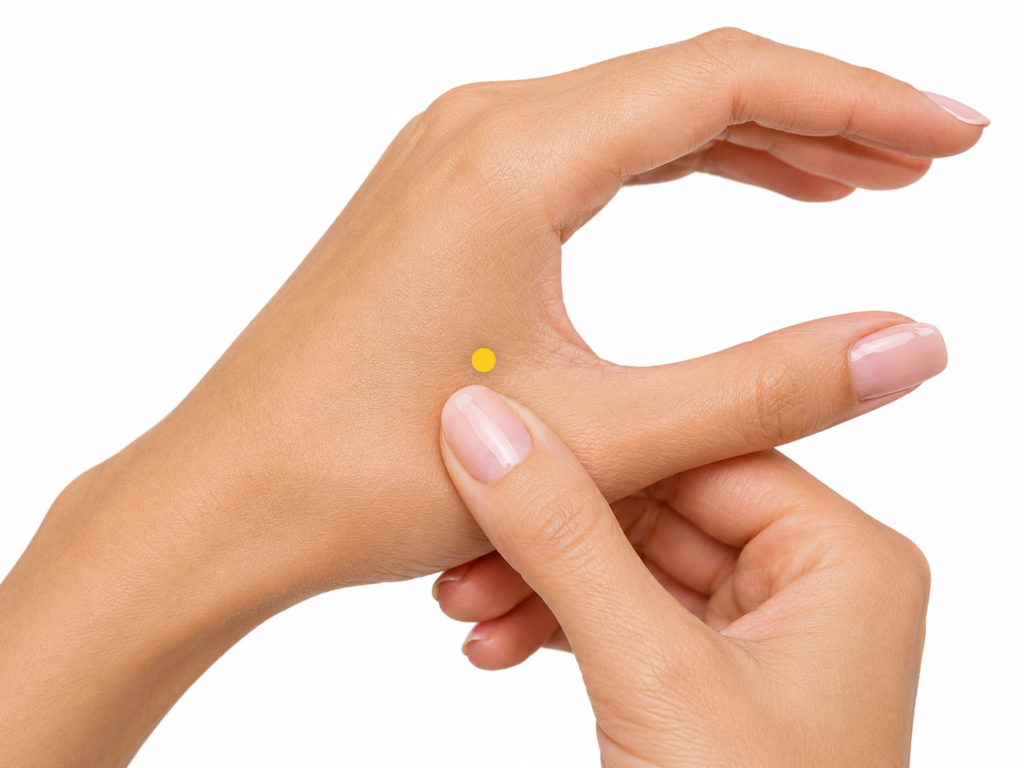
3. Press on LI4 in the hand to clear the head and face. LI4 sits in the webbing between the thumb and index finger, at the highest point of the muscle when you bring them together. Press firmly with the thumb of your other hand for one to two minutes on each hand. LI4 is called “Hegu,” the command point for the face. LI4 is contraindicated during pregnancy.
LI4 is located on the same channel as LI20, forming a well-known pair for nasal treatment. One point is on the face, and the other is on the hand. LI4 helps clear the head and face, relieves colds or allergies that cause postnasal drip, and can be pressed conveniently anywhere.
4. Press on LU7 on the wrist to open the Lung and throat. LU7 sits on the thumb side of the forearm, just above the wrist, about two finger-widths above the wrist crease, in a small groove on the edge of the bone. Press firmly with your thumb or fingertip for one to two minutes on each arm. LU7 is called “Lieque,” the “Broken Sequence.”
LU7 is an important point for the Lung, nose, and the back of the head and throat. It assists the Lung in moving and expelling phlegm downward, relieves cold or allergy symptoms, and soothes cough and throat irritation caused by postnasal drip.

5. Press on CV22 at the base of the throat to calm the tickle. CV22 sits in the small hollow at the base of the throat, just above the top of the breastbone, between the two collarbones. Press very gently, angling your fingertip downward behind the top of the breastbone rather than straight back into the throat, for about thirty seconds to a minute. CV22 is called “Tiantu,” the “Heaven’s Chimney.”
CV22 is the primary point for the throat. It helps soothe the tickle, reduce the urge to clear your throat, and ease the cough caused by mucus dripping down the back of your throat. It also supports the downward movement of Lung Qi. When pressing this point, always apply gentle pressure and angle your finger downward rather than straight in, as this area is sensitive.

6. Press on ST40 on the lower leg, the key point for phlegm. ST40 sits on the outer lower leg, midway between the knee and the outer ankle bone, about two finger-widths outside the shinbone. Press firmly with your thumb for one to two minutes on each leg. ST40 is called “Fenglong.”
ST40 is the primary point for clearing phlegm throughout the body, including thick mucus in the nose, sinuses, and throat. It helps thin and clear mucus that causes postnasal drip. You can press this point daily until your symptoms lessen.
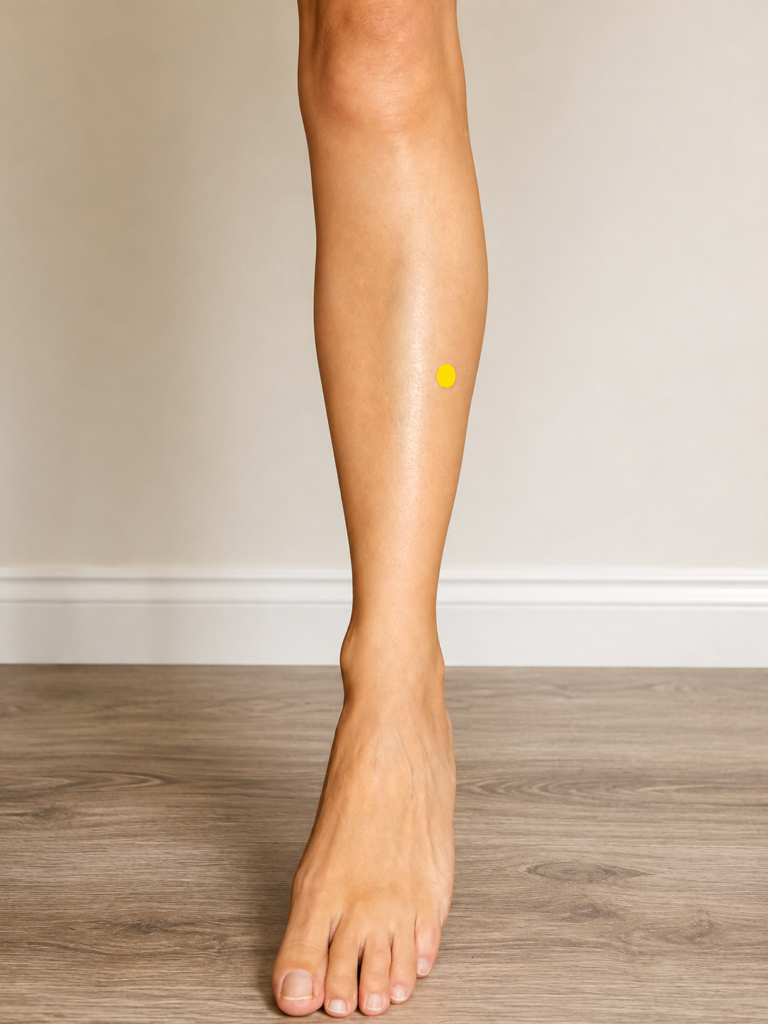
7. Press on SP9 below the inner knee to dry up dampness. SP9 sits on the inner lower leg, in the hollow just below the bulge at the top of the shinbone, under the inner side of the knee. Press firmly with your thumb for one to two minutes on each leg. SP9 is called “Yinlingquan.”
If your post-nasal drip is thin, clear, and persistent, and you feel heavy and congested, Traditional Chinese Medicine attributes this to dampness. SP9 is the primary point for draining dampness, and when combined with ST40, it assists with both dampness and the phlegm that may develop from it.
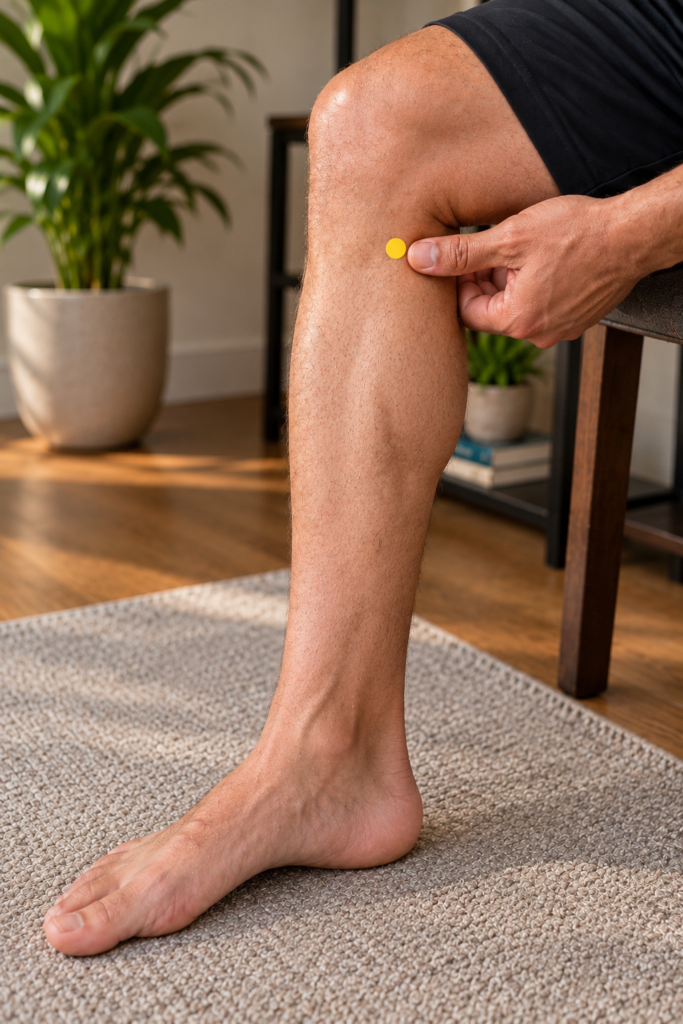
8. Press on ST36 below the knee to strengthen the source. ST36 sits four finger-widths below the lower edge of the kneecap and one finger-width to the outside of the shinbone, on the muscle that rises when you flex your foot. Press firmly with your thumb for one to two minutes on each leg. ST36 is called “Zusanli,” the “Leg Three Miles.”
Since the Spleen produces phlegm, enhancing digestion can prevent its formation. ST36 strengthens the Spleen and Stomach, supports your immune defenses against colds and allergies, and is especially effective for chronic or recurring postnasal drip.

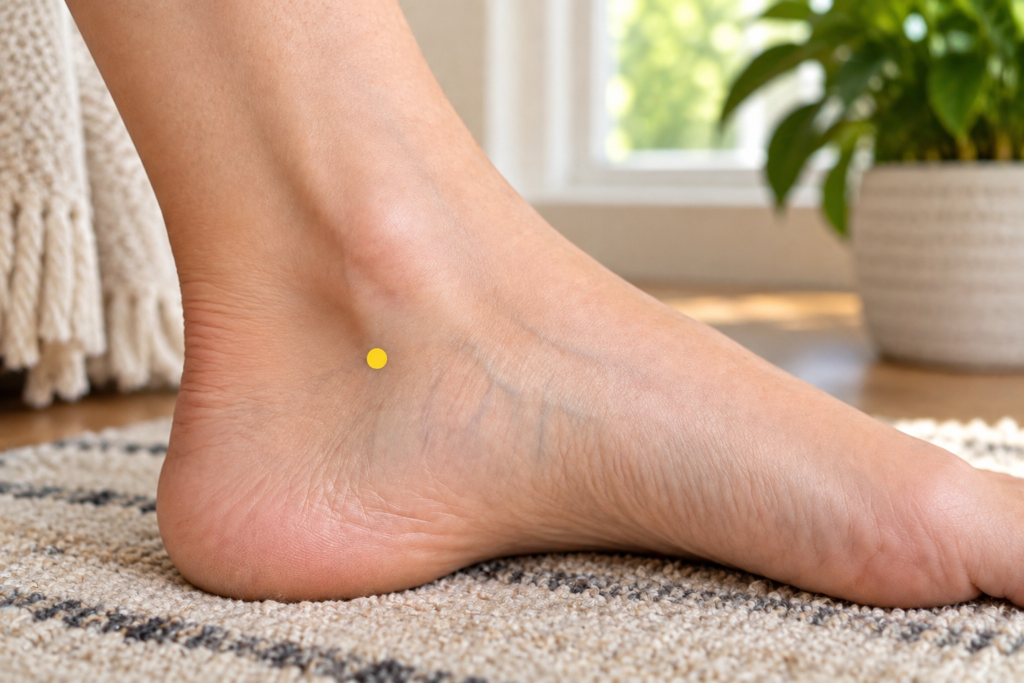
9. Press on KI6 below the inner ankle to moisten a dry throat. KI6 sits in the hollow just below the tip of the inner ankle bone. Press firmly with your thumb for one to two minutes on each ankle. KI6 is called “Zhaohai,” the “Shining Sea.”
If your nasal drip is scant and sticky and your throat feels dry, tickly, and raw, especially at night, dryness is likely the cause. KI6 is the main point for a dry throat. It helps nourish Yin and body fluids so mucus becomes thinner, and your throat stays moist, which is especially helpful in dry climates.
Why These Acupressure Points Work
In Traditional Chinese Medicine, postnasal drip is considered as phlegm produced by the Spleen that is stored in the Lung, accumulating in the nose and throat. The nature of the mucus indicates whether dampness, heat, or dryness is involved. These nine points target all these underlying causes.
- The nose points (LI20, Bitong, LI4) open the nasal passages and help mucus drain forward.
- The Lung and throat points (LU7, CV22) help the Lung clear phlegm and calm the tickle and cough.
- The phlegm and dampness points (ST40, SP9) thin and clear mucus at its source.
- The root points (ST36, KI6) strengthen the Spleen, reducing phlegm formation and moistening a dry throat.
How to Properly Use These Acupressure Points
- In the morning and before bed, work LI20 and Bitong, stroking along the sides of the nose, then LI4 and LU7.
- When the throat tickles or you feel the urge to clear it, press CV22 gently, angling downward, and take a few sips of warm water.
- Work ST40, SP9, and ST36 daily to address the phlegm at its source.
- If your throat is dry and scratchy, especially at night, add KI6.
- Hold each point for one to two minutes, and keep pressure gentle on the face and throat.
Developing healthy daily habits can help manage and clarify postnasal drip. Use saline nasal rinses once or twice daily to remove mucus and allergens. Stay hydrated by drinking warm water and hot drinks, and inhale steam from a hot shower or a bowl of hot water. Using a humidifier at night can be helpful, especially in dry environments. Keep your head slightly elevated during sleep to prevent mucus from accumulating in your throat. According to Traditional Chinese Medicine, reducing dairy, greasy foods, sugar, and cold drinks may decrease phlegm production, and many people experience relief when making these changes. If reflux is problematic, avoid eating hours before bed and limit coffee, alcohol, and spicy foods. Instead of forcefully clearing your throat, gently sip or swallow water to prevent irritation.
When to Get Professional Help
See a doctor if your postnasal drip persists for over three weeks or keeps recurring, as conditions like allergies, chronic sinus issues, and reflux are often treatable once diagnosed. Seek medical attention immediately if you notice thick, discolored mucus with facial pain or a fever lasting more than ten days, or if symptoms improve and then suddenly worsen, which may indicate a bacterial sinus infection. Additionally, consult a doctor promptly if you observe blood in your mucus, experience symptoms on only one side of your nose with blockage or bleeding, have difficulty or pain when swallowing, suffer from hoarseness lasting more than three weeks (especially if you smoke), notice a lump in your neck, wheeze or have shortness of breath, or experience unexplained weight loss.
Acupressure can be a simple, low-risk remedy for postnasal drip, but use it alongside medical treatment when needed.
Above and Beyond Acupuncture offers acupuncture, cupping, and lifestyle coaching at the North Frank Lloyd Wright Boulevard location in Scottsdale.
Schedule an appointment online to start your healing journey.
The points above are only as effective as the technique used to apply them. Where to press, how firmly, and for how long all affect the result. For a full breakdown of how to perform acupressure properly at home, read Performing Acupressure in 3 Easy Steps.
For stuffiness and facial pressure, acupressure for sinus congestion is the companion article, and if coughing is the main symptom, acupressure for a cough goes deeper. If allergies trigger the drip, alleviating allergies with acupuncture explains how TCM can provide relief.

About the Publisher
Paul Kerzner, L.Ac., is a licensed acupuncturist and board-certified herbalist, as well as the founder of Above and Beyond Acupuncture in Scottsdale. His own journey from chronic patient to practicing acupuncturist shapes his commitment to providing honest, clinically grounded information about acupuncture and Traditional Chinese Medicine. Learn more about Paul and his clinical approach on the About Us page.