Key Takeaways
- Persistent postural-perceptual dizziness (PPPD) causes a chronic sense of unsteadiness, often linked to anxiety and triggered by balance crises.
- Acupressure for PPPD uses specific points to relieve symptoms by calming the nervous system and stabilizing the body.
- Common triggers for PPPD include visual stimuli, movement, and busy environments, with symptoms worsening throughout the day.
- Effective treatment combines acupressure with vestibular rehabilitation, cognitive behavioral therapy, and lifestyle adjustments.
- Gradual exposure to triggers and maintaining consistent routines play key roles in recovery from PPPD.

Do you often feel dizzy, unsteady, or as if you’re swaying, like you’re on a boat, even though your medical tests are normal? If busy environments, phone screens, or traffic make these symptoms worse, you might have persistent postural-perceptual dizziness (PPPD). PPPD is one of the most common yet least understood causes of long-lasting dizziness.
PPPD typically starts after an incident that affects the body’s balance system, like vertigo, an inner ear infection, a concussion, a panic attack, or intense stress. Even after the initial issue resolves, the brain remains on high alert, constantly checking for balance issues and overreacting to movement and visual cues. Because the ear itself isn’t damaged, many believe there’s no problem. However, a real condition is present and can be treated.
Acupressure offers a gentle way to calm an overactive nervous system, stabilize the head, ground the body, and support effective rehabilitation. The points listed in this article can help provide relief.
What Is PPPD?

Persistent postural-perceptual dizziness (PPPD) is a chronic balance disorder characterized by almost daily feelings of dizziness, rocking, or unsteadiness, though not actual spinning. It was officially defined in 2017 when the Bárány Society established consensus diagnostic criteria for PPPD, consolidating various earlier diagnoses such as phobic postural vertigo and chronic subjective dizziness under a single term.
PPPD is a functional disorder often misunderstood; it doesn’t mean symptoms are fabricated, but rather that the brain regions managing balance and movement are malfunctioning without structural damage. After a balance crisis, the brain adopts a protective mode, heavily relying on vision, tightening muscles, and vigilantly tracking movement. This response is beneficial initially after an injury, but in PPPD, the brain remains stuck in this heightened state indefinitely.
Common symptoms of PPPD include:
- Non-spinning dizziness, rocking, swaying, or unsteadiness on most days for three months or longer
- Symptoms that build through the day and ease with rest
- Worsening when standing or walking, and easing when sitting or lying down
- Worsening with your own movement, or when riding in a car or on an escalator
- Worsening in visually busy places such as grocery stores, malls, parking lots, and crowds
- Discomfort with screens, scrolling, moving patterns, and patterned floors or carpets
- A foggy, heavy, or disconnected feeling in the head
- Neck and shoulder tension from bracing against unsteadiness
- Anxiety, worry about the next flare, and avoidance of activities that trigger symptoms
- Fatigue and poor sleep
What Causes PPPD and Who Gets It?

PPPD typically begins with an initial event, with common causes including benign paroxysmal positional vertigo (BPPV), vestibular neuritis, vestibular migraine, Ménière’s disease, concussion, panic attacks, and severe anxiety episodes. Sometimes, it may be triggered by medical issues like abnormal heart rhythms, fainting, or medication reactions. In many cases, anxiety itself was the underlying cause.
PPPD usually develops during middle age and is more frequently seen in women. Individuals with anxious personalities, a history of anxiety or depression, or those who closely monitor their bodies for warning signs are at greater risk following a balance crisis. Avoidance behaviors significantly sustain the condition; when people avoid stores, driving, screens, and physical activities because they trigger dizziness, their brains have fewer opportunities to adapt, which increases sensitivity and creates a self-perpetuating cycle. Understanding this shifts your view of PPPD by clarifying why anxiety and dizziness reinforce each other, how avoiding movement can worsen the condition over time, and why the most effective treatments involve gradually retraining the balance system and calming the nervous system.
How PPPD Differs From Other Types of Dizziness
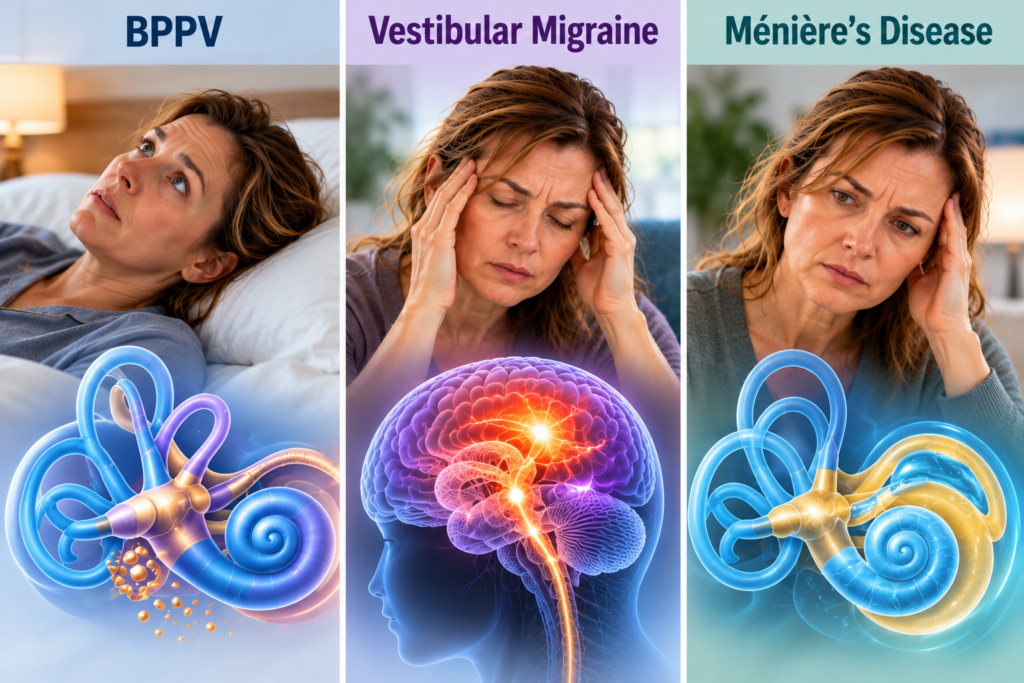
PPPD often occurs with other balance disorders, and in many cases, individuals have one of these conditions before developing PPPD. It is crucial to distinguish between them because each disorder requires a different treatment approach.
- BPPV causes short episodes of spinning dizziness lasting from a few seconds to a minute and is triggered by certain head positions, such as rolling over in bed or looking up. PPPD, on the other hand, is characterized by a continuous, non-spinning feeling of unsteadiness rather than by short bursts of spinning. Acupressure for vertigo can be used as a complementary measure for the spinning attacks.
- Vestibular migraine features episodes of vertigo or dizziness that can last from minutes to days, often with a headache, light sensitivity, or sound sensitivity. In contrast, PPPD occurs more consistently, almost daily, rather than in episodes. Acupressure can be beneficial for vestibular migraine, considering this pattern.
- Ménière’s disease causes vertigo attacks that can last from twenty minutes to several hours, accompanied by ringing in the ears, a sensation of fullness, and fluctuating hearing in one ear. There are acupressure treatments available for managing this condition.
- Faintness caused by dehydration, low blood pressure, or low blood sugar is generally more similar to feeling light-headed and usually gets better when fluids, food, or sitting down are taken. Acupressure is used to treat this type of dizziness.
These conditions can occur at the same time. Someone with vestibular migraine or Ménière’s disease may also develop PPPD, and often, both conditions require treatment.
How Traditional Chinese Medicine Views PPPD

Traditional Chinese Medicine considers fluctuating chronic dizziness to result from multiple overlapping patterns. Most people with PPPD show more than one pattern, and the points in this routine address each of them.
- Internal wind stirred by a stressed Liver: rocking, swaying, and a sense that the ground is moving, often worse with stress and tension in the neck and shoulders. GB20, GV20, and LR3 calm the wind and draw energy down.
- Phlegm and dampness clouding the head: a heavy, foggy, cotton-filled head; a disconnected or dreamlike feeling; and sometimes nausea. ST40 clears phlegm, and PC6 settles the stomach.
- Depleted Qi and Blood: dizziness that worsens with fatigue, prolonged standing, or skipped meals, along with low energy and a pale complexion. ST36 builds Qi and Blood to nourish the head.
- An unsettled Shen: anxiety, hypervigilance, racing thoughts, and poor sleep that keep the whole system on guard. Yintang, HT7, and PC6 settle the Shen.
- Fear draining the Kidney: constant worry about the next flare, feeling ungrounded or top-heavy, and deep, draining fatigue. KI1 grounds the body and draws energy down into the feet.
The aim is to soothe the wind, clear the mind, settle the Shen, restore stable energy, and bring the energy back down, so you feel grounded in your body once more.
What the Research Shows

Research into PPPD is still in its early stages because the condition was only officially defined in 2017. Treatments with the most support include vestibular rehabilitation, certain serotonin-targeting medications, and cognitive behavioral therapy, all of which are often used together. Although most of these studies are small, collectively they indicate a consistent trend: calming the nervous system and slowly retraining the balance system are effective.
There are a few early clinical studies available regarding the use of acupuncture for PPPD; at this time, research on acupressure for PPPD is limited. Traditional Chinese Medicine has a strong record for treating the conditions that drive PPPD, including anxiety, poor sleep, nausea, neck tension, and chronic dizziness, and these points work directly on those symtoms. Acupressure should be used as part of a program that also includes vestibular rehabilitation and the other treatments that have been proven to be helpful.
Here are nine acupressure points that can help:
What Acupressure Points to Press and Why
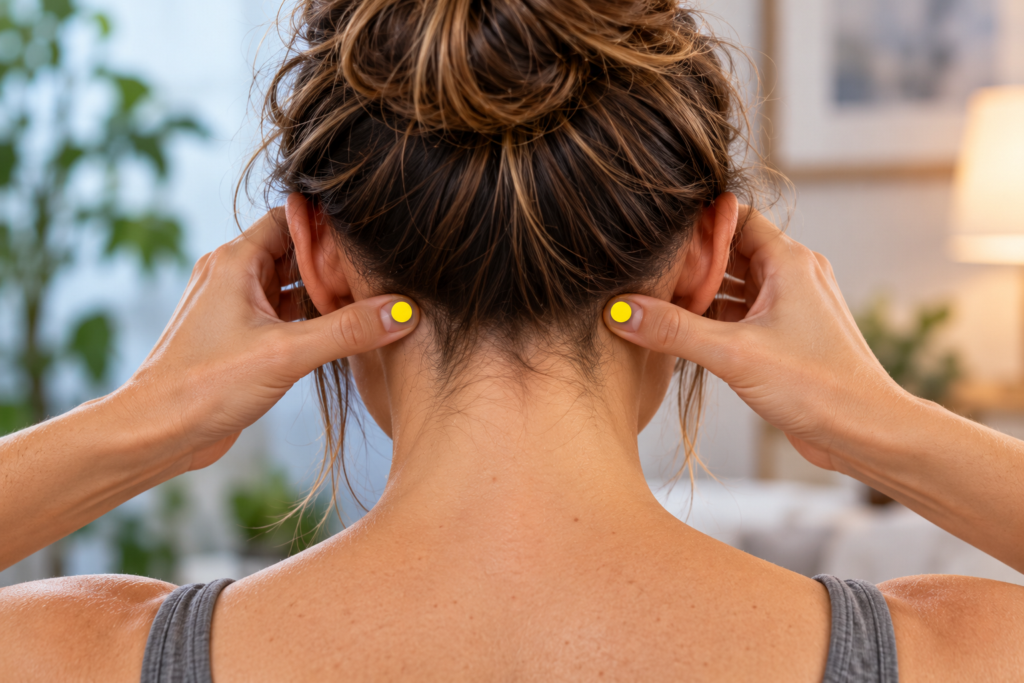
1. Press on GB20 at the base of the skull to calm the wind and steady the head. GB20 sits in the two hollows at the base of the skull, between the two large vertical neck muscles and the muscles along the side of the neck, roughly level with the earlobes. Press gently up and inward with your thumbs for one to two minutes, keeping your head still and supported. GB20 is called “Fengchi,” the “Wind Pool.”
GB20 is a key acupoint for dizziness relief because it calms internal wind, reducing swaying and clearing the head. People with PPPD often unconsciously tense their necks and shoulders when feeling unsteady, which can lead to dizziness by misfiring signals to the balance system. Activating GB20 helps lower this tension, making it central to this routine. Sitting with your back supported, or lying down with your head on a pillow, makes it easier to relax into the pressure.
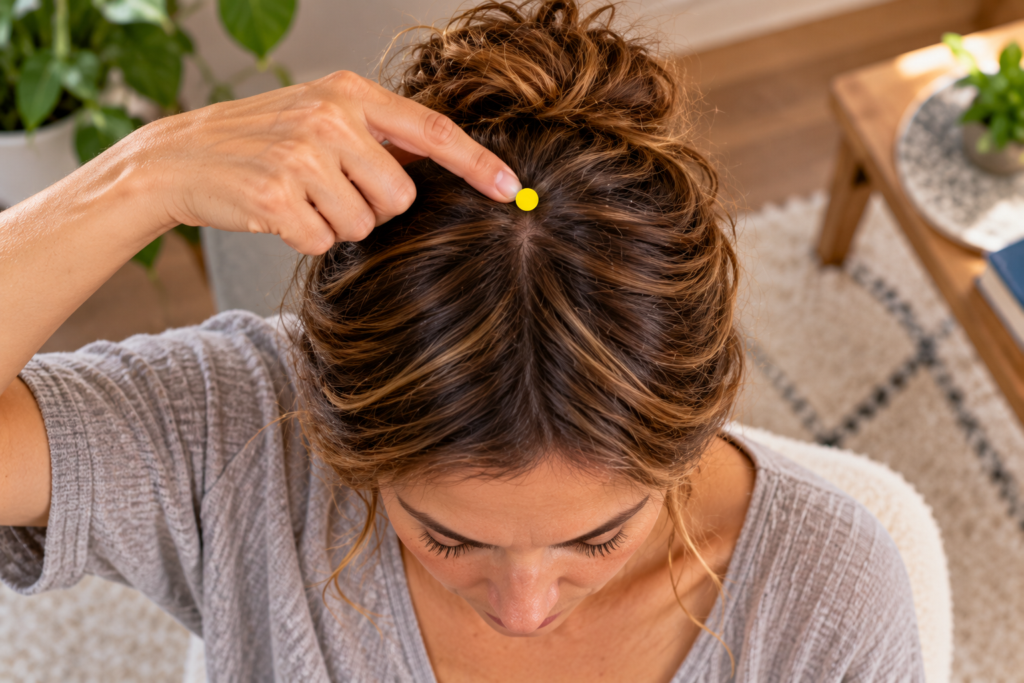
2. Press gently on GV20 at the top of the head to steady the mind. GV20 sits at the very top of the head, on the midline, on a line drawn up from the tops of both ears. Rest your fingertip there and press gently for one to two minutes. GV20 is called “Baihui,” the “Hundred Meetings.”
GV20 is a point where multiple meridians meet at the top of the head. Gently holding it in a steady position helps calm and focus the mind. It eases the foggy, scattered feelings often associated with PPPD and encourages mental clarity. Pairing it with Yintang, one hand on each, is a simple and settling combination to use before bed or after a busy day. The pressure should be gentle and steady, as vigorous tapping or scalp rubbing can be unsettling if you already feel dizzy.
3. Press on Yintang between the eyebrows to quiet an overactive system. Yintang sits in the small hollow directly between the two eyebrows. Press steadily, or make slow circles, with your fingertip for one to two minutes while breathing slowly. Yintang is an extra point.
In PPPD, the nervous system remains in a state of high alert, continuously looking for any threat to balance. Yintang is one of the most calming acupoints and helps the mind pull back from this hypervigilant state. It is particularly useful in cases where visual stimulation such as being in a crowded shop, facing a moving screen, or encountering traffic triggers a wave of dizziness. When you close your eyes and press on Yintang, you give your visual system a brief break, and slow exhalations help bring the body out of its alarm state.

4. Press on PC6 on the inner forearm to settle nausea and anxiety. PC6 sits three finger-widths above the inner wrist crease, in the center of the forearm between the two tendons. Press firmly with your thumb for one to two minutes on each arm. PC6 is called “Neiguan,” the “Inner Pass.”
PC6 is an extensively researched acupressure point known for its effectiveness against nausea. It also calms the mind and helps open the chest. For PPPD, it reduces queasiness and the tight, anxious feeling often accompanied by dizziness. The point can be pressed discreetly while standing in line, sitting at a meeting, or riding as a passenger in a car whenever symptoms arise. People with PPPD often find it useful to wear an acupressure wristband on PC6 during car trips and shopping.

5. Press on HT7 at the wrist to settle the Shen. HT7 sits on the inner wrist crease, on the pinky side, in the small hollow just inside the tendon. Press firmly with your thumb for one to two minutes on each wrist. HT7 is called “Shenmen,” the “Spirit Gate.”
In PPPD, anxiety and dizziness reinforce each other; dizziness triggers fear, which leads to muscle tightening and heightened sensitivity to sensations. This increased awareness makes the dizziness worse. HT7 helps by calming the Heart and settling the Shen, reducing worry, restlessness, and sleep difficulties that keep the balance system tense. Located on the inner wrist near PC6, these points can be pressed one after the other easily. HT7 is especially useful to hold while in bed if worry hinders sleep.

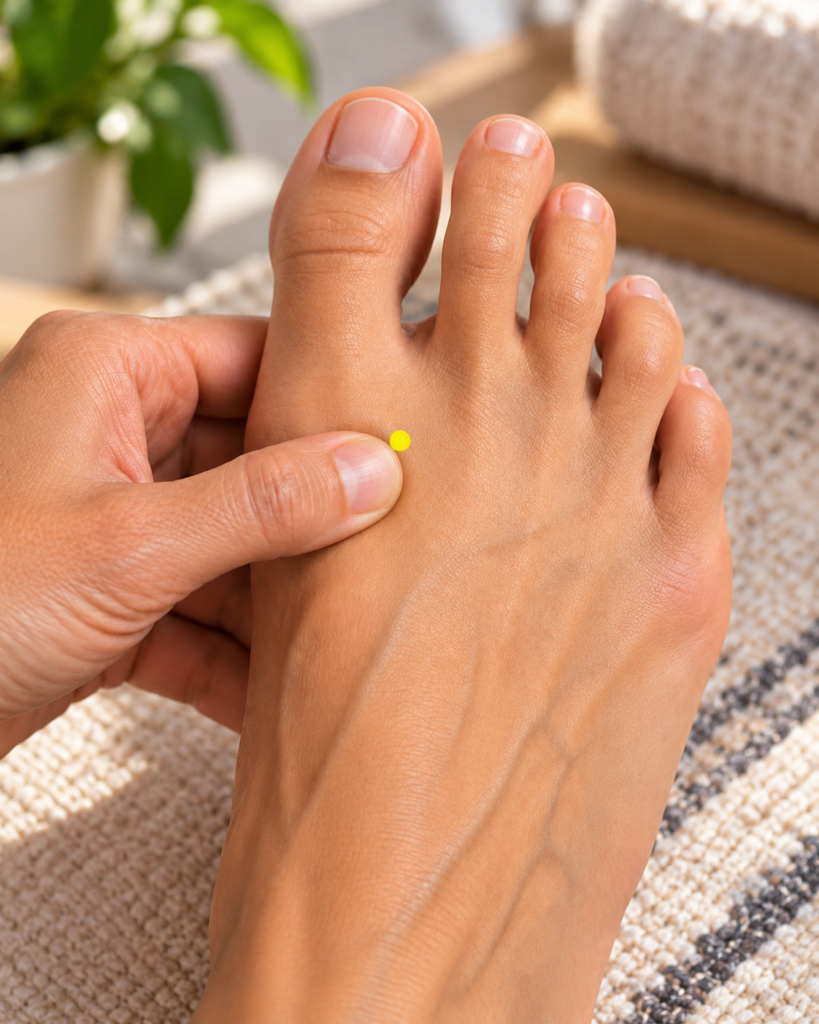
6. Press on LR3 on the top of the foot to calm the Liver and draw energy down. LR3 sits on the top of the foot, in the webbing between the big toe and second toe, about two finger-widths back from the webbing, in the hollow just before the two bones meet. Press firmly with your thumb for one to two minutes on each foot. LR3 is called “Taichong,” the “Great Surge.”
In Traditional Chinese Medicine, stress causes the Liver to become tense, which then triggers an internal wind that rises to the head, leading to sensations of rocking and swaying. The main acupoint used to soothe the Liver and direct this rising energy downward from the head to the feet is LR3. This grounding and cooling effect is especially beneficial when dizziness makes you feel unsteady or as if you’re floating. LR3 is often tender in stressed individuals, so start with gentle pressure and gradually increase it.
7. Press on ST40 on the lower leg to clear a foggy head. ST40 sits on the outer lower leg, midway between the knee and the outer ankle bone, about two finger-widths to the outside of the shinbone. Press firmly with your thumb for one to two minutes on each leg. ST40 is called “Fenglong,” the “Abundant Bulge.”
In Traditional Chinese Medicine, dizziness accompanied by a heavy, foggy, cotton-like sensation in the head is regarded as phlegm obstructing the head. The acupoint ST40 is essential for relieving this blockage. This condition often involves a dull, detached feeling, difficulty concentrating, and a sensation of viewing the world through a pane of glass. Because ST40 works gradually instead of immediately, it should be stimulated regularly every day rather than only during intense symptoms.
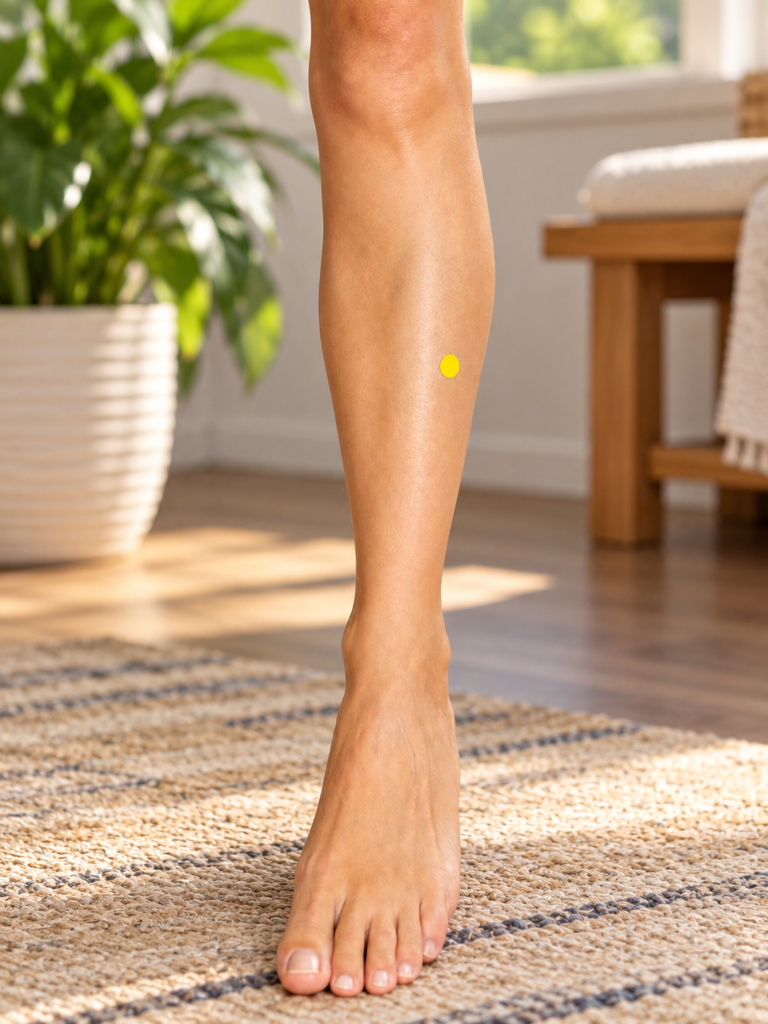
8. Press on ST36 below the knee to build steady energy. ST36 sits four finger-widths below the lower edge of the kneecap and one finger-width to the outside of the shinbone, on the muscle that rises when you flex your foot. Press firmly with your thumb for one to two minutes on each leg. ST36 is called “Zusanli,” the “Leg Three Miles.”
Dizziness often worsens when you’re tired, and persistent unsteadiness can be exhausting because it forces the body to stay alert and the mind to constantly monitor the situation. ST36 aids digestion and enhances Qi and Blood flow, nourishing the head and providing sustained energy vital for recovery activities. It works well with ST40 on the same leg, so treating these points together can be effective.

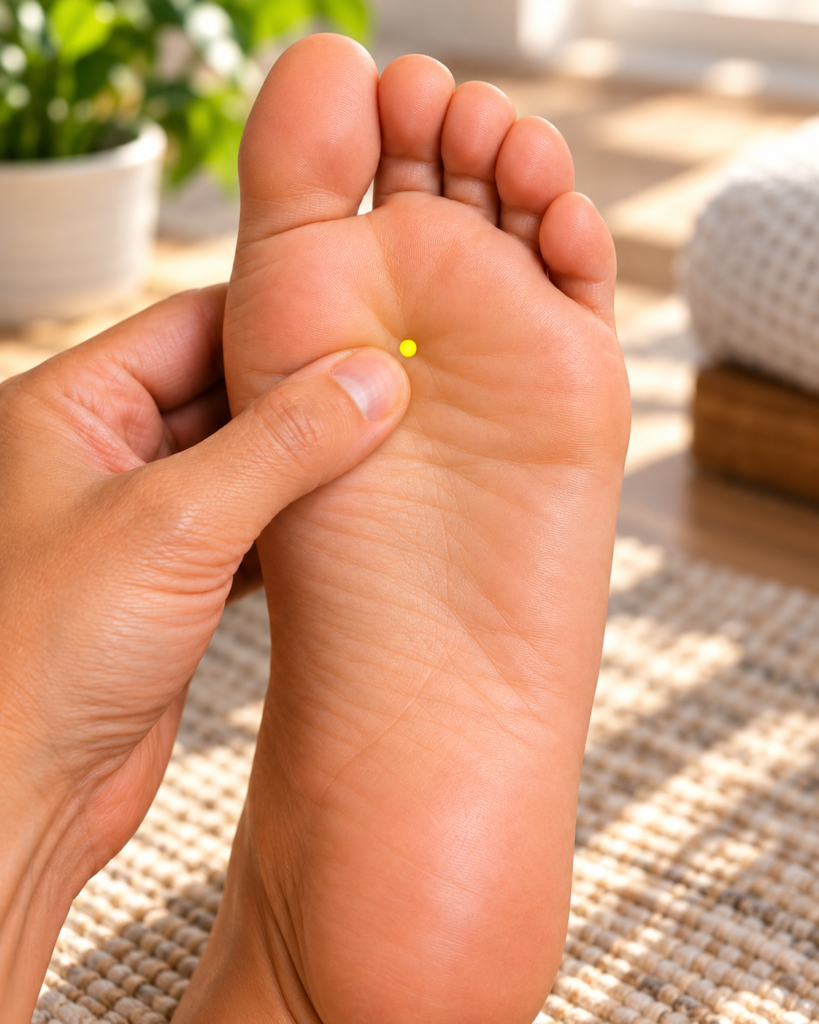
9. Press on KI1 on the sole of the foot to ground yourself. KI1 sits on the sole of the foot, in the hollow that forms in the center of the ball of the foot when you curl the toes. Press firmly with your thumb for about a minute on each foot, or stand and press the balls of your feet firmly into the floor. KI1 is called “Yongquan,” the “Bubbling Spring.”
KI1 is the first point on the Kidney meridian and the lowest point on the body; it is one of the most grounding points. In Chinese medicine, fear has a draining effect on the Kidneys, and the continual worry about the next flare-up of PPPD keeps this draining effect going. By pressing on KI1 or simply by making sure that your feet are firmly pressing into the floor, you direct your attention down into the solid ground underneath you, which can therefore interrupt the feeling of floating and swaying characteristic of PPPD. It is a simple technique to use anywhere, even in the middle of a busy store.
Why These Acupressure Points Work
In Traditional Chinese Medicine, PPPD is linked to internal wind, phlegm blocking the head, Qi and Blood deficiency, an unsettled Shen, and a weakened Kidney caused by fear. The nine points target all these factors and also help calm the overactive nervous system that contributes to PPPD.
- The head points (GB20, GV20, Yintang) help calm wind, stabilize the head, alleviate neck tension, and reduce hypervigilance.
- The calming points (PC6, HT7) help reduce anxiety, nausea, and the lingering worry that causes the balance system to stay alert.
- The clearing and strengthening points (ST40, ST36) help clear the foggy mind and restore the energy necessary for recovery.
- The grounding points (LR3, KI1) direct energy downward from the head and help focus attention on the feet and the ground.
How to Properly Use These Acupressure Points
- Perform the routine once a day, either while seated or lying down. Hold each point for one to two minutes, and dedicate about a minute to KI1, breathing slowly with long exhales.
- Apply light pressure to the head points and more firm pressure to the arms, legs, and feet.
- Apply gentle, steady pressure on GV20 while keeping your head still and supported as you press GB20.
- If dizziness arises in a crowded area, press PC6 or Yintang, fix your gaze on a stable point such as a doorframe or the far end of the aisle, and press your feet firmly on the ground.
- Use LR3 and KI1 whenever you feel top-heavy or floaty to help ground your focus.
- Use acupressure to help gradually expose yourself to the movements and locations that trigger your symptoms, instead of using it to avoid them.
- Expect gradual progress over several weeks of daily practice rather than quick results.
Sample routines:
- Morning (five minutes): ST36 and ST40 to build energy and clear the head, then KI1 while standing to start the day grounded.
- Before a trigger, such as a store or a drive (two to three minutes): PC6, Yintang, and LR3, with slow breathing.
- During a flare-up: PC6 or Yintang, a fixed gaze on a stable point, and firm pressure through the feet into the floor.
- Evening (ten to fifteen minutes): the full routine, finishing with HT7, GV20, and Yintang to settle the mind before sleep.
Home Care and Lifestyle Support for PPPD
Gentle, gradual re-engagement is crucial for recovering from PPPD. While steering clear of busy areas, screens, and excessive movement might offer short-term relief, it can also increase the brain’s sensitivity over time. The goal is to provide the brain with consistent, manageable exposure to the situations it has been conditioned to fear.
- Work with a vestibular physical therapist. Vestibular rehabilitation gradually and safely exposes you to movement and visual busyness and is one of the most effective treatments for PPPD.
- Stay physically active. Daily walking and other steady movement retrain balance. Tai chi and qigong, with their slow weight shifts and calm breathing, are especially well suited to PPPD.
- Practice gradual exposure. Start with short trips to quieter stores at off-peak times, and slowly build toward busier places and longer visits.
- Limit, rather than avoid, screens. Shorter screen sessions, larger text, slower scrolling, and regular breaks to look into the distance help the visual system adapt.
- Calm the nervous system daily. Slow breathing with long exhales, meditation, and acupressure all help shift the body out of its alarm state.
- Consider cognitive behavioral therapy. It helps break the cycle of dizziness and anxiety, and many people with PPPD benefit from it.
- Protect your sleep. Poor sleep makes the nervous system more reactive, so keep a regular bedtime and wind down without screens.
- Pace yourself and celebrate small gains. Progress builds gradually and often comes with good and bad days.
Traditional Chinese Medicine emphasizes eating warm, cooked, simple meals at regular intervals to improve digestion and prevent the buildup of phlegm and dampness, which can cloud mental clarity. Avoiding greasy, fried, and overly sweet foods, along with heavy dairy products and alcohol, helps maintain mental focus. Eating regular meals, rather than skipping, supports the Qi and Blood that nourish the brain. Moderate caffeine intake is advised, as excessive consumption can cause anxiety and nervousness. Getting enough rest is crucial because a fatigued body finds it harder to maintain balance.
How Acupuncture Can Help
Acupuncture addresses PPPD by calming the nervous system, reducing anxiety and hypervigilance that keep the balance system overly alert. It relieves chronic tension in the neck and shoulders and can improve sleep quality. Treatments are customized to each individual, possibly involving calming internal wind, clearing phlegm, restoring Qi and Blood, or calming the Shen and strengthening the Kidneys. As their nervous system stabilizes, many patients find vestibular rehabilitation with gradual exposure easier to tolerate, enabling consistent progress.
Acupuncture works well when combined with vestibular rehabilitation, cognitive-behavioral therapy, and medical treatment.
For more information on how acupuncture can be used to treat vertigo and other types of dizziness, please read this companion post.
When to Get Professional Help
An experienced doctor, typically a neurologist or ENT specialist, should diagnose PPPD to exclude other potential conditions.
- Contact emergency services for sudden, severe dizziness or vertigo with slurred speech, weakness or numbness on one side, double vision, difficulty walking, facial drooping, or a sudden severe headache, since these can signal a stroke.
- If you experience dizziness combined with chest pain, a rapid or irregular heartbeat, difficult breathing, or fainting, it is crucial to contact emergency services.
- Seek urgent care if you suddenly lose hearing in one ear, as prompt treatment is crucial.
- If you experience any changes in your dizziness, such as new spinning vertigo, ringing in the ears, fullness in the ear, new headaches, frequent falls, or worsening symptoms, you should contact your doctor immediately.
- Seek advice from your doctor or a mental health professional if anxiety, low mood, or panic attacks interfere with your ability to leave the house or manage daily tasks.
Acupressure is a gentle, supportive technique used alongside medical treatments for PPPD. It does not replace diagnosis or professional medical care.
For dizziness from other causes, acupressure for dizziness, acupressure for vertigo, acupressure for vestibular migraine, and acupressure for Ménière’s disease are companion articles. Because anxiety and PPPD are often associated, acupressure to calm down and acupressure for anxiety offer quick tools for moments when dizziness sparks fear, and acupressure for brain fog helps with the heavy, foggy head that often comes with it.
Above and Beyond Acupuncture offers acupuncture, cupping, and lifestyle coaching at the North Frank Lloyd Wright Boulevard location in Scottsdale.
Schedule an appointment online to start your healing journey.
The points above are only as effective as the technique used to apply them. Where to press, how firmly, and for how long all affect the result. For a full breakdown of how to perform acupressure properly at home, read Performing Acupressure in 3 Easy Steps.

About the Publisher
Paul Kerzner, L.Ac., is a licensed acupuncturist and board-certified herbalist, as well as the founder of Above and Beyond Acupuncture in Scottsdale. His own journey from chronic patient to practicing acupuncturist shapes his commitment to providing honest, clinically grounded information about acupuncture and Traditional Chinese Medicine. Learn more about Paul and his clinical approach on the About Us page.