
Key Takeaways
- De Quervain’s tenosynovitis is a painful inflammation of the two tendons that move the thumb as they pass through a narrow tunnel on the thumb side of the wrist.
- It causes pain, tenderness, and sometimes swelling at the base of the thumb, often worse with gripping, lifting, twisting, typing, or texting. It is especially common in new mothers.
- In Traditional Chinese Medicine, repetitive strain blocks the Qi and Blood in the channels that cross the thumb side of the wrist, and tendons that lack nourishment from the Blood heal more slowly.
- Nine acupressure points on the hand, wrist, forearm, elbow, and leg help ease thumb and wrist pain, relax the forearm muscles that pull on the tendons, and support tendon healing.
- Acupressure for De Quervain’s tenosynovitis works best when combined with rest, a thumb splint, and medical care if pain, swelling, or weakness does not improve.

People call it mommy thumb, texting thumb, or gamer’s thumb. No matter the name, it’s the same problem: a sharp ache on the thumb side of the wrist that gets worse when you grip, pinch, or lift. Everyday actions like picking up a baby, opening a jar, turning a key, or typing on your phone can trigger the pain, making simple tasks feel much harder.
The American Academy of Orthopaedic Surgeons explains that De Quervain’s tenosynovitis happens when the tendons that move the thumb get irritated. These two tendons, called the abductor pollicis longus and extensor pollicis brevis, pass together through a narrow tunnel at the wrist. Common symptoms are pain and tenderness on the thumb side of the wrist, swelling, and sometimes a catching or snapping feeling when you move your thumb.
Doctors aren’t sure exactly what causes it, but repetitive wrist and thumb movements, such as typing, texting, or lifting, can make it worse. It’s most common in people in their 40s and 50s, more common in women, and often appears during pregnancy or a few weeks after giving birth, when lifting and holding a baby puts extra strain on the thumb. People with rheumatoid arthritis are also at higher risk. Usual treatments include rest, wearing a thumb splint, taking anti-inflammatory medicine, and receiving steroid injections. Surgery is an option if these don’t help.
Traditional Chinese Medicine holds that the Lung and Large Intestine channels run along the thumb side of the wrist. Repeating the same motions can block the flow of Qi and Blood in these channels, leading to pain, swelling, and stiffness. Tendons need Blood to stay healthy, and the Liver stores this Blood to keep them flexible. After childbirth, sleepless nights, or long periods of hard work, Blood can become depleted, making it harder for tendons to heal.
The nine points below ease pain at the thumb side of the wrist, relax the forearm muscles that pull on the tendons, and support the tendons as they recover.
What Acupressure Points to Press and Why
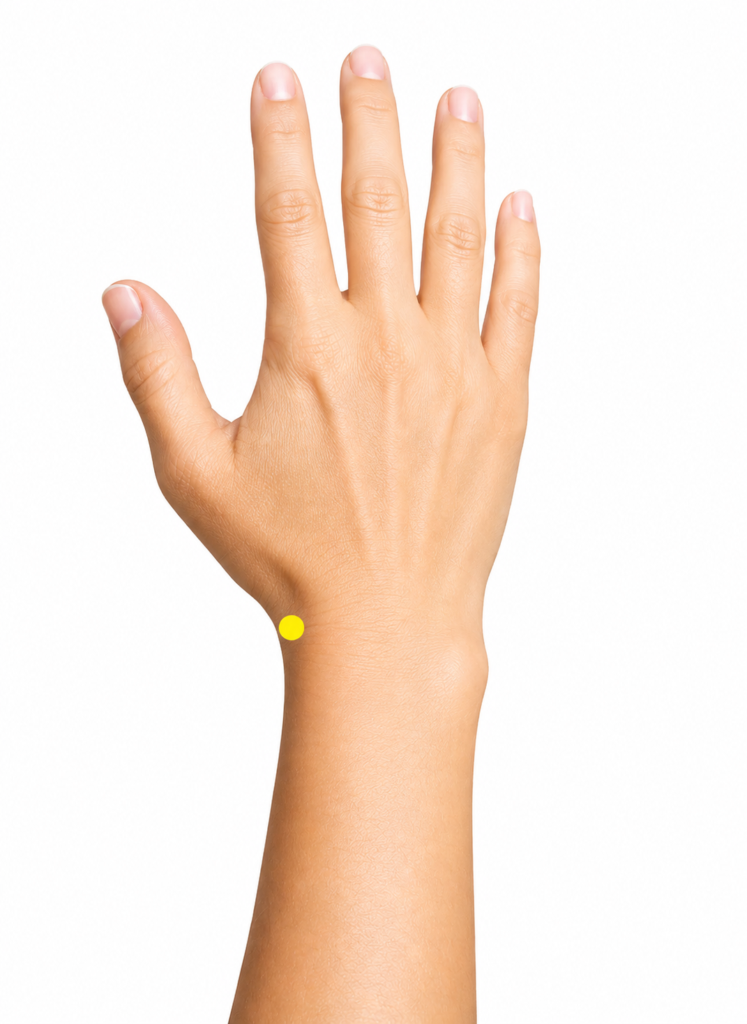
1. Press on LI5 at the base of the thumb to ease thumb-side wrist pain. LI5 sits on the thumb side of the back of the wrist. Lift the thumb up and back, and a small hollow appears between the two tendons at the base of the thumb. LI5 sits in the center of that hollow. Press gently with a fingertip of your other hand for one to two minutes on the affected wrist. LI5 is called “Yangxi,” the “Yang Stream.”
LI5 is the main local point for pain on the thumb side of the wrist. It lies beside the irritated tendons and helps move Qi and Blood along the Large Intestine channel, which runs from the index finger across the wrist and up the outer forearm. Apply light pressure, as the area is often tender.
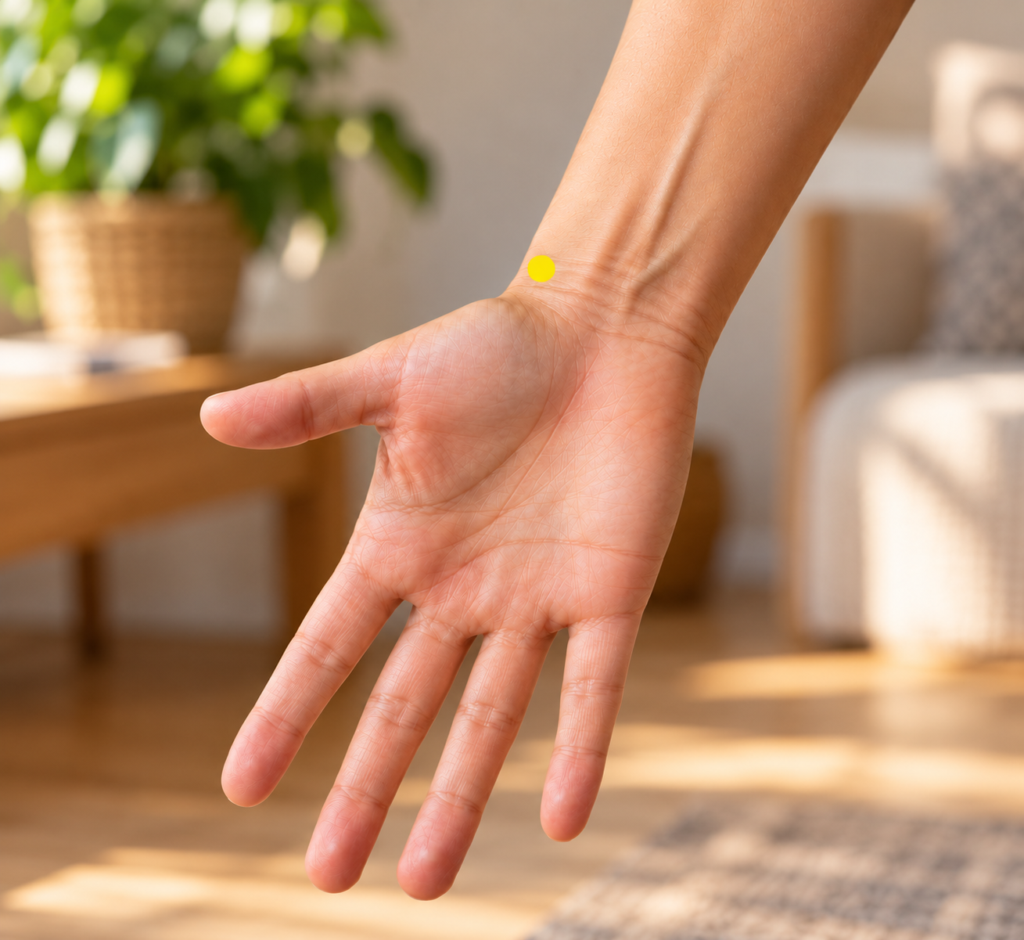
2. Press on LU7 above the wrist to relieve tension in the thumb tendons. LU7 sits on the thumb side of the forearm, about two finger-widths above the wrist crease. To find it, interlace the thumbs and index fingers of both hands, and the tip of the top index finger will rest in a small groove on the edge of the forearm, just above the bony bump of the wrist. Press gently with your fingertip for one to two minutes on the affected arm. LU7 is called “Lieque,” the “Broken Sequence.”
LU7 lies directly over the path of the tendons affected by De Quervain’s tenosynovitis. As the connecting point of the Lung channel, it links the Lung and Large Intestine channels and works with LI5 to move Qi along the thumb side of the wrist. Apply gentle pressure here, and ease off if the tendons are swollen or very tender.
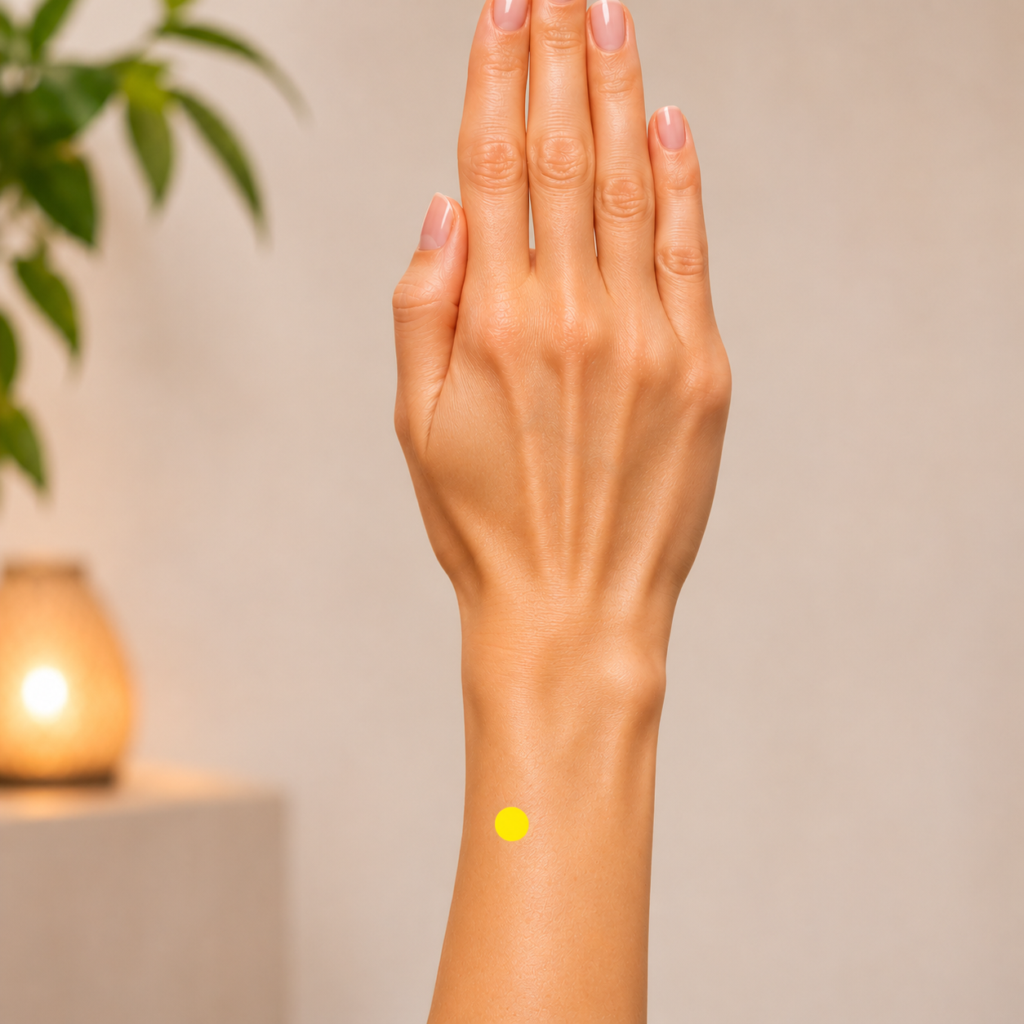
3. Press on LI6 on the forearm to release the muscles that move the thumb. LI6 sits on the thumb side of the forearm, about four finger-widths above LI5, on the line from LI5 toward the outer end of the elbow crease. Press firmly with the fingertips of your other hand for one to two minutes on the affected arm. LI6 is called “Pianli,” the “Side Passage.”
The two muscles that move the thumb start in the forearm and cross its thumb side toward the wrist, where LI6 is located. Releasing them eases tension on the tendons as they pass through the narrow tunnel at the wrist. As the connecting point of the Large Intestine channel, LI6 also helps clear swelling along the channel.
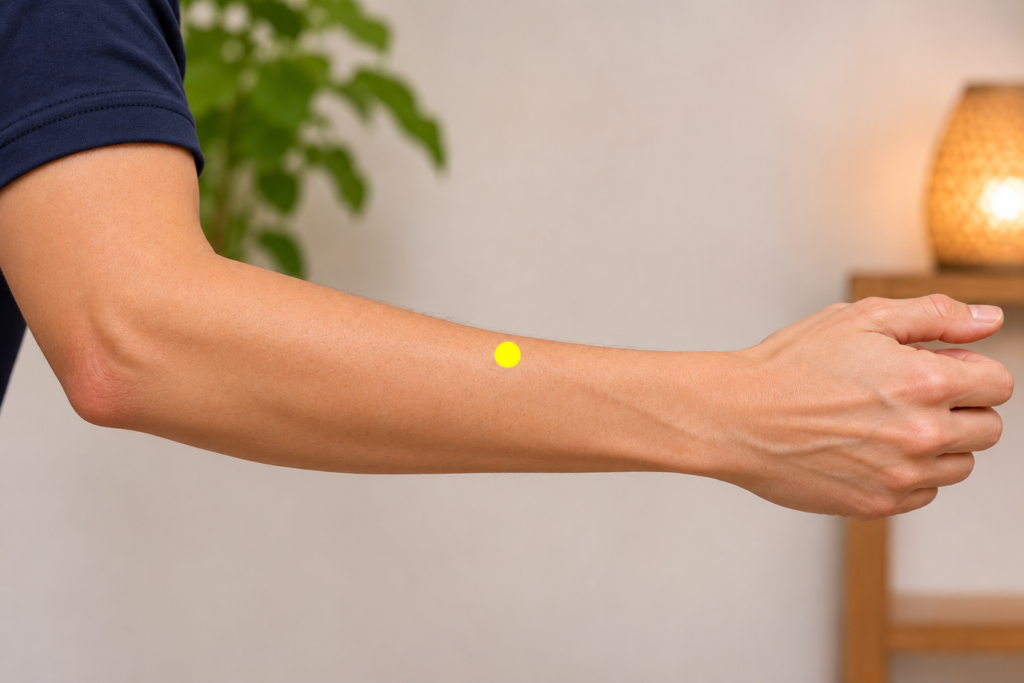
4. Press on LI7 on the forearm to relieve acute pain. LI7 sits on the thumb side of the forearm, about three finger-widths above LI6, on the same line toward the outer end of the elbow crease. Press firmly with the fingertips of your other hand for one to two minutes on the affected arm. LI7 is called “Wenliu,” the “Warm Flow.”
LI7 is the cleft point of the Large Intestine channel, a type of point Traditional Chinese Medicine uses to address sudden, acute pain along a channel. It can be especially helpful during a flare, when gripping or lifting sends sharp pain through the thumb side of the wrist. LI7 also works with LI6 to relax the muscles that move the thumb.
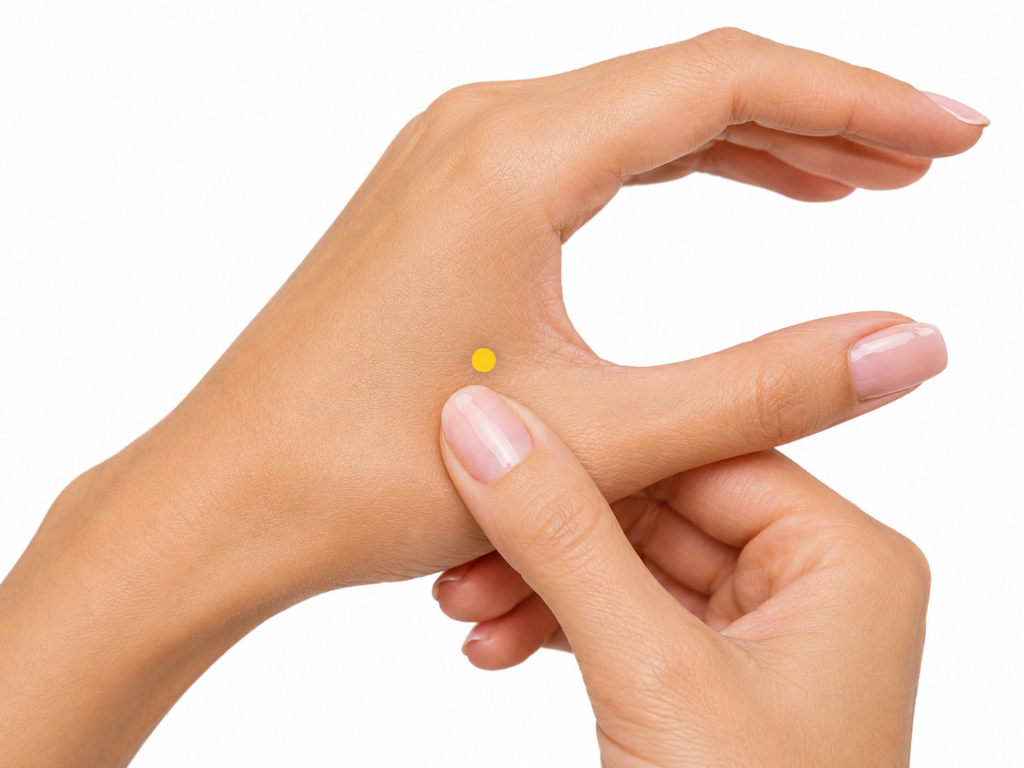
5. Press on LI4 on the back of the hand to relieve pain. LI4 sits in the webbing between the thumb and index finger, at the highest point of the muscle when the two are pressed together. Press firmly with the thumb of your other hand for one to two minutes on the affected hand. LI4 is called “Hegu,” the “Joining Valley.” LI4 is avoided during pregnancy.
LI4 is one of the most important points in Traditional Chinese Medicine for relieving pain throughout the body, especially in the hand, thumb, and wrist. As the source point of the Large Intestine channel, it helps move Qi and Blood along the thumb side of the arm. The channel runs from the index finger through LI5 at the wrist.
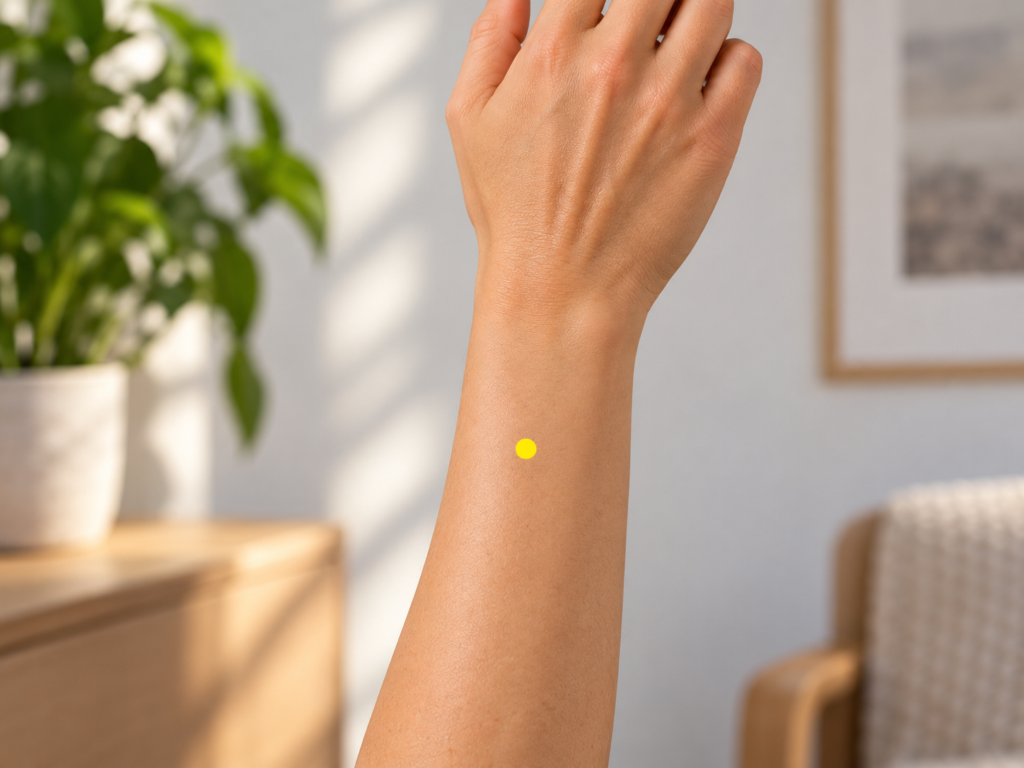
6. Press on TE5 on the back of the forearm to ease wrist pain and stiffness. TE5 sits on the back of the forearm, about three finger-widths above the wrist crease, in the groove between the two forearm bones. Press firmly with the thumb of your other hand for one to two minutes on the affected arm. TE5 is called “Waiguan,” the “Outer Pass.”
TE5 is the connecting point of the Triple Energizer channel and a classic point for wrist, hand, and finger pain and stiffness. It helps move Qi and Blood through the back of the wrist and forearm, easing stiffness that develops when the wrist is held tense to protect a painful thumb.
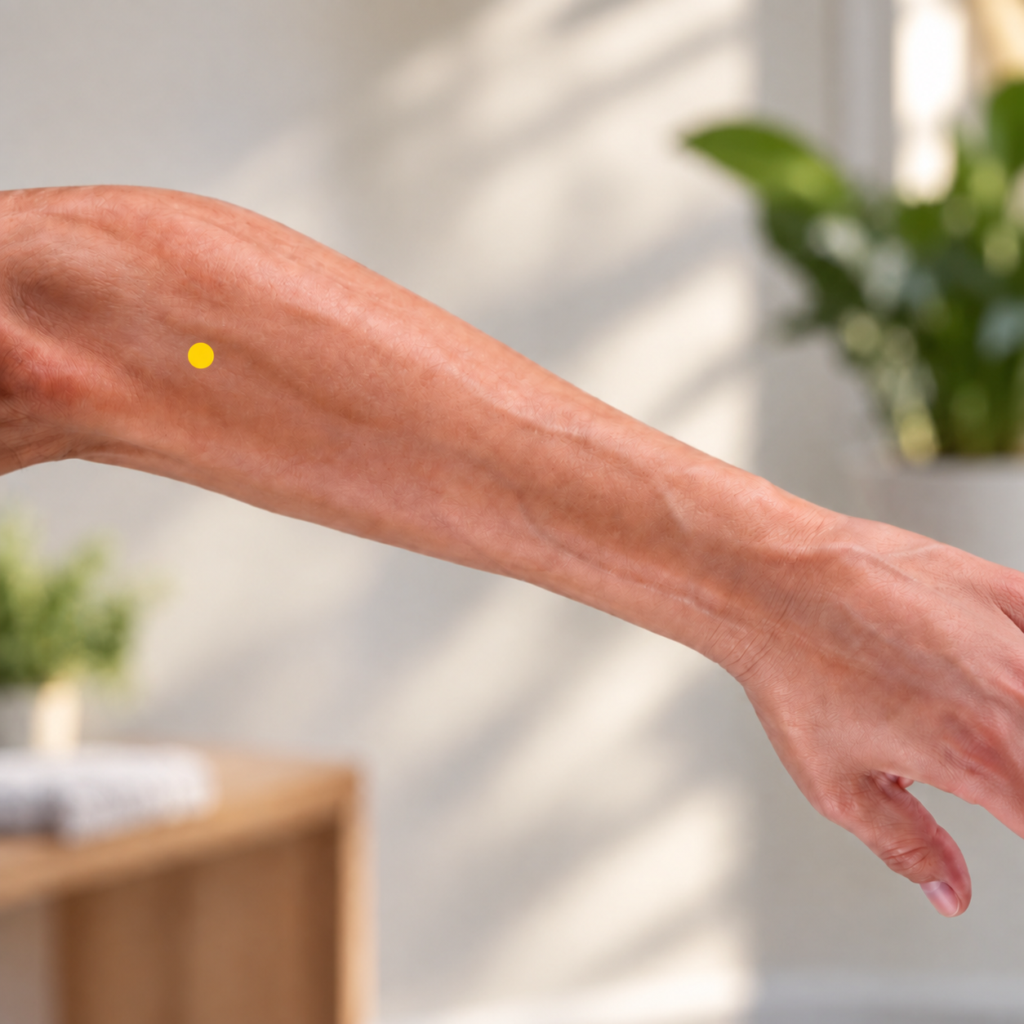
7. Press on LI10 below the elbow to release the forearm muscles. LI10 sits on the thumb side of the forearm, about three finger-widths below the outer end of the elbow crease. Bend the elbow and press into the thick muscle there with the thumb of your other hand for one to two minutes on the affected arm. LI10 is called “Shousanli,” the “Arm Three Miles.”
Long hours of gripping, lifting, and typing can tighten forearm muscles, putting extra strain on the wrist tendons. LI10 lies at the center of these muscles and is traditionally used to address pain, stiffness, and weakness in the forearm and wrist. It is also said to strengthen the arm’s Qi, supporting recovery.
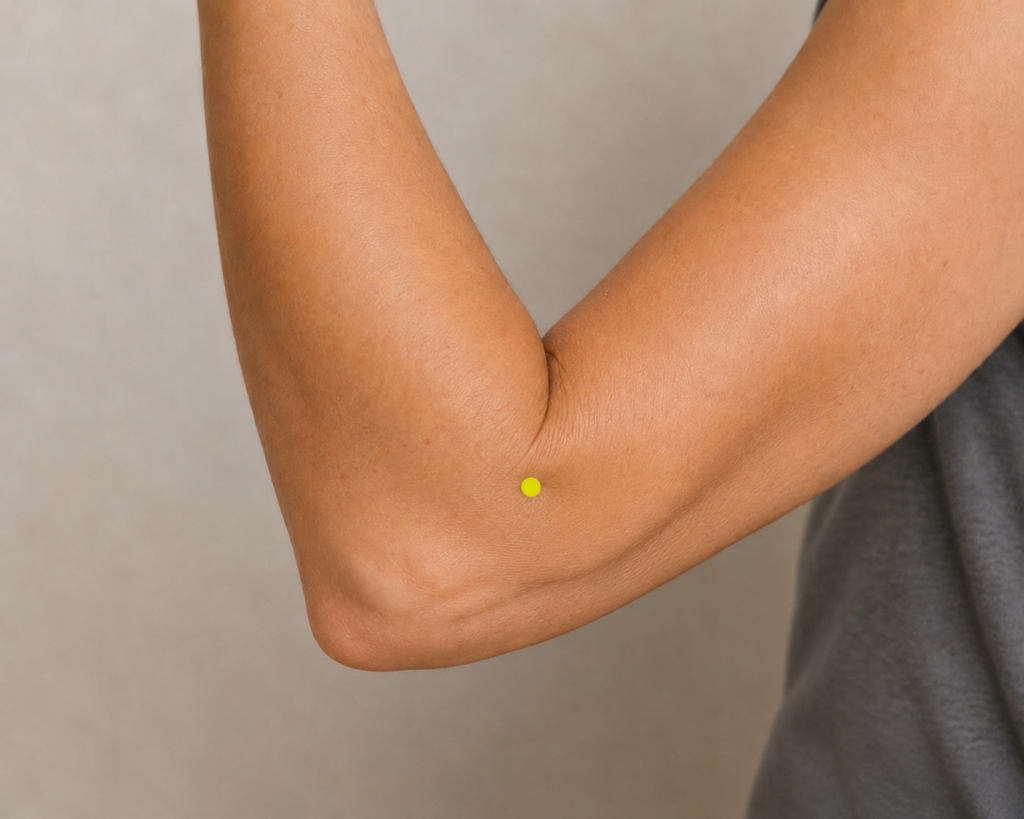
8. Press on LI11 at the elbow to clear swelling and pain along the channel. LI11 sits on the outer end of the elbow crease when the elbow is bent. Press firmly with the thumb of your other hand for one to two minutes on the affected arm. LI11 is called “Quchi,” the “Pool at the Crook.”
LI11 is one of the most important points in Traditional Chinese Medicine for clearing heat and reducing swelling, and it has traditionally been used for pain throughout the arm. If the thumb side of the wrist feels hot, swollen, or inflamed, LI11 works with LI4 at the opposite end of the channel to soothe it.
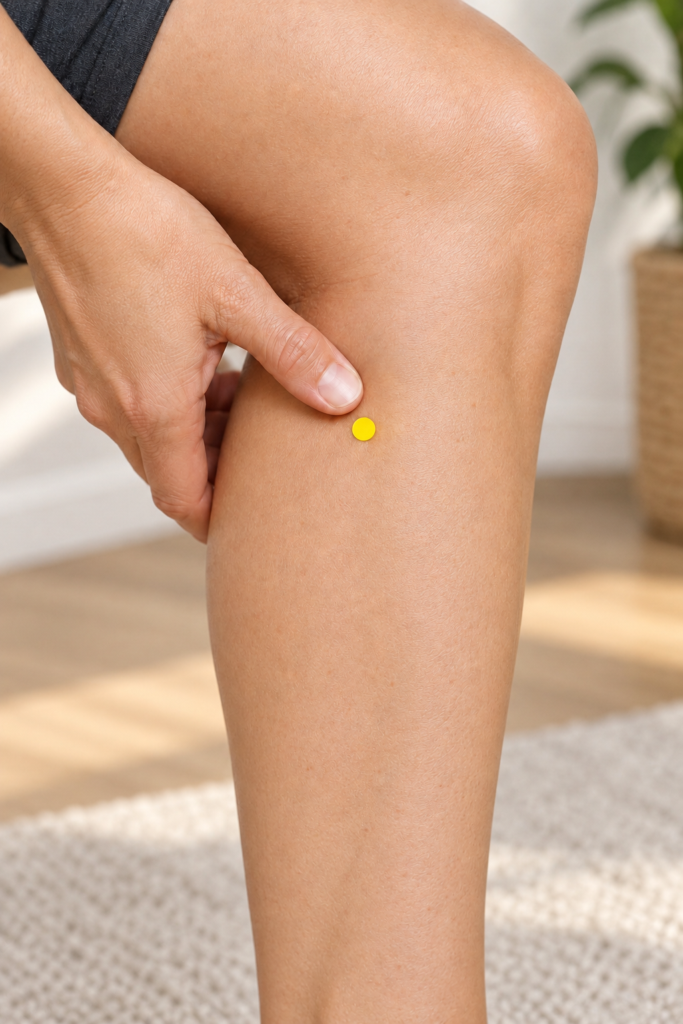
9. Press on GB34 below the outer knee to relax and nourish the tendons. GB34 sits on the outer side of the lower leg, in the hollow just in front of and below the bony bump at the top of the outer leg bone, just below the knee. Press firmly with your thumb for one to two minutes on each leg. GB34 is called “Yanglingquan,” the “Yang Mound Spring.”
GB34 is the influential point of the sinews, meaning it has a special effect on the body’s tendons and ligaments. It relaxes tight tendons, eases stiffness, and supports healing from tendon problems, including De Quervain’s tenosynovitis. It can be especially helpful when tendon problems keep returning or heal slowly.
Why These Acupressure Points Work
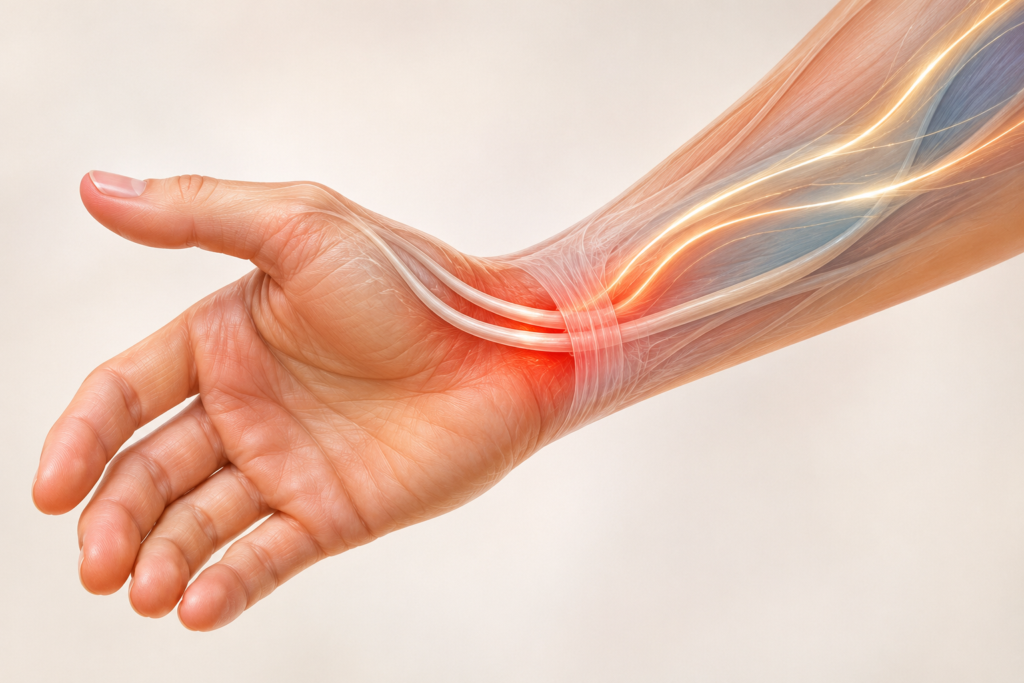
In Traditional Chinese Medicine, De Quervain’s tenosynovitis is viewed as a strain of the sinews along the thumb side of the wrist. Repetitive use is thought to obstruct Qi and Blood in the Lung and Large Intestine channels. Treatment aims to move Qi and Blood through the wrist, relax the forearm muscles that pull on the tendons, reduce swelling, and nourish the tendons to support recovery.
The nine points work together to relieve pain and support healing of the thumb tendons:
- The wrist points (LI5, LU7) move the Qi and Blood at the site of the pain and ease tension in the thumb tendons.
- The forearm points (LI6, LI7, TE5, LI10) relax the muscles that move the thumb and wrist and relieve acute pain.
- The channel points (LI4, LI11) relieve pain and clear swelling along the whole thumb side of the arm.
- The tendon point (GB34) relaxes and supports the tendons throughout the body.
How to Properly Use These Acupressure Points
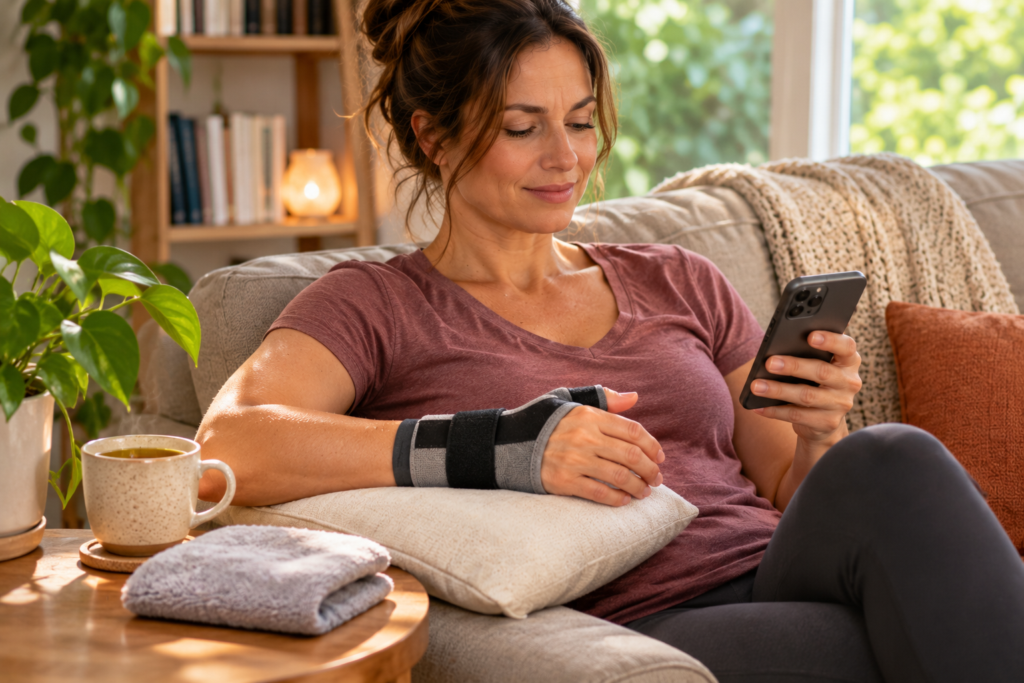
Acupressure for De Quervain’s tenosynovitis is most effective when performed as a short daily routine and combined with rest for the thumb.
- Apply pressure to all nine points once or twice daily, holding each point for one to two minutes. Use the fingers of the unaffected hand, as pressing with a painful thumb may aggravate the condition.
- Apply gentle pressure at LI5 and LU7, where the tendons are tender, and firmer pressure to the forearm, elbow, and leg.
- During a flare-up, begin with LI7 and LI6 on the forearm and LI4 on the hand, then gently work around LI5 and LU7.
- Practice consistently for several weeks, as irritated tendons heal slowly.
Building healthy daily habits can help your tendons heal and keep the pain from returning. Rest your thumb as much as possible, and wear a thumb splint at night or during activities that cause pain. When lifting a baby, use your palms and forearms rather than lifting under the arms with your thumbs spread wide. Hold your phone in one hand and type with the other; take short breaks from gripping and typing, and choose larger, padded handles for tools and kitchen utensils. A warm compress may ease stiffness, and Traditional Chinese Medicine favors warmth over ice to support tendon healing.
You can learn more about why Traditional Chinese Medicine avoids ice.
When to Get Professional Help

See a doctor or hand specialist if your thumb and wrist pain doesn’t improve after a few weeks of rest and home care; if you notice swelling or a lump on the thumb side of your wrist; or if your thumb catches, snaps, or feels weak. You should also get checked if the pain began after a fall or injury, since a wrist fracture can cause similar pain, or if pain, numbness, or tingling spreads to your fingers or hand. Get medical help right away if your wrist is red, hot, and swollen, especially if you have a fever, as this could indicate an infection. If you develop De Quervain’s tenosynovitis during pregnancy or after giving birth, let your provider know.
Acupressure is a gentle, supportive practice for De Quervain’s tenosynovitis, but it should be used along with, not instead of, diagnosis and medical care.
For related health concerns, acupressure for wrist pain, acupressure for trigger finger, and acupressure for carpal tunnel syndrome are companion articles.
Above and Beyond Acupuncture offers acupuncture, cupping, and lifestyle coaching at the North Frank Lloyd Wright Boulevard location in Scottsdale.
Schedule an appointment online to start your healing journey.
The points above are only as effective as the technique used to apply them. Where to press, how firmly, and for how long all affect the result. For a full breakdown of how to perform acupressure properly at home, read Performing Acupressure in 3 Easy Steps.

About the Publisher
Paul Kerzner, L.Ac., is a licensed acupuncturist and board-certified herbalist, as well as the founder of Above and Beyond Acupuncture in Scottsdale. His own journey from chronic patient to practicing acupuncturist shapes his commitment to providing honest, clinically grounded information about acupuncture and Traditional Chinese Medicine. Learn more about Paul and his clinical approach on the About Us page.