Key Takeaways
- Inflammation is the immune system’s short-lived, helpful response to injury, infection, or irritation when it occurs in its acute form.
- Chronic inflammation is a persistent, low-level immune response often associated with excess belly fat, smoking, poor sleep, inactivity, and a diet high in processed foods.
- In Traditional Chinese Medicine, inflammation appears as Heat, Dampness, and stagnant Qi and Blood, with a weak Spleen and ongoing stress keeping it going.
- Nine acupressure points on the arms, knees, lower legs, and feet help clear Heat, drain Dampness, and promote the movement of Qi and Blood.
- Seek prompt medical care for a red, hot, swollen joint with fever, or for inflammation accompanied by chest pain or trouble breathing.

A sprained ankle is a clear example of acute inflammation. It swells immediately, the skin turns red and warm, and putting weight on it is obviously painful. Blood and immune cells flood the joint to clear away damaged tissue and begin the repair process. A few days later, the swelling subsides, and the ankle begins to heal. The same process occurs with a splinter, a sore throat, or a bug bite.
The problem begins when that response doesn’t fully switch off. According to Harvard Health Publishing, chronic inflammation keeps immune cells active for months or even years, often without any visible signs. Doctors can detect it with a blood test for C-reactive protein. Excess visceral fat around the organs, high LDL cholesterol, smoking, and gum disease can all contribute to it. It has also been linked to heart disease, diabetes, arthritis, bowel disease, and some cancers. The same article recommends a healthy weight, nutritious food, enough sleep, and regular exercise as the basics of prevention.
Chronic inflammation is often experienced before it is identified. Joints may ache in the morning, the abdomen may feel bloated after meals, energy levels may decline in the afternoon, and minor injuries may take longer than expected to heal. Some individuals may notice swelling in the face and hands, skin flare-ups, or a general sense of heaviness and fatigue that persists despite adequate sleep.
Traditional Chinese Medicine describes these same signs in its own terms: redness, warmth, and throbbing pain indicate Heat; swelling, stiffness, puffiness, and a heavy body indicate Dampness. Pain that stays in one place and worsens with rest reflects Qi and Blood that are not moving. The Spleen, which governs digestion, is central to many chronic cases. A diet high in sugar, fried food, and alcohol, combined with irregular meals, weakens the Spleen and allows Dampness to build up. Over time, Dampness in the body turns into Heat. Ongoing stress causes Liver Qi to stagnate, adding more Heat and keeping the cycle going.
The nine points begin on the arms, continue down to the knees and lower legs, and end at the foot.
What Acupressure Points to Press and Why
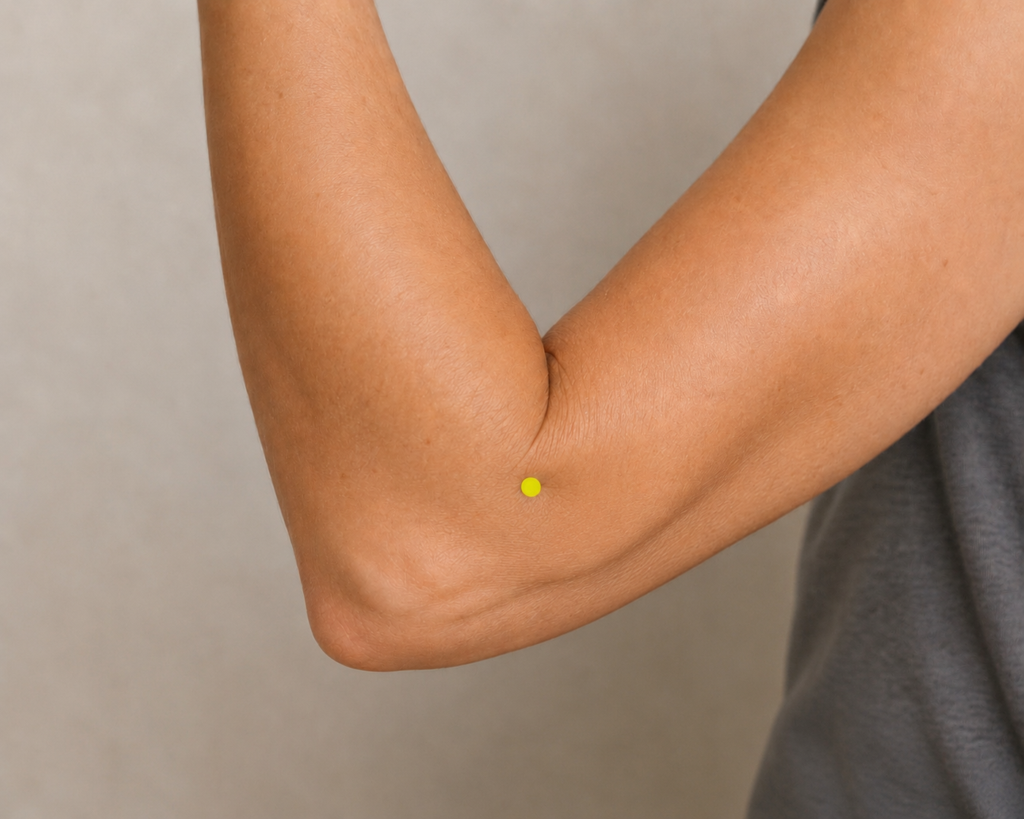
1. Press on LI11 at the elbow to clear Heat. LI11 sits at the outer end of the elbow crease when the elbow is bent, in the hollow between the end of the crease and the bony bump on the outside of the elbow. Press firmly with the thumb of your other hand for one to two minutes on each arm. LI11 is called “Quchi,” the “Pool at the Bend.”
LI11 is the Large Intestine’s sea point and, in Traditional Chinese Medicine, the primary point for clearing Heat from the body. It is used for inflammation marked by redness, warmth, and swelling in the joints, skin, or gut.
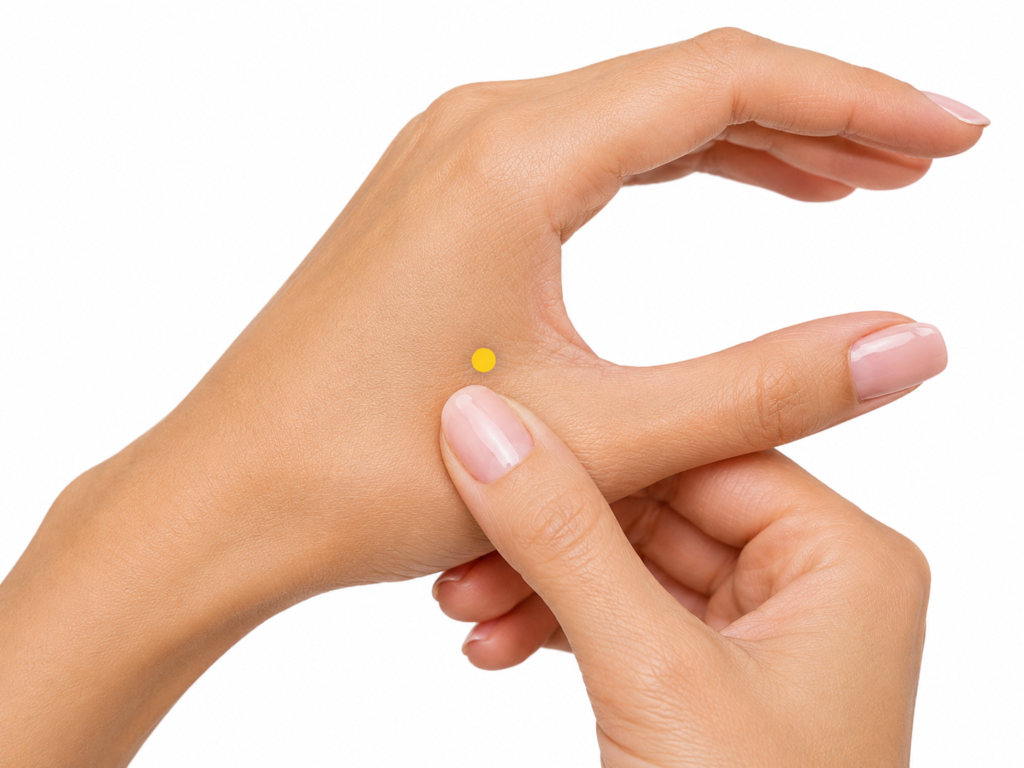
2. Press on LI4 on the back of the hand to ease pain and swelling. LI4 sits on the back of the hand, in the web between the thumb and index finger, on the highest point of the muscle when the thumb and index finger are pressed together. Press firmly with the thumb of your other hand for one to two minutes on each hand. LI4 is called “Hegu,” the “Joining Valley.” LI4 is avoided during pregnancy.
LI4 is the source point of the Large Intestine channel. It moves Qi and Blood, clears Heat, and is one of Traditional Chinese Medicine’s most important points for pain throughout the body. When paired with LI11, it helps calm inflammation in the upper body, including the head, face, and hands.
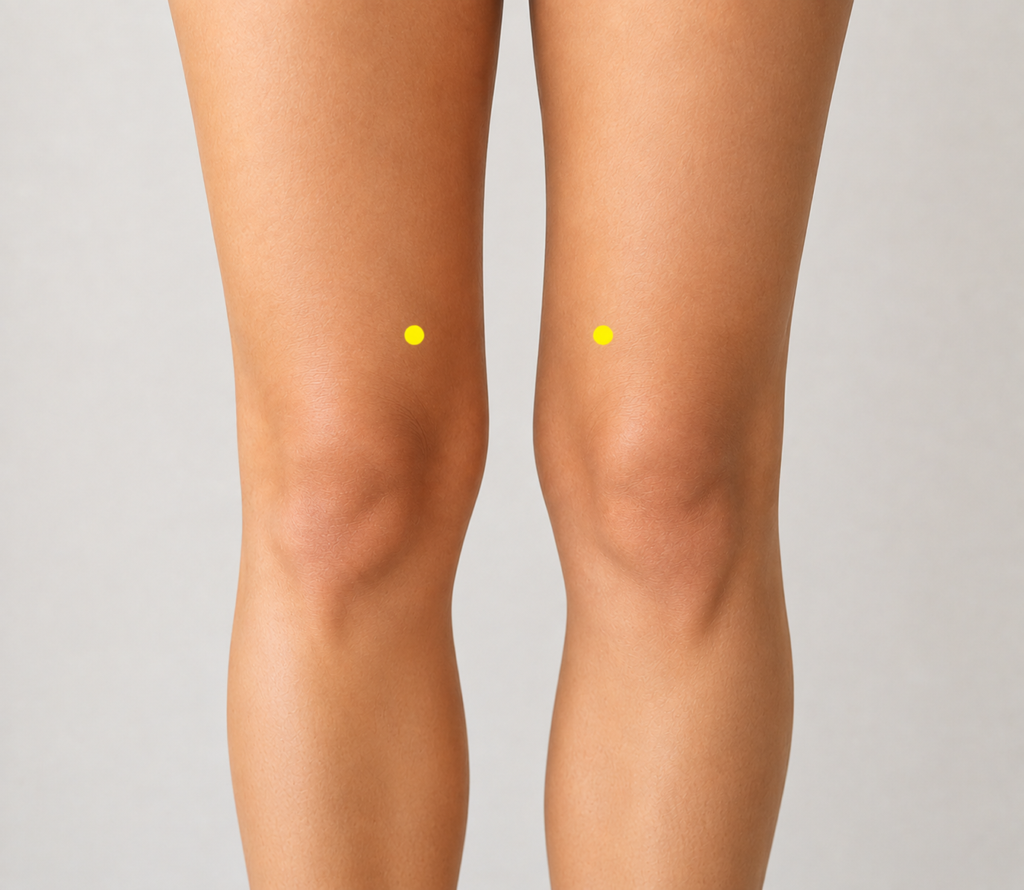
3. Press on SP10 above the knee to cool the Blood. SP10 sits on the inner thigh, two thumb-widths above the upper inner corner of the kneecap, on the bulge of the thigh muscle when the knee is bent. Press firmly with your thumb for one to two minutes on each leg. SP10 is called “Xuehai,” the “Sea of Blood.”
SP10 clears Heat from the Blood and gets stagnant Blood moving. It’s a classic point for inflamed, itchy, or red skin, and can also help with joint pain that stays in one place.
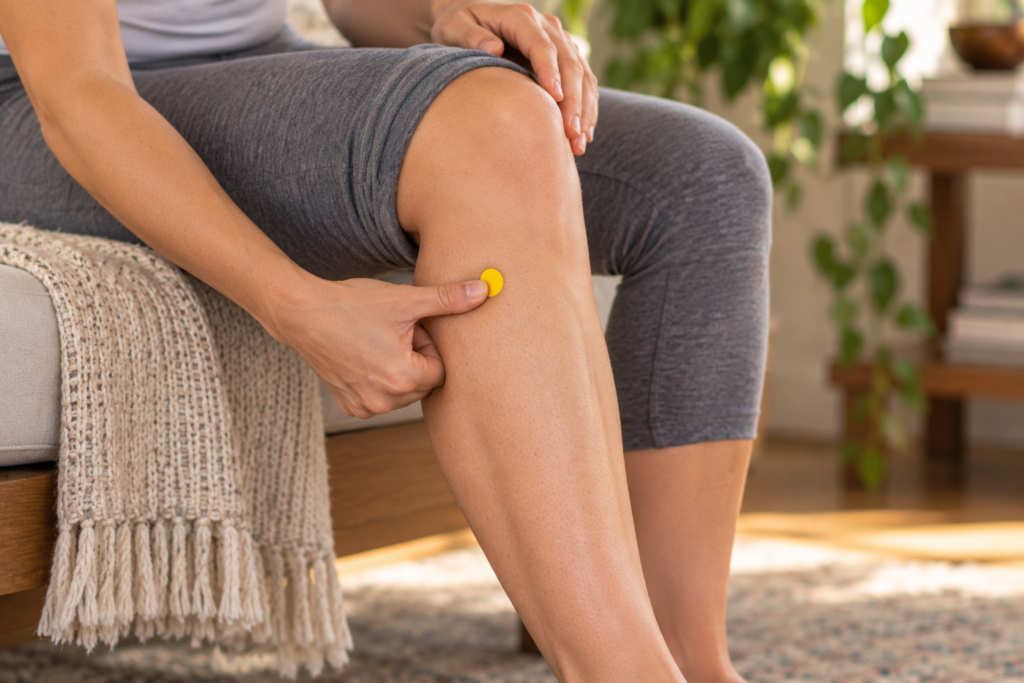
4. Press on ST36 below the knee to strengthen digestion and resilience. ST36 sits on the front of the lower leg, four finger-widths below the bottom of the kneecap and one finger-width toward the outside of the shinbone. Press firmly with your thumb for one to two minutes on each leg. ST36 is called “Zusanli,” the “Leg Three Miles.”
ST36 is the Stomach’s sea point. It builds Qi, strengthens the Spleen and Stomach, and supports the body’s defenses. If chronic inflammation is linked to poor digestion, fatigue, and slow healing, press this point every day.
5. Press on SP9 below the inner knee to drain Dampness. SP9 sits on the inner side of the lower leg, in the hollow just below the knee where the shinbone curves upward. Press firmly with your thumb for one to two minutes on each leg. SP9 is called “Yinlingquan,” the “Yin Mound Spring.”
SP9 is the Spleen’s sea point and the primary point for draining Dampness. It helps reduce swelling and puffiness, particularly in the knees, ankles, and lower legs, while easing the heaviness associated with chronic inflammation.
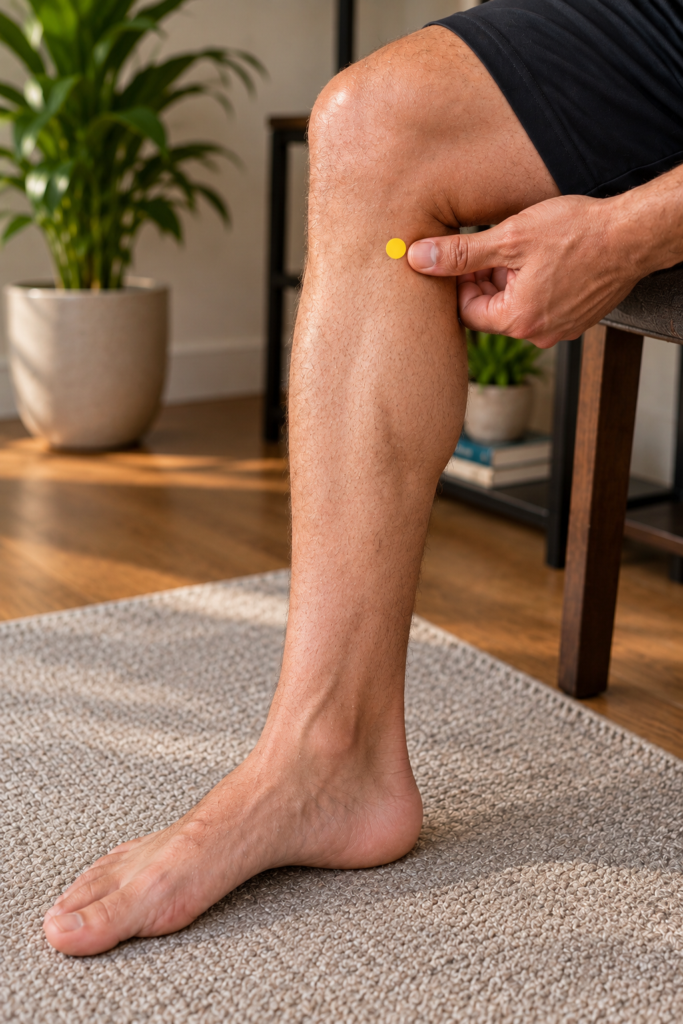
6. Press on GB34 below the outer knee to free the joints. GB34 sits on the outer side of the lower leg, in the hollow just in front of and below the small bony bump below the outside of the knee. Press firmly with your thumb for one to two minutes on each leg. GB34 is called “Yanglingquan,” the “Yang Mound Spring.”
GB34 is the influential point of the tendons. It helps relieve stiff, painful, inflamed joints and tight muscles, while also moving the Liver Qi that becomes stuck under stress.
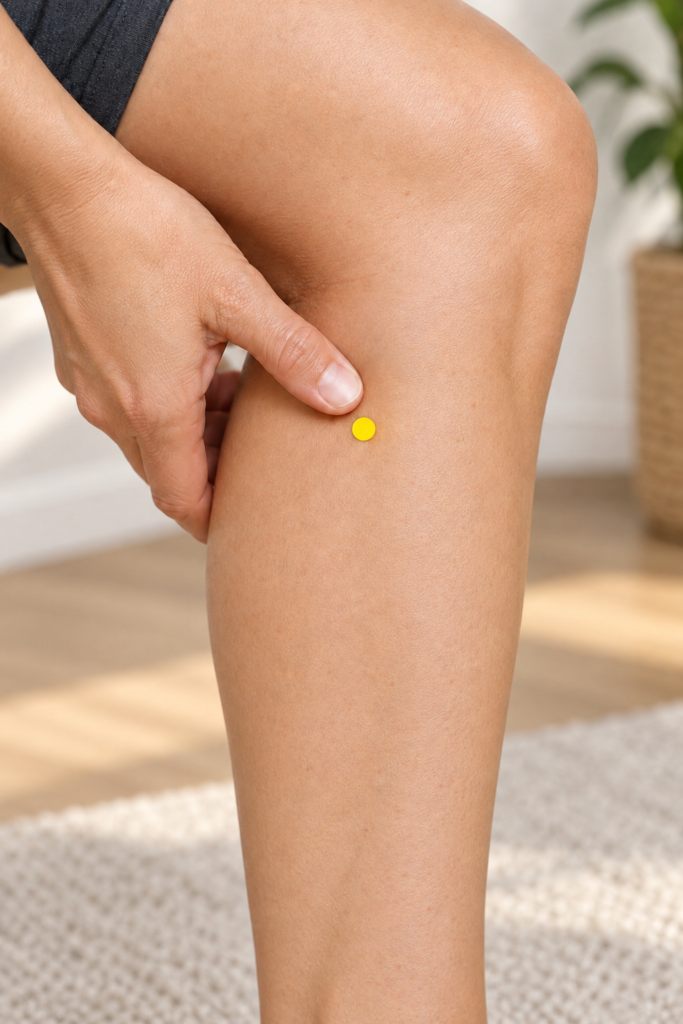
7. Press on ST40 on the outer shin to clear Phlegm and Dampness. ST40 sits on the outer lower leg, halfway between the knee crease and the outer ankle bone, about two finger-widths out from the edge of the shinbone. Press firmly with your thumb for one to two minutes on each leg. ST40 is called “Fenglong,” the “Abundant Bulge.”
ST40 is the connecting point of the Stomach and the primary point for transforming Phlegm. In Traditional Chinese Medicine, Phlegm is thickened Dampness that settles in the joints, tissues, and blood vessels. ST40 is suited to long-standing inflammation accompanied by weight gain, a heavy feeling in the body, or high cholesterol.
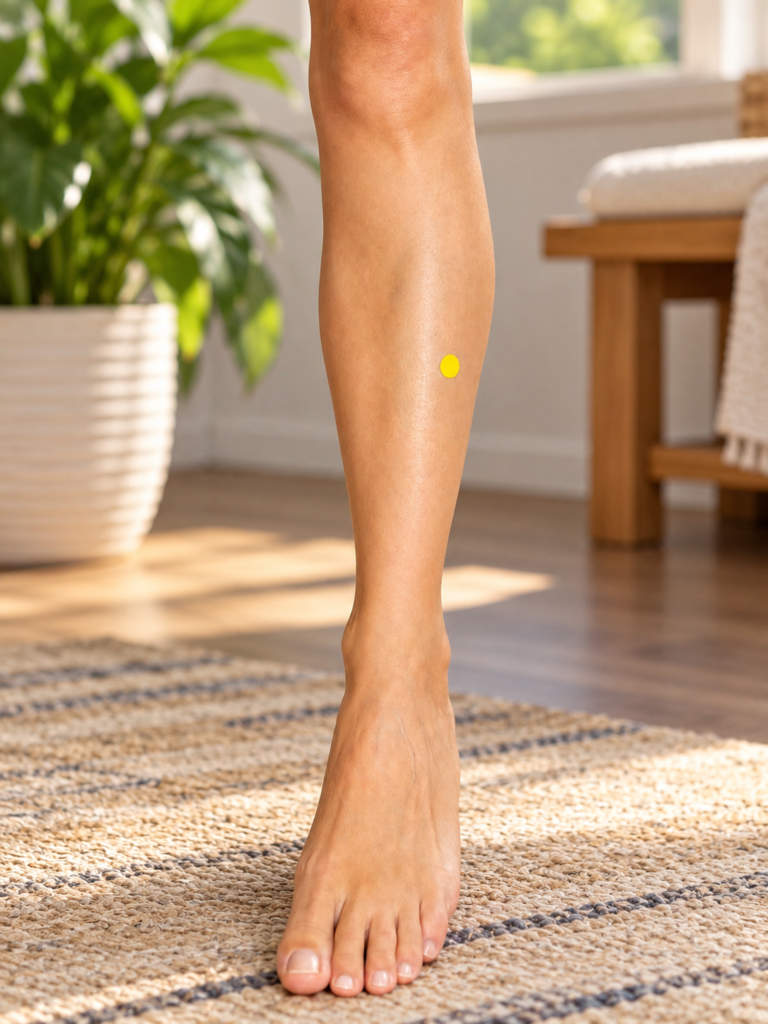
8. Press on SP6 above the inner ankle to support the Spleen and Blood. SP6 sits on the inside of the lower leg, four finger-widths above the tip of the inner ankle bone, just behind the edge of the shinbone. Press firmly with your thumb for one to two minutes on each leg. SP6 is called “Sanyinjiao,” the “Three Yin Intersection.” SP6 is avoided during pregnancy.
SP6 lies where the Spleen, Liver, and Kidney channels intersect. It strengthens the Spleen, clears Dampness, and nourishes the Blood and Yin that help keep Heat in check. It may help when inflammation is accompanied by bloating, swollen ankles, or painful periods.
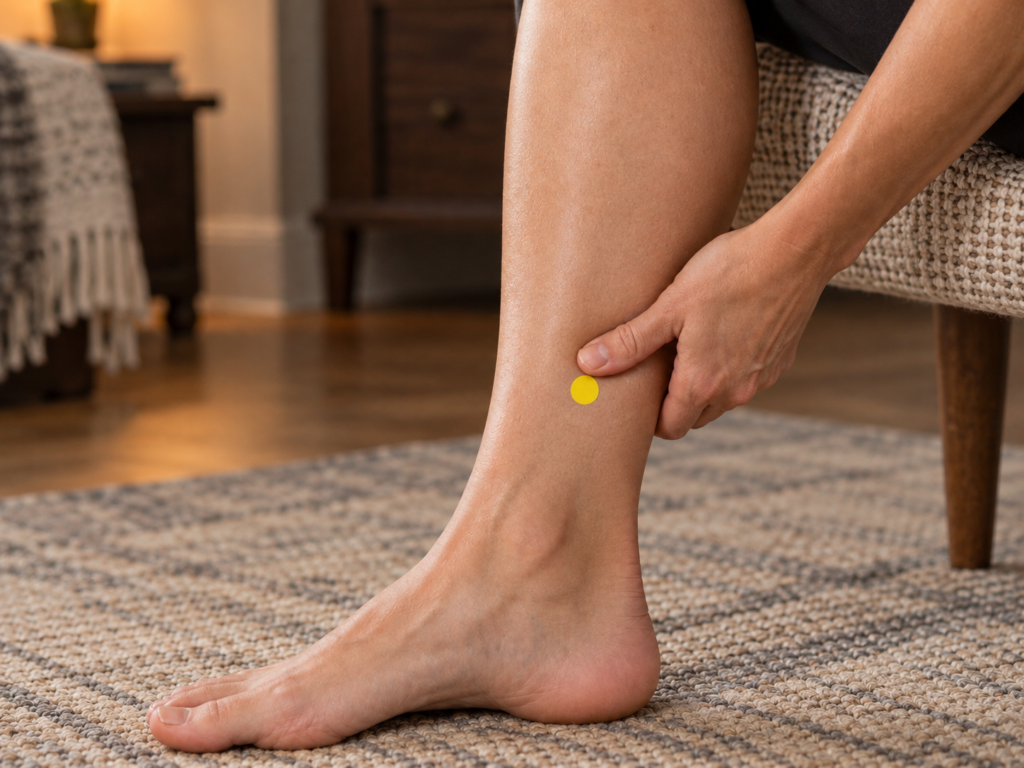
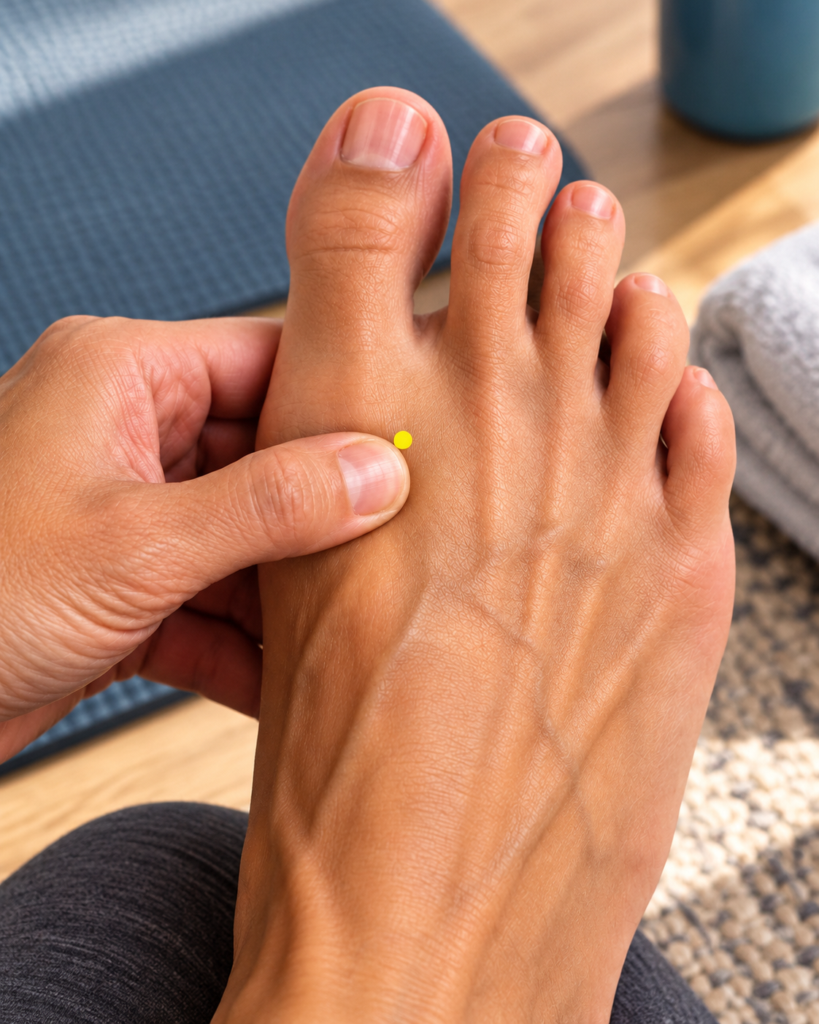
9. Press on LV3 on the top of the foot to release stress. LV3 sits on the top of the foot, in the hollow where the bones of the big toe and second toe meet, about two finger-widths back from the web between the toes. Press firmly with your thumb for one to two minutes on each foot. LV3 is called “Taichong,” the “Great Rushing.”
LV3 is the Liver’s source point. It helps move stuck Liver Qi, ease irritability and tension, and clear Heat associated with long-term stress. If aches and flare-ups worsen during stressful weeks, LV3 belongs in the routine.
Why These Acupressure Points Work
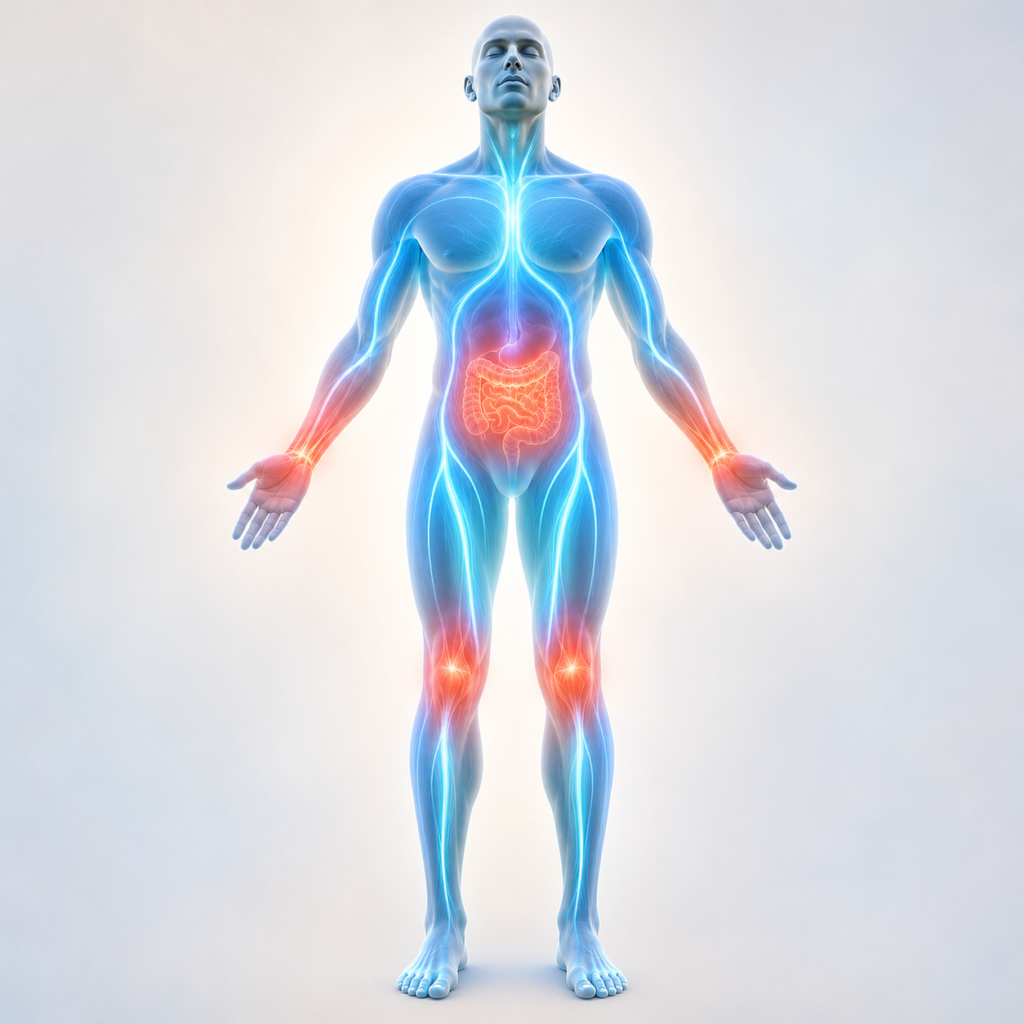
From a Traditional Chinese Medicine perspective, lasting inflammation rarely has a single cause. Heat irritates the tissues, while Dampness and Phlegm obstruct them, and stagnant Qi and Blood keep pain in place. Beneath this, a weak Spleen continues to produce Dampness, while stress keeps the Liver from moving Qi smoothly. Relief comes from clearing what has accumulated and strengthening the digestion that produces it, so the points address both sides at once.
The nine points work together to reduce inflammation and address the factors that sustain it:
- LI11 and LI4 clear Heat and ease pain and swelling.
- SP10 cools the Blood and moves stuck Blood.
- ST36, SP9, ST40, and SP6 strengthen the Spleen and drain Dampness and Phlegm.
- GB34 and LV3 free the joints and release the stress that feeds Heat.
How to Properly Use These Acupressure Points

For inflammation, acupressure is most effective when practiced consistently each day, with extra focus during flare-ups.
- Apply pressure to all nine points once daily, holding each point for one to two minutes on both sides. The evening is a suitable time, as it allows the body to rest afterward.
- During episodes of joint redness, warmth, or swelling, focus on LI11, LI4, and SP10 two to three times daily.
- When the primary concern is puffiness, stiffness, or a sensation of heaviness, devote additional attention to SP9, ST40, and SP6.
- Apply firm yet comfortable pressure. Do not apply pressure directly to a joint that is red, warm, or significantly swollen. Avoid LI4 and SP6 during pregnancy.
Food is a major contributor to chronic inflammation. Cut back on sugary drinks, refined flour, processed meat, fried foods, and alcohol. Build meals around vegetables, beans, whole grains, fish, olive oil, nuts, and berries. Traditional Chinese Medicine also recommends warm, cooked meals at regular times, which are considered better for the Spleen than cold, raw foods and late-night snacking. Walk for 20-30 minutes most days, and aim for 7-9 hours of sleep each night. Stop smoking, brush and floss daily, and find a regular way to unwind, such as taking a walk after dinner, enjoying a hot bath, or practicing slow breathing before bed.
Learn more about the impact of ultra-processed food on inflammation.
When to Get Professional Help

See a doctor if inflammation lasts more than a few weeks, keeps returning, or occurs with fatigue, weight loss, fever, or night sweats. A joint that suddenly becomes red, hot, and swollen, especially with a fever, needs prompt care because it may signal an infection or gout. Morning stiffness lasting more than an hour, swelling in joints on both sides of the body, ongoing diarrhea or blood in the stool, or a spreading rash may point to an autoimmune or inflammatory condition that needs diagnosis and treatment. Call 911 if inflammation occurs with chest pain, trouble breathing, or swelling of the face, lips, or throat. If you take medication for an inflammatory condition, keep taking it as prescribed and talk with your doctor before making any changes.
Acupressure is a gentle, supportive practice for inflammation. It complements, and does not replace, diagnosis and medical care.
For related health concerns, acupressure for arthritis, acupressure for rheumatoid arthritis, and acupressure to lower cortisol are companion articles. For a closer look at the immune response, read What Is Inflammation?
Above and Beyond Acupuncture offers acupuncture, cupping, and lifestyle coaching at the North Frank Lloyd Wright Boulevard location in Scottsdale.
Schedule an appointment online to start your healing journey.
The points above are only as effective as the technique used to apply them. Where to press, how firmly, and for how long all affect the result. For a full breakdown of how to perform acupressure properly at home, read Performing Acupressure in 3 Easy Steps.

About the Publisher
Paul Kerzner, L.Ac., is a licensed acupuncturist and board-certified herbalist, as well as the founder of Above and Beyond Acupuncture in Scottsdale. His own journey from chronic patient to practicing acupuncturist shapes his commitment to providing honest, clinically grounded information about acupuncture and Traditional Chinese Medicine. Learn more about Paul and his clinical approach on the About Us page.