Key Takeaways
- Rotator cuff tendon problems, including tendinitis, bursitis, and tears, are the most common pickleball-related shoulder injuries. Overhead shots place the greatest force on the rotator cuff.
- Shoulder impingement, in which tendons and the bursa are pinched beneath the top of the shoulder, often presents as pain during overhead activities, reaching behind the back, or lying on that side at night.
- In Traditional Chinese Medicine, repetitive swinging can cause Qi and Blood to stagnate in the three channels that cross the shoulder. With age, the tendons also receive less nourishment, making them less supple.
- Nine acupressure points across the shoulder, shoulder blade, arm, and leg can help relieve pain and stiffness and support rotator cuff recovery.
- Acupressure supports recovery but does not repair a torn tendon. Sudden weakness when lifting the arm or a shoulder that appears out of place after a fall requires prompt medical care.

Pickleball draws many players in their fifties, sixties, and seventies, often years after they last played an overhead sport. Because most shots are at or below shoulder height, shoulder pain may not appear at first. But after a few weeks of reaching overhead for high lobs and smashes, a deep ache can develop at the top and outer side of the shoulder. Soon, it may hurt to reach for a top shelf, fasten a seatbelt, or lie on that side at night.
According to Baylor College of Medicine, the most common pickleball injury affects the rotator cuff tendons and can range from tendinitis and bursitis to tears. The rotator cuff consists of four muscles and tendons that keep the upper arm bone in its socket. Orthopedic surgeon Bruce Moseley, MD, explains that reaching overhead in a racket sport like pickleball takes considerable force, which puts stress on the rotator cuff.
The most common type of shoulder pain overall is impingement. In an article for USA Pickleball, physical therapist and certified pickleball teaching professional Noe Sariban, DPT, describes it as the tendons and bursa being pinched in the narrow space beneath the top of the shoulder. It often hurts when hitting overheads, reaching behind the back, or moving the arm at shoulder height. Pain at night or while lying on that side is also a common sign. If left untreated and played through, impingement can lead to a rotator cuff tear.
Traditional Chinese Medicine traces three channels across the shoulder: the Large Intestine at the front, the San Jiao along the top, and the Small Intestine across the back and shoulder blade. Repetitive swinging can leave Qi and Blood stagnant along these pathways, causing fixed, aching pain that flares with certain movements. Over time, Blood also becomes less able to nourish the tendons, making them stiffer and more prone to strain. Early-morning matches in cool air can add to the tightness.
The nine points below begin with the standard local shoulder points, progress to the rotator cuff muscles on the shoulder blade, and end with two distal points traditionally used to relieve a painful shoulder.
What Acupressure Points to Press and Why
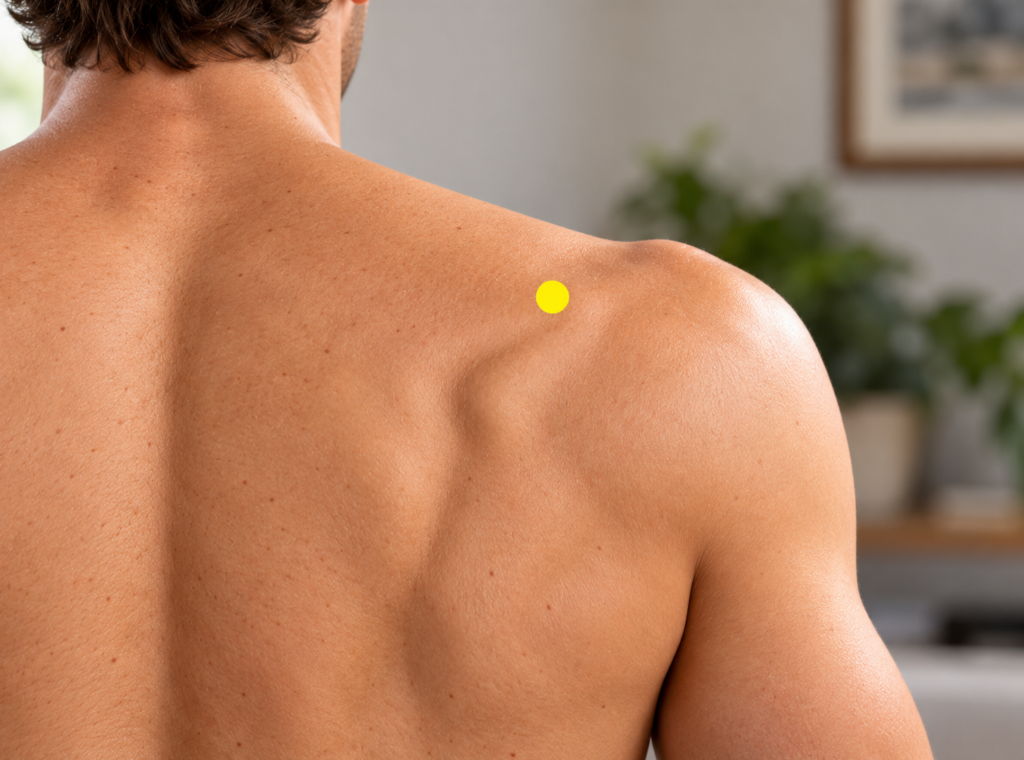
1. Press on LI15 at the front of the shoulder to ease pain at the joint. LI15 sits at the top outer edge of the shoulder. Lift the arm out to the side until it is level with the shoulder, and two small hollows appear at the tip of the shoulder; LI15 is the front hollow. Press firmly with the fingertips of your other hand for one to two minutes on each side, with the arm resting at your side. LI15 is called “Jianyu,” the “Shoulder Bone.”
In Traditional Chinese Medicine, LI15 is the primary local point for shoulder pain. It lies just above the area where the rotator cuff tendons and bursa can get pinched during overhead shots.
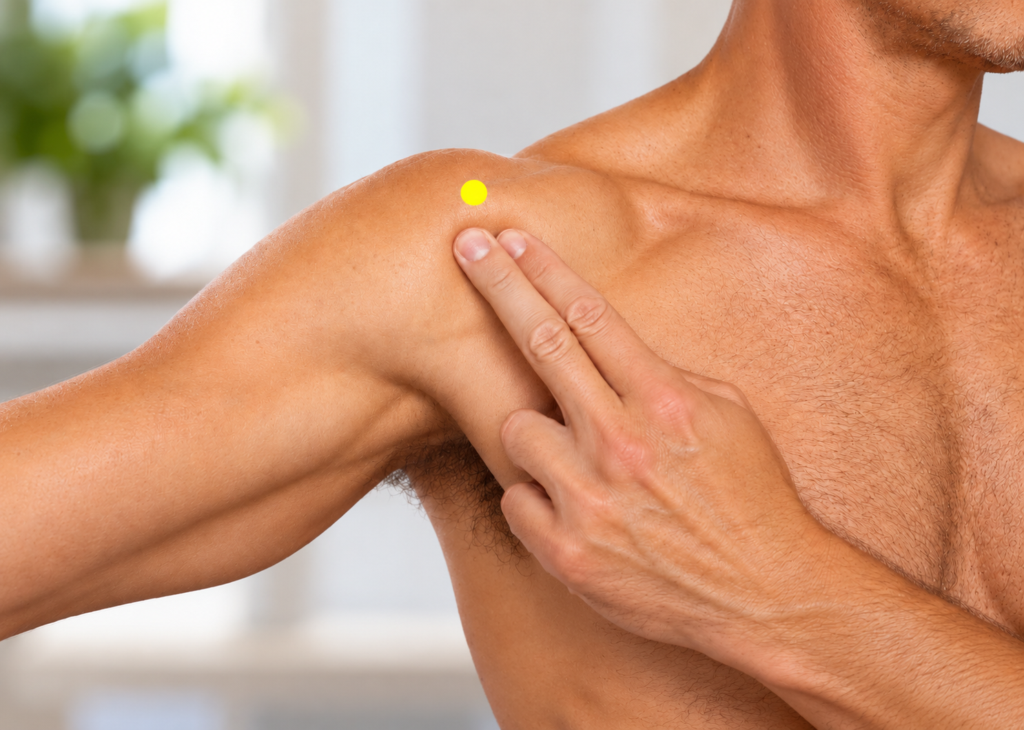
2. Press on TE14 at the back of the shoulder to release stiffness. TE14 is the back hollow at the tip of the shoulder, just behind LI15, found the same way with the arm lifted out to the side. Press firmly with your fingertips for one to two minutes on each side. TE14 is called “Jianliao,” the “Shoulder Crevice.”
TE14 lies on the San Jiao channel and pairs naturally with LI15. Together, they target the outer shoulder, where rotator cuff pain commonly occurs, and help restore the ability to raise the arm out to the side.
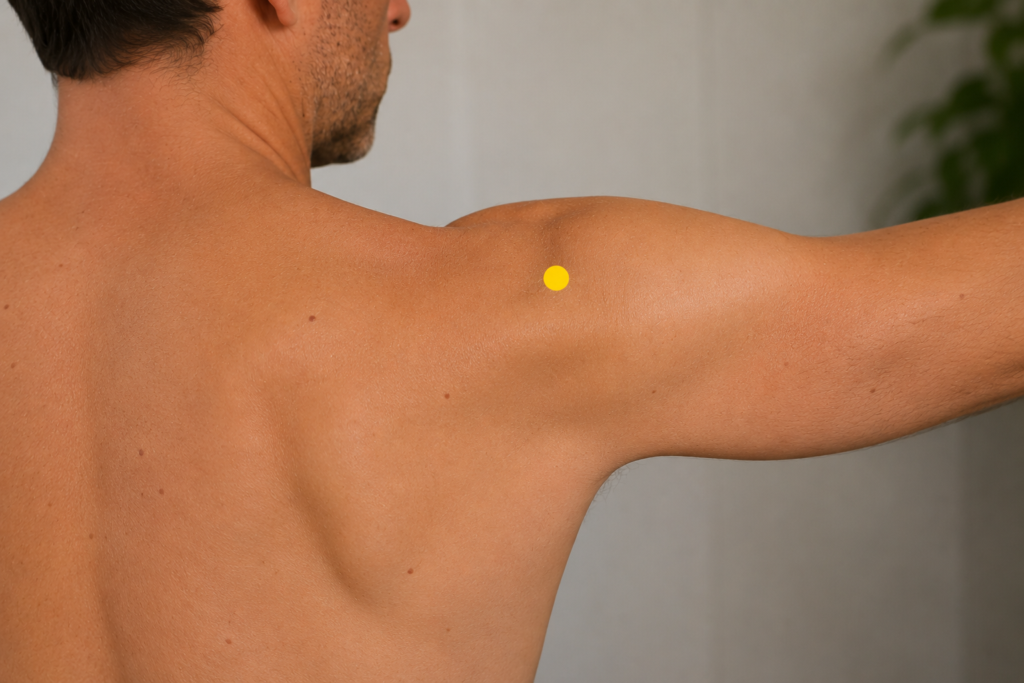
3. Press on Jianqian at the front of the shoulder to calm the biceps tendon. Jianqian sits on the front of the shoulder, about halfway between the top of the front armpit crease and LI15. Press firmly with your thumb for one to two minutes on each side. Jianqian is called the “Front of the Shoulder.”
Jianqian is an extra point used to relieve pain at the front of the shoulder and difficulty lifting the arm forward. It lies over the biceps tendon, which can become irritated along with the rotator cuff in athletes who play overhead sports.

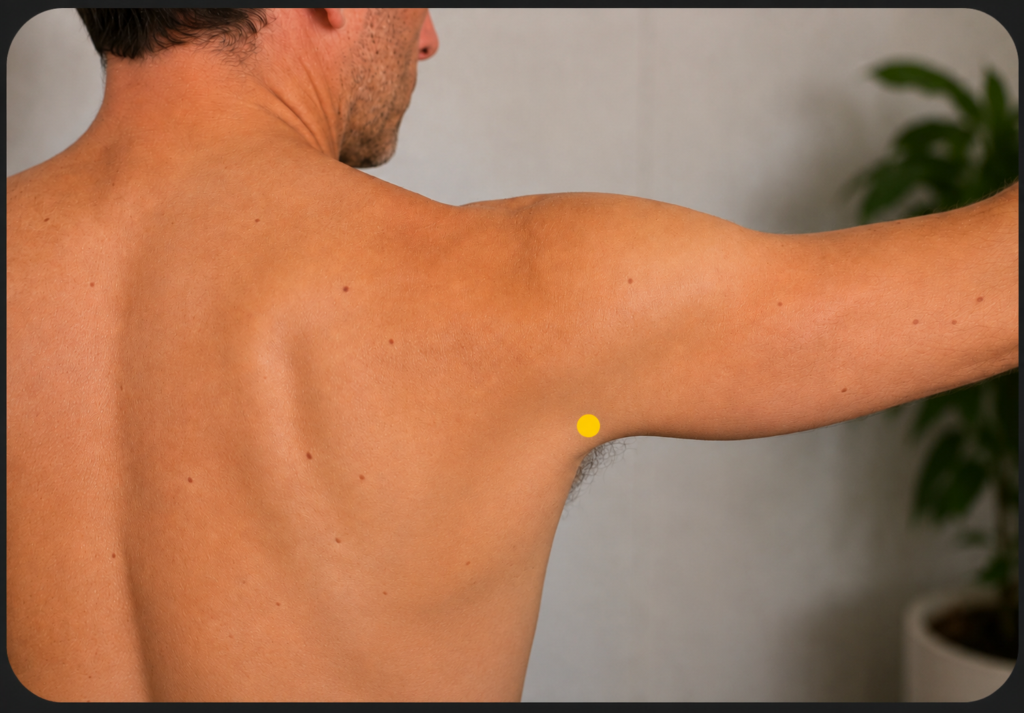
4. Press on SI9 behind the armpit to loosen the back of the shoulder. SI9 sits on the back of the shoulder. With the arm hanging at your side, find the top of the crease at the back of the armpit, then move up about one thumb-width. Press firmly with the fingertips of your other hand for one to two minutes on each side. SI9 is called “Jianzhen,” the “True Shoulder.”
SI9 works the muscles at the back of the shoulder, including a small rotator cuff muscle that turns the arm outward. It may help if reaching behind your back or across your body is painful.
5. Press on SI11 in the center of the shoulder blade to relax the rotator cuff. SI11 sits in the middle of the shoulder blade, in a tender hollow about one-third of the way down from the bony ridge at the top of the blade. Since it is hard to reach with the hand, lean your back against a wall with a tennis ball placed over the point and press into it gently for one to two minutes on each side. SI11 is called “Tianzong,” the “Heavenly Gathering.”
SI11 is located directly over the infraspinatus, one of the four rotator cuff muscles. It is often notably tender in individuals experiencing shoulder pain related to overhead sports, and sustained pressure at this site may alleviate pain that radiates down the outer arm.
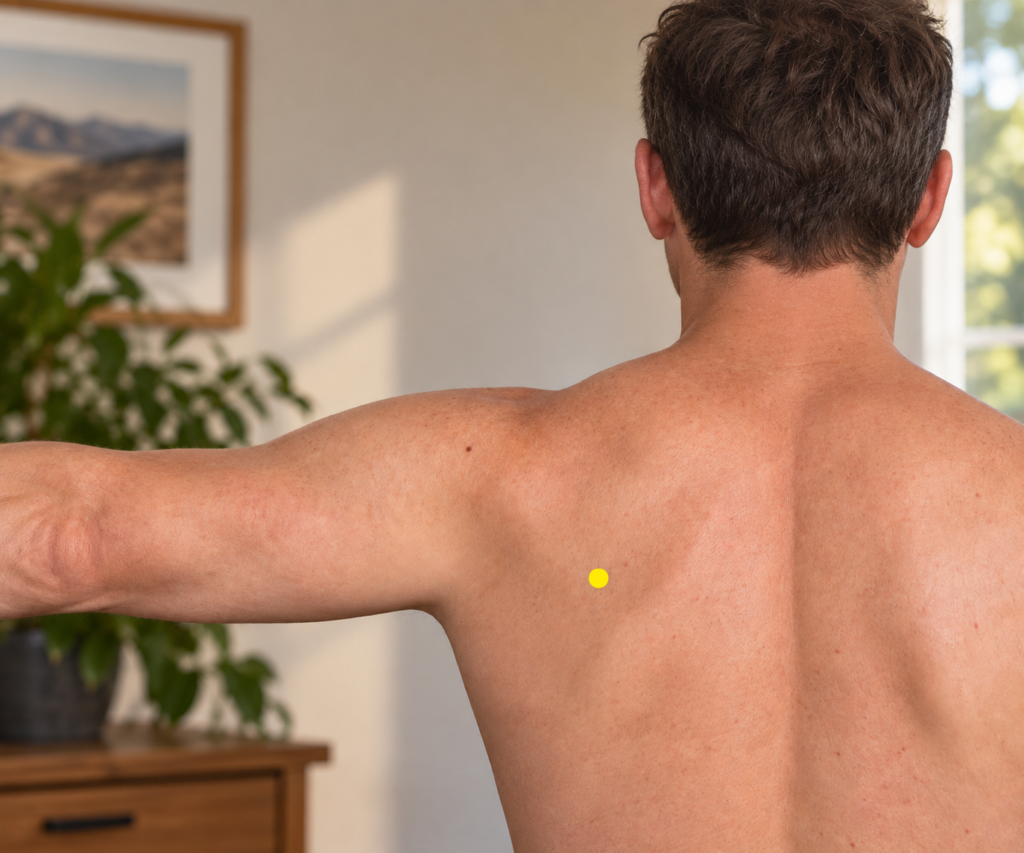
6. Press on SI12 above the shoulder blade to support the top of the rotator cuff. SI12 sits on the top of the shoulder blade, in the hollow at the center of the bony ridge, directly above SI11. Reach across with the opposite hand and press firmly with your middle finger for one to two minutes on each side. SI12 is called “Bingfeng,” the “Grasping the Wind.”
SI12 lies over the supraspinatus, the rotator cuff muscle most commonly affected by inflammation or tears. Its name reflects its traditional use for shoulder stiffness caused by cold and wind.
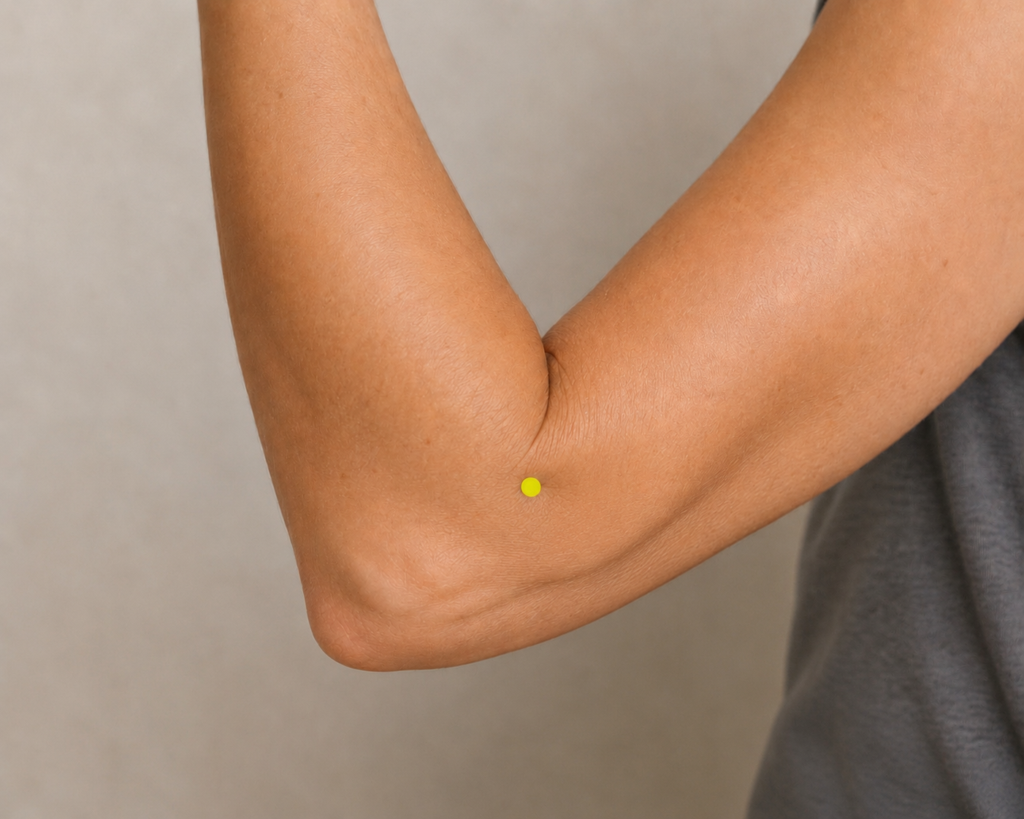
7. Press on LI11 at the elbow to clear inflammation along the arm. LI11 sits on the outer end of the elbow crease. Bend the elbow, and the point is in the hollow at the end of the crease, on the thumb side. Press firmly with your thumb for one to two minutes on each arm. LI11 is called “Quchi,” the “Pool at the Crook.”
LI11 is located on the Large Intestine channel, which extends along the arm to the anterior shoulder. In Traditional Chinese Medicine, it is traditionally used to clear heat, a concept associated with inflammation, and to relieve pain throughout the arm.
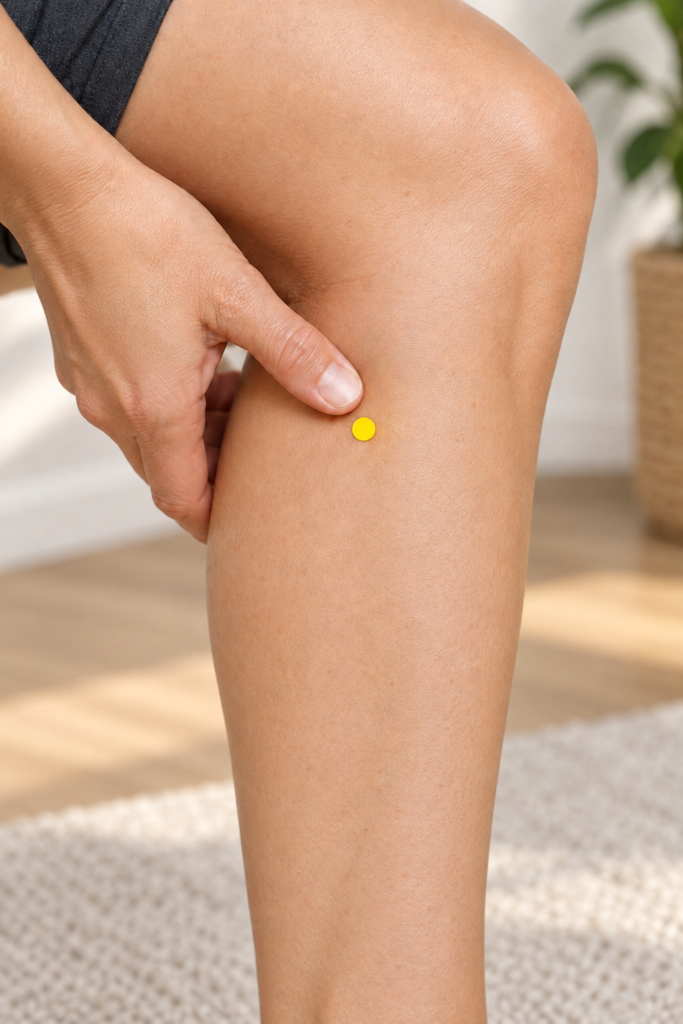
8. Press on GB34 below the outer knee to support the tendons. GB34 sits on the outer lower leg, in the hollow just in front of and below the small bony knob below the outer knee. Press firmly with your thumb for one to two minutes on each leg. GB34 is called “Yanglingquan,” the “Yang Mound Spring.”
In Traditional Chinese Medicine, GB34 is the influential point for the tendons and is used to address tendon strain and stiffness anywhere in the body. For rotator cuff problems, it supports the tendons from a distance while the shoulder rests.
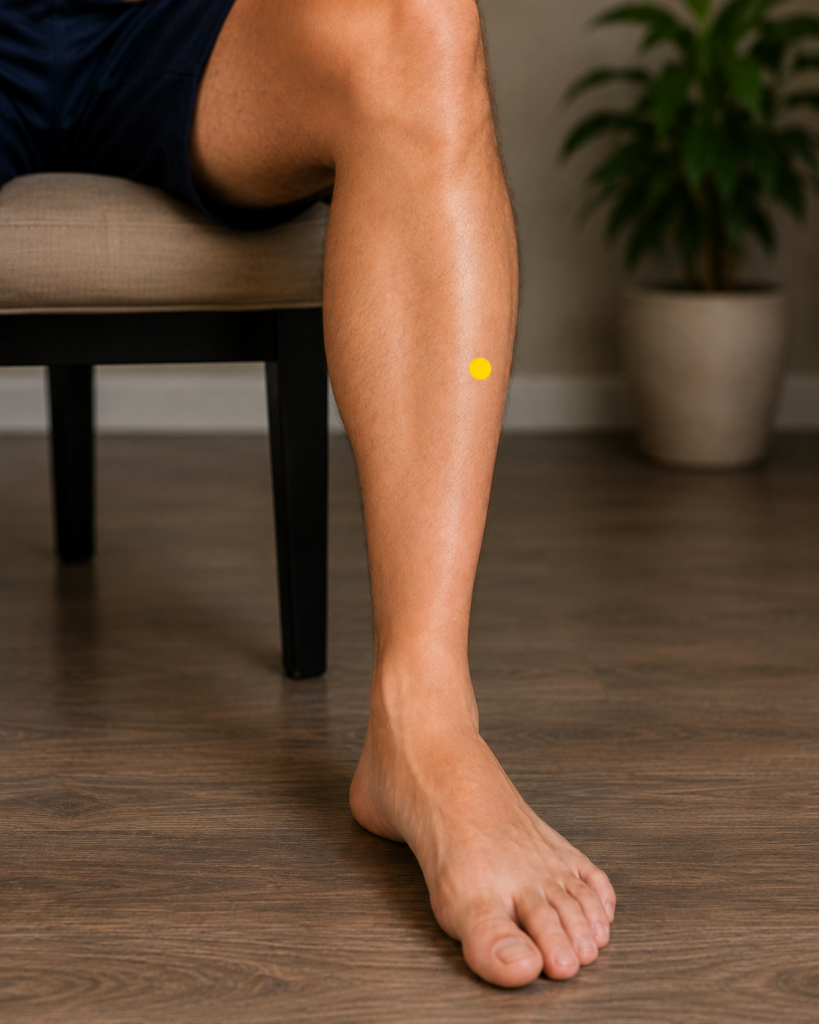
9. Press on ST38 on the shin while moving the shoulder. ST38 sits on the front of the lower leg, about halfway between the bottom of the kneecap and the ankle, one finger-width to the outside of the shinbone. Press firmly with your thumb for one to two minutes on the same side as the sore shoulder, while slowly lifting and lowering the arm within a comfortable range. ST38 is called “Tiaokou,” the “Ribbon Opening.”
ST38 is a well-known empirical point for shoulder pain. It has been used for generations because it works, despite being far from the shoulder. Pressing it while gently moving the arm can often ease a stiff, painful shoulder within a few repetitions.
Why These Acupressure Points Work

From a Traditional Chinese Medicine perspective, pickleball shoulder pain stems from overuse compounded by age. Every overhead swing strains the channels crossing the shoulder, and repeated strain can keep Qi and Blood from flowing freely through them. Meanwhile, tendons that receive less nourishment from Blood become stiff and more prone to tearing. Treatment aims to clear stagnation in the joint and strengthen the tendons that support it.
The nine points work together to release tension throughout the shoulder, from front to back:
- LI15, TE14, and Jianqian surround the top and front of the shoulder joint.
- SI9, SI11, and SI12 release the rotator cuff muscles on the back of the shoulder and shoulder blade.
- LI11 and GB34 clear inflammation along the arm and support the tendons.
- ST38 frees the shoulder from a distance while the arm moves.
How to Properly Use These Acupressure Points

Acupressure for pickleball-related shoulder pain is most effective after play and on rest days when combined with gentle movement.
- After playing, sit with your arm supported and apply pressure to LI15, TE14, Jianqian, and SI9 for one to two minutes at each point.
- For SI11, use a tennis ball against a wall. For SI12, reach across the chest while maintaining steady, comfortable pressure.
- End with LI11 and GB34, then apply pressure to ST38 as you slowly raise and lower the sore arm.
- Apply firm pressure to the points on the leg and elbow, and moderate pressure around the shoulder. Reduce the pressure if the joint feels hot or swollen. Repeat once or twice daily for at least four to six weeks.
A few changes can help protect the shoulder over time. Warm up for ten to fifteen minutes before playing with arm circles, gentle band work, and easy shadow swings. Build strength in your rotator cuff and upper back two or three days a week using light resistance bands. Let some high lobs go, or step back and hit them on the bounce rather than reaching for every smash. Take rest days between sessions, and end a session early if your shoulder starts to ache. Sleep on your opposite side, with a pillow supporting the sore arm. After a new strain, ice the area for the first day or two to calm inflammation, then switch to heat to keep Qi and Blood moving.
Learn more about home remedies for frozen shoulder.
When to Get Professional Help

See a doctor or orthopedic specialist if shoulder pain lasts more than two weeks, keeps getting worse, wakes you at night, or makes it difficult to lift your arm overhead. These symptoms may indicate a rotator cuff tear or impingement that requires imaging and a rehabilitation plan. Seek prompt care for sudden pain accompanied by a popping or tearing feeling and weakness when lifting your arm, numbness or tingling down the arm, or a shoulder that looks deformed or out of place after a fall. These symptoms may signal a dislocation or fracture. Call 911 for shoulder or arm pain, especially on the left side, accompanied by chest pressure, shortness of breath, sweating, or nausea, as these may signal a heart problem.
Acupressure is a gentle, supportive practice for pickleball shoulder pain. It complements, and does not replace, diagnosis and medical care.
For related health concerns, acupressure for shoulder pain, acupressure for rotator cuff pain, and acupressure for frozen shoulder relief are companion posts.
Other posts in the pickleball series include acupressure for pickleball knee pain, acupressure for pickleball elbow, acupressure for pickleball wrist pain, acupressure for pickleball ankle pain, acupressure for pickleball back pain, and top acupressure points for pickleball players.
Above and Beyond Acupuncture offers acupuncture, cupping, and lifestyle coaching at the North Frank Lloyd Wright Boulevard location in Scottsdale.
Schedule an appointment online to start your healing journey.
The points above are only as effective as the technique used to apply them. Where to press, how firmly, and for how long all affect the result. For a full breakdown of how to perform acupressure properly at home, read Performing Acupressure in 3 Easy Steps.

About the Publisher
Paul Kerzner, L.Ac., is a licensed acupuncturist and board-certified herbalist, as well as the founder of Above and Beyond Acupuncture in Scottsdale. His own journey from chronic patient to practicing acupuncturist shapes his commitment to providing honest, clinically grounded information about acupuncture and Traditional Chinese Medicine. Learn more about Paul and his clinical approach on the About Us page.