Key Takeaways
- Many pickleball injuries occur among beginners and people returning to exercise after a break, often from quick sideways moves, sudden starts, and falls.
- Ankle sprains, calf and Achilles strains, knee sprains, and low back strains are common lower-body injuries, while the shoulder, elbow, and wrist account for most overuse injuries.
- In Traditional Chinese Medicine, repeated stop-and-go strain leaves Qi and Blood stagnant in the working joints, and tendons that lack nourishment from Blood become tighter and tear more easily.
- Nine acupressure points from the shoulder to the ankle offer pickleball players a short routine for use after play and on rest days.
- Acupressure supports recovery but does not treat a tear or fracture. Severe pain, swelling, a deformed joint, or an inability to bear weight requires prompt medical care.
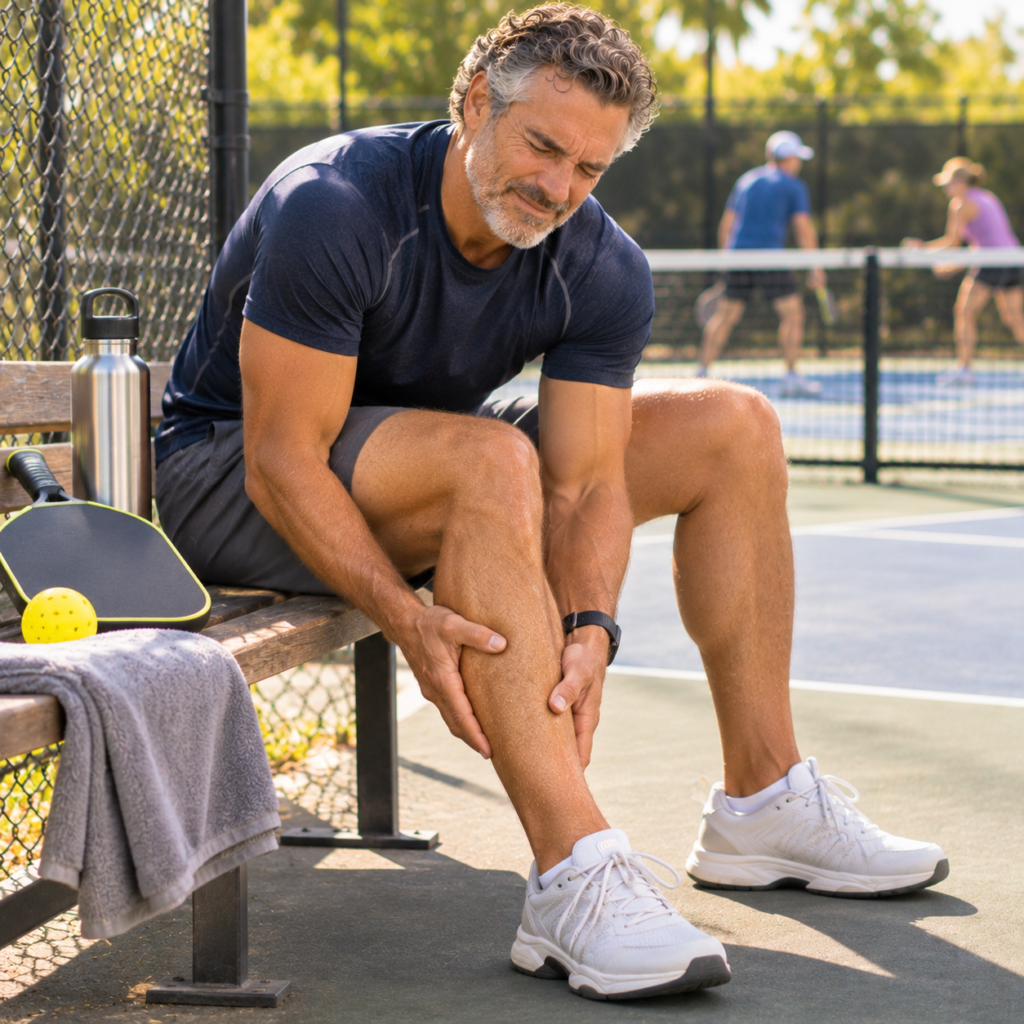
A pickleball court is small, about a third the size of a tennis court, and that is a big part of its appeal. The paddle is light, there is less ground to cover, and a new player can sustain a rally within the first hour. The strain comes in short bursts: a quick lunge for a dink, a sideways shuffle along the kitchen line, or a backpedal for a lob that drifts too deep. These moves load the ankles, calves, and knees in ways a daily walk never does, while the paddle arm repeats the same swing over and over.
According to Scripps Health, many pickleball injuries affect beginners and people returning to exercise after a period of inactivity. Orthopedic surgeon Jeffrey Wilde, MD, notes that new players may not realize how hard they’re exerting themselves. Common lower-body injuries include ankle sprains; calf and hamstring strains; Achilles tendon injuries; knee sprains; and low back strains. Rotator cuff injuries and tendinitis in the shoulder, elbow, or wrist can affect the upper body. Writing for Parkview Health, orthopedic surgeon Kyle Carlson, MD, and nurse practitioner Lindsay Neff add that falls on the court can cause wrist fractures, shoulder dislocations, and hip injuries, with older adults at greater risk.
Most of these injuries develop gradually. A calf that feels tight after Tuesday’s games may still feel tight on Thursday, while an elbow that aches after a long weekend may get played on anyway. Spending a few minutes on acupressure after play and again on rest days gives those areas regular attention before a small ache turns into time off the court.
Traditional Chinese Medicine views most pickleball injuries as issues of flow and nourishment. Every lunge and swing places a small strain on the channels that cross the working joints. When repeated without enough rest, this strain causes Qi and Blood to stagnate, leaving the joint achy and stiff. The Liver governs the tendons, while the Kidneys govern the bones. As both weaken with age, Blood nourishes the tendons less fully, making them less supple and more prone to strain.
These nine points run from the shoulder to the ankle, covering the areas where pickleball players are most often injured.
What Acupressure Points to Press and Why
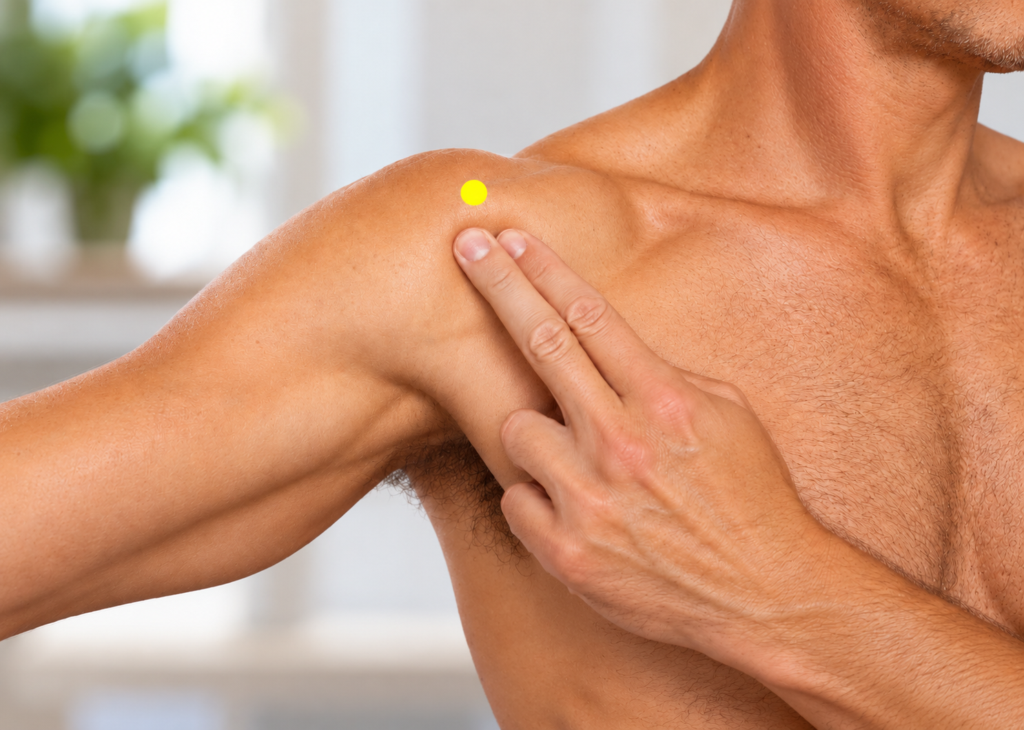
1. Press on LI15 at the front of the shoulder to protect the rotator cuff. LI15 sits at the top outer edge of the shoulder. Lift the arm out to the side until it is level with the shoulder, and two small hollows appear at the tip of the shoulder; LI15 is the front hollow. Lower the arm and press firmly with the fingertips of your other hand for one to two minutes on each side. LI15 is called “Jianyu,” the “Shoulder Bone.”
In Traditional Chinese Medicine, LI15 is the primary local point for shoulder pain. It lies directly over the area where the rotator cuff tendons can get pinched during an overhead smash or high volley.
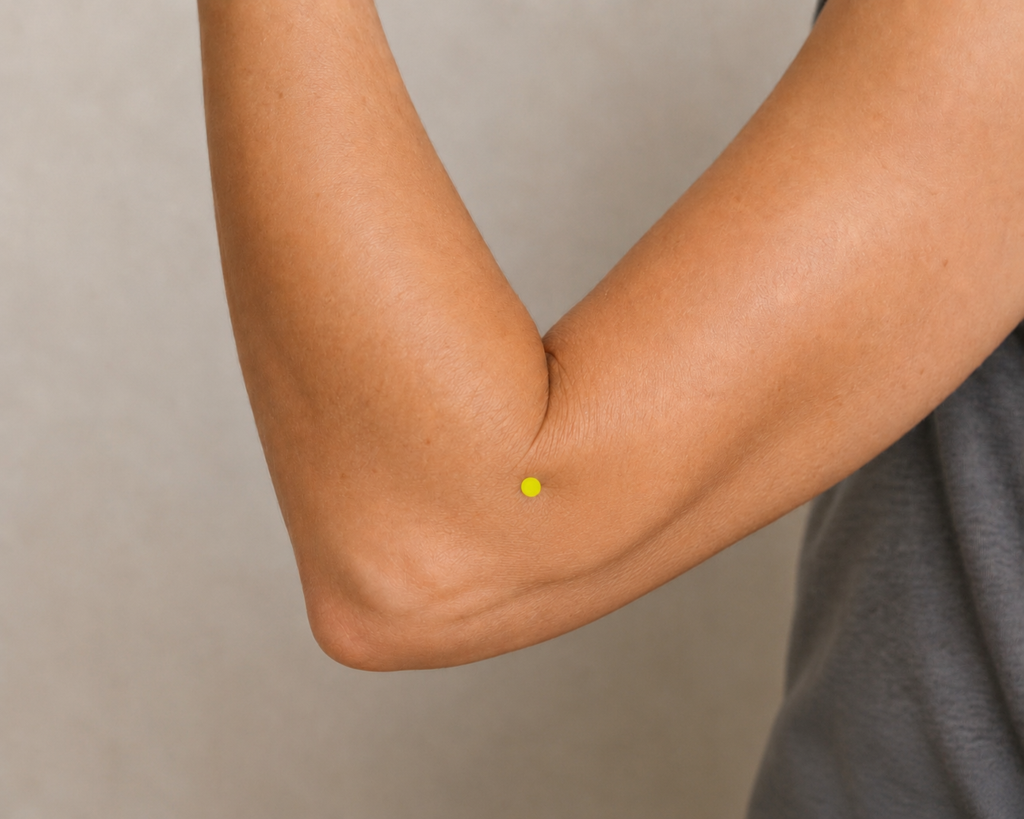
2. Press on LI11 at the outer elbow to ease elbow strain. LI11 sits on the outer end of the elbow crease. Bend the elbow, and the point is in the hollow at the end of the crease, on the thumb side. Press firmly with your thumb for one to two minutes on each arm. LI11 is called “Quchi,” the “Pool at the Crook.”
LI11 is located just in front of the bony bump on the outside of the elbow, where the forearm tendons used to grip the paddle attach. It clears heat, a Traditional Chinese Medicine concept associated with inflammation, and is a standard point for pain on the outer elbow, commonly known as tennis elbow.
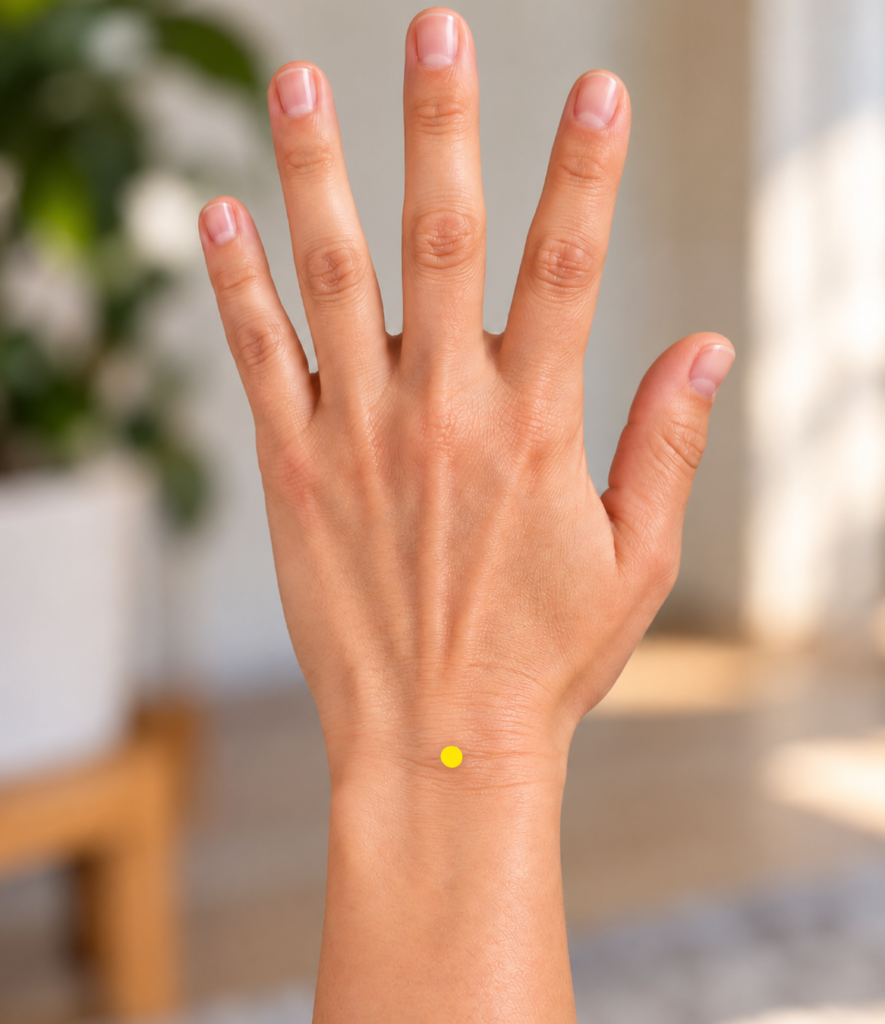
3. Press on TE4 on the back of the wrist to support the wrist. TE4 sits on the back of the wrist crease, in the small hollow between the tendons, roughly in line with the ring finger. Press firmly with the thumb of your other hand for one to two minutes on each wrist. TE4 is called “Yangchi,” the “Yang Pool.”
TE4 is the source point of the San Jiao and an important local point for wrist pain and stiffness. It’s especially well suited to the repeated flicking motion of a dink and the wrist strain that can result from gripping the paddle too tightly.
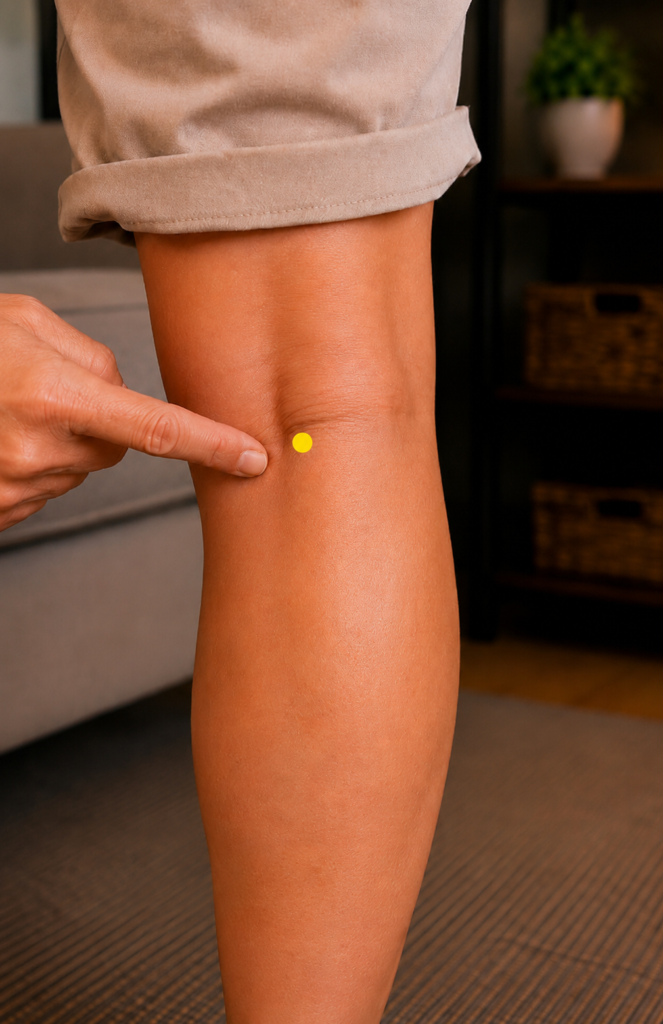
4. Press on BL40 behind the knee to relieve low back strain. BL40 sits in the middle of the crease at the back of the knee, between the two tendons. Sit with the knee slightly bent and press with moderate pressure using your fingertips for one to two minutes on each leg. BL40 is called “Weizhong,” the “Middle of the Crook.”
BL40 is considered the command point of the back in Traditional Chinese Medicine and is the classic distal point for low back pain, including strain from bending over to hit low balls and lunging at the kitchen line.
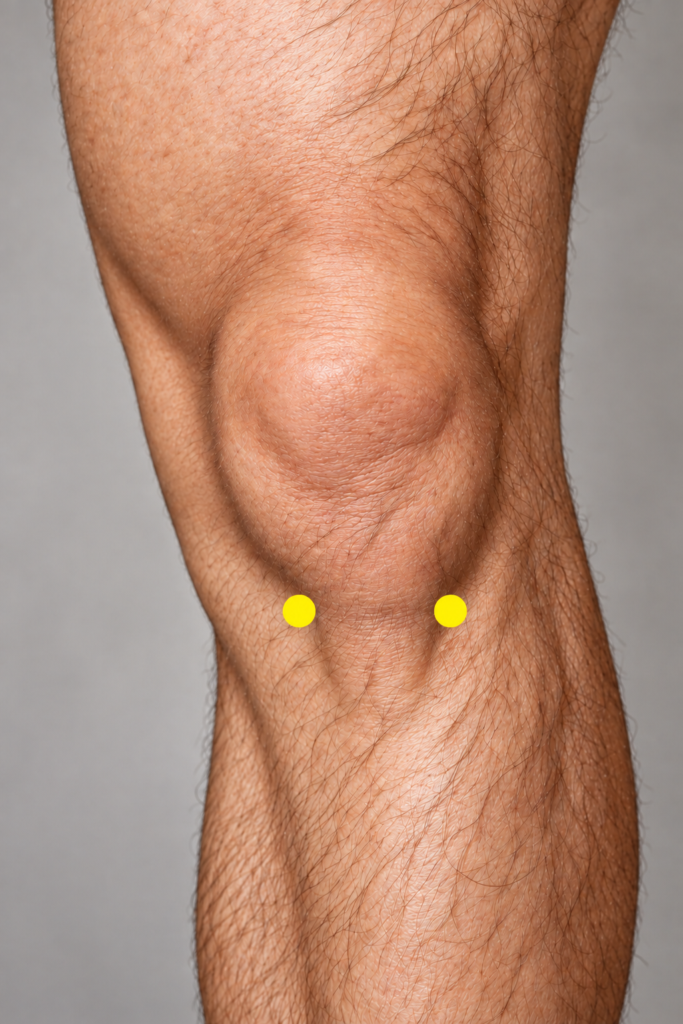
5. Press on Xiyan below the kneecap to support the knees. Xiyan is a pair of points in the two hollows on either side of the tendon just below the kneecap, visible when the knee is bent. Sit with the knee bent and press both hollows at once with your thumb and index finger for one to two minutes on each knee. Xiyan is called the “Eyes of the Knee.”
Xiyan is the main point for knee pain, stiffness, and swelling. It works directly on the front of the knee, which bears the load whenever you bend down and push off.
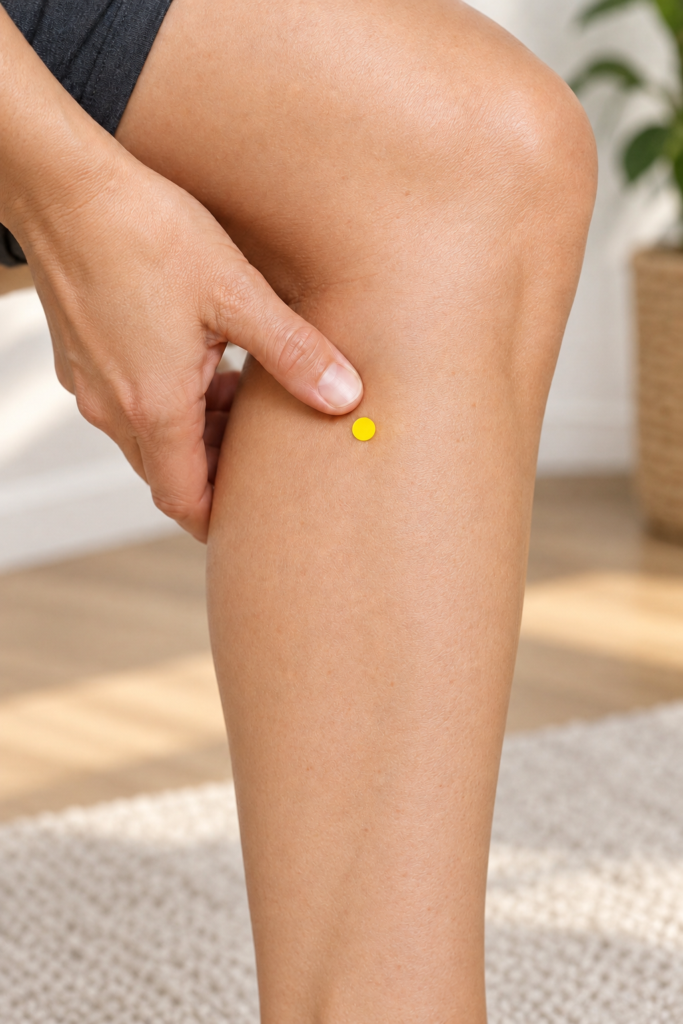
6. Press on GB34 below the outer knee to keep the tendons supple. GB34 sits on the outer lower leg, in the hollow just in front of and below the small bony knob below the outer knee. Press firmly with your thumb for one to two minutes on each leg. GB34 is called “Yanglingquan,” the “Yang Mound Spring.”
GB34 is the influential point of the tendons and is used to address tendon strain and stiffness throughout the body. Since the sport involves constant changes of direction, it’s one of the most important points to include in the routine.
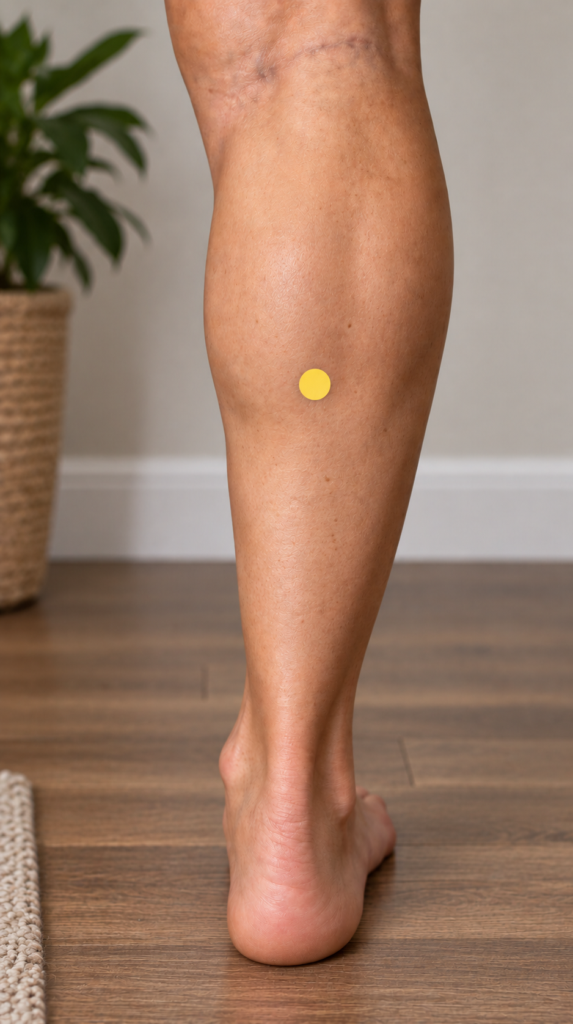
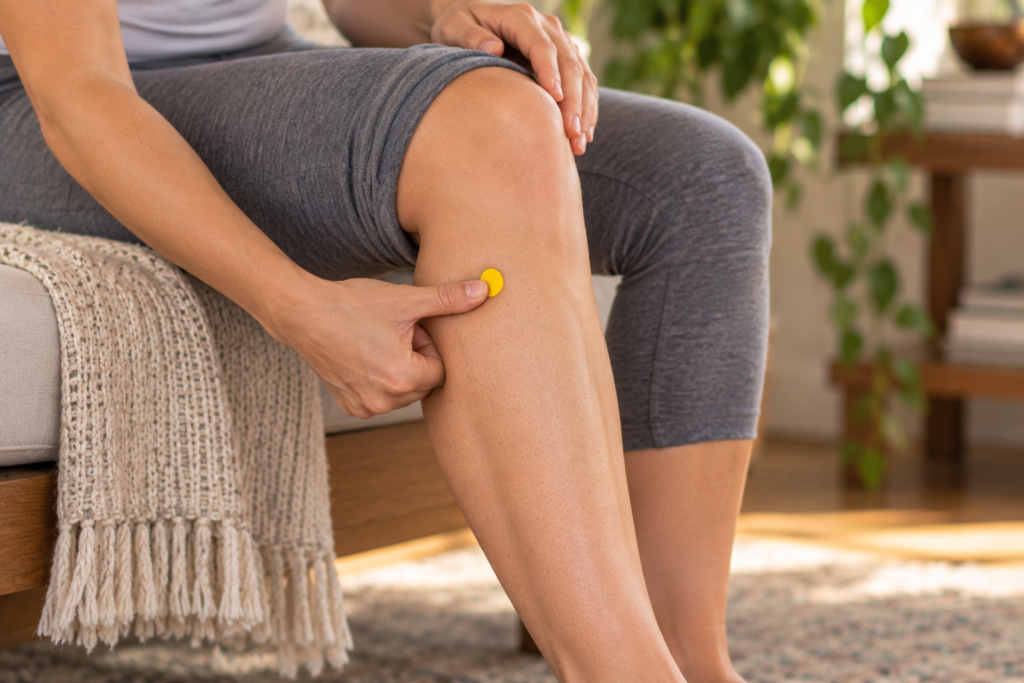
7. Press on BL57 on the back of the calf to release tight calves. BL57 sits on the back of the lower leg, in the V-shaped dip where the two halves of the calf muscle meet, about halfway between the back of the knee and the heel. Press firmly with your thumb for one to two minutes on each leg. BL57 is called “Chengshan,” the “Support the Mountain.”
BL57 is a classic point for calf cramps, tightness, and spasms. A tight calf after play can tug on the Achilles, so releasing it may also help protect the heel.
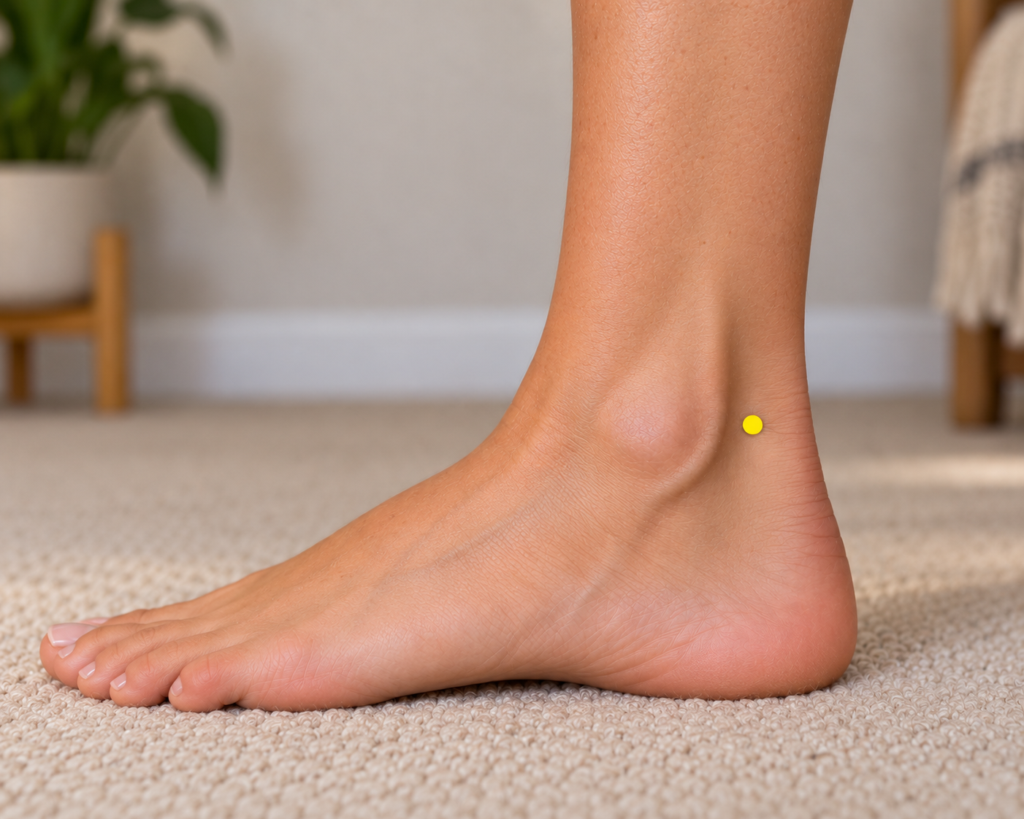
8. Press on BL60 behind the outer ankle to protect the ankle and Achilles. BL60 sits in the hollow between the tip of the outer ankle bone and the Achilles tendon. Press firmly with your thumb for one to two minutes on each ankle. BL60 is called “Kunlun,” the “Kunlun Mountains.” BL60 is avoided during pregnancy.
BL60 is the key point for ankle and heel pain, as well as stiffness along the Achilles tendon. It treats an ankle twisted during a sideways shuffle and a heel that aches after a long day of playing.
9. Press on ST36 below the knee to build stamina and recovery. ST36 sits four finger-widths below the bottom of the kneecap, about one finger-width to the outside of the shinbone. Press firmly with your thumb for one to two minutes on each leg. ST36 is called “Zusanli,” the “Leg Three Miles.”
In Traditional Chinese Medicine, ST36 is a point that strengthens Qi and Blood. Its name refers to giving a tired traveler the strength to walk three more miles, and it helps the legs recover between sessions.
Why These Acupressure Points Work
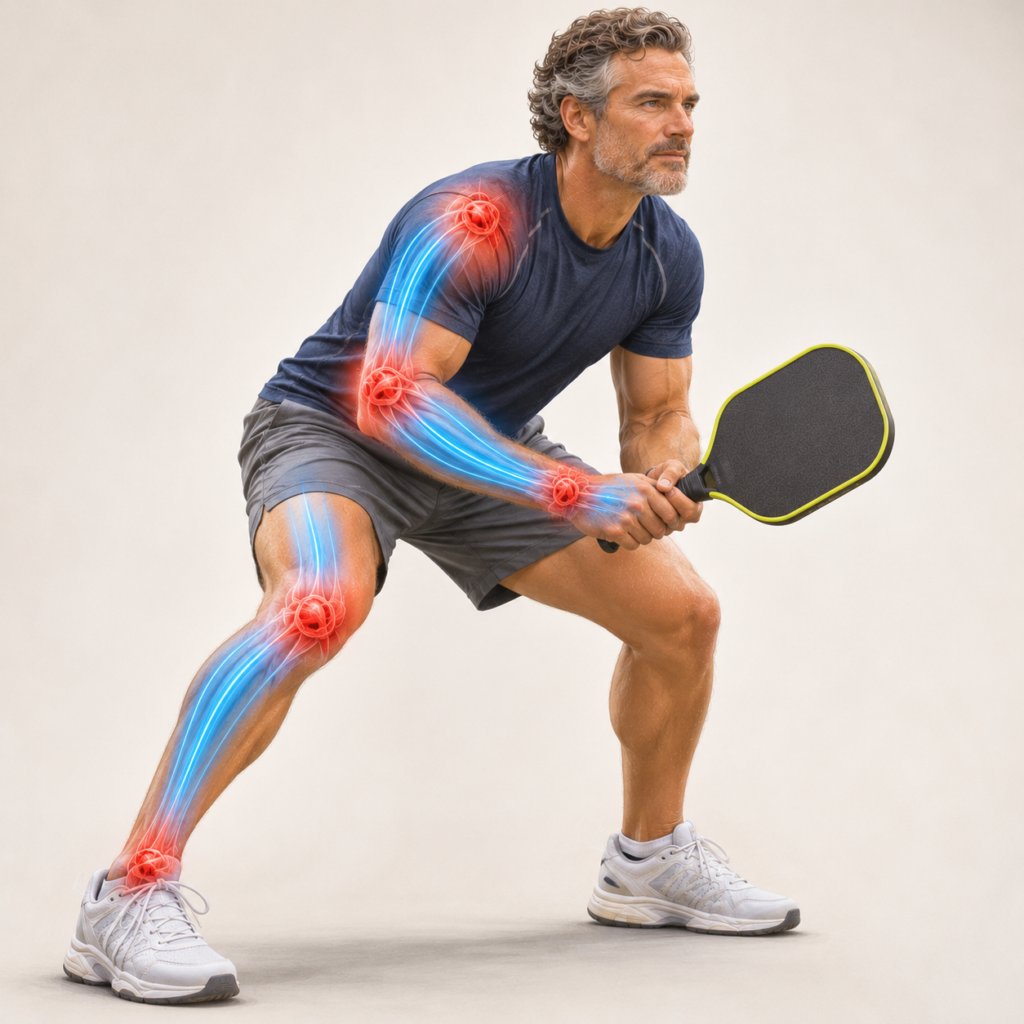
From a Traditional Chinese Medicine perspective, pickleball injuries occur when small strains build up faster than the body can recover. The stop-and-go movement stresses the lower body, while the paddle arm repeats the same motion until the channels across the shoulder, elbow, and wrist become congested. Without enough rest, Qi and Blood stagnate in the joints, and poorly nourished tendons lose their flexibility. Treatment focuses on clearing stagnation from the joints involved and nourishing the tendons so they can handle the next game.
The nine points work collectively to protect the body, from the paddle arm to the feet:
- LI15, LI11, and TE4 support the paddle arm from the shoulder to the wrist.
- BL40 and Xiyan help relieve discomfort in the lower back and knees.
- GB34, BL57, and BL60 help maintain flexibility in the tendons, calves, and Achilles tendon.
- ST36 boosts stamina and helps you recover between games.
How to Properly Use These Acupressure Points
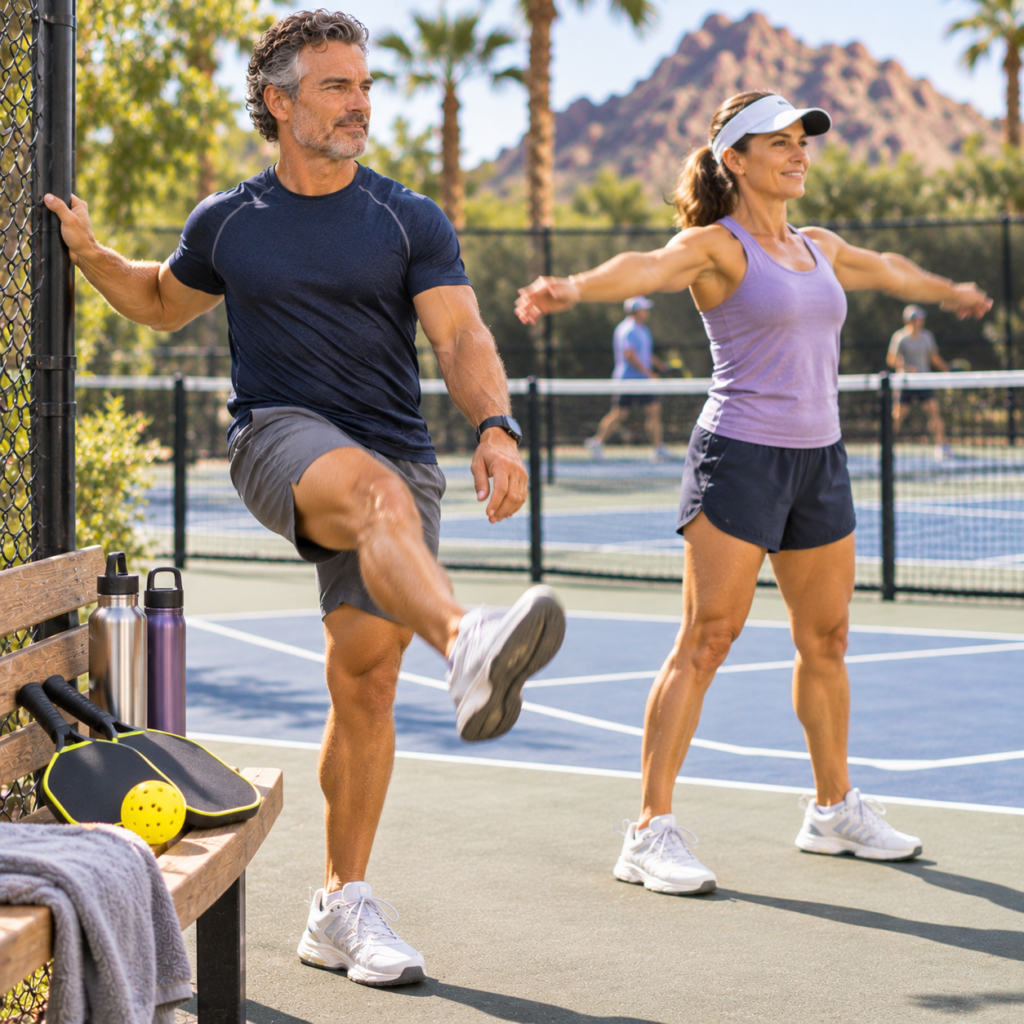
Acupressure is most effective for pickleball players when incorporated into a brief post-play routine and on rest days, along with an appropriate warm-up before games.
- After playing, sit with your arm supported and press LI15, LI11, and TE4 on the paddle arm first, then on the other arm.
- Proceed to BL40 and Xiyan, then continue down the leg to GB34, BL57, and BL60. Conclude with ST36.
- Apply moderate pressure at BL40 and around the kneecap, and firm pressure at the other points. Ease off if a joint feels hot or swollen.
- On rest days, complete the full routine once. If one area keeps hurting, switch to the dedicated post for that injury and use those points for at least four to six weeks.
The habits around the game are just as important as the game itself. Wear pickleball or tennis court shoes, not walking or running shoes, which do not support side-to-side movement. Replace them when the soles are worn. Warm up with 5 to 10 minutes of light cardio and dynamic stretching, and cool down afterward. After a break, build up your playing time gradually, particularly if you are new to the game. Do strength work for your legs, hips, and core twice a week, along with simple balance exercises to reduce the risk of falling. Drink water before, during, and after play, especially in the heat. Stop if you experience sharp or persistent pain rather than pushing through it. After a new strain, ice the area for the first day or two to reduce inflammation, then switch to heat to keep Qi and Blood moving.
Learn more about acupressure for ankle pain.
When to Get Professional Help
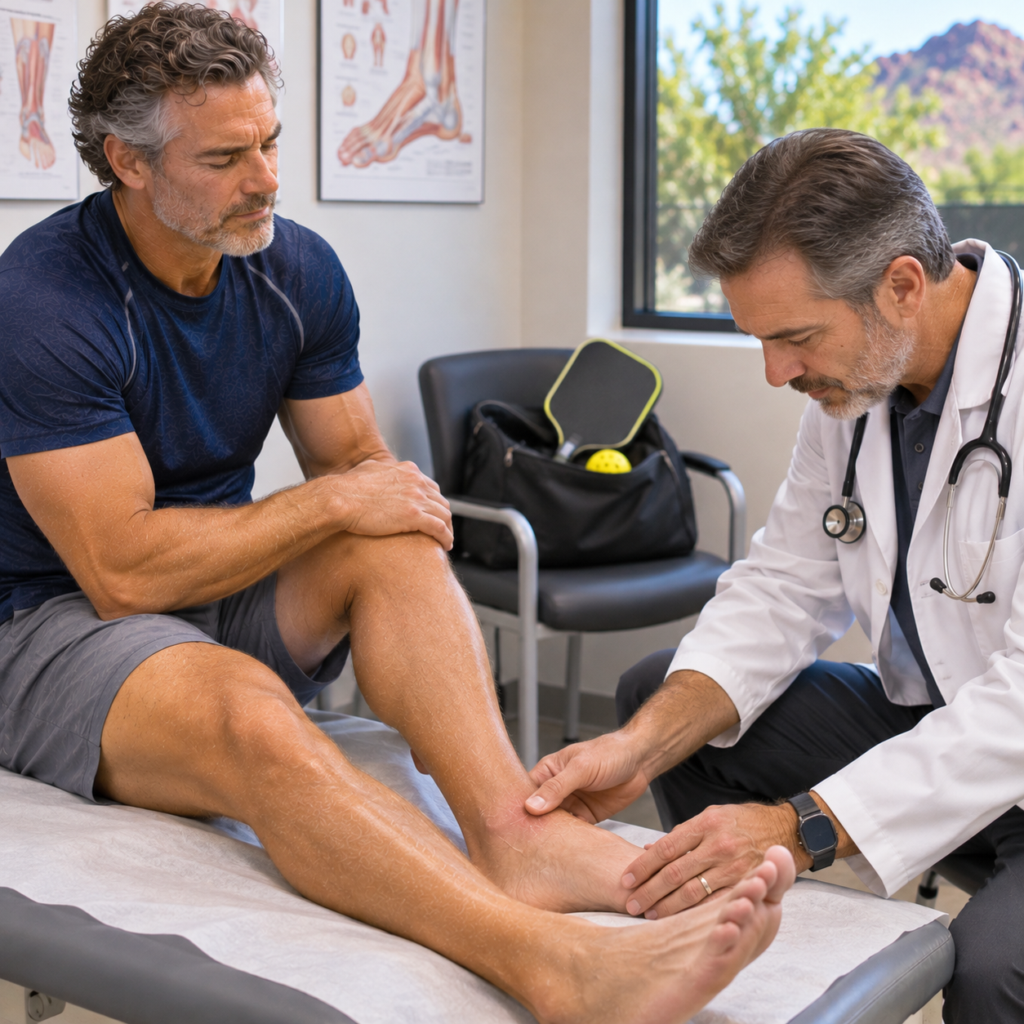
Seek prompt medical attention for severe pain or swelling, especially if a joint looks deformed or out of place; inability to bear weight; a suspected fracture after a fall; or pain that lasts several days. A sudden ‘pop’ or feeling of being kicked in the back of the heel, followed by difficulty pushing off, is a classic sign of an Achilles tendon rupture and requires same-day care. See a doctor if your knee gives way, you feel weakness when lifting your arm, or you experience numbness or tingling that radiates down an arm or leg. Any head injury on the court should be assessed for a concussion. Call 911 for chest pain or pressure, shortness of breath, or lightheadedness during play, as these may signal a cardiac issue.
Acupressure is a gentle, supportive practice for pickleball players. It complements, and does not replace, diagnosis and medical care.
For related health concerns, top acupressure points for professional athletes are is the companion post. For sore muscles after a long session, learn how to use acupressure to recover after a workout.
Other posts in the pickleball series include acupressure for pickleball shoulder pain, acupressure for pickleball elbow, acupressure for pickleball wrist pain, acupressure for pickleball ankle pain, acupressure for pickleball back pain, and acupressure for pickleball knee pain.
Above and Beyond Acupuncture offers acupuncture, cupping, and lifestyle coaching at the North Frank Lloyd Wright Boulevard location in Scottsdale.
Schedule an appointment online to start your healing journey.
The points above are only as effective as the technique used to apply them. Where to press, how firmly, and for how long all affect the result. For a full breakdown of how to perform acupressure properly at home, read Performing Acupressure in 3 Easy Steps.
About the Publisher
Paul Kerzner, L.Ac., is a licensed acupuncturist and board-certified herbalist, as well as the founder of Above and Beyond Acupuncture in Scottsdale. His own journey from chronic patient to practicing acupuncturist shapes his commitment to providing honest, clinically grounded information about acupuncture and Traditional Chinese Medicine. Learn more about Paul and his clinical approach on the About Us page.